A Bumpy Road to the Olympics - Training in Guinea Bissau

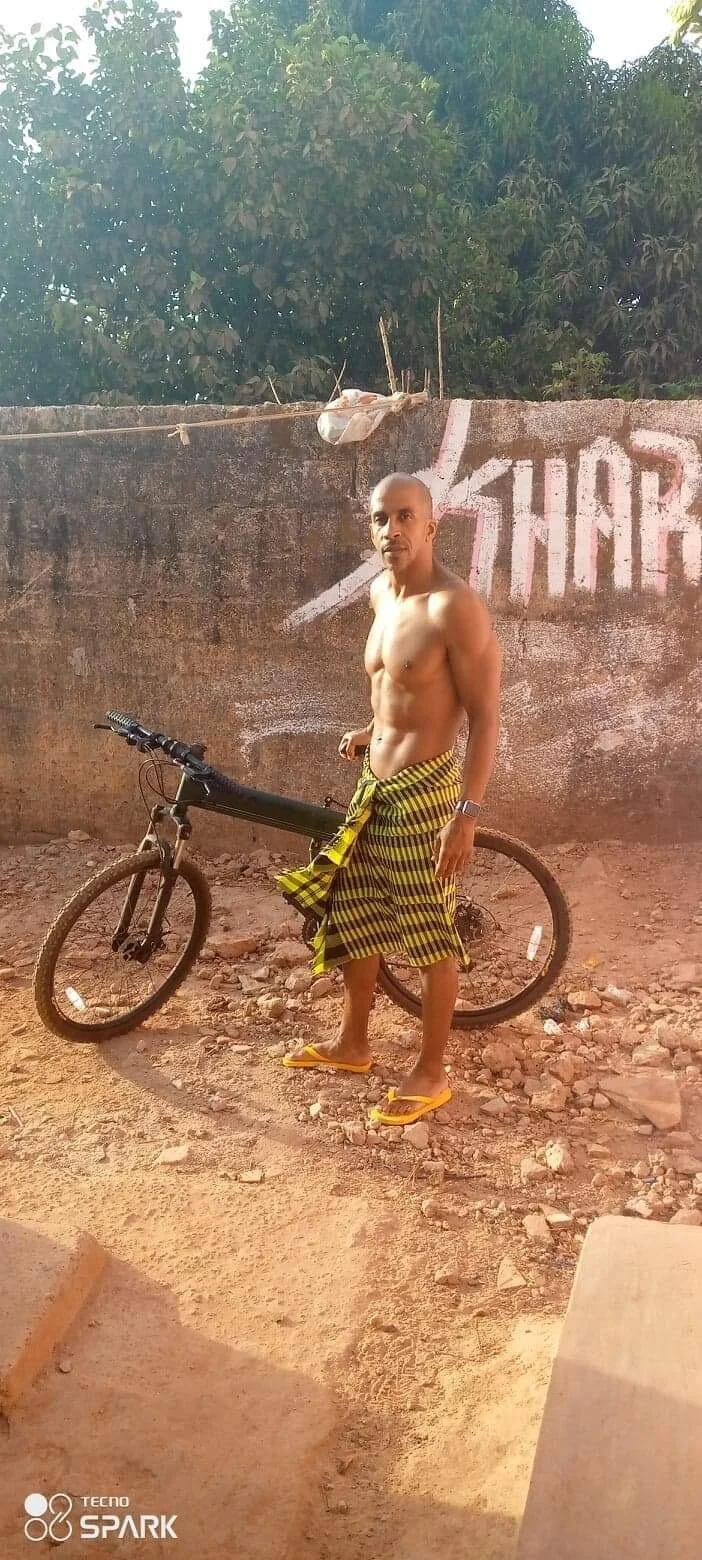
Siphiwe with bike.JPG

The Montague Paratrooper fold-up bicycle has traveled with me all over the world. I first used it in 2011 when I was driving trucks across America and preparing for the USA Triathlon Age Group Championships and the 2012 Ironman South Africa. Later, I took the Montague Paratrooper with me to China, where I continued training for the US Masters Swimming National Championships and the 2017 FINA World Championships. Now, I am in Guinea Bissau training for the Olympic Games in Tokyo. It has been a bumpy road. Let me explain.

As I write this, I am in a lot of pain and can barely move. My right side, from my neck, down to my shoulder down to my lower back is in pain. Deep breathing is difficult. I can’t sit or lay down comfortably. I am injured. Consensus around me is that after a week of riding the Paratrooper up and down the rocky and bumpy roads of Guinea Bissau, my body has suffered. In many ways, because of the condition of the roads, my body, like the country, is broke. My injury is symbolic of the injured Guinea Bissau. Just as the deplorable road conditions have arrested development in Guinea Bissau, so, too, it has hurt my Olympic training.

The bumpy road is a metaphor for my journey to compete as the oldest swimmer in Olympic history for my ancestral homeland. Back in January 2020, I was the first of my family to return to our Balanta people after 250 years of enslavement and ethnocide in the United States. During that visit, I met with the Guinea Bissau Minister of Sport Mr. Dionisio Pereira to discuss a program to bring African American professional athletes to their ancestral homelands during the “Decade of Return”. The Minister agreed to write a letter of special invitation to legendary multiple Olympic champion Jackie Joyner-Kersee who happens to have Balanta ancestry.

Siphiwe Baleka and Guinea Bissau Minister of Sport Mr. Dionisio Pereira

Siphiwe Baleka and Guinea Bissau Minister of Sport Mr. Dionisio Pereira

During the meeting, the possibility of swimming for and representing Guinea Bissau was discussed and I was both thrilled and honored. I returned to the United States with the renewed childhood dream of making it to the Olympics. Whereas in 1992 I was trying to become the first African American on the United States Olympic Swimming team, now twenty-eight years later, I was trying to become both the first African American to gain citizenship to the African country of the ancestor who survived the middle passage from Africa AND become the first ever Olympic Swimmer in that country of Guinea Bissau.

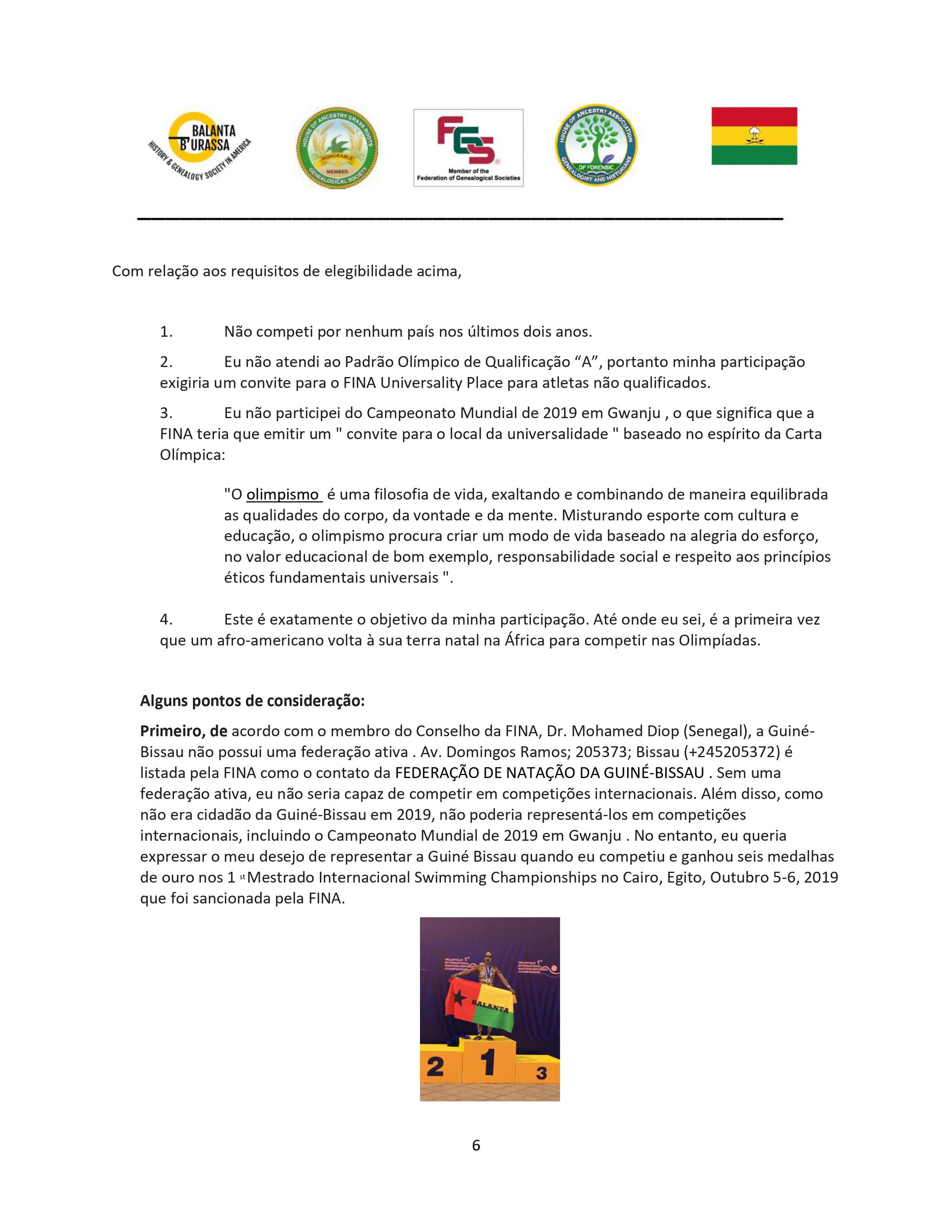
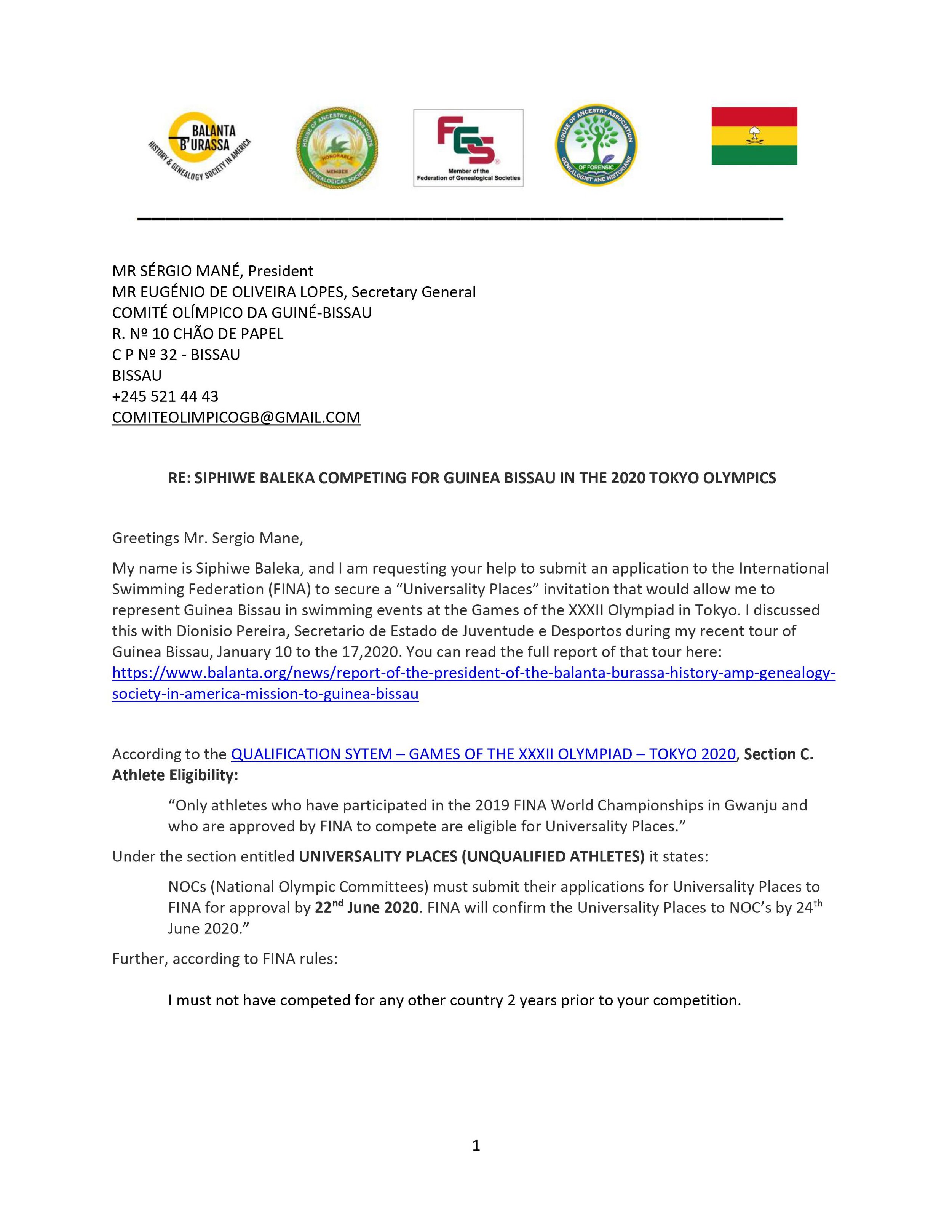
As the Olympics were scheduled for the summer of 2020, I needed to do two things: 1) secure my eligibility to compete for Guinea Bissau, which meant obtaining citizenship; and 2) develop a training plan. Upon my return to the United States, I sent the following letter on February 18, 2020 to the Guinea Bissau Olympic Committee:
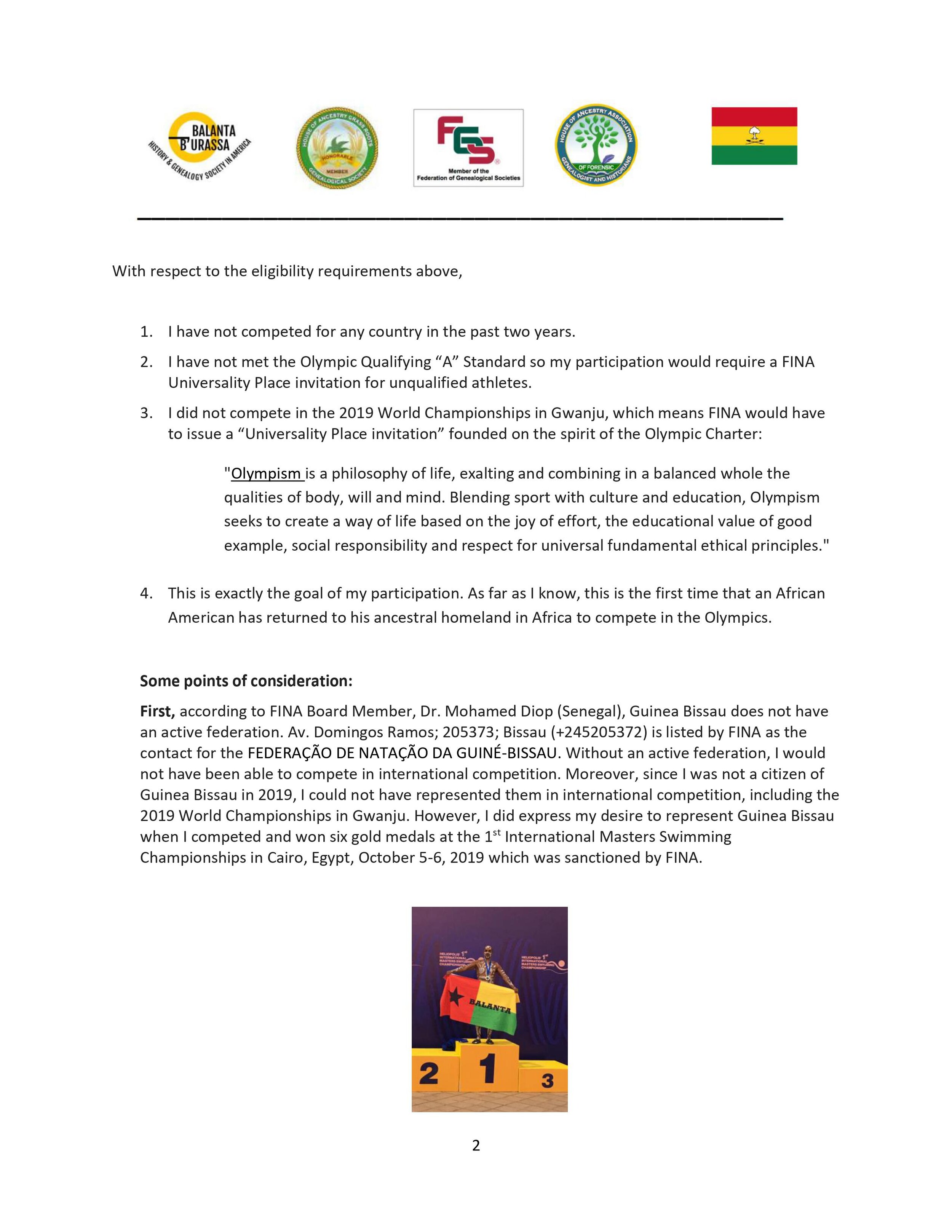
With Minister Pereira’s assurance, I had no doubt about obtaining my citizenship. After all, I had scientific proof - the dna test - showing that I am a descendent of the Balanta people. Just as I began to make arrangements, the coronavirus situation in Wuhan, China turned into a full-blown pandemic, leading to a complete lockdown in most places including Drury’s Breech Pool, where I was training every morning.

It is said that necessity is the mother of invention, and not wanting to let my Olympic dream slip away, a moment of inspiration hit: what if I could use my friend’s outdoor swim spa? After checking it out, I grew confident that, at the very least, I could maintain some level of swimming fitness.

But then the 2020 Tokyo Olympic Games got canceled, and the whole thing seemed to be up in the air. But this event actually resulted in my favor. The Olympics were rescheduled for the summer of 2021, giving me an extra year to train and the opportunity to compete at the symbolic age of 50, and the International Olympic Committee *IOC) and FINA changed their rules removing the requirement of competing in the Gwanju World Championships in order to be eligible for a Universality Placement. This meant that there were no rules or technical obstacles on my eligibility to participate. All that needed to be done was to complete my naturalization for citizenship to Guinea Bissau and once completed, have the Guinea Bissau Olympic Committee submit my application for the Universality Place. Pretty Simple.

And then the road became bumpy. Very bumpy.

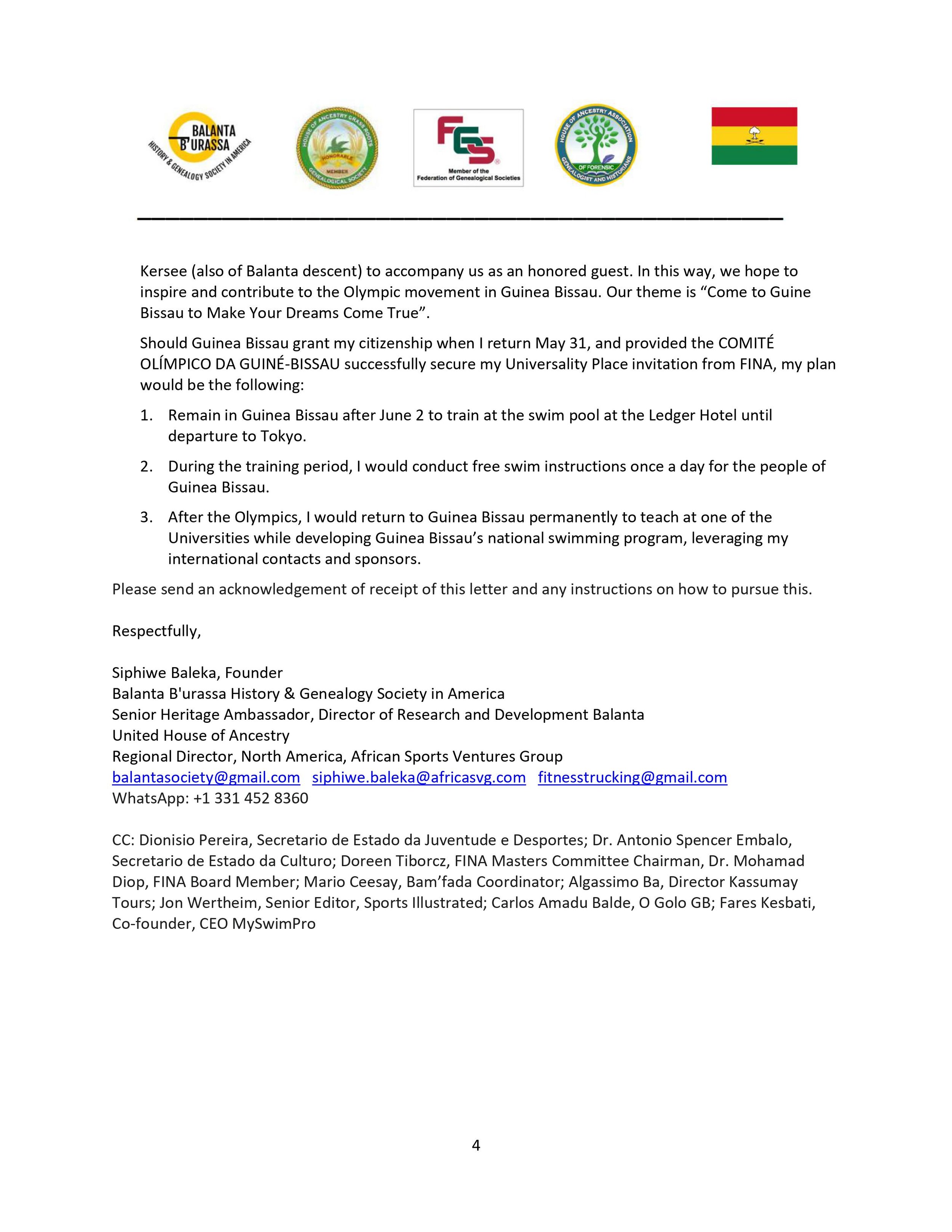
After repeated inquires to the Olympic Committee about my citizenship, finally in NOVEMBER - NINE MONTHS LATER - I received this letter:

Olympic Commitee Letter of Support.jpeg

I was more confident than ever, and my contacts informed me that my citizenship would be completed soon. Thus, I booked a ticket and returned to Guinea Bissau a month later at the end of December expecting to sign my paperwork and become an official citizen of Guinea Bissau. But of course, that’s not what happened because of the bump in the road.

Upon arrival, it became clear that my paperwork for citizenship was not prepared and somehow the paperwork (and responsibility for it) was now lost in some black hole of Guinea Bissau bureaucracy. I was growing frustrated. Did they not understand the potential of this opportunity? Sports Illustrated had already did a cover story and Hollywood producers were now interested in making a movie about my Olympic journey. This is massive, free, international publicity for this small country of 2 million. I was already playing my role as Olympic Sports Ambassador. Why were they dragging their feet on this?

Sports Illustrated.JPG

There was a regime change in 2020 so I met with the new Minister of Sport, Florentino Fernando Dias. He, like his predecessor, assured me there would be no problem obtaining citizenship. Encouraged, I then went to the Ledger Hotel which has a 25 meter pool with no lane lines or lane markings, to discuss my plan for training. My original, and simple plan was this: since I was going to be representing Guinea Bissau, and since the Ledger Hotel had a pool I could train in and a bunch of EMPTY rooms, I thought it best to make the Ledger Hotel my training camp. I asked them to give me a suite to make my headquarters. That way I could be comfortable, minimize all kinds of risks, and have a suitable place to meet people AND teach swim lessons leading up to the Olympics. While the Ledger Hotel management had no problem allowing me to use the pool for training, they balked at the idea of giving me a suite for three months . . . . After all, they were foreigners in Guinea Bissau here to make money. . . . .

I calculated that it would cost about $4,000 to pay for the suite at the discount rate they were offering, but it was $4,000 I didn’t have and, at any rate, if I was going to have to pay, I wanted it to benefit the people of Guinea Bissau, not the foreign business men. So I decided to do a fundraiser and Renovate Headquarters and Provide Olympic Training Center for Guinea Bissau Olympic Swim Team.

As soon as I returned to the United States in January, 2021, I appeared on Access Daily and intensified my fundraising.

I kept pressing forward, trusting my Ancestor and the many assurances I was receiving, that everything would be worked out. I started receiving numerous interview and project requests, and all of them were just waiting on my citizenship and placement on the Guinea Bissau Olympic Team to become official. So I kept waiting, and waiting and waiting while preparing to lead two different groups back to Guinea Bissau starting May 11 for the Decade of Return Initiative.

Growing ever more frustrated with each delay which hampered my ability to sign deals and raise funds, finally I caught a break. On April 14, 2021, my fiftieth birthday, the Minister of Justice sent the following letter:

Ministry of Justice Letter.JPG

It says:

"REPUBLIC OF GUINE-BISSAU JUSTICE MINISTRY THE MINISTER ORDER N. * 10 / GMJ / 2021

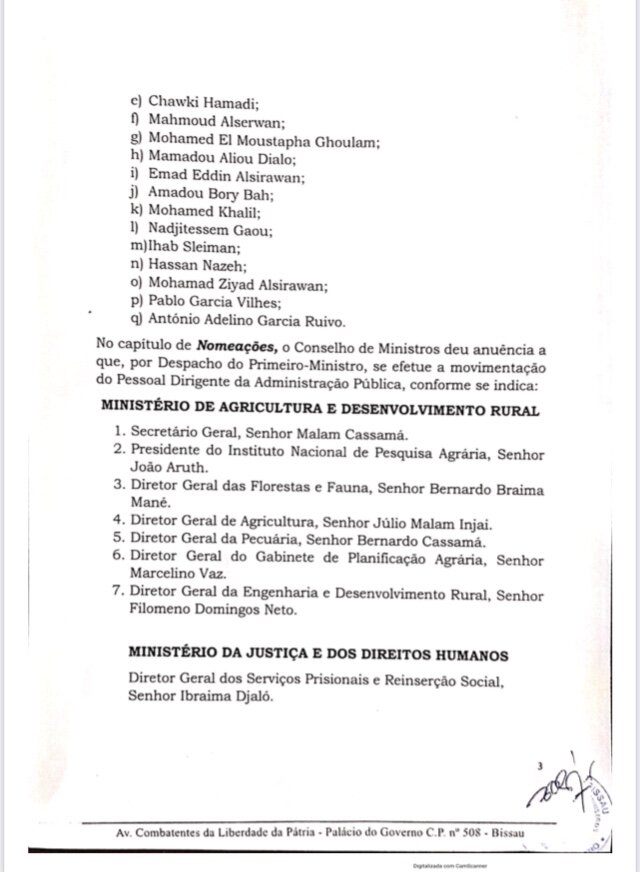
Considering the request submitted by the Secretary of State for Sports, through the letter received on 01/21/2021, it is addressed to the Honorable Prime Minister to intervene to expedite the granting of Guinean nationality by naturalization to the American citizen, Siphiwe Ka Baleka Bey El, invoking national interest.

Thinking of being an individual who discovered that his ancestors are of Guinean origin through DNA tests carried out in the United States of America, on the one hand, and who intends to represent Guinea-Bissau in the upcoming Tokyo Olympics, it gives interest national authority invoked by the Secretary of State for Youth and Sports, on the other. Considering the guidance given by the Honorable Prime Minister ordering the referral of the same process, on an urgent basis, to the Minister of Justice, for his opinion.

Having analyzed the legal provisions applied in this matter, in particular Article 18 of the Guinean Nationality Regulation, granting the Minister of Justice the power to authorize the waiver of presentation of any document that must instruct the application for nationality submitted by a foreigner, provided that there are no doubts about the verification of the requirements that this document is intended to prove.

Considering, furthermore, that the Government may grant Guinean nationality with exemption from the conditions of integration in Guinese society and residence for at least six years to all those who provide or are called upon to provide relevant services to the Guinean State in the national development process, under article 9, n. 3 of the Nationality Law.

The Minister of Justice determines the following: And Mr. Siphiwe Ka Baleka Bey El, an American citizen who applied for the granting of Guinean nationality by naturalization, waived the need to present the following documents that should instruct this process: Residence Permit, Declaration of Conformity and Certificate of Residence issued by the Foreigners and Borders of Guinea-Bissau, Criminal Record issued by the Ministry of Justice, Declaration of Good Civic Behavior issued by the Municipal Chamber of Bissau, Declaration of Integration into the Guinean Society issued by the Directorate-General for Culture and Criminal Record issued by the competent North American Authorities. Also, and I exempt you from paying the fees listed in the current Table. Fulfill yourself

Bissau,

04/14/2021 The Minister, Fernando Mendonca"

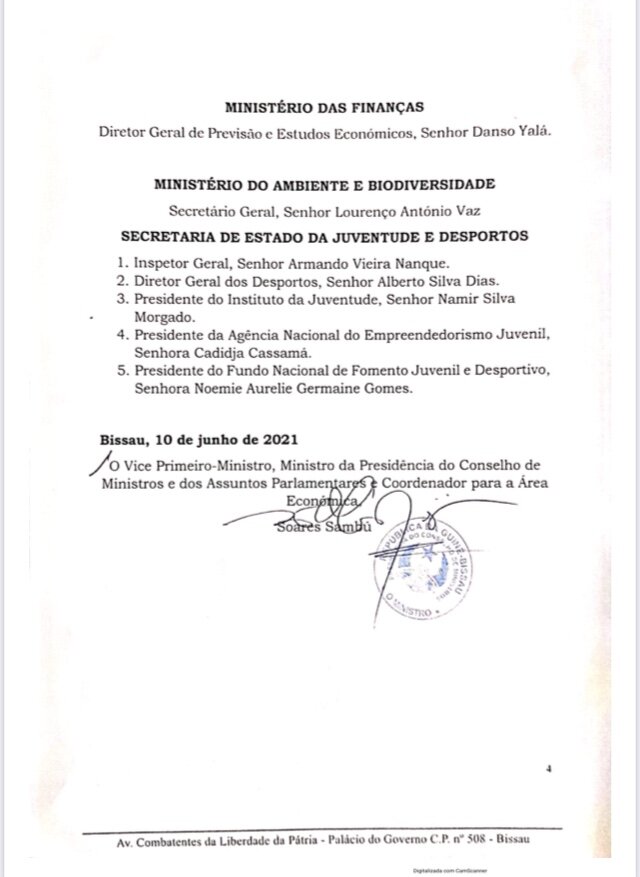
I was told that with this letter from the Minister of Justice clearing my path to citizenship, the matter would be taken up at the Cabinet meeting a day later on Thursday and I would have my citizenship and passport number on the following Monday, April 18th. Except that didn’t happen. Another bump in the road.

When Thursday came, there was some reason that prevented my case from being introduced in the Cabinent but that it would surely happen the following Thursday. Except there was another bump Thursday April 21, Thursday April 28, and Thursday May 5. By the time of my departure for Guinea Bissau, I still had not received my citizenship nor officially named to Guinea Bissau’s Olympic Team. I had concluded only one contract and let a lot of opportunities sitting on the table waiting. I left for Guinea Bissau with little money and just the faith that my ancestors and a few good people in Guinea Bissau that were doing all they could for me, would somehow make things work out.

NOT BEING TREATED AS SOMEONE OF NATIONAL INTEREST.

Not once before or since my arrival to Guinea Bissau has the Olympic Committee or the Ministry of Sport asked me how my training is going or if I need anything. They have never communicated to me any of their plans after I am named to the team nor any support I will receive. I have had to finance this entire thing myself.

I knew that one of my biggest challenges would be making it to the Olympics healthy and in the best condition to perform. For starters, I am a 50 year old athlete. My body doesn’t work the way it used to and I have to train differently. Meanwhile, in order to have a more authentic experience, and truly represent the people of Guinea Bissau, I decided to do my training in Guinea Bissau instead of America. I WANTED to move from the first world environment of America to the third world environment of Guinea Bissau to be able to claim that I trained and prepared in Guinea Bissau. This meant leaving a level of comfort and switching from one level of technology and nutrition to another. To represent Guinea Bissau, I wanted to swim in her pools, eat her food, be with her people.

However, I expected the Olympic Committee to be responsible for me as THEIR OLYMPIC ATHLETE. You can’t just take a rare flower and pluck it, remove it from one environment and one kind of soil, and transplant it in another environment and expect it to thrive with no adjustment. I am in the adjustment phase and the road is become bumpy.

The failure to provide me with a suite at the Ledger Hotel required that I find other accommodations and transportation to the pool. The obvious solution was the Montague Paratrooper. It only cost the $150 I paid to bring it on the plane and allowed me freedom and independence. But this has now led to an injury that is disrupting my training. Had the Olympic Committee been even remotely concerned with its newest ATHLETE, they could have at least arranged a car to pick me up and take me to the pool each morning. They didn’t even ask me how my training was going or if I needed anything….

And still now, the Cabinent has not raised my case. Last Thursday, the President of Sao Tome came for a State Visit and several cabinet members decided to cancel the regular Cabinent meeting in order to travel to the Bubaque Islands for a dinner. . . . . Such are the bumby roads of Guinea Bissau.

So now I am stuck in a kind of limbo - waiting for citizenship, waiting to be named to the Guinea Bissau Olympic Team, waiting to issue a press release to kick off another round of fundraising, waiting for investors and sponsosrs to sign contracts, and now, waiting for my body to heal so that I can continue training. And now I have to find a way to pay for a massage therapist and the medicine I need because the Ministry of Sport and the Olympic Committee aren’t really taking care of me as someone of NATIONAL INTEREST. But the people are…..

The other night, the ancestors showed me the meaning of all this - they said:

“You wanted an authentic Guinea Bissau experience so now you have it. You must suffer the frustration of a dysfunctional government to know how the people feel. You must physically suffer the pain of injury to know how decades of failing to fix the roads have injured Guinea Bissau. Don’t worry, you will get on the starting blocks in Tokyo. But when you do, it will mean even more because you will have triumphed as a true Guinean…..”

Siphiwe relaxing.JPG

Donate now to Siphiwe Baleka’s

2021 Olympic Dream in Tokyo GoFundMe

Decade of Return to Guinea Bissau November 23-30, 2021

UPDATE!!!!

We are planning the next Decade of Return Event for November 2022. Below is the information from the last event. If you are interested in the next event, get on our mailing list:

CLICK HERE TO REGISTER YOUR INTEREST IN THE NOVEMBER DECADE OF RETURN TOUR

Decade of Return Logo.jpeg
Abe Bonh during the Decade of Return Group 2 Tour, June 2021

Abe Bonh during the Decade of Return Group 2 Tour, June 2021

Decade of Return Group 2, June 2021

Decade of Return Group 2, June 2021

ITINERARY

3 days/4 nights in Bissau - Single room $992; Double Room; $1068; Suite $1364

4 days/3 nights at Bijagos Islands -$750

FLIGHT (see bottom of page) and $75 PROCESSING FEE NOT INCLUDED

** All refund requests are handled on a case by case basis and there will be a processing fee

YOU CAN CHOOSE JUST BISSAU, OR BISSAU AND BIJAGOS OR YOU CAN CHOOSE BISSAU AND THEN CUSTOMIZE THE FINAL 4 DAYS AND 3 NIGHTS

(Arrangements will be made for return COVID testing to take place)

CLICK HERE TO REGISTER YOUR INTEREST IN THE NOVEMBER DECADE OF RETURN TOUR

OPTION 1: BISSAU

(Note: Schedule subject to change according to conditions on the ground. This is NORMAL in Africa. Expect changes and or delays and “flow” with it. Time in Africa is different)

Day 1 - Tuesday Evening, November 23:  BISSAU

Flights Arrive in the evening in Bissau at Osvaldo Vieira International Airport. Transport to the Hotel Ledger (4 km). Welcome to the motherland show and informal reception and light food food at Hotel Ledger.

WATCH THE DECADE OF RETURN GROUP 1 WELCOME AT THE LEDGER HOTEL

Day 2 - Wednesday, November 24: Bissau and Officials

7:00 am - Breakfast

8:30 am - 11:30 am - meeting with Guinea Bissau officials

11:30 am - Lunch at Calistro Restaurant in downtown Bissau.

Afternoon - Bissau City Tour. -    We will visit the statue of Honorio Barreto, then we move to Central Market and work up Mao de Timba “Hand of Timba” Monument commemorating the Pidjiguiti Massacre which would inspire Almicar Cabral to fight for liberation. Then we move to Bissau Velho ( former Portuguese’s architecture center). After that we go to Amura to visit Amilcar Cabral and other leader camp museum.  We travel in a 35 seat air-conditioned van.

7:30 to 9:30 pm - Dinner at Restaurant Dona Fernanda in Santa Luzia.

This picture and the three pictures below taken by Ken Hawkins during the Decade of Return Group 1 in May 2021.

This picture and the three pictures below taken by Ken Hawkins during the Decade of Return Group 1 in May 2021.

Ken 13.jpg
Ken 11.jpg

DAY 3 - Thursday, November 25: CACHEU

6:30 to 7:30 am - Breakfast at Hotel Ledger

8:00 am - Depart to Cacheu for a full day. Travel time to Cacheu is 2 hours and 15 minutes. Cacheu town is one of thenearliest Portuguese settlement in Africa and the first navigators arrived in early 15° century. We will visit the Memorial Da Escravatura E Do Trafico Negeiro (Slave Museum). A panel discussion with professors and students is being planned and you will have the opportunity to tell your story!

Lunch at Cacheu pier

Return to Hotel Ledger in Bissau and COVID return testing.

7:00 pm - Dinner at Restaurant Amadora

Decade of Return Group 2, June 2021 in front of the Door of No Return in Cacheu

Decade of Return Group 2, June 2021 in front of the Door of No Return in Cacheu

Day 4 - Friday, November 26 Ancestry Day

6:30 am to 7:45 am - breakfast

8:00 am - Depart for villages. Balanta descendants will go to a Balanta village. Djola descendants will go to a Djola village. Fula descendants will go to a Fula village, Brame/Mancane to Brame/Mancane villsage, etc

7:00 pm -. Return to the Hotel Ledger for final night.

Ken 3.jpg
Ken 6.jpg
Ken 4.jpg
Ken 7.jpg
The above six pictures take by Ken Hawkins during the Decade of Return Group 1, May 2021

The above six pictures take by Ken Hawkins during the Decade of Return Group 1, May 2021

TOTAL COST FOR OPTION 1

OPTION 1:1 SINGLE ROOM (with meals, transport and tax) TOTAL: $992

OPTION 1:2 DOUBLE ROOM (with meals, transport and tax) TOTAL: -$1068

OPTION 1:3 SUITE (with meals, transport and tax) TOTAL: $1,364

OPTION 1:4 Choose this option if you are the person sharing a DOUBLE ROOM with someone else (with meals, transport and tax) TOTAL: $620

CLICK HERE TO MAKE PAYMENT

OPTION 2: ADDTIONAL VISIT TO BIJAGOS ISLANDS

Day 5 - Saturday, November 27: Bijagos Islands

Our departure to Archipelago will depend on sea’s high tide

We will have a full day to discover the Archipelago.  During our sail we will be in Marathon of Dolphin, which Is covered in a lush green forest in an exceptional nature reserve inhabited by enchanting birds which are part of unique wildlife specific to the remote ecosystem. 

In the Afternoon will take a walk to explore the Rubane Island. It is a half day trip with a lot of walking, so some may want to stay behind at the hotel and just relax. Lunch and dinner is at Restaurant Ponta Anchaca, Rubane Island.

Day 6 - Sunday, November 28: BUBAQUE-SOGA

-      Breakfast then Short trip to visit Bubaque, capital of Bijagos region.

-      Going to SOGA Island.

-      Lunch at Ponta Anchaca.

-      Return to Bubaque to attend traditional dance of young boys and girls called in CREOL DANÇA DE BACA BRUTA (BULL DANCE).

-      Dinner and Overnight at PONTA ANCHACA.

Day 7 Monday, November 29: RUBANE

Full day free enjoying Sea and sun of Rubane. All meals at the hotel


Day 8 Tuesday, November 30: BACK TO BISSAU

-      Breakfast

-      Sailing back to Bissau and hotel to prepare the way back

-      Transfer to airport.

TOTAL EXTRA COST FOR OPTION 2:

$750 (includes food, accommodation, guides, transport and taxes).

NOTE: If you are the person sharing a DOUBLE ROOM and you will be continuing to the BIjagos, you must purchase both OPTION 1:4 and OPTION 2:4 Bijagos Separate

CLICK HERE TO MAKE PAYMENT

(Pictures below by Ken Hawkins and Oremi Kwabena Bwire during the Decade of Return Group 1, May 2021 trip to the Bijagos Islands)

Ken 2.jpg
Ken 1.jpg
Oremi 4.jpg
Oremi 5.jpg
Oremi 6.jpg
Decade of Return Group 2 in Bijagos Islands, June 2021

Decade of Return Group 2 in Bijagos Islands, June 2021

CITIZENSHIP

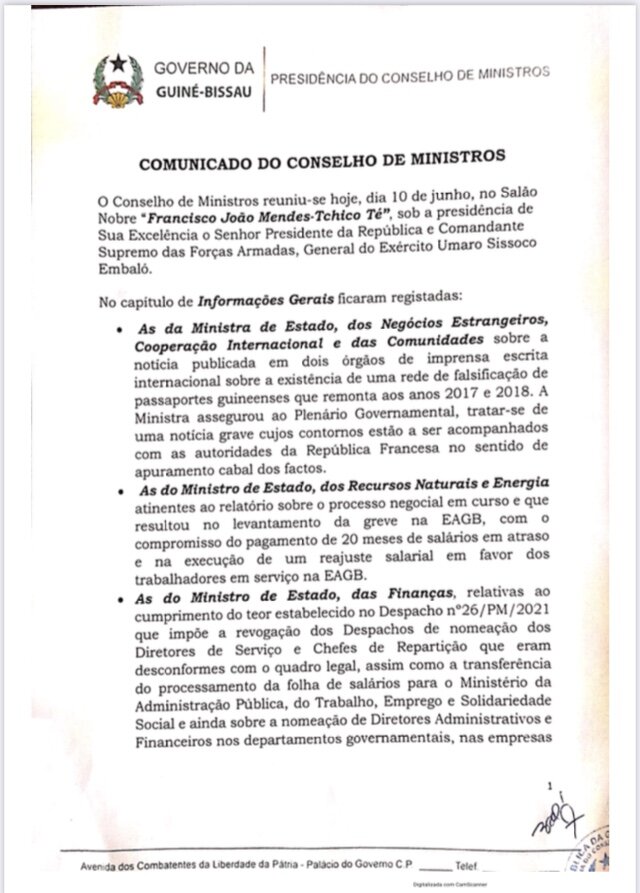
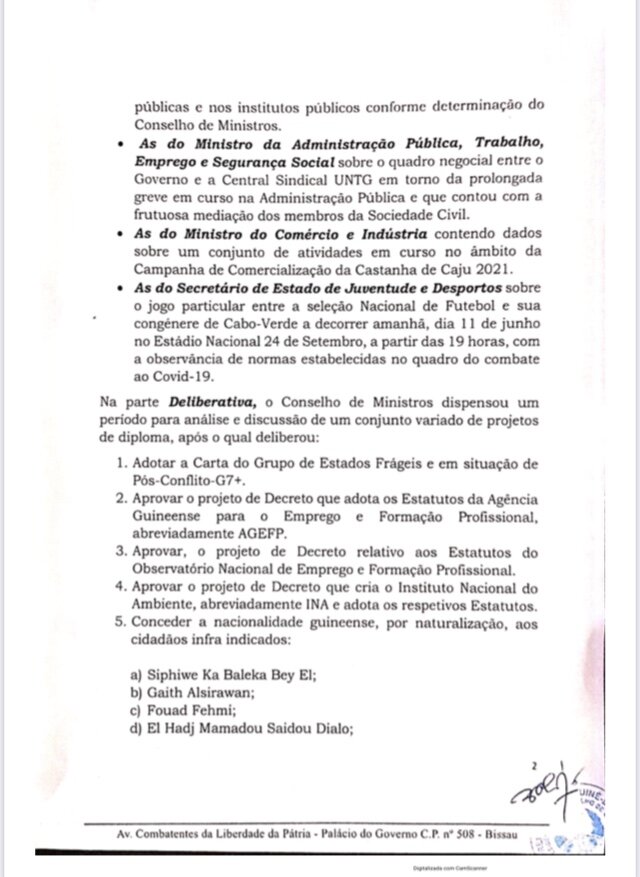
Bissau, Guinea Bissau - On June 10, 2021, the Council of Ministers of the Government of Guinea Bissau completed the naturalization process for Siphiwe Baleka, President of the Balanta B’urassa History and Genealogy Society in America (BBHAGSIA). Mr. Baleka is the first Afrodescendant from the United States to become a naturalized citizen of Guinea Bissau.

The process is now open to all descendants of people from Guinea Bissau who have taken the African Ancestry test. To start the naturalization process to obtain citizenship,

COMPLETE THE NATURALIZATION APPLICATION

Siphiwe Passport.jpeg
GB Passport.JPG

OFFICIAL INVITATION FROM THE GUINEA BISSAU SECRETARY OF TOURISM

On February 23, 2021, The Secretary of Tourism of Guinea Bissau sent the following message to the Balanta B’urassa History and Genealogy Society in America:

“Distinguished greetings,

Excellence,

It was up to me, as the maximum Responsible for this area and, WHEREAS the members of the Society of History and Genealogy Balanta Burassa in the United States of America, are now preparing to return to their origins, from 11 to 14 May and from 8 to 11 June, 2021 for a Welcome Celebration, something unprecedented in the history of our young nation; in this context, we would like to invite Your Excellency Illustrious Siphiwe Baleka, founder, to be present with his members at the referred event, which is of major importance for Guinea-Bissau.

Without another subject at the moment, please accept Excellency, best regards.

High regard

Ms. Nhima Sisse”

After the success of the first two groups in 2021, the Ministry of Culture made the following announcement to Afrodescendants in the United States concerning the Decade of Return:

Invitation

“The Secretary of State for Culture, having knowledge of African-Americans of Guinea-Bissau descendants interested in visiting the country, serves to formulate an invitation to give them greater openness and possibility to arrive in Guinea-Bissau.

So that there is no impediment, this invitation will be signed and authenticated with the oil stamp used in this institution.

The contact will be through the coordinator of the return decade Siphiwe Baleka of the Balanta B'urassa History & Genealogy Society in America and from his team in Bissau and the association Ban Faaba.

Bissau, June 21, 2021

The Secretary of State,

Dr. Francelino da Cunha”

Authorization Letter.PNG
Ministry of Culture  15.jpg

FLIGHTS

There are two ways to enter Guinea Bissau through the capital city, Bissau. There is a flight from Dakar, Senegal and a direct flight from Lisbon, Portugal. Because of the COVID travel restrictions, we recommend the flight from Lisbon to Bissau, but only if you can fly direct to Lisbon. As of now, United States citizens cannot make TWO TRANSFERS in Europe. When booking your flight, you want a direct flight to Lisbon, Portugal and then the following flight to Bissau on TAP Air Portugal:

Flight from Dakar to Bissau 5.JPG

Alternatively, you can fly to Dakar, Senegal. However, Senegal has very strict COVID testing rules and if you cannot fly in to and out of Dakar on the same day, you will most likely have to spend up to 3 or 4 days in Dakar because that is how long it takes to take another COVID test and get results, and this can be expensive. Nevertheless, the following flights on ASKY Airlines or Air Senegal will get you from Dakar to Bissau:

Flight from Dakar to Bissau 2.JPG
Flight from Dakar to Bissau 3.JPG
Flight from Dakar to Bissau 4.JPG

ANNOUNCEMENT FROM THE GOVERNMENT OF GUINEA BISSAU TO AFRODESCENDANTS IN THE UNITED STATES CONCERNING THE DECADE OF RETURN

To the African Ancestry Family and Afrodescendents of Guinea Bissau :

The Decade of Return is unprecedented in the history of our young nation and it is of major importance to Guinea Bissau.

To facilitate the success of this initiative and to streamline the efficient use of resources, the Ministry of Culture asks all groups desiring to be a part of the Decade of Return to coordinate their efforts with the Decade of Return Coordinators: Siphiwe Baleka of the Balanta B’urassa History & Genealogy Society in America and his team in Bissau (Repat Bissau) and the Ban-Faaba association.

In this way, we can all work together as one and easily monitor and measure the success of the Decade of Return.

Authorization Letter.PNG

Invitation

“The Secretary of State for Culture, having knowledge of African-Americans of Guinea-Bissau descendants interested in visiting the country, serves to formulate an invitation to give them greater openness and possibility to arrive in Guinea-Bissau.

So that there is no impediment, this invitation will be signed and authenticated with the oil stamp used in this institution.

The contact will be through the coordinator of the return decade Siphiwe Baleka of the Balanta B'urassa History & Genealogy Society in America and from his team in Bissau and the association Ban Faaba.

Bissau, June 21, 2021

The Secretary of State,

Dr. Francelino da Cunha”

The Decade of Return Coordinators plan and host individual and group tours, meetings with officials, naming ceremonies, funerals and burials, visits to villages and development projects, vacation travel to the Bijagos Islands, restaurant tours, and anything else you may want to do in Guinea Bissau. In addition to providing the best, most authentic experience for all descendants of Guinea Bissau returning to their ancestral homeland, the program is also offering free visas and the opportunity to apply for citizenship.

TO REGISTER YOUR INTEREST IN THE DECADE OF RETURN INITIATIVE AND TO BE REGISTERED AS A DESCENDANT OF PEOPLE FROM GUINEA BISSAU, THE FIRST STEP IS TO

COMPLETE THE FORM HERE

THE NEXT DECADE OF RETURN EVENT IS BEING SCHEDULED FOR

NOVEMBER 23RD TO THE 30TH

Secretary of Culture Dr. Francelino da Cunha with Siphiwe Baleka, President of the Balanta B’urassa History & Genealogy Society in America (BBHAGSIA) and BBHAGSIA members Kamm Howard, National Co-chair of the National Coalition of Blacks for Reparations in America (NCOBRA); Robin Rue, Alderwoman for the city of Evanston and Reparations warrior; Nicole Vaden, Co-Chair of the BBHAGSIA Women’s Committee; and her brother, Gerald Avery, BBHAGSIA Import/Export Specialist.

Secretary of Culture Dr. Francelino da Cunha with Siphiwe Baleka, President of the Balanta B’urassa History & Genealogy Society in America (BBHAGSIA) and BBHAGSIA members Kamm Howard, National Co-chair of the National Coalition of Blacks for Reparations in America (NCOBRA); Robin Rue, Alderwoman for the city of Evanston and Reparations warrior; Nicole Vaden, Co-Chair of the BBHAGSIA Women’s Committee; and her brother, Gerald Avery, BBHAGSIA Import/Export Specialist.

Umaro Balde, Director of Marketing, Ministry of Tourism; BBHAGSIA Member Robert Bumpers; Guinea Bissau President Umaro Sissoco Embalo; BBHAGSIA President Siphiwe Baleka; Ben Cunha, Principal Technical Advisor, Ministry of Tourism

Umaro Balde, Director of Marketing, Ministry of Tourism; BBHAGSIA Member Robert Bumpers; Guinea Bissau President Umaro Sissoco Embalo; BBHAGSIA President Siphiwe Baleka; Ben Cunha, Principal Technical Advisor, Ministry of Tourism

Decade of Return Logo.jpeg

Guinea Bissau Begins Granting Citizenship to Afrodescendants from the United States

Bissau, Guinea Bissau - On June 10, 2021, the Council of Ministers of the Government of Guinea Bissau completed the naturalization process for Siphiwe Baleka, President of the Balanta B’urassa History and Genealogy Society in America (BBHAGSIA). Mr. Baleka is the first Afrodescendant from the United States to become a naturalized citizen of Guinea Bissau through this Decade of Return process.

TO APPLY FOR CITIZENSHIP, COMPLETE

THE NATURALIZATION APPLICATION

Siphiwe Baleka and Robert Bumpers with President Embalo of Guinea Bissau

Siphiwe Baleka and Robert Bumpers with President Embalo of Guinea Bissau

Siphiwe Baleka receives his passport

Siphiwe Baleka receives his passport

Mr. Baleka also created the Decade of Return Initiative in partnership with the Ministry of Tourism which began last month with five members of BBHAGSIA. Ten more members are currently in Guinea Bissau with Mr. Baleka and their citizenship is “in process”.

Guinea Bissau follows nations such as Ghana and Sierra Leone in recognizing Afrodescendant claims and granting citizenship to descendants that provide dna testing.

The next Decade of Return Event is being scheduled for November 2022. For information complete the form.

BBHAGSIA members with the Minister of Culture

BBHAGSIA members with the Minister of Culture

Citizenship for Siphiwe Baleka was cleared legally on April 14, 2021 when the Minister of Justice Fernando Mendonca removed the legal barriers for Siphiwe Baleka’s  citizenship. In ORDER N. * 10 / GMJ / 2021, The Minister of Justice stated, 

“Considering the request submitted by the Secretary of State for Sports, through the letter received on 01/21/2021, it is addressed to the Honorable Prime Minister to intervene to expedite the granting of Guinean nationality by naturalization to the American citizen, Siphiwe Ka Baleka Bey El, invoking national interest. . . . 

Thinking of being an individual who discovered that his ancestors are of Guinean origin through DNA tests carried out in the United States of America, on the one hand, and who intends to represent Guinea-Bissau in the upcoming Tokyo Olympics, it gives interest national authority invoked by the Secretary of State for Youth and Sports, on the other.

Considering the guidance given by the Honorable Prime Minister ordering the referral of the same process, on an urgent basis, to the Minister of Justice, for his opinion.

Having analyzed the legal provisions applied in this matter, in particular Article 18 of the Guinean Nationality Regulation, granting the Minister of Justice the power to authorize the waiver of presentation of any document that must instruct the application for nationality submitted by a foreigner, provided that there are no doubts about the verification of the requirements that this document is intended to prove.

Considering, furthermore, that the Government may grant Guinean nationality with exemption from the conditions of integration in Guinese society and residence for at least six years to all those who provide or are called upon to provide relevant services to the Guinean State in the national development process, under article 9, n. 3 of the Nationality Law.

The Minister of Justice determines the following:

And Mr. Siphiwe Ka Baleka Bey El, an American citizen who applied for the granting of Guinean nationality by naturalization, waived the need to present the following documents that should instruct this process: Residence Permit, Declaration of Conformity and Certificate of Residence issued by the Foreigners and Borders of Guinea-Bissau, Criminal Record issued by the Ministry of Justice, Declaration of Good Civic Behavior issued by the Municipal Chamber of Bissau, Declaration of Integration into the Guinean Society issued by the Directorate-General for Culture and Criminal record issued by the competent North American Authorities.

Also, and I exempt you from paying the fees listed in the current Table.

Fulfill yourself

Bissau, 04/14/2021

The Minister, Fernando Mendonca"

Afrodescendant Steering Committee Questionnaire for Organizational Leaders

On Saturday, April 3, 2020 the Afrodescendant Nation Grassroots Unity Outreach: Self Determination Conversation was held in Atlanta, Georgia. The event issued a CALL TO UNITY to all Blacks, African-Americans, Afrodescendants, and all the various formations, however you DEFINE YOURSELF, to

DEFINE, DEVELOP AND DEFEND OUR RIGHT TO SELF-DETERMINATION.

A Nine (9) day SELF DETERMINATION CONFERENCE is being scheduled, reminiscent of the seminal Universal Negro Improvement Association First International Convention of the Negro Peoples of the World that convened from August 1 to August 30, 1920 and was attended by almost two thousand delegates.

Organizations that would like a 30 minute slot to present at the Self Determination Conference MUST complete the following questionnaire and self determination survey:

During a UN meeting on the issue of reparations, Silis Muhammad put forth a proposed definition of Afrodescendants, “for he knew that the prophecy concerning the ‘scattered’ children was in fulfillment. He also knew that a movement was afoot by Member States at the UN to include African immigrants in the same political/legal category as the descendants of enslaved Africans, thereby confusing the issues and undermining the legal basis for a reparations claim based on slavery’s lingering effects. The definition made it clear that Afrodescendants are descendants of enslaved Africans, suffering the lingering effects of slavery. The leaders agreed to discuss the definition at the next seminar, and the UN took note.” In his own words,

The Term Afrodescendant

My name is Silis Muhammad and I am the CEO of the Lost-Found Nation of Islam and the Spiritual Son of the Honorable Elijah Muhammad, Peace Be Upon Him (PBUH). I have been fighting for my people’s right to self-determination for many years. I would spend many years out in the United Nations in Geneva, Switzerland from 1998 until 2002 working to establish our identity.

Having been a member of the Lost-Found Nation of Islam, I sought to classify us as Lost-Found Peoples and establish that name as our collective identity. I learned from several forums in the United Nations that a large contingency of our people mainly Latin Americans from the slavery diaspora were calling themselves Afrodescendant. As early as 2000 in Santiago Chile, the term was first heard at a United Nation forum.

In Durban, South Africa in 2001, we were still working on our identity; we were not working to define it yet. We did not have a clear-cut identity although the term, Afrodescendant was in the air. We had not decided collectively on an identity.

In 2002, at a United Nations Conference for the Rights of Minorities in La Ceiba, Honduras, nineteen (19) countries from North America, South America, Central America and throughout the slavery diaspora gathered. Most Latin American countries had already accepted this global identity and the Lost-Found Nation of Islam objected to it. During the Conference, a representative from Brazil, who has the largest Afrodescendant population in the slavery diaspora, stated that they too did not agree with the name Afrodescendant, but acquiesced to establish unity with the many descendants of the slavery diaspora that had already accepted and were using the term.

Feeling the weight of the term Afrodescendant in the atmosphere among the Latin American delegates, then we, the Lost-Found Nation of Islam decided to concur and use the term like the Brazilians had done. WE, Silis Muhammad, Misshaki Muhammad and the delegates of the Lost-Found Nation of Islam, quickly sketched out a rough definition of Afrodescendant before having a meeting with the Cuban Chairperson and the other Latin American delegates. At that meeting, we shared the definition for the term Afrodescendant:

  1. Were forcibly disposed of their homeland, Africa;

  2. Were transported to the Americas and Slavery Diaspora for the purpose of enslavement;

  3. Were subjected to slavery;

  4. Were subjected to forced mixed breeding and rape;

  5. Have experienced, through force, the loss of mother tongue, culture, and religion;

  6. Have experienced racial discrimination due to lost ties from their original identity.”

Defining the term, gave power to the name Afrodescendant. We offer to you African Americans, Black people, a just people, the global identity ‘Afrodescendant’.

We are not asking you to give up your national identity, we are asking you to accept your global identity.

*Afrodescendants are experiencing #Ethnogenesis: “...the re-establishment of the mind or the “Resurrection” of a people who have lost the identity of ‘Self’ due to 400 years of “Slavery” (The Honorable Silis Muhammad, Muhammad Speaks volume 20, No 21)

AFRO-DESCENDANTS AS SUBJECTS OF RIGHTS IN INTERNATIONAL HUMAN RIGHTS LAW

Roberto Rojas Dávila

The historical process of recognition and its challenges

The incorporation of the theme of Afro-descendants in international human rights law is relatively new. Only 18 years ago, the issue was raised at the Regional Conference of the Americas held in preparation for the Third World Conference against Racism, Racial Discrimination, Xenophobia and Related Intolerance in the city of Santiago, Chile in the year 2000.

For the first time, the declaration from the said conference, known as the Declaration of Santiago, “Recognise[d] that the racism and racial discrimination from which the population of African origin in the Americas has suffered is at the origin of the marginalisation, poverty and exclusion in which the majority of these individuals in many countries on the continent find themselves and that, despite the efforts made, this situation persists to different degrees”. Furthermore, it “calls for measures to eliminate the inequalities that still persist due to the opprobrious legacy of slavery and to facilitate the participation of Afro-descendants in all aspects of political, economic, social and cultural life of society and in the progress and economic development of their countries; and to promote greater knowledge and respect for their heritage and culture”.

For millions of Afro-descendants, the 21st century marked the beginning of a new legal status – one that raises the level of protection for their human and collective rights.

In 2000, in the city of Santiago, Chile, the Regional Conference of the Americas was held, which was a preparatory conference for the Third World Conference against Racism, Racial Discrimination, Xenophobia and Related Intolerance. During the conference in Santiago, the states of the Americas defined Afro-descendant as the person of African origin who lives in the Americas and in the region of the African Diaspora as a result of slavery, who have been denied the exercise of their fundamental rights. In the Third World Conference against Racism, Racial Discrimination, Xenophobia and Related Intolerance – known as the Durban Conference – the states ratified this definition, as well as most of the content of the Declaration of Santiago related to Afro-descendants.

From our point of view, the most important aspect of both declarations is that, in addition to defining the term Afro-descendant, they recognised people of African descent as subjects of international human rights law. This meant that they are able to acquire rights and obligations directly in the international arena, according to the provisions of these international instruments.

In the words of activists from the Afro-descendant movement in the Americas, at the Conference of Santiago, “We went in as blacks and emerged as Afro-descendants”. This meant that there was a before and an after the conference in relation to the promotion and respect of Afro-descendants’ rights. By adopting a legal definition and by recognizing them as subjects of international human rights law, it was possible to raise the level of protection for this vulnerable group.

The Afro-descendant Theme in the Americas

There are approximately 200 million people of African descent in the Americas, yet, despite comprising one third of the region’s population, Afro-descendants are one of the most vulnerable minority groups in the hemisphere.

It should be noted that in the Declaration of Santiago and the Declaration of Durban, the American states recognized that people of African descent have to confront obstacles as a result of the social discrimination and prejudice that prevail in public and private institutions and also recognized that this is due to centuries of racism, racial discrimination and enslavement and of the denial by history of many of their rights This situation also results in a lack of recognition for the contribution of this group to the cultural heritage of the Americas.

We should draw attention to the fact that the Inter-American Democratic Charter recognizes that elimination of all forms of discrimination and respect for ethnic, cultural and religious diversity in the Americas contribute to strengthening democracy and citizen participation.

International Public Law provides several instruments against racism, racial discrimination, xenophobia and related intolerance. At the universal level the United Nations has driven substantial efforts to combat these scourges.

In the inter-American sphere, too, a number of mechanisms have been created to tackle this phenomenon and encourage respect for the rights of people of African descent in the Americas. Examples of this are the creation of the Rapporteurship on the Rights of Afro-Descendants and against Racial Discrimination of the Inter-American Commission on Human Rights and the allusions to people of African descent in the Declaration of Mar del Plata in the framework of the Fourth Summit of the Americas in 2005 and in the Declaration of the Regional Conference of the Americas (Preparatory meeting for the Third World Conference against Racism, Racial Discrimination, Xenophobia and Related Intolerance), held in Santiago, Chile, in 2000.

By the same token, a succession of mandates have come out of the [Summits of the Americas]  and the General Assembly of the Organization of American States to combat racism and discrimination. The negotiation is at present under way in the framework of the OAS of a Draft Inter-American Convention against Racism and All Forms of Discrimination and Intolerance.

It should also be noted that at both the regional and international level the majority of member states have signed, ratified or adopted, as the case may be, a variety of international instruments for the elimination of racial discrimination as well as for promotion and respect for the rights of persons of African descent.

Decade of Return To Guinea Bissau 2023

Siphiwe Baleka and President Embalo of Guinea Bissau

You have been asking for it and now it is here! GROUP TOURS FOR DESCENDANTS OF GUINEA BISSAU AS PART OF THE OFFICIAL DECADE OF RETURN INITIATIVE.

On February 23, 2021, The Secretary of Tourism of Guinea Bissau sent the following message to the Balanta B’urassa History and Genealogy Society in America:

“Distinguished greetings,

Excellence,

It was up to me, as the maximum Responsible for this area and, WHEREAS the members of the Society of History and Genealogy Balanta Burassa in the United States of America, are now preparing to return to their origins, from 11 to 14 May and from 8 to 11 June, 2021 for a Welcome Celebration, something unprecedented in the history of our young nation; in this context, we would like to invite Your Excellency Illustrious Siphiwe Baleka, founder, to be present with his members at the referred event, which is of major importance for Guinea-Bissau.

Without another subject at the moment, please accept Excellency, best regards.

High regard

Ms. Nhima Sisse”

This is the official launch of the Decade of Return initiative in Guinea Bissau. This is the OFFICIAL program of the government to RECOGNIZE the descendants of people taken from homelands that became the nation of Guinea Bissau.

Anyone can return to Guinea Bissau as a tourist or as a business investor. There are plenty of private tour companies that can help you with that.

IF YOU ARE INTERESTED IN VISITING GUINEA BISSAU AS PART OF THE DECADE OF RETURN EVENTS, INCLUDING BEING PUT ON THE LIST OF VERIFIED DESCENDANTS OF GUINEA BISSAU ENTITLED TO A DIFFERENT STATUS, PLEASE COMPLETE THE FORM BELOW.

Understanding the Decade of Return Initiative

To understand the background and development of this program, please read the article

WILL GUINEA BISSAU'S "DECADE OF RETURN INITIATIVE" BE THE NEXT BIG BOON FOR THIS SMALL AFRICAN NATION?

Because of his extensive work in repatriation and immigration issues in Ethiopia and the African Union, Siphiwe Baleka has become an instrumental consultant to the Government of Guinea Bissau through the Ministry of Tourism. Currently, the Ministry has very little budget and capacity to handle various groups. This is compounded by the language barrier since there are few people that speak English. The solution was to create one entity “The Decade of Return Initiative” for all Guinea Bissau descendants in America, to work through. This would relieve the government of having to waste time and energy doing double work, communicating the same thing over and over again to different people, etc. Such a situation would burden the Ministry of Tourism. Because the Balanta B’urassa History and Genealogy Society in America (BBHAGSIA) is the most well known institution in the country of Guinea Bissau, its members visiting consistently since 2014, doing development projects, sending COVID relief aid and funds, and even giving Guinea Bissau an Olympic Swimmer and international attention, the Ministry of Tourism and the Ministry of Justice have given BBHAGSIA the authority to process Naturalizatio Applications for Citizenship as part of the Decade of Return Initiative.

The goal is to come to Guinea Bissau organized and centralized as one unit following this example: each group - Balanta, Fulani, Mandinga, Papel, Manjaco, Beafada, Mancanha, Bijago, Felupe, Mansoaca, and others are to register a non-profit 501c3 History and Genealogy Society in America (HAGSIA) like the Balanta and Djola have already done. These HAGSIA’s will all form a Lineage Restoration Council for Guinea Bissau (LRC-GB). This LRC-GB will work as ONE UNIT with the Ministry of Tourism to plan group tours for returning SONS AND DAUGHTERS, not tourists of business investors. In this way, the Government of Guinea Bissau can make one communication that will reach all the different descendants in Guinea Bissau. If you have ever been to Guinea Bissau, you will understand HOW IMPORTANT THIS IS.

If you want to make yourself known as a descendant of people from Guinea Bissau to the government, the first step is to complete this form below.

Learning from Neely Fuller Jr. About Your Status as A Prisoner of War Under the System of White Supremacy

  1. You are a prisoner of war born in captivity and you have no other title. If you are a male, you can not be a man under the system of white supremacy.

2. As prisoners of war, you can not be married.

3. As prisoners of war, we have been infected with an artificial poison. This poison is called The Transgenerational Epigenetic Effect of Enslavement and Ethnocide. Unless we can come together and agree on a CONSTRUCTIVE AGENDA, stay away from each other to stop the spread of POISON (DISUNITY).

4. The ESTABLISHMENT, MAINTENANCE, EXPANSION and REFINEMENT of the prison system of white supremacy. We are living in the REFINEMENT STAGE of the prison system of white supremacy in which they have MADE THE PRISON LOOK LIKE ITS NOT A PRISON.

(Stage 4) Refinement

5. STOP ACTING LIKE YOU ARE NOT A PRISONER OF WAR. Prisoners of war think about ESCAPING the prison.

6. WE MUST FORCE THE WHITE SUPREMACIST TO EITHER REPLACE WHITE SUPREMACY WITH JUSTICE OR KILL ALL NON-WHITE PEOPLE. THIS IS THE AGENDA OF NON-WHITE PEOPLE. LEAVE THEM WITH NO OTHER OPTIONS!

7. REFUSING TO CALL YOURSELF A PRISONER WHILE YOU ARE STILL IN PRISON DOESN’T CHANGE THE FACT. WHAT IS THE MEANING OF CELEBRATING WHEN YOU ARE IN PRISON?

Afrodescendant Steering Committee Self Determination Survey

AfroDescendant Logo.JPG

On Saturday, April 3, the Balanta B’urassa History and Genealogy Society in America (BBHAGSIA) President Siphiwe Baleka was invited and attended the Afrodescendant Nation Grassroots Unity Outreach: Self Determination Conversation held in Atlanta, Georgia. The event issued a CALL TO UNITY to all Blacks, African-Americans, Afrodescendants, and all the various formations, however you DEFINE YOURSELF, to

DEFINE, DEVELOP AND DEFEND OUR RIGHT TO SELF-DETERMINATION.

A Nine (9) day SELF DETERMINATION CONFERENCE is being scheduled, reminiscent of the seminal Universal Negro Improvement Association First International Convention of the Negro Peoples of the World that convened from August 1 to August 30, 1920 and was attended by almost two thousand delegates.

BBHAGSIA President Baleka was asked to join the Steering Committee for the conference.

To help inform this committee, please complete the following

Afrodescendant Steering Committee Self Determination Survey

During a UN meeting on the issue of reparations, Silis Muhammad put forth a proposed definition of Afrodescendants, “for he knew that the prophecy concerning the ‘scattered’ children was in fulfillment. He also knew that a movement was afoot by Member States at the UN to include African immigrants in the same political/legal category as the descendants of enslaved Africans, thereby confusing the issues and undermining the legal basis for a reparations claim based on slavery’s lingering effects. The definition made it clear that Afrodescendants are descendants of enslaved Africans, suffering the lingering effects of slavery. The leaders agreed to discuss the definition at the next seminar, and the UN took note.” In his own words,

The Term Afrodescendant

My name is Silis Muhammad and I am the CEO of the Lost-Found Nation of Islam and the Spiritual Son of the Honorable Elijah Muhammad, Peace Be Upon Him (PBUH). I have been fighting for my people’s right to self-determination for many years. I would spend many years out in the United Nations in Geneva, Switzerland from 1998 until 2002 working to establish our identity.

Having been a member of the Lost-Found Nation of Islam, I sought to classify us as Lost-Found Peoples and establish that name as our collective identity. I learned from several forums in the United Nations that a large contingency of our people mainly Latin Americans from the slavery diaspora were calling themselves Afrodescendant. As early as 2000 in Santiago Chile, the term was first heard at a United Nation forum.

In Durban, South Africa in 2001, we were still working on our identity; we were not working to define it yet. We did not have a clear-cut identity although the term, Afrodescendant was in the air. We had not decided collectively on an identity.

In 2002, at a United Nations Conference for the Rights of Minorities in La Ceiba, Honduras, nineteen (19) countries from North America, South America, Central America and throughout the slavery diaspora gathered. Most Latin American countries had already accepted this global identity and the Lost-Found Nation of Islam objected to it. During the Conference, a representative from Brazil, who has the largest Afrodescendant population in the slavery diaspora, stated that they too did not agree with the name Afrodescendant, but acquiesced to establish unity with the many descendants of the slavery diaspora that had already accepted and were using the term.

Feeling the weight of the term Afrodescendant in the atmosphere among the Latin American delegates, then we, the Lost-Found Nation of Islam decided to concur and use the term like the Brazilians had done. WE, Silis Muhammad, Misshaki Muhammad and the delegates of the Lost-Found Nation of Islam, quickly sketched out a rough definition of Afrodescendant before having a meeting with the Cuban Chairperson and the other Latin American delegates. At that meeting, we shared the definition for the term Afrodescendant:

  1. Were forcibly disposed of their homeland, Africa;

  2. Were transported to the Americas and Slavery Diaspora for the purpose of enslavement;

  3. Were subjected to slavery;

  4. Were subjected to forced mixed breeding and rape;

  5. Have experienced, through force, the loss of mother tongue, culture, and religion;

  6. Have experienced racial discrimination due to lost ties from their original identity.”

Defining the term, gave power to the name Afrodescendant. We offer to you African Americans, Black people, a just people, the global identity ‘Afrodescendant’.

We are not asking you to give up your national identity, we are asking you to accept your global identity.

*Afrodescendants are experiencing #Ethnogenesis: “...the re-establishment of the mind or the “Resurrection” of a people who have lost the identity of ‘Self’ due to 400 years of “Slavery” (The Honorable Silis Muhammad, Muhammad Speaks volume 20, No 21)

AFRO-DESCENDANTS AS SUBJECTS OF RIGHTS IN INTERNATIONAL HUMAN RIGHTS LAW

Roberto Rojas Dávila

The historical process of recognition and its challenges

The incorporation of the theme of Afro-descendants in international human rights law is relatively new. Only 18 years ago, the issue was raised at the Regional Conference of the Americas held in preparation for the Third World Conference against Racism, Racial Discrimination, Xenophobia and Related Intolerance in the city of Santiago, Chile in the year 2000.

For the first time, the declaration from the said conference, known as the Declaration of Santiago, “Recognise[d] that the racism and racial discrimination from which the population of African origin in the Americas has suffered is at the origin of the marginalisation, poverty and exclusion in which the majority of these individuals in many countries on the continent find themselves and that, despite the efforts made, this situation persists to different degrees”. Furthermore, it “calls for measures to eliminate the inequalities that still persist due to the opprobrious legacy of slavery and to facilitate the participation of Afro-descendants in all aspects of political, economic, social and cultural life of society and in the progress and economic development of their countries; and to promote greater knowledge and respect for their heritage and culture”.

For millions of Afro-descendants, the 21st century marked the beginning of a new legal status – one that raises the level of protection for their human and collective rights.

In 2000, in the city of Santiago, Chile, the Regional Conference of the Americas was held, which was a preparatory conference for the Third World Conference against Racism, Racial Discrimination, Xenophobia and Related Intolerance. During the conference in Santiago, the states of the Americas defined Afro-descendant as the person of African origin who lives in the Americas and in the region of the African Diaspora as a result of slavery, who have been denied the exercise of their fundamental rights. In the Third World Conference against Racism, Racial Discrimination, Xenophobia and Related Intolerance – known as the Durban Conference – the states ratified this definition, as well as most of the content of the Declaration of Santiago related to Afro-descendants.

From our point of view, the most important aspect of both declarations is that, in addition to defining the term Afro-descendant, they recognised people of African descent as subjects of international human rights law. This meant that they are able to acquire rights and obligations directly in the international arena, according to the provisions of these international instruments.

In the words of activists from the Afro-descendant movement in the Americas, at the Conference of Santiago, “We went in as blacks and emerged as Afro-descendants”. This meant that there was a before and an after the conference in relation to the promotion and respect of Afro-descendants’ rights. By adopting a legal definition and by recognizing them as subjects of international human rights law, it was possible to raise the level of protection for this vulnerable group.

The Afro-descendant Theme in the Americas

There are approximately 200 million people of African descent in the Americas, yet, despite comprising one third of the region’s population, Afro-descendants are one of the most vulnerable minority groups in the hemisphere.

It should be noted that in the Declaration of Santiago and the Declaration of Durban, the American states recognized that people of African descent have to confront obstacles as a result of the social discrimination and prejudice that prevail in public and private institutions and also recognized that this is due to centuries of racism, racial discrimination and enslavement and of the denial by history of many of their rights This situation also results in a lack of recognition for the contribution of this group to the cultural heritage of the Americas.

We should draw attention to the fact that the Inter-American Democratic Charter recognizes that elimination of all forms of discrimination and respect for ethnic, cultural and religious diversity in the Americas contribute to strengthening democracy and citizen participation.

International Public Law provides several instruments against racism, racial discrimination, xenophobia and related intolerance. At the universal level the United Nations has driven substantial efforts to combat these scourges.

In the inter-American sphere, too, a number of mechanisms have been created to tackle this phenomenon and encourage respect for the rights of people of African descent in the Americas. Examples of this are the creation of the Rapporteurship on the Rights of Afro-Descendants and against Racial Discrimination of the Inter-American Commission on Human Rights and the allusions to people of African descent in the Declaration of Mar del Plata in the framework of the Fourth Summit of the Americas in 2005 and in the Declaration of the Regional Conference of the Americas (Preparatory meeting for the Third World Conference against Racism, Racial Discrimination, Xenophobia and Related Intolerance), held in Santiago, Chile, in 2000.

By the same token, a succession of mandates have come out of the [Summits of the Americas]  and the General Assembly of the Organization of American States to combat racism and discrimination. The negotiation is at present under way in the framework of the OAS of a Draft Inter-American Convention against Racism and All Forms of Discrimination and Intolerance.

It should also be noted that at both the regional and international level the majority of member states have signed, ratified or adopted, as the case may be, a variety of international instruments for the elimination of racial discrimination as well as for promotion and respect for the rights of persons of African descent.

UPDATED: Africa Day 2021 Decade of Return to Guinea Bissau, May 11-14, and June 8-11, 2021

On February 23, 2021, The Secretary of Tourism of Guinea Bissau sent the following message to the Balanta B’urassa History and Genealogy Society in America:

“Distinguished greetings,

Excellence,

It was up to me, as the maximum Responsible for this area and, WHEREAS the members of the Society of History and Genealogy Balanta Burassa in the United States of America, are now preparing to return to their origins, from 11 to 14 May and from 8 to 11 June, 2021 for a Welcome Celebration, something unprecedented in the history of our young nation; in this context, we would like to invite Your Excellency Illustrious Siphiwe Baleka, founder, to be present with his members at the referred event, which is of major importance for Guinea-Bissau.

Without another subject at the moment, please accept Excellency, best regards.

High regard

Ms. Nhima Sisse”

0001 (2).jpg
Kassumay Tours.jpg
American Flag.jpg
Guinea Bissau Flag.jpg

ITINERARY

4 days/4 nights in Bissau - Single room $792; Double Room; $868; Suite $1164

4 days/3 nights at Bijagos Islands -$650

*FLIGHT and $75 PROCESSING FEE NOT INCLUDED

YOU CAN CHOOSE JUST BISSAU, OR BISSAU AND BIJAGOS

CLCIK HERE TO MAKE PAYMENT

Arrangements are being made for return COVID testing to take place

OPTION 1: BISSAU

Day 1 - May 11 & June 8:  BISSAU

Arrival in Bissau at Osvaldo Vieira International Airport. Transport to the Hotel Ledger (4 km). Welcome to the motherland show and informal reception and food at Hotel Ledger.

Ledger Hotel 1.jpg
Ledger Hotel 2.jpg

Day 2 - May 12 and June 9: Bissau and Officials

7:00 am - Breakfast

8:30 am - 11:30 am - Bissau City Tour. -    We will visit the statue of Honorio Barreto, then we move to Central Market and work up Mao de Timba “Hand of Timba” Monument commemorating the Pidjiguiti Massacre which would inspire Almicar Cabral to fight for liberation. Then we move to Bissau Velho ( former Portuguese’s architecture center). After that we go to Amura to visit Amilcar Cabral and other leader camp museum.  We travel in a 35 seat air-conditioned van.

11:30 am - Lunch at Calistro Restaurant in downtown Bissau.

Afternoon - meeting with His Excellency Umaro Sissoco Embalo, President of Guinea Bissau and His Excellency Nuno Gomes Nabiam, Prime Minister of Guinea Bissau.

7:30 to 9:30 pm - Dinner at Restaurant Dona Fernanda in Santa Luzia.

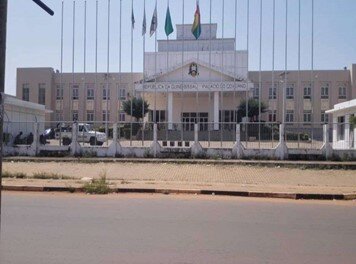
GB Palace 1.jpg
GB Palace 2.jpg

DAY 3 - May 13 and June 10: CACHEU-CANCHUNGO AND BASSAREL KINGDOM

6:30 to 7:30 am - Breakfast at Hotel Ledger

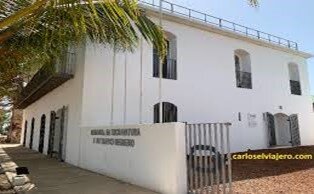
8:00 am - Depart to Cacheu for a full day. Travel time to Cacheu is 2 hours and 15 minutes and the road is very bad. Be prepared for a bumpy ride! Cacheu town is one of earliest Portuguese settlement in Africa and the first navigators arrived in early 15° century. We will visit the Memorial Da Escravatura E Do Trafico Negeiro (Slave Museum). After Cacheu we will drive to the sacred Kingdom of Bassarel to be witness of MANJACO tradition, culture and history. By chance, the king of village will guide us to the sacred forest palace.

Lunch and rest - Canchungo Restaruant Silveste

Return to Hotel Ledger in Bissau and COVID return testing.

7:00 pm - Dinner at Restaurant Calliste

Cacheu 1.jpg
Cacheu 2.jpg
Cacheu 3.jpg
Cacheu 4.jpg

Day 4 - May 14 and June 11: Balanta Festival

6:30 am to 7:45 am - breakfast

8:00 am - Depart for Balanta festival in Bissun Naga. Another 2 hour journey (79 km) but a great way to see the country!

10:00 am to 7:00 pm - 1st Annual Bissum-Naga Cultural Festival 2021: Rescuing and Enhancing the Cultural Identity of the Nagas sponsored by the Association of Children, Descendants and Friends of Bissum-Naga. The festival will promote the art and culture of the Balanta Nagas.

7:00 pm -. Return to the Hotel Ledger for final night.

Balanta Naga 1.jpg
Balanta Naga 2.jpg

TOTAL COST FOR OPTION 1

OPTION 1:1 SINGLE ROOM (with meals, transport and tax) TOTAL: $792

OPTION 1:2 DOUBLE ROOM (with meals, transport and tax) TOTAL: -$868

OPTION 1:3 SUITE (with meals, transport and tax) TOTAL: $1,164

OPTION 1:4 Choose this option if you are the person sharing a DOUBLE ROOM with someone else (with meals, transport and tax) TOTAL: $420

CLCIK HERE TO MAKE PAYMENT

Bubaque.jpg

OPTION 2: ADDTIONAL VISIT TO BIJAGOS ISLANDS

Day 5 - May 15 and June 12: Our departure to Archipelago will depend on sea’s high tide

We will have a full day to discovery the Archipelago.  During our sail we will be in Marathon of Dolphin, which Is covered in a lush green forest in an exceptional nature reserve inhabited by enchanting birds which are part of unique wildlife specific to the remote ecosystem. 

In the Afternoon will take a walk to explore the Rubane Island. It a haft day depending the time of arrive according to sea level. Lunch and dinner is at Restaurant Ponta Anchaca, Rubane Island.

Day 6 - May 16 and June 13: BUBAQUE-SOGA

-      Breakfast then Short trip to visit Bubaque, capital of Bijagos region.

-      Going to SOGA Island.

-      Lunch at Ponta Anchaca.

-      Return to Bubaque to attend traditional dance of young boys and girls called in CREOL DANÇA DE BACA BRUTA (BULL DANCE).

-      Dinner and Overnight at PONTA ANCHACA.

Day 7 May 17 and June 14: RUBANE

Full day free enjoying Sea and sun of Rubane. All meals at the hotel


Day 8 May 18 and June 15: BACK TO BISSAU

-      Breakfast

-      Sailing back to Bissau and hotel to prepare the way back

-      Transfer to airport.

TOTAL EXTRA COST FOR OPTION 2:

$650 (includes food, accommodation, guides, transport and taxes).

NOTE: If you are the person sharing a DOUBLE ROOM and you will be continuing to the BIjagos, you must purchase both OPTION 1:4 and OPTION 2:4 Bijagos Separate

CLCIK HERE TO MAKE PAYMENT

Gambia 1.jpg
Gambia 2.jpg
Gambia 3.jpg

THE ITINERARY FOR JUNE 7-15 FOLLOWS THE SAME FORMAT.

info@kassumaytours.com

Instagram/ kassumaytours sarl

Facebook/ kassumaytours sarl

Tweeter/kassumaytours sarl

Linkedin/ kassumaytours sarl

WOMEN'S HISTORY MONTH FEATURING BALANTA WOMEN: NICOLE VADEN

Nicole Vaden.JPG

Nicole Vaden or Nicky, as some family and friends call her, was born and spent much of her life in Indianapolis, IN.  A mother of three, professionally Nicole specializes in medical coding billing, processing medical claims, and a range of other administrative activities that support health care administration.  Nicole has a degree in Health Information Technology and a certificate as a registered administrative healthcare technician. She is also presently working towards a certification as a coding specialist.  Nicole also recently began studying real estate investing. Additionally, she is studying the stock market and how to build wealth from investing in stocks.  Nicole also has previous experience as a wedding and event planner.

In addition to her professional credentials and personal investment activities, Nicole would like to learn about traditional Balanta ceremonies and celebrations. She one day hopes to incorporate some of those cultural practices when coordinating and planning her events.  Nicole's other hobbies include supporting her children's actives, including her daughters' dance, recitals, and performances. She also enjoys reading and traveling. Nicole plans to travel to her ancestral homeland of Guinea Bissau this year which will be the first of hopefully many trips outside of the country, exploring and learning about other cultures and people.

While Nicole's profession and hobbies are of great importance, she has been most intently focused for the better part of a decade on her spiritual journey. Around the year 2008, Nicole began to feel compelled to go deeper into her spiritual practices and understanding. She felt somewhat incomplete and that something was missing. Also that there was something more that she needed to understand and more that she needed to be doing with her life. She was convinced that her spiritual path is what needed to be addressed and where these answers would come from. After watching a documentary in 2010 with historian Skip Gates, it seemed for her as though a pathway to begin answering some of those questions had been revealed. This pathway would begin with her learning her ancestry. It was at that moment that she decided to take the African Ancestry test.  After taking the test and  before receiving the results, Nicole began receiving an inclination that her ancestry was somewhere in the country of Guinea Bissau. When the results were returned, her intuition was confirmed. 

While living in Atlanta some years ago, Nicole received a reading. From that initial reading, she learned that a man would come along and teach her many things and guide her on her spiritual journey.  In another reading shortly after her first one, she was instructed to set up an ancestral altar and that doing this would help her along her path. Soon after this reading and subsequently setting up her altar, she met a man who would eventually become her teacher and spiritual mentor.

Since becoming a student of her new teacher, she has learned much; she also hopes to combine what she has learned thus far with what she is learning about her Balanta Ancestry, customs, and practices.  Nicole is eager to learn as much as she can about Balanta women and their role in Balanta culture, raising families, rearing children, and women's spiritual role within Balanta society.

When Nicole began learning about her ancestry, she most strongly resonated with the idea of resisting or being under the governance or control of others. While she does not have a problem with respecting authority, the concept of being controlled or forced into a way of thinking or being is not acceptable for Nicole. Another Balanta custom and practice that strongly resonates with Nicole is the Balanta custom of ensuring that a visitor informs their host well in advance of their arrival. Nicole has learned that in Balanta culture and from her own experiences, it is essential and proper to allow your host plenty of notice before arriving and having an expectation of receiving hospitality. The fact that this practice is shared across cultures is proof that we have retained many aspects of our culture.

Nicole understands the importance of every one of us in the African diaspora learning about our ancestry; she also understands how important this is for our families to repair completely.  She recommends setting up an ancestral altar to help bring families together. She also feels this is a method to help families heal.  Nicole has helped many of her family members set up altars in their homes.

 Nicole believes that those who have been made fortunate enough to know where we come from have a certain responsibility. She believes that it is our responsibility to properly shepherd that information and make others in our families understand its importance.  Nicole firmly believes that this knowledge will benefit individuals and unlock who you indeed are and your true purpose; this is the most authentic way for an individual to know thyself.

Finally, Nicole feels that regardless of one's spiritual or religious beliefs, everyone should honor and include their ancestor in whatever endeavors they undertake.