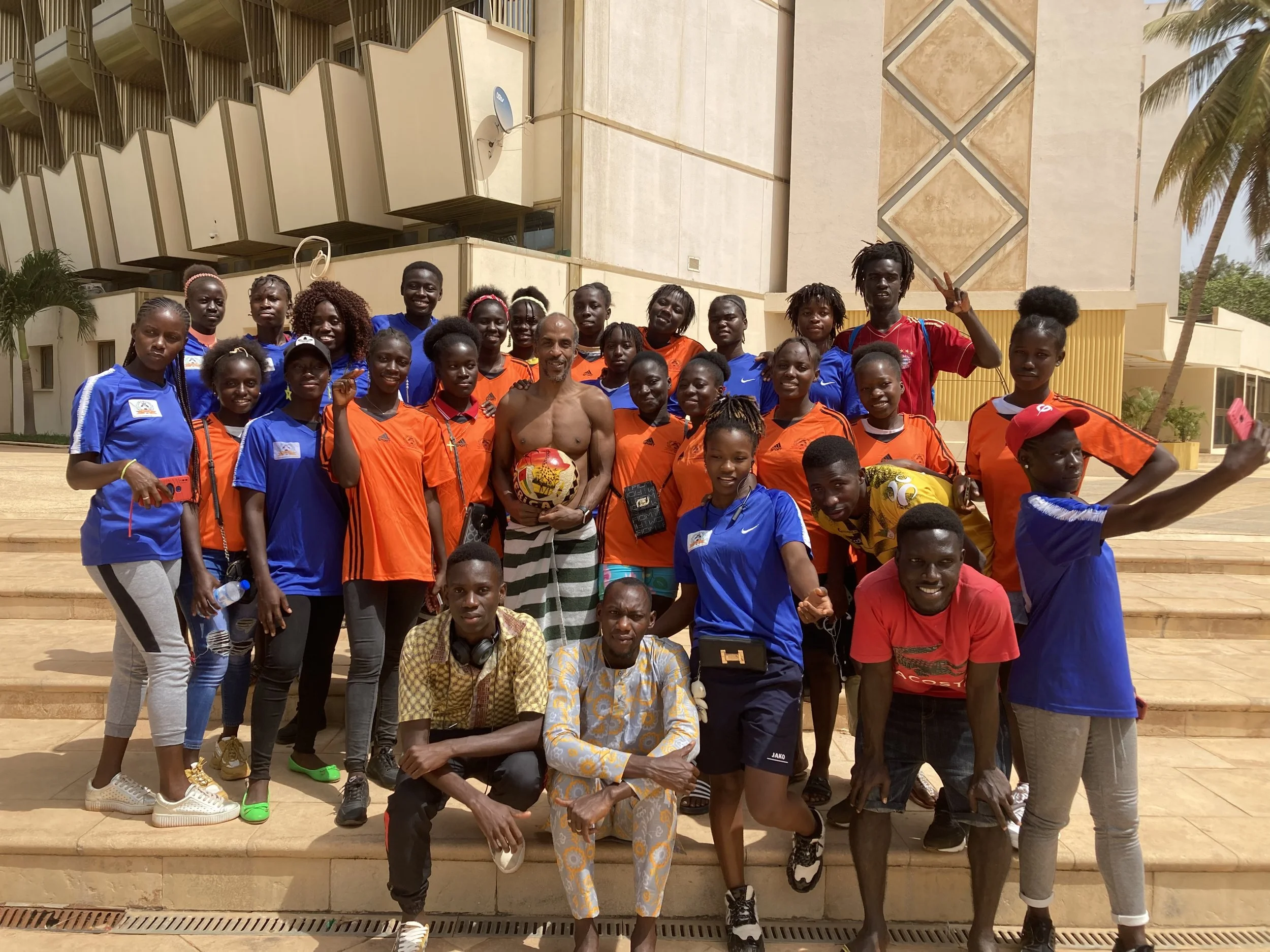
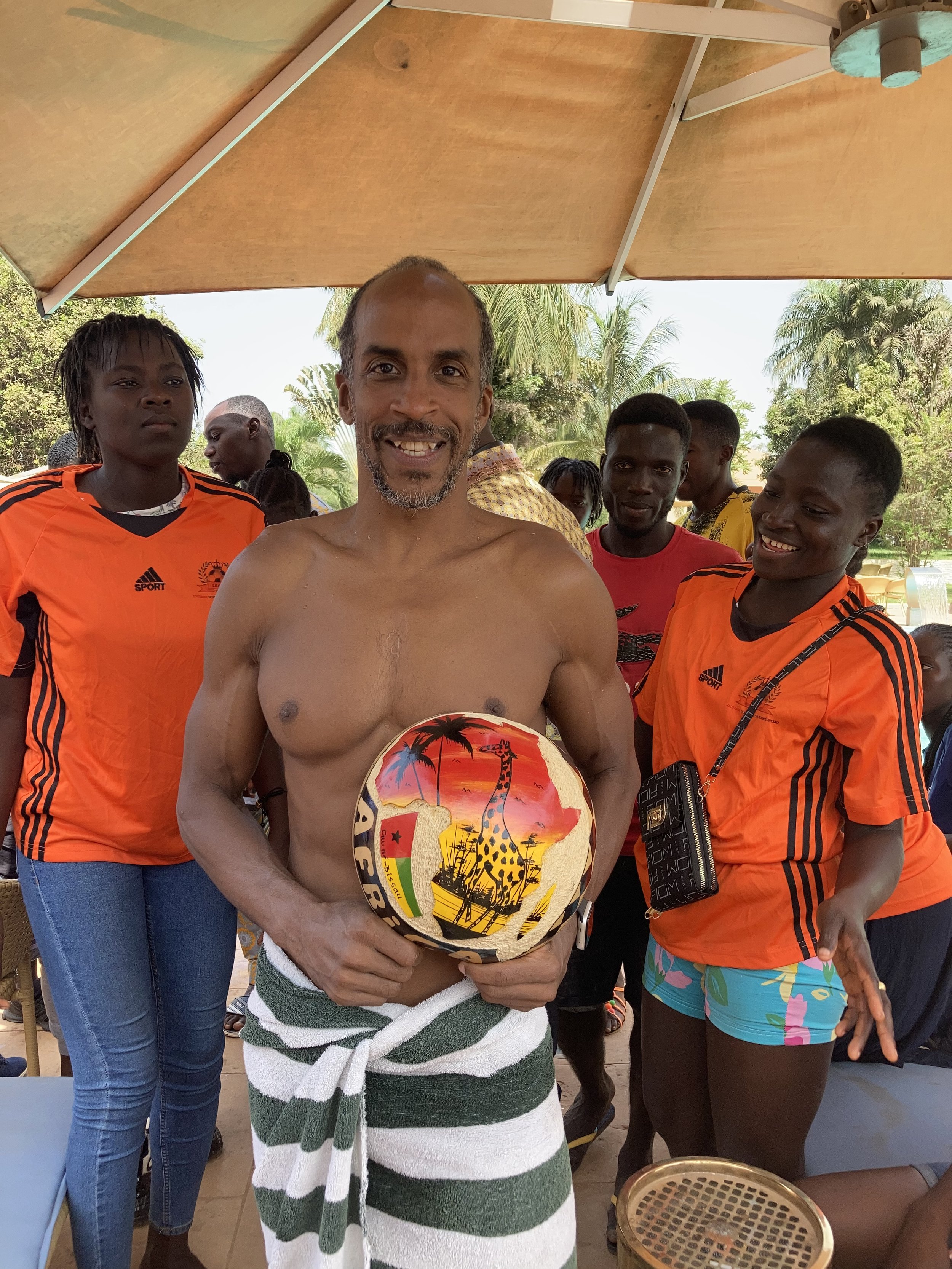
BBHAGSIA Founder Siphiwe Baleka Promoting the Global #savesoil movement in Guinea Bissau

Friday, May 5, 2022 - Bissau, Guinea Bissau

On Thursday, the Founder of the Balanta B’urassa History and Genealogy Society in America, Siphiwe Baleka, met with Lorenço Monteiro Carvalho de Abreu, Director General of Instituto Nacional de Pesquisa Agraria (INPA) and consultant to the Food and Agriculture Organisation (FAO) in Guinea Bissau. Mr. Baleka discussed the #savesoil movement and Guinea Bissau’s participation in it and the upcoming 15th session of the Conference of the Parties (COP), being held in Côte d'Ivoire from 9 to 20 May, organized by the United Nations Convention to Combat Desertification. Leaders from 170 countries will attend, including a high-level opening segment, a Summit of Heads of State, roundtables and interactive dialogue sessions between ministers and other high-ranking officials on May 9-10, 2022.

According to Mr. Baleka,

“The #savesoil movement is probably the most important global movement happening at this moment. All over the world, global leaders in all spheres of work as well as tens of millions of people are involved in this 100 day project. Over seventy governments have signed agreements. I was concerned that no one in Guinea Bissau - neither the leaders, the NGOs, the media nor the people on social media we’re talking about it. So I decided to take responsibility and started posting about it on social media to all the Guinea Bissau Facebook groups, writing letters to the media, and now I’m meeting with people involved in agriculture and policy-making. Really, it’s everyone’s responsibility, I just took the lead to set the example.”
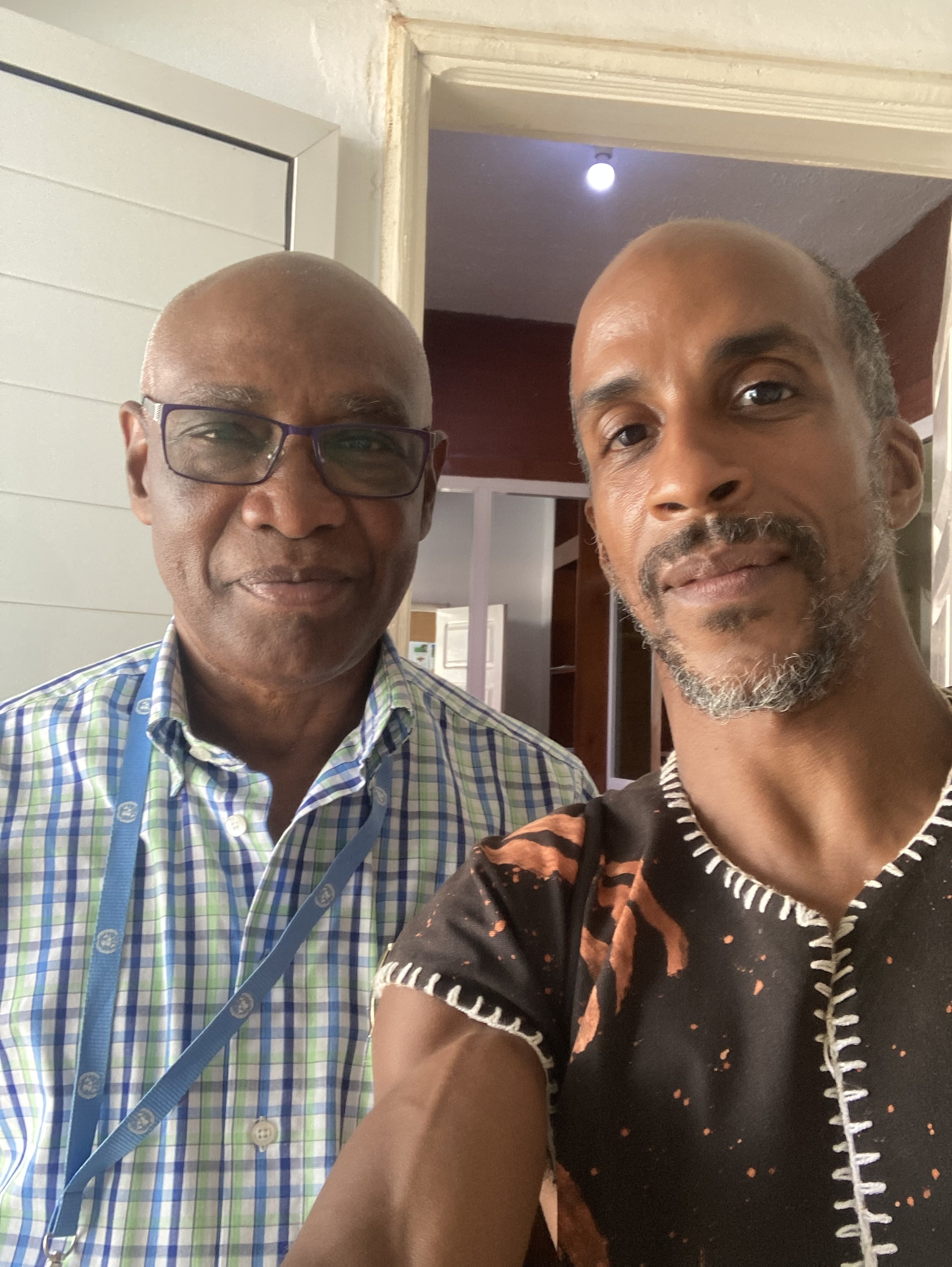
On Friday, May 6th, Mr. Baleka met with Mario Alfredo Mendonca, Director of Commerce and Promotion for the Cashew-LIFT Project. On January 29, 2020 the U.S. Ambassador to Senegal and Guinea-Bissau, Tulinabo Salama Mushingi attended the launch of the USDA’s Food for Progress regional cashew value chain project, also called the Linking Infrastructure, Finance, and Farms to Cashews (LIFFT-Cashew). The program implementing a $38 million, six-year project in The Gambia, Senegal, and Guinea-Bissau will enhance the regional cashew value chain to improve the trade of processed cashews in local and international markets. “Sixty-three percent of the funds for Guinea Bissau are earmarked for road construction,” Mr. Mendonca emphasized.

Besides learning some of the details of how the Cashew- Lift project works, Mr. Baleka also discussed the potential of certifying the soil content in f the land farmed by the cooperatives and becoming early adopters of a marketing program that would include “organic soil content” on product landing.

“With such labelling, and provided that the organic soil content reaches a minimum 3%, Guinea Bissau farmers could enjoy premium pricing from an increasingly ‘soil conscious’ international market,” said Baleka.

”To do this, it will be necessary to develop a comprehensive soil testing program specifically designed to help Guinea Bissau reach the 3% minimum that is being accepted as the critical standard globally”.

https://projectblue.blob.core.windows.net/media/Default/Imported%20Publication%20Docs/Soil%20Organic%20Matter.pdf

Save Soil is a global movement bringing together people and leaders to restore Soil Health by instituting national policies worldwide toward increasing the organic content in cultivable Soil.

Why 3.5 billion people? 

In democracies, governments craft policies based on what the majority of people want. 3.5 billion people is 60% of the world’s voting population. 

For any soil to be agriculturally potent, it must have a minimum organic content of 3 to 6%

How much damage has already happened to soil? 

● 62% of India’s soil has an organic content of less than 0.5%. 

● The US has lost 50% of its topsoil. 

● In Europe, 75% of the soil has an organic content of less than 2% 

● Two thirds of Africa is well on track to losing its arable lands by 2030 

Worldwide: 52% of agricultural soils are already degraded - ELD initiative, 2015 

● By 2050, 90% of Earth's soil could be degraded - UNCCD, 2020 

Soil organic content:

United States 1.4%

Europe 1.2%

Indian 0.6%

Africa 0.3%

Guinea Bissau -?????

When we grow one ton of crop, it means that we have removed one ton of topsoil. What are the means to put it back? We were putting it back naturally when there were animals and trees on the farm because green litter from the trees and animal waste are the only ways to put back organic content into soil.

87% of the planet's life, including you, me, and a multitude of microbes, worms, birds, animals, and trees are living on approximately 39 inches of topsoil. That is the average topsoil that you have on the planet. But the level of degradation that has happened in the last 70 years is scary. The amount of biomass in the soil has come down by around 80% in the last 50 years.

What is keeping you alive is microbial life on all levels.

The human body contains trillions of microorganisms — outnumbering human cells by 10 to 1. Because of their small size, however, microorganisms make up only about 1 to 3 percent of the body's mass (in a 200-pound adult, that's 2 to 6 pounds of bacteria), but play a vital role in human health.

HMP researchers also reported that this plethora of microbes contribute more genes responsible for human survival than humans contribute. Where the human genome carries some 22,000 protein-coding genes, researchers estimate that the human microbiome contributes some 8 million unique protein-coding genes or 360 times more bacterial genes than human genes.

This bacterial genomic contribution is critical for human survival. Genes carried by bacteria in the gastro-intestinal tract, for example, allow humans to digest foods and absorb nutrients that otherwise would be unavailable.

Humans don't have all the enzymes we need to digest our own diet,” said Lita Proctor, Ph.D., NHGRI's HMP program manager. “Microbes in the gut break down many of the proteins, lipids and carbohydrates in our diet into nutrients that we can then absorb. Moreover, the microbes produce beneficial compounds, like vitamins and anti-inflammatories that our genome cannot produce.” Anti-inflammatories are compounds that regulate some of the immune system's response to disease, such as swelling.

Globally around 24 billion tons of fertile soil and 27,000 bio-species are lost each year

There are no trees. There is not enough organic activity in the soil to absorb the water. If the water had percolated down, the wells, ponds, and rivers would have water. Since rainwater is not retained, a drought is bound to happen after some time.

If it is in the right condition, soil can hold 800% more water than all the rivers put together. But as the organic value in the soil goes down, its ability to hold water also goes down.

India has about 160 million hectares of arable land, but nearly forty percent of this soil is labeled as distressed soil. That means in another twenty-five to thirty years’ time, we may not be able to grow the food that we need in this nation. When there is no water and food, the level of civil strife that will happen will demolish the nation in many different ways. People from those rural areas where water completely runs out are going to migrate in large numbers into urban centers. This is not far away. With no infrastructure, they will sit on the streets, but for how long? When there is no food and water, they will break into homes. I am not some kind of a doomsayer, but in the next eight to ten years, you will see these situations unless we do something drastic right now.

AN OPEN LETTER TO THE PRESIDENT, PRIME MINISTER, MINISTRY OF AGRICULTURE AND THE PEOPLE OF THE REPUBLIC OF GUINEA BISSAU 

Globally around 24 billion tons of fertile soil and 27,000 bio-species are lost each year. 

Scientists are saying that by 2045, the planet will have 40% less food for 9.2 billion people and that there are only 40 to 60 harvests left before a critical global food shortage.

For any soil to be agriculturally potent, it must have a minimum organic content of 3 to 6%. The average soil organic content of the United States is 1.4%, for Europe 1.2%, for India 0.6% and for Africa 0.3%. I am unable to find any data on the organic content of Guinea Bissau’s soil.

Due to the severity of soil extinction and the food crisis which will be devastating to the entire world, a global #savesoil campaign was launched. On March 21, Indian mystic Sadhguru embarked from London to India on a 100 day campaign, traveling more than 30,000 km to 26 countries by motorcycle in order  to spread awareness and to mobilise 3 billion people to use their voice and give democratically elected leaders and governments a mandate to institute national policies toward increasing the organic content in cultivable soil. After just 28 days, 72 nations have signed policy agreements. 

I am now using my voice as a citizen of Guinea Bissau to make sure that Guinea Bissau participates in the global #savesoil campaign since the people of Guinea Bissau are among those who will suffer the most if nothing is done and will benefit the most if the correct actions and policies are taken now. 

Towards this end, the 15th session of Conference of Parties (COP), is convening in the Ivory Coast from May 9-20, organised by the United Nations Convention to Combat Desertification. Leaders from 170 countries will be attending, including a high-level opening segment, a Heads of States Summit, round tables and interactive dialogue sessions among ministers and other high-ranking officials on 9 and 10 May 2022.​

I am now asking the responsible leaders of Guinea Bissau to do the following:

  1. Identify the delegation that will be representing Guinea Bissau at the 15th COP in the Ivory Coast;

  2. Inform the population of the status of Guinea Bissau’s soil and especially its current organic content;

  3. Explain how people can get their soil tested for organic content.

  4. Make widely available the plan to increase the organic content of the soil to a minimum of 3%;

  5. Provide the current expenditure on soil conservation as well as the cost needed to achieve the minimum 3%;

  6. Create a Guinea Bissau Soil Content Task Force.

Respectfully, Siphiwe Baleka,

PLEASE SUPPORT MY WORK HERE IN GUINEA BISSAU

#savesoilguineabissau

#protegiterraguineabissau

#savesoil

#protegiterra

@sadhguru

@consciousplanetmovement

BBHAGSIA President Siphiwe Baleka Joins Launch of the Impact Hub Candidate Bissau

Anicet Ateba of Semente Verde and Impact Hub Bissau with Siphiwe Baleka, entrepreneur and Founder, BBHAGSIA

Bissau, Guinea Bissau, April 20 - The Impact Hub Candidate Bissau in partnership and funded by the Mava Foundation and PNUD Guiné-Bissau invited the entire entrepreneurial ecosystem to attend its launch at the National School of Management (ENA). In attendance was Siphiwe Baleka, a successful entrepreneur and founder of the Balanta B’urassa History and Genealogy Society in America.

Siphiwe Baleka is known as “The Fitness Guru to the Trucking Industry” and has appeared in Men’s Health magazine, Sports Illustrated, the Huffington Post, Good Morning America, CBS Evening News, NPR, CNN, NBC Access Daily and BBC. He served as the North American Regional  Director of the African Sports Ventures Group as well as the Senior Heritage Ambassador of the United House of Ancestry, In 2020 he launched the Decade of Return Initiative of the Government of Guinea Bissau. Many of his interviews, including the Business Leadership Series: Be an Intentional Leader podcast and The Unstoppable Entrepreneur podcast are available here. Recently, Siphiwe has gained international attention for attempting to represent Guinea Bissau in the 2020 Tokyo Olympics and become the oldest swimmer in Olympic History.

”I came to Guinea Bissau to help my ancestral homeland,” said Siphiwe Baleka. “The best way to do that is to invest time and energy into the young people. I am doing that through sports as the Interim President of the Guinea Bissau Swimming Federation and through the Supporting Girls Sports in Guinea Bissau campaign. Now I look forward to helping this generation’s young entrepreneurs throught the Impact Hub.”

“As a young man, I had many great coaches and mentors, both in sports and a few in business. Guidance from those who have already achieved success is invaluable. It takes a special kind of spirit and mindset to be an entrepreneur, to be a champion, and I will do my part to nurture that,” added Baleka.

Team SDGB Celebrates Birthday of Guinea Bissau Swimming Federation Interim President Siphiwe Baleka

April 2, 2022 Hala Hotel &Aqua Park, Bissau, Guinea Bissau

The Sociedade Desportiva da Guiné-Bissau (S.D.G.B) girls’ futbol team made a surprise visit to the Hala Hotel & Aqua Park where the Interim President of the Federação de Natação da Guiné-Bissau (Guinea Bissau Swimming Feseration), Siphiwe Baleka is training to compete in the African Swimming Federation Zone 2 Championships in Dakar, Senegal May 27-29.

Mr. Baleka visited the girls futbol team on January 16 to give them a motivational speech to start the new season. Last year, their first as a team, they lost the championship game in what was generally perceived to be unfair circumstances. Since Mr. Baleka’s motivational speech, he has served as the team’s patron and they have been on a winning streak. The team wanted to return the support and came to celebrate Mr. Baleka’s upcoming 51st birthday (April 14) and encourage his training.

The S.D.G.B girls team has now qualified for the next round of the championships and are waiting the results of this weekend’s games to see who they will play.

“We will most likely play in Bafata,” said Sana Nharo, the team’s coach. “We will need transportation and overnight accommodations. Without sponsorship like the big teams who are sponsored by Benéfica and others, this becomes difficult for us.”

Coach Sana explained that before receiving support from Mr. Baleka, the girls felt dehumanised. They had to show up to the games without proper uniforms and equipment. Sometimes they couldn’t pay for the transportation all the way to the playing field and they would have to walk. When the team can’t afford accommodations, they have to resort to tents. Because of the fundraising this year and the support of a lot of people in the United States, the girls have new uniforms, including socks and their morale is much better.

“They deserve to win the championship,” according to Coach Sana. “They just need the support that ‘big’ teams get.”

Siphiwe Baleka talks to Team S.D.G.B

Mr. Baleka wants to raise another $300 so that the girls can travel to the next game in a proper bus and get a good night’s sleep at a proper hotel. If you can, please donate to the GoFundMe campaign to support these girls in Guinea Bissãu.

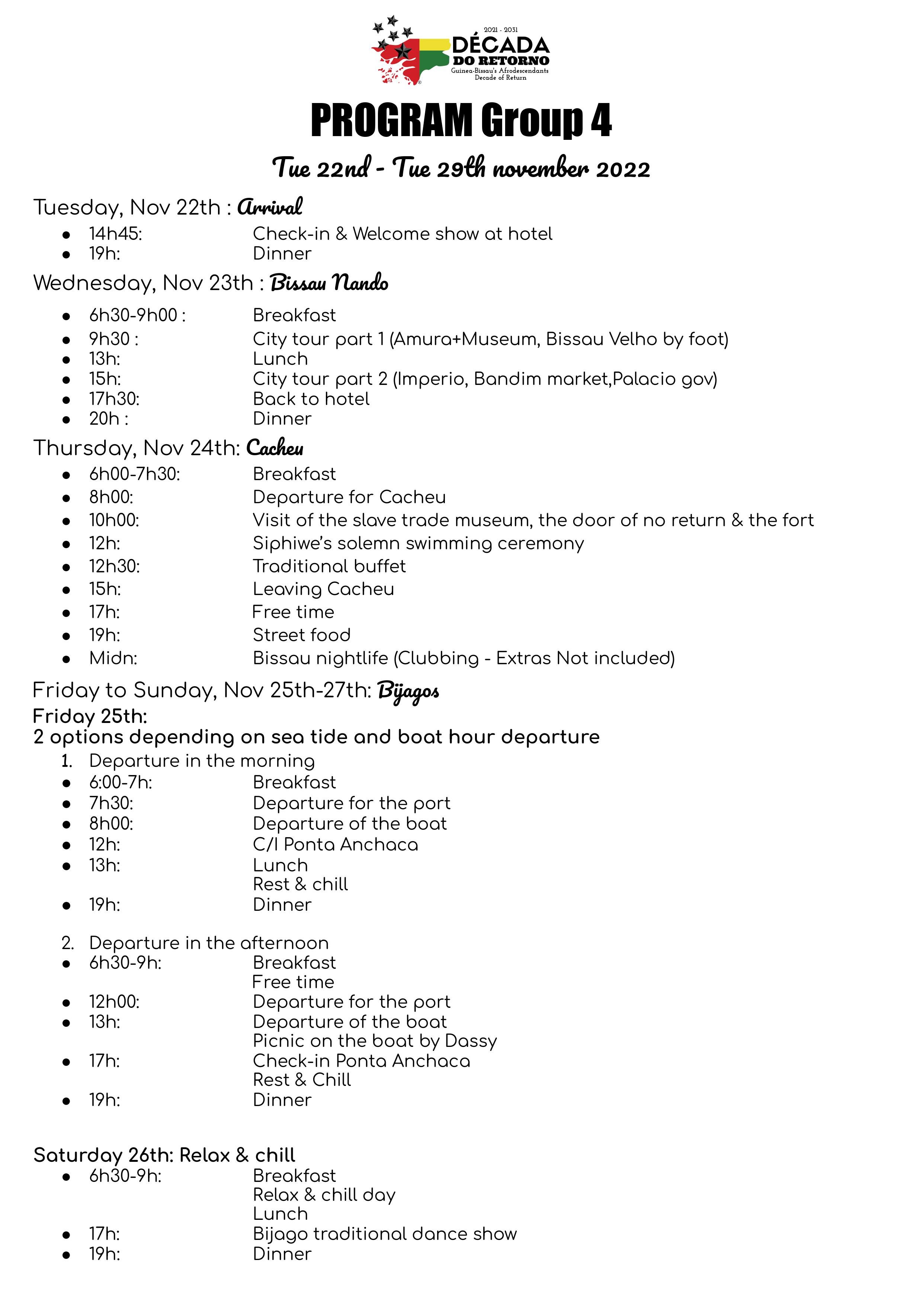
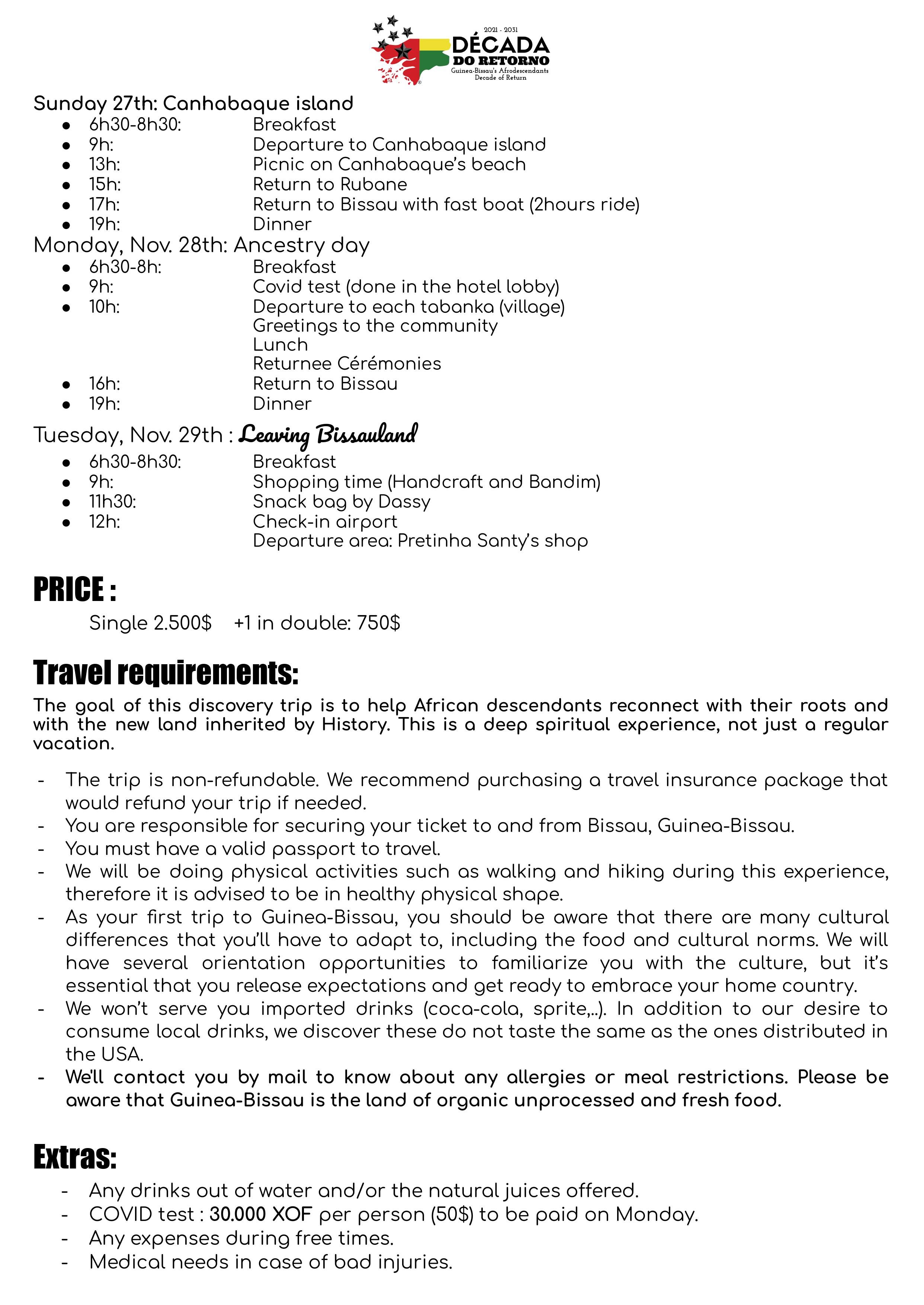
Decade of Return to Guinea Bissau November 22-29, 2022

PRICE :

Single $2,500 +1 in double: $750

$500 non-refundable down-payment to reserve your spot due May 1, 2022 - only 15 spots!!!!

Payment 1: $1,000 due August 1, 2022

Payment 2: $1,000 due October 1, 2022

+1 Double: $750 due October 15

Make full payment: $2,500

FLIGHTS

YOU MUST CONNECT WITH THESE TAP AIR PORTUGAL FLIGHTS

Decade of Return Group 2, June 2021

This picture and the three pictures below taken by Ken Hawkins during the Decade of Return Group 1 in May 2021.

Decade of Return Group 2, June 2021 in front of the Door of No Return in Cacheu

The above six pictures take by Ken Hawkins during the Decade of Return Group 1, May 2021

Decade of Return Group 2 in Bijagos Islands, June 2021

Balanta History & Genealogy Society in America Launches T-Shirt Collection Featuring The Teachings of Amilcar Cabral

Amilcar Cabral is one of the world’s greatest leaders. He organized and led a successful revolutionary armed struggle against Portuguese colonizers, ending a 521-year war and resulting in the Independence of the Republic of Guinea Bissau.

In 2020, BBC World Histories Magazine asked historians to nominate the ‘greatest leader’ –someone who exercised power and had a positive impact on humanity – and to explore their achievements and legacy. More than 5,000 readers voted, and in second place, with 25 per cent of the vote is Amilcar Cabral, who as head of the African Party for the Independence of Guinea and Cape Verde (PAIGC), led his country to independence.

Results of the the BBC World Histories Magazine greatest leaders poll:

  1. Maharaja Ranjit Singh, ruler of the Sikh empire 1801–39

  2. Amílcar Cabral, 20th-century African independence fighter

  3. Winston Churchill, British prime minister 1940–45 and 1951–55

  4. Abraham Lincoln, US president 1861–65

  5. Elizabeth I, Queen of England 1558–1603

“Amilcar Cabral is largely unkown to African Descendants in the United States,” said Siphiwe Baleka, President of the Balanta B’urassa History & Genealogy Society in America (BBHAGSIA). “This is unfortunate because it is to Amilcar Cabral that we can look to for a revolutionary ideology that has proven to be succesful and leads to self-determination and independence.”

What made Cabral great?

Cabral focused on Ideology and Revolutionary Consciousness

…The ideological deficiency, not to say the total lack of ideology, within the national liberation movements–which is basically due to ignorance of the historical reality which these movements claim to transform–constitutes one of the greatest weaknesses of our struggle against imperialism, if not the greatest weakness of all. We believe, however, that a sufficient number of different experiences have already been accumulated to enable us to define a general line of thought and action with the aim of eliminating this deficiency…

Amilcar Cabral, The Weapon of Theory

According to Baleka, “While Amilcar Cabral is known to the people of Guinea Bissau, they haven’t really internalized his teachings and implemented them, at least among the ruling class in Guinea Bissau which has failed to commit the class suicide that Cabral said was necessary to complete and not betray the revolution. “

To help people on both sides of the Atlantic to gain a deeper understanding of Amilcar Cabral’s teachings, BBHAGSIA launched its Amilcar Cabral t-shirt collection containing seldom quoted exceprts in English and Kriol from the book, Unity and Struggle: Speeches and Writings of Amilcar Cabral.

The first three t-shirts (which have an option to include the Guinea Bissau flag on both sleeves) quote the following from Amilcar Cabral on the reverse side:

“THE STRUGGLE SHOWS WHO IS TO BE VALUED AND WHO IS WORTHLESS.”

Kriol: Luta tá mostra kilis k bali ku kilis k ka bali.

“Leadership must go to those who have the clearest concept of our reality.”

Kriol: Liderança tem k bai pá kilis k tene vizon mas claro di nô realidadi

“THE WORST AND THE WORTHLESS MUST BE LEFT BEHIND.”

O pior e o kabalidu tem k dixado trás.

The quotes were taken from this excerpt:

“THE STRUGGLE UNITES, BUT IT ALSO SORTS OUT PERSONS, the struggle shows who is to be valued and who is worthless. Every comrade must be vigilant about himself, for the struggle is a SELECTIVE PROCESS; the struggle shows us to everyone, and show who we are. . . . .We are making an effort for the unworthy to improve, but we know who is worthy and who is not worthy; we even know who may tell a lie. . . . There are others of whom some are afraid, because they know that their only merit is the power they wield. . . . Whether we like it or not, the struggle operates a selection. Little by little, some pass through the sieve, others remain. . . . Only those will go forward who really want to struggle, those who in fact understand that the struggle constantly makes more demands and gives more responsibilities and who are therefore ready to give everything and demand nothing, except respect, dignity, and the opportunity to serve our people correctly. . . But for a struggle really to go forward, it must be organized and it can only really be organized by a vanguard leadership. . . . Leadership must go to the most aware men and women, whatever their origin, and wherever they come from: that is, to those who have the clearest concept of our reality and of the reality that our Party wants to create. We are not going to look to see where they come from, who they are and who their parents are. We are looking only at the following: do they know who we are, do they know what our land is, do they know what our Party wants to do in our land? Do they really want to do this, under the banner of our Party? So they should come to the fore and lead. Whoever is most aware of this should lead. We might be deceived today, or deceived tomorrow, but the proof of the pudding is in the eating, it is practical experience which shows who is worthy and who is not. . . . Our struggle demands enlightened leadership and we have said that the best sons and daughters of our land must lead. . . .So far as we are able to think of our common problem, the problems of our people, of our own folk, putting in their right place our personal problems, and, if necessary, sacrificing our personal interests, we can achieve miracles. . . . It is not enough to say ‘I am African’ for us to say that person is our ally: these are mere phrases. We must ask him frankly: ‘Do you in fact want the independence of your people? Do you want to work for them? Do you really want our independence? Are you really opposed to Portuguese (American) colonialism? Do you help us? If the answers are yes, then you are our ally. . . . We can only genuinely achieve what we want in our land if we form a group of men and women who are strong, able not to cheat their comrades and not to lie, able to look their comrades straight in the eye . . . . If someone is unworthy, we must show him that he is unworthy. There is no friendship, there is no consideration for him. He must be cast aside. The time has come for us to be friends with those who are worthy, but those who are unworthy, but those who are worthless, cannot be our comrades, our friends. Anyone who betrays the Party, who tries to divide us, who makes plans to sabotage the Party, who serves the enemy, who consorts with the enemies of our Party can no longer sit with us, cannot eat with us from the same bowl, cannot drink from the same glass or mug, cannot sleep in the same bed. Either we are able to distinguish the worthy from the unworthy or it is not woth our while going on with our struggle as we are doing, because sooner or later we shall drown in a sea of great confusion of our own making. . . . In the framework of revolutionary democracy, as I have already said, we must bring to the fore the best sons and daughters of our land. The worst and the worthless must be left behind. . . . .”

ORDER YOUR T-SHIRTS

RIGHT TO RETURN ALLIANCE SKILLS SURVEY

The Right To Return Alliance (RTRA), a coalition of African Descendants’ from global communities, CSOs, NGOs and businesses in Africa and the Diaspora, is inviting you to complete this Skills Survey to be databased and used in policy formation and planning during

2022: The Year Of Promoting The African Descendants’ Right To Return'.

HISTORY

The African Union convened the First AU-Western Hemisphere Diaspora Forum in Washington, DC December 17-19, 2002. The Forum which established the Western Hemisphere African Diaspora Network (WHADN) to interface with the African Union Commission. The WHADN put forward proposals for effective collaboration between the African Diaspora and the African Union. It recommended that the AU should

- Include in its agenda the 'crime against humanity' concept and work with Diaspora organizations to suggest a process for reparations.

- Review, educate and sponsor open discussion to get insight into slavery In turn, the African Diaspora should:

- Establish a Western Hemisphere Diaspora Trade and Economic Development Committee to coordinate and facilitate the follow-up process to these recommendations with the AU ..... Ensure establishment of an industry specific Western Hemisphere Diaspora data base endorsed by the appropriate Diaspora representatives."

In May, 2003, the Executive Council of the African Union met at the Third Extraordinary Session in Sun City, South Africa and issued the "Decision on the Development of the Diaspora Initiative in the African Union" This decision stated in point 4 that it

"Supports the initiative of the Commission to convene a technical workshop.... for the establishment of a Diaspora database to promote and facilitate networking and collaboration between experts in their respective countries of origin and those in the Diaspora."

The African Union Technical Workshop On the Relationship With the Diaspora General Report (Port of Spain, Trinidad, June 2-5 2004) stated:

"55. For the Diaspora to meaningfully contribute to the attainment of the goals of human development in Africa the following policy recommendations were suggested:

a) Resources/Skills Bank:

56. The Resources Bank should serve as the integrating platform upon which all other aspects of the Diaspora development and mobilization of its resources, both organic and virtual knowledge, could be shared and expanded.”

FIRST 50-METER OLYMPIC SWIM TRAINING FACILITY BUILT IN GUINEA BISSAU

Unche, Guinea Bissau - Federação de Natação da Guiné-Bissau Interim President Siphiwe Baleka constructed a 50 meter long course for swim training in the middle of a tributary of the Rio Unche. Olympic swimming pools are 50 meters long and there are none in the country of 2 million people. So Baleka decided to use what was available to complete a makeshift pool with lane ropes.

Baleka conceived of the idea during his first visit to Unche, the village of his great, great, great, great, great grandfather who was captured as a boy and enslaved in Charleston, SC.

“I was told in Cacheu that Balantas are the best swimmers, that they could turn into crocodiles,” said Baleka. “So I always imagined my 5g grandfather was a great swimmer as a young boy. Today I know it is true because all the boys in Unche are good swimmers with a lot of natural ability. Now they just need to be coached.”

Coaching the boys and girls of Unche, the village of his 5G grandfaather, is exactly what Baleka intends to do. Baleka’s short term plan is to fix the lane ropes (which happen to be the red, gold, and green colors of the Guine Bissau flag) with some sort of flotation device. According to Baleka,“We will try plastic bottles and styrofoam first.”

HELP SIPHIWE BALEKA WITH THIS INCREDIBLE MISSION

DONATE TODAY!

New Uniforms for Girls Team Provided by Interim President of the Guinea Bissau Swimming Federation Siphiwe Baleka

January 27, 2022 - Enterremento, Bissau, Guinea Bissau

The Sociedade Desportiva da Guiné-Bissau (S.D.G.B) received the Interim President of the Federação de Natação da Guiné-Bissau, Siphiwe Baleka to display their new uniforms. Mr. Baleka visited the girls futbol team on January 16 to give them a motivational speech. The team then went on to win their latest match 4 - 1.

“Maybe what I said helped them,” ’joked Mr. Baleka.

During his previous visit, Mr. Baleka learned that the team was not receiving much support from its federation. He then donated the money to purchase the new uniforms.

“I really want to help these girls. They lost the championship last year and I know they can win it this year,” Mr. Baleka said with confidence. “I will do what I can to help them do their best.”

Mr. Baleka told the girls that their life in Guinea Bissau presented them with both advantages and disadvantages. 

“In America, life is much easier. The girls are not as tough as you are,” he told them. “You are strong and very good athletes because life in Guinea Bissau is much more physical. That is your advantage. Of course access to resources, equipment, and opportunities to travel are your disadvantages,” said Mr. Baleka.. “Do your best on the field and I will do my best off the field to help find resources for you.”

Coach Sanha Nharo explained that one of the challenges for the team is a cultural challenge. Girls are discouraged from playing sports because going to school and taking care of the home are the priorities. “You have to have a very close relationship with the parents to convince them to let their daughters travel and spend the night somewhere,” Coach Sanha said.

Coach Sanha also explained that the team struggles because of the poor organization of the league. Every year we have to figure out who and where we can play and what color uniforms each team has. According to Coach Sanha, if you travel to play a team and you have the wrong color jersey, you must forfeit the match because you can’t have two teams wearing the same colors. That’s a tall order for teams that don’t have sponsors and multiple uniforms.

There are other challenges, too. The team wants to buy tents because they don’t have the money to pay for hotels when they travel in the country to play teams in other regions.

To help the team this year, Mr. Baleka set up a GoFundMe campaign. All money goes to the team.

SUPPORT GIRLS SPORTS IN GUINEA BISSAU. DONATE NOW!

BBHAGSIA President Discusses the COVID Agenda on Discussions of Truth Podcast

“The Balanta Society has, by far, compiled the most extensive and comprehensive chronological research on the origin of the Covid19 virus - that I have found to date.”

- Ian Trottier

Due to technical issues, you will find the introduction at the 13:45 mark and the main content of the episode begins about the 30min mark.

Read

THE COVID 19 CHRONOLOGY THEY AREN'T SHOWING YOU: PROPAGANDA AND DENIAL ABOUT THE SOURCE OF THE PANDEMIC

About Ian Trottier and Discussions of Truth Podcast:

Ian Trottier is a genealogist, historian, and free thinker. His Discussions of Truth podcast has hosted a who’s who of great free thinkers and whistleblowers, including such people as Anton Chaitkin, Daivd Icke, Judy Mikovitz, Cynthia McKinney and Brandy X. Lee. See his full guest list here.

Nbuntul a Kraase: Balanta Stories Now Available for First Time Translated into English

Book Synopsis

The Balanta B'urassa Language Preservation Society in America is proud to present this reprint of Nbuntul a Kraase: Balanta Stories. Finding original books printed in the Balanta language is rare. As it is our mission to preserve the Balanta language, it is our joy to make this available to a wider audience.

ORDER YOUR COPY NOW!!!! $9.99

Monkey and  Rabbit

By Unico Só Mané

Grasshopper and Tortoise

By Domingos Quadé

Banditism is not good

By Rúcana Danfa

TRANSLATED TO ENGLISH

BY QUINTINO MEDI