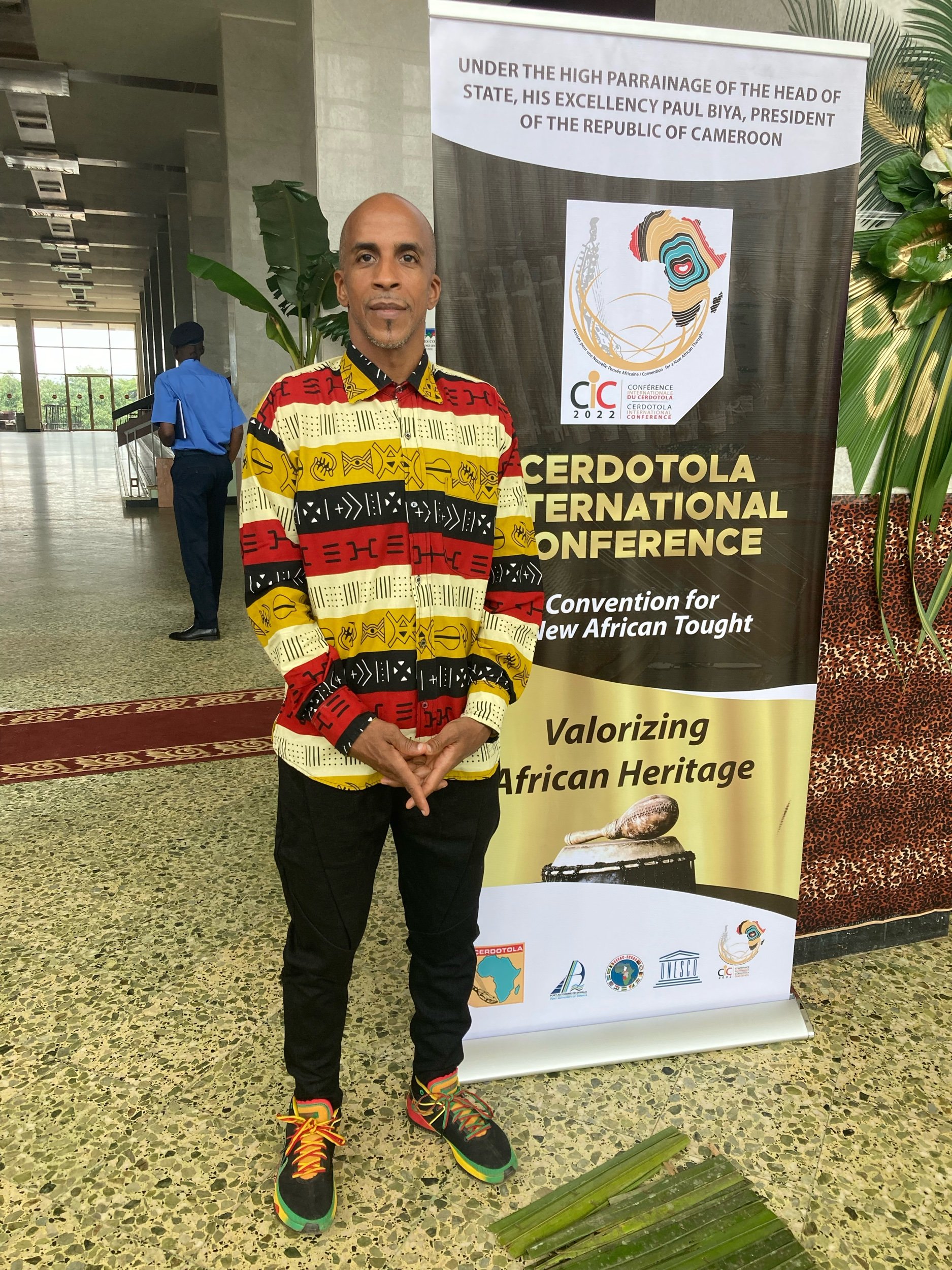
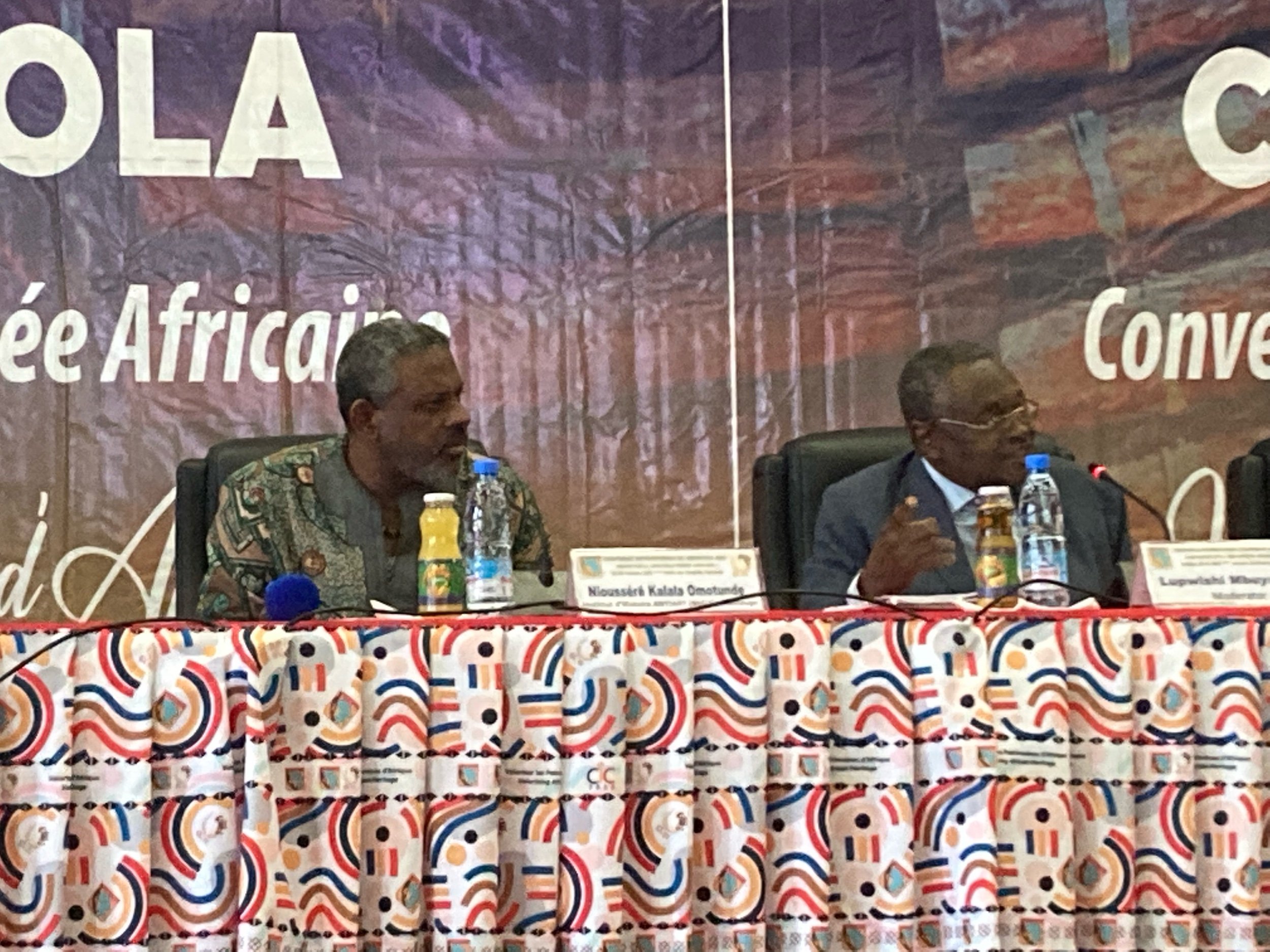
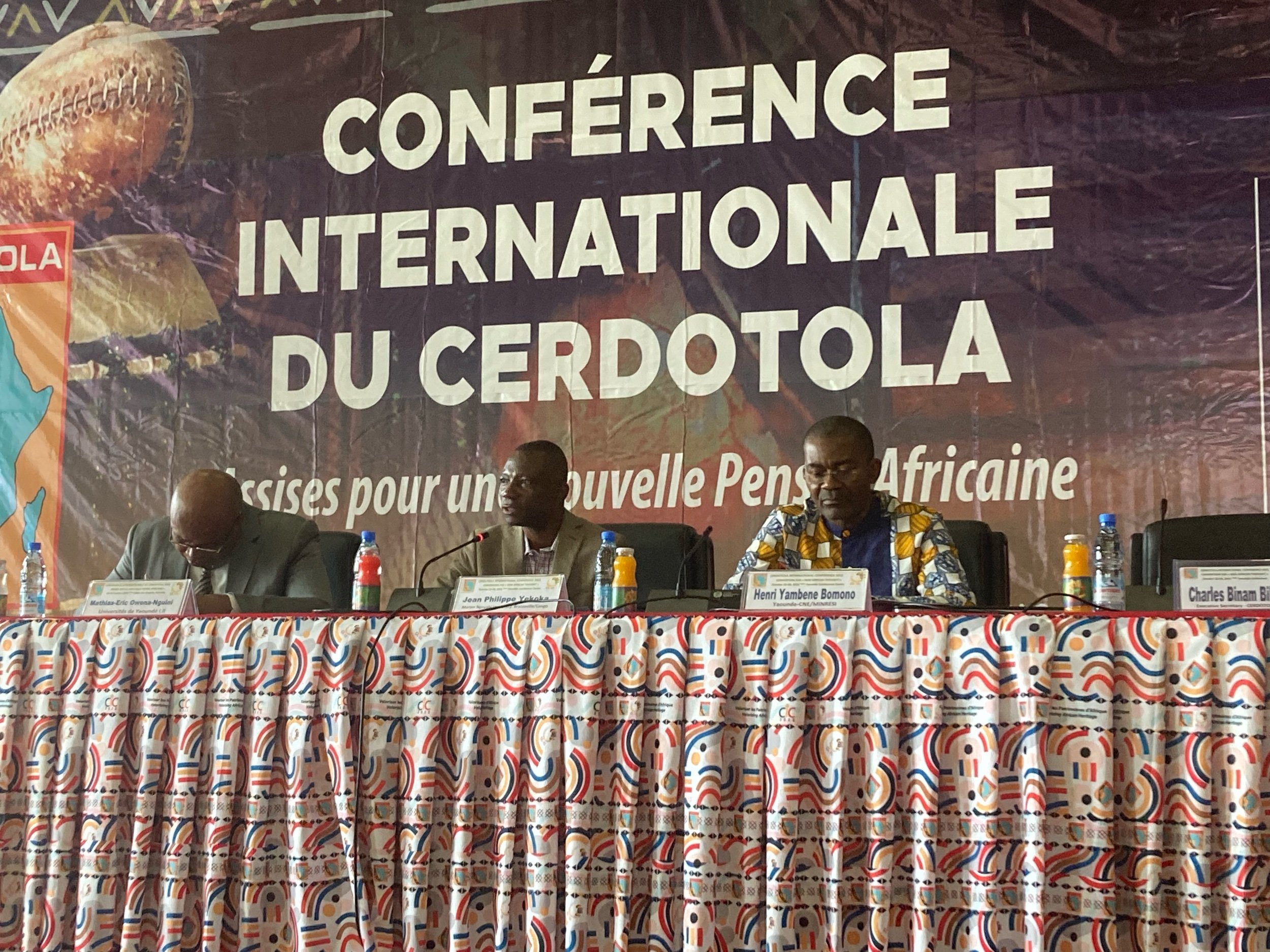
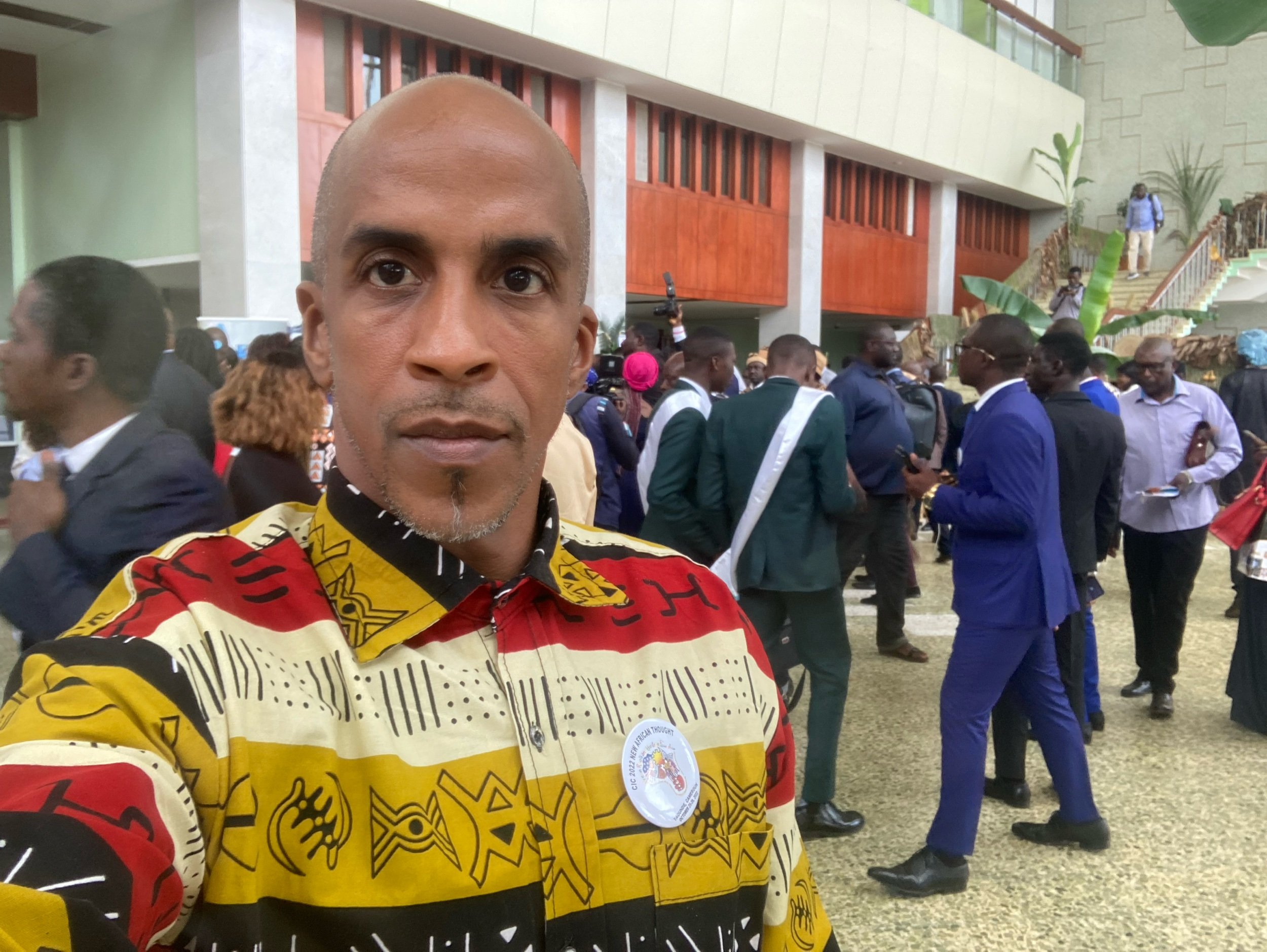
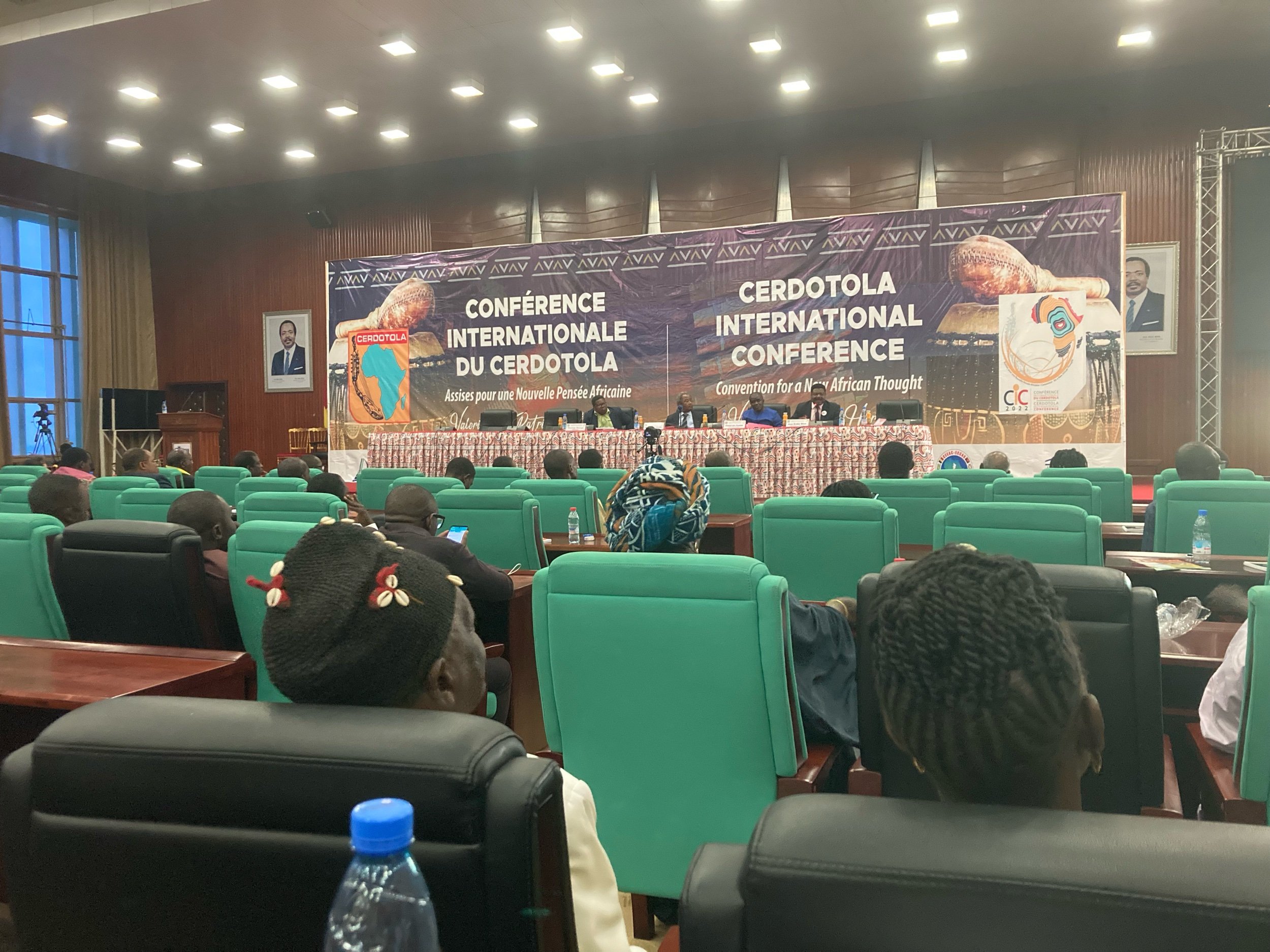
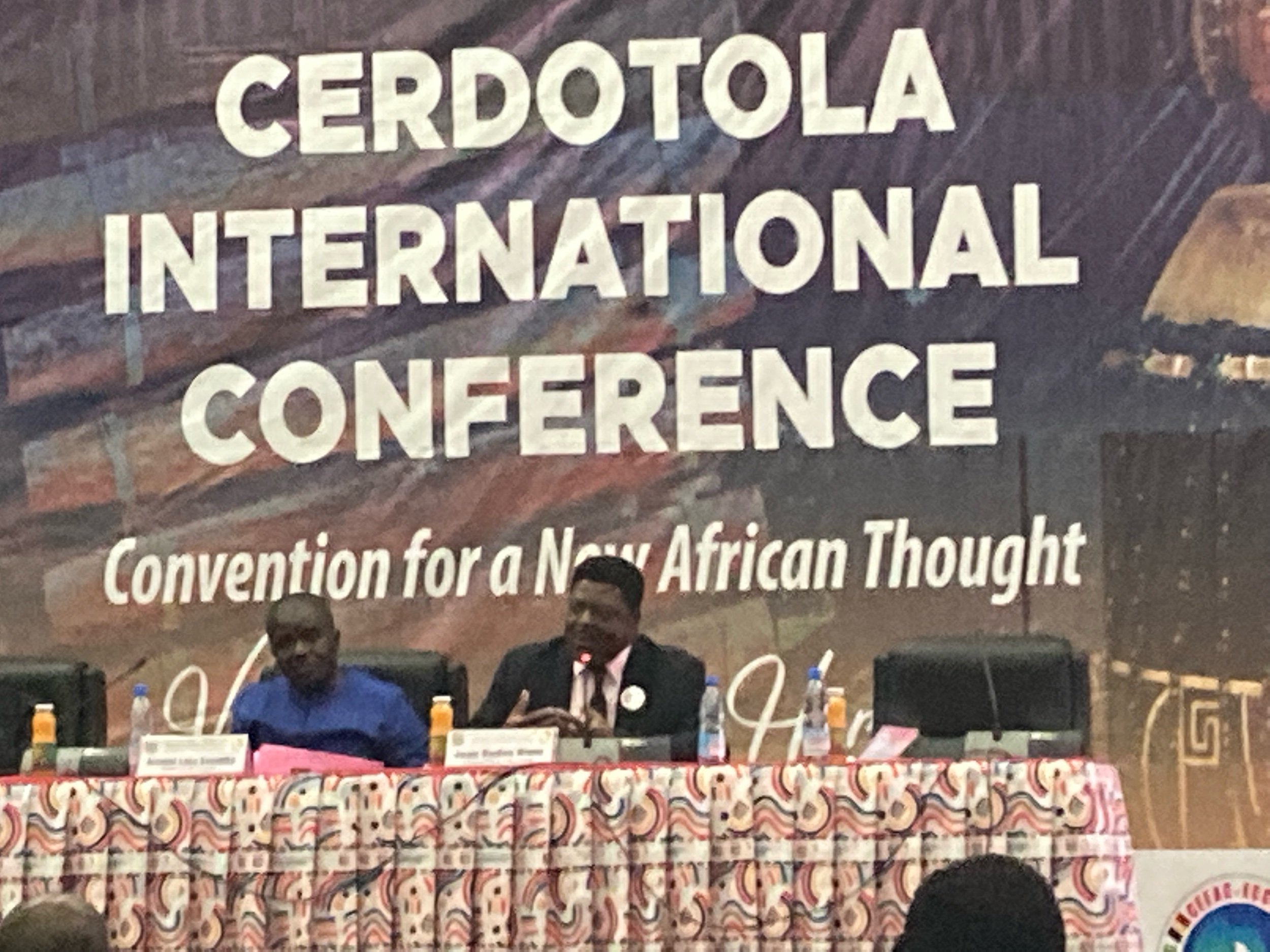
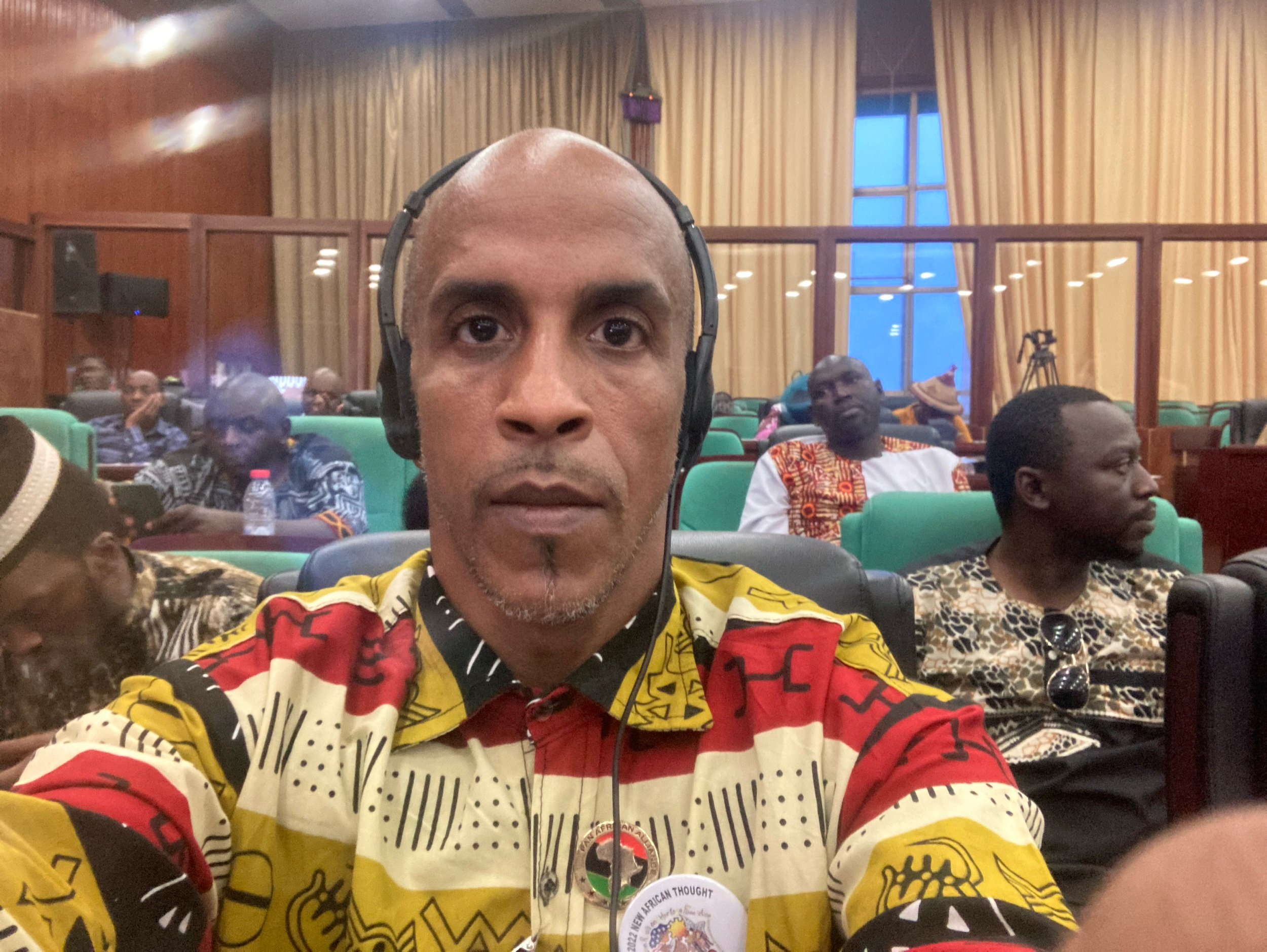
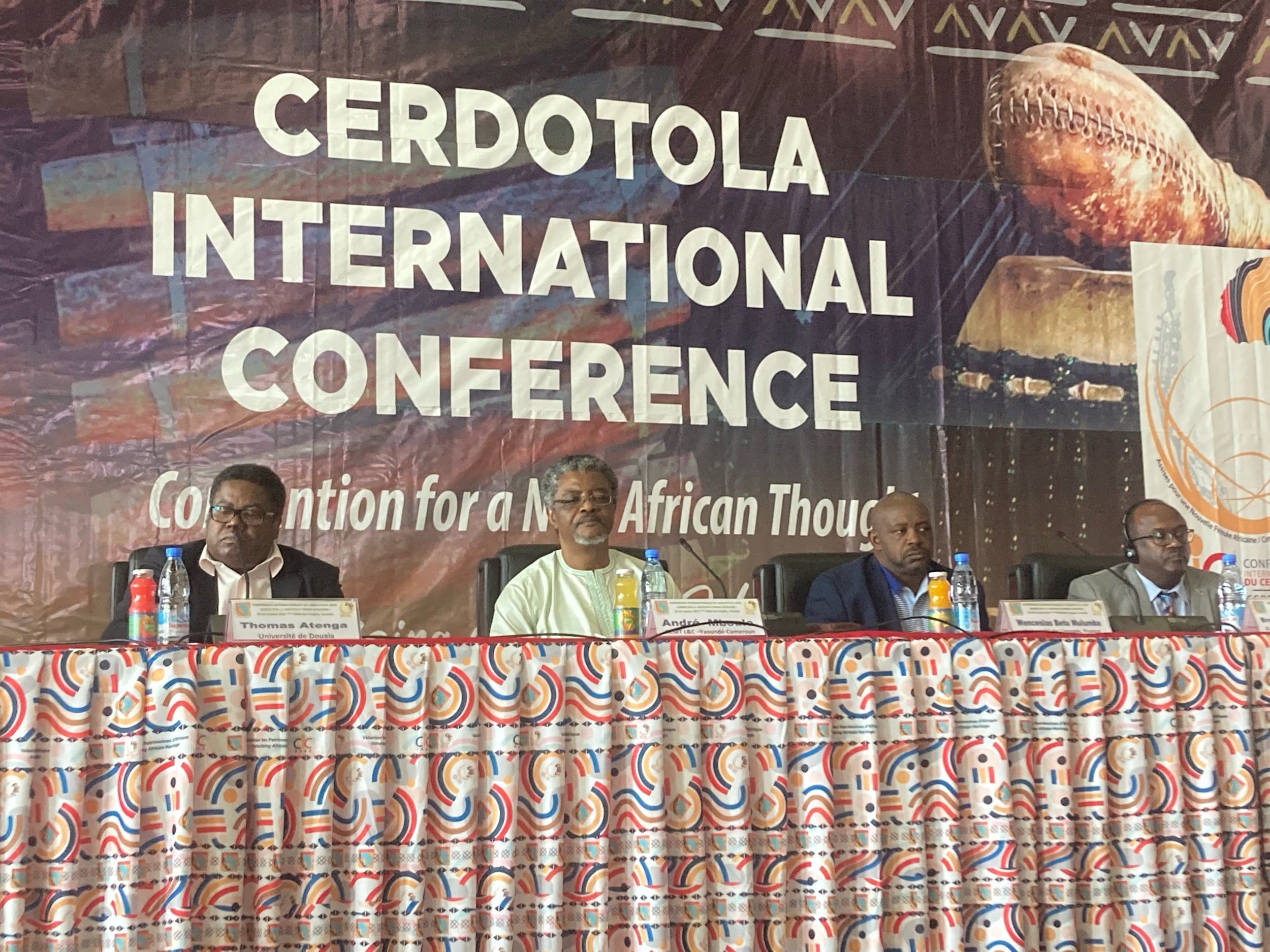
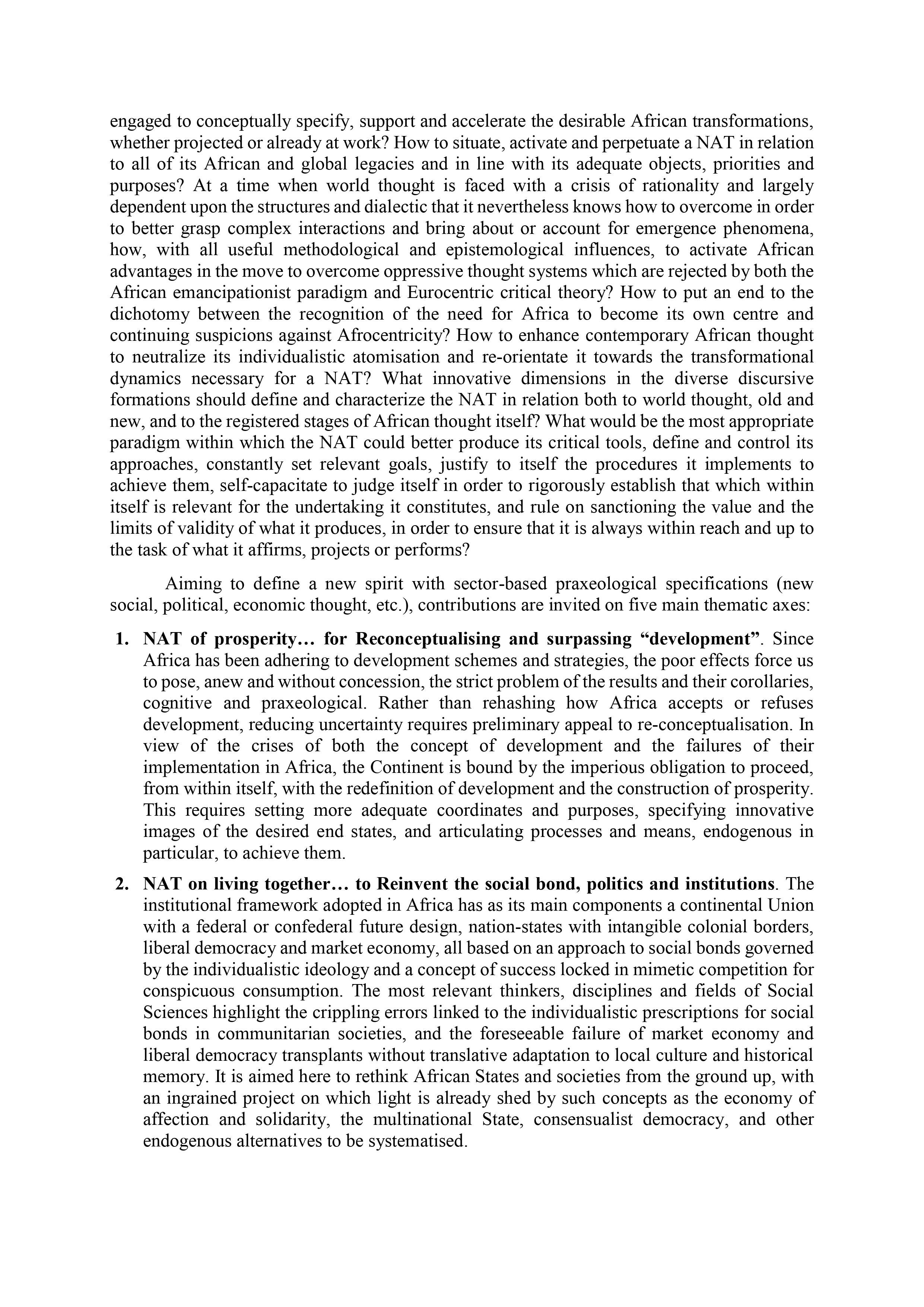
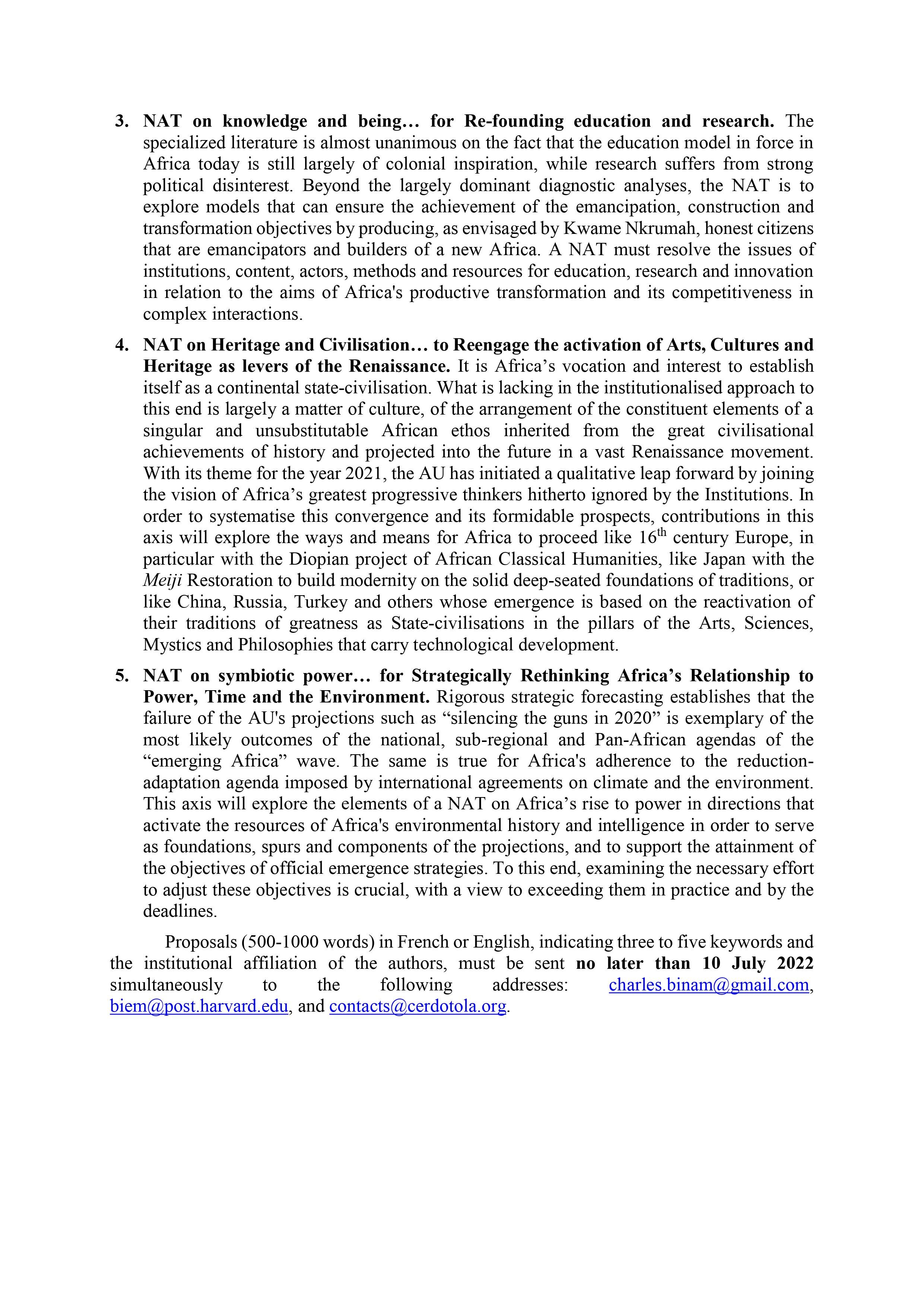
THE NEW AFRIKAN THOUGHT CONFERENCE IN YAOUNDE, CAMEROON HOSTED BY THE INTERNATIONAL RESEARCH AND DOCUMENTATION CENTER ON AFRICAN TRADITIONS AND LANGUAGES (CERDOTOLA)

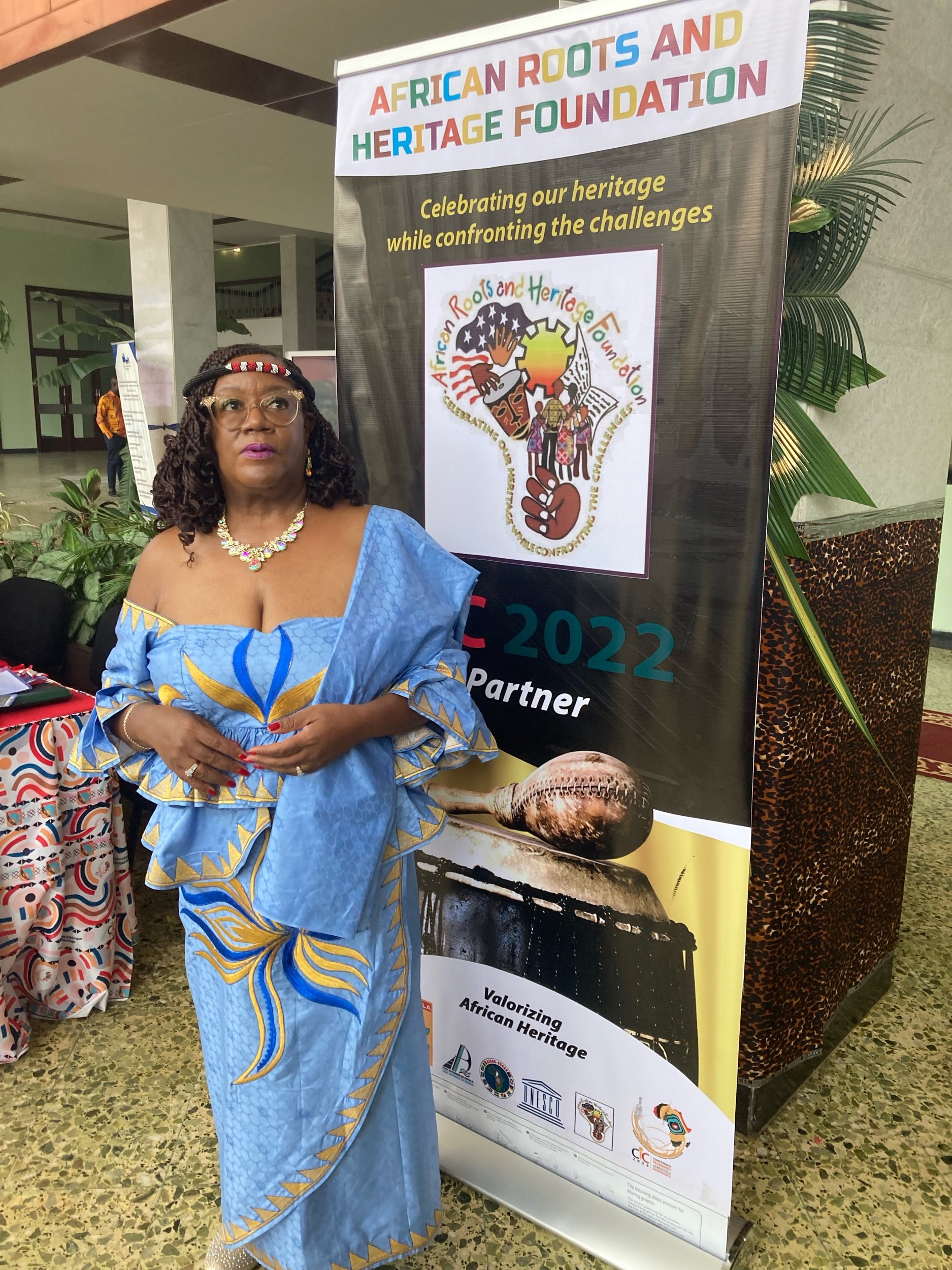
From October 24 to November 2, 2022, I was the guest of Profoessor Anita Diop and the African Roots and Heritage Foundation (ARHF). I was invited to present my paper, New Afrikan Consciousness vs. New Afrikan Thought: Mysticism in the Age of Artificial Intelligence at the THE NEW AFRIKAN THOUGHT CONFERENCE in Yaounde, Cameroon, hosted by the INTERNATIONAL RESEARCH AND DOCUMENTATION CENTER ON AFRICAN TRADITIONS AND LANGUAGES (CERDOTOLA). You can watch all the videos of the Conference here.

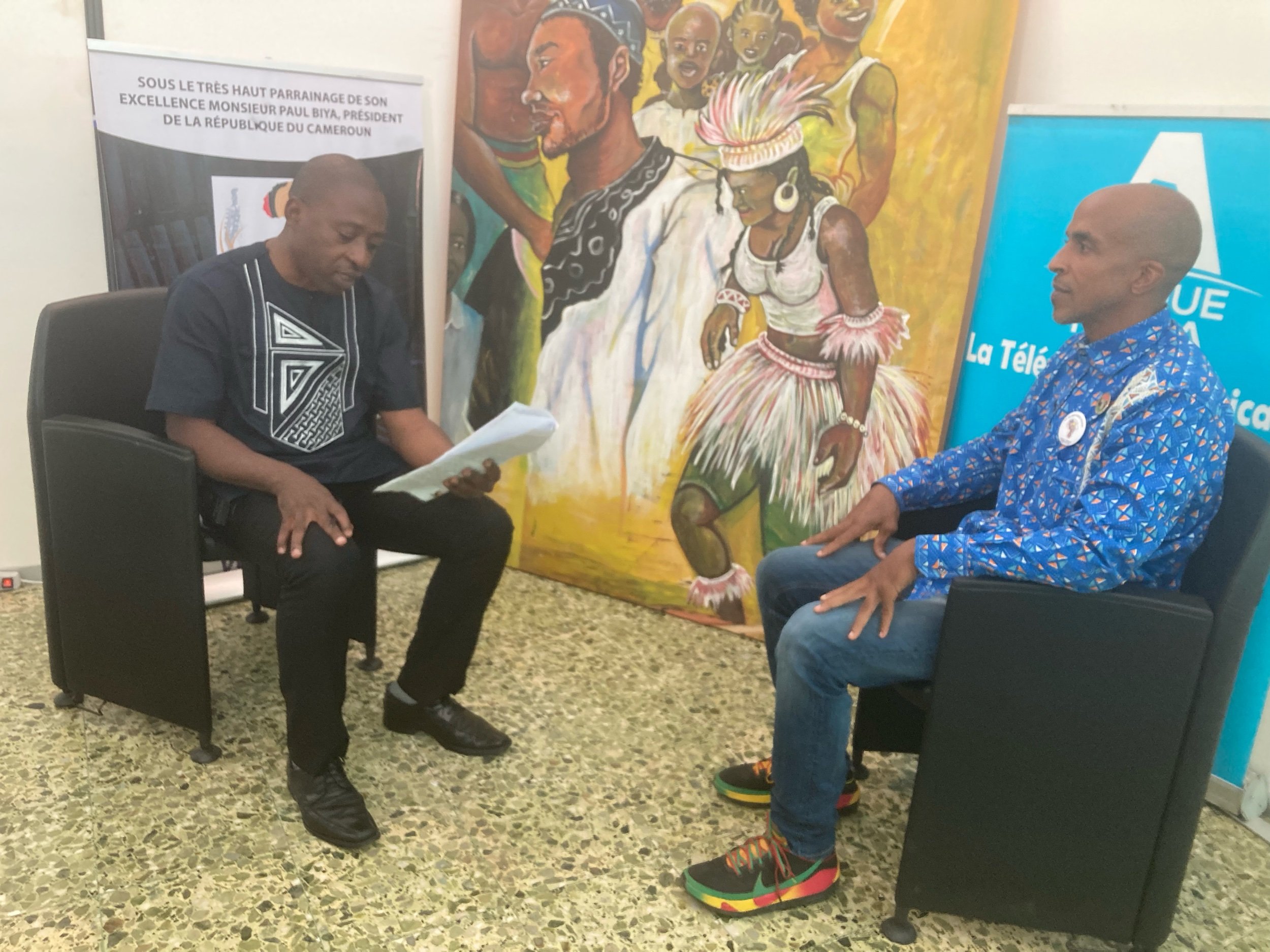
After the Conference, ARHF arranged for me to see the city of Yaounde as well as visit the Museum of the Forest People. On October 31, Professor Diop and I joined Professor Dolisane Ebosse Nyambe Cecile, Director of the Department of African Languages and Civilizations at Yaounde 1 University for an amazing lecture with her students. Before departing, I was able to meet with Gwedji Doris Wainwel, Director of Services in the Ministry of External Relations of the government of Cameroon. Here is my report of the conference.

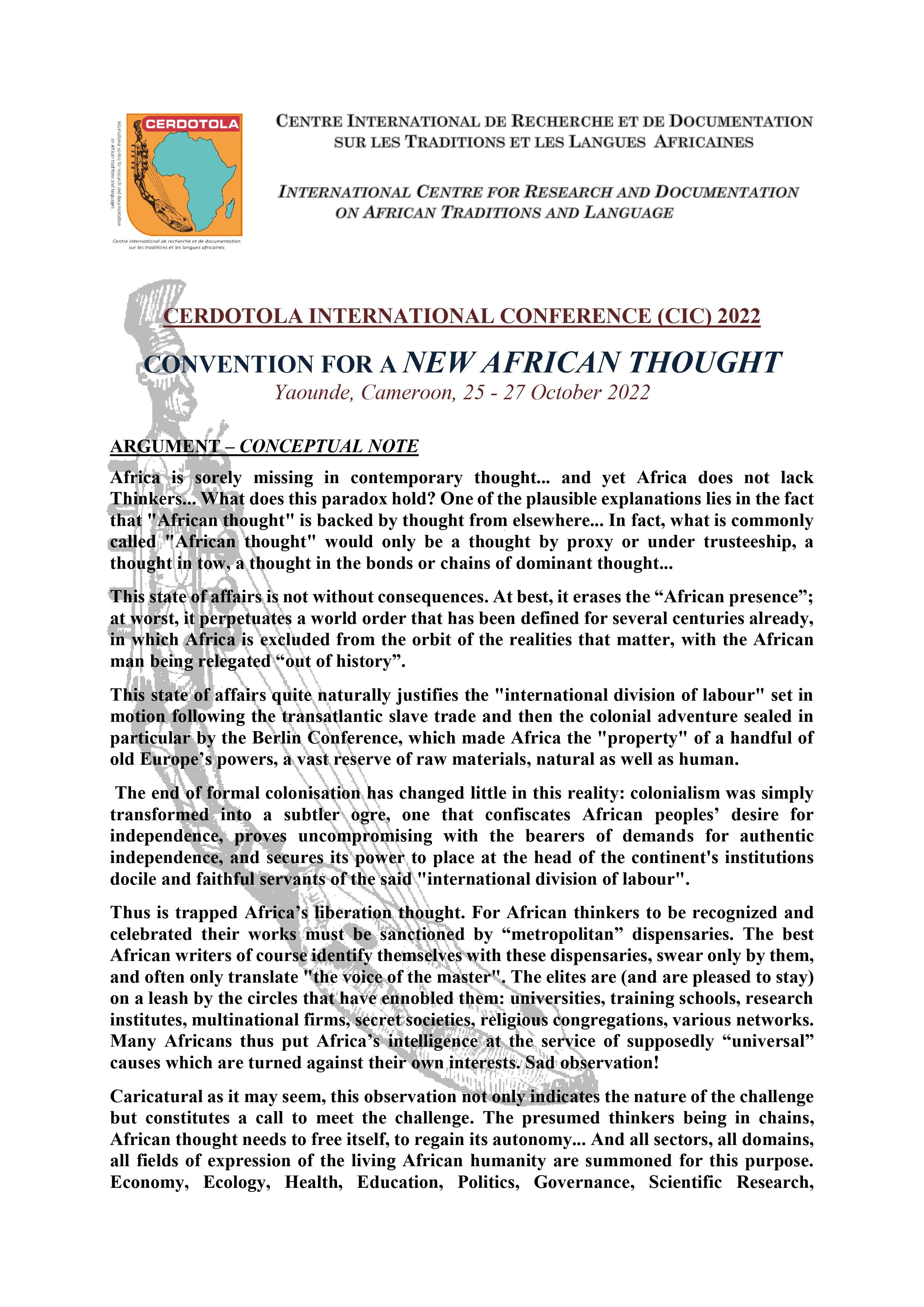
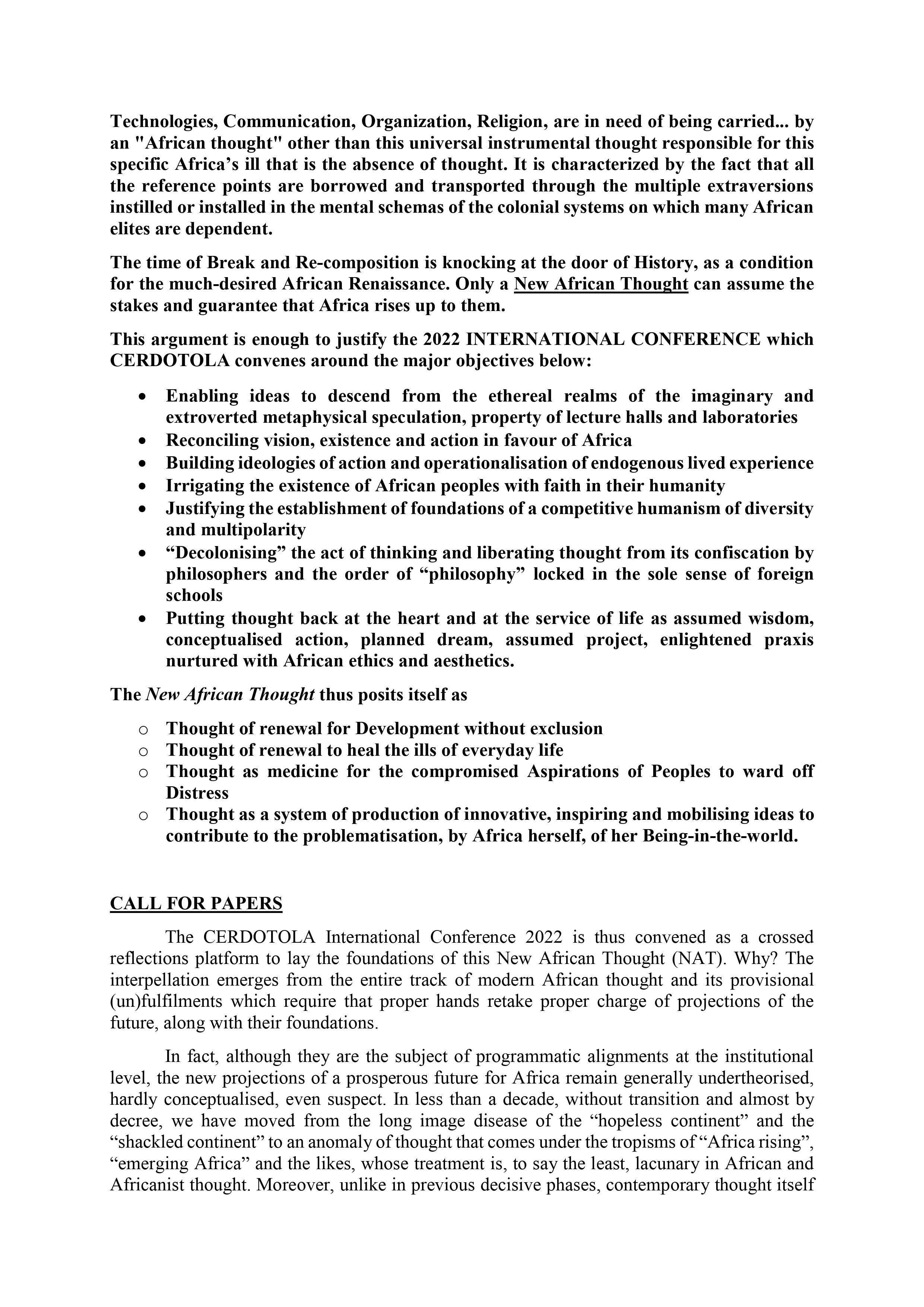
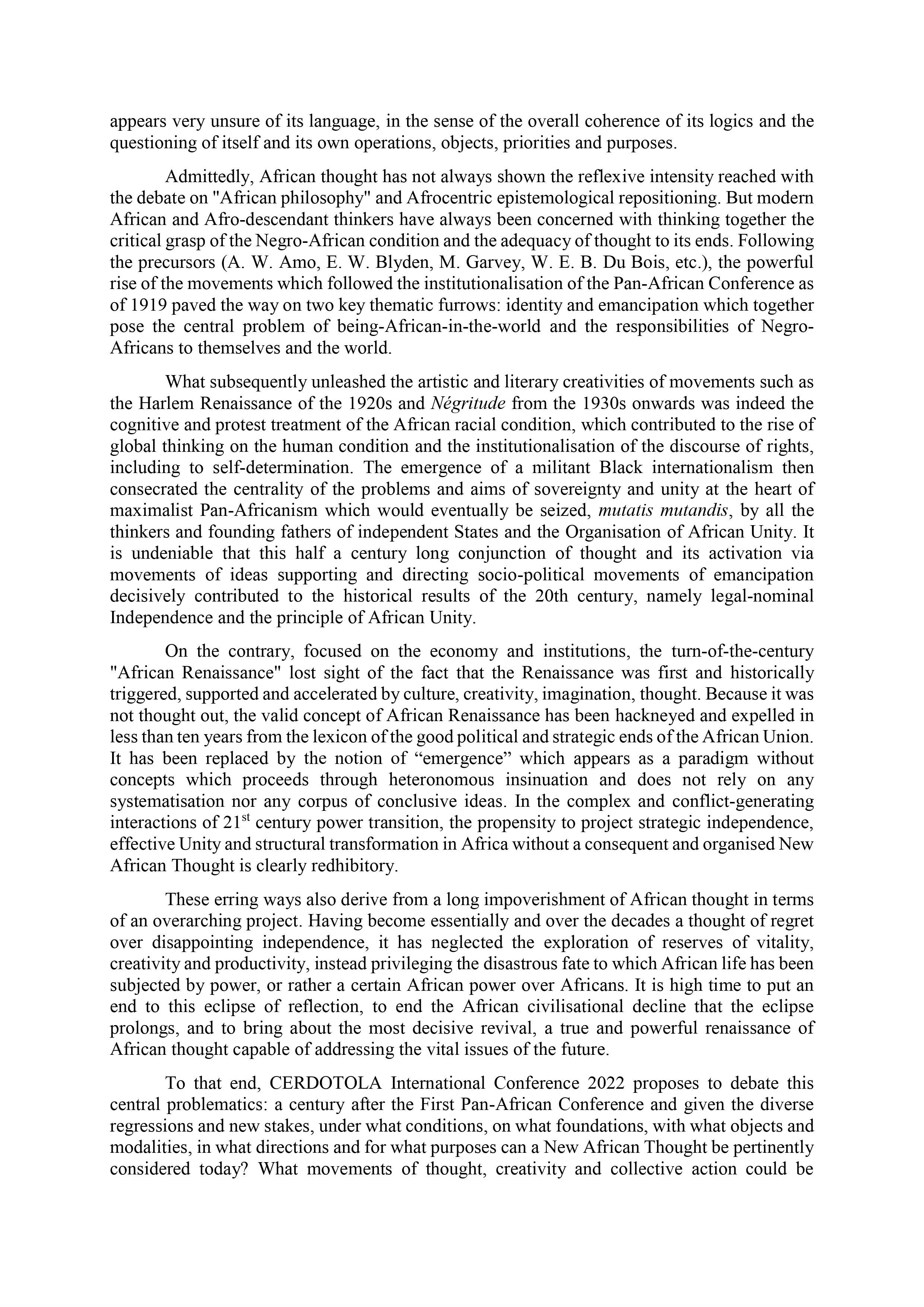
NEW AFRICAN THOUGHT CONFERENCE

When I saw the conference Concept Note, I wanted to attend. I reached out to Professor Diop and she asked me to submit a paper abstract which, to my surprise, was accepted. I was woried, however, that my topic, New Afrikan mysticism and a proposal to develop a New African institute devoted to teaching and training “inner engineering” technologies that will enable students to talk to plants and animals, to remote view what’s happening on the other side of the planet or, indeed, on other planets, to teach methods of communicating with the supreme intelligence both insided and outside the body . . . . I thought all this might be just too fantastic. Part of my research involved reviewing the era of psychic discoveries and extra sensory perception research in the United States and Russia which was so controversial, even ridiculed, that it was conducted in secret. Would my presentation be well received?

All my doubs and reservations, however, were quickly layed to rest on the opening day of the conference when Molefi K Asante emphasized the importance of chronology - that it is absolutely necessary to have a clear understanding of the origin of things, particularly the origin of our pre-Kemetic societies, in order to properly understand history. In his own words, he said,

“It is important to understand, the main point that has led us to this juncture, on the road to intellectual clarity. One must begin all discourse with clarity on chronology, because without knowing time - that is a question of knowing when something happened or is supposed to happen - one can never have an appreciation of context. . . . “

I have always been emphasizing this and have spent much time teaching about the pre-Kemetic culture and philosophies, especially of the Balanta people, a combination of Bantu and Nilotic people. A good section of my paper gave specific examples of the evidence of pre-Kemetic and Kemetic mysticism.

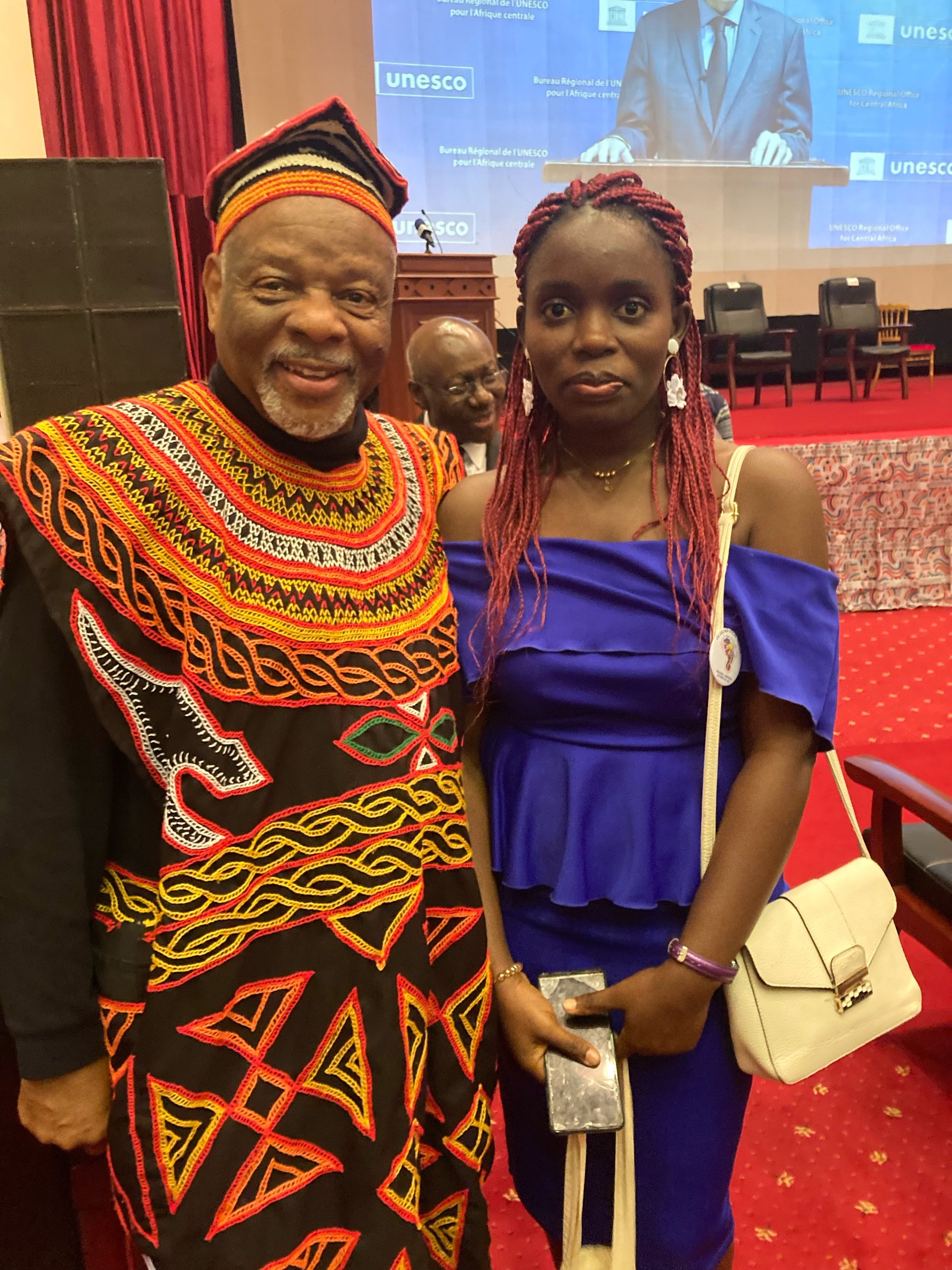
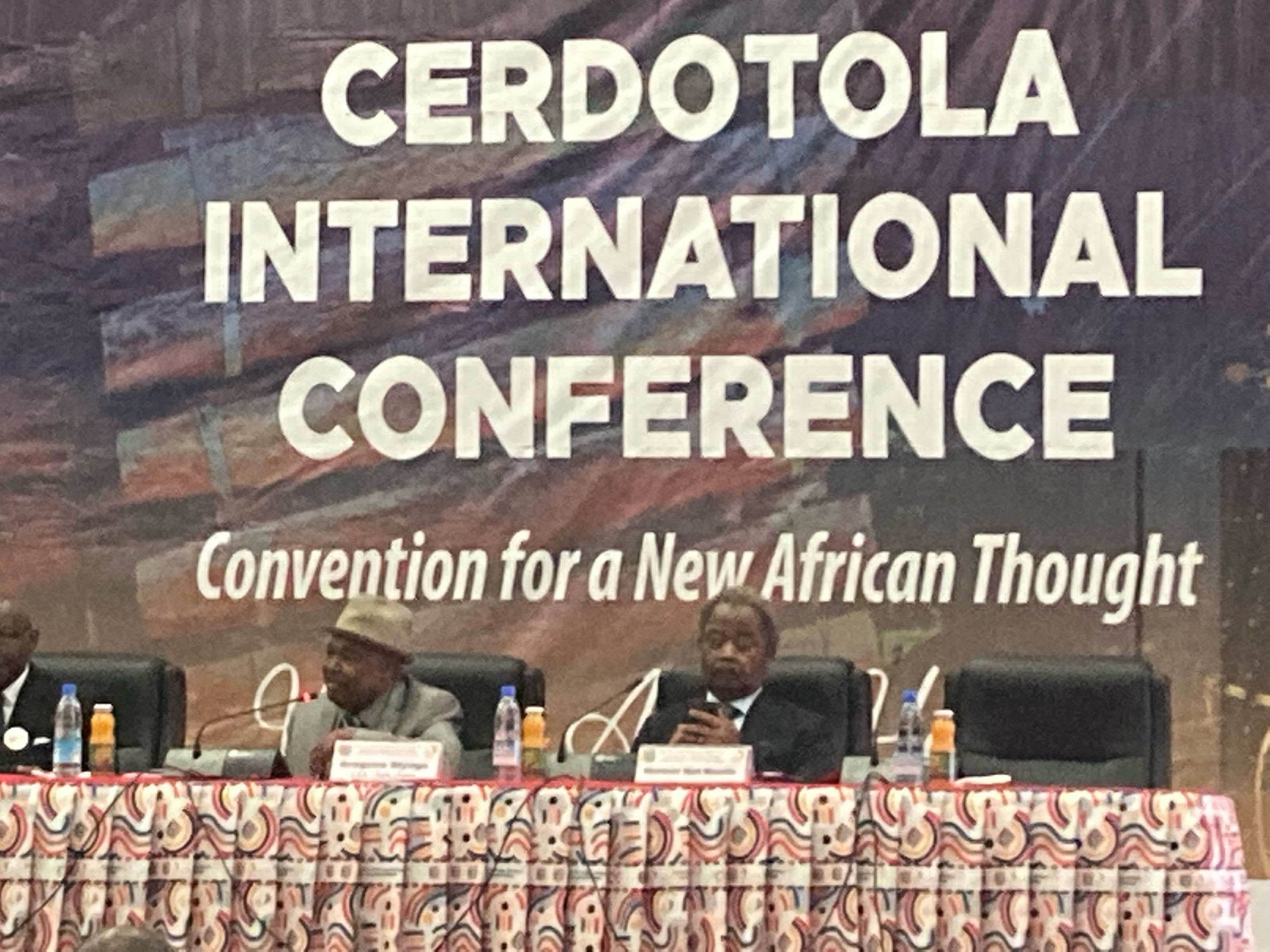
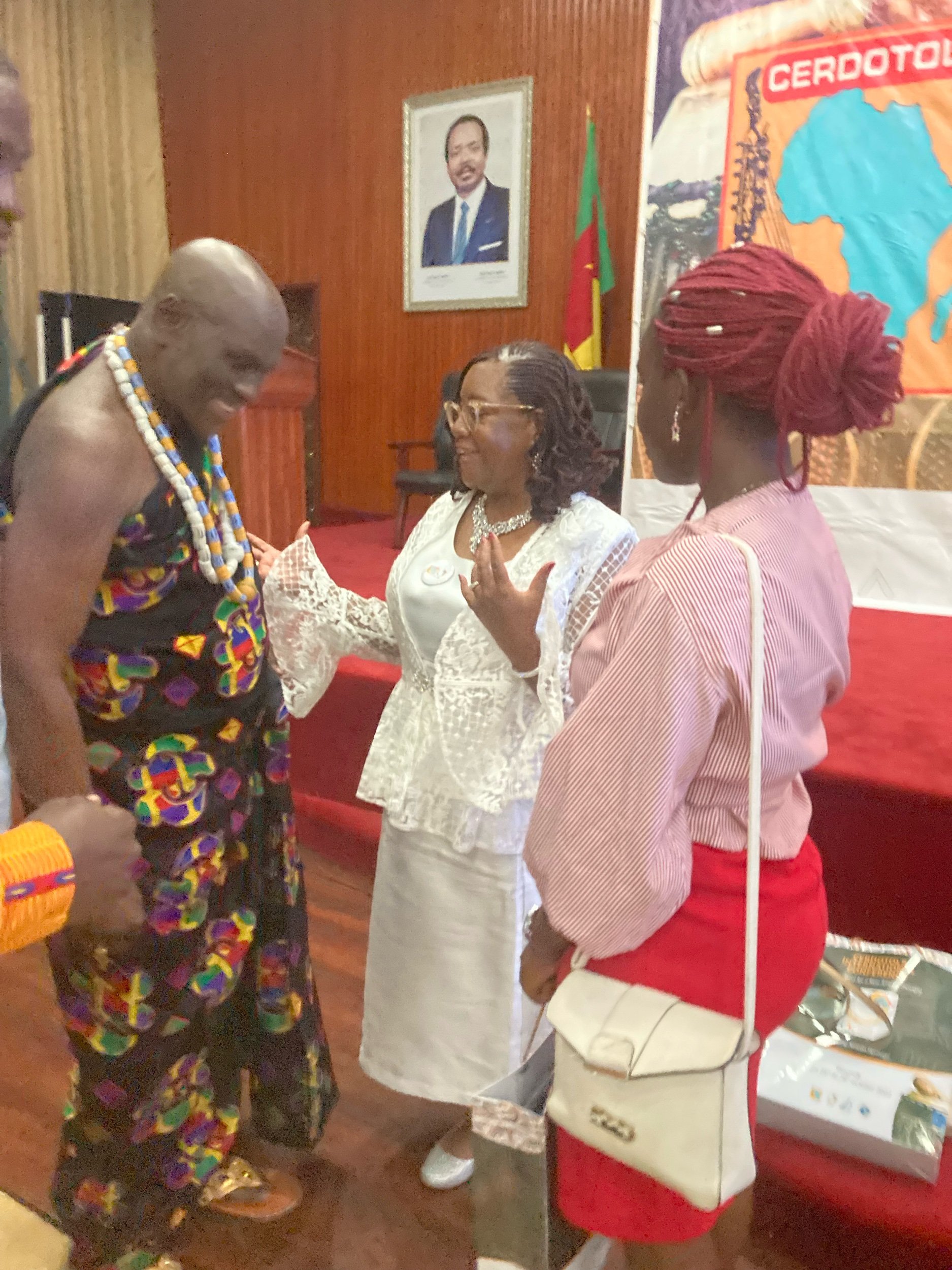
From (left to right): Professor Molefi K Asante, Professor Anita Diop, Professor Dolissane Cecile, Siphiwe Baleka, and onstage, Professor Theophile Obenga

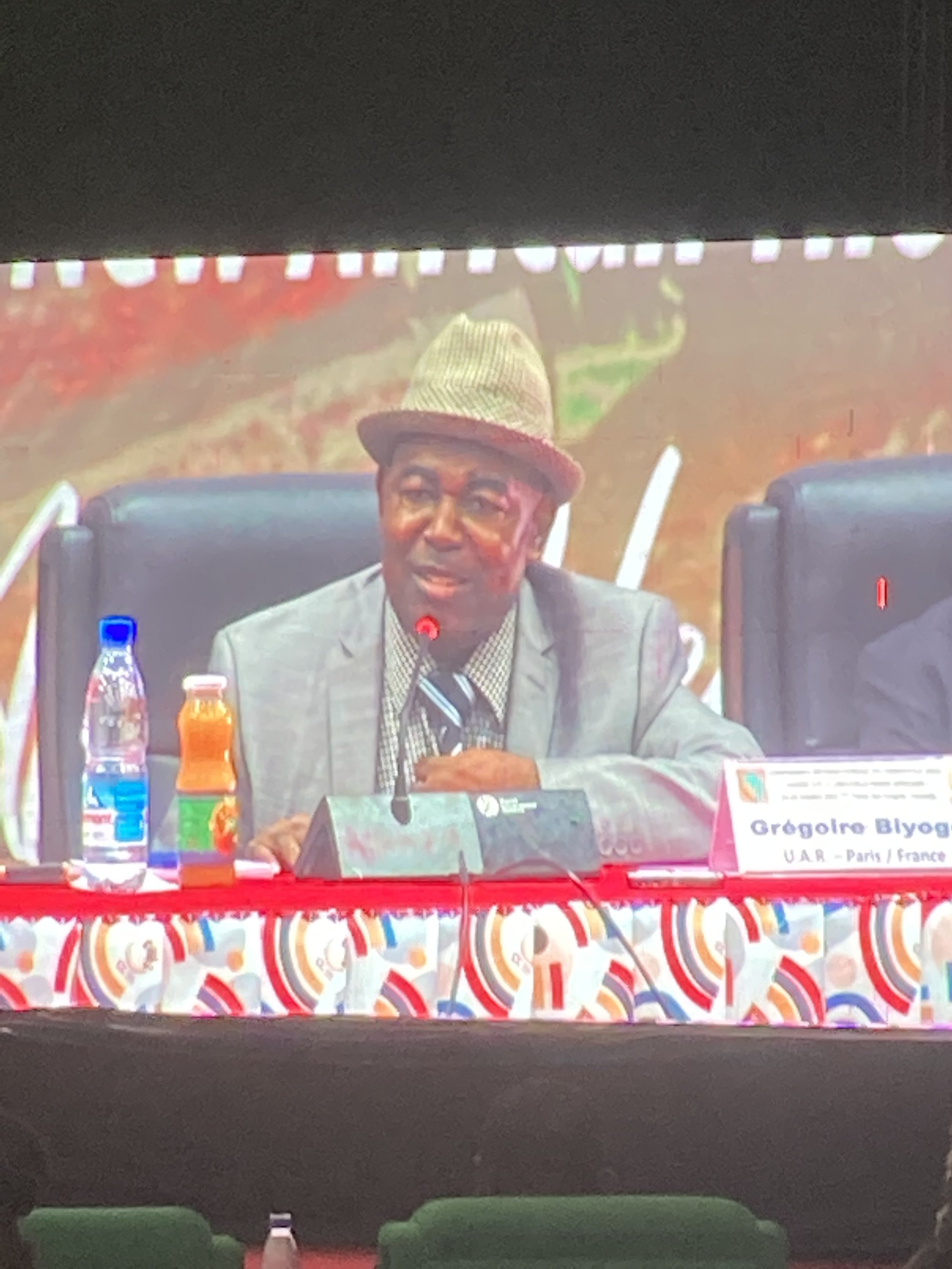
Professor Gregoire Biyogo, President of the International Committee of African Scientists and Experts (CISEA)

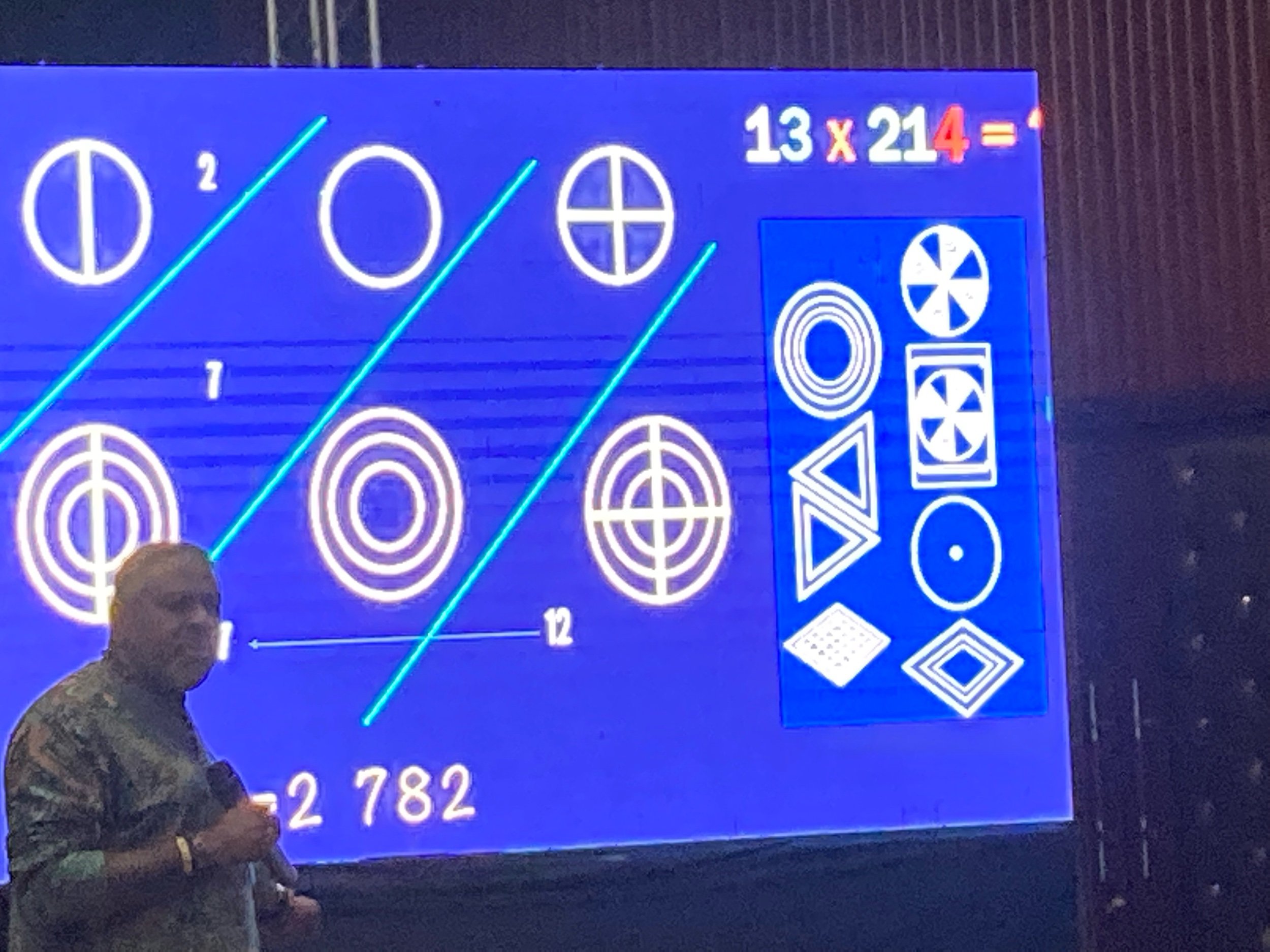
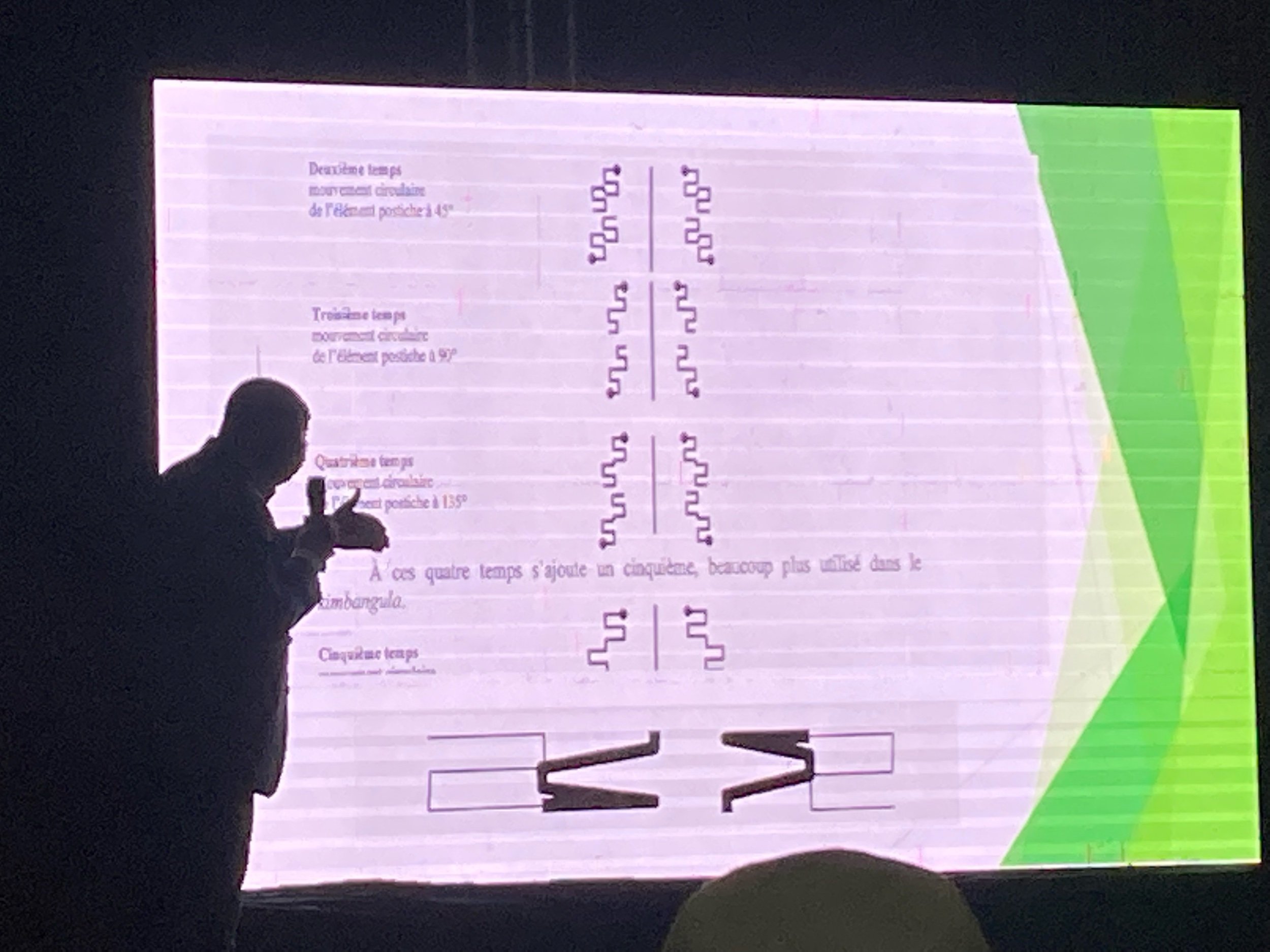
That night, however, I was blown away when Professor Biyogo, President of the International Committee of African Scientists and Experts (CISEA) discussed “Asymmetrical Mirror Theory and the Instantaneous Teleportation of Objects and Bodies from the Mortal to the Immortal Realms in the Displacement Mode of Fighters of the Ekang Tradition” and the implication for Africa.

Watch Professor Biyogo’s presentation on Asymmetrical Mirror Theory and the Instantaneous Teleportation of Objects and Bodies from the Mortal to the Immortal Realms in the Displacement Mode of Fighters of the Ekang Tradition

Here are my notes that I took during the presentation:

“Instantaneous teleportation of objects. . . . Hypothesis: New Physics - Tradition has been unable to unravel . . . . Africa has its own New Physics seen through the Sacred Books. . . . Nfeng, Biti ethnic groups, Ekang > These books > asymmetry and deportation> instantaneious deportation of bodies mortal vs. imortal.

Displacement Mode of Fighters. Fighters can move or teleport to different worlds:

mortal > immortal

immortal > mortal

We can’t speak in singular form anymore…. must talk about universe and objects in plural form; compare Egypt with Ekang.

Theological argument is the genuine evidence > sovereign nature.

Hypothesis #2: philological; Hypothesis #3: Theory of Asymmetic Deportation; perpetual > continuous

PRACTICAL PHASE: General theory of wars/cpnflicts + logos/science; cutting edge weapons can destroy in blinking of an eye; Drones > abosrbs all forms of information back to lab > the lab reconstructs reality then strikes;

GENERAL THEORY OF MIRRORS: go beyond light reflection theories; Asymmetric Mirror Theory - ability of anticipating; can strike targets before the targets reach a certain threshold.

SOVEREIGNTY: Catalytic evidence > goes beyond identity principle; Theory of co-belonging; Black Afrika + Kemet; uses Ekang language.

Mdu Ntr > Meju Nter: same in the Ekang language; theory of continuum.

Biyogo: “You cannot be in connection with divinity without an asymmetric moment under the apell of Atum”

Thus ends my notes, which do little to explain what Professor Biyogo was explaining. To begin to understand this, one must turn to Ekang Mythology of the Mvet epics. Accordingly,

“The Beti-Pahuin or Fang-Beti peoples are a Central African group of Bantu speakers with mutually intelligible languages, a common culture, and shared ethnic origin. They historically spanned an area from the Republic of the Congo in the south through Gabon, Equatorial Guinea, and Cameroon in the north. . . . . Traditional myths and legends were sung with the accompaniment of a stringed instrument called the Mvet. Bards would be initiated over a long period of study and ritual by a master that taught them the lore of the people. . . . The legendary first Mvet player was a man named Oyono Ada Ngone. . . . Oyono was tasked with singing the tales of the elder days to inspire hope and courage in the hearts of the Beti-Pahuin people as they marched into their new homeland and battled enemies. He would sing to them about the seemingly endless clashes between the immortal Ekang warriors in the southern land of Engong against the wily mortal sorcerers of Oku in the North.

The central conflict of the “Mvet Ekang” cycle between the men of the Yendzok tribe in Engong (better known as the Ekang for their progenitor) and Oku is over the jealously guarded secret of immortality which the Ekang are able to exploit, making them the most powerful tribe in the world. The Ekang are giants who call themselves the Iron Men. The tribes of Oku are highly diverse but share the aim of wrestling control of immortality from Engong through sorcery, trickery, and champions capable of challenging the immortals.

The Beti-Pahuin epics take place in a primordial world very different from the Africa we know now. The world of Mvett is composed of four main geographic areas:

Nkourou Megnoung Eko Mbegne: This is the region located in the far north of the Mvett world. It’s known as the far foggy drum country.

Etone Abandzic Mekok Engone: This is the eastern region. This is where life and its great mysteries were born, as well as human beings. This region is where Oyono Ada Ngone heard the voice of Eyo and that he had the supreme revelation. This region is also very rich in rivers, mountains, and gigantic trees.

Edoune Nzok Amvene Obame: This is a region located to the west. It is a territory rich in powerful men, but apparently quieter than others because many of Engong's warriors are the nephews of men in this region. It’s named “Rotting elephant carcass” as the implication is it’s so prosperous an elephant can live to a ripe old age.

Engong Nzok Mebeghe Me Mba: Called Engong for short, it’s located in the far south of the region, this realm is occupied by the immortals who created their country there. It is inhabited by the descendants of Patriarch Ekang Nna. The quintessential bellicose people, the men of Engong are valiant warriors who are experts in swordsmanship and wizardry. It is this unparalleled mastery of the occult arts that enables the men of Engong to be freed from death.”

Professor Biyogo, speaking in French, on Asymmetrical Mirror Theory and the Instantaneous Teleportation of Objects and Bodies from the Mortal to the Immortal Realms in the Displacement Mode of Fighters of the Ekang Tradition

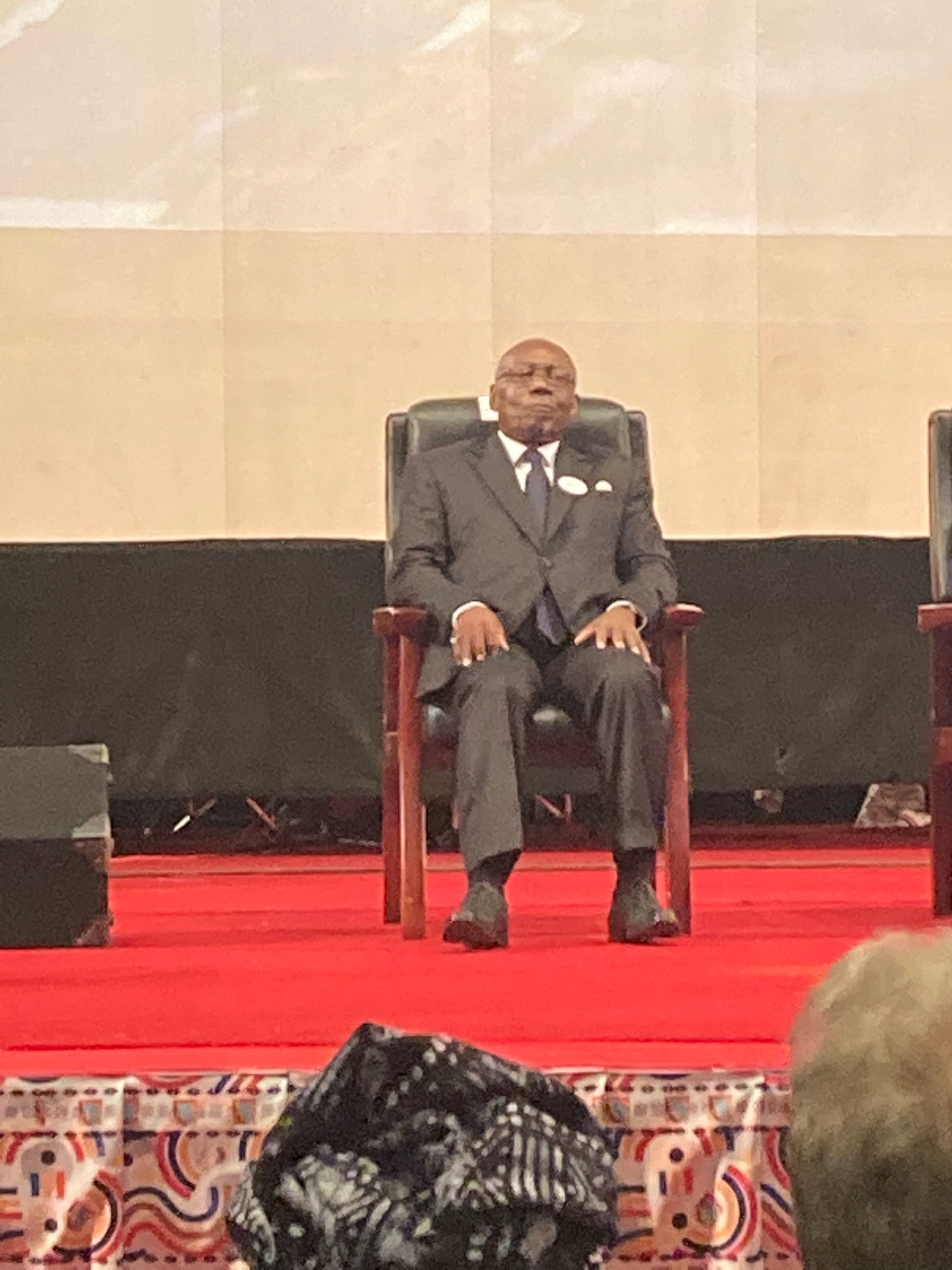
Professor Ebenezer Njoh Mouelle, Founder of the Academy of Cameroonian Philosophy

After Professor Biyogo’s presentation, Professor Ebenezer Njoh Mouelle spoke. I made the following notes,

“Why keep it a secret? RE: the knowledge. > China as an example; need for power of governance to be centralized; DEMOCRATIZE THE NEW AFRIKAN MYSTIC.”

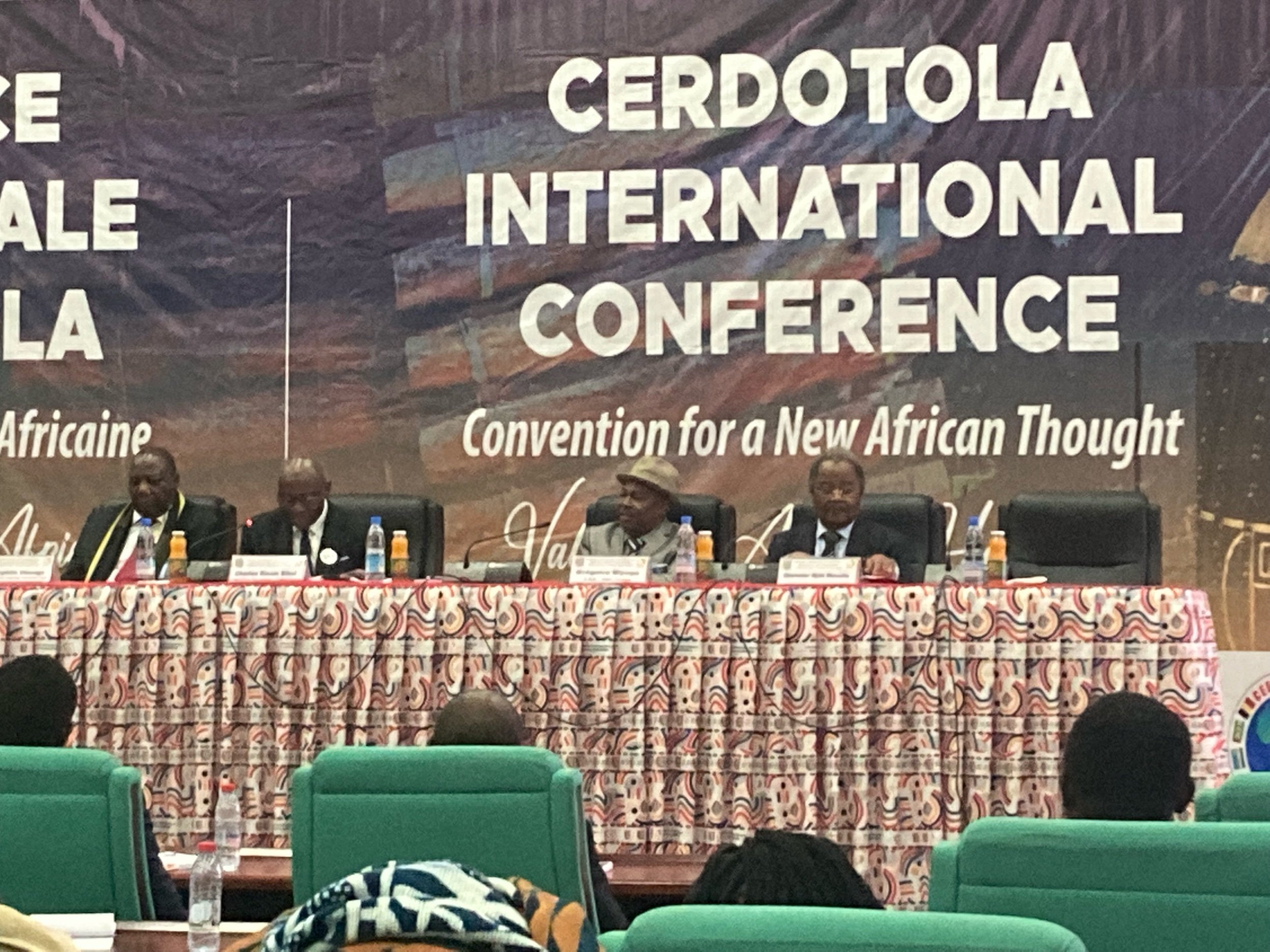
Above: Professor Theophile Obenga giving the opening address. From Left to right: Professor Theophile Obenga; Charles Binam Bikoi, CERDOTOLA; Professor Gregoire Biyogo, President of the International Committee of African Scientists and Experts; Professor Ebenezer Mouelle, Founder, Academy of Cameroonian Philosophy

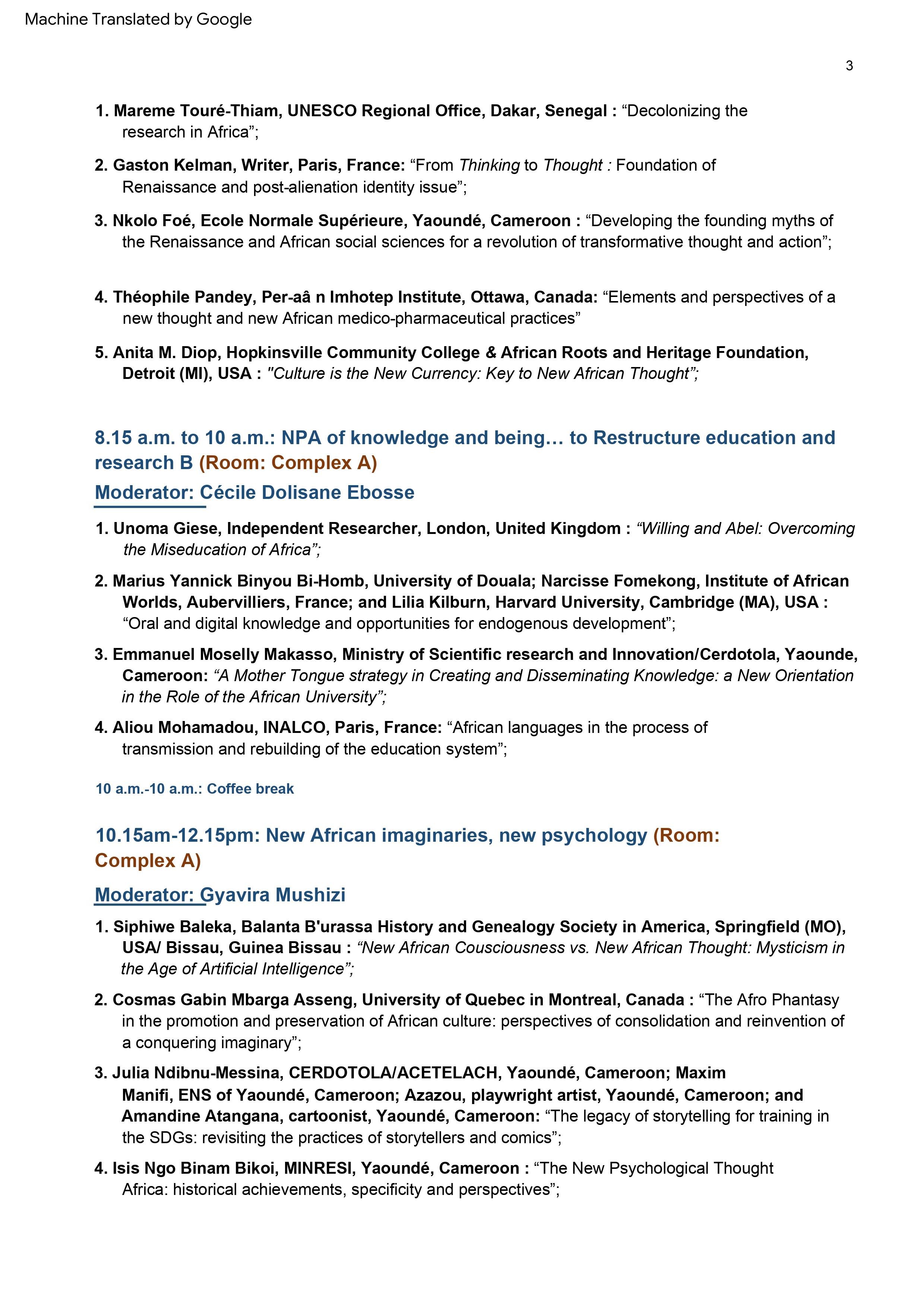
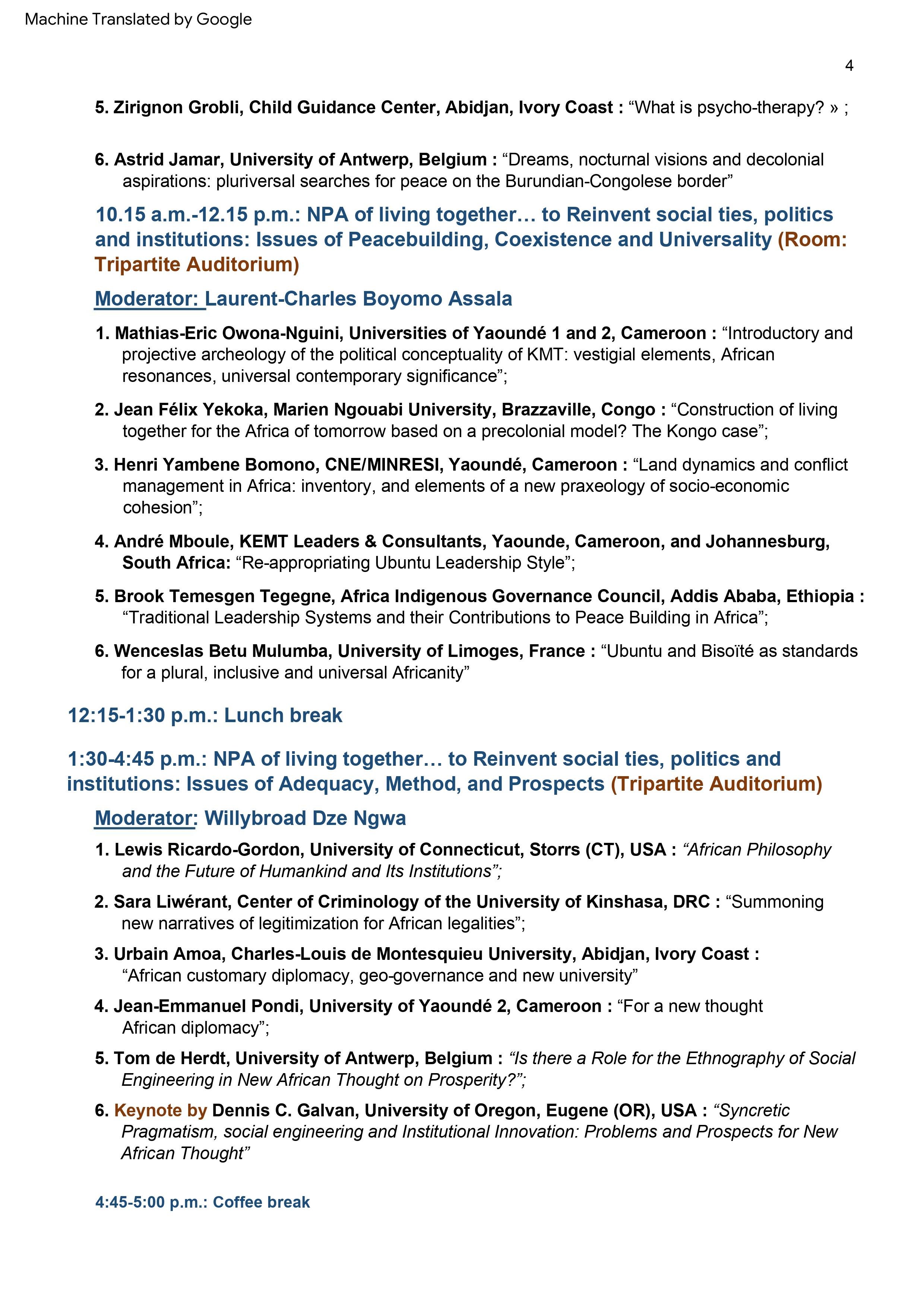
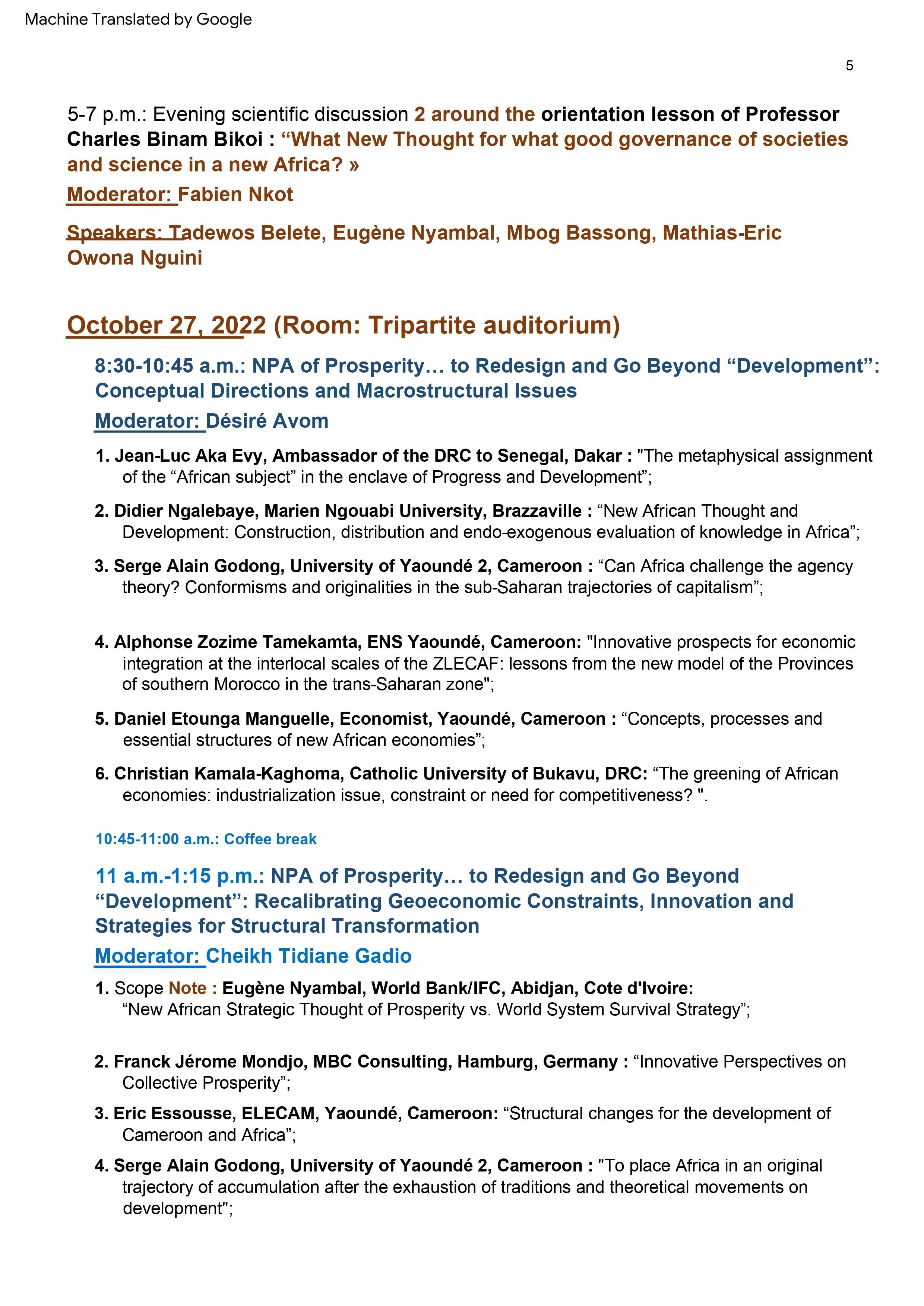
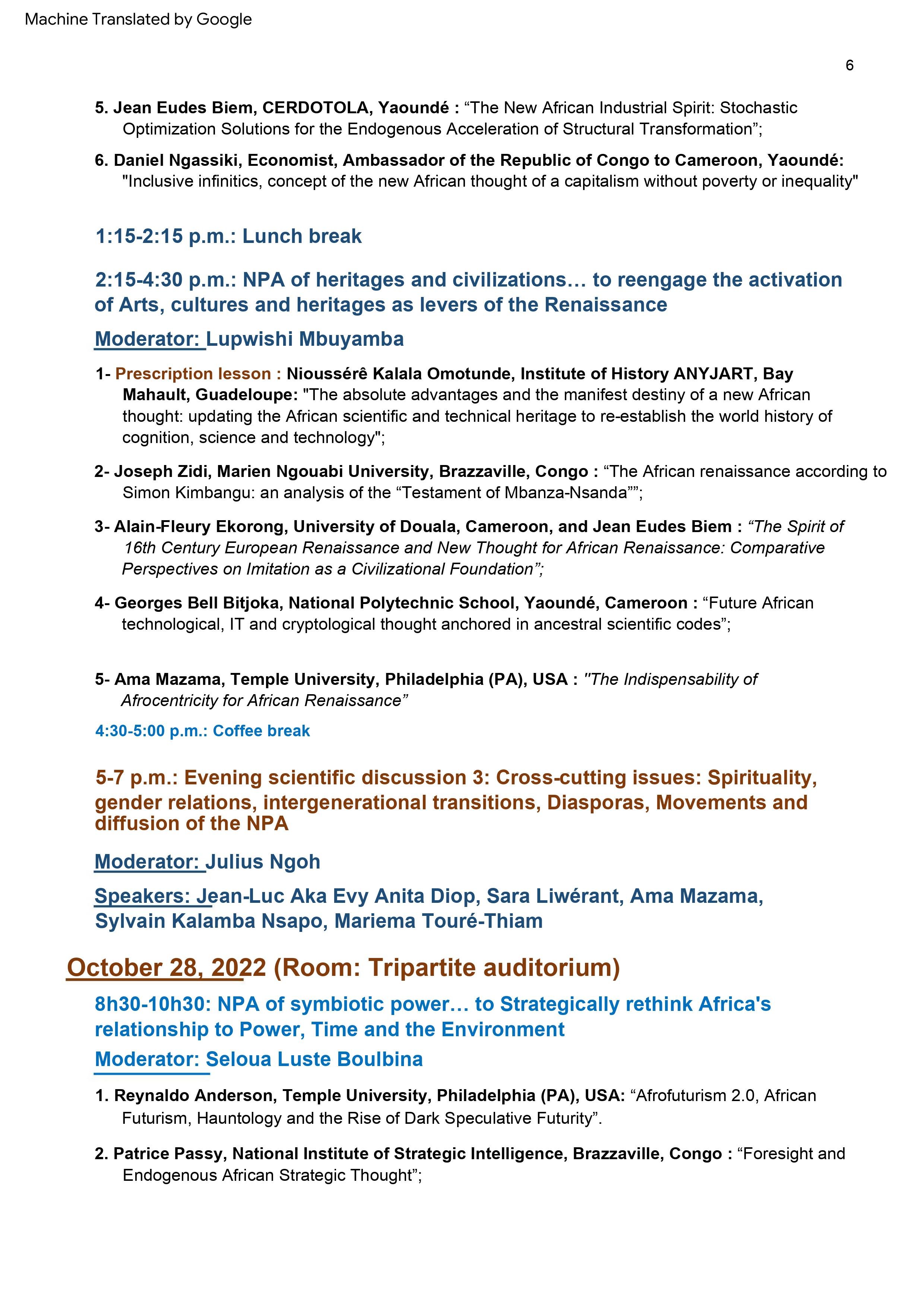
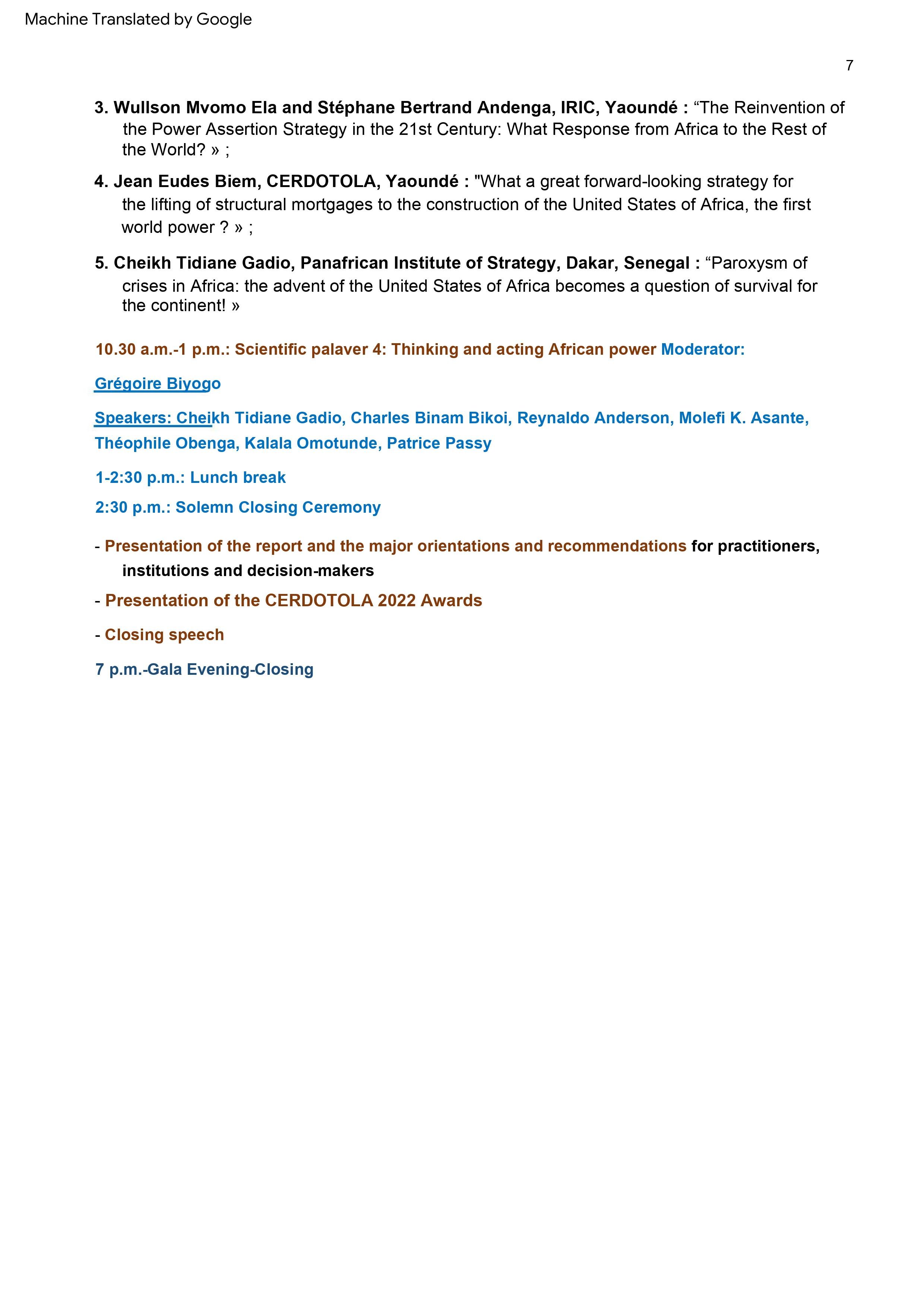
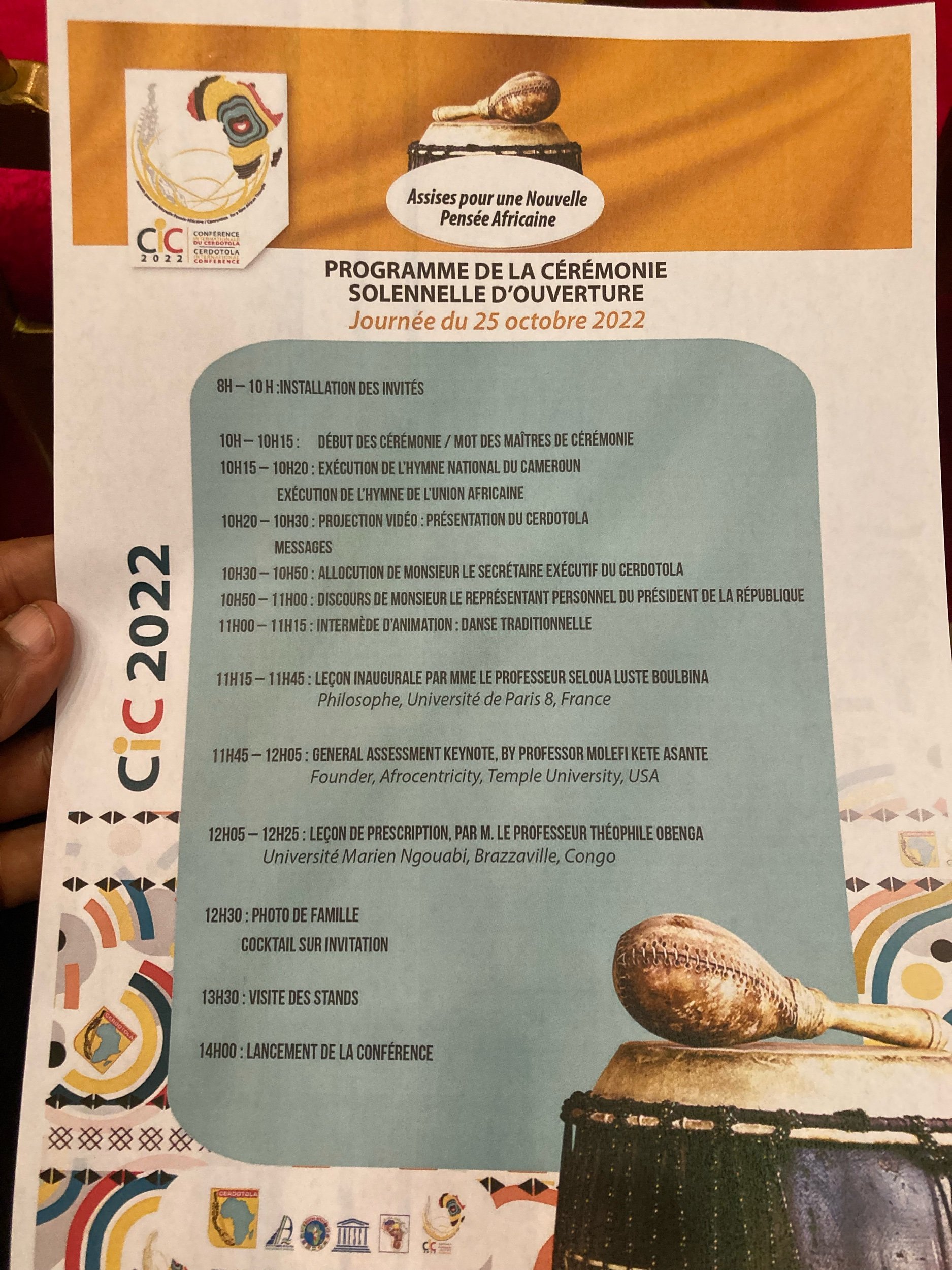
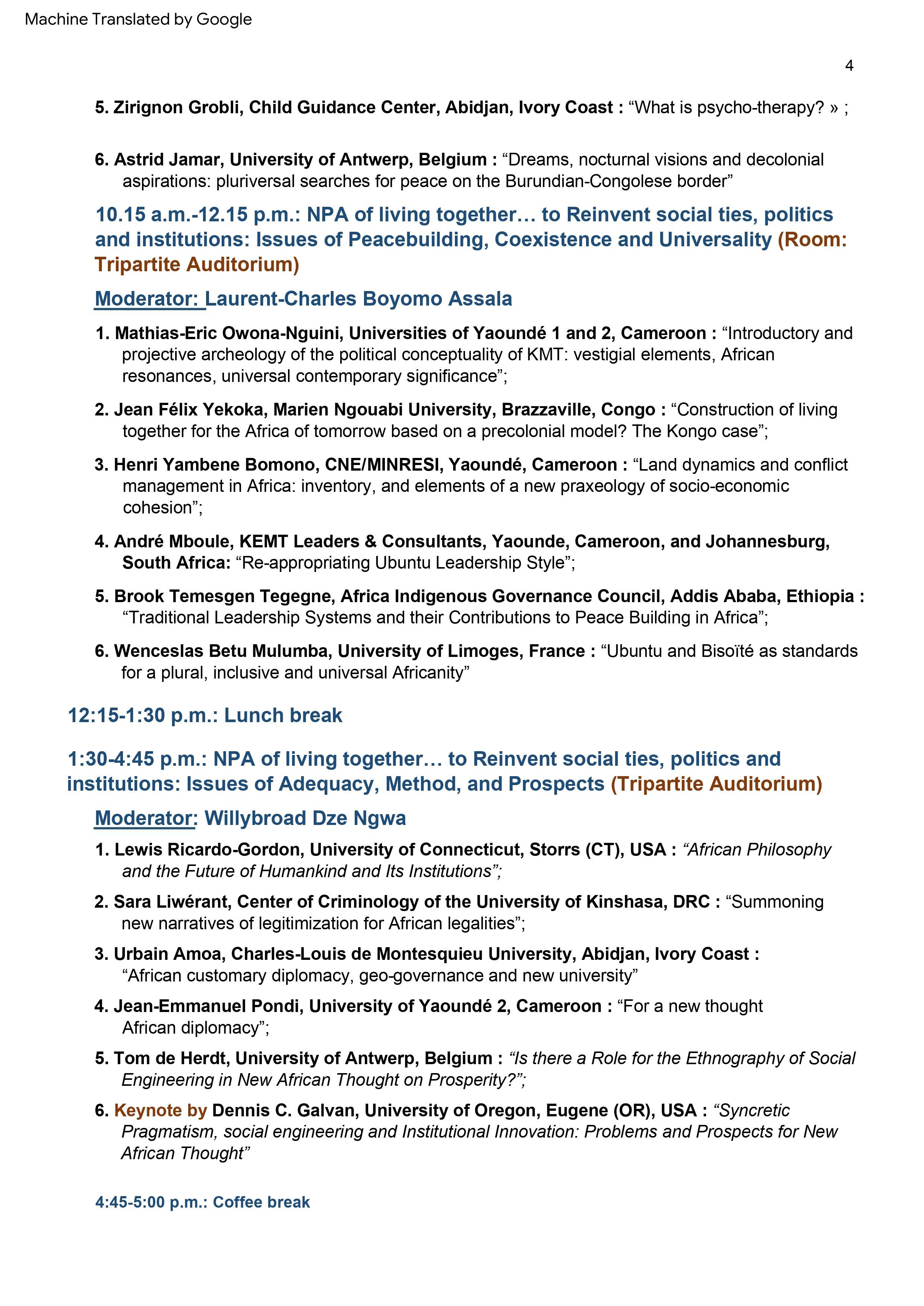
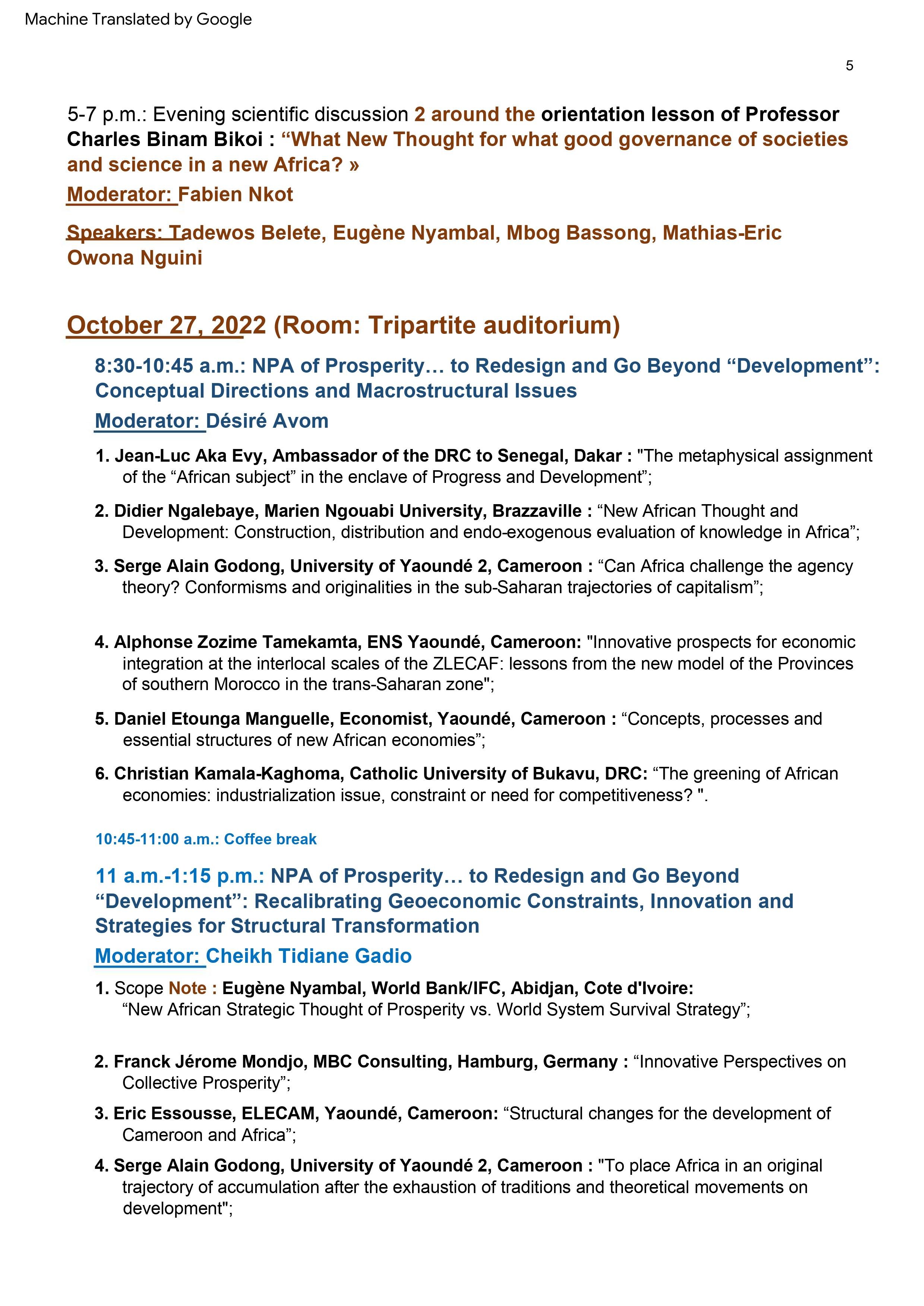
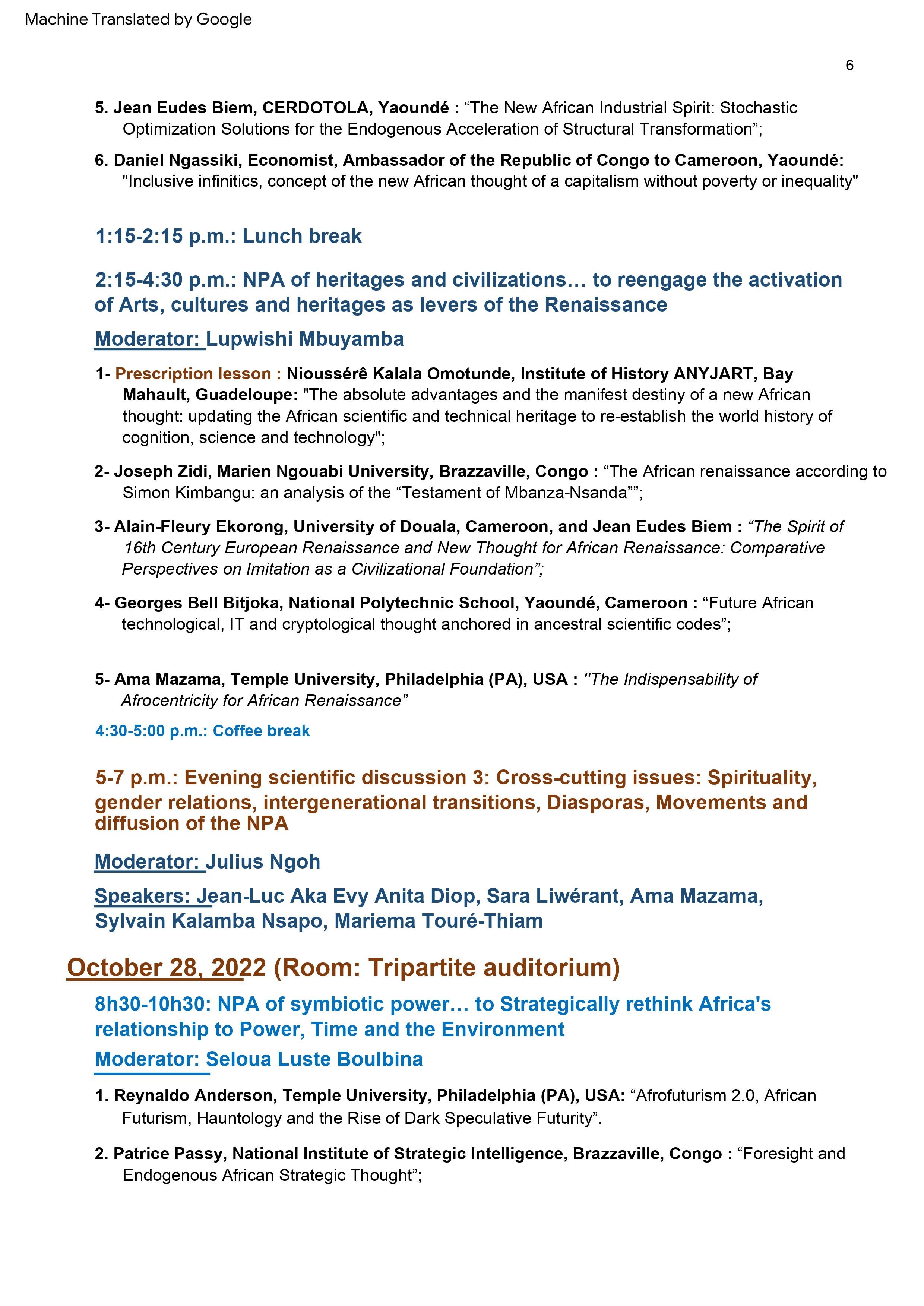
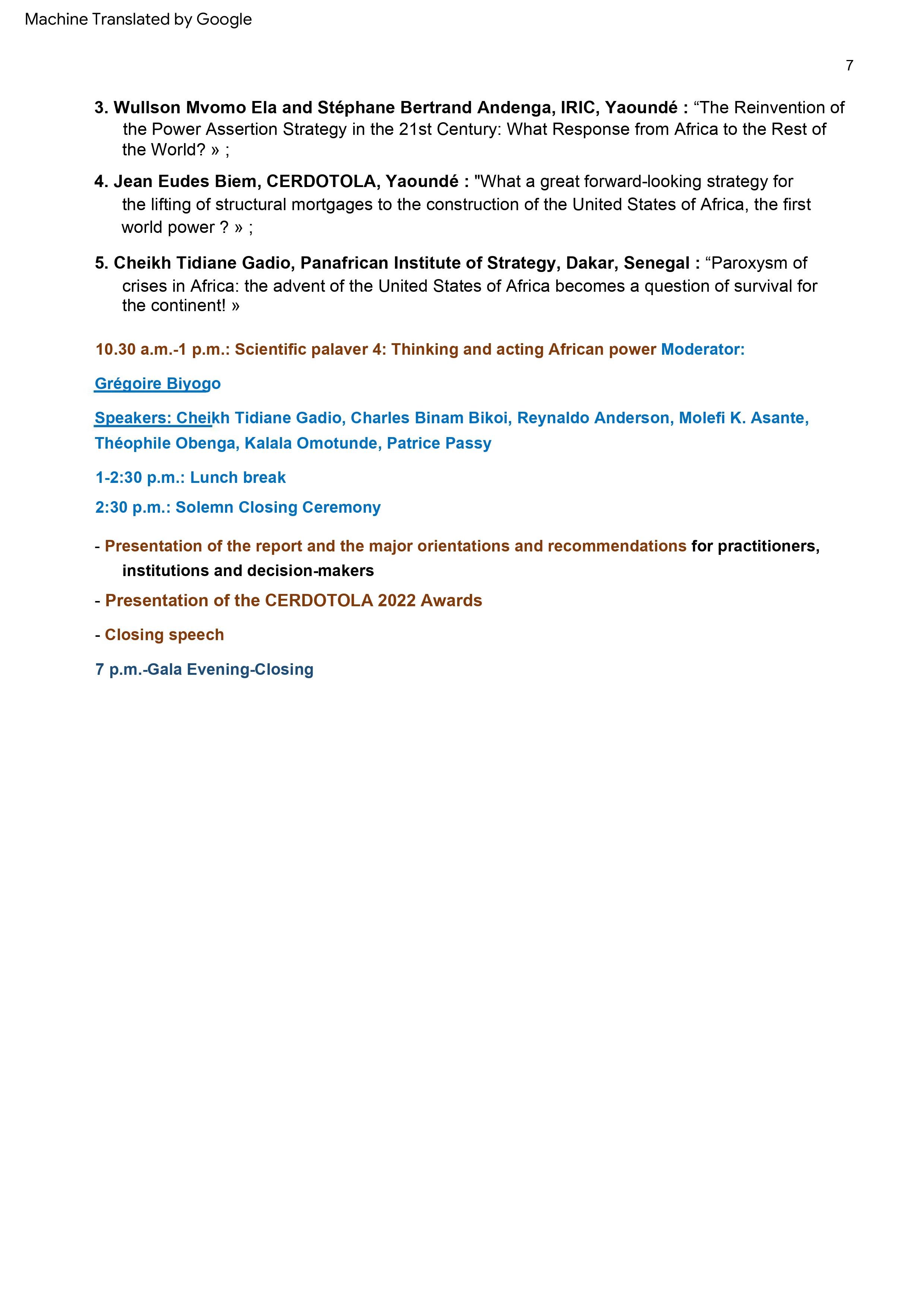
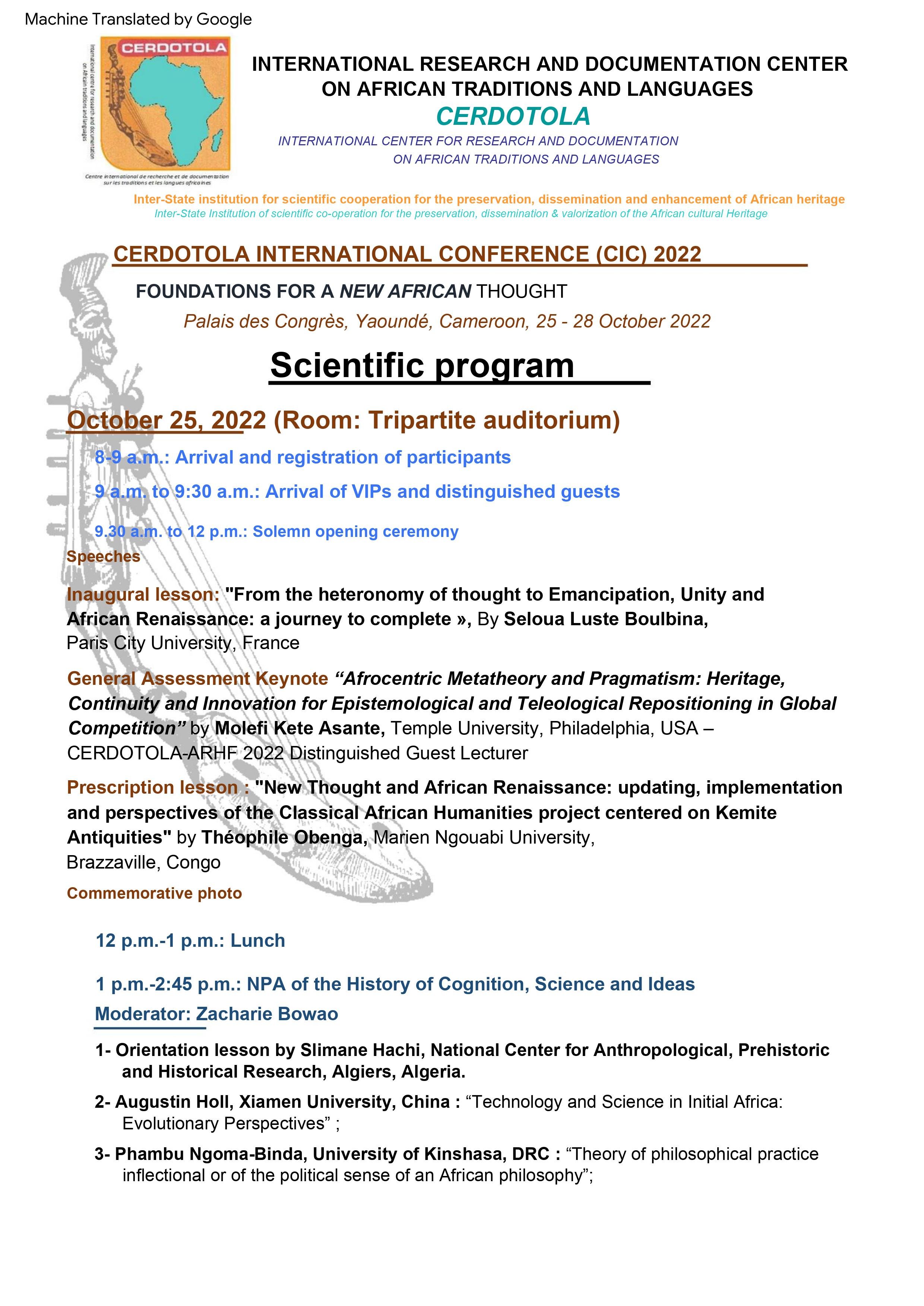
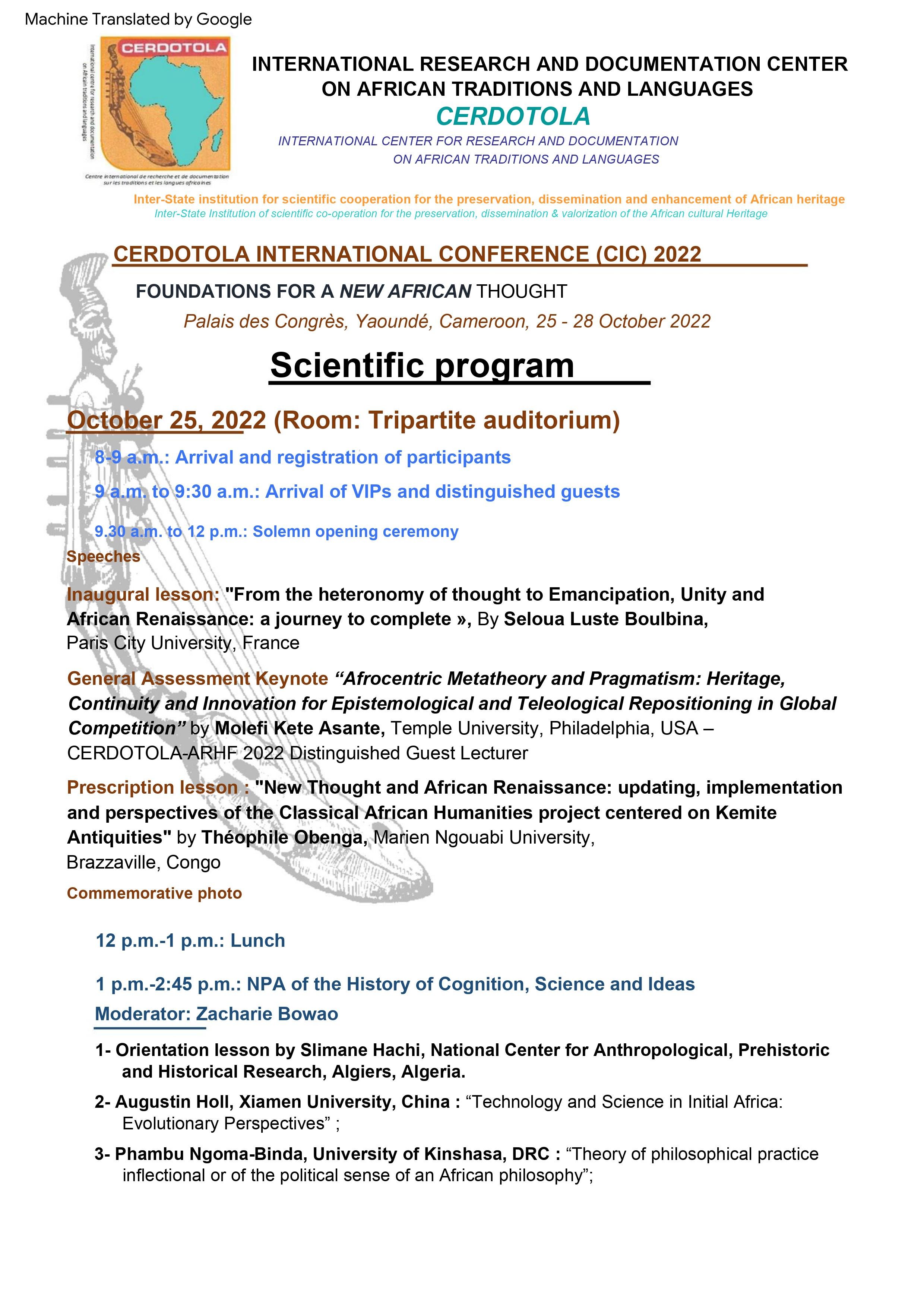
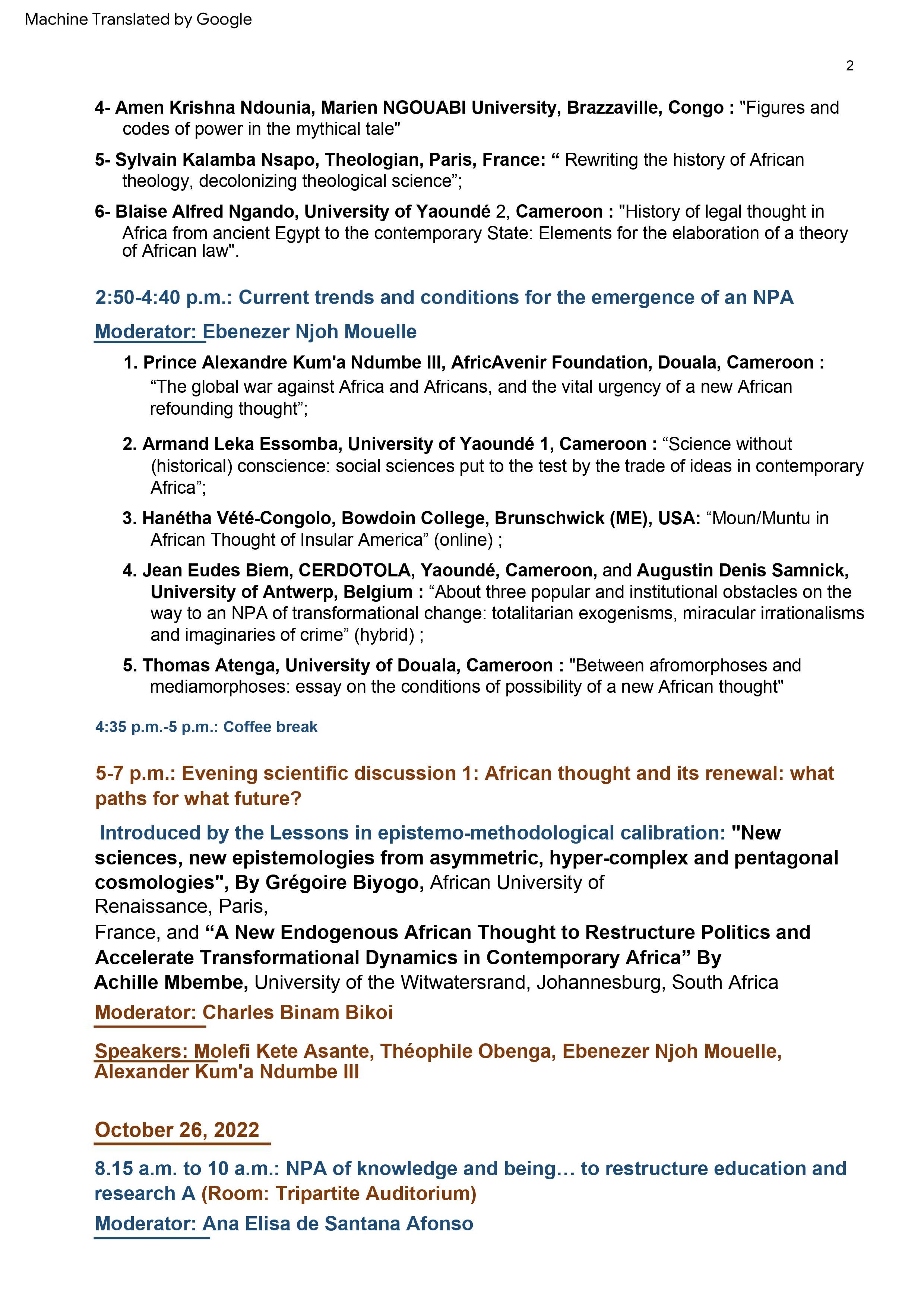
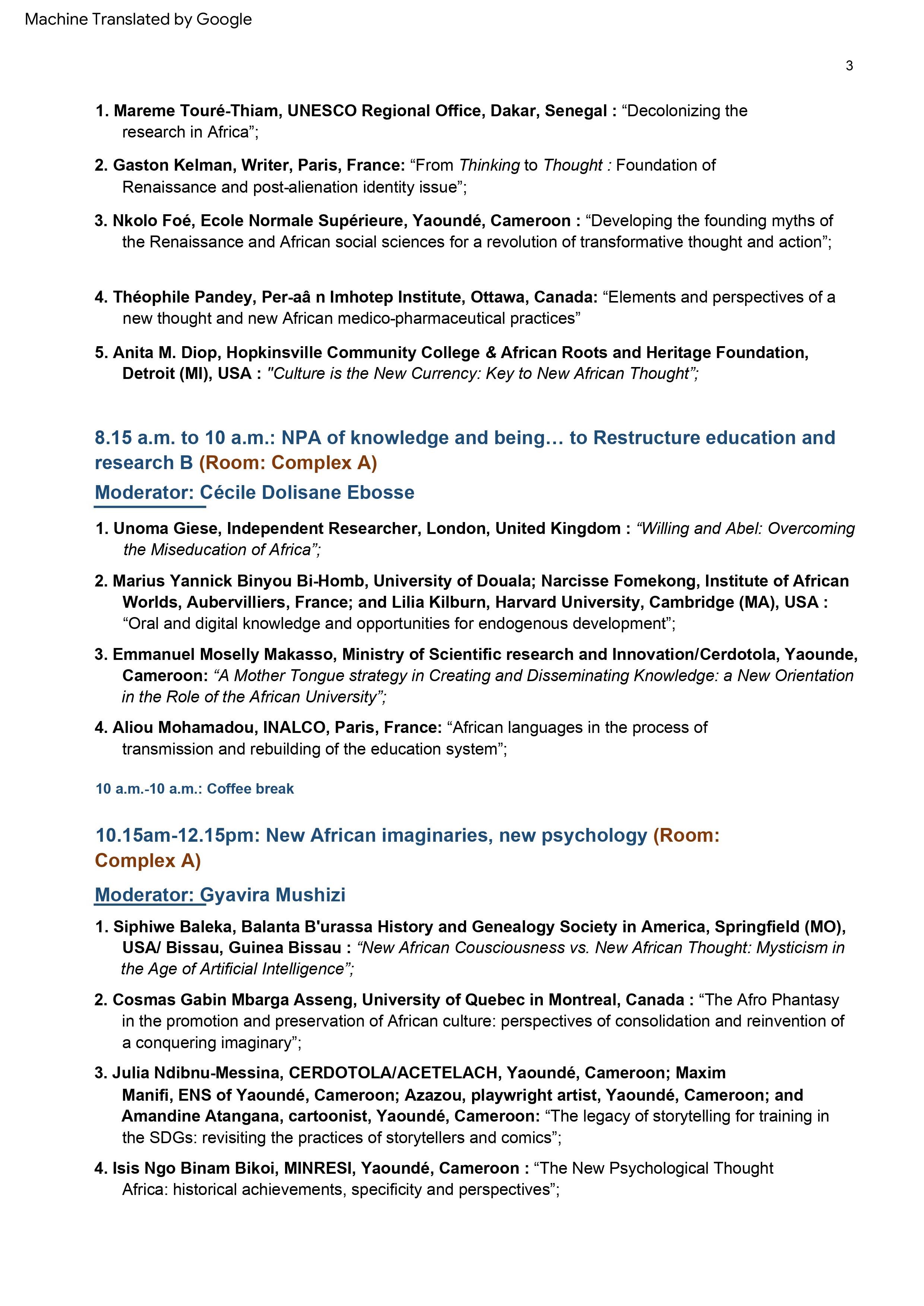
After such an opening night presentation, I was ready for the rest of the conference and I resolved to sit and soak up as much information as I could from each session. Here is the program in English.
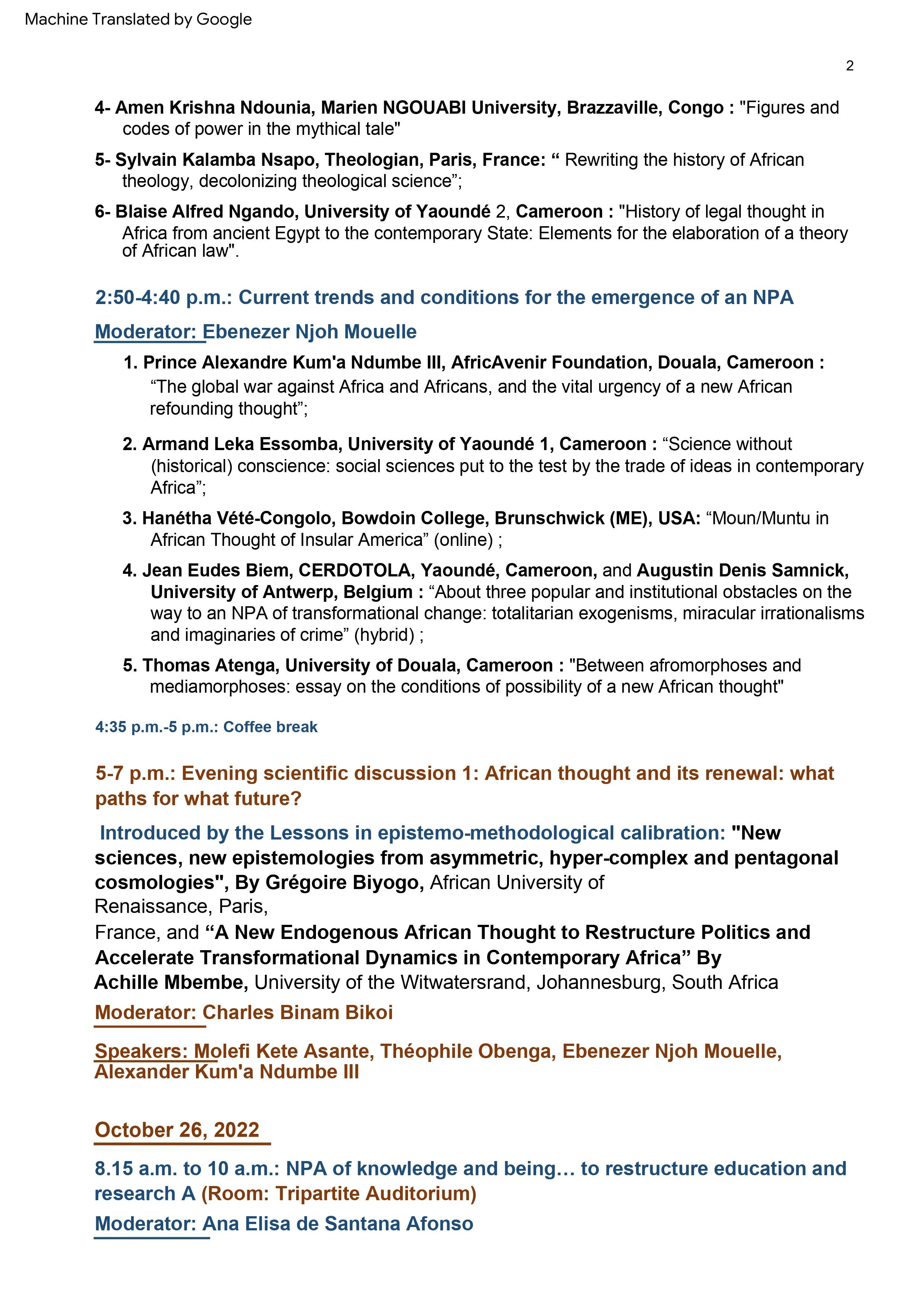
Unoma Giese: “Willing and Abel: Overcomming the Miseducation of Africa”

My Notes: “DuBois Talented Tenth > “Tainted Tenth”: the Tainted Tenth needs to be punished.

? Systemic Solution? if women are raised through the same system, are they less susceptible to becoming Tainted Tenth?

Emmanuel Moselly Makasso: “A Mother Tongue Strategy in Creating and Disseminating Knowledge: A New Orientation in the Role of the African University”

My Notes: “Qualified workforce; Emphasizing importance of lineage genealogy knowledge and why it should be taught in education curriculum; no “cousins, aunts, uncles. . . .” only brothers, sisters, mother, fathers, etc.; Western concept of family contributes to incest and sexual abuse. . . .My thought > IMPORTANCE OF PRESERVING NATIVE LANGUAGE FROM THE TRANSGENERATIONAL EPIGENETIC EFFECT perspective encoding genetic memory.

Isis Ngo Binam Bikoi: “The New Psychological Thought Africa: Historical Achievements, Specificity and Perspectives”

My Notes: “Abscence of Afrikan Psychological thought, behaviors, complexes; theories are always coming from the west; Question: As a psychologist, is there an interest in Neurological sciences?; what about specific Afrikan “familiarty heuristics”?; witchdoctor as psychologist; speaking is a form of relief; My Thought: language issue may be solved through instantaneous transmission i.e. telepathy; experiments were senders and receivers don’t speak the same language yet were able to follow telepathic commands. . . .

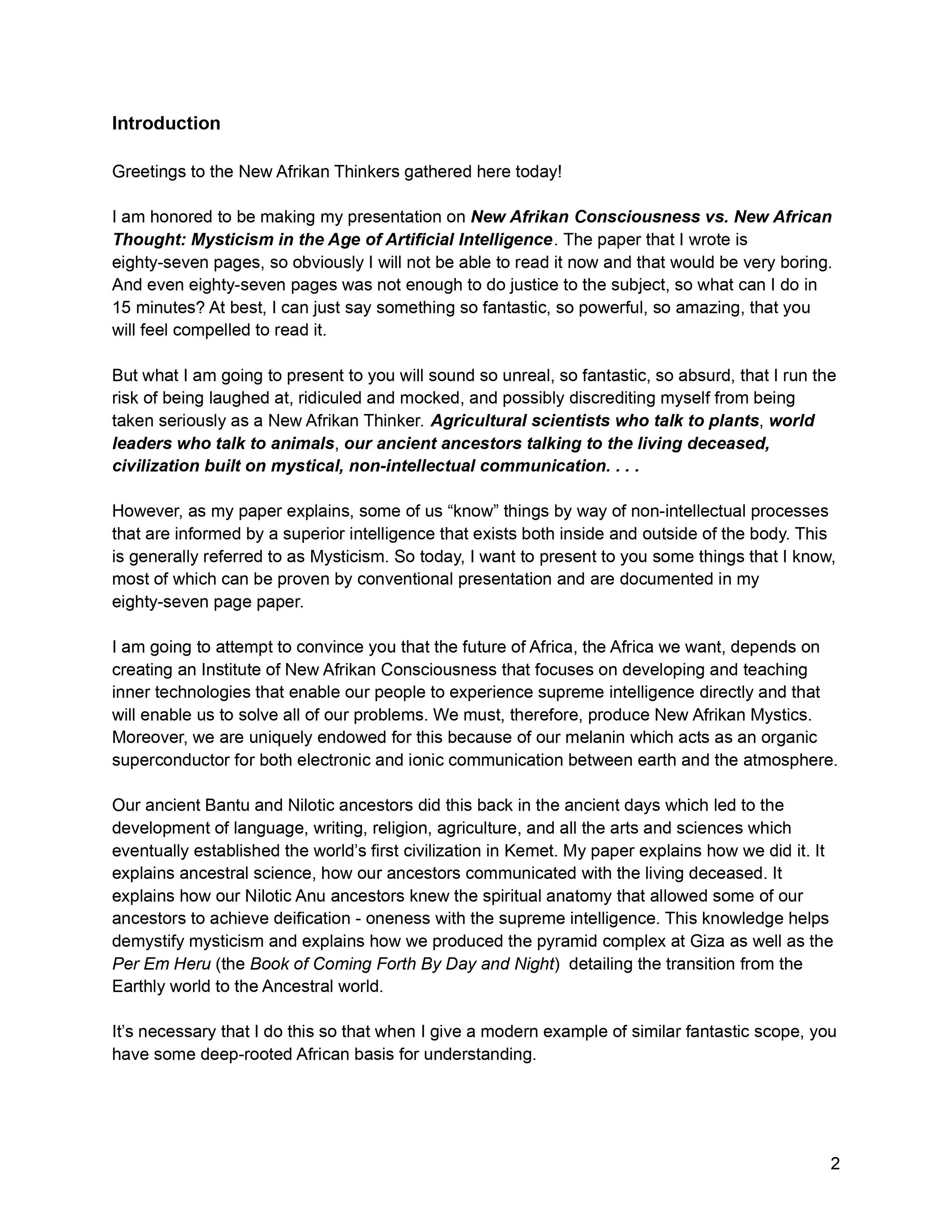
SIPHIWE BALEKA PRESENTATION:

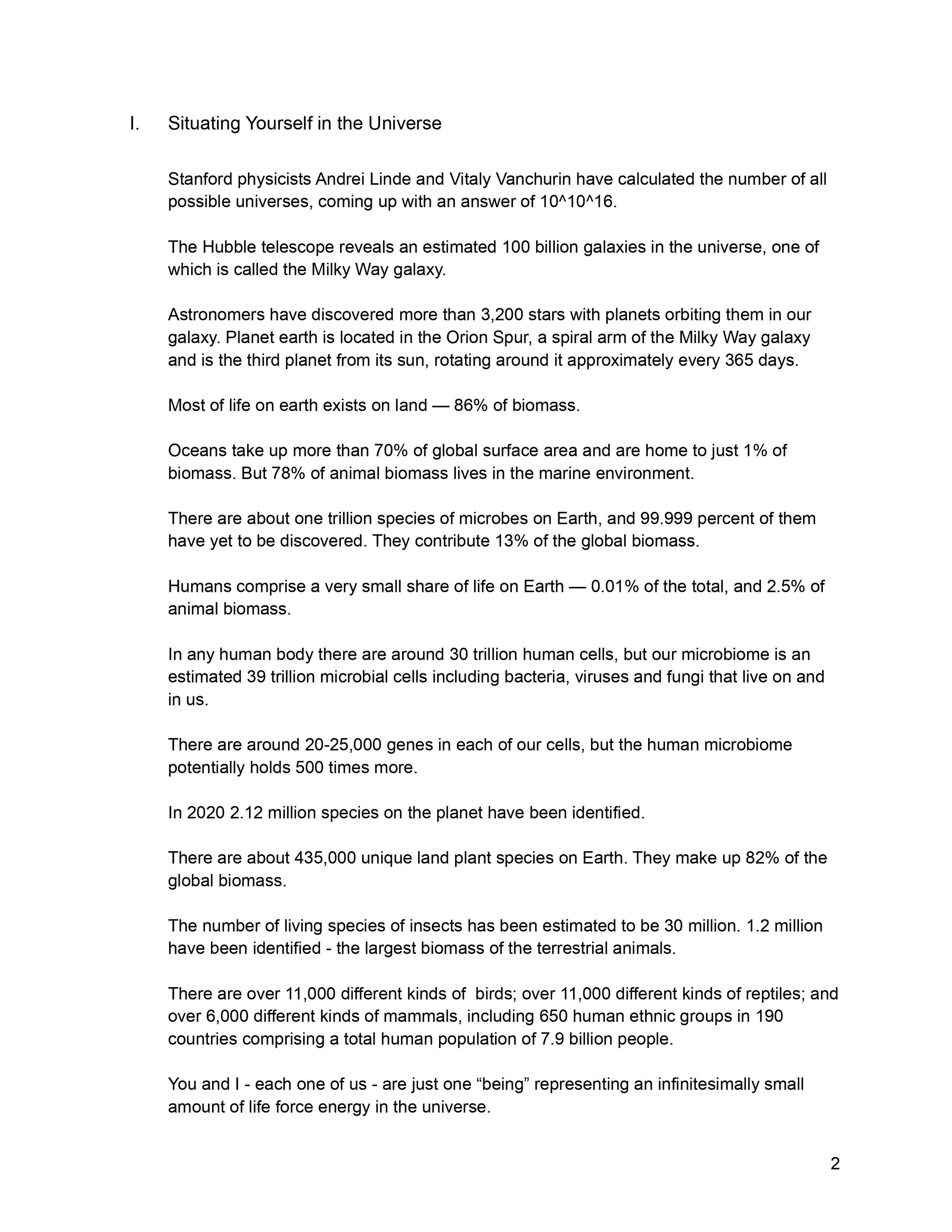
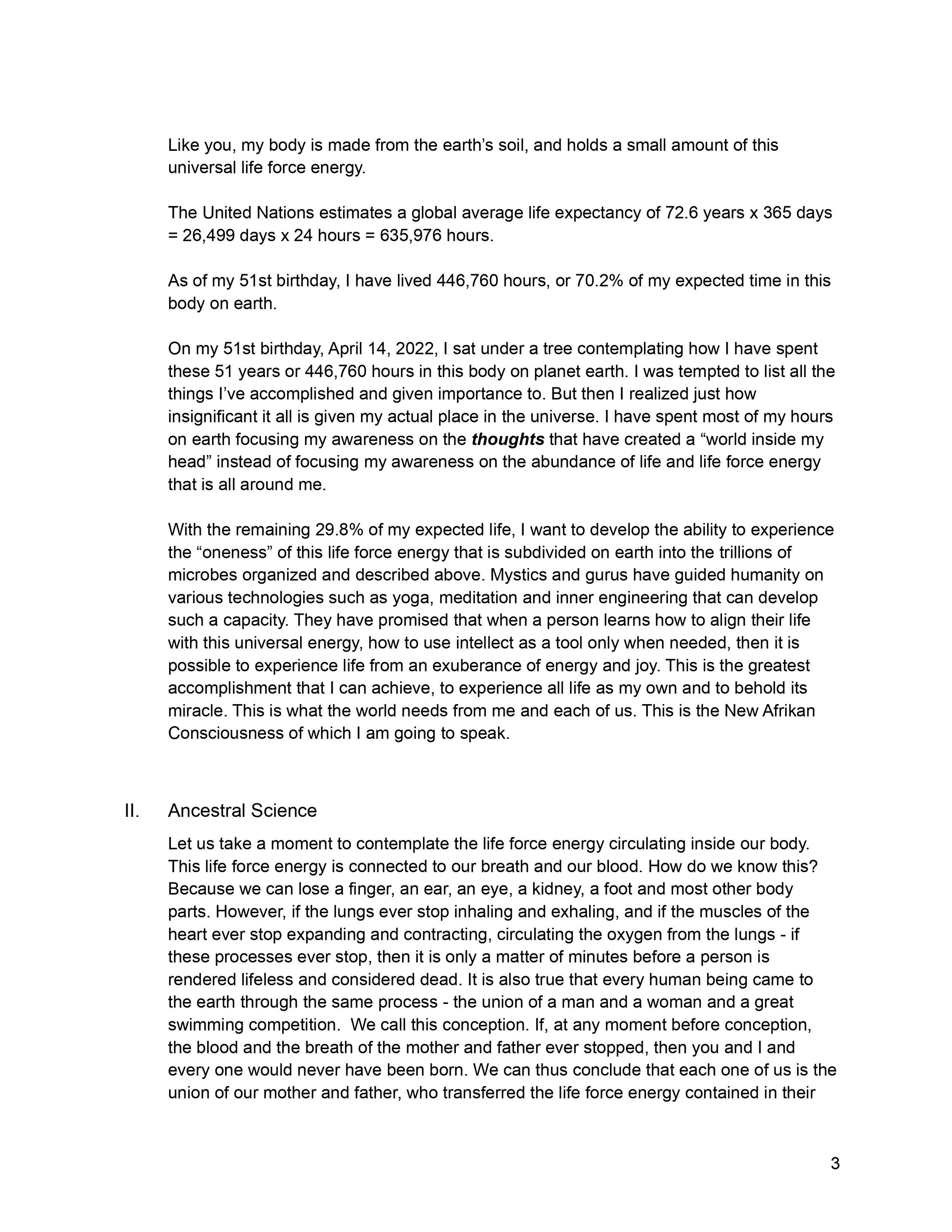
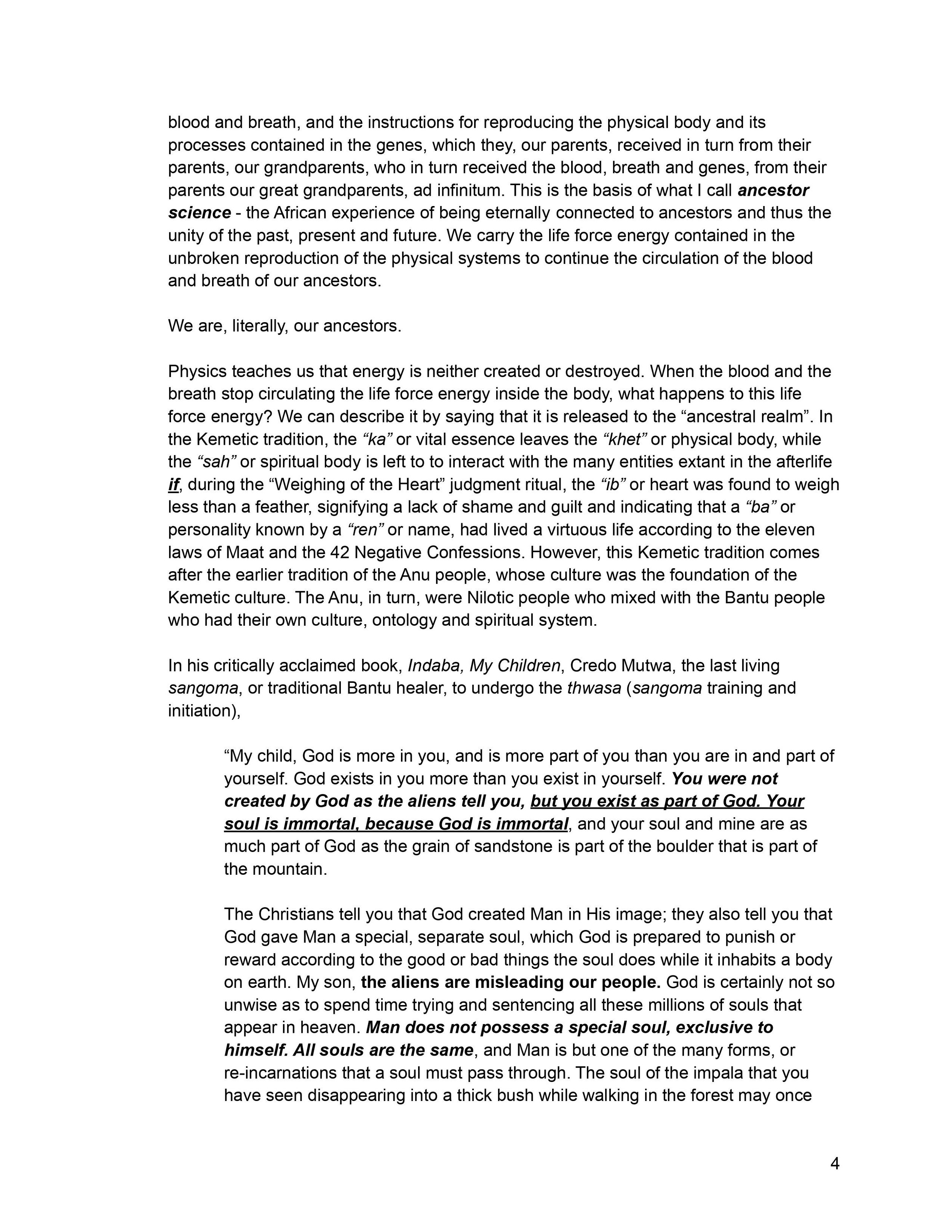
NEW AFRIKAN CONSCIOUSNESS VS. NEW AFRICAN THOUGHT: MYSTICISM IN THE AGE OF ARTIFICIAL INTELLIGENCE

After my presentation, I was asked by Professor Dolissane Cecile, “What is the priority?” to which I responded, “If you don’t have divine consciousness you won’t properly manage the material world/environment. Thus, we need to democratize initiation and training and concentrate on producing New Afrikan Mystics.”

Mathias-Eric Owona-Nguini: “Introductory and projective archeology of the political conceptuality of KMT: vestigal elements, African resonances, universal contemporary significance”

My Notes: “Why start with Biblical Table of Nations???? Djety = Prime Minister; Tatu = Throne>state; Djed = pillar; Sassa = Senate; Council of Elders . . . . AFRICA HAS ITS OWN POLITICAL CONCEPT; . . . saving the “state”; concept of the “messiah” or “savior”; “by speaking you give to others; by dictatig, you are leading . . . “ My Thought: We need a PAN-AFRIKA/NEW AFRIKAN CIVIL SERVICE EXAM for a state organized according to divine archetype

After the conference, Professor Owona-Nguini posted the following:

“DIVISIONISM, PANAFRICANISM'S CHILDHOOD STADIUM. Pan-Africanism Is The Indispensable Horizon Of African Emancipation. This is why, by the way, that this movement is strongly mocked and denigrated by the Contemptors and Detractors of Pan-African Dignity and Sovereignty. These Enemies Who Satisfy The Subalternization Of Africa Could Not Accept The Consolidation And Expansion Of A Movement That Aimed At Expanding The African Civilization Geo-Sphere. Many Africans Who Seek Consistent Autonomy From Their Civilization Are Yet Divided On Institutional Organizational And Ideological Formulas To Ensure This Dynamic Of Franchisse is lying. This state of affairs questions the strategic maturity of these Africans. Indeed, Instead of working on consensus frameworks that can strengthen the structure of Pan-Africanism, Africans are complicit in war and guerrilla between currents and factions (Afrocentricite vs Afro-Radicalism; Afrocen Tricite Against Afro-Futurism, etc.) Certain Ultra-Populist Segments Of Afrocentricite That Confine To Fascism Stigmatize Afro-Radicalism By Accusing It (Wrongly) Of Pouring Into Eurocentrism. The Progressive And Rationalist Segments Of Afro-Radicalism Attempt To Reduce Afrocentricite To Its Ultra-Populist Replacements. Expressing Their Reservation For Afro-Futurism. All these factional or factual fights have the effect of slowing down the systematic and strategic maturation of the Pan-African movement. Gold The Crucial Issue Is To Build A Colorful Bouquet But Bound By The Crown That Binds The Petals And Composes Each Of The Flowers. This means that the construction of a consensus is fundamental to ensure the strength of the foundations and the efficiency of the equipment as well as the civility of behaviors or the usefulness of developments. In the work of building a consensus, each current is called for adjustments and concessions by looking for points of convergence on institutions, modes of production and cultural frameworks. It's Not Byzantinism Manoeuvers That We Can Revive The Pan-Africanist Movement. . . .

AS LONG AS AFRICA AS A GEO-CIVILIZATIONAL BLOC HAS NOT RECOVERED ALL ITS FREE SOVEREIGN FREEDOM, NO UTOPIA CAN VALIDLY OR LEGITIMATE PANAFRICANISM. . .

RECONSOLIDATION OF PANAFRICANISM REQUIRES INTELLIGENT TOLERANCE FOR INTEGATING DIFFERENT AFRICAN CURRENTS OF THOUGHTS AND CURRENTS OF AFRICAN THOUGHTS. PROVIDED THAT THESE CURRENTS ACCEPT THE FOLLOWING BASIC PRINCIPLES: UNIFICATION (1), INTERPENETRATION (2), INTEGRATION (3), EMANCIPATION (4), CO-CIVILIZATION (5), HARMONIZATION (6), SOLIDARIZATION (6), MUTUALIZATION (7) , CO-CONSTRUCTION (7) CO-CONSOLIDATION (8) CO-PRODUCTION (9), CO-COMMUNAUTARIZATION (10). IT IS THROUGH THE APPROPRIATE SHIFT OF THIS COMBINATION THAT PANAFRICANISM WILL BE REVIGORATED BY TRANSCENDING FACTIONAL DYNAMICS. . . .

THOUGHT DOES NOT EXCLUDE MYTHICAL, MYSTICAL, OR METAPHYSICAL THINKING. IT IS NOT LIMITED TO EPISTEMIC THINKING, LOGICAL THINKING, SCIENTIFIC THINKING!!! WHEN WE TALK ABOUT AFRICAN THINKING, THIS INCLUDES ALL THESE MAGIC FORMS!!!

THERE IS NO WAY TO AFRICA OUTSIDE THE GREAT CITADEL OF PANAFRICANISM. AFRICAN RENAISNATION WILL NOT HAPPEN WITHOUT A RELATIVE AND SOLID PANAFRICAN STRATEGY TOWARDS THE MULTIPLE POWER OF A UNITED AFRICA.

1- 1 Treaty of Solidarity and Civilization Communities Organizing 1 African Civilization Geosphere Integrated By Common Adhesion To A Civilization Pact Of Trans-Community Recognition Of All Cultural Components F wave on the geo-cultural and civilizational consensus in favor of a Great Maatic Wall.

2-1 African Renaissance Treaty Expressing Joint Adhesion To An African Civilization Geosphere Founding A New African Way Of Living Translated In A Pan African Common House (aka United States of Africa / Union of Reps) African Social Ubliques/Pan African Union) Posed In Imperial-Continental Super Federation.

3- 1 Continental Treaty of Peace, Defense and Security Founding a Continental System Eponymously Consists of Imperial (Continental) And Intra-Imperial (Regional/Subregional) Commands.

4 - 1 Economic Convergence And Co-Prosperity Treaty Establishing A Coordinated Continental Economic System Based On Matic Harmonism Regulating The Self-Effective Potentials Of Competition And Competitiveness By Calling For Counterweight s To Cooperation And Cooperative With Simultaneously Cameramanist (Kamweralist) And Socialist (Sualist) Of A Complex Financial Apparatus Between Financial Markets And Public Financial Bodies.

4- 1 Political Convergence And Correspondence Treaty Arranging The Political Compatibility And Compossibility Of Co-Imperial (Regional), Intra-Imperial(Sub-Regional) And Sub-Imperian (National) Institutions.

5- 1 Institutional Maturity Treaty Erecting The Government By Degrees And Grades As The Matrix Of The Pan-African Government Based On Socialism, Mutualism And Trans-Communist Sodalism As Ways Of Civilization Of Soc Pluralism ial sub national / co national / state national / trans national. .

6- 1 Treaty of Good Social and Inter-Social Coexistence Establishing a Multilevel Continental System of Security and Social Protection Based on Co-Imperial (Regional) and Intra-Imperial(Sub-Regional) Regulatory Mechanisms St Standard / Homologic Of A Solidarity And Socialist Policy Of Social Coverage.

7-1 Cultural Intelligence Treaty Founding The Harmonious Coexistence Between An Africanite Community As The Basis Of Continental Civilization And The Different Community Levels Of Social Plurality And Cultural Diversity Across Mecca Intra-Imperial (Sub-Regional) And Sub-Imperial(National) Cultural Regulation Balancing Between Convergence And Difference At Mediums of Harmonious Negotiations.

8-1 Inter-Cultural Recognition Treaty. Charge of Ensuring the Due Trans-Community Regulation of Cultural Differences Through Educational / Training and Information / Communication Mechanisms Based on a Cognitive Base, Af effective, normative, foundational and operational common / trans-community.

9 - 1 Treaty of Scientific and Technological Convergence Instituting a Large Continental Belt of Knowledge and Skill Building a Continental-Imperial, Regional-Co-Imperial Organisan Machinery t The Convergence Of African Political-Scientific Or Techno-Scientific Development And Radiation.

10-1 Spiritual And Valorial Regulation Treaty Destined To Stabilize The Republican Management Of The Plurality Of Spiritual, Moral And Ideological Currents Around A Maatic / Ka-Raik Normativity Excluding Hegemonism, Sectionalism, L e Sectarism And Factionalism Profits Of Concertalism, Mutualism, Sodalism And Mutualism. . . .

CONDITIONS OF PANAFRICANISM EVENT:

1- A LARGE CONTINENTAL POLITICAL SPACE: An Imperial Super-Federation (5 Continental Confederations, 5 Super-Federal Areas)

2- A LARGE CONTENTAL ECONOMIC SPACE ( A Pan-African Development And Prosperity Belt: 1 Community Pan-African Economy Founded On 1 Medium Abundance Economy And On Solidarity Regulatoryism And Mutualist Concertalism As well as a Central Bank, a Continental Monetary Fund and 5 Regional Stock Exchanges).

3- A LARGE CONTINENTAL SOCIAL SPACE is based on a Continental Framework of Convergence of Social Policies in the 5 Confederate States/Regional Communities With Security and Social Protection Funds Prioritizing Redistribution In solidarity.

4- A GREAT CONTINENTAL CIVILIZATION SPACE. Panafricanism Requires To Establish A Continental Civilization Concert Charges To Ensure The Constitution Of A Pan-African Common Heritage With Institutions Charge Of Managing An African Corpus Of Canonic And Organic Humanities A Through Aesthetic And Stylistic Activity Developed In Large Pan-African Cultural Places Modeled Around Platforms Eventful.

5- A LARGE CONTINENTAL STRATEGIC AREA.

The Definition And Materialization Of An African Renaissance Requires The Establishment Of A Large Pan-African Military-Security Citadel (Integrated Continental Staff, Continental Commands, Regional Brigades; Continenta Mechanism Intelligence and Prospective; Pan-African Diplomatic Council) . . . .

THE GREAT LEOPARD, BAPTIST OF IOUNOU LA NOVELLE, THE RISEN CITY OF THE SUN, WILL INSTITUTE A DJADJAT OF LIGHTS KNOWN AS THE COUNCIL OF LIGHTS. When KAkA Aby Comes, Kama Will Start Coming Out Of The Darkness Because This Priest-Prophet-Preceptor-Prince Will Bring Him The Sacred Civilization Fire. Indeed, It Is A Wise Sesh And A Wise Saah To penetrate By The Enlightened Teachers Of DHwty, The Archpriest Of Atara-Nti-Si. kAkA Aby Mendjura Kar-Er-Ber Is Of Exceptional Moral, Cultural And Intellectual Height Because He Is A Khery Sesheta/Nkore Sok/Nkore Bisakara Impregnated With Hermetic And Systematic Knowledge Of All Mysteries. This Nsang Bekalara / Sesh Mu Kaartou Knows The Complexity And Subtlety Of Science And Arts Of Government And Power. He knows that the Mountain of Lions will be the site of Kama's rebound. That's Why, When Ra Will Give Him The Keys To The Great House Which Is Like A Throne Or A Crown, The Great Lropard Will Showcase His High Knowledge Of The Hermetic Science Of Government Laws. He Knows From Mendju-Htr/Men-N'Thot And Nekhen-Nu-Ouni The Wealth Of Kama's Politico-Pastoral Directory Is Based On The Ankh-Oudja-Seneb Combination. It is expected that Kaka Aby will put in place a Djadjat Nu Mafu, a Great Council of Light. It Is A Instance Of Wise That Will Be In Charge Of Accompanying The Great Leopard In The Revigoration Of A Solar Government Based On The Fine Knowledge Of The Astronomical Conditions Of Political Regulation. She Is In Charge Of Accompanying The Sage Mage Became Great Servant Of God And Solar Institutions Of The State Rehabilitate And Revisit Kama, The Great House Reincarnated In The Immense Wall Dressee Around The Central Domain Of Ousire / Awsar / A Top. This Djadjat Will Deliberate Under The Leadership Of The Great Leopard To Choose The Options Of Power Held As Axial And Central Government Directions. It Will Be Composed Of Real And Great Sages Helping To Rebuild The Institutional And Constitutional Structures Of Kama By Incorporating It As A State Concert Council. Said Djadjat Will Bring Sages From All Cardinal Points That Connects The Plural Space Of All Countries In A Circle Of Light. Thus kAkA Aby Will Be The Djadjat/Duga/Nduka/Muduka Supreme Guiding These Eminent Magistrates-Pontifs To Enlighten And Reeclzir The Path Of The Government Of The Lion Mountain Country By Examining Its Itineraries, Its Navigation Approach As Much Only His Driving And Manoeuvring Tools. This Model Will Become An Example Of The Synarchic/Kun-Aurkaic/Kunasukic/Kuna-Lusukeic Restructuring Of Political Systems And Regimes Across The Greater Kama Land. So, We'll See Kama Reach A Sublime Level Of Pastoral And Pontifical Guidance Based On A High Bill Concilial Institutionality And Constitutionality. If the Callipolis of the World will be back, a real U-Bu Nefer. . .

THE AFRICAN THOUGHT SPACE IS SIMULTANALLY DIVERSAL AND TRANSVERSAL BECAUSE IT IS TRAVERSE: -

ONTOLOGICALLY (Thought Of Being - Force/Energy: VITALISM/NYAMAISM);

Thought Of Being -Substance: ESSENTIALISM/NTUISM;

Thought Of The Being e-Situation: EXISTENTIALISM / LOWNESS;

Think Of Being Form: CONSCIENCE / KAISM;

Think Of Being: NOMINALISM / NDANISM -

Think Of Being-Matter: CORPORALISM/ZATISM;

Thinking About Being-Seem: INTUITIONALISM/KHAIBITISM;

Thinking About-Information: ANIMISM-AKHISM;

Thinking About Self-Sense: SENTIMENTALISM/NETJEMISM;

Thinking Of Being-Raiso': RATIONALISM/UDJATISM):

PHENOMENOLOGICALLY (Be-This: MONSTRATIVIST/NU-ISM);

Be-The: SITUATIONISM-AHAISM;

Be-Low: MIGRATIONNISM:/ABORISM;

Think Of Being-In:INTERNALISM-IKERISM;

Think Of Being-Outside: EXTERNALISM-SEKHETISM;

Thought Of Being-Of : LOCALISM/TANISM;

Thought Of Being For: SELF-SELF;

Thought Of Self: SAMEISM/MERISM;

Thought From the Self: MENISM / MERENISM;

Think From The Being Towards: DYNAMISM / KHEPERISM);

AXIOLOGICALLY (Think Of The Perfect Being: PERFECTIONISM / NEFERISM);

Think Of The Harmonious Being: HARMONISM / MAATISM;

Think About The Total Being: INTEGRALISM / OSISM;

Think Graceful: CHARISMATISM/MAAKHEROUISM;

Think Of Being Providential: PROVIDENTIALISM/MAAISM;

Think Of Righteousness: JUSTICIALISM/SHESAOUISM ;

Thought Of Being-Luminous: ILLUMINISM/IMAKHUISM;

Thought Of Being-Pure: SANCTIFICIALISM/OUEBUISM;

Think Of Being Self-Control: MAGISTRALISM/NEBIBISM;

Think Good: EUDEMONISM/MERISM;

Think Of The Being-Ambivalent: SETHISM/BA TAISM;

AND GNOSEOLOGICALLY (THE INTELLECTUALISM/REKHISM);

THE WISE: PHILOSOPHISM/SEBAYETISM;

THE KNOWLEDGE: SAPIENTIALISM/SAAISM;

THE SPEAKING: LOGONOMISM/KAAISM;

THE BEING-LEARNER: PEDAGOGISM/SEKHERISM;

Being-Thinking: MENTALISM / SIAISM;

Being-Willing: INTENTIONALISM / HOUISM;

Being-Calculator: COMPUTATIONISM / TEP-HESEBISM;

Being-Active: POSITIVISM / COMMISM;

Being-Organizer: PRAGMATISM / TEKHISM).

It Is Structure By Forms-Forces (RA: Spiritual Heliopolarism;

ATUM: Matrix Heliopolarness;

ATON: Rational Heliopolarism;

AMUN: Material Heliopolarianism;

KHNOUM: Substantial Helioplarism;

PTAH: Actionable Heliopolar;

KHEPER: Heliopola Processional risk;

AN: Functional Heliopolarism;

AS: Positional Heliopolarism;

TEP: Ascending Heliopolarness).

4 Cosmic Engines In Command Positioning (Figures) And Movement (Conjunctures) Based On Dialectic Action (AMUN/AMUNET:

Or KUK/KUKET Hide/Discovered;

HEH/HEHET: Eternal/Passenger;

RA/RAET: Bright/Dark;

NIOU/NIOUET: Vid e/Full).

TEKH/MAA/IB-RA(Twhty) And TEFNOUT/MAAT/KA-RA Act To Regulate These Forms - Forces By Super-Symmetrical Logic Linked To RA/AMEN/ATUM/ATON/KHEPER/AN/AS /KHEPER/KHNOUM Posed In Matrix Of Universe Emerging From Inert And Opaque Multiverse Of NIA /WE/ N O N E . This Frame Makes It Possible To Position Current African Thoughts As Maaticentric (Afro-Transversalism And Afro-Tropism) And Osirocentric (Afrocentricite/Afro-Kamism, Afro-Conscience/Afro-Radicalism) Or Sethic (Afropolitani) sme, Afro-Postmodernism, Afro-Romanticism) And Isphetics (Afro-Pessimism, Afro -Cynism, Af-Lycanthropism, Afo-Eurocentrism). This Is The Omo (Lomi/Romi/Nomi/Momi/Nlomi[Man,Son] And The Muntu (Mut/Muto/Muta/Mutan/Muda)[Woman] Or Moto/Mot/Muntu/Mutu[Man] As Well As The Man/Muna/Muan/My/Mun [Son] And the Nan/Nana/Nunu/Nii/Nia /Naa [Mother]Or La Ngo/Ngon/Ngonda/Ngondele[ Girl] Who Forms The Great Human Family ( Humanitas / Bumuntu / Ubuntu / Umma ) Anchored In The Mundus / Mundo / Mundi As Homeland Or OMANASIMBI OR WOMANASIMBI Or Humanism Of The Earth-Think Like WOMANA/WUMA/WOMA/VOMA/HOMO/EHOMO!!!”

Jean Felix Yekoka: “Construction of living together for the Africa of tomorrow based on a precolonial model? The Kongo case”

My Notes: “We have a trust problem. How to overcome? (My answer: Mystic consciousness); pre-colonial Kongo - isakululu - how to make realtionships peaceful. . . . ; Lemba - magical/religious; myth of origins > myth of Nguno, the woman who gave birth to 4 boyys/4 distinct states. . . . My thought: we need a New Afrikan Civil Service Exam to certify New Afrikan Diplomats and Government Ministers based on all these Afrikan sovereign and statecraft models. Warning: We must be careful of prejudicing vertical models of society and government such as “kingship” and “royalty” since it presupposes that some are more important/privileged than others. Africa has plenty of horizontal societies that do not concentrate power and authority into “royalty” which has/can be abused. . . . What Afrikan models are there for merit/capacity based systems???

Andre Mboule: “Re-appropriating Ubuntu Leadership Style”

My notes: “Sessions are still focused on brainstorming; looking for models to implement “Ubuntu” - why are models effective or ineffective?; Leaders > individuals and his/her team > hot to make efficient?; LEADERSHIP = “SHIP” of “LEADERS”; - “If you think effective leadership is expensive, try bad leadership. . . .’; leadership must produce effective results.

Lewis Ricardo-Gordon: “African Philosophy and the Future of Humankind and its Institutions”

My Notes: “(FYI- Lewis Gordon was one of my professors at Yale) Hekau - transformed + technology…. Afrikan philosophy is overwhelmingly relational > obligations greater than self; “disciplinary decadence”; willingness to go beyond philosophy; re-thinking power; decoupling nation state - becoming Ancestors makes sense for New Afrikans; creative rethinking of relations of power. . . . where speech is heard by an audience. . . . political nihilism of now . . . . publicity of power = democracy now. . . . African philosophy has task of contemplating and producing true Afrikan future; nation states produce “illegal” people. . . . feasibility of “Great Council”; existential committment - not what can be done but what must be done. . . . “cultivated irrelevance of those who ‘imperil us’ . . . .

Dennis Galvan: “Pragmatism, social engineering and institutional innovation: Problems and Prospects for New African Thought”

My Notes: “rethinking institutions…. 1. Problems of Institutions; 2. Creative Syncretism as anti-dualist; Analyzing development institutions. . . . institutions of belonging - i.e. nation states; Step 1: response to exogenous institutions of the colonizers impositions of institutional norms - “institutional monocroping”;; recommended reading: James Scott on state simplification; complexity economics and applied spirituality; structures of economy, culture, history; good at explaining structures and order but not institutional change; - “they can’t explain their own change”; Syncretism > from religious anthropology an account of change; Deliberation > creating new path out of memory. . . . New Solution which is not merely a combination of memories. . . . example: Parkour - temporary unauthorized use of public space > produces new forms of ownership and relations of power; institution of citizenship; micro-actions of every day activity we see emergence of new institutional forms > alternate modernity;

Charles Binam Bikoi: “What New Thought for what good governance of societies and science in a new Africa?”

My Notes: Entropy > closed systems > weakness; loses internal ability to re-invent itself. . . . External influences dominate; Limits of adaptations > knowledge and power becomes crystalized; Dynamism > Thought; New Afrikan Thought > go beyond Good Governance; crticism as crime. . . . “Afrika is Europe Retarded!”; “Democracy by Force1”; Doctrine > internally focused; again, insignificance of those government officials who imperil us . . . .; NAT = example of human behavior.


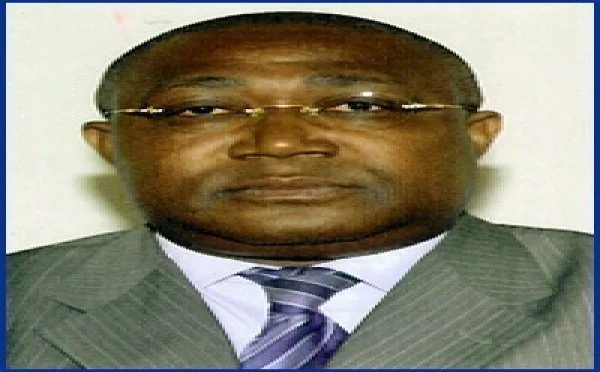
Tadewos Belete: Presentation during the evening discussion

My Notes: “None of the hotels in Ethiopia were managed by Africans. . . . we must design, build and operate our property; Investment is ours, management is usually outsourced; his company Kuriftu Resorts - 3,000 Ethiopian employees, 80% women; builders are hired to work/service the property after construction is completed; Goal: African-branded property (hotel chain) to represent all Africa; TOURISM: each month 1 country brought to Addis Ababa (diplomatic capital and gateway to Africa) to showcase that countries chefs, music and musicians, intercontinental library; waterpark - provide opportunity to entertain family and kids; building the biggest adventure park in Africa.

Didier Ngalebaye: “New African Thought and Development: Construction, distribution and endo-exogenous evaluation of knowledge in Africa”

My Notes: “Epistemologic- combines orality with writing; Importance of literature review so I can identify what has been done - strengths, weaknesses and develop the weaknesses; “Africanness” must be endogenous and exogenous; studies/conference proceedings to go to AU; Cognitive knowledge - history not properly documented; importance of NAT pedagogy and disseminating NAT conference results; how to assess on the basis of criteria, results after 1 year . . . . .; NAT > Endogeneous references - import only what we can’t produce locally….

Dr. Serge Alain Godong: “Can Africa challenge the agency theory? Conformisms and originalities in the sub-Saharan trajectories of capitalism.”

My Notes: “Not even 3% of what is in the room is produced in Africa. . . . Management is to organize the relationship between humans and production factors. . . . Africa > less than 3% international trade. . . . what mechanisms to put in place? My Thought: “Dr. George Washington Carver as an example of source of new ideas for local production”. . . . Systems that generate productivity - what happened to the $5 billion in Cameroon???? What did it produce??? why do we struggle with this???

Dr. Reynaldo Anderson: “Afrofuturism 2.0, African Futurism, Hauntology and the Rise of Dark Speculative Futurity”

My Notes: “200 year present: Ancestor (100 years) < You > (100 years) offspring; The 2nd Race for Theory; Pat Buchanan 1992: Culture War - white nationalists conclude its about philosophy; Afrofuturism - Marc Dery, CT Keto - Africa Center perspective of world history and future. . . . ; Create history in the actions of present; My Thought: “Bob Marley said the revolution will be telpathized”; How will Astro-blackness and Global Black Identity exercise political power vis-a-vis/against the state - i.e. the U.S., China? . . . Emergence of a paradigm involves persuasion, aesthetics, + …… Assault on imagination; It takes a system to oppose a system. . . . (How about asymmetrical warfare?); To speak is not a solution; let us act . . .

LISTEN TO DR. ANDERSON’S PRESENTATION
Wullson Mvomo Ela: “The Reinvention of the Power Assertion Strategy in the 21st Century: What Responses from Africa to the Rest of the World?”

My Notes: “Crisis of Audacity!; betrayal of academicians and clerics - “several parrots”; Space and Time structure identity; domination of “spirits” is the actual problem as mush as military, economic, and technical dominance; China - “land of the rising sun”; America - “city on the hill/Blessed nation/American Dream” - Africa ????? - WE NEED TO REBRAND. . . . What strategy /communication?; stop using “DEVELOPMENT PARADIGM”;

Jean Eudes Biem: “What a great forward-looking strategy for the lifting of structural mortgages to the construction of the United States of Africa, the first world power”

My Notes: “ New African Thought > impossible without prospect of power; renewal must be “conquest”; Declare will to emerge is declaration of war under white supremecy. . . .; proposal to apply New Afrikan strategic thoughts; GREAT STRATEGY OF POWER; STRATEGY OF FUTURE for the change to come; “PROSPECTIVE STRATEGY” - Who are we as an entity???? - Audacity to think of the impossible - United States of Africa. . . . 2025: African Population increases to 2 billion - only region of growing population; specific strategy of Internal consolidation . . . .; issue of inferiority > 1,500 years of inferiority; Africa is diversified entitties; We have to construct an empire of mono-nationals. . . . Major strategy should resolve to roll-back the obstacles; UoA > Federal state; Reform or Revolution? - NO CONCESSIONS ON MAJOR STRATEGY; - What is federal vs. Con-federal? -AFRICAN IMPERIUM is not Domination through exploitation, it is not colonial; IMPERIUM is “I Am the only Master in my Homeland”. . . . ; turn our back on colonial epistemology. . . . My thouhgt: “Military modernization based on what principles???? Arms or remote viewing?”

Cheikh Tidane Gadio: “Paroxysm of Crises in Africa: the advent of the United States of Africa becomes a question of survival for the continent”

My Notes: “Africa has one problem: the problem of leadership; lack of will > they know but don’t take actions. . . . when you don’t speak truth, you add more ills to the world; Rwanda genocide was Africa touching the bottom of our history. . . . We still have Congo, Liberia, we keep going from bad to worse, the floor keeps dropping; Mali has 7 borders - why do they not come together as one? - Cheikh Anta Diop: “I don’t need your approval to validate my theory”; We need an African Army, Currency, Bank and Citizenship; Balkanization of Africa; Diop denounced the creation of ECOWAS - we are copying models that are not ours; Diop prophesied tat 30-50 years we will see this truth . . . . ECOWAS is in crisis. . . . Nyere before death said Nkrumah was right!!!! He apologized…. ECOWAS can’t move forward- why not a Federated state for West Africa? - An Islamic Caliphate by 2025 is some people’s agenda. . . . Africa without the Diaspora and vice-versa will not go far. . . . “Mission of Responsibility”.

CONCLUSION:

My Notes:

Dr. Patrice Passy: Africa - 30 years- population doubles; Africa becomes the 2nd biggest demographic power in the world; need strategy for demographic dividends; build economy for dividends for all; weak military > weak organization; moving from observations to local solutions: QUESTION OF STRATEGIC VISION WAS MOSTLY SIDELINED; Demographic revolution; Identityt revolution; building power and how to protect it; CREATIVITY IS AN ACT OF POWER.

Cheikh Tidane Gadio: Final reflection - conference confirmed my ideas and convictions; the west has lost the monopoly on the future of modernity; Nkrumah: Unite or Die; we are the visionaires and prophets; avoid the trap of division; when a paradigm leads us to an impass, have the courage to admit it . . . .

Theophile Obenga: Premise of the Constitution of a Federal State; delighted by the meeting; not easy to hold such an event; we are human “phenomenon” not animals, tree, clay, . . . born creators; avoiding nakedness is a human phenomenon - why?; In ancient Africa wrongdoers were punished but not imprisoned. No one was deprived of freedom - the human has a spiritual anatomy, it is sacrilege to imprison “divine” entities like the ka and sah . . .; you are either colonized, slave or partner - you are not SOVEREIGN based on “development paradigm”. . . If we don’t start with a federal state we will be like Latin America; - referencing American Constitutional Congress; we will start - it won’t be perfect but we must start with our own logic; FEDERAL STATE OF AFRICA IS THE SOLUTION; Needed: Yaounde Declaration and Action Plan

My Conclusion: The Problem of Africa is Leadership. The Problem of Leadership is lack of Mystic Consciousness. We need a curriculum that produces Mystic Consciousness that can be measured and certified to produce New Afrikan Government Officials; We need standards for Leadership that include initiations and inner engineering capacities. Question: does security precede development? Which way security? Traditional military or mystic??? - Not enough to have structures, we must have transformative capacity and we need power that can see into the future. . . . From Omotunde - Humans we have; intelligence we have; Consciousness we need. THERE MUST BE A PRODUCTION SYSTEM THAT IS DIFFERENT. . . . There is also a problem of transmission of pedagogy of New Afrikan Thought.

POST CONFERENCE THOUGHTS

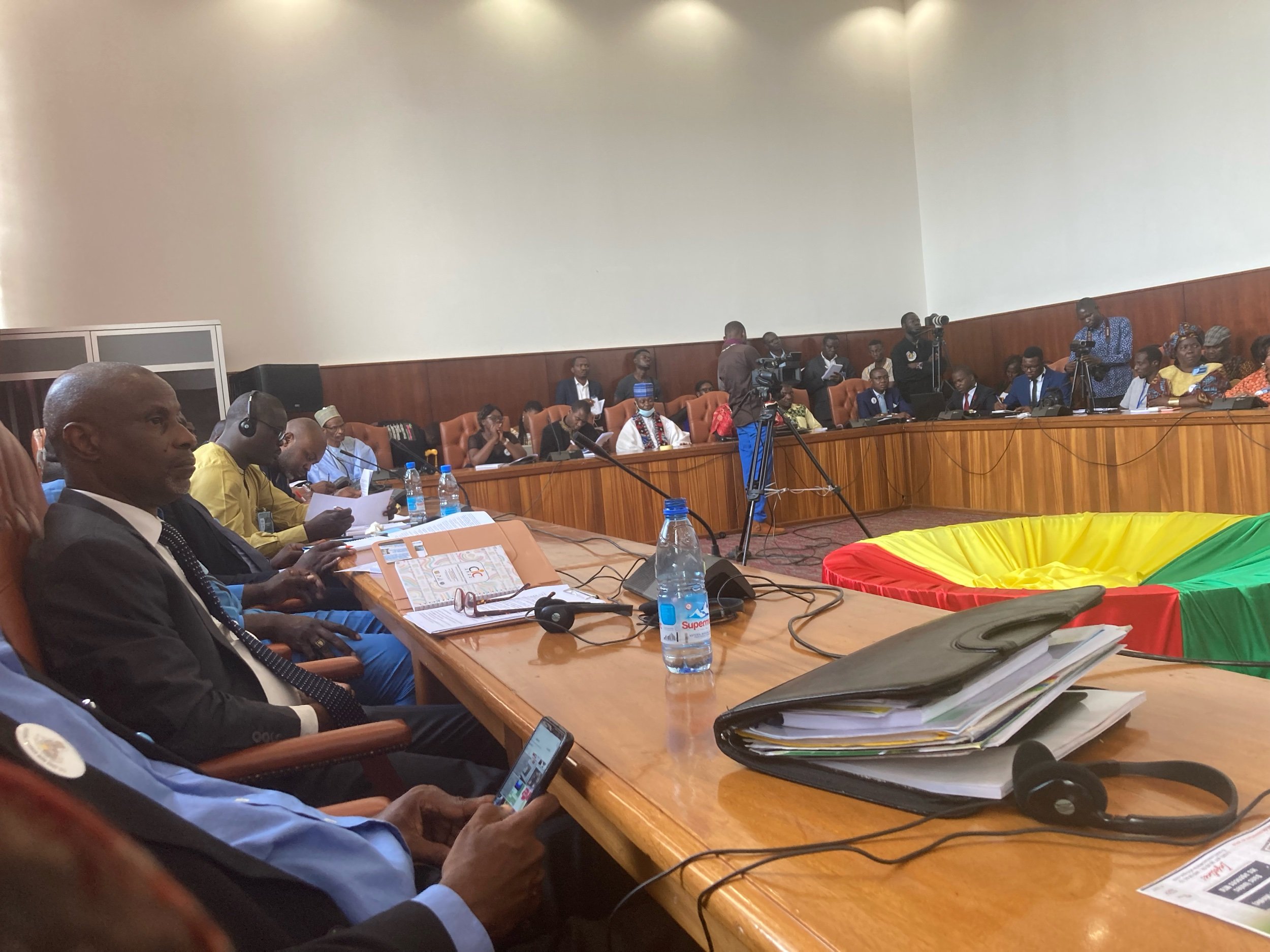
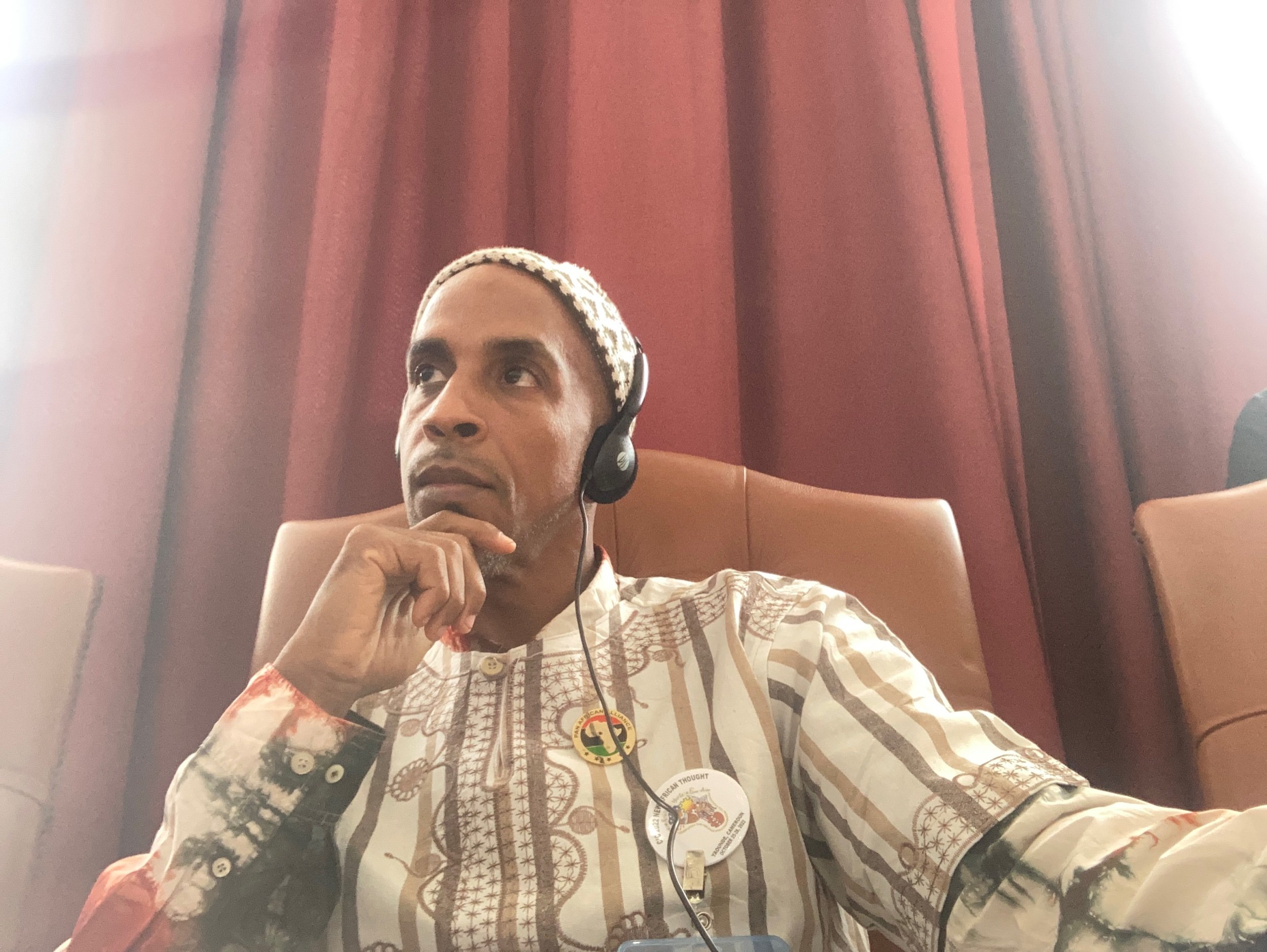
The New Afrikan Thought Conference was impressive. It was by far one of the most simulating group thought experiences I have ever had. The conference facilites were amazing and included real time translation via headsets. The level of discussion was extremely high and there was an extraordinary, palpable spirit that governed the conference throughout the four days. It was an honor to be included amonst so many of the continent’s best thinkers, strategists and visionairies and I was proud that I could make a contribution. Everyone seemed to be on the “same page” and there wasn’t too much arguement though there was plenty of alternative perspectives presented. The patience exhibited by everyone to give speakers a full hearing was a sign of great maturity. In my opinion, Yaounde Cameroon has become the intellectual center of Afrika, due in no small part to the necessity of solving the various problems created by the incredible diversity of peoples and languages in Cameroon. The challenge, of course, is developing the pedagogy to spread the New Afrikan Thought the will treat existing institutions that “imperil us” as irrelevant while building a practical power informed by African sovereign models both ancient and yet imagined. I am hoping that my call for an Institute of New Afrikan Mysticism and Inner Engineering Techonology will be taken up and manifested. My job now is to help spread the New Afrikan Thought to the Afrikan Diaspora - hence this report.
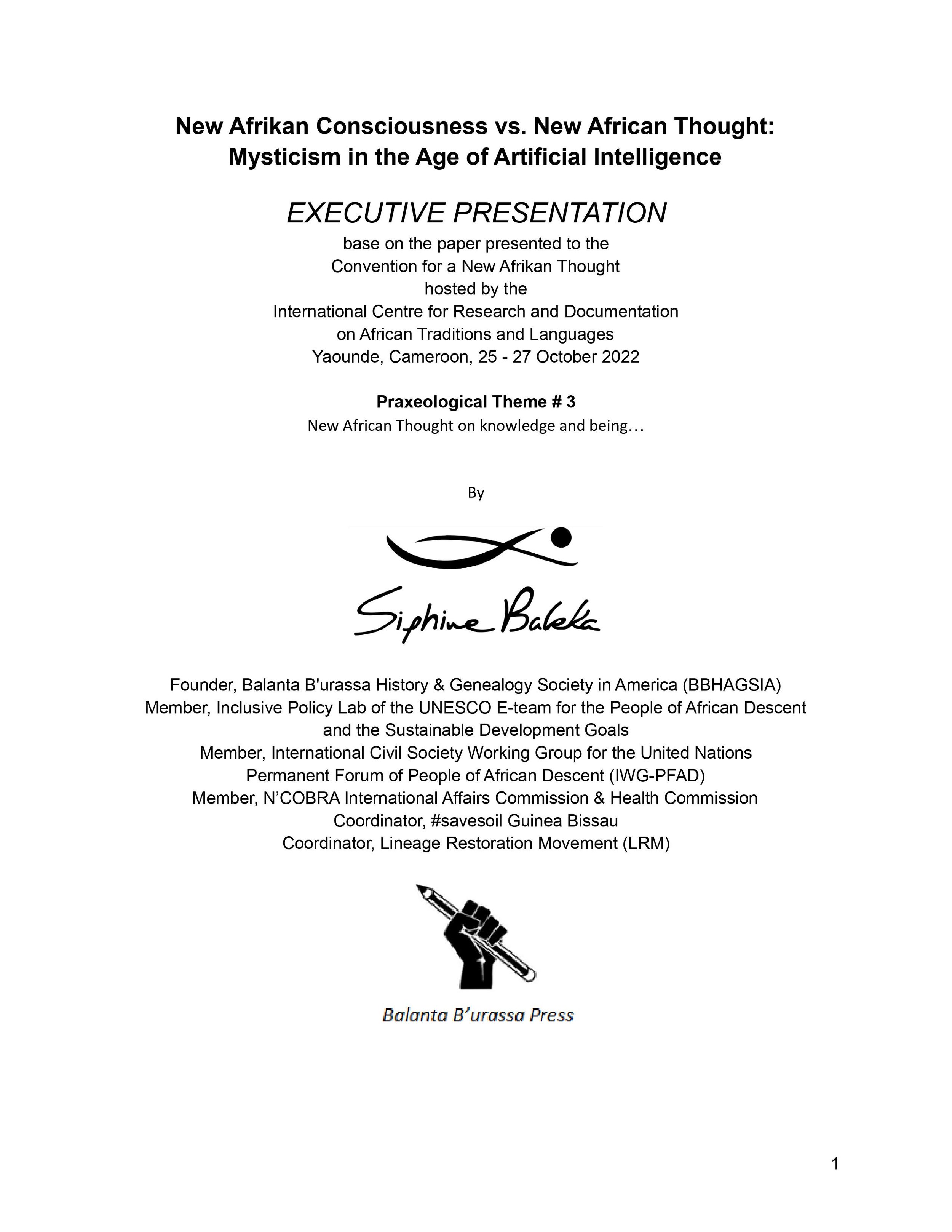
New Afrikan Consciousness vs. New African Thought: Mysticism in the Age of Artificial Intelligence

“Ghanda (be initiated) in traditional Africa is a synonym (in Bantu language) in our modern expression that denotes “to go to college/university”-Wenda ku Luyalungunu. “To be initiated is to be ready to accept responsibility, both as a mature human being and as a powerful spiritual being.

       To be initiated is to acquire the highest knowledge that the community experience has accumulated through time and space. To have the power to see, feel, hear, touch, and taste what the ordinary way of life does not allow us......it is to walk a path of mastering knowledge in life. It is to be seen and to see oneself before the mirror of fathomless knowledge of life. It is learning to see the past in order to predict the future. It is feeling and holding tightly the past segment of the biogenetic rope in his/her hands to insure its linkage to the future.

         Ghanda (to be initiated) is to join the circle of masters and become, oneself, a doer.” -Kia Bunseki Fu-Kiau

Paper presented to the 

Convention for a New Afrikan Thought 

hosted by the 

International Centre for Research and Documentation 

on African Traditions and Languages 

Yaounde, Cameroon, 25 - 27 October 2022

Praxeological Theme # 3 

New African Thought on knowledge and being…

HERE IS THE EXECUTIVE PRESENTATION - 6 PAGES

HERE IS THE FULL PAPER - 87 PAGES

From (left to right): Professor Molefi K Asante, Professor Anita Diop, Professor Dolissane Cecile, and Siphiwe Baleka.

During Professor Asante’s presentation, he emphasised the necessity of beginning with a proper chronology in order to orientate and understand historical events. If you don’t know your history from its pre-Kemetic origins, you can’t understand the major events of world history and more importantly, you cannot derive present solutions for the benefit of Africa’s future.

Above: Professor Theophile Obenga giving the opening address. From Left to right: Professor Theophile Obenga; Charles Binam Bikoi, CERDOTOLA; Professor Gregoire Biyogo, President of the International Committee of African Scientists and Experts; Professor Ebenezer Mouelle, Founder, Academy of Cameroonian Philosophy

Professor Biyogo discussing Asymmetrical Mirror Theory and Displacement Modes of Fighters from the mortal to immortal realms from the Ekang people and the ability for instantaneous teleportation of objects and bodies and the implication for Africa.

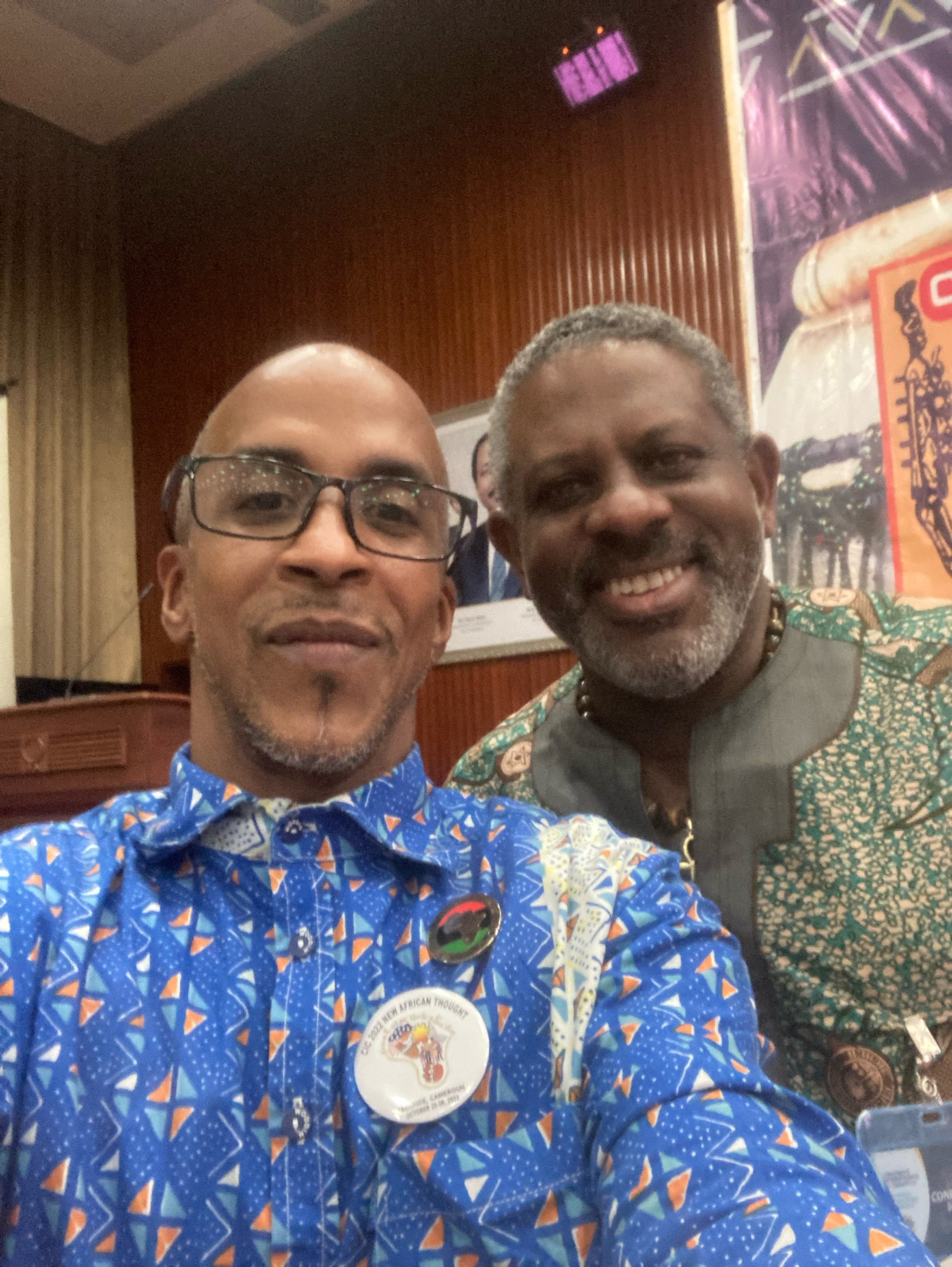
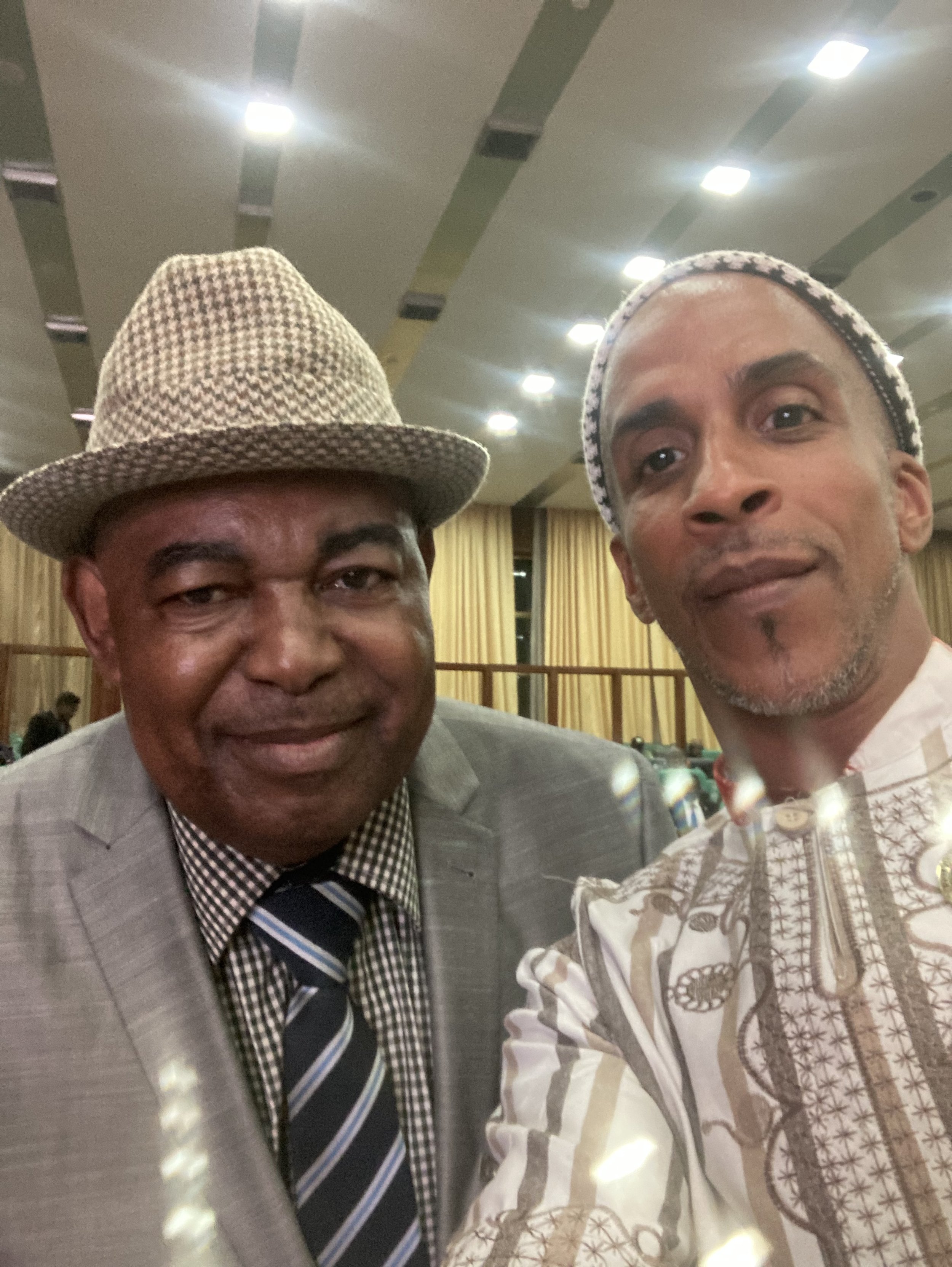
Professor Gregoire Biyogo and Siphiwe Baleka

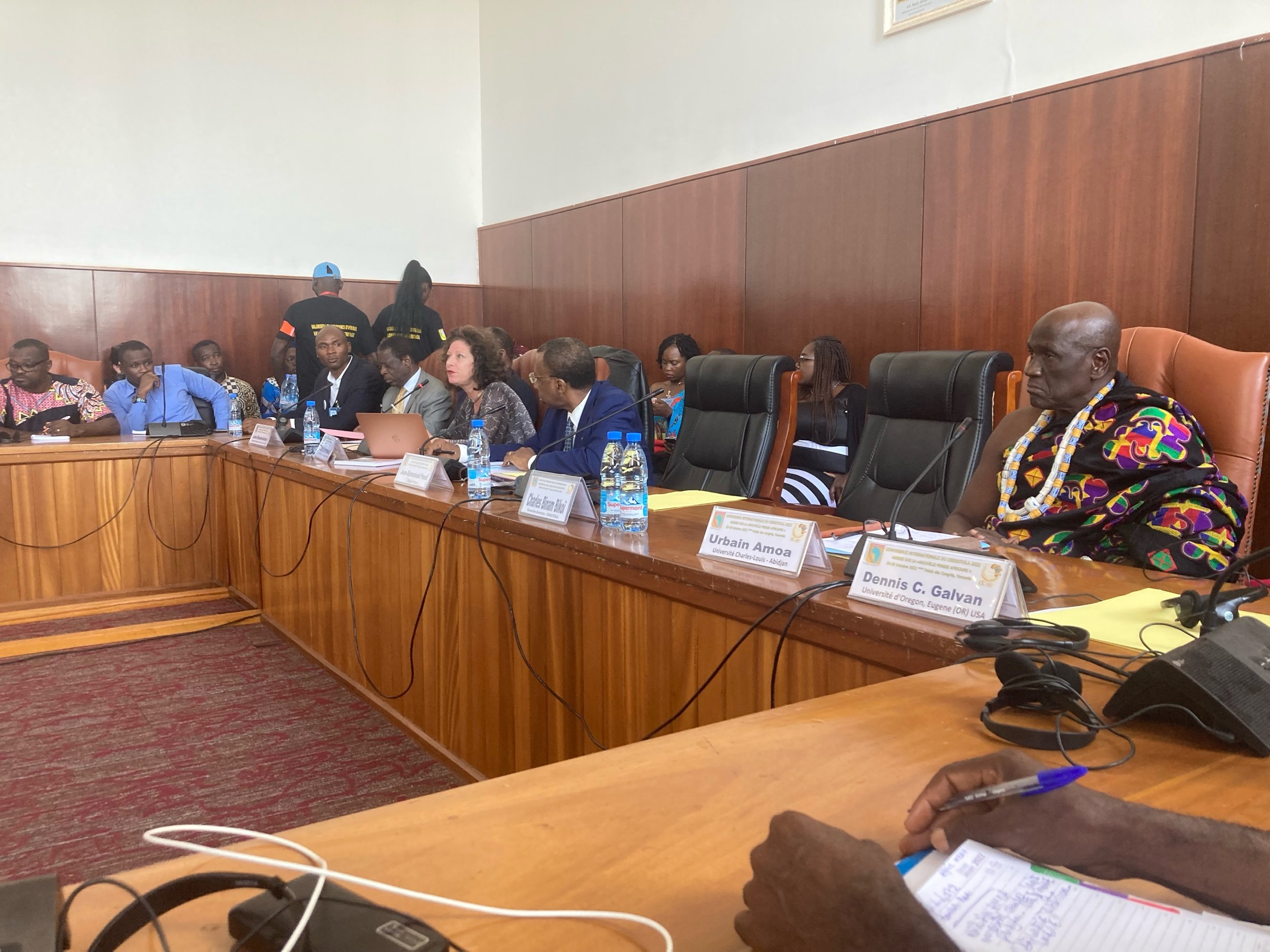
Professor Urbain Amoa and Professor Anita Diop

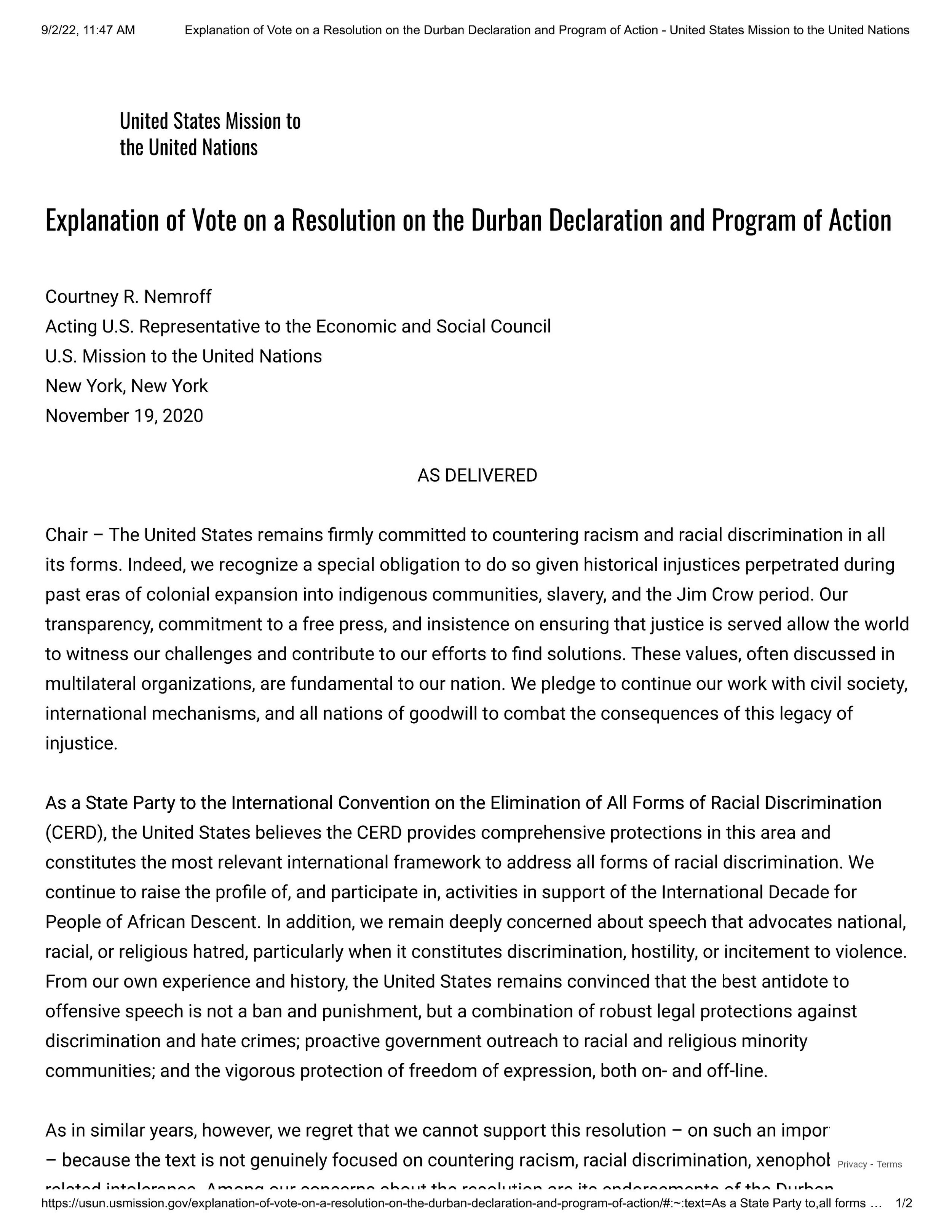
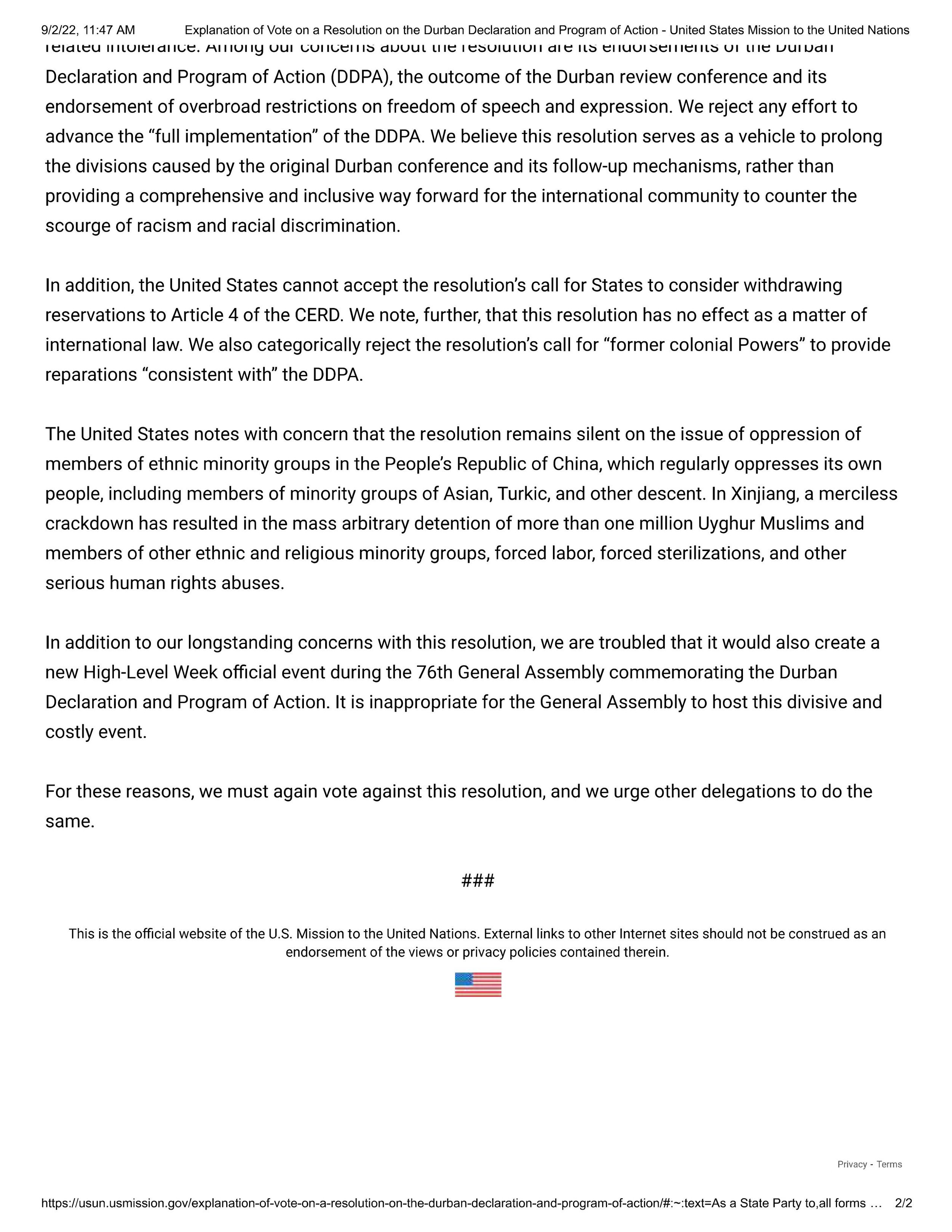
NEW AFRIKAN INDEPENDENCE MOVEMENT AND HUMAN RIGHTS: Statement to the 20th session of the UN Intergovernmental Working Group on the Effective Implementation of the Durban Declaration

Civil Society Section Office of the United Nations High Commissioner for Human Rights

INVITATION

On behalf of the Chairperson of the Intergovernmental Working Group on the Effective Implementation of the Durban Declaration and Programme of Action (IGWG), the Office of the United Nations High Commissioner for Human Rights presents its compliments to civil society organizations, particularly people of African descent organizations and has the honour to refer to resolution A/RES/76/226 of December 2021, in which the General Assembly requested the Intergovernmental Working Group on the Effective Implementation of the Durban Declaration and Programme of Action to devote at least half of its annual session to the elaboration of a draft United Nations Declaration on the promotion and full respect of the human rights of people of African descent. On 10 June 2022, the Chairperson of the IGWG met regional coordinators. In order to facilitate discussions during the IGWG 20th session, the Chairperson proposed to prepare a Chair’s zero draft United Nations Declaration on the promotion and full respect of the human rights of people of African descent. As requested by resolution A/RES/76/226, the Chairperson will also consult with the Permanent Forum on People of African descent and the Working Group of Experts on People of African descent to seek their views on the draft declaration. These two mechanisms will be also invited to the IGWG 20th session, which will take place from 10th to 21 October 2022, in Palais des Nations, Geneva. The Chair’s zero draft declaration will also take into account inputs from Member States, UN agencies and human rights mechanisms, and civil society, particularly people of African descent organizations. The Chairperson will share the zero draft with the IGWG two weeks prior to the discussion of the draft. Civil society organizations are therefore invited to share their views on the scope of the draft United Nations Declaration on the promotion and full respect of the human rights of people of African descent, and in particular the key human rights and specific guarantees the draft Declaration should include. The Office of the High Commissioner for Human Rights would be grateful if submissions could be limited to five pages and sent to the Anti-Racial Discrimination Section at the Office of the United Nations High Commissioner for Human Rights, CH-1211, Geneva 10.

Pursuant to the invitation, the Balanta B’urassa History and Genealogy Society in America submitted its statement, on behalf of the New Afrikan Independence Movement.

BALANTA RESPONSE TO THE UNITED STATES SECRETARY OF STATE ANTHONY J. BLINKEN ON THE 49TH GUINEA BISSAU INDEPENDENCE DAY

https://www.state.gov/guinea-bissau-national-day-2/

Secretary Blinken,

We commend you for recognizing the great victory of the people of Guinea Bissau to liberate themselves from the foreign domination and colonial occupation of the Portuguese and establish their national independence 49 years ago today. The brave people of Guinea Bissau, consisting of the Balanta, Fulani, Mandinga, Papel, Manjaco, Beafada, Mancanha, Bijago, Felupe, Mansoaca, and others, took up arms against those who invaded their land in 1446 and and claimed an unnatural authority seeking to enslave them.

As President of the Balanta B’urassa History and Genealogy Society in America (BBHAGSIA), I would like to call to your attention the following:

  1. Territories now within the jurisdiction of the Republic of Guinea Bissau were invaded following a declaration of total war made on June 18, 1452 in the document known as the Dum Diversas.

  2. The Dum Diversas total war declaration officialy launched, under the color of law, the crime against humanity that became the “trans-atlantic slave trade” and was further sanctioned by monopoly contracts called Asientos.

  3. Both civilians and combatants were captured as prisoners of war and trafficked to the Americas in the Dum Diversas War that lasted 521 years and ended when the Republic of Guinea Bissau declared its independence on September 24, 1973.

  4. The Anglo-American colonies became complicit in the crime against humanity in 1619. Since then, from 1668 to 1829, 145,000 people were shipped from the slave trading port at St. Louis, Senegal. From 1668 to 1843, 126,000 people were shipped from the slave trading port of Bissau on the coast of modern day Guinea Bissau, West Africa. These are the lands were Balanta people were living. From these two slave trading ports, 6,400 people were brought to the Gulf Coast, 10,000 people were brought to the port at Charleston, South Carolina, 4,500 people were brought to Chesapeake, and 1,400 people were brought to New York. From 1761 to 1815, records show that 6,534 Binham Brassa (Balanta people) were trafficked from their homeland and enslaved in the Americas. That’s an average of at least 121 Balanta per year.

  5. The 1949 Geneva Convention, Article 4 (1) defines prisoners of war as

    “Members of the armed forces of a Party to the conflict, as well as members of militias or volunteer corps forming part of such armed forces.” Article 5 states, “The present Convention shall apply to the persons referred to in Article 4 from the time they fall into the power of the enemy and until their final release and repatriation. Should doubt arise as to whether persons, having committed a belligerent act and having fallen into the hands of the enemy, belong to any of the categories enumerated in Article 4, such persons shall enjoy protection of the present Convention until such time as their status has been determined by a competent tribunal.”

  6. The new Geneva Convention Protocol on Prisoners of War, which the United States has signed but not yet ratified and which went into force for some states on 7 December 1978, has provided in Articles 43 through 47 broader standards for prisoners of war, who come from irregular and guerilla units, than the terms of the 1949 Article 4. Article 45 of the 1978 Protocol states that a

    “person who takes part in hostilities and falls into the power of an adverse Party shall be presumed to be a prisoner of war… if he claims the status of war, or if he appears to be entitled to such status, or if the party on which he depends claims such status on his behalf.

  7. Until recently, the descendants of the people who were taken from Guinea Bissau as prisoners of the Dum Diversas War, could not identify themselves because of the ETHNOCIDE that was committed against them. However, because of the advent of the African Ancestry DNA test, such descnendants can now identify themselves. It should be noted that, according to the Geneva Convention, these living descendnats are still classified as PRISONERS OF WAR since they have NEVER BEEN RELEASED AND REPATRIATED.

Secretary Blinken, I remind you also that on October 20, 1972, Amilcar Cabral, the great leader of the people’s liberation struggle for Guinea Bissau independce, met with 120 African Americans in New York and explained to them that,

“You see, Portugal is an underdeveloped country - the most backward in Western Europe. It is a country that doesn’t produce even toy planes - this is not a joke, it’s true. Portugal would never be able to launch three colonial wars in Africa without the help of NATO, the weapons of NATO, the planes of NATO, the bombs of NATO - it would be impossible for them. This is not a matter for discussion. The Americans know it, the British know it, the French know it very well, the West Germans also know it, and the Portuguese know it very well.

We cannot talk of American participation in NATO, because NATO is the creation of the United States. Once I came here to the US and I was invited to lunch by the representative of the US on the United Nations’ Fourth Committee. He was also the deputy chief of the US delegation to the UN. I told him we are fighting against Portuguese colonialism, and not asking for the destruction of NATO. We don’t think it is necessary to destroy NATO in order to free our country. But why is the US opposing this? He told me that he did not agree with this policy (US support of NATO) but that there is a problem of world security and in the opinion of his government it is necessary to give aid to Portugal in exchange for use of the Azores as a military base. Acceptance of Portuguese policy is necessary for America’s global strategy, he explained.

I think he was telling me the truth, but only part of the truth because the US supports Portugal in order to continue the domination of Africa, if not over other parts of the world. I must clarify that this man left his position in the UN and during his debate in the US Congress took a clear position favourable to ours and asked many times for aid to Portugal to be stopped, but the government didn’t accept.”

Secretary Blinken, members of BBHAGSIA started the process of repatriation and naturalization last year as part of the Decade of Return Initiative to Guinea Bissau, launched by BBHAGSIA with the cooperation of the Ministry of Tourism and the Ministry of Culture of the Republic of Guinea Bissau. As a signatore to the Geneva convention, both the United States and Guinea Bissau have a legal obligation to negotiate the final release and voluntary repatriation of our members to our ancestral homeland. Of course, adequate resources for our return and integration must be included as reparations in any such negotiations.

On this 49th anniversary of the Indpendence of Guinea Bissau, we request your good offices to call on the appropriate departments in the United States government to work with BBHAGSIA and initiate negotiations between the government of the United States of America and the Republic of Guinea Bissau in compliance with the Geneva Convention and other intruments of international law, and in the spirit of the Charter of the United Nations and the Declaration of Human Rights.

Respectfully,

Brassa Mada aka Siphiwe Baleka, Founder

Balanta B'urassa History & Genealogy Society in America (BBHAGSIA)

Member, Inclusive Policy Lab of the UNESCO E-team for the People of African Descent and the Sustainable Development Goals

Member, International Civil Society Working Group for the United Nations Permanent Forum of People of African Descent (IWG-PFAD)

Member, NCOBRA International Affairs Commission & Health Commission

Coordinator, #savesoil Guinea Bissau

Coordinator, Lineage Restoration Movement (LRM)

balantasociety@gmail.com

UN Committee Recommends Reparations - A Resource Guide for Understanding Our Struggle For Human Rights in International Forums

On August 30, 2022, the UN Committee on the Elimination of Racial Discrimination (CERD) released its review of U.S. compliance with the CERD treaty and, for the first time, called on the U.S. government to begin the process of providing reparations to descendants of enslaved people. This represents a significant moment in the history of the reparations movement in the United States and globally and is the result of the collective efforts of many individuals and groups. It should be remembered that,

“The human rights machinery of the UN is a recent development. Past efforts were never processed or followed through. Since its inception, the United Nations has been viewed as a focus of appeal by numerous aggrieved nationalities who have been stymied in their attempts to achieve adequate response to their grievances through domestic legal systems. However, all too frequently, the groups concerned are unaware of the legal and political conditions and processes which will enable the United Nations to consider their complaints. Trips to Geneva are made, important contacts are spoken to, good will is expressed, and well-documented grievances exchange hands. And yet, because the necessary political and legal processes are not followed (or did not exist), it is as if nothing had been done at all - even though the minority/nationality representatives concerned may in all sincerity feel that they have taken their group’s grievances to the UN. . . . Political pressure created by African-Americans demanding these rights, in conjunction with international pressure, will create circumstances that will raise the cost both domestically as well as internationally, of denial of these rights beyond the benefit of not providing for them. To maintain the credibility of its position as a leading power, the United States must provide for minority [human] rights, should these rights be demanded.” - Minority Rights: Some Questions and Answers, Y.N. Kly and Diana Kly

To increase the civil and political literacy of black people in the United States, the following is prepared as a reference guide to some of the important source documents involved in the current phase of the struggle for reparations and the protection of human rights of Afro Descendent people in the United States.

Committee on the Elimination of Racial Discrimination (CERD)

The Committee on the Elimination of Racial Discrimination (CERD) is the body of independent experts that monitors implementation of the Convention on the Elimination of All Forms of Racial Discrimination by its States parties.

CERD Conclusion


The World Conference against Racism, Racial Discrimination, Xenophobia and Related Intolerance

The World Conference against Racism, Racial Discrimination, Xenophobia and Related Intolerance met in Durban, South Africa, from 31 August to 8 September 2001, and issued a plan of action.

Durban Declaration

MY CONVERSATION WITH MALCOLM X

(the following is a fictious conversation I am having in my head, interacting with the actual words spoken by Malcolm X. It is intended to motivate people to recommit themselves to the unfinished business of Malcolm X and the OAAU Basic Unity Program. I encourage everyone to take the time to reflect and answer Malcolm’s question to see where you are in your journey.)

Malcolm: If you can’t do for yourself what the white man is doing for himself, don’t say you’re equal with the white man. If you can’t set up a factory like he sets up a factory, don’t talk that old equality talk.…

ME: Understood. I won’t talk that equality talk, I’ll just start doing for self. I did set up my own business, Fitness Trucking. And I was growing about 30% of my own food during the summer and fall. Vegetables, chickens and eggs. It’s a start.
Malcolm: Who are you? You don’t know? Don’t tell me ‘Negro”. That’s nothing.

Me: I am the son of Jeremiah Nathaniel Blake Jr. and Yolanda Harris. grandson of Jeremiah Nathaniel Black Sr., son of Jacob Steven Blake, son of John Addison Blake, son of Yancey Blake, son of Jack Blake, son of George. As such, I am a New Afrikan descended from the Balanta people.

Malcolm: What were you before tha white man named you a negro?

Me: We were known as Balanta people.

Malcolm: And where were you? And what did you have? What was yours?

Me: We lived in a village called Untche. It is near a river. We were known as great swimmers and we were the best farmers in the area. We had freedom as we had no chiefs or kings over us. We had a life of freedom under natural law. We lived by the spirituality of the Great Belief.

Malcolm: What language did you speak then?

Me: Krassa

Malcolm: What was your name? It couldn’t have been Smith or Jones or Bunch or Powell. That wasn’t your name. They don’t have those kinds of names where you and I came from. No, what was your name?

Me: The alante n’dang, the Balanta elders, call me Brassa Mada, which means “He who knows how to do”. My great, great, great, great, great, great grandfather was given the name “George” when he was trafficked to and enslaved in Charleston, South Carolina. I don’t know what his Balanta name was, but I like to call him Brassa Nchabra (Crocodile).

Malcolm: And why don’t you now know what your name was then? Where did it go? Where did you lose it? And how did he take it? What tongue did you speak? How did the man take your tongue?

Me: George was taken as a young boy about the age of eight, from his village in Untche. He was probably taken by Mandinka or Bijago man hunters and brought to the port of Cacheu and put on a slave ship as a prisoner of the Dum Diversas war that was launched by the Military Order of Jesus Christ by his earthly representative Pope Nicholas V and the King of Portugual on June 18, 1452. George was sold to Joseph Blake, the great grandson of Robert Blake, Commander-In-Chief of the British Navy under Oliver Crommwell. The Negro Law of South Carolina (1740), sanctioned ethnocide against young George and on pain of violent corporeal punishment or death, George was forced to give up his culture and language in order to survive. George’s son Jack was then sold to Joseph’s son, Dempsey Blake and taken to North Carolina. By this time, George could no longer speak Krassa and Jack never learned his father’s mother-tongue. This is how we lost our language.

Malcolm: Where is your history? How did the man wipe out your history? How did the man - what did the man do to make you as dumb as you are right now?

Me: The Balanta people kept their history through oral traditions and the alante n’dang can tell the history from the 10th century to the present. I did a lot of research, including studying genetic migration data, and collected everything I could find about the Balanta people and compiled it into three volumes entitled Balanta B’urassa, My Sons! Those Who Resist Remain. I did this so that my sons would not remain dumb and would know their true history. I’ve made much of it avaialbe on the internet at my website so that other Balanta people in America will also not remain dumb.
Malclom: This is good. Very good. John Henrik Clarke and I wrote the following into the Organization of Afro- American Unity (OAAU) Basic Unity Program

                                 i.            Restoration: “In order to free ourselves from the oppression of our enslavers then, it is absolutely necessary for the Afro-American to restore communication with Africa . . . 

                               ii.            Reorientation: “ . . . We can learn much about Africa by reading informative books . .

                             iii.            Education: “ . . . The Organization of Afro-American Unity will devise original educational methods and procedures which will liberate the minds of our children . . . We will . . . encourage qualified Afro-Americans to write and publish the textbooks needed to liberate our minds . . . . educating them [our children] at home.”

 Me: Yes, I know. Your student and founder of the OAAU Canadian chapter, Dr. Y.N.Kly, wrote many books that I read after reading your autobiography and I have faithfully been following your true political philosophy and the Basic Unity Program of the OAAU.                       

Malcolm: In an interview for the Monthly Review, Vol. 16, no.1 in May 1964, I told A.B. Spellman that “The 22,000,000 so-called Negroes should be separated completely from America and should be permitted to go back home to our African homeland which is a long-range program; so the short-range program is that we must eat while we’re still here, we must have a place to sleep, we have clothes to wear, we must have better jobs, we must have better education; so that although our long-range political philosophy is to migrate back to our African homeland, our short-range program must involve that which is necessary to enable us to live a better life while we are still here.”

Me: Well, it has been 58 years since you said that. I have returned to my ancestral homeland and to facilitate the long-range program of the OAAU, I launched the Lineage Restoration Movement utilizing the new dna testing that allows us to identify our direct maternal and paternal ancestors and where they came from. I also launched the Decade of Return Initiative in Guinea Bissau to help as many people return there who so desire. We host regular tours and our most recent one just concluded and several people received their citizenship and passports.
Malcolm: Point  iv. of the OAAU Basic Unity Program concerned Economic Security. WE MUST ESTABLISH A TECHNICIAN BANK. WE MUST DO THIS SO THAT THE NEWLY INDEPENDENT NATIONS OF AFRICA CAN TURN TO US WHO ARE THEIR BROTHERS FOR THE TECHNICIANS THEY WILL NEED NOW AND IN THE FUTURE.

Me: Interestingly, the first mention of the people of Guinea Bissau in European history was made by Gomes Eannes de Azurara,, the royal chronicler of the King Don Affonso the Fifth of Portugal in his book, The Chronicle of the Discovery and Conquest of Guinea Volume II. He mentions an attack made off the coast and says, “But our men had very great toil in the capture of those who were swimming, for they dived like cormorants, so that they could not get a hold of them.” The people of Guinea Bissau, like my great, great, great, great, great grandfather were great swimmers, some of the best in the world. Sadly, today, there are no swimming programs and very few swimming pools suitable for competition. No swimmer had ever represented Guinea Bissau in international competition. Being a former world class swimmer, having the expertise and knowing there was no one in the country to develop a national swimming program, I left the United States and have become President of the Guinea Bissau Swimming Federation and was the first swimmer in Guinea Bissau’s history to compete in the continental African Swimming Championships. This past June the Swimming Federation held the first modern swimming competition in Guinea Bissau. I am now preparing the Guinea Bissau National Team for the 2024 Olympics in Paris.

Malcolm: Did you hear my “The Ballot or The Bullet” speech. I said that our next move is to take the entire civil rights struggle problem into the United Nations and let the world see that Uncle Sam is guilty of violating the human rights of 22 million Afro-Americans....So, I say in my conclusion the only way we're going to solve it -- we gotta unite in unity and harmony, and Black Nationalism is the key.

Me: Yes. I heard it. When I left Yale University, I went to the Nkrumah Washington Community Learning Center in Chicago. El Amin had begun to direct my studies towards the law. Taking me to its old location, El-Amin explained to me the history of the National Council of Black Lawyers Community College of Law and International Diplomacy where he used to work. He provided documents about its co-founders Dr. Charles Knox and Dr. Y.N. Kly, both distinguished experts in international law and diplomacy, and provided me with textbooks on the U.N. and its procedures. One book in particular would change my life the way your Autobiography had: International Law and the Black Minority in the U.S. by Dr. Y.N. Kly. Along with another of his books, The Black Book which details your program to internationalize our struggle through the Organization of Afro American Unity, I gained some clarity on what must be done and what I must do, in order to gain relief from genocide and win reparations. I thus began writing Ras Notes: Conceptualizing Our Case for the U.N. At this time, I established communication with Dr. Kly’s International Human Rights Association of American Minorities (IHRAAM) and UHRAAP. I then began researching U.N. resolutions through the internet at DePaul University, and obtaining articles, petitions, and reports from NGO’s concerning our case. From these I began drafting the Petition of the Nkrumah-Washington Community Learning Center on Behalf of their Members, Associates and Afro-American Population Whose Internationally Protected Human Rights Have Been Grossly and Systematically Violated By the Anglo-American Government of the United States of America and Its Varied Institutions. But that was back in 1996-7. Right after that, I went to the African Union just like you went to the Organization of African Unity. More recently, in 2020, however, I addressed the Working Group of Experts on People of African Descent concerning the trangenerational epigenetic effects of United States slavery and ethnocide and after that I submitted a Statement entitled NEW AFRIKAN INDEPENDENCE MOVEMENT AND HUMAN RIGHTS to the 20th session of the Intergovernmental Working Group on the  Effective Implementation of the Durban Declaration and Programme of Action  Geneva, Switzerland 10-21 October 2022. Now I am working with the National Coalition of Blacks for Reparations in America (NCOBRA) International Affairs Commission and Health Commission and one of the major focus of my work is studying the feasability of conducting a plebiscite for New Afrikan self-determination. So I hope I have shown myself approved in faithfully carrying forward your work, your legacy and the unfinished business of the Basic Unity Program of the OAAU. And I hope that my efforts will inspire other New Afrikans to dedicate their energy, their resources and their life towards this vital Basic Unity Program. One thing they can do right now is

Take the initial plebiscite survey

What Direction Reparations? - Article from the NCOBRA 33rd Annual Convention

WHAT DIRECTION REPARATIONS?

By Siphiwe Baleka

published in the NCOBRA 33rd Annual Conventions Program

There seems to be a lot of momentum in the reparations movement centered around HR40 (Black Reparations Slavery Study Bill) and the California Reparations Task Force. While many people are excited about these developments, I do not share their excitement. I am concerned that the current reparations agenda does not recognize the fundamental need to establish the conditions needed for repair. Consequently, any reparations such as payments, education programs and housing secured and applied in an environment where repair cannot take place, is a pyrrhic victory.

My father once told me, and I heard Malcolm X say this, too, that if you want to solve a problem, you must go to the origin of the problem. So we need to consider the origin of the problem that “reparations” seeks to solve.

A family was living in a specific territory. It spoke a specific language and practiced a specific culture with its own connection to the land, environment and other peoples. The family knew its place in the natural world. A member of that family was captured and trafficked across the Atlantic and placed in captivity.  He or she was then subjected to a dehumanizing process in a controlled environment for the purpose of manufacturing an artificial product called a “slave”. The manufacturing process used violence to commit ethnocide - the destruction of a person’s natural identity - and resulted in transgenerational epigenetic effects. In other words, we were severed from our ancestral lineages and transformed from being natural human beings to unnatural, artificial slave products where we lived a life of subhuman servitude to free whites for generations, sacrificing their human identity and nature for the will and desires of their owners. The resultant legacy and harm from that experience, combined with the additional legacy and harm of racism, is what we are trying to repair. The solution then, is to reverse engineer what happened to us.

Since the dehumanizing manufacturing process required removal from our own territories into places of captivity, the first reparation demand needs to be reversing the captivity by returning to our own territories. We must have autonomous territories within the United States as well as programs to return us to the specific territories our ancestors were taken from.

Since the dehumanizing manufacturing process required the use of violence and the threat of violence, reparations must result in autonomous territories where there is guaranteed peace and security. This means that United States law enforcement have no jurisdiction. We need guarantees of peace such that financial resources do not need to be wasted on a military to defend the autonomous areas and nations from attack and can be used in providing rehumanizing services.

Since the dehumanizing manufacturing process severed one from their ancestral lineage resulting in ethnocide, these ancestral lineages must be restored. Ethnocide has created an identity crisis in the African American community. Since our identities were destroyed, they must be restored and our natural, rightful place in the world reclaimed. Fortunately, genetic testing enables us to do just that.

Thus, the overall aim of reparations is the complete REHUMANIZATION of the descendants of people that were taken from the African continent and were subjected to captivity, dehumanization and subhuman service.

It should be recalled that at Emancipation, the United States government intended that there be a new, independent African nation that would allow for the process of rehumanization. This was the desire that was clearly stated by the twenty representatives of the new Black government council that met with the United States Secretary of War Edwin McMasters Stanton and United States Army General William Tecumseh Sherman in Savannah, Georgia, January 12, 1865. Five days later Sherman issued Special Field Order 15 ceding United States territory to the newly freed African people. The United States passed legislation to make this a reality.  

I don’t see anywhere in the current reparations movement in the United States where providing the conditions for our rehumanization is discussed. There is no demand for land, autonomy and the exercise of self determination under international law.  We can not hope to repair ourselves without reverse engineering the captivity, dehumanization and subhuman service. We need an environment and conditions where we can live without the threat of violence, police, and the administration of the United States (in)justice system.  We need an environment where we don’t have to worry about where we are going to live and what we are going to eat so that we have time to focus on the work of internal reparations. The price tag for providing such environments on both sides of the Atlantic will require $25 trillion over the next 25 years.

In closing, I recall the words of Tendayi Achiume, Professor of Law, UCLA School of Law and UN Special Rapporteur on Contemporary Forms of Racism, Racial Discrimination, Xenophobia and Related Intolerance:

“The project of Reparations is about undoing structures and remaking societies that were deliberately designed along logistics that reinforce racial subordination. . . . From the perspective of lawyers and legal academics and legal advocates I would say we have invested far too much time in taking advantage of strategic opportunities and THAT HAS KEPT US IN THE REFORM FRAME. And I think one of the things that has been the most powerful about the defund movement is that it has shown just the transformative power that comes from ASKING FOR YOUR IDEALS AS YOUR STARTING POINT. . . .One of the things I am trying to challenge myself to do as a law professor, for example, is to think about what it might mean to teach law school classes that are MORE ABOUT IDEALS, THAT ARE MORE ABOUT REIMAGINED SOCIETIES AND HOW WE MIGHT GET THERE RATHER THAN THE FOCUS ON LITIGATION AND PLUGGING THE HOLES OF A SYSTEM THAT IS DESIGNED TO PRODUCE INJUSTICE. . . .”


For a practical reparations plan to reverse engineer our captivity, dehumanization and subhuman service, see the Agenda for Black America’s Restoration and Self Determination -

*Siphiwe Baleka is a member of the NCOBRA International Affairs Commission and the Health Commission

BBHAGSIA Celebrates Inaugural Dr. Mutulu Shakur Community Health Day With 4 Minute Fit Program

Today, August 8th, is the 72nd birthday of Dr. Mutulu Shakur. Unfortunately, Mutulu Shakur, an activist and holistic health care hero, has been behind bars as a New Afrikan political prisoner for more than 35 years and now, at 72, has several health issues, most notably stage-3 multiple myeloma, a blood cancer that can affect the bones and kidneys.

Shakur has endured drastic weight loss due to his illnesses and treatments; has had Covid at least twice; and has relied on IV feeding tubes on and off since May, his attorney, Brad Thomson, said. Thomson said doctors with the Federal Bureau of Prisons gave Shakur less than six months to live in May, noting that his cancer treatment had stopped working.

“At this point, the issue is getting him released so he can say goodbye to his loved ones, his family, his children, and grandchildren. To be surrounded by loved ones, so he can die in dignity, peace and comfort outside of prison.”

Shakur was diagnosed with myeloma in 2019, Thomson said, and his legal team requested his “compassionate release” in May 2020. U.S. District Judge Charles Haight Jr. in November 2020 denied Shakur’s request, holding that his crimes were too serious, and his health had not deteriorated enough to warrant release.

Today, the National Coalition of Blacks for Reparations in America (N’COBRA} Health Commission announced that August 8th is now Dr. Mutulu Shakur Community Health Day.

N’COBRA HEALTH COMMISSION (NHC)

DR. MUTULU SHAKUR COMMUNTY HEALTH DAY AUGUST 8TH 2022 DECLARATION

* any reference to “man” is to be understood as all members of the human family

 Whereas recognition of the inherent dignity and of the equal and inalienable rights of all members of the human family* is the foundation of freedom, justice and peace in the world, as stated by the Universal Declaration of Human Rights,

Whereas it is essential, if man* is not to be compelled to have recourse, as a last resort, to rebellion against tyranny and oppression, that human rights should be protected by law as stated by the Universal Declaration of Human Rights,

Whereas Member States, including the United States of America, have pledged themselves to achieve, in cooperation with the United Nations, the promotion of universal respect for and observance of human rights and fundamental freedoms, as stated by the Universal Declaration of Human Rights,

Whereas everyone has the right to equal access to public service in his* country, as stated by the Universal Declaration of Human Rights,

Whereas everyone has the right to a standard of living adequate for the health and well-being of himself *and of this family, including food, clothing, housing and medical care and necessary social services, and the right to security in the event of unemployment, sickness, disability, widowhood, old age or other lack of livelihood in circumstances beyond his* control, as stated by the Universal Declaration of Human Rights,

Whereas education shall be directed to the full development of the human personality and to the strengthening of respect for human rights and fundamental freedoms, as stated by the Universal Declaration of Human Rights,

Whereas everyone has duties to the community in which alone the free and full development of his personality, as stated by the Universal Declaration of Human Rights,

Whereas every right heretofore mentioned – including all articles of the Universal Declaration of Human Rights not listed here- has been violated by the United States of America with respect to the egregious human rights violations against people of African ascent,

Whereas effective remedy by the competent national tribunals for acts violating the fundamental rights granted him* by the constitution or by law, is a set standard, so determined by the Universal Declaration of Human Rights, have been denied,

Whereas the National Coalition for Reparations in American (N’COBRA) affirms the right to effective remedy known as reparations, according to all international norms,

Whereas the N’COBRA Health Commission has assumed the role to research, analyze, and organize people of good will to attend to the mission to define the rehabilitation aspect of reparations in the quest to obtain full reparations,

Whereas the N’COBRA Health Commission recognizes history and history makers as central to reconstructing the glorious account of resistance to oppression and the right to repair and the right to development,

Whereas Dr. Mutulu Shakur has assumed all of the duties known to himself, in consultation with his community, to fulfill his obligation to his community in which alone he has contributed to the free and full development of his and his peoples’ personality, to the best of his ability,

Whereas Dr. Mutulu Shakur has dedicated his life to the full enactment and enjoyment of all human rights, including those stated above, the right to self-determination, the right to health and the right of development,

Whereas Dr. Mutulu Shakur helped birth, transform and materialize the right of health self-determination through the introduction of acupressure and acupuncture to alleviate opioid addiction in the South Bronx, in response to the oppression and medical apartheid which continues today,

Whereas Dr. Mutulu Shakur pioneering work in acupuncture for opioid addiction was a precursor to the harm reduction movement and set a place forward for full recovery,  

Whereas Dr. Mutulu Shakur has provided the foundation and blueprint for the total well-being of people of African ascent, and all people of good will,

Whereas the life work of Dr. Mutulu Shakur is a significant contribution to the aims of the Durban Declaration (2001), the Decade of People of African Descent (2015-24) affirming recognition, justice and development, and the UN Permanent Forum for People of African Descent, who in other documents are referred to as AfroDescendants,

Whereas Dr. Mutulu Shakur is a pioneer public health social innovator, who is now being acknowledged, in universal recognition, for which his work merits,

Let it be now publicly known, on this day, August 8, 2022,  that the N’COBRA HEALTH COMMISSION (NHC), on his 72nd birthday, confers the honor he deserves and  declares that August 8th shall be celebrated annually as DR. MUTULU SHAKUR COMMUNTY HEALTH DAY 

WHEN OPIOD ADDICTION REACHED EMERGENCY LEVELS IN NEW YORK, DR. MUTULU SHAKUR TOOK RESPONSIBILITY AND TOOK ACTION!

Today, the major health crisis of the African American community is obesity. Like Dr. Mutulu Shakur, Siphiwe Baleka, founder of the Balanta B’urassa History & Genealogy Society in America (BBHAGSIA) and founder of Fitness Trucking and the 4 Minute Fit program, is also taking responsibility. Siphiwe Baleka was dubbed the “Fitness Guru to the Trucking Industry” for his revolutionary weight loss program designed for america’s most obese workers: truck drivers. Baleka’s program was a huge success and outperformed Weight Watchers in helping clients lose weight and reduce their risk for sixty medical disorder and twelve cancers. Baleka was even featured in Men’s Health, Sports Illustrated, and Good Morning America.

Now, Siphiwe Baleka is bringing his 4 Minute Fit program to NCOBRA, in the spirit of Dr. Mutulu Shakur, to help African American’s win the War Against Obesity. Click the links below for 4 Minute Fit vidoes and podcasts.

Prison doctors have given Mutulu Shakur, activist and Tupac Shakur’s stepfather, up to six months to live, according to his attorney

July 21, 2022

By Char Adams

Organizers have launched a movement to release Tupac Shakur’s stepfather from a decadeslong prison sentence as he faces a rare form of blood cancer that his doctors say is incurable.

Mutulu Shakur, an activist and holistic health care advocate, has been behind bars for more than 35 years and now, at 71, has several health issues, most notably stage-3 multiple myeloma, a blood cancer that can affect the bones and kidneys.

Shakur has endured drastic weight loss due to his illnesses and treatments; has had Covid at least twice; and has relied on IV feeding tubes on and off since May, his attorney, Brad Thomson, said. Thomson said doctors with the Federal Bureau of Prisons gave Shakur less than six months to live in May, noting that his cancer treatment had stopped working.

“His health situation is extremely dire right now. He’s very much on an end-of-life trajectory. We’re looking at a matter of months at the most but, realistically, it could be a matter of days or weeks,” Thomson told NBC News. “At this point, the issue is getting him released so he can say goodbye to his loved ones, his family, his children, and grandchildren. To be surrounded by loved ones, so he can die in dignity, peace and comfort outside of prison.”

Shakur was diagnosed with myeloma in 2019, Thomson said, and his legal team requested his “compassionate release” in May 2020. U.S. District Judge Charles Haight Jr. in November 2020 denied Shakur’s request, holding that his crimes were too serious, and his health had not deteriorated enough to warrant release.

“Should it develop that Shakur’s condition deteriorates further, to the point of approaching death, he may apply again to the Court, for a release that in those circumstances could be justified as ‘compassionate,’” Haight said in the ruling obtained by NBC News.

A spokesperson for Haight, who also presided over the 1988 case that landed Shakur in jail for bank robbery and other crimes, told NBC News that a new request for Shakur’s release is pending and the judge is waiting for guidance from the U.S. attorney’s office before making a decision. Shakur is being held at a federal medical center in Lexington, a prison in Kentucky for incarcerated people who require care.

Shakur is serving a 60-year sentence stemming from a 1988 conviction for conspiracy to violate the Racketeer Influenced and Corrupt Organizations Act, or RICO Act, bank robbery, armed bank robbery and bank robbery murder. He was convicted of leading a group of revolutionaries in a string of armed robberies in New York and Connecticut, including one that left three people dead. He was also convicted of helping JoAnne Chesimard, aka Assata Shakur, escape from a New Jersey prison in 1979, according to The Associated Press and Thomson.

However, Shakur and his supporters say that the acts were political, not criminal, in nature. Jomo Muhammad, an organizer with the Malcolm X Grassroots Movement working to free Shakur, as well as Shakur’s friends and family, said his incarceration is linked to his Black liberation efforts and his work with revolutionary Black nationalist groups in the 1960s, including the Revolutionary Action Movement and the Republic of New Afrika.

Muhammad said Shakur is being used as an example because of his activism. At the time of his 1986 arrest he was doing his own independent investigation of COINTELPRO, an FBI campaign to discredit radical groups including Black liberation movements that were deemed illegal, Muhammad said.

“Fifty years later, the United States government continues to hold a grudge,” Muhammad said. “You can make the argument that he is, in fact, a political prisoner.”

Along with being a respected activist, Shakur is called a “doctor” among his family and supporters. He is praised for his work bringing holistic health care to Black communities in the Bronx in the 1970s. He informally studied acupuncture and joined with several other activists, in groups like the Black Panthers and the Young Lords, to take over part of Bronx’s Lincoln Hospital and run the Lincoln Detox Center, a community center that used acupuncture to address drug dependence and provided political education that produced several community activists, according to The Washington Post.

A group of faith leaders and Shakur’s supporters gathered on Wednesday in front of the U.S. Department of Justice in a rally urging the U.S. Parole Commission, Bureau of Prisons, and Justice Department to free Shakur. Supporters said at the rally that Shakur is confined to a wheelchair and his brain function has deteriorated so much that he barely recognized his son during a visit two months ago.

“They claim he is a danger to public safety, a danger to society, and that he has the capacity to influence people. They don’t speak to the fact that he is a 71-year-old elder. They don’t speak to the fact that he has been incarcerated for 36 years,” Nkechi Taifa, founder of the Taifa Group, a social justice-centered consulting firm, said of the federal agencies.

A spokesperson for the Bureau of Prisons declined to comment on Shakur’s health, but said in an emailed statement: “The BOP has no direct authority to grant a reduction in an inmate’s sentence as a compassionate release measure. At all times, the decision on whether to grant such a motion — whether brought on behalf of the Director of the BOP, or the inmate themselves — lies with the sentencing court.” The spokesperson added that the bureau can recommend a person’s release. They have not done so for Shakur.

Shakur has been denied release several times over the years, Thomson said, though because of “various time credits,” he is set for mandatory release in December 2024. But Thomson, doctors and Shakur’s supporters say it’s unlikely he’ll live that long. Shakur was eligible for release in a 2016 mandatory parole hearing but was denied.

Thomson said that Haight’s assertion that the severity of Shakur’s crimes are what has delayed his release should not hold water because Shakur’s co-defendant Marilyn Buck, who was convicted of the same charges, was granted compassionate release in July 2010. She died of uterine cancer just weeks later.

“That’s exactly the situation that Dr. Shakur is facing now. We’re asking for that same relief,” Thomson said. “Everyone who was charged in that conspiracy, and overlapping conspiracies, all of those people have been released from federal custody.”

Shakur’s latest request for release is expected to see a resolution in the coming weeks. Although they are hopeful, Muhammad said he and Shakur’s advocates would be devastated if Shakur dies in prison.

“This is a clear injustice. Regardless of what he’s done in the past, which he’s taken responsibility for, he should be free,” Muhammad said. “We will continue to fight. There’s a lot of justice that needs to happen. A lot of freeing and healing of people, which is what Doc’s work was about. We would mourn our beloved elder and we’d do what he instructed us to do, which is to carry on straight ahead.”

#SAVESOIL GUINEA BISSAU: REVIEW OF THE NATIONAL AGRICULTURAL INVESTMENT PLAN (NAIP) AND THE IMPENDING FOOD SECURITY CRISIS

Photo: IBAP/ Up! / IUCN

“208. Agriculture, a key sector of the national economy, has failed to ensure food security or to create the conditions for improving the living conditions of rural populations, and even less to provide support for the development of others socioeconomic sectors. The weak results of the sector, in spite of the natural resources present, find their explanation in a series of factors such as: the low rate of investments made, the difficulties of access to means of production, credit and markets, the low technical level of holdings, etc.

209. The most important of these factors, which govern practically all the others, are however the inadequacy and limited effectiveness of public institutions and the extreme weakness of professional agricultural organizations which prevent the effective participation of farmers and the mobilization of potentialities. human and natural resources for development.

210. The Ministry of Agriculture, Livestock and Forestry (MAFP) is the Government body whose mission is to create favorable conditions for the development of agriculture with a view to achieving the main objectives of the National Plan of Agricultural Investment, thanks to the elaboration and implementation of adequate policies. The MAFP is however faced with multiple constraints, including: (i) weak institutional capacity to define priorities, coordinate and monitor public investment programs and the lack of qualified human resources. ii) lack of rigor in administrative management: deficiency in the administration of public assets, weak control, monitoring and evaluation mechanisms. Absence of a human resources policy (insufficiency of specialized executives), lack of financial incentives, and working conditions, etc. ; iii) an imbalance in the organization of the sector and weak intervention capacities in rural areas linked mainly to the concentration at the central level of trained or experienced managers; iv) a lack of real coordination capacity for harmonization of interventions; and (v) a lack of resources of all kinds and working methods.” 

- NAIP 2nd Generation Report 

History

Major droughts in Guinea Bissau occured in 1977, 1979, 1980, 1983, 2002, 2004 and 2013. The drought of 2002 affected an estimated 100,000 people which is more than any other climate-related disaster (including epidemics) between 1980 and 2010.

By adopting the The Comprehensive Africa Agriculture Development Program (CAADP), the agricultural component of NEPAD, the African Heads of State made the commitment in Maputo in 2003 to allocate at least 10% of their budgets to agriculture to make it the basis of the growth of their economies. This is how Guinea Bissau embarked on this dynamic.

As early as 2002, in the Agricultural Development Policy Letter, the Government set itself four priority objectives:

  • guarantee food safety;

  • Increase and diversify agricultural exports

  • Ensure the rational management and preservation of agro-sylvo-pastoral resources;

  • And improve the living environment of rural populations.

Their aim was, among other things, to meet food demand and nutritional needs by taking into account their increase and to halt the deterioration of productive capital.

According to the World Bank, in 2007, the country was hard hit by a spiral of skyrocketing international and domestic prices. Once a major exporter of rice, the country imported half of its food, including up to 90,000 metric tons of rice per year. At the request of the government in 2009, the World Bank and the European Union responded with US$9 million in emergency aid under the Emergency Food Security Support Project (EFSSP), or Projecto de Apoio a Emergência na Segurança Alimentar (PEASA) in Portuguese.

The food crisis hit the regions of Bafata and Gabu in the east the most severely. In the south, poor road infrastructure prevented the rice grown in Tombali, Blama, and Quinara from reaching wider markets.

With the help of the food security project, these regions turned the corner. In Camposa and Finette, two villages located in the Bafata region, rice production increased from one season to the next, said Alfredo Quidom, chairman of the NGO Etad.

"Before our interventions, farmers in Camposa produced just under 2,600 kilograms per hectar,” said Quidom. “We are now at over 4,200 kilograms, double the amount. In Finete, production went from 700 kilograms to 1,800 kilograms without any fertilizer!”

A visit from World Bank Managing Director Ngozi Okonjo-Iweala in July 2008 helped expedite the government’s request for emergency assistance to Guinea-Bissau. Three months later, the World Bank took a lead position and responded with initial financing of US$5 million. In February 2009, the World Bank provided additional financing through the European Union Food Crisis Rapid Response Facility Trust Fund for Euro 2.87 million (around US$3.93 million). These two operations were implemented in partnership with World Food Program (WFP) and the Government of Guinea-Bissau.

The WFP allocated over US$4 million to support the most vulnerable through school feeding and a food for work program to rehabilitate land and rural feeder roads. From March 2009 to January 2010, this program provided 14,000 meals a day to children, 48 percent of them girls. The school feeding also helped boost attendance and passing rates. With additional support from the EU, this number was increased to 28,000 meals a day. The program closed in August 2011.

The food for work component provided over 160,000 days of work and provided food assistance to over 180,000 beneficiaries. During this time, dike and drainage channels and anti-erosion banks were rehabilitated on over 5,000 hectares of land that can now be used for rice production. The project also provided additional assistance in seeds and agricultural instruments to farmers. In total, 466 microprojects were financed, with approximately 650,100 direct beneficiaries.

In February 2011, World Bank Project Manager Aniceto Bila and Program Coordinator of the World Bank's Agriculture and Rural Development Department Martien van Nieuwkoop announced in February 2011 that a Multi-Donor Trust Fund (MDTF) was being prepared with the ECOWAS States with an envelope of US$7 million for Guinea Bissau.

These funds were to provide new innovations to the PEASA when it came to an end in August 2011 (for EU funding) and September 2011 (for World Bank funding).  Efforts were to be refocused, in particular, on the rehabilitation of agricultural production zones, better transport services to other parts of the country, the direct transfer of resources to village communities, the use of innovative technologies for greater yields and diversification, as well as incentives to private sector involvement.

A national workship on The Formulation of the National Priorities Exercises in Ambit of the 5th Global Environment Facility (GEF) Restitution took place on September 21, 2012 in the Government Palace in Bissau. It was organized by the Secretary of State of Environment and Tourism and included more than 25 representatives of government institutions, public sectors, private sectors, NGOs, civil society and development partners. The objective of the workshop was to adopt a portfolio of projects that would serve as a base for accessing GEF resources for environment management that would contribute to the realization of obligations under the Convention on Biodiversity Diversity (CBD), the United Nations Framework Convention on Climate Change (UNFCCC) and the United Nations Convention to Combat Drought and Desertification (UNCCD). The opening ceremony was presided by Secretary of State of Environment and Tourism, Dr.Agostinho da Costa and the technical workshops were conducted by technicians Ing. Alexandre Cabral (climate changes); Dr. Abilio Rachid (biodiversity) and Ing. Seco Cassama (Land Degradation). Each group had a mandate to complete a list of projects that were identified before and to select priorities in focal areas of GEF for the period from 2010-2014.

The launch of the NAIP 1st Generation process took place in Gabu, on April 16-17, 2009 and the final document was discussed and validated by the actors intervening in the rural world during two national workshops, held in Bissau from August 9 to 13, 2010, and November 8-9. A Round Table was held in January 2011 and a pact signed by the Government, the Financial Technical Partners (PTF), ECOWAS, the African Union, Civil Society, Farmer Organizationsand the Private Sector. Its overall cost was estimated at 167,430,750,000 CFA francs (US$260,488,733). The first phase of of the NAIP was planned for a period of 5 years, starting in 2012. After the Round Table, the Business Meeting should be organized to allow the positioning of TFPs with regard to its financing. Unfortunately, this round table could not be held because of repeated political unrest, which resulted in low funding for the NAIP 1st Generation. Between projects and agreements, it was possible to mobilize 54,952,738,376 billion FCFA (US$85,495,461) out of 167.431 billion FCFA, or about 32.82% of the needs expressed. The interventions were mainly oriented in the realization of some hydro-agricultural developments, construction of a certain number of markets and stores, supply of some agricultural equipment such as tractors, motorized cultivators, cereal mills, hullers, small horticultural equipment , vaccines and medicine for breeding, phytosanitary products for pest control, small equipment for horticulture, etc. Overall, the achievements are very far from what was planned in the 1st generation NAIP.

The main partners who contributed to the financing of the 1st generation NAIP are:

BOAD with CFAF 15,150 billion ($23.6 million), IFAD 11,415 billion ($17.8 million), AfDB 9.8 billion ($15.2 million), UEMOA CFAF 9.6 billion ($14.9 million), FAO 7.789 billion CFA francs ($12.1 million), European Union 0.675 billion CFA francs ($ 1.1 million) and World Bank 0.420 billion CFA francs ($653,000).

The National Agricultural Investment Program (NAIP), initiated in April 2009, successively updated in 2012 and 2014, evolved into a second generation National Agricultural Investment Plan (See below).

The formulation of this second-generation National Agricultural Investment Plan is still part of aparticipatory approach. All national skills and experience were mobilized in its development. A team made up of experts from all the key sectors of the economy participated in its elaboration, (Agriculture, Forestry, Livestock, Research, Sectoral Ministries such as Fisheries, Economy and Trade), Farmer Organizations, Private Sector and Civil Society, development partners as well as the People's National Assembly, etc.

The process of drafting the NAIP 2nd generation still within the framework of the CAADP, Malabo and ODD agenda began in July 2016 and it follows the same steps of the NAIP 1st generation with the assistance of ECOWAS, the FAO, Hub Rural and IFPRI. It includes all ongoing and already funded programs, as well as new and expanded programs for which additional funding will be required during the plan period. It includes packages of sequential achievements that pass from basic studies, the establishment of an adequate institutional framework, the development of capacities and infrastructures to deliver specific services and products to peasant organizations and agro-industrial enterprises, to ensure the food and nutritional security of populations. The approach will be based on the promotion of value chains, and within this framework,efforts will be made to improve the business climate in the sector on the basis of a better partnership between the public and private sectors. The implementation of the plan should generate agricultural growth of at least 6% per year, reduce poverty by half and consolidate food security.

The National Agricultural Investment Program (NAIP) was pursued in an environment of extreme government corruption and severe wealth inequality which has caused Guine Bissau to be described as a “fragile state”. Guinea Bissau has one of the most unequal distributions of income, with a Gini coefficient of 0.51 in 2019 (worst among countries in Western Africa and 6th worst among small island developing states). Meanwhile, the World Bank ranked Guinea Bissau 176th out of 186 countries for government effectiveness which measures the perceived quality and credibility of a government and the services it provides. Transparency International ranked Guinea Bissau 163rd out of 186 countries in terms of corruption. This is the core determinant of the continued high levels of extreme poverty. 

According to the  Bertelsmann Stiftung’s Transformation Index (BTI) 2020 Country Report on Guinea Bissau:

“Public officeholders who benefit illegally from their positions are rarely held accountable by legal prosecution when they break the law and engage in corrupt practices. This concerns all the top government officials, including the president. Public contempt depends on relatedness and the reputation of the officeholder. As a rule, corrupt officials are widely perceived as getting away with their crimes without consequences. Usually, officeholders who break the law are dismissed, rather than prosecuted. Members of the government accused of corruption often return to official positions after an interim. Conflicts of interest and ethical misconduct are often not addressed.”

PUBLIC INVESTMENT

Public investment is almost entirely financed by external aid, with major donors including the UN System, the West African Development Bank, the World Bank, and the African Development Bank (World Bank Group 2016). More than 90 percent of the government’s health budget comes from international partners. As we see from the NAIP, this is no less true of the government’s agricultural budget.

A CONTINUATION OF HISTORICAL TRENDS WILL INCREASE THE HUMAN SUFFERING AND DEVELOPMENT BURDEN IN GUINEA-BISSAU.

It is therefore reasonable to speculate on the integrity of government agricultural programs and their funding in Guinea Bissau. 


THE IMPENDING FOOD SECURITY CRISIS COMING TO GUINE BISSAU

Globally around 24 billion tons of fertile soil and 27,000 bio-species are lost each year. Scientists are saying that by 2045, the planet will have 40% less food for 9.2 billion people and that there are only 40 to 60 harvests left before a critical global food shortage. According to the report Hunger in Guinea-Bissau: Causes and Prevention

“Food insecurity is the largest current concern for the Guinea-Bissau government. . . . Overall, 11% of Guinea-Bissau households are food insecure, though this figure spikes to as high as 51% in some areas. Food insecurity is the main cause of undernutrition, in addition to inadequate health services, poor water and sanitation, inadequate infant feeding practices and high illiteracy rates among women.

Most of the families in Guinea-Bissau that are involved in cereal farming, produce cereal for their own consumption. However, this is sometimes not enough to feed an entire family. Only 8% of families have enough cereal to cover their needs for one month and a half, with 48% having cereal stocks to cover just one month of food consumption. If the cereal that these families produce is ruined, more than half would not have anything to eat and would suffer from extreme food insecurity.

According to the Food and Nutrition Security Monitoring System, 28% of the population of Guinea-Bissau does not consume as many vitamins and nutrients as they need. Additionally, in 2019, Guinea-Bissau ranked 99th out of 117 in a study about countries with increased rates of food insecurity. This rank means that Guinea-Bissau has a severe problem with both hunger and malnutrition.”

The Proteus Global Food Security Index ranks Guinea Bissau 148th out of 160 countries. Even though most families are involved in growing rice for their own consumption, only 48% have enough cereal stocks to cover just one month of food consumption, resulting in a dependence on imported food, including rice. In 2020, Guinea-Bissau imported $52.2M in rice, becoming the 86th largest importer of rice in the world. At the same year, rice was the 1st most imported product in Guinea Bissau. Guinea Bissau imports rice primarily from: Pakistan ($24.9M), China ($17.2M), India ($4.26M), Senegal ($3.77M), and United States ($726k).

https://wits.worldbank.org/CountrySnapshot/en/GNB/textview

The Near Future

Meanwhile, with the predicted rise in population between 2019 and 2040, all scenarios project an increase in the number of people living in extreme poverty in Guinea Bissau with an expected 1.8 million people living in extreme poverty by 2040. 

SEE CURRENT STATUS OF GUINEA BISSAU: A REVIEW OF RELEVANT STATISTICS

WHAT THIS MEANS

During the COVID pandemic, Bissau-Guinean economist Aliu Soares Cassama stated, “Our economy has had a deficit in the trade balance for a long time. In other words, we import more and export less. We know that economic agents do not have purchasing power due to the total paralysis of the State, and this situation will further complicate the economic weakness that the country is experiencing.”

Because of the global soil extinction crisis and the impending global food shortages, Guinea Bissau, for all the reasons indicated above, will be one of the most vulnerable countries on the planet for starvation if nothing is done now to increase the organic content of its soil and diversify agricultural production to domestic food consumption.

WHAT CAN BE DONE? #SAVESOIL

For any soil to be agriculturally potent, it must have a minimum organic content of 3 to 6%. The average soil organic content of the United States is 1.4%, for Europe 1.2%, for India 0.6% and for Africa 0.3%. No data on the organic content of Guinea Bissau’s soil has been recorded.

Guinea Bissau has a total land area of 2,812,000 hectares of which approximately 58% is agricultural land (1,630,00 hectares). About 71% of the land is under forest while 38.4% is for permanent crops, arable land and other land, 80% of which is on plateaus. Agriculture in Guinea Bissau is mainly rainfed while irrigated farming is very limited. 

Agriculture, in the broad sense (agriculture, livestock and forestry) remains the dominant economic activity, contributing over 50% of GDP and over 80% of exports and employing 82% of the working population. It falls under two categories of producers:

  • small village producers (tabancas) estimated at nearly 130,000 farmers constitute the bulk of the rural population and produce 90% of production;

  • modern producers called "ponteiros" (2,200 concessions of which 1,200 are actually installed), generally modern farmers with large land concessions (average size of 136 ha, varying from 20 to 2,500 ha) provided by the State, covering 27% arable land (9% of the total area of the country) and occupying the best agricultural land in the country. For lack of financing in terms of credit, they are all in a latent state.

The area of land suitable for irrigated rice growing (mangrove and lowland rice growing) is 305,000 ha. Of this potential, approximately 50,000 ha are cultivated, or just over 16%. 

In terms of development, agriculture today is essentially occupied by two predominant crops: cashew and rice. The number of traditional farms is estimated at 130,000 for 1,200 agricultural enterprises. Cultivated areas are estimated at 400,000 ha (i.e. 11% of the country's area), including 220,000 ha in annual crops and 120,000 ha in perennial crops. For rice, the potential depending on the type of rice cultivation is within the following range: 

i) irrigated rice cultivation: mangrove rice with 106,000 ha, of which 51,000 ha are cultivated, and 

ii) lowland rice with 150,000 ha, of which 11,000 ha cultivated. Rice ranks first in the government's medium- and long-term priorities, given its place in Guinea-Bissau's diet and economy.

In 2020, rice, paddy production for Guinea Bissau was 198,000 tonnes.

Though Guinea Bissau rice paddy production fluctuated substantially in recent years, it tended to increase through 1971 - 2020 period ending at 198,000 tonnes in 2020.

https://www.indexmundi.com/agriculture/?country=gw&commodity=milled-rice&graph=production

NOTE: From 2012 to 2022 rice production (MT) increased from 119 MT to 129MT (8%).

WHAT IS THE GOVERNMENT OF THE REPUBLIC OF GUINEA BISSAU’S PLAN TO PREVENT THE IMPENDING FOOD SECURITY CRISIS?

According to NAIP 2nd Generation, this is the outline of the plan:

National Agricultural Investment Plan

December 2017

4. DETAILED DESCRIPTION OF THE PROGRAMS

4.1. SUB-PROGRAM 1: PROMOTION OF CROP PRODUCTION SECTORS

4.1.1. Component 1: Rural infrastructure

4.1.1.1. Action 1: Technical studies and formulation of the General Plan of Hydro-agricultural development

4.1.1.2. Action 2: Irrigation schemes

4.1.1.3. Action 3: Opening up production areas

4.1.1.4. Action 4: Construction and rehabilitation of storage and marketing infrastructure

 4.1.1.5. Action 5: Establishment of a Hydro Development Agency

4.1.1.6. Action 6: Dredging of rivers of agricultural importance

 4.1.2. Component 2: Development of food sectors

4.1.2.1. Action 1: Cereal sectors

4.1.2.2. Action 2: Development of roots and tubers

4.1.2.3. Action 3: Market gardening and fruit growing

4.1.2.4. Action 4: Food agro-forestry products

4.1.2.5. Action 5: Setting up and equipping a Horticultural Development Center

4.1.2.6. Action 6: Support for the establishment of youth and women's cooperatives

4.1.2.7. Action 7: Supply of various agricultural inputs and agricultural machinery

4.1.3. Component 3: Promotion of export crops

4.1.3.1. Action 1: Support for the development of the cashew sector

4.1.3.2. Action 2: Support for agricultural product export diversification

4.1.3.3. Establishment of an export crop development fund

4.2. SUB-PROGRAM 2: PROMOTION OF ANIMAL PRODUCTION

4.2.1. Component 1: Development of traditional livestock sectors

4.2.1.1. Action 1: Improvement of small family livestock production (Cattle, poultry, sheep, goats, pigs, others)

4.2.1.2. Action 2: Support for the organization of transhumance and development of routes

4.2.2. Component 2: Promotion of small and medium livestock enterprises

4.2.2.1. Action 1: Support for the development of peri-urban livestock farming

4.2.2.2. Action 2: Support for the promotion of livestock products

4.2.3. Component 3: Strengthening livestock services

4.2.3.1.Action 1: Improvement of health coverage

4.2.3.2. Action 2: Capacity building of the Directorate General of Livestock

4.3. SUB-PROGRAM 3: PROMOTION OF FISHERIES PRODUCTION SECTORS

4.3.1. Component 1: Promotion of artisanal fishing and aquaculture

4.3.1.1. Action 1: Support for the development of artisanal fishing and aquaculture

4.3.1.2. Action 2: Valorization of catches and local processing of fish production

4.3.1.3. Action3: Improvement of marketing circuits and conditions

4.3.1.4. Capacity building of actors in the sector and institutional support

4.3.1.5. Support for the creation of a credit fund for the fishing sector

4.3.2. Component 2: Strengthening of fisheries resource management mechanisms

4.3.2.1. Action 1: Strengthening control mechanisms for the exploitation of fishery resources

4.3.2.2. Action 2: Upgrading the Fisheries Information and Analysis System (SIAP)

 4.4. SUB-PROGRAM 4: SUSTAINABLE MANAGEMENT OF NATURAL RESOURCES (WATER, SOILS, FORESTS)

4.4.1. Component 1: Integrated Water Resources Management

 4.4.1.1. Action 1: Updating or revision of the water master plan

 4.4.1.2. Action 2: Improvement of the state of knowledge of water resources

 4.4.1.3. Action 3: Integrated management of water resources in lowlands

 4.4.1.4. Action 4: Research, support and popularization of irrigation optimization techniques

 4.4.1.5. Construction of DWS infrastructure (fodder, large diameter wells) for rainwater retention and multi-use systems

4.4.1.6. Institutional support to the DGRH superficial and underground

 4.4.2. Component 2: Sustainable land management (land tenure and soil fertility

 4.4.2.1.Action 1: Soil fertility management) (GIFS)

 4.4.2.2.Action 2: Recovery and correction of degraded land

 4.4.2.3 Action 3: Land management:

 4.4.3. Component 3: Sustainable management of forest resources

 4.4.3.1. Action 1: Classification, development and management of forests (protection forests and production forests)

 4.4.3.2. Action 2: Forest management

 4.4.3.3. Action 3: Management of forest resources

 4.4.3.4. Action 4: National Herbarium of Flora

 4.4.3.5. Action 5: Institutional support

4.5. SUB-PROGRAM 5: AGRICULTURAL RESEARCH AND ADVISORY

 4.5.1. Component 1: Strengthening producer support services

 4.5.1.1. Action 1: Support for Producer-Research Extension partnerships

 4.5.1.2. Action 2: Capacity building of agricultural services

 4.5.1.3. Action 3: Support for the creation of field schools and support for priority sectors

 4.5.2. Component 2: Support for the development of promising sectors

 4.5.2.1.Action 1: Development and implementation of priority sectors development plans

 4.5.2.2. Action 2: Empowerment of producer organizations within the DIPS

 4.5.2.3. Action 3: Support for the development of identified promising sectors

4.6. SUB-PROGRAM 6: SECTORAL INSTITUTIONAL STRENGTHENING AND COORDINATION

 4.6.1. Component 1: Improvement of the institutional environment of the agricultural sector

 4.6.1.1. Action 1: Improvement of the institutional and organizational framework of Ministry in charge of the agricultural sector

 4.6.1.2. Action 2: Creation of mechanisms favorable to the development of sector

 4.6.1.3. Action 3: Creation of an Agricultural Credit Fund

4.6.2. Component 2: Strengthening agricultural sector management capacities

 4.6.2.1. Action 1: Construction, rehabilitation and equipment of public agricultural institutions

 4.6.2.2. Action 2: Technical capacity building of MAPF

 4.6.2.3. Action 3: Support for improving the institutional and organizational framework of professional agricultural organizations

 4.6.2.4. Action 4: Support for the creation of a national agricultural school and a higher agricultural training institute.

 4.6.2.5. Action 5: Agricultural census and establishment of a permanent mechanism for collecting and processing agricultural statistics and disseminating information

 4.6.2.6. Capacity building for monitoring and evaluating the implementation of the NAIP

 4.6.3. Component 3: Resilience, nutrition, crisis prevention and management

 4.6.3.1. Action 1: Establishment of mechanisms that guarantee food and nutrition security

 4.6.3.2. Action 2: Improving governance around food and food security

 4.6.4. Component 4: Gender and youth employment

 4.6.4.1 Action 1: Support for increasing the economic capacities of women

 4.6.4.2 Actions 2: Capacity building for the organization and management of women's associations

 4.6.4.3 Action 3: Support for job creation and entrepreneurship

 4.6.5. Component 5: Improved business environment

 4.6.5.1. Action 1: Trade promotion

 4.6.5.2. Action 2: Capacity building of support services for trade operators

 4.7 SUB-PROGRAM 7: ADAPTATION OF THE AGRICULTURAL SECTOR TO CLIMATIC CHANGES

 4.7.1 Component 1- Adaptation to climate change:

 4.7.1.1 Action 1: Research and popularization of plant and animal species resistant to the effects of climate change

 4.7.1.2. Action 2: Education, information and communication

 4.7.2. Component 2- Mitigation

THE TOTAL COST OF THE PLAN TO 2020 WAS BUDGETED AT 341,508,250,000 XOF (US$ 531,421,152)

Acoording to the NAIP,

The program is part of a long-term perspective which can be divided into three successive phases of five years each. In order to avoid breaks in the flow of funding and to cut off the dynamism generated during the first phase represented by this program, the Generation must go hand in hand with the phases concerned. Goals of each phase are the following:

PHASE 1 (2015 - 2020): this phase is characterized by the creation or rehabilitation of production support structures and infrastructures. A general plan for hydro-agricultural development, intensification and diversification of production, as well as support programs for producers in production factors, training, supervision, structuring of the rural world and strengthening of its organizations will have to be implemented. During the 2015-2020 period, the NAIP 2nd generation will therefore tackle first and foremost solving the problems of equipment for producers and the rural world, the upgrading of peasant organizations, the opening up of the main poles of production, in particular in terms of food production (which appears to be the branch agriculture that would contribute the most to agricultural GDP growth with a strong contribution to poverty reduction).

Simultaneously, it will be essential to ensure the institutional strengthening of the MAFP and the sectoral coordination mechanisms, so as to be able to guarantee efficient management of the efforts developed within the framework of the NAIP 2nd generation. At the end of this phase, we should thus have better organized and better structured farmers, breeders and fishermen. We should have strong agricultural organizations capable of influencing the formulation of policies and better defending their class interest.

PHASE 2 (2021-2025): during this phase, priorities will be devoted to the strengthening and consolidation of private initiatives and investments, the development of cooperatives and the consolidation of Farmer Organizations and Micro-Finance Institutions. In this phase, the conditions will be created to revitalize the rural economy by supporting the establishment of interprofessional mechanisms for the management of sectors, to effectively combat poverty and food insecurity. In this phase, we will tackle the implementation of major programs for the development of facilities and cereal production with particular emphasis on rice, the processing of agricultural and livestock products, conservation and marketing both agricultural and livestock products.

At the end of this phase, Guinea Bissau should have a more productive and more competitive agriculture, diversified and capable of generating the marketable surplus. At the end of this phase, the cereal deficit, especially rice, should be reduced by at least 50%.

PHASE 3 (2026-2030): this will be a phase focused on strengthening and consolidating integration in regional, sub-regional and international trade, which should aim to conquer new markets and facilitate trade. At the end of this phase, farmers' sources of income will be diversified thanks to the development of marketing, rural savings will have increased significantly and micro-finance institutions will be functional. At the end of this phase, we should see the development of export flows of food products (including rice) to supply certain regional markets with a deficit (urban in particular). At the end of this phase, Guinea-Bissau should achieve food self-sufficiency in terms of rice, as the staple food of its population.

Each phase must be accompanied by the production of a balance sheet and an update. of the NAIP.

The total cost of the 2nd Generation NAIP is estimated at around CFAF 341,508,250,000 billion ($531,318,479), of which 19.982 billion ($31 million) (5.85%) concerns projects in execution until 2020. Therefore, funding is sought. (nearly 321.526 billion CFA francs ($500 million, or 94.14%). In terms of productive investments, by 2030, the NAIP 2nd generation will affect all sectors in a cumulative way about 130,000 producers in the sub-sectors of plant production and animal production and 20,000 fishermen in terms of fish production. 250 agricultural cooperatives of young people and women will be created and 50 small and medium enterprises in the livestock sector and 20,000 youth jobs will be created.”

Now, in light of the ambitious program, let us return to the section of the report quoted in the beginning of this post:

“208. Agriculture, a key sector of the national economy, has failed to ensure food security or to create the conditions for improving the living conditions of rural populations, and even less to provide support for the development of others socioeconomic sectors. The weak results of the sector, in spite of the natural resources present, find their explanation in a series of factors such as: the low rate of investments made, the difficulties of access to means of production, credit and markets, the low technical level of holdings, etc.

209. The most important of these factors, which govern practically all the others, are however the inadequacy and limited effectiveness of public institutions and the extreme weakness of professional agricultural organizations which prevent the effective participation of farmers and the mobilization of potentialities. human and natural resources for development.

210. The Ministry of Agriculture, Livestock and Forestry (MAFP) is the Government body whose mission is to create favorable conditions for the development of agriculture with a view to achieving the main objectives of the National Plan of Agricultural Investment, thanks to the elaboration and implementation of adequate policies. The MAFP is however faced with multiple constraints, including: (i) weak institutional capacity to define priorities, coordinate and monitor public investment programs and the lack of qualified human resources. ii) lack of rigor in administrative management: deficiency in the administration of public assets, weak control, monitoring and evaluation mechanisms. Absence of a human resources policy (insufficiency of specialized executives), lack of financial incentives, and working conditions, etc. ; iii) an imbalance in the organization of the sector and weak intervention capacities in rural areas linked mainly to the concentration at the central level of trained or experienced managers; iv) a lack of real coordination capacity for harmonization of interventions; and (v) a lack of resources of all kinds and working methods.” 

Sections 279. and 280. of the NAIP state:

“The quest for MDG1 in 2020 should lead to higher financing needs. These are estimated at 277 billion CFA francs (US $431,850,941) over the period 2010-2020, or an average of 25 billion (US $38,975,716) per year. The allocation of resources for financing investment and consumption expenditure would be CFAF 252 billion (US $392,875,2240 and CFAF 25 billion (US $38,975,716) respectively. Financing from the State's own resources would be around CFAF 27 billion (US $42,093,774). These internal resources would be allocated to investment and public consumption needs for CFAF 2 billion (US $3,118,057) and 25 billion (US $38,975,716) respectively. The financing “gap” to be sought is estimated at 250 billion CFA francs (US $389,757,167).

280. Mobilization of internal and external resources in pursuit of CAADP and MDG objectives in 2020. To achieve the average agricultural growth objective of 6%, the public expenditure required has been estimated at CFAF 133 billion. With a view to implementing the PDDA, the internal resources mobilized for this purpose are estimated at CFAF 13 billion over the period 2010-2015. As for external financing needs, they would therefore be around 120 billion CFA francs. In the quest to achieve the MDGs in 2020, the total cost of financing would be higher than in the case of the pursuit of the objectives of the PDDA since the expenditure would then be estimated at 277 billion CFA francs. The amount of financing from the State's own resources would be around CFAF 27 billion. As for external contributions, they would amount to 250 billion CFA francs. The projected allocation of resources to agriculture is summarized in Table 21:


Consider that 19.982 billion ($31 million) (5.85%) was obtained for projects in execution until 2020 and that “each phase must be accompanied by the production of a balance sheet and an update. of the NAIP.” Thus, the question must be asked -

HOW WAS THE $31 MILLION USED?

As an example, with respect to the cashew sector in Guinea Bissau, Section 107. of the NAIP states,

The cashew sector experienced a boom from the 1980s and particularly the 90s, since exports increased from 57,870 tonnes in 1997, to 93,000 tonnes in 2004 and to 195,501 in 2016. Sixth largest producer in the world, Guinea Bissau is renowned for the quality of her cashew nuts, but she derives relatively little profit from them. Until now, in fact, it exports raw nuts, almost exclusively to India, which processes them, roasts them before re-exporting them to Europe and the United States. But currently, for lack of a minimum of organization and appropriate regulation, activities are carried out in a situation of relative “unfair competition and anarchy”.

SO WHERE DID THE MONEY REALLY GO? WHAT COMPANIES? WHAT WERE THE ACTUAL RESULTS? WHO BENEFITED?

Section 62. of the NAIP states,

The active participation of all stakeholders at all levels (village associations, government officials, experts, NGOs, private sector, aid agencies, etc.) in the identification and design of projects should be encouraged.”

Section 230. states,

GAPLA (The Agricultural Planing Cabinent within the Ministry of Agriculture, Forestry and Livestock (MAFP)) as the structure responsible for planning the development of the agricultural sector and the service that piloted the formulation of NAIP 2nd Generation must be a key service in its implementation. As such, it should be strengthened both in terms of personnel and equipment and should have an adequate operating budget. It will also be necessary to contribute, under its aegis, to setting up permanent mechanisms for the collection, processing and dissemination of agricultural statistics.

Section 238. states,

“Actions to improve the agricultural statistics mechanism should focus on the development of less expensive but representative market survey and monitoring methodologies, capable of providing quality information in a timely manner.”

Meanwhile, Section 292. states that a National Steering Committee (CNP), will be placed under the supervision of the Ministry of Agriculture and Rural Development (MAFP). Its creation as well as its mandate will be made by decree, signed by the Head of Government and will integrate the National Steering Committee, the General Directorates of Agriculture, Livestock, Forestry, and Fisheries, the Ministry of Trade, Environment, Infrastructure, Public Health, the General Directorates of Resources Water, Roads and Bridges, Customs, Public Treasury and Planning, as well as GAPLA which will provide the secretariat. Most importantly, section 293 states,

“The CNP will have the mandate to validate the documents relating to NAIP 2nd Generation and related projects, namely action plans and annual performance reports, strategic studies, etc. The CNP will meet at least twice a year when convened by the Minister in charge of Agriculture”;

Additionaly, section 294. states,

“At the regional level, a Regional Consultation Council (CRC) will be set up, in which, alongside the representatives of the decentralized services of the MAPF, the Regional Governors, the Prefects, the Religious Leaders and the representatives of grassroots associations and groups will participate. The CRC constitutes the basis for consolidating intervention requests, operational planning, the collection and organization of regional statistical data, and the monitoring and evaluation of actions. This structure serves as a forum for consultation and exchange on the effectiveness of the activities carried out under each sub-programme. The regional council will report directly to the National Steering Committee.”

Furthermore, section 301. stipulates the roles and responsibilities of cross-functional departments (DEA, DAF, DRH) As such, “they prepare, each according to its mandate, and at given intervals, for the attention of GAPLA and in the formats defined in the management manuals, consolidated national planning files, M&E and execution reports, financial management, training programs, opinions on strategic studies carried out on behalf of the ministry, statistical information, documents to be submitted to the steering committee, etc.” Specifically, section 302. states,

“The DRA (the Regional Directorates of Agriculture), under the authority of the Regional Director, is the anchoring structure of the Program at the regional level. It will be the geographical place of organization, animation, coordination of interventions, consolidation of the request for intervention, operational planning, collection and organization of regional statistical data, monitoring and evaluation of actions, control of standards and consistency with policies, development synergy between interventions, maintenance of dialogue with local partners and management of regional staff, development of regional budgets in accordance with the Finance Law in force and any framework notes, preparation of tender documents, monitoring of regional expenditure, preparation of regional financial statements, monitoring of the management of regional assets. Like the central technical departments, the DRAs prepare at given intervals, for the attention of the cross-functional central departments and according to the formats defined in the management manuals, the consolidated regional planning files, the M&E reports and for execution, financial management, etc. These files are received and used by the cross-functional departments in order to prepare the decision-making elements at the central level. The DRAs coordinate the CRCs.”

And finally, section 306. states,

“In general, it should be emphasized that MAPF structures are faced with problems of i) insufficient human resources, ii) technical skills and intervention capacities, and iii) obsolescence and /or lack of intervention standards and procedures. The success of the implementation of the Program will largely depend on the measures that will be taken to correct these shortcomings. These will be more marked at GAPLA, the DEA, DAF, DRA because of the mass of information that will converge at their level and the need for their quality processing in real time. In order to enable them to fully play their central role in the implementation of theNAIP 2nd Generation building their capacities in the areas of strategic planning, monitoring and evaluation, fiduciary management, human resources management, production and dissemination of sector statistics will be essential.”

Thus, in accordance with Article 34 of the Constitution of the Republic of Guinea Bissau (1984 revised 1996) which guarantees that “All have the right to information and legal protection in accordance with the law”, the Balanta B’urassa History & Genealogy Society in America calls on all citizens, and in particular, those groups and organizations concerned with agriculture and the future food security in Guinea Bissau, as part of the #savesolil movement in Guinea Bissau to

request, through the Regional Consultation Councils (CRCs) the finacnial statements prepared by the Regional Directorates of Agriculture (DRAs) and submitted to the National Steering Committee (CNP) through the GAPLA (The Agricultural Planing Cabinent within the Ministry of Agriculture, Forestry and Livestock (MAFP) as mandated by sections 62, 230, 238, 292, 293, 294, 301, 302 and 306 of the NAIP 2nd Generation.

Ministry of Agriculture and Rural Development

Current Minister: General Sandji Fati

Guinea Bissau ratified the United Nations Framework Convention on Climate Change (UNFCCC) on 27 October 1995 and ratified also the Kyoto Protocol on 18 November 2005 thus becoming a contracting Party to the Convention, committed to develop, update, publish the National Communications on Climate Change and other strategic documents on the same theme and participate in the Conferences of the Paties (COP).


He was born on August 8, 1956, in Bissau. Fighter for Homeland Freedom, leader of MADEM. He took the General Staff course in 1992/1993, in Portugal. Master's in military science (academy), in inter-branch (Navy, Air Force, Army and National Guard), in 1993/1994, at the Escola de Guerra in France. Parachutist officer in 1996, at the Air Transport School in the city of Pau (France). Graduated in Law from the Faculty of Law of Bissau, in 2003. He studied project management in the United States of America. Master's student in constitutional law at the Faculty of Law of Lisbon.He was Minister of National Education, he also held the portfolio of Defense and Freedom Fighters of the Homeland in the then executive of the government coalition and is appointed in the government of the presidential initiative to direct the portfolio of Agriculture.

PROJECTS

“Formulation of the National Priorities Exercises in Ambit of 5th GEF Restitution Final Report” - September, 2012  $30,000 from GEF. The support was conceded after the signature of agreement protocol between GEF and Guinea Bissau government.

“Strengthening of resilience and adaptability of the agricultural and water sectors to climate change in Guinea-Bissau” - GEF-supported project

Supporting integrated climate change strategies” - UNDP’s signature programme, Guinea Bissau was supported with $200,000 and $10,000 co-funding from the government to support the development process of the Guinea-Bissau National Adaptation Programmes of Action (NAPAs). The NAPAs provide a process for Least Developed Countries (LDC) to identify priority activities that respond to their immediate needs to adapt to climate change, ultimately leading to the implementation of projects aimed at reducing the economic and social costs of climate change. 

“Increased Resilience and Adaptation to Adverse Impacts of Climate Change in Guinea’s Vulnerable Coastal Zones” - Least Developed Country Fund (LDCF) November, 2009 $5,150,000. In relation to this, a new project “Strengthening the resilience of vulnerable coastal areas and communities to climate change in Guinea-Bissau” is expected to leverage a proposed USD 12 million Global Environment Facility Least Developed Country Fund Grant to develop the strong institutions and policies needed to improve risk management in coastal zones, protect investments in coastal infrastructure and diffuse new technologies to strengthen resilience within coastal communities.

“Scaling up climate-smart agriculture in east Guinea-Bissau” - Adaptation Fund for a five-year (2017-2022) project implemented by the Banque Ouest Africaine de Developement (West African Development Bank). $9,979,000. The project seeks to strengthen practices and capacities in climate-smart agriculture in the project region and at institutional level. Through the project’s activities, food security and livelihoods are expected to be strengthened at household level while simultaneously increasing capacities in climate risk management and adaptation planning at all levels of governance.

“Strengthening adaptive capacity & resilience to climate change in the agrarian & water sectors in Guinea-Bissau” - This UNDP-supported, GEF-LDCF funded project in Guinea Bissau was designed to transform the country’s policy responses to climate change from that of ‘reactive’ measures, towards achieving more ‘anticipatory’ and ‘deliberate’ policy responses. $4,000,000

“Strengthening climate information and early warning systems for climate resilient development and adaptation to climate change in Guinea-Bissau” This project will work to enhance the capacity of the National Hydro-Meteorological Services (NHMS) in Guinea-Bissau, ensure the effective use of weather and water information to make early warnings, mainstream climate change information into long-term development plans, and work toward ensuring the sustainability of investments in new climate services. $6,000,000 from the Global Environment Facility’s Least Developed Countries Fund (GEF-LDCF).

TOTAL IDENTIFIED FUNDING: $37,369,000

The National Food Security Program, which constitutes a separate and already approved document….

 DEMOCRAT NEWSPAPER  04/19/2023 - “The National Cell for the Processing of Financial Information (CENTIF-GB) revealed on Tuesday, April 18, 2023, that risk assessment data on the processes that were reviewed, both at the Public Ministry and at the Judiciary Police, indicate that Guinea-Bissau Bissau is losing a lot and that 85 billion and 853 million of State assets could be in the hands of others.

The revelations were made by the president of CENTIF, Justino Sá, at the opening of the three days of training (18, 19 and 20) on matters of financial investigation, accusations and convictions for crimes of money laundering and financing of terrorism, held at the National School of Administration (ENA), aimed at actors in the criminal chain.

Justino Sá explained that the seminar was held as part of the implementation of the recommendations of the mutual risk assessment report that Guinea-Bissau was subject to in 2020 and 2021, arguing that the CENTIF should equip the law enforcement staff with tools that allow them to fulfill and fully perform its functions.

Justino Sá asked the Attorney General of the Republic to transform the office for the fight against corruption and economic rights and adopt the principle of mobility of magistrates, being a very sensitive office, having defended the specialization of magistrates so that Guinea-Bissau be more sensitive to the phenomenon of the fight against corruption.

According to Justino Sá, the amounts referred to are those found in the processes that were investigated from 2013 to 2018, revealing that the country could have lost 100 billion CFA francs.

Faced with this situation, Justino warned magistrates that they have a very important role to play in the fight against money laundering and terrorist financing.

He said that this situation should not only be a concern for the CENTIF, but also a national concern, especially for judges who have the mission to work for the credibility of justice.

The president of the CENTIF stressed that one of the shortcomings that the cell pointed out in the mutual evaluation was effectiveness, because “there was no conviction for the crime of money laundering and financing of terrorism in Guinea-Bissau, as well as the confiscation of assets of any corrupt people or traffickers.

In turn, the Attorney General of the Republic, Edmundo Mendes, said he hoped that the seminar would provide participants with the necessary tools to detect, investigate, prosecute and effectively condemn the actors of organized crime.”

By: Carolina Djemé