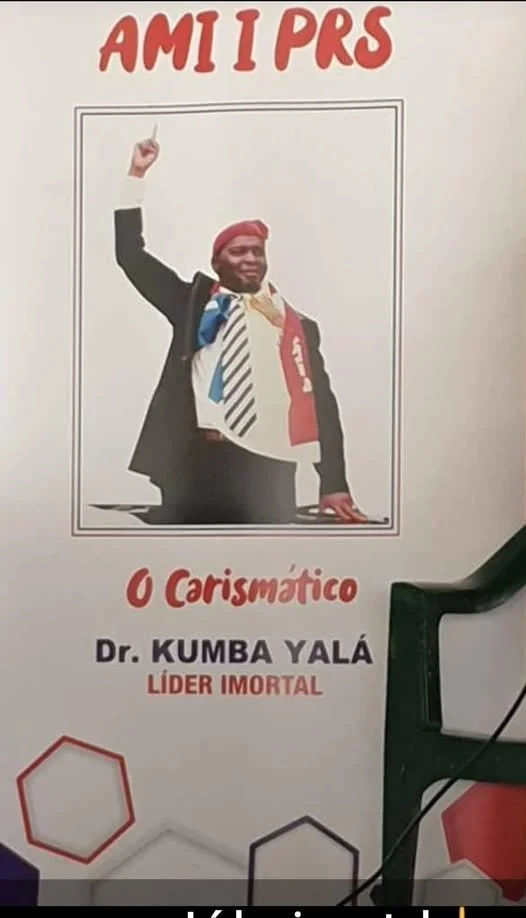
After a traditional “cabaz” wedding ceremony at the moment of a total lunar eclipse on September 7, 2025 and a civil wedding ceremony October 10 on the 172nd Anniversary of the Emancipation and Marriage of Jack and Cherry Blake on October 10, 1853, Siphiwe Baleka and Sânebickté Juliana Yala Nhanca completed a trinity of wedding ceremonies on October 18, 2025 at the church of São Francisco de Assis de Antula, Guinea Bissau. From the beginning of their engagement, they knew they shared a mission to do something to honor the legacy of her father, President Dr. Kumba Yala and his mission to promote the well-being of Balanta people and all Guineans. This is also the mission of the Balanta B’urassa History and Genealogy Society in America (BBHAGSIA).
On January 14, 1992, Dr. Kumba Yala, along with Carlos Sousa, Mario Pires, N’Bunh Necada, Jose Pina, Pedro Bacar Mane, and Mario Augusto Pereira founded the The Social Renewal Party (Partido da Renovação Social, PRS) in Guinea-Bissau. Two thousand nine hundred and ninety four days later, on January 16, 2000. Dr. Kumba Yala was elected to the Presidency by 72% of the vote in the second round, a feat never before achieved in all of West Africa by any opposition candidate.
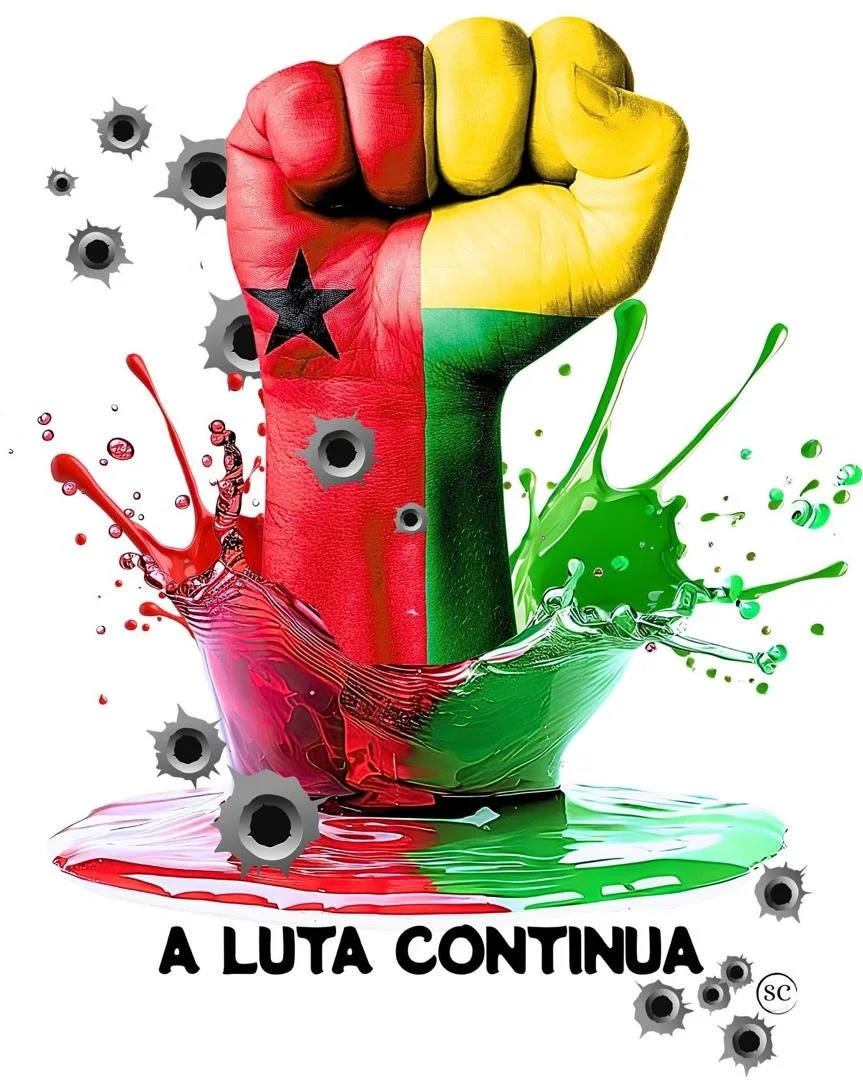
Thus, to celebrate and commemorate the first Balanta president of Guinea Bissau and the 34th Anniversary of the founding of his political party, BBHAGSIA presents this compiled history, which serves an an English-language introduction to the politico-philosophico praxis of Dr. Kumba Yala. Given the current crisis in which Fernando Dias, current President of the PRS and political son of Dr. Kumba Yala, was elected President of the Republic of Guinea Bissau on November 23, 2025 by 55% of the vote and winning seven of the nine regions only to have the final announcement of the election results blocked by an illegal Military High Command on November 26 which subsequently suspended the constitution and institutions, and announced, on this very day, that it has approved a “new Constitution”, this history of the PRS is all the more relevant.
********************************************************************************************************
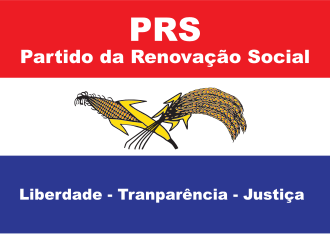
HISTORY OF THE PRS
The founding of the PRS (Partido Republicano Socialista - Socialist Republican Party) falls within the political context of democratic opening in 1991, with the adoption of universally accepted democratic values based on political and economic liberalism. This fact would eventually lead to the creation of the PRS on January 14, 1992, in the Santa Luzia neighborhood in Bissau. The political declaration presented by the founders has as its aims and values the consolidation of a democratic rule of law, respect for the principles of National Independence, preservation of sovereignty, freedom, solidarity, and the dignification of the Guinean people.
The adherence and belief of many young men and women in Guinea-Bissau in the PRS political project is linked to the Social Renewal of Society as an objective to be achieved, based on the freedom of our people, transparency in the action and management of public affairs, and justice for all Guineans.
Thanks to our valuable contribution to the Multiparty Commission in 1992, the PRS experienced significant growth in the first General Elections in 1994. In the legislative elections, the PRS registered in only 9 (nine) of the 29 (twenty-nine) nominal constituencies, thus obtaining 12 (twelve) seats out of the 102 existing in the National People's Assembly. However, the Party's greatest historical achievement was the passage to the second round in the presidential elections, where our candidate, Dr. Koumba Yalá, in a highly competitive election, without material and financial resources, managed to come in second place with 48%.
In 1996, the PRS felt the need to organize its first National Conference of Cadres, an event that would later become its 1st Congress, due to its political importance in deepening its fundamental programmatic principles.
On November 28, 1999, seven years after the founding of the PRS, the second General Elections took place in the country. In these elections, the PRS, with its dynamism and strong presence throughout the national territory, won the legislative and presidential elections with Dr. Koumba Yalá obtaining 72.5% of the vote, a feat never before achieved in all of West Africa by any opposition candidate.
While in power, despite the unfavorable macroeconomic environment following the 1998 conflict, the government's actions in various sectors were noteworthy, including: the installation of mobile phone service throughout the country, the construction of the João-Landim bridge, the establishment of the National People's Assembly, a neighborhood for former freedom fighters as a way to honor them, the recovery of state sovereignty, and the promotion of national talent based on transparency and merit.
In 2002, as part of strengthening its political capacity, the PRS held its 2nd congress, where it elected its legitimate bodies and created mechanisms to deepen its national base and strengthen its relations with similar organizations internationally. After the coup d'état of September 14, 2003, which deposed Koumba Yala, the position was filled by the Interim President, Mr. Henrique Rosa. The Military Committee, composed of 25 officers who led the coup, continued, in theory, to function as an advisory body to the President of the Republic.
From March 28-30, 2004, the third legislative elections in the Guinean democratic era took place, marked by serious organizational flaws, violations of the electoral law, with voting continuing into the night by candlelight over a period of three days, among other noteworthy anomalies. There were also indications of widespread fraud that tarnished the ongoing democratic process. Even so, the PRS came in second place with 26.50% of the vote and 35 seats, accepting the election results for the good of the homeland and the Guinean nation.
In the presidential elections of March 19, 2005, Dr. Koumba Yala was chosen as the PRS candidate and came in 3rd place with 25% of the votes cast. The long political trajectory of the PRS since the 2nd Congress required constant demands for the holding of the 3rd Congress in order to give the Party a dynamic of organization and internal democratic cohesion, towards the pursuit of our project for the development of Guinea-Bissau. At the Party's 3rd Congress, which was very well attended, the candidates Dr. Koumba Yala and Eng. Augusto Poquena were legitimately elected President and Secretary-General of the Party, respectively. Consequently, the National Council, the National Political Commission and the National Executive Commission were also elected, all of them statutory bodies of the Party, invested with statutory sovereignty.”
*************************************************************************************************************
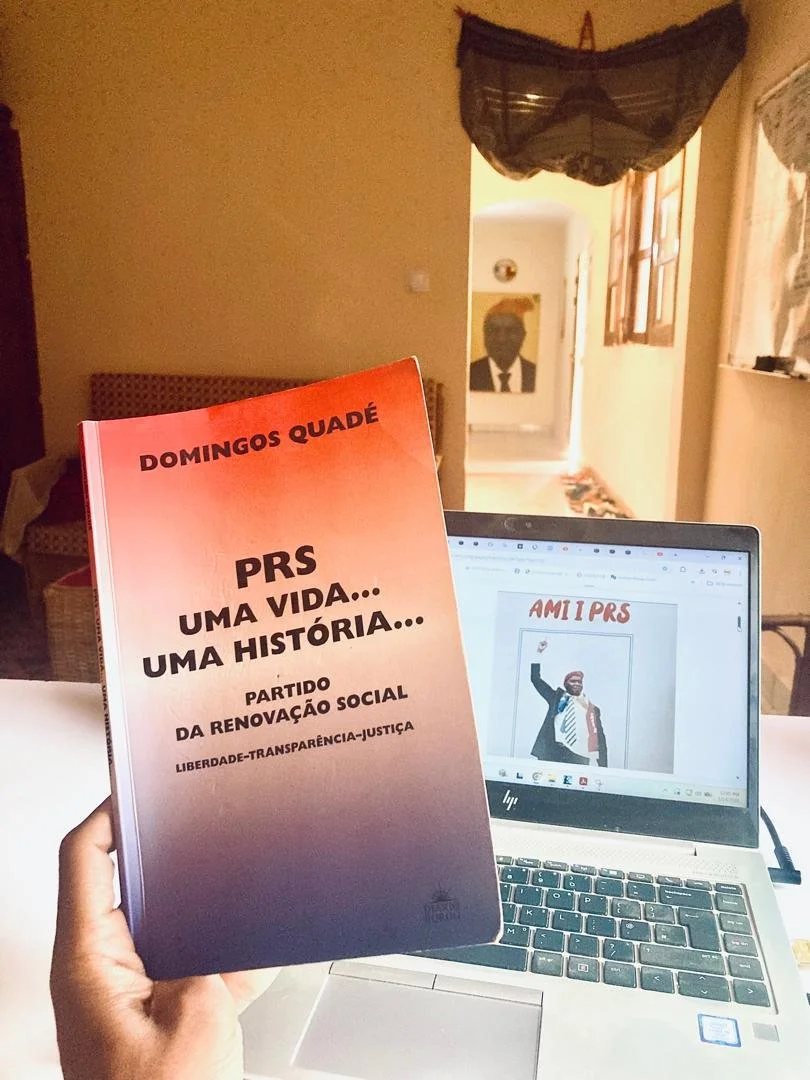
Excerpt from PRS: uma vida... uma história... Partido da Renovação Social by Domingos Quade:
“I begin this text with a vague feeling of unease, I confess, and even with some embarrassment in writing this preface to the book that recounts our history as a people. Be that as it may, I must confess, however, that it gives me great personal satisfaction to write the preface to this book, essentially for two reasons:
Firstly, because of what it represents in itself. In fact, it is a book that, without pretending to be what it is not and without pretending to be more than what it is, asserts itself through the genuineness and uniqueness of its purpose: to present a vast amount of information unknown to the Guinean reading public about the short history of the PRS, from its foundation to the present day, and within the socio- political context of the single- party system led by the PAIGC.
The heroic anti-colonial struggle and fight for political, economic, social, and cultural independence undertaken by the Guinean people, to which the historical contribution of the PAIGC was decisive, formed the basis for a new horizon of hope for the Guineans. They were called upon to build, with their own hands, the foundations of a Nation.
The dynamics of these transformations, triggered by independence through the single-party system and reinforced by the PARTY/ STATE organization articulated with a welfare state policy, quickly discouraged the PAIGC's political project, ultimately frustrating the hopes of our people, born throughout the glorious anti-colonial struggle. It was a storm that marked the regimes of the First and Second Republics: political oppression, demagogic socialism, and the inversion of universally enshrined values of tolerance, civilization, and solidarity.
In short, a regime averse to respect and the dignity of the life of every Guinean citizen or the human person in general.
While maintaining the ideological standards of the First Republic intact, the events of November 14th did not assume their responsibility before history to restore freedom to our people, instead basing themselves on the accelerated encouragement of corruption, the assassination of citizens, and the patronage of the established power. [note: November 14th in Guinea-Bissau marks the Anniversary of the Movement of Readjustment, a public holiday commemorating the bloodless coup d'état on November 14, 1980, when João Bernardo "Nino" Vieira overthrew the government, establishing a new era after the nation's independence. This day is a significant national event, symbolizing political shifts in Guinea-Bissau's history.]
Such is the political motivation that gave rise to the creation of the PRS on January 10, 1992, in the Santa Luzia neighborhood, as an instrument of struggle for the Guinean people against the dictatorship of the PAIGC government. This stemmed from a sensitivity that arose within the Social Democratic Front (FDS), led by the veteran Rafael Barbosa, due to disagreements regarding the party's sole power structure. The Social Renewal Party therefore considers its raison d'être, as a political force in opposition to the current regime, to be the construction of a free, just, and democratic society based on the values of the rule of law, grounded in a market economy, capable of guaranteeing accelerated socioeconomic development for Guinea- Bissau.
It is from this perspective that the PRS supports the Union of Democratic Forces, as a privileged space for establishing a comprehensive strategy for the opposition forces, as a sufficient and necessary condition for establishing a pluralistic democracy in the country. As a political project, the PRS quickly became an unavoidable party on the Guinean political scene, under the motto FREEDOM for our people, TRANSPARENCY in the action and management of public affairs, and JUSTICE without exception for all Guineans. And in the long term, a permanent and consistent Social Renewal both within the Party and in our Society.
The Social Renewal Party considers dialogue and tolerance as the only means of guaranteeing the country's political transition to a new order that is increasingly asserting itself, and proposes that the ruling regime respect the legal instruments approved by its National People's Assembly in the search for solutions that can make the country's political and economic situation viable.
The Social Renewal Party is a secular, open and pluralistic organization that admits all citizens of Guinea- Bissau into its ranks, young people, women and the elderly, provided they respect its principles and statutes, with the ultimate goal of fighting for power through universal, direct and secret suffrage, the main instrument for the realization of its program.
Thus, the State is at the service of the citizen and not the other way around, and the family will be considered the primary cell of society where work, housing, and the right to medical care and social security will be paramount in the Party's development program, without prejudice to the customs and traditions of the different ethnic and cultural components of our People.
The values of the New International Order will be sectors of foreign policy without jeopardizing the interests of the country, the African Community, and our Sub-Region, and will establish cooperation agreements with all those who respect the principles of peaceful coexistence and the right of each people to freely build their own destiny.
Secondly, the author himself. The book was written by Domingos Quadé, a lawyer by profession who, despite his youth as a writer, already has a body of published books and monographs, such as "Guinea- Bissau, by the strength of the State, Justice and National Reconciliation," for which he was awarded the title of Doctor Honoris Causa by a Malawian university, and several studies on environmental law. He foreshadows a promising literary career. Therefore, and given that, as stated at the beginning, this preface adds nothing to the book, I leave here this rather personal note of homage to the work developed by the author, hoping that readers will at least find as much pleasure in reading it as he (the author) undoubtedly enjoyed writing it. To the founders of the PRS, I also offer "our congratulations" for the courage, selflessness, and contribution they made as free men to our young democracy and its consolidation for future generations.
Finally, a heartfelt tribute to our veteran freedom fighters who shed so much sweat, blood, and tears so that we may be free today.
José Canas Lisbon, July 2022
FROM THE COLONIAL PERIOD TO THE PERIOD OF NATIONAL INDEPENDENCE
The geographical and political territory of what is now called Guinea- Bissau has experienced phases and turbulences in its history under various manifestations. It experienced colonization – the Portuguese – from the beginning of the dictatorial period, that is, both during royal and constitutional power and from the establishment of the Republic in 1910, until the unilateral proclamation of our national independence on September 24, 1973, in the forests of Colinas de Boé. Referring to the colonial phase, we would like to say here that the colonization of Guinea, according to Gomes Eanes de Azurara, a 15th- century Portuguese historian and royal chronicler from 1450 onwards, in the "Chronicle of the Discovery and Conquest of Guinea," five reasons motivated Prince Henry the Navigator to conquer Guinea:
'the first reason had to do with the desire to know the lands that went beyond the Canary Islands and Cape Bojador;
the second, for commercial reasons in the exchange of products;
The third reason was that the power of the "Moors of that land in Africa was said to be much greater than commonly thought";
the fourth, to ascertain whether there was a Christian king in those parts; and
the fifth, the expansion of the Christian faith', in www.cart1525.com/ gouveia/ descobrimento.pdf.
In this same publication, we see that 'in 1446, Estêvão Afonso reached the Gambia River, in the Mandinka region; Álvaro Fernandes is believed to have reached the Casamance River, on the northern border of present-day Guinea- Bissau; João Infante, son of Nuno Tristão, discovered the Grande River, later called the Geba River, in present- day Guinea- Bissau'. The territories then discovered were linked to 'Cape Verde from the beginning until 1879, the date of administrative and military separation'. See also http:// aguine.bloggspot.pt/
We would also like to inform you that the same author confirmed that 'in 1886, Portugal ceded the Casamance area to France in exchange for very little in the Congo, reducing the area of Guinea to about half of what initially belonged to Portugal, even against the unwavering will of Honório Barreto, who so strongly defended the people of Guinea'.
Guinea's capital was the city of Bolama until 1942, after which the city of Bissau became the capital, although it had been and maintained the status of economic capital.
We've come here simply to satisfy some readers' potential curiosities about a bit of the history of the land we all have today, and about which we write.
To achieve independence and sovereignty from colonial rule, under the glorious banner of the African Party for the Independence of Guinea and Cape Verde (PAIGC), its best sons decided to forge a resistance process at all levels until final victory. This victory was achieved/ consolidated, in our view, thanks to the combination of three factors that occurred in a relatively short period of time: from the proclamation of independence to the de jure recognition by the colonizing power, passing through the international recognition of a new state that had just been born. Prior to the proclamation, there were preliminary acts such as the convening of preliminary election sessions and the holding of meetings of Regional Councilors, from which, in turn, deputies were elected for the first plenary meeting of the National People's Assembly in our history. This meeting would effectively, at the culmination of the long revolutionary process, proclaim the State of Guinea-Bissau. It was on September 24, 1973, in the vastness of Colinas de Boé, then liberated territories in what is now the eastern zone of the country, and it was an emerging reality not only in legal terms – the exercise of sovereignty – but also in political terms, namely by having its own army, an organization of administrative and judicial services, and an economic organization. Portugal came to be seen merely as an occupying power. Furthermore, on November 2, 1973, the United Nations General Assembly met and approved a resolution with a historic 93 votes in favor, recognizing the State of Guinea- Bissau, condemning and repudiating the Portuguese colonial occupation in Guinea, and proposing to the Security Council the admission of the new State as a member of the organization. This was implemented a few days later; that is, this important body of the United Nations (UN) admitted the State of Guinea- Bissau into its fold on November 19, 1973, as another full member of this world organization. All this, it should be noted, before the Portuguese revolution. Following this important and decisive act, more than sixty countries and international organizations at the time issued declarations of recognition, and the colonizing power was noticeably isolated externally, with an army lacking morale and, therefore consequently, practically defeated on the military front. In order to maintain honor and raise morale – peculiar to any self-respecting army – it was decided to put an end to everything, overthrowing by force the fascist power that governed the Metropolis and the colonies. This revolution, nicknamed the Carnation Revolution, took place on April 25, 1974, and its motto was to decolonize, democratize, and develop. Regarding decolonization, which interests us in this work, we must say that it began with the opening of a negotiation process in Algiers, the capital of the Republic of Algeria. This culminated in the de jure recognition of the State of Guinea-Bissau by the Portuguese Republic, as the colonizing power, on September 10, 1974, the first such recognition in the former African colonies.
2. The Totalitarian/ Revolutionary State
As seen in the preceding item, the process of achieving our national independence was truly revolutionary, patriotic, and a source of pride for any Guinean, although it also had its own undesirable setbacks, which were perfectly avoidable at the time. And this avoidability, which was not intended to take root from the beginning, became the tip of the iceberg for everything we have since experienced with bitterness to this day, such as the disruption of a glorious post- independence process and the real projection of socio- economic development with violent coups and counter- coups, continuous intrigues, a poorly defined unity between Guinea and Cape Verde that only existed in cosmetic speeches rather than with actual projects and defining criteria, the encouragement of racial, ethnic or tribal solidarities, and the maintenance of a profound degree of obscurantism that has been rampant in society at all levels and in all successive generations.
The country began to be managed without concern for defining, in any legal instrument, the relevant public interest to be pursued, and everything was done one day at a time, everyone eager for power and money.
There was a great cult of personality, unprepared for the magnitude of what was assumed. And this justifies all our backwardness, unfortunately contrasted with the independence movement's fervor. Thus, to legitimize all this, a constitutional text was approved that enshrines the PAIGC as the sole political and leading force in society. This is incompatible with the coexistence of any other opposing currents of thought. This was indeed the case at the level of Social organizations: there was only one workers' union (the National Union of Workers of Guinea - UNTG), one youth organization (the Amilcar Cabral African Youth - JAAC), and one children's organization (the Abel Djassia Pioneers Organization - OPAD). It had a subservient police force because it had ceased to have its inspiring and legitimizing historical- revolutionary mission, instead adopting a repressive and intimidating mission against society and its values. There was censorship in all public media outlets (the newspaper No Pintcha, the National Radio Broadcasting, the Guinea News Agency, and the National Press). No one dared to oppose it. It was a genuine police state that practiced terror, summary executions, and arbitrary arrests. All these characterizations were a reality until the emergence of political liberalization, initiated in 1991 with the punctual and political revision of the Constitution, especially to achieve the fall of the dangerous and heinous Article 4, which enshrined the general binding nature and imposition of the PAIGC in our society. For the reasons stated above, it became a matter of debate, which led to numerous corollaries; the multi- party institution and the market in a democratic and multi-party legal framework, alongside the current legislation, designates and enshrines the rights, freedoms, and cultural rights of others legally established in the economic and cultural sphere, enshrining the principle of separation of powers. In political compliance, it constitutes the maintenance of the Republican Party.
3. The Evolution Towards Political Openness
As you can see, there was a rather dramatic post-independence period. But the suffering and drama didn't end there, although under conditions that were, let's say, relatively and subtly mitigated, because some excesses of a residual or leftover type continued. What transitioned to the new political landscape was, in our view, also dangerous in almost its entirety, as we continue to live in obscurantism [note: the practice of deliberately preventing the facts or full details of something from becoming known.] and backwardness under unbearable conditions, with some barbaric and unacceptable acts. Still with a political class that is only seen from afar, flaunting power and wealth, nothing more, nostalgic for the past and unconcerned with technological and scientific advancements in its overwhelming majority. The country remains, unfortunately, to this day, hostage to a class lacking in self-improvement but which is neither moving in that direction nor going to. The vast majority of the political class, if not the entirety, is guided by the infamous logic of every man for himself, and the people are deceived with dormant, cosmetic, and falsely agitated speeches. This is the characteristic reason for our backwardness and the current status quo. However, all the effort made within the transitional framework deserves our attention and recognition, but only on a formal level, since its materiality is still far from being a given for the reasons explained above. Still on this formal level, in effect, the country became a pluralistic democracy thanks to the perestroika winds that blew across the African continent at the time; it brought countless advantages such as the fall of the unfortunate and shameful Article 4 and its corollaries; the institutionalization of a new political- democratic, multi- party and socio- economic framework that authorizes the opening to a market economy in better- structured terms; from a political- democratic and multi- party point of view, it is fair to say that an important body of law, along with the punctual revision of the Constitution, was approved and is in force, namely the framework law on political parties, the strike law and the law on freedom of association. And the Constitution of the Republic itself defines a considerable list of so- called fundamental rights that include rights, freedoms and guarantees on the one hand and economic, social and cultural rights on the other. This emphasizes that there is no lack of legally structuring elements in our current political, social, economic and cultural system. Likewise, it can still be said that the semi- presidential regime was consecrated, rooted in the sacred principle of separation of powers of the State, in addition to those of constitutionality or participation, because they characterize the Democratic Rule of Law.
In compliance with the provisions of the new legal- constitutional and political framework, political parties were formed to conquer, exercise, and maintain political power through democratic means. Hence the emergence of the Social Renewal Party, the PRS.
I. THE HISTORICAL- UNIVERSALIST DIMENSION
It was, as with the rest of science in general, in ancient Greece and Rome, that followers of an idea, doctrine, or person began to appear, pursuing local public interests, and these would come to be called parties. The term party is the past participle of the verb "to part," which in this sense means to divide. By extension, party means a part of society represented by a group, as someone rightly and wisely observed.
However, the idea developed many centuries later, more precisely in the 18th century, in England. Here, parties coalesced around specific ideas based on the private interests of the group at the time surrounding the monarchy, giving rise to the so- called Whig Party (meaning Work and Health, or Information Gateway Group, a name given to the liberal- leaning party) and the Tory Party (meaning The Original Release Year, a name given to the conservative- leaning party). But it was the independence of the United States of America in 1776 and the French Revolution of 1789 that catalyzed, strengthened, and broadened the idea of a party as a political organization of individuals structured to achieve and exercise power in a given community. Political parties vary in their conception and doctrine depending on what each one considers to be the inseparable values of their ideological, socioeconomic, and political affirmation. This means that each party, in defending societal values, positions itself sometimes on the right, sometimes on the left. Within this framework, there are those that are more to the right, those that are more to the left, and those that are situated in the center with a tendency towards the right or to the left.
2. THE NATIONAL DIMENSION - THE PRS CASE
a) Remote causes
With the political opening in Guinea- Bissau, alongside the PAIGC, many parties were democratically formed, many of them without large parties, in terms of representativeness of their electoral base and others that possess it, are either progressing or regressing, and the PRS is no exception. All need to reassess themselves in order to better (re)conquer and consolidate their respective forces in the internal and external political arena, as a political formation cannot achieve this with dignity without establishing healthy relations on both sides. Therefore, it is essential for the PRS to adopt these reflective and contributory lines in its daily political and social life as necessary for a better affirmation of its future, that is, with a view to conquering, exercising, and maintaining power through elections, stemming from a pluralistic environment.
The Social Renewal Party, the PRS, was born within this pluralistic political framework established from the opening of our process of punctual revision of the Constitution of the Republic in 1991. The material component announced in due course above, whose effective realization is therefore lacking in our political- legal order, justified and founded, as remote causes, the idea of the emergence of this political project for society through a group of individuals, true patriots of our times. This lack of materiality, due to the recognized relevance and inexorable need to carry out mobilization work on the ground, strengthened the determination and confidence, encouraged the reinforcement of efforts, and thus consolidated the aforementioned project, laying the solid foundations that allowed it to be well conceived, robust, and implemented to the ground up to give the Guinean people a new environment to breathe, based on the real values of human dignity, as translators of, namely, equality, fraternity, justice, democracy, and true peace throughout the national territory in a transversal and pluralistic way.
b) The immediate causes
The PRS project did not exist from the beginning of the political opening. It only emerged after a disagreement between some leaders of the then Democratic and Social Front and their senior leadership, which they discovered and understood was only there to waste their time.
They discovered that, in the end, this leadership did not oppose the typical ideology and machinery of the PAIGC, or that perhaps this party had and viewed the FDS as its satellite in order to obtain more and better information, hinder and control the expansion of opposition groups, among other things. They also felt they needed to correct their stance regarding the then- leader of the FDS – Mr. Rafael Barbosa, a historical figure in the PAIGC and its school of thought from which he had dissented – as he did not seem to be adapting to the changing times. He maintained that simplistic, rigid, and authoritarian view on matters that should be openly discussed before being adopted through freely and sovereignly expressed votes by legitimate members in each relevant body. This greatly inspired the new party's motto, the famous trilogy of Freedom, Transparency, and Justice, in order to counter what they considered unacceptable. For the then- new FDS dissidents, reality showed that the moment demanded a new position that would combat and eradicate precisely what was symmetrical: oppression, opacity, and injustice.
As a reaction against the aforementioned state of affairs, championed by this group of brave men and women who, from the very beginning, stood alongside the higher interests defended in their inspiring political ideal, the driving idea of founding a new political party was born, still in its gestation period. Here, it is said to be gestation because it wasn't conceived and finalized in a single day. It began, indeed, in one day – internal unease within the party and the departure of the FDS – and developed without anyone yet knowing for sure what was to come until, on January 10, 1992, the founding process began, culminating in the public announcement four days later, 14 days after that same month and year, by its first leader, Dr. Koumba Yalá Kobde Nhanca, during a press conference in Bissau. Thus, these were four intense and decisive days of internal discussion, amidst the revolts, but productive results: a new party for Guinea- Bissau was born.
They discovered that, in the end, this leadership did not oppose the typical ideology and machinery of the PAIGC, or that perhaps this party had and viewed the FDS as its satellite in order to obtain more and better information, hinder and control the expansion of opposition groups, among other things. They also felt they needed to correct their stance regarding the then- leader of the FDS – Mr. Rafael Barbosa, a historical figure in the PAIGC and its school of thought from which he had dissented – as he did not seem to be adapting to the changing times. He maintained that simplistic, rigid, and authoritarian view on matters that should be openly discussed before being adopted through freely and sovereignly expressed votes by legitimate members in each relevant body. This greatly inspired the new party's motto, the famous trilogy of Freedom, Transparency, and Justice, in order to counter what they considered unacceptable. For the then- new FDS dissidents, reality showed that the moment demanded a new position that would combat and eradicate precisely what was symmetrical: oppression, opacity, and injustice.
As a reaction against the aforementioned state of affairs, championed by this group of brave men and women who, from the very beginning, stood alongside the higher interests defended in their inspiring political ideal, the driving idea of founding a new political party was born, still in its gestation period. Here, it is said to be gestation because it wasn't conceived and finalized in a single day. It began, indeed, in one day – internal unease within the party and the departure of the FDS – and developed without anyone yet knowing for sure what was to come until, on January 10, 1992, the founding process began, culminating in the public announcement four days later, 14 days after that same month and year, by its first leader, Dr. Koumba Yalá Kobde Nhanca, during a press conference in Bissau. Thus, these were four intense and decisive days of internal discussion, amidst the revolts, but productive results: a new party for Guinea- Bissau was born. . . . .
PRS Founding Manifesto
“The heroic anti- colonial struggle and fight for political, economic, social and cultural independence undertaken by the Guinean people - to which the historical contribution of the PAIGC was decisive - formed the basis for a new horizon of hopes that the Guineans were called upon to build, with their own hands, the foundations of a Nation.'
The dynamics of these transformations, triggered by independence through the single- party system (PARTY/ STATE) and articulated with a welfare state policy reinforced by the organization, quickly discouraged the PAIGC's political project, ultimately frustrating the hopes of our people born throughout our glorious anti- colonial struggle. It was this dynamic that marked the regimes of the First and Second Republics – translated into political oppression, demagogic socialism, and the inversion of values, thus replacing the universally enshrined values of tolerance, civilization, and solidarity, and making them averse to respect, dignity, and even the life of each citizen.
Maintaining the ideological standards of the First Republic intact, the events of November 14th, instead of assuming their responsibility before history to restore freedom to our people, were instead based on the accelerated encouragement of corruption, the assassination of citizens, and the patronage of power.
The political motivation that gave rise to the creation of the PRS on January 10, 1992, as an instrument of struggle for the Guinean people against the dictatorship of the PAIGC government — the result of a sensitivity that arose within the Social Democratic Front due to differences in positioning regarding the government. The Social Renewal Party therefore considers the reason for its existence, as a political force in opposition to the current regime, to be the construction of a free, just, and democratic society based on the values of the rule of law, founded on a market economy, and capable of guaranteeing accelerated socioeconomic development for Guinea- Bissau.
It is from this perspective that the PRS supports the Union of Democratic Forces as a privileged space for establishing a strategy of opposition forces and as a necessary condition for the establishment of a pluralistic democracy in the country, under the motto FREEDOM. TRANSPARENCY, JUSTICE.
The Social Renewal Party considers dialogue and tolerance as the only means of guaranteeing the country's political transition to a new order that is increasingly asserting itself, and proposes that the ruling regime respect the legal instruments approved by its National People's Assembly in the search for solutions that can make the country's political and economic situation viable. The Social Renewal Party is a secular, open, and pluralistic organization that admits all citizens of Guinea- Bissau, young people, women, and the elderly, provided they respect its principles and statutes. Its ultimate goal is the struggle for power through universal, direct, and secret suffrage, the main instrument for the realization of its program.
Thus, the State is at the service of the citizen and not the other way around, and the family will be considered the main cell of society where work, housing, the right to medical care and social security will be priority vectors in the Party's development program, without prejudice to the customs and traditions of the different ethnic and cultural components of our People.
The values of the New International Order will be vectors of foreign policy without jeopardizing the interests of the country, our sub- region, and the African community, and will establish cooperation agreements with all those who respect the principles of peaceful coexistence and the right of each people to build their own destiny.
Bissau, 14/01/1992
O.P.R.S”
DECLARATION OF PRINCIPLES
The PRS is proud of its past and believes in a bright future for Guinea-Bissau, based on the active participation of all Guinean men and women. To this end, it proclaims the following principles:
I
(DEFINITION)
The PRS is a political party that seeks, through the confluence of democrats with diverse backgrounds and orientations, united in a common goal, to contribute to the renewal of policies in Guinea-Bissau with a view to building a new society – just, free, dignified and supportive.
II
(DOCTRINAL BASIS)
The PRS welcomes into its fold, without distinction of race, creed, or religion, with a view to building a new society, without denying past experiences, and admitting tendencies that are not autonomously organized, as well as independent from various quarters, all people of goodwill but with convictions, to work together for the Renewal of Guinea-Bissau. Conservative in the values that are important to preserve, reformist in the institutions and policies that urgently need to be changed for the development of Guinea-Bissau.
III
(POLITICAL VALUES)
The PRS bases its core values of LIBERTY, EQUALITY, FRATERNITY, and JUSTICE on the premise of respect for human dignity and LIFE.
IV
(FREEDOM)
The PRS recognizes FREEDOM as the indomitable tendency of MAN to forge his own destiny, choosing to create a set of political conditions that allow each person, in the exercise of their citizenship, the possibility of choice and corresponding accountability for their actions, developing within the rights, freedoms and guarantees enshrined in the CONSTITUTION OF THE REPUBLIC, and the LAW that it should enshrine in its permanent pursuit of JUSTICE.
V
(EQUALITY)
The PRS defends EQUALITY of opportunity, both in the treatment of all Guinean citizens without favoritism, rewarding merit and attending to the needs of society as a whole, and in the aspiration for a society of economic freedom and political justice, based on the premise that there is no freedom without property or a free market. However, it is the government's responsibility, in defense of the common good, to intervene in accordance with this and with the principle of subsidiarity, to avoid distortions, crises, and injustices. Equality of rights does not imply equality of results, since the latter would lead to the absence of freedom.
VI
(JUSTICE)
Justice is the backbone of our democracy, which is being built upon a more just and fraternal society.
The PRS advocates for access to justice for all Guinean citizens. A swift justice system where no Guinean, regardless of their social status, is above the law.
VII
(TRANSPARENCY)
The PRS advocates for transparency in the way politics and public affairs are conducted. Only in this way can we aspire to build a society free from injustice.
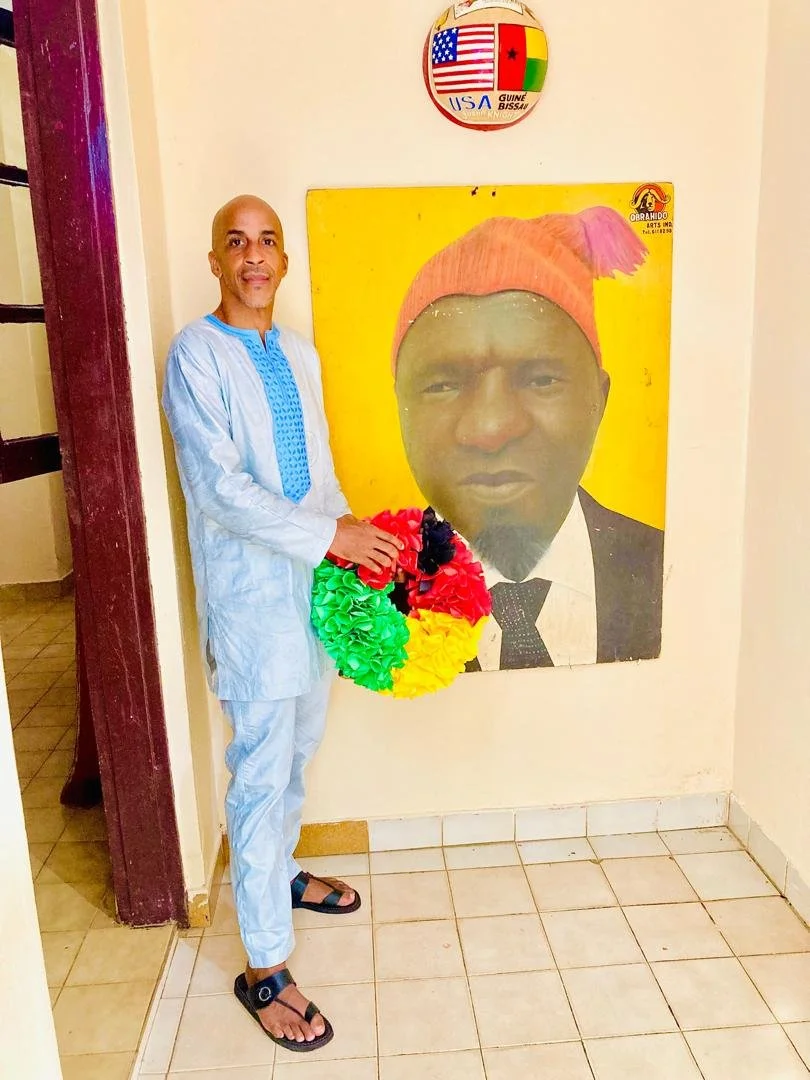
Eleven years after the death of the founder of the Social Renewal Party (PRS), Kumba Yalá, the party's senior leadership will hold a day of reflection in his honor on April 4, 2025.