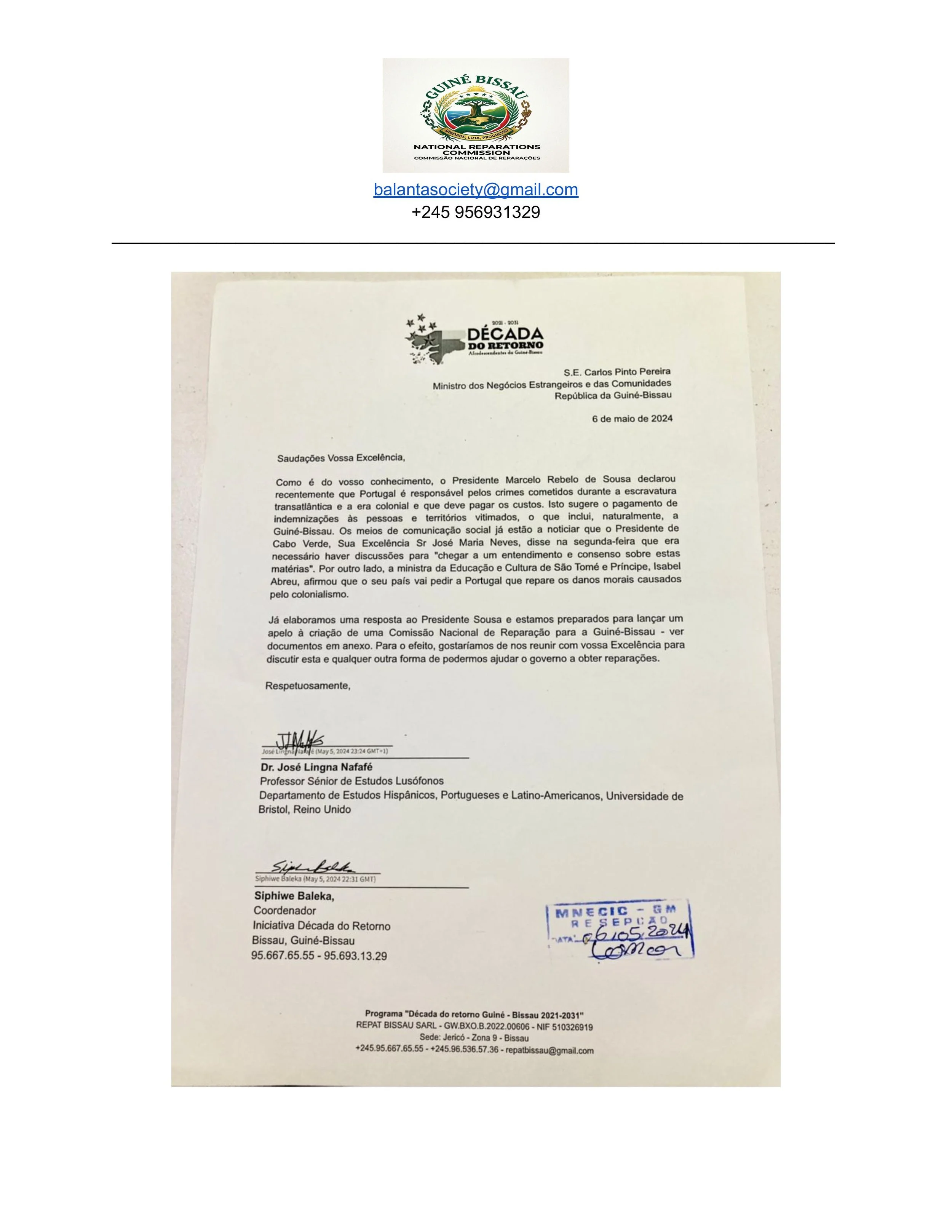
On May 6, 2024, Siphiwe Baleka, Coordinator of the Decade of Return Initiative in Guinea Bissau, and Dr. José Lingna Nafafé, Senior Lecturer in Lusophone Studies, Department of Hispanic, Portuguese and Latin American Studies, University of Bristol, UK delivered a letter to H.E. Carlos Pinto Pereira, Minister of Foreign Affairs and Communities, Republic of Guinea-Bissau that said,
“Greetings Your Excellency,
As you know, President Marcelo Rebelo de Sousa of Portugal recently stated that Portugal is responsible for crimes committed during transatlantic slavery and the colonial era and must pay the costs. This suggests paying reparations to the people and territories so victimized, and this of course, includes Guinea Bissau. Already, the media is reporting that Cape Verde's President Jose Maria Neves said on Monday there was a need for discussions to take place in order to "reach an understanding and consensus on these matters." Additionally, Sao Tome and Education and Culture Minister Isabel Abreu stated that her country will ask Portugal to repair the moral damages caused by colonialism.
We have already drafted a response to President Sousa and are prepared to issue a call for the establishment of a National Reparations Commission for Guinea Bissau - see the attached documents. Towards this end, we would like to meet with you to discuss this and any other way that we can assist the government in pursuing reparations.”
A “Call to Action Establishing the Guinea Bissau National Reparations Commission” and “A Declaration For Reparations For Guinea Bissau” was published, and the initial group included Professor of International Relations Beto Infande, Portuguese Member of Parliament Joacine Moreira, the Director General of the Instituto Nacional de Estudos e Pesquisa (INEP) João Paulo Pinto Có, Professor of Socio-Environmental Development at Amilcar Cabral University Dr. Eloi Biquer Gomes University, Professor of Administration and Rural Development at Amilcar Cabral University Monica Joao Imbana, actor Welket Bungué and commentator Armando Contekundeh. Balanta descendant Kamm Howard was also invited to the Commission at that time due to his experience in the reparations movement in the United States and internationally.
And thus was born the first national reparations commission in Africa.


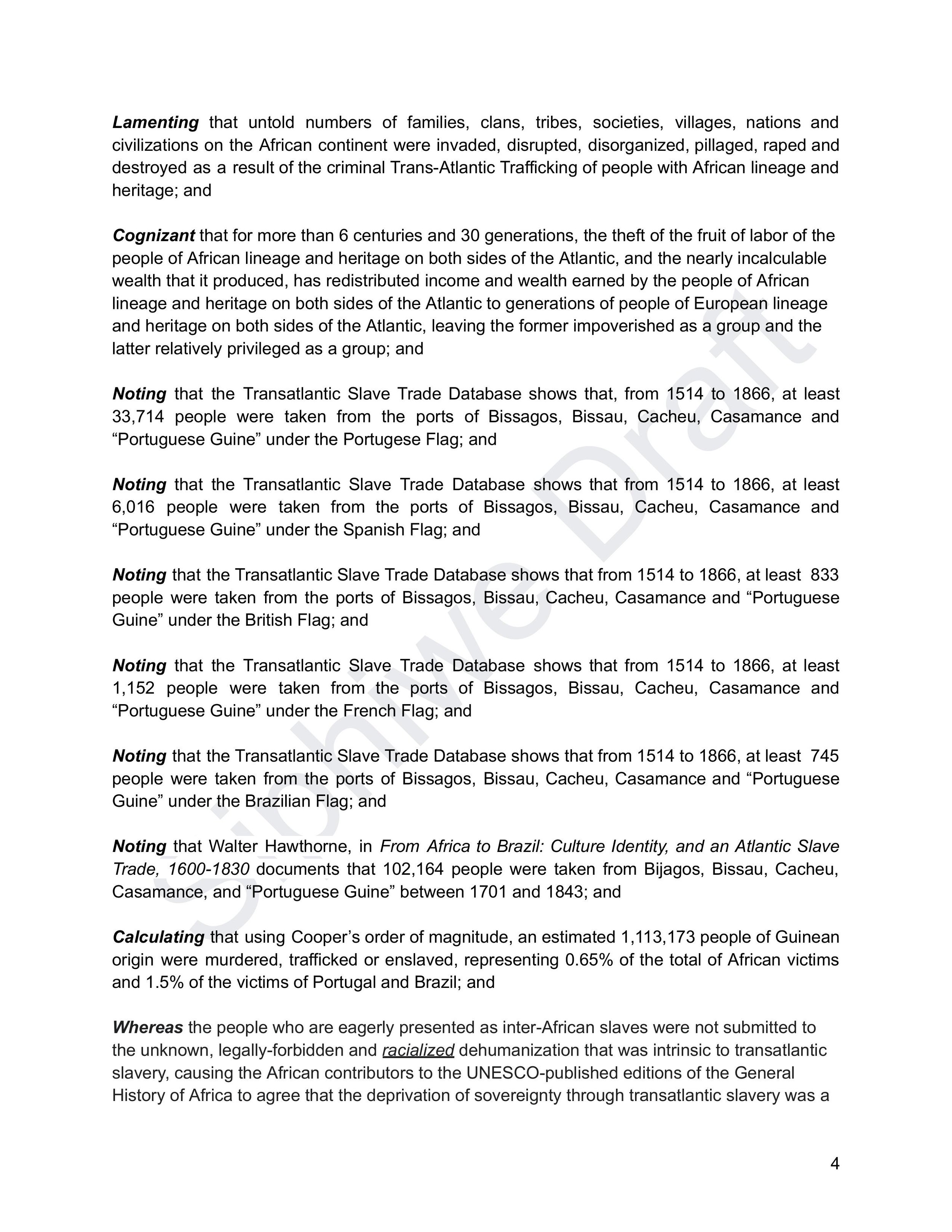
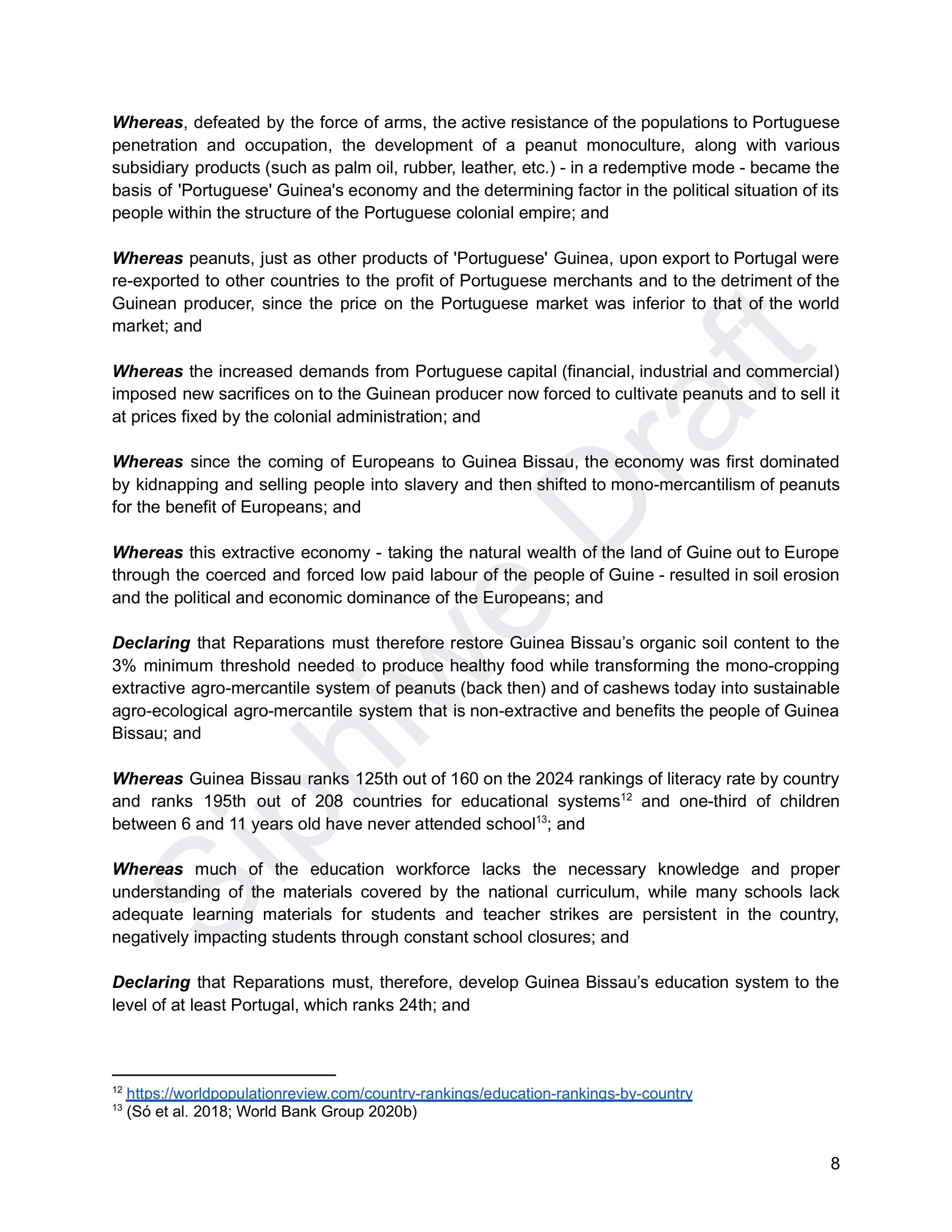
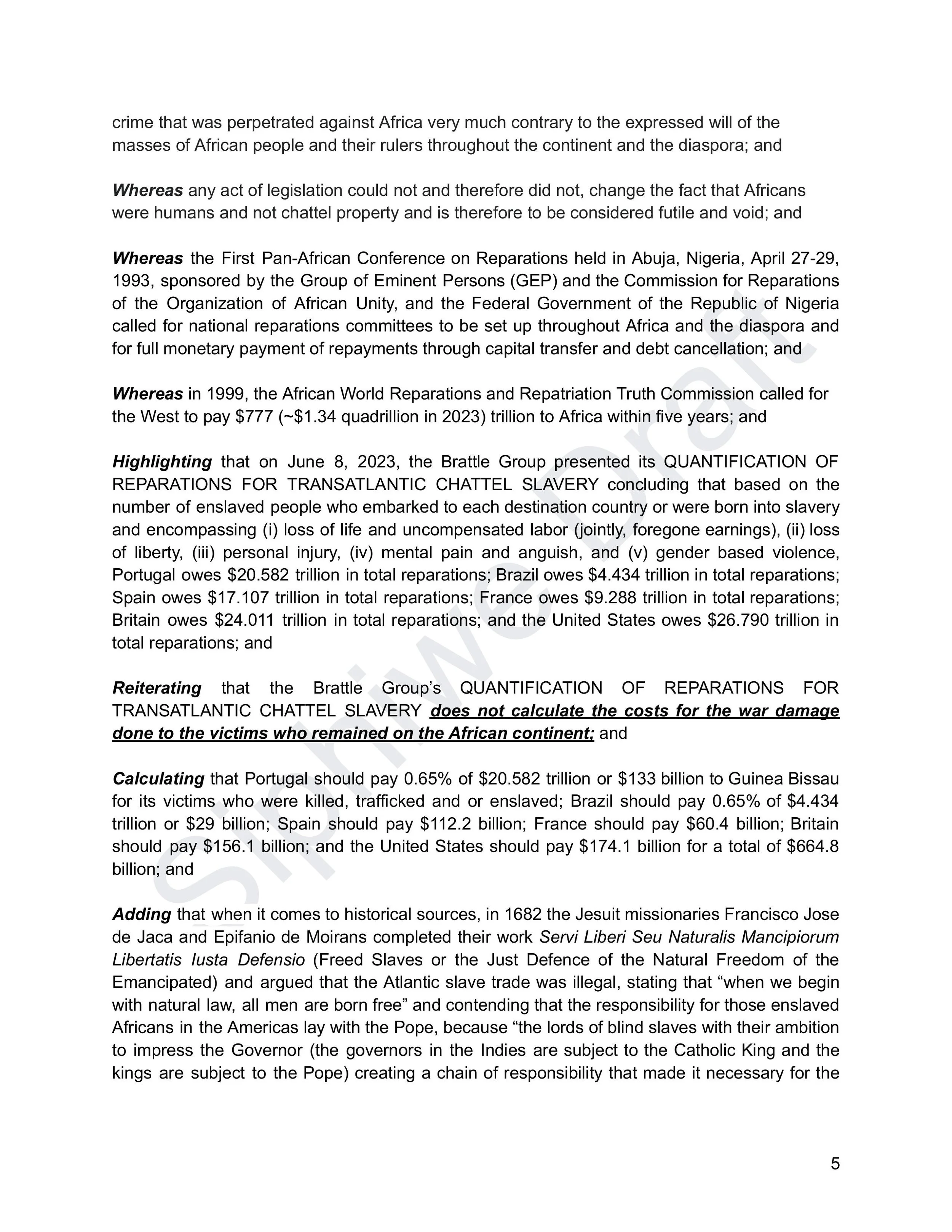
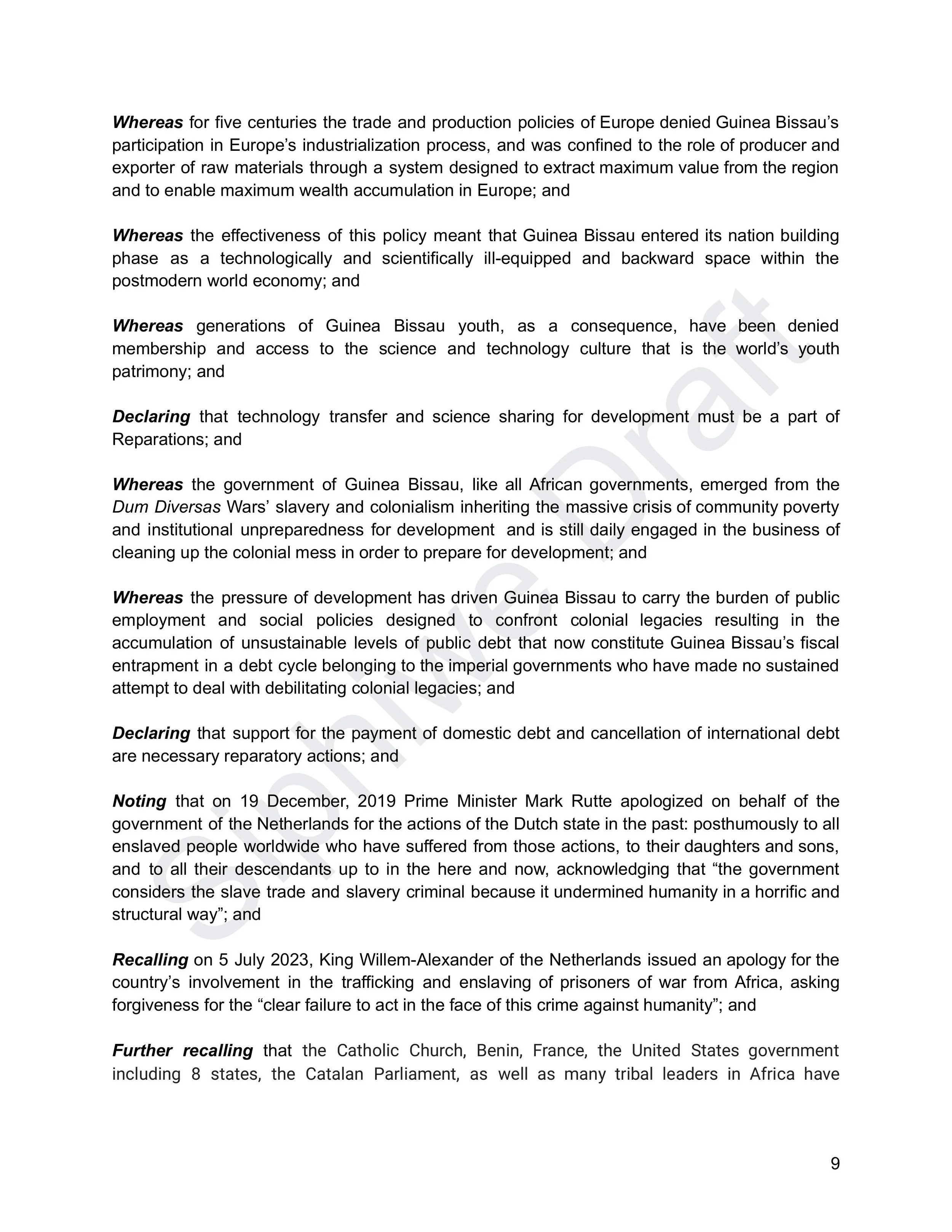
It should be noted that H.E. John Dramani Mahama’s recent mandate at the 39th Ordinary Session of the AU Assembly (February 15, 2026) urges member states to establish national reparations commissions, echoing the 1993 Abuja Proclamation that ““Calls upon Heads of States and Governments in Africa and the Diaspora itself to set up National Committees for the purpose of studying the damaged Black experience. . . .” This has now been codified under the 2025 AU Theme of the Year roadmap, requiring all 55 member states to build internal legislative infrastructure. It was further reinforced by the 7th AUC-NANHRI Policy Dialogue, which explicitly mandated National Human Rights Institutions (NHRIs) to establish national reparations committees for localized evidence documentation and legal tracking.
Thus, Guinea Bissau is the first African nation to be in alignment with the High-Level Consultative Conference On The Next Steps To The Landmark United Nations Resolution on the Trafficking of Enslaved Africans.
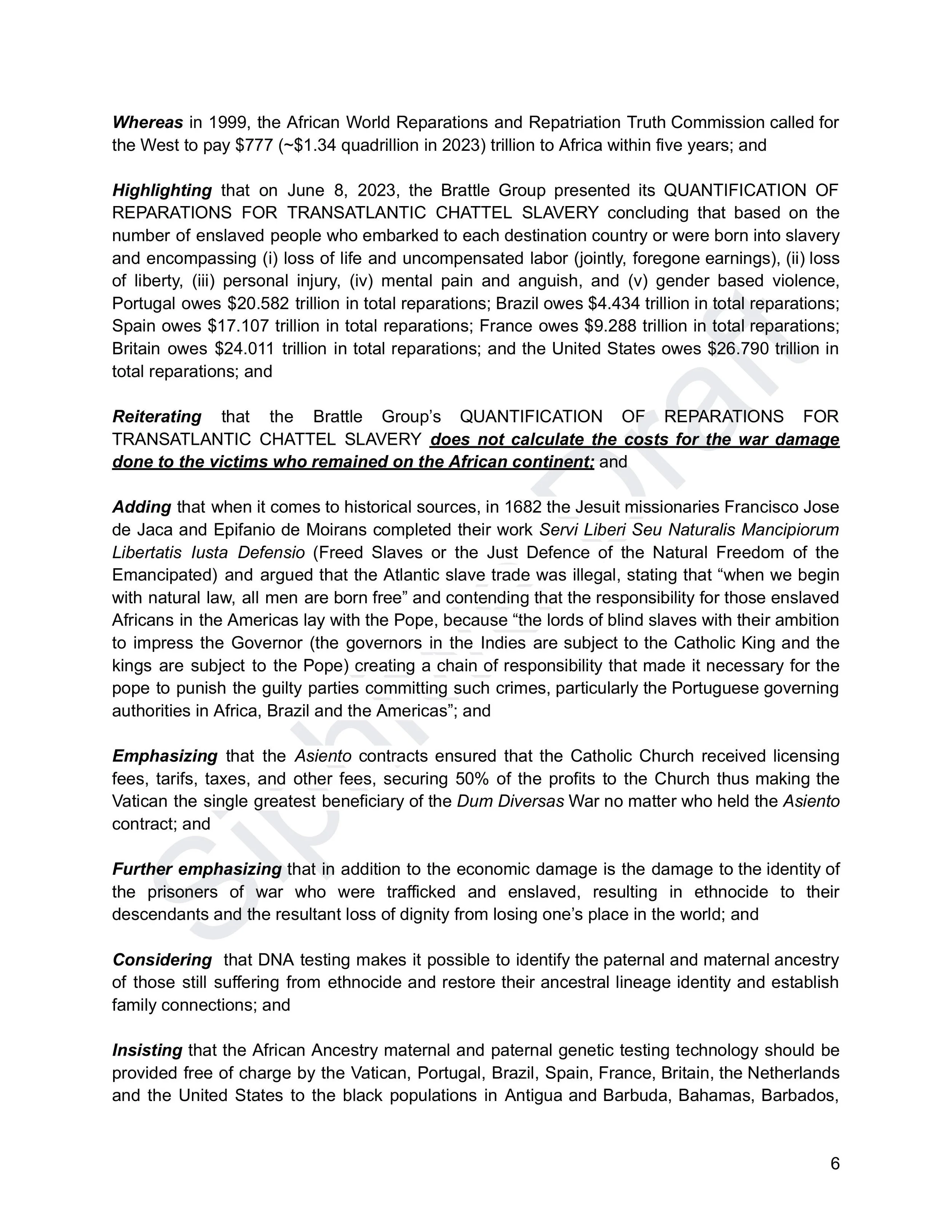
On November 13, 2025, during the II Seminário Internacional Pró Reparações in Brazil, Siphiwe Baleka, the Co-Founder and Coordinator of the Guinea Bissau National Reparations Commission introduced a Draft Resolution for Establishing A Lusophone African Reparations Commission modeled on the Caribbean Reparations Commission.





Several members of the Guinea Bissau National Reparations Commission joined the Balanta delegation at the High-Level Consultative Conference On The Next Steps To The Landmark United Nations Resolution on the Trafficking of Enslaved Africans being held in Accra, Ghana.
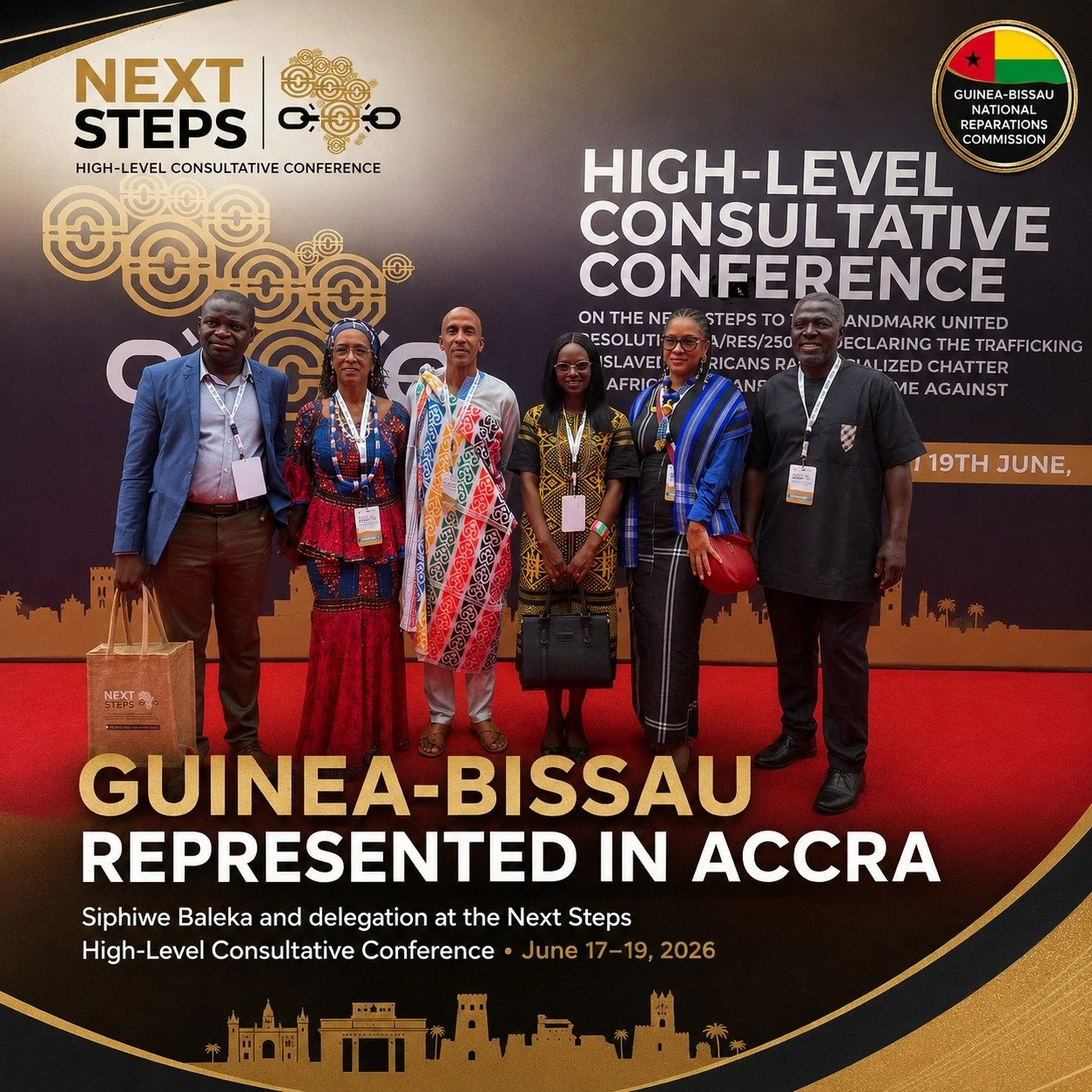
From left to right: Professor Beto Infande, Vickie Cassanova-Willis, Siphiwe Baleka, Sanebickte Yala Baleka, N’nanba (Robin Rue), and Kamm Howard. Not pictured: Professor Jose Ligna Nafafe.
In the upcoming months, Commission will work on the final draft of its Ten Point Program and helping to establish reparations commissions in the Community of Portuguese Language Countries (CPLP) which is comprised of 9 member states across four continents where Portuguese is an official language that includes six other countries in Africa and South America: Angola, Cabo Verde, Equatorial Guinea, Mozambique, São Tomé and Príncipe and Brazil.