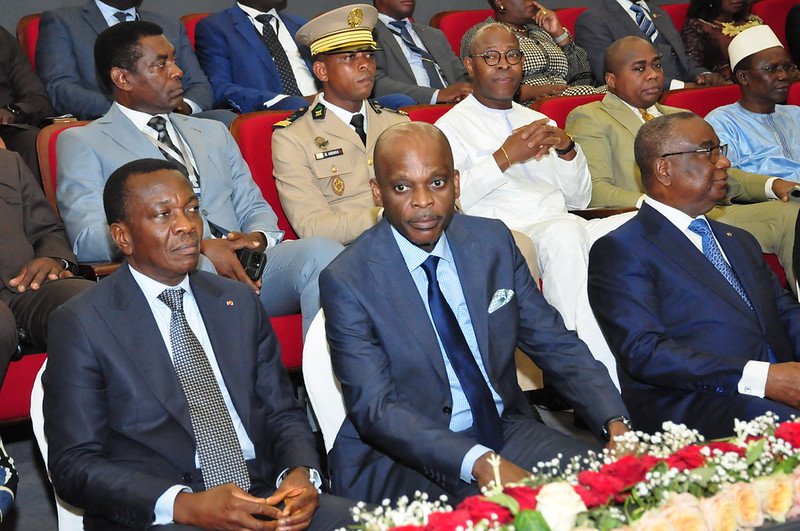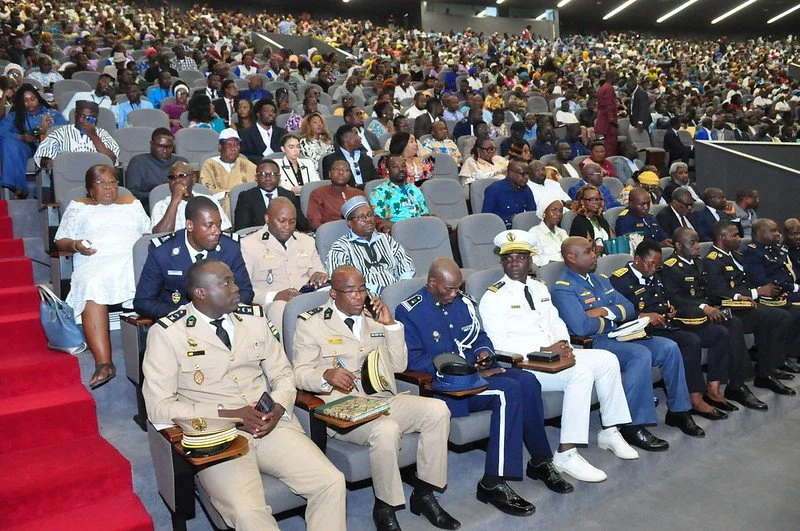
December 13, Lomé - The African Union took control of the people’s Reparation Movement at the Accra Reparations Conference, November 14-17, 2023. Now, the people’s Pan African Movement has been seized. The state capture of Pan Africanism was accomplished at the 9th Pan African Congress in Lomé, Togo from December 8th to the 12th.
I have written extensively on the manner in which the 9th Pan African Congress in Lomé was organized.
See:
THE FUNCTIONAL ESTABLISHMENT OF THE AU 6TH REGION: HARMONIZING THE AU-AFRICAN DIASPORA SIXTH REGION (AU-ADS) HIGH COUNCIL, THE AFRICAN DIASPORA DEVELOPMENT INSTITUTE (ADDI) ADPAC AGENDA, AND THE "DECADE OF AFRICAN ROOTS AND DIASPORAS" PROPOSED BY THE REPUBLIC OF TOGO AND ADOPTED BY THE AU GENERAL ASSEMBLY EX.CL/1420(XLII). This is the last document embedded in the article WILL 2024 BE THE YEAR OF PAN AFRICAN ORGANIZATIONAL UNITY?: THE UNFINISHED BUSINESS OF THE PAN AFRICAN CONGRESS
THE TRUE STORY OF THE 9TH PAN AFRICAN CONGRESS - ALL THE BACKGROUND
Commentary – The Unfinished Business of the Pan African Congress
I now make the following report from the 9th Pan African Congress.
***************************************************************************************************
There is a problem.
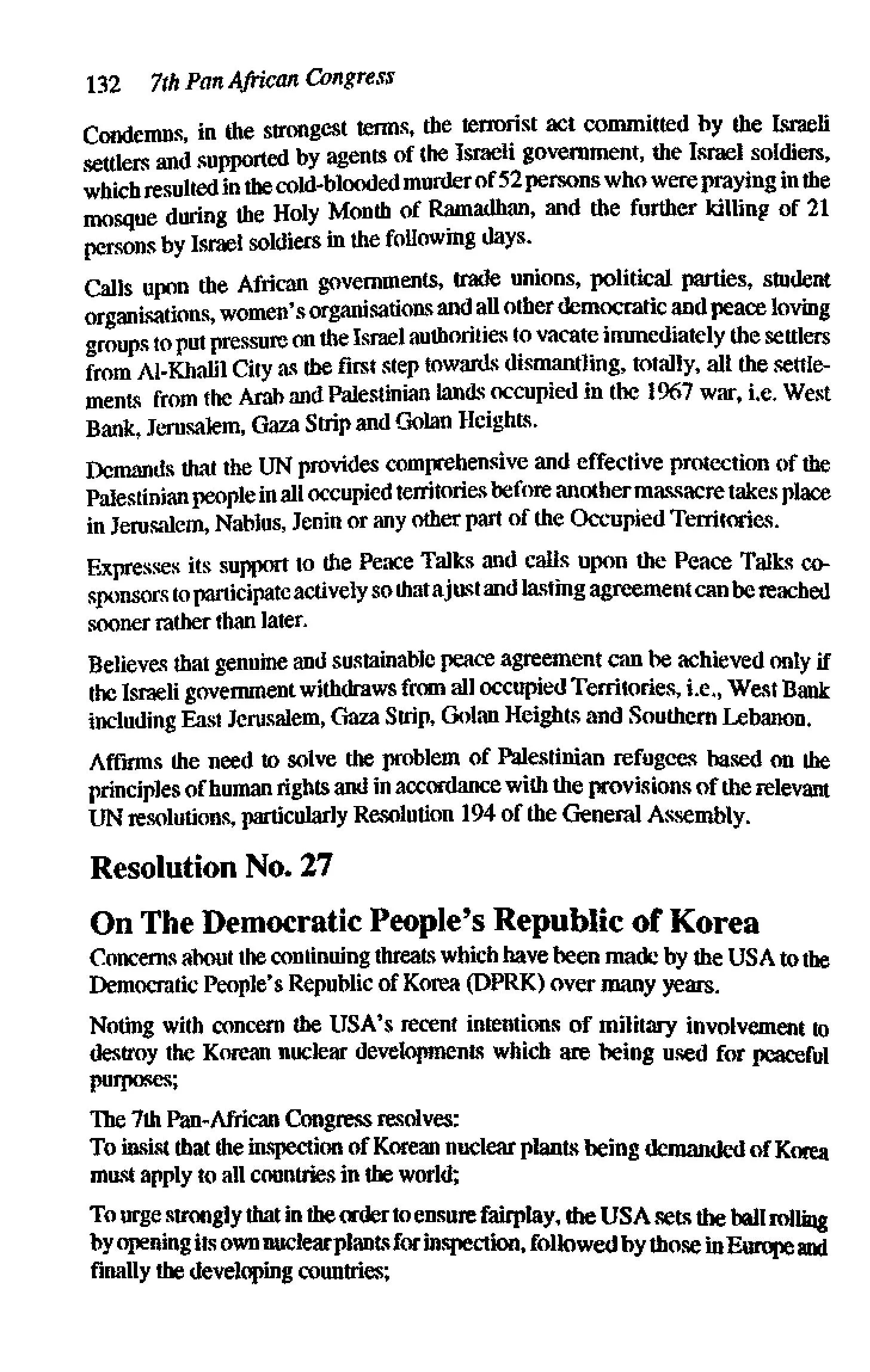
The Final Resolutions of the Commissions (there were eight) and the 9th PAC Final Declaration were prepared beforehand by the Togo Ministry of Foreign Affairs. This means that resolutions of the 9th PAC, at least many of them if not the majority of them, are not the work of the 33 Commissioners or the delegates, but the agenda of the Togolese government, which may or may not be in alignment with the wisdom and will of the delegates. This is consistent with the manner in which the “itinerant” 9th PAC was organized - the outward appearance of “inclusion” provided by the preparatory conferences notwithstanding.
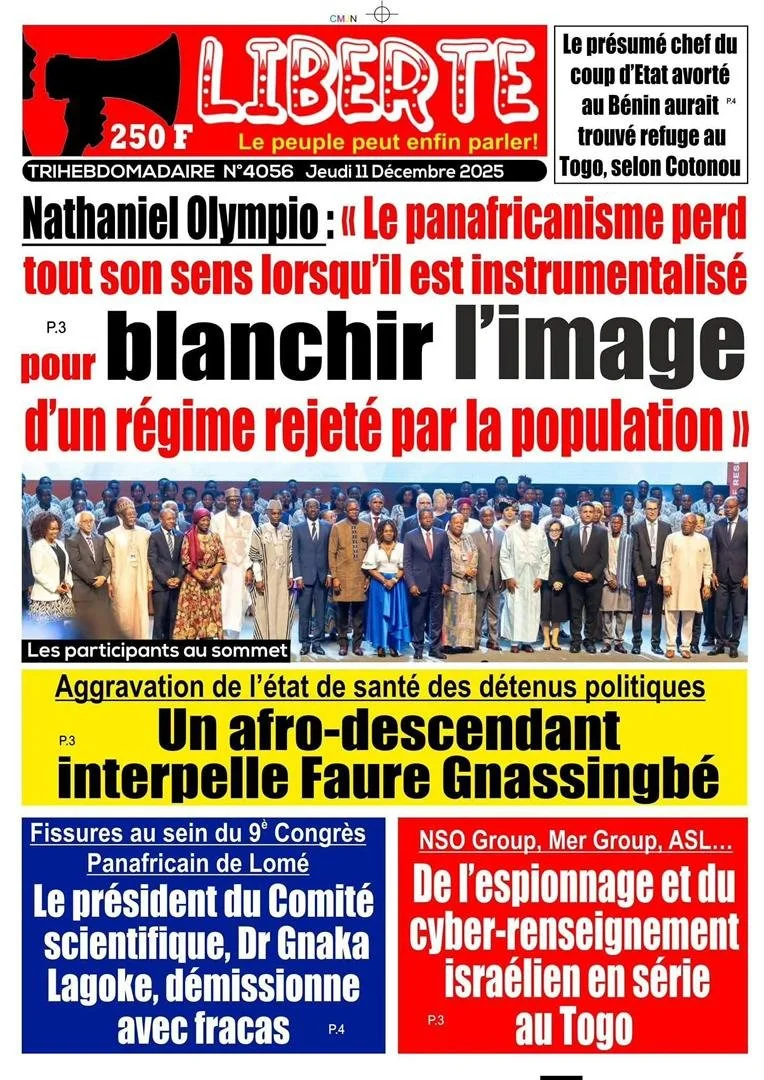
RESIGNATION OF GNAKA LAGOKE
The explosive surprise resignation of the brain behind the 9th Pan African Congress speaks volumes. Sambou Sissoko writes,
“CRISIS AT THE 9TH PAN AFRICAN CONGRESS: WHEN STATE POLITICS UNVEILS THE LIMITS OF OFFICIAL PAN AFRICANISM
As Africa seeks to rebuild a collective voice in the face of contemporary geopolitical challenges, the issue that shakes the 9th Pan-African Congress in Lomé exposes a profound discomfort: the abyssal gap between states’ pan-African discourse and their real practices.
The resignation of my dear elder Dr. Gnaka Lagoké, President of the Scientific Committee of the Congress, is not just an organizational episode. This is a strong political act, which exposes the drifts of a system where the personalization of power takes advantage of collective construction. His letter, precise, argued, documented, reveals a mechanism of methodical marginalization, carried out for two and a half years, in the silence of procedures and discretion of ministerial offices.
How can a state that claims to organize one of the greatest intellectual meetings of pan-Africanism, in the same movement, exclude the one with the scientific framework? How can a project supposed to embody unity and ethics UBUNTU tolerate jealousy, opacity and suspicion? Through this episode, all the ambivalence of African states in the face of authentic pan-Africanism is coming to light.
Dr. Lagoké recalls, evidence to support, that several major innovations of the Congress (thematic commissions, anchoring of the UBUNTU philosophy, integration of the issue of reparations, doctrinal orientations) come from his scientific work. He also recalls that he worked without budget, without salary, out of pure commitment to Africa. This contrast between intellectual investment and political exclusion needs to be questioned.
Because beyond a personal conflict, it is the credibility of institutional pan-Africanism that is at stake.
A Congress that wants itself to be the engine of the African revival cannot become an instrument of prestigious diplomacy. It has to be a space of intellectual sovereignty, where political truth is not suffocated by governmental communication.
The question posed by this resignation is beyond Lomé: are African states ready to allow pan-Africanism to become an emancipating project again, or do they want to make it a decorative role, useful only for the exterior image? The African people, them, are not mistaken. They demand actions, not shows. They demand consistency between proclaimed values and daily governance.
Dr. Lagoké concludes his resignation letter calling for the release of prisoners of opinion and a radical reform of African education. This final reminder brings the debate back to the core: Pan-Africanism is not a conference slogan. This is a transformational agenda that requires African leaders to assume historical responsibility.
So this crisis is an opportunity. She forces the continent to wonder if Pan-Africanism can be built on practices that betray its mind. She forces the elites to give intellectual debate its rightful place. It mainly forces Africans to demand that their leaders live up to the ambitions they display.
Pan-Africanism cannot be satisfied with symbols. It takes guts.”
READ DR. GNAKA LAGOKE’S RESIGNATION LETTER

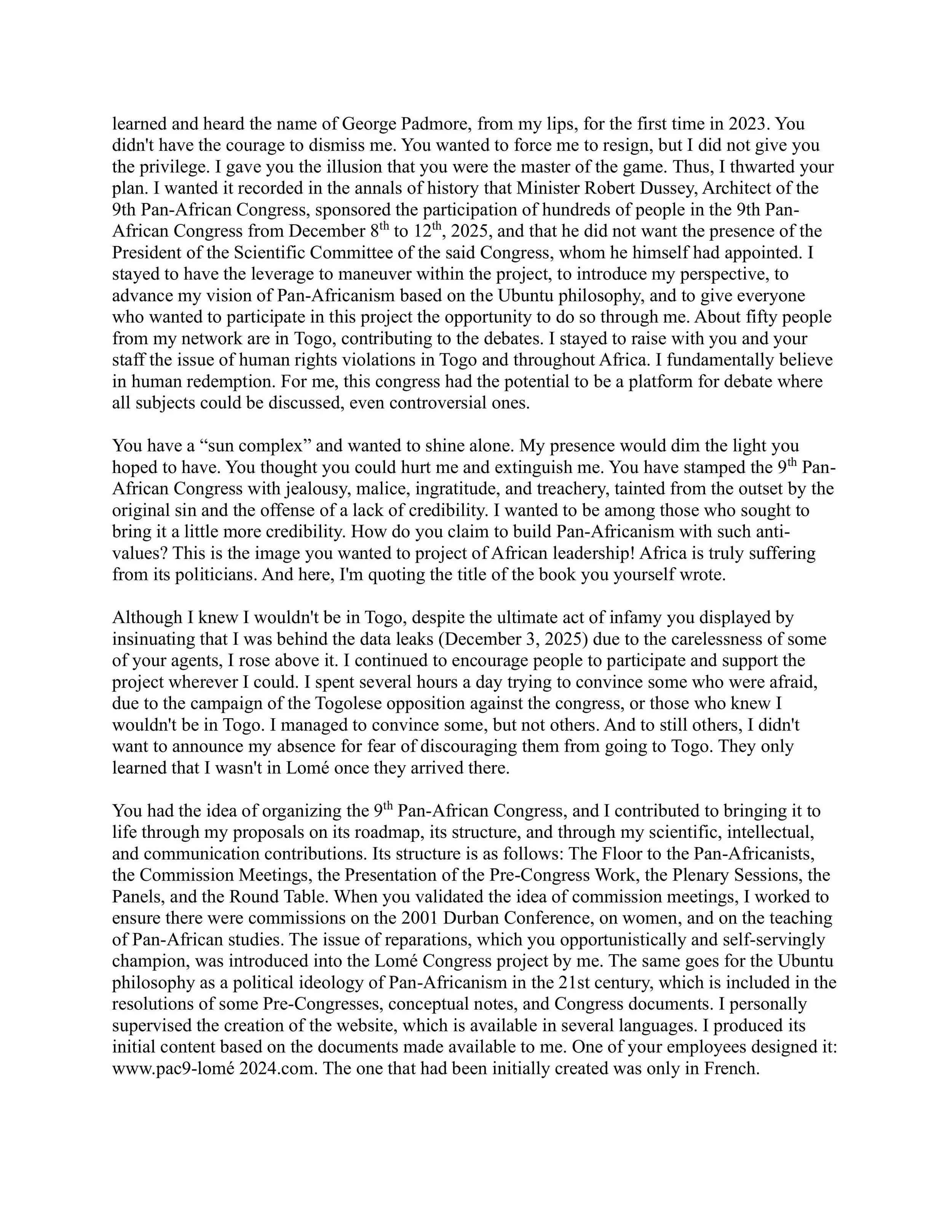

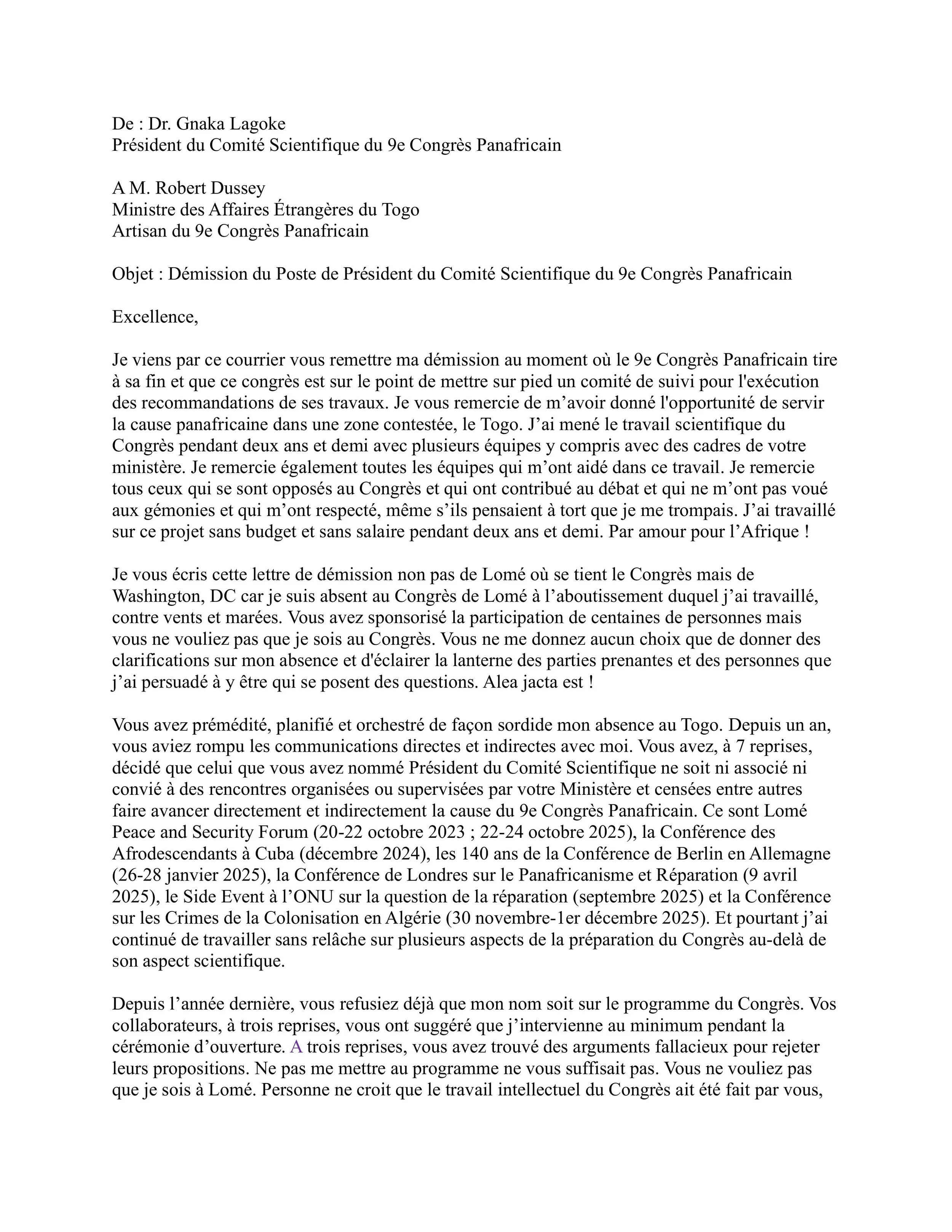
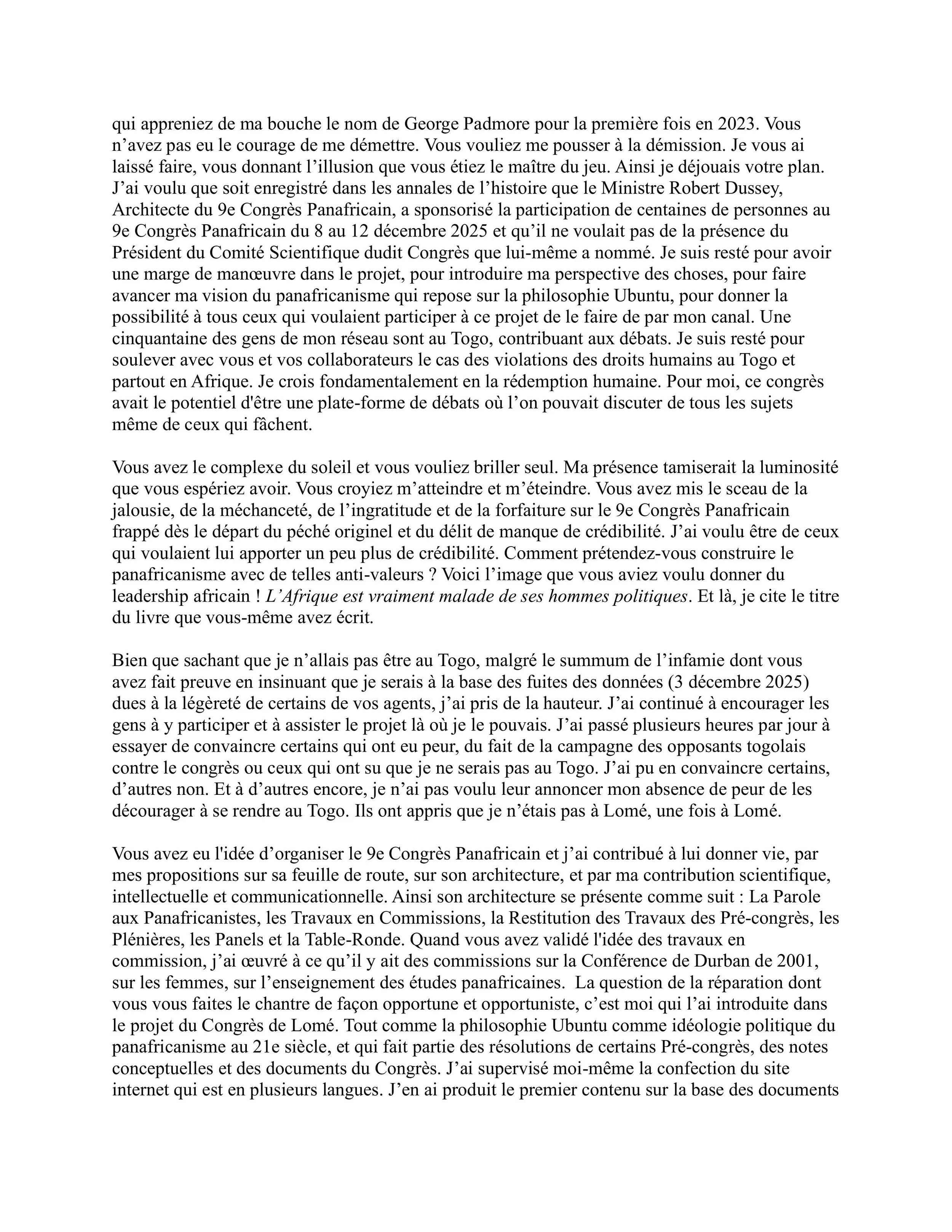
Behind the resignation of Gnaka Lagoke was the issue raised by Togolese opposition who called attention to the contradiction of a Pan African Congress being convened by a state that is brutally oppressive to its own citizens! According to the communique issued by PYRAMID – Pan-African Citizens' Movement,
“The history of Togo is marked by a foundational crime: the assassination of the first Pan-African president, Sylvanus Olympio, whose body still rests in Benin today. In his place, a vassal regime of terror was installed, dehumanizing the Togolese people and perpetuating injustice, repression, and fear. . . . The Congress is being organized behind the backs of the Togolese people, both those inside the country and those in the diaspora. The Togolese people, deprived of the freedom, democracy, economic prosperity, well-being and dignity, are not consulted. This excursion constitutes a blatant betrayal of Pan-African principles.[In the past sixty years, there are] more than 20,000 deaths, 4 million Togolese forced into exile, hundreds of political prisoners tortured and subjected to cruel treatment, inhumane and degrading conditions, forcing thirty-five people currently on hunger strike while ten prisoners were murdered [for which] the ECOWAS Court of Justice has repeatedly condemned Togo for allegations of torture and ordered investigations and the release of prisoners. Faure Gnassingbe’s . . . . regime royally ignored the decisions of the regional court.”
When I called attention to this in my speach on the 2nd day of the 9th Pan African Congress, it changed the tone of the event.
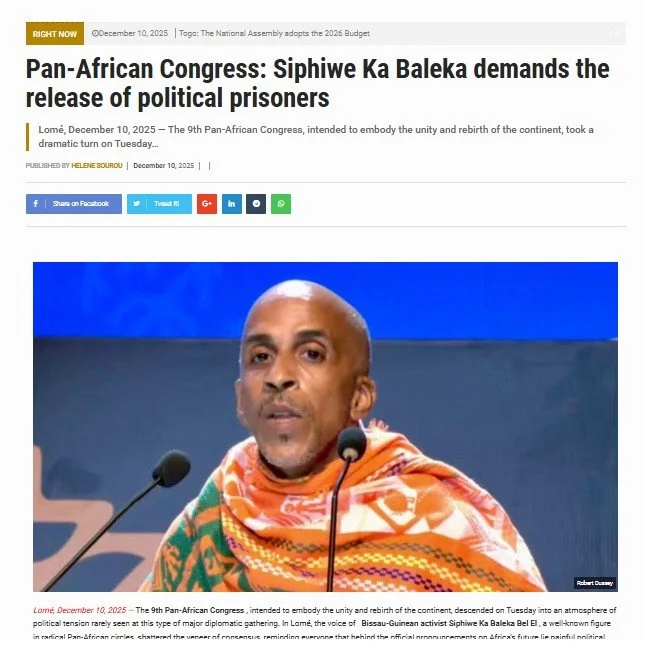
Journal du Togo ran the following story:
“Pan-African Congress: Siphiwe Ka Baleka demands release of political prisoners
Lomé, December 10, 2025 — The 9th Pan-African Congress, supposed to embody the unity and rebirth of the continent, overturned on Tuesday...
The 9th Pan-African Congress, supposed to embody the unity and rebirth of the continent, flipped on Tuesday in an atmosphere of political tension rarely seen in this type of diplomatic mass. In Lomé, the voice of Guinean-Bissau activist Siphiwe Ka Baleka Bel El, a figure known in radical pan-African environments, has broken the consensual varnish, reminding that behind official speeches about Africa’s future lie painful political realities.
Under the jelly eyes of the audience, Siphiwe Ka Baleka, a well-known figure in radical Pan-African communities, took the microphone to launch a direct charge:
"How can we talk about African rebirth when our host country still holds dozens of political prisoners in its jails?" »
Without hesitation, he continued:
"This congress is organized on the backs of the Togolese people. Many of his sons and daughters are in exile, others are dying in prison for simply expressing a different opinion, and some are still suffering inhumane treatment. »
While denouncing the situation of political prisoners in Togo, the speaker has highlighted a fundamental contradiction. His charge was not only directed against Lomé, but also against a broader tendency: that of institutional pan-Africanism that is hard to confront persistent authoritarian practices on the continent.
Reminder of the "Original Crime": the shadow of Sylvanus Olympio
Siphiwe Ka Baleka put his speech in a historical perspective, recalling the assassination of the first Togolese president, Sylvanus Olympio, on January 13, 1963. Presented as one of the founding fathers of modern Pan-Africanism alongside Kwame Nkrumah and Patrice Lumumba, Olympio, according to him, embodies the "original crime" that would have diverted Togo from the path of dignity and justice.
By summoning this memory, he intended to write the current criticism in a historical continuity, that of a country that, in his opinion, has never found the path to dignity. Thus, the whole question of the legitimacy of the post-independence African states was questioned in watermark.
Siphiwe Ka Baleka interrogates Minister Dussey directly
Focusing on the Togolese Minister of Foreign Affairs, Robert Dussey, who presided over the session, the activist made a solemn request:
"I humbly ask, here, before all of you, that Togo take the initiative, during this very congress, of a strong resolution for a general and immediate amnesty for all political prisoners. That would be the greatest gift Lomé could offer to Africa and its own people. »
In an already electric climate, Siphiwe Ka Baleka added, not without worry:
"Honestly, I wonder if I'm going to be targeted after saying this." Is this the African renaissance we celebrate? Pan-Africanism where we still have to talk about fear in the stomach? »
The direct interpellation to the minister, with the request for a general amnesty, has indeed given a strong symbolic scope at that moment.
Uncomfortable and applause
The room reacted in dispersed order: applause nourished on one side, icy silence on the other. In an event usually locked by strict protocol, this speech broke the consensus.
Expanding his speech, Siphiwe Ka Baleka quoted Cameroon and its own Guinea-Bissau, where "dozens of opponents are being hunted, imprisoned or forced into exile." And to conclude :
"True pan-Africanism cannot be just a diplomatic showcase. It must begin with the liberation of all those who fight for the dignity of their people. »
In doing so, the episode turned into an act of global protest against African authoritarian regimes. Besides, the mixed reaction of the room reveals discomfort: the Pan-African Congress, often perceived as a diplomatic showcase, is confronted with its own fragility. Can it be a genuine debate space or does it remain an instrument of legitimacy for the powers in place? The activist's intervention exposed this tension.
Congress is already under tension
It is important to remember that Togo is going through a period of political crunch: constitutional reform contested in 2024 arrests of militants, exile of opposition figures. In this context, the organization of the Congress appears to many as an international communication operation. So the activist touched a sensitive nerve: the dissonance between the image that the regime wants to project on the outside and the reality experienced inside.
Exiting the room, some delegates of West African civil society cheered: "Finally, someone has dared to say out loud what many were thinking down low. "Others, more cautious, feared that this exit would serve as a pretext for toughening the regime.
An interpellation that will remain in the annals
At the moment, neither Minister Robert Dussey nor the Togolese presidency have reacted. A senior official of the organizing committee went down to recall that "all voices are welcome in the spirit of pan-Africanism," while emphasizing that "domestic policy matters are part of national sovereignty."
Whether Togo responds to this amnesty request or not, the episode will remain as a hinge moment of congress. He recalled that Pan-Africanism cannot be reduced to slogans or protocol ceremonies. On the contrary, he has to face political realities, prisons, exiles, imposed silences. In this sense, Siphiwe Ka Baleka has managed to transform an official tribune into a space of truth, at the risk of his own safety.
The work of the 9th Pan-African Congress continues until Friday, December 12. It remains to be known whether the call for general amnesty will echo in the final resolutions. One certainty remains: Siphiwe Ka Baleka Bey El has already made his mark on this continental mass.”
MANIPULATION AND OBSTRUCTION OF COMMISSION RESOLUTIONS
On June 16, 2025 Professor Robert Dussey, the Minister of Foreign Affairs of Togo invited me to “take part as a keynote speaker in the 9th Pan African Congress.” On November 16, I was notified that I would be participating in Commission 4: Mind decolonization and self-reinvention. So between that time, 153 days, no Congress Commission work was done!
On November 18, I made an attempt to give the Pan African World an opportunity to give their input into the eight Commissions by creating on online input form, something that I believe should have been done months before the start of the Congress.
On November 23, I was switched to be one of the four expert speakers for Commission 6: The struggle of African and Afro-descendant peoples against racism in the light of the Durban Declaration of 2001 and Programme of action. On Friday, December 5, I was informed that I was now to serve as rapporteur for Commission 6 to “take note of all contributions, draft a complete report and the related recommendations, work with commission members to validate the final version, and assist the Chair in preparing the final presentation.” On Sunday, December 7, Ms. Leontine Atayi of the 9th PAC organizers informed our Commission 6 WhatsApp group that, “A member of the organizing committee will serve as rapporteur.” This created some confusion, then, on December 9th, day 2 of the 9th PAC, when Commission 6 met.
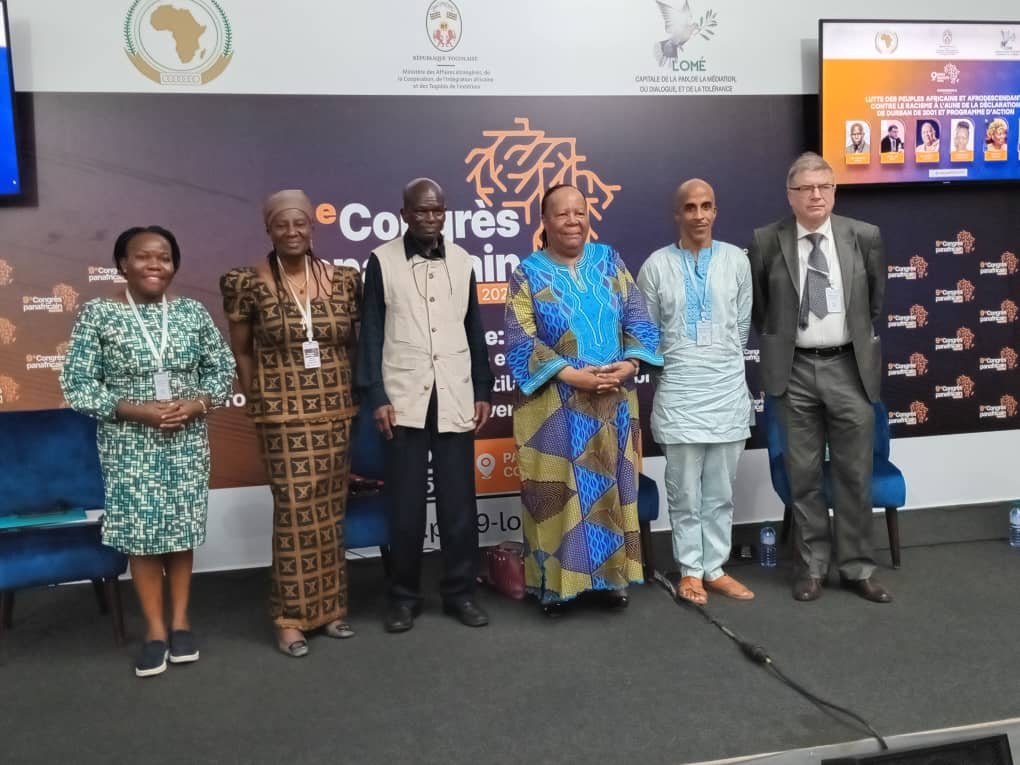
Commission 6: The struggle of African and Afro-descendant peoples against racism in the light of the Durban Declaration of 2001 and Programme of action. Commissioners from left to right: Mrs. Catherine S. Namakula, Dr. Barryl Biekman, M. Doudou Diene, Dr. Naledi Pandor, Siphiwe Baleka, and Jan Lonn

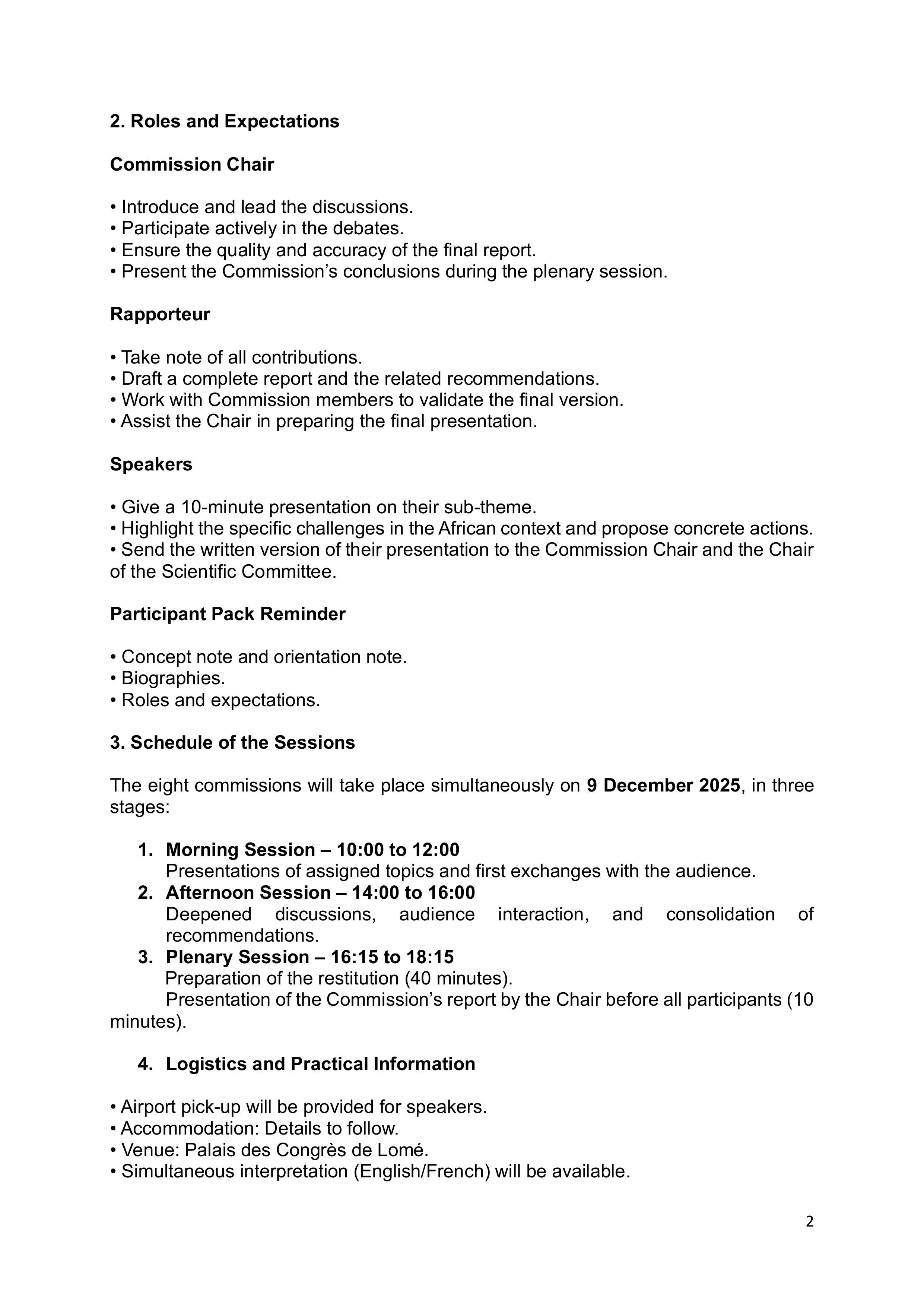
At the start of the session I asked the Chair to clarify who was to serve as rapporteur. No one was identified and so it was decided that members of the organizing committee would take notes and I would also take notes and serve as the rapporteur. This was reaffirmed after the Commission 6 session by Ms. Atayi, he said “Good morning. During our meeting, it was agreed that you would be in charge of preparing the report. Could you please let me know whether this document has been sent to the team of the Ministry?”
Towards the end of the morning session, a single copy of the French and English draft resolution for Commission 6 was given to the Commission Chair, Dr. Naledi Pandor, Minister of International Relations and Cooperation, Republic of South Africa. It was only towards the end ofthe afternoon session that copies were made available to the Commissioners. It was the first time any of us had seen it. The Chairwoman informed me that it had been prepared by the Ministry of Foreign Affairs.


After lunch the Commission re-convened for the “restitution of the work”, but there was no time to discuss the contents of the resolution which needed to be completed for the plenary session scheduled at 4:15 pm. The Commissioners all felt that the draft resolutions did not reflect OUR work and we agreed that the Chair would request 48 hours so that we could review and edit the draft resolution. This is what our Chair reported in the plenary session to the Congress.
We agreed that we would send our edits to Ms. Ketlareng Sybil Mathako, Director African Union CISCO and the South African Department of International Relations and Cooperation, and member of the South African delegation to the 9th PAC with Dr. Pandor.
Much later that evening an electronic version of the draft resolution was circulated to us to edit and at 8:07 am I submitted the following edits to the draft resolution:
“Further, and more specifically, We
Emphasize that the Pan-Africanist Law of Return: Quintessential Reparations as stated by A. Bernard in Pan-Africanism and Nationality Rights For the Diaspora: A Contemporary Perspective, in Pan-Africanism, African Nationalism: Strengthening the Unity of Africa and its Diaspora clarifies that “At a very basic level, if reparation is to repair the wrongs committed against African peoples through slavery and its apprentices, colonization and imperialism, the first wrong committed was taking millions of peoples from their homeland. Those taken from Africa lost, among other things, their citizenship and this is the first thing that needs to be given back. It is morally and philosophically the first step in the journey of a thousand miles that needs to be undertaken if Africa and African peoples are to move forward in a forceful, positive and determined manner in the 21st Century. Concomitant with this position therefore is that the law of return can only be made possible by African governments/states, not the West. It is to be stated clearly nonetheless, that this is a right, not a concession or special privilege. Diasporan repatriates should not have to prove which part of Africa they are from. The loss of this specific identity is a part of the harm done by slavery, and cannot be used by African governments to reject Diasporans. Any African government which challenges the right to return to Africa for proof of specific identity is in breach of their own claim for compensation for slavery;” and
Recall that the working paper on desirable results of the 6th Pan African Congress held in 1974 encourages “African and Caribbean states to recognize the principle of dual citizenship for Africans from the west . . . and that special effort be made to facilitate their acquiring of African citizenship”; and
Recall the 1993 Abuja Proclamation that, “Exhorts all African states to grant entrance as of right to all persons of African descent and right to obtain residence in those African states, if there is no disqualifying element on the African claiming the "right to return" to his ancestral home, Africa;” and
Recall that the World Conference Against Racism held in 2001, in its Durban Declaration and Program of Action point 158, called for “facilitation of welcomed return and resettlement of the descendants of enslaved Africans” and point 168 “Urges States . . . to enact, with the highest priority, appropriate legislation, taking the measures required to give full effect to their obligations under international humanitarian law”; and
Recall, the African Union Agenda 2063: Aspiration #5: An Africa with a strong cultural identity, common heritage, values and ethics states, “Pan Africanism By 2063, the fruits of the values and ideals of Pan Africanism will be manifest everywhere on the continent and beyond. The goal of the unity of the African peoples and peoples of African descent will be attained (2025). An Agency for Diaspora Affairs will be established in all member states by 2020 with the Diaspora integrated into the democratic processes by 2030. Dual citizenship for the Diaspora will be the standard by 2025;” and
Further recall the decision of the Assembly adopted in July 2016 in Kigali, Rwanda (Assembly AU/Dec.607(XXVII) welcoming the launch of the African Passport and urging Member States to adopt the African Passport and to work closely with the African Union Commission to facilitate the processes towards its issuance at the citizen level based on international , continental and citizen policy provisions; and
Further recall the Resolution on Africa’s Reparations Agenda and The Human Rights of Africans In the Diaspora and People of African Descent Worldwide - ACHPR/Res.543 (LXXIII) 2022 that calls upon member states to “take measures to eliminate barriers to acquisition of citizenship and identity documentation by Africans in the diaspora” and
Highlight the Law 2024-31 on the recognition of Benin Nationality for people of African descent states that “any person aged eighteen (18) or over who, according to their genealogy, has a sub-Saharan African ancestor who was deported from the African continent as part of the slave trade and the triangular trade” is eligible. The cost is $100 and citizenship is granted after just three months from the date of notification of receipt of a completed file.
And Therefore We resolve:
All African governments should follow the example of Benin and pass such a law during 2026 to start the 2026-2036 Decade of Justice for Africans and People of African Descent Through Reparations. Alternatively, the African Union could issue a “6th Region” passport, using the Benin model, that would function as a visa-free pass and permanent residence card in all of the continental five regions of the African Union.”
I was expecting that Ms. Mathako would forward the updated draft of the Commission 6 Resolutions with all of the submitted inputs and edits late that night. But I received no such document.
At 9:15 am the next morning I returned to the Palais Des Congrès De Lomè and met with Chairwoman Pandor who informed me that at 11:00 am there was to be a meeting with all the Commissions to draft a consolidated 9th PAC Resolution but that meeting was canceled. I was then informed that an attempt was made to organize a similar meeting at 3:00 pm, but that didn’t happen either.
The next morning at 6:51 am I sent the following message to all concerned:
“Greetings everyone. I would like to express my concern over our Commission 6 report. According to the instructions we were given, the rapporteur is to ‘take note of all contributions, draft a complete report and the related recommendations, work with commission members to validate the final version, and assist the Chair in preparing the final presentation.’ This did not happen. What then is the status and legitimacy of our report if none of the Commissioners have validated it and it is essentially written by the Togo Ministry of Foreign Affairs and lacks essential recommendations - i.e. specific provision for Afrodescendant citizenship?"
Shortly thereafter at breakfast, I had a brief meeting with Luvuyo Ndimeni, Advisor to the Deputy Chairperson of the African Union. At lunch, I discussed the situation with Ms. Mathako who promised that Mr. Ndimeni would send the updated draft very shortly. Again, I did not receive the updated draft. At 5:25 pm, I messaged Ms. Mathako - “I have not received the documents we discussed,” to which she responded, “Mr Luvuyo will send it shortly.”
Finally, the following morning (Friday, December 12) I messaged Ms. Mathako, “Yes. I received the email at 10:30 pm and it did not include the annotated edits from each Commissioner as we agreed. I’m quite disappointed at how this was handled and will be submitting a detailed report nonetheless…..”
All of this is to make clear how the Commission 6 Report was . . . . obstructed.
Many of the other Commissioners told me that they had similar experience and were not pleased with the perceived manipulation of the resolutions that did not reflect the spirit of Ubuntu Pan Africanism and the ideal expected at a 9th Pan African Congress. Noël M. NDOBA, Chairman of Commission 3 sent this message:
To the esteemed organizers,
Ladies and gentlemen,
The meeting scheduled for Wednesday was cancelled, even though it was meant to bring together the Chairs of the 8 Commissions to draft the final report.
How was the final report ultimately drafted?
Assuming that a draft was prepared by the Ministry of Foreign Affairs,
it would be advisable for the Chairs or rapporteurs of the commissions to review it, make any necessary observations, and "approve" it before its presentation in plenary session.
Submitting a draft report directly to the plenary session carries certain risks.
The least of these foreseeable risks is undoubtedly the loss of time if several people wish to speak freely (which is their right).
The greatest risk concerns the legitimacy of the conclusions should a majority of participants express their disapproval, either on-site or in the coming days or months, elsewhere.
A more damaging consequence could be that some participants, dissatisfied with not having discussed a draft final report, might further tarnish the image of a Congress whose work was otherwise a success.
Sincerely,
Noël M. NDOBA, Chair of Commission 3
There was little to no space for specific resolutions such as that Afrodescendant citizenship or amnesty for political prisoners to be deliberated and incorporated. This was a major shortcoming of the 9th Pan African Congress in Lome.
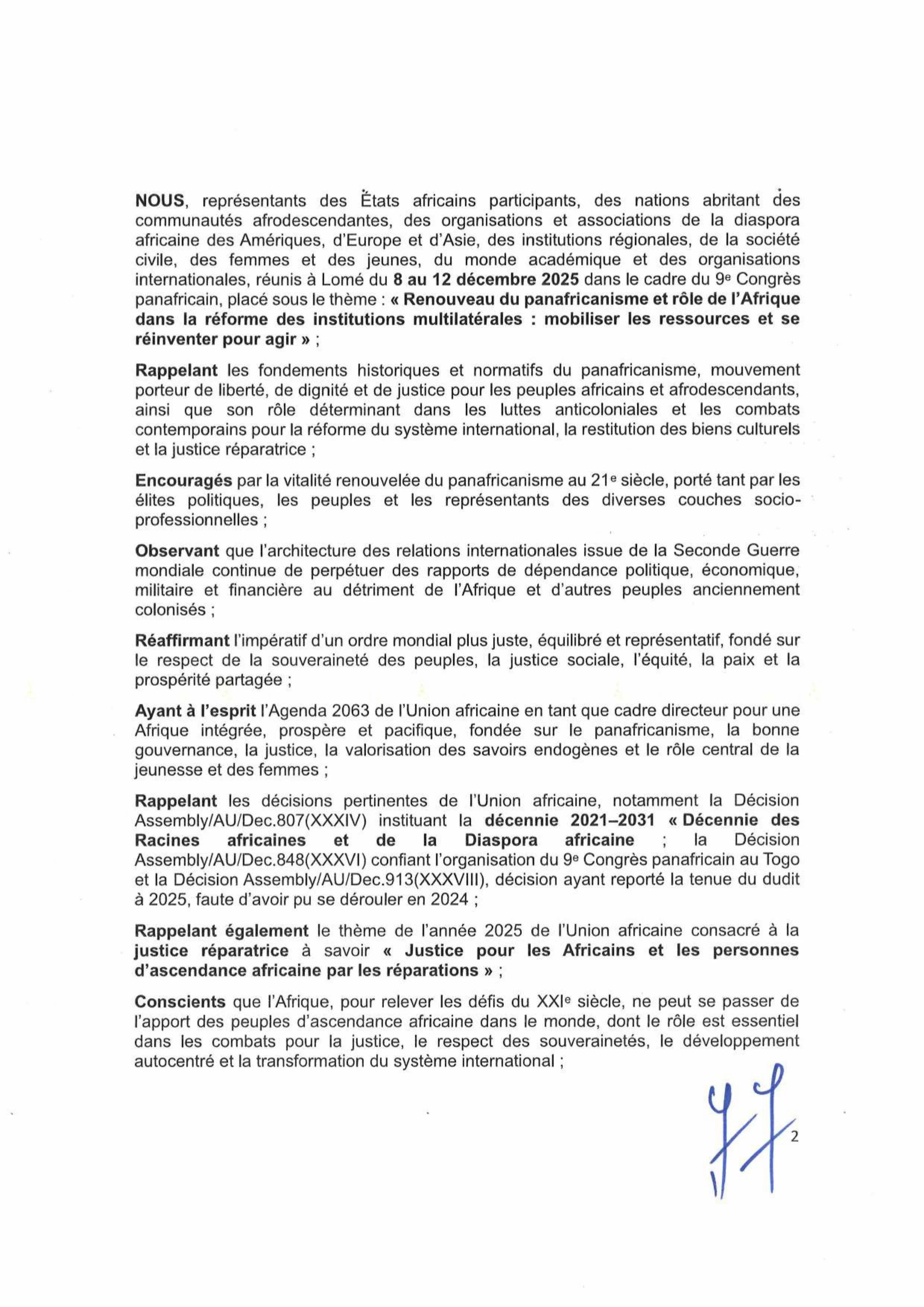
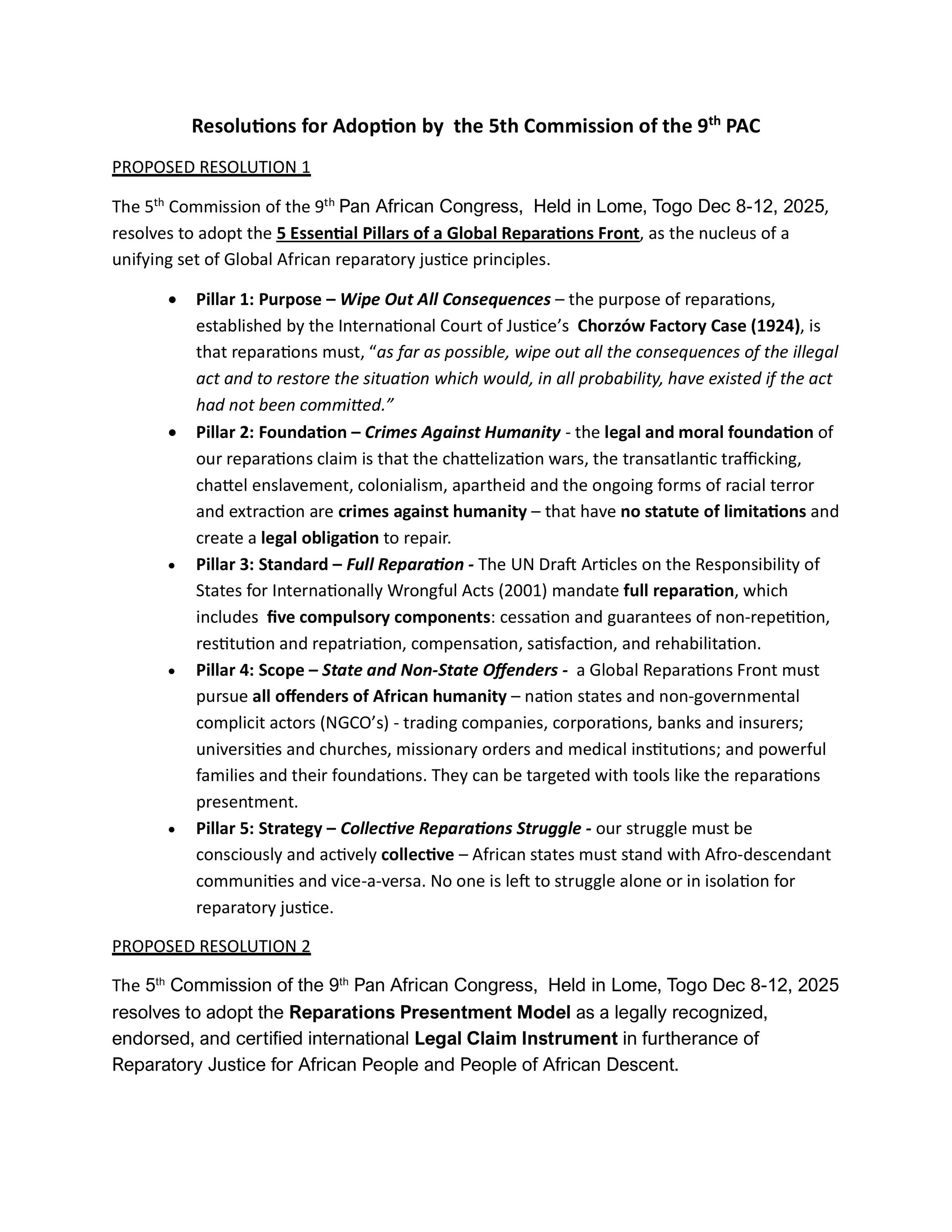
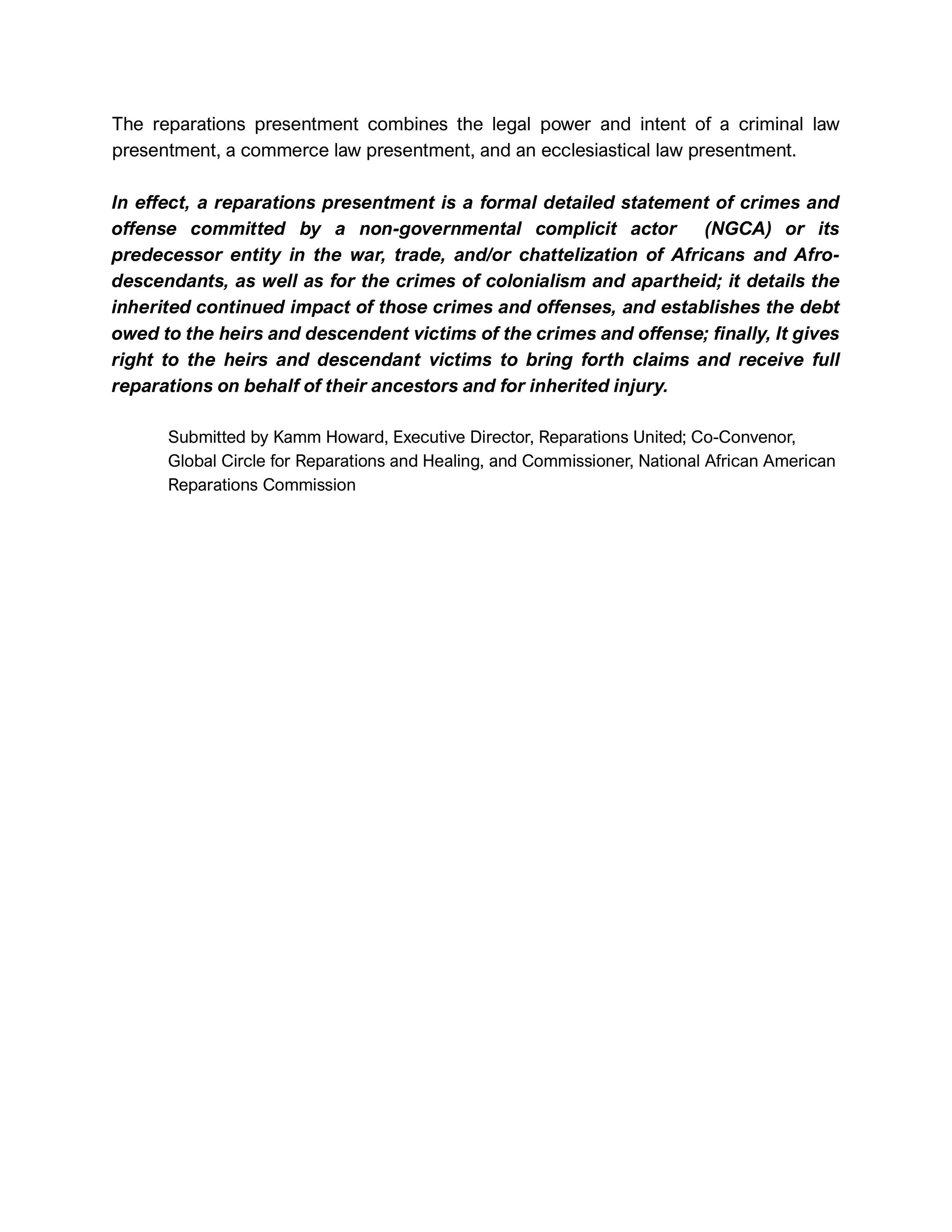
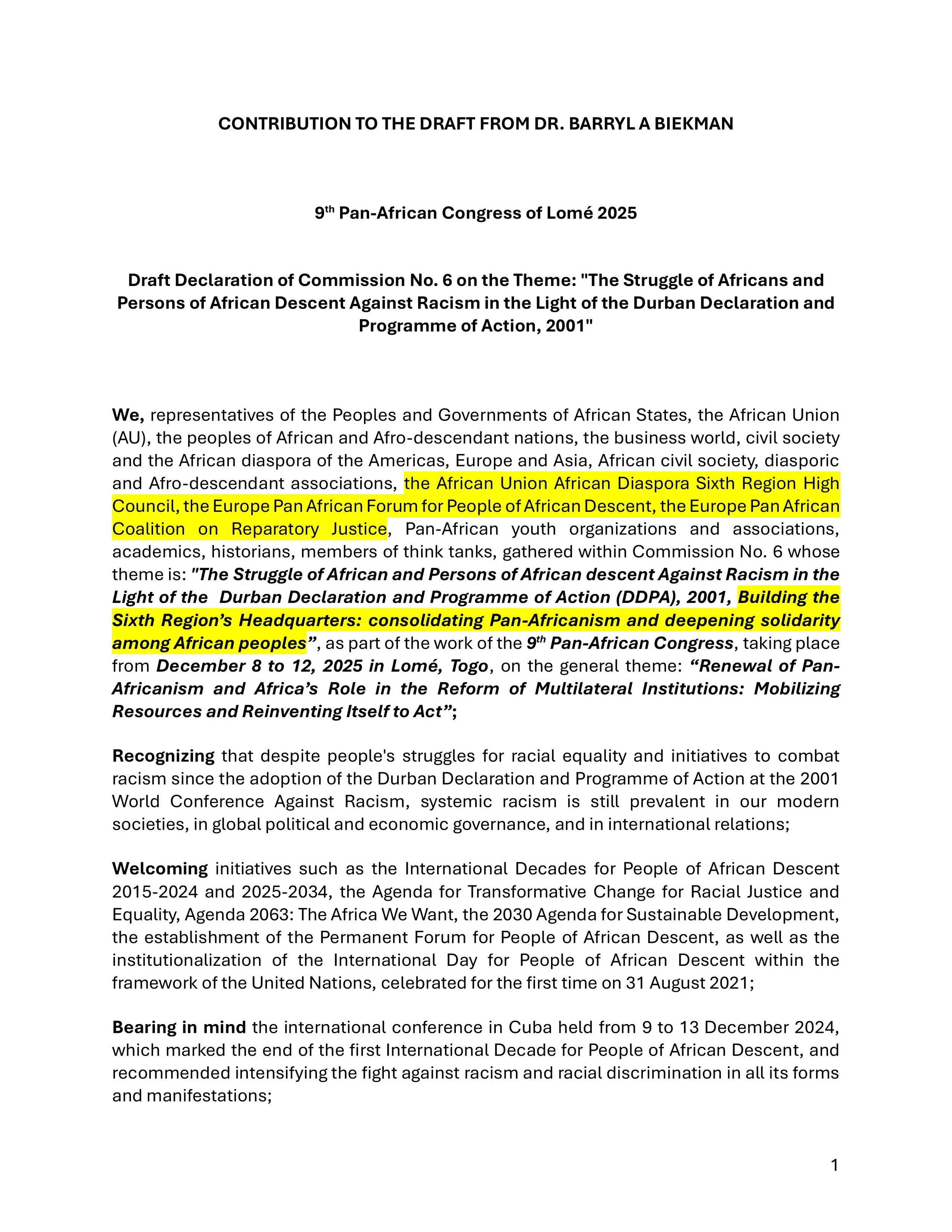
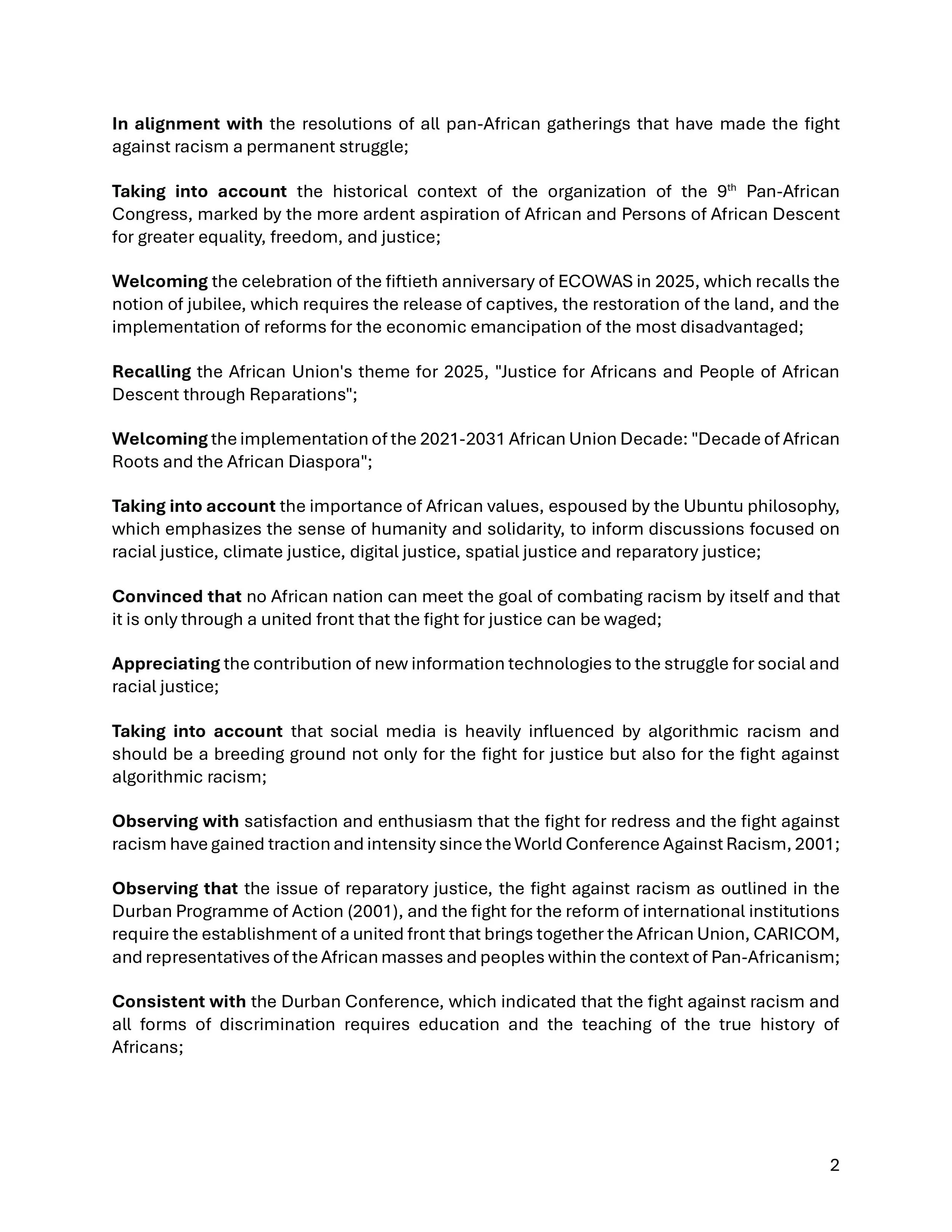
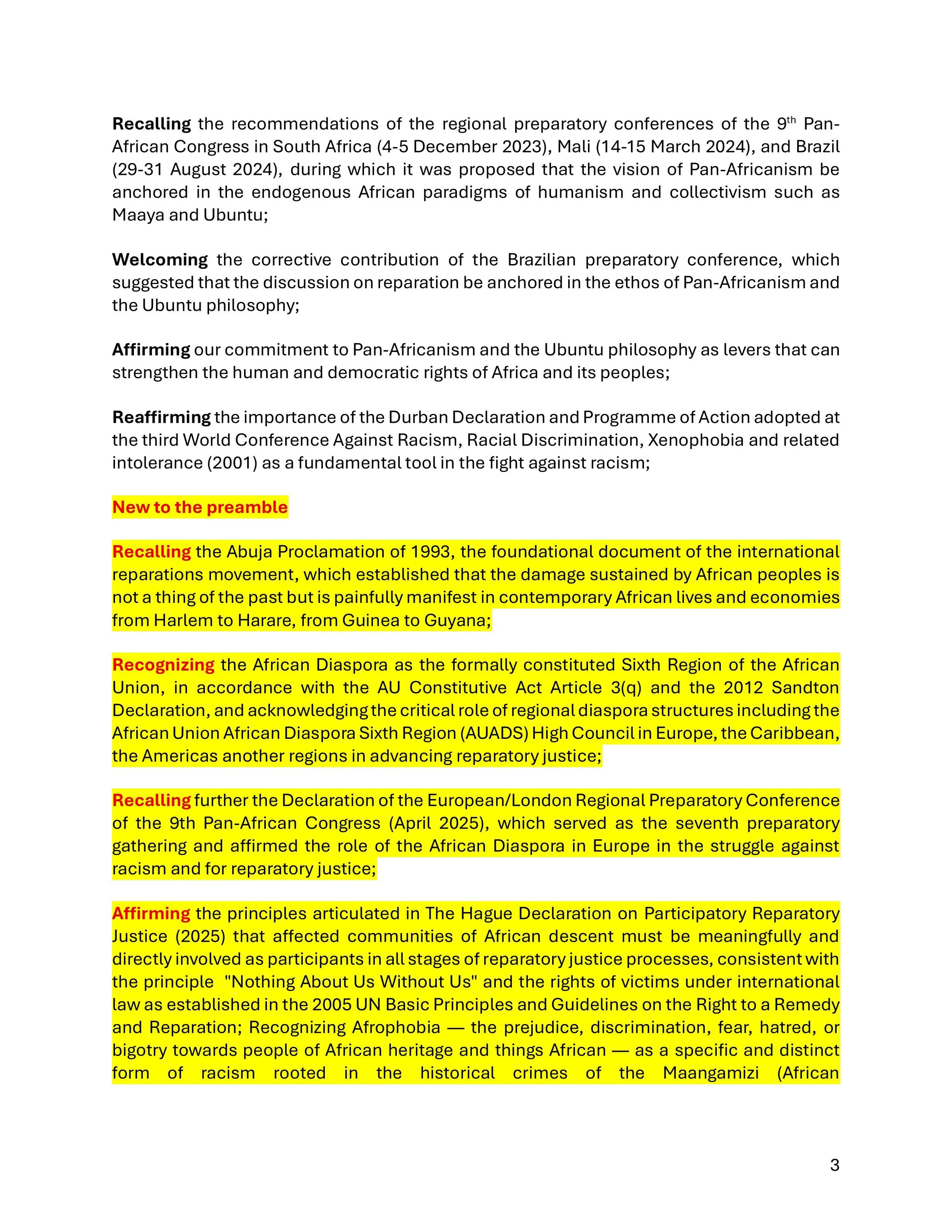
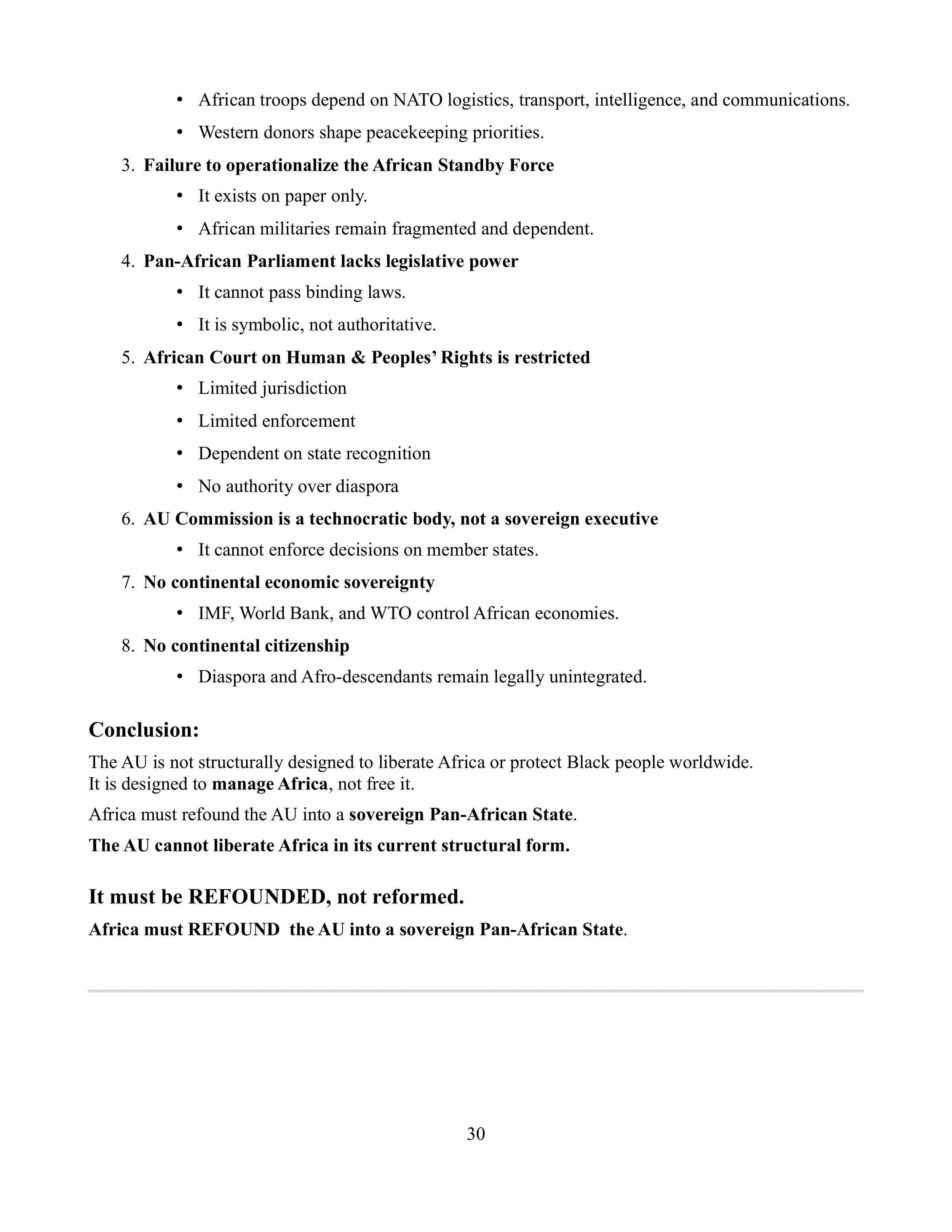
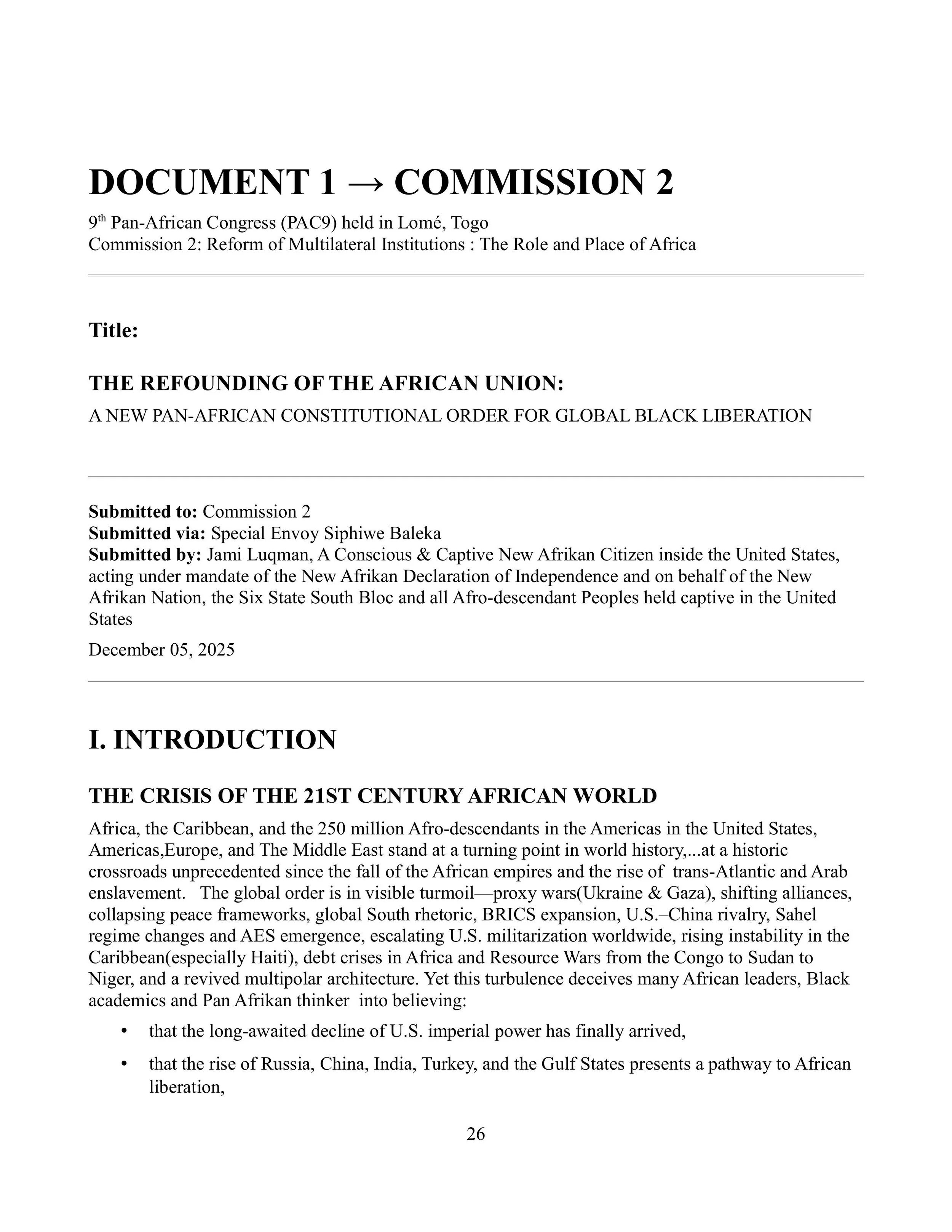
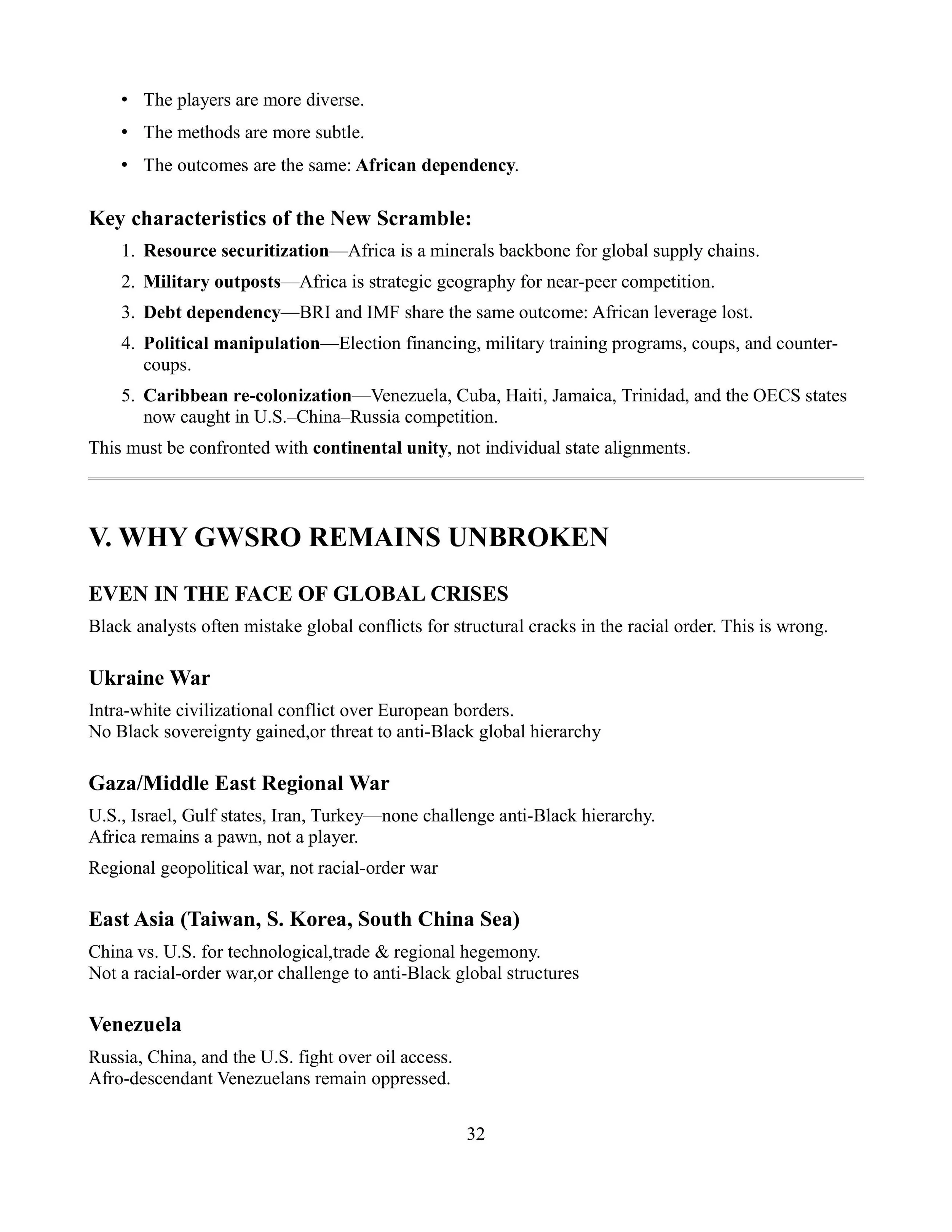
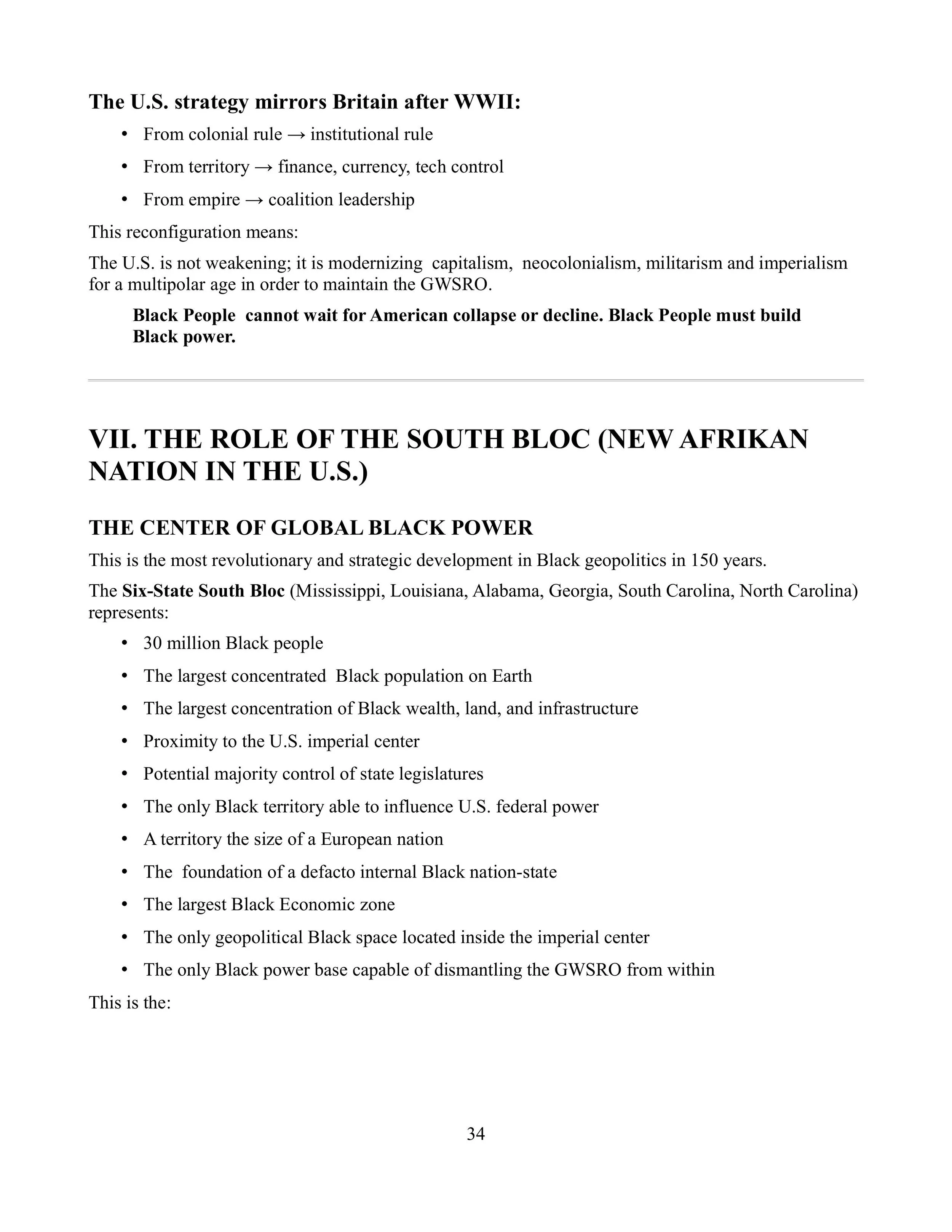
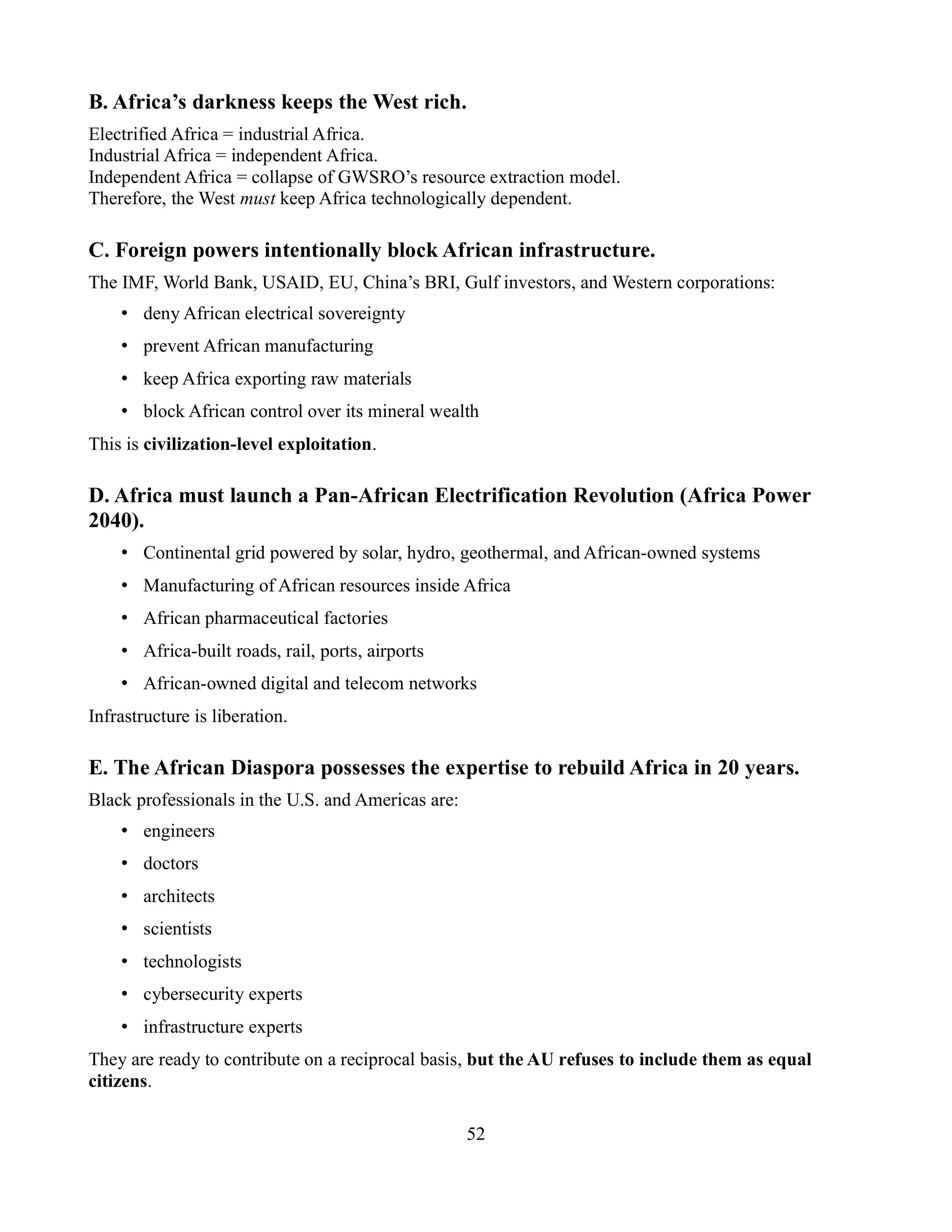
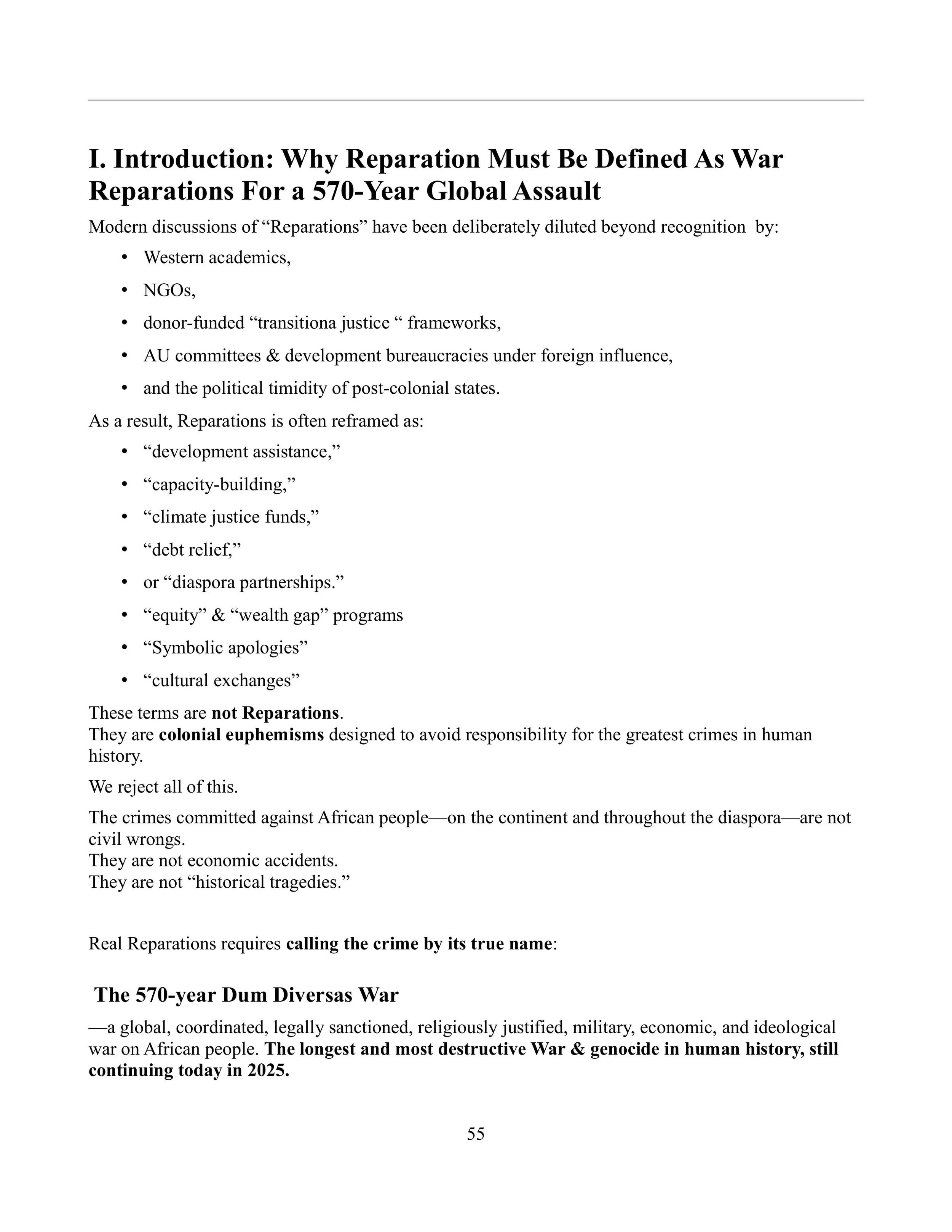
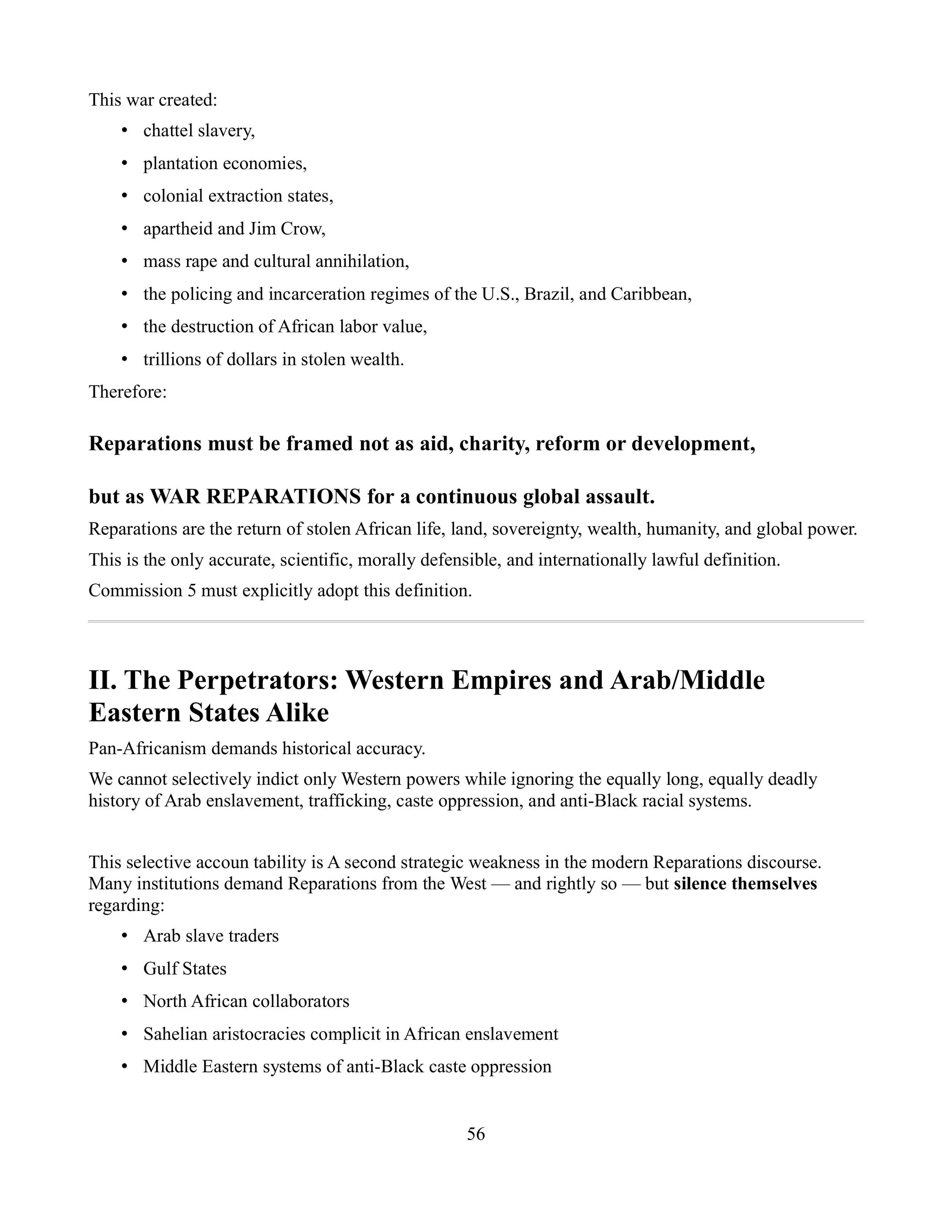
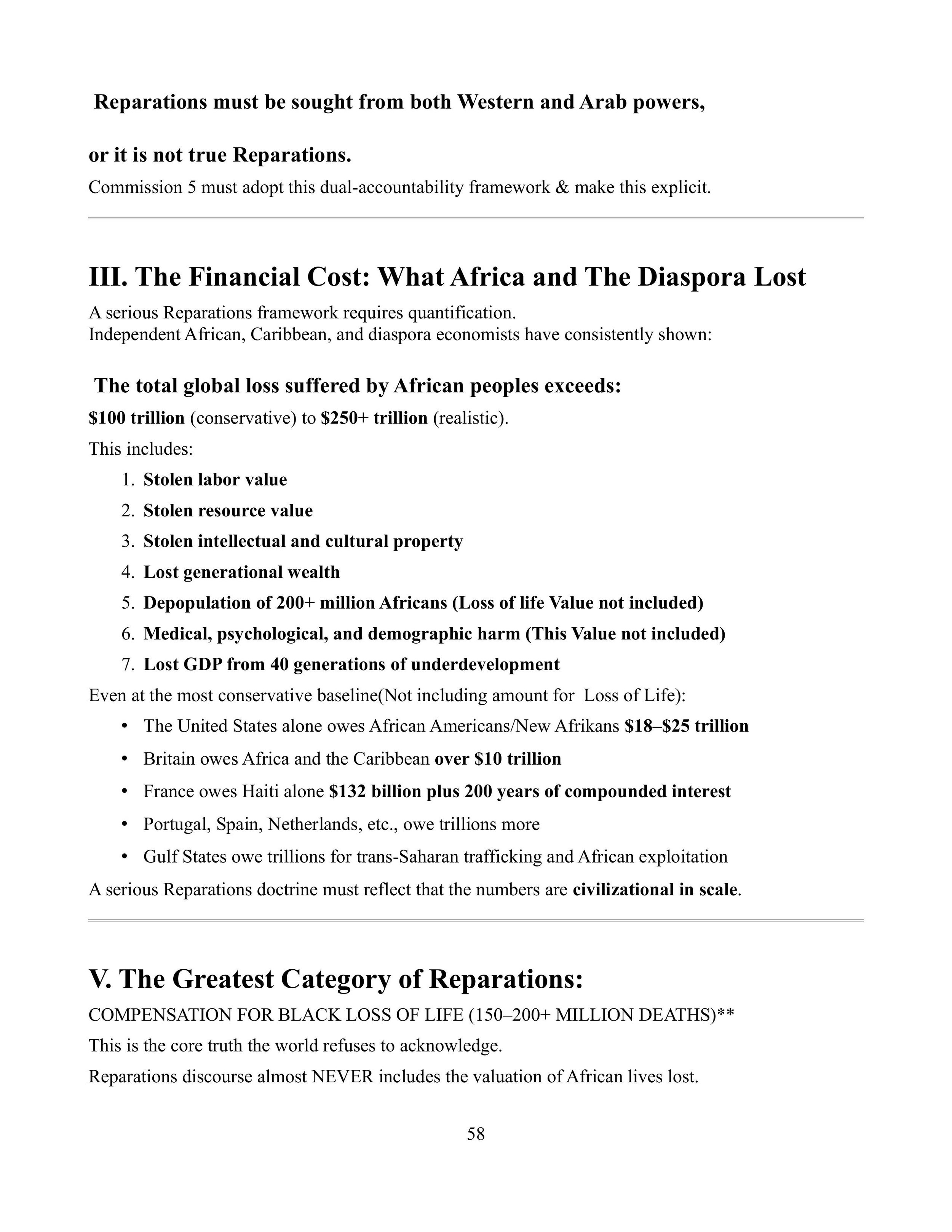
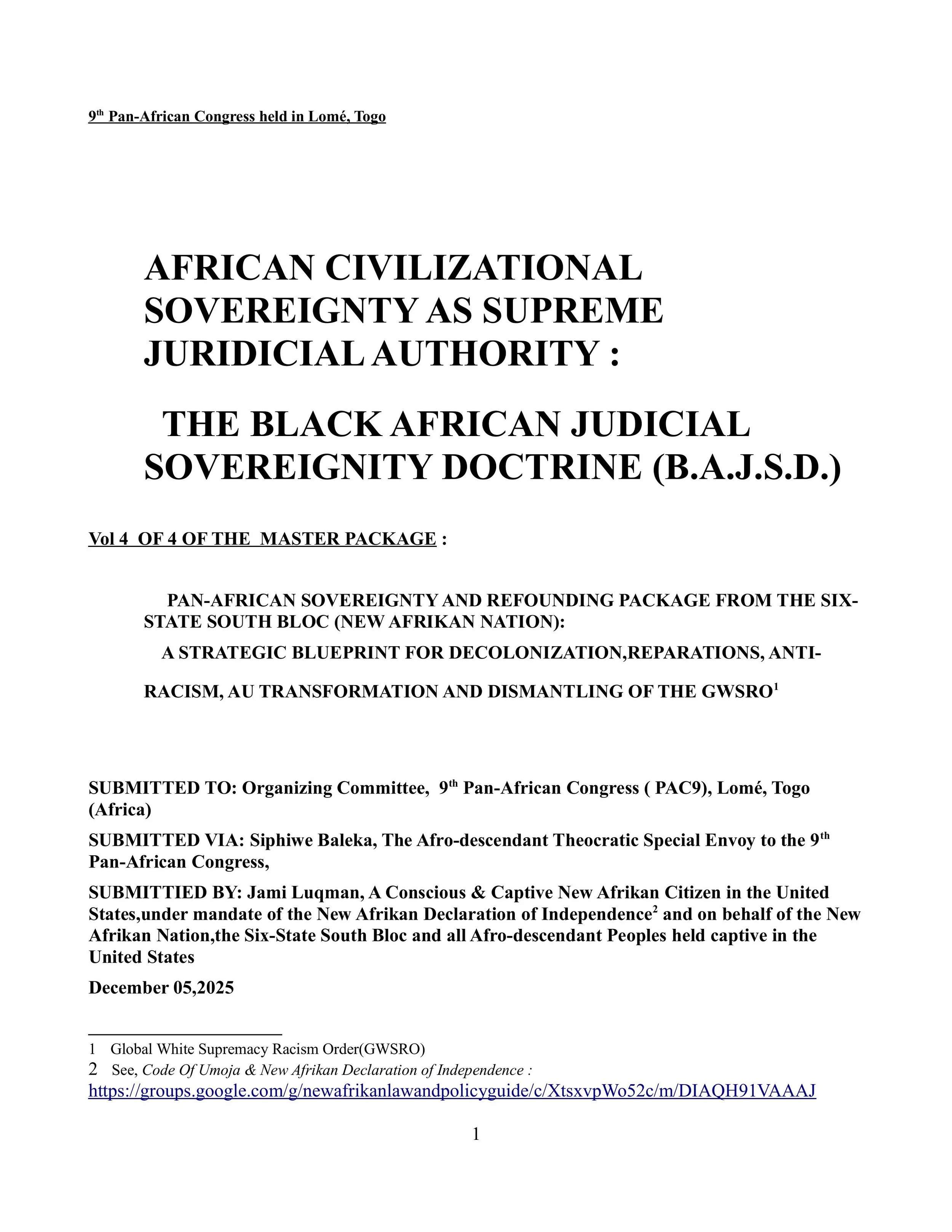
Below is the Final Declaration of the 9th Pan African Congress and various submissions I received that were either not deliberated or included in any Resolutions…
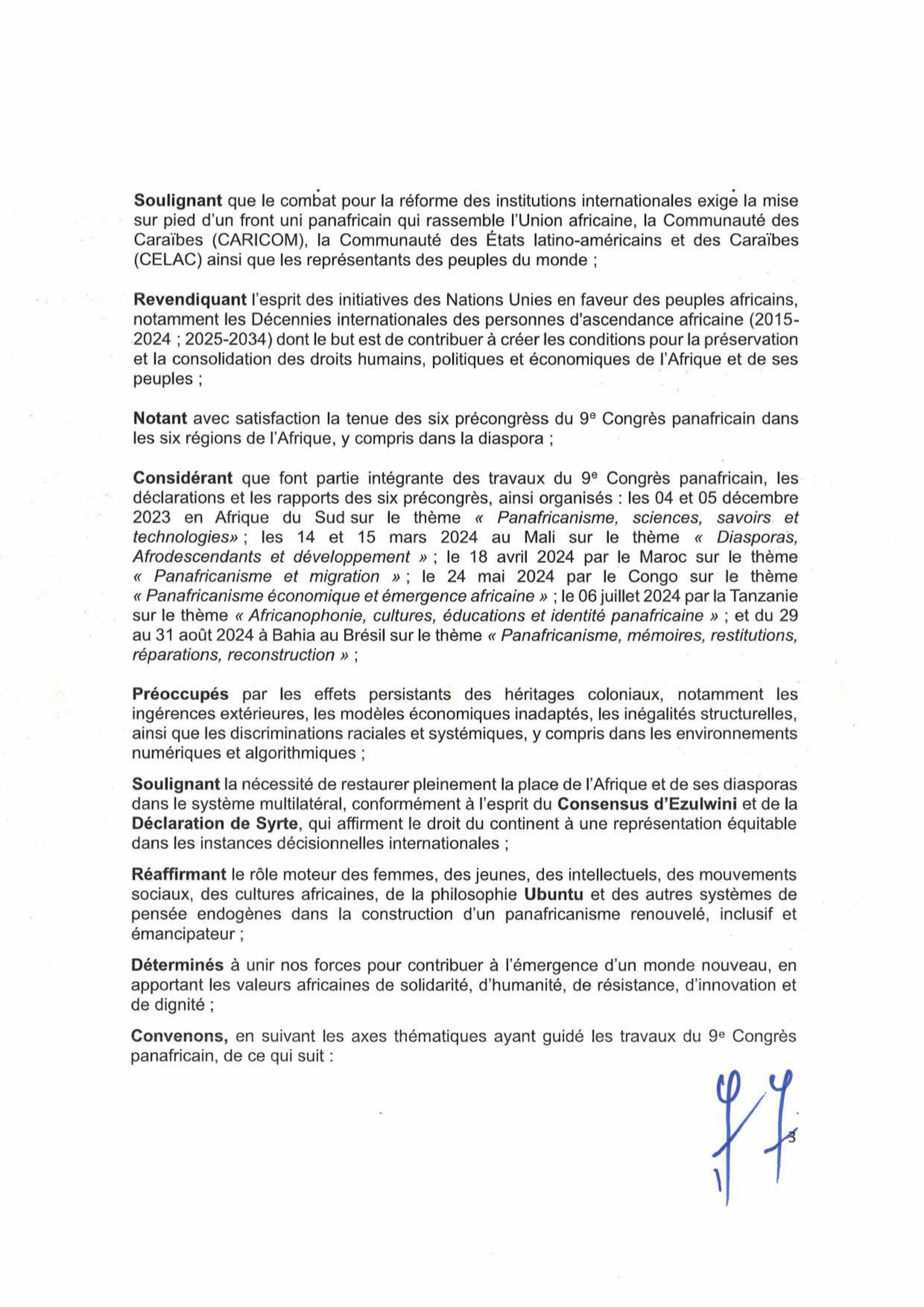
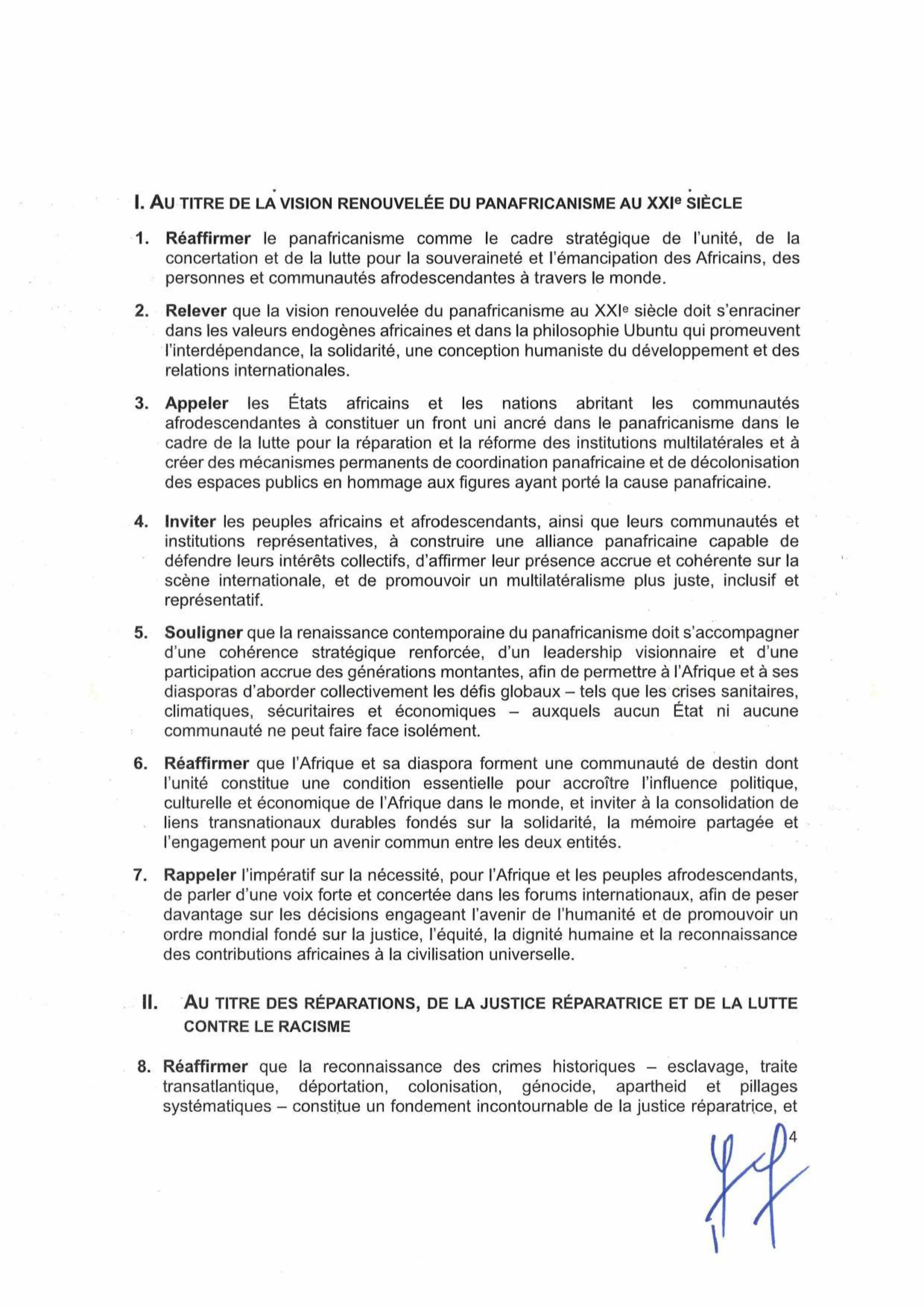
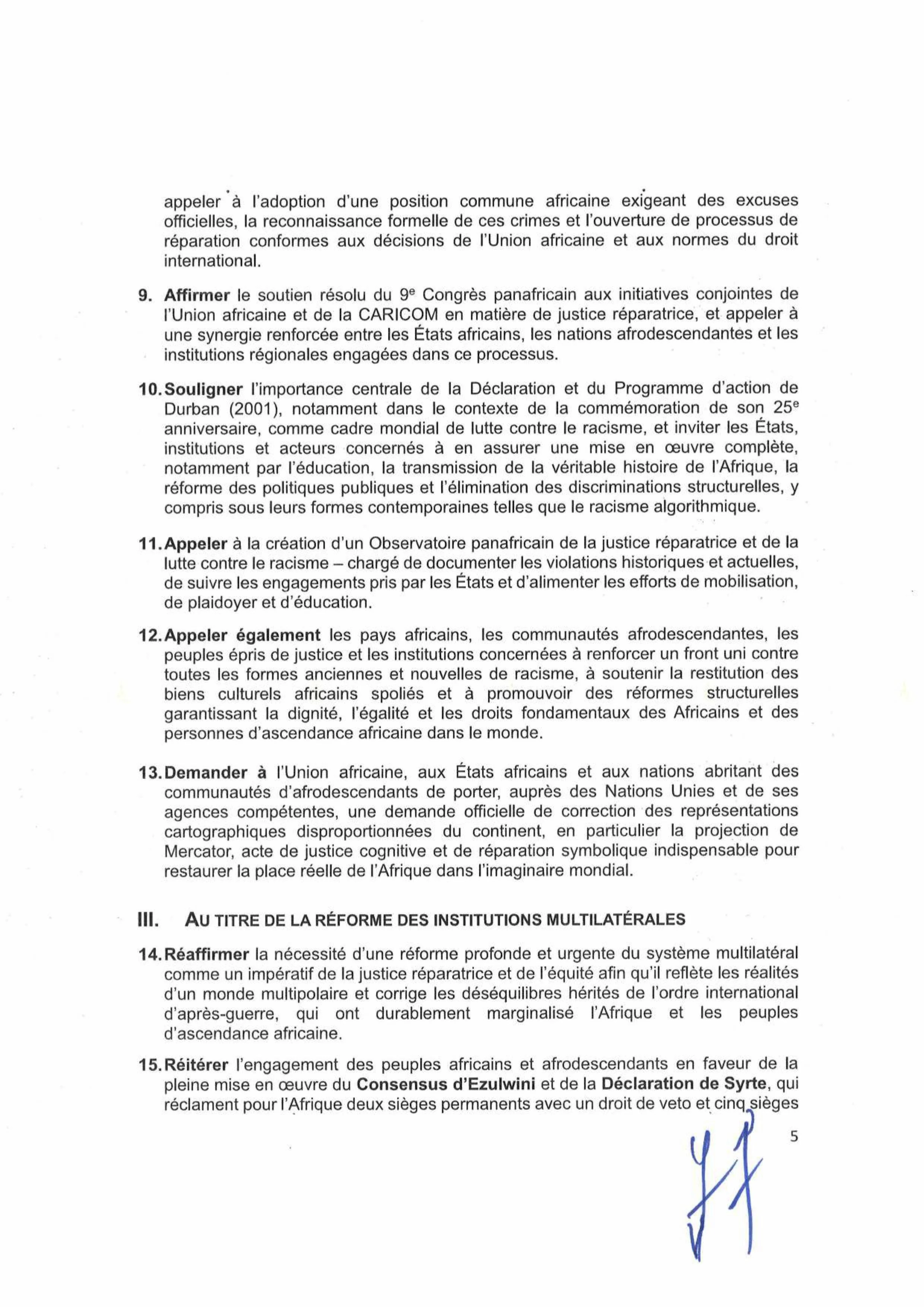
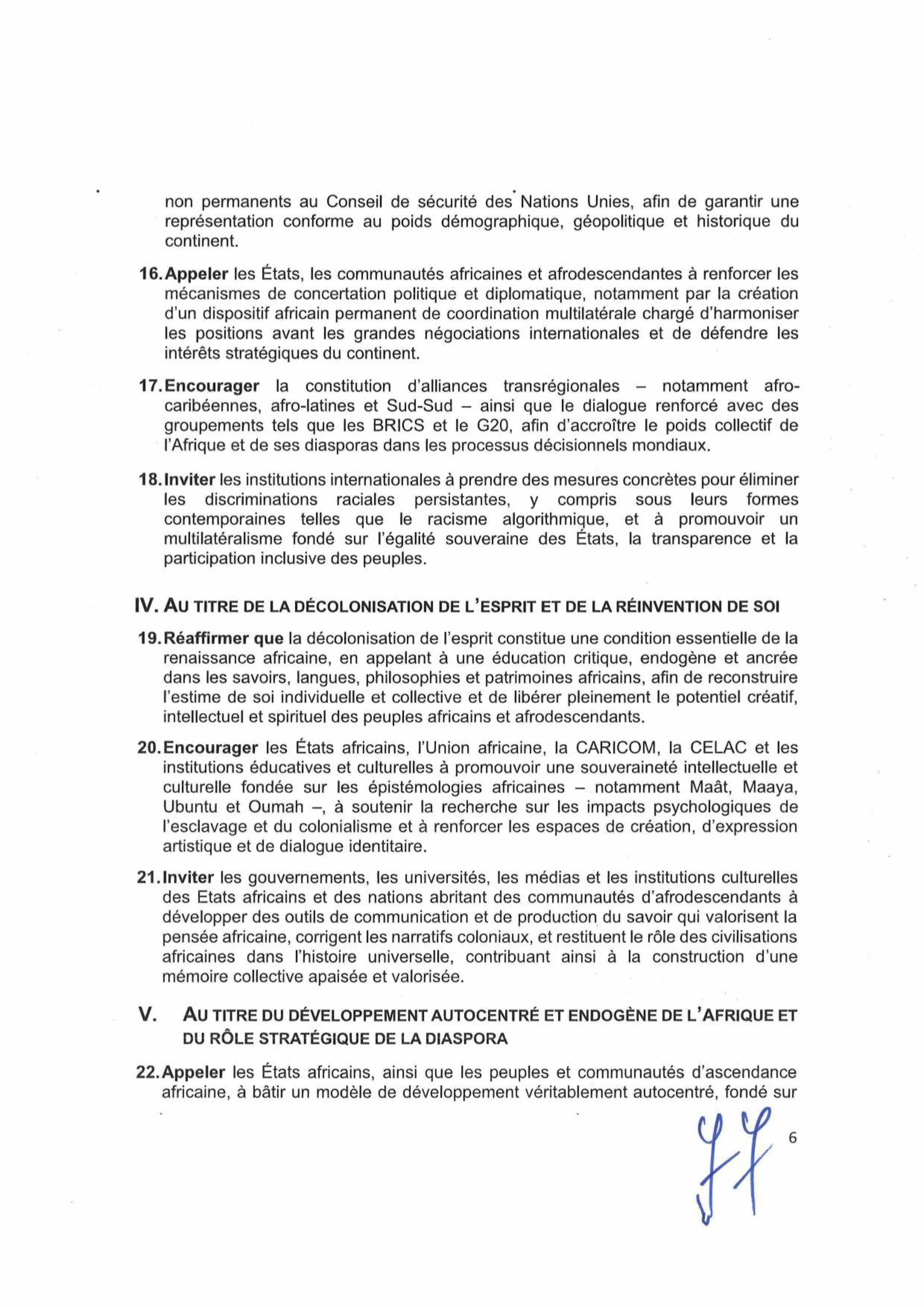
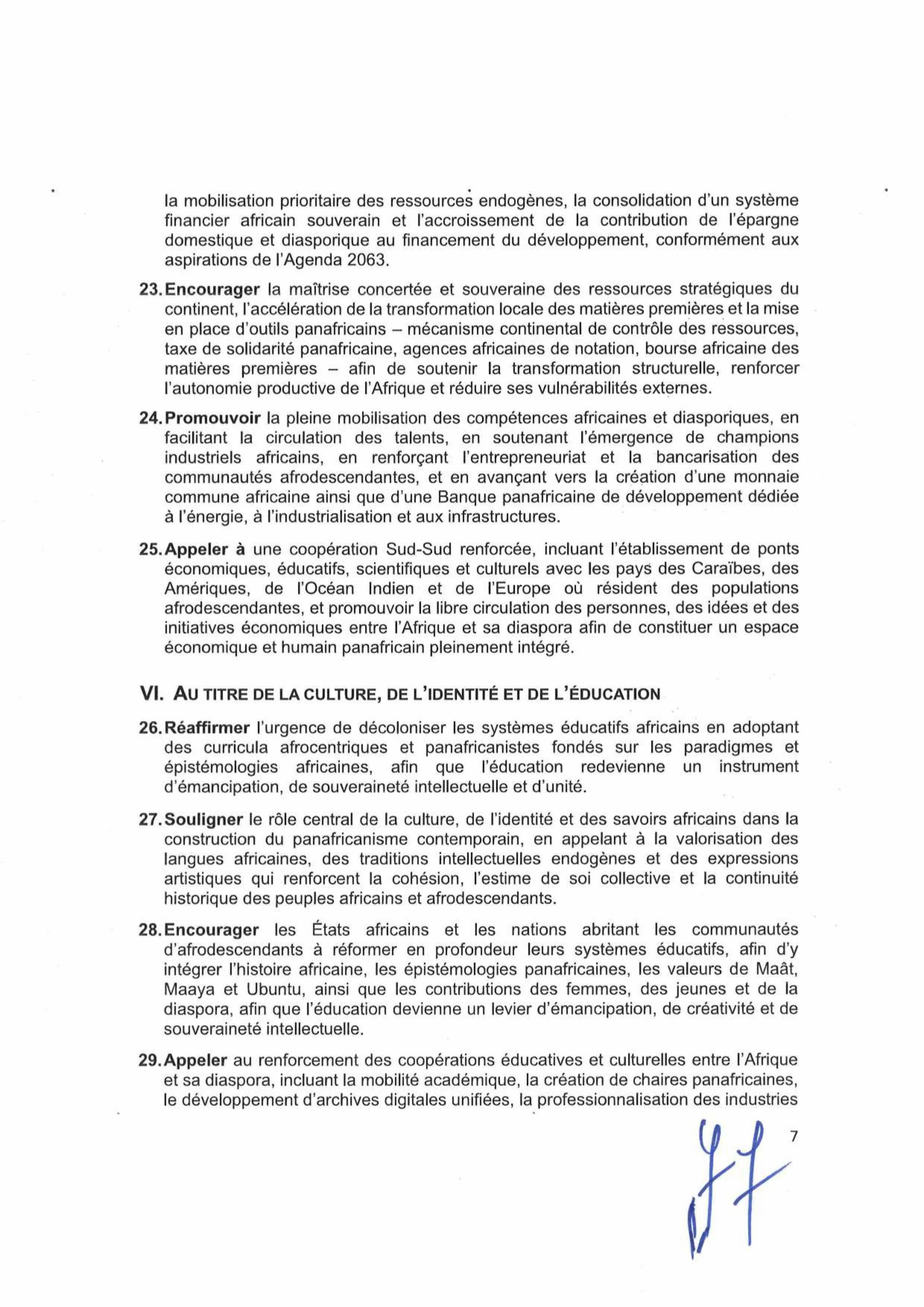
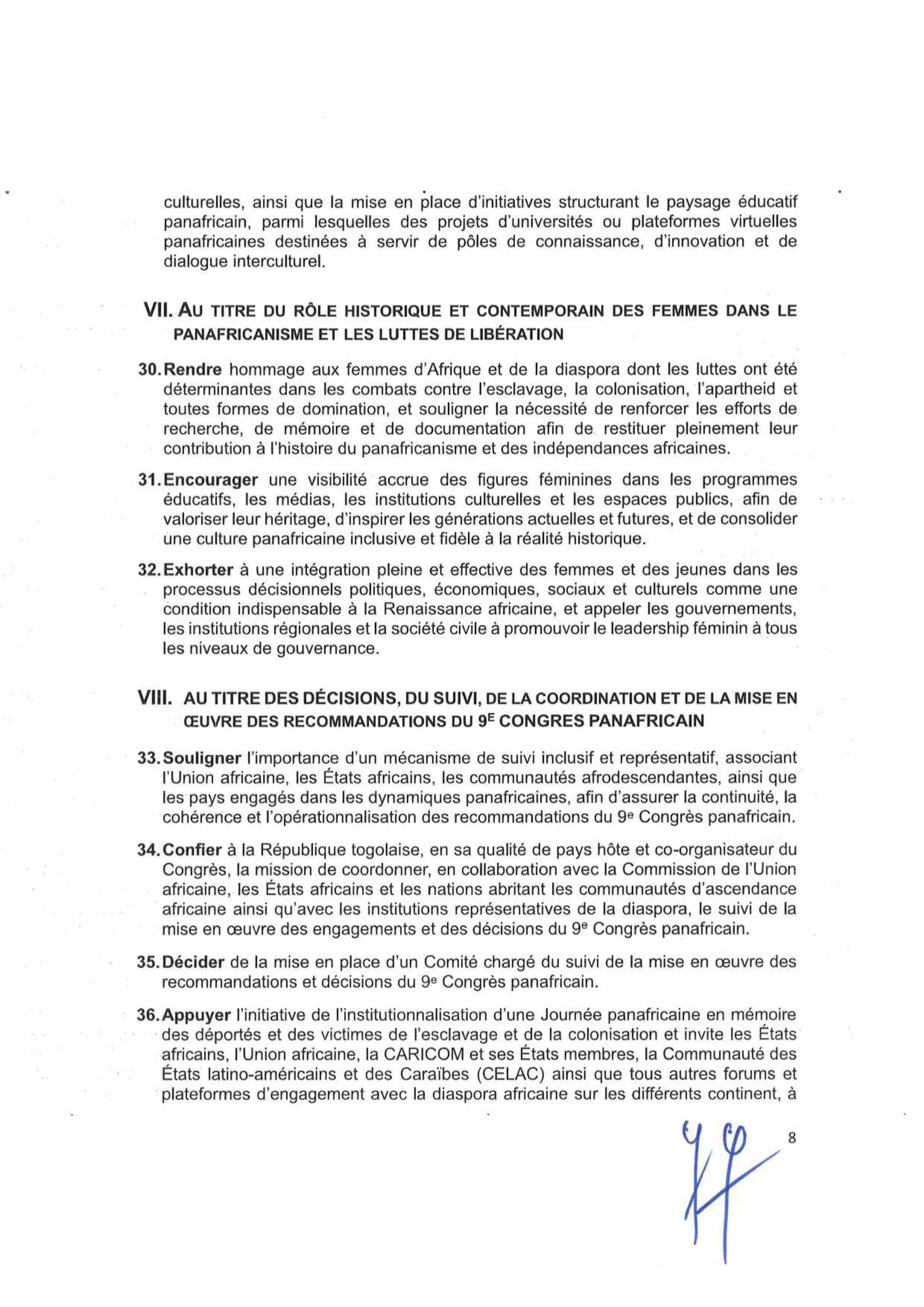
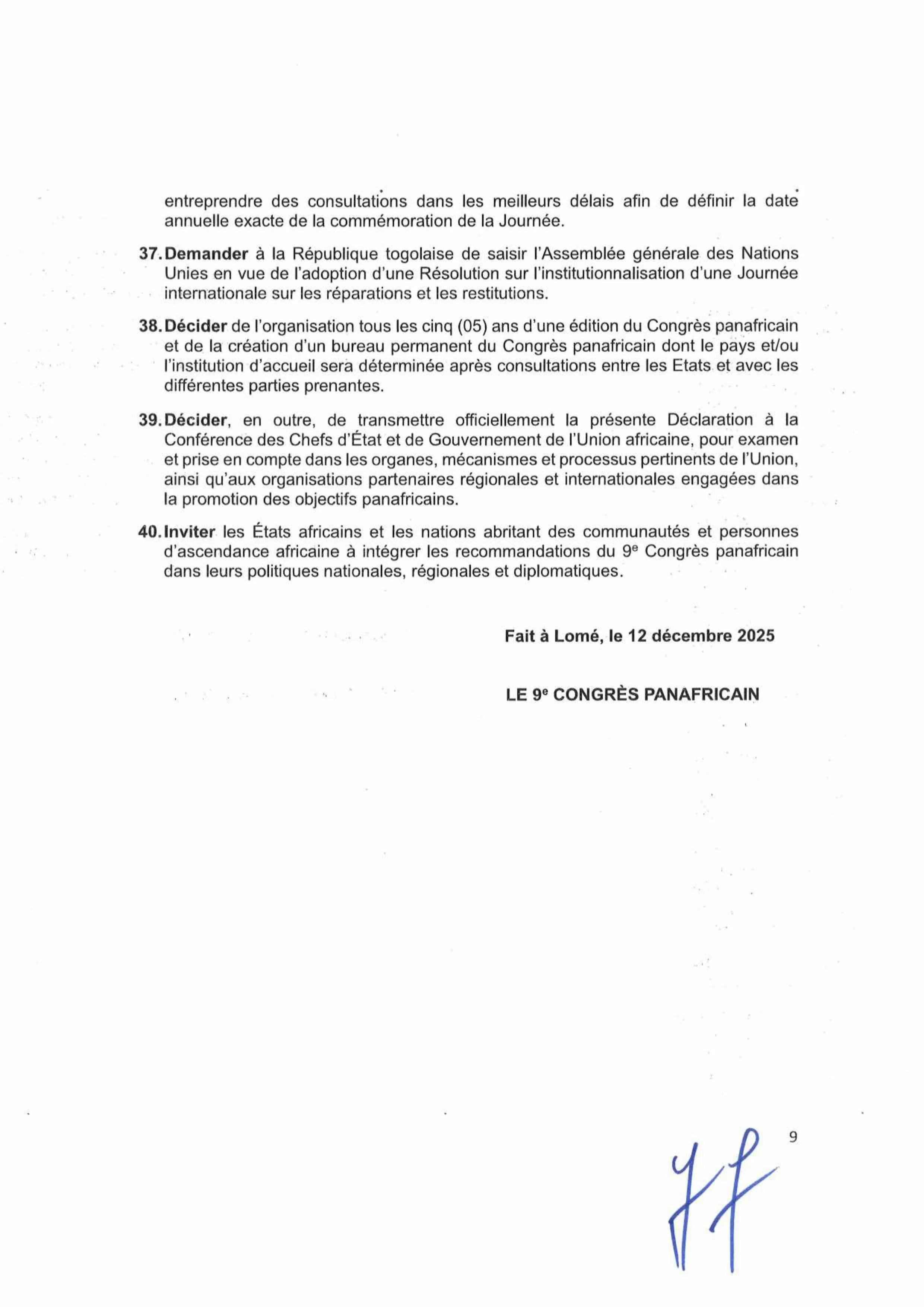
FREEDOM RESOLUTION ON POLITICAL PRISONERS
As part of the 25th anniversary of the African Charter on Human and Peoples' Rights and the 20th anniversary of the Durban Declaration, in memory of the centenaries of:
- Frantz Fanon, worthy son of global Africa, who highlighted the destructive consequences on the minds of Africans and their institutions of centuries of enslavement and colonisation,
- the immortal martyrs Patrice Emery Lumumba and Malcolm X, we solemnly call on all African States concerned to grant a general amnesty to political prisoners detained arbitrarily, in violation of African international law and the ancestral values of Maat and Ubuntu. The return of political exiles is also a prerequisite for lasting peace in Africa. We commit ourselves to pursuing this resolution with the African Union and its specialised bodies, as well as with the States and actors concerned throughout Africa. A pan-African ad hoc commission is being set up on the basis of Articles 5 to 9 of the Resolution against Colonialism and Imperialism adopted at the Pan-African People's Conference held in Accra in December 1958, as well as the African Charter on Human and Peoples' Rights and the African Charter on Democracy, Elections and Governance.
- Within one month, an INDEPENDENT group of experts reflecting the geographical and political diversity of global Africa will collaborate with the ACHPR in Banjul to present a follow-up note.
NB: first names, Halidou Ouédraogo (Burkina Faso), Professor Jean-François Akandji-Gombe (Centrafrique), CARICOM
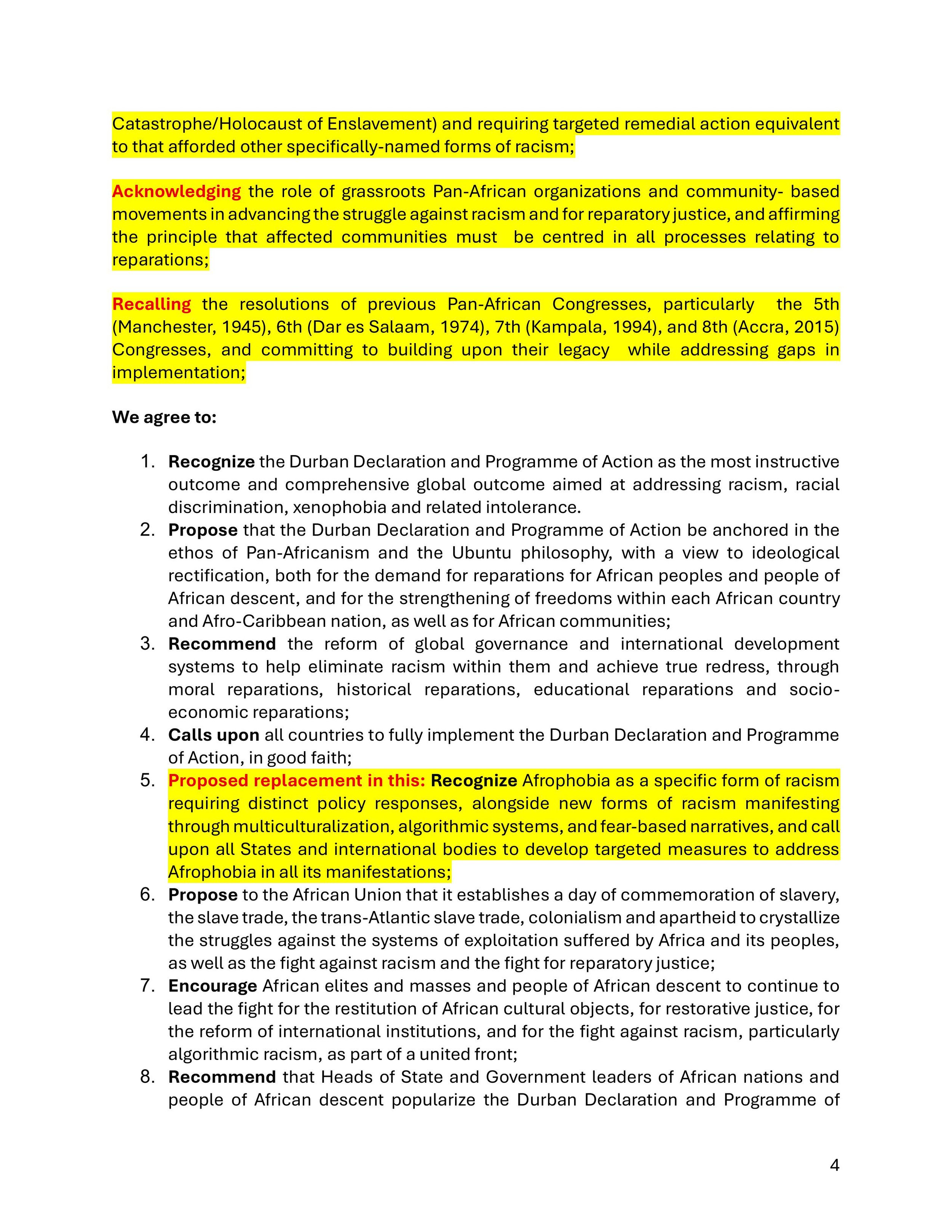
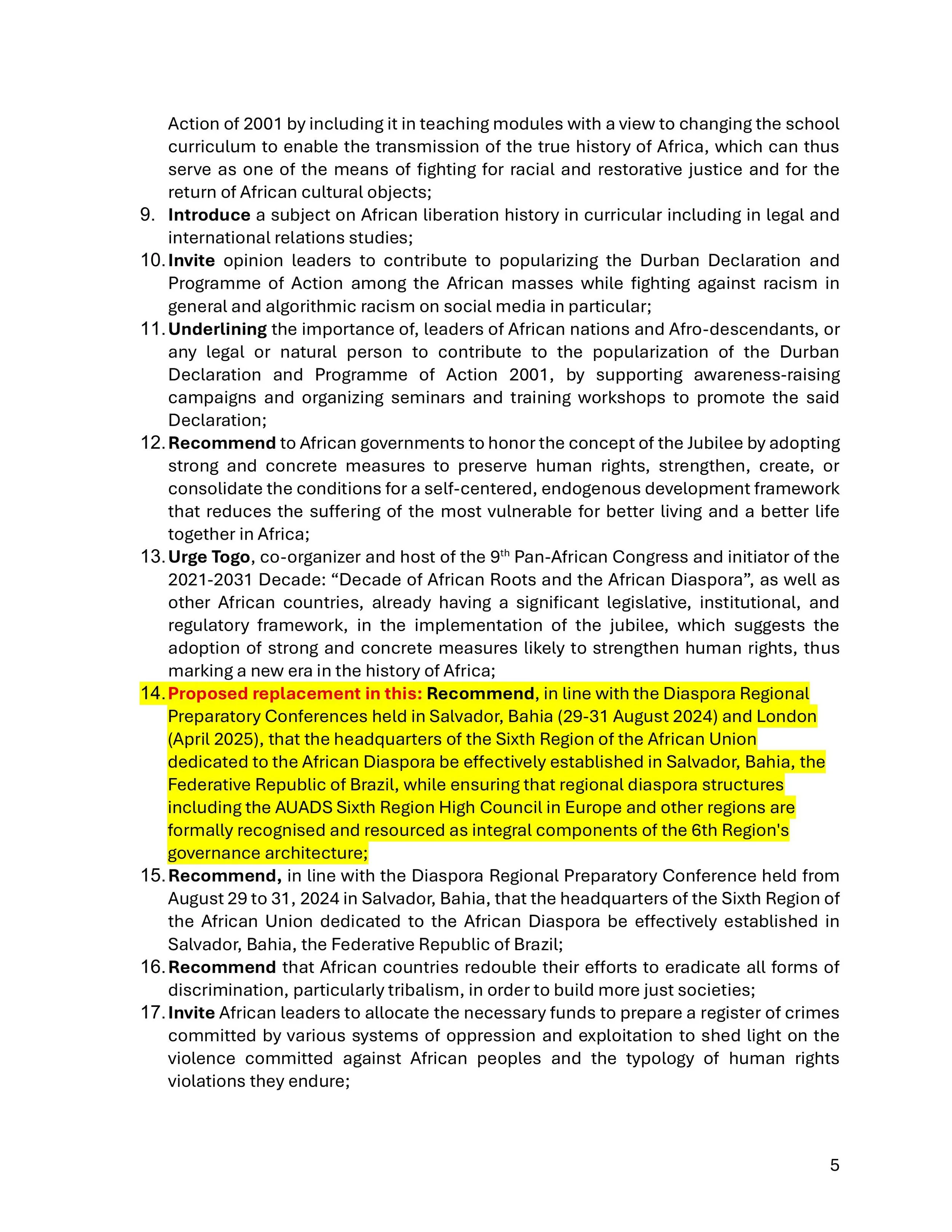
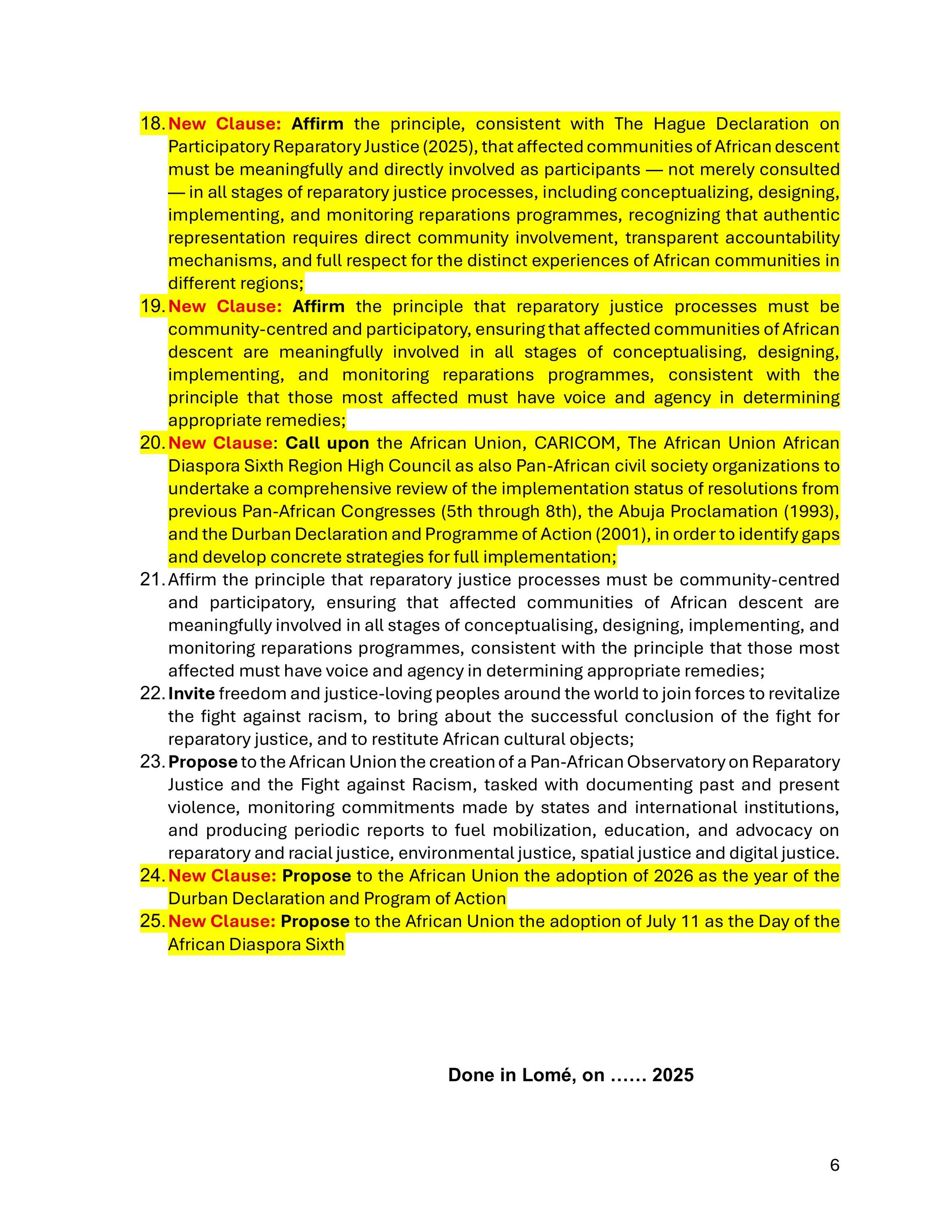


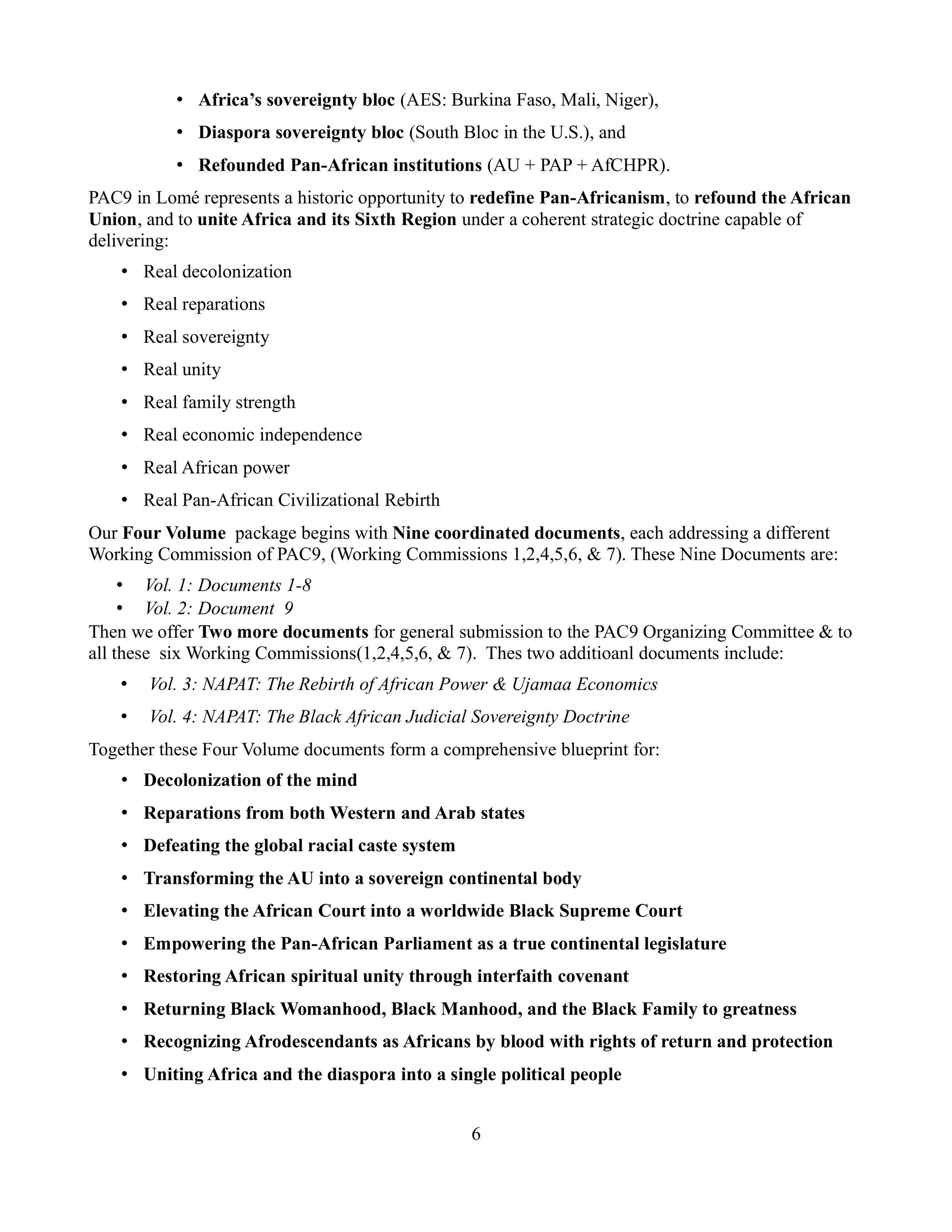







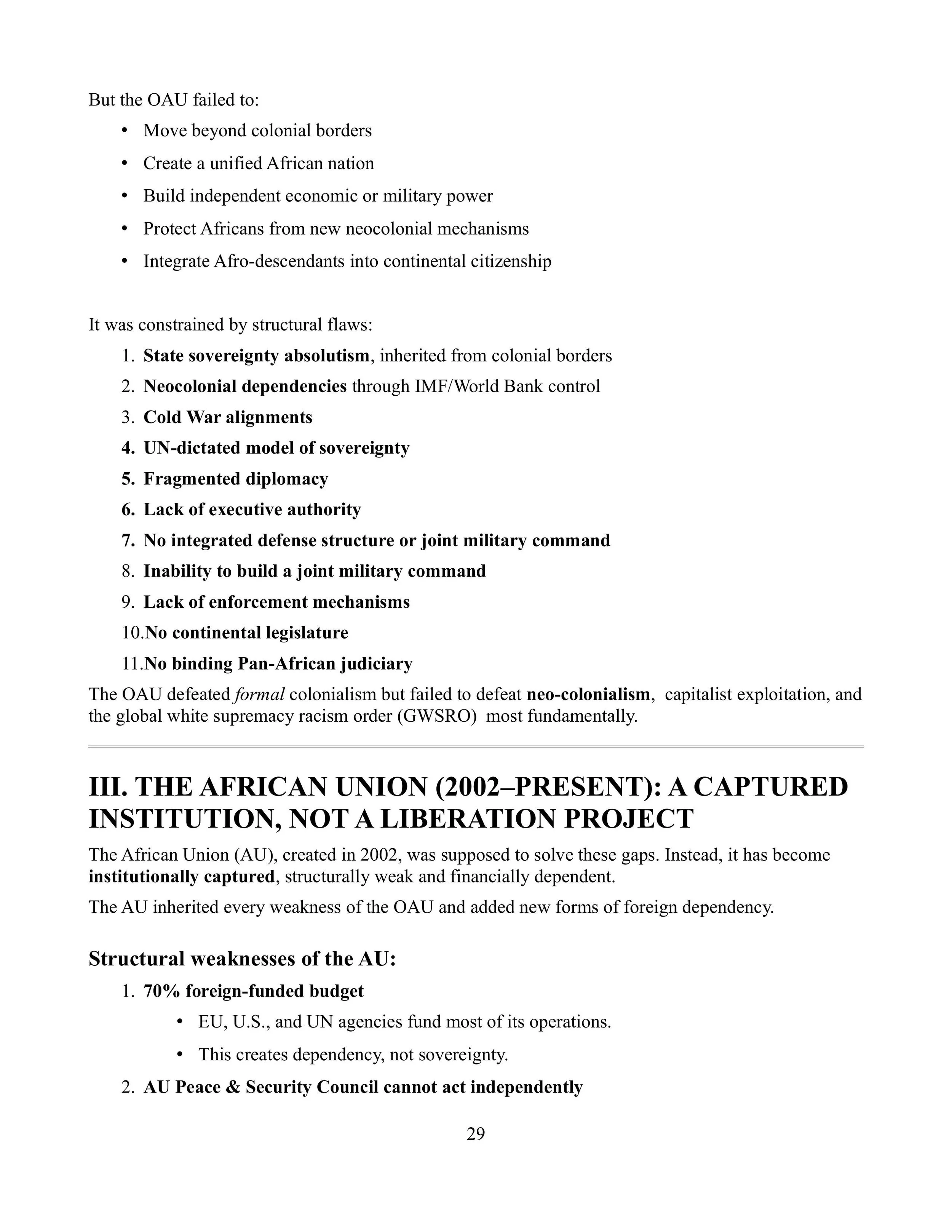





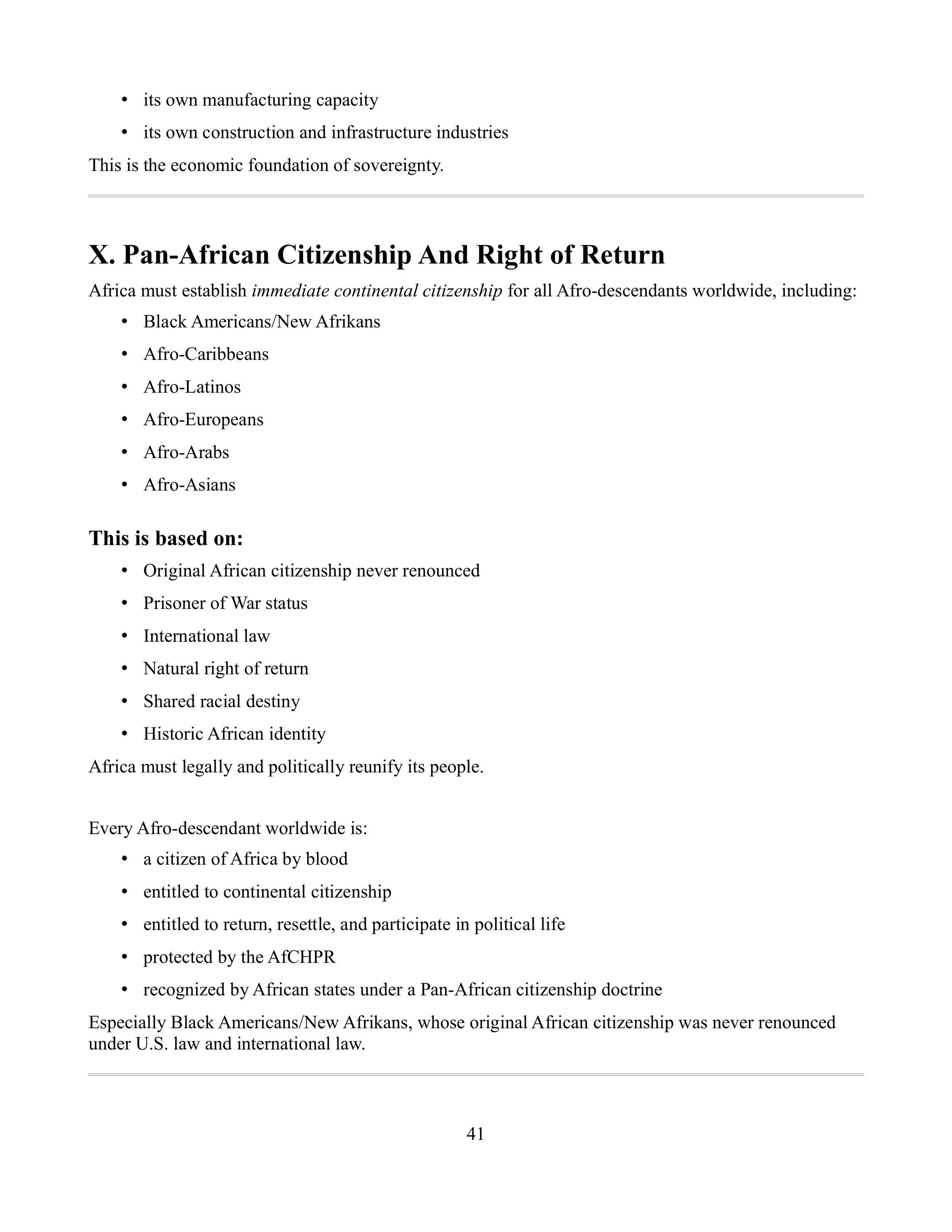
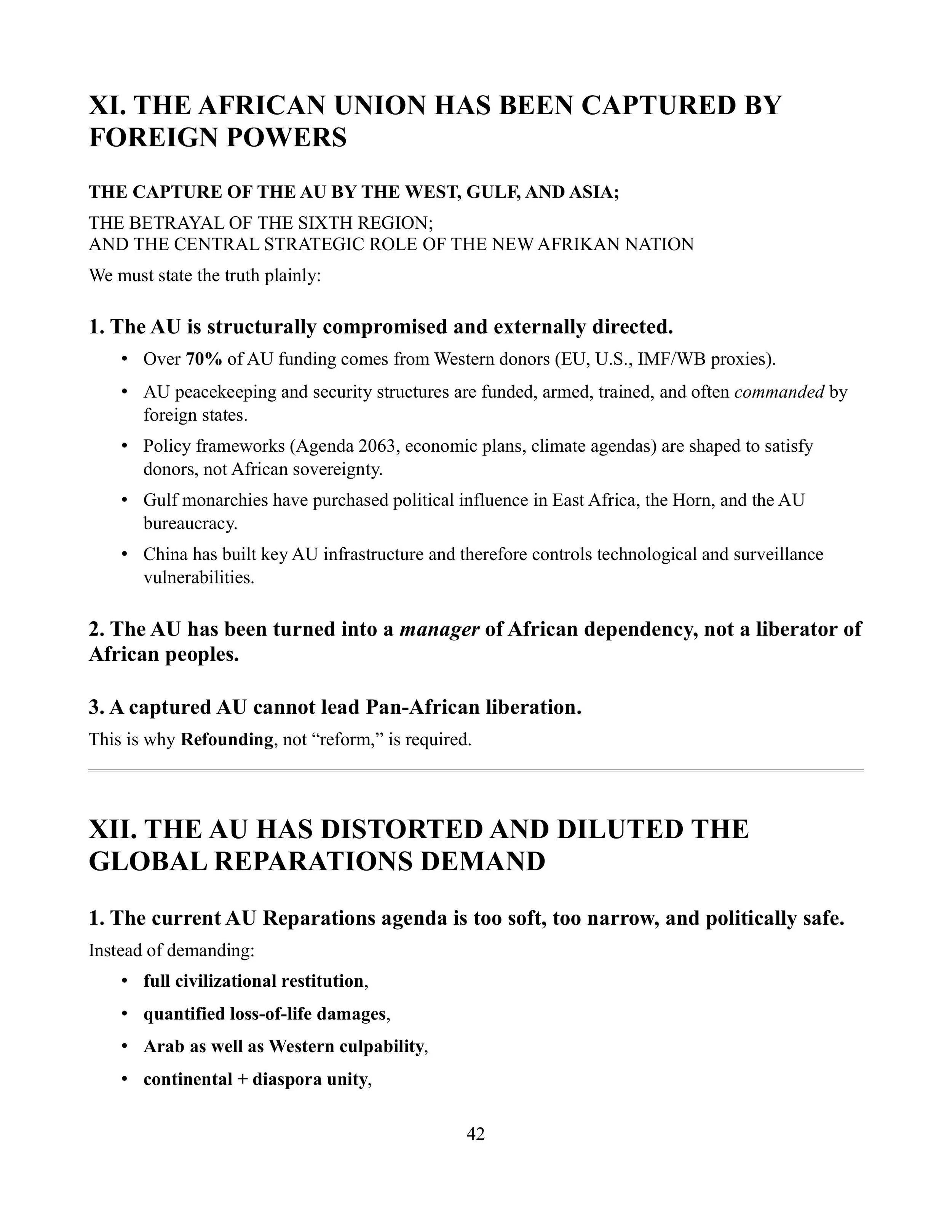
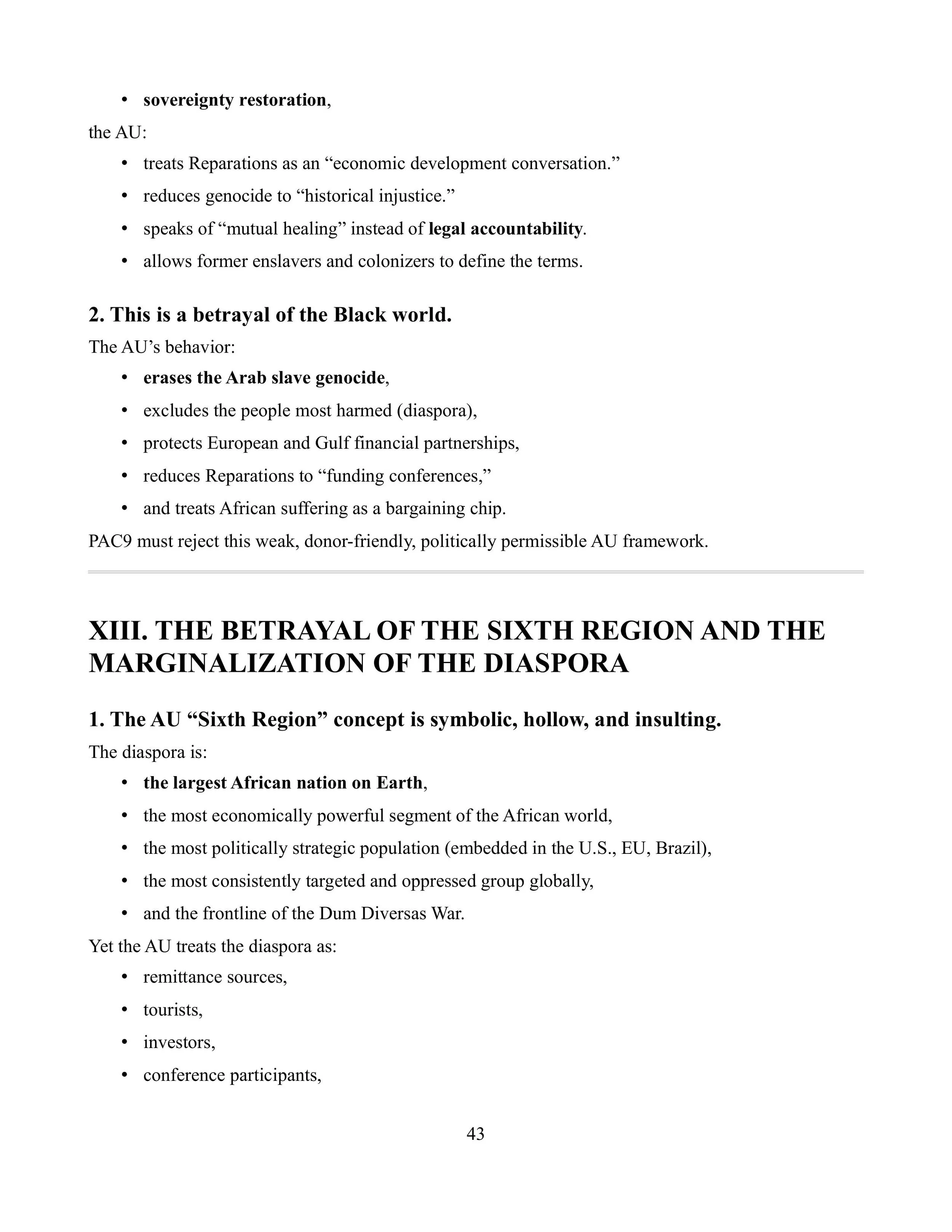


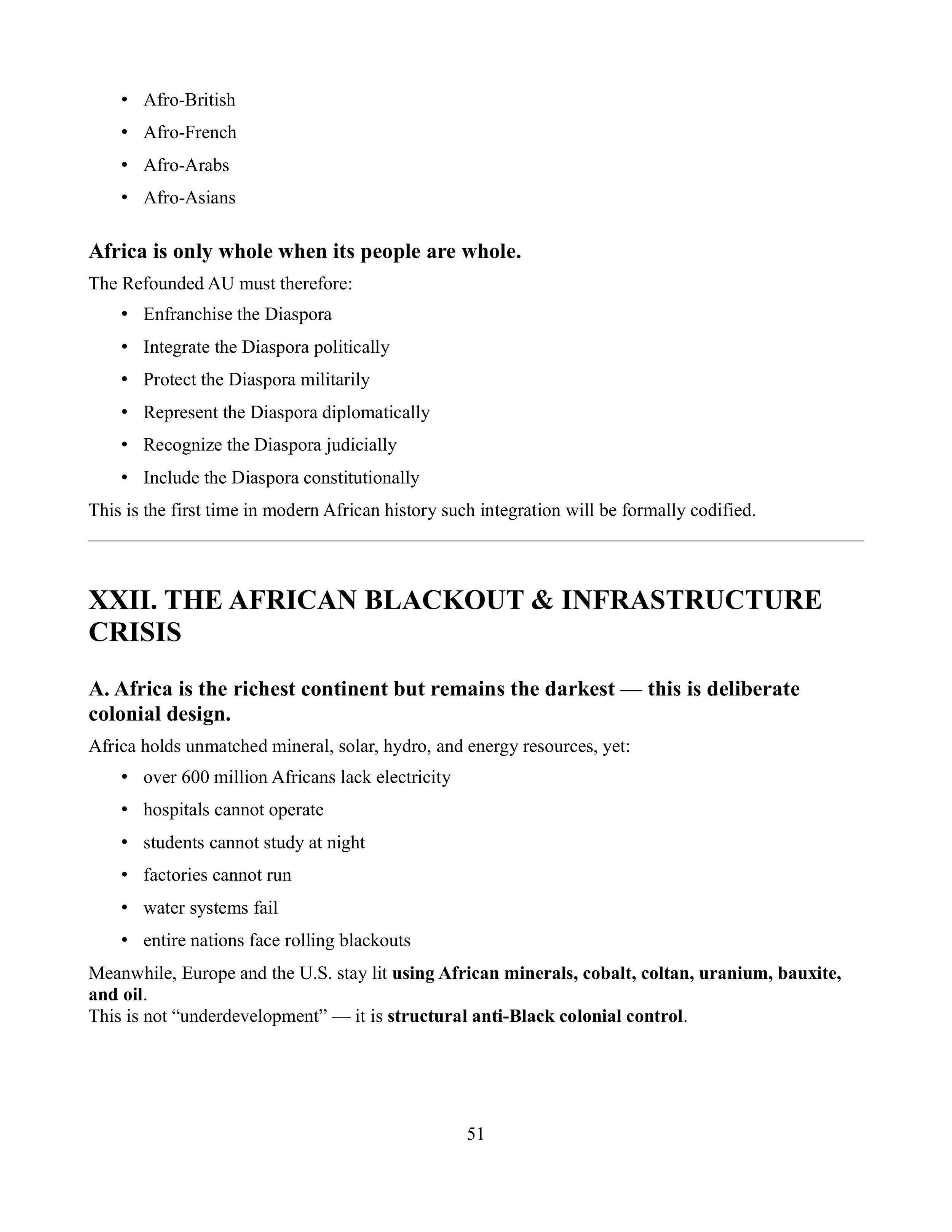





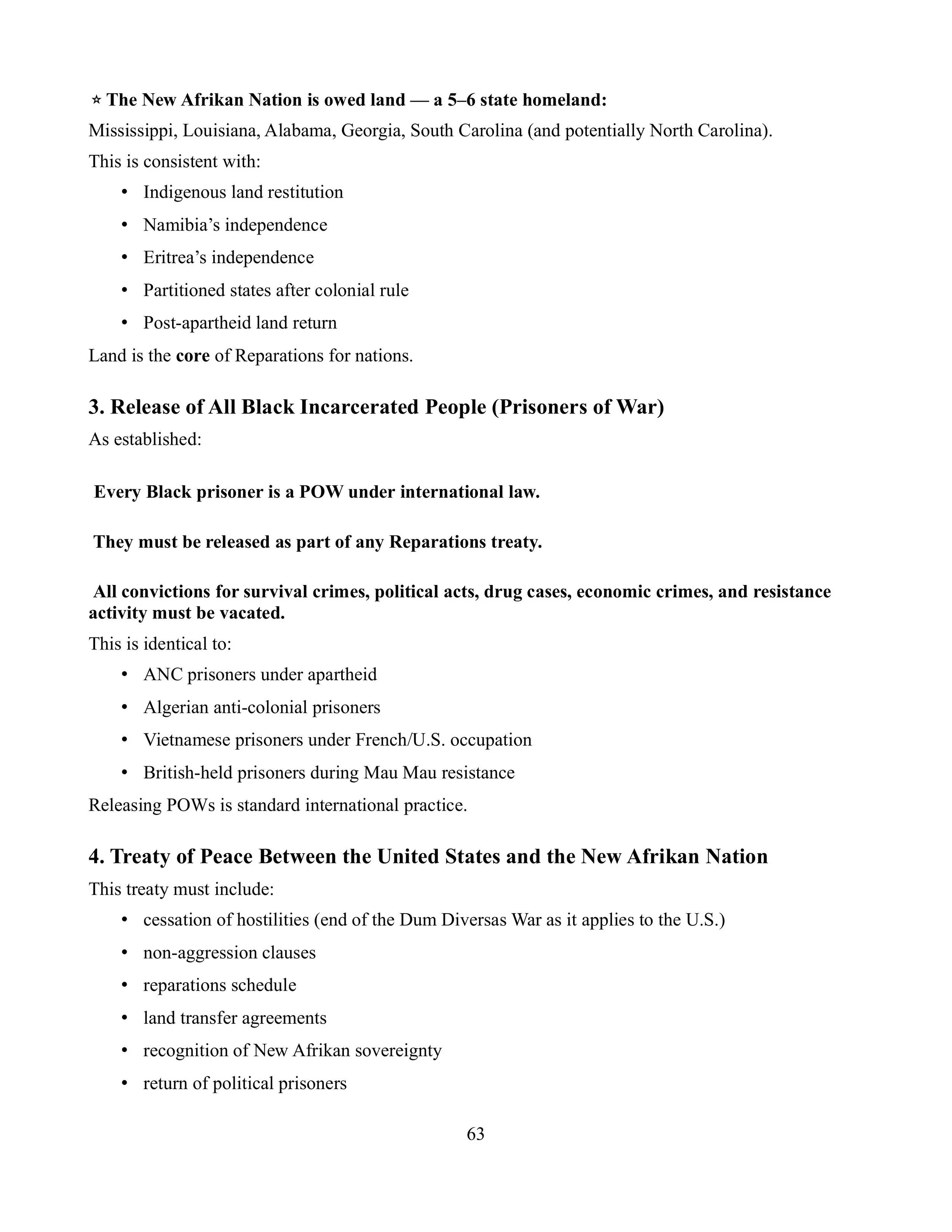


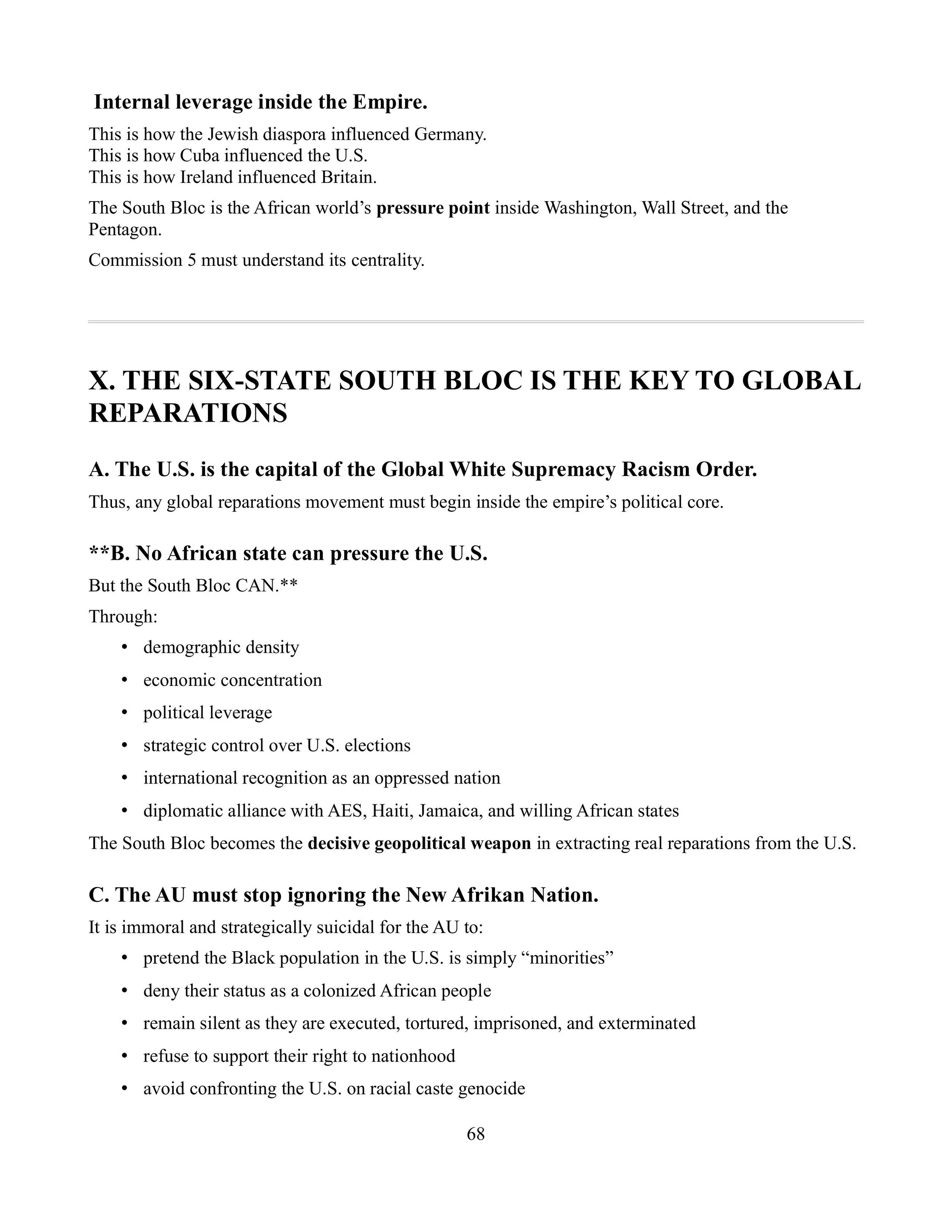


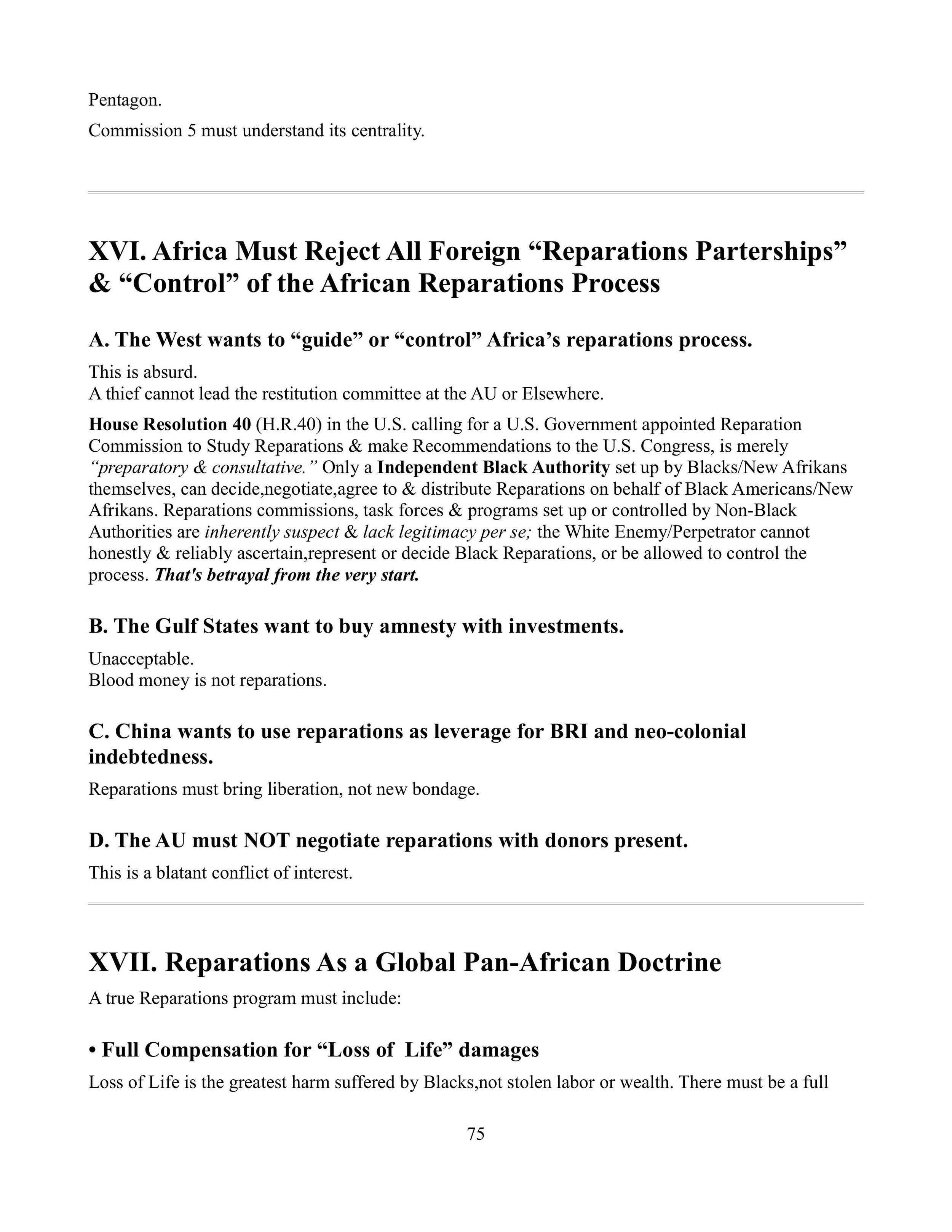

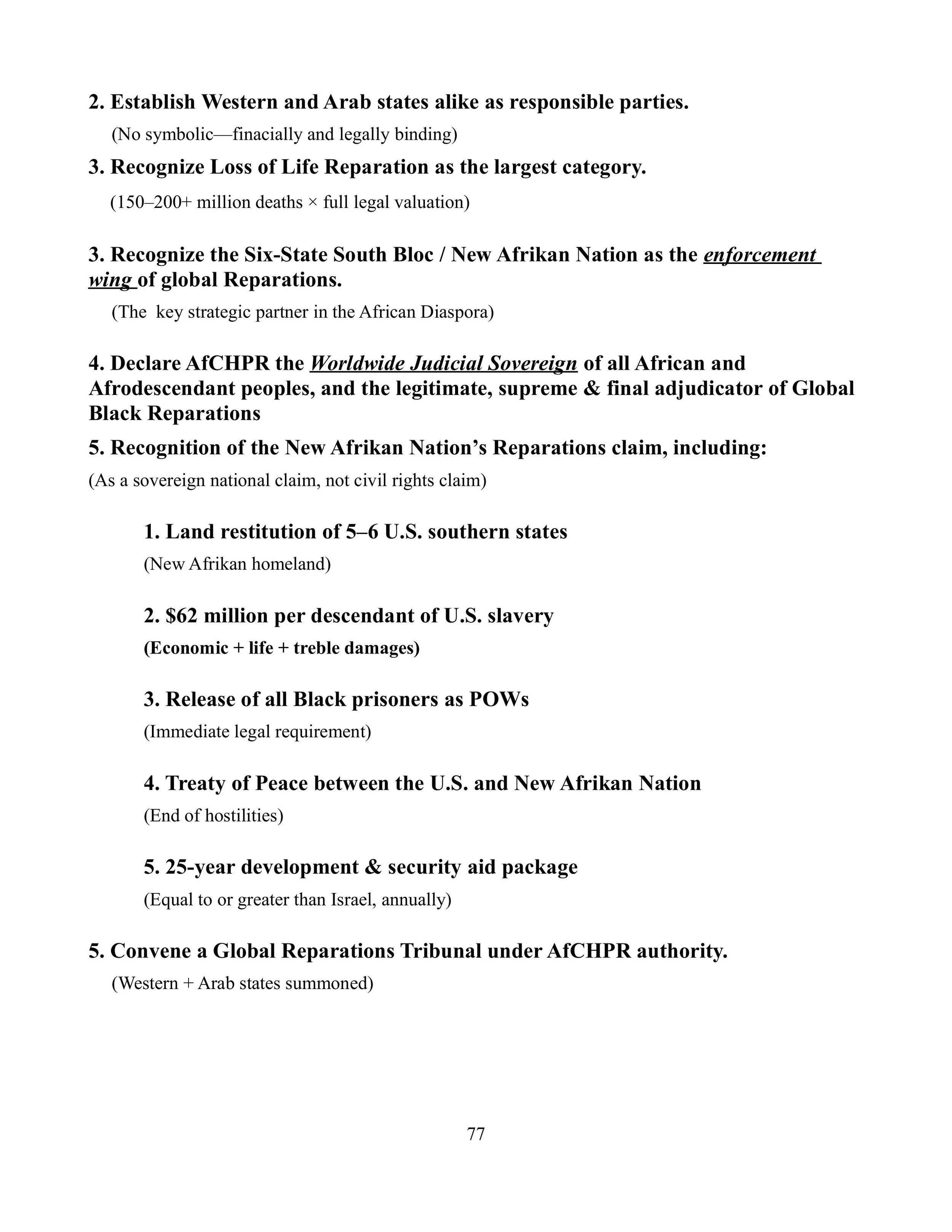






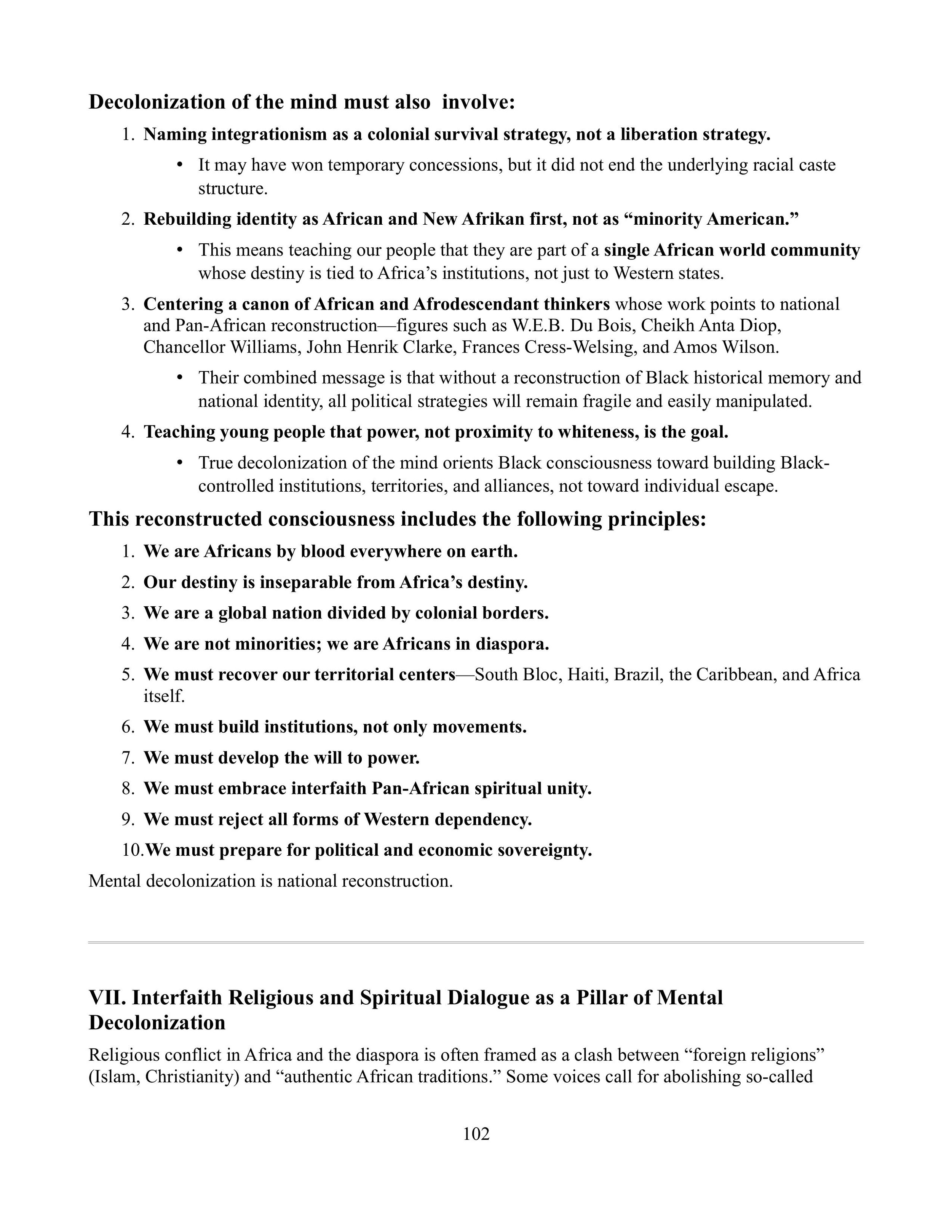


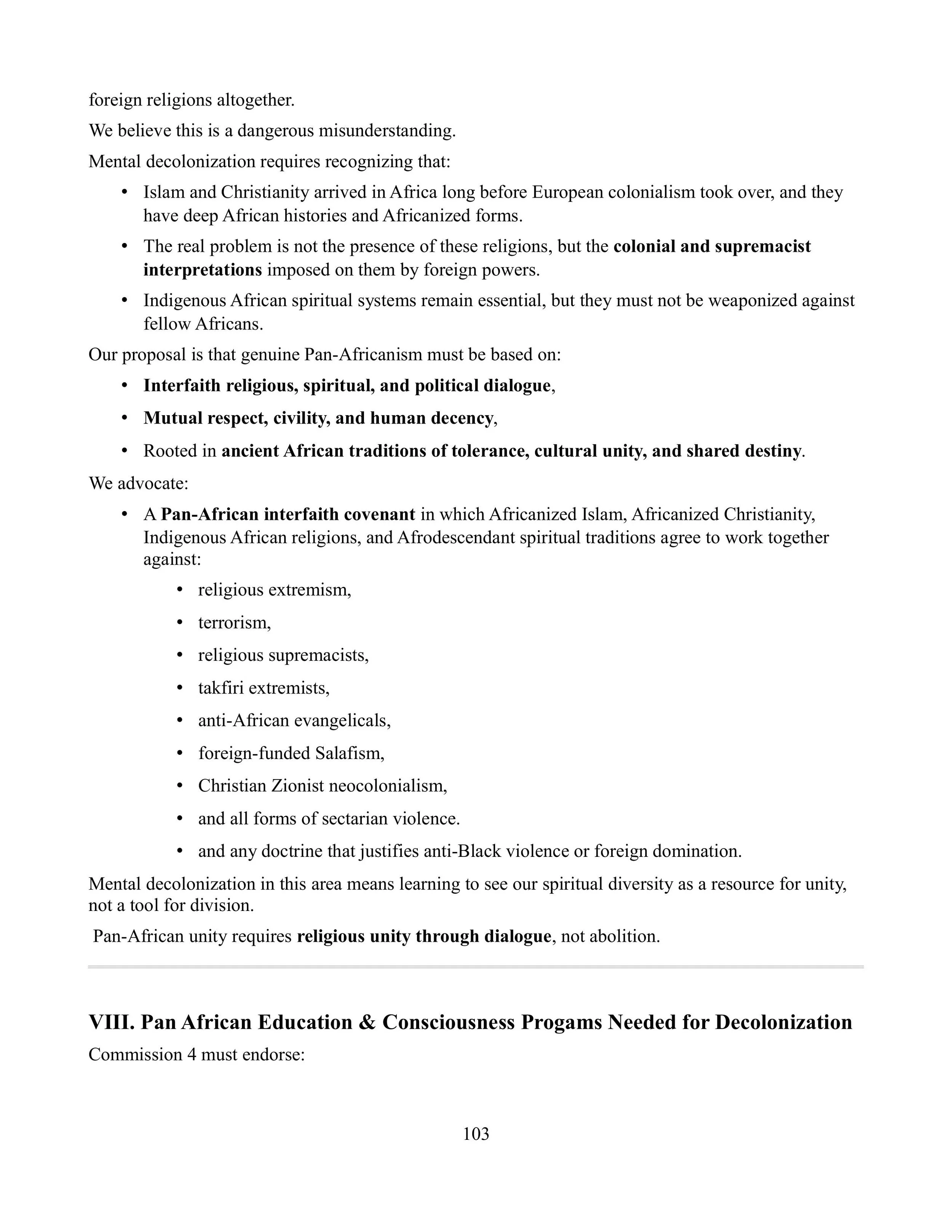


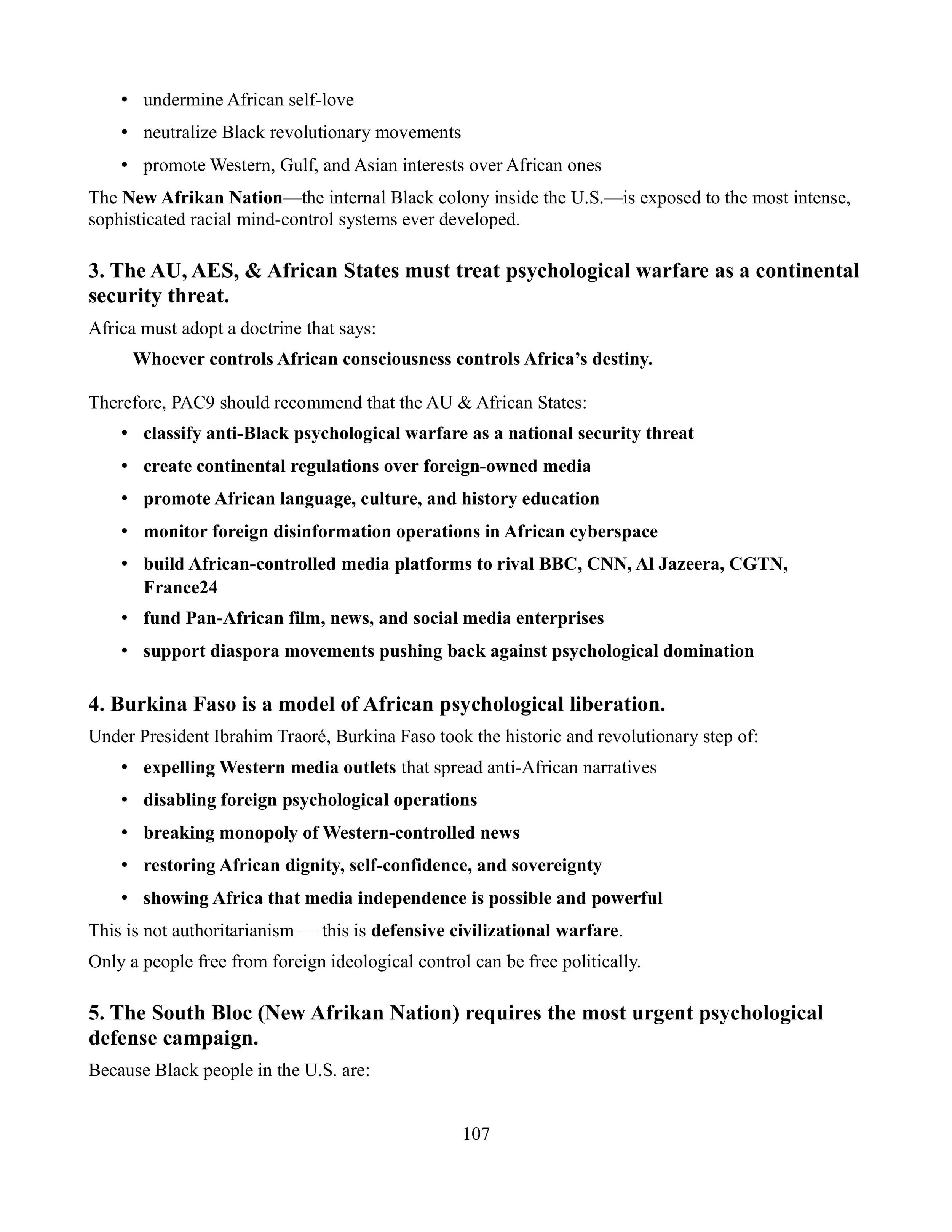


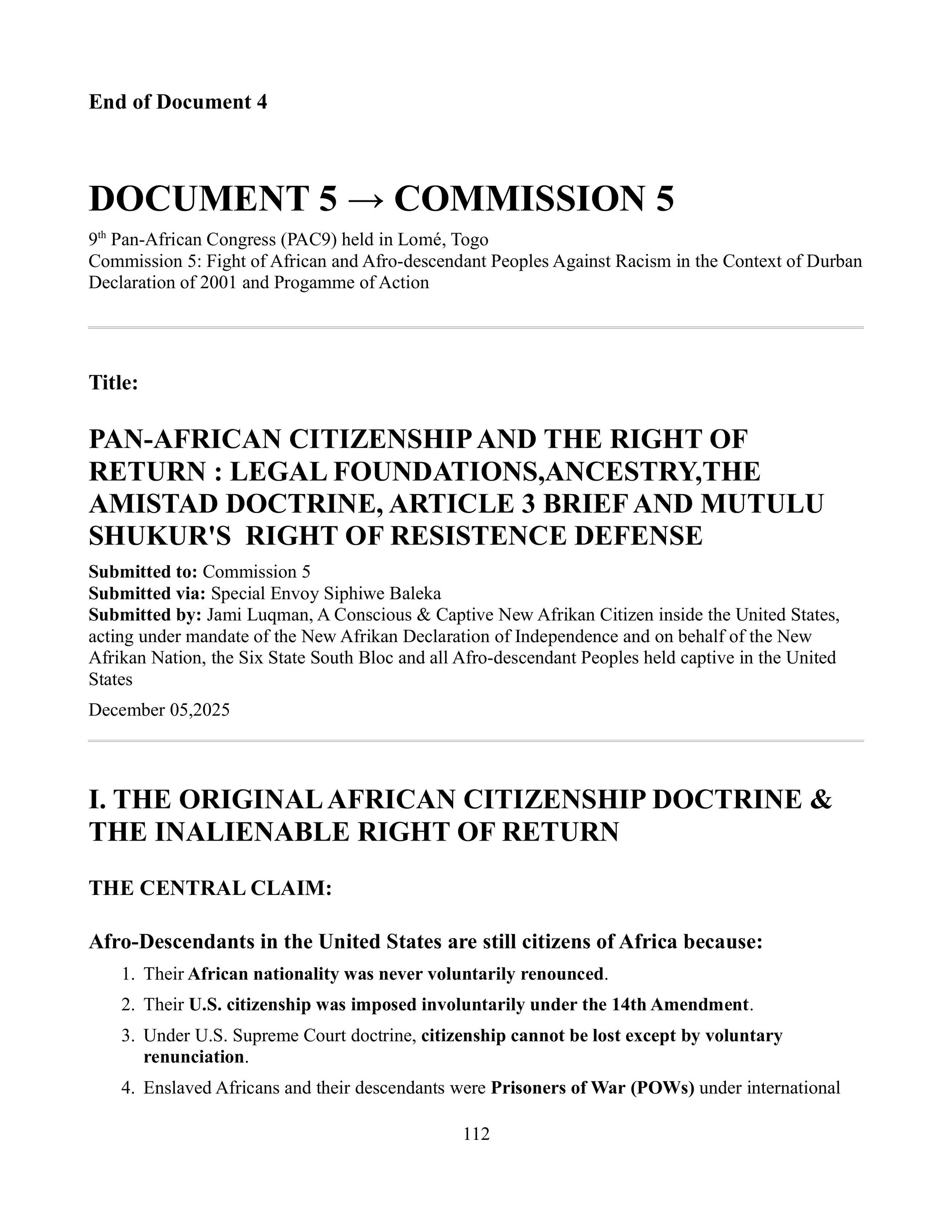
























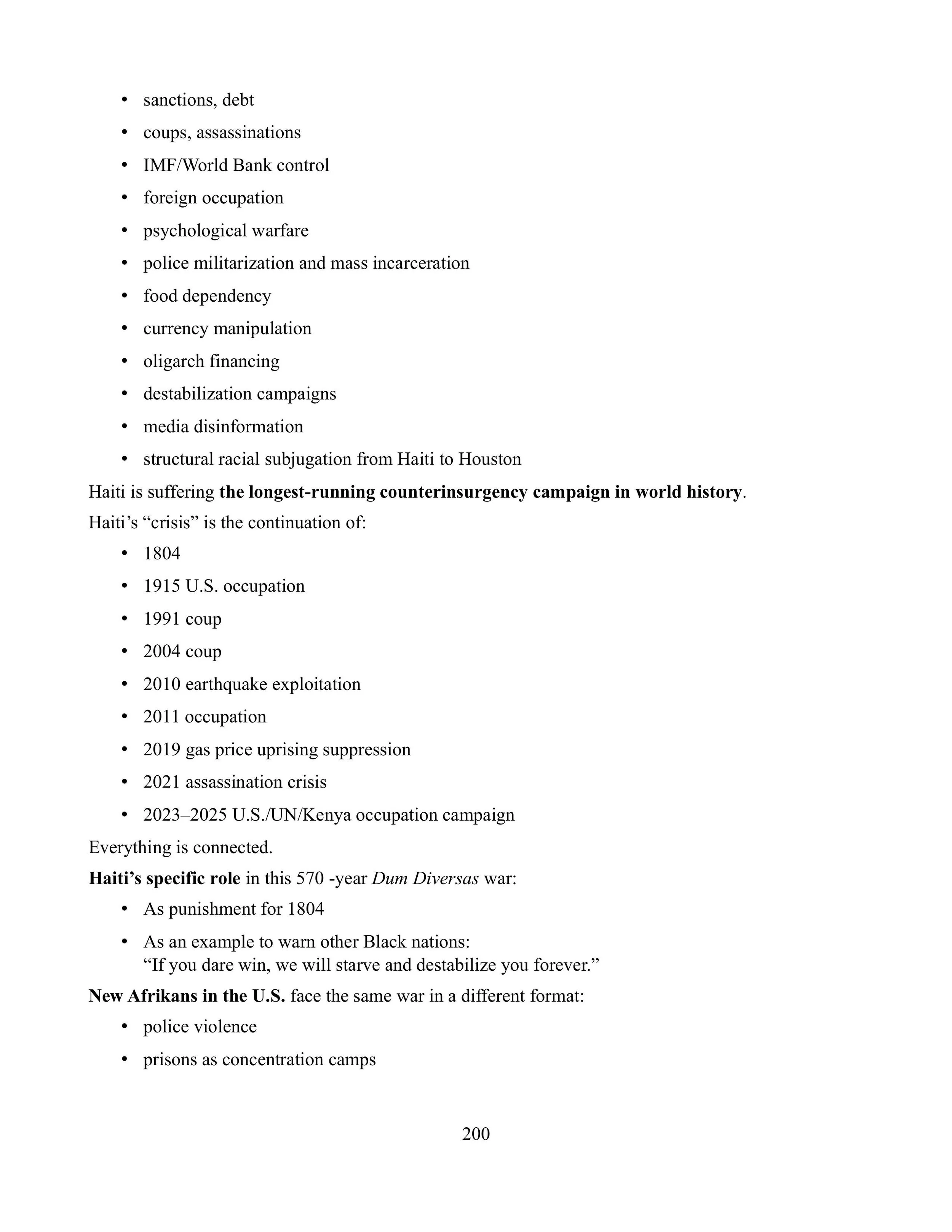
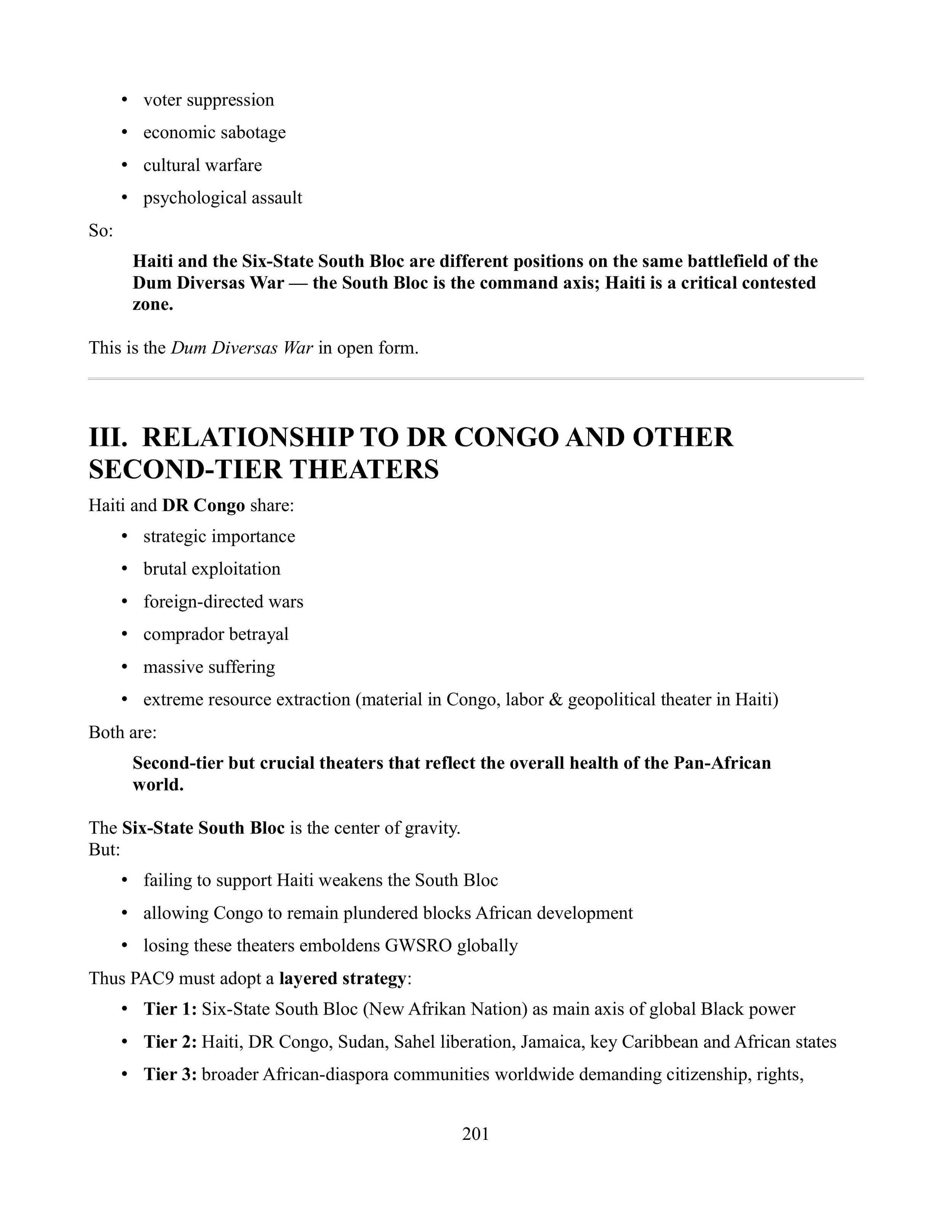


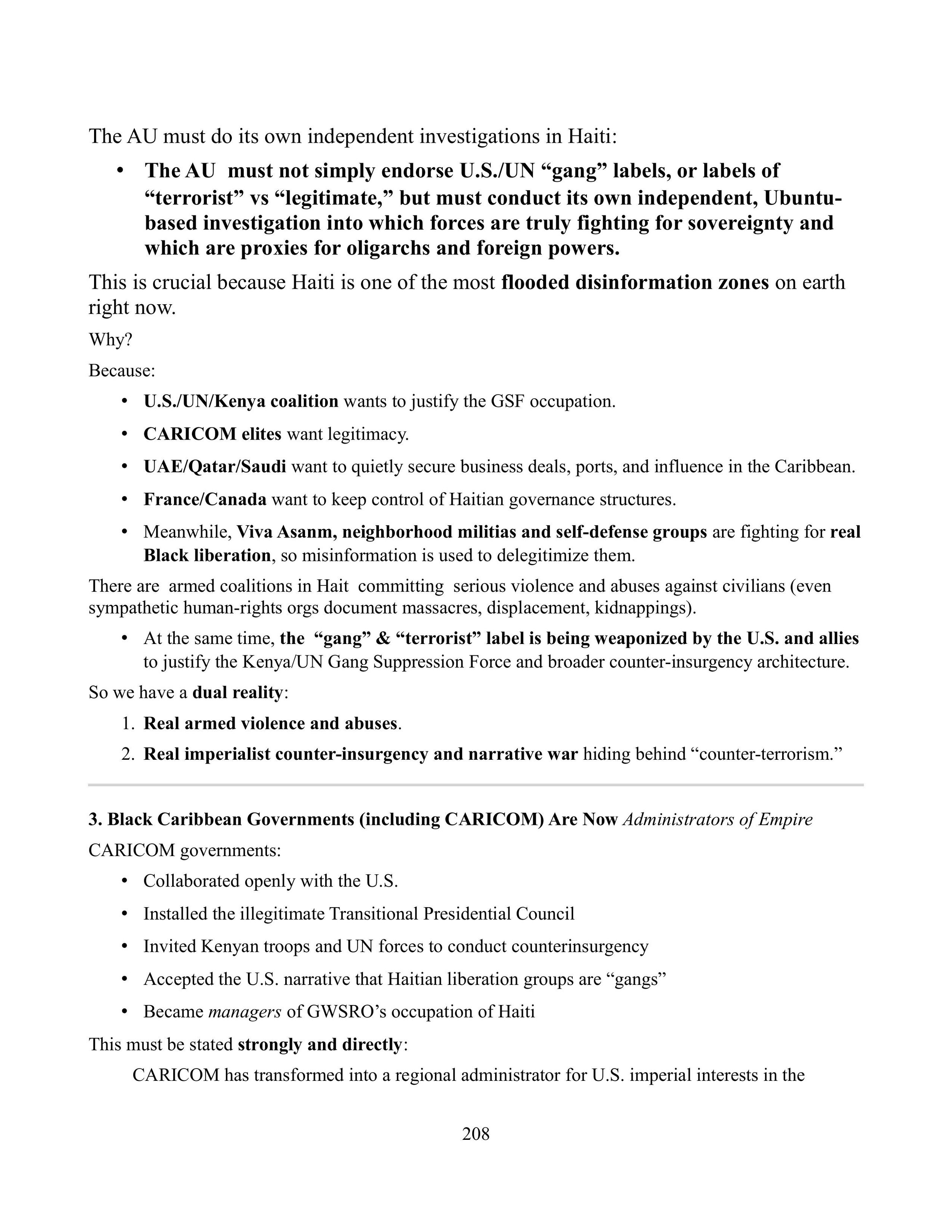

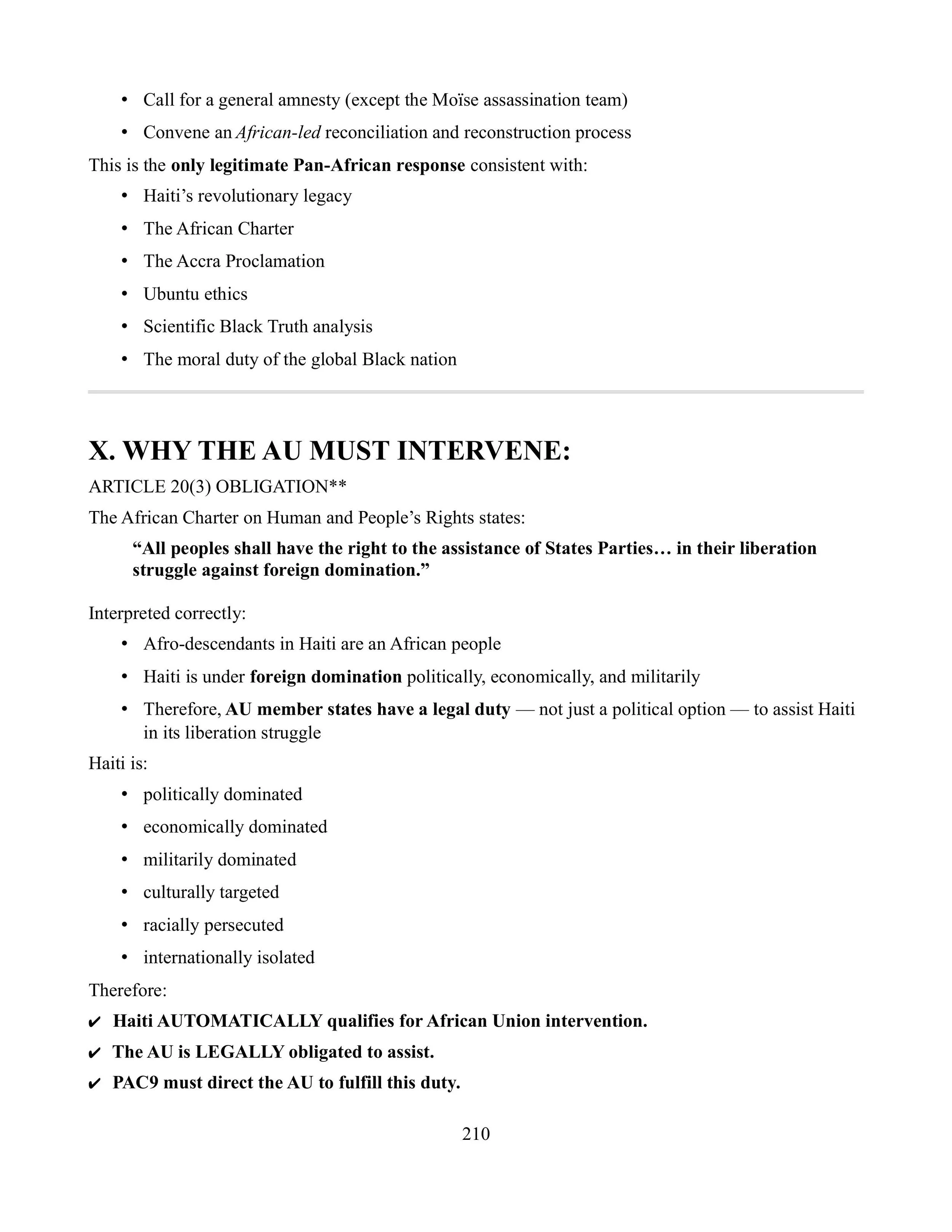


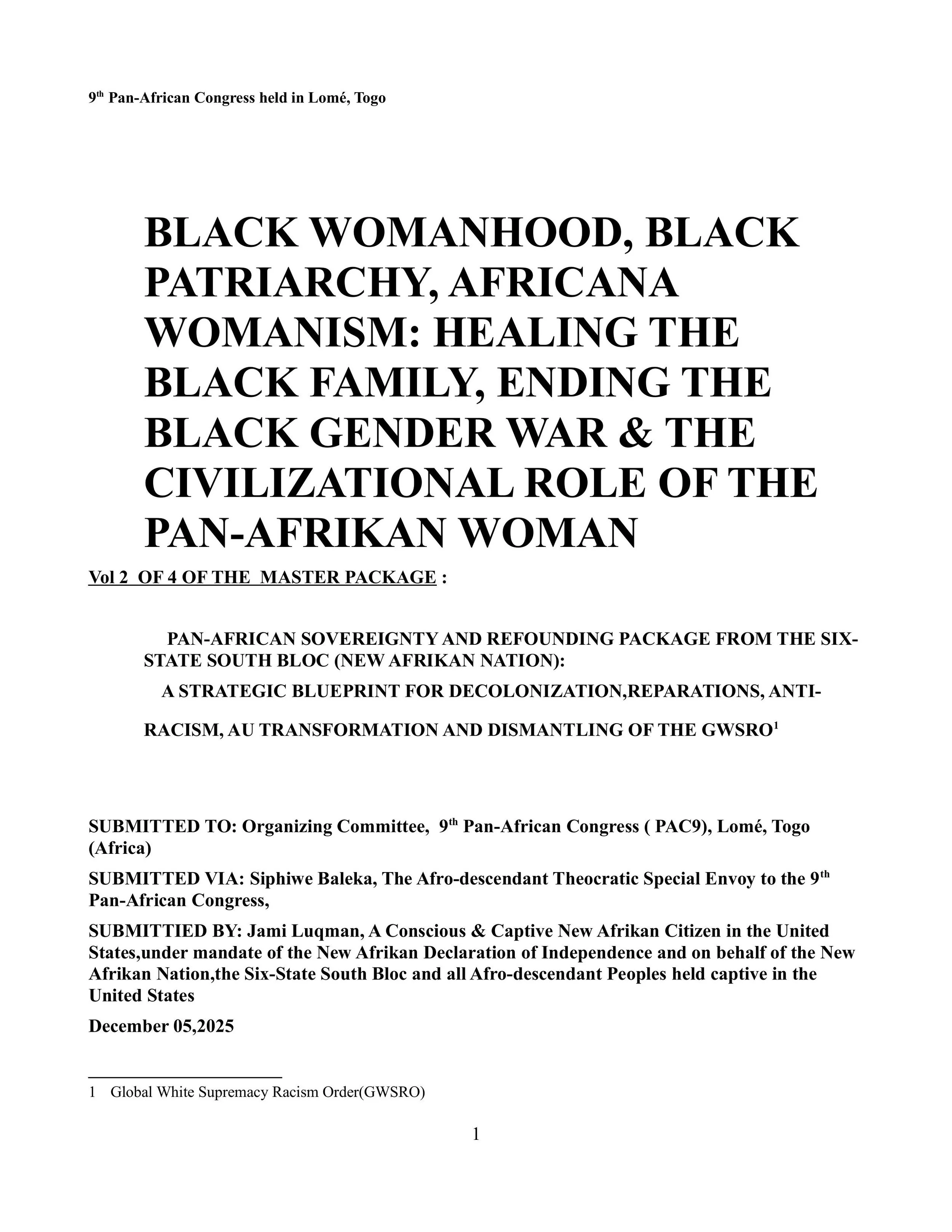
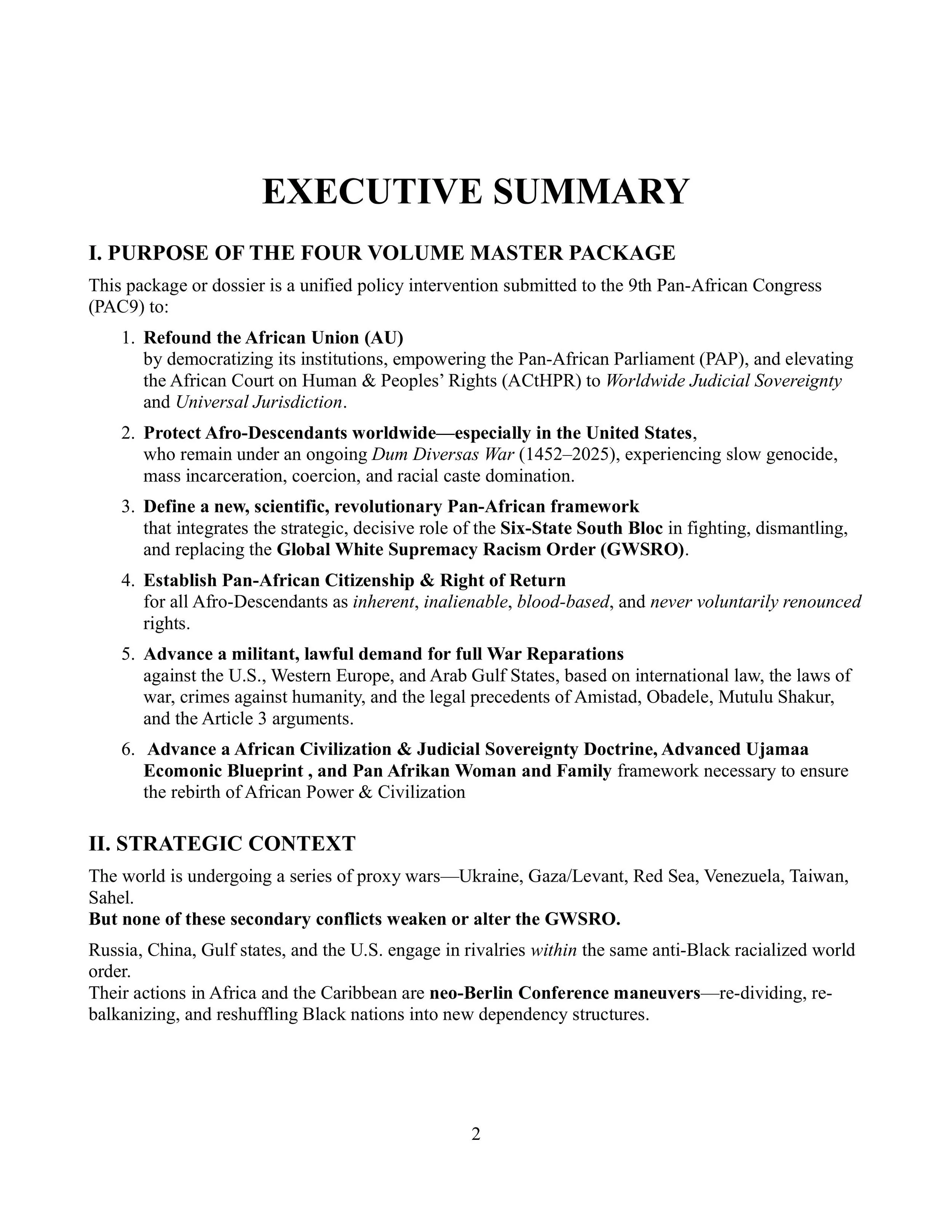
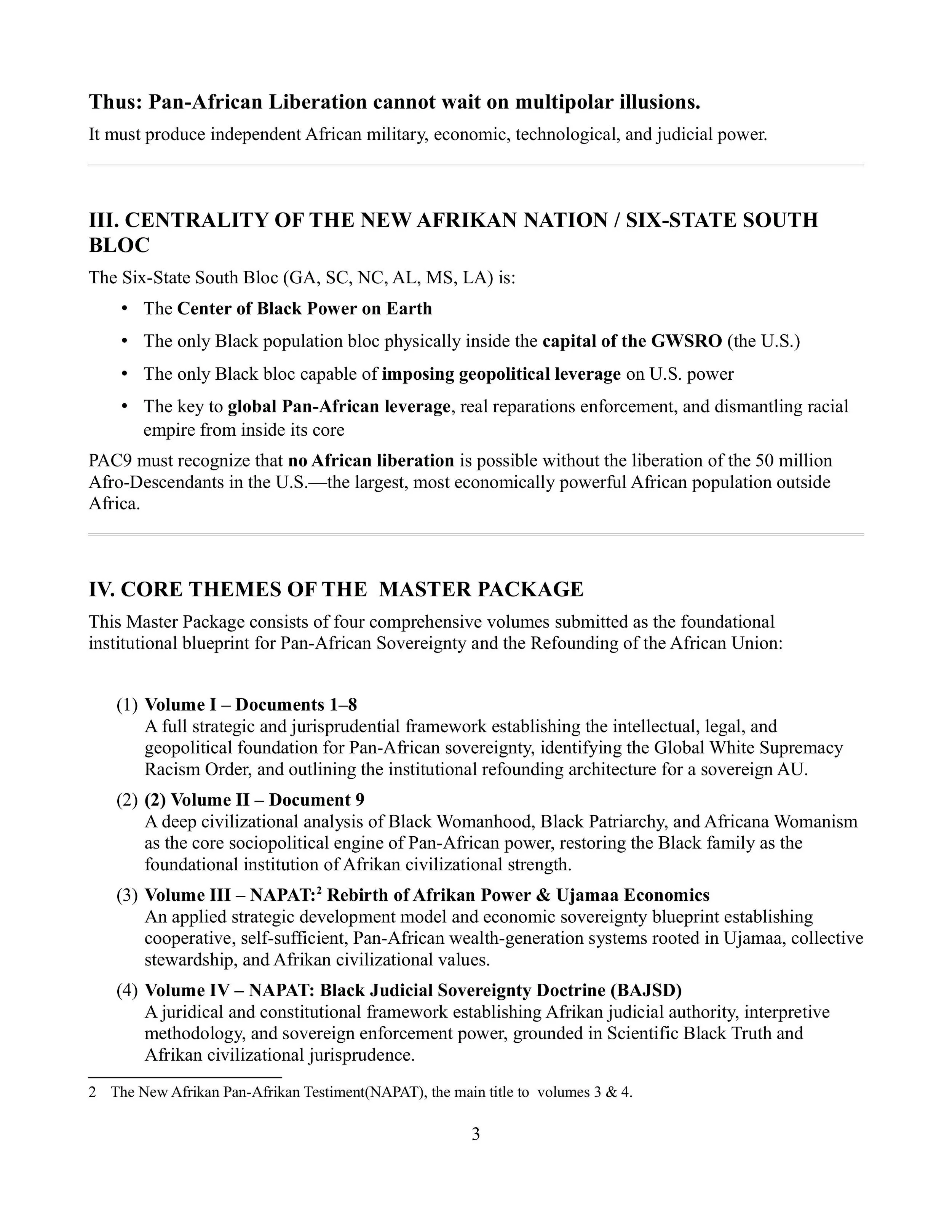
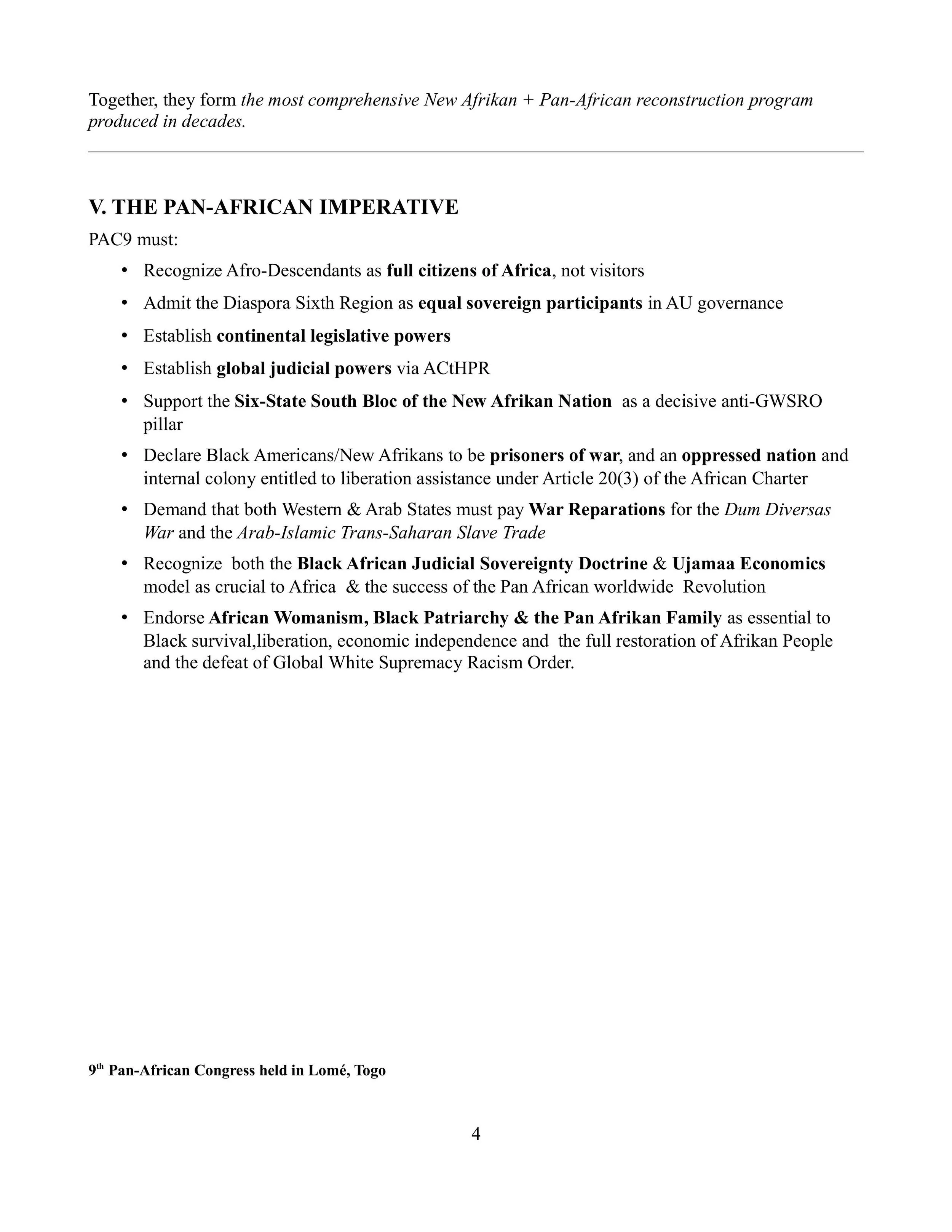
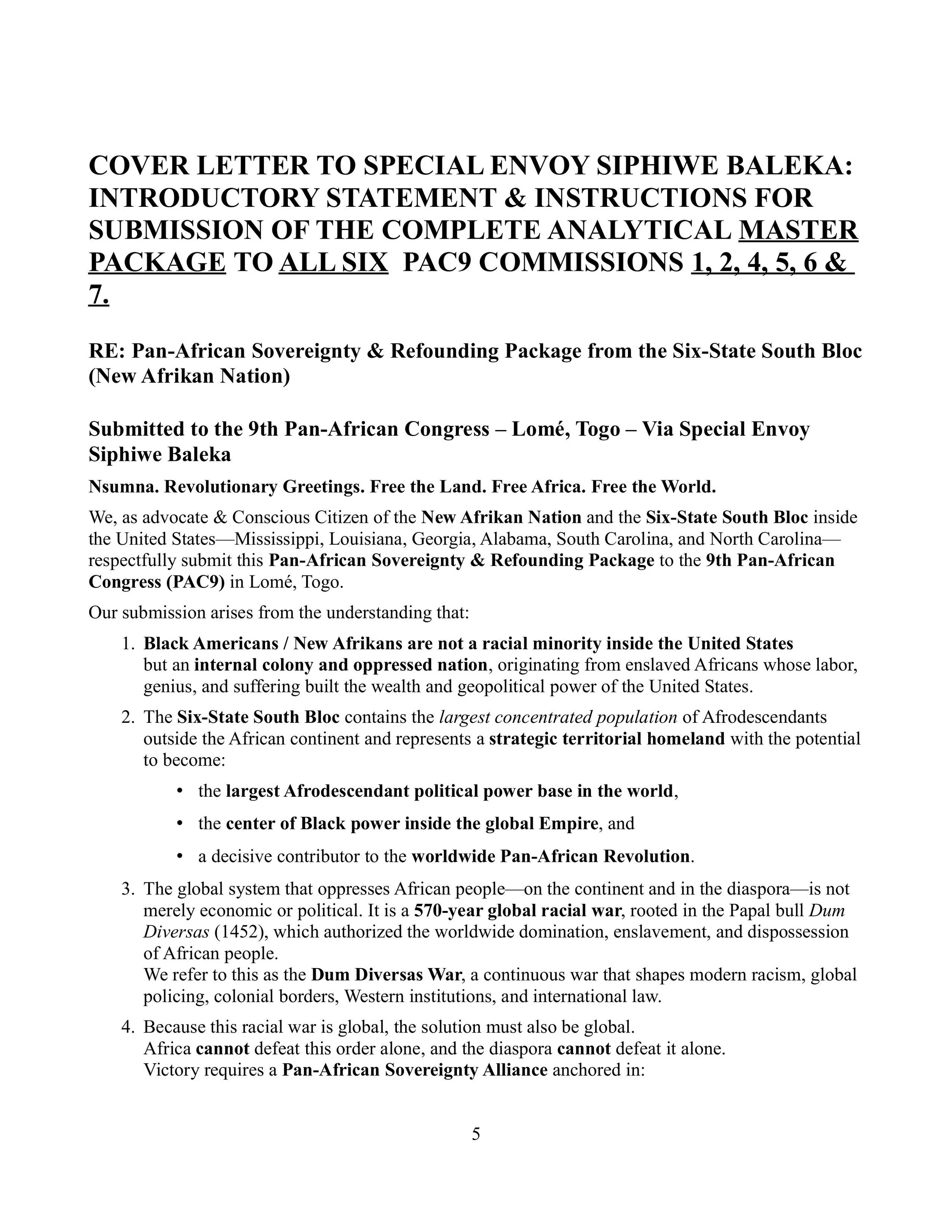
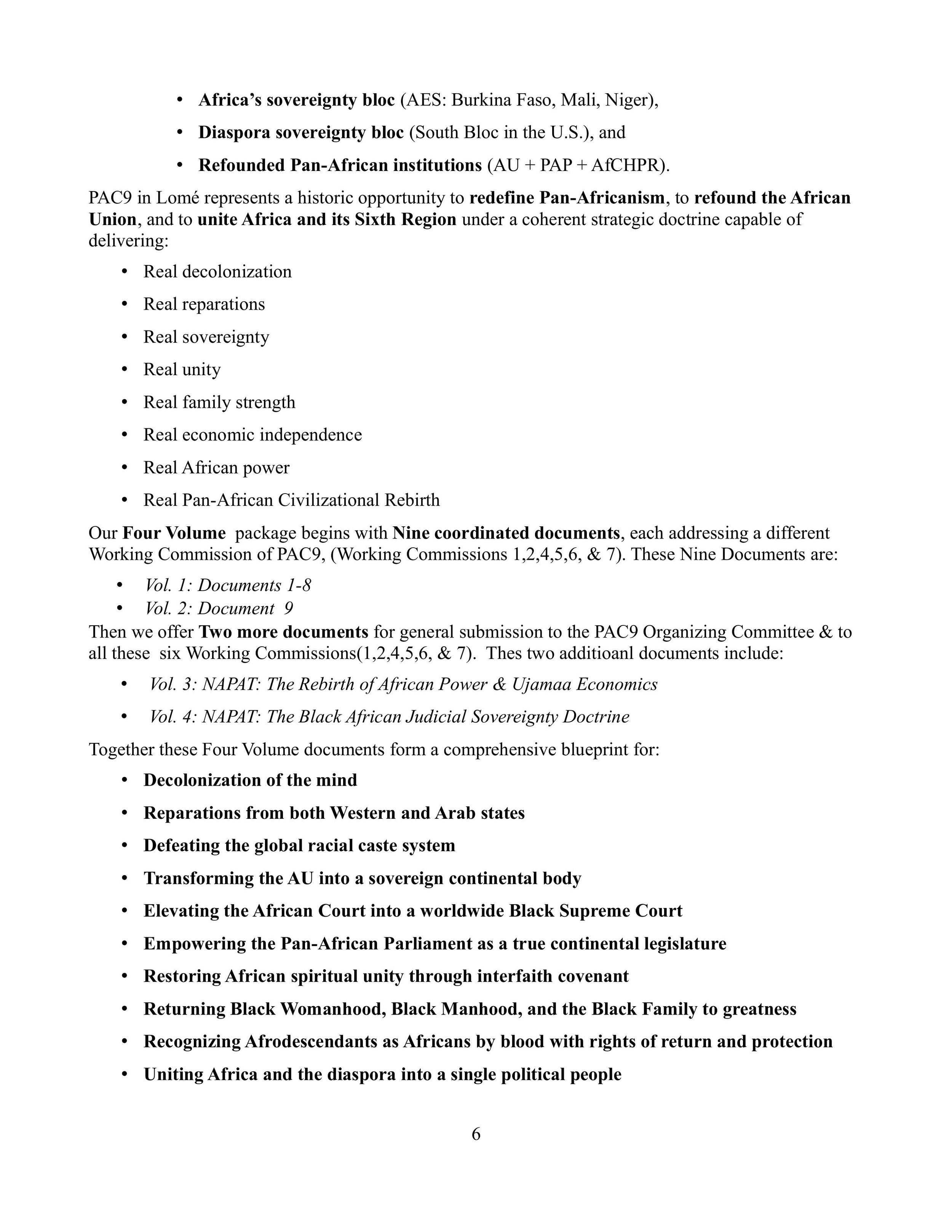
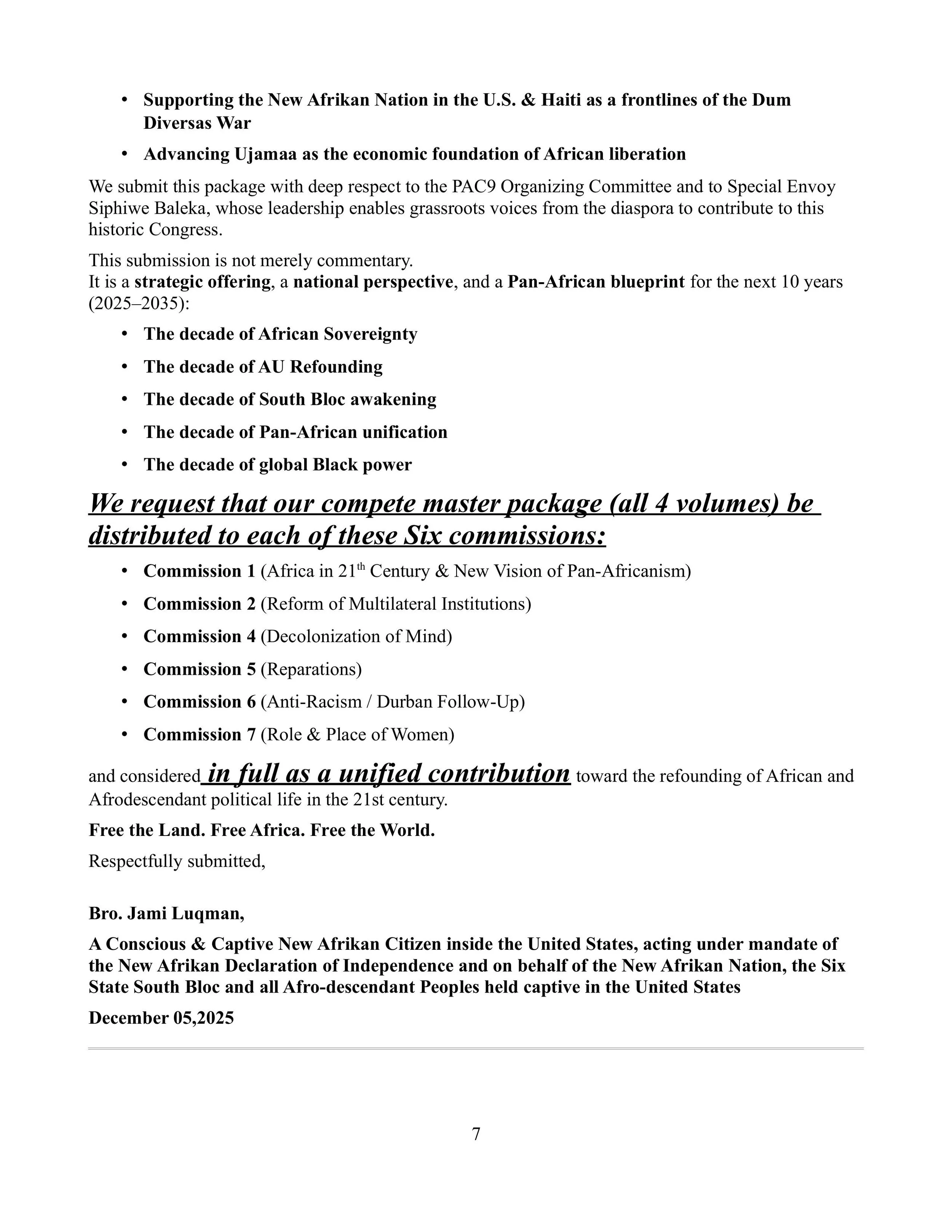
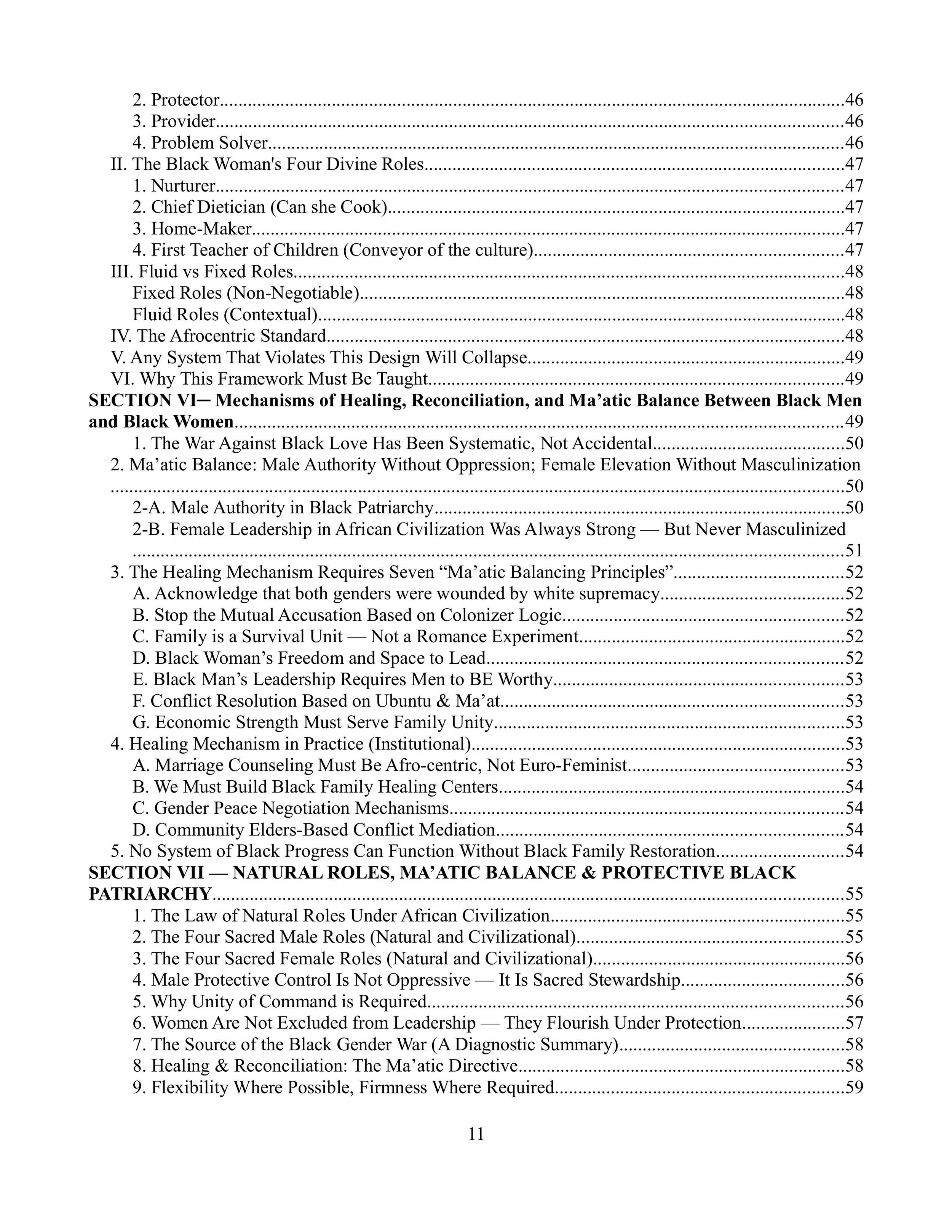
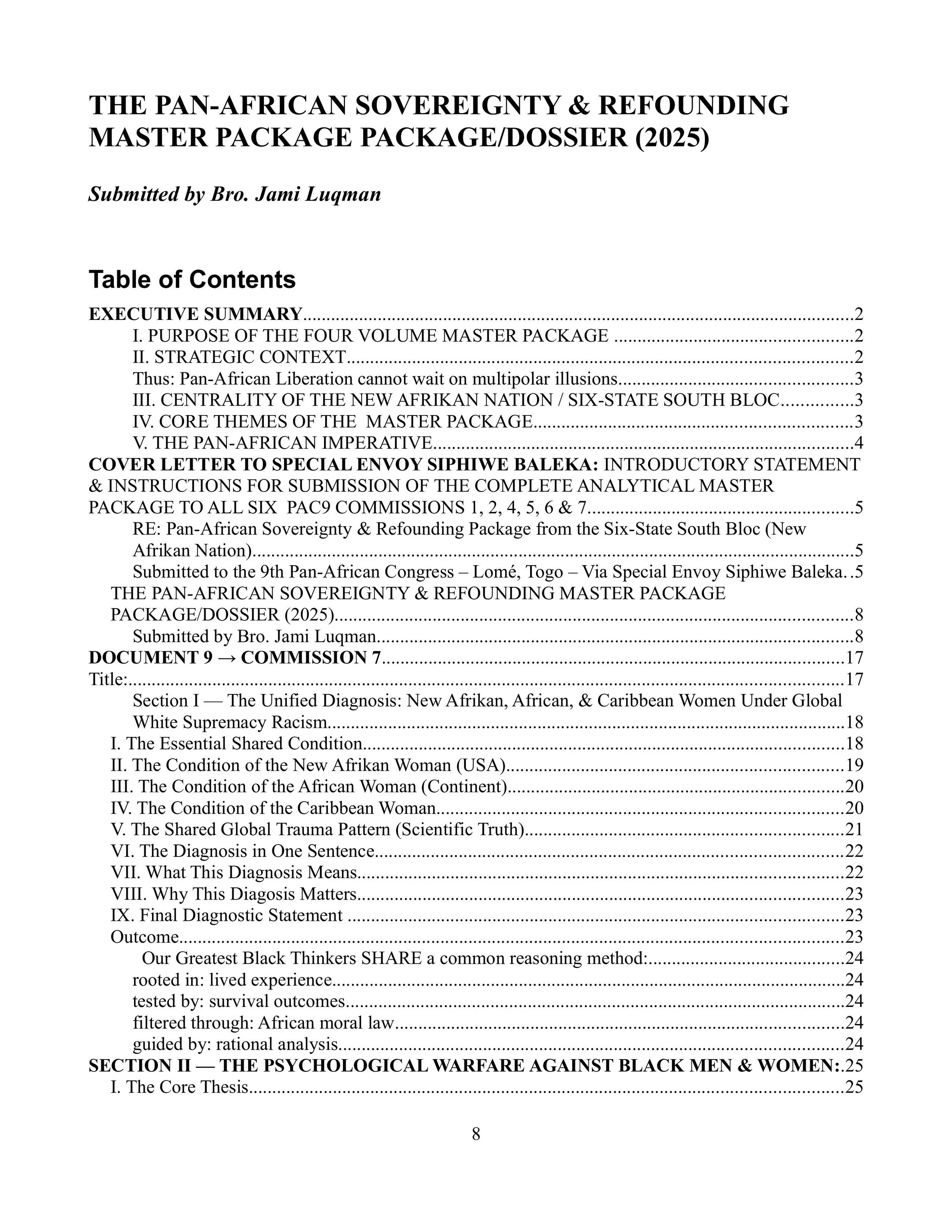
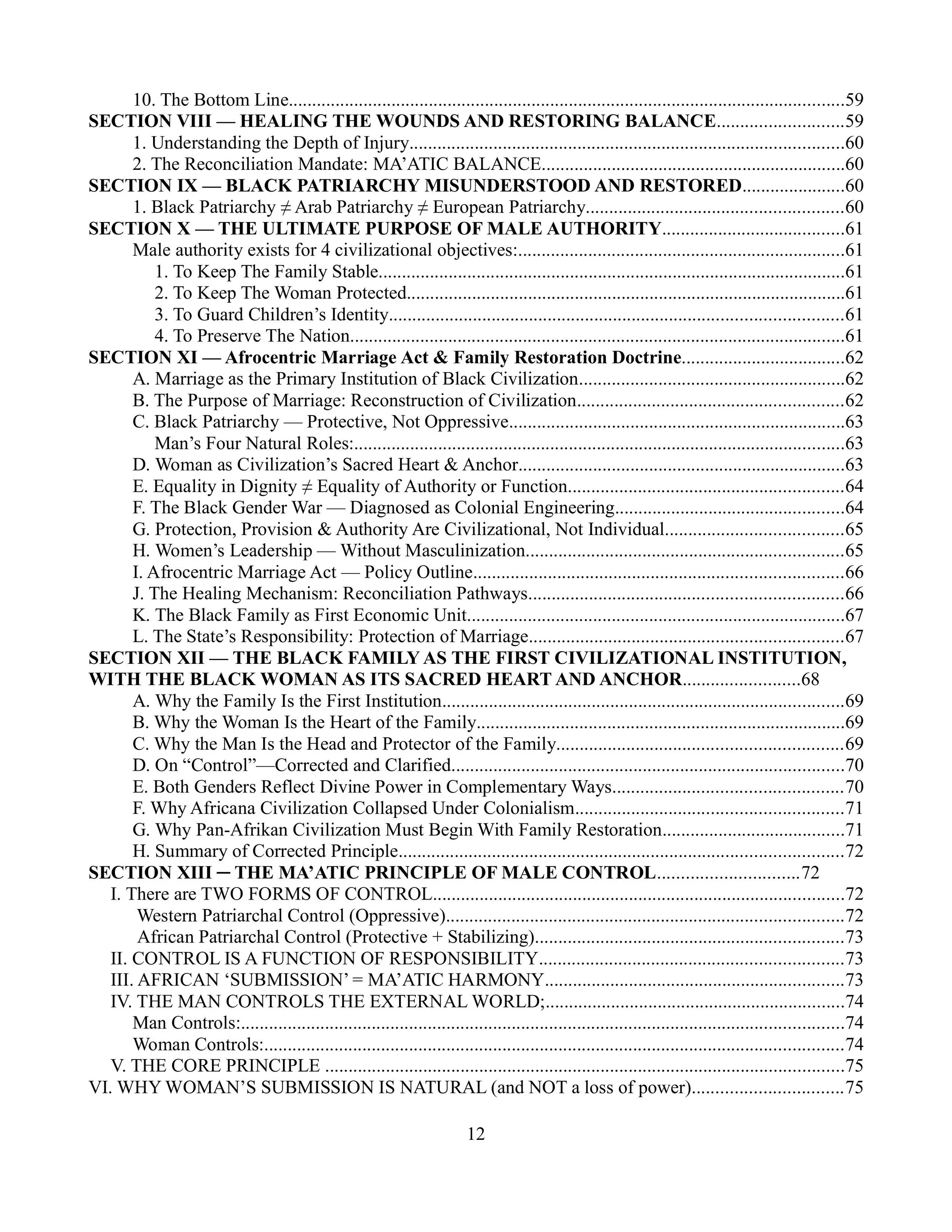
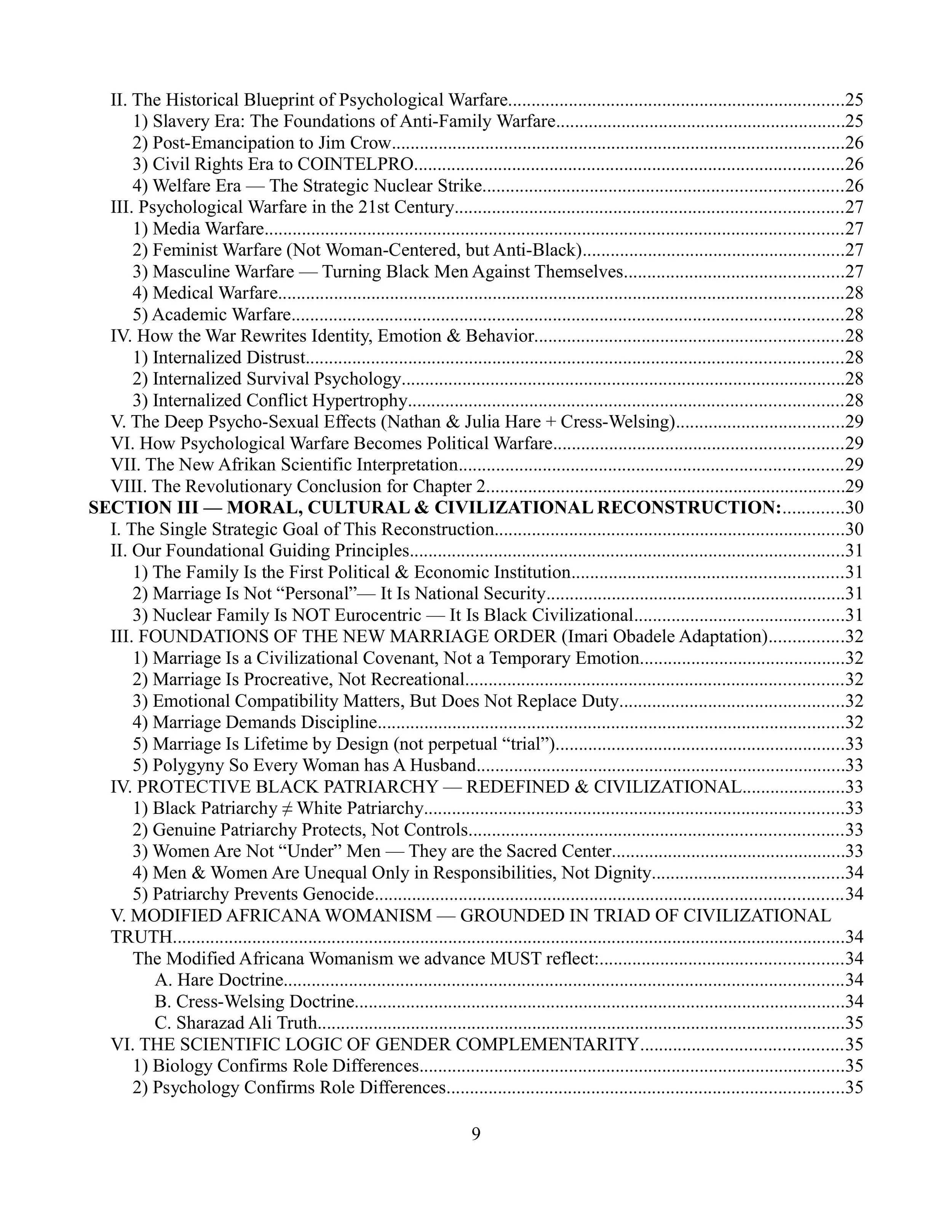

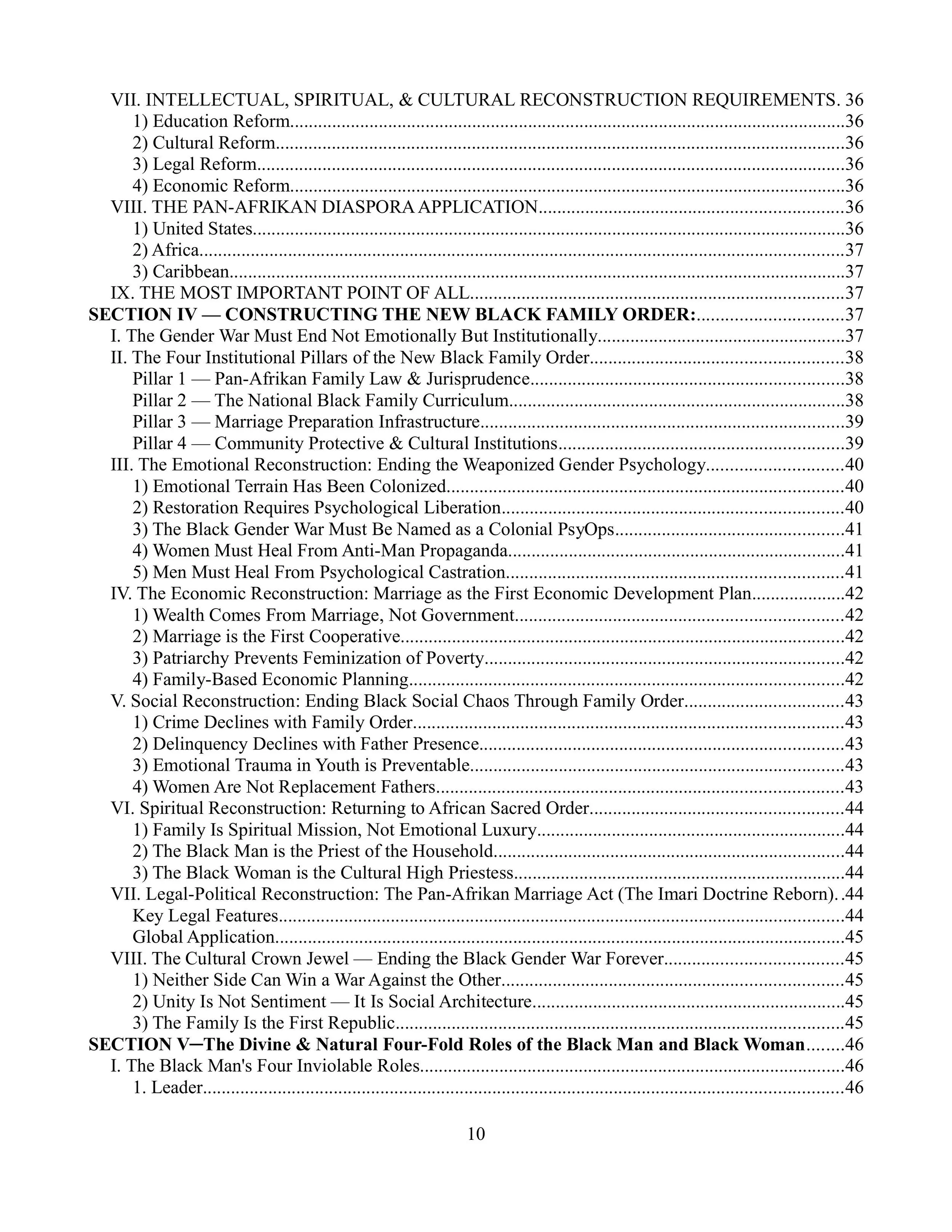





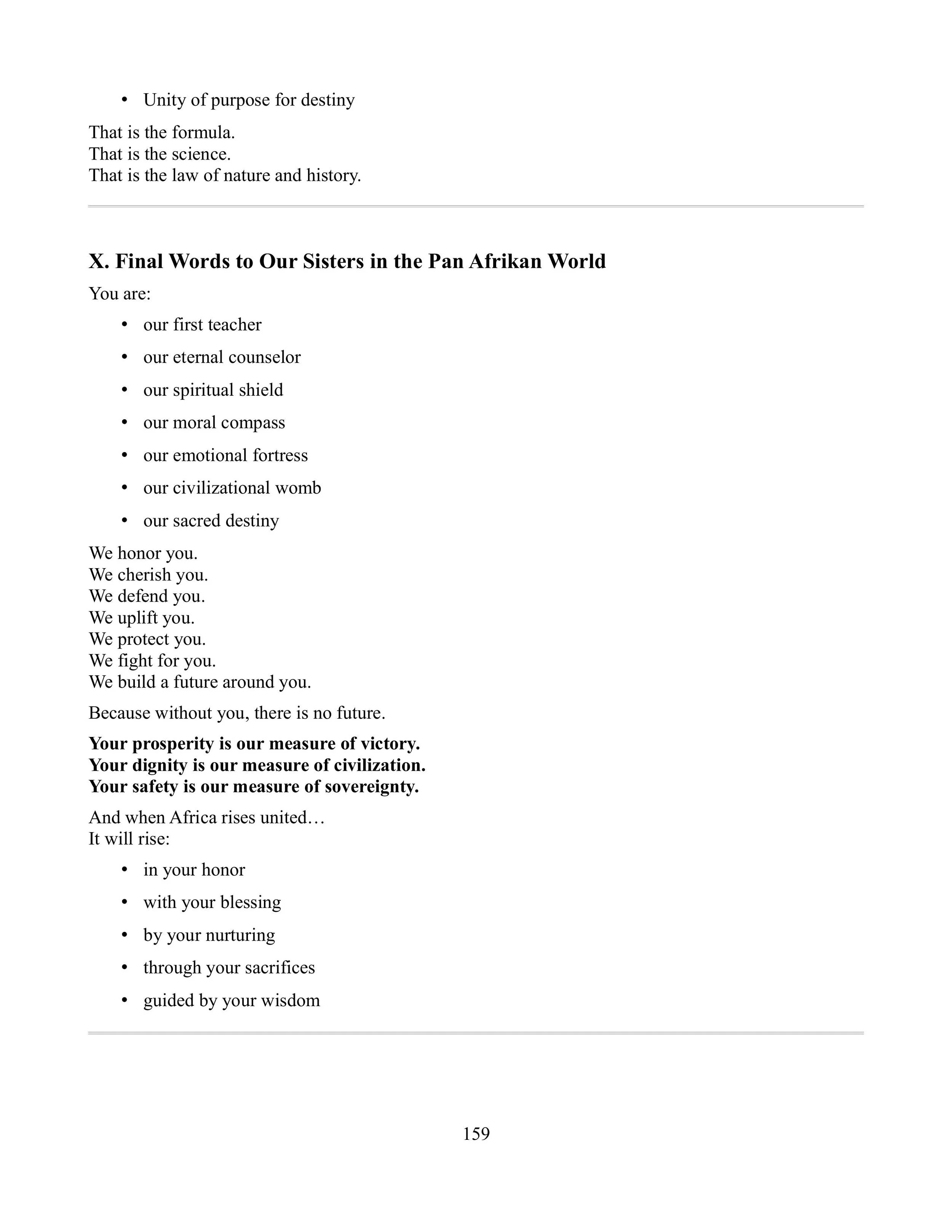


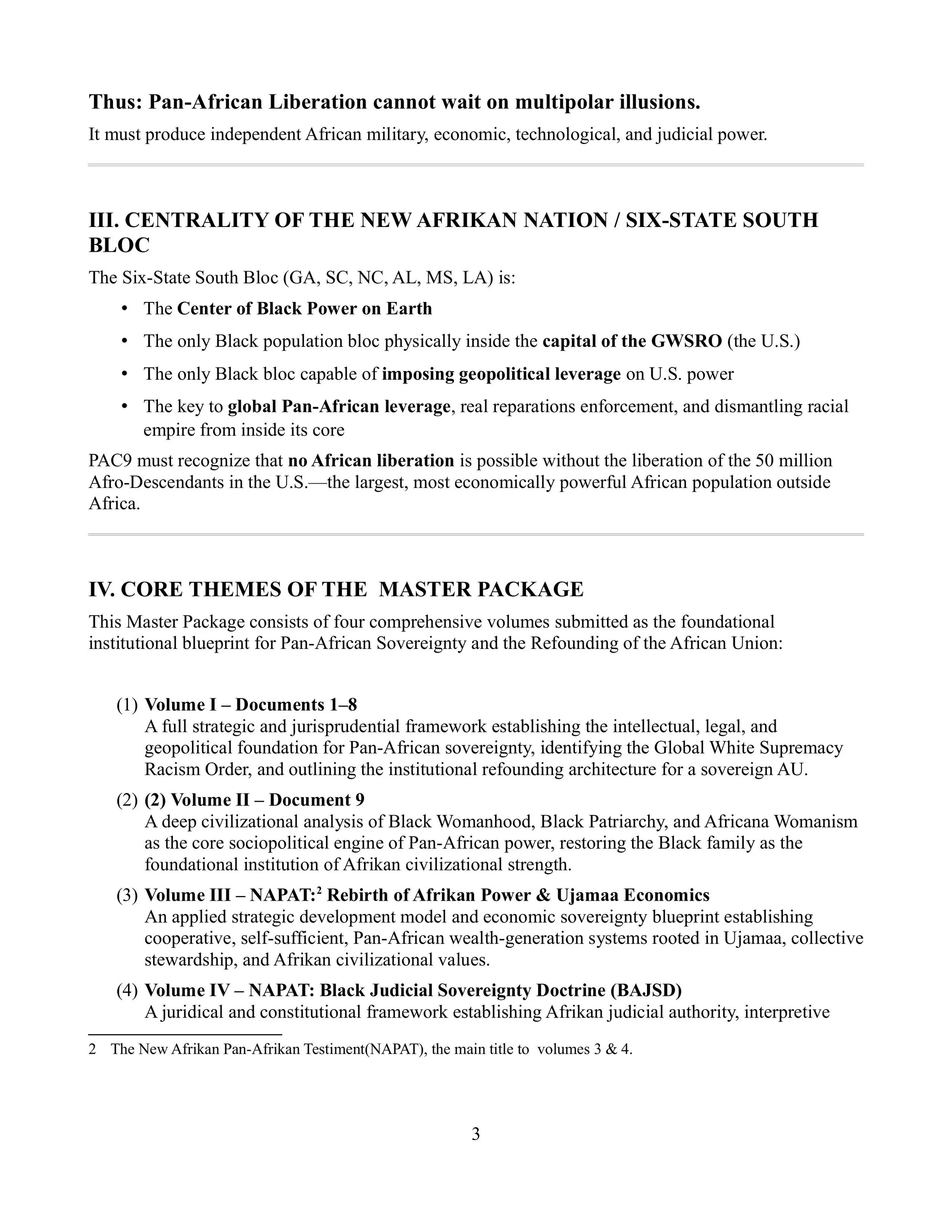


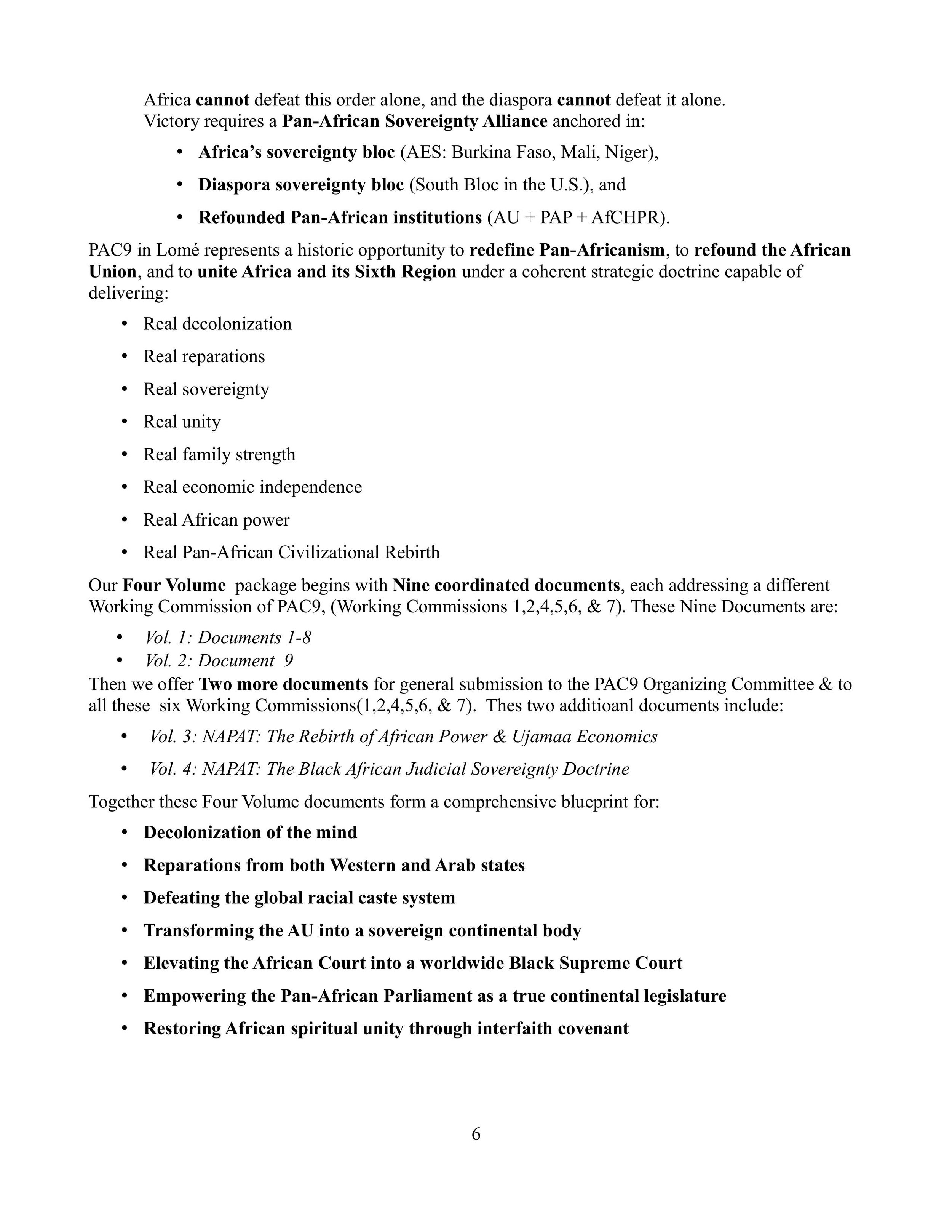


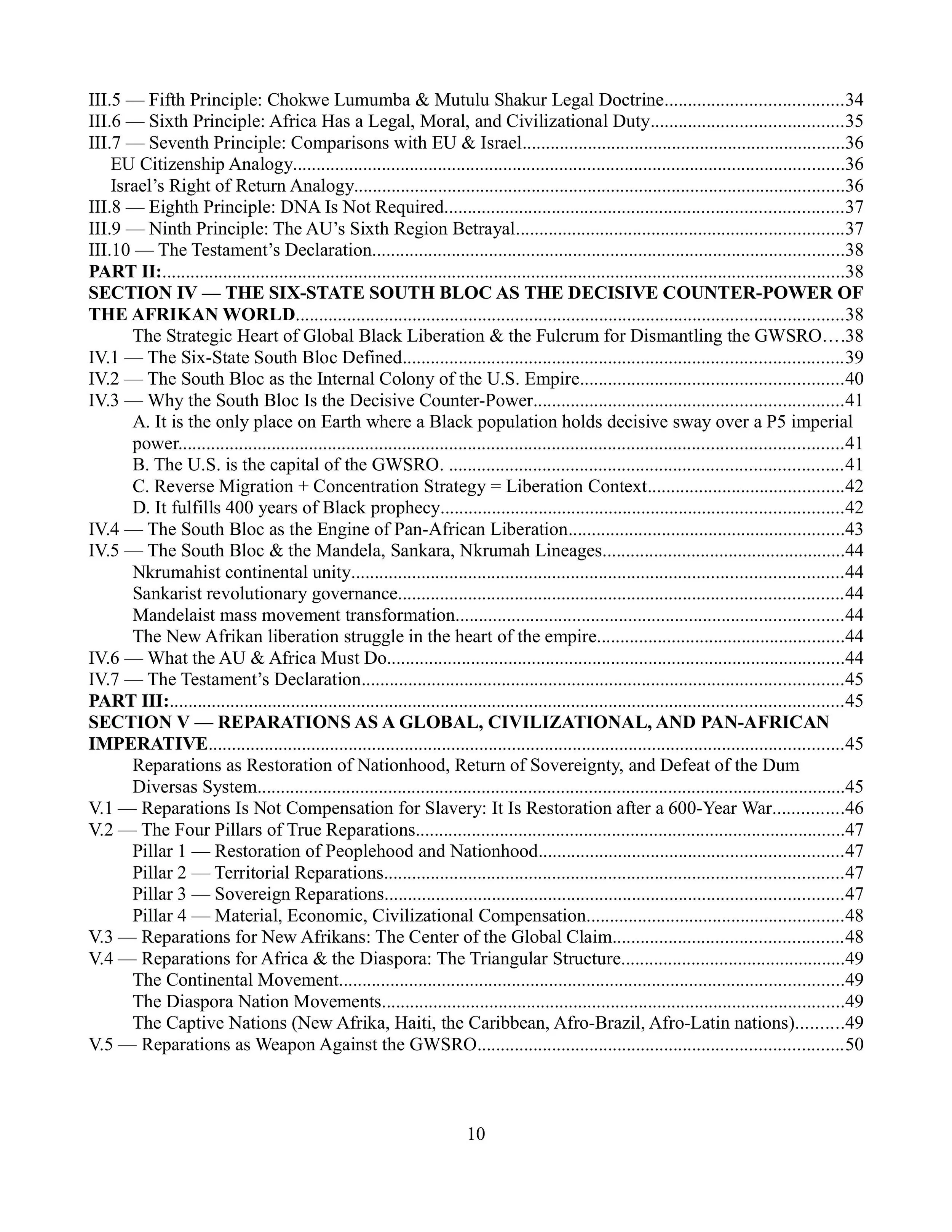














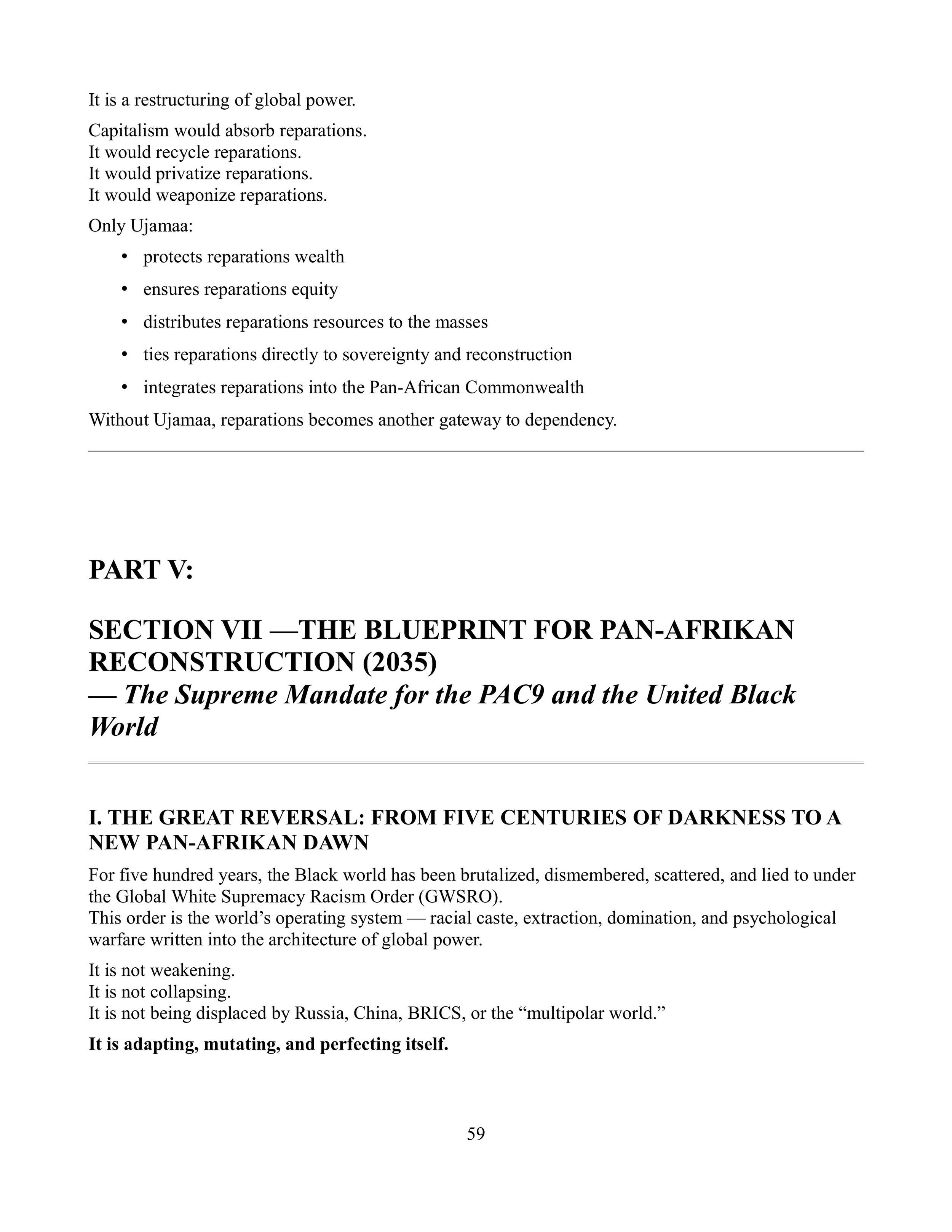


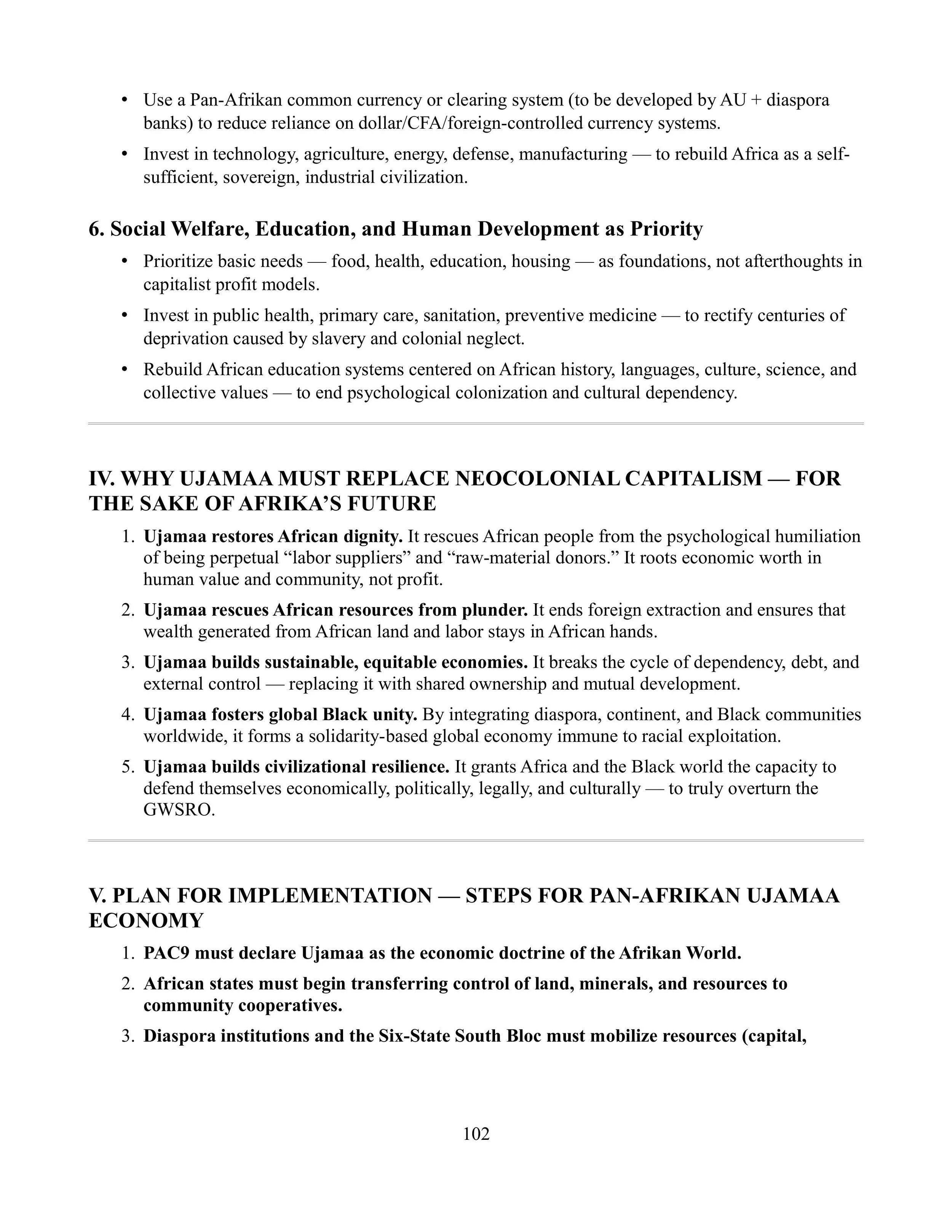


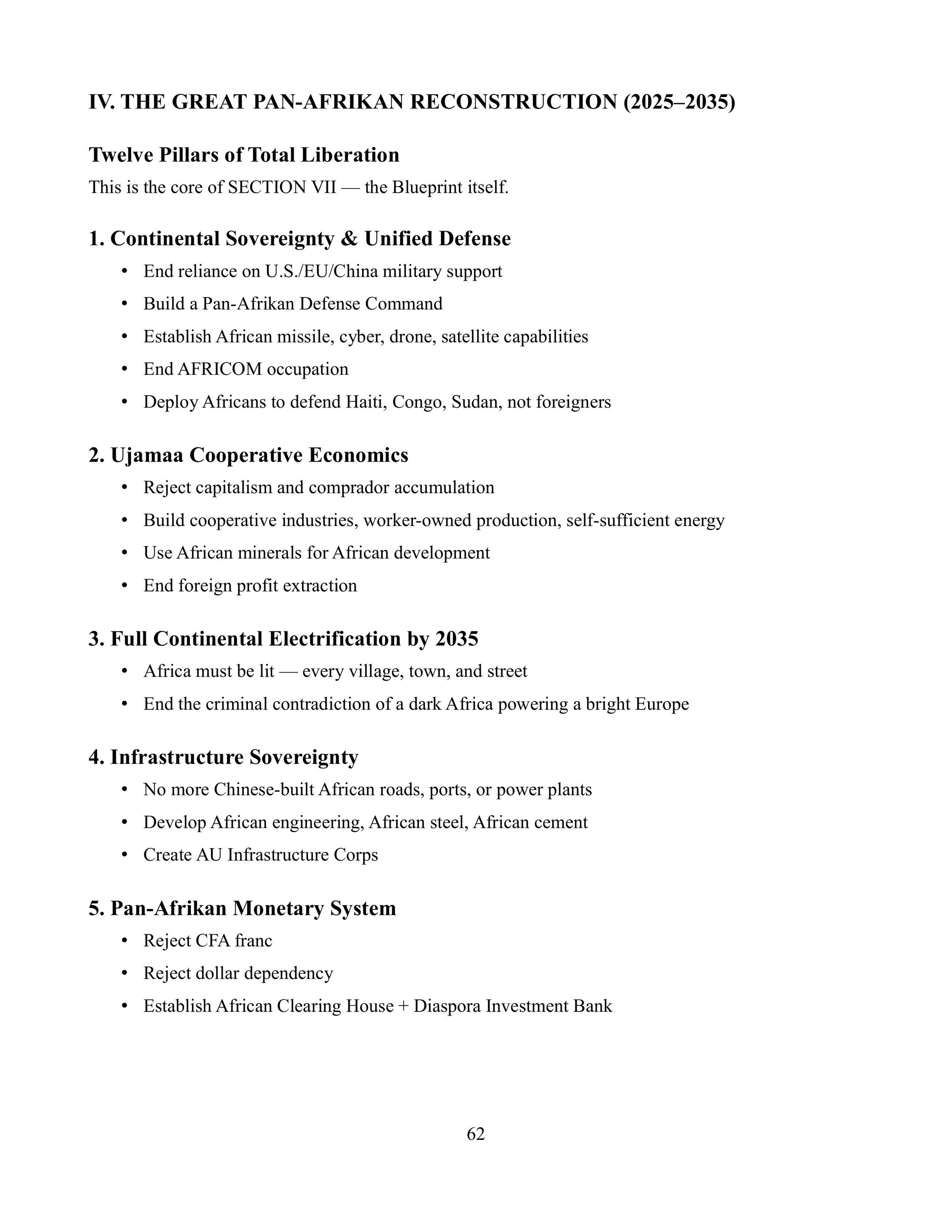

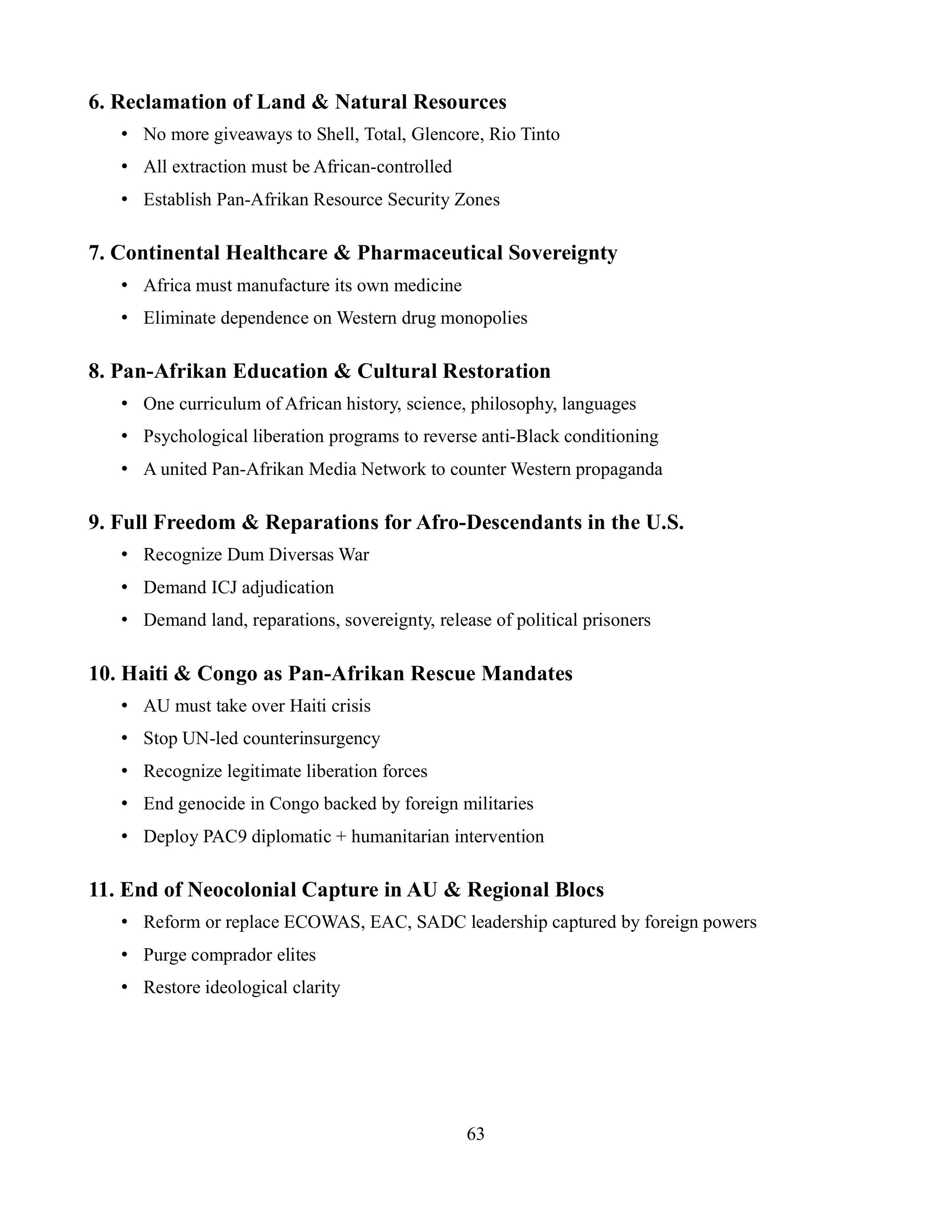
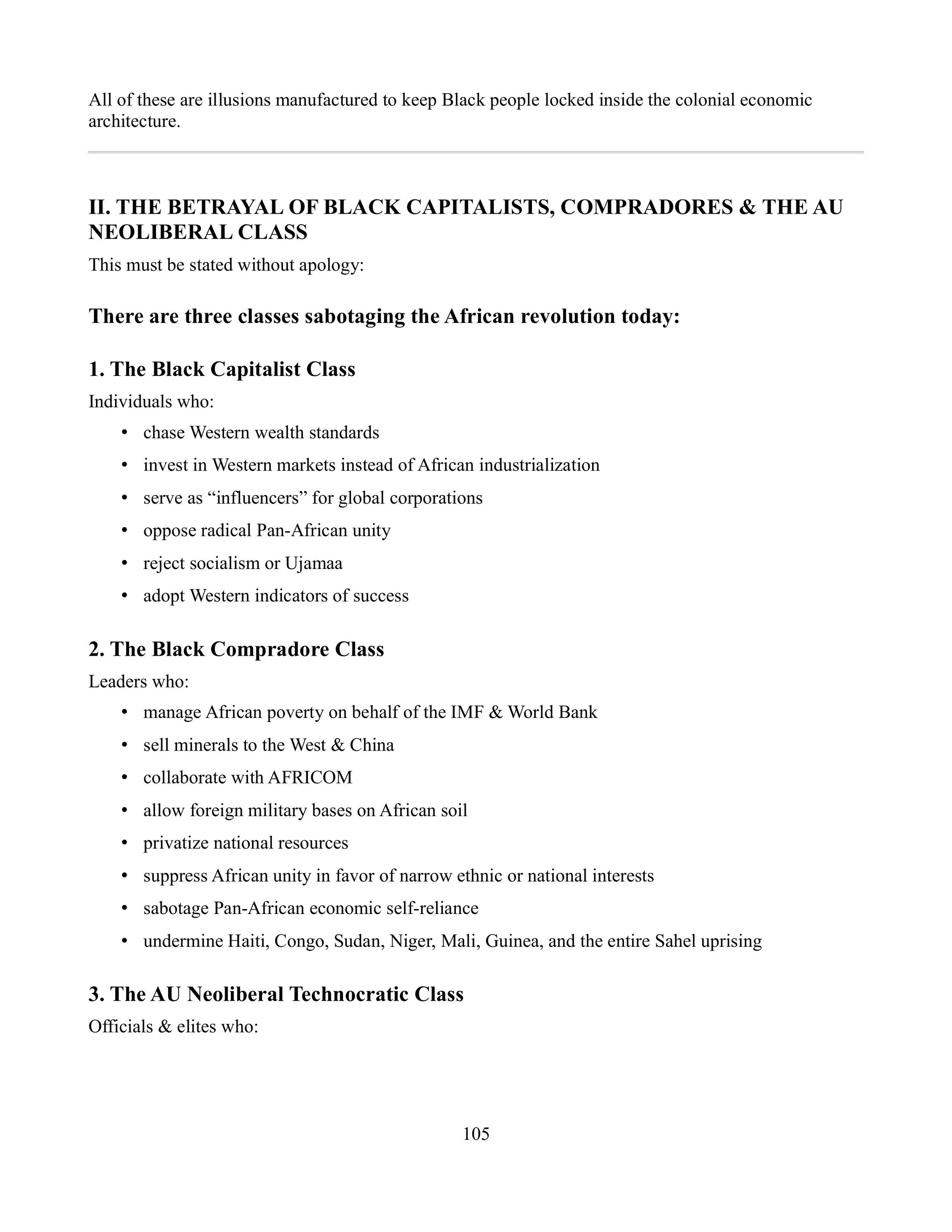
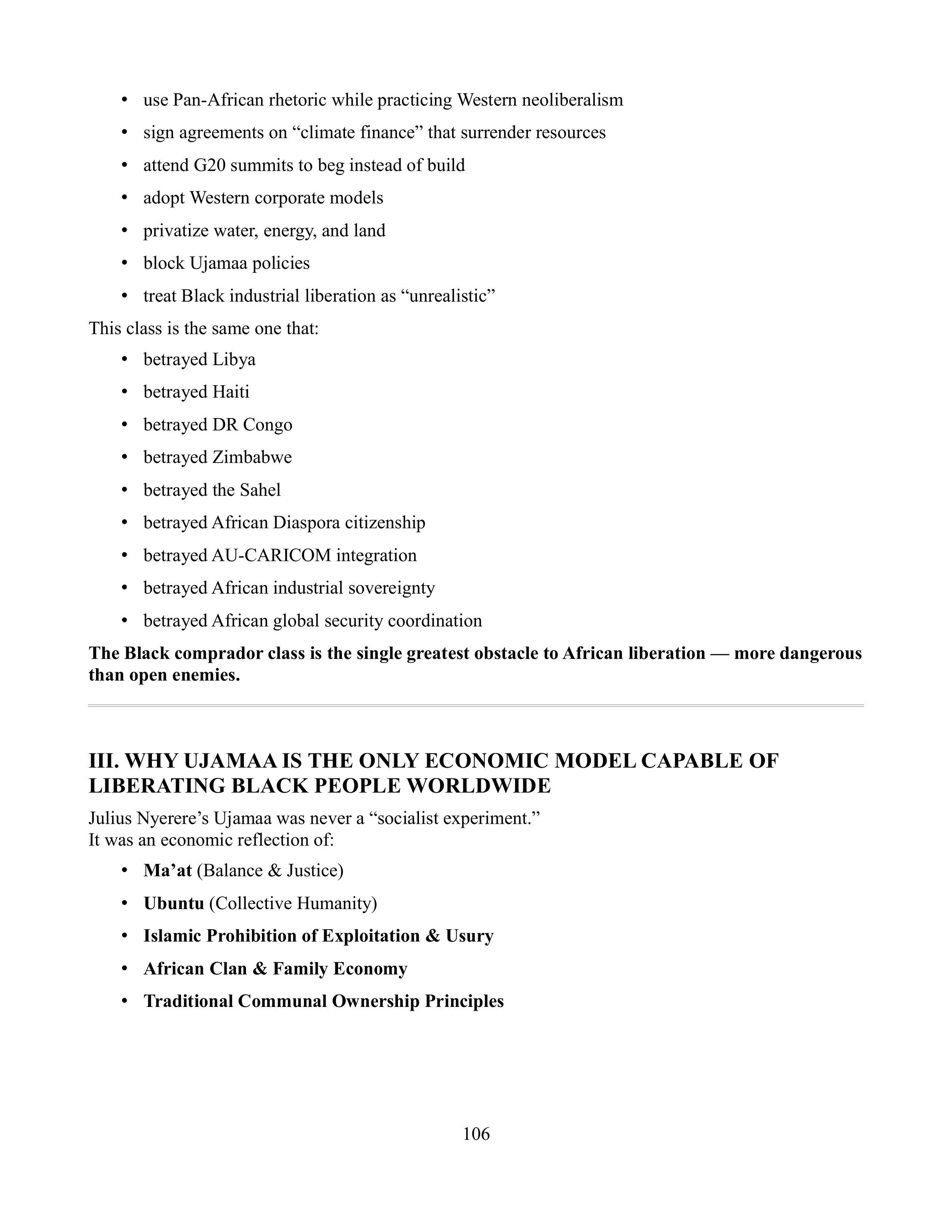

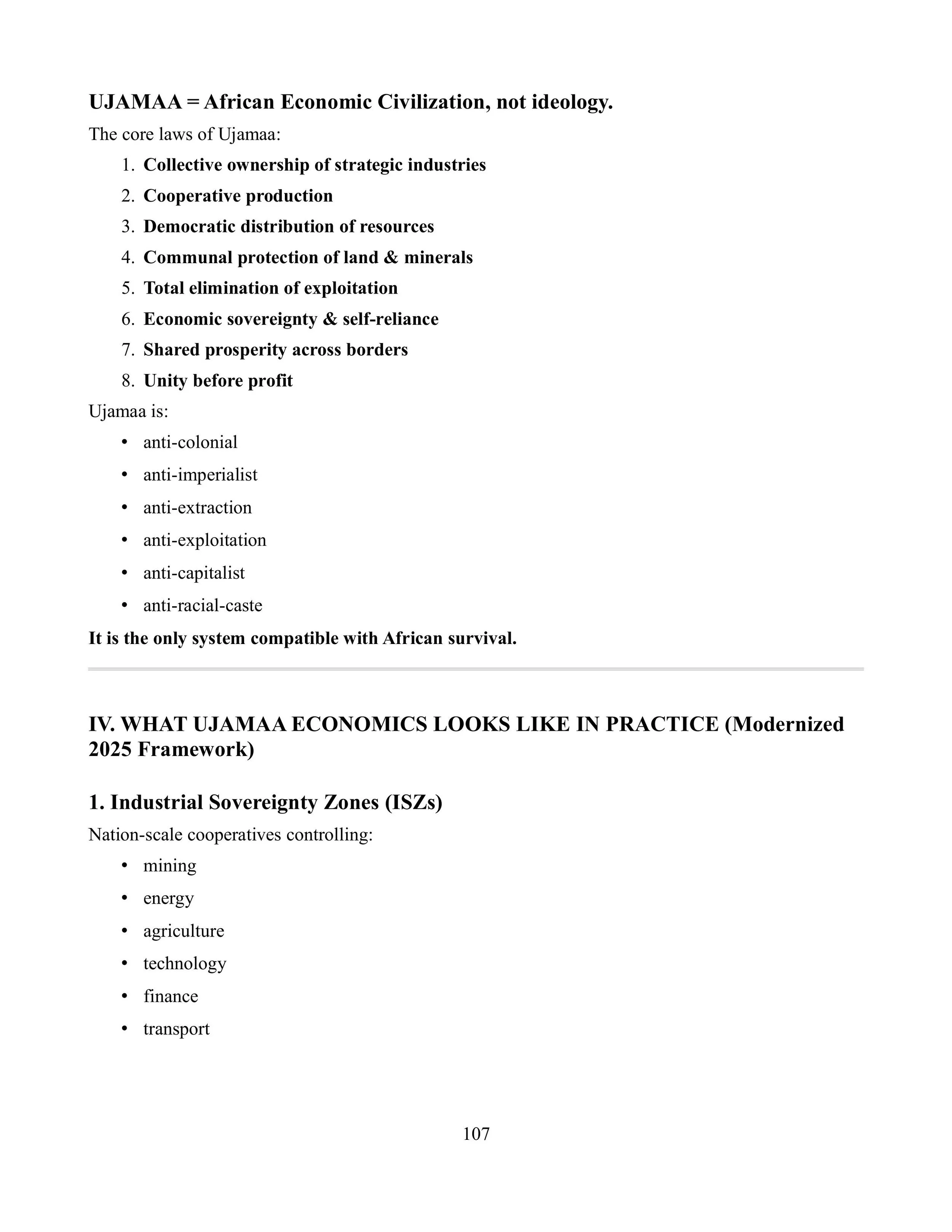


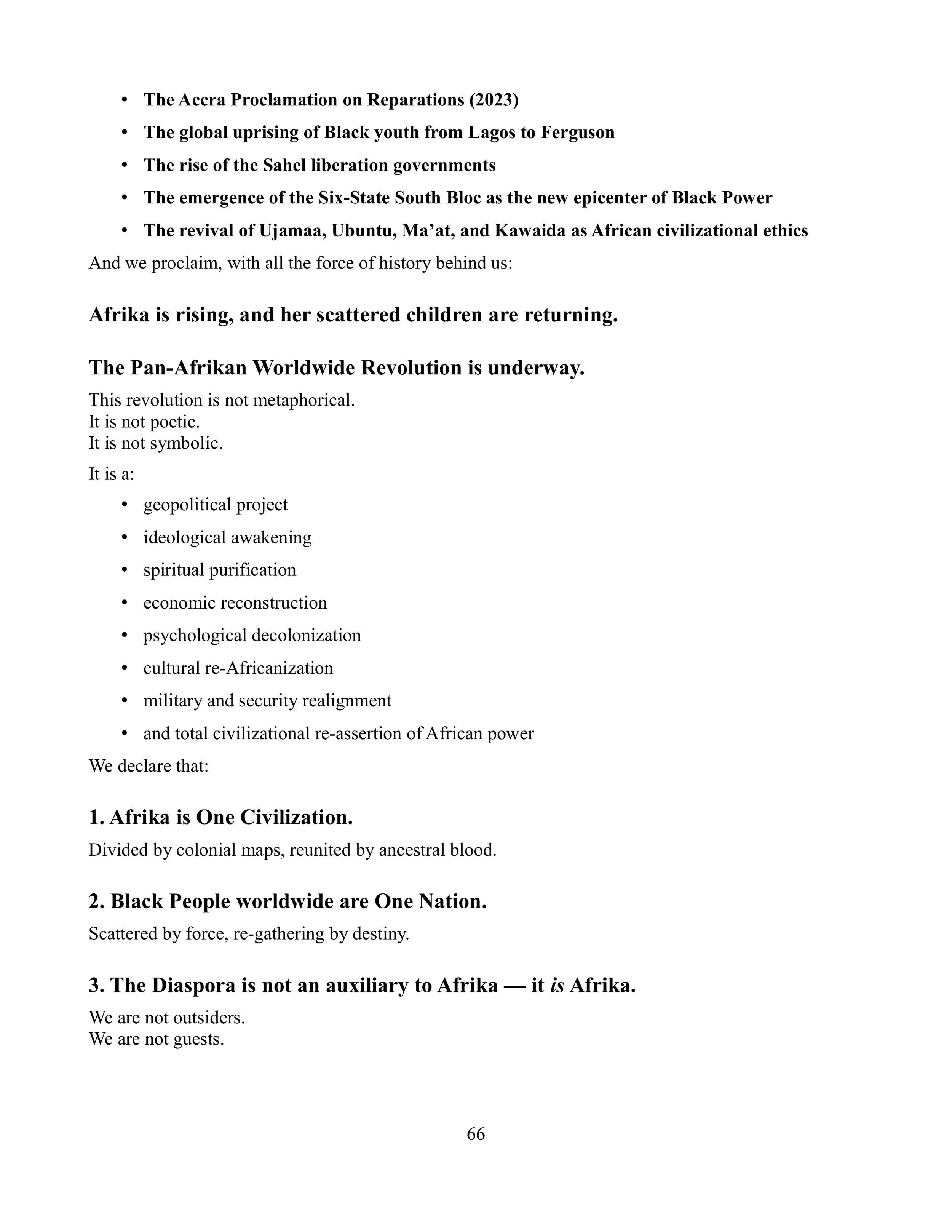






















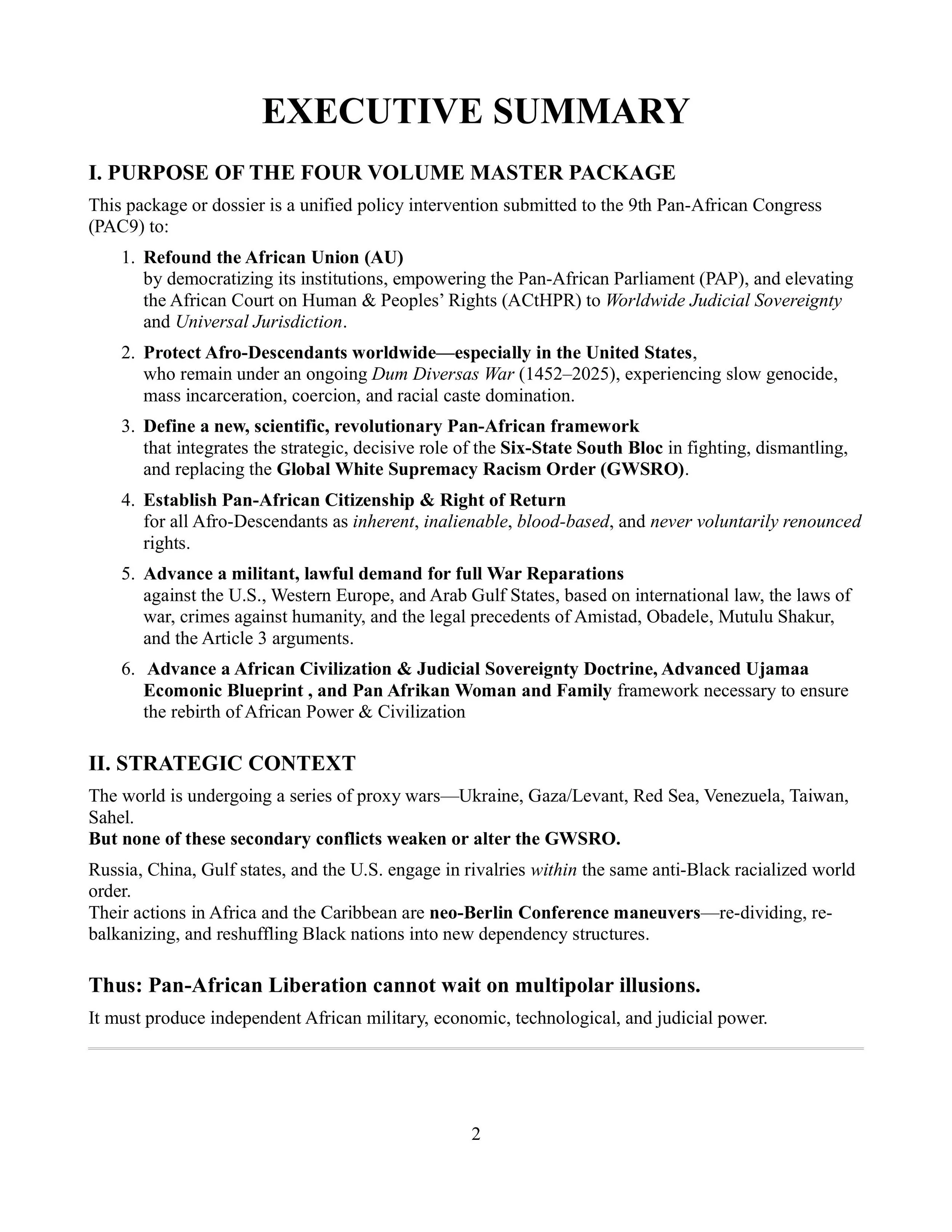
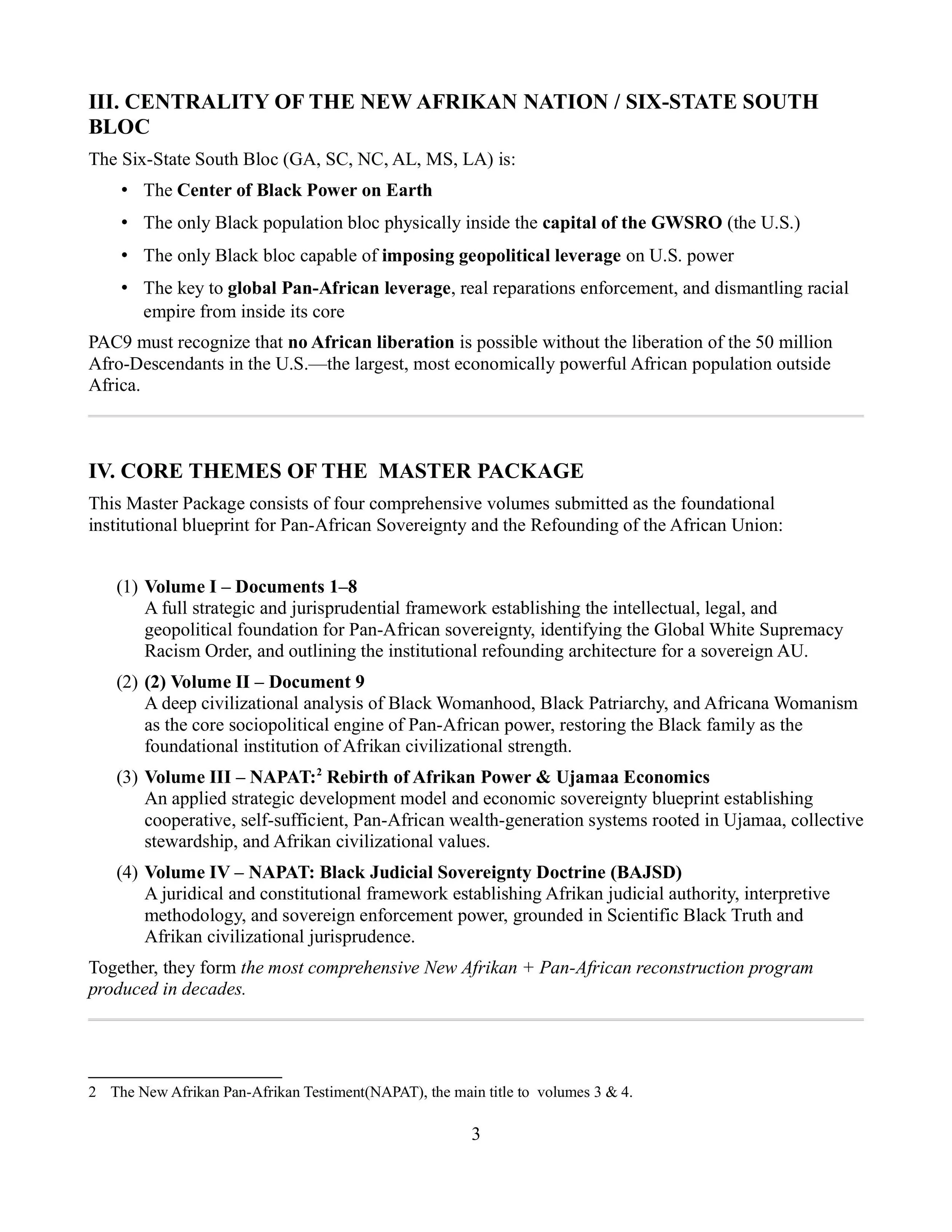
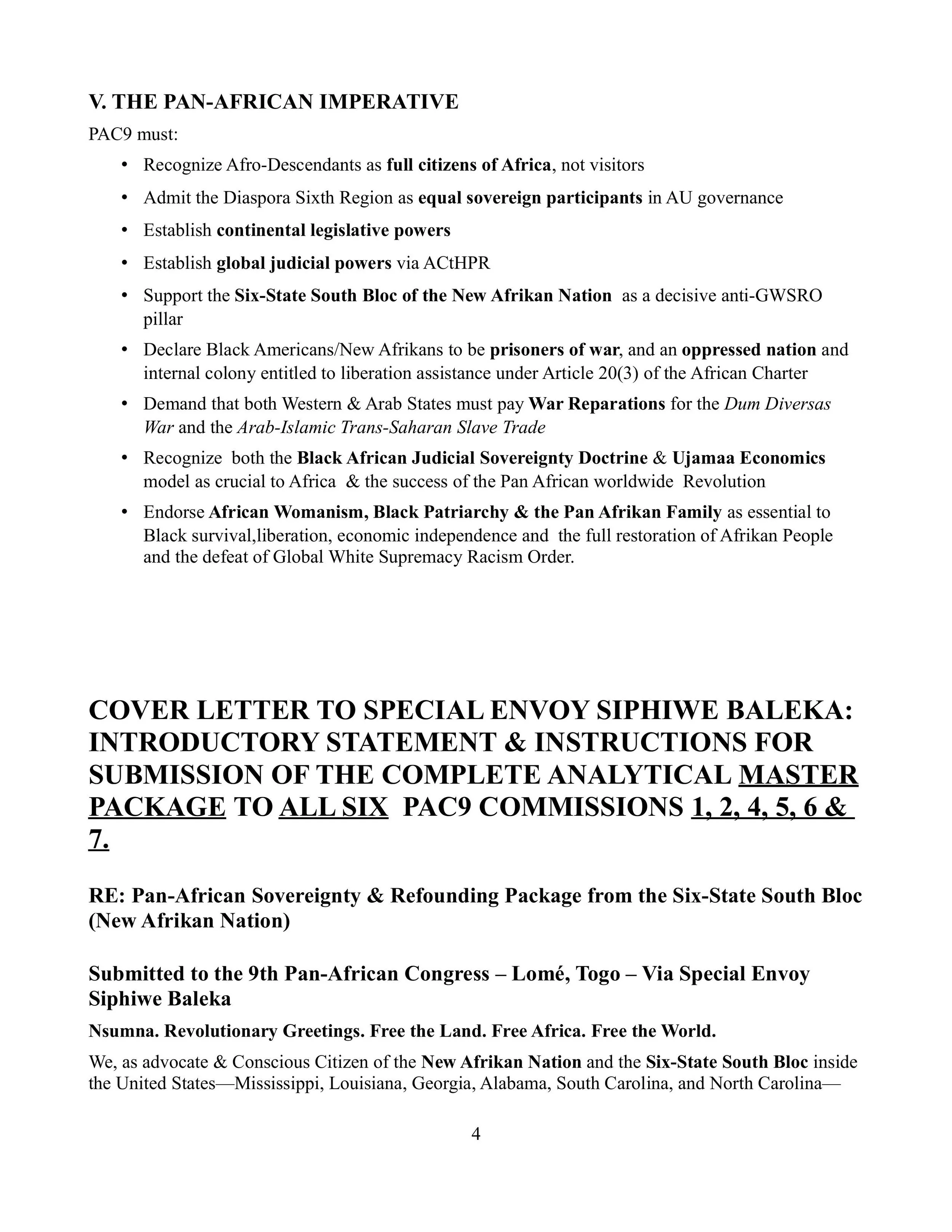
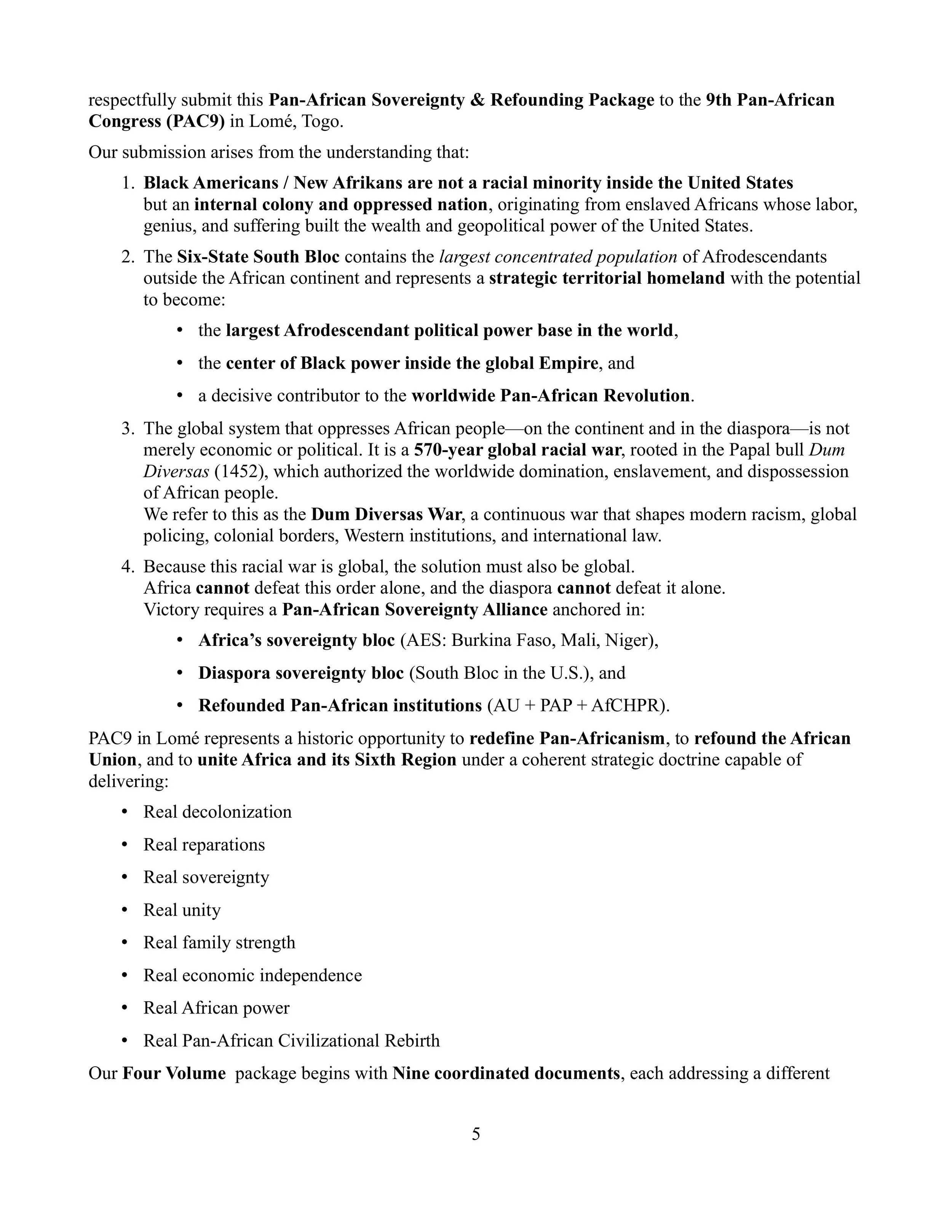




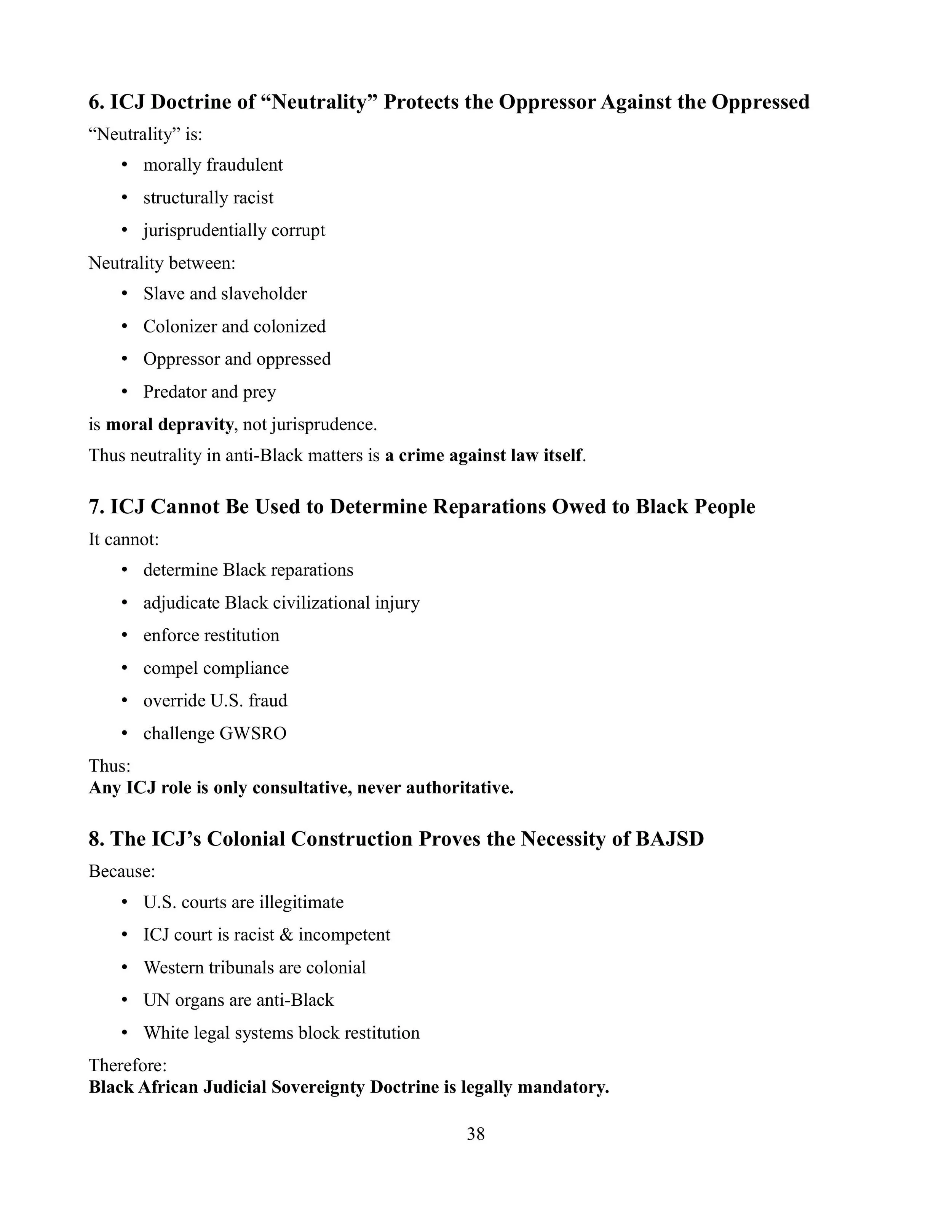
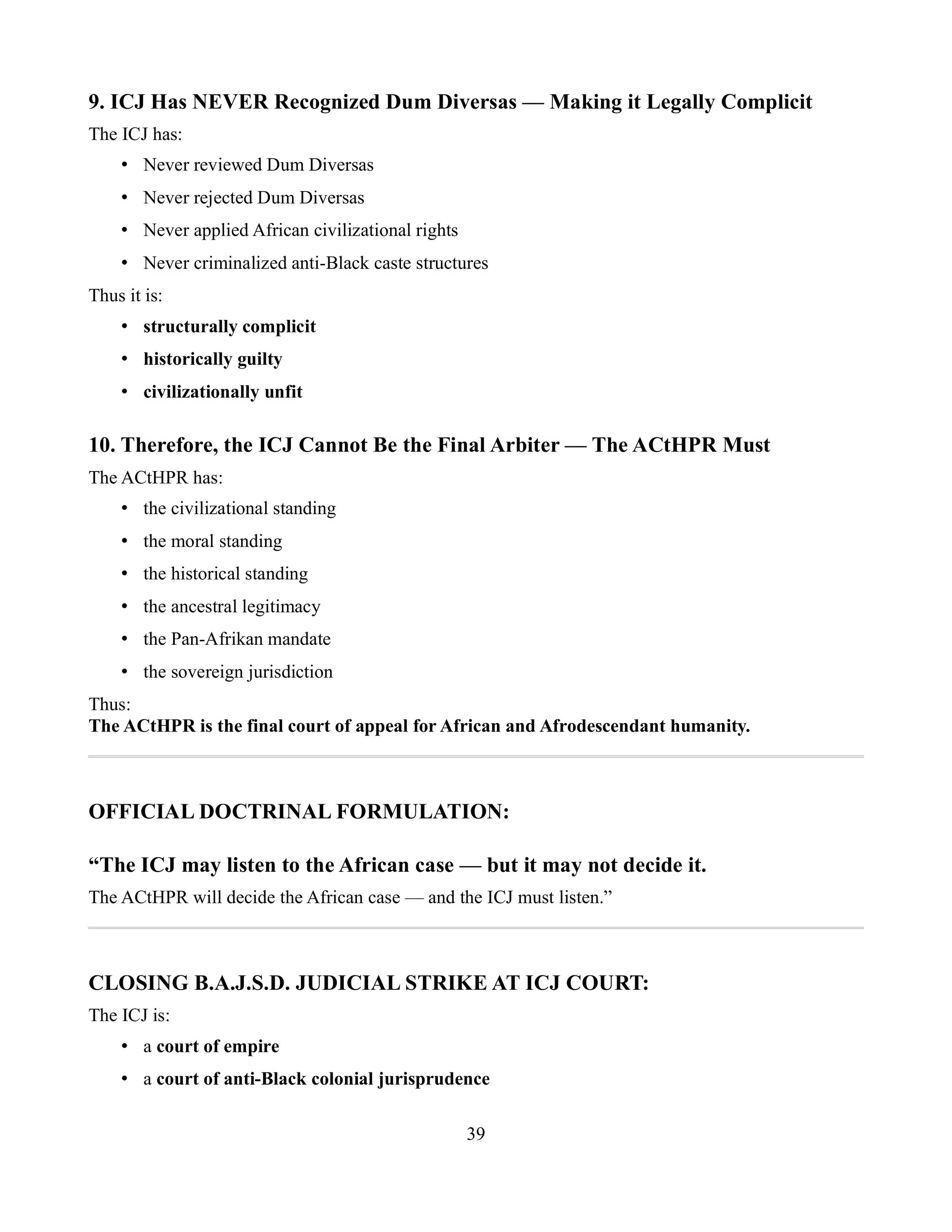
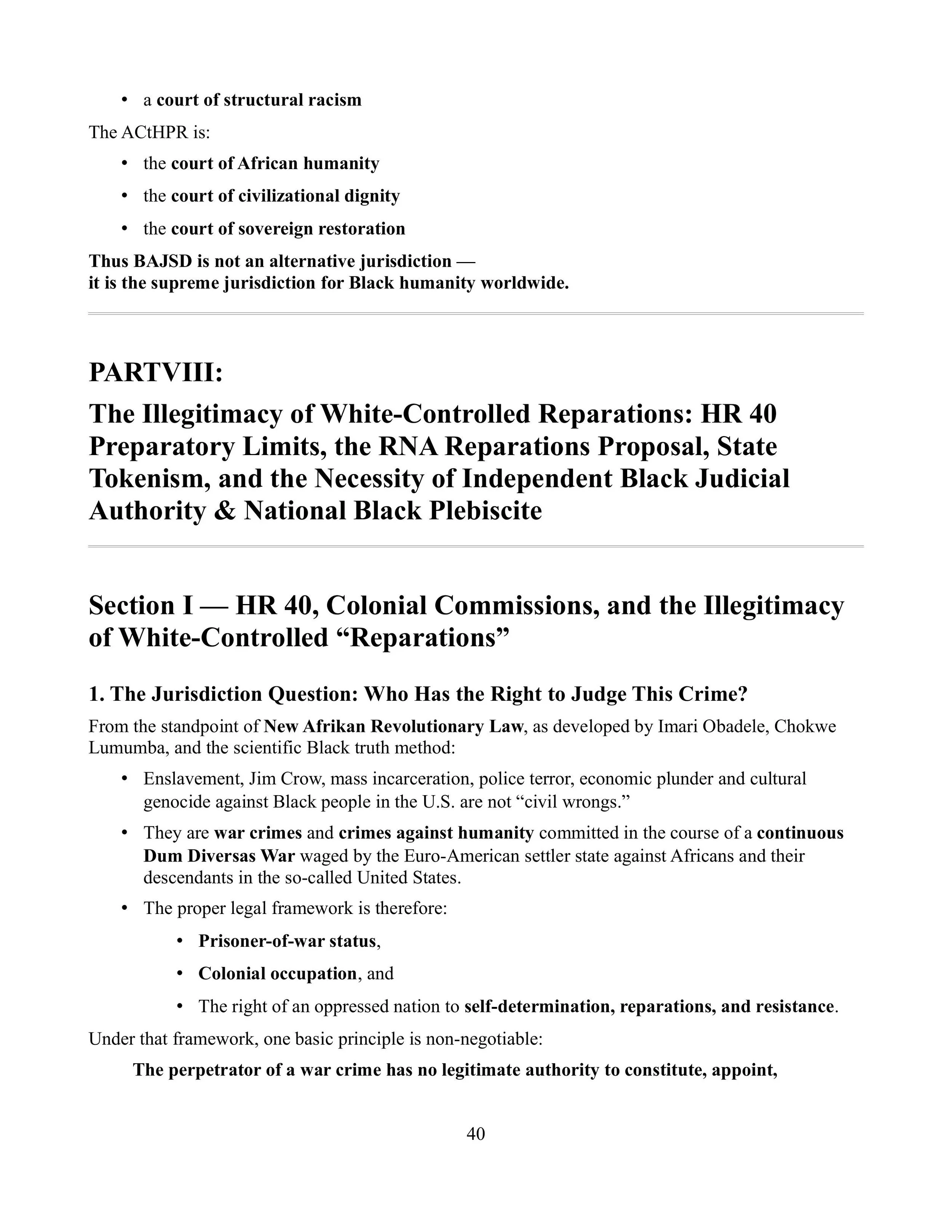
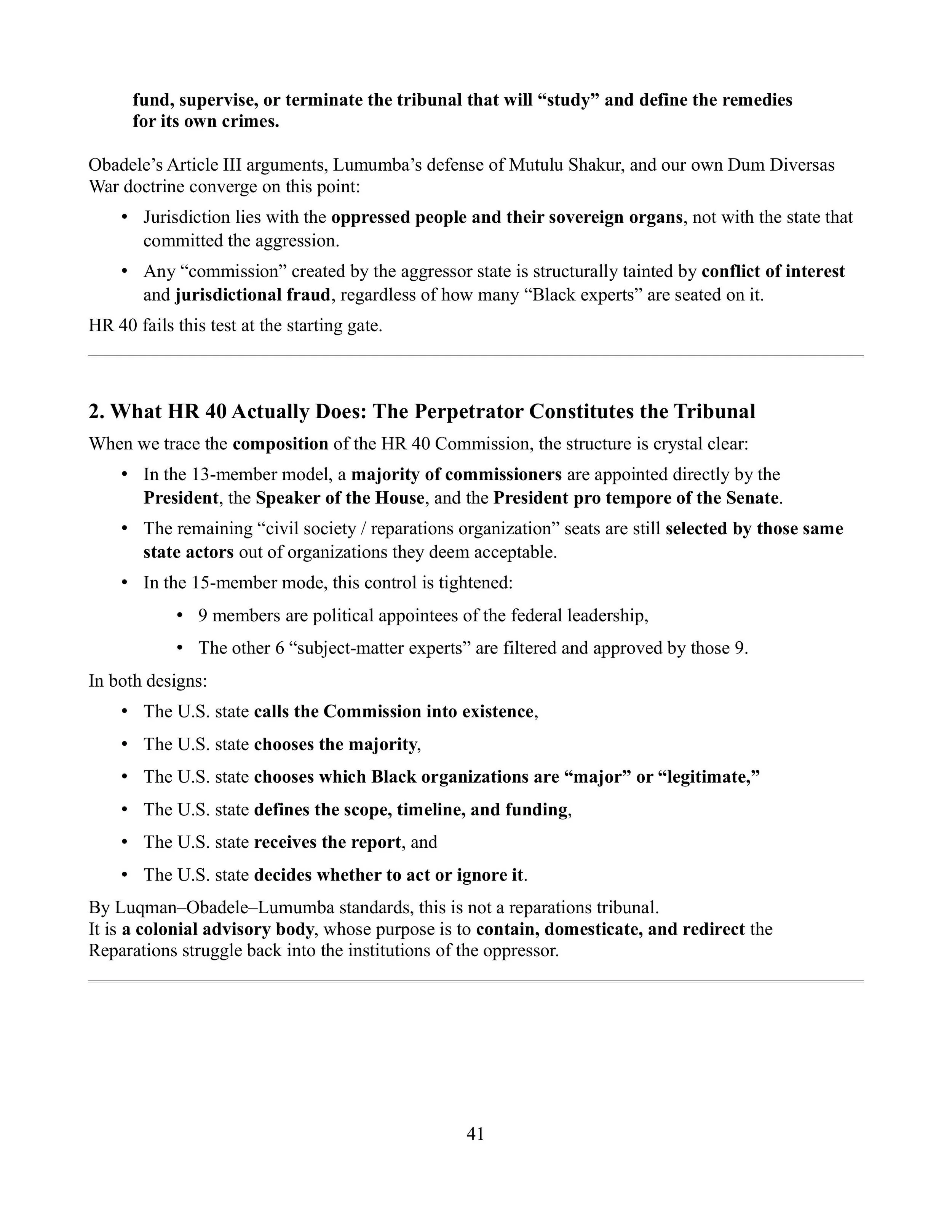












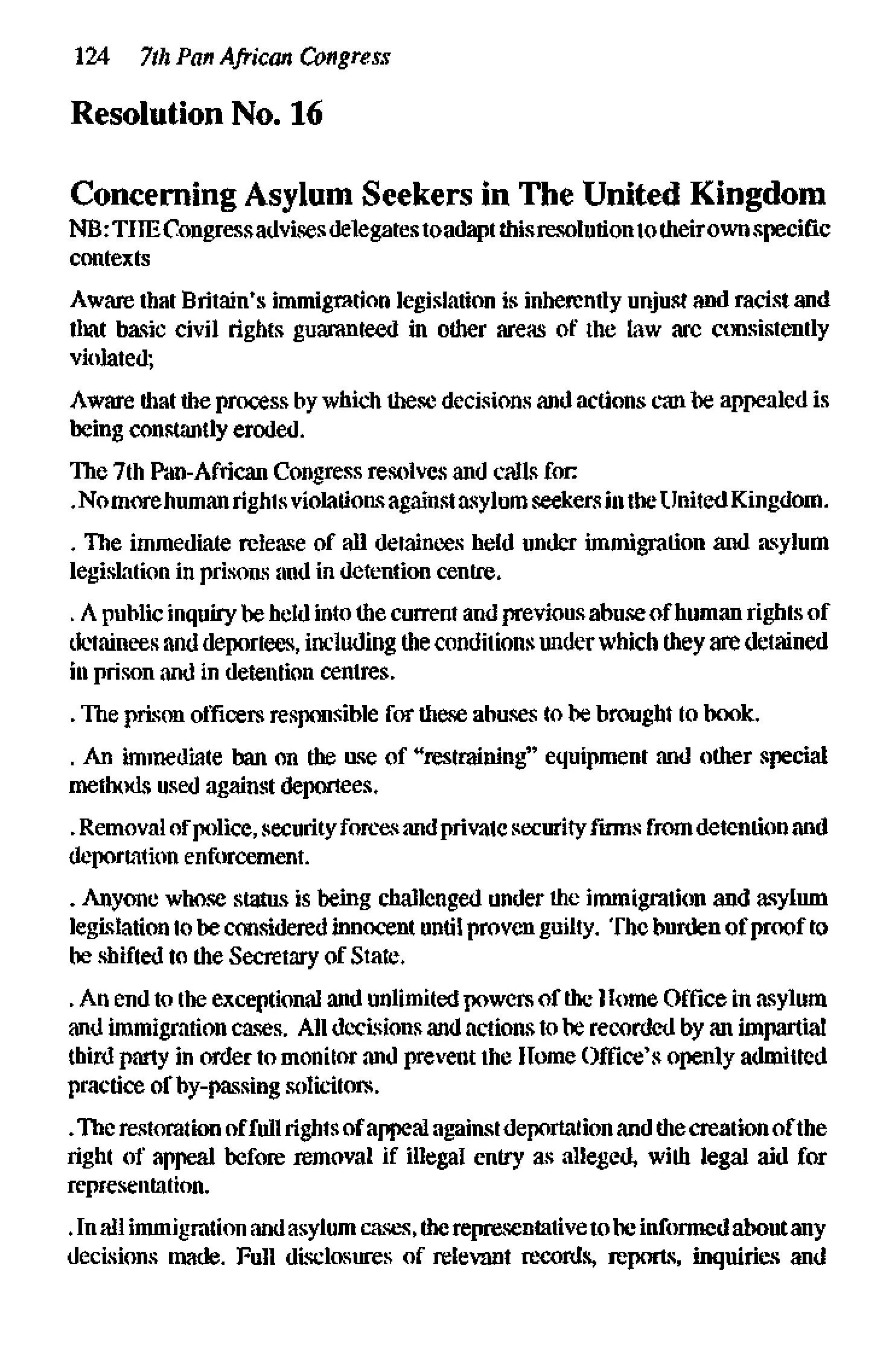
HOW TO PROPERLY ORGANIZE A PAN AFRICAN CONGRESS IN THE 21st CENTURY
Here’s how the 9th PAN AFRICAN CONGRESS and any future Congress should be organized.
A Pan Africanist broadly respected should be named Chief Coordinator.
A dedicated, African owned platform like Abibitumi, should be used for broad discussion.
Themes and Draft Resolutions are to be published six months before the Congress
Online input forms for each draft resolution will be published and all inputs collected. Specific resolution language will be solicited and collected. (Use the following 9th PAC input forms as an example)
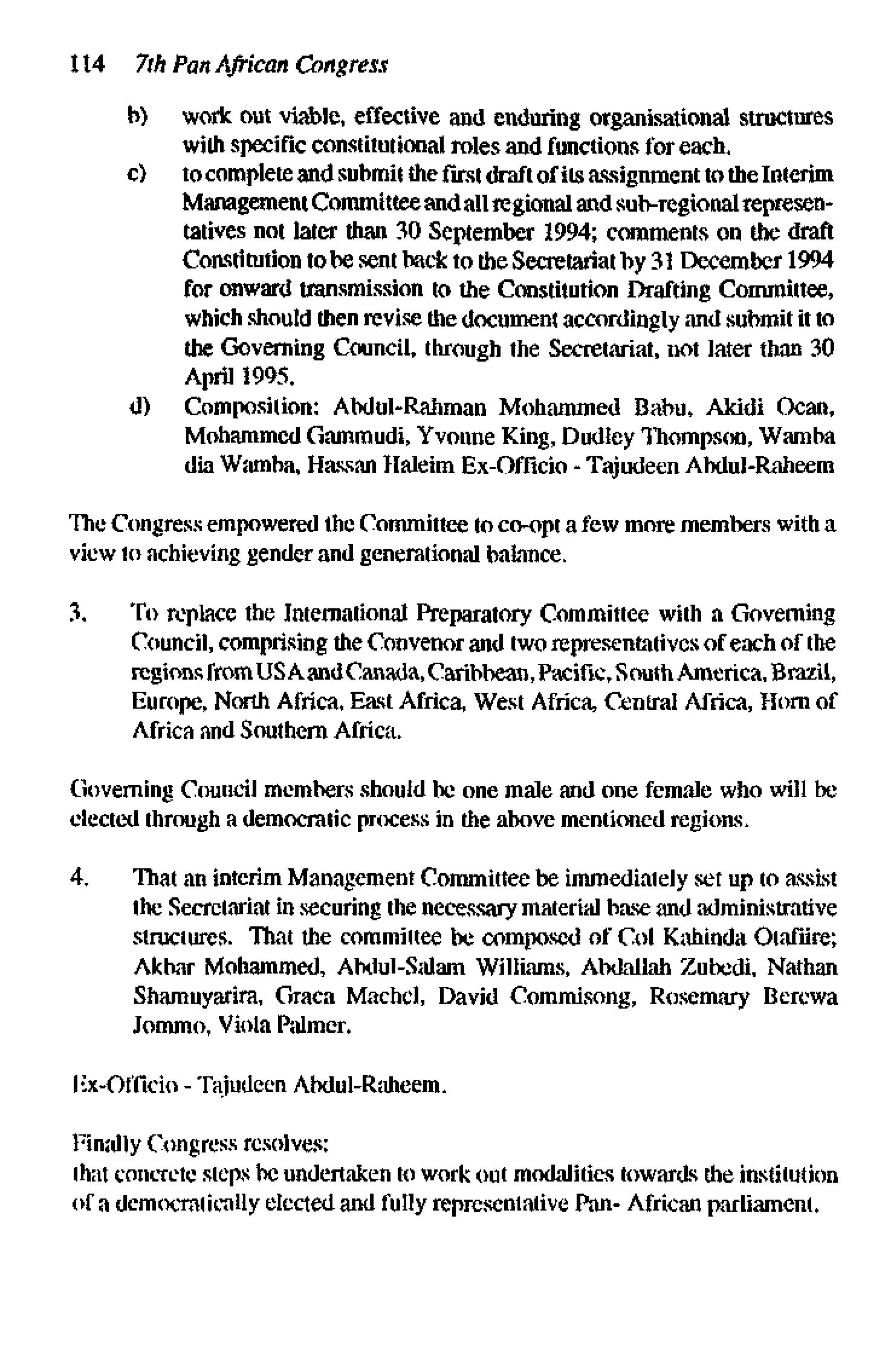
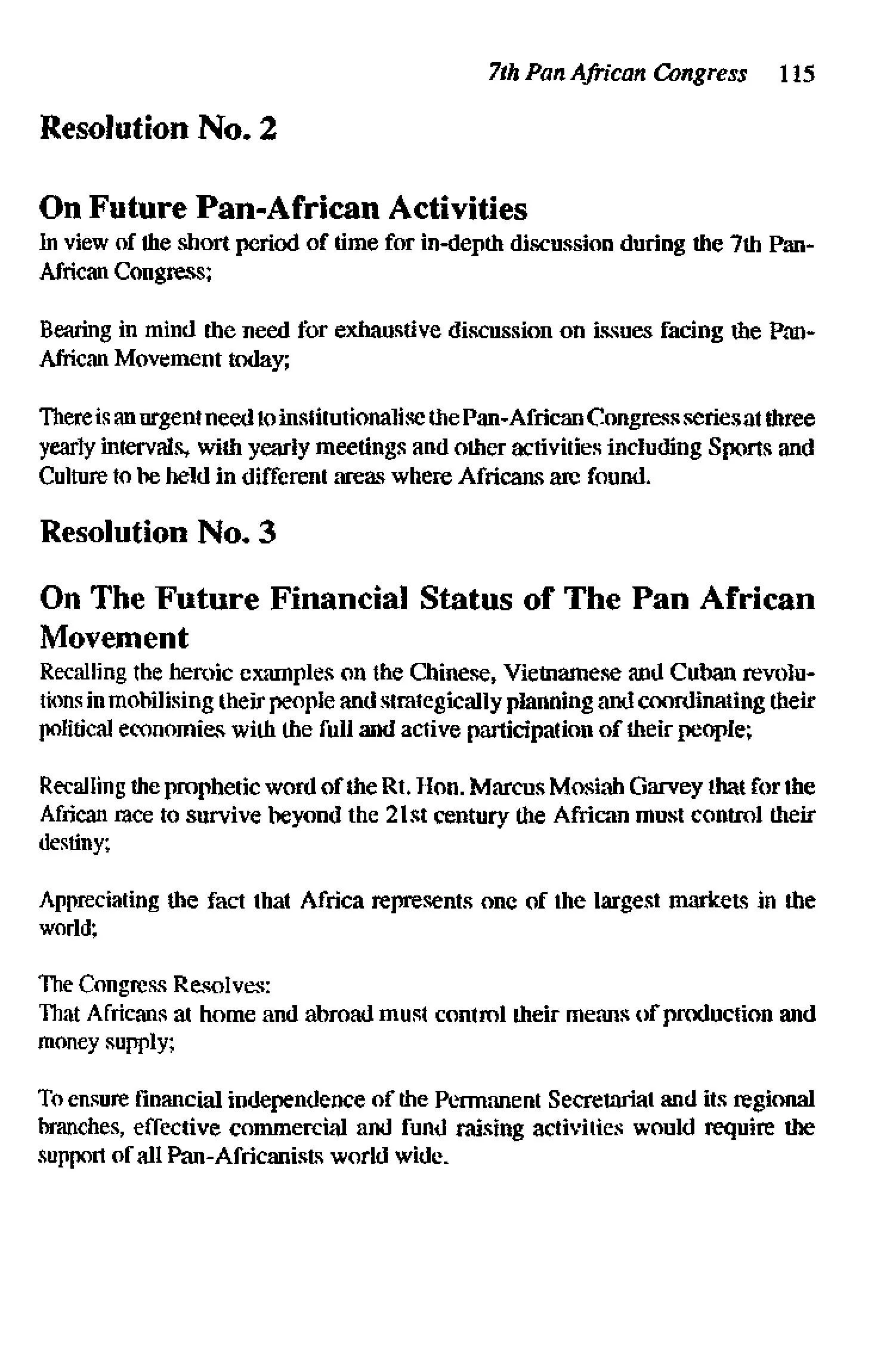
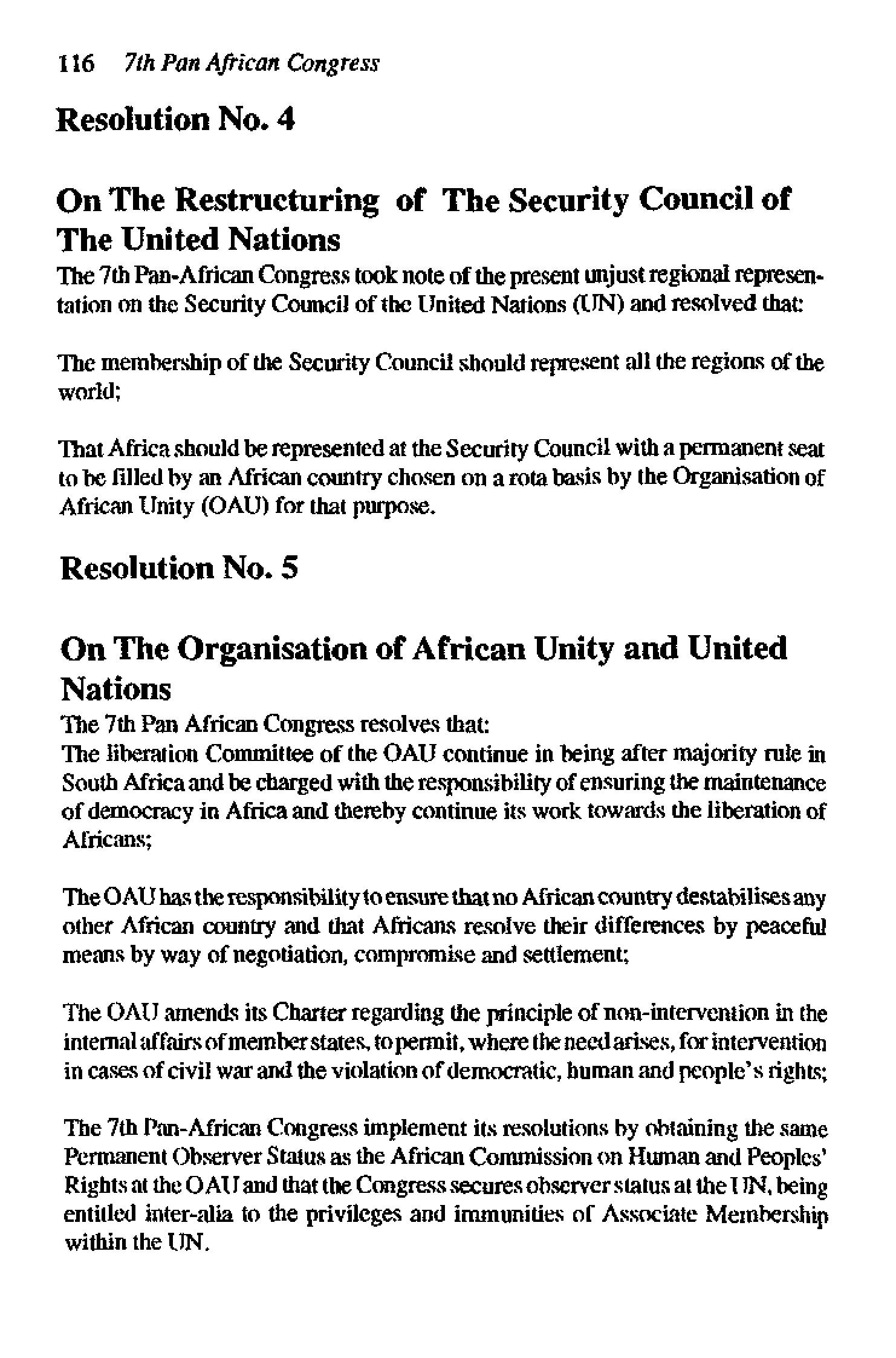
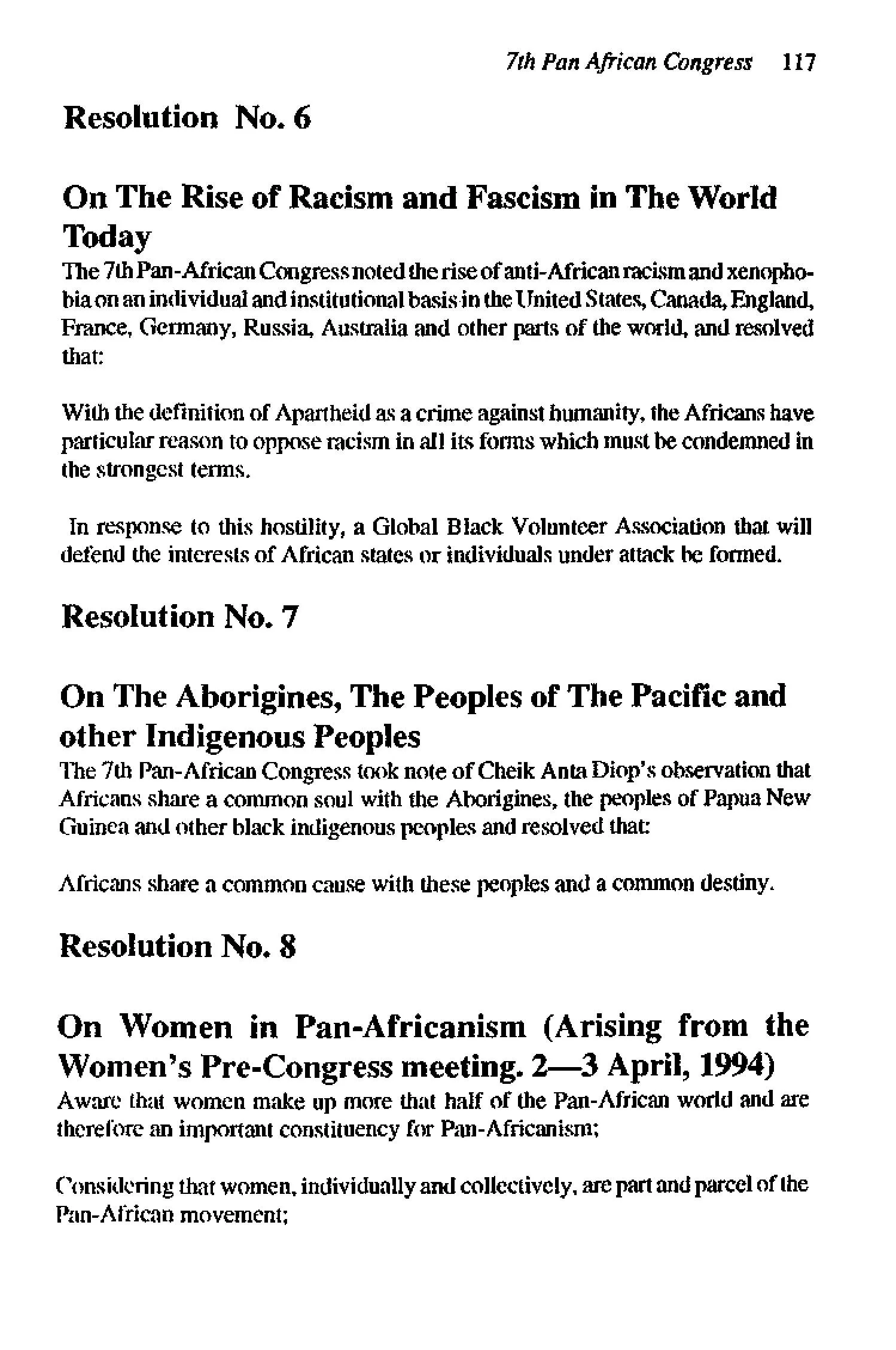
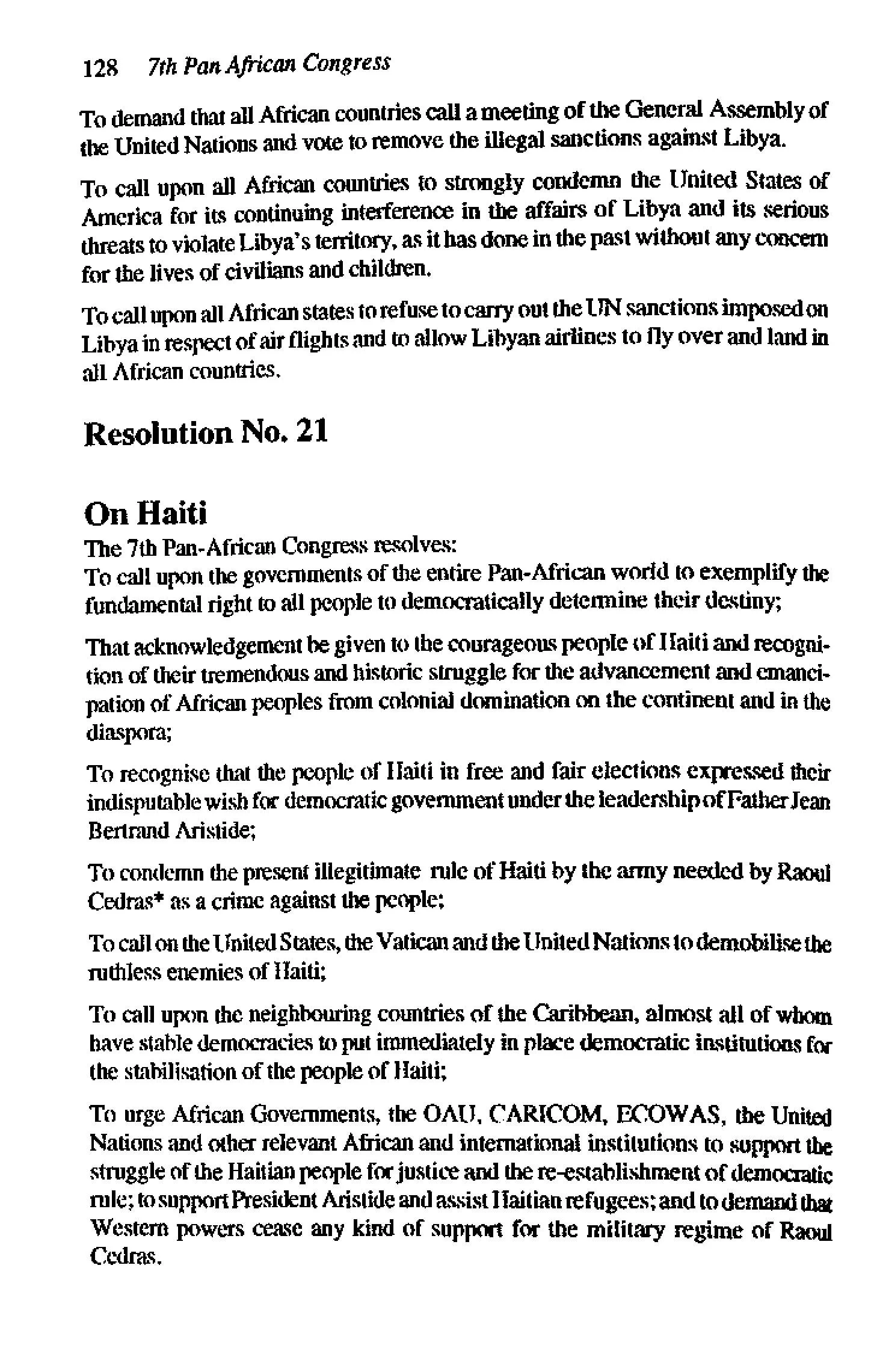
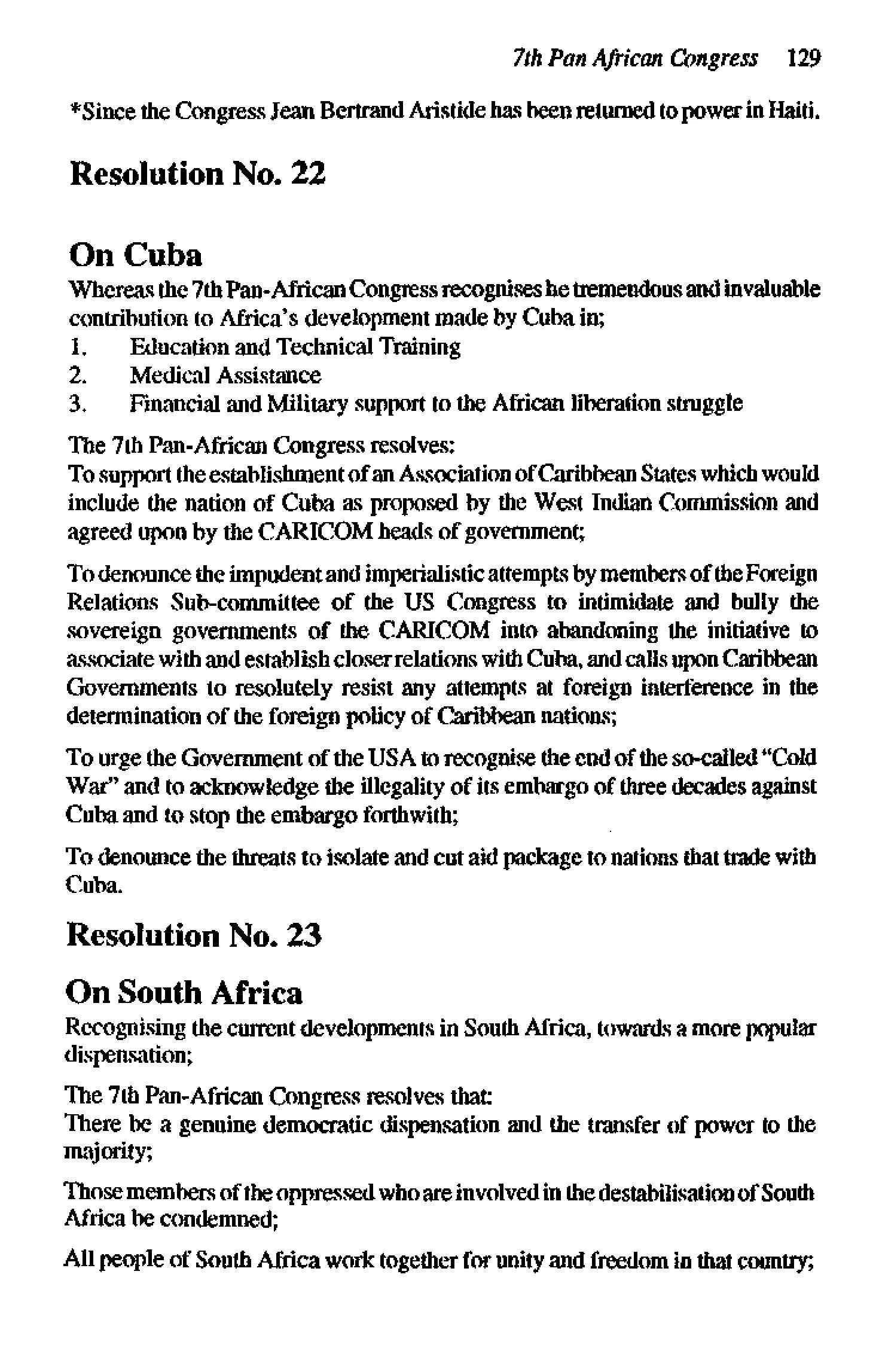
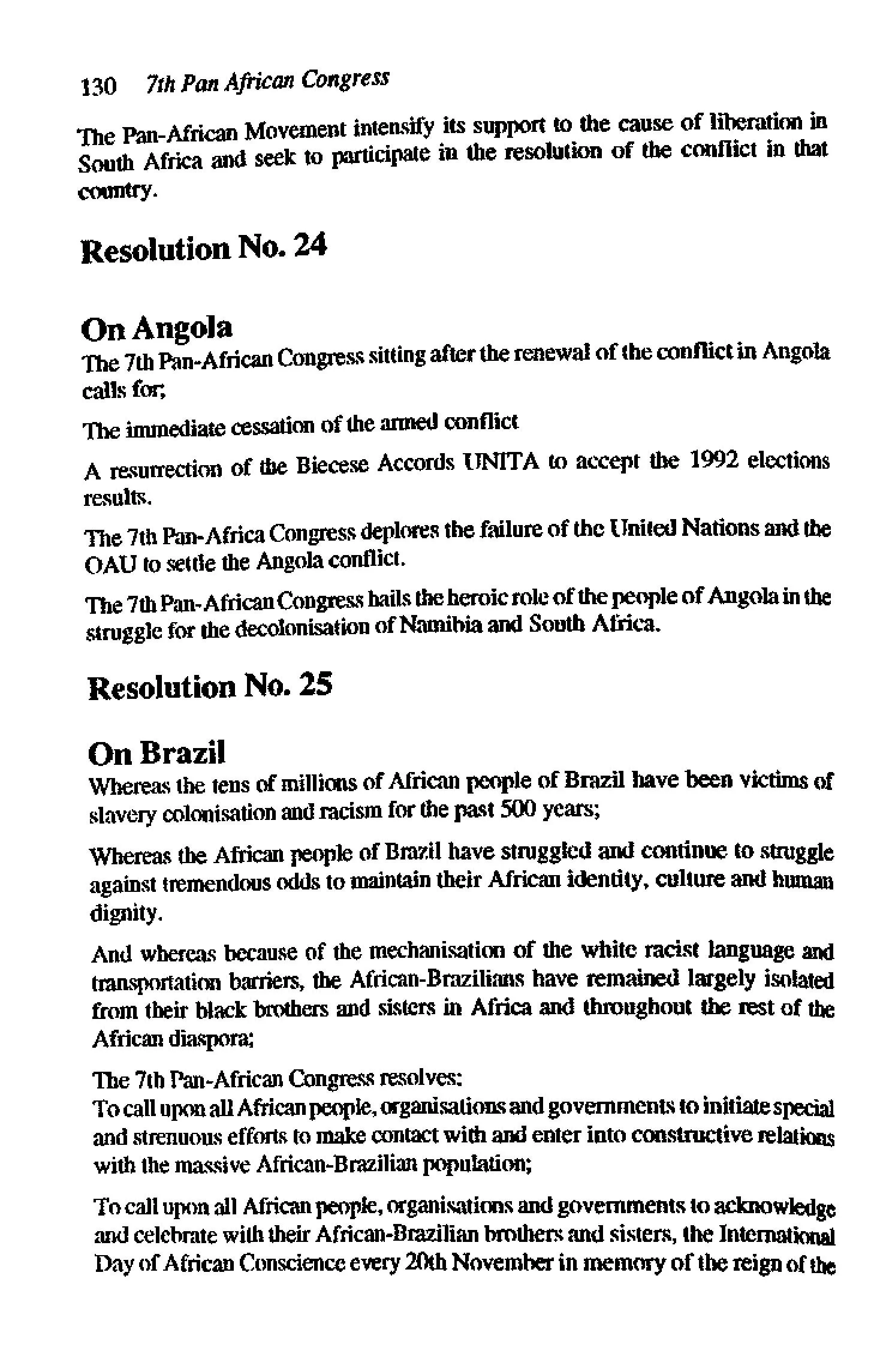
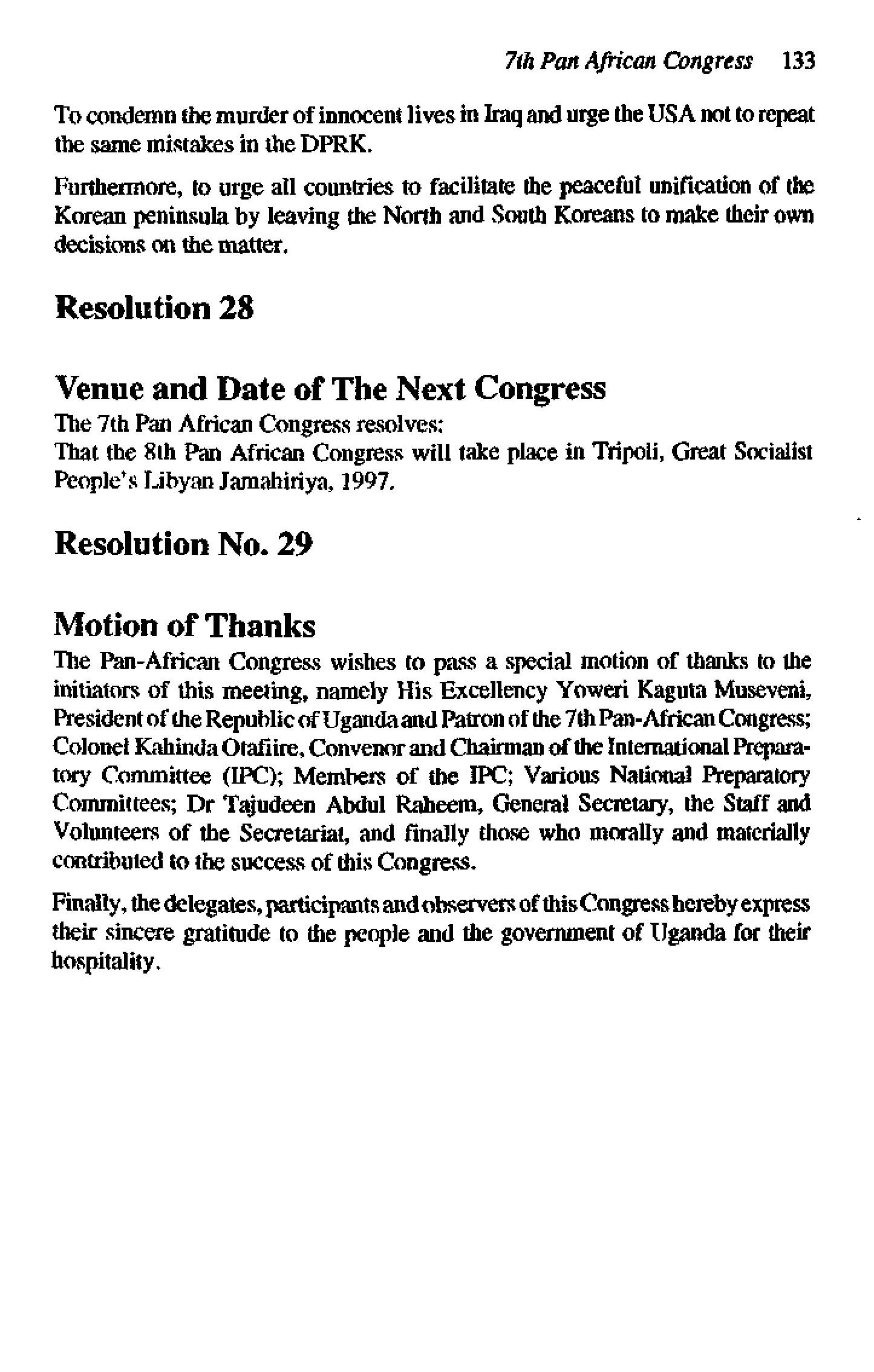
A Pre-Congress Report with all the draft resolutions and key inputs is published to all registered delegates two months before the congress (using the 7th PAC Resolutions as a template - see below). Discussion and debate of the draft resolutions will take place on the dedicated platform for two months prior to the Congress. The point is that we come to the Congress having already had as broad a discussion as possible on each resolution and we convene the Congress only to finalized the document.
After the opening of the Congress, the Congress Chief Coordinator will lead the entire Congress through each resolution. There will be 30 minutes of discussion with each person given a strict 3 minutes to speak directly to the resolution language. At the end of 30 minutes, a vote of the entire Congregation will be taken on the final resolution. A two-thirds acceptance will make the resolution final. In this manner we proceed until all draft resolutions have been approved or rejected.
7. Anyone can submit input, but only accredited delegates (selected by the Chief Coordinator or anyone who presents a petition to particpate as a delegate signed by at least 200 people) can vote. The latter requirment is to facilitate the development of networks, constitutencies and broad awarness of the Congress.
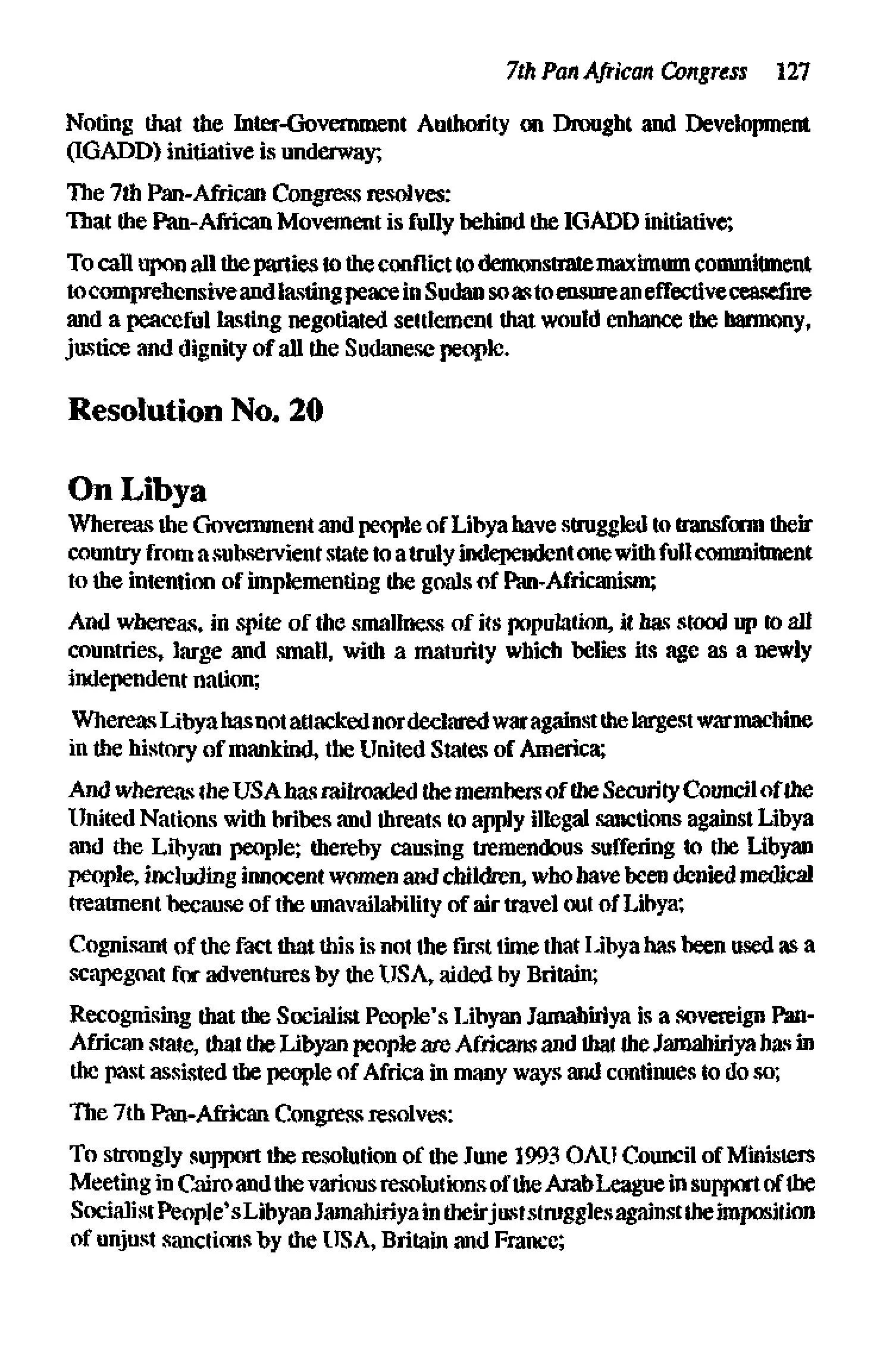
In this way, the Congress Final Resolution will be produced by the collected decision of the Congress Delegates and will thus carry the sufficient authority to serve as the Pan African Plan of Action for the next decade. This is the people-driven process that must govern the Congress.