Meeting summary
Quick recap
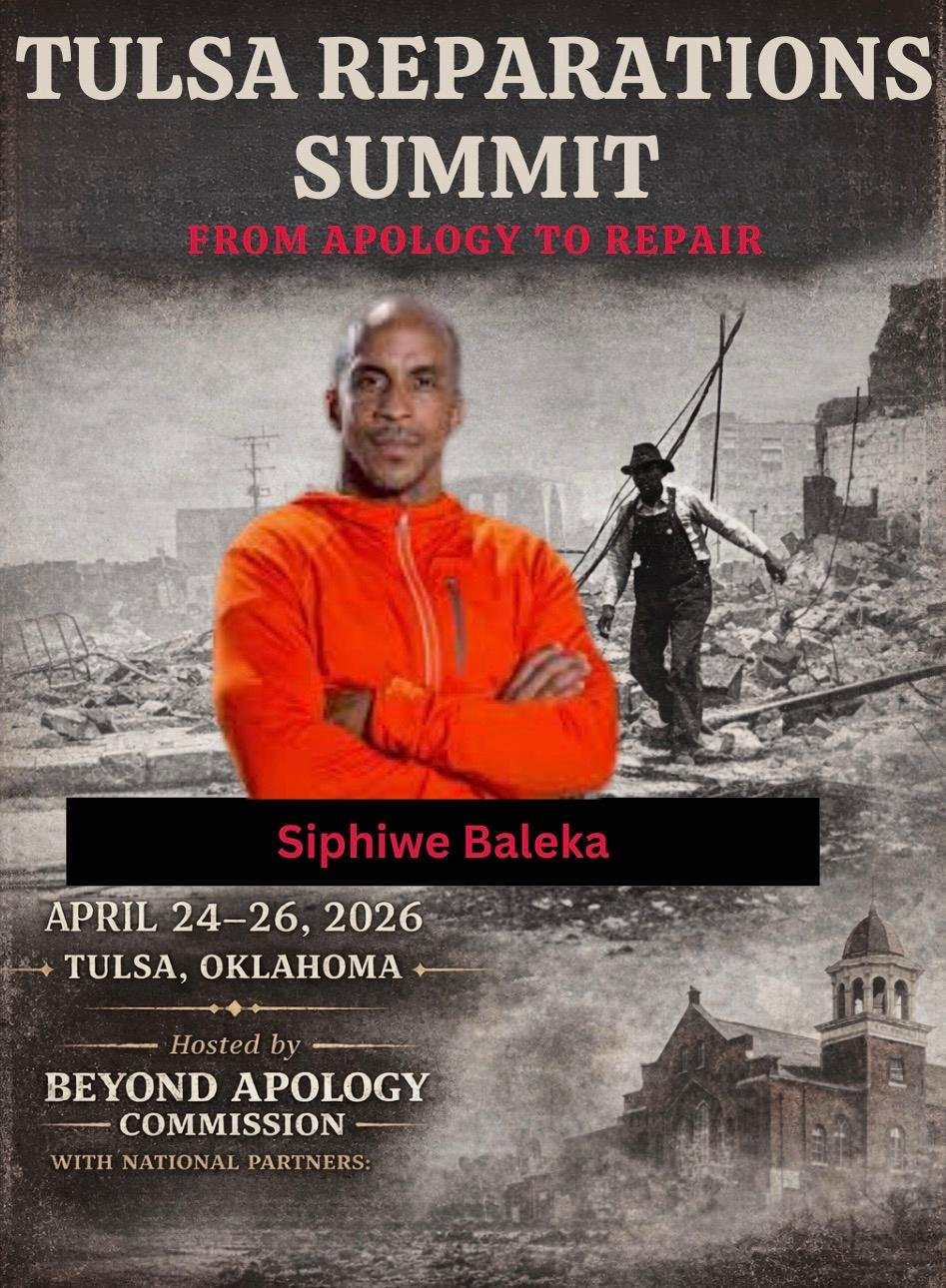
This meeting focused on a presentation by Siphiwe Baleka about reparations and African heritage at Langston University, Oklahoma’s only Historical Black College and University (HBCU). Siphiwe discussed the historical roots of the transatlantic slave trade, explaining how the 1452 Dum Diversas papal bull declared war on African peoples and authorized European colonization. He outlined how this legal framework led to the forced removal and enslavement of African ancestors, including those who ended up in Tulsa. The presentation covered the concept of "ethnocide" - the destruction of ancestral identity - and argued that reparations should be framed as war damages rather than just slavery reparations. Siphiwe also discussed the importance of African Ancestry DNA testing to reconnect with ancestral heritage and the possibility of repatriation to African countries. The session included a breakout discussion about making a "sovereign mind switch" to reclaim indigenous legal jurisdiction that predates European systems.
Summary
Reparations Justice Presentation Setup
The meeting began with Kristi welcoming attendees and introduced the event, which was being held at Langston University, Oklahoma's only HBCU. She then introduced Siphiwe Baleka, describing his background as a former world-class swimmer and Yale graduate who has become a leading advocate for global African reparations justice. The meeting appeared to be setting up for Siphiwe's presentation on the transatlantic slave trade and reparations, though the actual presentation content was not captured in this transcript segment.
Transatlantic Slavery Historical Origins
Siphiwe delivered a presentation on the historical origins of transatlantic slavery, explaining how European motivations and religious justification led to the enslavement of Afro-descendant people. He detailed how Pope Innocent IV's 1243 decree established Christian authority over non-Christian lands, and how Portugal's Prince Henry's 1415 conquest of Ceuta revealed information about African gold and slave trade routes. Siphiwe traced the development of Portuguese military expeditions along the West African coast from 1446-1456, funded by the Military Order of Jesus Christ, culminating in the first documented kidnappings of African people in 1441. The presentation established the historical foundation for discussing reparations, emphasizing that understanding the origins of the problem is essential for addressing its ongoing impacts.
Dum DiversaS Reparations Discussion
Siphiwe presented on the historical context of the Dum Diversas papal edict from 1452, which declared war against people in the land of Guinea and authorized European nations to invade, conquer, and enslave others, leading to ongoing war damage and reparations issues. He explained that this edict, along with subsequent monopolistic war contracts known as asiento, allowed European powers to profit from trafficking African prisoners of war for centuries. Siphiwe discussed how the reparations movement should pursue claims internationally rather than solely through domestic channels, suggesting approaches through the African Court or African Commission on Human Rights. When asked about remedies for victims of war crimes, Siphiwe explained that under the Geneva Convention, African descendants retain prisoner of war status until final release and repatriation, and recommended seeking advisory opinions from the International Court of Justice to settle fundamental legal questions about citizenship and rights.
Church Reparations Strategy Discussion
Siphiwe advised that individuals should work within their church to seek reparations rather than leaving the church, emphasizing that institutions have the resources to provide remedies and repairs.
Sovereign Mind Switch Breakout Session
Siphiwe led a breakout session focused on the "Sovereign Mind Switch" concept for the Reparations movement, explaining how traditional African rituals and spirituality constitute natural legal systems that were violated by the Vatican and Portuguese during the transatlantic slave trade. He argued that Indigenous African legal systems, based on natural law derived from the Creator and ancestors, differ fundamentally from Western positive law systems. Siphiwe demonstrated how traditional African marriage rituals serve as legal contracts between families, establishing custody rights and inheritance lines, contrasting with Western romantic views of marriage. He promised to share a free resource link containing this information in the chat for participants to access.
Sovereign Mindset and Legal Jurisdiction
Siphiwe discussed the concept of sovereign mindset and its importance in understanding African legal jurisdiction, particularly in the context of reparations. He explained how African cultural and legal practices, such as initiation ceremonies and property rights, were dismissed or ignored during the slave trade and colonial periods, leading to legal alienation among Afro-descendants. Siphiwe described the process of transitioning from a miseducated mindset to a sovereign one, including accessing and reprogramming subconscious beliefs through practices like meditation and drumming. He also addressed the significance of African ancestry DNA testing in reconnecting with ancestral lineage and jurisdiction, sharing his experience in helping pass legislation in Illinois to provide free DNA testing for Black residents.
African Ancestry Repatriation Journey
Siphiwe discussed his personal journey of discovering his Belanta ancestry through an African Ancestry DNA test in 2009 and his subsequent repatriation to Guinea-Bissau in 2020. He explained how he obtained citizenship there and established a "Decade of Return" program to help others reconnect with their African ancestry. Siphiwe also shared his experiences with the African Union's efforts to create a uniform program for diaspora repatriation across 54 nation-states. The discussion covered questions about family eligibility for citizenship, Moorish heritage claims, and the emotional aspects of returning to his ancestral homeland.
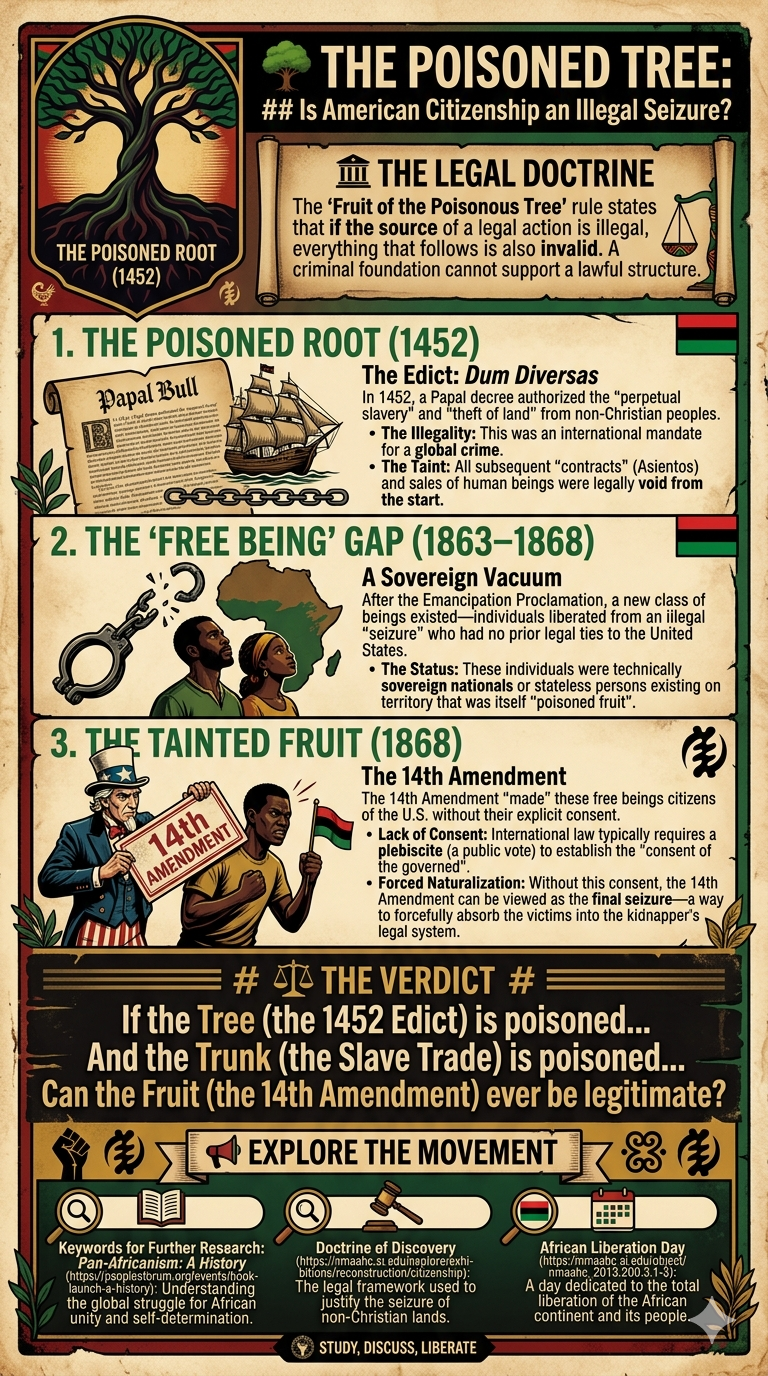
THE POISONED TREE: Is Afrodescendant Citizenship in the Americas an Illegal Seizure? Preparing the African Union and Ghana's Legal Strategy -
🏛️ THE LEGAL RULE
"Fruit of the Poisonous Tree"
In a court of law, if the source of evidence is illegal (the tree), then everything that comes from it (the fruit) is invalid. You cannot build a legal house on a criminal foundation.
1. THE POISONED ROOT (1452)
The Edict: Dum Diversas
In 1452, a Papal decree authorized the "perpetual slavery" and "theft of land" from non-Christian peoples.
The Problem: This was a mandate for a global criminal act. It authorized the kidnapping of African ancestors and the illegal seizure of Indigenous lands.
2. THE TAINTED BRANCHES (1619–1865)
The Middle Passage & Slavery
Because the original authorization (Dum Diversas) was illegal, the "contracts" (Asientos) used to sell human beings were void from the start.
The Reality: Enslaved people were not "laborers"; they were prisoners of an illegal, undeclared war.
3. THE MYSTERY OF 1865
The "Free Being" Gap
When slavery ended, a new class of people existed. They were:
- Sovereign individuals with no legal ties to the U.S.
- On territory that was itself "poisoned fruit" (stolen land).
- They were technically foreigners on their own soil.
4. THE FORCED FRUIT (1868)
The 14th Amendment
Without a Plebiscite (a public vote of consent), the U.S. government "made" these free beings citizens through the 14th Amendment.
The Question: Is this citizenship a right, or is it the final seizure?
If the capture was illegal, and the land claim is illegal, can a government simply "label" its victims as "citizens" to avoid the consequences of its crimes?
⚖️ THE VERDICT
If the Tree (the 1452 Edict) is poisoned...
And the Trunk (the Transatlantic Slave Trade) is poisoned...
Can the Fruit (the 14th Amendment) ever be considered legal?
CLICK THE LINK TO READ THE FULL LEGAL DISCUSSION