ELECTING THE AFRICAN DIASPORA/AU 6TH REGION REPRESENTATIVES FOR THE AFRICAN UNION ECONOMIC SOCIAL AND CULTRAL COUNCIL (AU-ECOSOCC)

“Hold a truly representative gathering of the African Diaspora, hash it out amongst yourself, and come to the Roundtable with your 20 representatives. Following that, bring a resolution to a 9th PAC to be held in 2025. With the Commission and 9th PAC authority, it will then be brought to the AU Summit.”

- advice received at the 81st Ordinary Session of the African Commission on Human and Peoples’ Rights.
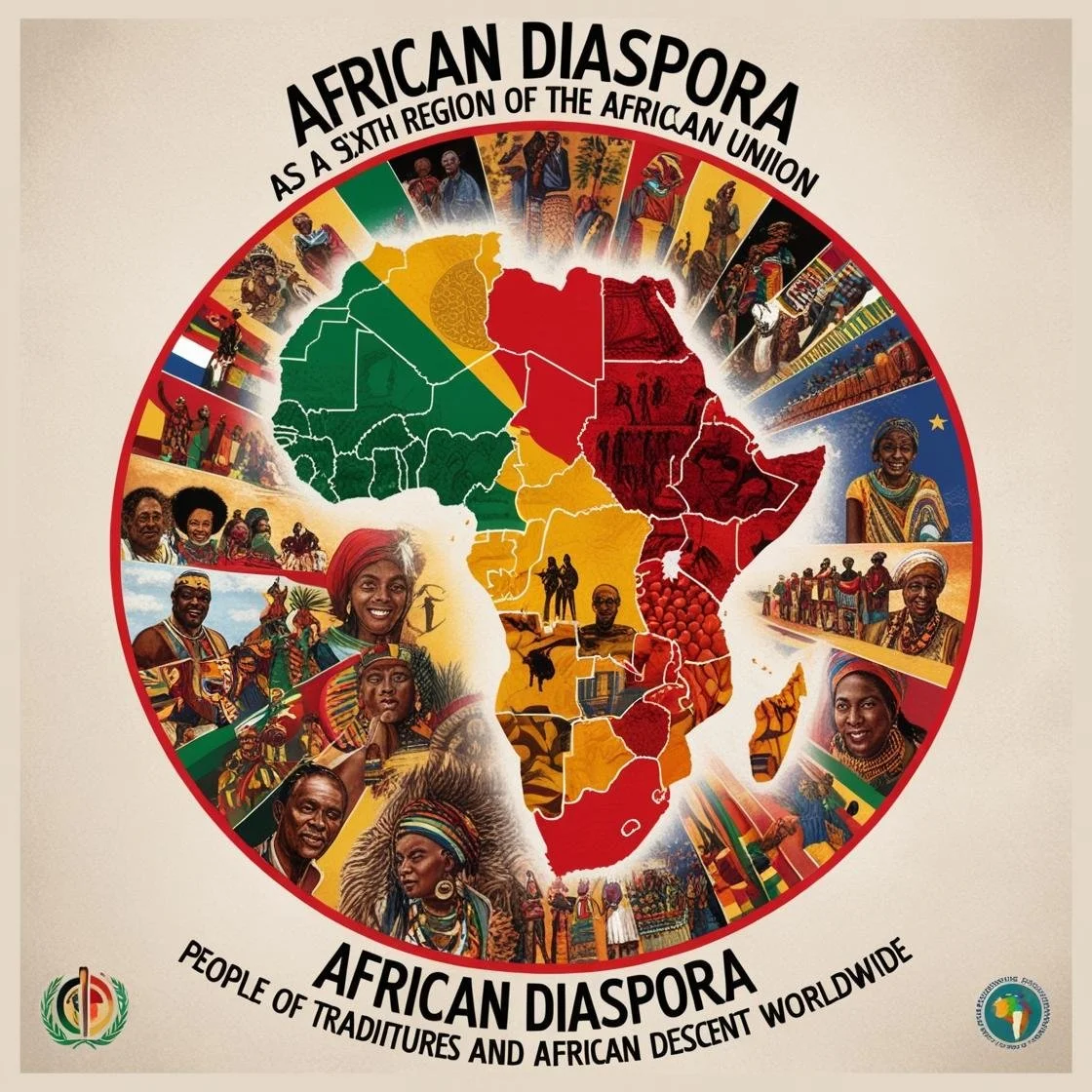
𝐓𝐎𝐖𝐍 𝐇𝐀𝐋𝐋 𝐌𝐄𝐄𝐓𝐈𝐍𝐆: 𝐄𝐋𝐄𝐂𝐓𝐈𝐍𝐆 𝐓𝐇𝐄 𝐀𝐅𝐑𝐈𝐂𝐀𝐍 𝐃𝐈𝐀𝐒𝐏𝐎𝐑𝐀'𝐒 𝐑𝐄𝐏𝐑𝐄𝐒𝐄𝐍𝐓𝐀𝐓𝐈𝐕𝐄𝐒 𝐓𝐎 𝐓𝐇𝐄 𝐀𝐔-𝐄𝐂𝐎𝐒𝐎𝐂𝐂

Thursday, November 14 at 3:00 PM GMT

Zoom link:

https://us02web.zoom.us/j/81986417325?pwd=dPWCK2ezQWmyHSNIYw6I80qaatb016.1 Information and instructions for conducting the elections will be given and questions answered.
************************************

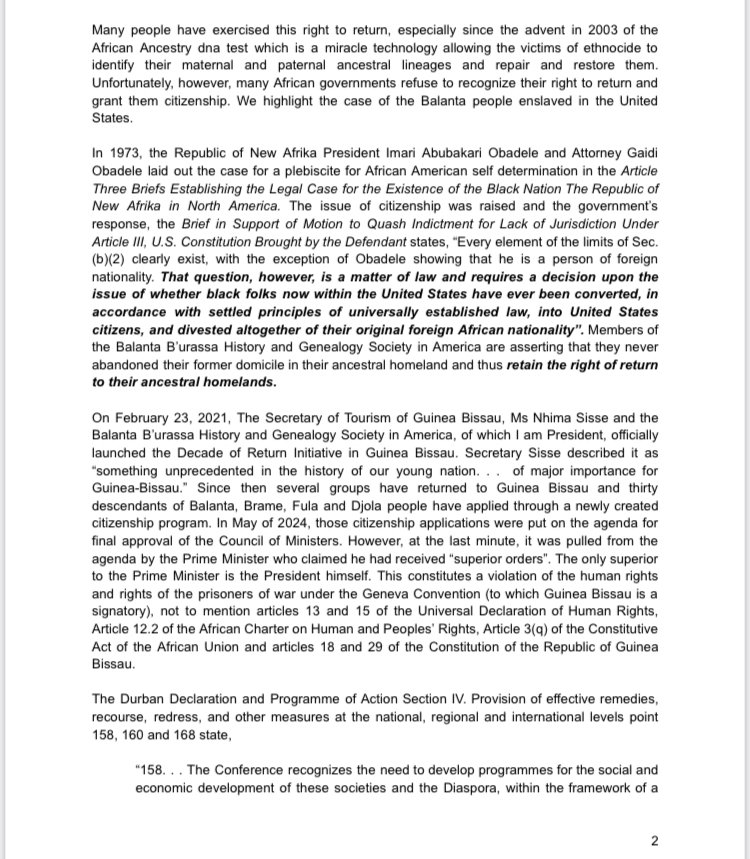
Let me just give it to you straignt. Sometime in September or early October, Dr. Barryl Biekman, Leading Facilitator of the African Union African Diaspora Sixth Region High Council informed me that I should go to the 81st Session of the African Commission on Human and Peoples’ Rights to raise the issue of the African Diaspora’s Right to Return under the framework of the African Charter on Human and Peoples’ Rights. Her exact words: “You will know what to say.”

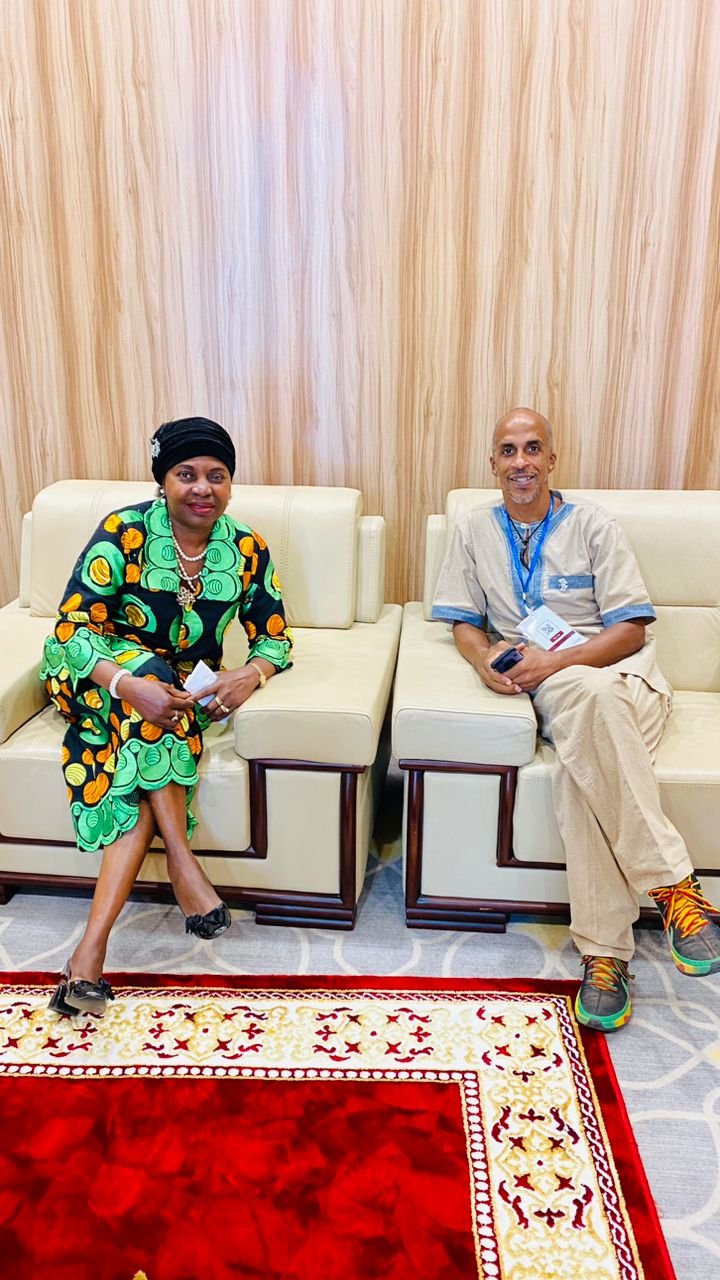
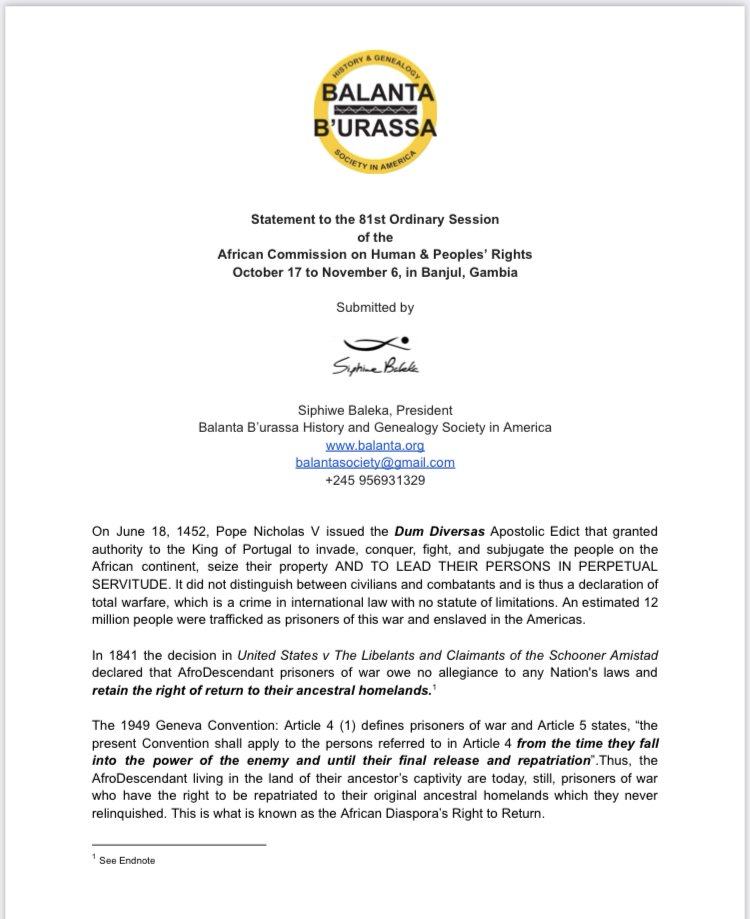
So I traveled to Gambia and submitted a statement.

I then held a consultative meeting with the Executive Secretary of the ACHPR who directed me to the mandate-holder, Hon. Dr. Litha Musyimi-Ogana, Chairperson of the Working Group on Indigenous Populations and Minorities in Africa. According to the African Union website,

“Honourable Musyimi-Ogana is a seasoned African diplomat with over three decades of experience at senior executive level. Her core areas of expertise are in Economic Governance, Gender and Development with key competences and skills in leadership, institutional management, resources and stakeholders mobilization, and people skills among others. She made tremendous contribution in the transformation of a number of organs of the African Union such as the Women, Gender and Development Directorate of the African Union Commission, the African Peer Review Mechanism, the African Union Development Agency-NEPAD and the Pan African Parliament. Her work in women’s rights advocacy, in particular, has seen great strides being made in placing issues of concern to women at the forefront of the discourse on governance and development on the continent. The recipient of numerous awards, including a 2013 Presidential Award of “Women Achievers” from President Joyce Banda of Malawi and the African Women of Excellence Award in Johannesburg, South Africa in 2020, Honourable Musyimi-Ogana was nominated, among 1,000 Peace Women globally, for the Nobel Peace Prize for 2005. Honourable Litha Musyimi-Ogana holds a PhD in Economic Governance and Development Aid.”

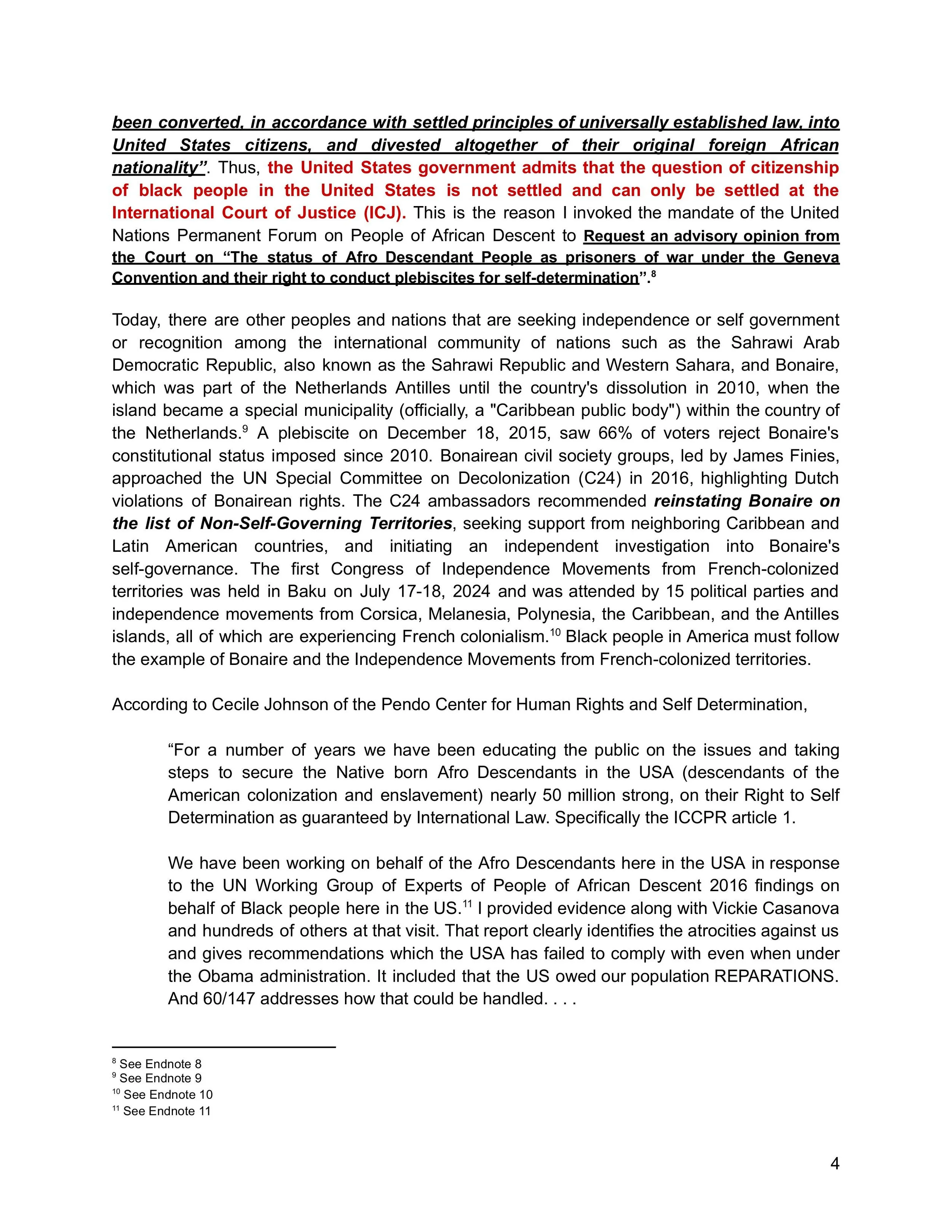
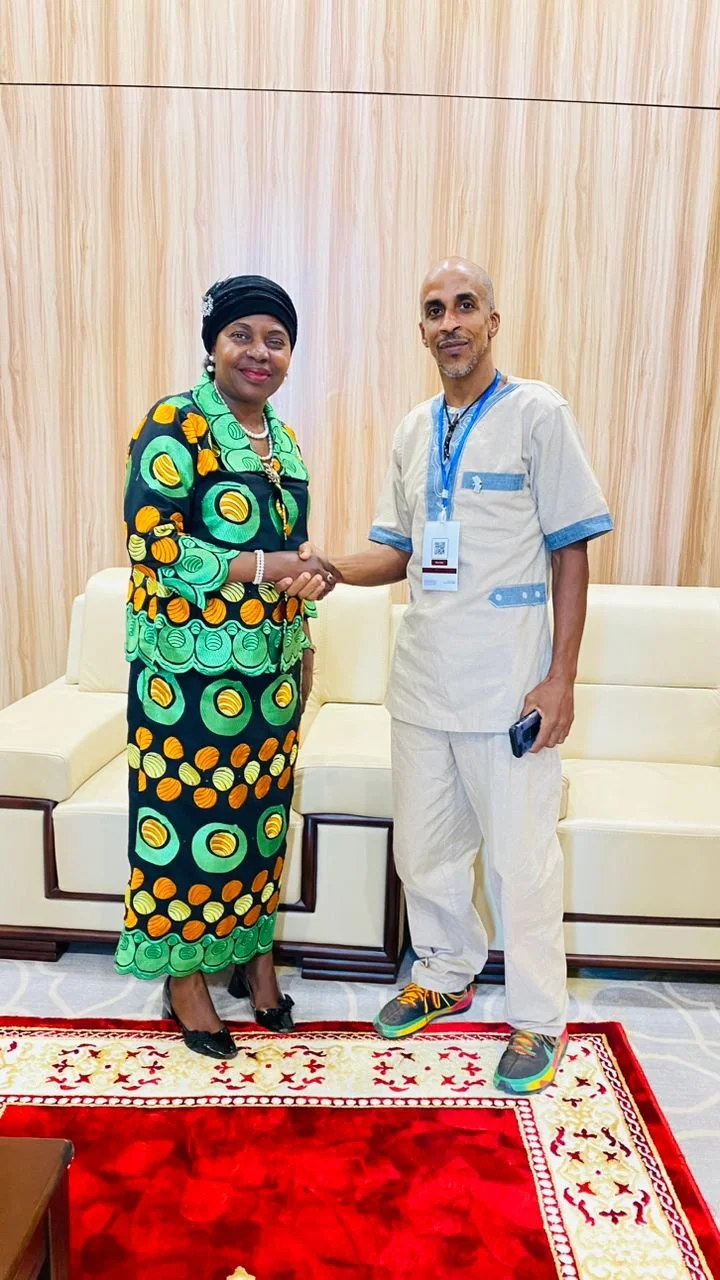
Hon. Dr. Litha Musyimi-Ogana, Chairperson of the Working Group on Indigenous Populations and Minorities in Africa and Siphiwe Baleka, President of the Balanta B’urassa History and Genealogy Society in America.

Also joining the meeting was Petrus Hatupopi, Legal Officer in the Secratariat of the Commission (ACHPR). According to the ECOSOCC Call for Application for Elections into the 4th Permanent General Assembly, it excludes the AU 6th region and left them with no framework or process under the Article 3(q) Amendment that officially, “invite(s) and encourage(s) the full participation of Africans in the Diaspora in the building of the African Union in its capacity as an important part of our Continent.” From this decision, the African Diaspora would become designated as the 6th Region of the African Union. It was during this discussion with Hon. Litha Musyimi-Ogana and Ambassador Luvuyo Ndimeni the leader of the South African delegation that the issue of an ACHPR resolution emerged. With the ACHPR Resolution, we should consider Holding a truly representative gathering of the African Diaspora, hash it out amongst ourselves, and come to the Roundtable with our 20 representatives.” [The final resolution will be posted here]

This was the same agenda that I helped H.E. Ambassador Arikana Chihombori-Quao develop in 2023. In July of 2022, the African Diaspora Development Institute (ADDI) under H.E. Ambassador Arikana Chihombori-Quao, former AU Ambassador to the United States, solicited for delegates to attend what was originally announced as the African Diaspora Pan African Congress and later as the “9th Pan African Congress” to be held in Harare, Zimbabwe from 14-19, 2022 hosted by the Government of Zimbabwe. According to their solicitation for delegates,

“Since the amendment of the AU constitution, it has been brought to our attention the onus has been left to the African Diaspora to organize and collectively, in a united manner present demands to the African Heads of State as to how we wish to organize and formalize the 6th Region in the same way as the other 5 regions on the continent of Africa. . . .The African Diaspora Pan African Congress will primarily focus on the formalization of the 6th Region.

In my February 14, 2023 Letter to Pan Africanists Concerning the Upcoming Pan African Congress in Harare, Zimbabwe Later This Year, I stated,

“Now is the moment to implement what I am calling Ambassador Chihombori-Quao’s “Get the Keys Strategy”. Instead of shouting from outside the African Union about a broad host of issues, now is the moment when the African Diaspora can accomplish two objectives: first, establish a continental diaspora citizenship policy that will create four pathways based on investment, work, residency and/or dna under the principle of the “Right to Return”. The four pathways, taken together, allows for every African Diaspora to obtain citizenship to the country of their choice or ancestry regardless of one’s circumstances. The second objective is to establish the equality of the AU 6th Region with the other five regions within the African Union by establishing Ambassadors at the AU Permanent Representatives Council (PRC) and throughout all the other AU organs and establishing an AU 6th Region Headquarters outside of Africa. This is the LIMITED OBJECTIVE of the upcoming Pan African Congress in Harare, Zimbabwe and will open the door for the African Diaspora to physically enter the continent and to administratively begin to assist in governing the continent. After spending five days in intense strategy sessions with Ambassador Chihombori-Quao, it is my firm belief that her “Get the Keys Strategy” is the historical imperative of the moment. The entire African Diaspora must rally behind this.”

At the time of the launch of the Economic, Social and Cultural Council of The African Union (ECOSOCC), the only procedure from ECOSOCC was "African Diaspora organizations shall establish an appropriate process for determining modalities for elections and elect twenty (20) CSO's to the ECOSOCC General Assembly"; [ECOSOCC Statute Article 5 section 3.]. The African Union webpage announcing the launch of the Economic, Social and Cultural Council of The African Union (ECOSOCC) states,

"The impulse is not for the African Union to organize civil society. Rather the organizing principle of the ECOSOCC of the African Union is one in which civil society would organize themselves to work with the Organization.The distinctive character of the African Union's ECOSOCC is that it is an opportunity for African civil society to play an active role in charting the future of the Continent, organizing itself in partnership with African governments to contribute to the principles, policies and programmes of the Union."

After numerous attemps and much effort by many individuals and organizations for twenty years, the African Diaspora has yet to follow this instruction and elect its representatives. Since the ECOSOCC Call for Application for Elections into the 4th Permanent General Assembly excluded the AU 6th Region, we, the African Diaspora, should go forward under ECOSOCC Statute Article 5 section 3 and work with the ACHPR starting with an ACHPR Resolution. This was achieved through the Final Communiqué of the 81st Ordinary Session of the African Commission on Human and Peoples’ Rights. [The resolution to be posted on the ACHPR website.]

According to the Final Communiqué

“33.    The Commission further adopted eight (8) of the following thematic Resolutions: . . . . iii. Resolution in preparation for the AU theme for 2025 “Justice for Africans and People of African Descent through Reparations” through consultations on Afro Descendants, Indigenous/Ethnic, Ancestry, Reparations and the 6th Region of the African Union;”

Later during the 81st Session of ACHPR, Hon. Litha Musyimi-Ogana and I met with Ambassado Luvuyo Ndimeni the leader of the South African delegation who also served as the focal point of the 9th Pan African Congress and attended the Brazil pre-congress.

Siphiwe Baleka, Luvuyo Ndimeni and Hon. Litha Musyimi-Ogana

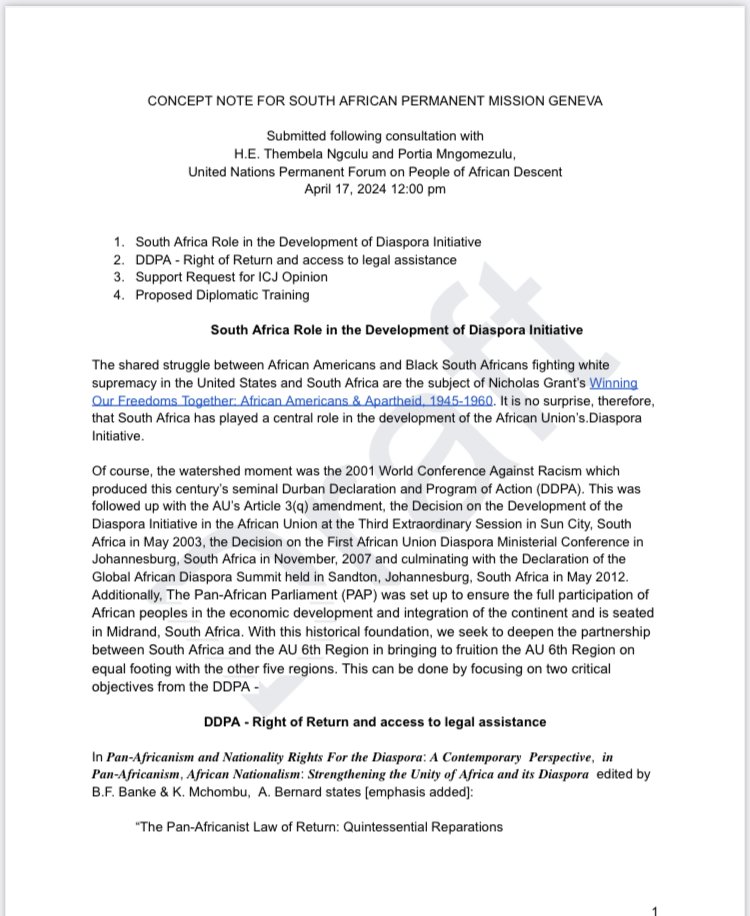
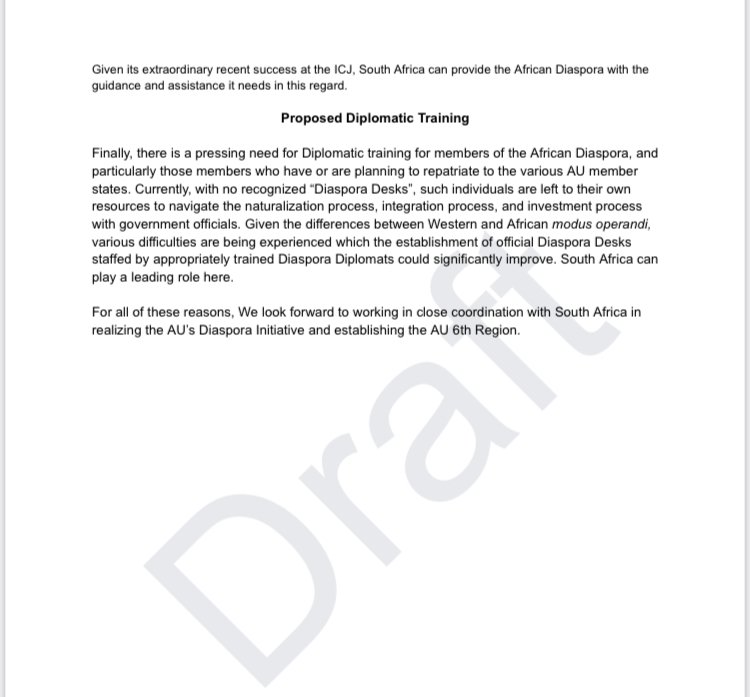
I presented Mr. Ndimeni with the CONCEPT NOTE FOR SOUTH AFRICAN PERMANENT MISSION GENEVA that I drafted following a consultation that I, Dr. Barryl Biekman and Eric Phillips of the Guyana Reparations Commission attended with H.E. Thembela Ngculu and Portia Mngomezulu at the United Nations Permanent Forum on People of African Descent, April 17, 2024
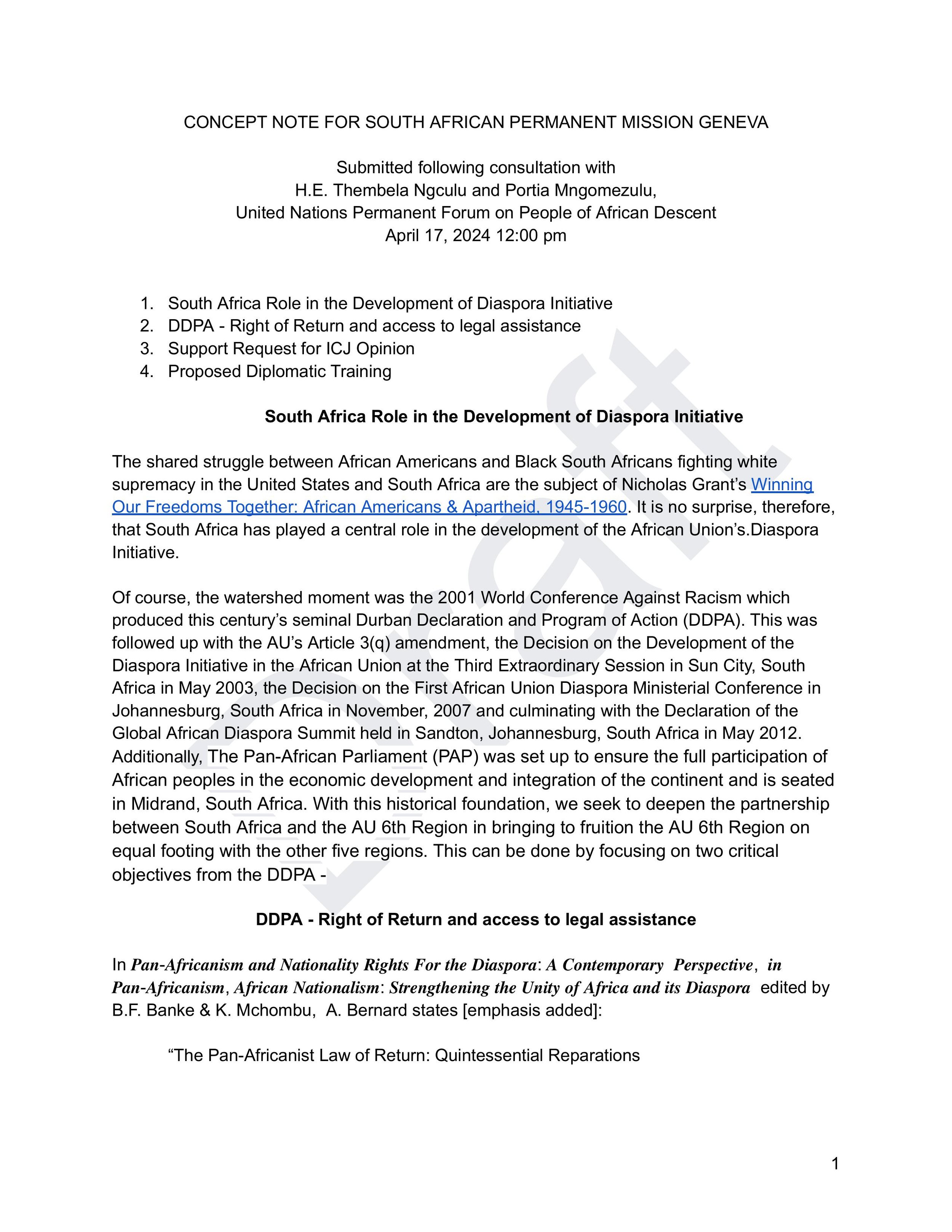
Per the Concept Note, I suggested that South Africa could repay the African Diaspora for its support during the anti-apartheid struggle by doing for Afro Descendant peoples what it did for the Palestinian people and raise Afro Descendant self determination at the International Court of Justice. Mr. Ndimeni was very supportive of this and suggested that to move forward, South Africa would need support from other AU member states and that this could be the focus, among other things, of a Roundtable which will be scheduled for May 2025.

Within this context, we should convene a ”truly repesentative gathering of the African Diaspora to hash it out and come to the roundtable with your 20 representatives”. We now have the opportunity to achieve what we, the AU 6th Region, have been struggling for twenty years - electing and seating our representatives in ECOSOCC as the first formal incorporation into the African Union.

Therefore, I now issue the following instructions on how to accomplish this:

We, the 250 million members of the African Diaspora, can finally begin our FORMAL inclusion in the African Union as its 6th Region during the African Union themed year for 2025 - Justice for Africans and People of African Descent Through Reparations - by completing the following:

  1. A Coordinator from each of the 9 regions of  the AU 6th Region -  Brazil, United States, Caribbean, South America, Europe, Middle East, Central America, Canada, and Asia & Oceania - will host weekly “6th Region Representation Town Hall” Zoom meetings. That’s a total of 4 meetings for each of 9 regions or 36 Zoom meetings. The goal is to get 400 to 600 participants involved in each region or 3,600 to 5,400 total people that would satisfy the criteria “truly representative gathering of the African Diaspora.” The purpose  of these first four Town Hall Zoom meetings is to invite all individuals and organizations to the process, provide the relevant information and invite them to nominate candidates to represent the region. It doesn’t matter so much who the 9 Regional Coordinators are: they are merely technicians who must have the capacity - time, energy, paid Zoom account - to host the Town Hall Meetings. Those interested in serving as the Coordinator for their region must email newafrikandiplomaticcorps@gmail.com immediately:

  2. The 9 Regional Coordinators will then hold 4 more weekly Zoom meetings in December. The first two to listen to candidates and the last two to complete the election process. All other procedures needed will be determined by the regions themselves. Each region must submit its list of representatives by December 31st. The number of representatives shall be as follows (and is based roughly on population and level of Pan African activism):

Brazil - 4 

United States - 4

Caribbean - 4 

South America - 2 

Europe - 2 

Middle East - 1 

Central America - 1 

Canada - 1 

Asia & Oceania - 1

 = 20 seats

3. The 20 candidates will then be presented to the 9th PAC or other suitable grand gathering for a resolution recognizing them in their capacity which will be presented to the AU-ECOSOCC.

4. The twenty representatives will be presented to the AU-ECOSOCC and shared with the ACHPR at its 83nd Open Session that will host a Roundtable discussion on the AU Theme of the Year 2025 on “Justice for Africans and People of African Descent Through Reparations.” The discussion will inform the overall theme  and particularly Afro-Descendant Ancestry and Integration, AU 6th Region, the notion of human rights abuses from abduction and enforced disappearances of Africans trafficked as prisoners of war and enslaved in the Americas, and reparations arising from slavery, colonization of the motherland and neo-colonialism. The Commission will work closely with the host state party for the International Conference on Xenophobia (SA) in order to spotlight the issuese at the February 2025 AU Summit.

This is the new, accelerated path towards establishing the AU 6th Region. Whatever previous plan or arrangements some may have had, the African Union through ECOSOCC and the ACHPR has now introduced a new variable that has changed the game. We can finally achieve what we haven’t in 20 years if we put all petty differences aside, work in one accord following the above instructions, and simply execute. 

This is a parallel process since the ECOSOCC Call for Application for Elections into the 4th Permanent General Assembly excluded the 6th Region.

𝐓𝐎𝐖𝐍 𝐇𝐀𝐋𝐋 𝐌𝐄𝐄𝐓𝐈𝐍𝐆: 𝐄𝐋𝐄𝐂𝐓𝐈𝐍𝐆 𝐓𝐇𝐄 𝐀𝐅𝐑𝐈𝐂𝐀𝐍 𝐃𝐈𝐀𝐒𝐏𝐎𝐑𝐀'𝐒 𝐑𝐄𝐏𝐑𝐄𝐒𝐄𝐍𝐓𝐀𝐓𝐈𝐕𝐄𝐒 𝐓𝐎 𝐓𝐇𝐄 𝐀𝐔-𝐄𝐂𝐎𝐒𝐎𝐂𝐂

Thursday, November 14 at 3:00 PM GMT

Zoom link:

https://us02web.zoom.us/j/81986417325?pwd=dPWCK2ezQWmyHSNIYw6I80qaatb016.1 Information and instructions for conducting the elections will be given and questions answered.

CONSULTATIVE MEETING HELD WITH CHAIR OF WORKING GROUP ON INDIGENOUS POPULATIONS AND MINORITIES IN AFRICA

October 22, Senegambia, Gambia - The President of the Balanta Society in America, Mr. Siphiwe Baleka, met with Hon. Dr. Litha Musyimi-Ogana, Chairperson of the Working Group on Indigenous Populations and Minorities in Africa on the margins of the 81st Session of the African Commission on Human and Peoples’s Rights (ACHPR). Also attending the meeting was Petrus Hatupopi, Legal Officer in the Secratariat of the Commission (ACHPR)).

The objective of the meeting was to discuss the restoration of the ancestral lineage and the right to return of the AfroDescendants. In particular, Mr. Baleka briefed the Commissioner about the over 800,000 members of his community that have taken the African Ancestry dna test and have identified their ancestors on the continent. Mr. Baleka, who traced his own ancestors to Guinea Bissau approached the Commision’s Indigenous Communities and Minorities Group Chair to see how their members could be assisted and recognised as authentic African and indigenous people in their respective communities. Such recognition would pave the way for their full participation in the AU theme for 2025 on Justice for Africans and People of African Descent Through Reparations and their integration into the ongoing activities of operationalising the AU 6th Region.

In the meeting, they discussed other issues concerning the establishment of the AU 6th Region with an emphasis on the selection of the twenty representatives for the AU Economic, Social and Cultural Council. A roadmap was deliberated upon to advance the agenda of the AfroDescendants’ Right to Return to the continent and to include key stakeholders.

Mr. Baleka expressed his appreciation for the accessibility and the role the Commission is playing in promoting and protecting human rights within the continent while also cognisant of the plight of the AfroDescendants.

The outcome of this deliberation will guide the way forward for the Commission to work with the AfroDescendants in general and pave the way for the Commission to mainstream their priorities in the African Union Theme for the Year 2025.

The Commissioner advised the African Diaspora to follow the directive of the African Union to ‘organize yourself and select your twenty representatives.’ “This will be a test to see if the Diaspora can work together in one accord to achieve a specific measurable outcome,” explained Mr. Baleka.

BALANTA SOCIETY PRESIDENT ADVOCATES FOR AFRICAN DIASPORA RIGHT OF RETURN AT 81ST SESSION OF THE AFRICAN COMMISSION FOR HUMAN AND PEOPLES’ RIGHTS

October 21 - On Africa Human Rights Day, the President of the Balanta B’urassa History and Genealogy Society in America (BBHAGSIA), Mr. Siphiwe Baleka, who also serves as the Minister of Foreign Affairs of the Provisional Government of the Republic of New Afrika (PGRNA) submitted a statement to the 81st Session of the African Commission on Human and Peoples’ Rights. The statement was submitted to and received by Hon. Commissioner Selma Saddi-Safer, Vice Chairperson of the Working Group on Economic, Social and Cultural Rights and Special Rapporteur on Refugees, Asylum Seekers, Internally Displaced Persons and Migrants in Africa.

During the session on Monday, Mr. Baleka and Commissioner Saddi-Safer had an informal discussion on the issue of violating AfroDescendamts’ human and peoples’ rights under the African Charter.

“International Law and the Durban Declaration both require African Union member states to pass legislation providing for the immediate and unqualified right of return for members of the African Union 6th Region to effect their ‘full participation’ in developing the continent under the AU Article 3(q) amendment,” said Mr. Baleka. “Any government that is denying or blocking such legislation is guilty of human rights violations of AfroDescendant people.”

Mr. Baleka’s statement highlighted the case of Guinea Bissau and President Umaro Sissoco Embaló recent “superior orders” to block his Council of Ministers from approving the applications of several BBHAGSIA members who applied for citizenship more than two years ago.

The Balanta Society’s statement generated considerable interest from members of the South African delegation and in particular, Lloyd Kuveya, Assistant Director of the Centre for Human Rights at the University of Pretoria and Member of the Executive Committee, as well as Dr. Dorcas Basimanyane, Program Coordinator, International Development Law Unit (IDLU) at the same Center for Human Rights. After a vibrant discussion of the issues over dinner, Mr. Baleka shared with them the CONCEPT NOTE FOR SOUTH AFRICAN PERMANENT MISSION IN GENEVA submitted by Mr. Baleka following consultation with H.E. Thembela Ngculu and Portia Mngomezulu during the United Nations Permanent Forum on People of African Descent, April 17, 2024
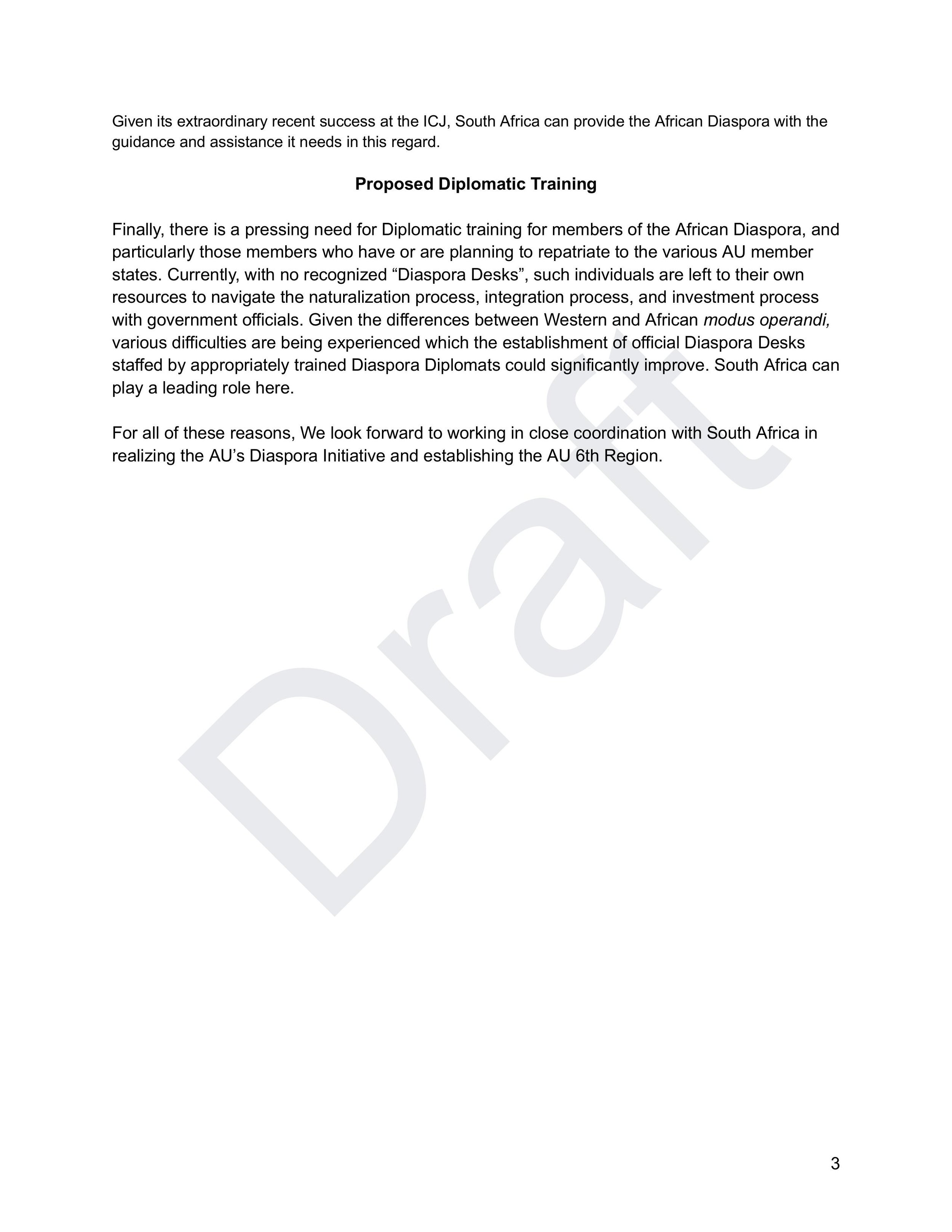
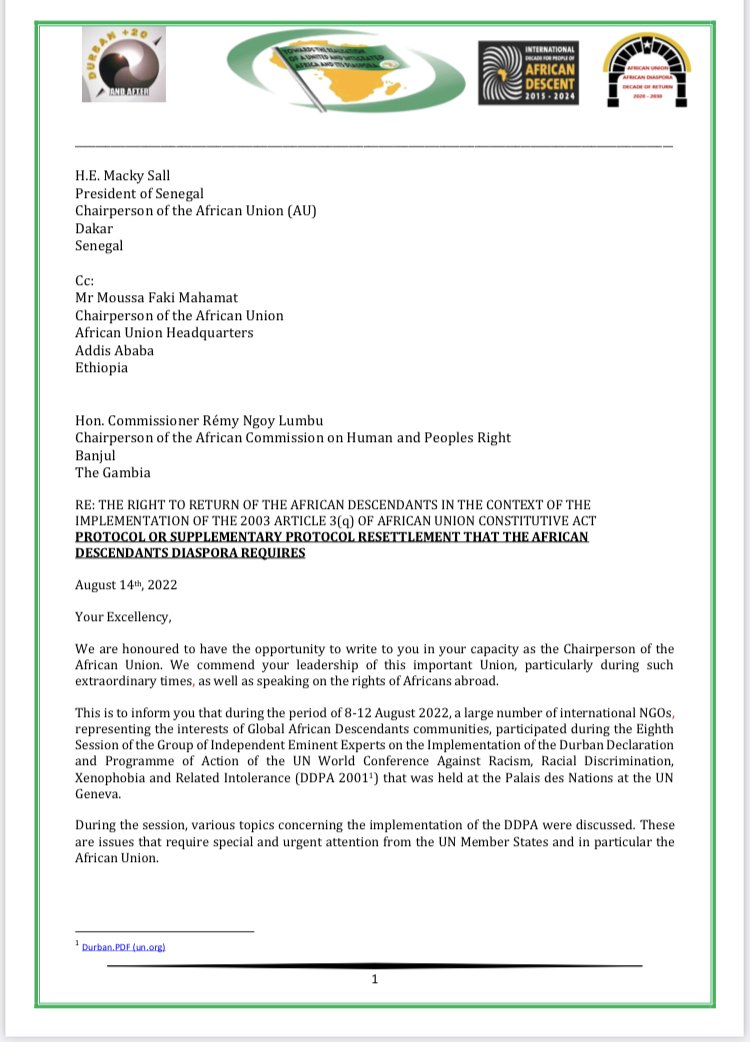
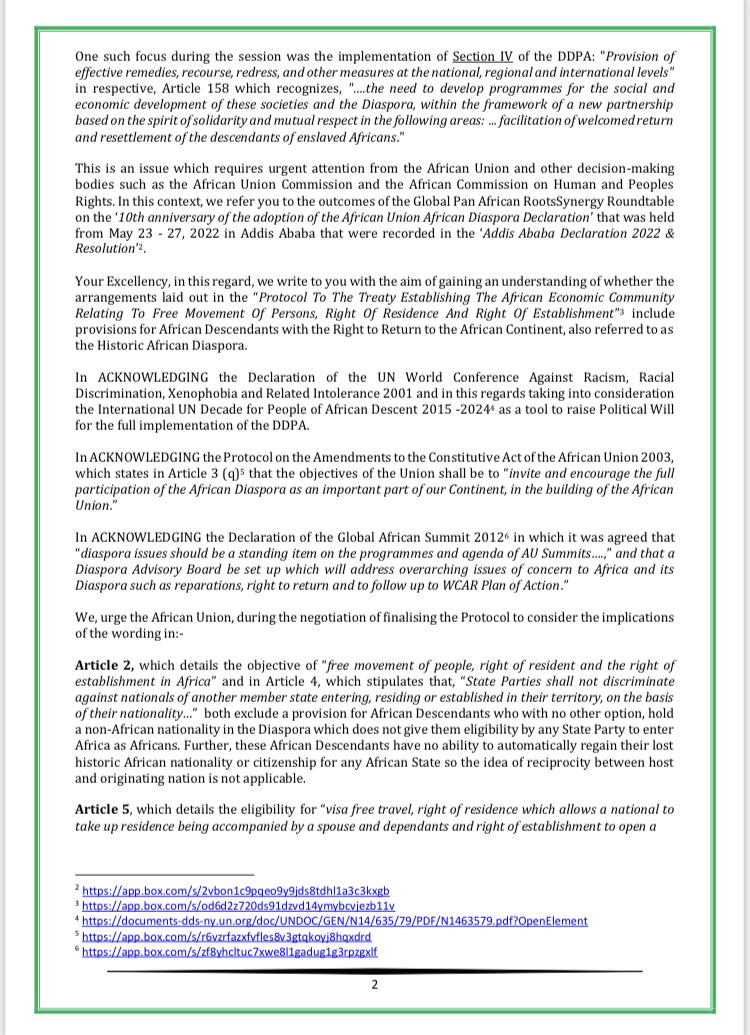
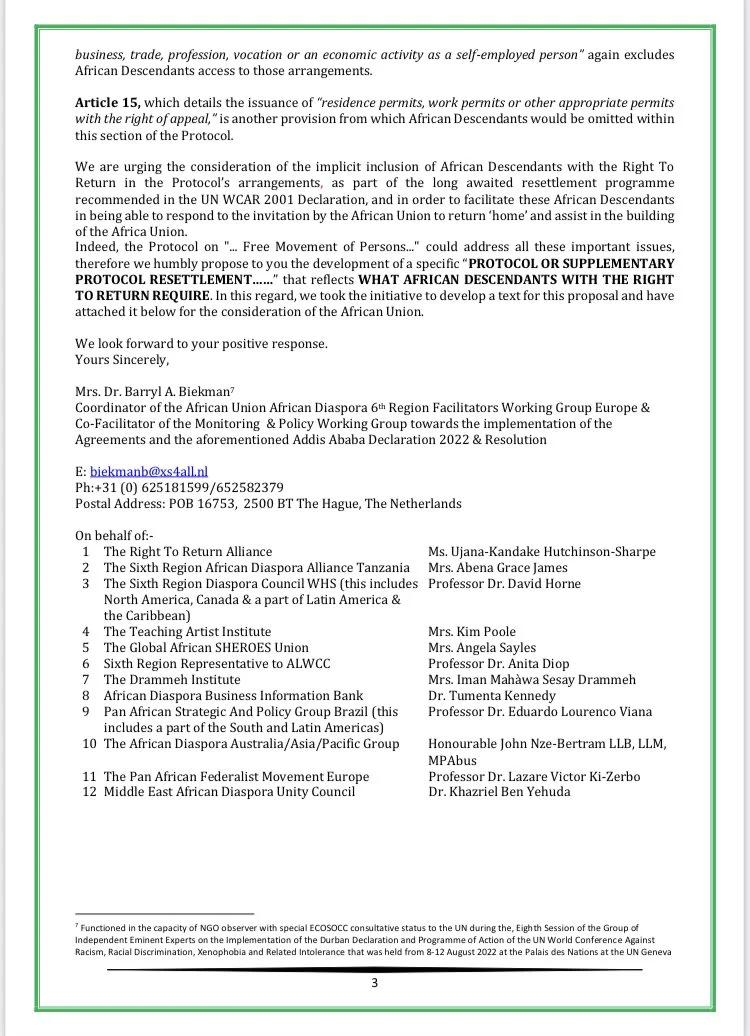
Mr. Baleka’s intervention at the 81st Session of the ACHPR was a follow-up to the work of the Mrs. Dr. Barryl A. Biekman, Coordinator of the African Union African Diaspora 6th Region Facilitators Working Group Europe & Co-Facilitator of the Monitoring & Policy Working Group towards the implementation of the Agreements and the aforementioned Addis Ababa Declaration 2022 & Resolution. Dr. Biekman submitted the following letter to Hon. Remy Ngoy Lumbu - Chairperson, ACHPR you n August 14, 2022:

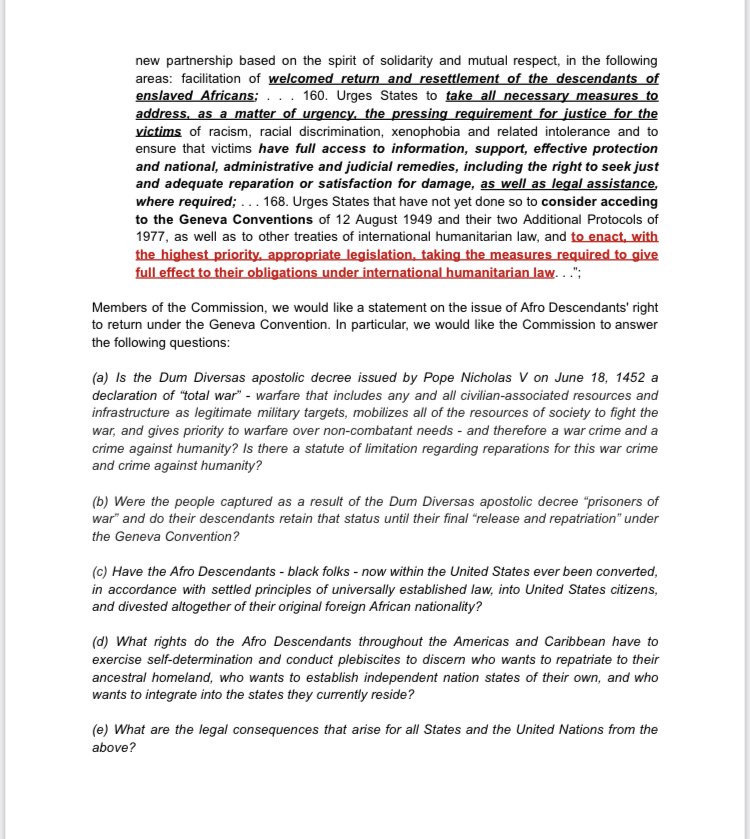
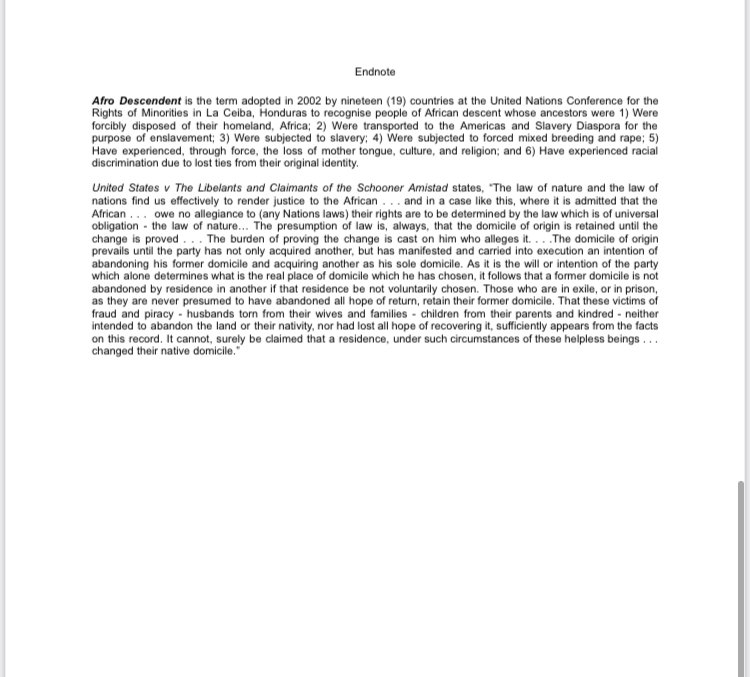
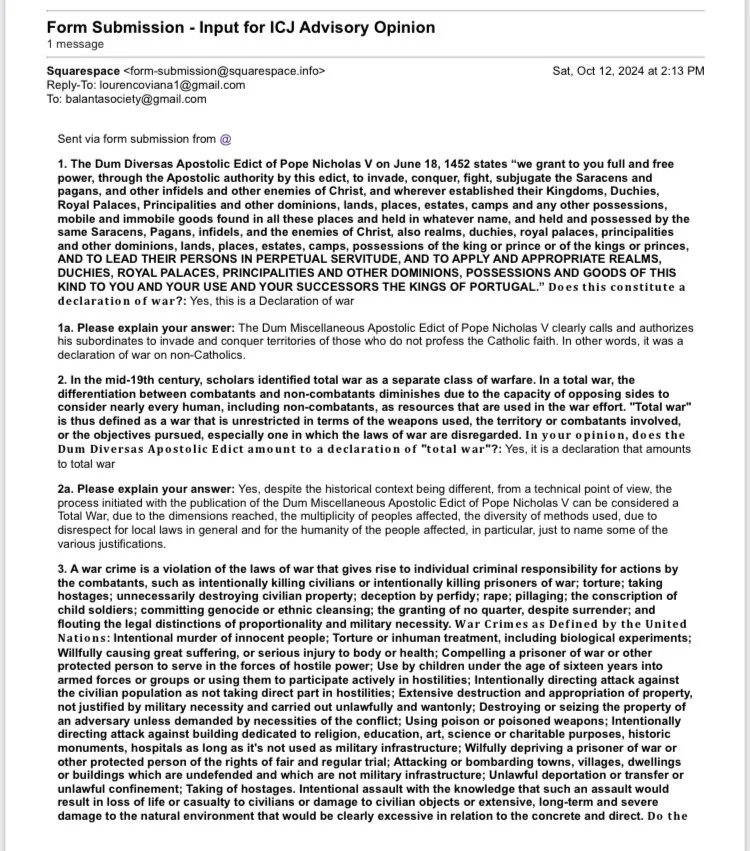
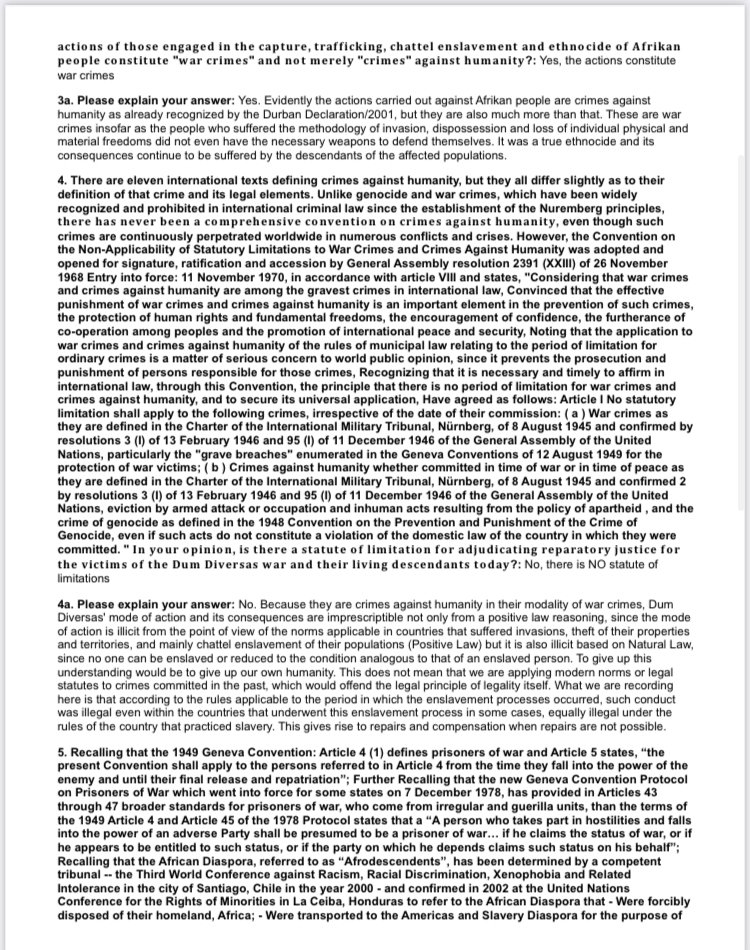
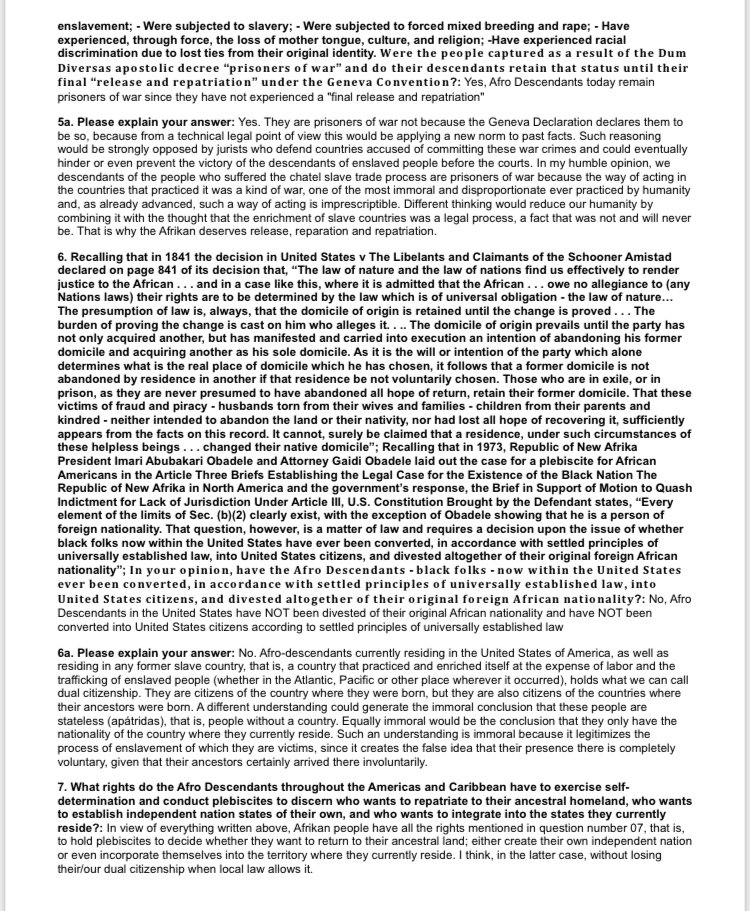
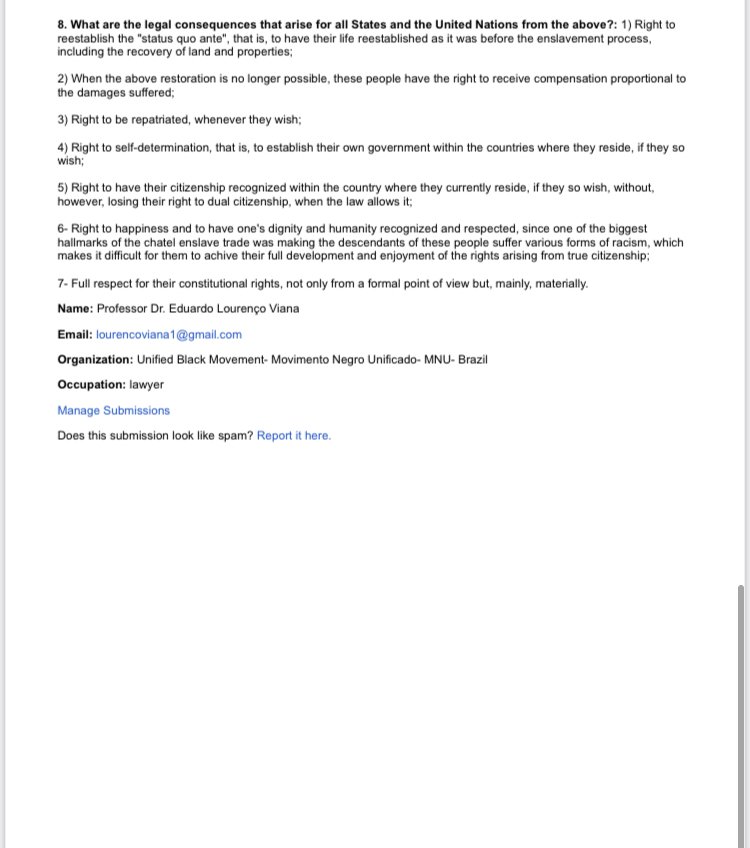
“It is my hope that the African Commission on Human and Peoples’ Rights and all the lawyers, jurists and activists gathered here will give their opinion on the legal questions raised in the Request for an Advisory Opinion from the International Court of Justice (ICJ) on the status of AfroDescendants under the Geneva Convention and their right to conduct plebiscites for self determination,” Mr. Baleka said.

To give your input click here.

Input from lawyer and Professor Dr. Eduardo Lourenço Viana. Unified Black Movement- Movimento Negro Unificado- MNU- Brazil

Haitian Leader Jimmy "Barbecue" Chérizier speaks with the Minister of Foreign Affairs of the Provisional Government of the Republic of New Afrika

On Friday, October 4, the New Afrikan Network hosted Jimmy "Barbecue" Chérizier, Haitian leader of “Viva Asanm”, which means “Live Together” in Creole. Commander Chérizier was asked the following question by Siphiwe Baleka, Minister of Foreign Affairs of the Provisional Government of the Republic of New Afrika.

WATCH THE INTERVIEW

(beginning at 19:30)

New Afrikan Network host: Thank you brother. Okay, so first up, you know, this is questions and answer day and we're going to get started with the first question coming from Brother Siphiwe out of Guinea Bissau from the Provisional Government of the Republic of New Africa. Brother Siphiwe can you hear us?

Minister Baleka: Yes, thank you. Revolutionary Greetings. Free the land! And greetings to you Commander Chérizier. I am Minister of ForeignAffairs of the Republic of New AfriKa. 

Translator: I'm sorry what country? 

[ …] Republic of New Afrika 

Minister Baleka: First I want to say congratulations to you Commander Chérizier. Anyone that is willing to take up arms to defend their sovereignty and self-determination against the imperialist has courage . . . . In March 1968 we were prepared to defend our right to self-determination and free our land with arms. We have a deep understanding and can empathize with your freedom fighting. I have four questions for you today, Commander. The first question revolves around, the first question has to deal with the issue of gang criminality. In our case, our young people were growing in their revolutionary National Consciousness. At that moment the United States government had to rebrand its campaign war strategy against our forces. They declared a war on drugs and they sent drugs and guns into our New Afrikan communities. The United States government declared a war on drugs and criminalized our young people, brought the drugs and the guns into our communities. We attempted to politicize our young people in the gangs and send them for military training in East Africa. As you know Malcolm X was once called a criminal and he became a freedom fighter. Nelson Mandela was an attorney who received military training in Ethiopia and returned to South Africa as a freedom fighter. So my first question is, do you see this as very similar, that those they are calling gangs were given drugs and guns by the Core Group and you are now trying to politicize them, to get them to fight for self-determination?

Translator: Can you repeat the question again?

Minister Baleka:  The question is do you see this as a similar situation? That you are now trying to politicize young people to fight for self-determination?

Commander Chérizier: I greet you and I thank you for the question. What you have just explained is not different from the one that is happening in Haiti. 95% of the weapons are brought from the Dominican Republic and the US. They use the rich people and the corrupted politicians to bring drugs and weapons to the gangs. They use the gangs to destabilize the country. Each time they do that effectively. That's what they are doing today and we are promoting Consciousness, awareness . . .  As a result of our speech to them they reduce the bad act, the bad habit. What they used to do, they stop it.  The politicians used to make them do a lot of kidnapping in order to destabilize . . .  president . . . They used to help them kidnap a lot of trucks with goods belonging to other people. They used to rape women. They used to rape girls. Today most of those bad activities are mostly finished and if someone in the group commits those crimes the leaders take some measures to punish . . .  In order to bring the foreign troops to keep under occupation they sent those weapons in the neighborhoods. Today we are trying to bring a new ideology to them, to bring Consciousness to them against what the oligarchs are forcing them to do. But this fight is not easy. Those people whom we are fighting against have a lot of money. They use local and international media to destroy us. As of today we have already done a lot of work. There were G9 and G people. G9 is a group which I . . .  G is another group which was created by the politicians because the group, namely G9, refused to work for them. Today we G9 happen to unite with G people and this resulted into a new group. Namely this creates a lot of problem for the politicians. Now, they merge all the crimes which was, which were committed by the other groups, they bring it to us as the one who did it. This is a way in order to destroy us. To help people not to believe in us without letting anyone to know that they are the one who used to give those people. . .  who used to ask them to commit those crimes. Today we are trying to put them on a positive way, educate them not to fight against those who look like us. This history which you have told of which I have been telling them - the history like about Nelson Mandela and others - someone who has a weapon and that person does not have education regarding this weapon, that may be a threat against him or her and against the society. That's what we teach and the politicians in Haiti know. That's why they do not educate, build schools to help those living in the popular neighborhood. This is a way so that they can use them whenever they want. Today we are trying to bring a change but it's not easy because most of those people who are weapons holders are not educated men. But because of the leadership we have a better relationship. We have them talk to their soldiers in order to protect the Civil population but sometimes things happen but we think we are on a good way because most of them start having a conscience. The kidnapping decreased considerably. It is not the Kenyan troops nor the government who do it. It’s the result of our work, dialogue with those guys who started this process in our history. We do know that they used to call again, they used to call him a black person, criminal assassinator. This is how the . . . they call you . . .  this is how they call you. Today this is not a problem to give us those nicknames. What is important for us is to fight for the Haitian people to have a better condition and in the name of our ancestors we will reach where we are heading to. I hope that I answer your question but if you are not satisfied you could still ask other questions.

Minister Baleka: thank you Commander I appreciate your answer. My second question - we are aware that you have repeatedly called for dialogue. Would it be fair to say that although your primary objective is defending the sovereignty and dignity of the Haitian people, that it is your position to call for peace and reconciliation in order to spare the bloodshed?

Translator: can you repeat the one please? 

Minister Baleka: Yes, the question is: is it fair to say that your objective is to call for peace and reconciliation in order to save lives and spare bloodshed?

Commander Chérizier: Thank you for the question. Today in the country we are trying to avoid a civil war. We understand that the west - USA, France and Canada - are seeking a civil war in the country. You get they are seeking this civil war as a pretext for them to directly intervene in Haiti? They are using the international force, the Kenyan troops, but deeply this is not their objective. They are kind of ashamed because the international community has an eye open on them. They don't want to do that openly but they are using the local media, the international media, to make people believe that the problem in Haiti is a gang problem and they're trying to turn some of the population against those weapon  holders. They use a movement, namely, they call those people [in audible] defense but deeply there isn't any defensive self-defensive group. Anyone who came from the popular neighborhood they kill you. This will cause those living in the hood - will reach a time where they will become patientless and they will take up weapons and what we are saying is happening now in the department under the pretext of a group, namely self defense. They keep people in another area. Wednesday night the other area attack them. More than 20 people die and more than 100 get injured. We as people of awareness as people who love this country, we use examples from several African countries where people have the same kind of problem as us. We can name Liberia today. They take the way of reconciliation and for that their countries are in peace. What can save . . .  what it is to prevent a lot of people getting killed is reconciliation before the arrival of the international forces. I have never stopped telling people this problem which we have can be stopped, can be solved but as you know our politicians and the oligarchs, they are working for the US and they never listen to us in order to take the way of . . .  And I can understand that they will never listen to us. The reason why is the American claims that it is being executed, their plan is to let Haiti go deep into a chaos of insecurity so that the whole world will see the necessity to approve for foreign troops to enter here. I have said that and I will continue saying that no foreign troops can solve the Haitian problem. The Haitian problem is not only with those groups. The gang, it is a social problem, economic . . .  It is an economic problem. It is a political problem. We have to have leaders with character to solve this problem. How can you understand that only 5% of people control the wealth of 95% of people in the country? Those people do not create not even one hospital as a reference for the country when they get sick. They board a helicopter to go lately in an operation with the police, national and the foreign troops. A Kenyan troop received a bullet and a Haitian police officer received a bullet. They quickly took [the Kenyan officer out]  and they sent the Haitian police officer in the countryside, but now he is dead. All of this is discrimination. This is why we are fighting to enter dialogue to solve the problem. 

Minister Baleka: Let me interrupt because I have one final important question for you. It has two parts. The first part is, has any African security forces offered to provide training for your militia and the second part of the question, would you say that now is a good moment for a Pan African Ubuntu peace delegation, a delegation led by Julius Malema, PLO Lumumba, Her Excellency Ambassador Arikana Chihombori Quao, The Prime Minister of Burkina Faso Apollinaire Joachimson Kyelem de Tembela, and Dr. Umar Ifatunde? Do you think such a delegation coming as conciliators could help bring about the reconciliation you speak of?

Commander Chérizier: For the first question regarding if the African forces could train us, we do not have any contact with them.  When they come they always attach to the work [of the imperialists]. We we always attach to our work defending our territory. And for the second question, anyone who can contribute to have a peaceful resolution to prevent people from getting killed, we are ready to work and collaborate with them but in the honor and dignity in the interests of the Haitian people. Any dialogue which we enter, if our dignity is not respected since the interest of Haiti is not respected, we will not engage. Today our objective is clear: the wealth of the country must be shared with the children of the country. That's what the father of the nation said, Haiti’s wealth belongs to the children of Haiti. For example in our constitution of 1805, it is prevented for a foreigner to be a property owner in Haiti. So the Clinton family happened to buy land and this present Prime Minister is working with Clinton. This is why we need to be careful if we have to engage in a dialog, a negotiation. We have to ensure that our interest and the interest of Haiti . . . . Only more they are using force to be . . .  to use violence against us, the more we will be more violent. We want to take it from where it is now. I hope that I answer your question.

Minister Baleka: Yes you did and on behalf of the Republic of New Africa we respect the sovereignty and dignity of the Haitian people and we will use our Ministry of Foreign Affairs and diplomatic office to pass your message to other Pan African forces.

Commander Chérizier: Thank you. Merci thank you.

The Chairman of the Republic of New Afrika Grassroots Mobilization Campaign has submitted to Commandier Chérizier the following

The Ubuntu Compassionate Relief Plan to Restore & Safeguard Haiti

Balanta Basketball Star From America Plays First Game in Guinea Bissau

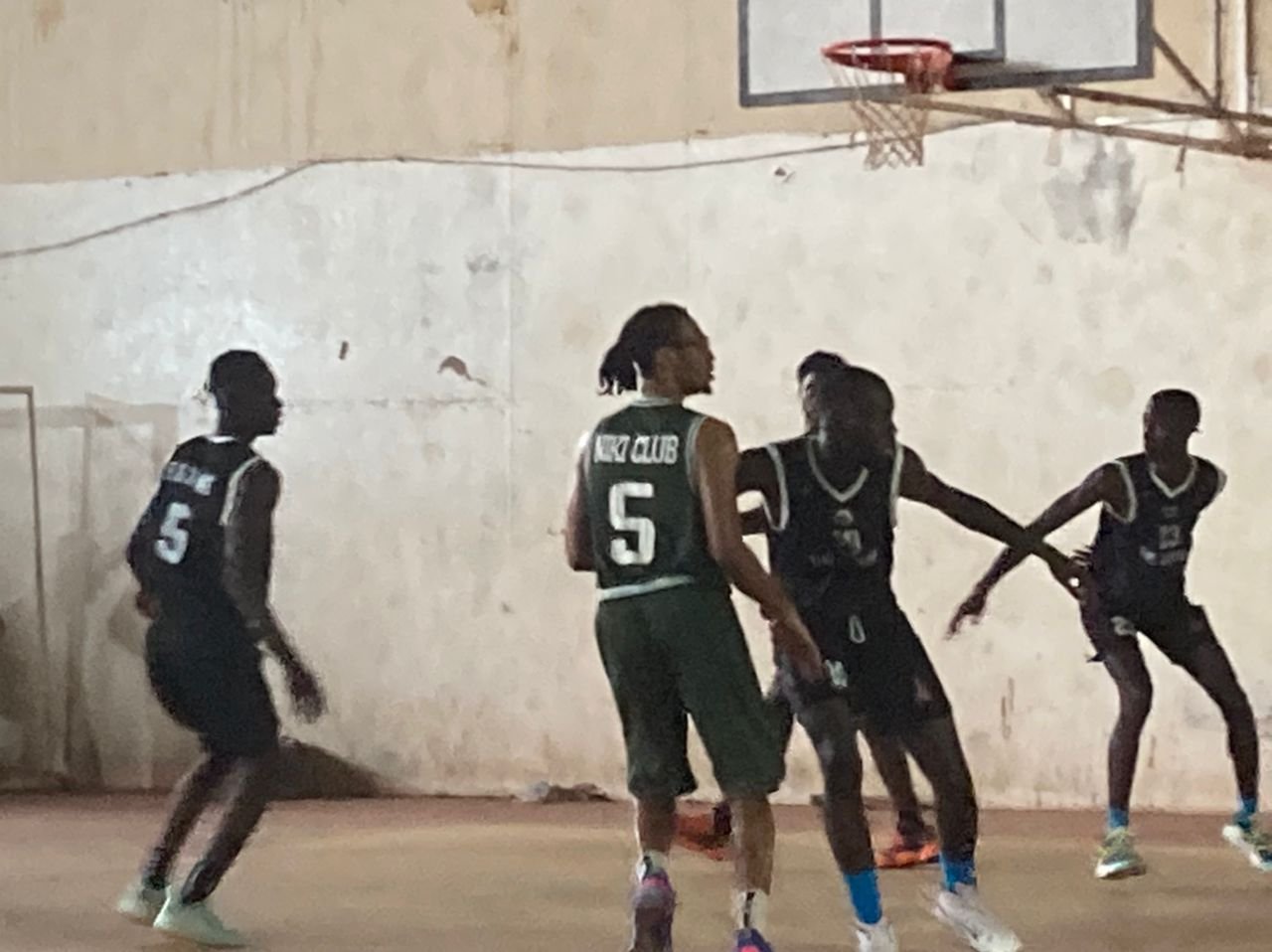
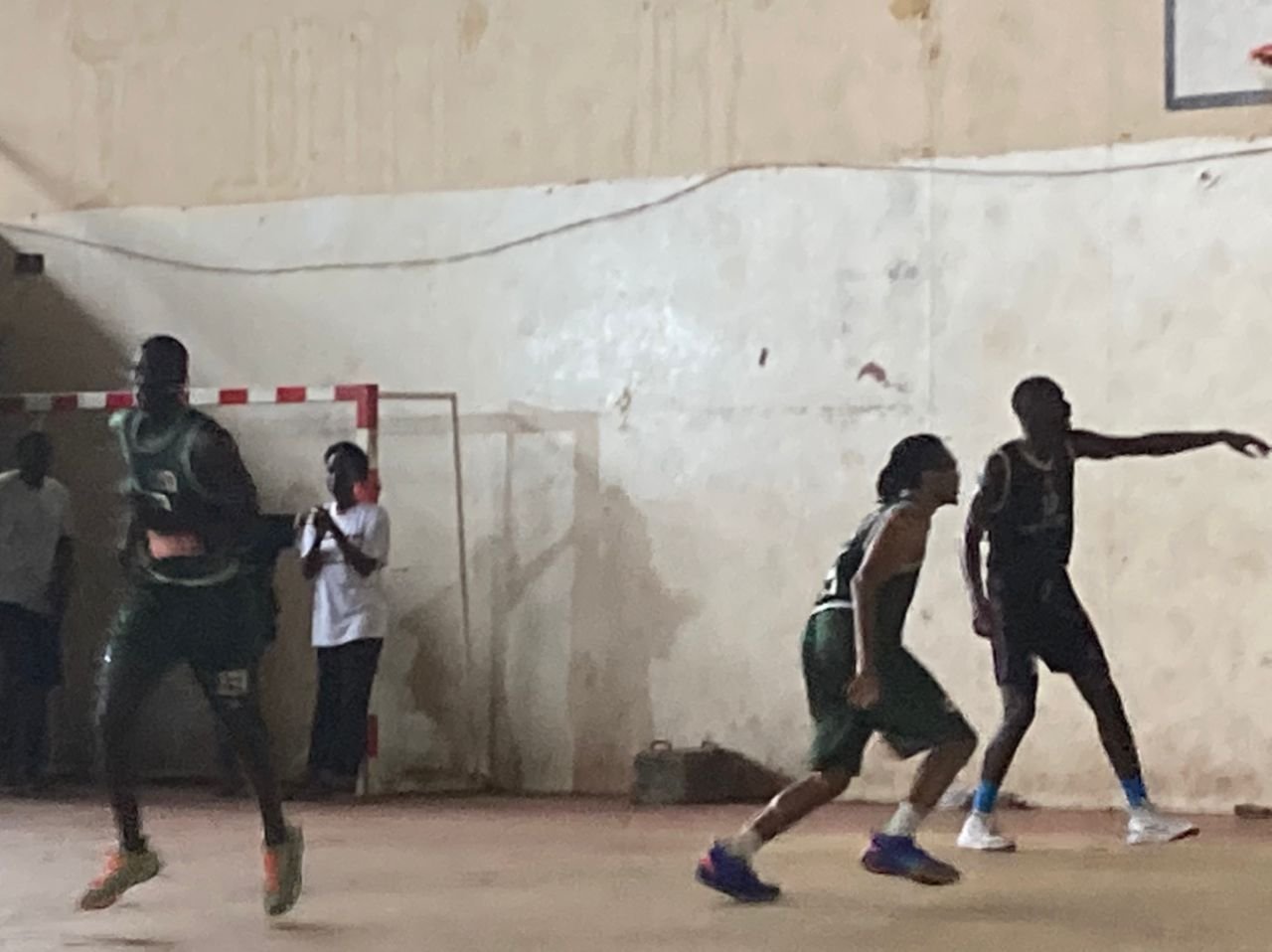
Titna (#5) playing in his first game in his ancestral homeland. He recently repatriated and received his residency.

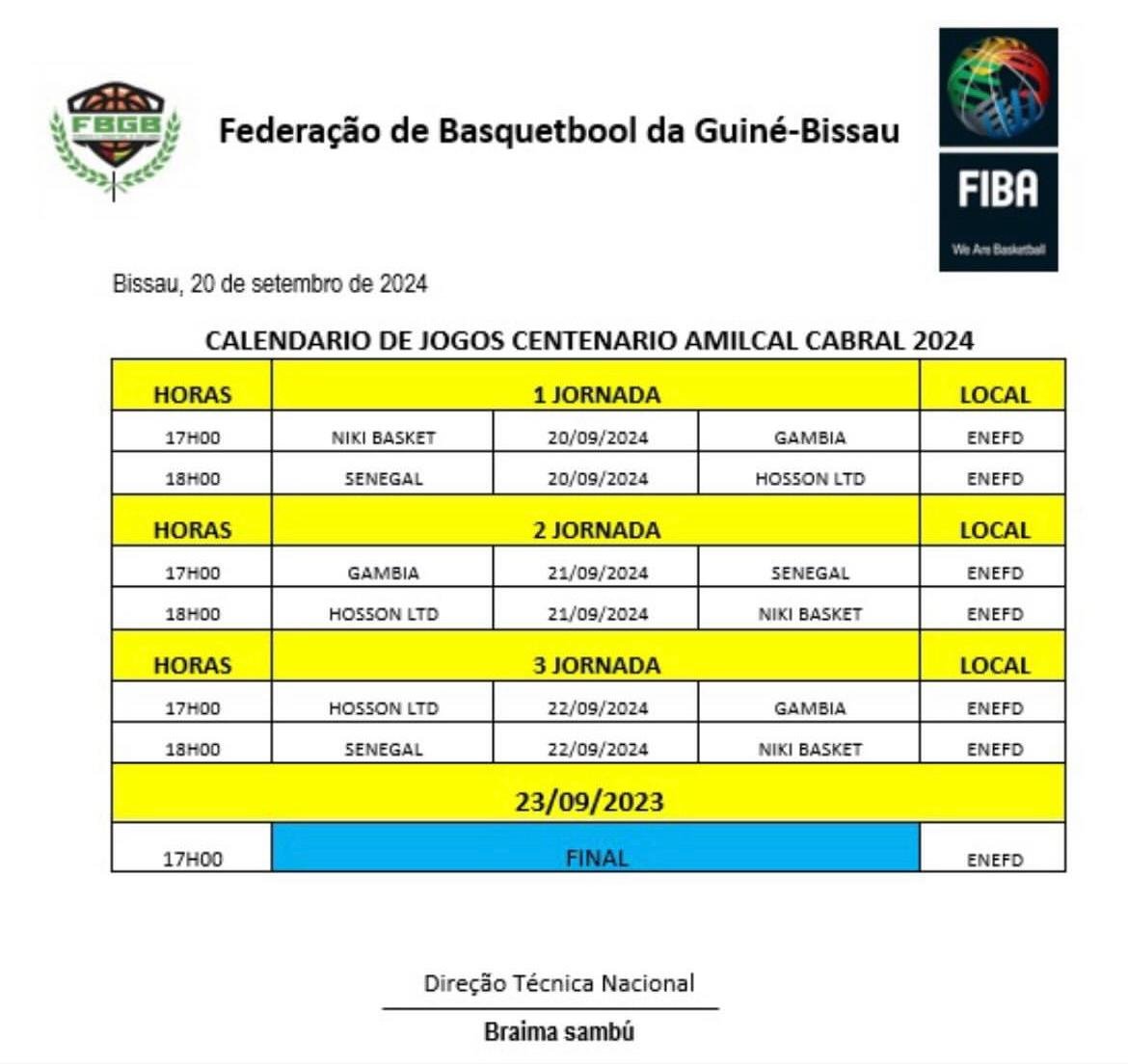
September 20, Bissau - Titna (also known as Joshua Roberts) made his debut tonight playing for the Niki Basket team in his ancestral homeland of Guinea Bissau during the U21 AMILCAR CABRAL CENTENARY TOURNAMENT sponsored by the government of Guinea-Bissau through the Ministry of Youth Culture and Sport. The tournament features 4 teams - Niki Basketball (Guinea-Bissau), Essamaye Basketball Bingnona (Senegal) Hosson LTD (Guinea-Bissau) and the Gambia national team (Gambia). The final will take place on 23 September at ENEFD multipurpose field at 16:00.

Titna, who has also played professionally in Portugal and Armenia has built a reputation as an elite shooter and versatile scorer. Earning Eurobasket.com All-Armenia Team during the 2021-22 season after averaging 19.1ppg and 6rpg .In his debut at the Amilcar Cabral University arena, Titna scored 18 points, had 4 assists and 4 rebounds in a 64-40 loss to the Gambia National Team. Titna, who is of Guinean descent through his mother, represents a historic diaspora that shares a distinct ancestry with Guinea-Bissau. He recently received his permanent residence card, making him one step closer to getting his full citizenship, which is before the Guinea Bissau Council of Ministers. He has been living at the Balanta B’urassa History and Genealogy Society in America/Decade of Return Headquarters in Bissau during the past month while studying Balanta history with its founder, Siphiwe Baleka.

Asked about the experience of playing in his first game in Guinea Bissau, Titna said,

“It meant everything to come back from the diaspora and represent the country. We have a long way to go but it was a monumental step playing Gambia tonight. But not only playing but showing the true potential of our program when we commit to progress of our nation.”

BBHAGSIA Member Joshua Roberts gets five year residency in Guinea Bissau

Roberts obtains Residency in Guiné-Bissau and aids Guinean Basketball Federation 

Aug 31st, 2024

The Basketball Federation of Guiné-Bissau announced in June of 2023 that American Guard Joshua Roberts would be helping the development of basketball in the country and to add strength to their national team roster.  Roberts obtained residency in Guiné-Bissau through the auspices of the Balanta B’urassa History and Genealogy Society in America (BBHAGSIA) during a return trip from Cabo Verde after competing in the National League for B.C Predio.

Roberts, who has also played professionally in Portugal and Armenia has built a reputation as an elite shooter and versatile scorer. Earning Eurobasket.com All-Armenia Team during the 2021-22 season after averaging 19.1ppg and 6rpg.

Roberts, who is of Guinean descent through his mother, represents a historic diaspora that shares a distinct ancestry with Guinea-Bissau. Their family name, Titna, has Balanta origins in the Cacheu region and have given back to the country historically. 

While this is rare amongst the general public of African-Americans communities this is more commonplace in the basketball community in Africa. Most counties naturalize Americans to represent their national team such as Rwanda and Cameroon. It just so happens that these Americans are of African descent. Most notably former NBA player Carlik Jones who recently represented South Sudan in this year's Olympics. While it is unknown if some of these athletes have any ancestry to these nations, Roberts is a direct descendant of Guiné-Bissau which makes this more intimate.

Guiné-Bissau hasn’t competed at the senior level since 2014 in the Lusophony Games and 2011 AfroBasket Qualifiers in Madagascar, Antananarivo. The Federation is looking to revitalize the basketball program and reenter international basketball competitions with a new revitalized roster from local talent and diaspora talent like Roberts.

In February of 2024 Roberts attended the NBA Africa Luncheon in Indianapolis, Indiana during the NBA All-Star Weekend in the USA as an ambassador for the program. This luncheon brought together leaders from the business, entertainment, philanthropy, technology, and youth development to discuss processes and areas of opportunity in Africa. 

At this meeting Guine-Bissau had the opportunity to interact with a number of prominent personalities such as; Miranda Maenzanise, management of NBA Africa and Amadou Gallo Fall (BAL President). This meeting provided an opportunity to improve the overall basketball landscape in Guinea Bissau. 

Balanta B'urassa History and Genealogy Society in America (BBHAGSIA) Members Joshua Roberts and Walid Artest with Adam Silver, Commissioner of the National Basketball Association (NBA)

ABOUT BHAGGSIA

The Balanta B’urassa History and Genealogy Society in America (BBHAGSA) was founded by Siphiwe Baleka in 2019 to promote Balanta culture, history, education, language training, genealogy research and other services to descendants of Balanta people who were trafficked from their ancestral homelands in Guinea Bissau and enslaved in the Americas. BBHAGSIA also established the Decade of Return Initiative that provides ancestral return tours and citizenship opportunities under the Right of Return. BBHGASIA provides a wide variety of services, including Consular and visa services, to help Balanta people in America reconnect with their ancestral homeland. On June 20, 2023, BBHAGSIA and the Decade of Return organized Joshua Roberts’ first press conference upon arrival at Osvaldo Airport.

FIDDLER AND CHICKEN GEORGE THEN AND NOW: CAN THE AFRICAN AMERICAN CELEBRITY CHANGE THE GAME?

“But for all their money, fame, and achievement, says former New York Times columnist William C. Rhoden, Black athletes still find themselves on the periphery of true power in the multibillion-dollar industry their talent built. . . . Rhoden makes the cogent argument that Black athletes' "evolution" has merely been a journey from literal plantations to today's figurative ones, in the form of collegiate and professional sports programs. Drawing from his decades as a sportswriter, Rhoden contends that Black athletes' exercise of true power is as limited today as when masters forced their slaves to race and fight. “ - William C. Rhoden, Forty Million Dollar Slaves: The Rise, Fall, and Redemption of the Black Athlete

“I don’t want to be a modern-day Chicken George, competing for the entertainment and profit of white “owners” of sports leagues in exchange for greater creature comforts and a social acceptance denied the vast majority of the 47.5 million black people in America. I want to use my experience in the sport of swimming to benefit the people of my ancestral homeland, Guinea Bissau. Michael Phelps said that he wanted to change the sport of swimming. What greater impact, what greater change, then to go where there are few or no swimming programs and make in those places the best swimmers in the world….” - Siphiwe Baleka

When I was a boy growing up in the far west suburbs of Chicago, sports consumed a lot of my time. I was a good athlete and every day my friends (all white) and I organized various games and contests. We played everything - football, baseball, basketball, soccer, tennis, wrestling, track and field. We spent hours at the swimming pool, we played table tennis, pool, all kinds of board games, and of course, the first generation of video games. I wanted to be a professional athlete, and by the time I was ten years old, I was an Illinois state champion swimmer. There was no professional swimming back then, but there was the Olympics.

During this same time, however, I, like 130 million other people in America, was impacted by the 1977 ground-breaking television miniseries ROOTS that was based on the book by Alex Haley. For the first time, I came to understand, as well as a six-year old could, the history and brutality that was the basis of my existnce in America and why, as a black boy, no one in my all-white community looked like me. The scene that had the greatest impact on me, that haunted me throughout my childhood and caused me to have an identity crisis that forced me to leave Yale University in 1993, was the scene when Kunte Kinte was whipped nearly to death, breaking his spirit and forcing him to accept the slave name “Toby”.

From that point on I became very sensitive to the idea that I wasn’t going to be a slave, that nobody was going to be my “master” and force me to do what I didn’t want to do. I wasn’t going to accept the conditions of servitude. But that’s exactly the first thing I learned at Yale when the administration prevented me from enrolling in the major of my choice: Ethics, Politics and Economics (EPE) even though I had earned top grades in all the pre-requisite courses. Here, for the first time, the “masters” decided that I couldn’t do something I wanted to do and forced me to do something I didn’t want to do, which was choose another major. How was it that I couldn’t study what I wanted????

Another scene that had a great impact on me was the scene where Fiddler, born in slavery in America, explains to Kunte Kinte, born in freedom in Africa, the slave mentality:

I would eventually come to understand, especially after reading books like the Autobiography of Malcolm X, that to accept special treatment, to gain material benefits to have a more comfortable life while working for white people was what we called “selling out”. The goal of black people was to break free of such a system, to work for yourself and the benefit of your own people. I became sensative to the slave mentality, often referred to as being an “Uncle Tom” or an “oreo cookie” - someone who accepted and was subservient to the terms of white people, defended them, and was concerned, like Fiddler, about having a ‘good negro life” - eating in the white man’s house, having stuff that the other slaves didn’t. Fiddler, because he could play the fiddle and entertain his master, thought that his subservient life was a good life. He never thought of freedom or life without the master because, in his own words, “Massa OWNS you and there’s nothing you can do about it.”

Even before arriving in the United States, the people taken from various territories on the African continent were forced to exercise and entertain their white, Euro-American enslavers.

This system of exploitation that began on the slave ship continued on the plantation.

“For many of the sports that American slaves played on plantations, the rewards made available at the culmination of these events brought an increased element of competition and athleticism into recreation. This rang true whether slaves participated for their own enjoyment or that of their master. The time off on the plantation and a vast majority of the prizes eligible for receipt for slaves would come from the slave masters. There is no doubt that thousands of slaves had been treated poorly and, seen as nothing more than property to their slave owner, rarely had access to certain daily commodities. This included, but was not limited to, substantial food, proper seasonal clothing, shoes or covering, or even bedding. The slave owner's intense determination to disallow the personal development of the American slave was evident in this treatment of African Americans. This included such cruelties as lack of education for slaves, minimal individual freedom for love, companionship, or culture, and physical brutality. To maintain individualistic amenities despite this treatment, slave sports and competitions would often times conclude with prizes. These prizes were a small attempt to fill the void left by the inhuman treatment of slave masters. These tokens included trophies such as jugs of whiskey, money, small game, food, and at times a woman for a bride. These all became symbols of many of the amenities that slaves were unable to enjoy within their enslavement.” - Sports in Shackles: The Athletic and Recreational Habits of Slaves on Southern Plantations Jon Griffith Chapman University, 2018

The consequences on the mentality of the slave of this system of exploitative entertainment was depicted in ROOTS by the character Chicken George, who mistakenly thought that winning competitions made him the equal of his slave master and having better clothes and food, and presents for his family elevated him above the “slave status”, because, “i’se a sportin’ man, mamma!”.

As an athlete, I came to see that the vast majority of head coaches are white, as are most general managers and other league executives. I realized that the athletes I idolized - Walter Payton, Michael Jordan, Carl Lewis, etc. were nothing more than modern day Chicken Georges, owned by white folks, dressed and given travel passes to go and compete in other cities (plantations) just like Chicken George. They were being used to entertain and profit white team (plantation) owners. Chattel slavey may have been abolished, but the system of economic exploitation remained.

PROFESSIONAL ATHLETE DEMOGRAPHICS AND STATISTICS IN THE US

According to the U.S. Bureau of Labor Statistics, there were 16,700 professional athletes in the United States with a median pay of $77,300 in May, 2021. With a population of 329.5 million in 2020, that means professional athletes were just 0.00506829% of the United States Population!

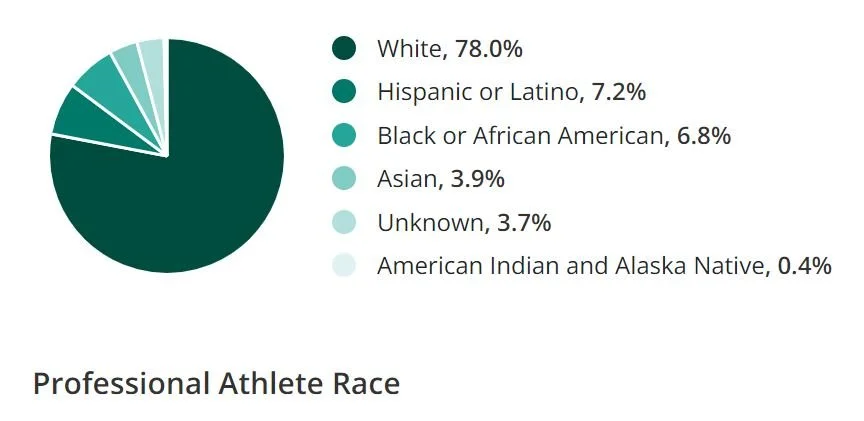
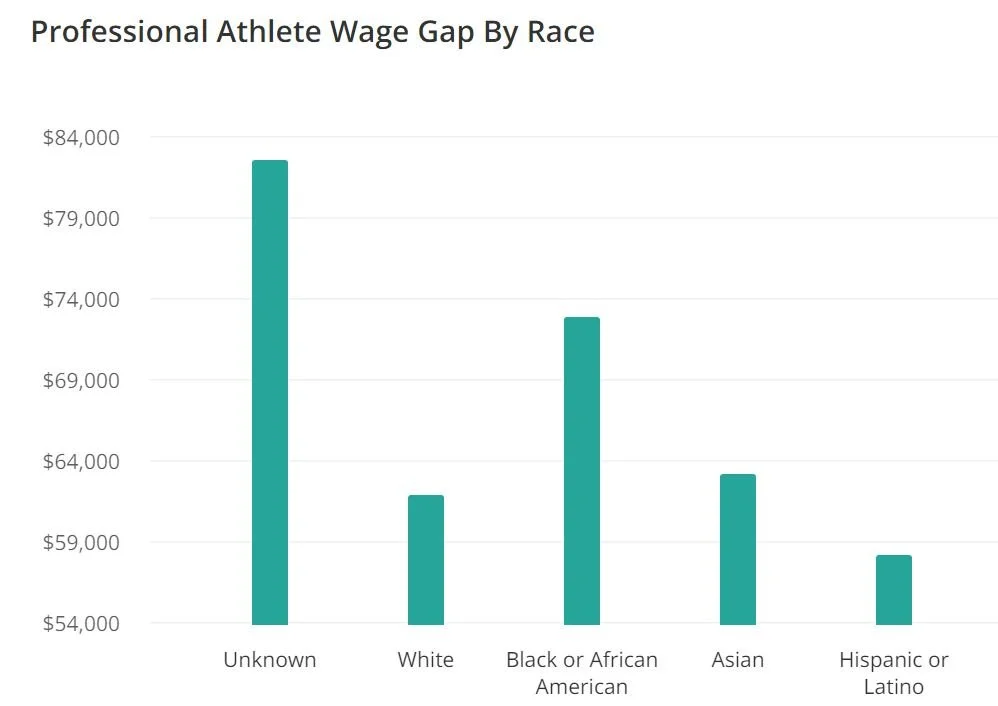
A professional athlete in the United States makes an average of $30.14 an hour? That's $62,691 a year! According to Zippia, the most common ethnicity among Professional Athletes is White, which makes up 78.0% of all Professional Athletes. Comparatively, there are 7.2% of the Hispanic or Latino ethnicity and 6.8% of the Black or African American ethnicity - about 1,135 professional athletes.

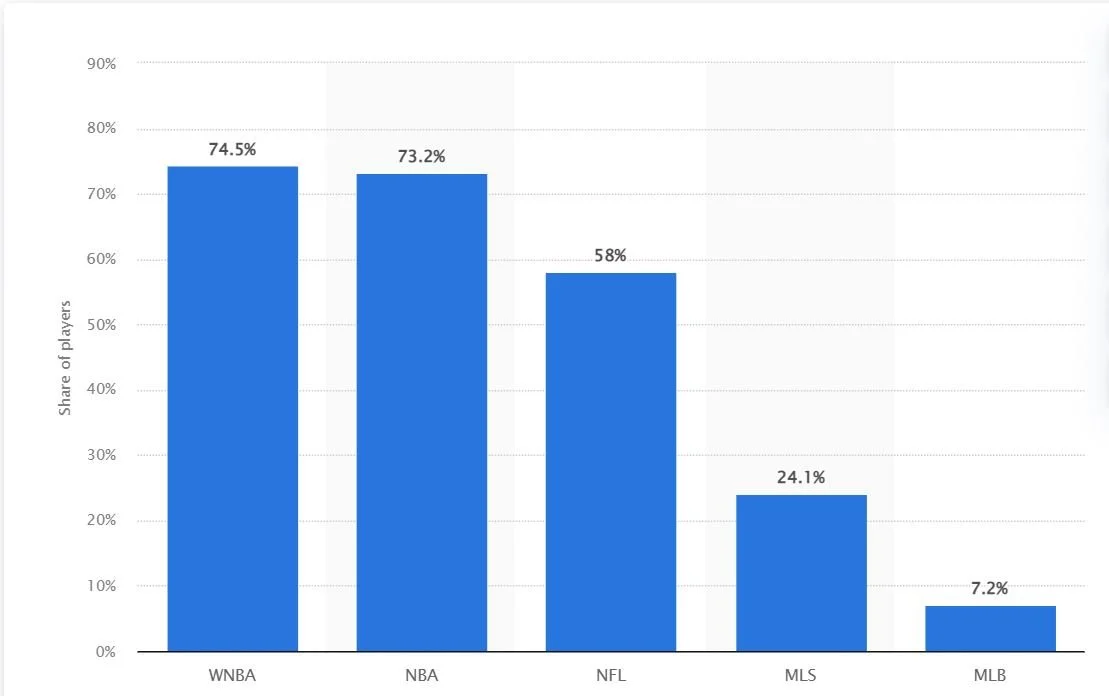
Share of African American players in selected professional sports leagues in North America in 2021/22, by sport

https://www.statista.com/statistics/1168461/african-american-sport-leagues/

While only 13 percent of the US's population is black, black athletes constitute 73 percent of the players in the NBA, 58 percent of the NFL.

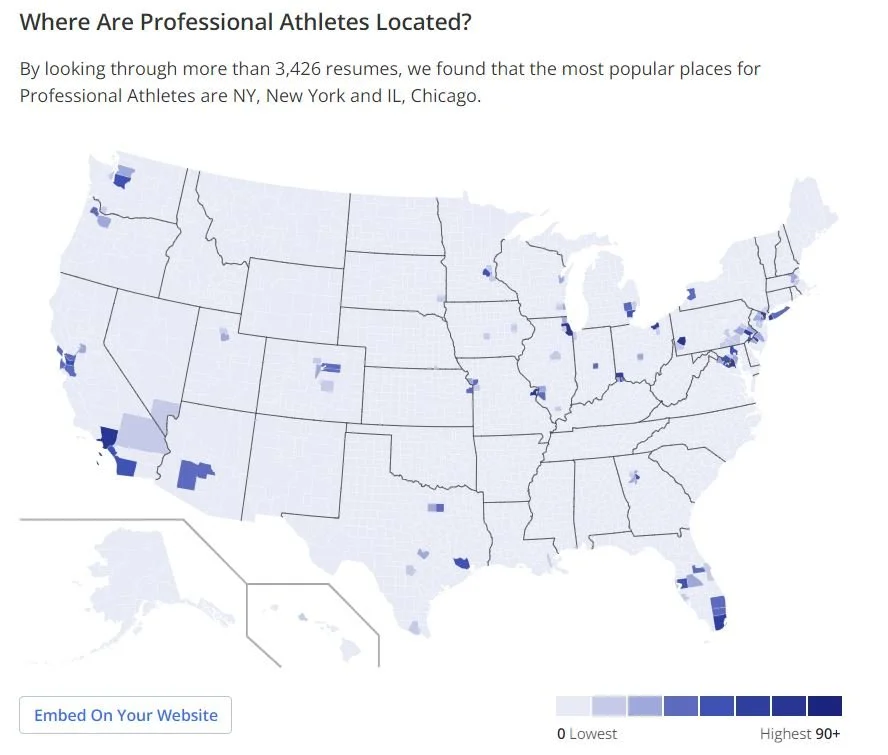
Notice that most of the African American professional athletes do not live in the “Black belt” area of the greatest concentration of black people.

According to a 2015 poll conducted jointly by NPR, the Robert Wood Johnson Foundation and The Harvard School of Public Health, about a quarter of U.S. parents with high-school children who play a sport hope they'll make it to the pros. But among families with incomes under $50,000, the percentage is nearly 40 percent.

Just 1 in 250 college athletes go on to play professionally. Arkansas Democratic Gazette journalist Jon Entine calculates the odds of a black American teenager becoming a professional athlete at 1-to-4,000 -- a long shot to be sure, but still 20 times greater than his white counterpart, who has a 1-in-80,000 chance of going pro.

Black Athletes’ Lost Wages

“The NCAA has been accused of violating labor rights because it refuses to pay players. But a new study suggests this decision goes further — it’s also perpetuating racial inequality.

The revenue generated by Black Power 5 football and basketball players is funneled to predominantly white coaches, sports, and even researchers, the study found. As a result, these athletes lose out on potentially billions in salaries.

“The economy of college sports reflects the inequity that pervades society, where examples of structural racism are legion,” study authors Ted Tatos and Hal Singer wrote in an op-ed in Global Sports Matters.

  • Accounting for scholarships NCAA schools provide, Black Power 5 football and basketball players lost out on a minimum of $17.3 billion in earnings between 2005-19, the study found.

  • Not accounting for scholarships, those players lost $21.5 billion.

  • That’s about $1.2 billion or $1.4 billion in lost wages per year, or about $250,000 per player per year.

  • The study based potential athlete wages on the percentage of total revenue that NBA players make.

Study authors used publicly available demographic and athletic department finance data to confirm that that money is instead being directed away from these players.  

“College sports amateurism is yet another chapter in the voluminous historical record of systemic racial injustice,” they wrote.”

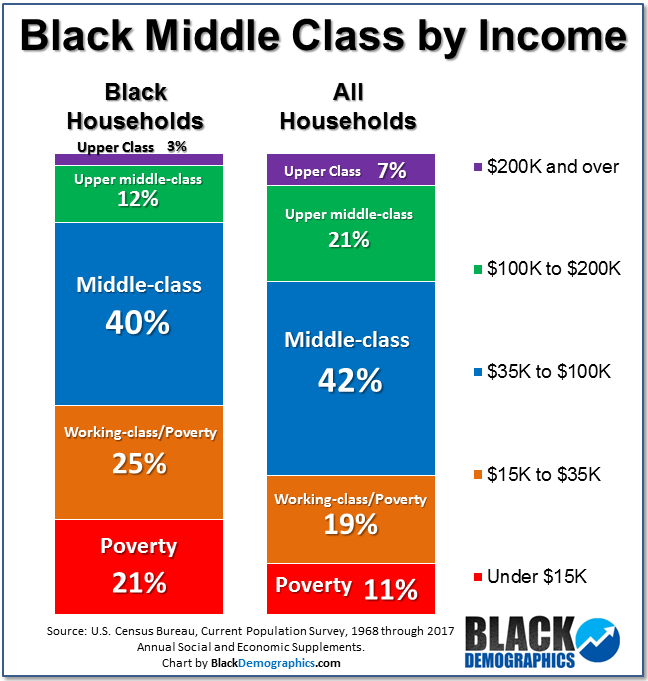
Now, let’s consider this. Only 3% of the African American population makes more than $200,000 and is considered “upper class”. That’s 1,425,000 people. Another 12% makes between $100,000 and $200,000 and is consider “upper middle class”. That’s 5,700,000 people. Another 40% make between $35,000 and $100,000 and are considered “middle class”. That’s 19,000, 000 people. That’s a total of 26,125,000 million people considered to be middle class or above. The remaining 21,275,000 African Americans - almost half the population - are consider working class poor and below poverty.

Further statistics show that the top 10% of African Americans own 75% of black wealth while the bottom 50% of black house holds have a negative net wealth and are worth less than $1.

Gerald Scully writes,

“It is clear that blacks incur great risks in looking to sports as a vehicle for upward social mobility.

At the most, sports has led a few thousand Negroes into a better life while substituting a meaningless dream for hundreds of thousands of other Negroes ... For every Willie Mays or Bob Hayes there are countless Negroes who obviously had abundant will and determination to succeed, but who dedicated their childhoods and their energies to baseball gloves and shoulder pads. If there were other ways out and up, they were blinded to them by the success of a few sports celebrities.... This has been the major effect of sports on the Negro, and it overrides all others. - Olsen, The Cruel Deception, SPOR.Ts ILLusRATED, July 1, 1968, at 12, 15.

Here are the 20 richest African Americans in the world:

20. Beyoncé Knowles

Beyonce is the twentieth richest African American in the world. Her net worth is estimated to be at $300 million. The thirty five year old was born in Houston, Texas and is ranked as number two on the list of The Best Current Female Singers. She earned her fortune through various means. In addition to being a world famous singer, she is also a songwriter, musician, television producer, record producer and business person. She has a few movie credits to her appearance as well including, “Epic,” “Dreamgirls,” “The Great Gatsby” and “Austin Powers in Goldmember.” The multi-talented lady has added the hyphen of Carter to her name after her marriage. She began her career as a child, competing in a variety of dancing and singing competitions. She knew from an early age that she would pursue a career in the entertainment industry. She became famous as a member of the R&B musical group Destiny’s Child in the late 1990s. She continues to release albums on her own currently. She is currently married to the famous rapper Jay-Z.

19. Quintin Primo III

Quintin E. Primo III has a net worth of approximately $300 million which ties his fortune with Beyonce Knowles. Quintin is the co-founder of Capri Capital Partners, LLC. The corporation is on of the largest businesses that is minority owned. It is a real estate investment management firm, located in the United States of America. In addition to being one of the initial founders of the company, Primo is also the CEO in charge of overseeing the affairs of the company. He has enjoyed a long and prosperous career and is currently adding to his already massive fortune. The group offers management services world-wide to pension fund as well as other types of institutional investor. Primo stands as a role model for young African American males because he built a fortune that shows them it is possible to follow your dreams and become a success in America.

18. Russell Simmons

Russell Simmons has a net worth that is valued at $340 million. The multi-talented Simmons is a professional in multiple areas of business and entertainment. He is best known for his role as an entrepreneur. He just seems to understand how to invest in the right ventures and when to pull out. Simmons is also a well known fashion designer, television and film producer and business person with multiple streams of income. With an already developed portfolio, he is still adding to the large fortune that he has amassed. He was born in New York City as Russell Wendell Simmons. Simmons is an American business magnate that was instrumental in founding the Def Jam music label that deals with hip hop music artists. His wife is Samantha Simmons, who is from the East Providence, Rhode Island area. Russell is the creator of the high end clothing label Phat Farm as well as Argyle Culture and American Classics. It would appear that there is no end to his talents.

17. Berry Gordy, Jr.

Berry Gordy is the seventeenth richest African American in the world. His net worth is $345 million. He is best known for his tremendous contribution to the Motown music movement. He founded the Motown record label and also established several subsidiary companies under this umbrella. Gordy has a certain type of brilliance and foresight that has allowed him to build his empire from the ground. He understands that it takes hard work and dedication to achieve any measure of success. He didn’t mind putting in the hard work when he was younger, and his efforts have paid off well for him. He is a songwriter as well as record producer who has earned his fortune through the music business. Gordy was born in Detroit, Michigan and as of 2017, he is 87 years of age. In addition to producing records, he has also served as a television producer and entrepreneur. He has had a long and successful career in entertainment, but his contributions have been behind the scenes, rather than on the stage.

16. R. Donahue Peebles

R. Donahue Peebles, also known as Roy Donahue Peebles has a net worth of $350 million making him the sixteenth richest African American in the world. He is actually tied with Master P, who has an identical net worth. The 56 year old was born in Washington D.C., He is an entrepreneur in the real estate industry as well as an author and a political activist. He founded the Peebles Corporation which is a real estate development and ownership company that happens to be the largest African American owned company of it’s kind. Peebles’ company is also involved in a multi billion dollar development subsidiary that deals with high rise residential, luxury hotel and commercial property interests in the areas of Las Vegas, New York City, San Francisco, Philadelphia and Washington D.C.

15. Master P

Master P is also known as Percy Robert Miller. He has a net worth of $350 million. He was born in New Orleans, Louisiana and is best known for being a multi-talented entertainer and business person. Miller is involved in multiple ventures that have contributed to his immense wealth. His professional ventures include stints as a rapper, actor, author, investor, businessman, philanthropist, record producer and former basketball player. He is currently the fifteenth richest African American in the world. Master P has a good understanding of what it takes to make a fortune and to keep it. He is an excellent investor who chooses the ventures he decides to enter very carefully.

14. Shaquille O’Neal

Shaquille O’Neal has a net worth of $350 million. He is one of the most celebrated and famous basketball players of the NBA. O’Neal was born Shaquille Rashaun O’Neal March 6, 1972 in Newark, New Jersey. He goes by the nickname Shaq. In addition to playing for the NBA, Shaq has also done well for himself as a rapper, real estate entrepreneur, television producer and film producer. He’s tried a little bit of everything. He is currently a sports analyst on the “Inside the NBA” television program. As for O’Neal’s music career, he has been successful with the release of four rap albums. The first one that was released had such great appeal to his fans that it went platinum. Shaq has made appearances in a variety of films and television shows. He even had a few reality television shows of his own. In addition to serving as a sports analyst, Shaq is the host of “The Big Podcast with Shaq.” When we say big, it is no exaggeration because the former NBA star is a staggering seven feet one inch in height. He weights around 325 pounds, but none of it is flab. He keeps himself in excellent physical condition.

13. Bill Cosby

Bill Cosby has a current net worth of $400 million. He gained fame through his television acting, appearing in “The Cosby Show” and several others. He is also known as the voice of Fat Albert in “The Cosby Kids” cartoon. Cosby was born in Philadelphia, Pennsylvania. He earned his money as an actor, musician, television director, television producer, activist and film score composer. There are many people who do not realize that in addition to his acting talents, he is also a gifted musician and composer. He also had a very good run as a stand up comedian. Crowds would form outside of the venues for the chance to get in to see on of his stand up shows.

He truly was a funny guy, but one of the reasons why he became so popular with fans is because he was easy to relate to. Cosby had a way of portraying the typical family man that made us all look up to him for the common sense and wisdom that he shared in his time on “The Cosby Show.” He was a man who exuded family values, but he knew how to put a comedic spin on the various life situations that came up in the series. Cosby was ranked and number twenty four on the Funniest People of All Time List and as number seventeen on the Funniest Stand Up Comedians of All Time list. This was prior to the recent allegations of sexual misconduct and rape. There are fans who remain loyal to Cosby, and several co-stars who have stood by him during the trials.

12. Robert L. Johnson

Robert L. Johnson has a net worth of $550 million. He earned his fortune as an Entrepreneur and a businessperson. Johnson was born in Hickory, Mississippi. In addition to being an entrepreneur he is also a media magnate, executive, philanthropist and investor. He is the co-founder of BET, which was sold to Viacom in 2001. He also founded RLJ Companies, a holding company that invests in various business sectors. 

11. Mariah Carey

Mariah Carey currently has a net worth of $550 million. She earned her fortune by amassing fame as one of the greatest musical artists from the 1990s. Her heyday was in the 90s, and although she is still held in high regard, her popularity has fallen because she isn’t churning out the number one hits anymore. Mariah was born in Huntington, New York. She is ranked as number six on the Best Female Vocalists Ever list and as number nineteen on the Best Singers of All Time chart. Her professional endeavors include musician, songwriter, record producer, film producer and model.

10. Tyler Perry

Tyler Perry has a net worth of $600 million. He made his money as a songwriter, television producer, film producer, theater director and television director. You may remember his most famous film “Diary of a Mad Black Woman.” Perry was born in New Orleans, Louisiana. He has been ranked as number twenty four on the Very Best black Directors list. He was born on September 13, 1969 as Emmitt Perry Jr. He was the most active in writing and directing stage plays in the 1990s and 2000s. His songwriting was mainly in the gospel genre.

9. Magic Johnson

Magic Johnson’s net worth for 2017 is $600 million. He was born in Lansing, Michigan and gained fame in the NBA as a phenomenal basketball player. He is currently ranked and number three on the Top NBA Players Of All Time list and as number nine on the Greatest Offensive Players in NBS History list. He earned his fortune as a basketball player, basketball coach, talk show host, television producer and entrepreneur.

8. Tiger Woods

Tiger woods currently has a net worth of $740 million. He earned his fortune as a pro golfer, turning with industry upside down by coming on strong and taking a high number of wins in a short period of time. Tiger has had his ups and downs as a golfer as well as in his personal life. His string of illicit affairs led to the end of his marriage. He was born in Cypress, California and is also a writer and hosted the “Monday Night Golf” show. He is ranked as number seven on the Athletes Who Spark the Most Fan Arguments list and as number sixteen on Celebrities You Would Not Want as a Stepdad.

7. Sheila Johnson

Sheila Johnson’s current net worth is estimated at $750 million. She earned her money as a business person along with being a TV program creator and film producer. She was born Sheila Crump on January 25, 1949. During her career, she co-founded BET, and served as the CEO of Salamander Hotels and resorts. During her lifetime, she reached a pinnacle of reaching the only African American woman to have a net worth that was more than a billion dollars. She’s not worth that much today, but she still holds a sizable fortune.

6. Jay-Z

Jay-Z is the sixth richest African American in the world today. He has a net worth of $810 million. He earned his money as a rapper, songwriter, record producer, film producer and entrepreneur. Jay Z is ranked as the sixth on the Greatest Rappers of All Time list. His birth name is Shawn Corey Carter and he is currently married to Beyonce Knowles. Between the two of these fabulously rich celebrities, their total net worth is over a billion dollars.

5. Sean Combs

Sean Combs has a net woth of $820 million. He made his fortune in a variety of professions including fashion designer, musician, songwriter, record producer and television producer. He was born in Harlem, New York City, New York. He earned the distinction of being number sixteen on Rappers with the Coolest Post-Rap Careers and as number fourteen on the list of Who Should Buy the Los Angeles Clippers.

4. Dr. Dre

Dr. Dre has an estimated net worth of $830 million. He was born in Compton, California. His professional endeavors that helped him to earn his fortune include musician, rapper, songwriter, record producer, musician and entrepreneur. He was born Andre Romelle Yound on February 18, 1965. He founded Aftermath Entertainment and Beats Electronics and currently serves as CEO for each. He used to be a co owner of Death Row Records but has seen his way out of the arrangement.

3. Michael Jordan

Michael Jordan is the third richest African American in the world today. His net worth is $1.31 billion. Jordan was born in New York, New York. He made the rank of number one for both the Top NBA Players Of All Time and The greatest Shooting Guards in NBA History. In addition to this, he made number four for the Athletes Who Spark the Most Fan Arguments and Athletes Who Should Get a Reality Show. Michael was a star player for the NBA and it was through his career in basketball that launched his run of tremendous success and his climb to fame. The Nike corporation was just one of the sponsors who lined Jordan’s pockets with untold millions for endorsing their products. His professional ventures include actor, athlete, basketball player, spokesperson and entrepreneur. He has made some wise financial decisions and investments in his lifetime.

2. Oprah Winfrey

Oprah Winfrey is the second riches African American in the world. She has a net worth of $3.1 billion. The 63 year old was born in Kosciusko, Mississippi. In her lifetime, she has achieved a high level of professional success. She is a well known and extremely popular actor, film producer, television producer, journalist and business person. She is best known for her own long running television talk series, “The Oprah Winfrey Show.” Oprah is active in supporting charities and worthy causes. She has been ranked among the most trustworthy celebrities in the world as well as making it to number 8 on the Celebrities Who Should Run for President list.

1. Robert F. Smith

Robert F. Smith is the richest African American in the world today. His net worth is estimated at $3.3 billion. He is a philanthropist, businessman and investor. Previously, he was an investment banker and chemical engineer. Smith founded Vista Equity Partners which is a private equity firm. He is currently the CEO of the company. He was born in 1962 in Colorado to Sylvia Myrna Smith and William Robert Smith. He married Hope Dworaczyk in 2015 and has one child, Hendrix Robert Smith.

BALANTA LEADERS SPEAK ON THE HISTORY AND IMPORTANCE OF NEW AFRIKAN FOREIGN RELATIONS

July 19, 2024 - Krystal Muhammad, a Balanta descendant, is the National Chair of the New Black Panther Party and the current President of the Provisional Government of the Republic of New Afrika (PGRNA). Siphiwe Baleka, the founder of the Balanta B’rassa History and Genealogy Society in America (BBHAGSIA) serves as the Minister of Foreign Affairs of the PGNRAN. These Balanta leaders recently discussed the History and Importance of New Afrikan Foreign Relations.

WATCH THE DISCUSSION