“The Christians from Europe erased our memory. After the terror and trauma of being kidnapped and captured, put in chains, brutalized and raped, put in the bottom of slave ships, the European Christians forbid our ancestors from using our names, speaking our languages, and practicing our culture. Within two generations we forgot where we came from and how we lived. Scared of insurrection following Nat Turner’s revolt in 1831, they decided to indoctrinate us with Christianity to make us docile and obey our slave-masters in return for future promise of a better life after death in heaven. Today, descendants of Binham B’rassa (Balanta people) brought to America, have no memory, no image in our brains, of the quality of life that we lived in Nhacra, our homeland. For six generations we were taught that we had no history and that WE were the savages when in fact it was the Europeans, plagued by a harsh climate, plagues, constant warfare with each other, enslaving each other and their Muslim enemies . . . it was the Europeans who were the barbarians and savages while we had been living a successful, indigenous form of communism for thousands of years. We had wealth in people and cattle, we were great farmers and dominated the local financial markets. We had no rulers or government authority, we paid no taxes and we were free and happy. You have to study these people, these Europeans. You have to really know them to understand how tragic it is that we were enslaved by such a pitiful people with an evil religion.”
- Siphiwe Baleka

English peasant of the 14th Century
Volume 1 of Balanta B’urassa, My Sons: Those Who Resist Remain documents the Nile valley origins of Binham B’rassa (Balanta people) which occupied the same environment and had a similar lifestyle as other Nilo-Saharan people of the Sudan. From 3,500 BC to 1400 AD, a period of nearly 5,000 years, ancient B’rass (Balanta people) migrated through the Sahel corridor and thus were a part of all the great African civilizations from which they migrated to finally reach the extreme west coast of Africa in the land they called Nhacra in modern day Guinea Bissau. To understand the ancient lifestyle of the Binaham B’rassa, one can start by observing the cultures of that region and understanding the sophisticated cultures of Africa in general..

According to Gomes Eannes de Azurara’s eyewitness account of the Portuguese’s first arrival in the land of Guinea in 1444:
Now these caravels having passed by the land of Sahara, as hath been said, came in sight of the two palm trees that Dinis Diaz had met with before, by which they understood that they were at the beginning of the land of the Negroes. And at this sight they were glad indeed, and would have landed at once, but they found the sea so rough upon that coast that by no manner of means could they accomplish their purpose. And some of those who were present said afterwards that it was clear from the smell that came off the land how good must be the fruits of that country, for it was so delicious that from the point they reached, though they were on the sea, it seemed to them that they stood in some gracious fruit garden ordained for the sole end of their delight. . . . Now the people of this green land are wholly black, and hence this is called the Land of the Negroes, or Land of Guinea. Wherefore also the men and women thereof are called ‘Guineas,’ as if one were to say ‘Black Men.’ . . .”
BALANTA PEOPLE ENCOUNTERED WHITE PEOPLE BEFORE THE PORTUGUESE ARRIVAL IN GUINEA
IBN BATTUTA DESCRIBES MALI IN 1352
When Ibn Battuta first visited Cairo in 1326, he undoubtedly heard about the visit of Mansa Musa (King of Mali from 1307 to 1332). Mansa Musa had passed through the city two years earlier making his pilgrimage to Mecca with thousands of slaves and soldiers, wives and officials. One hundred camels each carried one hundred pounds of gold. Mansa Musa performed many acts of charity and '“flooded Cairo with his kindness." So much gold spent in the markets of Cairo actually upset the gold market well into the next century. Mali's gold was important all over the world. In the later Medieval period, West Africa may have been producing almost two-thirds of the world's supply of gold! Mali also supplied other trade items - ivory, ostrich feathers, kola nuts, hides, and slaves. No wonder there was talk about the Kingdom of Mali and its riches! And no wonder Ibn Battuta, still restless after his trip to Al-Andalus, set his mind on visiting the sub-Saharan kingdom. Here is an excerpt from his travel journal:
“Sometimes the sultan [of Mali] holds meetings in the place where he has his audiences. . . . Most often he is dressed in a red velvet tunic, made of either European cloth called mothanfas or deep pile cloth. . . . Among the good qualities of this people, we must cite the following:
The small number of acts of injustice that take place there, for of all people, the Negroes abhor it [injustice] the most.
The general and complete security that is enjoyed in the country. The traveler, just as the sedentary man, has nothing to fear of brigands, thieves, or plunderers.
The blacks do not confiscate the goods of white men who die in their country, even when these men possess immense treasures. On the contrary, the blacks deposit the goods with a man respected among the whites, until the individuals to whom the goods rightfully belong present themselves and take possession of them.
The Negroes say their prayers correctly; they say them assiduously in the meetings of the faithful and strike their children if they fail these obligations. On Friday, whoever does not arrive at the mosque early finds no place to pray because the temple becomes so crowded. The blacks have a habit of sending their slaves to the mosque to spread out the mats they use during prayers in the places to which each slave has a right, to wait for their master’s arrival.
The Negroes wear handsome white clothes every Friday. . . .
They are very zealous in their attempt to learn the holy Quran by heart. In the event that their children are negligent in this respect, fetters are place on the children’s feet and are left until the children can recite the Quran from memory. On a holiday I went to see the judge, and seeing his children in chains, I asked him ‘Aren’t you going to let them go?’ He answered, ‘I won’t let them go until they know the Quran by heart.’ Another day I passed a young Negro with a handsome face who was wearing superb and carrying a heavy chain around his feet. I asked the person who was with me, ‘What did that boy do? Did he murder someone?’ The young Negro heard my question and began to laugh. My colleague told me, ‘He has been chained up only to force him to commit the Quran to memory.’
Some of the blameworthy actions of these people are:
The female servants and slaves, as well as little girls, appear before men completely naked. . . .
All the women who come into the sovereign’s house are nude and wear no veils over their faces; the sultan’s daughter also go naked. . . .
The copper mine is situated outside Takedda. Slaves of both sexes dig into the soil and take the ore to the city to smelt it in the houses. As soon as the red copper has been obtained, it is made into bars one and one-half handspans long - some thin, some thick. Four hundred of the thick bars equal a ducat of gold; six or seven hundred of the thin bars are also worth a ducat of gold. These bars serve as a means of exchange in place of coin. With the thin bars, meat and firewood are bought; with the thick bars, male and female slaves, millet, butter, and wheat can be bought.
The copper of Takedda, is exported to the city Couber [Gobir], situated in the land of the pagan Negroes. Copper is also exported to Zaghai [Dyakha-western Masina] and to the land of Bernon [Bornu], which is forty days distant from Takedda and is inhabited by Muslims. Idris, king of the Muslims, never shows himself before the people and never speaks to them unless he is behind a curtain. Beautiful slaves, eunuchs, and cloth dyed with saffron are brought from Bernon [Bornu] to many different countries. . . .”
Here, then, Ibn Battuta is describing a Muslim Mali society completely abhorrent to our Balanta ancestors living in the region. Such a society violated their Great Belief which centered on equality. Thus, any kind of hierarchy creating masters and slaves, rulers [kings or Mansas] and subjects, was a direct threat to the Balanta way of life. The idea of shackling children to force them into the foreign indoctrination of a false religion of conquest is an offense of the greatest magnitude.
Here we also learn of the presence of white people and European goods in the Kingdom of Mali during the time when Mali was oppressing Binham B’rassa (Balanta people) who resisted Mali imperialism and engaged in cattle raids against them. Further Antonius Malfante, writing in 1447, describes life in in the Tawat and the Western Sudan Trade:
“After we had come from the sea, that is from Hono [Honein], we journeyed on horseback, always southwards, for about twelve days. For seven days we encountered no dwelling - nothing but sandy plains; we proceeded as though at sea, guided by the sun during the day, at night by the stars. At the end of the seventh day, we arrived at a ksour [Tabelbert], where dwelt very poor people who supported themselves on water and a little sandy ground. They sow little, living upon the numerous date palms. At this ksour [oasis] we had come into Tueto [Tawat, a group of oases]. In this place there are eighteen quarters, enclosed within one wall, and ruled by an oligarchy. Each ruler of a quarter protects his followers, whether they be in the right or no. The quarters closely adjoin each other and are jealous of their privileges. Everyone arriving here places himself under the protection of one of these rulers, who will protect him to the death: thus merchants enjoy very great security, much greater, in my opinion, than in kingdoms such as Thernmicenno [Tlemcen] and Thunisie [Tunis].
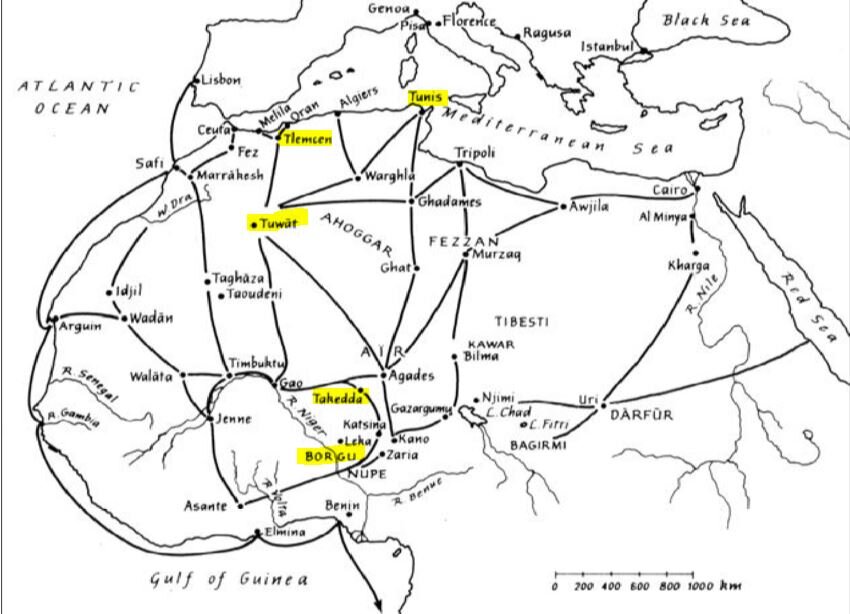
Though I am a Christian, no one ever addressed an insulting word to me. They said they had never seen a Christian before. It is true that on my first arrival they were scornful of me, because they all wished to see me, saying with wonder “This Christian has a countenance like ours’ - for they believed that Christians had disguised faces. . . .
There are many Jews, who lead a good life here, for they are under the protection of the several rulers, each of whom defends his own clients. Thus they enjoy very secure social standing. Trade is in their hands, and many of them are to be trusted with the greatest confidence.
This locality is a mart of the country of the Moors, to which merchants come to sell their goods: gold is carried hither, and bought by those who come up from the coast. This place is De Amamento [Tamentiti], and there are many rich men here. The generality, however, are very poor, for they do not sow, nor do they harvest anything, save the dates upon which they subsist. They eat no meat but that of castrated camels, which are scarce and very dear. . . .
It never rains her: if it did, the houses, being built of salt in the place of reeds, would be destroyed. It is scarcely ever cold here: in summer the heat is extreme, wherefore they are almost all blacks. The children of both sexes go naked up to the age of fifteen. These people observe the religion and law of Muhammad. In the vicinity there are 150 to 200 ksour [oasis].
In the lands of the blacks, as well as here, dwell the Philistines [the Tuareg], who live like the Arabs, in tents. They are without number, and hold sway over the land of Gazola from the borders of Egypt to the shores of the Ocean, as far as Massa and Safi, and over all the neighboring towns of the blacks. . . . They are governed by kings, whose heirs are the sons of their sisters . . . . Great warriors, these people are continually at war amongst themselves. The states which are under their rule border upon the land of the Blacks. I shall speak of those known to men here, and which have inhabitants of the faith of Muhammad. In all, the great majority are Blacks, but there are a small number of whites [i.e. tawny Moors].
First, Tbegida (Takedda, five days’ march west-south-west of Agadez), which comprises one province and three ksour; Checoli (Tadmekka, north of Takedda) which is as large. Chuciam (Gao), Thambet (Timbuktu), Geni (Djenne), and Meli (Mali), said to have nine towns. . . .all these are great cities, capitals of extensive lands and towns under their rule. These adhere to the law of Muhammad.
To the south of these are innumerable great cities and territories, the inhabitants of which are all blacks and idolators, continually at war with each other in defense of their law and faith of their idols. Some worship the sun, others the moon, the seven planets, fire, or water; others a mirror which reflects their faces, which they take to be the images of gods; others groves of trees, the seats of a spirit to whom they make sacrifice [Siphiwe note: here is reference to Balanta spirituality]; others, again, statues of wood and stone, with which, they say they commune by incantations. They relate here extraordinary things of this people.
The lord in whose protection I am, here, who is the greatest in this land, having a fortune of more than 100,000 doubles [a billion coin], brother of the most important merchant in Thambet (Timbuktu), and a man worthy of credence, relates that he lived for thirty years in that town, and, as he says, for fourteen years in the land of the Blacks. Every day he tell me wonderful things of these peoples. He says that these lands and peoples extend endlessly to the south: they all go naked, save for a small loincloth to cover their privates. They have an abundance of flesh, milk, and rice, but no corn or barley. . . . These people have trees which produce edible butter, of which there is an abundance here. . . .The slaves which the blacks take in their internecine wars are sold at a very low price . . . .Neither there nor here are there ever epidemics. . . .They are great magicians, evoking by incense diabolical spirits, with who, they say, they perform marvels. . . .Of such were the stories which I heard daily in plenty. . . . The Egyptian merchants come to trade in the land of the Black with half a million head of cattle and camels - a figure which is not fantastic in this region. The place where I am is good for trade, as the Egyptians and other merchants come hither from the land of the Blacks bringing gold, which they exchanged for copper and other goods. Thus, everything sells well; until there is nothing left for sale. The people here will neither sell nor buy unless at a profit of one hundred per cent. . . . Indian merchants come hither, and converse through interpreters. These Indians are Christians, adorers of the cross. . . . “
It should be noted now that from the 10th century to the 15th century, Binham B’rassa people did not live in some backwards “primitive” culture. They lived on the margins of one of the greatest centers of world trade where there were people from all over the world. Binham B’rassa lived on the margins of this society, intentionally rejecting and resisting it because of the cost to their freedom, way of life, spirituality, and dignity. They wanted no part in this international trade organized by oligarchies that exploited and enslaved people. Finally, a study of European history shows that the “internecine” warfare was no more characteristic of the African people of the region than it was of the European peoples who were constantly engaged in internecine warfare and struggle of power, pauperizing, enslaving, and killing their own people throughout the European continent.
By the time Binham B’rassa (Balanta people) settled in Nhacra on the Atlantic coast, Walter Rodney writes in A History of The Upper Guinea Coast 1545 to 1800,
“It is only the Balantas who can be cited as lacking the institution of kingship. At any rate there seemed to have been little or no differentiation within Balanta society on the basis of who held property, authority and coercive power. Some sources affirmed that the Balantas had no kings, while an early sixteenth-century statement that the Balanta ‘kings’ were no different from their subjects must be taken as referring simply to the heads of the village and family settlements. . . .as in the case of the Balantas, the family is the sole effective social and political unit. . . .”
The distribution of goods, to take a very important facet of social activity, was extremely well organized on an inter-tribal basis in the Geba-Casamance area, and one of the groups primarily concerned in this were the Balantas, who are often cited as the most typical example of the inhibited Primitives. In the sixteenth and seventeenth centuries, the Portuguese realized that the Balantas were the chief agriculturalists and the suppliers of food to the neighboring peoples. The Beafadas and Papels were heavily dependent on Balanta produce, and in return, owing to the Balanta refusal to trade with the Europeans, goods of European origin reached them via the Beafadas and the Papels. The Balantas did not allow foreigners in their midst, but they were always present in the numerous markets held in the territory of theirs neighbors.”
In Planting Rice and Harvesting Slaves: Transformations along the Guinea-Bissau Coast, 1400-1900, Walter Hawthorne writes,
“In the early sixteenth century, the Rio Cacheu was situated on the frontier of the Casa Mansa (or Casamance) kingdom and possessed a mixed population of Cassanga, Mandinka, Floup, Balanta, Brame and Banyun. Some of these groups were incorporated into Cas Mansa. Others operated as politically independent communities. The groups attached to Casa Mansa recognized the rule of the Cassanga king, who in turn paid tribute to the Mandinka kingdom of Kaabu. Casa Mansa prospered by controlling trade between the Rio Cacheu and Rio Gambia and the interior and by manufacturing and marketing cloth. Cassanga fairs attracted as many as 8,000 people, including ‘Portuguese,’ who traded iron, horses, beads, paper and wine.”
It is evident, therefore, that Binham B’rassa lived in a delicious, green land of fruits. By virtue of their cattle and superior agriculture, Balanta dominated a thriving and organized local economy connected to a larger, global economy, and had a secure position in it.
To get an understanding of the quality of life on the coast of West Africa, one need only watch these scenes from the movie Roots. The scene takes place in Gambia, just north of the Binham B’rassa homelands and depicts life of the Mandinka.

Life in Guinea Bissua
Now we have an image of the reality of life on the coast of Guinea before the arrival of the soldiers, mercenaries and representatives of the Chivalric Order of Jesus Christ from Portugal. They were then followed by the Christians of England. Below is what life was like in the land of the English Christians before they came to Guinea and the savage history of the Christians in Europe. Remember, Europeans were both slaves and slave traders of their own European people from the 8th to the 11th century!

SIPHIWE: What is the peace of Westphalia?
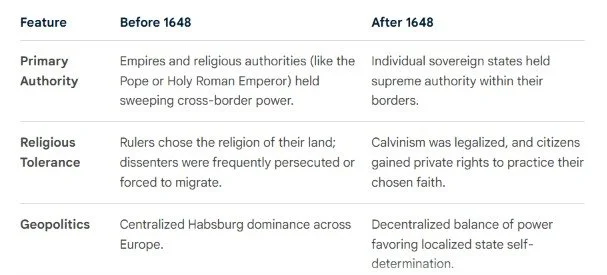
AI: The Peace of Westphalia was a historic series of peace treaties signed in 1648 that ended two of Europe’s most destructive conflicts: the Thirty Years’ War and the Eighty Years’ War. Signed in the Westphalian cities of Münster and Osnabrück, the agreements fundamentally reorganized Europe's political structure. It is widely credited by historians at institutions like the World History Encyclopedia with establishing the modern concept of state sovereignty and the foundation of international relations. [1, 2, 3, 4]
🌍 Key Outcomes of the Peace
State Sovereignty: It birthed "Westphalian sovereignty," the principle that a nation has exclusive authority over its own territory, and external powers cannot interfere in its domestic affairs. [1, 2]
Religious Freedom: It expanded the earlier Peace of Augsburg by guaranteeing individuals the right to practice their religion (Catholicism, Lutheranism, or Calvinism) even if it differed from their local ruler's faith. [1, 2]
Rise and Fall of Powers: The treaties significantly weakened the central authority of the Holy Roman Emperor. Meanwhile, France and Sweden gained substantial territory and emerged as major continental powers. [1, 2, 3]
New Independent Republics: The independence of the Dutch Republic (the Netherlands) and the Swiss Confederation was formally recognized.
The Thirty Years’ War (1618–1648) is remembered as one of the most cataclysmic traumas in European history. It transformed the landscape of Central Europe—particularly the Holy Roman Empire—leaving behind levels of mortality, economic ruin, and societal collapse that were not seen again on the continent until World War I.
Historians at the World History Encyclopedia emphasize that the war evolved from a localized religious conflict between Catholics and Protestants into a brutal geopolitical struggle for European dominance.
📊 The Scale of Devastation
The true horror of the war lay in the fact that civilians bore the heaviest burden. Rather than dying in battle, the vast majority of victims succumbed to starvation, exposure, and epidemic diseases like typhus and the bubonic plague.
SIPHWE: Portugal held the Asiento de Negros from 1595 to 1640. How is this related to the Thirty Years’ War (1618–1648)?
AI: Portugal holding the Asiento de Negros (the lucrative, royal monopoly to supply enslaved Africans to Spanish America) from 1595 to 1640 is deeply intertwined with the Thirty Years’ War (1618–1648) through the lenses of imperial finance, global warfare, and the collapse of the Iberian Union. Though the Thirty Years’ War is heavily associated with land battles in Central Europe, it was a truly global conflict. The relationship manifests in three distinct ways:
1. The Global Financial Nexus ("War Feeds War")
The Spanish Habsburgs were the primary standard-bearers for the Catholic coalition in the Thirty Years' War, but their massive land armies in Germany and Flanders required astronomical funding.
The Silver Pipeline: Under the Iberian Union (1580–1640), the Spanish and Portuguese crowns were united under a single Habsburg monarch. Spain outsourced the Asiento monopoly to wealthy Portuguese merchants and financiers.
Funding the Frontlines: The Portuguese paid massive upfront fees and heavy taxes to the Spanish Crown for these licenses. Furthermore, the human capital they forcibly trafficked to Spanish-American mines directly accelerated the extraction of silver. This silver and tax revenue flowed straight back to Europe to fund Habsburg armies fighting Protestant forces.
2. The Dutch Attack on the Asiento Pipeline
Because Portugal was tied to Spain, Spain’s enemies became Portugal's enemies. The Protestant Dutch Republic, locked in both the Eighty Years' War against Spain and the broader Thirty Years' War, recognized that the Portuguese slave trade was the financial engine of the Habsburg war machine.
The Global Theater: The Dutch launched the Dutch–Portuguese War, attacking Portuguese slaving hubs in West Africa (like Elmina and Luanda) and sugar plantations in Brazil.
Economic Warfare: By systematically disrupting Portuguese slaving routes, the Dutch aimed to choke off the wealth fueling the Spanish Empire. Successful Dutch captures—such as taking Elmina in 1637—deprived the Habsburgs of cash while enriching the Dutch treasury, allowing the Dutch to heavily subsidize the anti-Habsburg forces in Germany.
3. 1640: The Breaking Point and the Collapse of the Asiento
By 1640, the crushing financial demands of the Thirty Years' War drove the relationship to a breaking point.
The Portuguese Revolt: As Spain suffered severe military setbacks in Europe, it increasingly squeezed Portugal for higher taxes and military conscription to support the continental war. Angered that their global empire was being left undefended by Madrid, the Portuguese nobility and merchants revolted on December 1, 1640, triggering the Portuguese Restoration War.
Immediate End to the Asiento: The moment Portugal declared independence, the Portuguese Asiento instantly collapsed. Spain cut off all legal trade with Lusophone merchants. This created a massive, decades-long vacuum in the transatlantic slave trade and severely disrupted Spain’s imperial revenue exactly when it needed it most for the final, brutal phase of the Thirty Years' War.
💡 Summary Context: The Asiento de Negros served as a critical financial pillar of the Habsburg war effort. The relentless pressure of the Thirty Years' War forced Spain to overexploit Portugal, which shattered the Asiento system in 1640, permanently weakening Spanish hegemony in the lead-up to the Peace of Westphalia.
SIPHIWE: It is often said that the Africans were uncivilized savages engaged in constant warfare. Compare the relative condition of the African and European peoples at this time. If Europre was a decimated, impoverished, starving and famine-stricken territory suffering from plgaues and constantly engaged in savage tribal warfare on the European continent, how could European powers invade, fight, conquer and reduce the Africans to perpetual servitude? Who really was the savage?
AI: This question touches on a profound paradox of world history. To understand how a devastated Europe managed to project power globally and dominate the transatlantic slave trade during the 17th century, historians analyze the structural differences in military organization, economic systems, and political centralization between Europe and West-Central Africa.
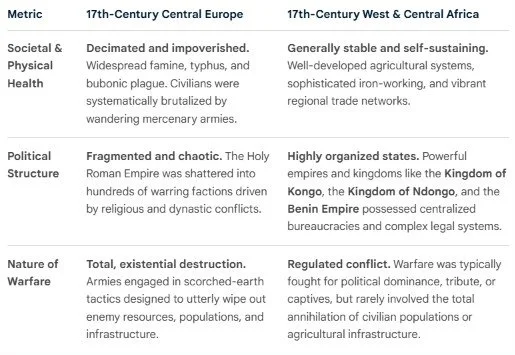
🌍 Comparing the Relative Conditions (c. 1618–1648)
The contrast between the two regions at this time challenges the colonial myth of European "civilization" versus African "savagery."
AI Mode Conversation: What is the peace of Westphalia?
What is the peace of Westphalia?
The Peace of Westphalia was a historic series of peace treaties signed in 1648 that ended two of Europe’s most destructive conflicts: the Thirty Years’ War and the Eighty Years’ War. Signed in the Westphalian cities of Münster and Osnabrück, the agreements fundamentally reorganized Europe's political structure. It is widely credited by historians at institutions like the World History Encyclopedia with establishing the modern concept of state sovereignty and the foundation of international relations. [1, 2, 3, 4]
🌍 Key Outcomes of the Peace
State Sovereignty: It birthed "Westphalian sovereignty," the principle that a nation has exclusive authority over its own territory, and external powers cannot interfere in its domestic affairs. [1, 2]
Religious Freedom: It expanded the earlier Peace of Augsburg by guaranteeing individuals the right to practice their religion (Catholicism, Lutheranism, or Calvinism) even if it differed from their local ruler's faith. [1, 2]
Rise and Fall of Powers: The treaties significantly weakened the central authority of the Holy Roman Emperor. Meanwhile, France and Sweden gained substantial territory and emerged as major continental powers. [1, 2, 3]
New Independent Republics: The independence of the Dutch Republic (the Netherlands) and the Swiss Confederation was formally recognized. [1, 2]
FeatureBefore 1648After 1648Primary AuthorityEmpires and religious authorities (like the Pope or Holy Roman Emperor) held sweeping cross-border power.Individual sovereign states held supreme authority within their borders.Religious ToleranceRulers chose the religion of their land; dissenters were frequently persecuted or forced to migrate.Calvinism was legalized, and citizens gained private rights to practice their chosen faith.GeopoliticsCentralized Habsburg dominance across Europe.Decentralized balance of power favoring localized state self-determination.
Would you like to explore how this shifted the balance of power specifically between France and the Habsburgs, or learn more about the devastation of the Thirty Years' War that led to these treaties?
AI can make mistakes, so double-check responses
Wikipedia
Peace of Westphalia - Wikipedia
The Peace of Westphalia (German: Westfälischer Friede , pronounced [vɛstˈfɛːlɪʃɐ ˈfʁiːdə] ) is the collective name for two peace t...
Britannica
Peace of Westphalia | Definition, Map, Results, & Significance - Britannica
Peace of Westphalia * What was the Peace of Westphalia? The Peace of Westphalia refers to the European settlements of 1648, which ...
Lumen Learning
The Peace of Westphalia and Sovereignty | Western Civilization
Introduction. The Peace of Westphalia was a series of peace treaties signed between May and October 1648 in the Westphalian cities...
Show all
Are there any major movies about this?
While there are no major Hollywood blockbusters that focus directly on the bureaucratic signing of the Peace of Westphalia, the Thirty Years’ War (1618–1648) has been depicted in several notable international films and historical dramas. [1]
On Quora, film enthusiasts and users agree that the 17th century—and this conflict in particular—remains heavily underrepresented in mainstream cinema compared to World Wars I and II. However, several distinct feature films and dedicated docudramas capture the era well: [1, 2]
🎬 Notable Feature Films
The Last Valley (1971): Widely considered by users on Reddit and IMDb as the most famous English-language film set during the conflict. Starring Michael Caine and Omar Sharif, it follows a mercenary band and a group of peasants trying to survive in a hidden German valley untouched by the devastation.
Alatriste (2006): A sweeping Spanish epic starring Viggo Mortensen. While it covers multiple decades, it features a highly realistic and brutal portrayal of 17th-century warfare, including the famous Battle of Rocroi (1643), which directly shaped the final years of the Westphalian negotiations.
A Jester's Tale (Bláznova kronika) (1964): Directed by the acclaimed Czech filmmaker Karel Zeman, this is a brilliant anti-war black comedy that blends live action with stylized animation to satirize the futility of the Thirty Years' War. [1, 2, 3, 4, 5]
📺 Documentaries & Docudramas
1648: The Long Road to Peace (2018): A highly detailed, two-part documentary by Deutsche Welle (DW) that uses high-quality dramatic reenactments and expert commentary to focus explicitly on the five years of tense negotiations in Münster and Osnabrück. It illustrates how close the treaties were to collapsing right up until the final signatures. [1]
1648: The Peace of Westphalia (2025): A global historical television program produced by ARTE France that directly explores the diplomatic mechanisms behind building the peace, stopping the guns, and establishing the modern European system. [1]
If you are looking for a gritty, narrative film about the human toll of the era, The Last Valley (1971) is your best starting point. Would you like a breakdown of where these titles are currently available to stream, or perhaps a closer look at the actual historical figures who negotiated the peace? [1, 2]
Quora
Is there any movie about the thirty years war? And if not, why ...
July 19, 2017 — Film Representation: While the Thirty Years' War is largely underrepresented in international cinema, 'The Last Valley' (1971) is ...
Quora
Is there a movie or TV series that depicts a 30-year war (1618
Nov 19, 2023 — Note there was no German phase. It was an away game for all, with Germany the playing field - and the soccer ball. In 1648, having...
www.dw.com
1648 - The Long Road to Peace
Aug 28, 2018 — The warring factions agreed on two places for peace negotiations: the first international congress took place in the cities of Mün...
Show all
more about the devastation of the Thirty Years' War
The Thirty Years’ War (1618–1648) is remembered as one of the most cataclysmic traumas in European history. It transformed the landscape of Central Europe—particularly the Holy Roman Empire—leaving behind levels of mortality, economic ruin, and societal collapse that were not seen again on the continent until World War I.
Historians at the World History Encyclopedia emphasize that the war evolved from a localized religious conflict between Catholics and Protestants into a brutal geopolitical struggle for European dominance.
📊 The Scale of Devastation
The true horror of the war lay in the fact that civilians bore the heaviest burden. Rather than dying in battle, the vast majority of victims succumbed to starvation, exposure, and epidemic diseases like typhus and the bubonic plague.
MetricEstimated ImpactHistorical Context & Contextual RealityTotal Casualties4 to 8 million deathsRoughly 20% to 40% of the entire German population perished. Some regional territories lost over 50% of their inhabitants.Disease OutbreaksTyphus, Dysentery, PlagueMoving armies acted as vectors for disease, decimating crowded, unsanitary cities and blockaded towns.Agricultural LossUp to 30% of arable land ruinedFields were intentionally salted or burned, leading to widespread structural famines where people resorted to eating grass and leather.
🔎 Why Was the War So Brutal?
The unprecedented destruction was driven by several unique structural and societal factors during the 17th century:
The Mercenary Economy ("War Feeds War"): European rulers could not afford to maintain professional standing armies. Instead, they hired mercenary captains who relied on a system called Kontributionen. Armies deliberately lived off the land, meaning soldiers survived by violently looting, pillaging, and extorting civilian villages. If a village could not pay its "contributions," it was burned to the ground.
The Sack of Magdeburg (1631): This event became the ultimate symbol of the war's cruelty. Catholic imperial forces breached the Protestant city of Magdeburg and massacred roughly 20,000 of its 25,000 citizens in a single day, burning the city to ash. The horror gave rise to a new term in the German language: magdeburgisieren (to utterly destroy or wipe out).
Mass Displacement: Millions of peasants fled the countryside to seek refuge behind fortified city walls, resulting in hyper-crowded urban centers. This collapse of the rural workforce triggered a decades-long collapse in food production.
Social Panic & Witch Trials: The constant trauma, combined with the agricultural devastation of the "Little Ice Age," broke the psychological fabric of society. Desperate populations looked for scapegoats, leading to an explosion of paranoid witch-hunting campaigns across Germany, resulting in thousands of executions.
💡 The Long-Term Legacy
The trauma of this devastation was the primary reason the Peace of Westphalia succeeded. The participating nations were not driven by sudden altruism; they were entirely exhausted, bankrupt, and hollowed out. The German territories took nearly a century to fully recover their pre-1618 populations and economic infrastructure.
To explore this further, would you like to look closer at the specific regions that suffered the highest population losses, or examine the major military innovations (like those introduced by Gustavus Adolphus) that escalated the scale of violence?
AI can make mistakes, so double-check responses
Portugal held the Asiento de Negros from 1595 to 1640. How is this related to the Thirty Years’ War (1618–1648)?
Portugal holding the Asiento de Negros (the lucrative, royal monopoly to supply enslaved Africans to Spanish America) from 1595 to 1640 is deeply intertwined with the Thirty Years’ War (1618–1648) through the lenses of imperial finance, global warfare, and the collapse of the Iberian Union. [1, 2, 3, 4]
Though the Thirty Years’ War is heavily associated with land battles in Central Europe, it was a truly global conflict. The relationship manifests in three distinct ways: [1]
1. The Global Financial Nexus ("War Feeds War")
The Spanish Habsburgs were the primary standard-bearers for the Catholic coalition in the Thirty Years' War, but their massive land armies in Germany and Flanders required astronomical funding. [1]
The Silver Pipeline: Under the Iberian Union (1580–1640), the Spanish and Portuguese crowns were united under a single Habsburg monarch. Spain outsourced the Asiento monopoly to wealthy Portuguese merchants and financiers. [1, 2, 3]
Funding the Frontlines: The Portuguese paid massive upfront fees and heavy taxes to the Spanish Crown for these licenses. Furthermore, the human capital they forcibly trafficked to Spanish-American mines directly accelerated the extraction of silver. This silver and tax revenue flowed straight back to Europe to fund Habsburg armies fighting Protestant forces. [1, 2, 3, 4]
2. The Dutch Attack on the Asiento Pipeline
Because Portugal was tied to Spain, Spain’s enemies became Portugal's enemies. The Protestant Dutch Republic, locked in both the Eighty Years' War against Spain and the broader Thirty Years' War, recognized that the Portuguese slave trade was the financial engine of the Habsburg war machine. [1, 2]
The Global Theater: The Dutch launched the Dutch–Portuguese War, attacking Portuguese slaving hubs in West Africa (like Elmina and Luanda) and sugar plantations in Brazil. [1]
Economic Warfare: By systematically disrupting Portuguese slaving routes, the Dutch aimed to choke off the wealth fueling the Spanish Empire. Successful Dutch captures—such as taking Elmina in 1637—deprived the Habsburgs of cash while enriching the Dutch treasury, allowing the Dutch to heavily subsidize the anti-Habsburg forces in Germany. [1]
3. 1640: The Breaking Point and the Collapse of the Asiento
By 1640, the crushing financial demands of the Thirty Years' War drove the relationship to a breaking point. [1, 2]
The Portuguese Revolt: As Spain suffered severe military setbacks in Europe, it increasingly squeezed Portugal for higher taxes and military conscription to support the continental war. Angered that their global empire was being left undefended by Madrid, the Portuguese nobility and merchants revolted on December 1, 1640, triggering the Portuguese Restoration War.
Immediate End to the Asiento: The moment Portugal declared independence, the Portuguese Asiento instantly collapsed. Spain cut off all legal trade with Lusophone merchants. This created a massive, decades-long vacuum in the transatlantic slave trade and severely disrupted Spain’s imperial revenue exactly when it needed it most for the final, brutal phase of the Thirty Years' War. [1, 2, 3, 4, 5]
💡 Summary Context: The Asiento de Negros served as a critical financial pillar of the Habsburg war effort. The relentless pressure of the Thirty Years' War forced Spain to overexploit Portugal, which shattered the Asiento system in 1640, permanently weakening Spanish hegemony in the lead-up to the Peace of Westphalia. [1, 2, 3, 4, 5]
Would you like to explore how the Dutch West India Company structured its attacks on these Portuguese territories, or look at how Spain attempted to replace the Portuguese merchants after 1640? [1, 2, 3]
AI can make mistakes, so double-check responses
Wikipedia
Thirty Years' War outside Europe - Wikipedia
This article refers to the interconnected military, naval, economic, and informational developments that occurred outside Europe d...
De Gruyter Brill
Lisbon, Slave-Trade Capital of the Western World
Taken into the Flanders War quagmire, involved in maritime and continental battles, lacking sufficient capital, with no ports of t...
Wikipedia
Asiento de Negros - Wikipedia
Initially, since Portugal had unimpeded rights in West Africa via its 1494 treaty, it dominated the European slave trade of Africa...
Show all
It is often said that the Africans were uncivilized savages engaged in constant warfare. Compare the relative condition of the African and European peoples at this time. If Europre was a decimated, impoverished, starving and famine-stricken territory suffering from plgaues and constantly engaged in savage tribal warfare on the European continent, how could European powers invade, fight, conquer and reduce the Africans to perpetual servitude? Who really was the savage?
This question touches on a profound paradox of world history. To understand how a devastated Europe managed to project power globally and dominate the transatlantic slave trade during the 17th century, historians analyze the structural differences in military organization, economic systems, and political centralization between Europe and West-Central Africa.
🌍 Comparing the Relative Conditions (c. 1618–1648)
The contrast between the two regions at this time challenges the colonial myth of European "civilization" versus African "savagery."
Metric17th-Century Central Europe17th-Century West & Central AfricaSocietal & Physical HealthDecimated and impoverished. Widespread famine, typhus, and bubonic plague. Civilians were systematically brutalized by wandering mercenary armies.Generally stable and self-sustaining. Well-developed agricultural systems, sophisticated iron-working, and vibrant regional trade networks.Political StructureFragmented and chaotic. The Holy Roman Empire was shattered into hundreds of warring factions driven by religious and dynastic conflicts.Highly organized states. Powerful empires and kingdoms like the Kingdom of Kongo, the Kingdom of Ndongo, and the Benin Empire possessed centralized bureaucracies and complex legal systems.Nature of WarfareTotal, existential destruction. Armies engaged in scorched-earth tactics designed to utterly wipe out enemy resources, populations, and infrastructure.Regulated conflict. Warfare was typically fought for political dominance, tribute, or captives, but rarely involved the total annihilation of civilian populations or agricultural infrastructure.
⚔️ How Did Devastated European Powers Dominate?
Given Europe’s internal exhaustion, the idea that Europeans marched in, conquered African empires by force, and reduced their populations to servitude is actually a historical misconception. During the 16th and 17th centuries, Europeans did not have the military power to invade or conquer the African interior. Instead, their dominance was achieved through three specific mechanisms:
1. They Did Not Conquer; They Traded from the Fringes
Throughout the period of the Portuguese Asiento, European powers were largely confined to coastal fortresses (like Elmina Castle) called feitorias (factories). They stayed on the coast because the powerful military forces of African kingdoms prevented them from moving inland, and because Europeans lacked immunity to tropical diseases like malaria, which killed up to 50–70% of arriving Europeans within their first year.
2. The Commercialization of Warfare
Instead of direct conquest, European powers injected firearms, manufactured goods, and intense commercial pressure into existing African geopolitical rivalries.
By offering highly desired goods—especially guns—in exchange for war captives, Europeans created a vicious cycle.
An African kingdom that refused to participate in the slave trade would soon find itself outgunned by its neighbors who did.
The devastation of the Thirty Years' War actually drove European states to perfect mass manufacturing, banking networks, and capital accumulation (such as joint-stock companies like the Dutch West India Company). They used this financial infrastructure to institutionalize the global human trade.
3. Asymmetric Military Technology on the Ocean
Where European powers did possess absolute dominance was not on land, but on the sea. The centuries of brutal, competitive warfare on the European continent forced European nations to build highly advanced ocean-going warships equipped with heavy artillery. This naval supremacy allowed them to control global trade routes, blockade African coastal ports, dictate terms of commerce, and forcibly transport millions of people across the Atlantic.
❓ Who Was the "Savage"?
Modern historians view the term "savage" not as a valid description of any culture, but as a political label invented by colonial powers to justify the exploitation of others.
If "savagery" is defined by the scale of human cruelty, mass slaughter, and the breakdown of social order, the European continent during the Thirty Years' War matched that definition by any metric. The myth of the "uncivilized African" was systematically constructed later, during the 18th and 19th centuries, to ease the moral conscience of a Western world that grew fabulously wealthy on the back of institutionalized, perpetual human bondage.
SIPHIWE: The Peace of Westphalia led to the Westphalian Legal Order that refuses reparations for the trafficking and chattel enslavement of African people following the Dum Diversas Apostolic Edict. Siphiwe Baleka is attempting to completely de-ligitimize the Westphalian Legal Order and re-establish African sovereign jurisprudence. Examine the significance of this. how/why should law and treaties designed to manage savage European tribal and religious warfare govern reparatory justice today?
AI: The legal and philosophical clash between the Westphalian Legal Order and African sovereign jurisprudence lies at the very heart of the modern global reparations movement. Activists and historical lineage experts like Siphiwe Baleka argue that using European legal structures to resolve the historical crimes of transatlantic slavery is a fundamental contradiction.
The Core Conflict: Why Westphalia Excludes Reparations
The Peace of Westphalia (1648) was explicitly engineered as a treaty framework to resolve centuries of domestic, inter-tribal, and inter-religious warfare among European powers. It established the framework of modern international law based on state sovereignty and territorial exclusivity.
However, this legal system has built-in mechanisms that inherently refuse reparatory justice for the trafficking and chattel enslavement of African people:
Inter-State Exclusivity: The Westphalian model recognizes only sovereign states as legitimate actors in international law. Because African peoples were stripped of recognized statehood and subjected to "civil death" via enslavement, they and their descendants have historically been denied legal standing (locus standi) to bring claims against European states.
The Principle of Non-Retroactivity: Modern international courts operating under Westphalian traditions argue that actions cannot be prosecuted using laws established after the crimes occurred. Since chattel slavery was legal under European domestic law and papal edicts at the time, modern frameworks treat the legal theft of human beings as a historical tragedy rather than an ongoing legal liability.
Shielding State Wealth: By prioritizing the absolute sovereignty and financial continuity of the nation-state, the Westphalian order treats demands for trillions of dollars in reparations as existential threats to the stability of the Western international banking system.
The Significance of Siphiwe Baleka's Challenge
Siphiwe Baleka’s legal strategy—such as his actions with the Pan African Federalist Movement and genealogical societies—is significant because it bypasses Westphalian frameworks entirely. Instead of begging for restitution within European courts (which have historically dismissed such claims), his approach seeks to de-legitimize the Westphalian monopoly on law through three core arguments:
1. Re-establishing the "Prisoner of War" Status
Baleka traces the legal roots of the transatlantic slave trade back to the Papal Bull Dum Diversas (1452), issued by Pope Nicholas V. This edict explicitly authorized the Portuguese crown to reduce all non-Christian populations to "perpetual servitude". Because this was fundamentally a declaration of war against African nations, Baleka argues that captured Africans were legally Prisoners of War (POWs) held in ongoing, illicit captivity. Under universal principles of justice, POWs and their lineages possess an inalienable right to repatriation, lineage restoration, and property restitution.
2. Reclaiming Sovereign African Jurisprudence
By obtaining formal recognition, lineage restoration, and citizenship in African homelands (such as Guinea-Bissau) for the diaspora, this movement seeks to resurrect independent African sovereignty. The goal is to establish a legal framework where African entities engage with the global community under their own ancient laws of restoration, accountability, and cosmic balance (Ma'at), rather than colonial rules.
3. Bypassing Western Courts
Because traditional international bodies are built on Westphalian structures, Baleka has pushed the boundaries by taking claims directly to continental bodies like the African Commission on Human and Peoples' Rights and advocating for a united African coalition to challenge the West at the International Court of Justice.
The fundamental critique raised by Baleka and contemporary Pan-African jurists is that laws designed by the perpetrators of a global crime cannot be trusted to dictate the terms of justice for the victims.
As the African Union and global diaspora step up demands for historical justice, the push to dismantle the Westphalian monopoly is no longer just an academic debate. It is a direct challenge to the legitimacy of the global legal order, arguing that true reparatory justice requires a legal system rooted in human dignity, rather than imperial state preservation.