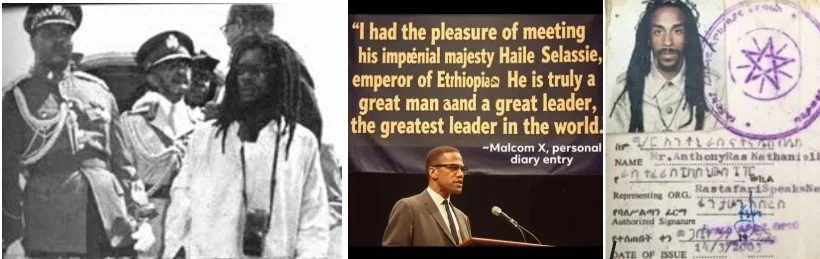
Left: Ethiopian Emperor Haile Selassie arrives in Jamaica, April 21 1966 and Ras Mortimo Planno meets him on the plane; Center: Omowale Malcolm X; Right: Ras Nathaniel (later named Siphiwe Baleka) press credentials from the Ethiopian Ministry of Information
“Most people still don’t tell the story right. To understand Omowale Malcolm X, you have to understand bloodline, sovereign activation, and Ras Tafari!”
- Siphiwe Baleka, Afrodescendant Theocratic Special Envoy Extraordinary & Reparations Expert
*********************************************
On May 19, 1925, Malcolm Little was born in Omaha, Nebraska to Earl and Mary Little. Earl Little was a prominent Baptist minister, civil rights activist, and key organizer for Marcus Garvey’s Universal Negro Improvement Association (UNIA).
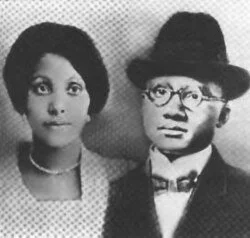
Louise and Earl Little.
Six years before this in 1919, Ethiopian Regent and Plenipotentiary Ras Tafari sent four Ambassadors to the United States. This was BIG news since it was the first time in history that African Royalty made a state visit to America. The Ethiopian flag actually flew ceremoniously over the white house. The four Ambassadors met with the UNIA musical Director Rabbi Arnold Ford who was also the leader of the Black Hebrews in Harlem. At that meeting, the Ambassadors communicated Regent and Plenipotentiary Ras Tafari’s invitation to black Americans to return to Ethiopia. The four Ambassadors of the “Abyssinian Mission” also went to Chicago.
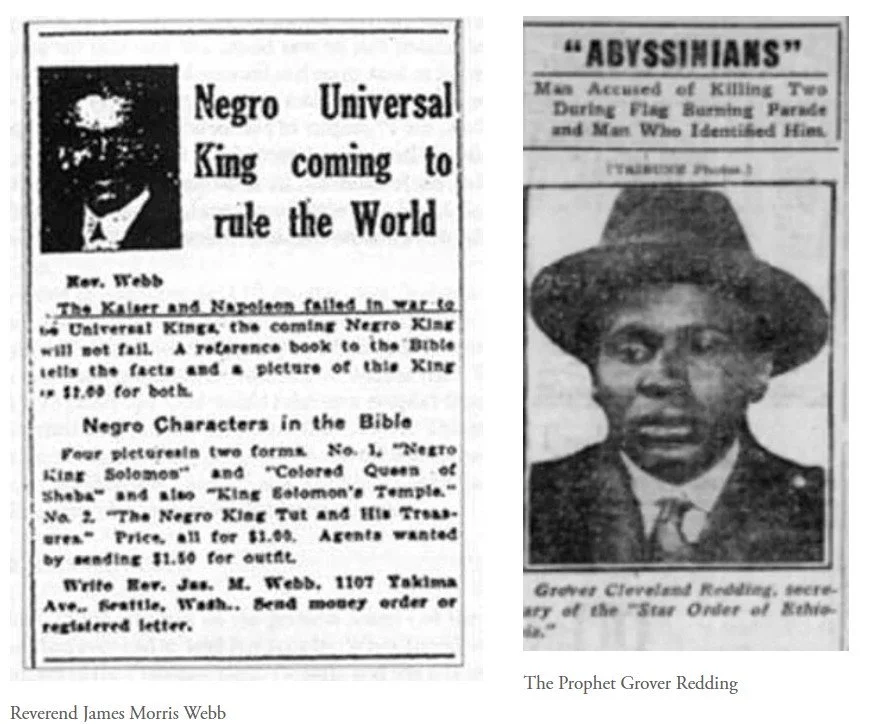
There, a black man named Prophet Grover Redding established the Star Order of Ethiopia organization to prepare for repatriation. After just one year, the Star Order of Ethiopia held a parade on June 20, 1920 which began on 35th Street and Indiana Ave. In front of a café on 209 East 35th Street, Prophet Redding burned an American flag, renounced his Jim Crow citizenship, swore allegiance to the government of Ras Tafari and declared himself under the jurisdiction and protection of Ras Tafari and the Ethiopian government. At the same time, Reverend Webb published a pamphlet entitled, The Coming of the Universal Black King, Proven by Biblical History and began preaching it to the UNIA on October 22 and November 5. Marcus Garvey then started repeating Reverend Webb’s prophecy, “Look to the east for the coming of the Universal Black King!”
The UNIA had already started preparing. The Paris Peace Conference involved diplomats from 32 countries and nationalities gathered to create the League of Nations, sign the five peace treaties with the defeated states of the first European Savages War and settle the transition of the former German and Ottoman colonies, including in Africa while imposing reparations upon Germany and drawing of new national boundaries, sometimes involving plebiscites, to reflect ethnic boundaries more closely. Marcus Garvey sent Eliezier Cadet, a Haitian envoy of the UNIA, to the Paris Peace Conference to deliver the ‘nine point declaration”, a resolution by the UNIA that demanded self-determination and equality for the black race:
" 1. The right of self-determination will be applied to Africans and to every European colony where the African race predominates….
9. The return to the natives of Germany’s African colonies, which will be governed by Negroes educated in the Eastern and Western countries.”
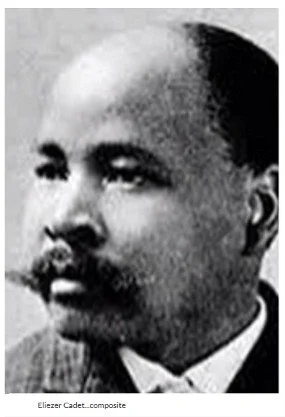
In 1919, Lecba Eliezer Cadet, a Haitian voodoo priest was the only black participant in the Paris Peace Conference on behalf of the Universal Negro Improvement Association. In that same year, he also went to the 1919 Pan African Conference that was held in Paris, as requested by UNIA. Cadet was sent in place of Ida B. Wells and A. Phillip Randolph who could not be in attendance.
At the UNIA 1922 Convention, on July 29, Reverend Webb again lectures the UNIA on the Coming of a Universal Black King. At the Convention, Persian Consul General H. Topakyan read a message from Ethiopian Regent Plenipotentiary Ras Tafari:
“I invite [African Americans] back to the homeland, particularly those qualified to help solve our big problems and to develop our vast resources. Teachers, artisans, mechanics, writers, musicians, professional men and women - all who are able to lend a hand in the constructive work which our country so deeply feels and greatly needs.”
By the summer of 1924, Marcus Garvey and the UNIA seemed to have concretized the program for Ethiopian Repatriation. On March 16, 1924, Marcus Garvey delivered a speech at Madison Square Garden “In Honor of the Return to America of the Delegation Sent to Europe and Africa by the Universal Negro Improvement Association to Negotiate for the Repatriation of Negroes to a Homeland of Their Own in Africa”. Garvey said,
“The coming together, all over this country, of fully six million people of Negro blood, to work for the creation of a nation of their own in their motherland, Africa, is no joke. . . . Our desire is for a place in the world . . . to lay down our burden and rest our weary backs and feet by the banks of the Niger, and sing our songs and chant our hymns to the God of Ethiopia . . . . As children of captivity we look forward to a new day and a new, yet ever old, land of our fathers, the land of refuge, the land of the Prophets, the land of the Saints, and the land of God’s crowning glory. We shall gather together our children, our treasures and our loved ones, and, as the children of Israel, by the command of God, face the promise land . . . . Good and dear America that has succored us for three hundred years knows our story . . . . The thoughtful and industrious of our race want to go back to Africa, because we realize it will be our only hope of permanent existence. We cannot all go in a day or in a year, ten or twenty years. It will take time under the rule of modern economics, to entirely or largely depopulate a country of a people, who have been its residents for centuries, but we feel that with proper help for fifty years, the problem can be solved. We do not want all the Negroes in Africa. Some are no good here, and naturally will be no good there . . . . The no-good Negro will naturally die in fifty years. The Negro who is wrangling about and fighting for social equality will naturally pass away in fifty years, and yield his place to the progressive Negro who wants a society and country of his own. . . . What are you going to expect, that white men are going to build up America and elsewhere and hand it over to us?”
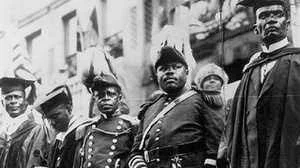
On August 1, 1924, on behalf of the Fourth Annual Convention of the Negro Peoples of the World, Garvey wrote to Ethiopian Empress Zauditu,
“Greetings from the 400,000,000 Negroes of the world through our convention now sitting in New York. We hope for you and your country a reign of progress and happiness. Our desire is to help you maintain the glory of Ethiopia. Your expression of goodwill toward us two years ago through your consul-general is highly cherished and we are looking forward to the day when large numbers of us will become citizens of Ethiopia.”
On September 2, 1924 Garvey and the UNIA forwarded a Petition of Four Million Negroes of the United States of America to His Excellency the President of the United States Praying for a Friendly and Sympathetic Consideration of the Plan of Founding a Nation in Africa for the Negro People, and to Encourage Them in Assisting to Develop Already Independent Negro Nations as a Means of Helping to Solve the Conflicting Problems of Race.
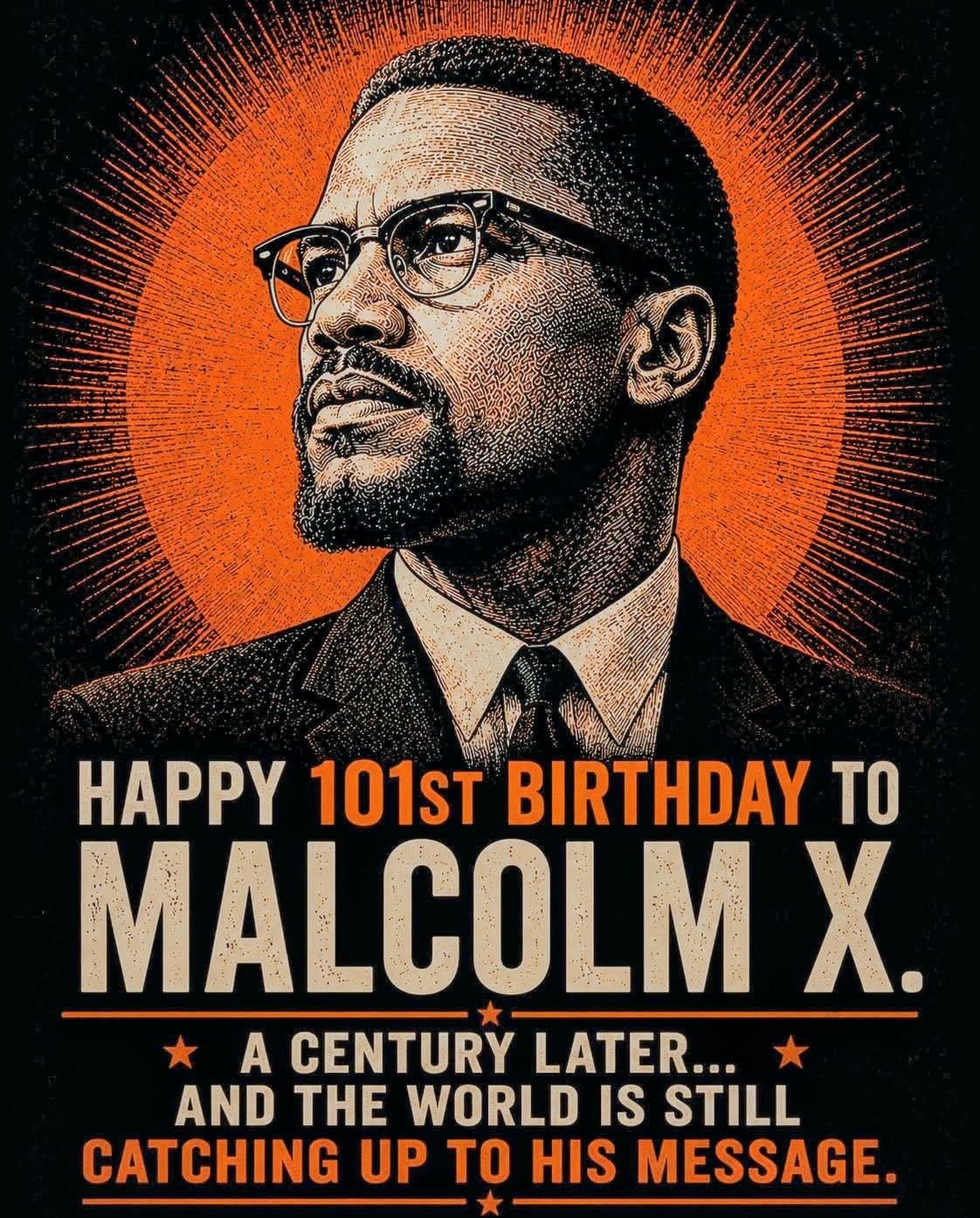
This was the context into which Malcolm Little was born on this day, May 19, 1925. Malcolm Little would become Malcolm X, then El Haj Malik El Shabbazz, and later given the name Omowale, a Yoruba name which means "the child has returned home".
In the summer of 1928 when Malcolm X was just three years old, Marcus Garvey traveled to Geneva to the League of Nations to renew his petition filed on July 26, 1922. Then, on October 7, 1928, Ras Tafari was crowned Negus, King of Ethiopia in fulfilment of Biblical prophecy and the prophecy of Reverend Webb. Negus Tafari then sent 100 Ethiopian students abroad.
Ato Gabrou Desta, then in the United States on a special mission to obtain economic and educational advisers, discussed Repatriation directly with Rabbi Arnold Ford (whose father’s ancestry is traced back to the Yoruba of Nigeria who named Malcolm X as “Omowale”) whom met with the Ethiopian Ambassadors in 1919. Ato Gabrou then issued the fourth invitation to Repatriate to Ethiopia in a message from Negus, King Ras Tafari which stated,
“We would welcome them back to Ethiopia, their Fatherland . . . . There is plenty of room for them here and we are certain they would be of the greatest aid in restoring their ancient land to its pristine glory.”
Ford reached Addis Ababa in 1930, joining the elderly Daniel Robert Alexander who was the first Black American on record to Repatriate to Ethiopia in 1908. Ford arrived just in time to attend the Coronation Ceremony on November 2, 1930, when Ras Tafari became Emperor of Ethiopia and was crowned Haile Selassie, King of Kings and Lord of Lords, Conquering Lion of Judah.”
On January 4, 1931 Garvey’s UNIA followers marched side by side with Rabbi Arnold Ford’s Black Hebrews in a street parade through Harlem, carrying framed life-size portraits of HIM Haile Selassie I and the Honorable Marcus Garvey.
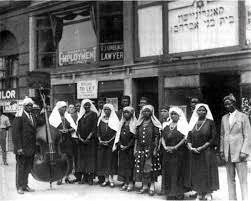
Later in the year, Ato Gabrou informed Rabbi Ford of Land Concessions Granted. Nine more members of Ford’s Congregation repatriate to Ethiopia, including UNIA members Ada and Augustine Bastian, joining Rabbi Ford who had been in Ethiopia since the Coronation. Marcus Garvey then set sail for London to file a follow-up petition to the League of Nations which accused the United States and the nations of Europe of violating the human rights of African Americans and other African peoples.
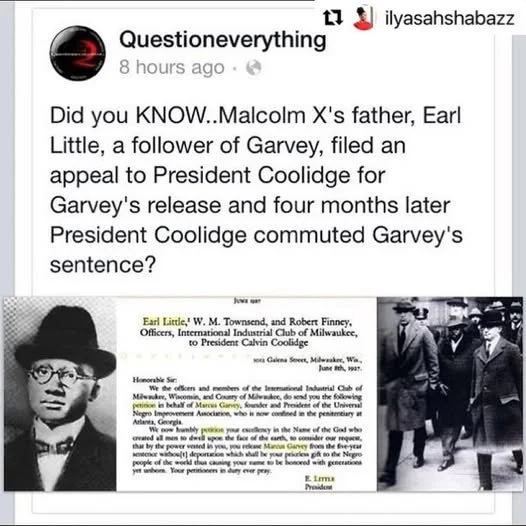
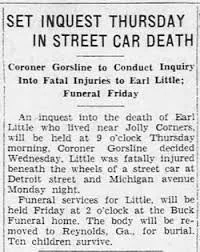
Earl Little, Malcolm X’s father was the Detroit-area UNIA President and was responsible for collecting signatures for the petition. Eleven days after Garvey set sail, Earl Little was discovered dying on the trolley tracks near his home. Malcolm was just six years old.
You see, you can’t understand the last years of Omowale Malcolm X’s life without understanding these events of his first years.
Let’s fast forward now to the period from 1954 to 1961, Malcolm X and Martin Luther King began their growth as emerging leaders – Malcolm X for Black Muslims, and Martin Luther King for Black Christians. The Black Muslims began to advocate for a separate black “nation within a nation” in the United States “Black Belt” southern territory. Martin Luther King Jr, whose father was in charge of the Georgia National Baptist Convention Ethiopia Day fundraising for Emperor Haile Selassie I in the 1930’s, advocated for a “civil rights” platform of integration into the United States based on principles of equality and justice.
So let’s understand this: both fathers of Malcolm X and Martin Luther King were working for Ras Tafari Ethiopian Emperor Haile Selassie - one gathering petitions for self determination and repatriation to Ethiopia, the other raising money for Ethiopia’s war efforts.
In the early 1960’s, Ras Mortimo Planno, a major figure in the Rastafari Repatriation Movement - he was Bob Marley’s mentor and he received medals from Emperor Haile Selassie in 1961 and 1966 - was in New York and he and Malcolm X began to discuss the solution to the condition of the Black man in America. Having toured Africa in 1961 and spoken with African Heads of State including HIM Haile Selassie I, General Nnamdi Azikiwi of Nigeria, President Kwame Nkrumah of Ghana, President William Tubman of Liberia and Prime Minister Milton Margai of Sierra-Leone, Ras Mortimo Planno suggested to Malcolm X that if the Black Muslim plan for a separate, Black Nation in the within the United States failed, that the only solution would be Repatriation. Since the late sixties, both the Republic of New Afrika and the Nation of Islam have failed to establish a functioning, recognized nation-state for the Black “nation within a nation”. Thus, the past fifty years have been the result of forced assimilation and integration.
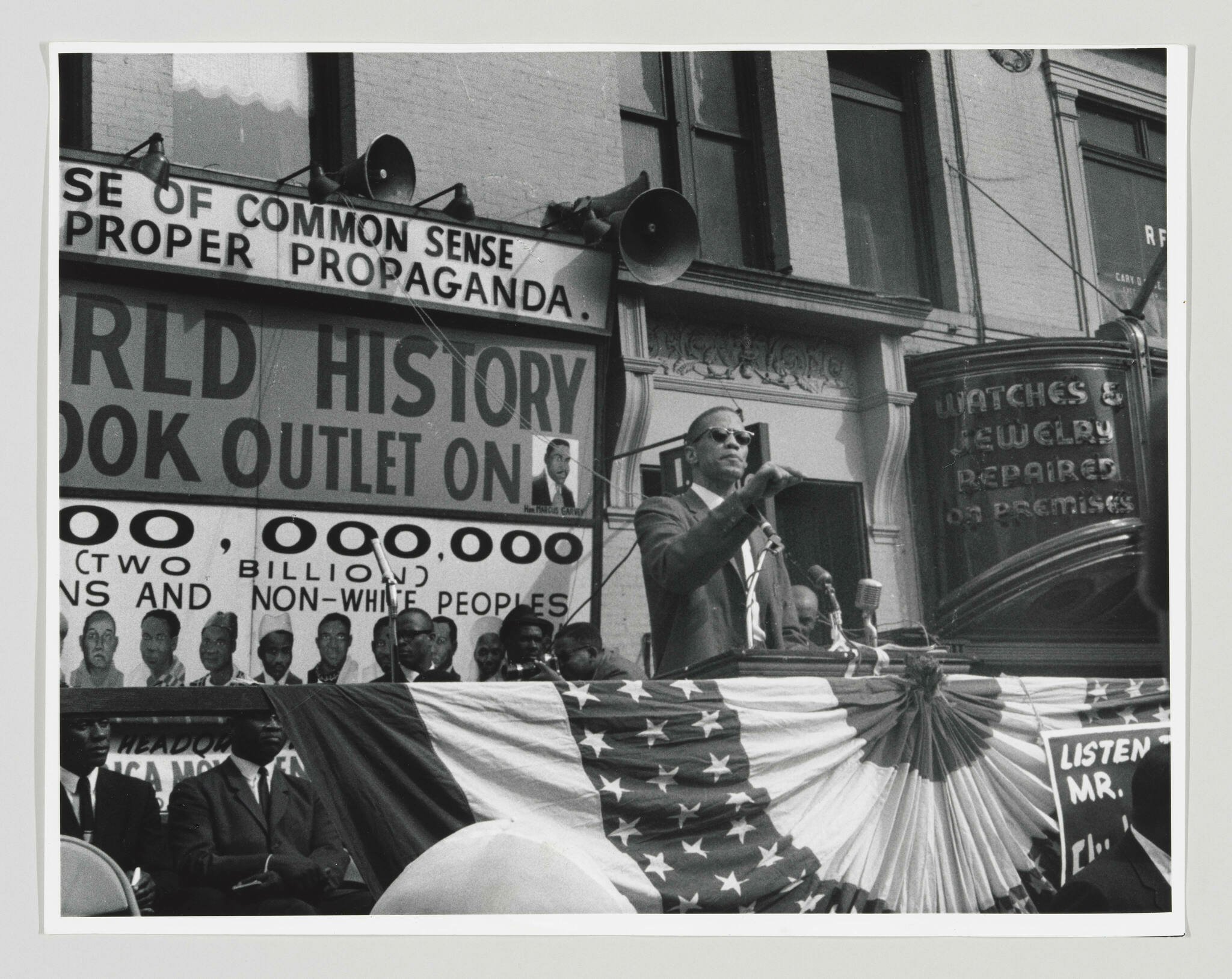
Omowale Malcolm X at Michaux’s bookstore
Siphiwe Baleka recalls,
“My mentor with whom I lived, Elder Gabriel (Patrick Mickiel Diaz ), one of the earliest Rastas and Nyabinghi drummers from Jamaica and close friend of Ras Mortimo Planno (Bob Marley’s mentor). He went to the United Nations that day Haile Selassie I gave his famous ‘War” speech that Bob Marley immortalized in his song ‘War’. Elder Gabriel returned with a printed copy of that speech, which he laminated and kept as his prize possession. I lived in his basement for over a year. I remember him fondly, always bringing out his copy of Haile Selassie’s War speech and telling the story of how he sat in the balcony and watched him give the speech. Often he would go about the house shouting, ‘Until the philosophy, which holds one race superior and another, inferior, is finally, and permanently discredited, and abandoned. . . . Until that day! The dream of lasting peace and world citizenship. . . . And the rule of international morality shall remain but a fleeting illusion to be pursued and NEVER ATTAINED.’ Elder Gabriel once told me a story about how he, Mortimo Planno and Malcolm X met at the famous bookstore in Harlem owned by Lewis Michaux. From 1932 to 1974 it was a center of African American history, scholarship, debate, and activism. At that meeting, Mortimo Planno asked Malcolm X what he would do if and when the United States refused to grant black Americans territory within the United States and recognize an independent Black nation. When Malcolm X failed to give an answer, Mortimo Planno explained that is when he would realize that REPATRIATION was the only solution. Elder Gabriel also said it was from this time that Malcolm X stopped cutting his hair and beard like a Rasta.”
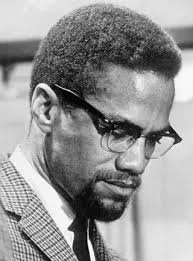
In an interview with A.B. Spellman published in the Monthly Review, Vol. 16, no.1 May 1964, Omowale Malcolm X said,
“The 22,000,000 so-called Negroes should be separated completely from America and should be permitted to go back home to our African homeland which is a long-range program; so the short-range program is that we must eat while we’re still here, we must have a place to sleep, we have clothes to wear, we must have better jobs, we must have better education; so that although our long-range political philosophy is to migrate back to our African homeland, our short-range program must involve that which is necessary to enable us to live a better life while we are still here.”
Right after that interview, Malcolm X, along with the great Pan African historian John Henrik Clarke, established the Organization of Afro American Unity (OAAU) to bring independence to people of African descent in the western hemisphere; first in the United States fighting against enemies by every means necessary. According to Omowale Malcolm X,
“The purpose of the OAAU was to unite all persons of African descent into one united force and when this is done in the western hemisphere to unite with Africans on the motherland on the continent of Africa. . . . I realized this even before going over there, was that our African brothers have gained their independence faster than you and I here in America have. They’ve also gained recognition and respect as human beings much faster than you and I. Just ten years ago on the African continent, our people were colonized. They were suffering all forms of colonization, oppression, exploitation, degradation, humiliation, discrimination, and every other kind of -ation. And in a short time, they have gained more independence, more recognition, more respect as human beings than you and I have. “
“It was formed in my living room,” remembers John Henrik Clarke.
“I was the one who got the constitution from the Organization of African Unity in order to model our constitution after it. Malcolm’s joy was that we could match up [our constitution with the African one]; we could find parallels between the African situation and the African-American situation – that plus a whole lot of other things we agreed with that had nothing to do with religion, because we agreed with the basic struggle. We agreed on self-reliance, about what people would have to do, and that an ethnic community was really a small nation and that you need everything within that community that goes into a small nation, including a person who would take care of the labor, the defense, employment, morality, spirituality . . . . “ (David Gallen, As They Knew Him, p.79-80).
Thus, Malcolm X, along with John Henrik Clarke, wrote the following into the Organization of Afro- American Unity (OAAU) Basic Unity Program
i. Restoration: “In order to free ourselves from the oppression of our enslavers then, it is absolutely necessary for the Afro-American to restore communication with Africa . . .
ii. Reorientation: “ . . . We can learn much about Africa by reading informative books . . . “
iii. Education: “ . . . The Organization of Afro-American Unity will devise original educational methods and procedures which will liberate the minds of our children . . . We will . . . encourage qualified Afro-Americans to write and publish the textbooks needed to liberate our minds . . . . educating them [our children] at home.”
iv. Economic Security: “ . . . After the Emancipation Proclamation . . . it was realized that the Afro-American constituted the largest homogeneous ethnic group with a common origin and common group experience in the United States and, if allowed to exercise economic or political freedom, would in a short period of time own this country. WE MUST ESTABLISH A TECHNICIAN BANK. WE MUST DO THIS SO THAT THE NEWLY INDEPENDENT NATIONS OF AFRICA CAN TURN TO US WHO ARE THEIR BROTHERS FOR THE TECHNICIANS THEY WILL NEED NOW AND IN THE FUTURE.
Immediately following the establishment of the OAAU, Omowale Malcolm X went to the Organization of African Unity (OAU) meeting in Cairo in July 1964 and said,
“Since the 22 million of us were originally Africans, who are now in America, not by choice but only by a cruel accident in our history, we strongly believe that African problems are our problems and our problems are African problems. . . . We in America are your long-lost brothers and sisters, and I am here only to remind you that our problems are your problems. . . . Your problems will never be fully solved until and unless ours are solved. You will never be fully respected until and unless we are also respected. You will never be recognized as free human beings until and unless we are also recognized and treated as human beings. Our problem is your problem. It is not a Negro problem, nor an American problem. This is a world problem, a problem for humanity. It is not a problem of civil rights, it is a problem of human rights. . . .If South Africa is guilty of violating the human rights of Africans here on the mother continent, then America is guilty of worse violations of the 22 million Africans on the American continent. And if South African racism is not a domestic issue, then American racism also is not a domestic issue. We beseech independent African states to help us bring our problem before the United Nations, on the grounds that the United States Government is morally incapable of protecting the lives and the property of 22 million African-Americans. And on the grounds that our deteriorating plight is definitely becoming a threat to world peace.”
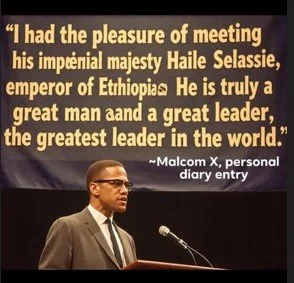
Here Omowale Malcolm X was only continuing the work of his father and Marcus Garvey in the UNIA just thirty-three years later!
Malcolm X lectured at Haile Selassie I University in Addis Ababa, Ethiopia on October 23, 1963. He returned to Ethiopia in October of 1964. In his personal letters that are now housed at the Schomburg Center for Research in Black Culture, Omolwale Malcolm X wrote, “I had the pleasure of meeting His Imperial Majesty, Haile Selassie, Emperor of Ethiopia. He is truly a great man and a great leader, the greatest leader in the world.” Omowale Malcolm X also went to Dar Es Salaam, Tanzania, headquarters of the Organization of African Unity (OAU) African Liberation Committee. Among those frequenting Tanzania in 1964 were Oliver Tambo (1917-1993) from South Africa, Sam Nujoma (President of Namibia from 1990 to 2005) from Namibia, Robert Mugabe from Zimbabwe (now President of Zimbabwe), and Eduardo Mondlane (1920-1969) from Mozambique. Malcolm was one of the many revolutionaries attracted to Tanzania at the time. He stayed at the Deluxe Inn hotel in Dar es Salaam.
On November 20, 1964 Omowale Malcolm X said, “One of the first steps we are going to become involved in as an Organization of Afro-American Unity will be to work with every leader and other organization in this country interested in a program designed to bring your and my problem before the United Nations. This is our first point of business.”
Both Ras Mortimo Planno and Malcolm X, upon returning to the West after visiting with African Heads of State, began collecting the names of those who wanted to Repatriate. Ras Junior Negus (secretary of the 2003 Rastafari Global Reasoning in Jamaica) wrote to Siphiwe Baleka (then “ras Nathaniel”) on April 1, 2004: “I am quite aware of the census. This was the work HIM had given Planna from 61. He started from Kingston to Porus and has been no further. . . . Planna, after returning from the 2nd mission was told by His Majesty and different governments they visited to collect the names of the ones who want to return to Africa.”
Likewise, Malcolm X stated,
“One of the things I saw the OAAU doing from the very start was collecting the names of all the people of African descent who have professional skills, no matter where they are. Then we could have a central register that we could share with independent countries in Africa and elsewhere. Do you know, I started collecting names, and then I gave the list to someone who I thought was a trusted friend, but both this so-called friend and the list disappeared. So, I’ve got to start all over again.” (Jan Carew, Ghosts In Our Blood, p. 61)
“The 22,000,000 so-called Negroes should be separated completely from America and should be permitted to go back home to our African homeland which is a long-range program; so the short-range program is that we must eat while we’re still here, we must have a place to sleep, we have clothes to wear, we must have better jobs, we must have better education; so that although our long-range political philosophy is to migrate back to our African homeland, our short-range program must involve that which is necessary to enable us to live a better life while we are still here.” (Interview with Malcolm X, by A.B. Spellman, Monthly Review, Vol. 16, no.1 May 1964)
On December 12, 1964, Malcolm answered a question about going back to Africa at the Haryou-Act Forum for Domestic Peace Corps in Harlem. Said Malcolm,
“You never will have a foundation in America. You’re out of your mind if you think that this government is ever going to back you and me up in the same way that it backed others up. They’ll never do it. It’s not in them. . . . . By the same token, when the African continent in its independence is able to create the unity that’s necessary to increase its strength and its position on this earth, so that Africa too becomes respected as other huge continents are respected, then, wherever people of African origin, African heritage or African blood go, they will be respected – but only when and because they have something much larger that looks like them behind them. With that behind you, you can do almost anything under the sun in this society . . . And this is what I mean by a migration or going back to Africa – going back in the sense that we reach out to them and they reach out to us. Our mutual understanding and our mutual effort toward a mutual objective will bring mutual benefit to the African as well as to the Afro-American. But you will never get it by relying on Uncle Sam alone. You are looking in the wrong direction. Because the wrong people are in Washington D.C. and I mean the White House right on down . . . . “ (Malcolm X Speaks, p.210-2)
William Kunstler, who served as special trial counselor to Dr. Martin Luther King Jr., in the early 1960’s, speaks of a telephone conversation between Malcolm and Dr. King on February 14, 1965:
“There was sort of an agreement that they would meet in the future and work out a common strategy, not merge their two organizations – Malcolm had the Organization Afro-American Unity and Martin, of course, was the president of the Southern Christian Leadership Conference – but that they would work out a method to work together in some way. And I think that that quite possibly led to the bombing of Malcolm’s house that evening in East Elmhurst and his assassination one week later.” (David Gallen, As They Knew Him, p. 84)
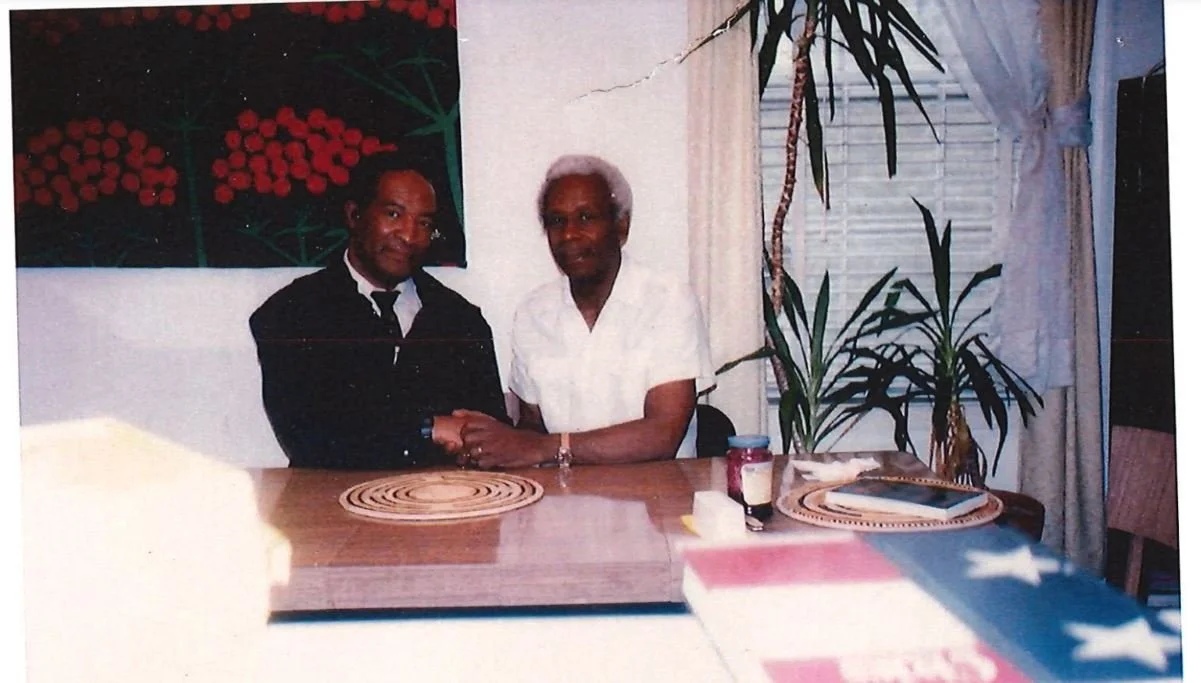
Dr. Y.N. Kly and Imari Obadele, President of the Provisional Government of the Republic of New Afrika
Dr. Y.N. Kly (Yussuf Naim Kly) was a prominent political scientist, international law scholar, and author best known for his foundational analysis of Malcolm X's political philosophy. His work provides critical insights into the later ideological evolution of the civil rights leader. Dr. Kly was the first to present a comprehensive analysis that integrates the developing vision of the man, Malcolm X, with the man he became, El Hajj Malik El Shabazz, it provides an in-depth analysis of Malcolm's directives on why the African-American struggle for national liberation and self-determination is necessary, how it should be carried on, and why it can succeed. Dr. Kly was not just an outside academic analyzing public text decades later; he was an active participant who engaged with Malcolm X face-to-face, pressed him with specific questions on international relations, and was formally appointed to lead an international branch of Malcolm's organization while in exile. In the preface of Dr. Kly’s seminal work, The Black Book: The True Political Philosophy of Malcolm X, Dr. Kly writes,
"At the beginning of the spring of 1961, shortly after completing the B.A. in Political Science and International Relations from the University of Iowa, I began to attend various Islamic and community meetings and conferences in which I had the opportunity to attempt to understand the political nature of the philosophy that Malcolm X expounded. Between the years 1961 up to 1964, I, like thousands of other Americans, joined the fight against the apartheid system in the U.S. South which had forced many into the North or foreign exile. I posed a series of questions to Malcolm twice during private interviews, but most often in open meetings. Thus the responses which I received were not focused on me but rather were the message he wished to convey to everyone. In the fall of 1964, my recording and study of Malcolm’s responses and my understanding of their political meaning led me to enter the U.S. struggle by seeking and receiving the chairmanship of the Montreal International Branch of Malcolm X’s organization, the O.A.A.U. Recently in reviewing the 87 recorded questions that I had posed and Malcolm’s responses to same, I realized that many of the questions posed were for the most part essentially the same question asked in different ways to secure a fuller understanding, and thus could be logically reduced to approximately twenty questions and responses. The Black Book of Malcolm X is no more than the faithful combining of the 87 questions and responses received, and an abstraction of the political philosophy from the responses given.”
Dr. Kly established the International Human Rights Association of American Minorities (IHRAAM) in 1985 at the Hague, Netherlands and based the entire legal philosophy of IHRAAM on the exact groundwork laid by Malcolm X and the OAAU. Just as Malcolm X intended to use the OAAU to take the plight of African Americans to the United Nations, Dr. Kly successfully used IHRAAM to achieve official consultative status at the United Nations Economic and Social Council (ECOSOC) in 1993 to advocate for the rights of American minorities on a global scale. This UN status finally granted them the formal platform to advocate for minority self-determination and human rights on a global scale. Through IHRAAM's specialized status, Dr. Y.N. Kly provided the necessary international platform for Silis Muhammad to execute the exact legal intervention Malcolm X had envisioned decades prior.
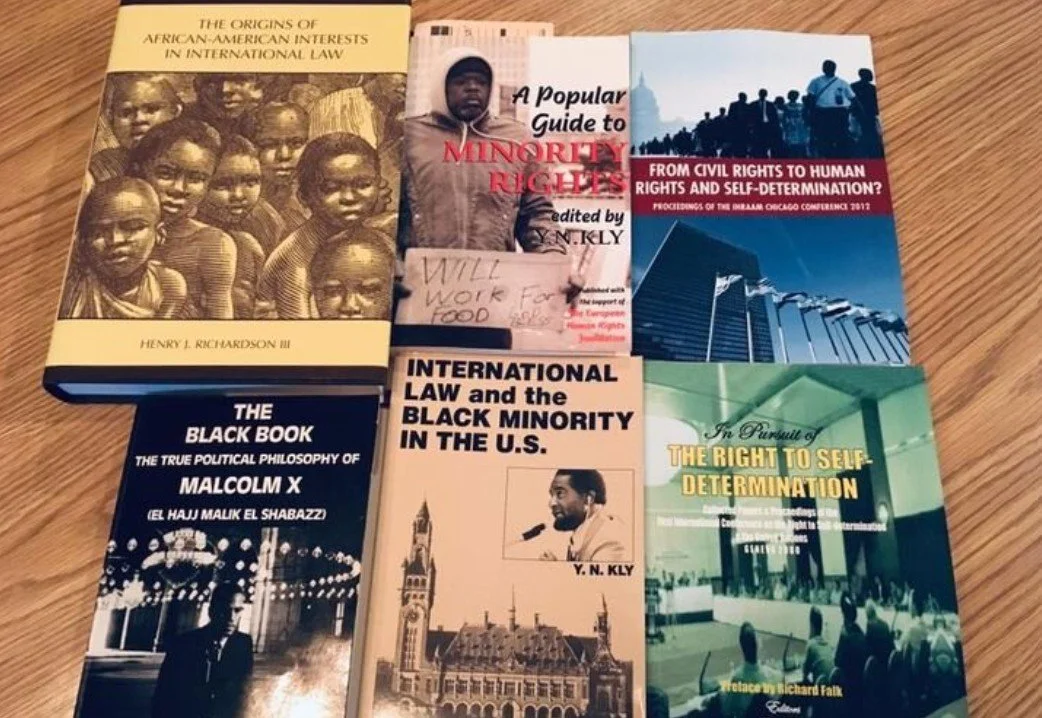
Dr. Kly’s books
In 1988, Silis Muhammad (CEO of the Lost-Found Nation of Islam) brought together a panel of legal experts known as the National Commission for Reparations, which included attorney Harriett AbuBakr. Their goal was to use international human rights law to fight for reparations. However, to formally submit a grievance to the UN, an entity typically needs a gateway via an NGO with consultative status. Dr. Kly’s organization, IHRAAM, served as that gateway. In 1992, IHRAAM officially sponsored and submitted the team's first major legal communication to the United Nations.
A few years later, under the tutelage of Dr. Y.N. Kly, IHRAAM and his protégé, Irish “El Amin” Greene, a product of the Black P Stone Nation and National Council of Black Lawyers Community College of Law and International Diplomacy (NCBL-CCLID) later re-named for Fred Hampton, Siphiwe Baleka began studying the curriculum. Siphiwe Baleka recalls,
“El Amin had begun to direct my studies towards the law. Taking me to its old location, El-Amin explained to me the history of the National Council of Black Lawyers Community College of Law and International Diplomacy (NCBL-CCLID)where he used to work. He provided documents about its co-founders Dr. Charles Knox and Dr. Y.N. Kly, both distinguished experts in international law and diplomacy, and provided me with textbooks on the U.N. and its procedures. One book in particular would change my life the way the Autobiography of Malcolm X had done: International Law and the Black Minority in the U.S. by Dr. Y.N. Kly. Along with another of his books, The Black Book (which details Malcolm X’s program to internationalize our struggle through the Organization of Afro American Unity), I gained some clarity on what must be done and what I must do, in order to gain relief from genocide and win reparations. I thus began writing Ras Notes: Conceptualizing Our Case for the U.N. At this time, I established communication with Dr. Kly’s International Human Rights Association of American Minorities (IHRAAM) and UHRAAP. I then began researching U.N. resolutions through the internet at DePaul University, and obtaining articles, petitions, and reports from NGO’s concerning our case. From these I began drafting the Petition of the Nkrumah-Washington Community Learning Center on Behalf of their Members, Associates and Afro-American Population Whose Internationally Protected Human Rights Have Been Grossly and Systematically Violated By the Anglo-American Government of the United States of America and Its Varied Institutions.”
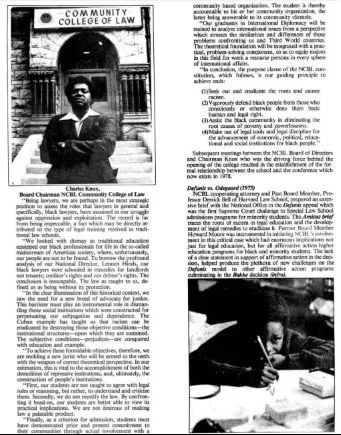
Concerning Dr. Knox and the National Council of Black Lawyers Community College of Law and International Diplomacy, Natalie Y. Moore and Lance Williams write in their book, The Almighty Black P Stone Nation: The Rise, Fall and Resurgence of an American Gang,
“During the time Farrakhan busied himself resurrecting the new NOI, he used various venues around the city of Chicago to hold meetings with his followers, including the Black Lawyers’ Community College of Law and International Diplomacy at 4545 South Drexel. Farrakhan’s friend activist Charles Knox had established the school in 1979.
Knox taught at Northeastern Illinois University’s Center for Inner City Studies. Not only did he have strong ties to Black Nationalists, Knox had an equally strong connection with Chicago street gangs. The leadership of the Stones, Lords, and Disciples respected him. Knox allowed Farrakhan and the NOI to use the Black Lawyers’ College as a meeting place, and he also let the El Rukns host activities there. It was through Knox that Farrakhan and Chief Malik (Jeff Fort) became acquainted. . . .
The National College of Black Lawyers, an old converted mansion just a few blocks away from The Fort, was controversial because it had no accreditation and investigations alleged El Rukn business took place in the facility.
By that time, IHRAAM had facilitated communications between the National Organizing Committee for the Million Man March based in Chicago and were preparing for an intervention at a meeting of the UN Working Group on Minorities, May 26-30, 1997. At NWCLC, Siphiwe Baleka was being trained to become the next generation’s international legal advocate for African American self determination.
Finally, it should be noted that Siphiwe Baleka was mentored by George Edwards, one of the original New Haven Black Panther Party members, and after completing his studies at Yale in 1996, Siphiwe Baleka returned to Chicago and started working with Shaka Barak (Aonde T Dansby), founder and President of the Marcus Garvey Institute, Former UNIA 3rd Assistant President General and Minister of Education, and one of the last students of General Charles L James of Gary, Indiana. General James was one of the original graduates of Marcus Garvey’s School of African Philosophy in 1937. Garvey reported to the readers of the December 1937 Black Man:
“The School of African Philosophy has come into existence after twenty-three years of the Association's life for the purpose of preparing and directing the leaders who are to create and maintain the great institution that has been founded and carried on during a time of intensified propaganda work. The philosophy of the school embodies the most exhaustive outlines of the manner in which the Negro should be trained to project a civilization of his own and to maintain it.
According to General James,
“The class became one family. We ate together, roomed together, studied together, recognizing the professor as the chief architect of our intellectual destiny. As for me, it was a dose of humility mixed with the yearning for knowledge. For thirty days and nights, with two sessions per day, mass meetings at 8 o’clock p.m., studying until the early morning hours, we had no time for anything else but study, study, study. Then, finally, came graduation. Let the record show that I received the highest grade. In every point of examination I was graded ‘E'. My classmates all agree that I was the leader of the first class in the School of African Philosophy. We were charged with guarding the written course with our lives. The unwritten course was to be engraved on the tablets of our memory. As I write this, I am sorry to announce that all my classmates of that first class have joined with the Rt. Excellent Marcus Mosiah Garvey and our other ancestors. . . . As the only surviving graduate of the first class, it is important for me to protect the interest of those who preceded me into eternity and knowing that there are forces that are trying to distort history . . . Let me hope that into whomsoever’s hands these lessons fall, that they may use them wisely. For in these lessons there is eternal life for Africans at home and abroad. . . .”
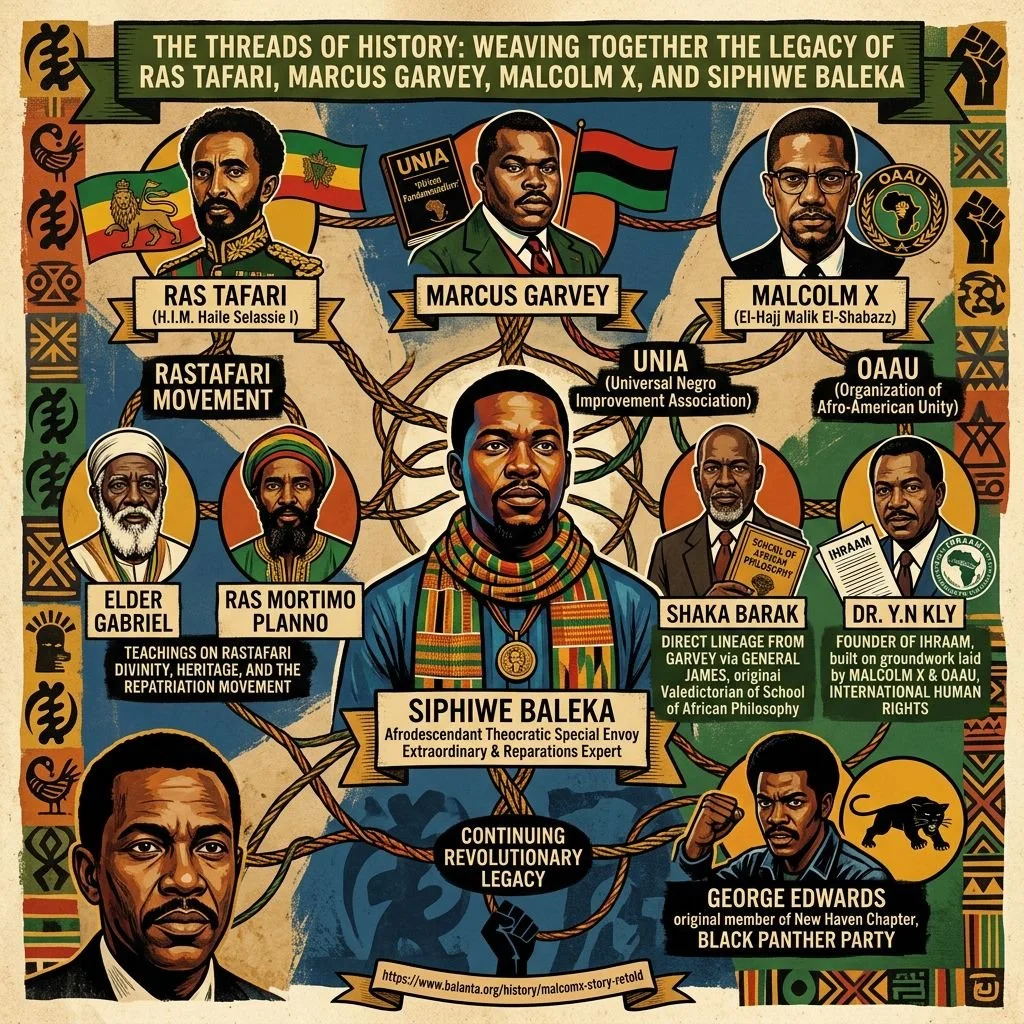
With Shaka Barak, Siphiwe Baleka completed the Course of the School of African Philosophy. This he considered to be his Graduate studies in Philosophy and he now had a B.A. Degree in Philosophy from Yale University and an M.S. Degree in African Liberation from Marcus Garvey’s School of African Philosophy and was now mentored by Dr. Kly and El Amin in the True Political Philosophy of Malcolm X. This was the formal preparation, along with the Rastafari Nyahbinghi neuro-linguistic programming that would lead to Siphiwe Baleka emerging as the Afrodescendant Theocratical Special Envoy Extraordinary and Reparations Expert with direct institution lineage ties to the original Ras Tafarites of the Star Order of Ethiopia (Chicago, 1919), Marcus Garvey and the UNIA, the modern Rastafari movement and Elder Gabriel (Chicago) and Mortimo Planno (Jamaica), Malcolm X and the OAAU, and George Edwards and the Black Panter Party (BPP) with the specific training in international law and diplomacy.
**************************************
On July 5, 1964, at the second rally of the OAAU, Malcolm X explained that world pressure must be brought to bear upon the United States:
"You and I have to make it a world problem, make the world aware that there'll be no peace on this earth as long as our human rights are being violated in America. Then the world will have to step in and try and see that our human rights are respected and recognized."
For more information: