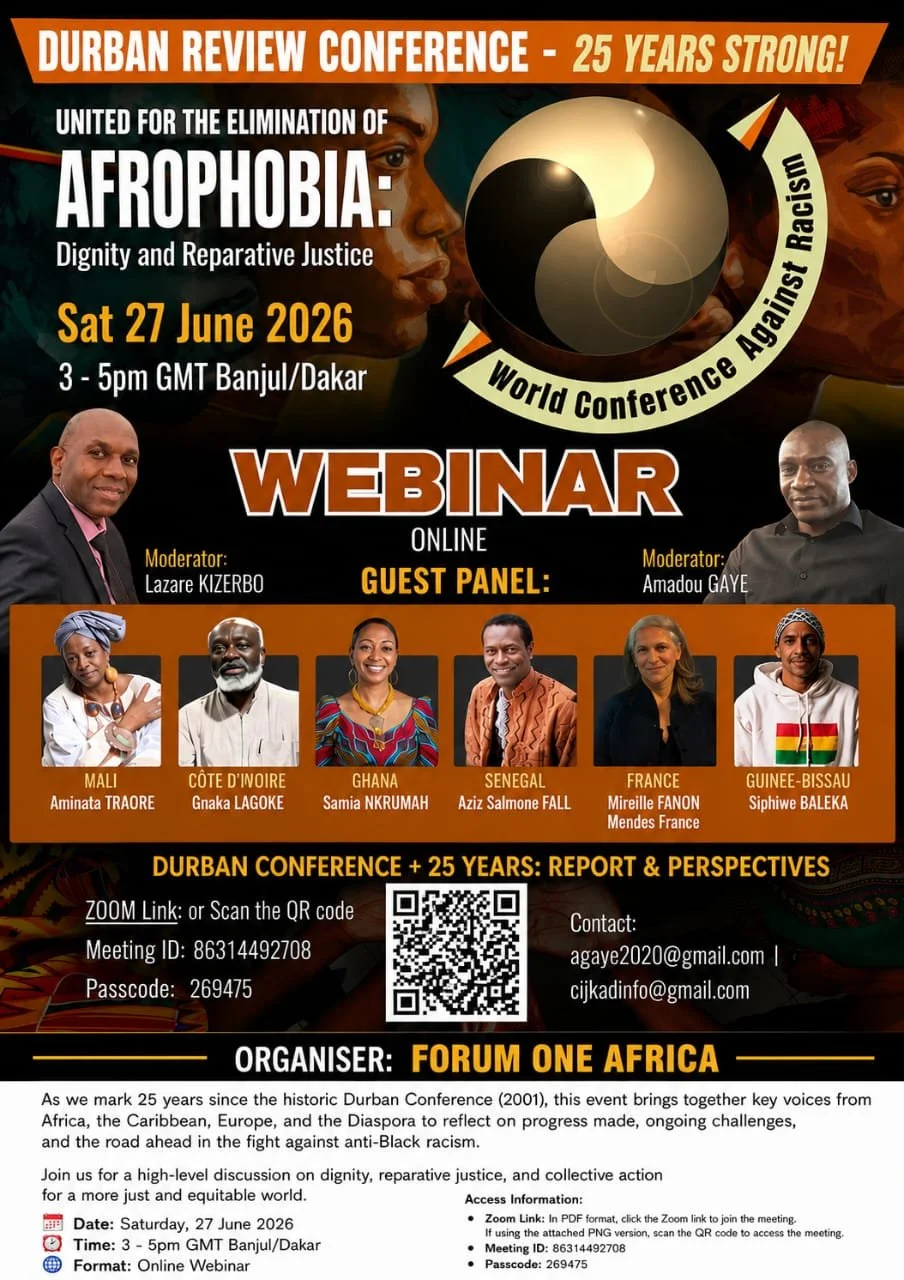
Pan Africanists Aminata Traore , Gnaka Lagoke (chief organizer of the 9th Pan African Congress in Lome, Togo), Aziz Salmone Fall , and Siphiwe Baleka to discuss twenty-five years since the Durban Declaration!
Quick recap
This meeting was a panel discussion organized by the One Africa Forum Group to reflect on the Durban Conference 25 years after it took place in 2001 and examine contemporary manifestations of Afrophobia. The invited panelists included Dr. Aminata Traore, Professor Gnaka Lagoke, Samia Nkrumah, and Aziz Fall who discussed the achievements and challenges since Durban, the recent Accra Conference on reparations, and the current state of Pan-African efforts. Dr. Traore emphasized the importance of cultural restitution and fighting militarization in African societies, while Professor Lagoke highlighted the need to reclaim African philosophical systems like Ubuntu and MAAT, noting their absence in the Durban Declaration. Aziz Fall discussed the complexity of reparations given the historical and ongoing issues of slavery and colonialism, arguing that true reparations require a different global power dynamic. The moderators established guidelines for the discussion, including time allocations of seven minutes for main contributions and two minutes for English summaries of French presentations, with the overall format following an Indaba spirit of respectful dialogue.
Summary.
UN Conference on Reparations Discussion
Lazare provided context about the United Nations conference series on racism that began in 1950 and continued into the 21st century, highlighting the Durban conference in 2001 which addressed the transatlantic slave trade and reparations. Dr. Aminata Traore discussed the challenges of seeking reparations from former colonial powers, expressing skepticism about what can be achieved given the current international context and ongoing conflicts in the region. She emphasized that reparations are not primarily about financial compensation but rather about acknowledging historical humiliation and suffering, while noting that current political realities make meaningful action unlikely from Western powers.
African Cultural Reparations Discussion
Aminata Traore emphasized the need for greater focus on returning cultural wealth and addressing militarization in African societies. She called on youth to lead efforts in understanding past struggles and working toward solutions, including negotiating for reparations and leveraging cultural creativity. Gervais discussed the importance of claiming African value systems like Ubuntu and Pan-Africanism in global forums, highlighting their absence in key documents like the Durban Declaration and calling for a comprehensive understanding of reparations. Both speakers stressed the need for African unity and the inclusion of cultural and humanistic concepts in future discussions on reparations and global governance.
African Historical Memory and Solidarity
Professor Lagoke discussed the importance of learning from historical traditions of struggle, including the Civil Rights Movement, anti-apartheid movement, and the All African People's Conference initiated by Kwame Nkrumah. He emphasized the need for Africans to reclaim their historical memory and philosophical systems like Ubuntu to strengthen their position in reparations discussions. Amadou and Lazare acknowledged Gnaka’s points about the need for stronger African solidarity and control over terminology defining their struggles. The meeting also included introductions of Samia Nkrumah and Aziz Fall as notable Pan-Africanists, with technical difficulties noted regarding Samia's connection.
Pan-African Reparations Strategy Discussion
Aziz Fall discussed the complexities of reparations for slavery and colonialism, explaining that while the issue is morally and ethically valid, current international law and power dynamics make it difficult to enforce reparations from former colonial powers. He acknowledged the 10-point reparatory justice plan developed by CARICOM but emphasized that building a strong pan-African state and pursuing South-South cooperation with countries like Brazil and Venezuela would be more effective than seeking reparations from imperialist forces. Aziz Fall concluded that while reparations are not invalid, he would focus energy on building pan-African political strength rather than relying on established international legal frameworks for reparations.
Caribbean Reparations Program Discussion
The discussion focused on reparations for Caribbean and African communities, with Lazare highlighting the work of historian Hillary Beckel in developing a 10-point reparations program through CARICOM. Lazare emphasized that while the moral campaign for reparations is important, it must be combined with political and anti-imperialist struggles, noting that African governments at the Durban conference did not fully endorse the civil society agenda. The group discussed the need to include political prisoners in the reparations agenda and agreed to gather additional papers and texts to organize this matter further, though they noted time constraints with only one hour remaining for debate.
African Reparations and Sovereign Jurisdiction
Siphiwe presented a historical analysis connecting Marcus Garvey's 1922 prophecy about a racial conference to the 2001 World Conference Against Racism in Durban, where the United States walked out after being presented with evidence of secret anti-African policies. He explained that despite the establishment of monitoring mechanisms following the Durban Declaration and Program of Action, reparations for Afro-descendants have not been enforced after 25 years, highlighting the need for African nations to fulfill their obligations regarding internal reparations before pursuing claims against European nations. Siphiwe concluded by advocating for a shift toward sovereign juridical instruments where African courts would define and judge the crimes committed against their people, rather than petitioning international bodies that were not designed to address these issues.
Afro Descendant Reparations Initiatives
Siphiwe discussed the need for Afro descendant civil society to build national reparations commissions and link them to create an alternative power base to confront AU and CARICOM alliances. Lazar provided a detailed summary of post-Durban developments, highlighting that while no consensus was reached, three institutions were created including the Committee for Elimination of Racism and Discrimination and a Working Group of Experts on Afro descendant issues. Samia Bourouba from the AU clarified two ongoing legal initiatives: a study on the implications of qualifying colonialism, apartheid, and transatlantic slavery as crimes against humanity, and a separate work on developing legal pathways for global reparations. The conversation ended with plans to open the floor for questions following the planned structure.
Inclusive Reparations Movement Discussion
Judite Blanc raised concerns about the exclusion of French-speaking Caribbean and African voices from the recent reparations summit in Ghana, highlighting the need for more inclusive representation in the reparations movement. She emphasized that reparations from France should address Haiti's unique historical context, including the 90 million gold francs Haiti was forced to pay to former colonizers after the only successful slave revolt in 1804. The discussion also covered the importance of political unification among African nations as a prerequisite for effective reparations efforts and anti-imperialist struggles. Participants agreed to continue these discussions in future forums, with plans for monthly or bi-monthly meetings to maintain momentum in the reparations movement.