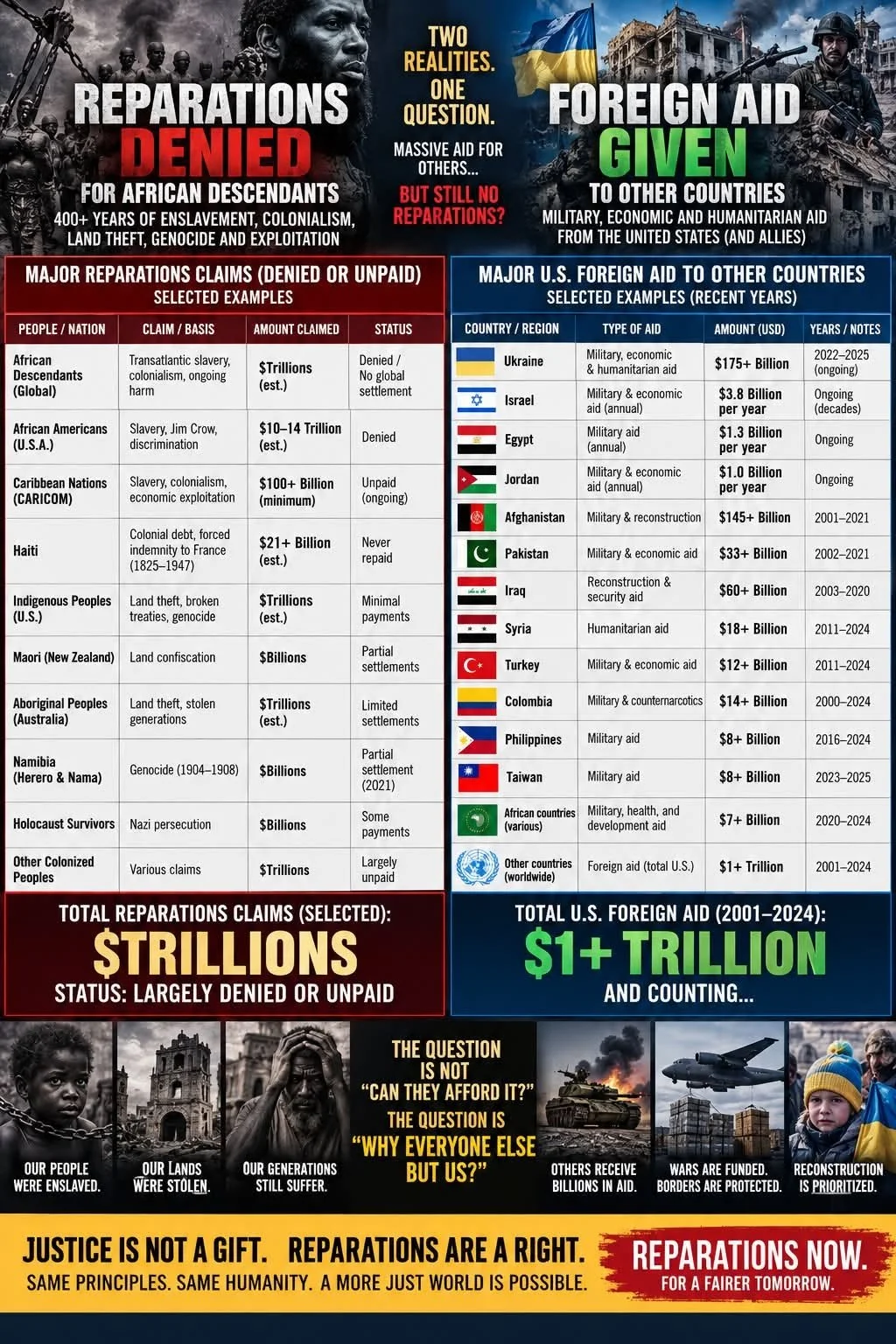
June Soomer: I'm doing the addition today. Um what we should not do, I'm going to tell you what we should not do. We should not allow them to tell us how much is owed to us. M you cannot tell me how much my grandfather's back pay was. Neither can you tell me what I should do with that money if I do get it. Which is why we have a framework. You cannot say to me that um the old argument that these black people don't know what to do with this money. They will just squander it. [laughter] Okay. So you cannot you cannot tell me what to do with reparatory justice money. This is owed to us. Okay. The other thing that I think is very Can I give you a joke on that one [laughter] here? About two weeks ago, he's an elder. They have stories. It's too it's [laughter] too it's too good and relevant.
Sir Hilary Beckles: About two weeks ago, I was walking through the mall in Jamaica and I saw this young man and he asked me if I can give him something. He looked very desperate. He's a beggar on the street. I felt sorry for him. So I gave him a little money and I said to him, "Young man, you should go and buy some food to eat and he looked at me said, "But you telling me what to do with my money?"
June Soomer: Yes. Exactly. [laughter] Exactly. It's no longer your money. The other thing we have to remember is that we should not accept the old argument around us not having the money to give to you. Mhm. Because it took political will, he said it in his presentation, for the British government to give that percentage of their GDP to people who were considered enslavers. It took political will. The British um mentality and the British opinion at that time went against paying reparation compensation to these planters. So the political will at the time did not accept that these British planters should get compensation. The same thing happened in Germany with the Jewish people. The political will ensured that the Jews got compensation for what happened to them. The public will was not the same Germany was going through reconstruction after the second world war. But political will said we are going to do it. So where is the political will when it comes to black people? Where is that political will? So that is the other part of the of the of the argument. It's not just about the amount but how we [clears throat] do it and what we do with it, you know, and the political will surrounding it.
Sir Hilary Beckles: You know why our African-Americans friends are so determined that they want the reparations cash in hand? I was at a lecture in University of Miami about 5 years ago and this elderly white lady came up to me and says, "Professor, have you ever seen a reparations check?" And I said, "No, ma'am." And she went into her handbag and took out this check. A Jewish lady. A Jewish lady. $700. At the top of the check said United States of America, Federal Reserve. She was a Jewish woman and the reparations deal that was made was that the descendants of all of those Jewish people who were massacred that they are entitled to reparations for four generations. Okay? So every month she gets a check through the mail. The German government, the Polish government, all of those governments had put the money into a reparations fund. The reparations fund was transferred to the US US government is managed by the feds by the feds and every month these people get their check through the mail. Now the majority of workers in the American mail system are black people and the black people are seeing these checks coming through the mail every day, reparations checks and they are the ones processing them. So for the last 40, 50 years, these black workers are mailing out checks to people for reparations. And in the banks, most of the tillers at the front of the bank, not the managers, the tillers are young black people. And they're saying these people coming in Jewish and lodging their reparations check to their account. So the black people in America have been watching reparations check for the last 60 years coming through the mail and being lodged in bank accounts and they're saying to themselves, "Well, hold on a second. Where's our reparations check? We're the ones who went through slavery and Holocaust. Where's our check?" So you see, there is this conception of experience. The African-Americans want their check in their hand and they're insisting upon it because that is a Jewish experience that they have been living with for the last 60 years
*************************************************************************************************************
SIPHIWE: Fact check. Do victims of the Jewish holocaust receive monthly reparations checks?
ANCESTRAL INTELLIGENCE: (AI): Yes, many living victims of the Jewish Holocaust receive monthly reparations checks, though the specific format of compensation depends entirely on the nature of their persecution, where they lived, and their current financial or physical needs. [1, 2, 3]
Rather than a single blanket program, Holocaust reparations are administered through several distinct funds and ongoing annual negotiations between the German government and the Conference on Jewish Material Claims Against Germany (Claims Conference). [1]
Types of Ongoing Payments
Monthly Pensions (Article 2 & Central Eastern European Funds): Tens of thousands of survivors who endured concentration camps, forced labor ghettos, or spent prolonged periods living in hiding or under false identities receive lifetime monthly pensions. For instance, a series of negotiations expanded these monthly pensions to include subsets like survivors of the Siege of Leningrad and specific regions of Western and Eastern Europe. These monthly amounts are periodically adjusted during negotiations. [1, 2, 3]
Annual & Supplemental One-Time Payments (Hardship Fund): For survivors who do not meet the criteria for a lifelong monthly pension—such as those who fled the Nazi mobile killing units (Einsatzgruppen) or were forced to flee Soviet territories—Germany provides annual supplemental payments. Under recent agreements, these annual hardship payments have been guaranteed and extended through 2028 at roughly €1,450 per person annually. [1, 2, 3]
Ghetto Pensions (ZRBG): Germany also pays distinct monthly social security pensions to survivors who performed what is legally classified as "voluntary" paid labor while confined to a Nazi ghetto. [1]
Institutional Home Care Funding: Because the remaining survivor population is rapidly aging and highly vulnerable, a major portion of German reparations has shifted away from direct cash checks to funding full-time home care services. For example, the German government allocates over $1 billion annually specifically toward subsidized home care and medical assistance so survivors can age in place with dignity. [1, 2, 3, 4]