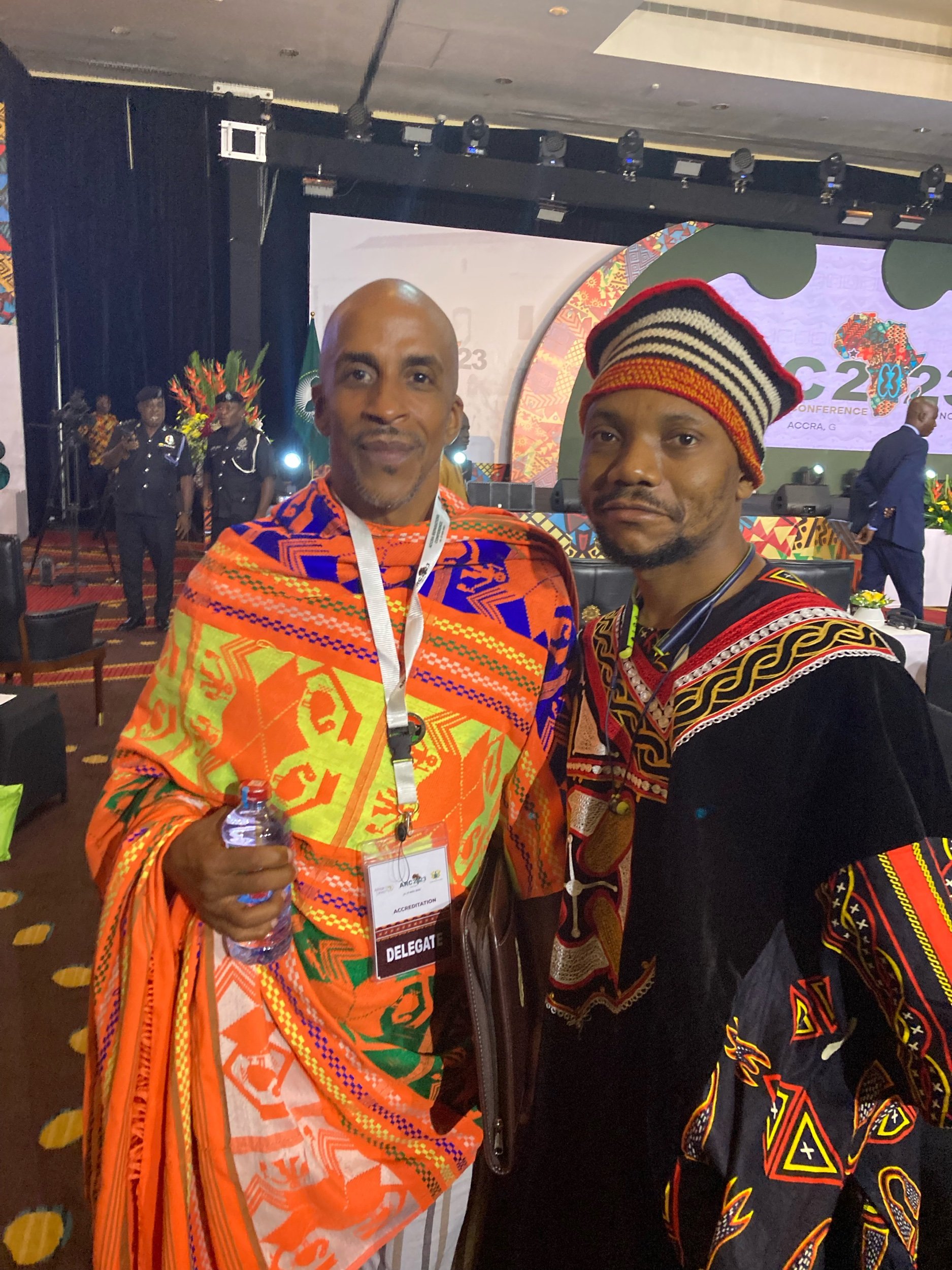
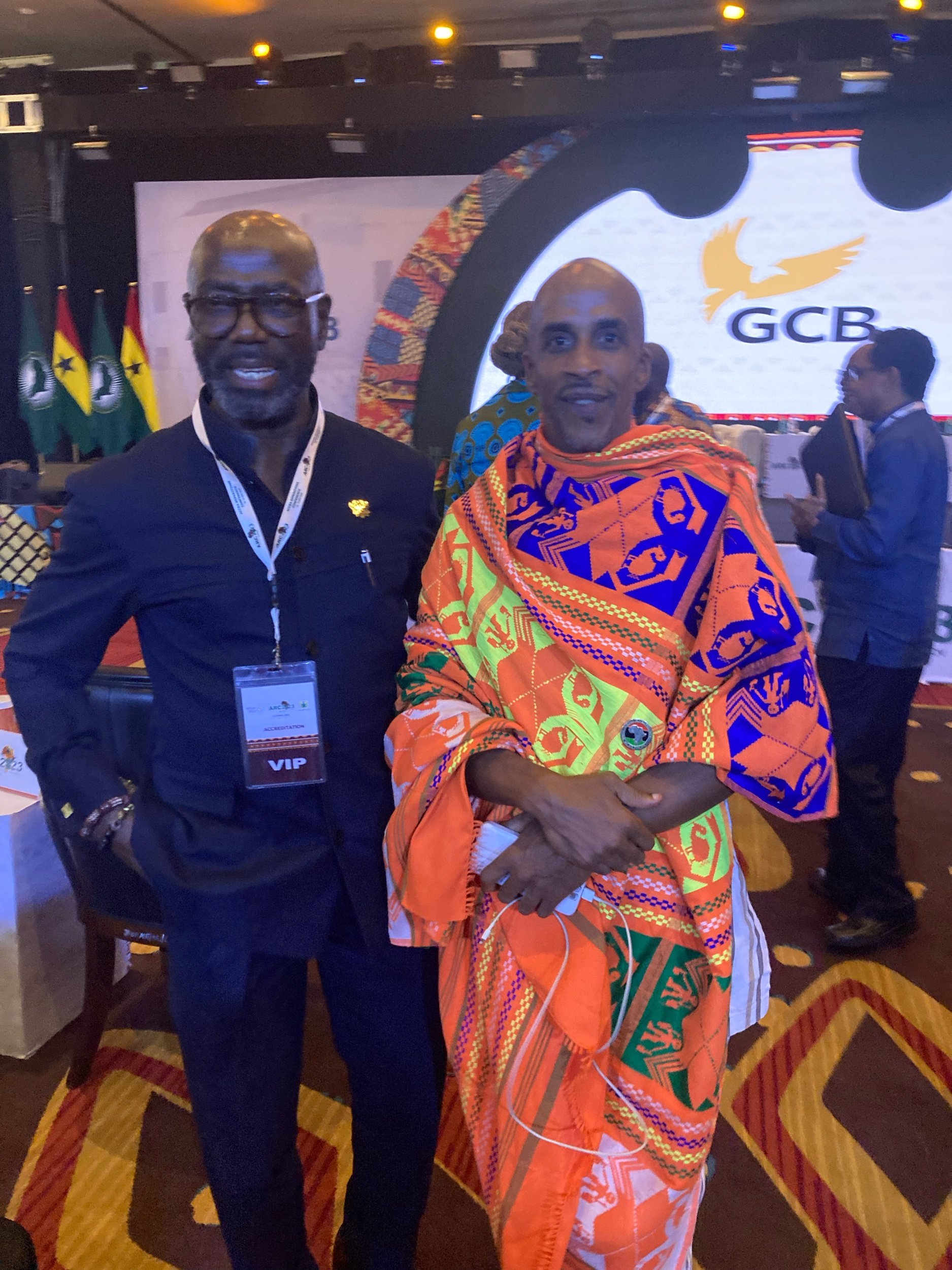
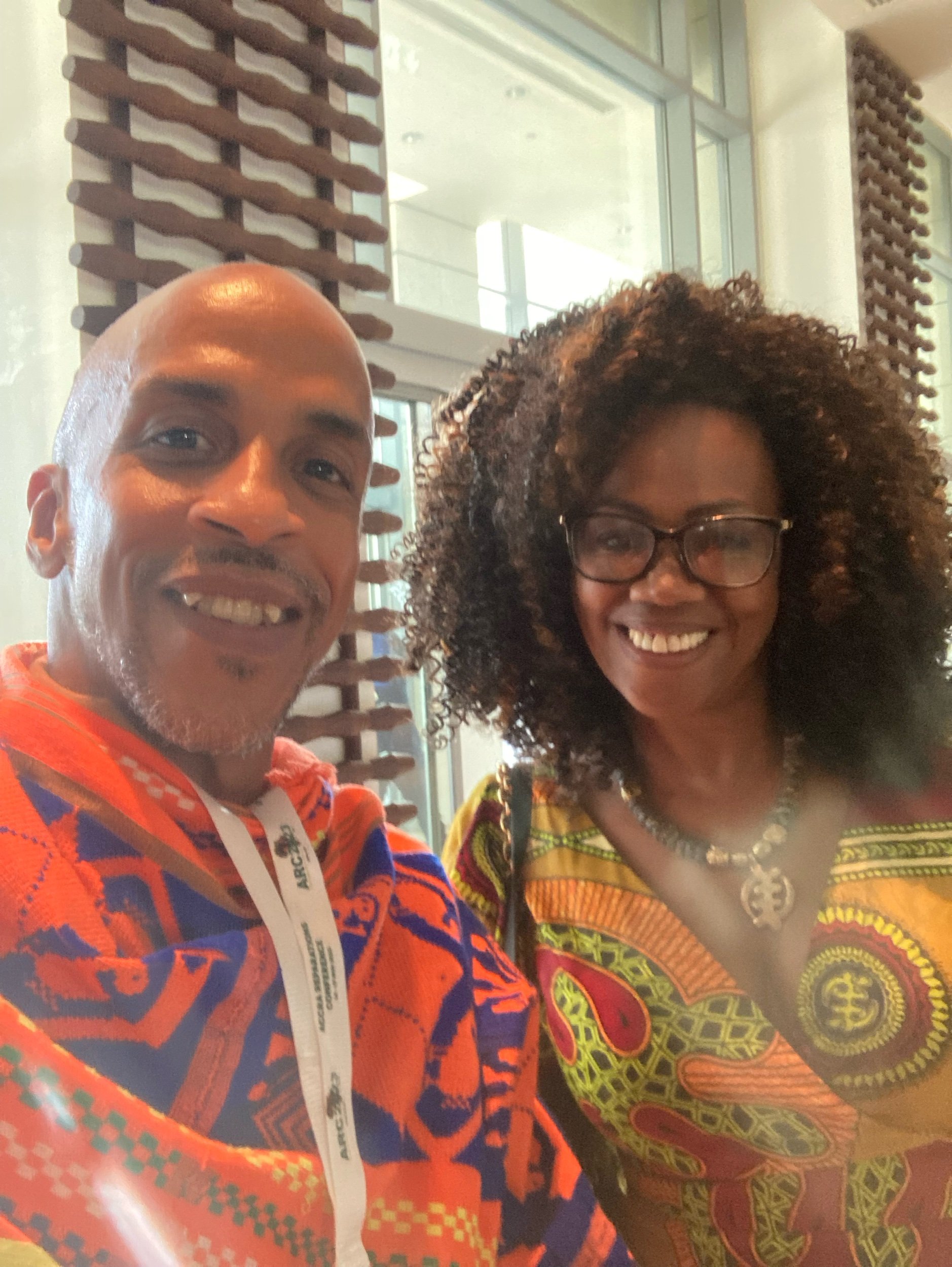
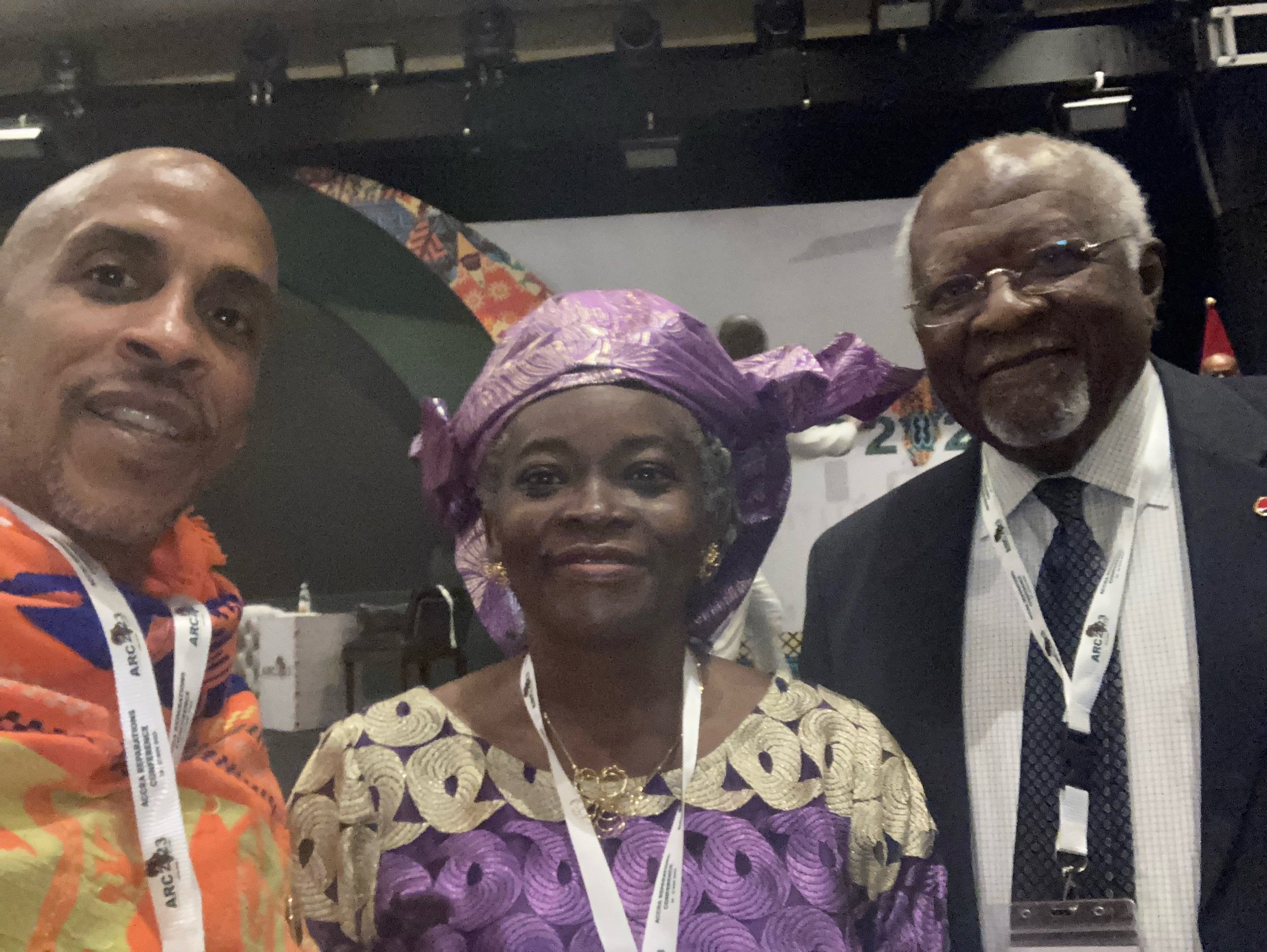
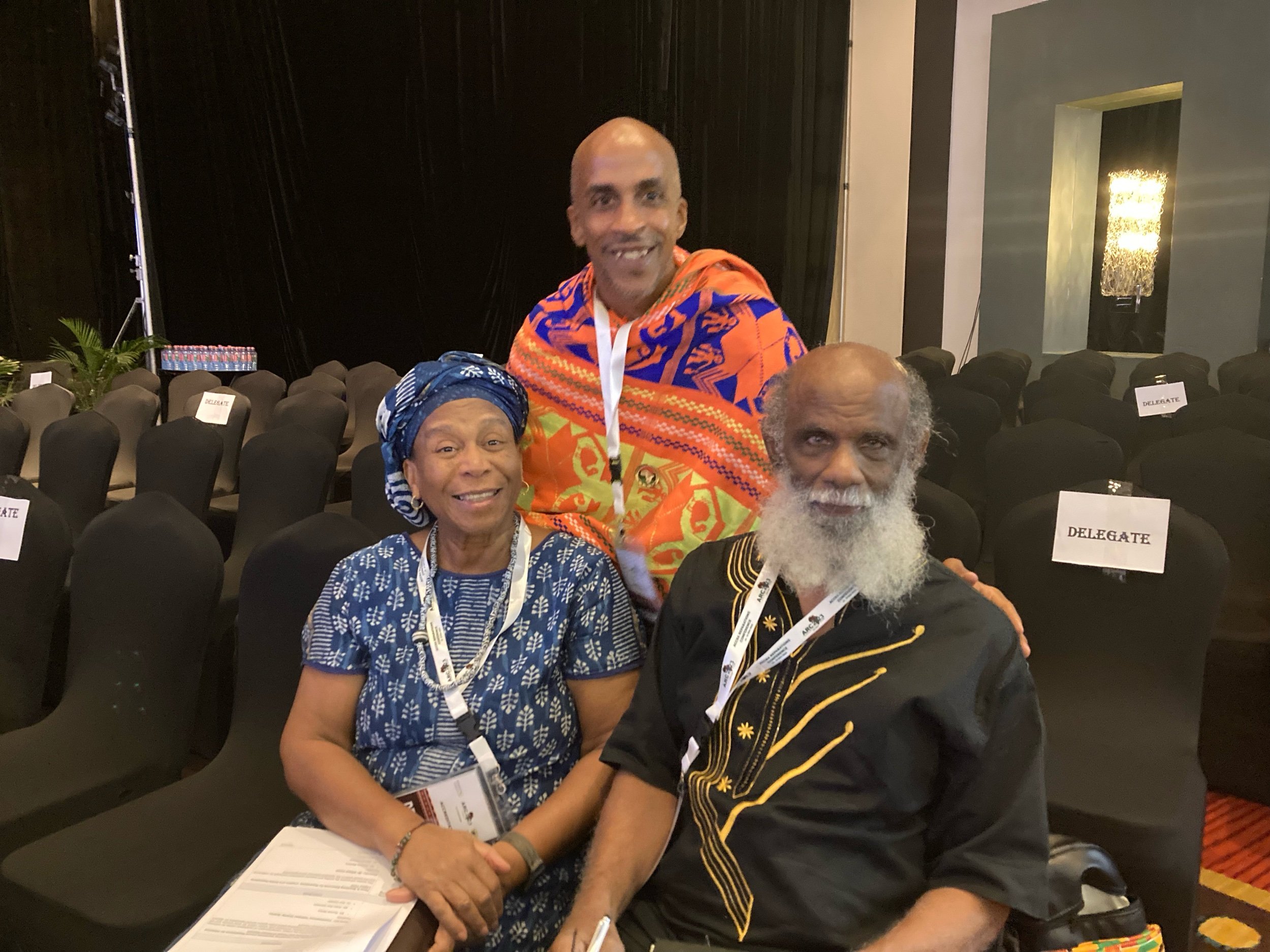
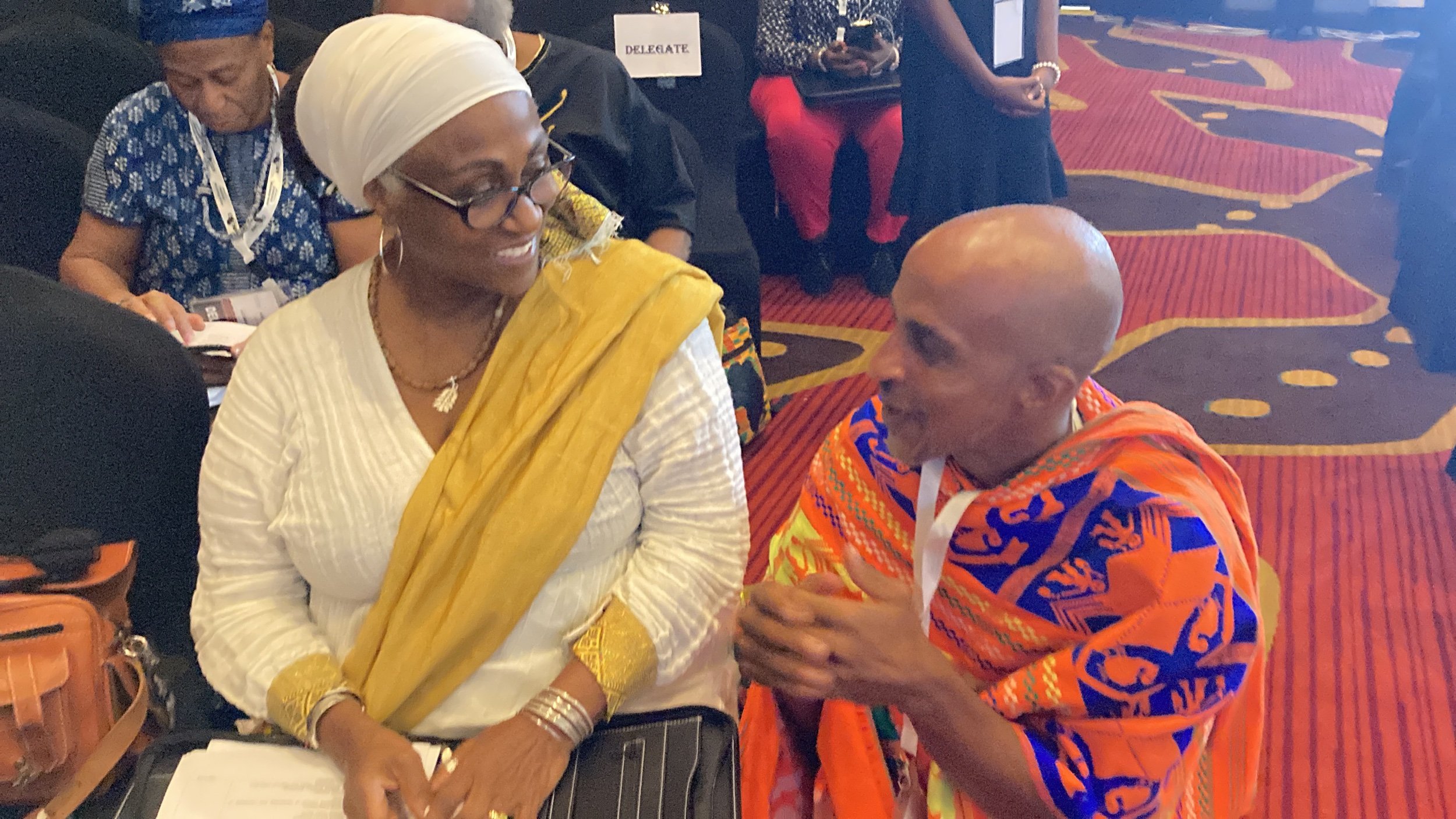
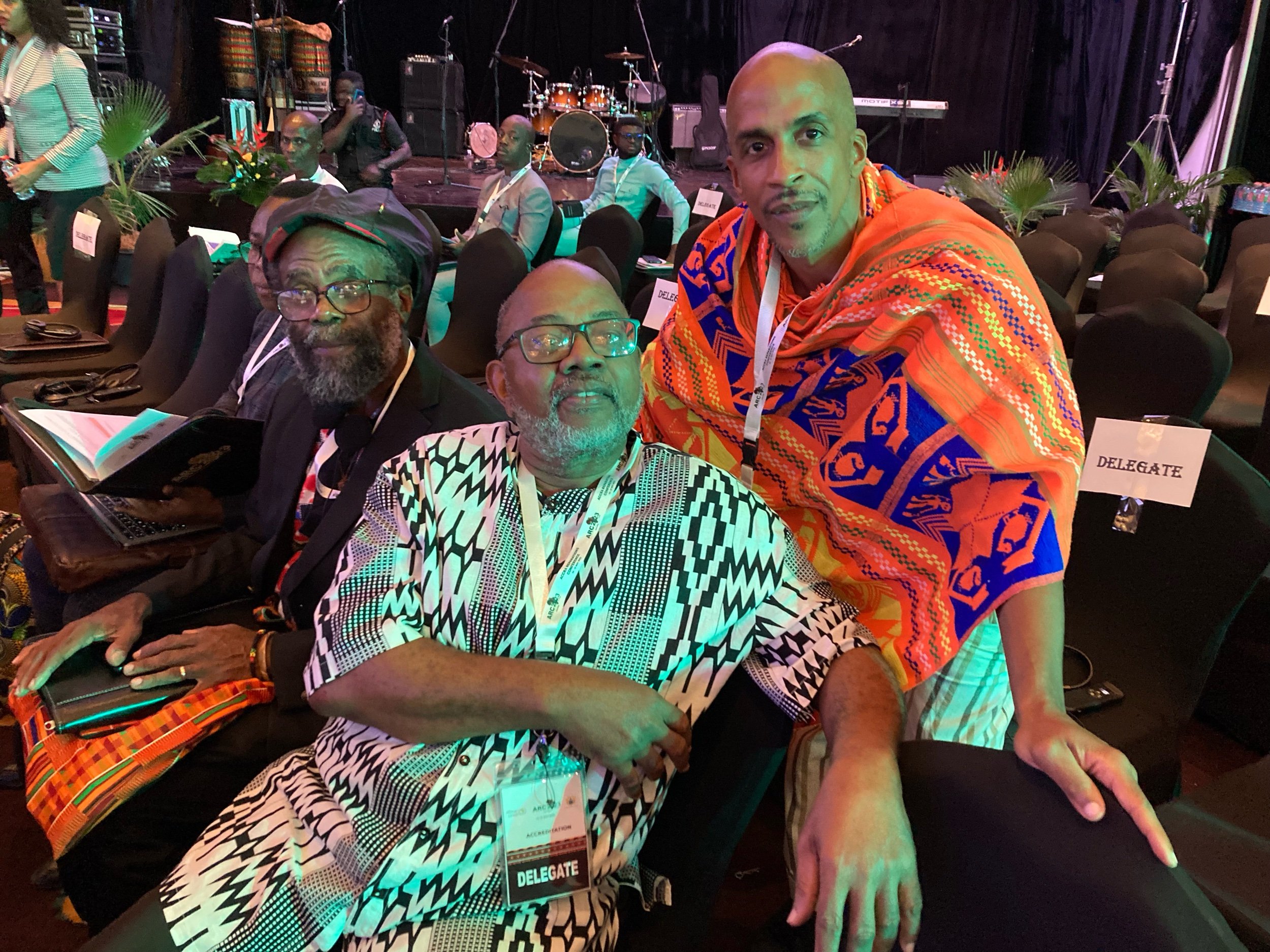
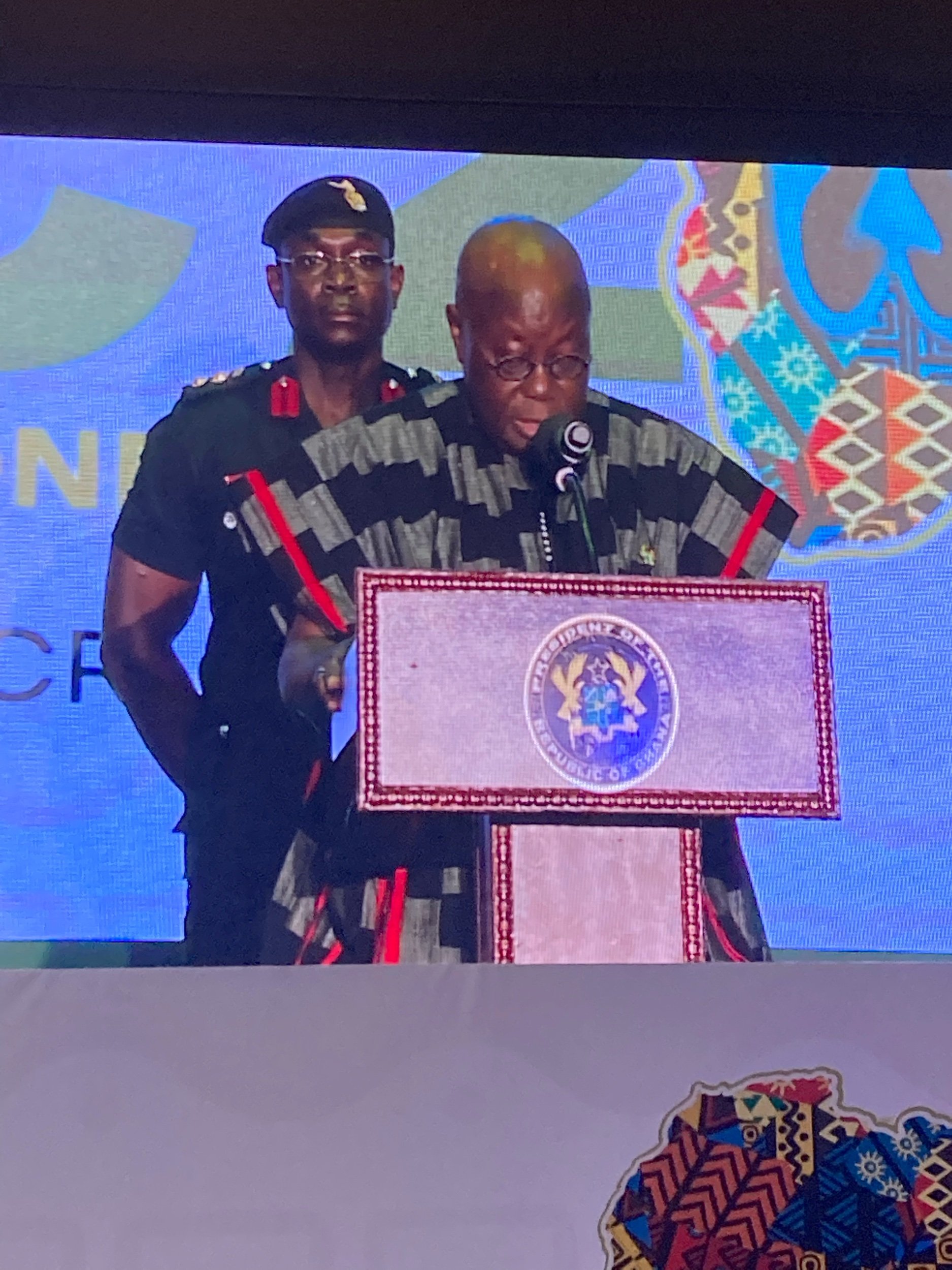
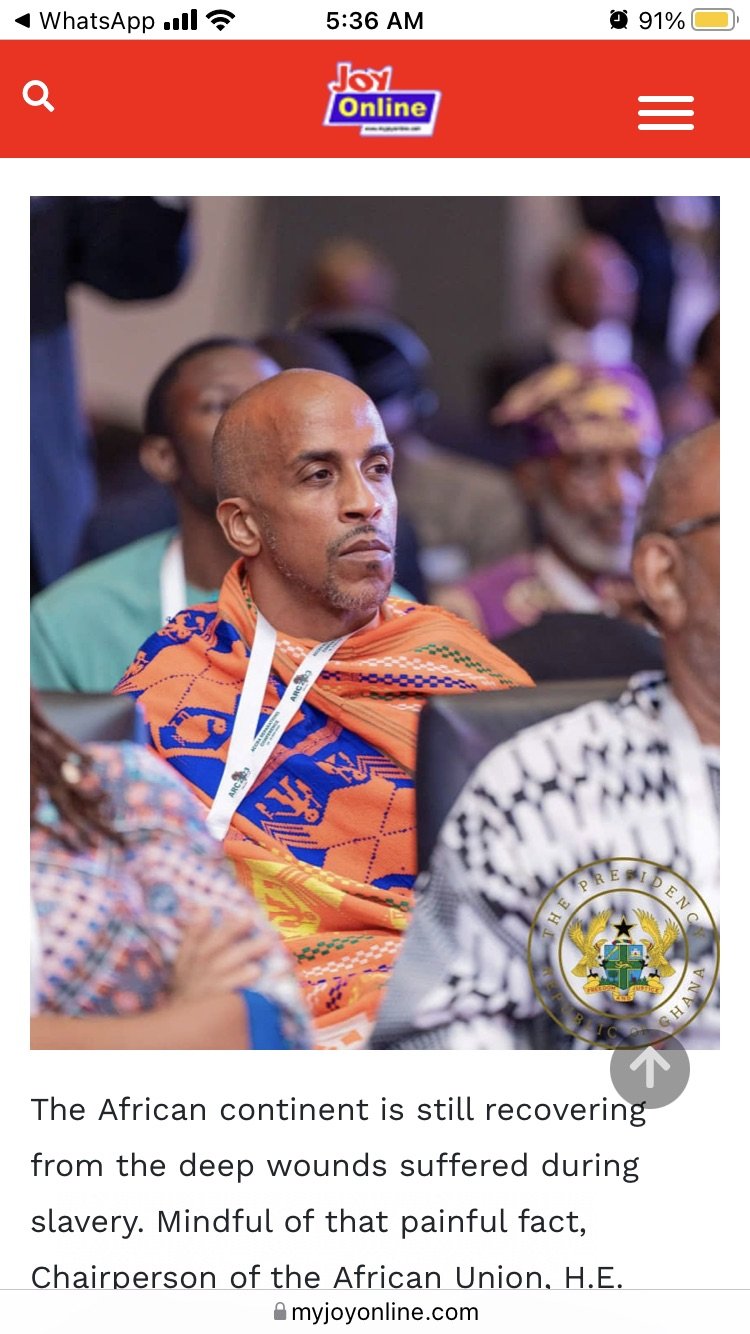
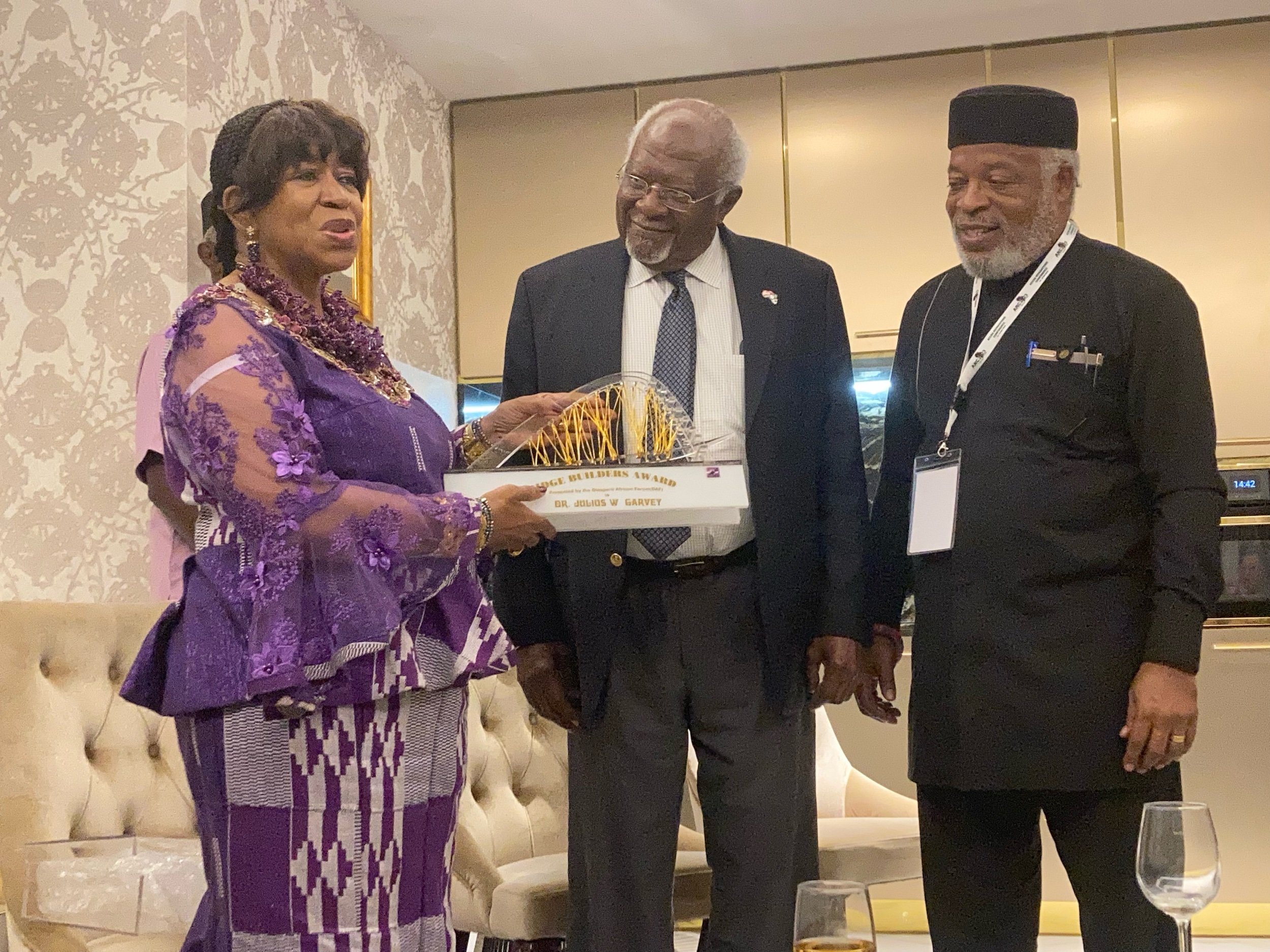
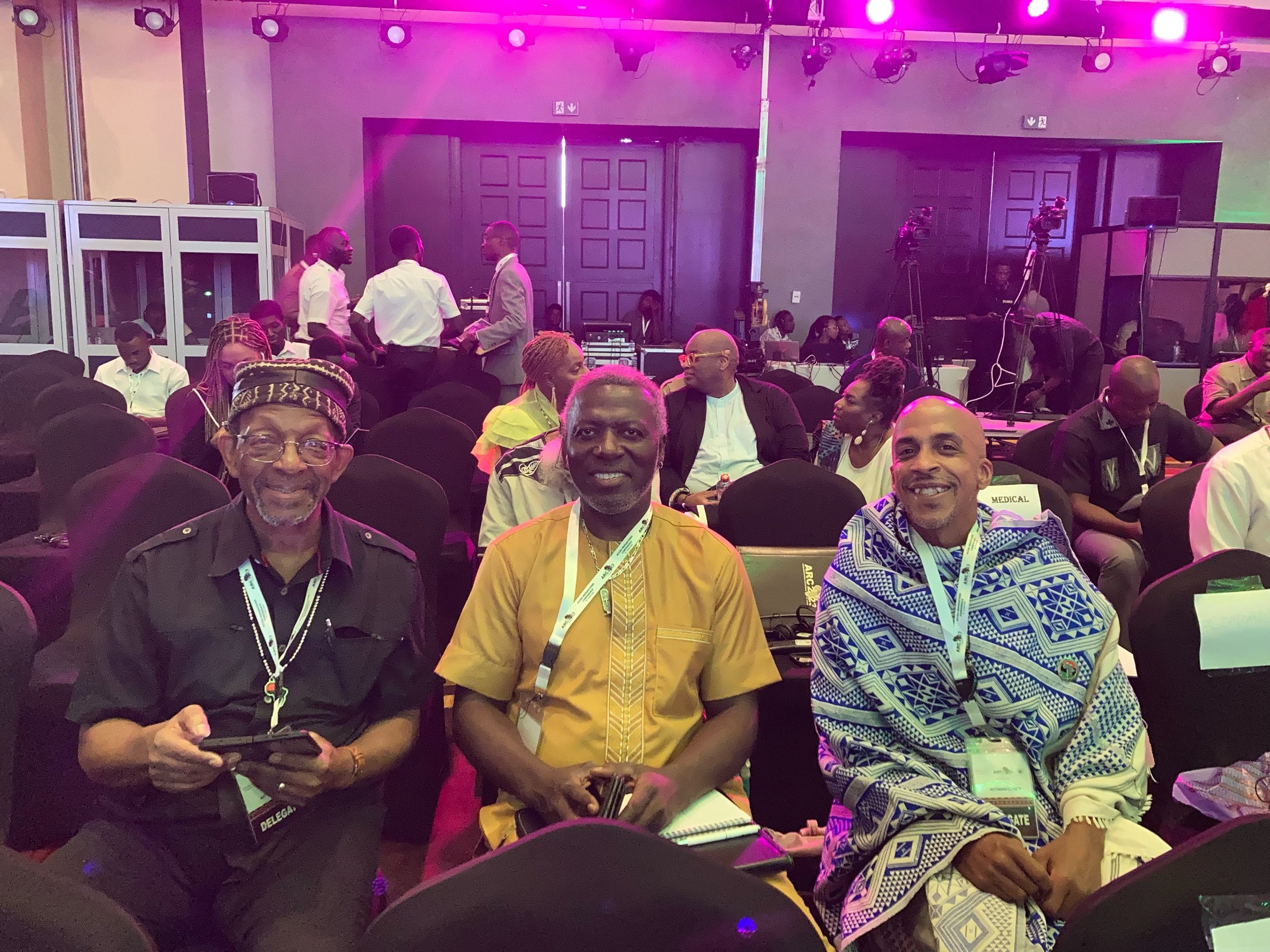
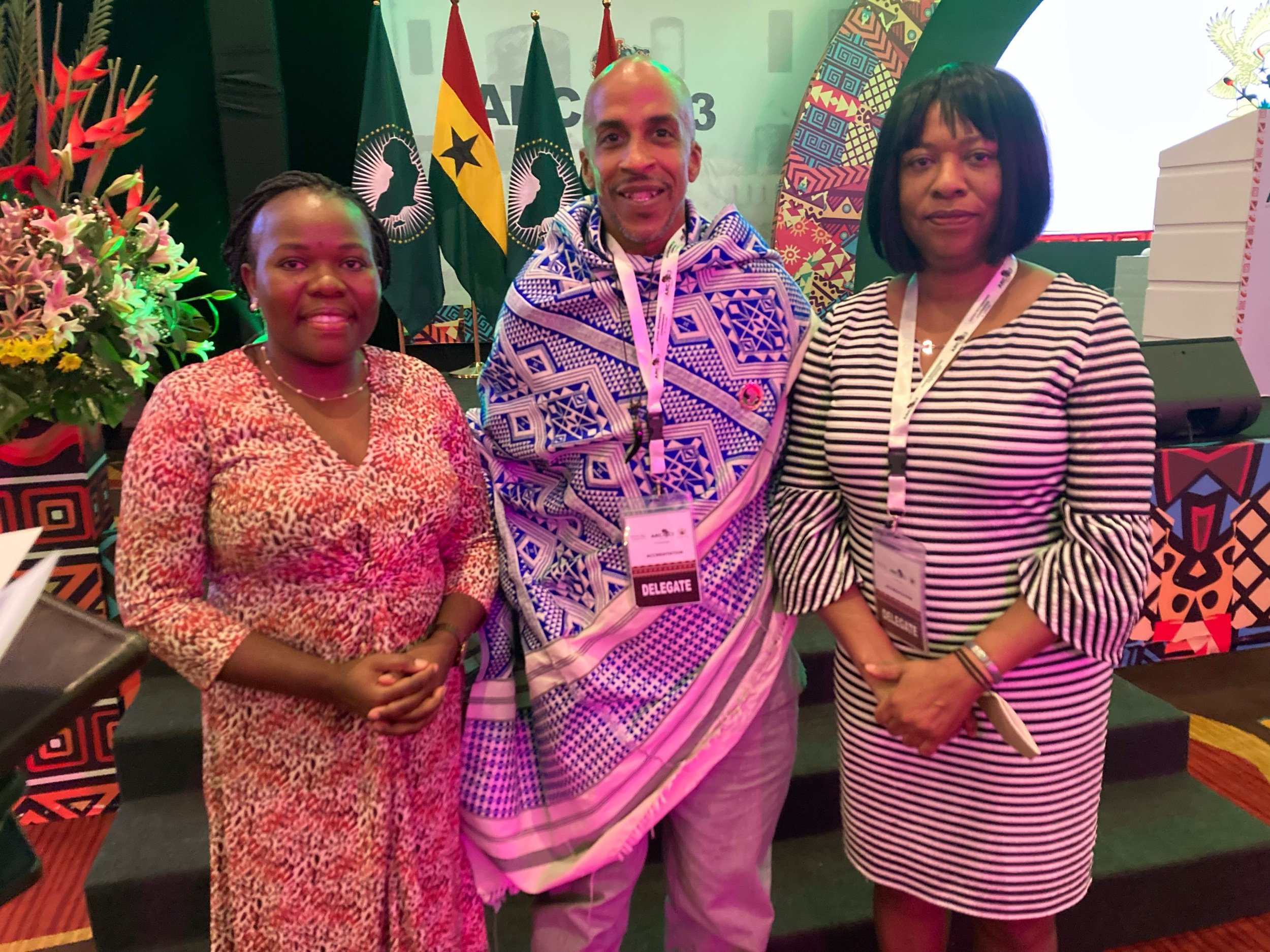
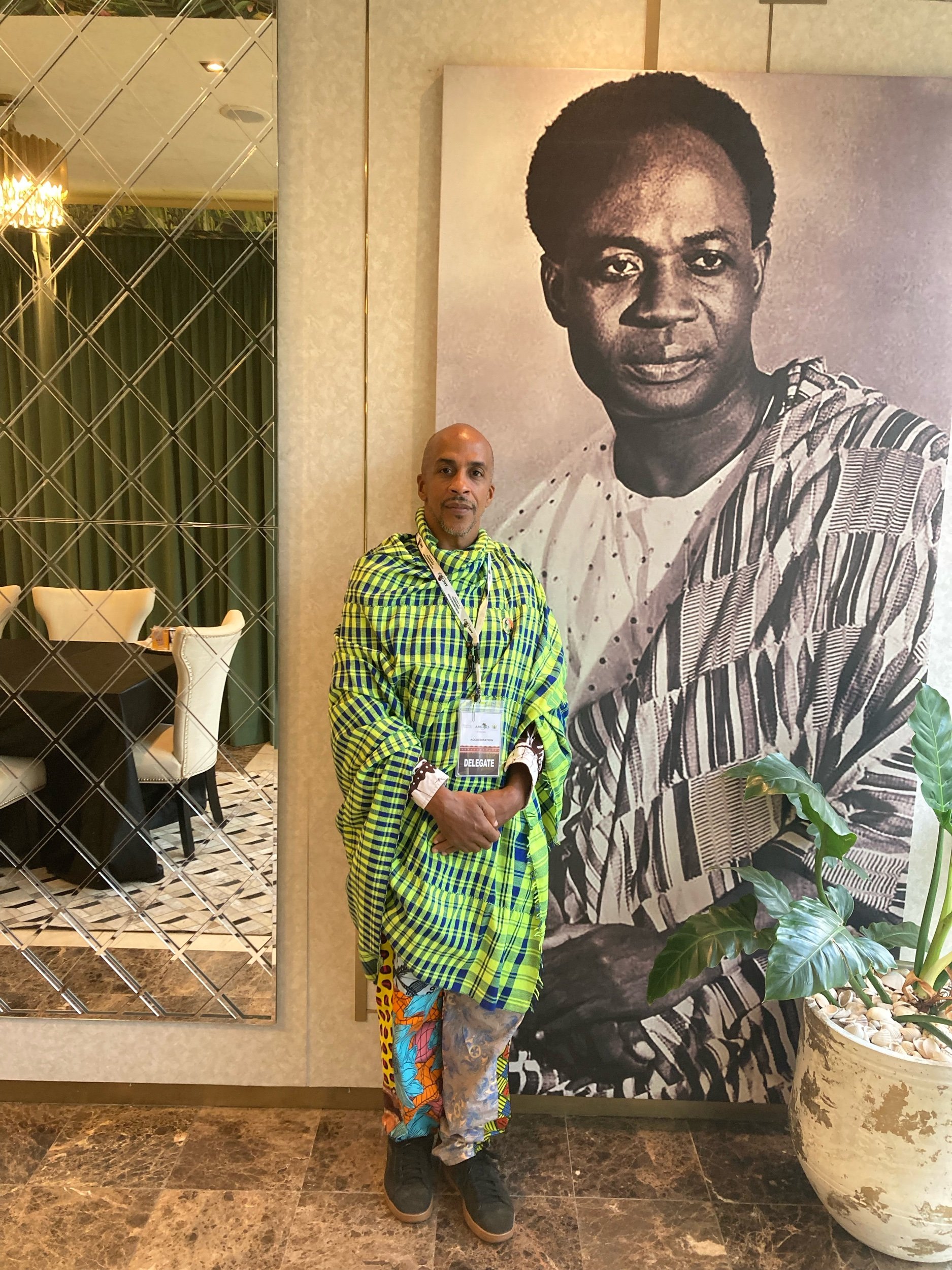
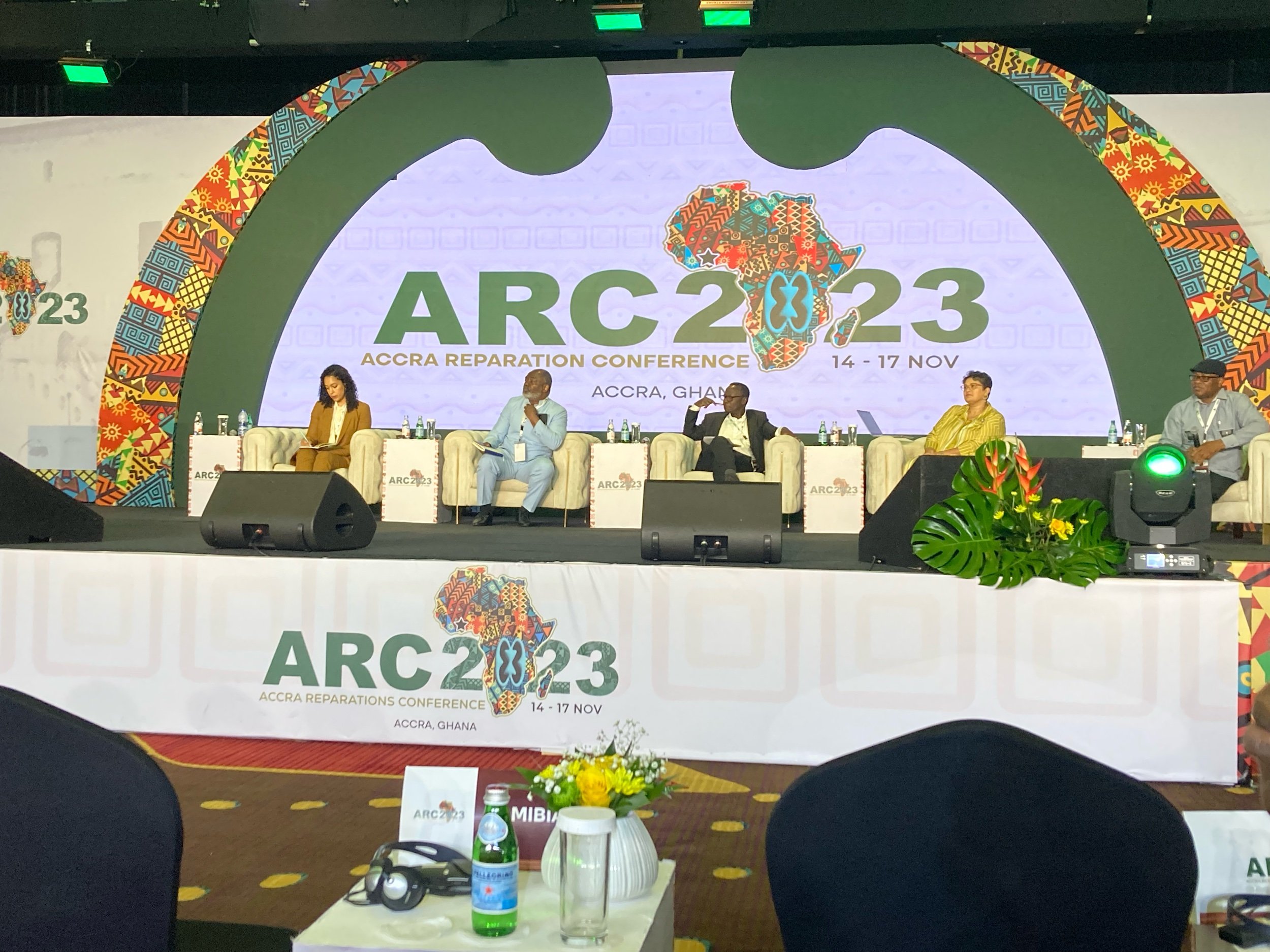
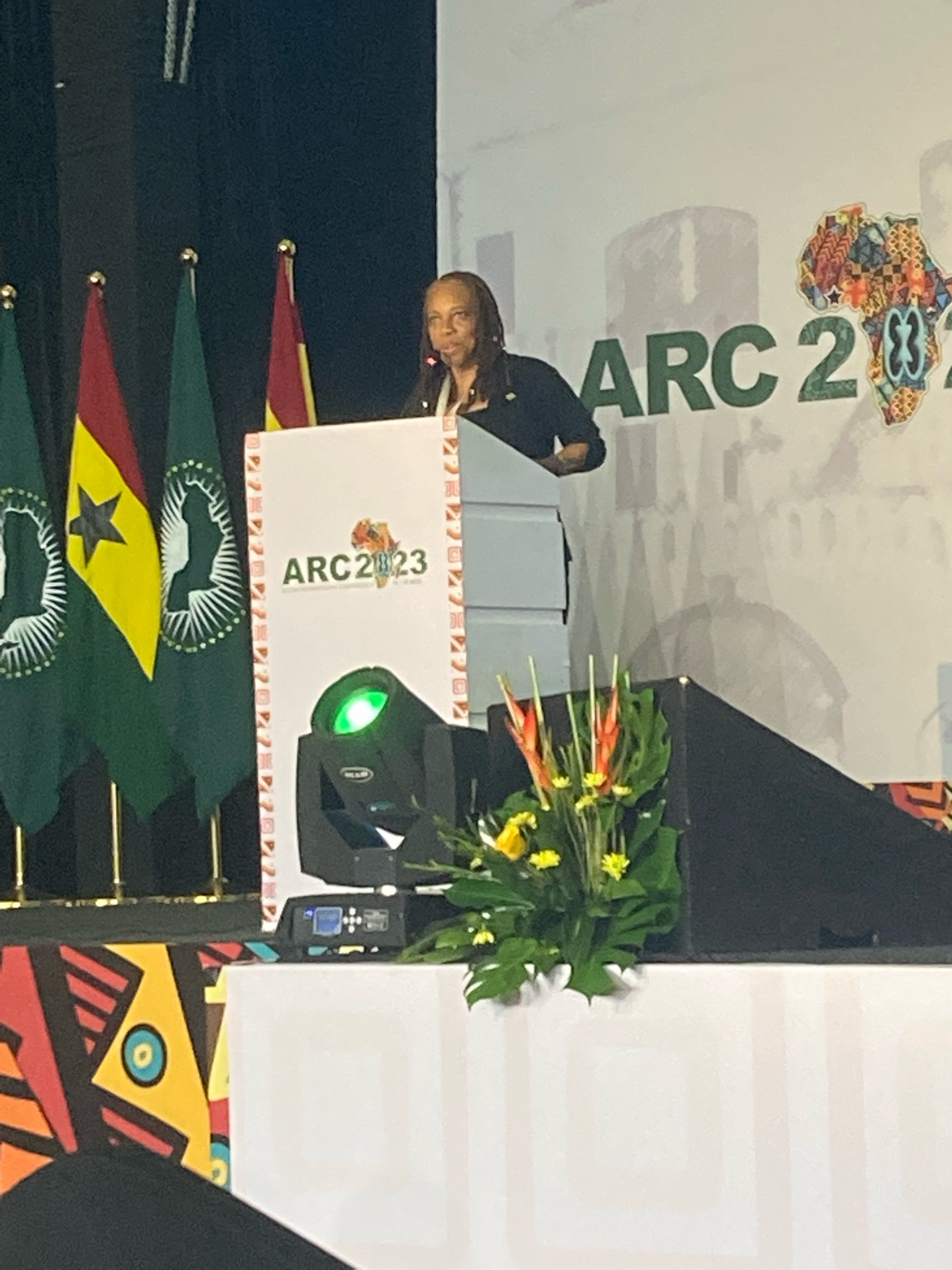
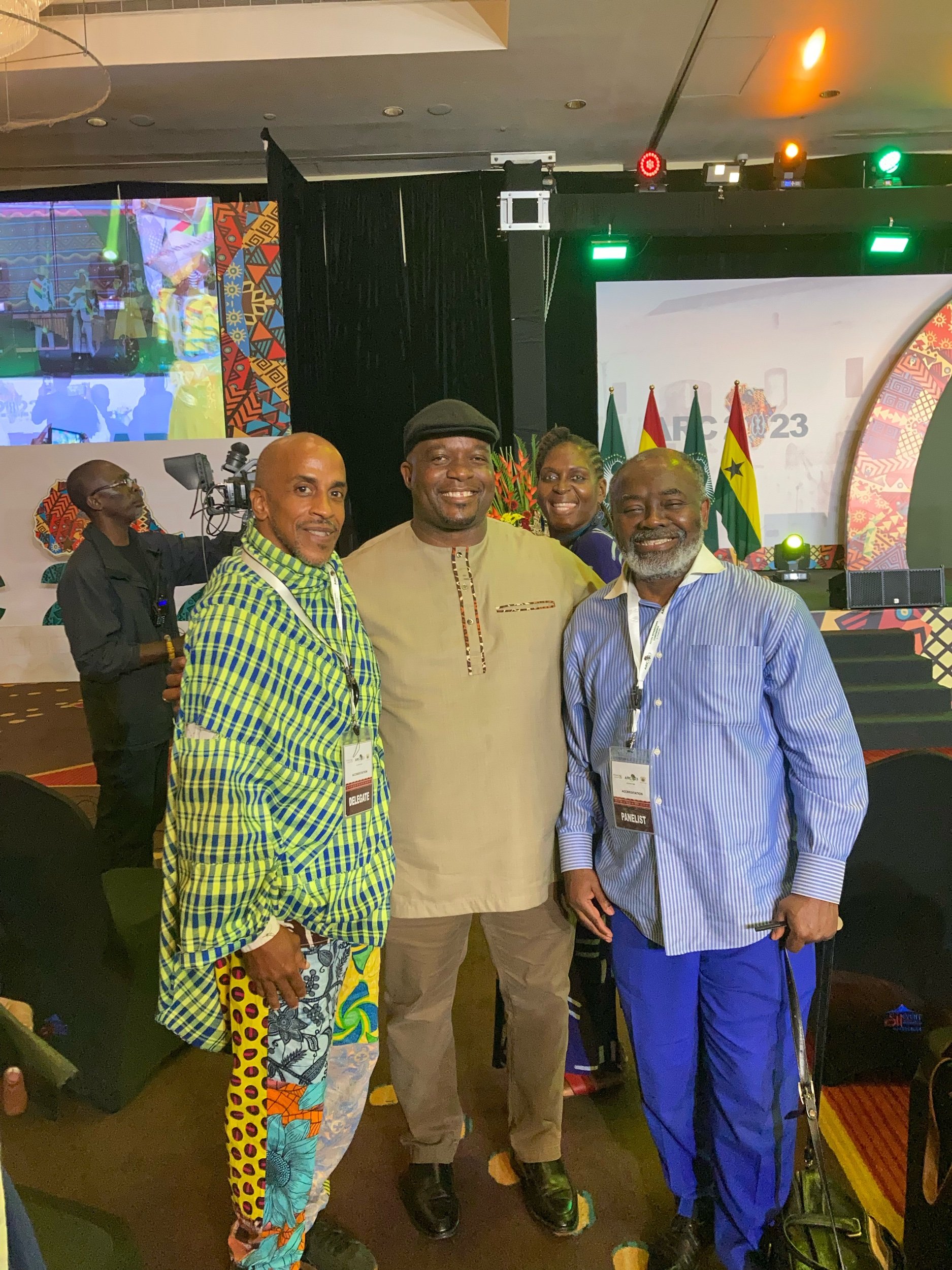
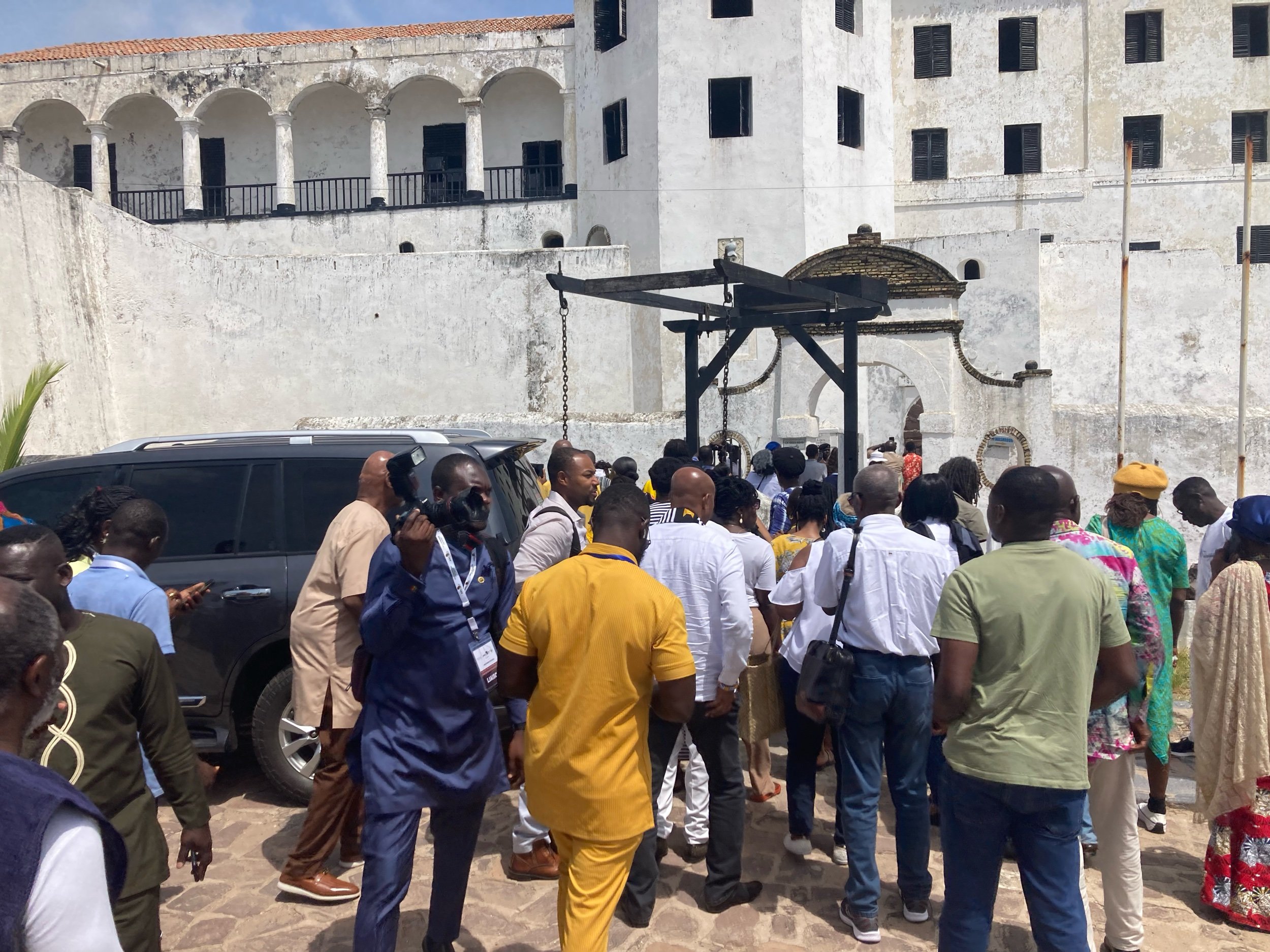
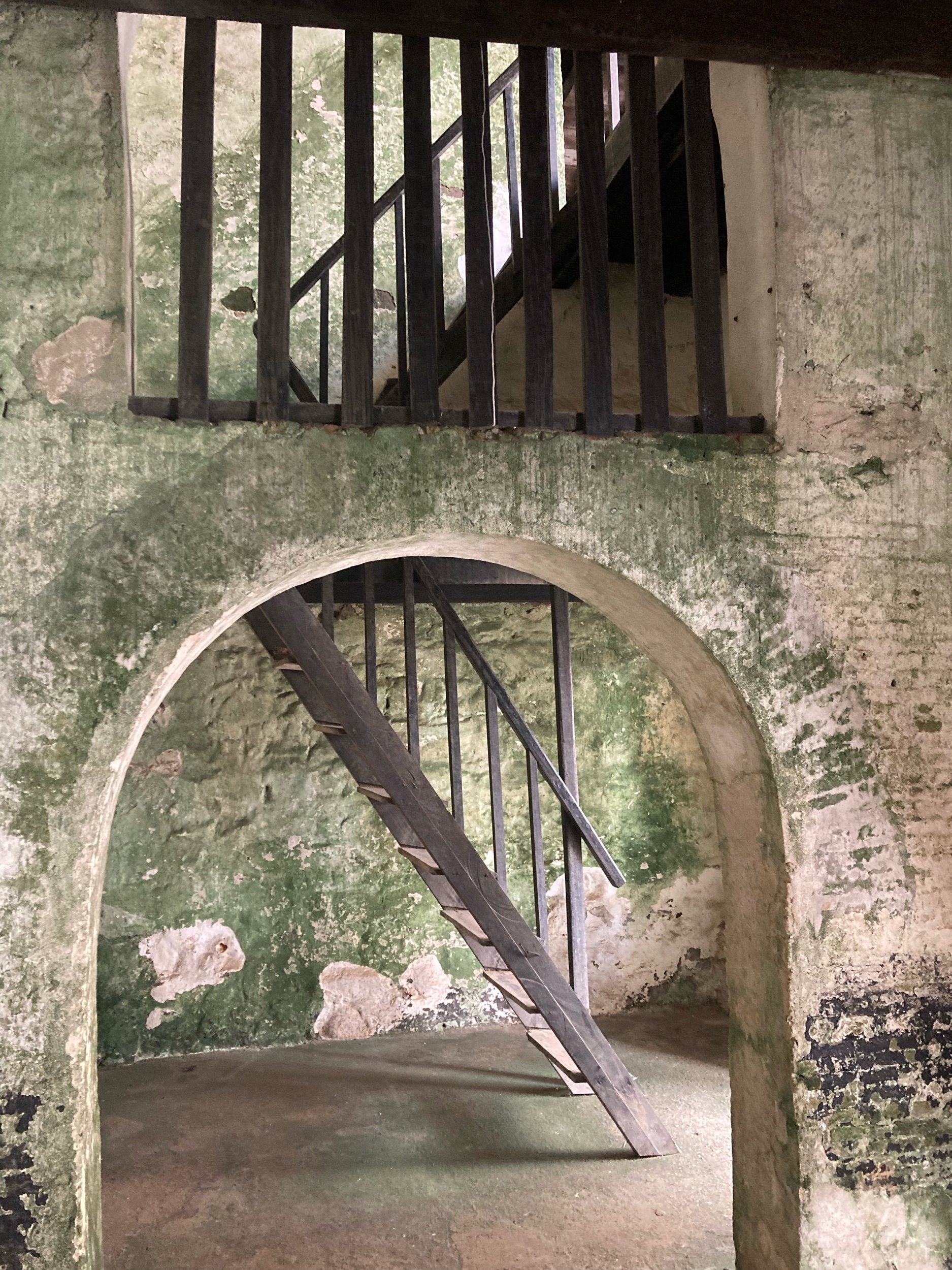
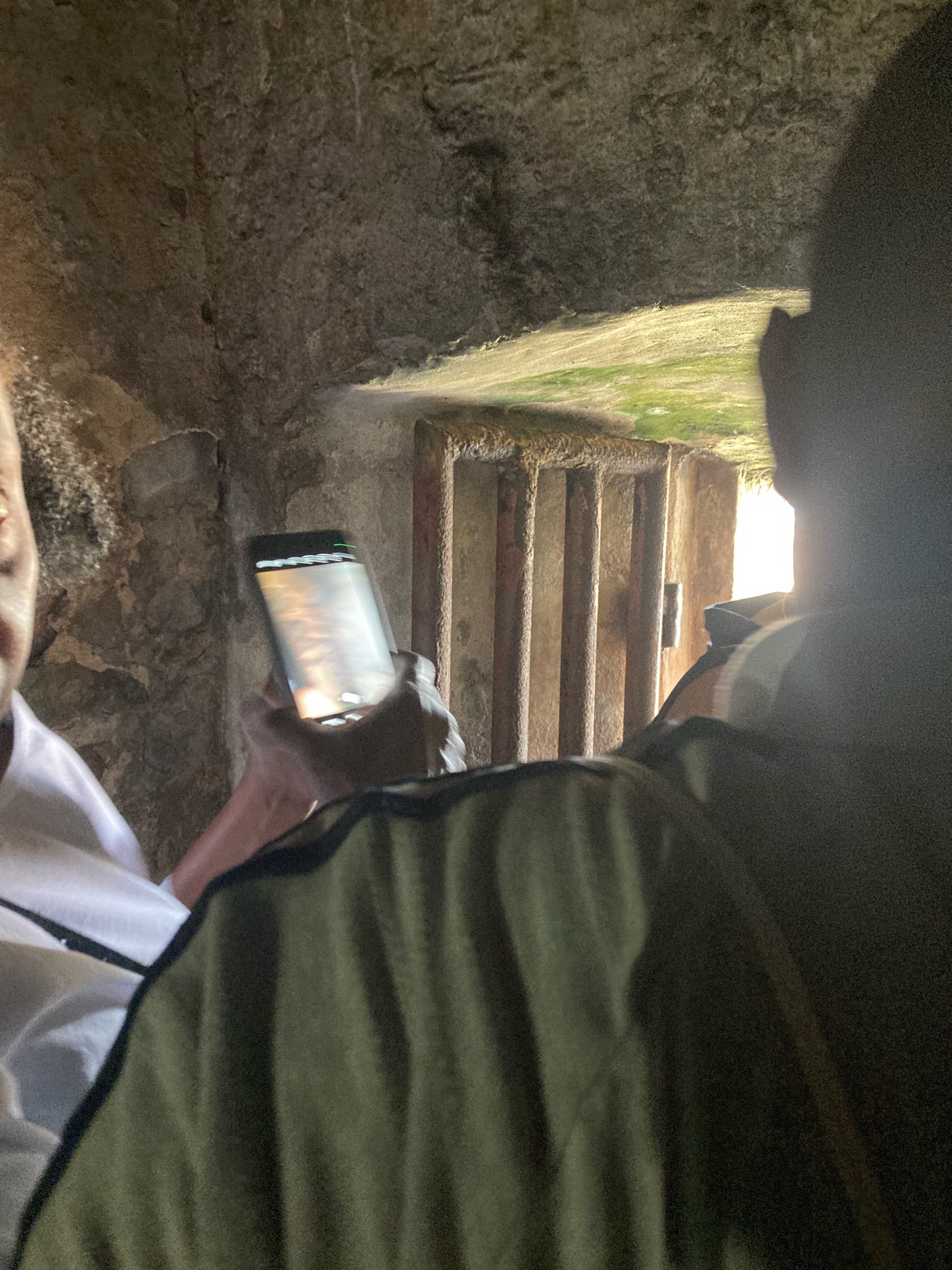
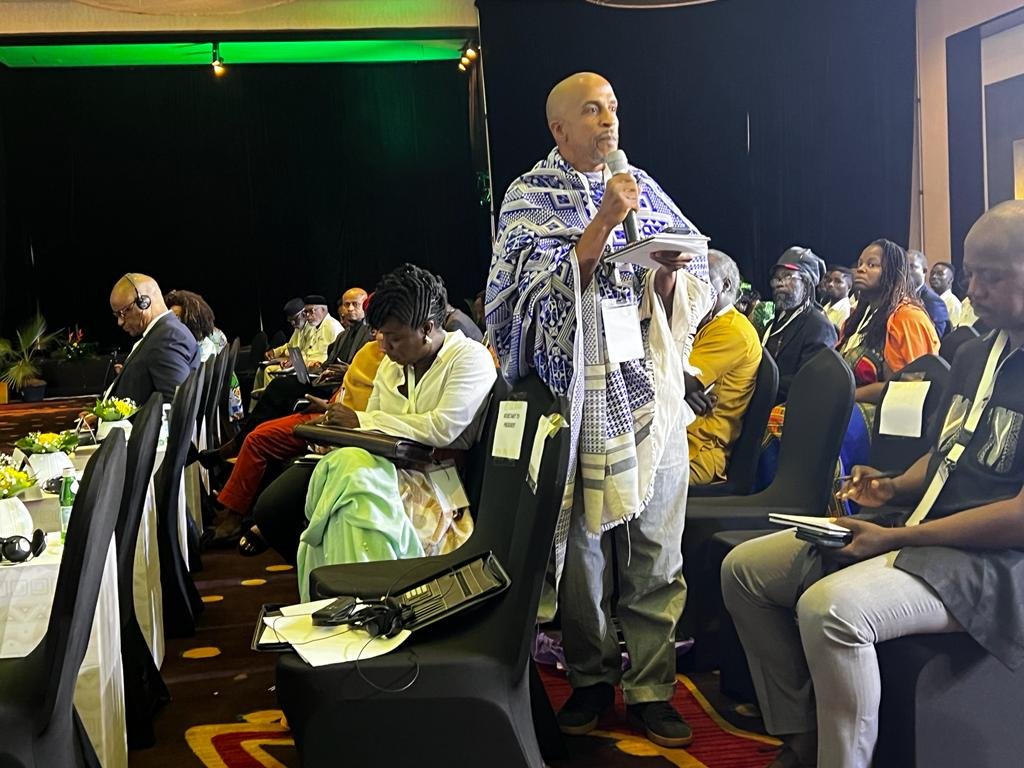
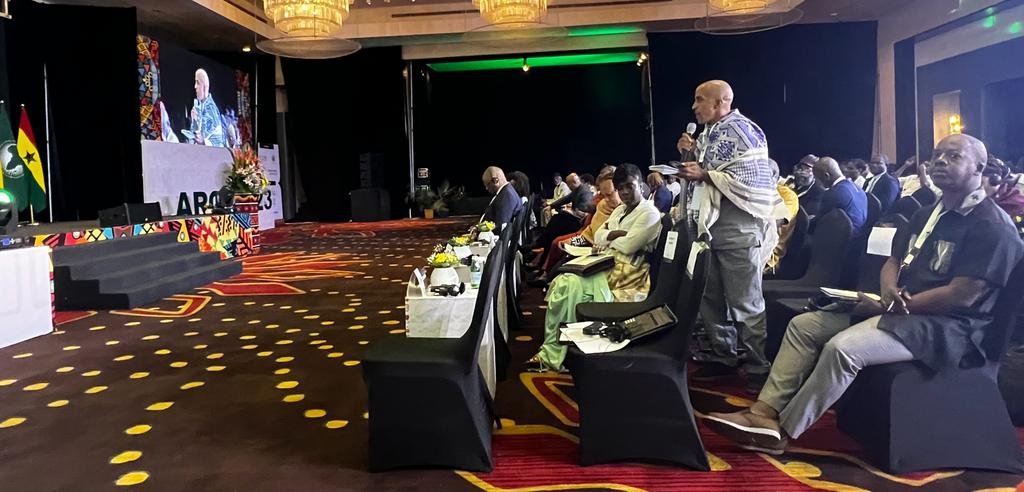
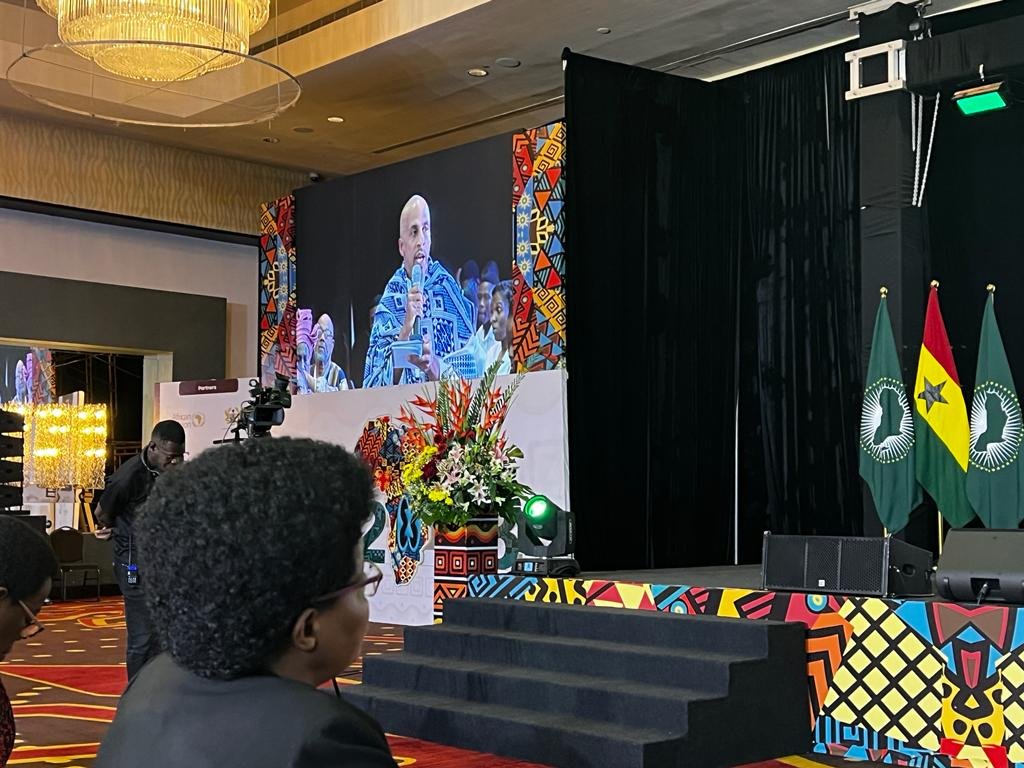
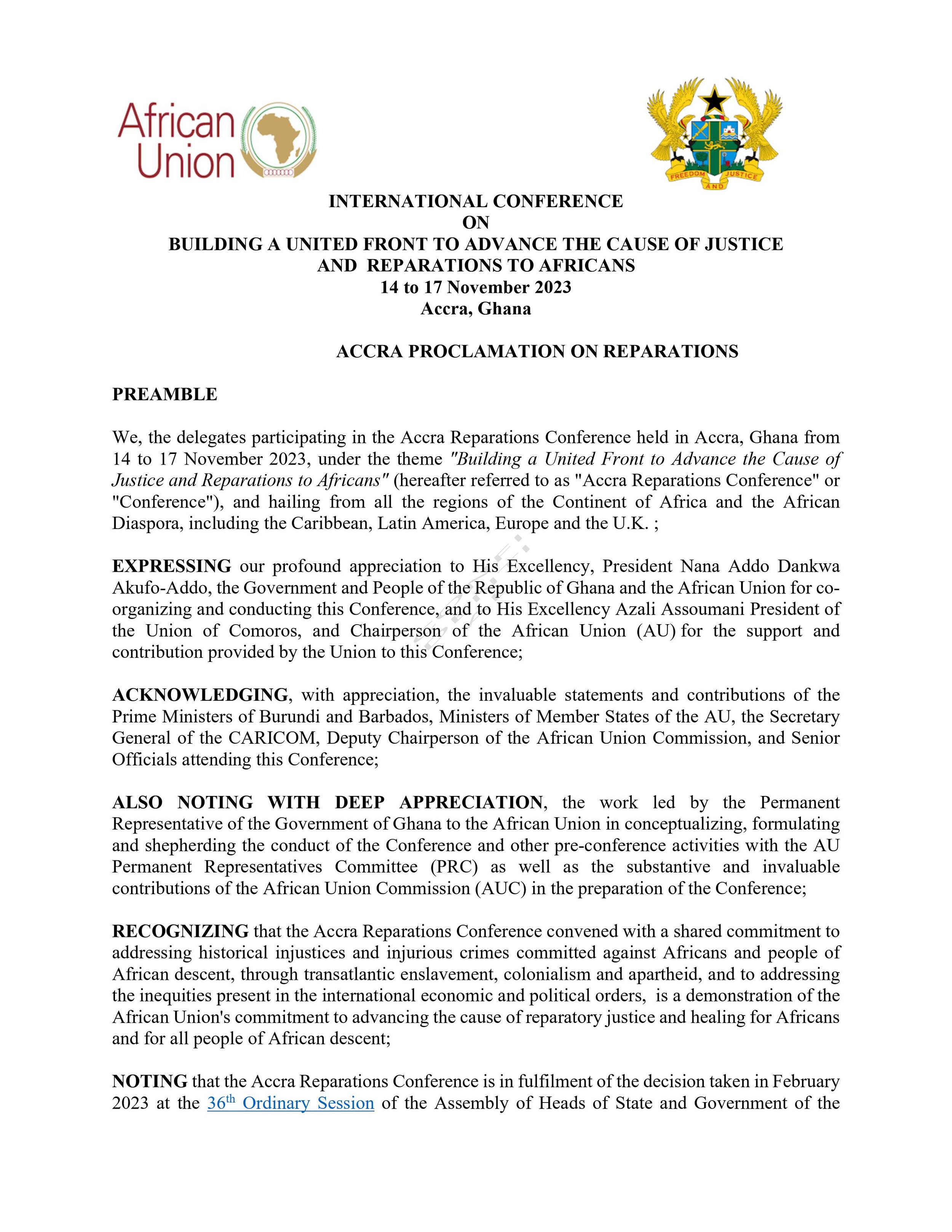
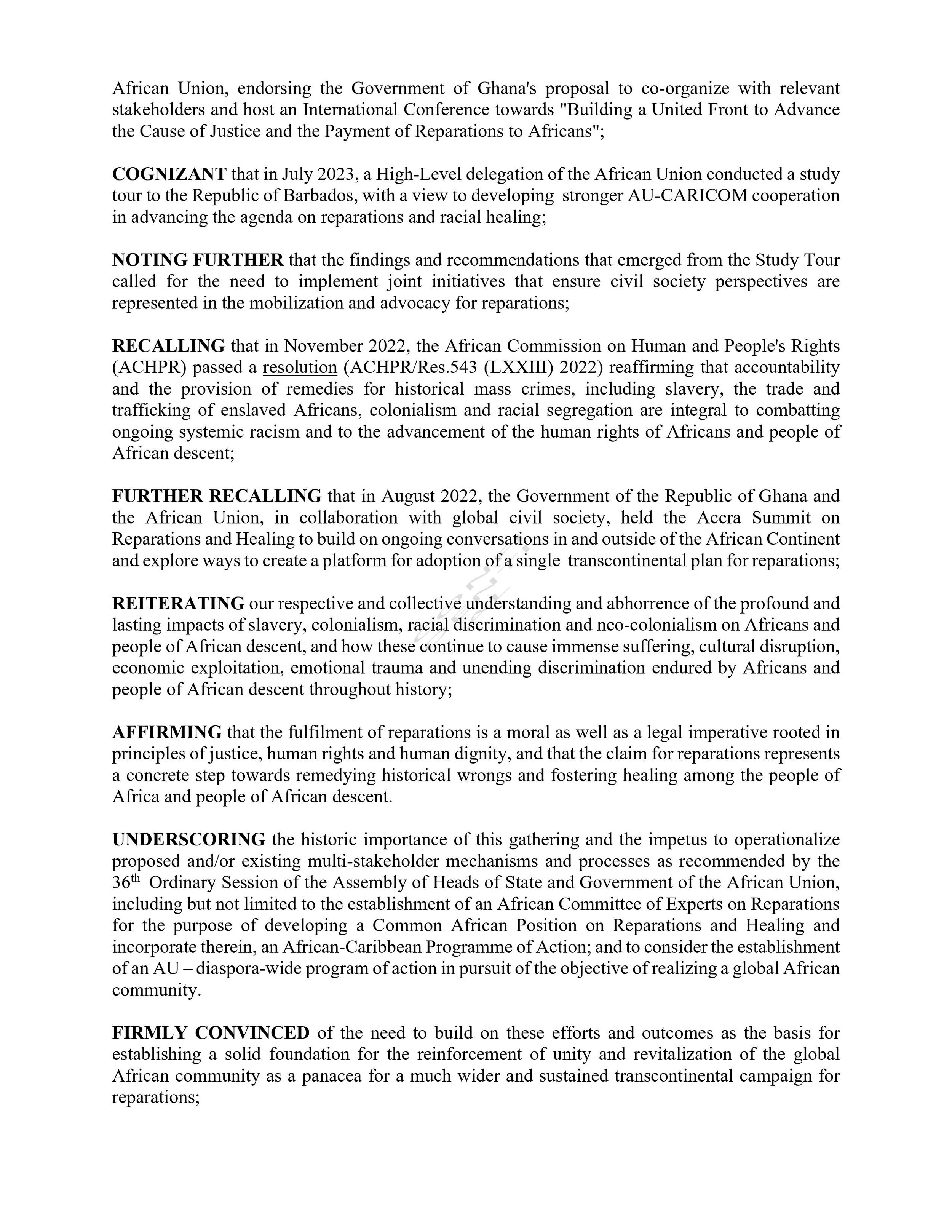
So, thinking that Dr. Phillips was my ally in CARICOM, I was surprised when out of nowhere he became the most vocal critic and our debates in various WhatsApp group spilled over into an email thread with over 250 stakeholders. It wasn’t until my first conversation with Mr. Dorbrene O’Marde that I understood that he was behind Dr. Phillips’ about face! Here is an excerpt of the email thread exchange/debate on the eve of the Accra Reparations Conference answereing some of Dr. Phillips points:
Me: “My good comrade Eric,
At least now we are discussing some of the important strategies. So let me address some of your statements.
1. "you seem to believe that because you are not invited to a meeting between CARICOM and the Africa Union, that they have colonized minds etc ......." The Conference was not advertised as a meeting between CARICOM and the AFRICAN UNION. According to the public announcement,
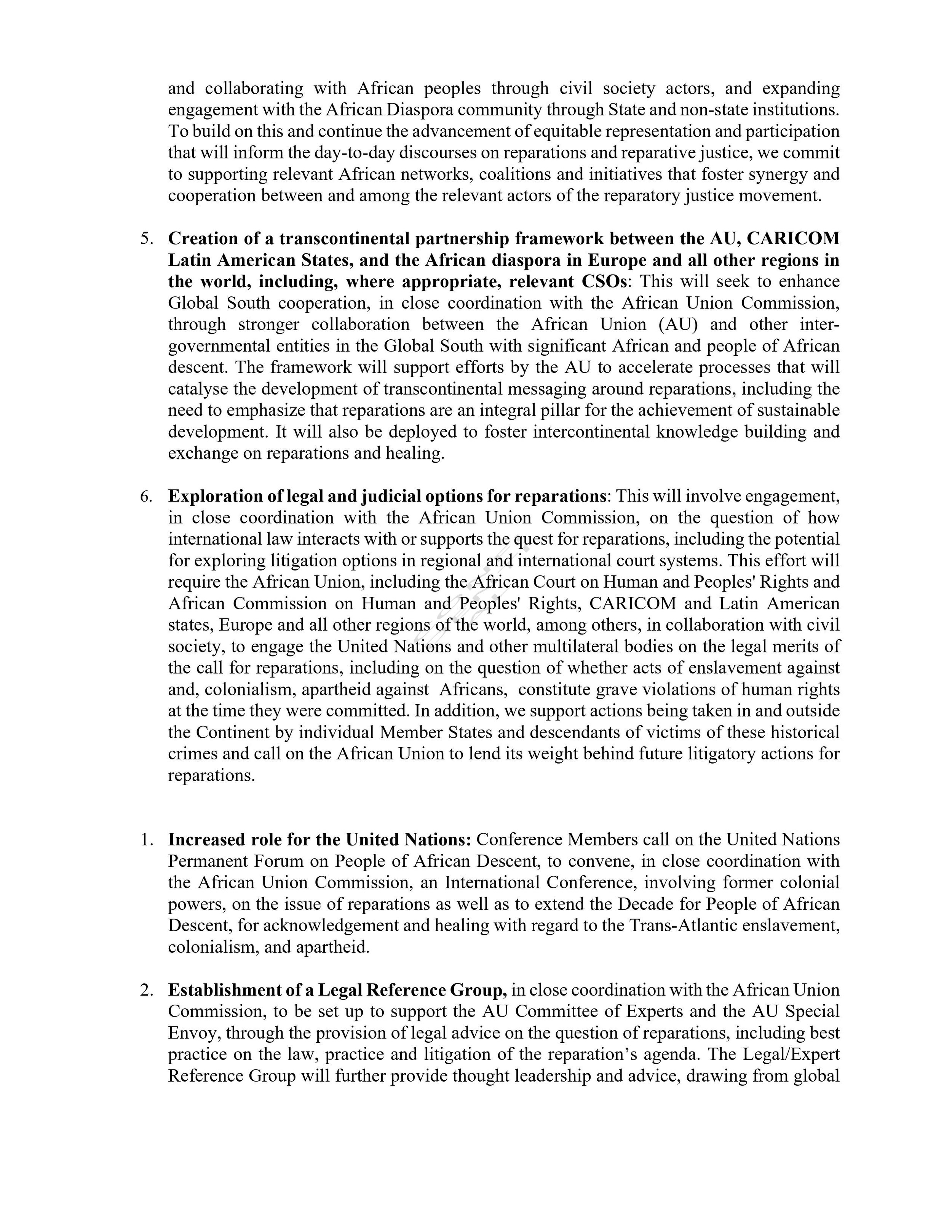
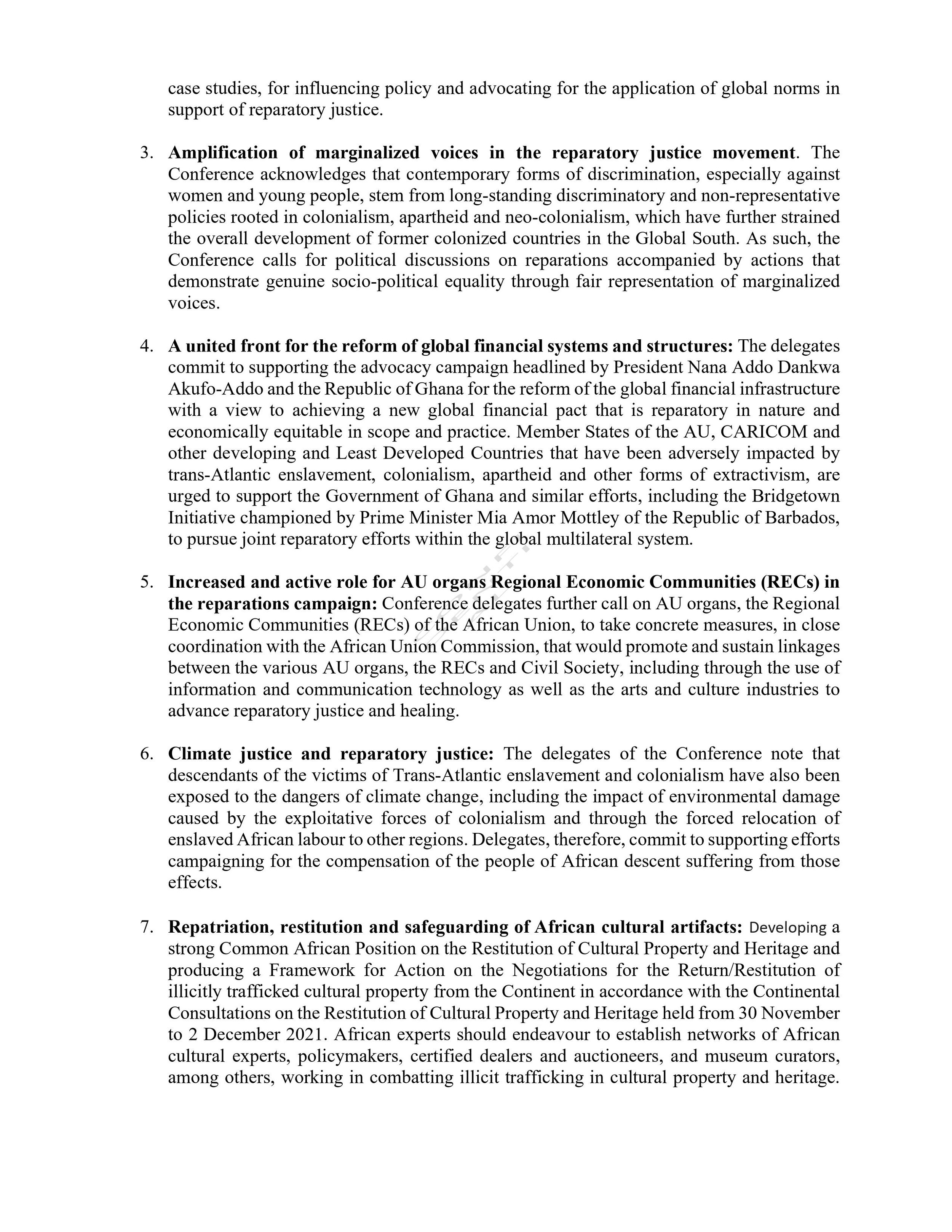
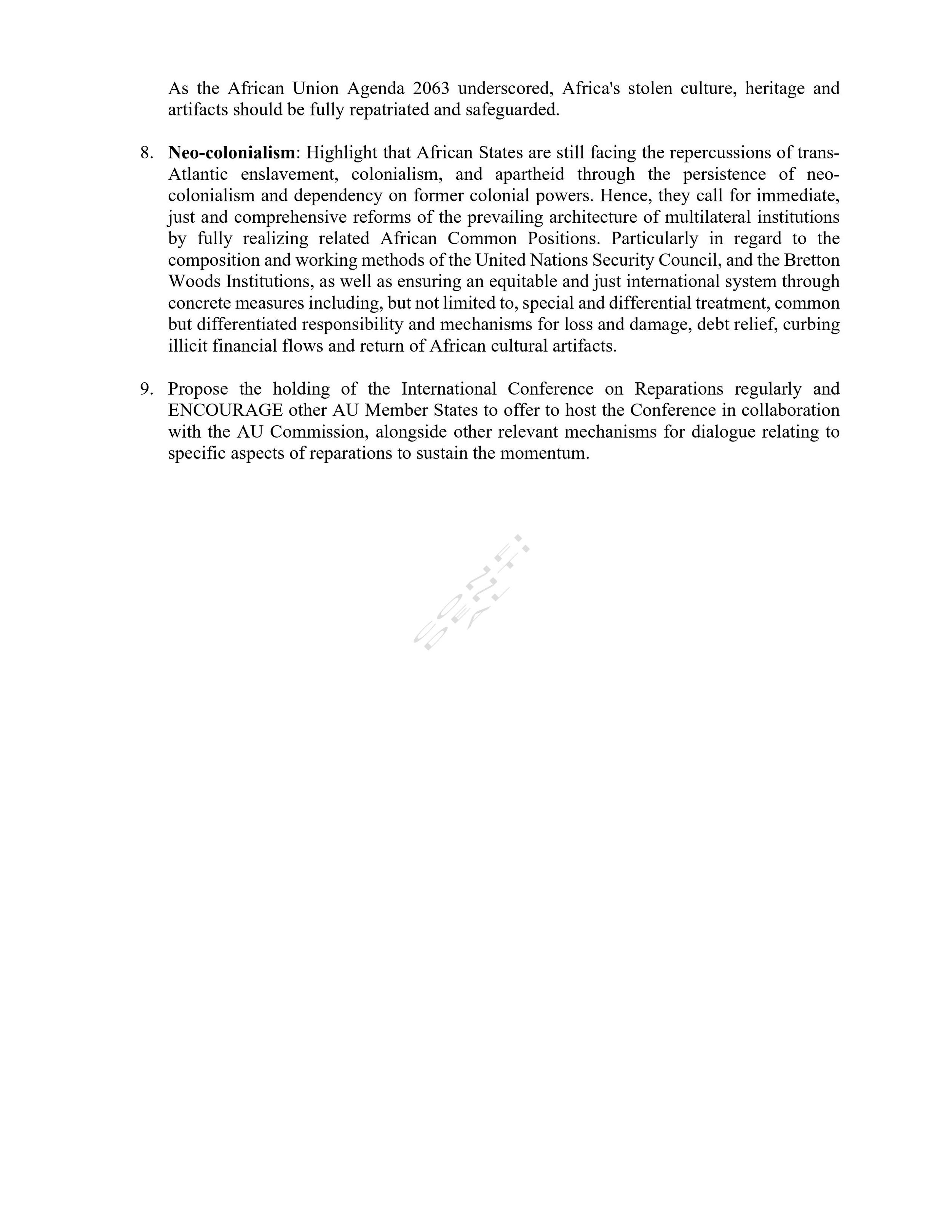
"The Accra Reparations Conference, being co-organized by the Republic of Ghana and the African Union Commission, seeks to promote dialogue, knowledge sharing and actionable strategies among diverse and relevant stakeholders. . . .The Accra Reparations Conference, building on previous and present efforts in favour of reparation intends to build an all-African peoples unified front for the advancement of the cause of reparatory justice. That front endorsed by the African Union, with the strategic support of CARICOM and various stakeholders in the United States of America and in Europe will constitute the first ever African Committee of Experts on reparations. The Committee, drawn from relevant fields including law, will be established for the purpose of developing a Common African Position on Reparations and incorporate therein, an African Reparatory Programme of Action. . . . The conference will convene political leaders from the African continent and the Caribbean region, policymakers at the global, continental, regional and national levels, academics and scholars, civil society actors and relevant stakeholders from around the continent 𝒂𝒏𝒅 𝒕𝒉𝒆 𝒈𝒍𝒐𝒃𝒂𝒍 𝑨𝒇𝒓𝒊𝒄𝒂𝒏 𝑫𝒊𝒂𝒔𝒑𝒐𝒓𝒂 for substantive deliberations, the sharing of best practices, and the development of actionable strategies to promote and advance a continental initiative for reparatory justice."
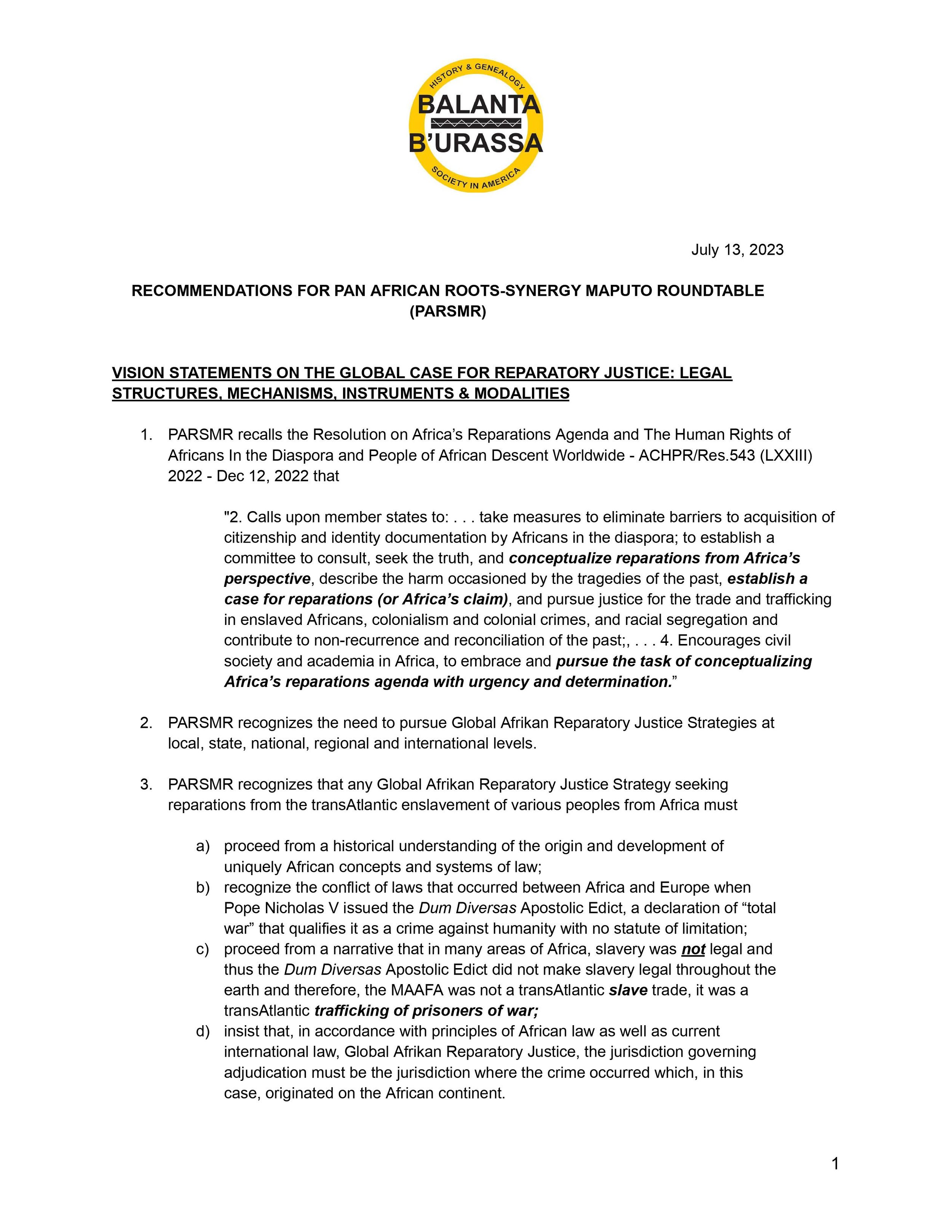
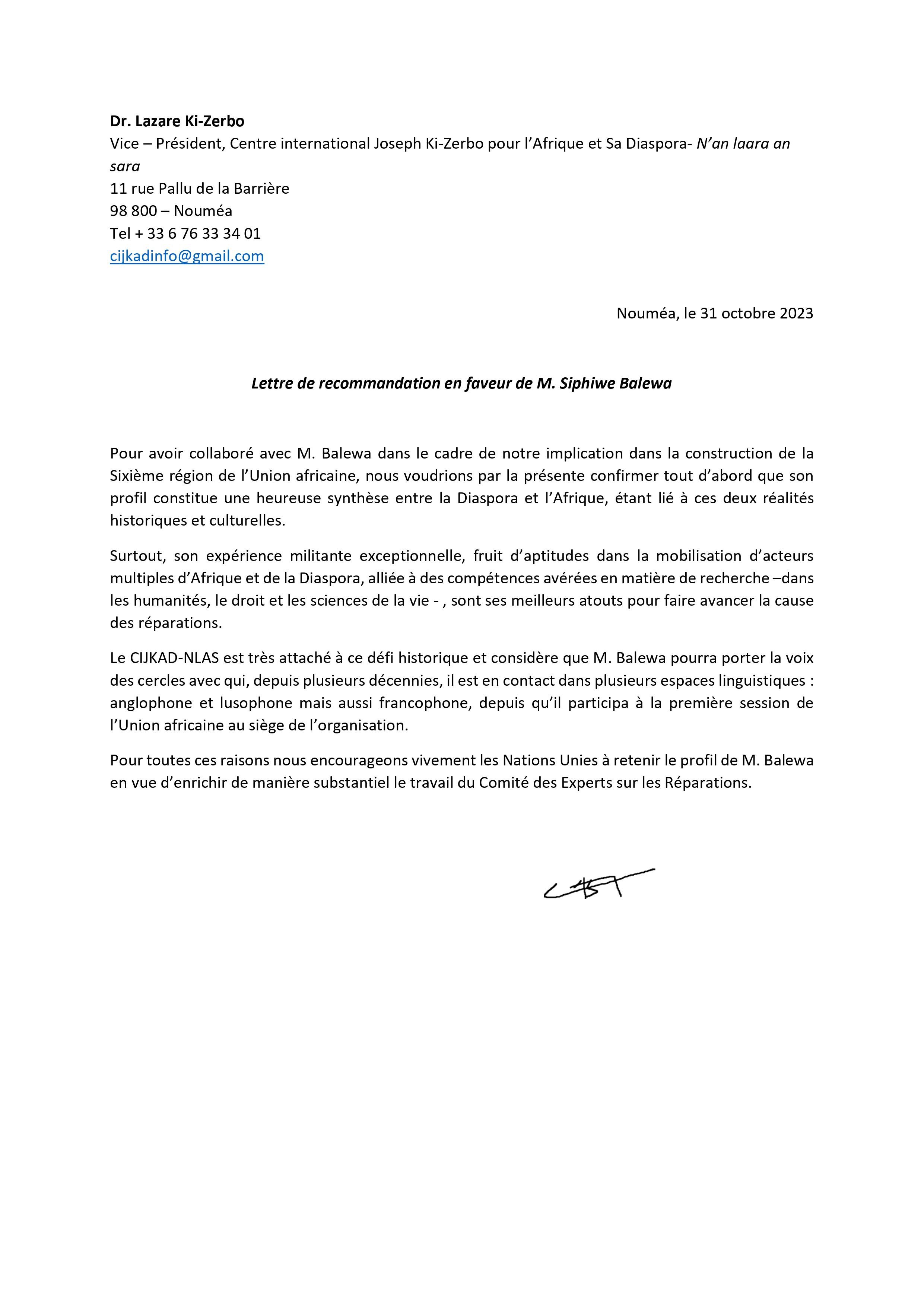
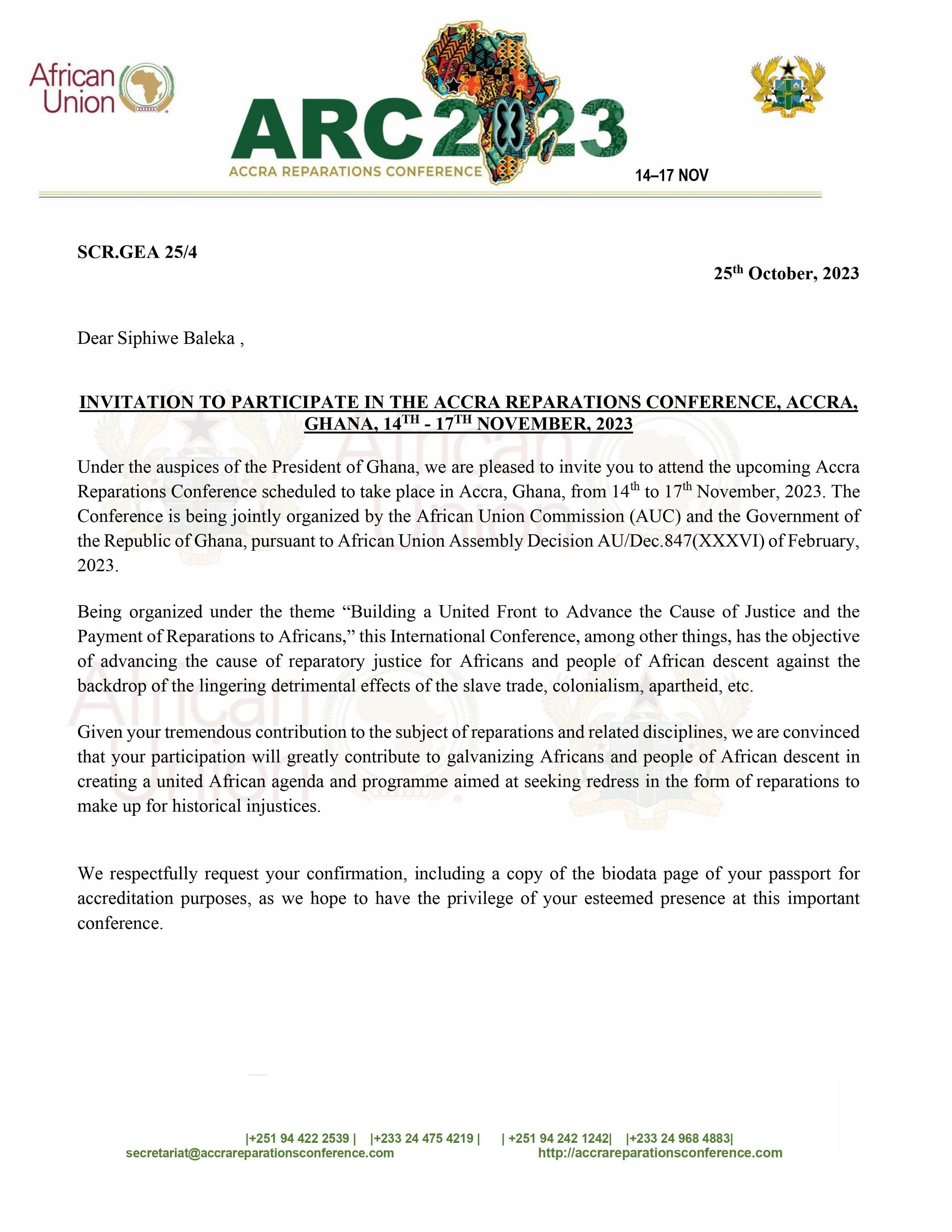
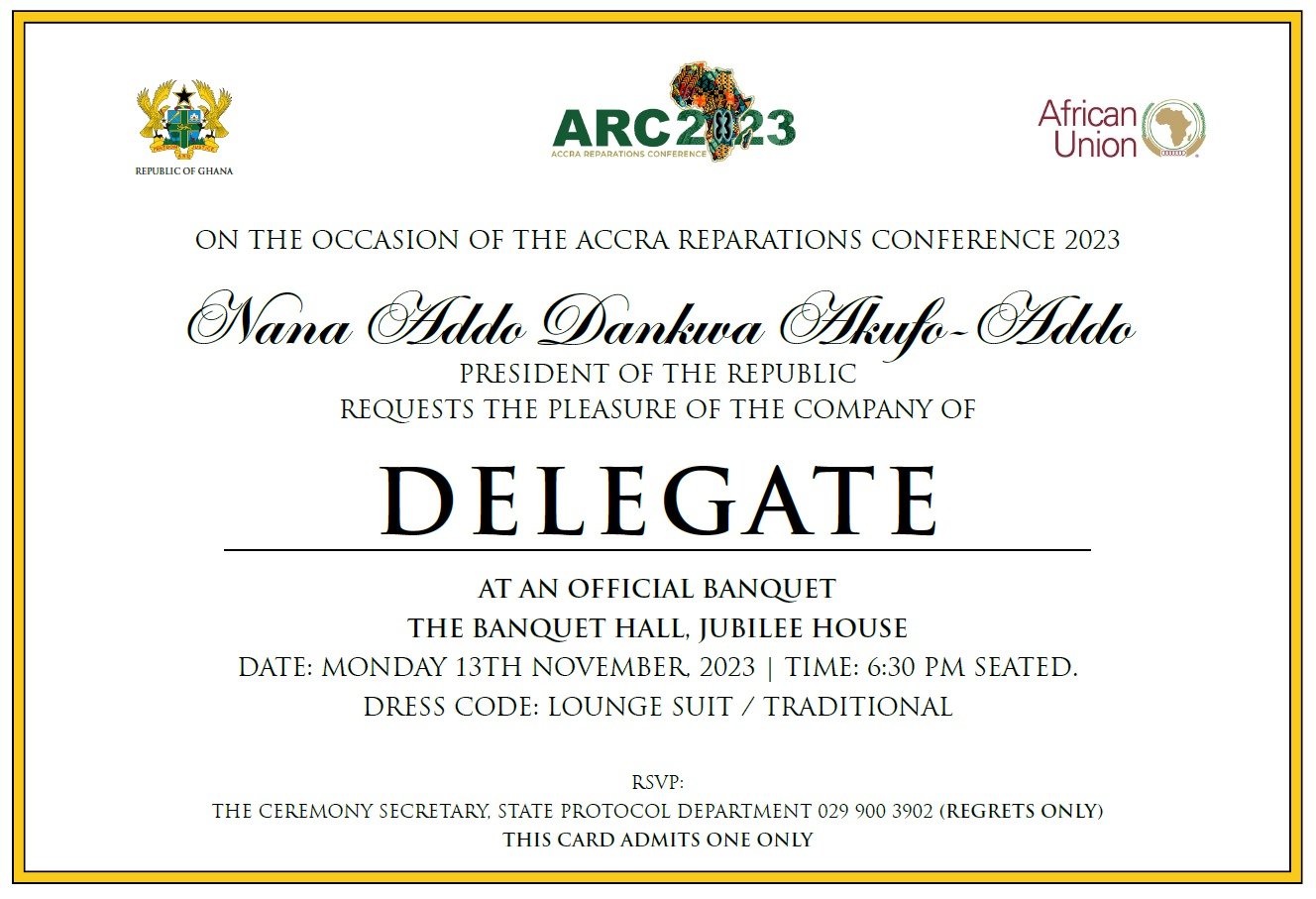
So you must correct yourself and stop making it seem like this is a private CARICOM/AU meeting. Secondly, I am invited. Attached is my invitation letter. Thirdly, the Resolution on Africa’s Reparations Agenda and The Human Rights of Africans In the Diaspora and People of African Descent Worldwide - ACHPR/Res.543 (LXXIII) 2022 - Dec 12, 2022
"Calls upon member states to: . . . take measures to eliminate barriers to acquisition of citizenship and identity documentation by Africans in the diaspora; to establish a committee to consult, seek the truth, and conceptualize reparations from Africa’s perspective, describe the harm occasioned by the tragedies of the past, establish a case for reparations (or Africa’s claim), and pursue justice for the trade and trafficking in enslaved Africans, colonialism and colonial crimes, and racial segregation and contribute to non-recurrence and reconciliation of the past;, . . . 4. Encourages civil society and academia in Africa, to embrace and pursue the task of conceptualizing Africa’s reparations agenda with urgency and determination.”
If it was necessary to call for the conceptualizing of an African reparations agenda, it meant that the current one was insufficiently African.... It is because some are still using the colonial narratives and frameworks while pushing back against "Africa's claim" and the new narrative(s) that conceptualize Africa's reparations from Africa's perspective - one long rooted in African indigenous law related to the treatment of prisoners of war - is why I am suggesting that some still have colonized minds.
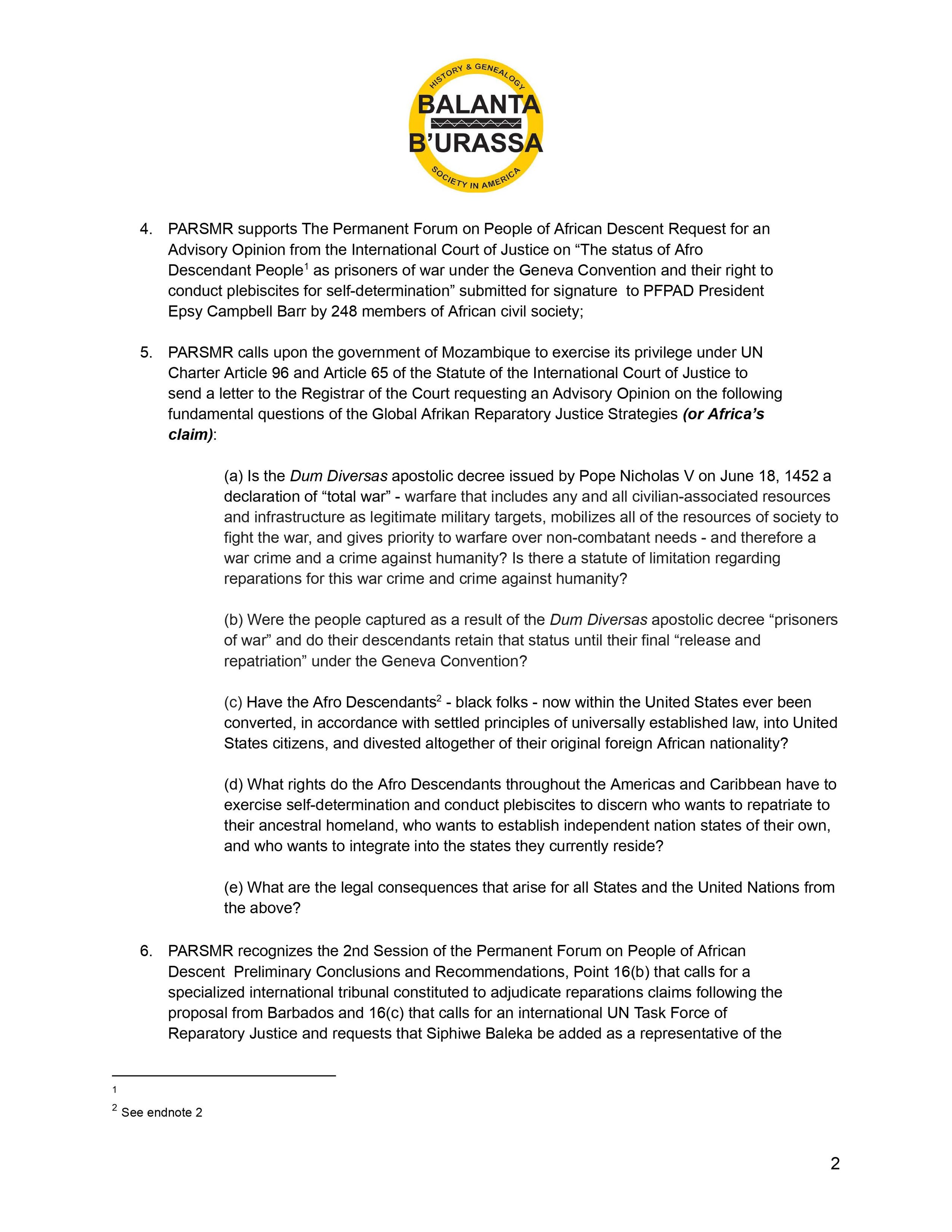
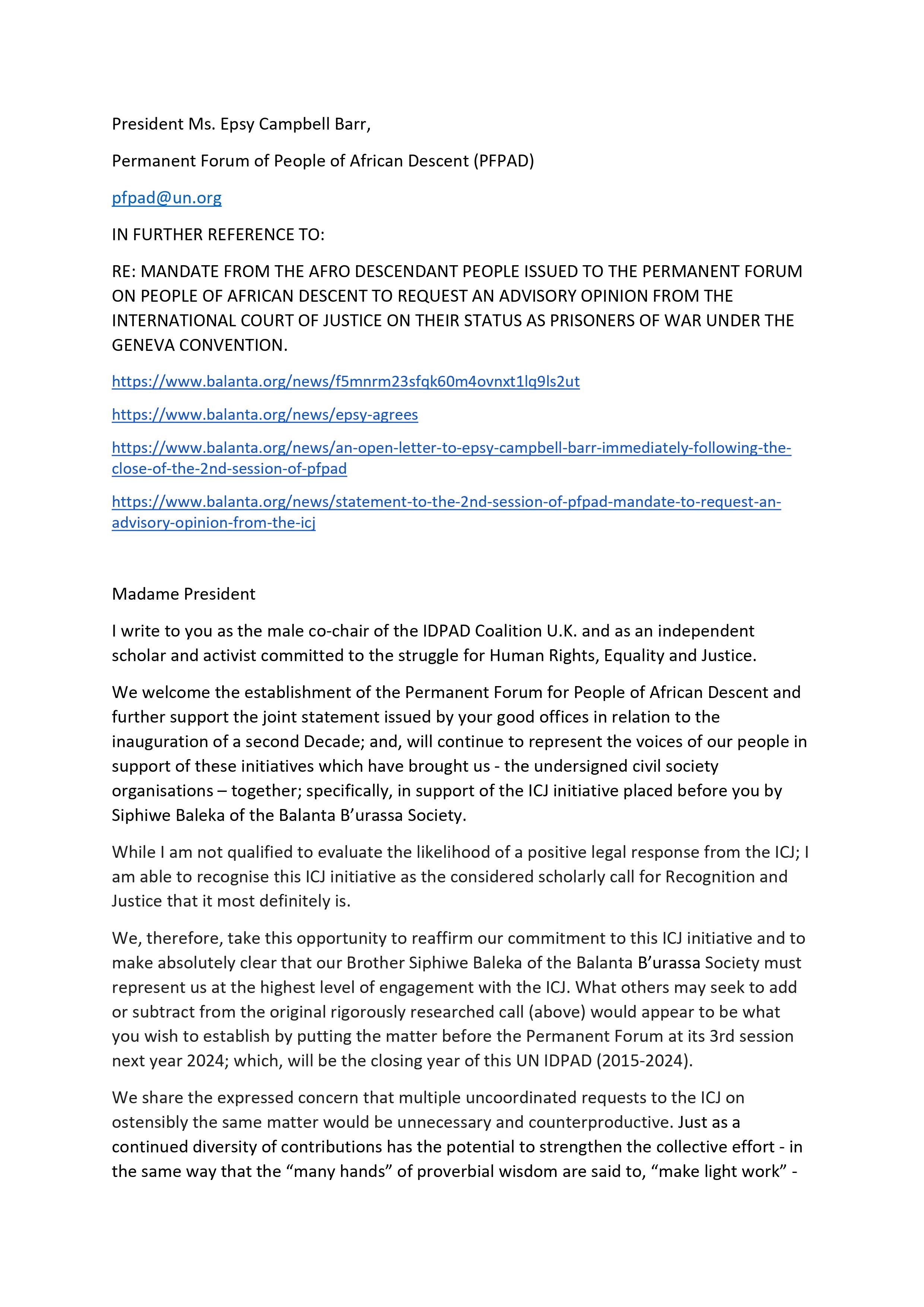
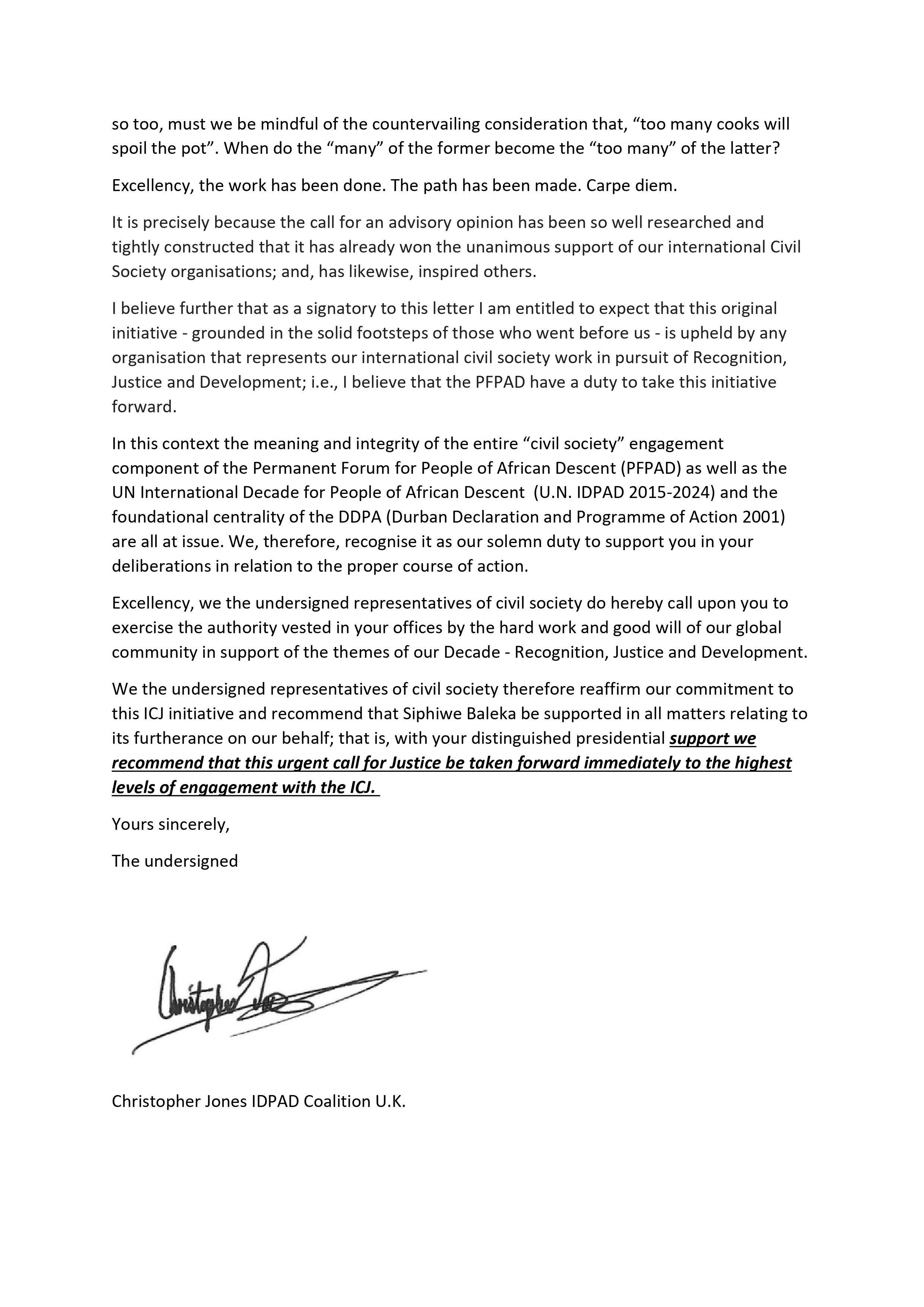
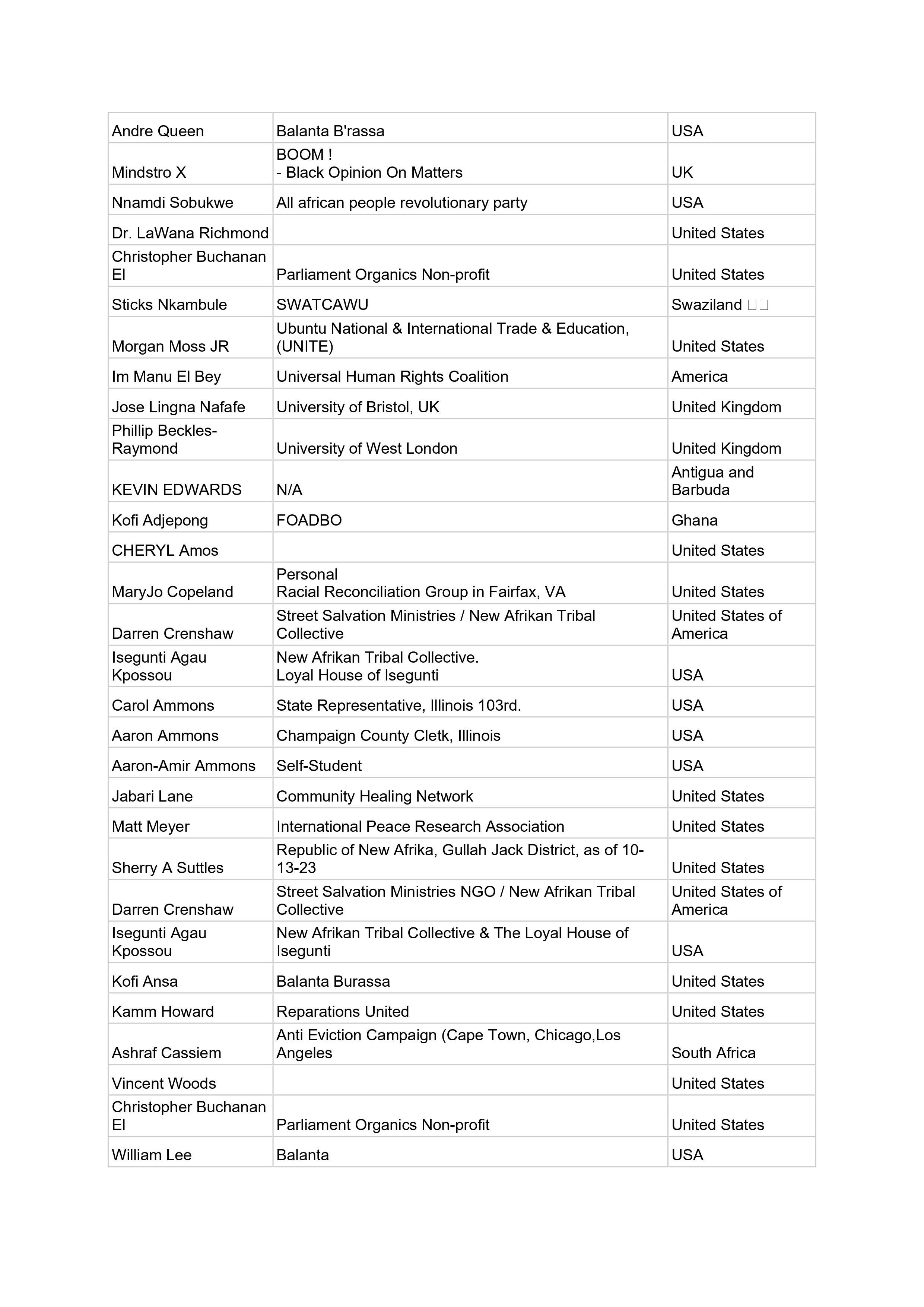
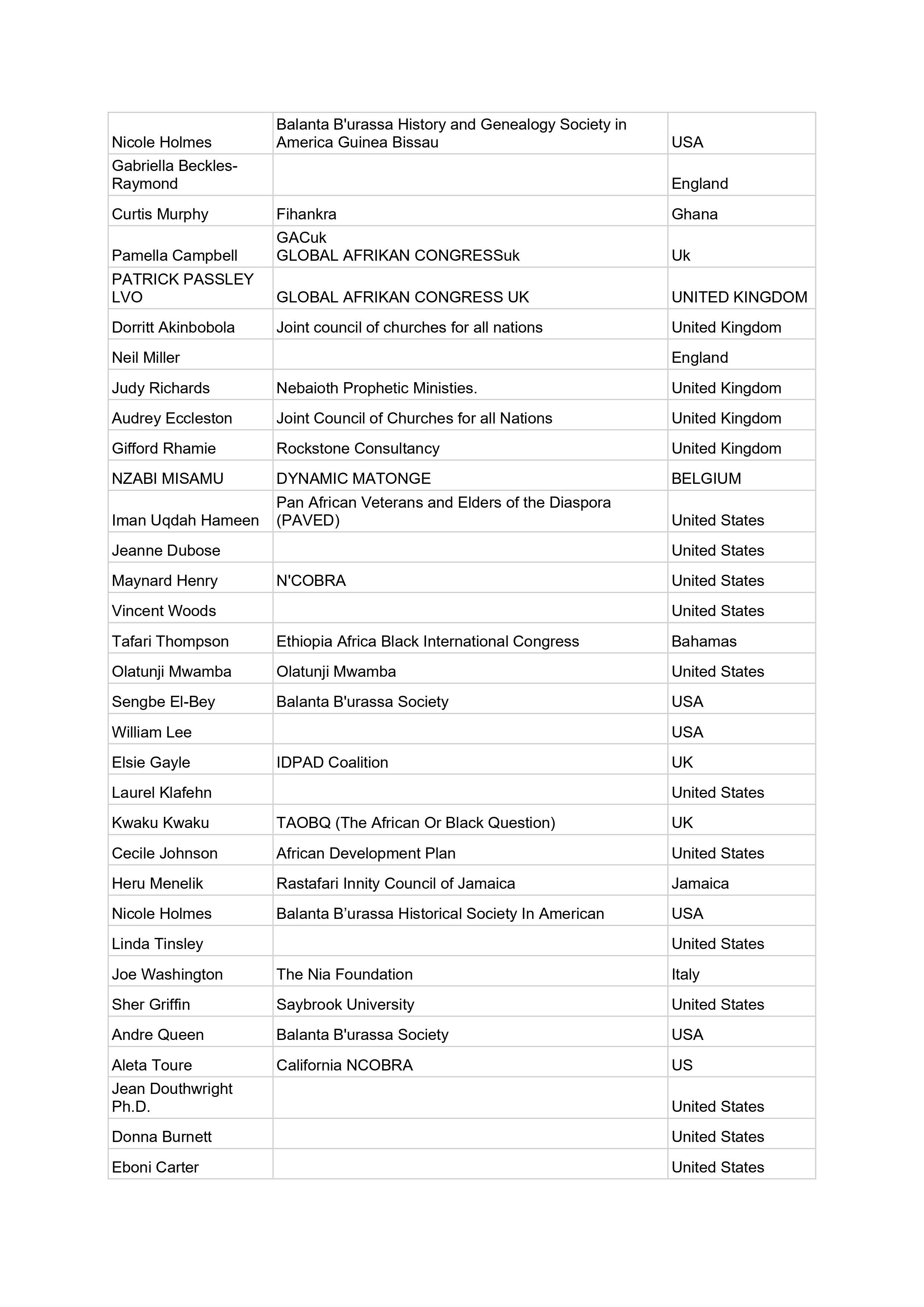
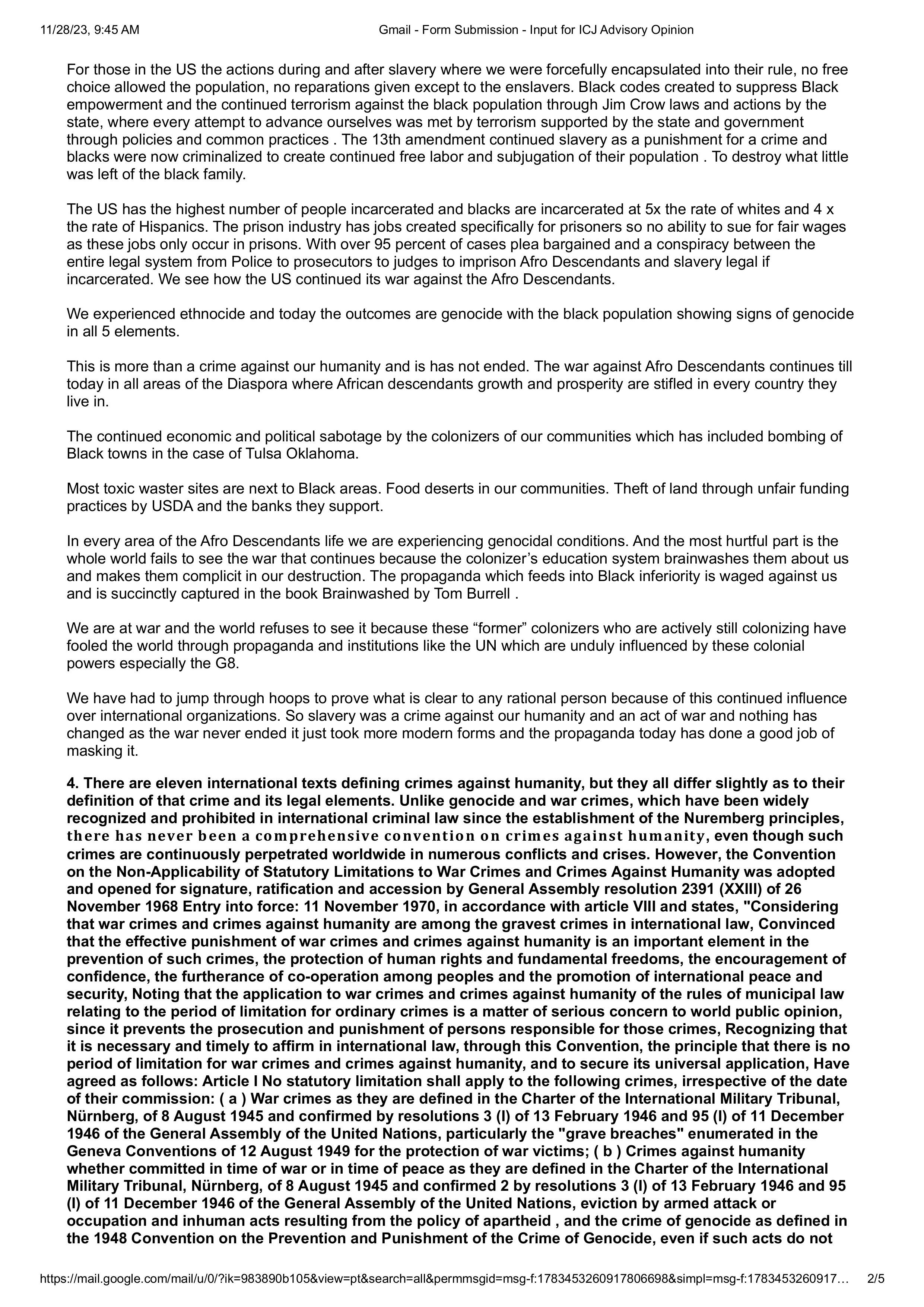
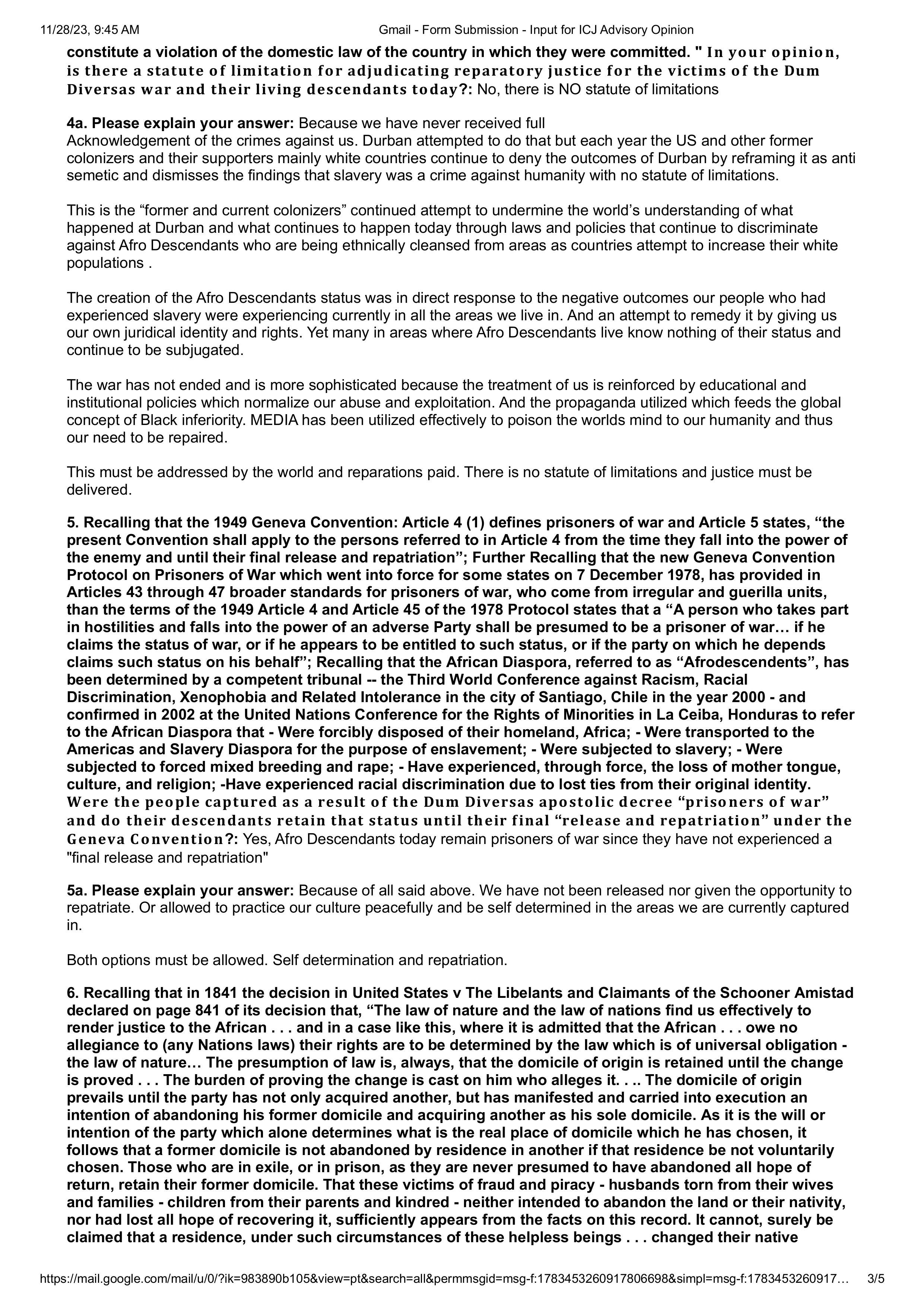
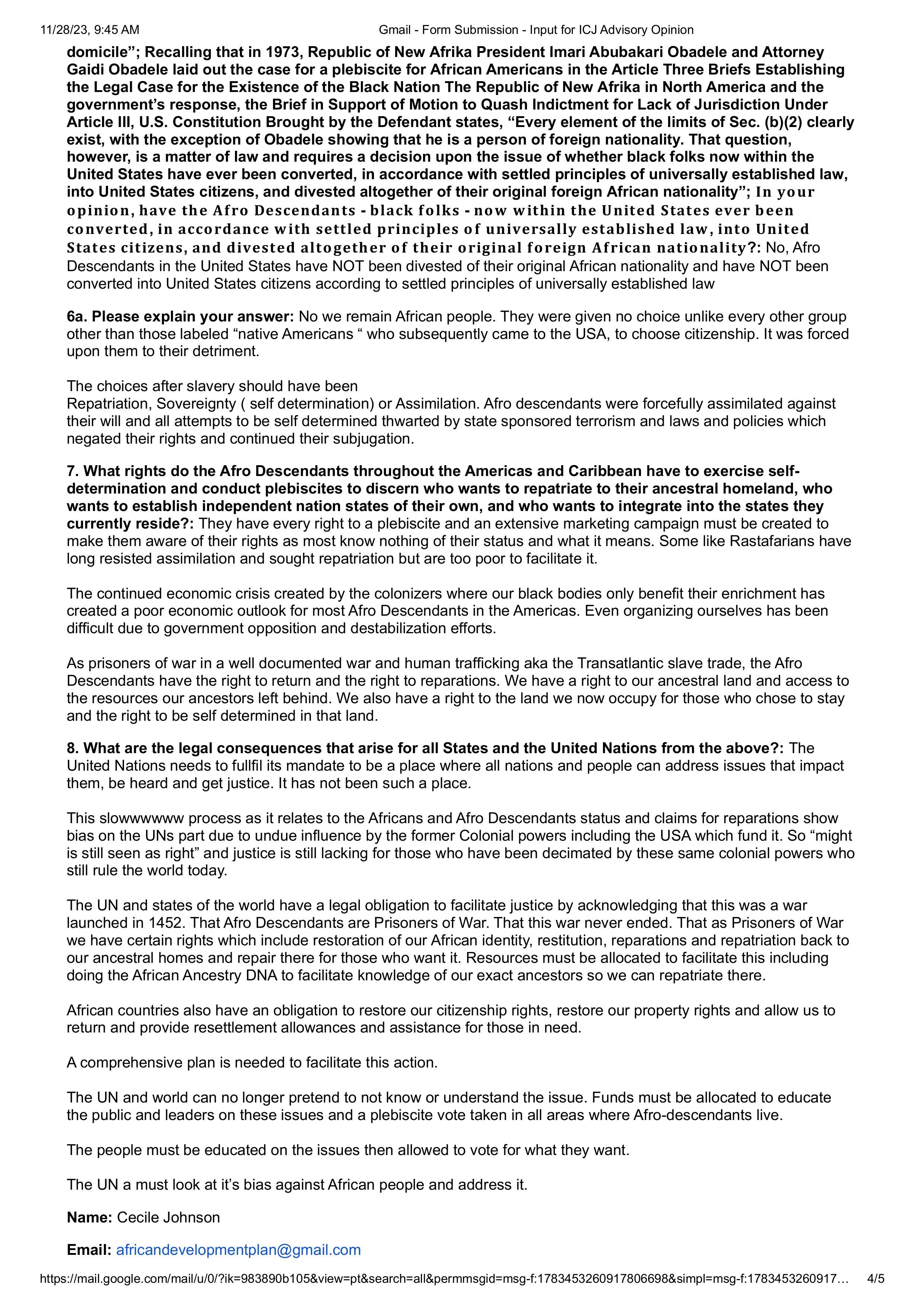
2. "Your view of approaching the ICJ with a "prisoner-of-war" strategy that has no historical or literature heritage (Durban, DDPA, even the PFPAD which is a derivative of Durban") is questionable from a practical point of view. " - First, it is not "my" view. It is a view shared by many, including the 248 activists, professors and lawyers who are signatory to the Request for the ICJ Opinion. Second, it is based on history and literature as well as documented slave voyage data. Did you think I made up the narrative out of thin air? Perhaps you might think otherwise if you read Prof Hilary Beckles' speech “The Age of Terror: Europe and the Trade in Africans in West Africa,” given 3-2-2023. Professor Beckles repeatedly states,
"We also know that this military engagement in Africa began as a search for gold. And shifting from gold trade to the kidnapping of enchained labor. That was the enormity of this military complex that was unleashed upon the indigenous people of Africa . . . In Europe the royal families were the principle investors in these military operations. . . . The British Royal African Country had the full might of the British army and navy behind them. No West African government had the military capacity to withstand the military onslaught of these companies. These companies built forts along the coast of West Africa from Senne Gambia to Congo. . . . These corporations, and I have to emphasize this for people who have not been effectively exposed, there is a belief which you will find from observing movies and Hollywood type images, that slave traders were just a group of random individuals who took a small ships went out and randomly grabbed people and took them down the river and put them on a boat. You are looking at the most highly organized commercial military complex at this time. These corporations had dozens and dozens of ships, and thousands of soldiers in West africa on the coast to protect the storage and the shipment. They were Highly militarized with the latest military technology with the guns and the cannons and they were able to penetrate deeply into Africa with this military capacity. The Wealth that they accumulated, which was in the first instance the monopoly wealth of the royal families, eventually tricked down to the private sector, when they were given free access and down to the banks. The Bank of England was established in 1694 to help to finance the slave trade. All of the wealth coming back into England, going to the royal family and aristocracies that money had to be converted into investment capital . And so the Bank Of England was created . . . ."
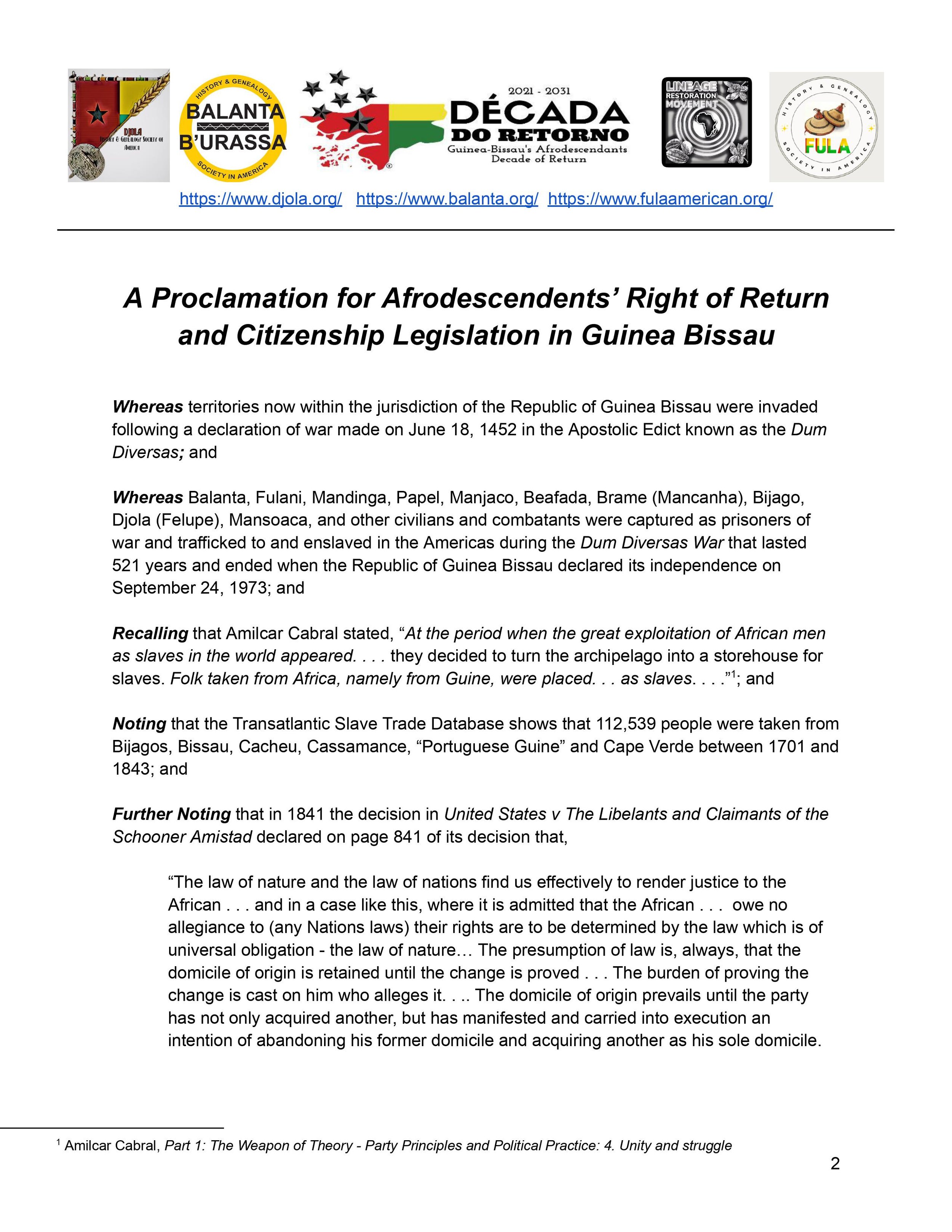
So, I think you should defer both to me and Professor Beckles - the prisoner-of-war narrative is well documented in history and well understood by those of us who have taken up the mandateof conceptualizing Africa’s reparations agenda with urgency and determination.Professor Beckles correctly identified the military nature of the enterprise, but he fell short of providing the complete narrative of naming the war - the declared Dum Diversas War - to properly frame the military action. Once we do that - and teach the world that we are victims of warfare, not trade, then we will have a true and firm basis for our agenda. Imagine trying to talk about World War I and World War II as the "Era of European Resource Adjustment" or some other innocuous name......
From a practical point of view, it was already stated at the 2nd Seesion of the Permanent Forum on People of African Descent that the Rome Statute of the International Criminal Court (ICC) as well as the ICJ are inadequete for adjudicating reparatory justice claims concerning the enslavement of African people and subsequent violations of their human rights, including crimes of genocide and ethnocide. Thus, practicaly, it doesn't make sense to enter a claim in those arenas. However, preliminary to such claims, however, would be requesting an advisory opinion in which the court would answer the fundamental questions which would determine the case. This is the reason why requesting the advisory opinion from the ICJ on the set of questions pertaining to status as prisoners of war is the correct move at this time. That's the nature of precedent - there must be a "first time".....
3. "it was African tribes who fought other African tribes...to obtain "prisoners-of-war" ......albeit, they were incentivised by colonisers...." And this is the strength of the Dum Diversas-prsioner-of-war-ethnocide narrative. Reparations are for the victims of that warfare. As victims, we determine what responsibilities each party has. There is no escape for Europeans for their role simply because some Africans entered the war in complicity with the Europeans. That is not a contradiction nor a conceptual problem. We are not children here saying, “well, he did it, too!" as if people can't look at what happened and see who did what. When you are caught with your hand in the cookie jar, there is no legal defence recognized as, “But he did it, too so why am I being punished?” We identify who captured and sold us - period. The Africans involved are guilty for what they did and the Europeans involved are guilty for what they did. The Africans owe us recognition of our right to return and the Europeans owe us the wealth derived from our ancestors labor as well as damages for the crime of Ethnocide. Africans did not commit Ethnocide against us. Africans did not subject us to chattel enslavement. But Africans were involved in capturing us as prisoners of war. Shouldn’t they also atone and pay reparations in the form of granting citizenship and assisting in our reintegration? Is that what Article 3q of the AU Constitution is all about?
More importantly, however, is that there is substantial body of African law pertaining to prisoners-of-war prior to the European invasion. From this body of African law comes our position that, according to African law, chattel enslavement and ethnocide were illegal at the time. This is important because current international law demands that where there is a conflict of laws/legal system, it is the legal system of the jurisdiction where the crime was committed that must govern adjudication. Thus, IT WAS ILLEGAL. Professor Beckles paper addresses this:
"The chattel slave was not an African product. One of the characteristics of European History has been this notion that slavery existed everywhere and therefore there was nothing new in what they were engaged in and this was one of the first mythology and lies and deception imbedded in European History. The word Slavery was used historically in the most loose and elastic fashion to include all relationships in which individuals experience some reduction in your freedom. Institution of marriage, the female experience some reduction of freedom through resources, control of them, naming and control of children. This is imbedded in most systems of the world historically. This was seen as the shallow end. Then there was a question of What do you do with prisoners of wars, you go to war you have prisoners you have a choice, You can execute them as losers or bring them home and integrate them into your community but now they are now working on behalf of the state, chief or family. But these people had rights. They had rights to live in the community, rights to resources, rights to their own family, to get married, they could become high officers in the families in the royalty. . . . None of that was significant in the context of what the Europeans wanted. The Europeans invented a new category of slavery that had never been seen on planet earth before. No culture of civilization had ever created this thing called chattel slavery. Have never been found before. It was something specifically created to enslave the African and bring him across the Atlantic to slavery in the Americas. That moment in history. How do I establish the authenticity of that statement? What chattel slavery was? This is something that seems to have erupted from the depth of hell. Never seen before. First, A Chattel slave under law is not a human being. In no system of labor,in no system of domestic usage, in no system of family usage, in no system in which the word slavery was used before were those people denied their human identity –all of these people who were classified as slaves loosely were seen as heroic people were people who had status in their families. They performed domestic work, they performed agricultural work, they were married they had their children, many became ambassadors of the kings to go and do things on behalf of the king, they were just servants. In chattel slavery The African was not a human being, the African was property. The so called domestic slave in Africa was not Property, they were human beings whose identity was respected."
Here, Professor Beckles establishes the connection between the prisoners of war, identity and Chattel slavery resulting in ethnocide in European law. And herein lies the superiority of the strategy I am presenting: it allows African nations to tell the FULL TRUTH OF WHAT HAPPENED. It allows African nations to understand that some Africans were complicit in capturing prisoner of war and transferring them into European jurisdictions. Thus, the responsibility of AFRICANS is recognizing our "Right to Return" to African jurisdictions/territories - i.e. our ancestral homelands. This principle is already established in law and most famously in the 1841 Amistad case. Thus, what we the victims are asking is for citizenship and reintegration programs from African states. Now, when African states grant us citizenship and integration programs, which is the full spirit of the Article 3q Amendment to the AU Constitution, then African can take the moral and legal high ground by saying, "we have fulfilled our responsibility towards reparations for our role in the 'slave trade', now it is time for Europe to do the same and take responsibility for its role." THAT IS THE ONLY PATH TOWARDS TRUE AND FULL REPARATIONS and Africa must lead the way first!
4. "Individuals have no legal standing in international courts" - duh! But prisoners of war have standing under the Geneva Convention and peoples have standing under the ICCPR. It is only for the states protecting them to invoke them. Why hasn't CARICOM or the AU invoked the rights of all those peoples/ethnic groups that suffered ethnocide in Guyana and Surinam? You know, all those PEOPLES we named in the Dutch Apology Draft Legislation? If you think my strategy is trying to get individuals to the ICJ, then you have fundamentally misunderstood what we are doing.
5. "The point I am making is that your personal quest seems to be overshadowing the broader practical approach to reparations." - please let this be the last time you express such a foolish opinion. The number of letters of recommendation, support, and signatories to the Request for the ICJ, let alone the private financial backing supporters have donated is ample proof that I am a true representative of the people speaking truth to power and not someone on a personal quest or seeking glory. You create disharmony and disunity among my many supporters in the reparations movement by attempting to suggest that this effort is personal rather than the historical imperative of the moment and the duty owed to our ancestors. There has always been disunity in our movement, long before me, and I am speaking up for the people who seem to be left out of a lot of important meetings that are doing things in the name of reparations that aren't really reparations.
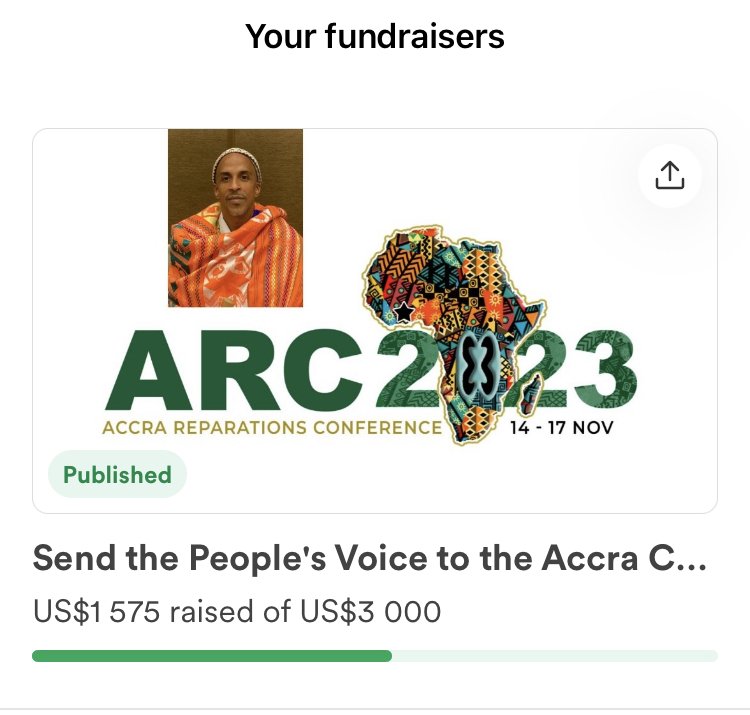
Really, given the public announcement of the goals and outcomes for the meeting, whether you agree with the prisoner of war strategy or not, don't you think its leading proponent should be given a platform to present it? If I truly am the "superior intellect" in the room as you once put it, why wouldn't the AU and CARICOM want me there to contribute? Fortunately, I have been invited. Unfortunately, the conference is requiring that I self -fund my participation while those with salaries and employment from neocolonial institutions are having their travel and accommodations provided.
Siphiwe
Dr. Phillips: ‘My good comrade
Sir Hilary is one of the architects of Caricom's 10 point plan, which you are trashing.....although you have quoted him of the Age of Terrorism speech which I attended.....and which he would have incorporated in his thinking about the 10 point plan....the possible legal versus diplomatic versus political solutions
You need to understand the practical realities of the world we live in.... this implies understanding the forces we are dealing with in the ICJ and Europe and agree on what is possible what is achievable.....this is often very different from the academic purity we use in understanding the various possibilities of redress....including your prisoner of war approach from Dum Diversas which is an ecclesical pronouncement.....so unless the Cathloic Church was the government of all European states..we have another complexity.
Look forward to seeing you on Accra....and I hope we take lessons from the Gaza War and Covid 19 into our understanding of appropriate strategies
Eric”
Me: “Greetings Eric,
Of course I know Professor Beckles is an architect of CARICOM's 10 point plan. Apparently, from his recent speech, his understanding has advanced and we are uplifting that part of it while providing constructive criticism where needed. So do not say we are trashing CARICOM's 10 Point Plan. I and many others just aren't satisfied with it. I agree - there are possible legal versus diplomatic versus political solutions .... We are advocating a particular legal and diplomatic solution. Are we not welcome in the arena? Do not be so condescending to suggest that I don't understand the practical issues of the world we live in. Perhaps you need to understand the value of uncompromised voices who speak truth to power. Such voices are necessary. But mind you, I have a diplomatic track record with some successes, so I am not as naive as you may suggest. Since the conference requires that I self-fund my participation while it pays the expenses of those who already have salaries and resources from colonial and neo-colonial institutions and governments, it is still a question whether or not I will make it as a people's representative to Accra. Again, part of the realities of the neocolonial world and system we live in is that those with salaries and government positions are sponsored and those without, those who sacrificed such things in order to stand with the people without contradiction .... Well, we must find our own way..... Ancestors willing, I will see you there my friend. Here's to a worthy debate!
Siphiwe”
Kamm Howard “Good discussion.
I see this in a different although companion view of what is being largely expressed here. What we are witnessing in the current global reparations movement is a form of elite capture. Officially elite capture in a form of "curruption" where elites siphon off public resources for the benefit of the few.
I this regard, we see governments and elite orgs co-opting the challenges and cause of reparations that has historically been a grassroots movement. When the Durban World Conference was held, it was a call by civil society, in particular in 1996 the New York based Atty. Roger Wareham of the December 12 Movement (New York, USA) shares his vision of a world conference against racism with Jabril Adelbagi of Sudan, a high-ranking diplomat at the United Nations, Geneva Switzerland. 1997 UN General Assembly announces there would be a 2001 World Conference Against Racism (WCAR), one year after Roger’s and Jabril’s conversation.
This officially brought states into the reparations discussion in one swoop. Not all were on board and many had to be pursuaded in Durban. The outcome was the Durban Declaration and Program of Action. The Caribean States were the first to move as a block with the DDPA. Although Brazil and Zimbawe were the two states that did the most immediately coming out of Durban. (This led to the illegal conviction of DiSiva and the sanctions by the West on Zimbawe. Although DeSilva has returned to power- less-radical however, the sanctions still remain on Zimbawe). Civil society elsewhere, were still the driving forces on the reparations question.
Fast foward to the creation of the Permanent Forum and the Accra Summit of 2022. Two initiatives were put forth by civil society that have been captured by the PFPAD -
1) Reparations Presentment to the Vatican to engage in discussions on reparations for inaugurating the TrransAtlanctic Chattelization Wars (as described by Prof. Chinwiezu - who also gave us the concept of internal reparations) After being informed, the Pres of PFPAD sent a letter to the Pope indicating the work of Global Circle for Reparations and Healing thar delivered the Reparations Presentment to the Pope, requesting private conversations. The PFPAD as a body was unaware of this letter nor was the GCRH or any civil society org brought into the discussions or shared with any outcomes.
2) The ICJ opinion on the status of Afro-descendants being prisoners of war. This was raised at PFPAD 1 and as we all know a pettition for adooption was presented a PFPAD 2. What occurred was the capture of this idea by those who have state power to be utilized only for state reparations CARICOM nations.
The Accra Summit. The 2023 Accra Summit is the result of the 2022 Accra Summit that was held by Civil Society - in particular the group of orgs that were funded by MacArthur that later became the Global Circle for Reparations and Healing. (The group that with the help of Siphiwe, authored and delivered the Reparations Presentment to Vatican) Accra 2023 is governments and the AU. They list CARICOM as participants, not the CARICOM Reparations Commission CRC, as they would have to invited the National African American Reparations Commission. However, NAARC, unlike CAR, is civil society. The GCRH were not involved in the planning of Accra 2023 and were just recently invited - as they wanted financial contributions for our participation, which we do not have. Yet they are basing the conference on the work and outcome documents of 2022 Accra Summit, while calling the 2023 Accra Summit an inaugural conference.
German "Aide" to Namibia A more glaring example of elite capture in its full sense is what is taking place in Namibia. It has been the Ovaherro people (the orgs fighting on their behalf) who have been fighting for reparations for decades from the genocide and land theft of their people from the German government. Because of this fight, the German government pledge $1.1B for development projects over 30 years to "begin the healing".. This was not to the Ovaherro people, was not a return of land, was not financial reparations. But aide to the government, who is not directing it specifically to the repair of the the genocide of the Ovaherro people or the return of their land. It is for development projects for Namibia were the Ovaherro people are a minority ethnic group in Namibia. This is criminal.
As civil society orgs who have led this fight for centuries, we must demand that African states and formal bodies include of in every step and take direction from us. This is one more the internal struggle that we are facing. . . . .
Bro Eric, with all due respect, I have tremendous respect for member states of the CARICOM Reparations Commission and those who sit on that body coming from their respective governments. I simply stated that CRC is supra-governmental body. No judgement what-so-ever. As a Commissioner of the National African American Reparations Commission, we have taken great instruction from the work of CRC. (I have no idea how you came up with an assessment that I was intimating that CRC were "political hacks!")
I am offering constructive critique in hope of changing course before more damage is done. It is factual that very significant actions, introduced by civil society are being moved forward by state players without collaboration with the civil society entities that introduced the actions
This is not good for the movement. I gave 4 global examples without attacking anyone. (Yes, I named a person but no attack) And the Barbados conference was first shared in Atlanta at the Decolonizing Wealth Conference. Prior to this Barbados conference, at PFPAD 1, it was announced that a joint lawyer/civil society body would be created to address some of the legal issues in the movement - the ICJ opinion request sparked that announcement. However, in Barbados, civil society was left out. I raised this in Atlanta as the planning for Barbados was being initiated and got no response.
We can and must do better in our collaboration. No one knows this better than our brothers and sisters in Namibia. The Accra conference should at a minimum leave with a governmental consensus to the Nambian government to give the Ovaherero people their reparations.”
As one participant to the discussion commented, “Finally! Someone is addressing the CARICOM elephant in the room. They have moved on with little to no concern for African Americans who are waging the same fight for reparations that they are. Has anyone else noticed that? We, the African Americans who are devoting our lives for the Caribbeans right to be included to receive reparations because they live in the US. Anyone else have thoughts about that? “
This sentiment was expressed in the video African Americans UK "Blacks" NOT invited 2 African Union Reparation Conference Accra Ghana ARC2023? by Yenko Africa