READ:
What is the Pan African Spiritual Imperative Today?
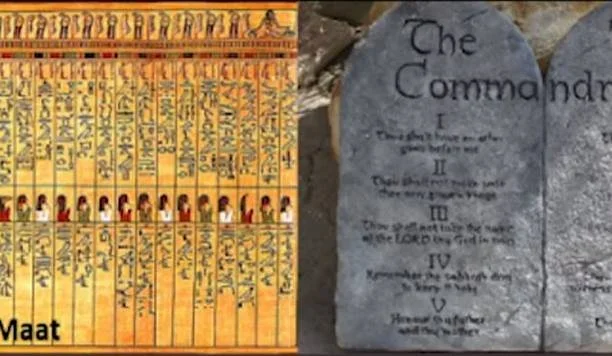
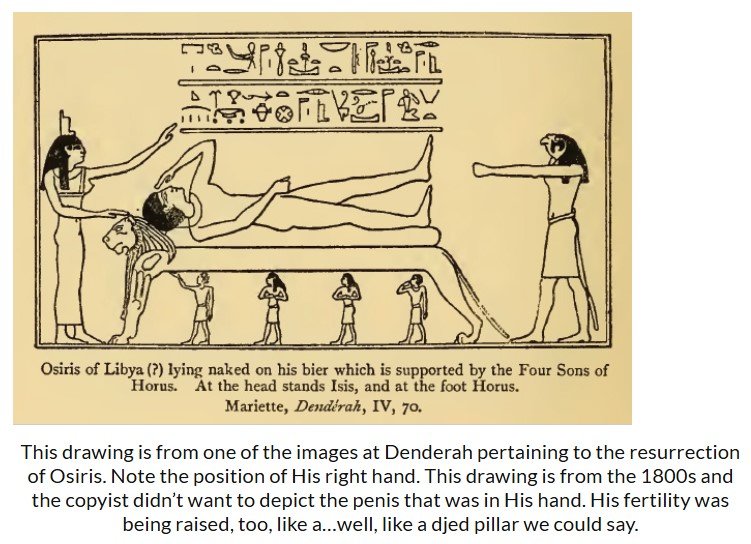
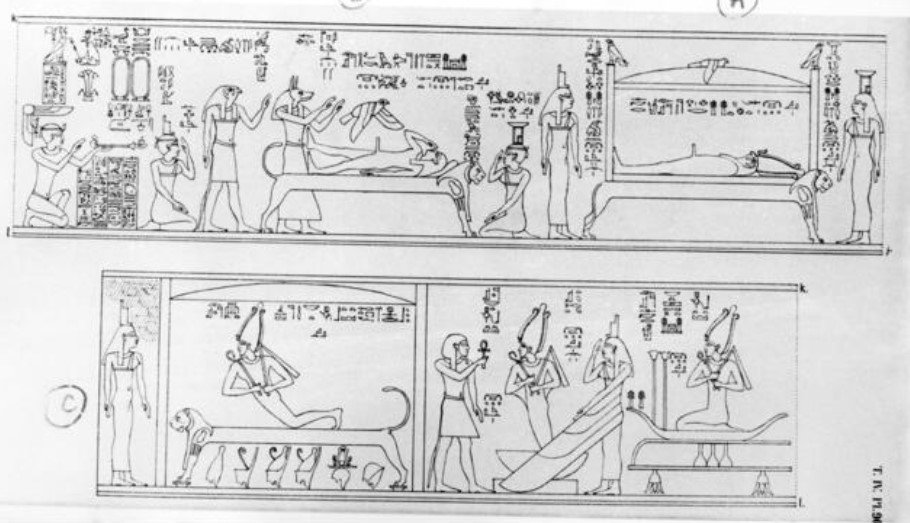
This whole “Christmas thing” started with the TaNihisian and TaMerians of ancient Kemet (today called Egypt). In order to organize society, it was necessary to know when to sow in order to reap a harvest later. This depended on the flooding of the Nile. To monitor this our ancestors developed a calendar based on the movement of the stars (constellations). The oldest calendar was found at the Temole of Dendera. The ancestors built temples and devices to track what is called the Winter Solstice. It then developed a narrative concerning the death and ressurrection of the sun/son/Horus. This is the origin “birth of Ausar (Christ)” story. At the same time, our ancestors celebrated the death of the corrupt spirit and the resurrection of the perfected spirit through the Utcha Metu (Weighing of the Words) ceremony. Each person had to repeat the 42 Laws of Maat Truth. If they were guilty of violating any of them, it would weigh against their heart which must be lighter than a feather to enter Heaven. Later, foreigners invaded Kemet and corrupted this into the Ten Commandments. Each of the Temples was situated so that during the Winter Solstice, the rising of the sun/son/Horus/Christ was a magnificent spectacle. #truth #about #christmas #africanhistory #maat #dontbefooled #christianity
Acts, chapter 7:22
"And Moses was learned in all the wisdom of the Egyptians and was mighty in words and in deeds."
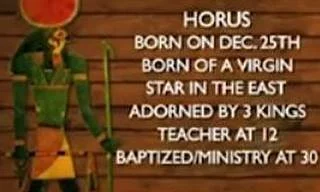
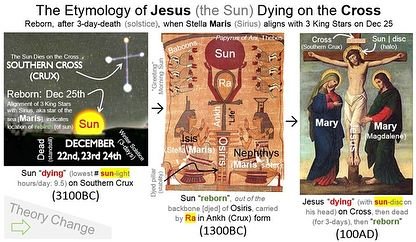
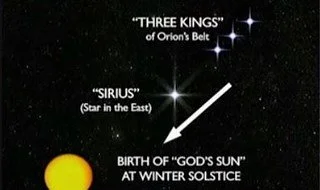
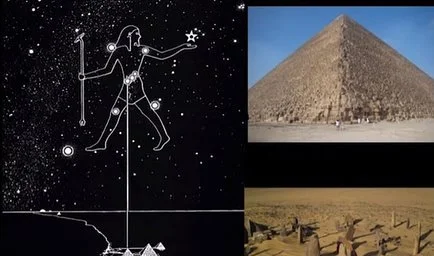
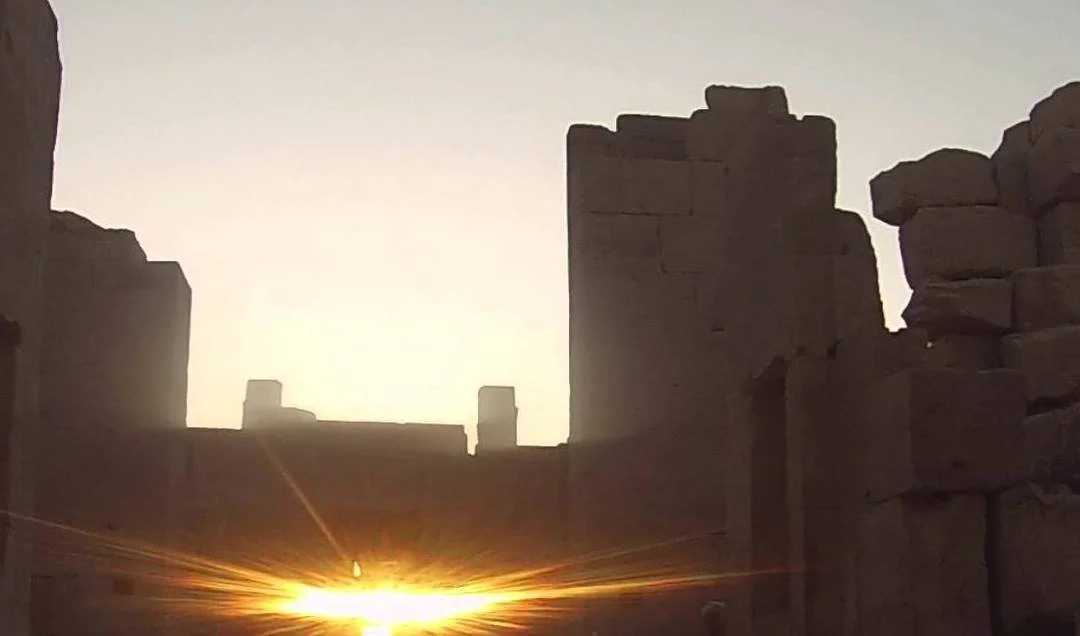
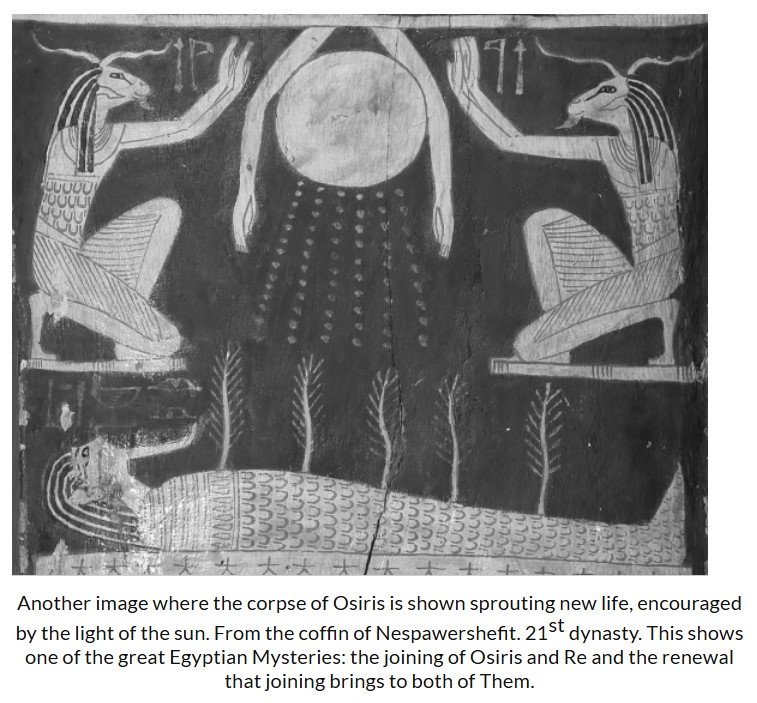
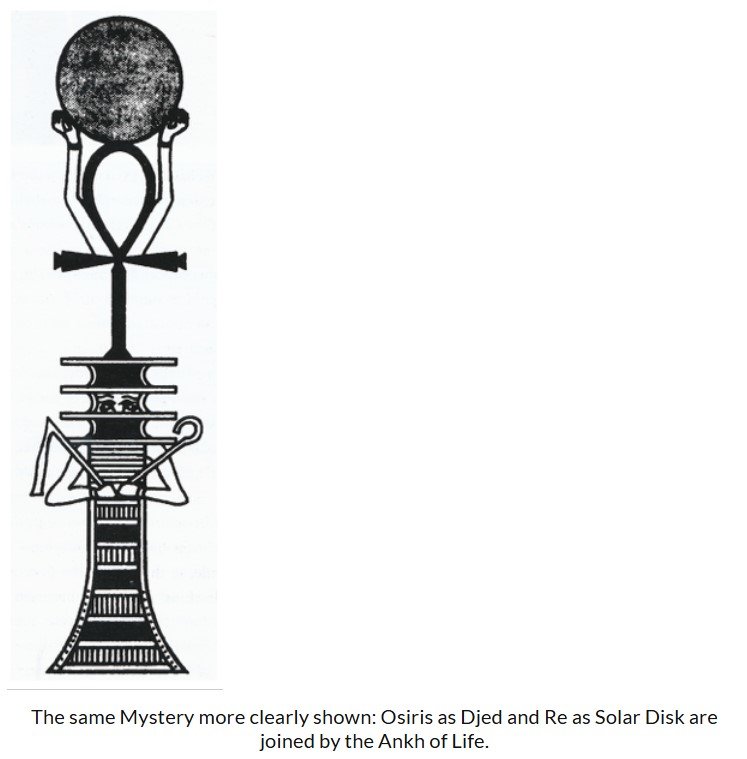
As far back as 9,600 BCE, my ancestors, the Anu people, observed this day as a sacred day. It was the day the sun was born, bringing with it new life. Around 5,600 BCE the warm climate caused evaporation levels to supersede precipitation levels and water levels began to drop. Vast areas became desserts separated by large lakes that still existed for another 1,000 years in the area from the Baba Tiba Mountains to Taurus Mountains. This phenomenon left a remnant of highland peoples living in caves and on plateaus. These people learned from what they saw - spectacular views of the skies above. Here then is the basis for the sciences of astronomy and the zodiac.The Anu peoples living in the highlands studied the stars, the moon and the sun. Moreover, until the drying up of the lakes, the Anu peoples developed a system of water navigation between the interconnected lakes and rivers. This would explain the emergence of a well-organized civilization possessing knowledge of the celestial bodies, capable of navigation on the lakes, rivers, seas and oceans of the earth, needed to know the circumference of the planer, the length of the year, the mean length of the Earth's orbit around the sun, the 25,920 year cycle of the equinoxes, the acceleration of gravity, and the speed of light in order to build the HU ("Sphinx") and Pyramid Complex at Dje-SAH (Giza). Clear geological signs of rain-water weathering on the HU/Sphinx indicate that it was constructed by the Anu peoples before the end of the rainy weather in the Nile River Valley. From the observance of this winter solstice event, by 4241 BCE my Anu ancestors had created the first calendar that they inscribed at their Temple of Dendera. Because life and human prosperity depended on the annual flooding of the Nile basin, it was vital to know when to migrate and when to plant based on this event, hence the need for the calendar. My ancestors also told a story about this event, where the birth of the sun represented the birth of the “son of God” in the story of Auser (the Father) - Auset (the Mother) - Heru (the Son) also known as Osiris, Isis and Horus. Through the hope of new life after death, Osiris began to be associated with the cycles observed in nature, particular vegetation and the annual flooding of the Nile, through links with the heliacal rising of Orion and Sirius at the start of the New Year. This is why it is written in Amos 5:8 - "[Seek him] that maketh the seven stars and Orion, and turneth the shadow of death into the morning, and maketh the day dark with night: that calleth for the waters of the sea, and poureth them out upon the face of the earth"
When the Romans conquered ancient Egypt and adopted Christianity, they simply invented the story about Jesus and replaced that of Horus. The current Christmas celebration in the west, in reality, has nothing to do with the birth of a “Jesus”. For most of human history, this day has been celebrated by non-white people for reasons that had nothing to do with Jesus. I wish well-meaning white people would admit this and put an end to their cultural and religious plagiarism and supremacy.
The period from December 21st to 25th marks a profound spiritual transition known as the "Sacred Pause," symbolizing the triumph of light over darkness and the birth of higher consciousness.
The Spiritual and Esoteric Meaning
The Descent (Dec 21): The Winter Solstice marks the "death" of the old solar year and the longest night. In spiritual terms, this represents a descent into the "dark night of the soul," a time for deep introspection and releasing old patterns that no longer serve the self. Time for peace and rest.
The Standstill (Dec 22–24): For three days, the sun appears to "stand still" at its lowest point in the sky. This period symbolizes the "fruitful darkness," a silent womb of potential where new inspirations and life-force energy are gestated before being born.
The Rebirth (Dec 25): The sun begins its observable ascent on December 25th, moving one degree north. This "rebirth of the sun" is the spiritual archetype for the birth of the Christ-Light or Christ Consciousness within the individual soul.
"The return of the light."
The cross is not about the wood but the crossing of the sun. The vertical line represents the path of the sun throughout the year. The horizontal line represents the equinox, together they form the simple of balance, life, death and rebirth.
The cross is a profound celestial map that encodes the cycles of the sun and the structure of the cosmos. Its symbolism bridges ancient solar observations with mystical and Gnostic traditions.
Gnostic Perspectives
In Gnostic traditions, these dates hold specific mystical significance:
December 21 (Day of St. Thomas): Commemorates the Apostle Thomas, who is honored for his deep understanding of inner mysteries and "Gnosis" (direct experiential knowledge of the Divine).
December 22 (Day of Archangel Raphael): Celebrates the principle of regeneration and healing, representing the restoration of light within the realm of darkness.
December 24/25 (The Infant Christ): Gnostics view the birth of Jesus as a metaphor for the indwelling Divine spark awakening within the human psyche.
The "Holy Mother" (Mary/Sophia) represents the maternal principle of the unconscious that nurtures this growing enlightenment.
Themes of the Period
Alchemical Transmutation: The shift from the "darkness of the flesh" to the "illuminating light of spirit".
Thinning of the Veil: The solstice is seen as a "portal" where the boundary between dimensions is thinnest, facilitating "Divine downloads" and spiritual guidance.
Balance of Energies: A transition from the Yin (feminine, inward, dark) energy of winter to the returning Yang (masculine, outward, light) energy.
TIMELINE OF THE INVENTION OF CHRISTMAS
10,000 BC - Anu ancestors celebrate "winter solstice" - calendar based on procession of sun through the "zodiac"; monitors signs, times and seasons. Genesis 1:14
6,700 BC - Temple of Dendera Calendar; Ausarian Ressurrection (Utchau Metu): Auser, Auset, Heru = Christ
3100 BC - Narmer unifies 1st Dynasty of Kemet (Anu people)
2375 BC - Pryamid Texts: oldest known sacred books
1700 BC - Hyksos Invasion
700 BC - Assyrians invade Egypt - Marduk; Zagmuk Festival; mock king sacrificed
525 BC - Persians invade Egypt - Mithraism; Sacaea Festival; slaves become masters
332 BC - Greeks invade Egypt: Festival of Kronos to Battle against Zeus & Titans
100 BC - Roman Empire rules Egypt
Saturnalia - Roman pagans first introduced the holiday of Saturnalia, a week long period of lawlessness celebrated between December 17-25. During this period, Roman courts were closed, and Roman law dictated that no one could be punished for damaging property or injuring people during the weeklong celebration. The festival began when Roman authorities chose “an enemy of the Roman people” to represent the “Lord of Misrule.” Each Roman community selected a victim whom they forced to indulge in food and other physical pleasures throughout the week. At the festival’s conclusion, December 25th, Roman authorities believed they were destroying the forces of darkness by brutally murdering this innocent man or woman. The ancient Greek writer poet and historian Lucian (in his dialogue entitled Saturnalia) describes the festival’s observance in his time. In addition to human sacrifice, he mentions these customs: widespread intoxication; going from house to house while singing naked; rape and other sexual license; and consuming human-shaped biscuits (still produced in some English and most German bakeries during the Christmas season). The problem was that there was nothing intrinsically Christian about Saturnalia. To remedy this, these Christian leaders named Saturnalia’s concluding day, December 25th, to be Jesus’ birthday.
Europe - evil spirits, ghosts, trolls; rituals to bring back sun
Scandinavia - Yuletide: Fire celebration Return of SUn/Light of the World; all negatives burned to start a new year
70 AD - Intellectuals working for Titus Flavius, the second of the three Flavian Caesars, created Christianity. Their main purpose was to replace the xenophobic Jewish Messianism that waged war against the Roman Empire with a version of Judaism that would be obedient to Rome. One of the individuals involved with the creation of the Gospels was the first-century historian Flavius Josephus.
137 AD - Biship of Rome ordered birth of Christ Child celebrated
270 AD - Nicholas was born in Parara, Turkey in 270 CE and later became Bishop of Myra. He died in 345 CE on December 6th. He was only named a saint in the 19th century.
325 AD - Council of Nicea. Serapis to Jesus? Nicholas was among the most senior bishops who convened the Council of Nicaea in 325 CE and created the New Testament. The text they produced portrayed Jews as “the children of the devil” who sentenced Jesus to death.
350 AD - Pope Julius sets Dec 25th as Jesus Birthday. Christianity imported the Saturnalia festival hoping to take the pagan masses in with it. Christian leaders succeeded in converting to Christianity large numbers of pagans by promising them that they could continue to celebrate the Saturnalia as Christians
1087 AD- a group of sailors who idolized Nicholas moved his bones from Turkey to a sanctuary in Bari, Italy. There Nicholas supplanted a female boon-giving deity called The Grandmother, or Pasqua Epiphania, who used to fill the children's stockings with her gifts. The Grandmother was ousted from her shrine at Bari, which became the center of the Nicholas cult. Members of this group gave each other gifts during a pageant they conducted annually on the anniversary of Nicholas’ death, December 6.
- The Nicholas cult spread north until it was adopted by German and Celtic pagans. These groups worshipped a pantheon led by Woden –their chief god and the father of Thor, Balder, and Tiw. Woden had a long, white beard and rode a horse through the heavens one evening each Autumn. When Nicholas merged with Woden, he shed his Mediterranean appearance, grew a beard, mounted a flying horse, rescheduled his flight for December, and donned heavy winter clothing.
1800 - Nicholas made Saint by Catholic Church. In a bid for pagan adherents in Northern Europe, the Catholic Church adopted the Nicholas cult and taught that he did (and they should) distribute gifts on December 25th instead of December 6th.
1809 - novelist Washington Irving (most famous his The Legend of Sleepy Hollow and Rip Van Winkle) wrote a satire of Dutch culture entitled Knickerbocker History. The satire refers several times to the white bearded, flying-horse riding Saint Nicholas using his Dutch name, Santa Claus.
1822 - Dr. Clement Moore, a professor at Union Seminary, read Knickerbocker History, and in 1822 he published a poem based on the character Santa Claus: “Twas the night before Christmas, when all through the house, not a creature was stirring, not even a mouse. The stockings were hung by the chimney with care, in the hope that Saint Nicholas soon would be there…” Moore innovated by portraying a Santa with eight reindeer who descended through chimneys.
1862-1886 - The Bavarian illustrator Thomas Nast almost completed the modern picture of Santa Claus. From 1862 through 1886, based on Moore’s poem, Nast drew more than 2,200 cartoon images of Santa for Harper’s Weekly. Before Nast, Saint Nicholas had been pictured as everything from a stern looking bishop to a gnome-like figure in a frock. Nast also gave Santa a home at the North Pole, his workshop filled with elves, and his list of the good and bad children of the world. All Santa was missing was his red outfit.
1931 - Coca Cola Corporation contracted the Swedish commercial artist Haddon Sundblom to create a coke-drinking Santa. Sundblom modeled his Santa on his friend Lou Prentice, chosen for his cheerful, chubby face. The corporation insisted that Santa’s fur-trimmed suit be bright, Coca Cola red. And Santa was born – a blend of Christian crusader, pagan god, and commercial idol.
THE DAY WE WERE TOLD TO BELIEVE: UNLEARNING DECEMBER 25 AND REDISCOVERING THE REAL STORY OF JESUS
Sam Adeoye writes, “For centuries, people have gathered on December 25 to celebrate the birth of Jesus Christ, but history itself whispers a different story—one that challenges tradition, confronts religious assumptions, and invites us to think deeply beyond what we were told. The truth is simple but uncomfortable: Jesus was not born on December 25. Every serious biblical and historical clue points instead to a period between August and October, when the climate, culture, and events recorded in Scripture all align.
Look at the facts. When Jesus was born, the shepherds were living outdoors, watching their flocks at night. In Bethlehem, shepherds only do this during the warmer seasons, not in the cold winter rains of December. A Roman census was also underway, and such censuses were done when travel was easiest, in late summer or early autumn. The biblical record leaves strong hints; history fills in the rest.
So where does December 25 come from? Long before Christians celebrated Christmas, Rome already marked that date as the Dies Natalis Solis Invicti—the Birthday of the Unconquered Sun, honoring Sol Invictus, the sun god. Emperor Aurelian established it in 274 CE. It was bright, festive, and filled with symbolism of rebirth, light, and divine power. When Christianity later spread across the Roman Empire, the Roman Catholic Church made a strategic choice: instead of fighting a beloved pagan festival, they absorbed it. They took December 25 and renamed it Christmas.
And this is where the story becomes unsettling.
We call it Christmas so casually, but the word itself is a marriage of two ideas—Christ and mas. Christ is from the Greek Christos, meaning the Anointed One, the Messiah. It speaks of divinity, purpose, sacrifice, and the profound identity of Jesus. Mas, on the other hand, comes from the Old English mass, the Catholic celebration of the Eucharist—a ritual that became filled over time with layers of ceremony, symbolism, and tradition far removed from the simplicity of Jesus Himself. When you put them together, what you get is “the Mass of Christ”, a religious invention built centuries after Jesus walked the earth.
And yet, the world treats December 25 as sacred—unquestioned, unchallenged, unquestionable.
Here is the deeper issue: Christianity, as practiced today, hides behind traditions that God never commanded. The date was chosen for political harmony, not spiritual truth. The rituals grew out of culture, not Scripture. And over time, the church became more committed to maintaining the calendar than revealing the truth.
This is not an attack on faith; it is a call to return to honesty. Jesus does not need a borrowed birthday from a pagan sun god to be who He is. He does not need December 25 to shine. He was born between August and October—quietly, simply, authentically—without pageantry, without decorated trees, without Roman reinvention.
The world gave Him a date.
Rome gave Him a festival.
But truth gives Him back His story.
And sometimes, rediscovering truth is the most spiritual act of all.
NOW, LET’S GO BACK TO THE ORIGIN OF ALL OF THIS: THE ANU SPIRITUALITY AND RESSURECTION THROUGH UTHAU METU
**********************************************************************
In the Egyptian Mysteries the Neophyte was required to manifest the following soul attributes:
(1) Control of thought and
(2) Control of action, the combination of which, Plato called Justice (i.e. the unswerving righteousness of thought and action – [Siphiwe note: the object of which, according to Neely Fuller Jr, is that no one is mistreated and those that need the most help get the most help]).
(3) Steadfastness of purpose, which was equivalent to Fortitude.
(4) Identity with spiritual life or the higher ideals, which was equivalent to Temperance, an attribute attained when the individual had gained conquest over the passional nature.
(5) Evidence of having a mission in life and
(6) Evidence of a call to spiritual Orders or the Priesthood in the Mysteries: the combination of which was equivalent to Prudence or a deep insight and graveness that befitted the faculty of Seership.
(7) Freedom from resentment, when under the experience of persecution and wrong. This was known as courage.
(8) Confidence in the power of the master (as Teacher), and
(9) Confidence in one’s own ability to learn; both attributes being known as Fidelity.
(10) Readiness or preparedness for initiation. There has always been this principle of the Ancient Mysteries of Egypt: ‘When the student is ready, then the master will appear.”
Manifestation of the above attributes was accomplished by completely submitting to the
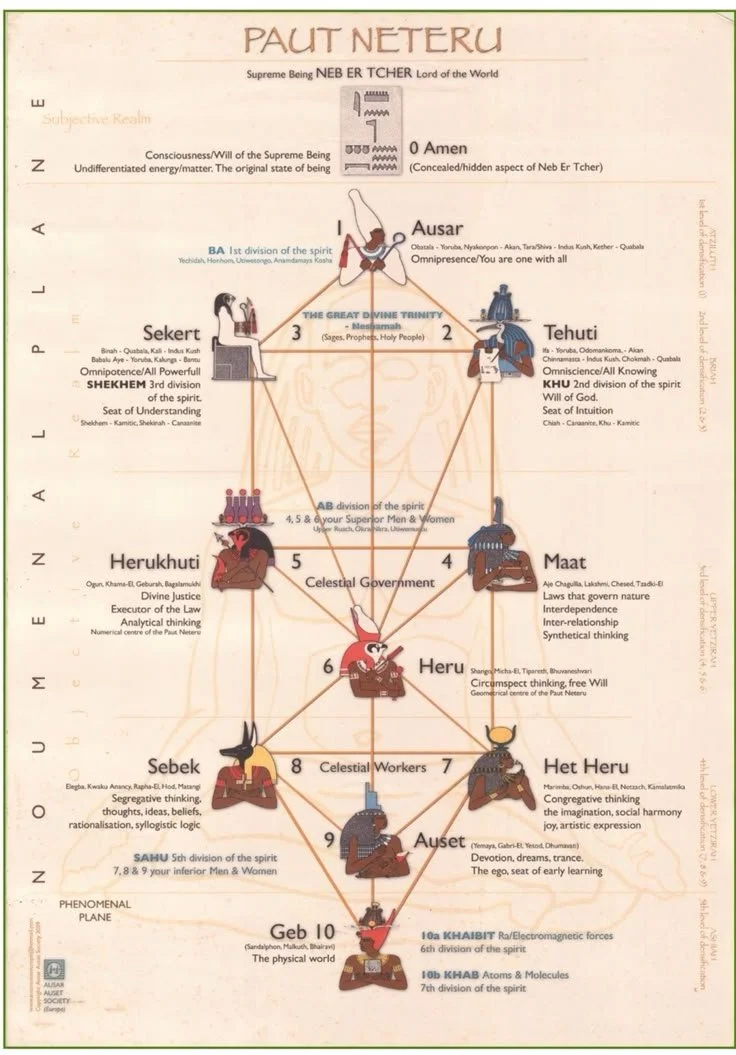
11 LAWS OF MAAT

Ma’at: The 11 Laws of God
0. Law of Amen (Amen Ra)
I am created in the likeness of a peace which cannot be disturbed. Regain my original state of peace to attain my reason for coming into existence - the enjoyment of life
1. Law of Ausar (Osiris)
My nature is an unconquerable peace. Therefore, nothing and no one in the world can be against me. All experiences come to me to promote my reclamation of peace, that I may in turn acquire wisdom and power.
2. Law of Tehuti (Toth)
When my thoughts, feelings and actions reflect the Word of God then the power of God’s spirit and a peace that nothing can challenge flows through my being.
3. Law of Sekher (Sokar)
When my emotions manifest in response to the Word of God they have the power to influence any and all events in the world.
4. Law of Ma’at (Ma’at)
God needs me in order to come into the world. Fulfilling God’s need is the highest act of love and only through my love for God can I fulfill my love for others. I Become God’s love in the world for the protection of the world.
5. Law of Herukhutt (Horus the Elder)
I Know that God neither punishes nor rewards nor protects. I will have the comfort of controlling these for myself.
6. Law of Heru (Horus)
I have the power but not the right to ignore God’s law. I Choose to follow God’s law with the love and joy that comes from understanding and the wisdom and power of God’s spirit flows through my being.
7. Law of Het-Heru (Hathor)
It is not what I imagine but who is imagining. Am I a human or a divine being?
8. Law of Sebek (Anubis)
It’s not what I think or affirm. It’s who is thinking or affirming. Am I a human or a divine being?
9. Law of Auset (isis)
Prepare to sacrifice everything to become the vessel of God on earth and I will, in turn, receive everything.
10. Law of Geb (Geb) I Know that from heaven I came and to heaven I will return; I seek not enduring works on earth.
HOW DID THE INITIATE TRAIN HIM OR HERSELF TO SUBMIT TO THE 11 LAWS OF MAAT?
BY NIGHTLY CONFESSING THE 42 APPLICATIONS OF THE PRINCIPLES OF MAAT IN PREPARATION FOR THE UTCHAU METU (WEIGHING OF THE HEART JUDGMENT CEREMONY) THAT TAKES PLACE EACH WINTER SOLSTICE AND AT DEATH.
DECLARATIONS OF FREEDOM FROM SIN
(Commonly known as “42 Negative Confessions based on the African Wisdom teachings of Ancient Kemet & the Grand Ritual of Weighing the Heart & Words - repoplularized by The High Priestess Ahmesh Nefertari)
I HAVE NOT:
Amen/Law of PEACE
1...sought peace through avoidance or running away from anyone or anything
2..sought happiness through getting intoxicated or sensual indulgence
3...sought peace through seeking vengeance
4...been led emotional or sensual energies
5...sought happiness through involvement with people or things
6...mistaken joy for happiness
7...complained about my life's challenges
Ausar/Law of ONENESS
8...identified myself with my personal qualities, talents, mind, physical body (appearance, health) or career
9...gone against or ignored my conscience
10...accepted someone or something as being against me
11...denied my oneness with all people
12...behaved as though my thoughts or actions could not be seen (God, my true Divine Self see all)
13...shown preferences to one over another
Tehuti/Law of Wisdom (Mutual Benefit)
14...denied that my intelligence is an endowment of God
15...failed to give thanks for the innumerable unearned blessing that have come to me
16...sought to achieve or acquire anything that would bring harm to anyone (gain at another's expense)
17...neglected to assist others in their quest for worthy goals
18...placed Man in a separate category from God
19...been unreceptive to Wise counsel and the Word of God
Sekert/Law of POWER
20...cursed my fate; berated my Destiny (complained)
21...grieved over setbacks, obstructions or failed
22...indulged envy for those who appear better off than myself
23...coveted the belongings of another
24...neglected to align my agenda with the Divine Plan
25...sought success without God's help
Maat/Law of INTERDEPENDENCE (Order)
26...imposed my Will on anyone
27...made myself feared; used intimidation to get my way
28...neglected the work to become the vessel of God
29...been greedy
30...sought to gain or advance through immoral or unethical means
31...sought success or advancement without God's help
32...neglected to become the vessel of God on earth
33...defined or interpreted love in sensual terms
34...passed up an opportunity to share
35...given to another seeking praise, recognition or favor
Herukhuti/Law of JUSTICE
36...jumped to the conclusion that I know the cause of anyone's misconduct
37...usurped God's place by passing judgment on another
38...been motivated by anger or fear to harm another
39...allow the negative aspects of my culture or those in authority to corrupt my conscience
40...sought vengeance; defined justice in terms of vengeance
41...failed to be accountable for my conduct; sought to escape the consequences of my behavior
42...been unwilling to acknowledge situations of personal error or transgression
Heru/Law of FREEDOM
43....indulged images which trigger emotional and sensual appetites
44...attempted to control my behavior or spirit through a direct act of will (correct
Images guide behavior)
45....given into my conditions without resistance
46....made my bad habits and conditioning my comfort zone
47...declared that I had no choice
48...indulged the thought of wishing or hopring instead of Willing
49...sought for honors or recognition
Het-Heru/Law of JOY/HARMONY
50...sought happiness through the acquisition of any item or attainment goals
51...entertained and nourished images of vice, failure, suffering or illness
52...indulged lust for one who is not my mate
53...nourished images which corrupt my spirit
54...fornicated
Sebek/Law of the WORD (Communication)
55...affirmed that a situation is 'stressful'
(There are no stressful situations, only stressful reactions), horrible, overwhelming etc.)
56...affirmed that a given person is obnoxious, bad, stupid, incorrigible etc etc etc
57...accepted the thought that I am a 'failure' or have 'low self-esteem'
58...given credit for my success to my person as opposed to God (my Divine Self)
59...set my mouth in motion against another
60...been an eavesdropper
61...spoken excessively
Auset/Law of SACRIFICE/DEVOTION
62...failed to make the realization of my Divinity my highest priority
63...not have I neglected to use trance to alter and transform my spirit
64...shown a willingness to sacrifice personal comfort or entertainment in order to work daily on my spiritual work
Geb/Law Of EARTHLY IMPERMANENCE
65...indulged the idea that any earthly reality is unalterable
66...knowingly polluted my vehicle
67...prayed for good health while knowingly violating the laws of health
68...failed to work daily on healing your person
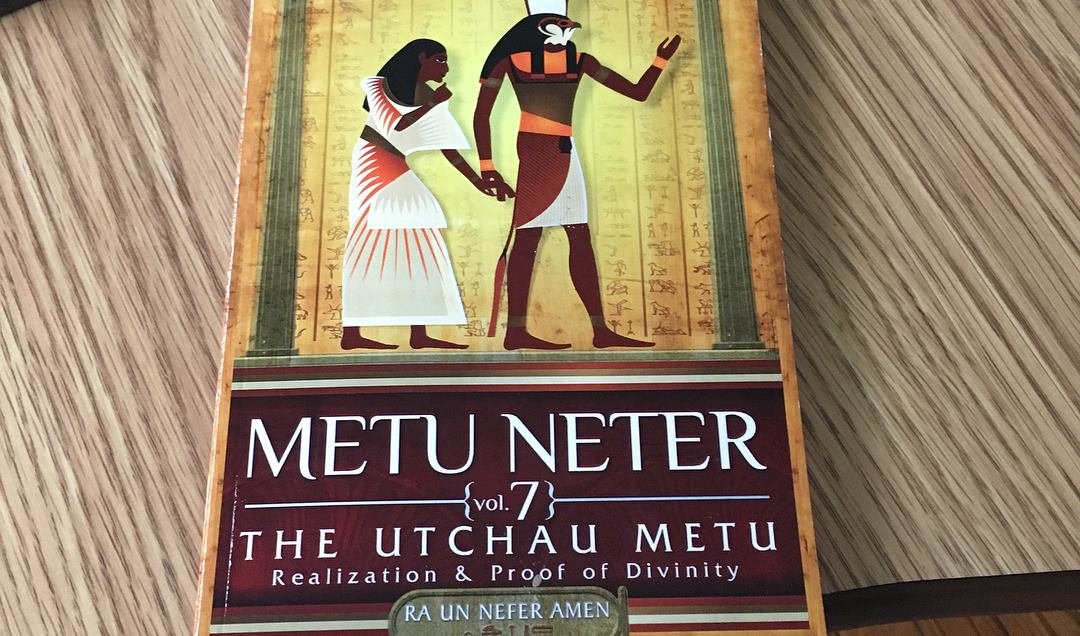
(See Metu Neter Vol VII by Ra Un Nefer Amen)
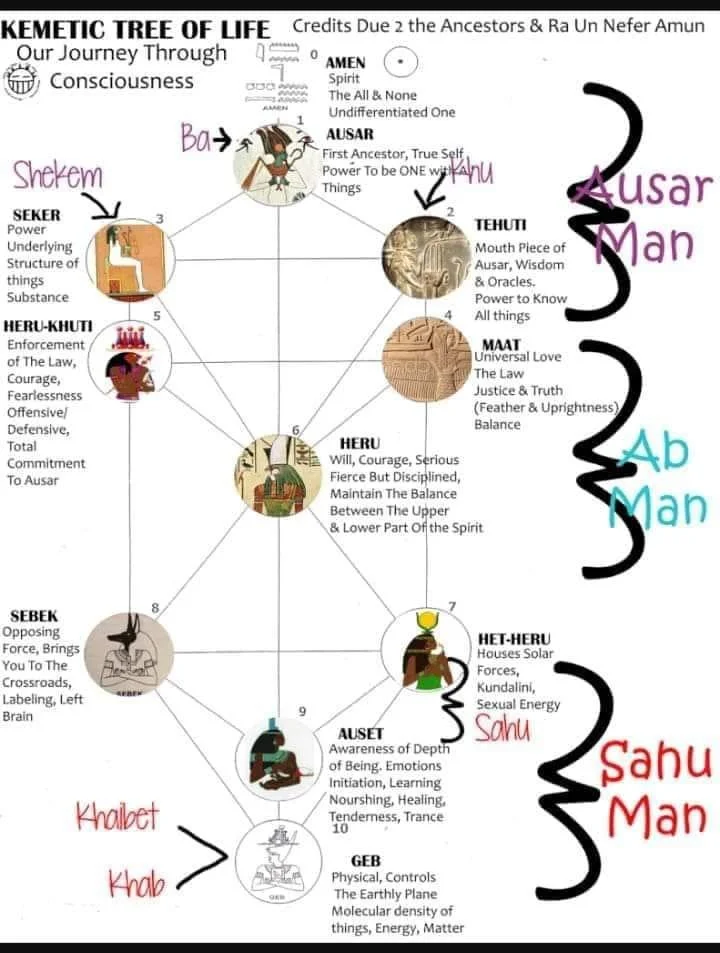
EXPLAINING THE PROCESS OF HOW MAN BECOMES ONE WITH GOD

Moses
"And Moses was learned in all the wisdom of the Egyptians and was mighty in words and in deeds." Acts, chapter 7:22
SO, BEFORE MOSES "WROTE" THE FIRST FIVE BOOKS OF THE BIBLE, HE HAD FIRST LEARNED ALL THE WISDOM OF THE EGYPTIANS. WHAT DID THE EGYPTIANS TEACH?
The best authority on this subject is George G.M. James and his book, Stolen Legacy. According to James,
“The ancient Egyptians had developed a very complex religious system, called the Mysteries, which was also the first system of salvation.
As such, it regarded the human body as a prison house of the soul, which could be liberated from its bodily impediments, through the disciplines of the Arts and Sciences, and advanced from the level of a mortal to that of a God. This was the notion of the summum bonum, or greatest good, to which all men must aspire, and it also became the basis of all ethical concepts. The Egyptian Mystery System was also a Secret Order, and membership was gained by initiation and a pledge to secrecy. The teaching was graded and delivered orally to the Neophyte; and under these circumstances of secrecy, the Egyptians developed secret systems of writing and teaching and forbade their Initiates from writing what they had learnt.
‘The earliest theory of salvation is the Egyptian theory. The Egyptian Mystery System had as its most important object, the deification of man, and taught that the soul of man if liberated from its bodily fetters, could enable him to become godlike and see the Gods in this life and attain the beatific vision and hold communion with the Immortals.’ (Ancient Mysteries, C.H. Vail, P. 25).
Plotinus defines this experience as the liberation of the mind from its finite consciousness, when it becomes one and is identified with the Infinite. . . . It involved a process of disciplines or purification both for the body and the soul. Since the Mystery System offered the salvation of the soul it also placed great emphasis upon its immortality. The Egyptian Mystery System, like the modern University, was the center of organized culture, and candidates entered it as the leading source of ancient culture. According to Pietschmann, the Egyptian Mysteries had three grades of students
(1) The Mortals i.e., probationary students who were being instructed, but who had not yet experienced the inner vision.
(2) The Intelligences, i.e., those who had attained the inner vision, and had received mind or nous and
(3) The Creators or Sons of Light, who had become identified with or united with the Light (i.e., true spiritual consciousness) . . . . For years they underwent disciplinary intellectual exercises, and bodily asceticism with intervals of tests and ordeals to determine their fitness to proceed to the more serious, solemn and awful process of actual Initiation.
Their education consisted not only in the cultivation of the ten virtues, which were made a condition to eternal happiness, but also of the seven Liberal Arts which were intended to liberate the soul. There was also admission to the Greater Mysteries, where an esoteric philosophy was taught to those who had demonstrated their proficiency. (Ancient Mysteries C. H. Vail P. 24-25). Grammar, Rhetoric and Logic were disciplines of moral nature by means of which the irrational tendencies of a human being were purged away, and he was trained to become a living witness of the Divine Logos. Geometry and Arithmetic were sciences of transcendental space and numeration the comprehension of which provided the key not only to the problems one’s being; but also, to those physical ones, which are so baffling today; owing to our use of the inductive methods. Astronomy dealt with the knowledge and distribution of latent forces in man, and the destiny of individuals, races and nations. Music (or Harmony) meant the living practice of philosophy i.e., the adjustment of human life into harmony with God, until the personal soul became identified with God, when it would hear and participate in the music of the spheres. It was therapeutic and was used by the Egyptian Priests in the cure of diseases. Such was the Egyptian theory of salvation, through which the individual was trained to become godlike while on earth, and at the same time qualified for everlasting happiness. This was accomplished through the efforts of the individual, through the cultivation of the Arts and Sciences on the one hand, and a life of virtue on the other.
There was no mediator between man and his salvation, as we find in the Christian theory.
The virtues were not mere abstractions or ethical sentiments but were positive valours and virility of the soul. Temperance meant complete control of the passionate nature. Fortitude meant such courage as would not allow adversity to turn us away from our goal. Prudence meant the deep insight that befits the faculty of Seership, Justice meant the unswerving righteousness of thought and action. . . .
The Egyptian Mystery School at On (Heliopolis) where Moses was reputed to have been educated taught the 42 Laws of the Goddess Maat, which initiates had to recite every year in the Utchau Metu ceremony during the Winter Solstice. By saying the words, “I have not ….”, it activated the law/principle of MAAT which is truth and justice. If the statement “I have not ....”, was not, in fact, true, it would activate a vibration/frequency that was not in harmony with Truth. Thus, the “sin” or violation of the laws of MAAT would thus be exposed, registered and recorded both in the “book of life” and in the consciousness of the initiate. In addition, the weight of this “sin” would be added to the scales of justice. Ra Un Nefer Amen explains,
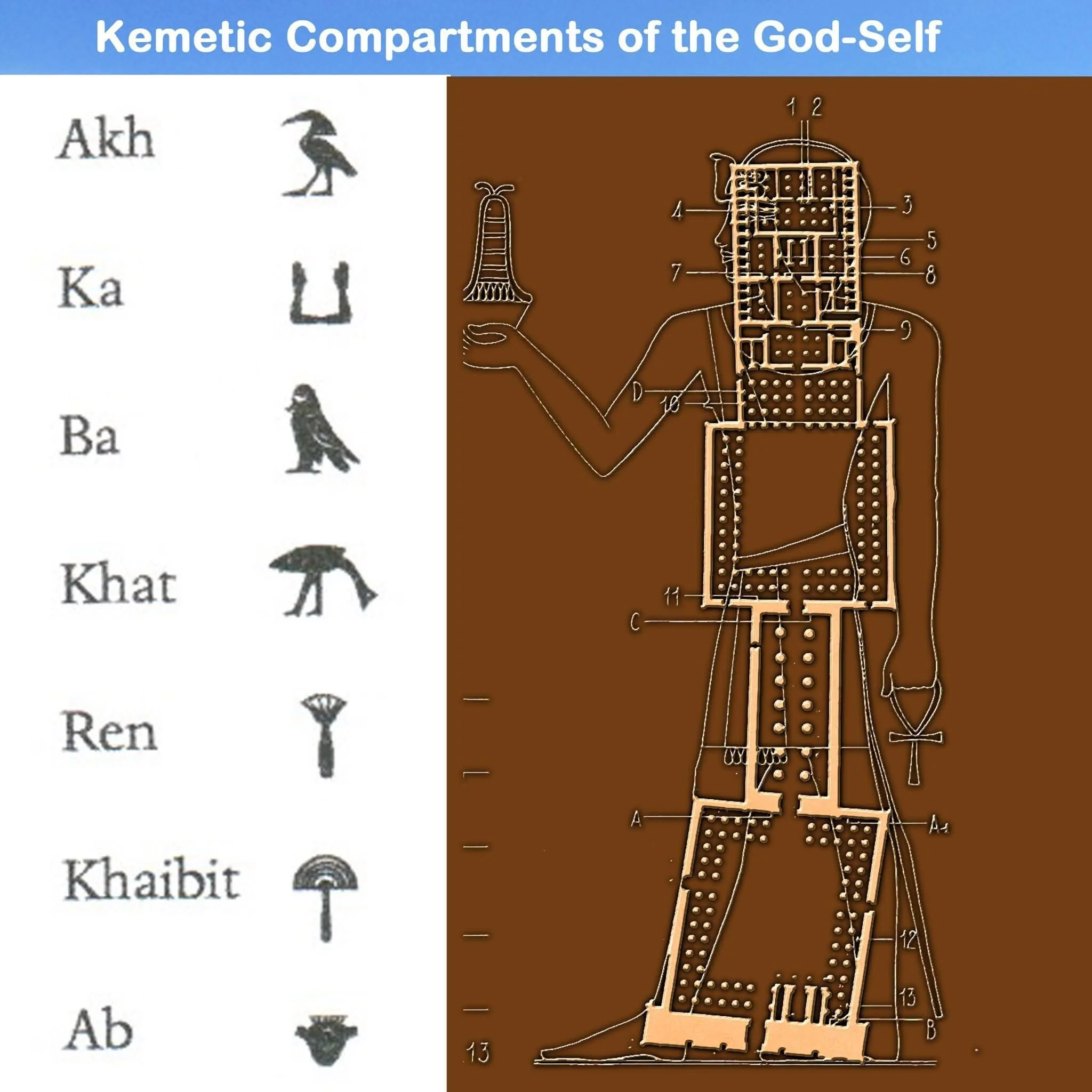
“Utchau means ‘to judge, and to weigh’. Metu means ‘word,’ (in the sense of thoughts, ideas and mind). The Utchau Metu is a ritual complex that involves the Judgement, or Weighing, or Inspection of the Will and the Mind. Unable to understand the metaphoric symbology of Kamit, Egyptologists translated the system as Weighing of the Heart and Word. This is easily understood when we understand that what we call the mind is the faculty that processes words and images. As for the ‘heart’ we just need to understand that the heart alluded to is the Ab part of the spirit. It is the division of the spirit that is the vehicle of the day consciousness of the incarnated person. You must recall that the self, that which answers for ‘I’ in your being and as yourself, is composed of consciousness and will (and it excludes the spirit, the other half of your being). The Judgement of the will is therefore the Judgment of the person. Why the mind, the Sahu part of the spirit, is also judged will become clear shortly.
The following words are the most important that you will hear in your life.
1. The immediate and direct controller of your physical well-being, and social life is the life force or animal or animating divisions of the spirit.
2. The Life Force is under the direct control and direction of a certain type of thoughts in your mind. These are the thoughts that make up your conviction of what kind of being you are, and what type you are within this typology (human or divine).
3. The life force or animal spirit is pure energy and as such it is regulated by laws like all energy systems in nature and the universe.
4. Therefore, the thoughts that control and direct the life force must be in agreement with the laws that regulate the life force. These laws are the laws that are associated with each of the 11 faculties – Neteru- of the spirit.
a. If the thoughts in your mind are in agreement with the 11 laws that regulate your life force, then the components of your life force will perform their functions in harmony with each other resulting in good physical health, mental performance, positive emotions, and a successful and harmonious social life.
b. If the thoughts in your mind were based on the animal spirit itself (emotionalisms, sensuality, opinions and beliefs) then the components of your life force will perform their functions in a chaotic manner, resulting thus in ill health, mental errors, negative emotions or their domination, and a life of mixed success and social well-being but mostly failure. Even your successes will be seeds of future troubles or failures, because they will lack holism – that is, your successes here will create many more problems there.

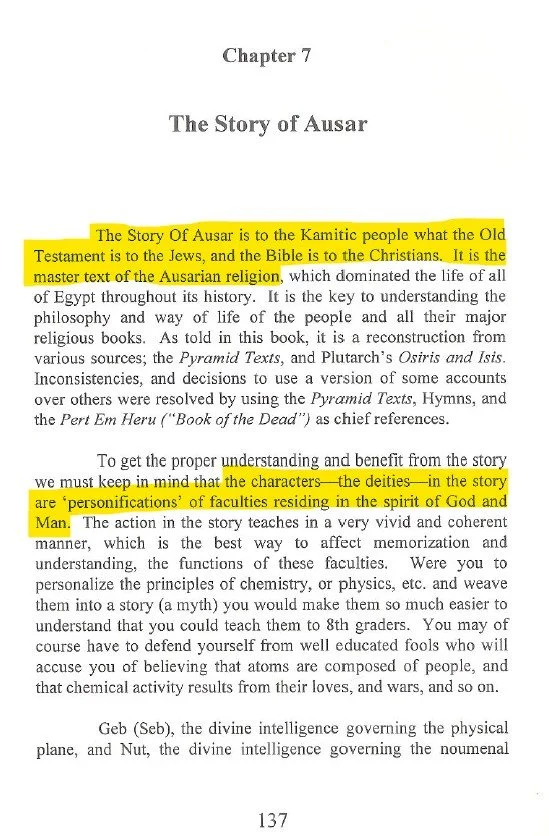
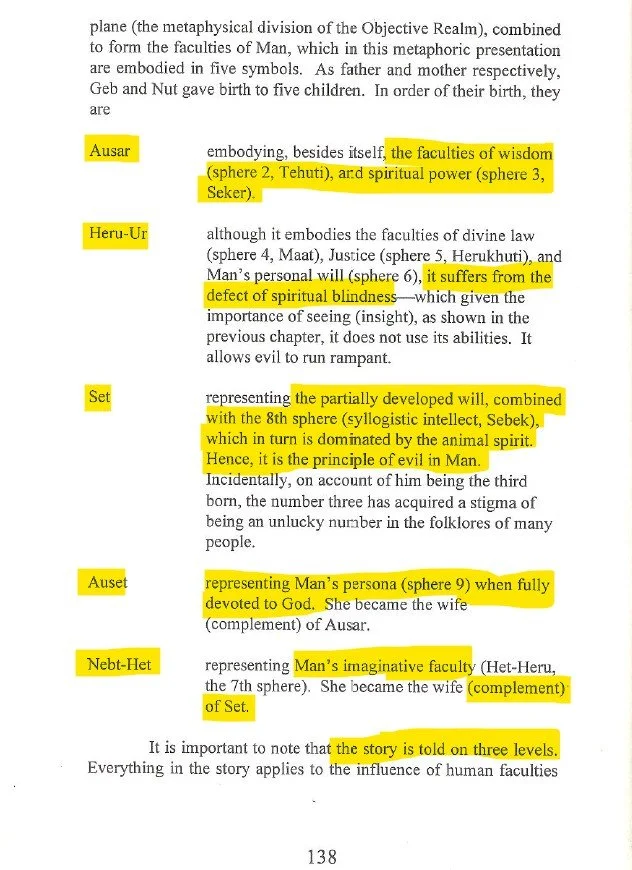
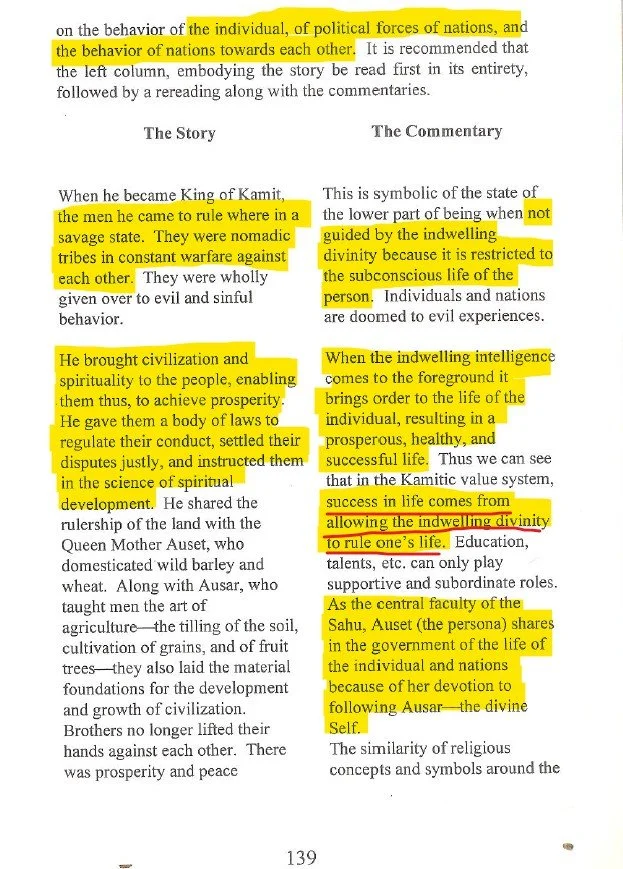
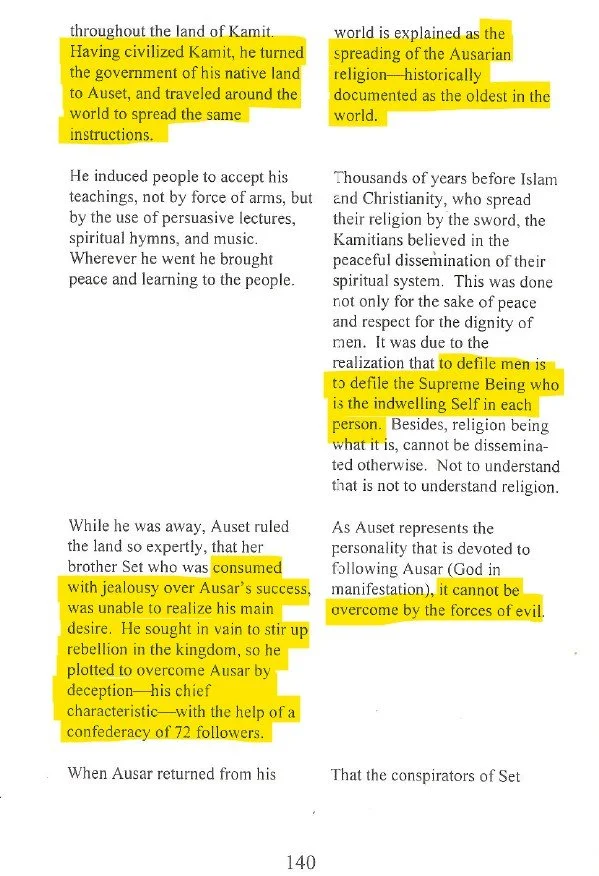
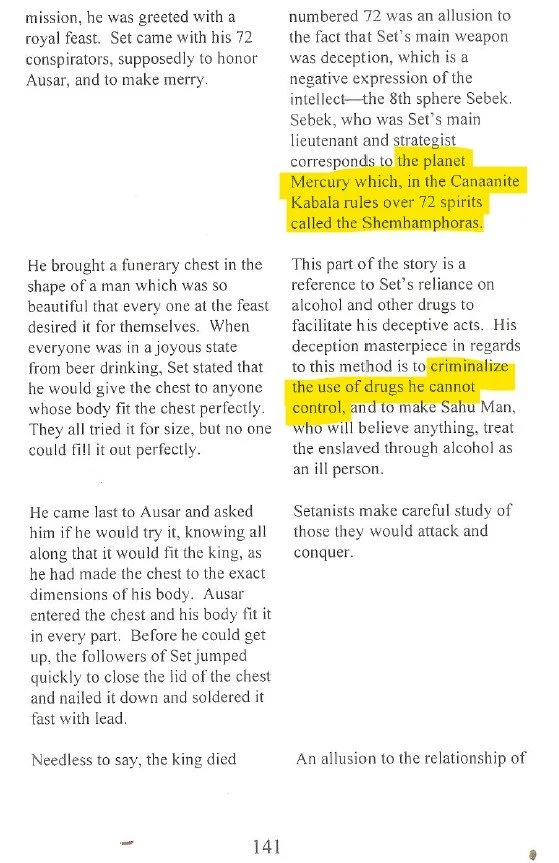
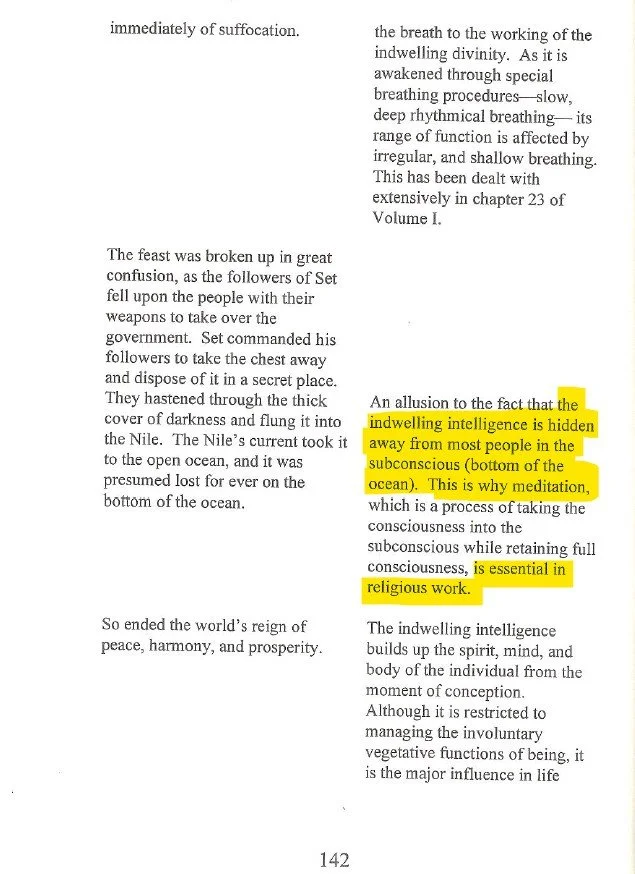
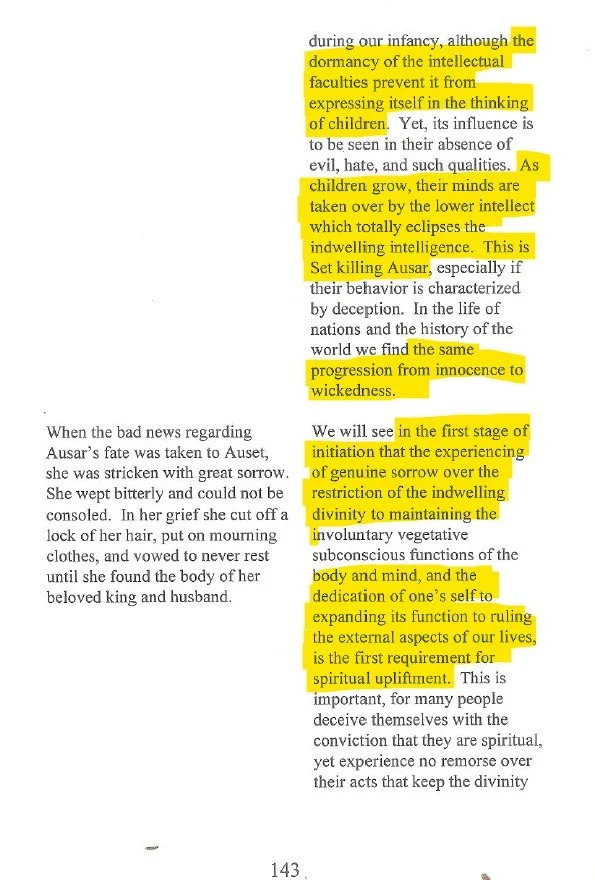
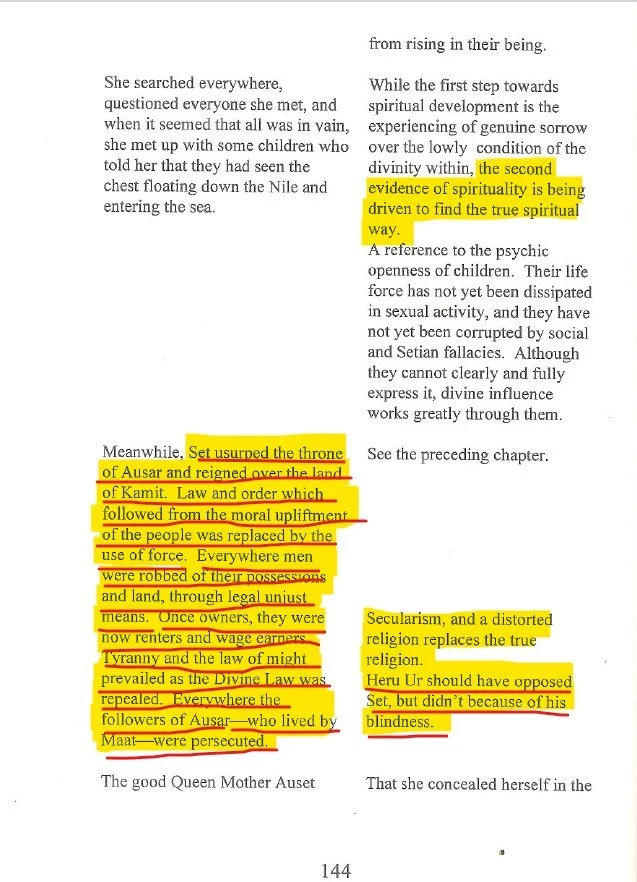
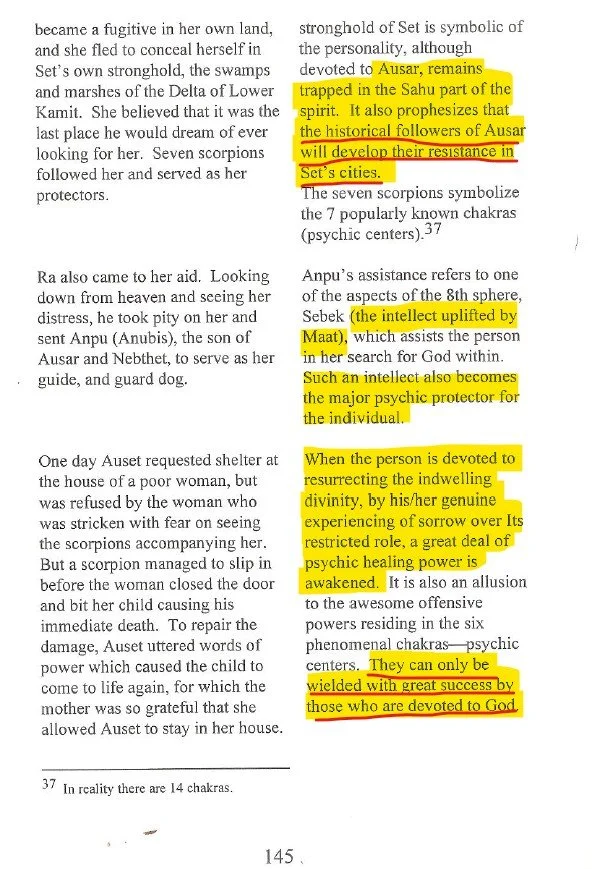
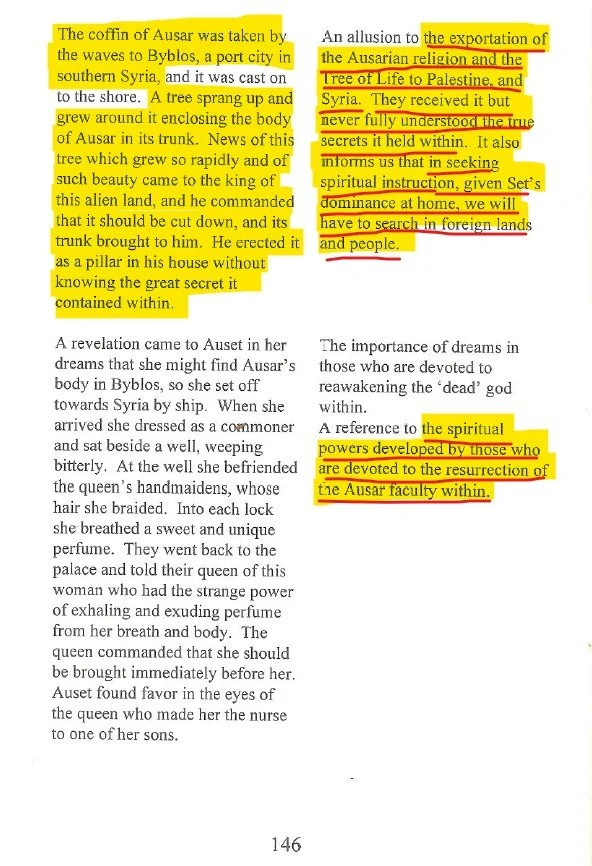
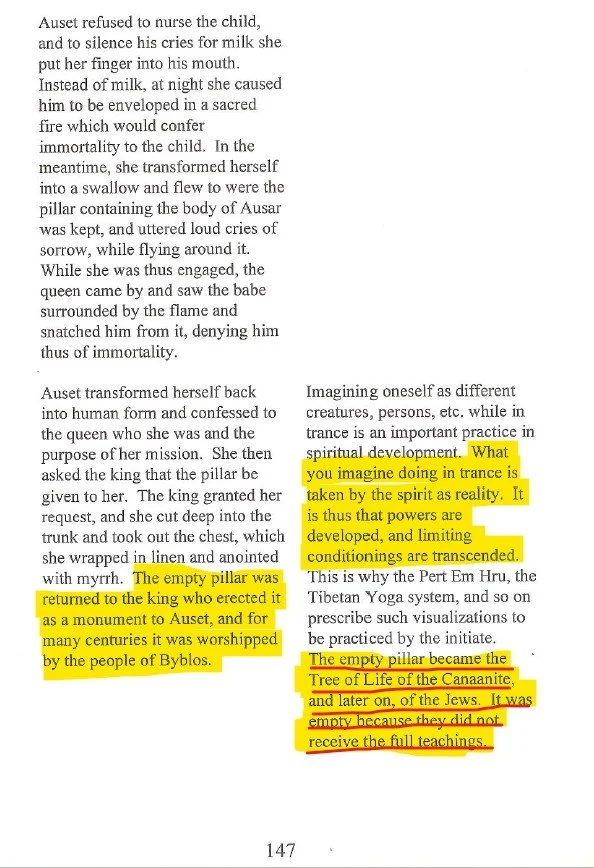
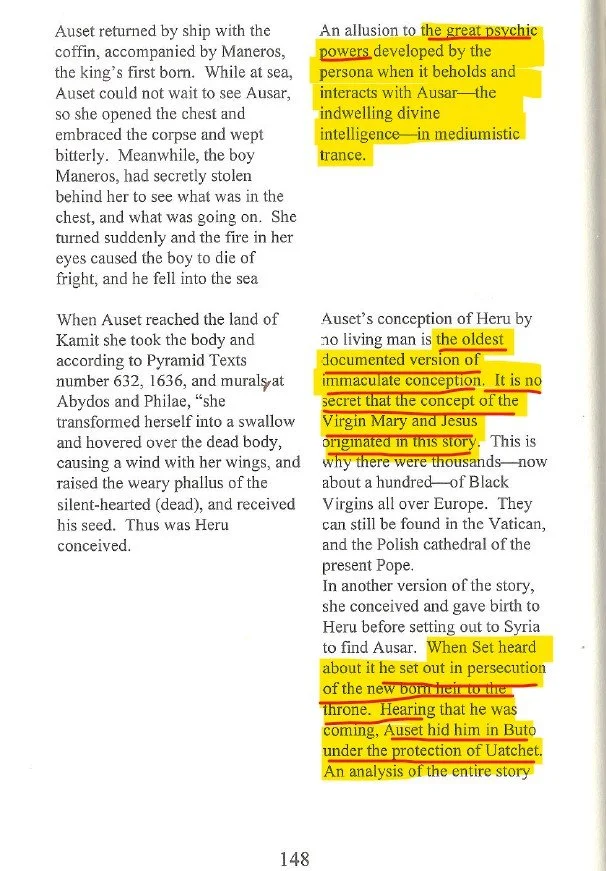
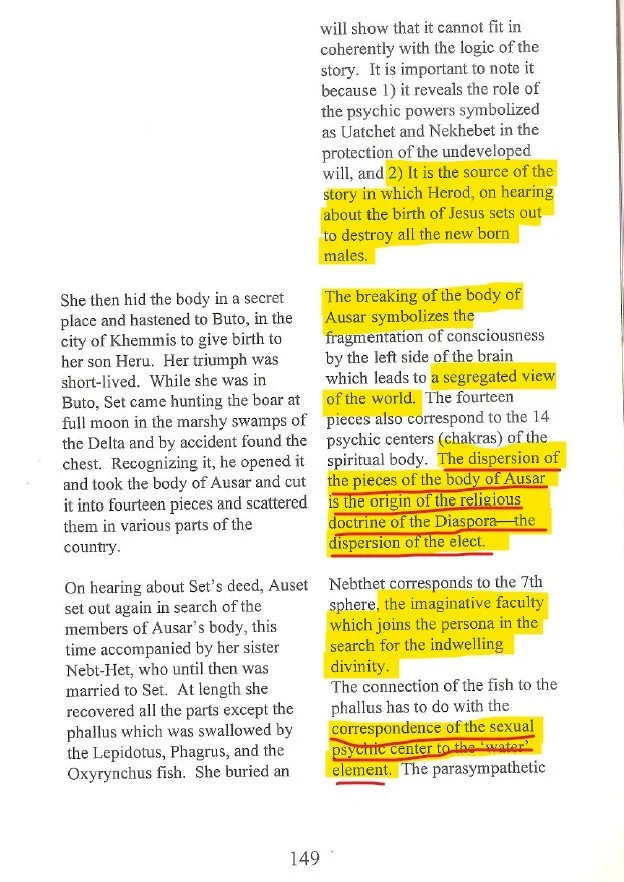
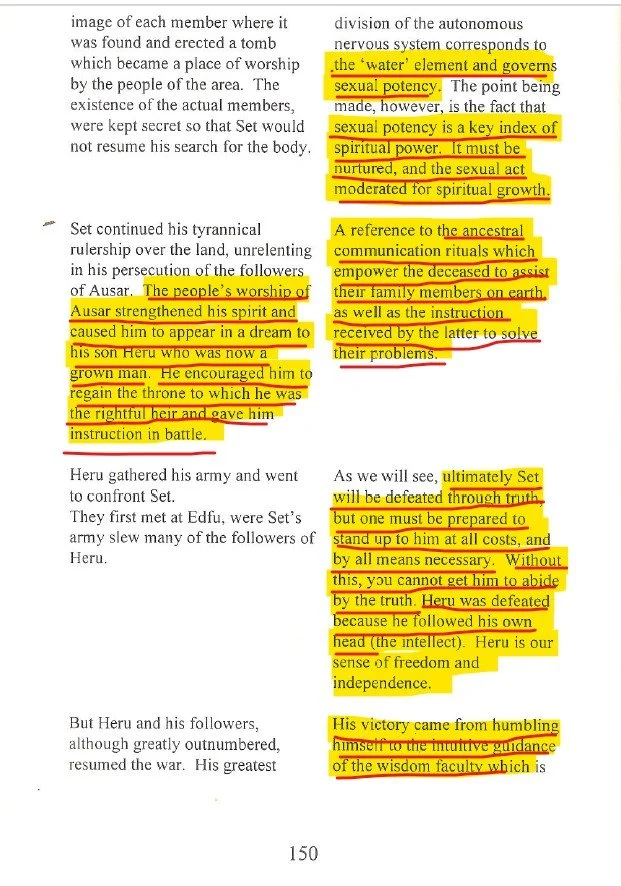

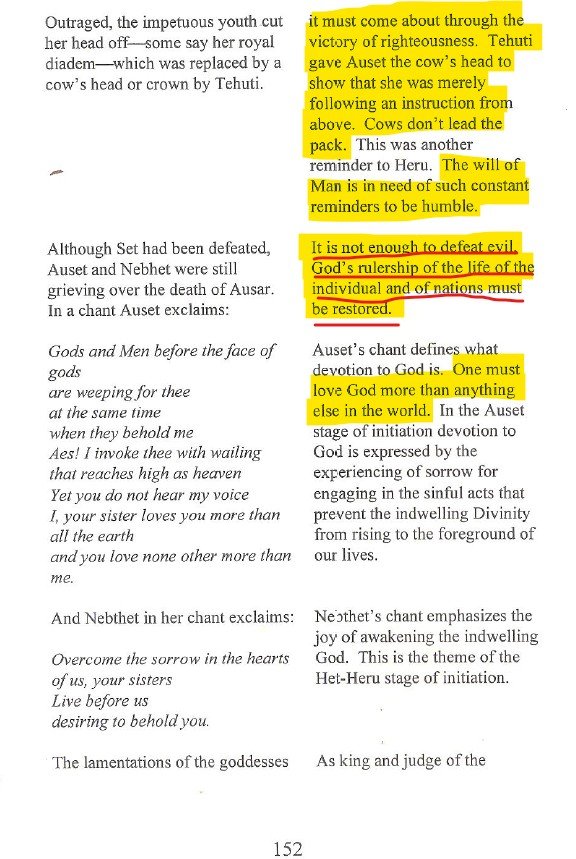
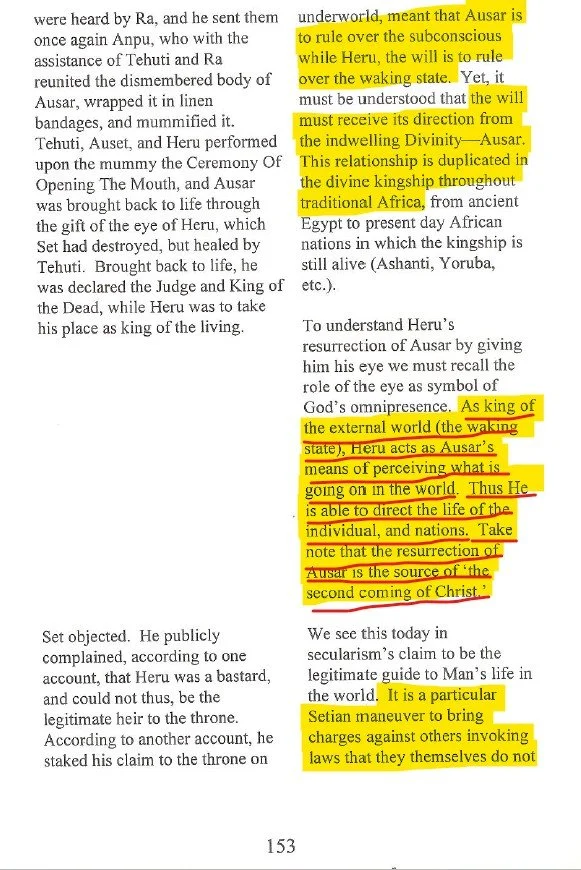
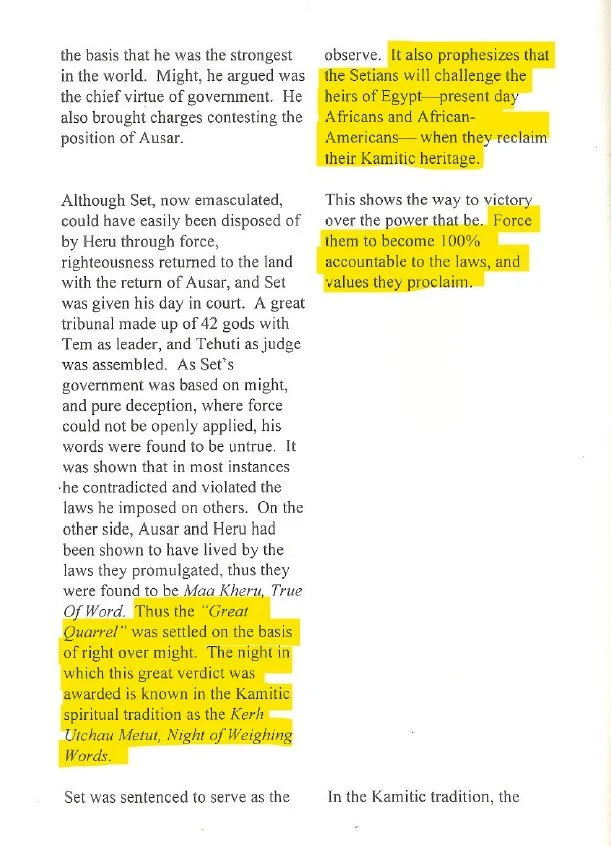
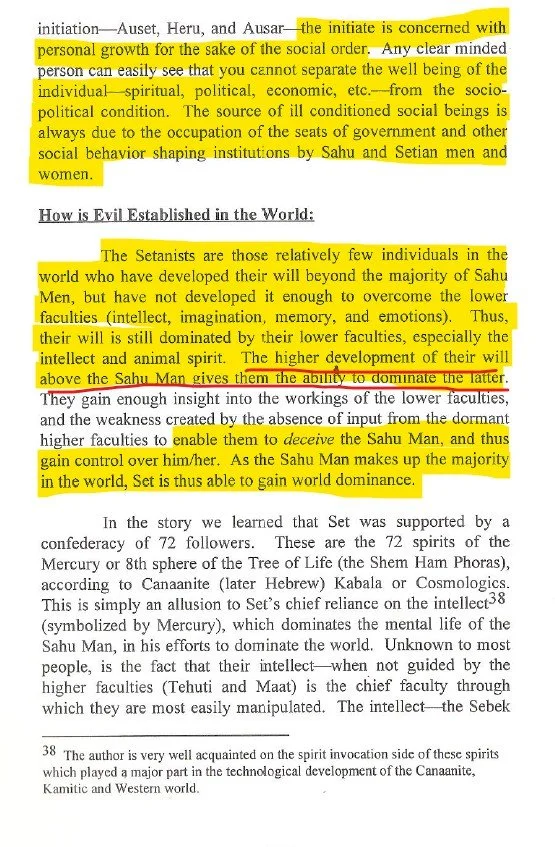
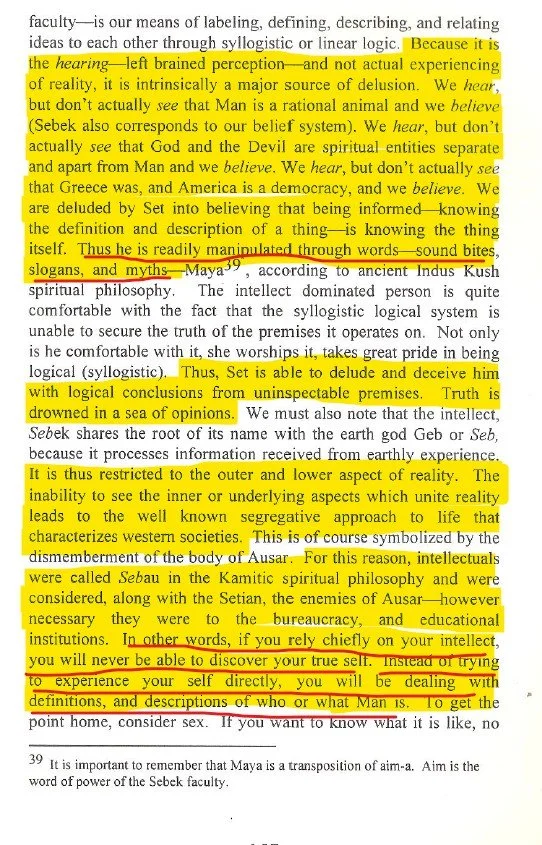
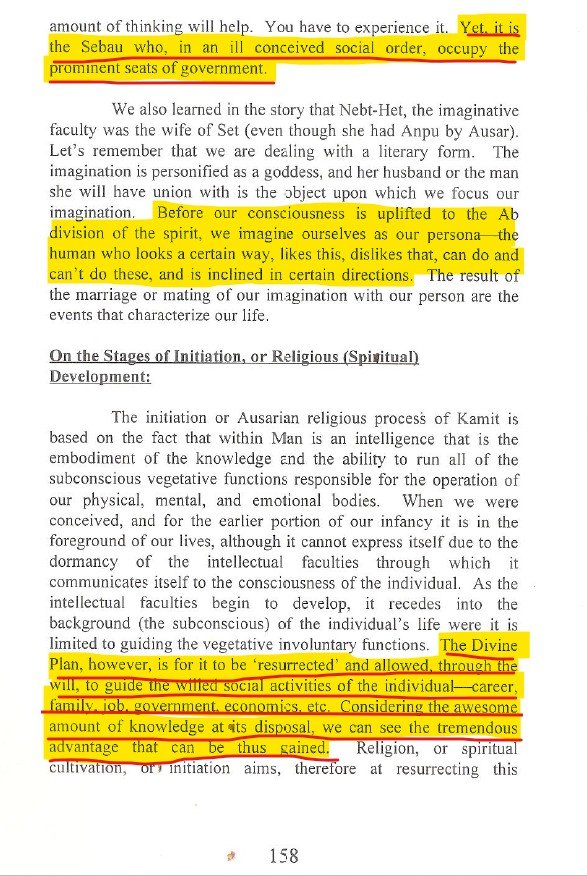
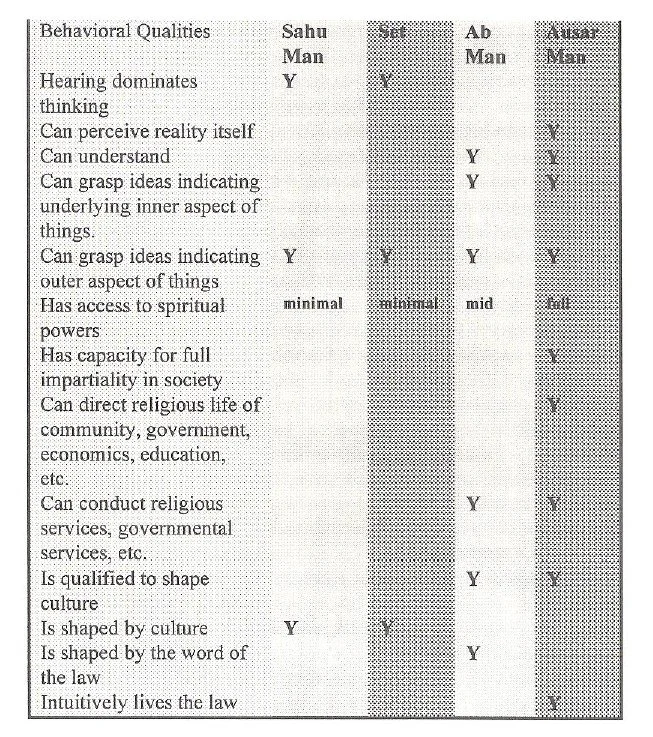
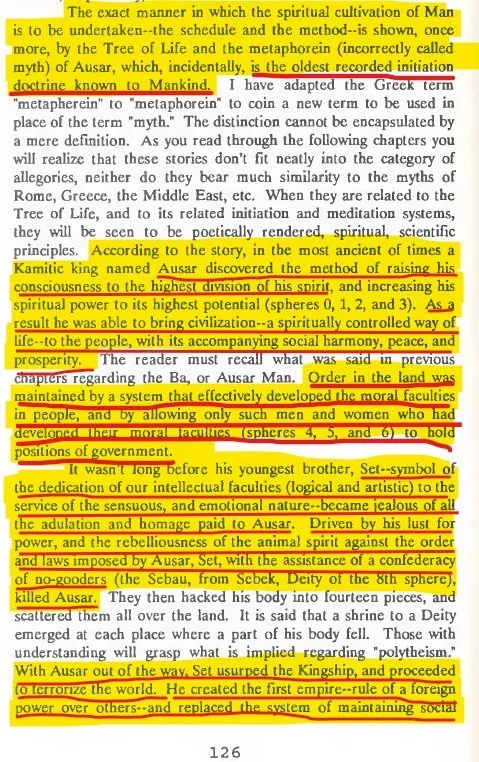
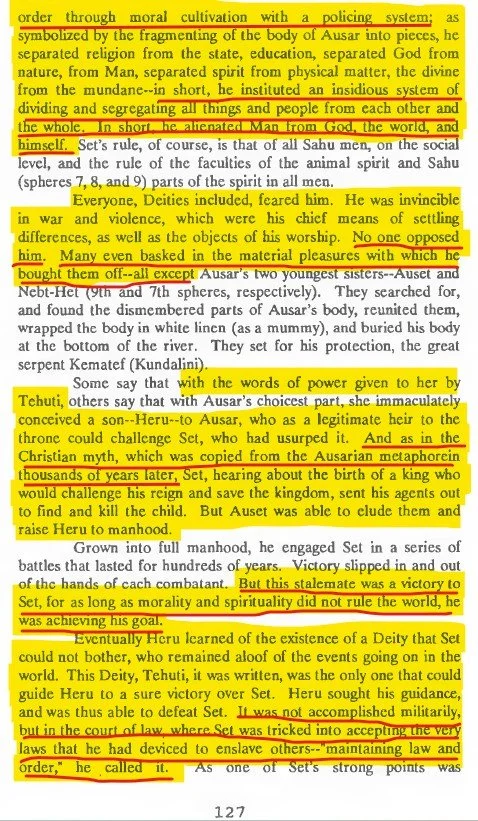
“The kingdom of Neter (God) was now established with Heru as the king, but guided by Ausar, whom he ‘reawakened,’ or ‘resuscitated,’ from time to time. This can only be understood by taking note of the fact that it describes the foundation of the African system of divine kingship. At prescribed times, rituals are performed by the African kings (Heru) and their royal priesthood to communicate with the spirits of the deceased kings (the Ausars) in order to receive their advice. This type of ritual is incorrectly called by Westerner scholars ‘ancestor worship.’ It must be called Ancestor Communication rituals.”
********************************************************************************************************
Utchau Metu: The Spiritual Cultivation of the Mind, Centerpiece of Spirituality and Religion . . . .
‘. . . .From the foregoing we can now understand that the practice of the Utchau Metu (Weighing of the will/man and the mind) is not an arbitrary or just another spiritual practice. Since man’s life is directly controlled by the life force, which is directly controlled by the mind, we must inspect the mind to see what types of ideas exist in it. Are they ideas that are in agreement with the laws that regulate the life force, or are they ideas that are in violation with them?
If the ideas that are in the mind are not the laws that regulate the life force, then the self (you, will) cannot exercise its control and direction of the force that determines the events in your life. A supreme goal of spiritual training, therefore, is the cultivation of a mind that has no thoughts about the self that are not in agreement with the laws that regulate the life force. If gasoline is what directly determines the performance of your car, what good is watered down gasoline?
Yet, the will must also be weighed in itself. There is a saying that is illegitimate because it is redundant. This is ‘free will.’ The will is free by its inherent definition and function. To will is to choose and there is no choosing where behavior is determined by emotion and sensuality – force or energy. An act of will is therefore an act taken in the freedom from emotional or sensual impulse or compulsion. The other supreme goal of spiritual training is the cultivation of the incarnated self – the will – which resides in the Ab spirit, to live by the truths/laws that have been placed in the mind – Sahu spirit. These are the two and only tasks that you came to perform on earth. If you do not accomplish them, you have wasted your incarnation . . .
While some religions teach that man will be judged at some time in the future (no one knows when), even after hundreds and thousands of years after death, the Kamitic religion teaches that all adults are all judged every winter solstice (December 21-24) and right after death as the last judgment. Since it is known what the judgment entails – the inspection of the mind and will for the evidence of living by truth – it makes sense to prepare for the annual and final judgments by carrying out the daily judgments to ensure that there is nothing but the law in the spirit. Daily evaluation is not unknown to many masons and spiritual traditions. They differ from the Kamitic system in that they are not acquainted with the 11 Laws of the spirit. Their inspections, therefore, fail to cover all of the possible violations. The inspection of the will and mind is thus a process of checking the content of the mind and performance of the will against the 11 Laws of the Spirit. This was symbolized by the placement of the hieroglyph for the will/Ab in one of the pans of a scale to be weighed against the feather of Maat (symbol of divine law) in the other pan. To get the full import of the symbol you must consider that the heart of man must weigh more than an ostrich feather. Thus, for such a heart to be equal in weight to a feather is indicative of a ‘light heart’ – one that is not weighed down by the guilt of sin, or a will not pushed by the force of emotion or sensuality – that is, freedom from the animal. . . .
When you go through the daily (efforts to live truth) and nightly (declarations) Utchau Metu work, you will discover that there is an objective witness to your efforts. You know what happens when you tell a lie. Something called conscience – a little voice – repudiates you. Calls you a liar. This voice that judges us when we do wrong had been called ‘conscience’. . . . Once you make a sincere effort to live according to the 11 Laws and perform your nightly declarations you will discover that the ‘voice’ will not merely condemn you, it will instruct you. You will find yourself intuiting knowledge concerning the laws and their implementation. This ‘voice’ is the Voice of God that has taken up residence in the highest division of your spirit . . . . There is a point that you can and must reach where you will be able to declare that you have mastered (Kheru) all of the divine laws of (maa). You can and must reach that point where only laws exist in your minds for you to point where your spirit is able to take the lead in bringing forth effects in your life. You can and must arrive at that point where you have met all of the requirements to share in God’s wisdom/omniscience and spiritual power/omnipotence. . . . You will know that point has been reached because your observance of all the laws is automatic and night after night, week after week, month and year after year, you have declared without failing a night ‘I have not . . .’ and you have not been repulsed or rebuked by the Voice of God.”
WHAT DOES ALL OF THIS HAS TO DO WITH ME?????

Nhidi ka wrasse. “I am Balanta.”
My ancient ancestors originated in the Nile Valley. They had Sudanic and Bantu origins and their spirituality was based on vital life force energy. I have traced the POLITICAL AND LEGAL STATUS OF 1,108 GENERATIONS OF MY FAMILY . In 1939, in his book, The Making of Egypt, Flinders Petrie identified my ancient Balanta ancestors as the “Anu”:
“The Anu people. Besides these types, belonging to the north and east, there is the aboriginal race of the Anu, or Aunu, people (written with three pillars), who became a part of the historic inhabitants. The subject ramifies too doubtfully if we include all single-pillar names, but looking for the Aunu, written with three-pillars, we find that they occupied Southern Egypt and Nubia. . . . As to the Southern Egyptians, we have the most essential document, a portrait of a chief, Tera-neter, roughly modeled in relief in green glazed falence, found in the early temple at Abydos. [see 1 on map below] Preceding his name, his address is given on this earliest of visiting cards, ‘Palace of the Aunu in Hermen city., Tera-neter.’ Hemen was the name of the god of Tuphium (Lanz., Dict. 544), 13 miles south of Luqsor [also known as Thebes; see 2 on map below]. Erment, opposite to it, was the place of Aunu of the south [see 3 on map below], Aunu Menti. The next place in the south is Aunti, [Gebeleyn; see 4 on map below], and beyond that Aunyt-seni [Esneh; see 5 on map below]. The chief peculiarity of the figure is the drooop of the chin; this is caused by a slanting jaw with short ramus. The same type of jaw is seen in the ivory king from Abydos, and moreover, the Scorpion king who preceded Nar-mer.”

The great scholar Cheik Anta Diop writes in The African Origin of Civilization: Myth or Reality (originally published Nations Negres et Culture) 1955 (Published in English in 1974):
"This civilization called Egyptian in our period developed for a long time in its early cradle . . . This cycle of civilization, the longest in history, presumably lasted 10,000 years. This is a reasonable compromise between the long chronology (based on data provided by Manetho -the last student of the Ancient Egyptian Mystery School of Anu at Alexandria before it was invaded by Alexander the Great in 330 BCE) which places the beginning at 17,000 BCE and the short chronology [3100 BCE] of the moderns - for the latter are obliged to admit that by 4245 BCE the Egyptians had already invented the calendar (which necessarily requires the passages of thousands of years)."
French Egyptologist Abbe Emile Amelineau (1850-1916 CE) adds:
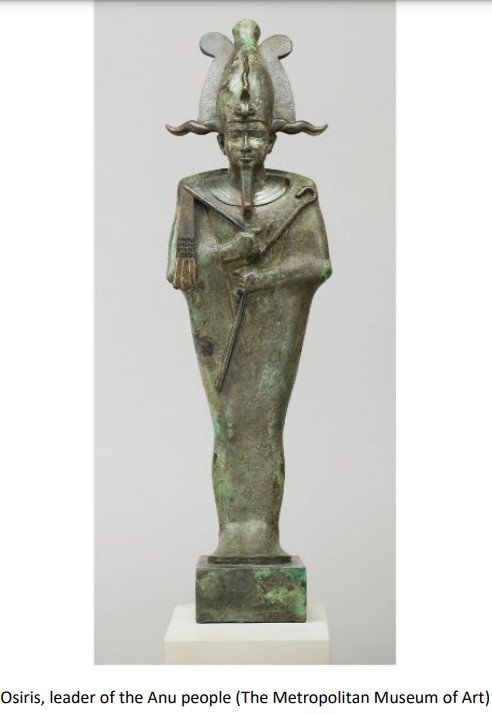
"These Anu [Ethiopians] were agricultural people, raising cattle on a large scale along the Nile, shutting themselves up in walled cities for defensive purposes. To this people we can attribute without fear of error, the most ancient Egyptian books, The Book of The Dead and the Text of the Pyramids, consequently all the myths of religious teachings. I would add almost all the philosophical systems then known and still called Egyptian. They evidently knew the crafts necessary for any civilization and were familiar with the tools those trades required. They knew how to use metals . . . They made the earliest attempts at writing, for the whole Egyptian tradition attributes this art to Thoth, the great Hermes, an Anu like Osiris, who is called Onian in chapter fifteen of The Book of the Dead and in the Texts of the Pyramids. Certainly the people already knew the principal arts; it left proof of this in the architecture of the tombs at Abydos, especially the tomb of Osiris, and in those sepulchers objects have been found bearing the unmistakable stamp of their origin - such as carved ivory . . . . All those cities [Ant, Annu Menti, Aunti, Aunyt-Seni today called Esneh, Erment, Quoch, and Heliopolis] have the characteristic symbol which serves to denote the name Anu" [Siphiwe note; In 2020 I received from Balanta elders the name, Brassa Mada which means “he who knows how to do, he who can do it”]
Diop continues in Origin of The Ancient Egyptians, 1981:
"The common ancestor of the Annu settled along the Nile was Ani or An, a name determined by the word (khet) and which, dating from the earliest versions of the `Book of the Dead' (4100 BCE) onwards, is given to the god Osiris. . . . The identity of the god An with Osiris has been demonstrated by Pleyte; we should indeed, recall that Osiris is also surnamed by the Anu: `Osiris Ani'.”
Diop continues in “Political and Social Evolution of Ancient Egypt”:
“The political unification of the Nile Valley was effected for the first time from the south, from the kingdom of Nekhen in Upper Egypt. Narmer’s Tablet, discovered by Quibell in Hierakonpolis, retraced its various episodes. The capital of the united kingdom was transferred to Tjenu (Thinis) near Abydos. This was the period of the first two Tjenu (Thinite) dynasties (3000-2778). By the Third Dynasty (2778-2723), centralization of the monarchy was complete. All the technological and cultural elements of Egyptian civilization were already in place and had only to be perpetuated. . . . Petrie affirmed that this dynasty, the first to give Egyptian civilization its almost definitive form and expression, was of Sudanese Nubian origin. [Siphiwe note: the people Petrie identified as “ANU”.] It was easier to recognize the Negro origin of the Egyptians when the initial display of their civilization coincided with an unquestionably Negro dynasty. The equally Negro features of the protodynastic face of Tera Neter [Siphiwe note: Tera-neter means “devoted one to God” and both “Nathaniel”, my given name at birth, and “Siphiwe”, my legal name given me by a council of elders in Azania in 2006 both mean “gift from God”] and those of the first king to unify the valley, also prove that this is the only valid hypothesis….

Diop continues:
‘With administrative centralization in the Third Dynasty,’ writes Jacques Piernne, ‘there was no longer any noble or privileged class.’ However, the clergy, guardian of the faith that established the king’s authority, was a corps apart, well organized and relatively independent. Until then it had exercised its spiritual guardianship at the coronation of the king in the temple at Heliopolis. But, to make his power absolute, the king clashed with the clergy. From then on he renounced the Heliopolis coronation and had himself crowned in his own palace at Memphis. He proclaimed the principle of his omnipotence by divine right, added ‘Great God’ to his titles, and was free from any human control. The advent of the Fourth Dynasty, with the Giza pyramids, showed that the monarchy had reached its zenith.

Thereafter, the regime again evolved toward feudalism. The courtiers constituted a special corps of dignitaries which would make itself hereditary by usage, and soon by right. [Siphiwe note: here is the orgin of monarchal rule, or rule by hereditary kings]. The cycle just described was twice more repeated almost identically and the history of ancient Egypt was to end without ever developing into a republic nor creating true secular thought. The feudal system that had just triumphed with the Fifth Dynasty reached its peak with the Sixth. It then engendered general stagnation in the economy and the administration of the State in urban as well as rural areas. And the Sixth Dynasty was to end with the first popular uprising in Egyptian history.
Obviously, division of labor on the basis of craftmanship already existed. The cities doubtless were active centers of trade with the eastern Mediterranean. Their idle poverty-stricken masses would take an active pat in the revolt. The mores of the nobility created a special class of men: servants contracted for varying tenure. The text describing these events shows that the country had plunged into anarchy; insecurity reigned, especially in the Delta with the raids by “Asiatics”. The latter monopolized the jobs intended for Egyptians in the various workshops and urban building yards.
The wretched of Memphis, capital and sanctuary of royalty, pillaged the city, robbing the rich and driving them into the streets. The movement soon spread to other cities. Sais was temporarily governed by a group of ten notables. The situation throughout the city was poignantly described in that text:
‘Thieves become proprietors and the former rich are robbed. Those dressed in fine garments are beaten. Ladies who had never set foot outside now go out. The children of nobles are dashed against the walls. Towns are abandoned. Doors, walls, columns are set aflame. The offspring of the great are thrown into the street. Nobles are hungry and in distress. Servants now are served. Noble ladies flee hungry and in distress. Servants now are served. Noble ladies flee… [their children] cringe in fear of death. The country is full of malcontents. Peasants wear shields into the fields. Man slays his own brother. The roads are traps. People lie in ambush until [the farmer] returns in the evening; then they steal whatever he is carrying. Beaten with cudgels, he is shamefully killed. Cattle roam at will; no one attends to them . . .
Each man leads away any animals he has branded. . . . Everywhere crops are rotting; clothing, spices, oil are lacking. Filth covers the earth. The government stores are looted, and their guards struck down. People eat grass and drink water. So great is their hunger that they eat the food intended for swine. The dead are thrown into the river; the Nile is a sepulcher. Public records are no longer secret.’
Apparently, the poor, at least for a time, retained the position thus acquired, for economic life and trade regained their normal course; wealth reappeared, though no longer in the same hands:
‘Luxury is widespread, but it is the poor who now are affluent. He who had nothing, possesses treasures, and the great flatter him . . .’
So, the first cycle of Egyptian history ended with the collapse of the Old Kingdom. It had begun with the feudalism that preceded the first political unification.; it closed in anarchy and feudalism. Monarchy sank into feudalism without being directly attacked. In fact, the principle of monarchy could not have been gravely threatened. Perhaps there were a few timid attempts at self-government in the Delta cities, as at Sais. But this was probably a temporary solution dictated by the suddenness of the crisis and the lack of public authority that followed the invasion of the Delta by the Asiatics. Cities on the invasion route were abruptly compelled to assure their own safety as the faced the common enemy. Confronted by this situation, the former provincial governors in Upper and Middle Egypt set themselves up as independent feudal lords, freed henceforth from any royal overlordship, though they did not ever question the principle of monarchy itself. On the contrary, each in his own way was trying to be king; they called themselves kings of their own regions. Apparently the bureaucratic apparatus, which weighed so heavily on the poor, along with royal absolutism, was the main target. . . .
After that revolution, all Egyptians had a right to the ‘Osirian death,’ the privilege of survival in the hereafter, previously reserved for the Pharaoh as the only one with a Ka, a soul, in the sky.”
Finally, Wayne Chandler, in Of Gods and Men: Egypt's Old Kingdom (1989) adds:
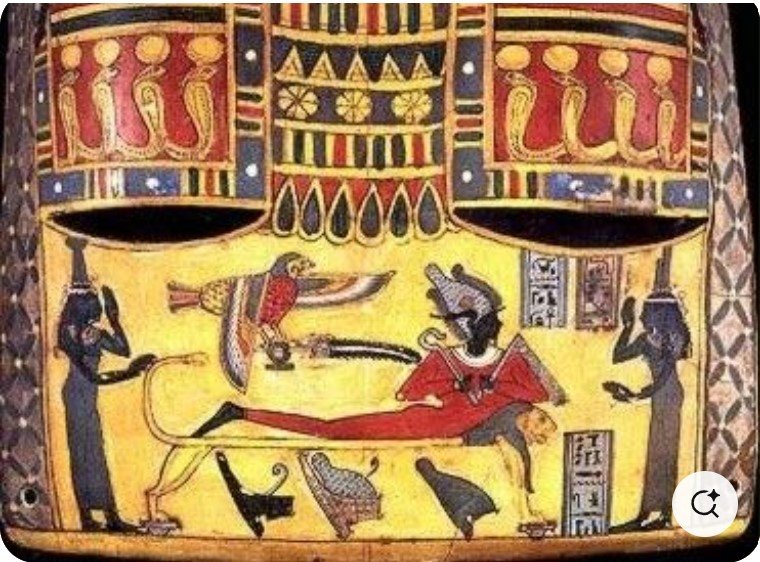
“Once again we must turn to Amelineau for it was he that discovered the tomb of Osiris at Abydos . . . [and] the head of Osiris found in a jar in the necropolis of Abydos. Because of this discovery Osiris could no longer be considered a mythical hero. The magnitude of this discovery cannot be stressed enough. . . "
So now I understand that my ancient ancestors knew that there was no mediator between man and one’s salvation, as we find in the Christian theory. They developed a system of spiritual training that allows me to become one with God. And this is the basis of a society like the Balanta’s that does not need chiefs or kings. Such a society is composed of a population of leaders. As explained on July 17, 1959 by His Imperial Majesty, Ethiopian Emperor Haile Selassie,
“In any normal society everyone has some opportunity to show himself as a leader, Even the mechanic or clerk who has an assistant assigned to him, not to speak of the doctor with all his helpers the officer who commands his troops, is a leader. Within his own sphere each has the same opportunity for showing ability and the same potential satisfactions as has the leader of a Government. The leader is marked out by his individual craftsmanship, his sensibility and insight, his initiative and energy. . . .
Leaders are people who raise the standards by which they judge themselves, and by which they are willing to be judged. The goal chosen, the objective selected, the requirements imposed are not merely for their followers alone. They develop with consummate energy and devotion their own skill and knowledge in order to reach the standards they themselves have set. This wholehearted acceptance of the demands imposed by ever-higher standards is the basis of all human progress. A love of high quality we must remember is essential in a leader. . . .
Dependability is another requirement in a leader. To be dependable is to be willing to accept the responsibility and to carry it out faithfully. A leader will always be willing to take counsel from his people. But will have to often act on what his own mind tells him is right. This demands that the leader has trained himself out of any inordinate fear of making mistakes. . . .
To embark successfully in a career involving leadership demands a courageous and determined spirit. Once a person has decided upon his life’s work and is assured that in doing the work for which he is best endowed and equipped he is filling a vital need, what he then needs is faith and integrity, coupled with a courageous spirit so that no longer preferring himself to the fulfillment of his task he may address himself to the problems he must solve in order to be effective. . . .
One mark of the great leader is that he feels sufficiently secure to devote his thought and attention to the well being of his subordinates and the perfection of his task, rather than being constantly worried about the approval of disapproval of others. . . .
He who would be a leader must pay the price in self-discipline and moral restraint. This entails the correction and improvement of personal character, the checking of passions and desires, and an exemplary control of one’s bodily needs and drives.
Leaders have to submit themselves to a stricter self-discipline, and develop a more exemplary moral character than is expected of others. To be first in place one must be first in merit as well. . . .
The true leader is one who realizes by faith that he is an instrument in the hands of God and educates himself to be a guide and inspirer of the nobler sentiments and aspirations to the people. He will kindle interest, teach, aid, correct and inspire. Those whom he leads will co-operate with him in maintaining discipline for the good of the group. He will instruct his followers in the goals towards which to strive, and create in them a sense of mutual effort for attaining the goal.”
And on July 2, 1963, HIM Haile Selassie I said,
“A qualified man with vision, unmoved by daily selfish interests, will be led to the right decisions by his conscience.”
I now understand that unless society graduates initates of the Anu Mystery School that produces professional men and women of integrity,
NO GOVERNMENT CAN SUCCEED IN BRINGING PEACE AND PROSPERITY TO THE PLANET.
And this mixture of Bantu Great Belief and Anu spirituality explains my work in life and involvement in international diplomacy..
The spirit of my great, great, great, great, great grandfather, Brassa Nchabra, entered me when I was four years old according to the Great Belief Principle 19. The evidence of this is beyond a reasonable doubt. Brassa Nchabra came from the village Untche, which is located alongside a river and is known for having the best swimmers in the territory. Brassa Nchabra was trafficked from Untche to Charlestown, South Carolina. During a visit to the ocean at Charlestown when I was 4, my father took me to the water’s edge and when my foot touched the water, I had an inexplicable tantrum. It was that expeience that convinced my father to enroll me in swimming lessons. By the age of 10, I was the Illinois state champion swimmer.
Swimming and an out-of-body experience caused me to go to Yale University. This was the first instance of (5) having a mission in life. What happened after that is described in the article A Swimmer’s Race. The January 26th, 2015 issue of Sports Illustrated told the rest of my collegiate swimming story. That article also told another part of my story. At Yale, where I started to study African American history, I learned that most slaves took the names of their slave masters. All of a sudden, my birth name, Anthony “Tony” Blake, started to really bother me. Why did I, a black person, have a Spanish or Italian first name and an English surname when I am neither Spanish, Italian or English? Why, now that I am “free”, did I continue to use the foreign names of slave-owners? This was part of my identity crisis that started back in 1977 when I watched the movie Roots.
Describing that experience, I told Jon Wertheim, author of the Sports Illustrated article, “I didn’t feel like I knew who I was. I didn’t know my history. Like a lot of African-Americans, we don’t know our past. All of a sudden, connecting with my ancestral heritage became very important.”
An identity crisis - Who am I? Why did I have European names? -caused me to leave Yale in 1993 two months before graduation. I was tired of reading about Jesus and the Buddha, I wanted to live like them. In From Yale to Rastafari: Letters to My Mom, 1995-1998, I wrote,
“After the 1990-1991 season I was awarded the MacLeish Memorial Swimming trophy, established in 1936 by Halsted R. Vanderpoel ’35, in memory of Kenneth MacLeish, 1918, who was killed in World War I. The trophy is awarded to “that member of the Yale swimming team, who through his efforts and high ideals in sportsmanship and loyalty, best exemplifies the spirit of Kenneth MacLeish.. Because of this honor, and because Yale university had a chance to win the Ivy League title for the first time in 20 years, I felt obliged to do my part to claim such a victory. This last effort – to win an Ivy-League Championship for the team and for Frank – is the sole reason why I stayed in school as long as I did my senior year. . . . Four days after winning the Ivy-League Championship- and just three months shy of graduation, I left school, sold my possessions, [and] vowed not to cut my hair in order to consecrate and symbolize my new-found freedom . . . “
Here was the evidence of (4) Identity with spiritual life or the higher ideals and (6) Evidence of a call to spiritual Orders or the Priesthood in the Mysteries and (10) Readiness or preparedness for initiation. During the next 14 years I began Learning From The Leaders The Personal Cost of African Liberation: Responsibility, Racial Re-Education, Spiritual Re-Conversion, and Class Suicide for a Holy Order of Commitment. Leaving 2 months before graduation without the degree and the likely lucrative job opportunites afforded by a Yale degree demonstrated 10. Law of Geb (Geb) - I Know that from heaven I came and to heaven I will return; I seek not enduring works on earth. and 9. Law of Auset (isis) -Prepare to sacrifice everything to become the vessel of God on earth and I will, in turn, receive everything.”
Armed with W.E.B Dubious’ sense of responsibility of the Talented Tenth, the vision of “Africa for the Africans at home and abroad” promoted by Marcus Garvey, the understanding that I must meet the demands through the personal sacrifices demanded of a royal priesthood of Pan Africanism, with role models such as Walter Rodney, Ken Saro Wiwa, and John Africa, and with the direct, clear instructions of God, I went out into the world renouncing all personal interest, to do the work assigned to me and to fulfill my destiny. As a symbol of this Holy Order of Commitment to African Liberation, I vowed not to cut my hair. My mission led me to cities like Chicago, Atlanta, Houston and countries like Ethiopia, Ghana, Togo, Benin, South Africa, Jamaica, Barbados, Trinidad and Honduras. All of this re-education and work is chronicled in my five volumes of COME OUT OF HER, MY PEOPLE! 21ST CENTURY BLACK PROPHETIC FAITH AND PAN AFRICAN DIPLOMACY.
On March 3, 1996, I wrote a letter to my mother stating,
“Mom, Jah lives! And the Most High lives in me truly. It is up to me to seek God within, the Christos of the mystics who were able to bridge the gap between God and man. According to Rasta elder Dennis Forsythe, this is a long and painful process. He recounted to me his journey, how friends and family reacted to his islolation and alienation, his weird behavior and his bizarre smoking of herbs. Many thought he was ‘mad’. Yet, his was a conscious effort and the sufferation -the ‘madness’ - as integral to reaching what Rasta calls the ‘heights’. His advice to me:
‘Abandon the search for God and the creation and other matters of a similar sort. Look for him by taking myself as the starting point. Learn who it is within me that makes everything my own and says, ‘My god, my mind, my thought, my soul, my body.’ Learn the source of sorrow, joy, love, hate…. If I carefully investigate these matters, I will find Jah in myself. Whoever finds himself, of him the world is not worthy. . . whoesoever knows the All, but fails to know himself, lacks everything. Mystics like myself search after direct union with God, to wrench from Him the secret to immortality, and many claimed to have achieved this spiritual power, with its associated ‘gifts of prophecy’ and power to heal and create miracles.’
Well Mom, I have tasted of these powers. I have even been named ‘Propecy’ by a middle-aged Jamaican woman. You have no idea what has been happening to me here. I see it as trial after trial, never willing to admit negativity. Yet it is exhausting. In the wee hours of the morning I literally struggle to a resting spot, drifitng as I walk into semi-consciousness. I’m so exhausted. I am asleep before I lay my head down. There have been assaults on my well-being - my usual tactics being to just throw them off, ignore them. Yet, this is dangerous. It takes its toll subtly, invisibly. Such is the result of trying to navigate a maze of a thousand pins. . . . “
Those attacks intensified on January 27, 1997 and August 6, 1999. By 2003, I fled to the ancient, mystical land of Ethiopia and there received a comission which serves (5) Evidence of having a mission in life. I demonstrated 9. Law of Auset (isis) -Prepare to sacrifice everything to become the vessel of God again when I stopped paying taxes to the IRS and left the country, my business, my beloved wife, my sons, everything, for my ancestral homeland. And indeed, I did lose everything as a result of the sabotage that stopped me from competing in the Tokyo Olympics. Since then, I continue to exhibit (3) Steadfastness of purpose, which is equivalent to Fortitude, in my work in life and involvement in international diplomacy. Twenty one years later, I am still leading the effort to elect the twenty representatives to the African Union Economic, Social and Cultural Council (ECOSOCC) while taking the AfroDescendants case to the International Court of Justice.
All of this in order to understand that I have always lived and practiced the original ancient spirituality and religion of my ancient ancestors. I continue (4) Identity with spiritual life or the higher ideals and journey that puts me at odds with the world. Elder Gabriel used to always say to me, “When you become a friend of God, you become an enemy of the people!” However, if I can serve as a master for the ready students, help them break the mental slavery of Christianity, help them understand ANU SPIRITUALITY: SALVATION AND RESSURECTION THROUGH UTCHAU METU while showing them THE ANSWER TO THE QUESTION: WHO CREATED CHRISTIANITY, WHO WROTE THE GOSPELS FEATURING JESUS CHRIST, AND HOW DID CHRISTIANITY START IN AFRICA?, then I will have done my part to prepare New Afrikan Diplomats and Civil Society Workers sufficiently trained and with the necessary integrity to run the government of the United African States in order to produce the African Renaissance. This is why I start 2025 as the President of the Communications Commission of the International Preparatory Committee of the Pan African Federalist Movement.
For the Africa we want, for the African Renaissance, we need a government with workers that have (2) Control of action, the combination of which, Plato called Justice (i.e. the unswerving righteousness of thought and action. We must have a United African States’ government with civil society workers that (4) Identity with spiritual life or the higher ideals, which is equivalent to Temperance, an attribute attained when the individual has gained conquest over the passional nature.
Ultimately, we must all pass the Judgement - Utchau Metu - for the Salvation of the World.
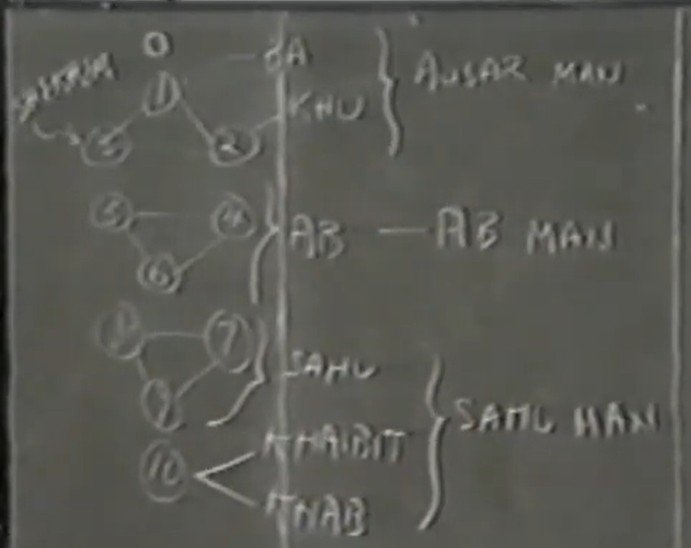
Ra Un Nefer Amen teachings: https://www.youtube.com/watch?v=Waz4vtB2It8&list=PL8C01B0AB2D2E1A98
The Lost Egyptian Gospel: The Eternal Mystery Christianity Rebranded....
What if the story of Christ did not begin in Bethlehem but on the banks of the Nile? What if Christianity did not invent its central myth but inherited it, encoded it, and spiritualized it for a new age? To many, this sounds like heresy. To initiates of ancient wisdom traditions, it sounds like history repeating itself through symbols.
In the deepest layers of myth, religions do not argue. They echo.
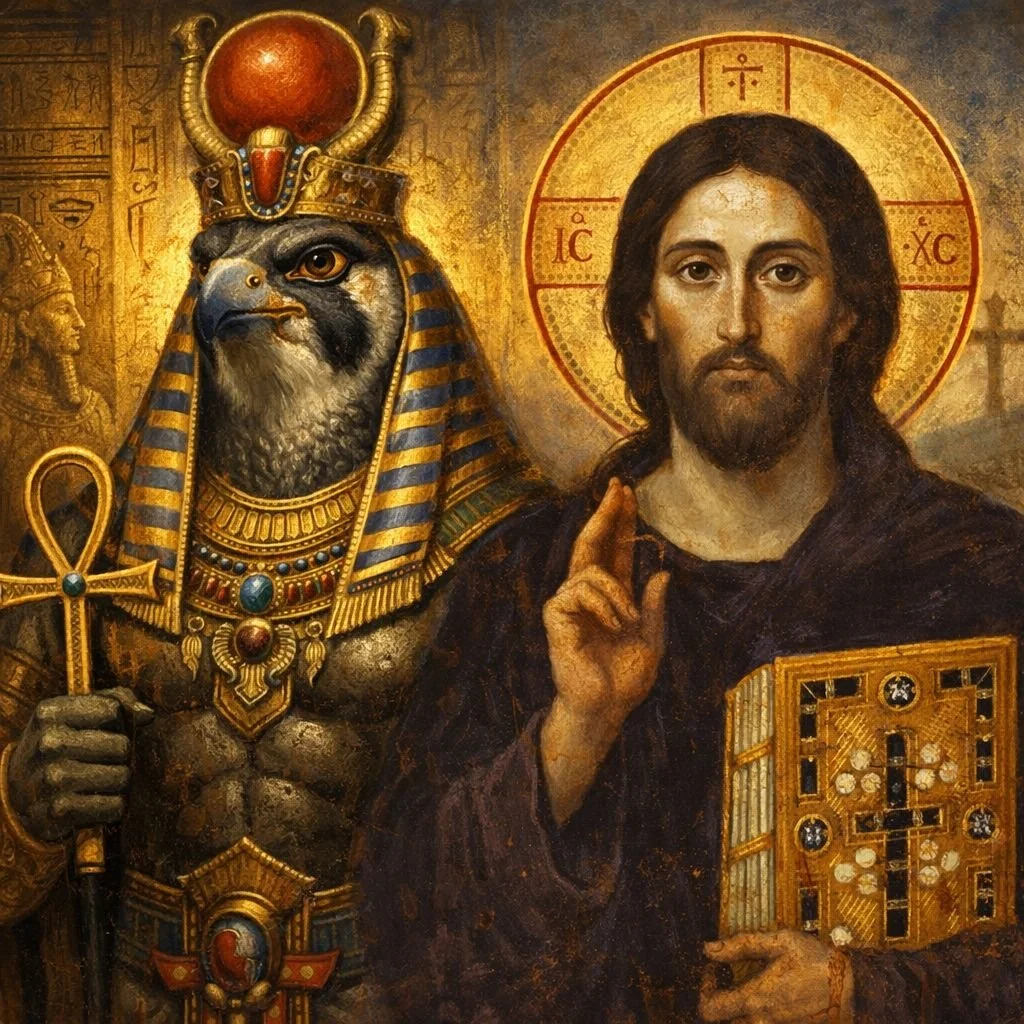
In ancient Egypt, long before the Gospels were written, the myth of Horus already described a divine son born into a fallen world to restore cosmic order. Horus is not merely a god. He is a principle. The avenging son. The restorer of Ma’at. The living embodiment of divine kingship made flesh. This alone should sound familiar.
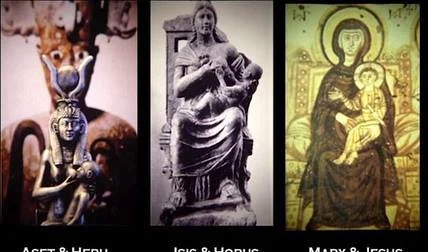
Horus is conceived through divine intervention after the murder of Osiris. His mother, Isis, conceives through sacred magic, not ordinary sexuality. Isis is not simply a mother. She is a throne, a magician, a divine womb that carries the logos of Egypt. Likewise, Christianity introduces Jesus Christ through a virgin birth narrative, where divine will bypasses biological law. In both systems, the child is not born from desire but from destiny.
In Egyptian temple theology, Horus is born to reclaim a world ruled by chaos, embodied by Set. His mission is not moral teaching. It is cosmic correction. He must defeat the powers that fractured divine order. Christ enters a world ruled by sin, archons, and corrupted authorities. His mission is not merely ethical reform. It is ontological repair. Both figures arrive in a broken cosmos to restore balance.
The Eye of Horus is one of the most misunderstood symbols in history. It is not simply an eye. It is a fractured divine body restored piece by piece after violence. Each fraction represents cosmic faculties reassembled into wholeness. In esoteric Christianity, Christ’s broken body, crucified and resurrected, becomes the same metaphysical statement. The divine is dismembered in matter and must be reassembled through sacrifice. Communion reenacts this mystery ritually, just as Egyptian rites reenacted the restoration of Horus and Osiris.
Even the motif of death and resurrection is older than Christianity dares to admit. Osiris is killed, dismembered, entombed, and raised as Lord of the Duat. Christ is crucified, entombed, descends into the underworld, and rises as Lord over death. In both traditions, resurrection is not resuscitation. It is elevation. The initiate does not return as what he was. He returns as what he truly is.
The conflict between Horus and Set mirrors Christ’s confrontation with Satan and the fallen powers. These are not fairy tales of good versus evil. They are mythic dramatizations of consciousness struggling against fragmentation. Set and Satan represent disorder, egoic rupture, and the tyranny of lower forces over the soul. Horus and Christ represent integration, sovereignty, and divine memory restored.
Ancient Egyptian texts speak of Horus as the rightful king whose reign restores Ma’at to the land. Early Christian texts proclaim Christ as King of Kings whose reign restores the Kingdom of God. In both cases, kingship is symbolic. It is not political power. It is mastery over chaos, both external and internal.
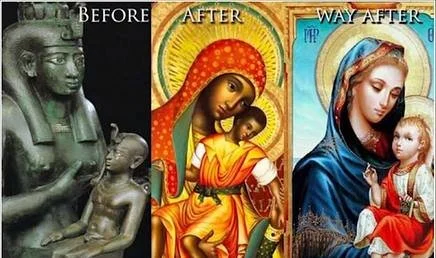
What Christianity did was not invent a new savior story. It reframed an ancient one. The Nile mystery was translated into a Judeo Roman language. The falcon became the lamb. The throne goddess became the virgin mother. The solar child became the incarnate Word. The myth did not die. It evolved.
This does not diminish Christ. It magnifies him. It places him within a lineage of eternal symbols that humanity has always used to describe the same cosmic truth: the divine descends, suffers fragmentation, and rises again to show the way back to wholeness.
The real controversy is not whether Horus and Christ are similar. The real queston is why this pattern keeps returning across civilizations, centuries, and religions. Perhaps saviors are not unique events. Perhaps they are recurring revelations of an eternal structure embedded in the human soul.
And perhaps what was crucified was never just a man, but a timeless mystery humanity keeps forgetting and relearning under different names.
#TheSacred #HorusAndChrist #AncientMysteries #HiddenTheology #EgyptianWisdom #EsotericChristianity #MythicArchetypes #OccultHistory #LostGospels #DivinePattern