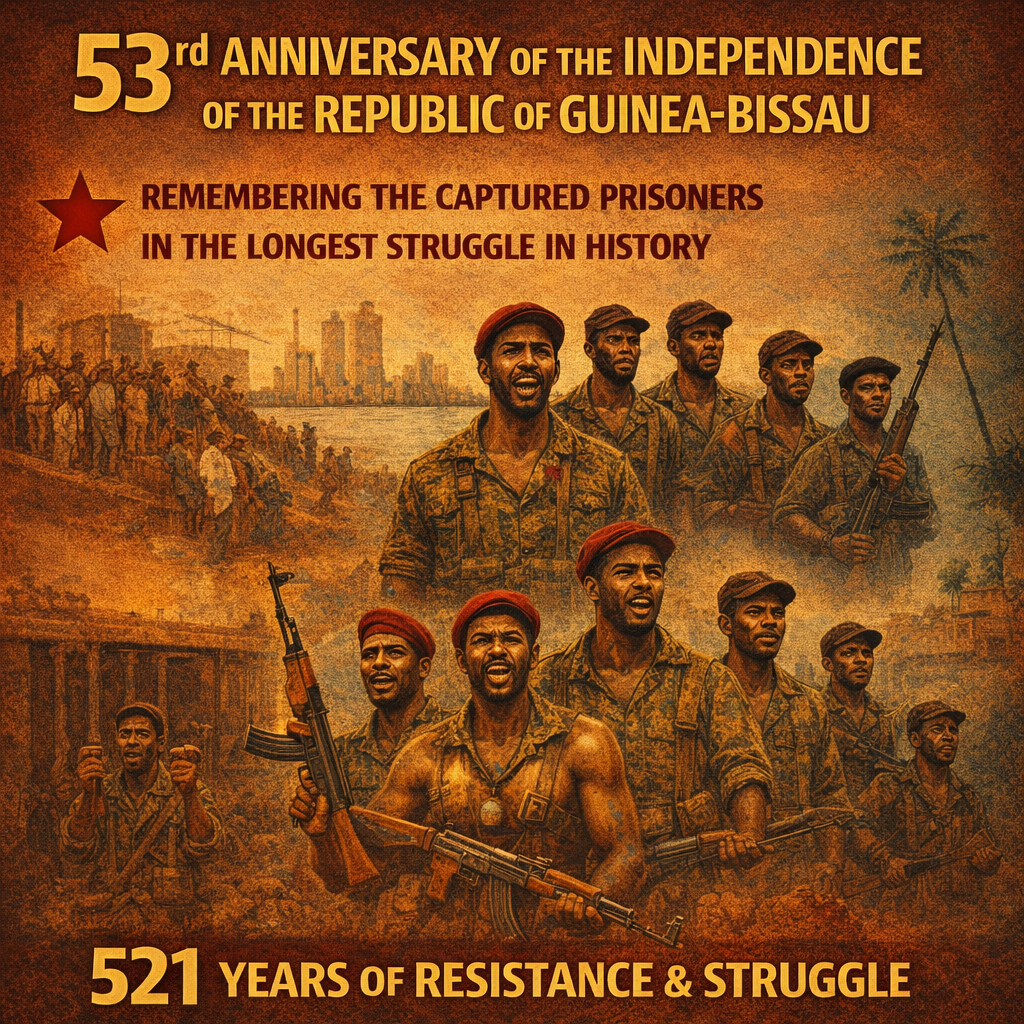
Exactly 53 years ago today, the Dum Diversas War authorized by Pope Nicholas V on June 18, 1452 and launched by King Afonso V and his Military Order of Jesus Christ headquartered in Tomar, Portugal, ended after 521 years, 3 months, and 6 days. It was the longest running declared war in human history.
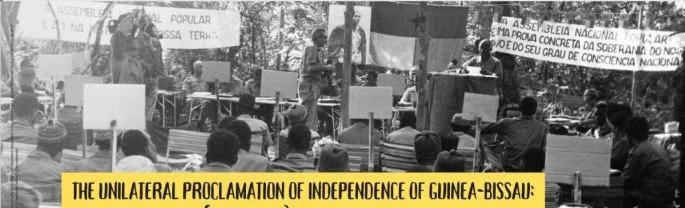
The specific proclamations made during the unilateral declaration of independence in the liberated region of Boé on September 24, 1973, explicitly framed the victory as the culmination of a five-century-long struggle against Portuguese rule.
By reading the texts from the African Party for the Independence of Guinea and Cape Verde (PAIGC) and the newly formed People's National Assembly, you can see that they did not view their revolution as just a 10-year bush war. They explicitly framed it as the dismantling of a multi-century system of violent extraction that began with the first Portuguese maritime arrivals in the 15th century.
The text of the declaration explicitly calculated their struggle not from the start of armed guerrilla warfare in 1963, but across half a millennium. The proclamation notes that the creation of the sovereign state was:
"...the culmination of the five centuries of militant struggle of the people of Guinea and Cape Verde against Portuguese colonial domination."
The declaration did not treat the Portuguese colonial state as a legitimate government that had broken down, but as an illegal, continuous foreign invasion. The proclamation framed the Portuguese presence as an act of uninterrupted state violence and economic piracy, stating that:
Portuguese rule was maintained strictly through systemic violence, forced labor, and racial subjugation.
The colonial state was an apparatus of permanent aggression against the natural rights and sovereignty of the African population.
Because Portugal refused to acknowledge African sovereignty, the PAIGC used the proclamation to state that the people were reclaiming a sovereignty that had been stolen, not asking for it to be granted. They positioned the People's National Assembly as the only true, lawful government of the territory, rendering the Portuguese military presence an occupying force with no legal standing under international law.
Though the movement's chief ideologue and leader, Amílcar Cabral, was assassinated in January 1973 just months before the declaration, his foundational teachings heavily dictated the framework of the proclamation. Cabral frequently taught that imperialism was an interruption of African history. Therefore, the declaration of independence was explicitly framed as re-entering history—picking up the thread of self-determination that had been forcibly paused five centuries prior.
“At the period when the great exploitation of African men as slaves in the world appeared. . . . they decided to turn the archipelago into a storehouse for slaves. Folk taken from Africa, namely from Guine, were placed. . . as slaves. . . . For the Africans who for five centuries have lived under Portuguese domination, Portuguese colonialism represents a reign of evil, and where evil reigns, there is no place for good.”
- Amilcar Cabral, Part 1: The Weapon of Theory
By framing their liberation this way, Guinea-Bissau forced the international community to choose between Eurocentric colonial legalism and the material reality of African sovereignty. Within weeks of the September 24 proclamation, over 70 nations recognized the Republic of Guinea-Bissau as a sovereign state, effectively agreeing that the five-century occupation was illegitimate and over—nearly a full year before Portugal itself was forced to recognize their independence in September 1974.
The first recorded instances of people being captured and enslaved from the territory of modern-day Guinea-Bissau occurred between 1446 and 1447. This began with the arrival of Portuguese maritime explorer Nuno Tristão, who reached the Upper Guinea coast and the mouth of the Geba River. These early mid-15th-century raids quickly transformed from sporadic captures by explorers into a structured, highly commercialized network. Because this was a declared war under the Dum Diversas Apostolic Edict, all those who were captured - men, women and children - were “prisoners of war”.
Because a significant portion of the historical records from the earliest centuries of the trade are incomplete, patchy, or lost, there is no single, definitive final number for everyone stolen from the region. When the Portuguese returned from their sixth expedition to Guinea, they brought with them about 653 prisoners of war. Historians estimate that several hundred thousand people were ultimately captured and enslaved from the territory of modern-day Guinea-Bissau. These prisoners of war continued to fight for their liberation and freedom.
The Confraternity of Our Lady of the Rosary of Black Men - was created in Lisbon at the Monastery of Sao Domingos on 14 July 1496, forty years after the Portuguese had arrived in the region of modern Guinea-Bissau. By 1526 the confraternities had been granted the right, via their compromisso or constitution, to liberate their members from slavery or buy them from captivity.
From its inception as a city in 1549, Salvador (Brazil) served as a link to Pernambuco, Paraiba and Sergipe in the north of the country and the isles, Porto Seguro, Espirito Santo, Rio de Janeiro, Sao Vicente and Buenos Aires in Argentina to the south. Ships brought “free Africans from the region of modern Guinea Bissau, Cacheu, who were hired to work as carpenters.”
From 1570 - 1600, an annual average of 3,000 African captives were shipped largely from Quinara, an important Biafada kingdom in pre-colonial Guinea-Bissau situated between the Geba and Rio Grande de Buba rivers, and about half of the slaves were sent to Brazil. From 1600-1650, about 4,000 slaves from the Upper Guinea coast were exported annually to Brazil and elsewhere (about 200,000 for this period).
The first officially recognized free town of formerly enslaved Africans in the Western Hemisphere is San Basilio de Palenque, located in northern Colombia. After being trafficked to the major Spanish slave port of Cartagena its legendary founder, Benkos Biohó After being trafficked to the major Spanish slave port of Cartagena, Biohó broke his chains and escaped into the nearby swampy mountains in 1599. He organized a highly disciplined guerrilla army of fellow runaways (maroons or cimarrones) and built a fortified settlement (palenque). For nearly a century, Spanish colonial armies tried and failed to conquer the settlement. The Palenqueros did not just defend their own town; they actively raided Spanish slave ships arriving in Cartagena to liberate newly arrived Africans. Faced with a military force they could not defeat, the Spanish Crown capitulated. In 1691, King Charles II issued a Royal Decree officially declaring the inhabitants of San Basilio de Palenque completely free, granting them autonomy over their own territory.
In the late sixteenth century Guineans, probably led by Balanta prisoners of war, helped form the Santidade movement in Jaguaripe (Bahia, Brazil). It resisted Portuguese ideology that marginalized both Indigenous and Africans in Bahia.
The community at Palmares (Brazil) started when forty Guinean men, former enslaved people from Pernambuco (some of them most likely freedom-loving and fiercely resistant Balanta) left for Palmares and formed a republic there that existed as a safe haven from 1607 to 1695.
In the United States, many prisoners of war, descendants of Balantas, were escaping their slave masters and establishing free communities in the Great Dismal Swamp area. My great, great, great, great, great grandfather whom we have named “Brassa Nchabra” was captured as a boy from Untche and enslaved in the Carolinas just before the American Revolution. His son, Jack Blake (now aged in his 60’s), obtained his freedom in 1853 and his grandson fought in the civil war. His other son established the free community known as Blake Hill near Cary, North Carolina.
Descendants of the prisoners of war taken from Guinea Bissau fought against their oppression and joined the civil rights movement, the Black Panther Party, and the Black Liberation Army that engaged in armed guerilla attacks against the United States. The most famous civil rights strategist who advised Dr. Martin Luther King, was a Balanta woman known as Ella Baker. Three years after Malcolm X was assassinated, black people in America declared their independence.
Imari Obadele, a close follower of Malcolm X, wrote ten pages on the Republic of Palmares in his Doctoral dissertation, NEW AFRICAN STATE-BUILDING IN NORTH AMERICA: A Study of Reaction Under the Stress of Conquest. Imari Obadele helped establish the Republic of New Afrika on March 31, 1968 and later went on to become its President as well as Minister of Foreign Affairs. Akinyele Umoja, a Balanta descendant, is a founding member of the New Afrikan People's Organization and the Malcolm X Grassroots Movement.
I continued that tradition of liberation and served as the Minister of Foreign Affairs of the Provisional Government of the Republic of New Afrika in 2024 and 2025. Today, many descendants of the prisoners of war taken from Guinea Bissau are leaders of the Global Afrikan Reparations Movement, including Kamm Howard, N’nanba, Vickie Cassanova-Willis, Vanessa Hall-Harper, and Akosua Boatang.
On the 47th Guinea Bissau Independence Day (September 24, 2020), I wrote to the United States Secretary of State Mike Pompeo stating,
“Secretary Pompeo, I remind you that the liberation and independence of the people of Guinea Bissau is not yet complete. . . . The Balanta, Fulani, Mandinga, Papel, Manjaco, Beafada, Mancanha, Bijago, Felupe, Mansoaca, and others who were taken to the Americas - North, South and Central - as well as the Caribbean, are still living under foreign domination in the lands of their captivity and enslavement. On January 1, 1863, President Lincoln issued the Emancipation Proclamation declaring “that all persons held as slaves” within the rebellious states “are, and henceforward shall be free.” At that time, no provisions to return to their ancestral homeland were given to the descendants of the Balanta, Fulani, Mandinga, Papel, Manjaco, Beafada, Mancanha, Bijago, Felupe, Mansoaca, and others. No land was given or set aside for them. Then, in 1868, without conducting any kind of plebiscite to inform the people of their rights and options and allow them the opportunity to exercise self-determination by making a free and informed decision about their future destiny, the 14th Amendment to the U.S. Constitution imposed “citizenship”, effectively nullifying their “freedom” and imposing rights and obligations that they never consented to. . . . Therefore, Secretary Pompeo, since you “offer your best wishes to all Bissau-Guineans all over the world” and acknowledge and congratulate the Independence of Guinea Bissau, we invite the United States Government to do its part to complete the liberation and independence of Guinea Bissau by negotiating with us and the Government of Guinea Bissau, a peaceful Reparations and Repatriation treaty that would provide the justice due to the Balanta, Fulani, Mandinga, Papel, Manjaco, Beafada, Mancanha, Bijago, Felupe, and Mansoaca people in America who have yet to be returned to their independent homeland.”
Two years later, on the 49th Guinea Bissau Independence Day (September 24, 2022), I wrote to United States Secretary of State Anthony J. Blinken stating,
“Secretary Blinken, members of BBHAGSIA started the process of repatriation and naturalization last year as part of the Decade of Return Initiative to Guinea Bissau, launched by BBHAGSIA with the cooperation of the Ministry of Tourism and the Ministry of Culture of the Republic of Guinea Bissau. As a signature to the Geneva convention, both the United States and Guinea Bissau have a legal obligation to negotiate the final release and voluntary repatriation of our members to our ancestral homeland. Of course, adequate resources for our return and integration must be included as reparations in any such negotiations. On this 49th anniversary of the Independence of Guinea Bissau, we request your good offices to call on the appropriate departments in the United States government to work with BBHAGSIA and initiate negotiations between the government of the United States of America and the Republic of Guinea Bissau in compliance with the Geneva Convention and other instruments of international law, and in the spirit of the Charter of the United Nations and the Declaration of Human Rights.”
On July 12, 2023 I was invited by the U.S. State Department to address the ICCPR July 12 Civil Society Consultation regarding the United States’ upcoming presentation to the Committee on the International Covenant on Civil and Political Rights and Optional Protocols. submitted a 10-page statement ahead of the meeting outlining BBHAGSIA’s three -year campaign calling for the United States to recognize the U.S. state-sanctioned ethnocide committed against Balanta people in America, and to provide reparations in the form of recognition to Balanta people in America as a federally recognized ethnic group similar to the 566 federally recognized American Indian and Alaskan Native Tribes; land concessions and autonomous self government similar to that of the 326 Indian land areas in the U.S. administered as federal Indian reservations; and negotiated voluntary repatriation with compensation back to their ancestral homelands in Guinea Bissau. I submitted the following questions to the U.S. State Department:
Q1. What remedies are available to the Balanta people in America for redress for ethnocide?
Q2. Will the government of the United States of America engage in negotiations with the Balanta people, the government of the Republic of Guinea Bissau, the Vatican, and the Government of Portugal, under the Geneva Convention, for the final “release and repatriation” of the descendants of the Balanta, Fulani, Mandinga, Papel, Manjaco, Beafada, Brame (Mancanha), Bijago, Djola (Felupe), Mansoaca prisoners of war who were trafficked to and enslaved in America?
Q3. How can the Balanta B’urassa History and Genealogy Society in America engage in the process of receiving reparations for the crimes of slavery and ethnocide?
The intervention with the U.S. State Department came on the heals of the State of Illinois House of Representatives 103rd General Assembly Resolution 292 that calls upon the State to become the first to conduct a repatriation census in preparation for honoring President Abraham Lincoln's desire for voluntary repatriation with compensation and to make conducting the repatriation census its immediate priority.
Finally, on October 16, 2023 during the Civil Society Consultation held at the Permanent Mission of the United States of America to the United Nations at Route de Pregny 11, 1292 Pregny-Chambesy in Geneva, Switzerland. I confronted the State Department of the United States of America with questions about the U.S.-sanctioned ethnocide against Balanta people in the United States. The consultation with senior level officials of the United States Government was led by the Ambassador Michele Taylor, Representative to the United Nations Human Rights Council ahead of its scheduled fifth periodic review under the International Covenant on Civil and Political Rights.
All of this is part of settling the war reparations and the question of prisoners of war stemming from the conclusion of the five centuries of war that ended fifty-three years ago today. The war may have ended, but the negotiations concerning reparations have not yet been concluded. For this reason, on May 6, 2024, the Guinea Bissau National Reparations Commissions was founded.
All Guineans must remember that September 24 is not just a day where we remember the final eleven years of struggle that ended the longest running declared war in history that lasted over five centuries. It is a day that we must first and foremost remember those who died and those who were taken prisoner and their living descendants today who are seeking justice and reparations. The liberation of Guinea Bissau will not be complete until this is secured.
It is not enough to mention only those who fought most recently in Guinea Bissau like Amílcar Cabral, alongside key military and political leaders like Domingos Ramos, Osvaldo Vieira, General Ansumane Mané, General Batista Tagme Na Wai: Luis Cabral, Aristides Pereira, Titina Silá, João Bernardo "Nino" Vieira, Francisco Mendes (Chico Té), Carmen Pereira, Aristides Pereira, Rafael Barbosa, Vasco Cabral, Joana Gomes, Francisca Pereira thousands of brave cadres, political organizers, and military commanders made up the People's Armed Revolutionary Forces. We must mention The Confraternity of Our Lady of the Rosary of Black Men, the Santidade movement in Jaguaripe, Benkos Biohó, the founders of Palmares, Ella Baker and the reparations leaders of today.
In the words of the Co-founder of the Guinea Bissau National Reparations Commission, Dr. José Lingna Nafafé, Senior Lecturer in Portuguese and Lusophone Studies and co-Director of Teaching for Hispanic, Portuguese and Latin American Studies at University of Bristol - Lourenço da Silva Mendonça and the Black Atlantic Abolitionist Movement in the Seventeenth Century: