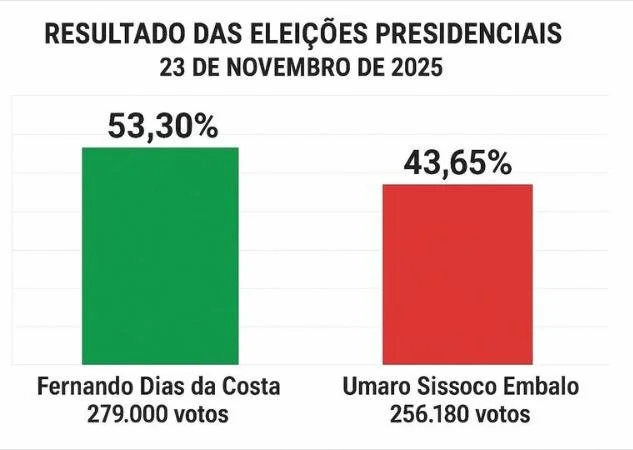
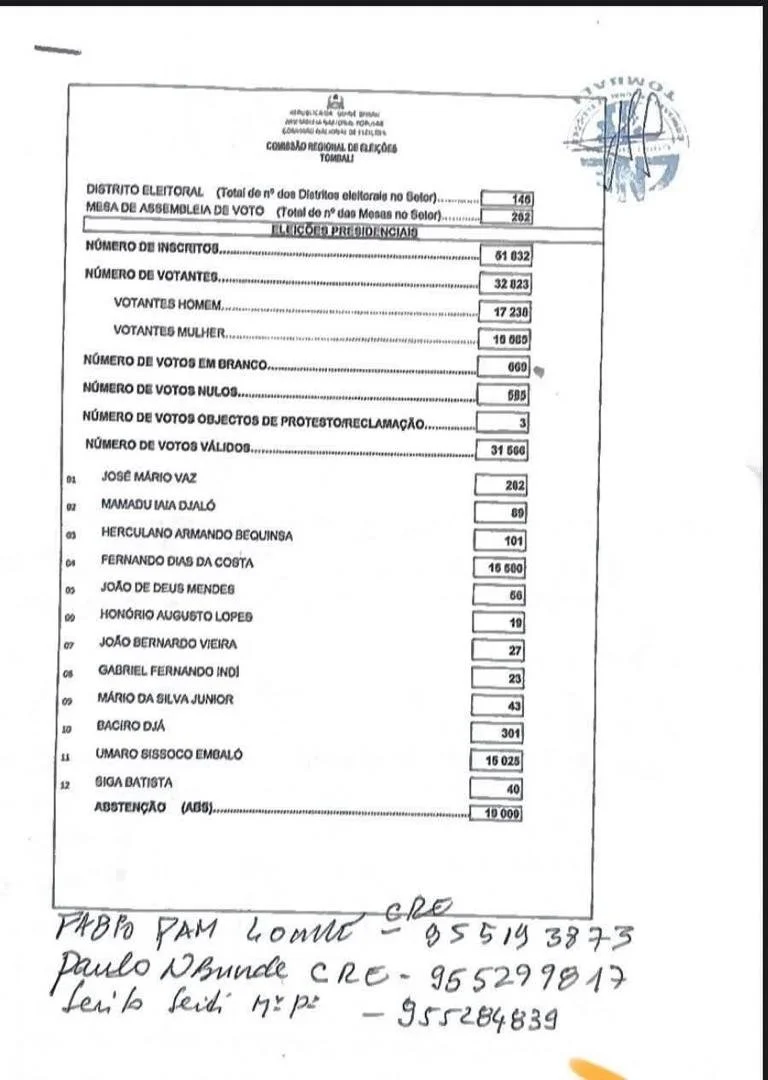
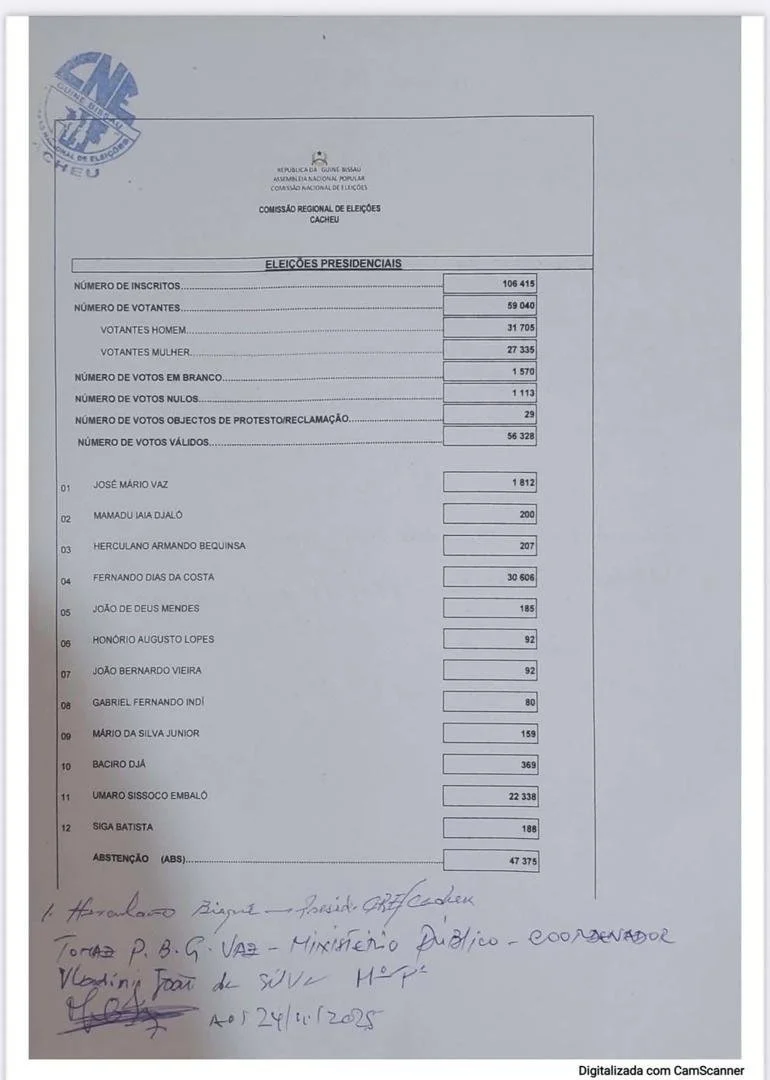
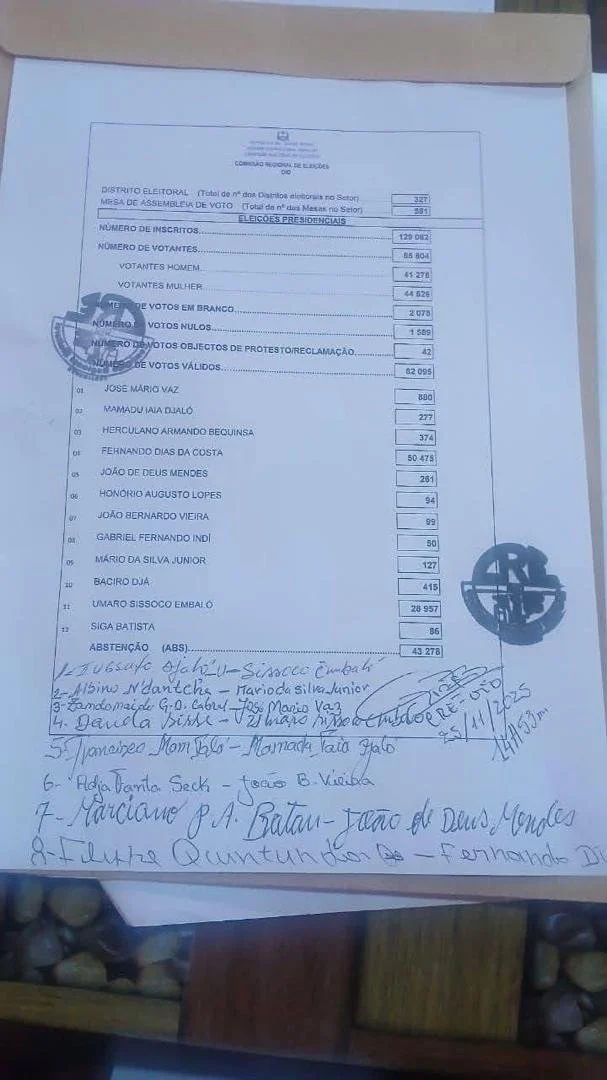
On December 21, the following was posted on social media,
URGENT
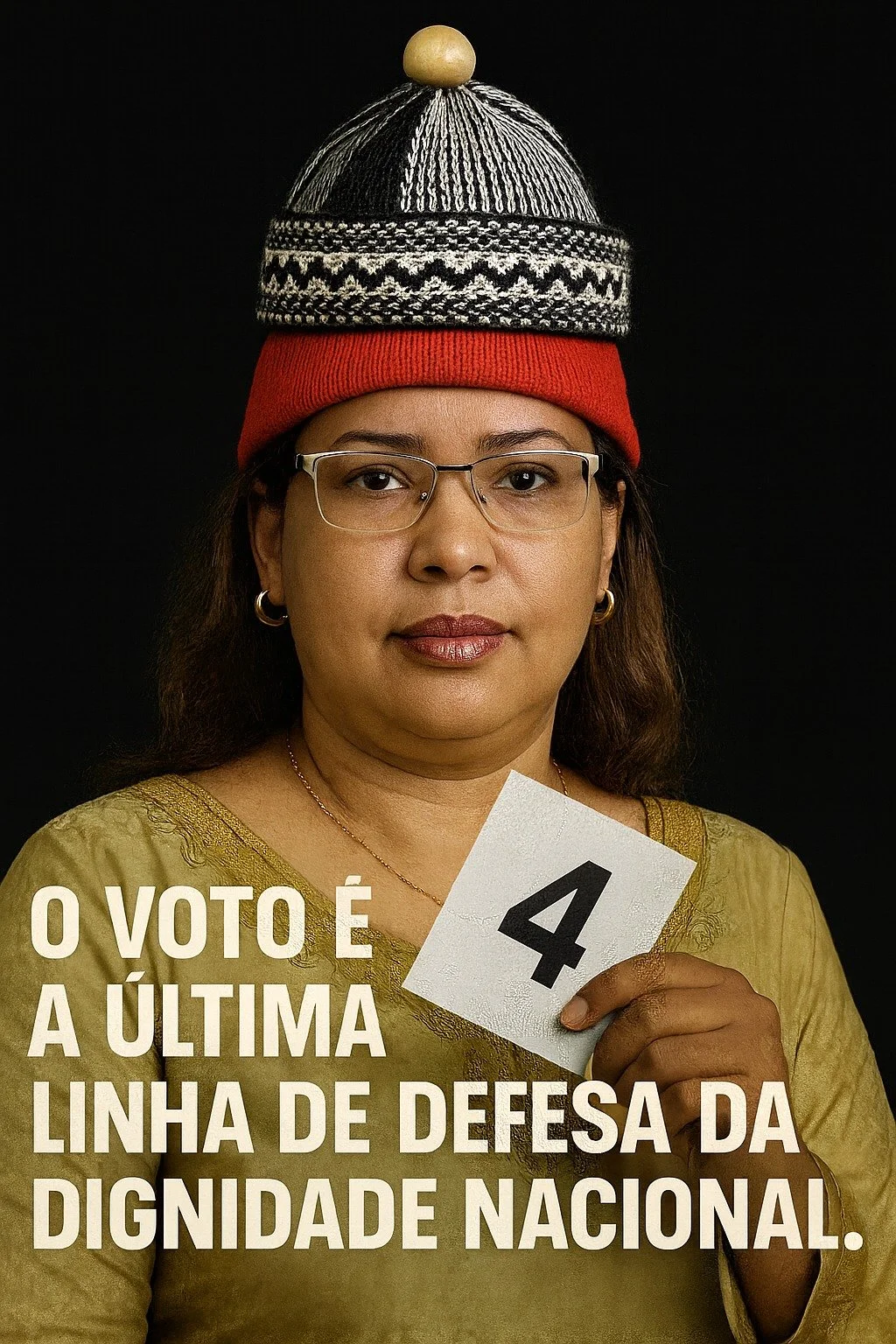
By: Pan-African Citizen, Electoral Observer and Observer of the Elections in Guinea-Bissau - Carmelita Pires
DISTORTION OF A CRISIS: Why the Reality of Guinea-Bissau Cannot Be Reduced to a “Va-t’en-guerre”
Publish the election results. Declare the winner. Swear in the President. This is the command of the people.
With the utmost respect for the long and distinguished diplomatic experience of those who defend positions they would never accept for their own countries, I offer the following reflection in a constructive and respectful spirit, fully aware of the gravity of the moment and of the responsibilities borne by those who speak in the name of regional and international order.
The notion of va-t’en-guerre cannot reasonably be applied to a situation defined by the usurpation of power or by a coup d’état. When constitutional order is broken by force, we are not facing a political confrontation between comparable actors, nor a rhetorical escalation between opposing camps. We are facing an illegal rupture of democratic legitimacy. International law and diplomatic practice are unequivocal on this point.
If, as some of the very actors involved have themselves acknowledged and described, the facts indeed amount to an usurpation of power, then framing the situation as a va-t’en-guerre becomes conceptually and legally untenable. Such framing obscures the true nature of the crisis and risks placing on equal footing actors who are not equal. A coup is not an opinion. It is a fact, with clear legal and political consequences. Zero tolerance for coups or for the usurpation of power simply means zero tolerance.
Unless, of course, Your Excellency holds a different reading of the situation in Guinea-Bissau — in which case, as has rightly been observed, interpretations may diverge among Member States. Still, it must be stated clearly: such a reading would be isolated or, at best, a minority view. For the overwhelming majority of regional and international actors, the conclusion — or at least the perception — of what occurred in Bissau is virtually consensual. This has been stated by distinguished and respected former Heads of State who played a direct role in observing the electoral process. To argue otherwise is to place oneself outside that consensus and against an evident reality.
It is in this context that particular attention should be paid to the resolution adopted on 17 December 2025 by the European Union, dealing precisely with this country and this situation. Paradoxically, an organization that is neither sub-regional nor regional, nor even a neighbor of Guinea-Bissau, managed to adopt one of the clearest and most principled positions in defense of justice and the will of the Guinean people. That resolution provides a clear, authoritative and legally grounded characterization of the situation, leaving little room for semantic ambiguity, and can — and should — inform the reflections and decisions of all those genuinely committed to legality, stability and democratic principles.
This contribution is not intended to be polemical. Its sole purpose is to avoid misunderstandings and, above all, misinterpretations — particularly in public statements or interviews which, instead of clarifying and serving justice, end up opening space and giving oxygen to those acting outside the law: the coup-plotting military officers and power usurpers in Guinea-Bissau, who do not even attempt to conceal that they continue to act under the command of Mr. Umaro Sissoco Embaló.
Equally central is the issue of the so-called “transition.” The people of Guinea-Bissau overwhelmingly and categorically reject any transitional arrangement designed to legitimize an unconstitutional seizure of power. Such a “transition” is not perceived as a solution, but as a political artifice devoid of legal basis and democratic consent — and, ultimately, as a reward for those who resorted to arms to interrupt the normal conclusion of a legitimate electoral process.
Invoking a supposed “subsidiarity of subsidiarity” to justify selective interventions — intervening in one country, such as Benin, while blocking action in another, such as Guinea-Bissau — finds no foundation whatsoever in international law, in established regional doctrine, or in any recognized form or style of diplomacy. Such a principle simply does not exist. The idea that an individual objection could confer a privileged status capable of overriding collective responsibility constitutes a dangerous distortion of the very concept of subsidiarity.
Finally, it must be stated without ambiguity: the best guarantee of security for Guinea-Bissau’s neighboring countries — for Guinea-Bissau itself, for its citizens, and for the entire region — lies in the rule of law. It does not lie in ambiguity, accommodation, or the normalization of illegality. It lies in a stable Guinea-Bissau, led by honest leaders freely chosen by the people, and supported by strong, functional and legitimate institutions.
There is no lasting regional security without democratic legitimacy.
There is no stability built on usurpation.
And there is no peace when the crisis — and reality — are misnamed or indeed distorted. GUINEA-BISSAU HAS ITS PEOPLE - AND THAT IS ENOUGH
My brothers and my sisters,
Fellow compatriots,
Umaro Sissoco Embaló, deposed today, only failed to manipulate and steal this presidential election because the people were vigilant, attentive and united.
It was this collective strength - this silent courage in the voting lines, this keen look on the streets of Bissau and at the most remote part of our tabancas, this unwavering determination - that saved our votes and prevented the popular will from being stolen.
Since he couldn't win through electoral fraud, he invented another one: a false "coup", which today THE WHOLE WORLD KNOWS was staged to justify his standing in power as yet another African dictator and to divert attention from the political failure he carries on his back.
Today, more than ever, Guinea-Bissau needs an awake people.
No dictatorship withstands mobilized people.
No illegitimate regime stands when the PEOPLE – especially the youth – stand up, say ENOUGH and act firmly.
I ask every citizen and every citizen, in Bissau, throughout the country and in our Diaspora: stay mobilized, informed and alert.
Democracy does not defend itself.
Until constitutional legality is not fully restored, our vigilance must be at full force.
As long as the sovereign will of the people is not respected, the President-elect, Fernando Dias, does not take office, our mobilization must continue.
As long as there is a single political prisoner at the hands of the deported regime, we cannot rest.
The fight for democracy is not over yet.
To the youth, the living force of our nation:
It is your energy, your boldness and your love for the future that will ensure that Guinea-Bissau will not be buried in silence.
EXPRESS YOUR REVOLUTION PEACEFULLY BUT LOUDLY!
Noise of conscience, dignity, citizenship.
Noise that awakens, that bothers the oppressors, but that honors the citizen and honors our beloved Homeland.
THE WORLD ONLY LISTENS TO THOSE WHO DON'T QUIET
The international community – the UN, African Union, ECEDAWAS, CPLP – will only stand with Guinea-Bissau if we ourselves maintain the civic pressure, dignity and resolve to stand firm in the face of fear, oppression and terror.
Our struggle is peaceful, but firm.
She is serene but she is determined
It is without violence, but never without courage.
Guinea-Bissau is not alone
Guinea-Bissau has its people.
And when a people decides to defend their freedom, NO LIES, NO GUNS AND NO DICTATOR CAN BEAT IT.
Carmelita Pires then offered her plan for the
RESTORATION OF CONSTITUTIONAL ORDER:
When the People Decide, the Constitution Imposes
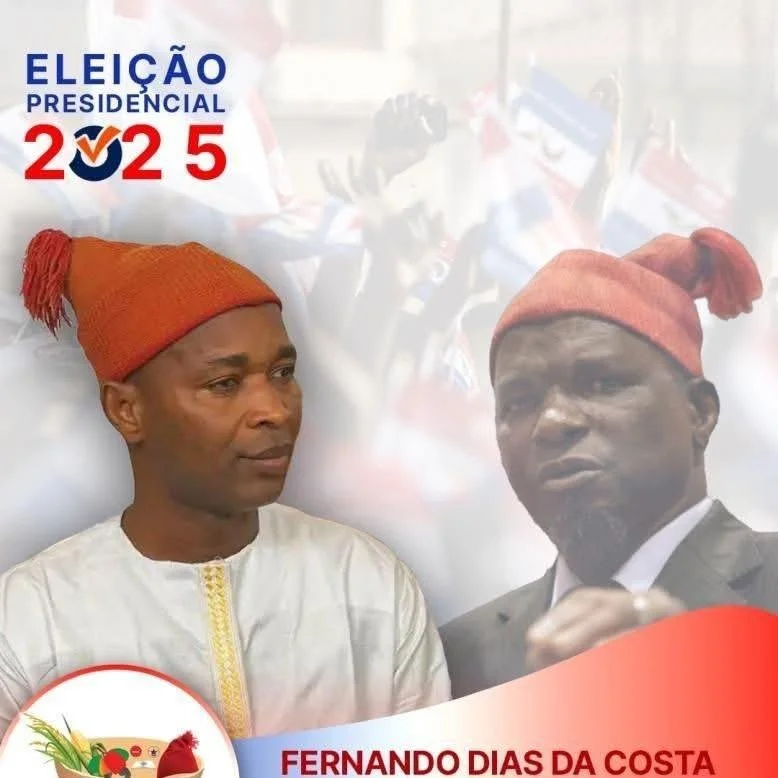
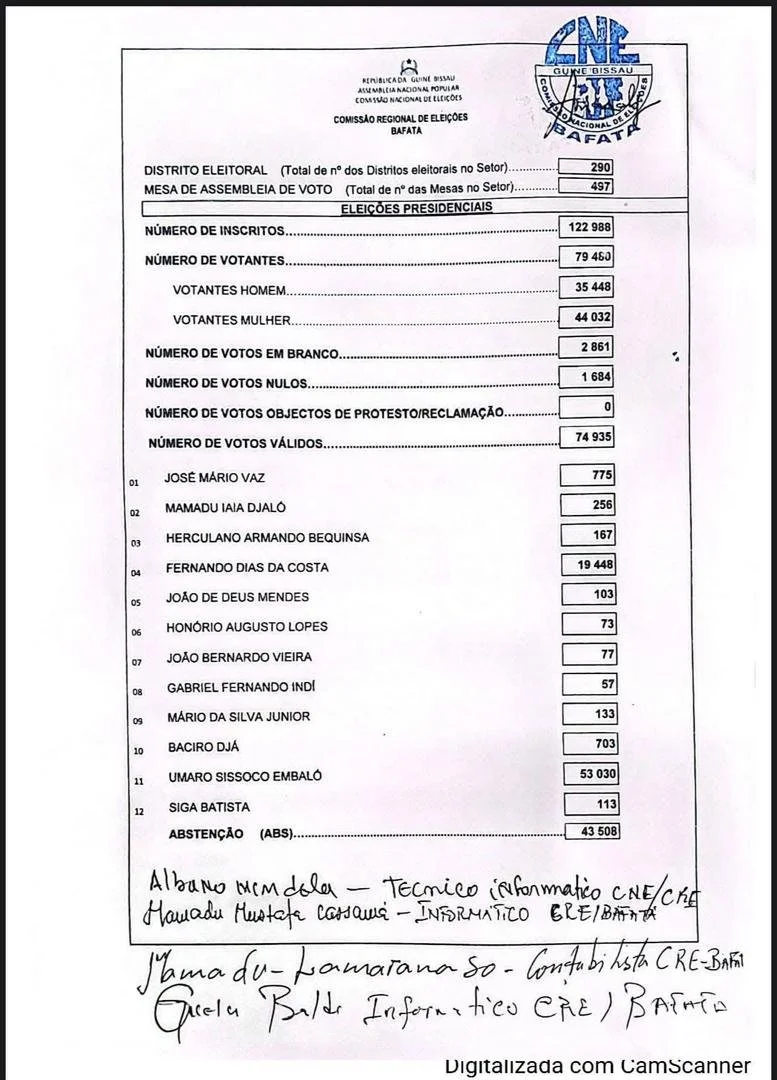
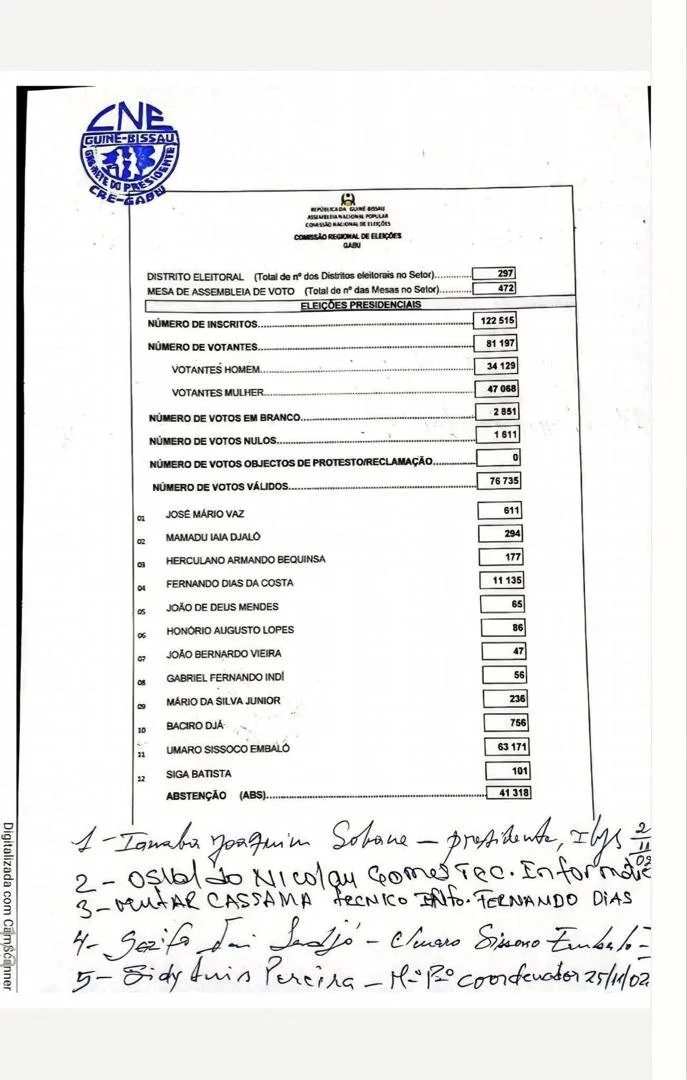
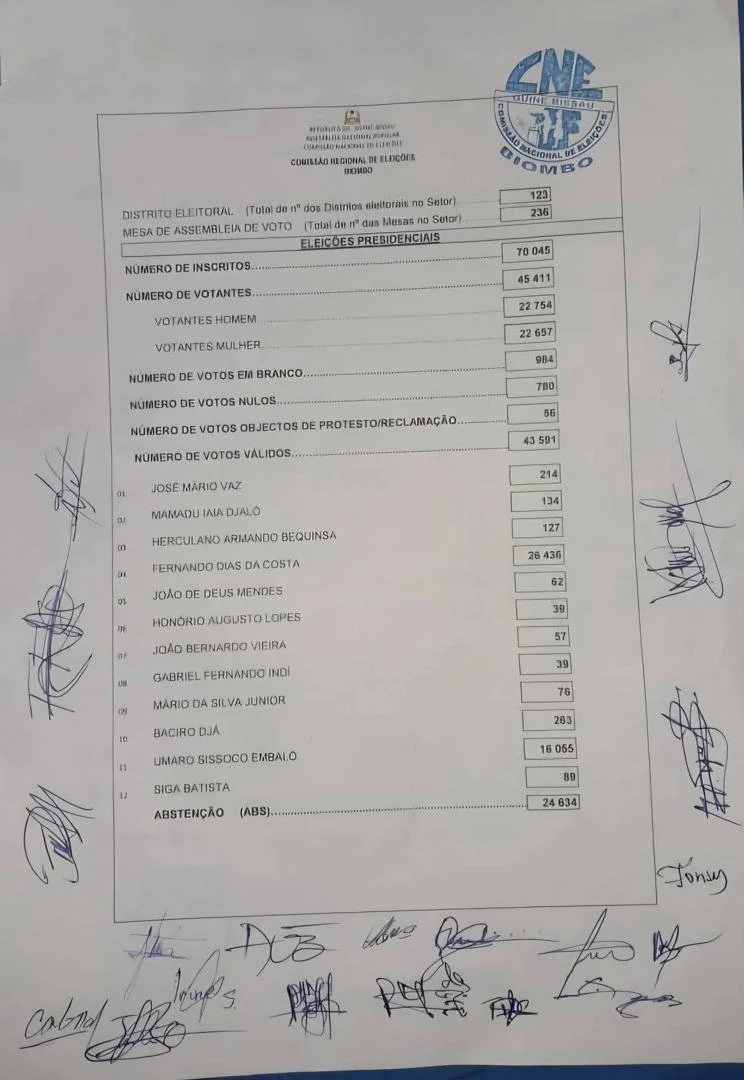
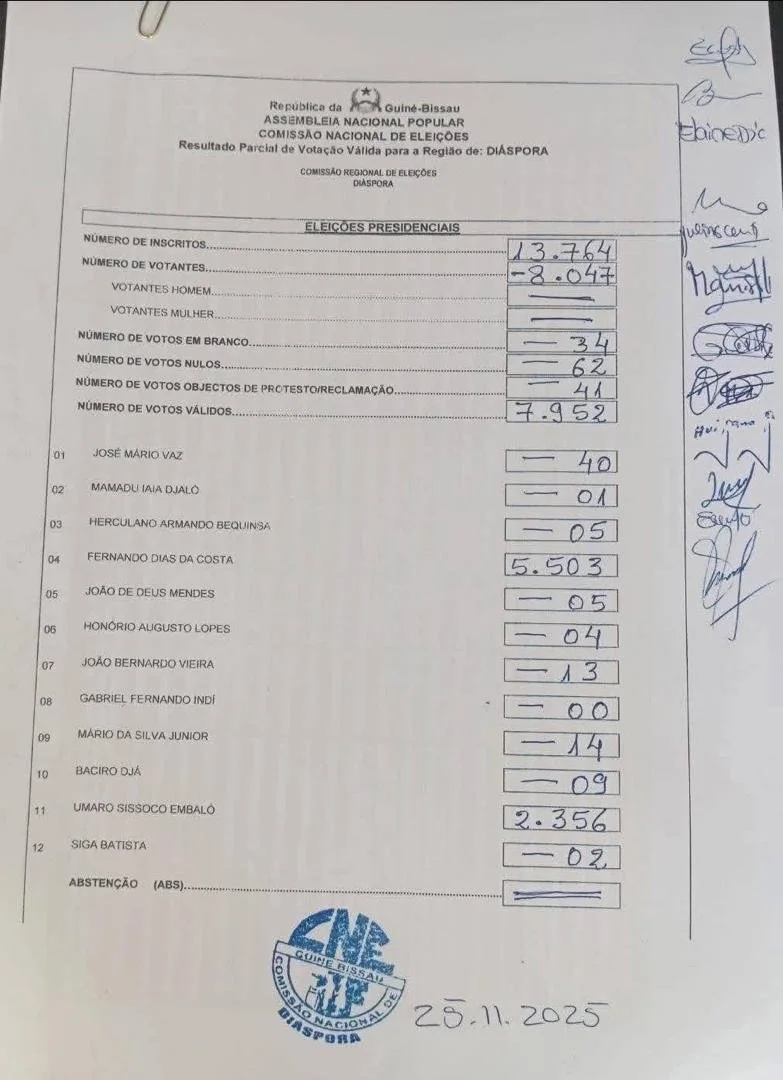
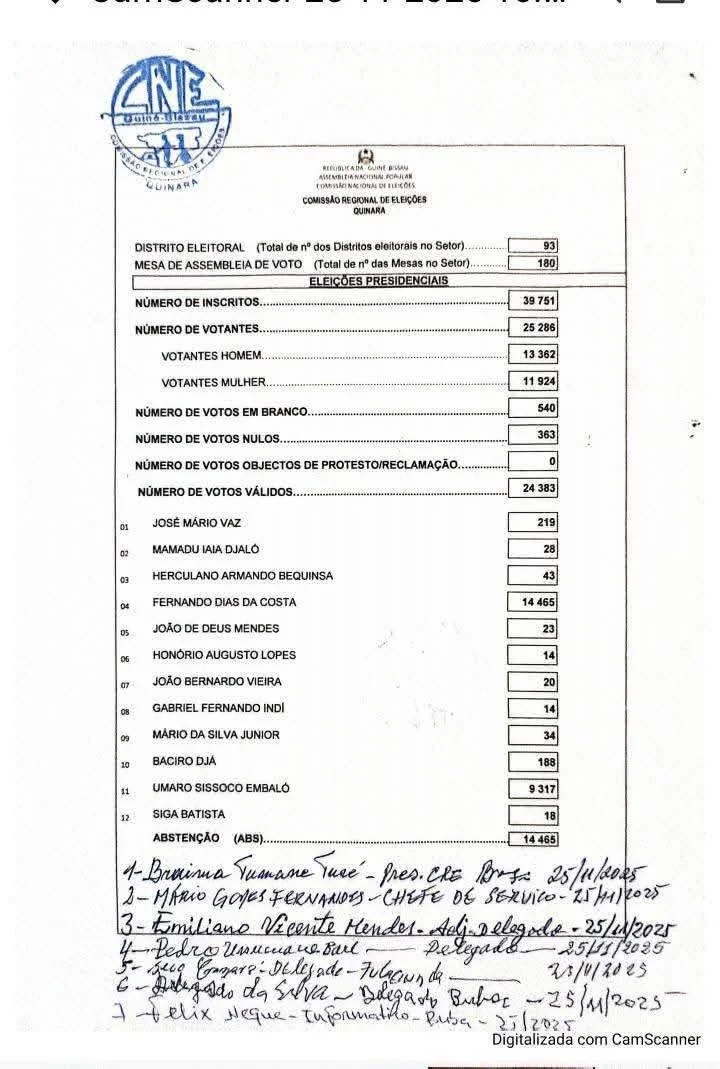
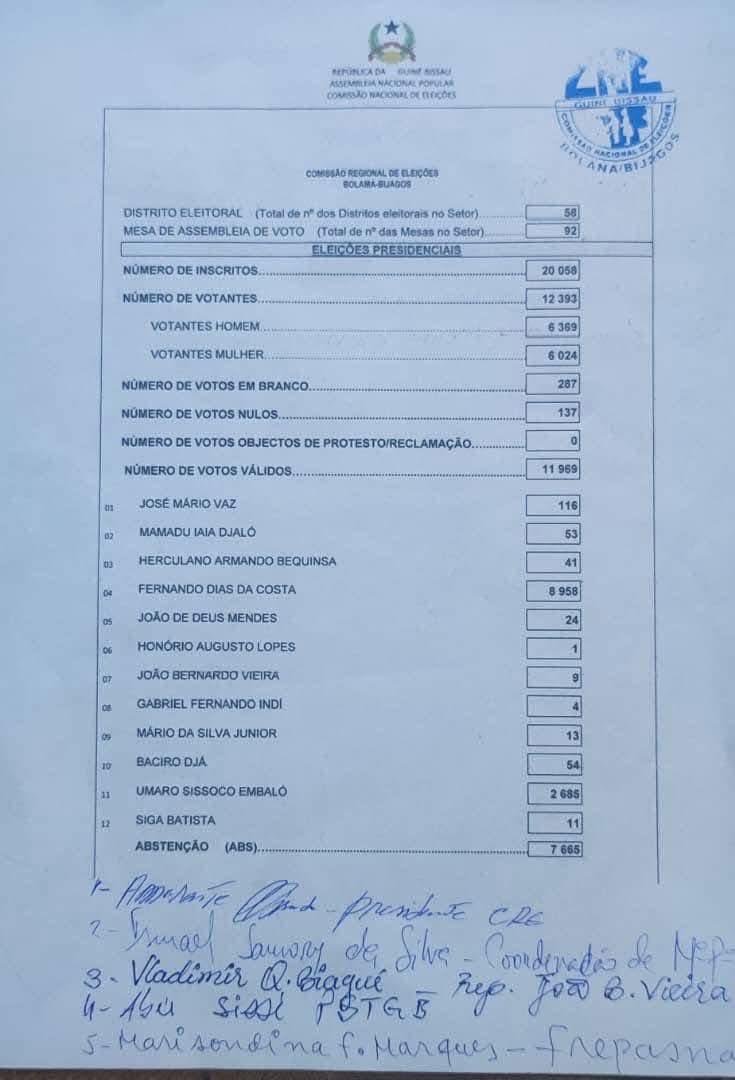
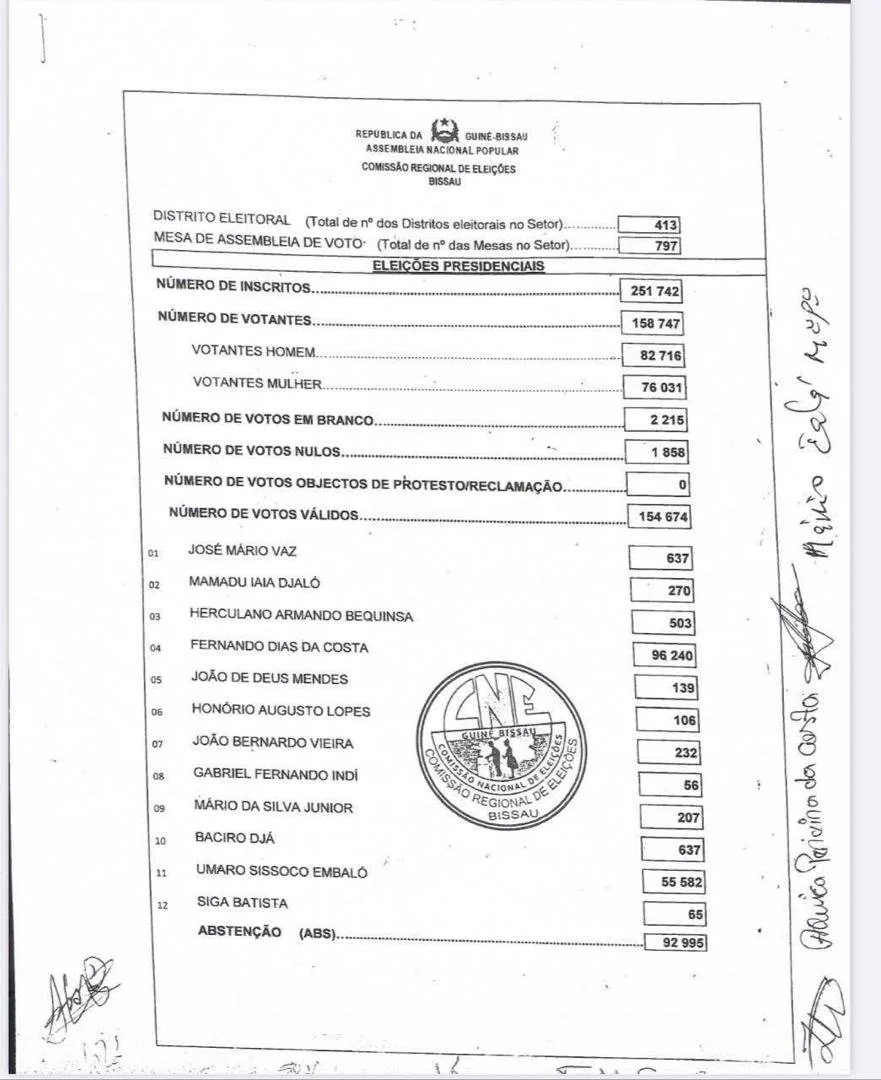
There is no doubt, at the national or international level, about the outcome of the Presidential Elections. The victory of the candidate Fernando Dias da Costa is known, recognized and sustained by the public ties of the voting tables, a direct expression of popular sovereignty.
The world knows. The people know. The Constitution confirms it.
In the face of the illegal disruption of the electoral process, the forced suspension of the constitutional normality and the attempt to usurp the will of the people, it is imposed on the PRESIDENT OF THE DEMOCRATICALLY ELECTED REPUBLIC the constitutional, political and moral duty to ASSUME FULLY THE POWER entrusted to him by the sovereign vote of the people of Guinea-Bissau.
The Constitution does not provide for artificial holidays nor does it admit the suspension of popular sovereignty through force, intimidation or staging crises. Where there is valid election, there is mandate. Where there is a mandate, there is a duty.
Thus, in accordance with article 68. o, paragraph (c) of the Constitution of the Republic of Guinea-Bissau, requires His Excellency, Mr. President of the Republic, to address a SOLEMN MESSAGE TO THE NATION, declaring the restoration of constitutional order and normality, wherever he may be, under such conditions as possible, however conditioned, prevented or forced into exile. in domestic and foreign territory, including diplomatic space.
Here is a suggestion, for this purpose, in a structured formulation of the constitutional acts to be declared.
I. Validation of Presidential Mandate
proclamation of victory
Resumption of quality of President of the Republic
Constitutional oath
fixing the start date of functions
1. To be officially declared the WINNER OF THE PRESIDENTIAL ELECTIONS, for having been elected by universal, equal, direct, secret and free suffrage of the citizens censused voters, having obtained the absolute majority of the validly expressed votes, for a term of five years, in terms of articles 63. o and 64. the one of the Constitution of the Republic.
2. To declare himself PRESIDENT OF THE REPUBLIC OF GUINEA-BISSAU, Head of State, symbol of national unity, guarantees national independence, the Constitution and democratic legality, as well as Commander-in-Chief of the Armed Forces, as legitimate representative of the Republic, in terms of article 62. the one of the Constitution.
3. To take SOLEMN OATH, in your honor, to defend the Constitution and the laws, to safeguard national independence and unity and to devote fully your intelligence, abilities and energies to the service of the people of Guinea-Bissau, fulfilling with absolute fidelity the duties inherent to the high position to which you were elected, in terms of article 67 the one of the Constitution.
4. Declaring that the date of the present Address to the Nation constitutes the FORMAL BEGINNING OF THE EXERCISE OF ITS DUTY, considering oneself immediately invested in office upon the effective restoration of the constitutional order.
II. Establishment of the State Constitutional Authority
dissolution of the "High Military Command"
FARP supreme command
international guidance to the international community
Release of the political prisoners
re-establishment of ANP
5. To declare the IMMEDIATE DISSOLUTION AND EXTINCTION OF THE SO-CALLED "MILITARY HIGH COMMAND", as well as all its acts, decisions and structures, with retroactive effects, for setting up crimes of treason to the Fatherland, in terms of article 215. the Criminal Code, and a direct attack to the constitutional rules enshrined in articles 20. o and 21. the one of the Constitution.
6. Order all units, quarters and forces of the Armed Forces of the People's Revolutionary (FARP) to obey exclusively the orders of the President of the Republic, in his capacity as COMMANDER SUPREME OF THE ARMED FORCES, reaffirming the Republican, partisan and constitutional character of the FARP.
7. Formally direct all International Organizations, regional and bilateral partners not to recognize the mentioned “Military High Command” as a valid, legitimate or legal interlocutor of the State of Guinea-Bissau.
8. Order the IMMEDIATE AND UNCONDITIONAL RELEASE OF ALL POLITICAL PRISONERS, civilian and military detained in violation of the Constitution, law and fundamental rights.
9. To declare the IMMEDIATE RESTORATION OF THE NATIONAL POPULAR ASSEMBLY (ANP), having been unconstitutional and illegally dissolved, being this result of legitimate elections and endowed with absolute parliamentary majority, ordering the removal of any physical, administrative or military obstacles preventing its full functioning.
III. Restoration of Normal Operation of Institutions
convocation of ANP
new Government
judicial system
redefining the role of FARP
ad hoc court and accountability
10. To convene an EMERGENCY MEETING OF THE NATIONAL POPULAR ASSEMBLY, in accordance with article 68. or al. (d) of the Constitution with view to the full restoration of the constitutional order, including:
• Formal swearing-in of the elected President of the Republic;
• Approval of an emergency plan to restore constitutional normality;
• Formation of a new constitutional government;
• Assessment of the situation of the Supreme Court of Justice, the Prosecutor-General's Office of the Republic and the other judicial bodies;
Institutional redefinition of the role of the People's Revolutionary Armed Forces in the constitutional framework.
11. To determine to the National People's Assembly the establishment of an AD HOC TRIBUNAL, in constitutional terms, for the trial of the material and moral perpetrators of the coup, civilian and military, as well as their apologists, including:
• Crimes against the constitutional order;
• Economic crime and corruption;
• Instruction of processes for the freezing and recovery of financial assets and real estate located abroad, namely in Senegal, Morocco, Portugal, Spain, Luxembourg, Canada, Brazil and the United States.
IV. Guarantee Measures, Democratic Pressure and Financial Safeguard
peaceful civil disobedience
clearance to ECOWAS
financial block to scammers
12. To declare that, if the sovereign decisions of the President-elect are not obeyed, will be ordered PEACEFUL CIVIL DISOBEDIENCE, instructing public officials to suspend their duties and calling on the population not to cooperate with insurgent acts contrary to the popular will expressed at the polls.
13. Formally authorize ECOWAS, in the framework of its collective security treaties and mechanisms, to resort to the use of force, if necessary, to ensure compliance with the sovereign decisions of the democratically elected President of the Republic and to permanently remove the scammers from the Palace of the Republic, military institutions and from any point of national territory.
14. Direct all International and regional Financial Institutions, including the ECAO and UEMOA bodies, not to recognize any acts, signatures or decisions of the so-called Finance Minister of the fraudsters, prohibiting him from moving State accounts, representing Guinea-Bissau or participating in international meetings, namely the meeting scheduled for January 29 in Cotonou.
This Message to the Nation is not an act of breaking, but an act of allegiance to the Constitution, the popular vote and the democratic history of Guinea-Bissau. The elected president does not create power: ASSUME THE POWER GIVEN TO HIM BY THE PEOPLE.
To the democratically elected President of the Republic, be certain that no illegitimate force is superior to popular sovereignty. The mandate you have received is not just a right – it is a historic responsibility. To exercise is to protect the people. Silence is to abandon him.
To the people of Guinea-Bissau, there is a word of encouragement and confidence: THE CONSTITUTION IS ON OUR SIDE, the vote was not in vain and the legality will eventually prevail. The civic courage demonstrated at the polls is now the basis of national restoration.
History teaches us that decisive moments do not choose perfect circumstances. Choose leaders who don't back down and people who don't quit.
Guinea-Bissau stood up for the vote.
The Constitution requires this vote to govern.
And the future begins when legality is assumed, without fear and without delays.
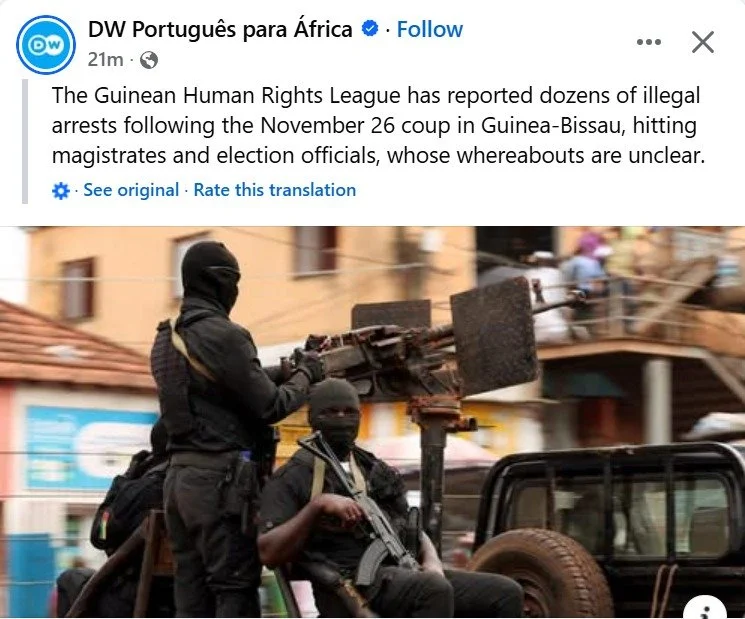
On December 23, Lawyer Saïd Larifou, legal representative of the President-elect of Guinea-Bissau, Fernando Dias da Costa, sent a formal notification to the Central Bank of West African States (ECOWA) and the ECOWAS Commission, warning of the breach of the constitutional order in the country. That same day, two elements of the law enforcement who summoned an order from the First Public Order Police Squad (POP) shut down the House of Law, where the Guinean League for Human Rights (LGDH) operates a space shared by a consortium of civil society organisations, Staff were sent to the streets. The decision to close the doors of the House of Law was taken hours after a group of gunmen stormed the institution and beat up two Guinean Rights League technicians, following a vigil by the organisation, which called for the release of politicians and military personnel detained by the current transitional authorities. On December 28, the lawyer and political analyst Augusto Nansambé was detained at the Second Police Squad (POP) in Bissau. A well-known critic of the current transitional authorities, was arrested two days after criticizing certain military officials of the Balanta ethnic, to which he also belongs, accusing them of assuming "reprehensible conduct", which according to him, shames that ethnic group. It was through a long text published on Facebook, on December 26, 2025, that the lawyer exposed what was in his soul, in an allusion to the November 26 coup. On December 31, Luís Bedam, assistant on the Matadouro–Quelelé–Bor line, was allegedly beaten to death. Sergeant Carlitos Luís Imbaná and Soldier Abene Albino Sambé, were indicted for the crime of murder.
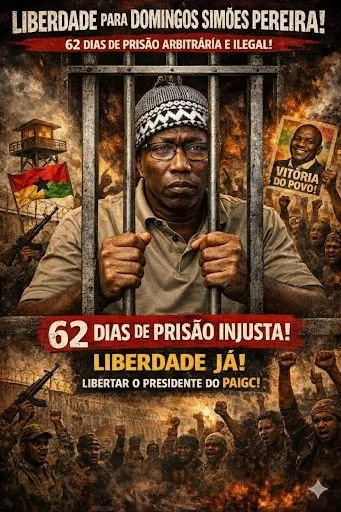
Following the 2025 coup, a communication blackout and "climate of terror" emerged, with reports of masked men beating human rights activists and journalists. The military junta used live ammunition to disperse peaceful protests and shut down independent radio stations, significantly restricting freedom of expression. High-profile figures, including opposition leader Domingos Simões Pereira, remained forcibly detained and by early 2026, many were held incommunicado, prompting condemnation from the UN High Commissioner for Human Rights.