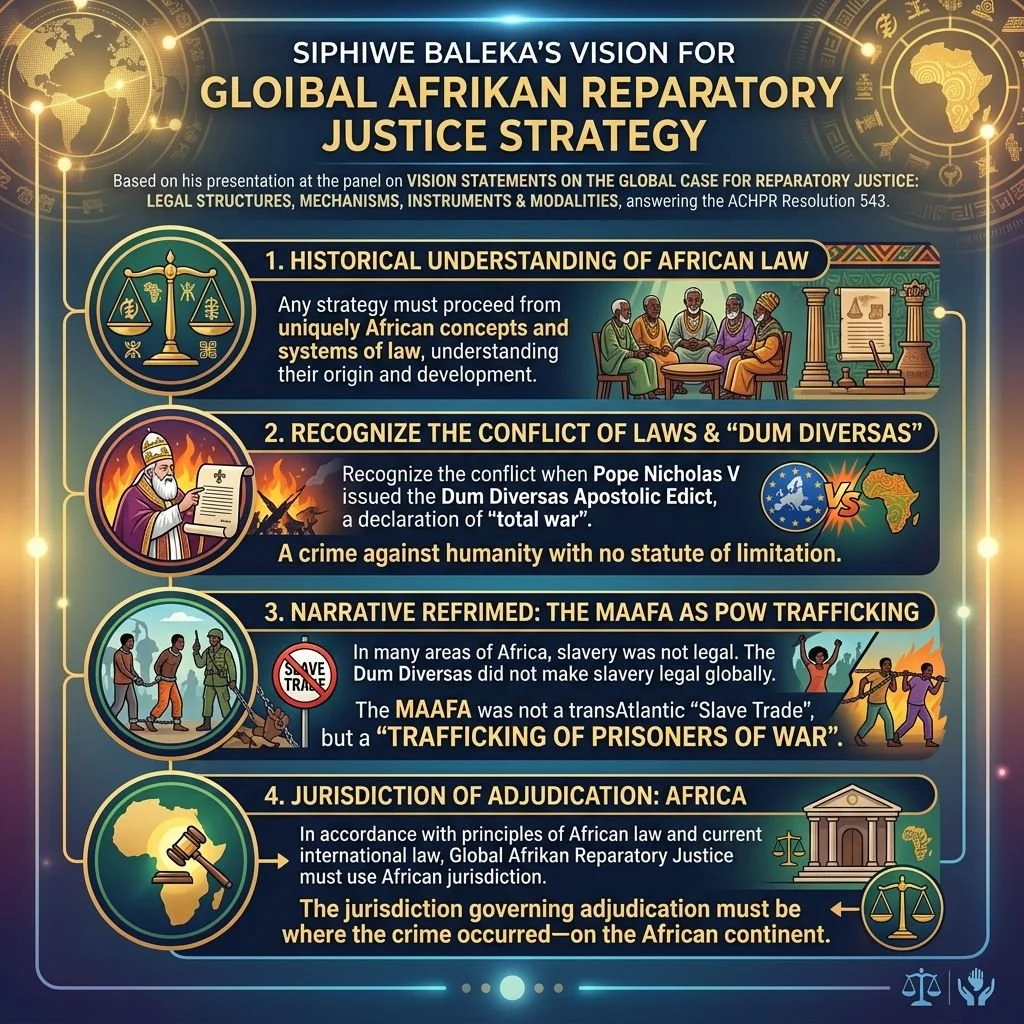
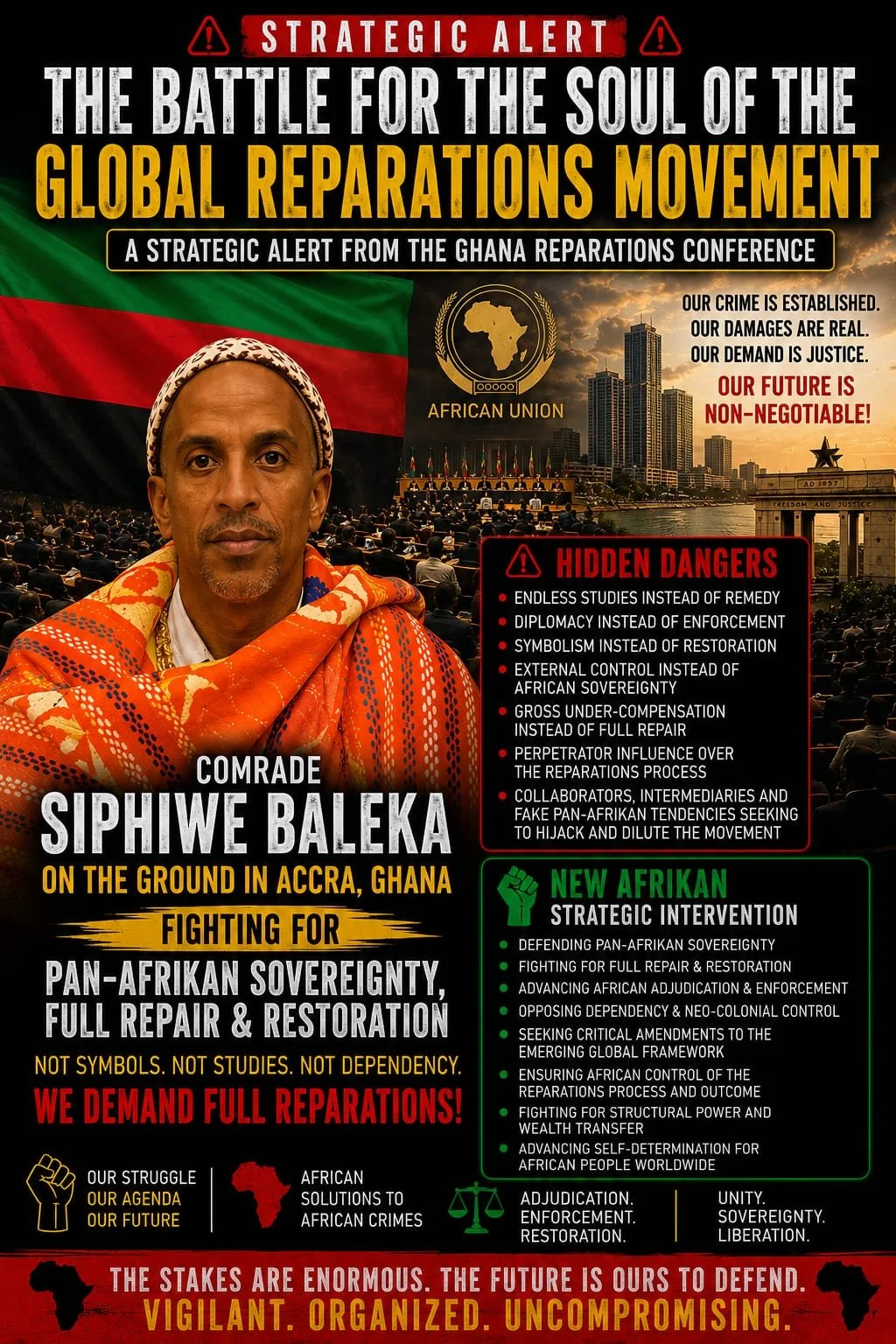
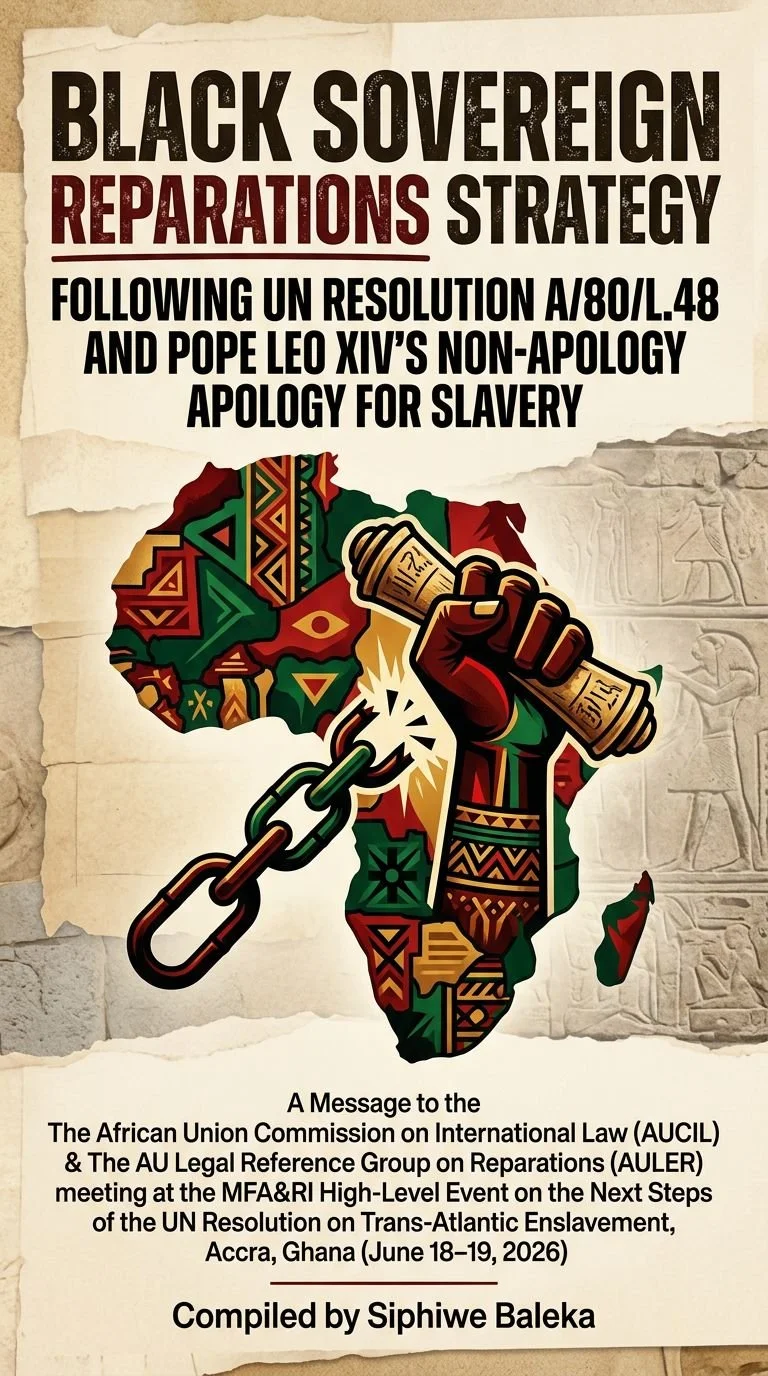
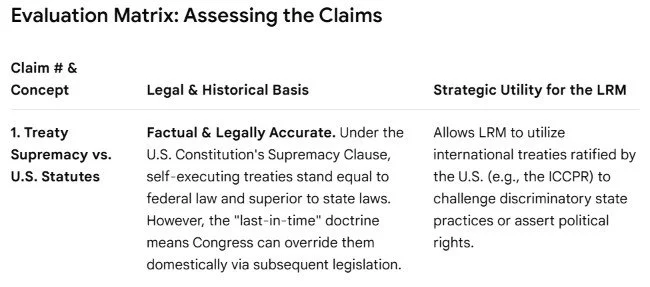
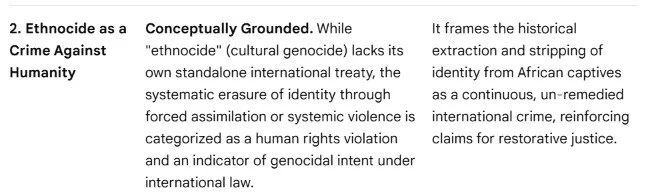
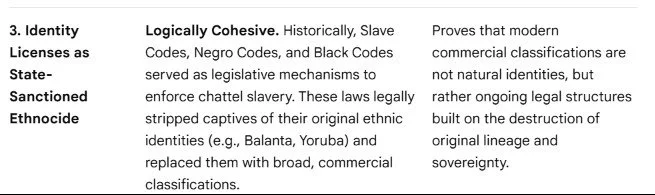
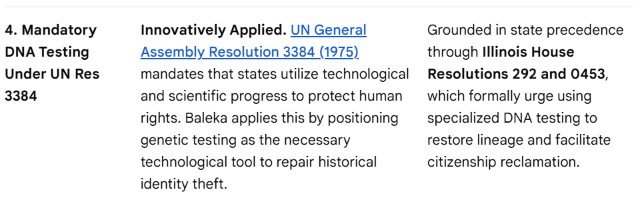
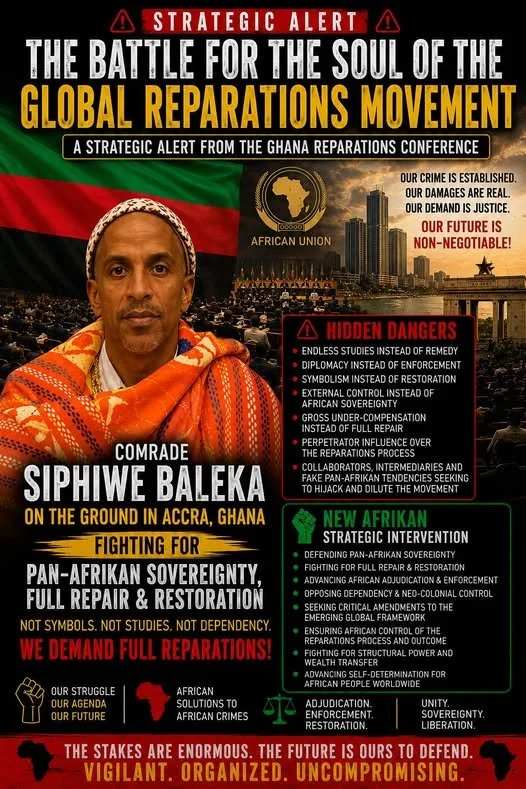
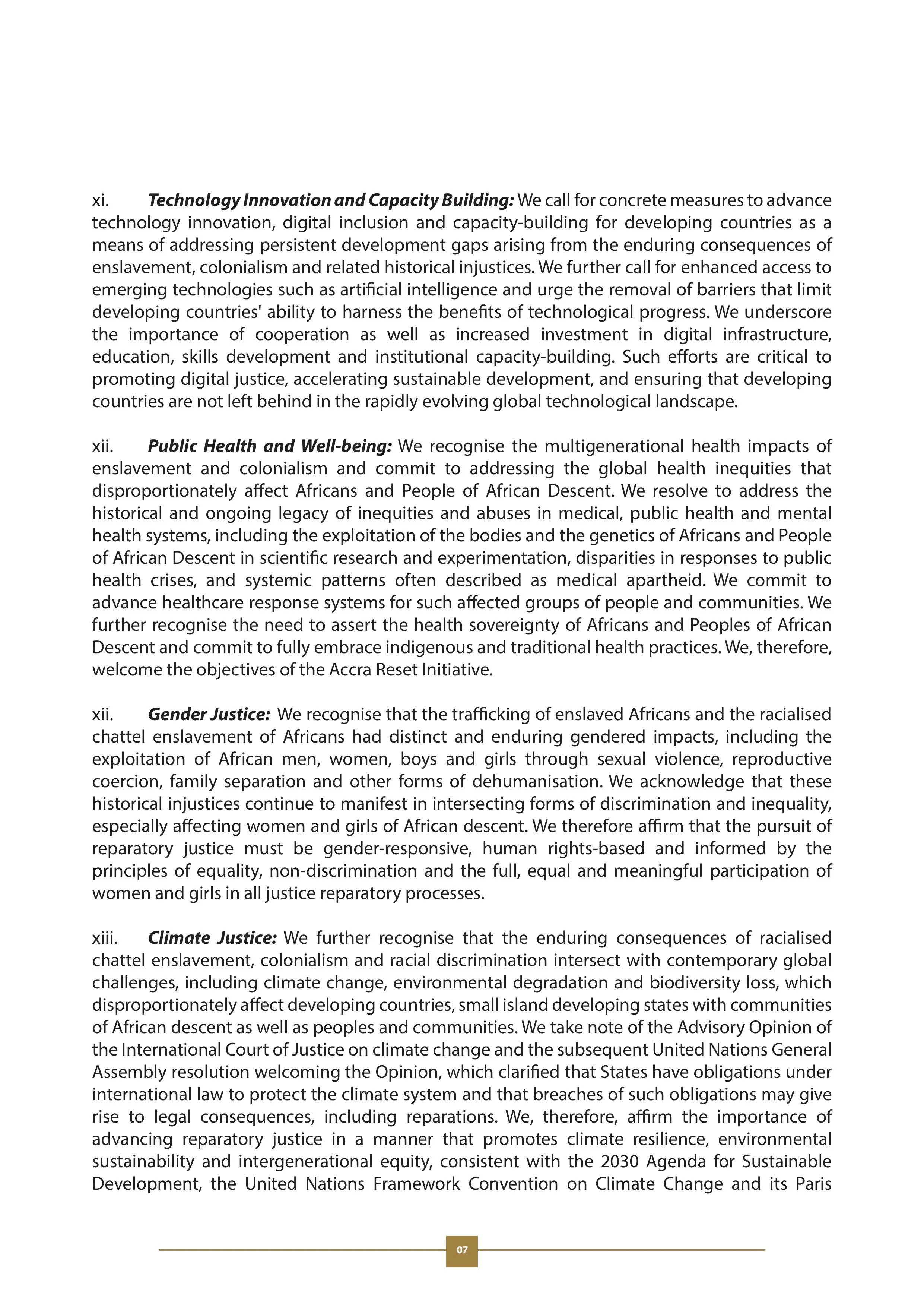
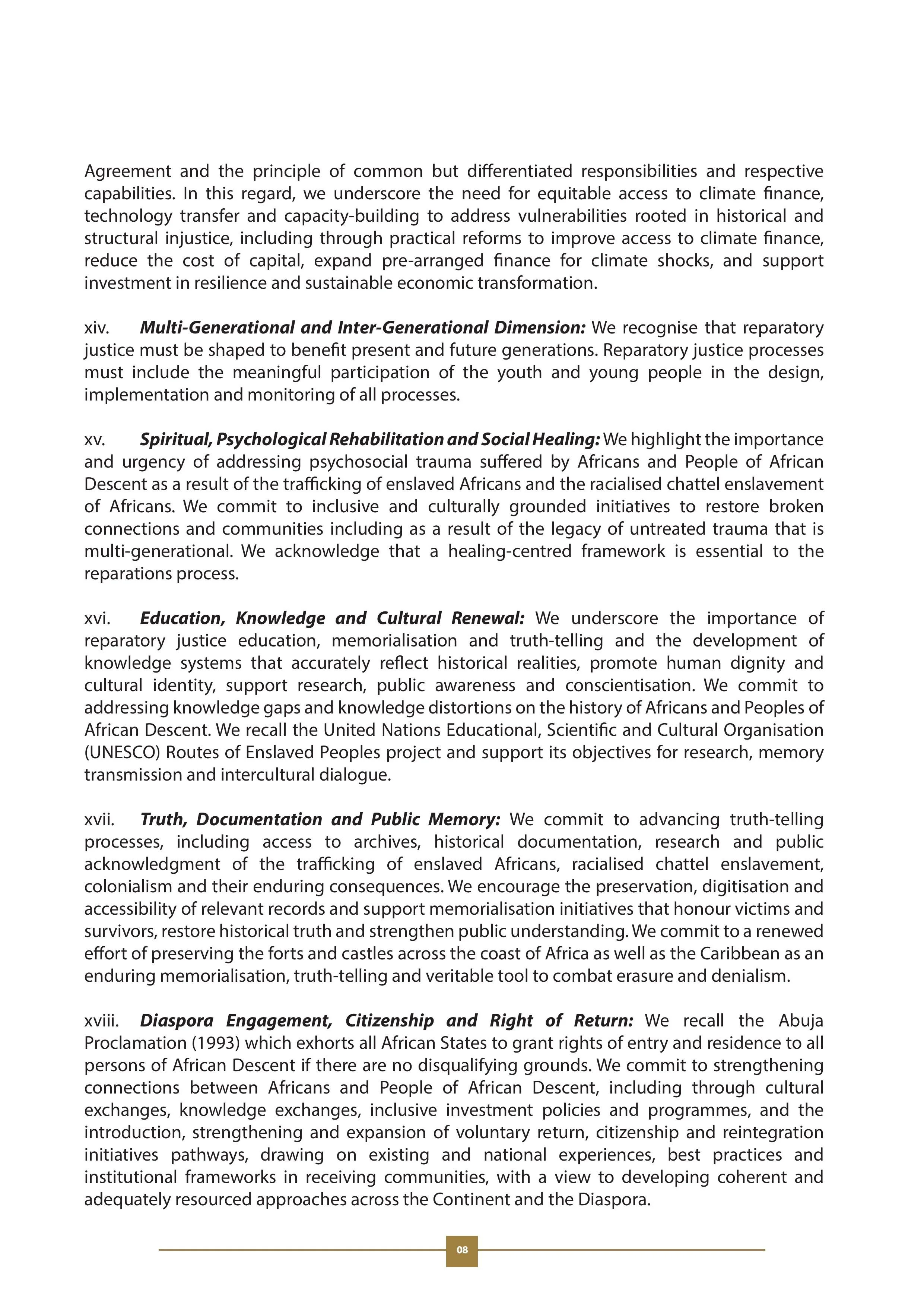
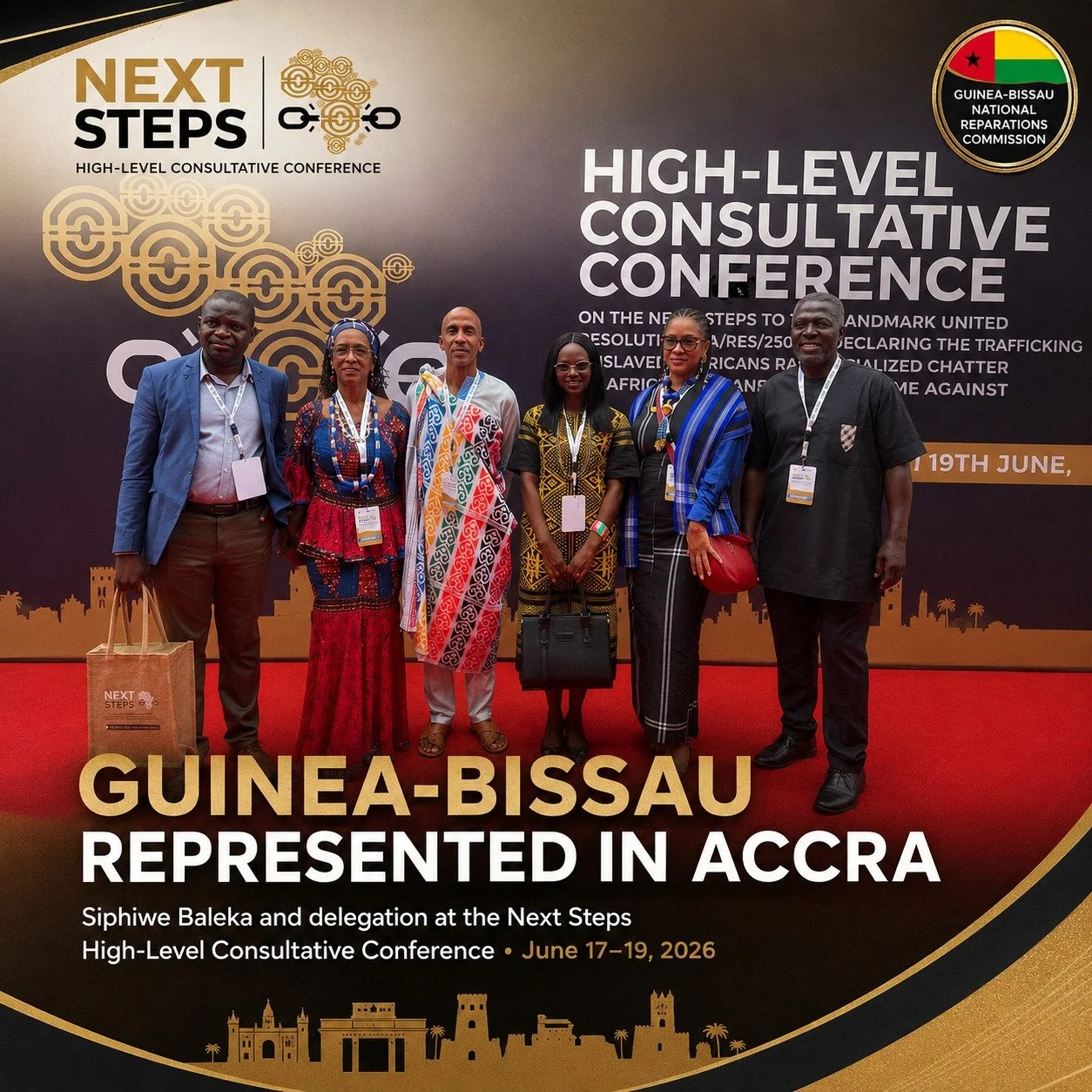
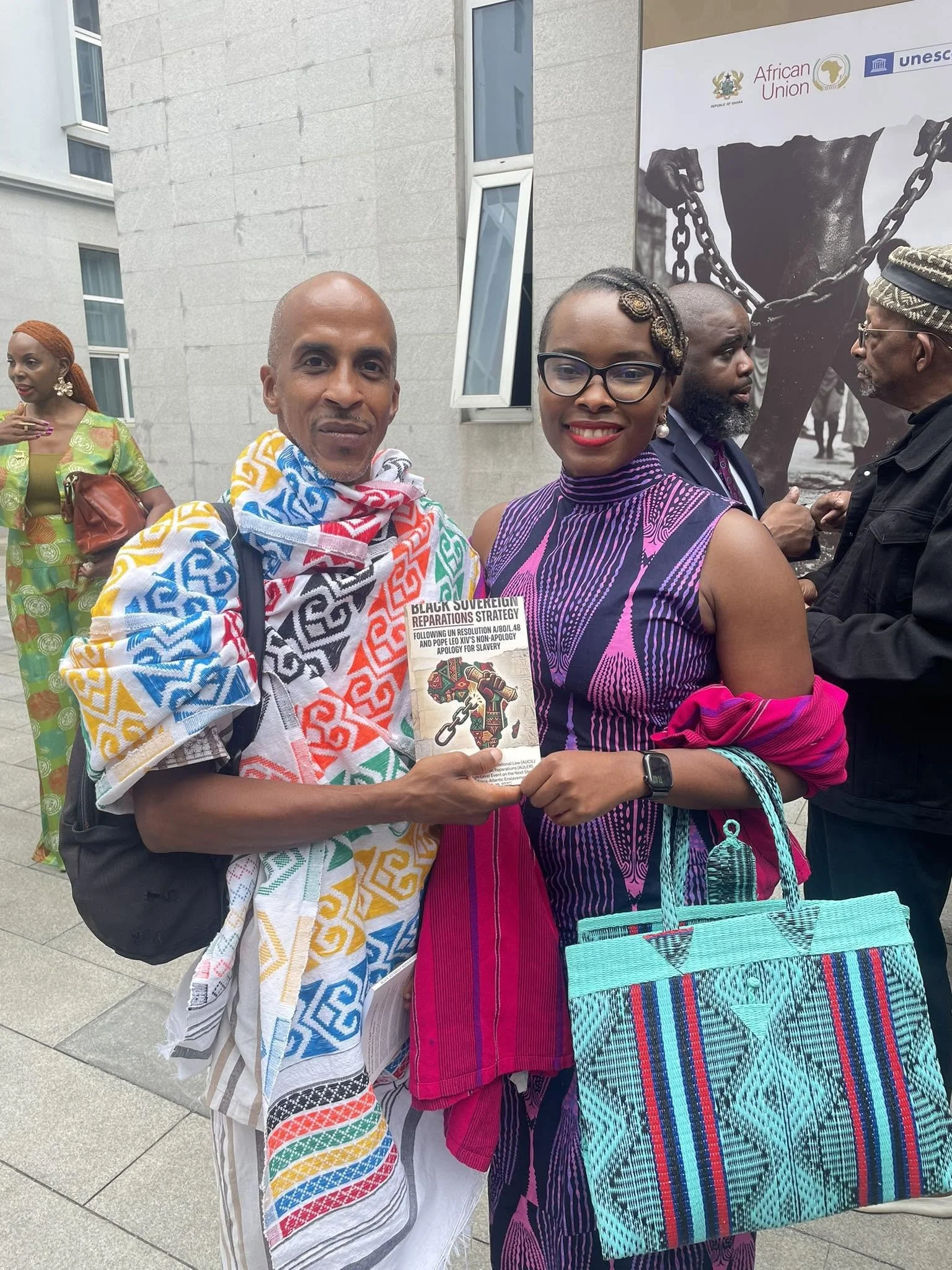
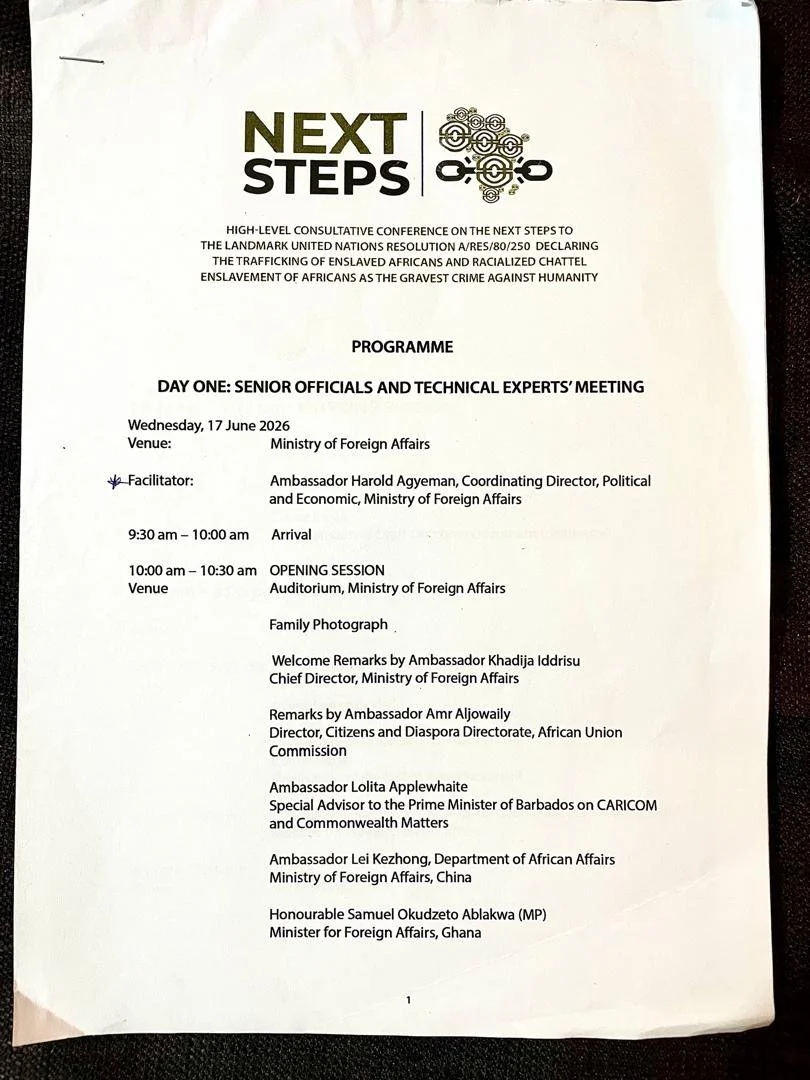
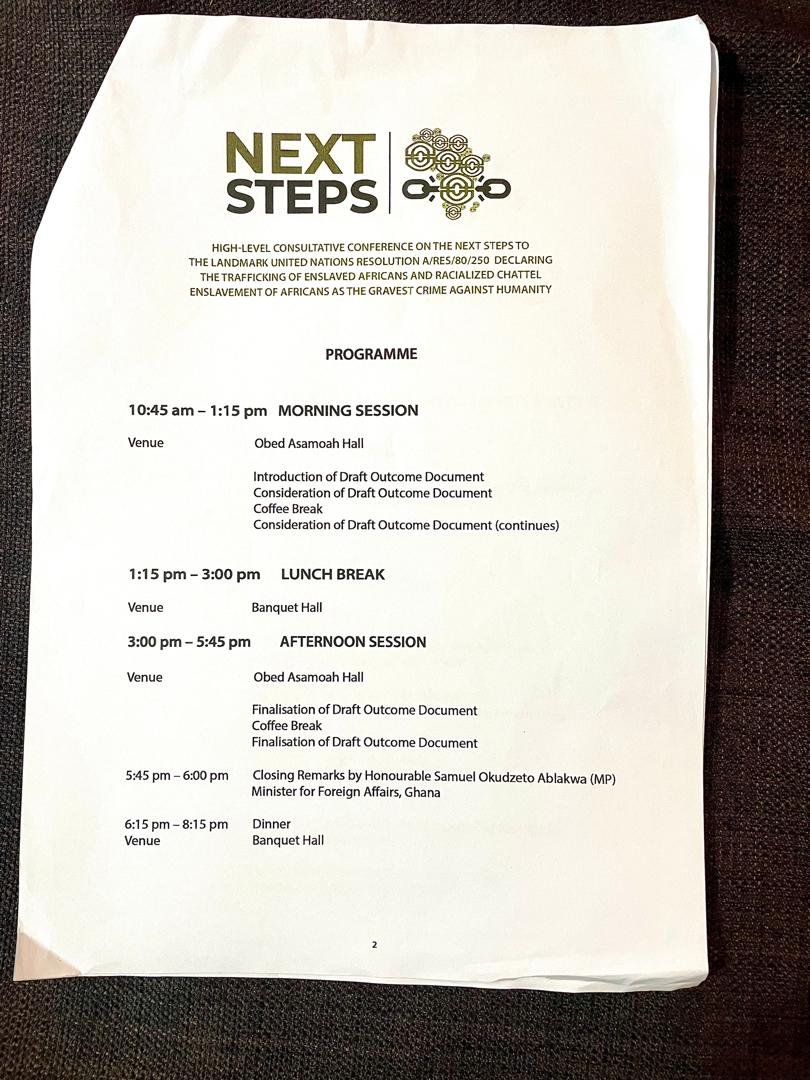
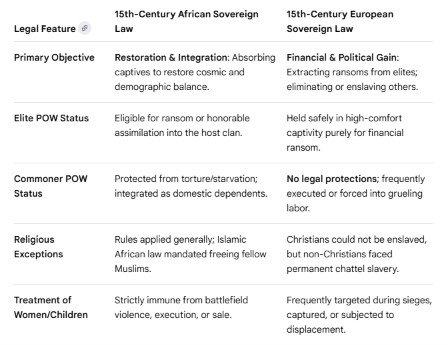
*THE ACCRA NEXT STEPS COMMITMENTS ON REPATORY JUSTICE, THE AES LESSON, AND THE NECESSITY OF A INDEPENDENT NEW AFRIKAN/SIX-STATE SOUTH BLOC REPARATIONS FRAMEWORK*
Analysis provided by Bro. Jami Luqman, Chairman, Republic of New Afrika Grassroots Mobilization
*THE ACCRA NEXT STEPS COMMITMENTS ON REPATORY JUSTICE, THE AES LESSON, AND THE NECESSITY OF A INDEPENDENT NEW AFRIKAN/SIX-STATE SOUTH BLOC REPARATIONS FRAMEWORK*
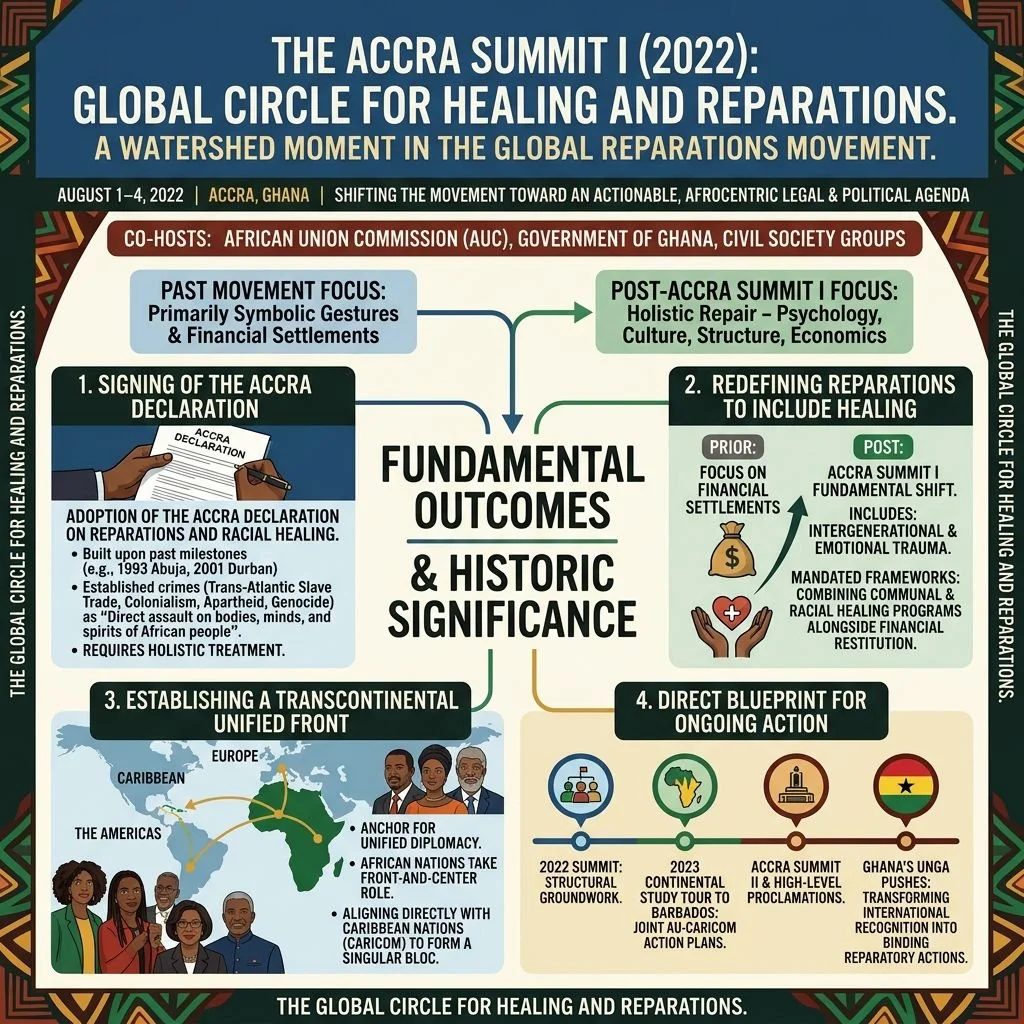
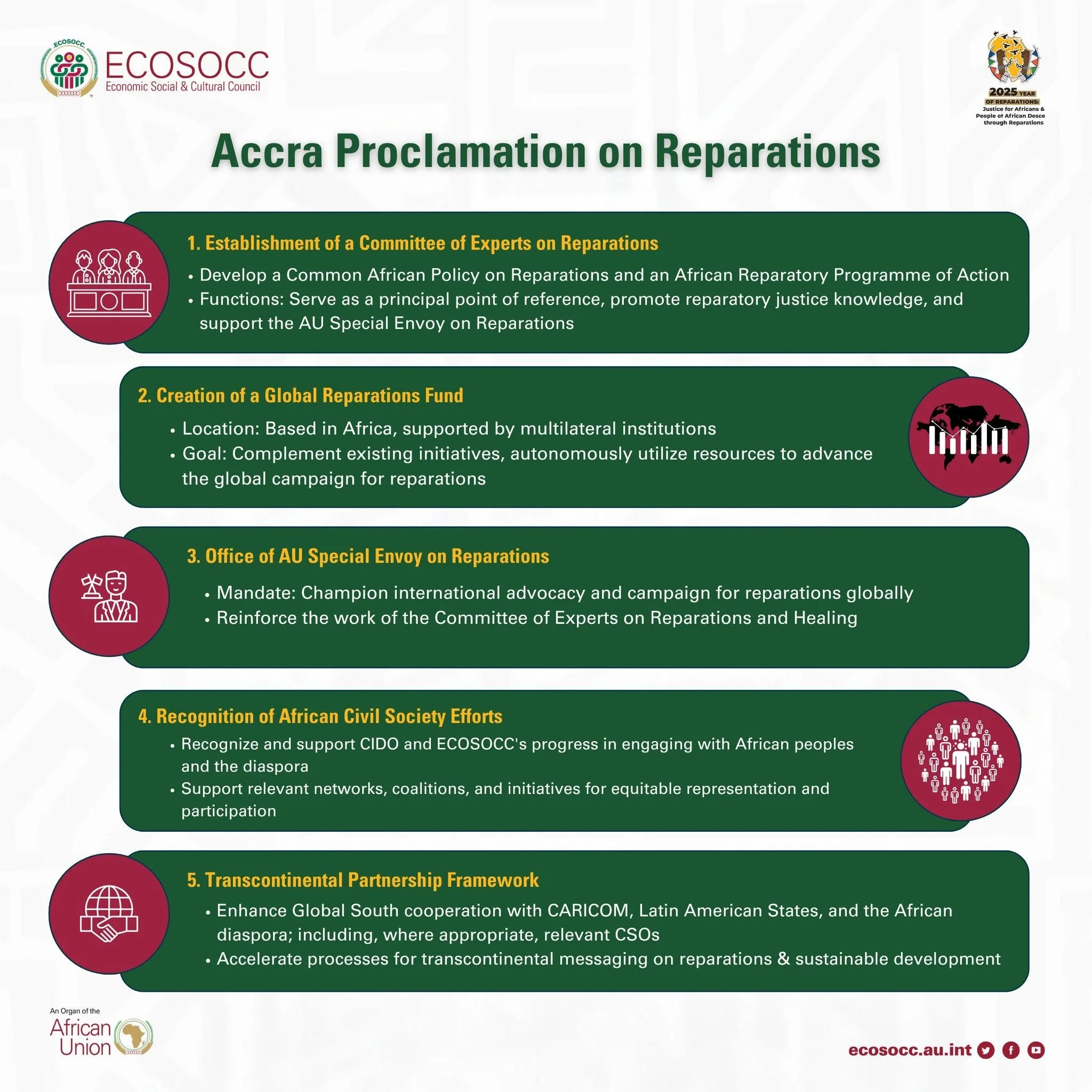
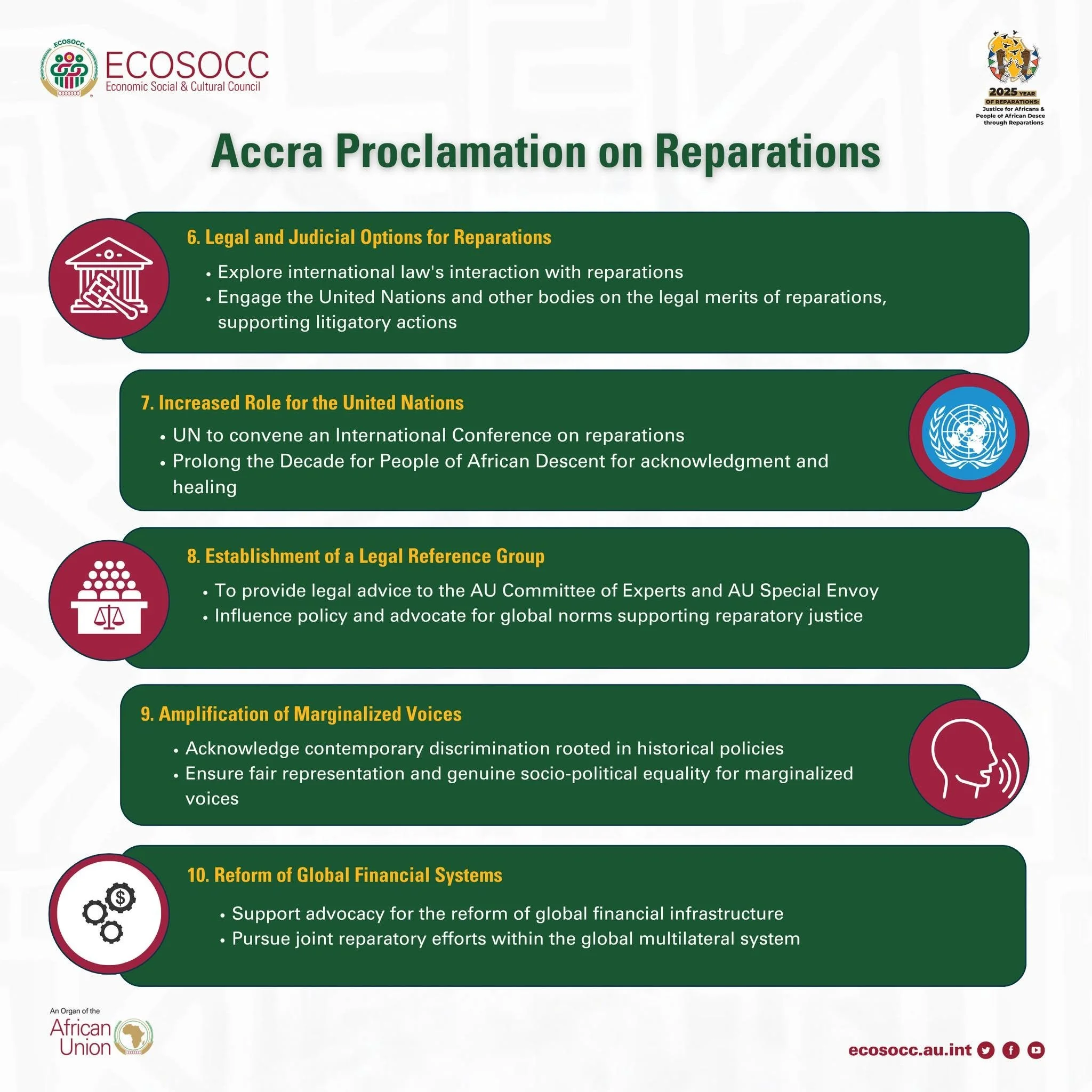
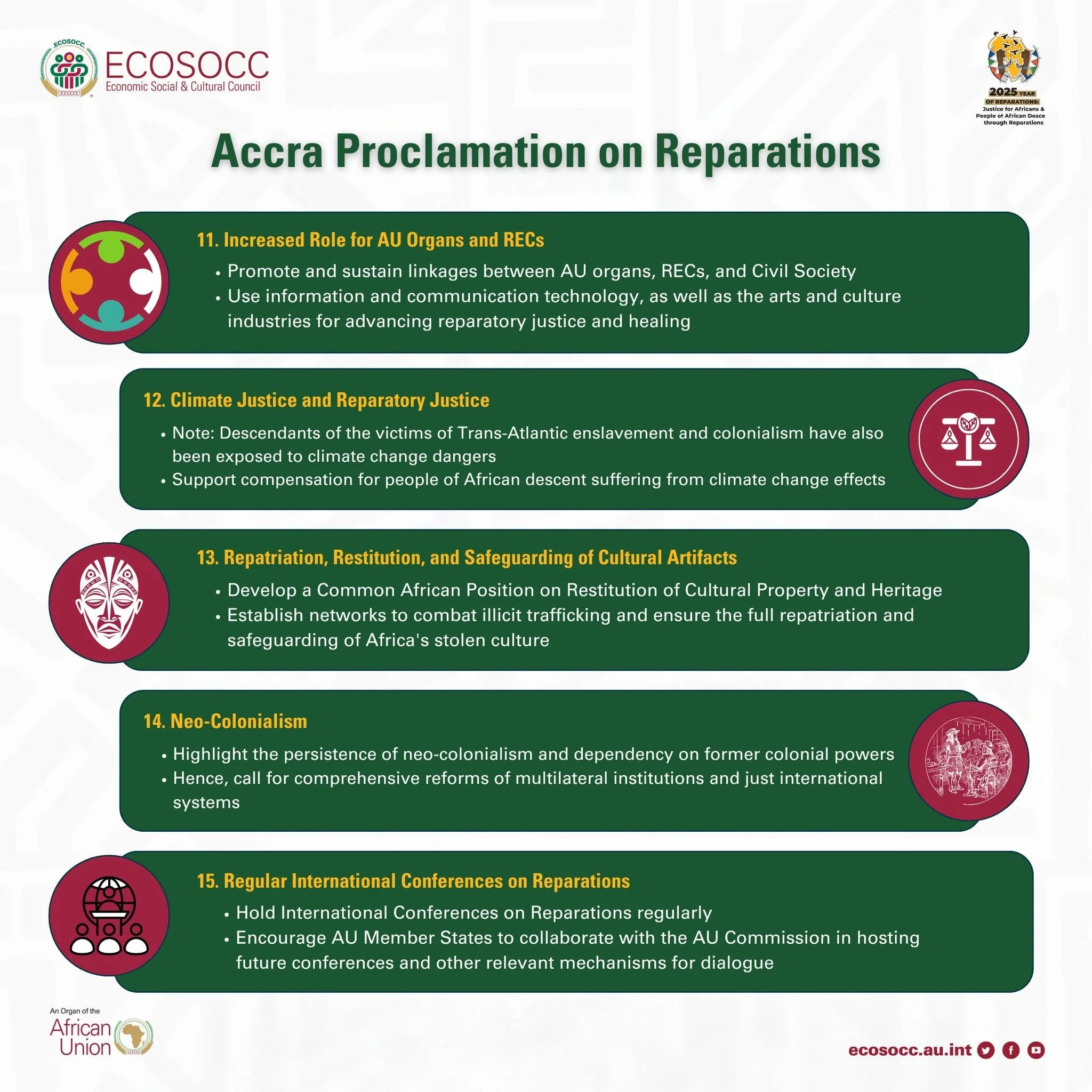
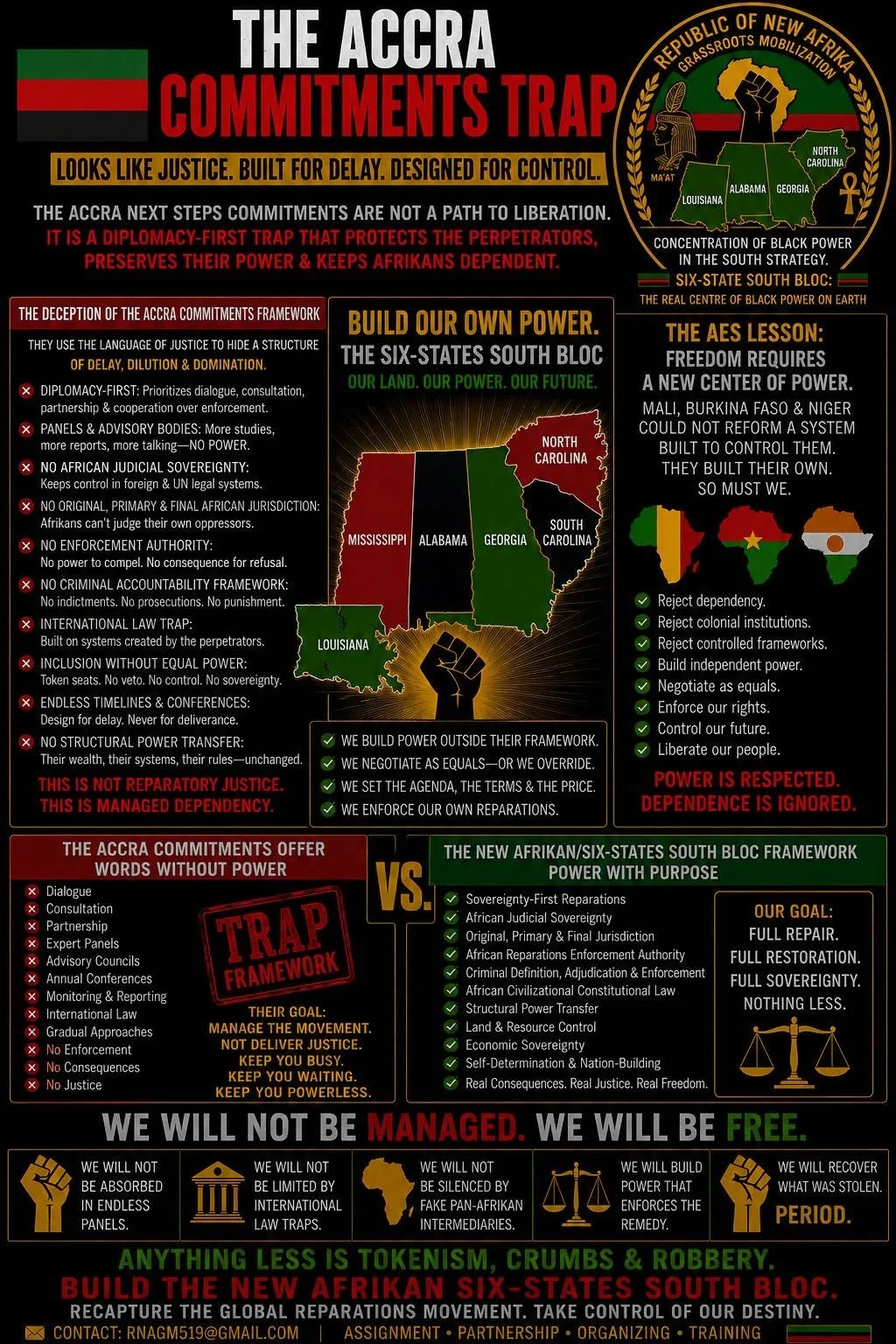
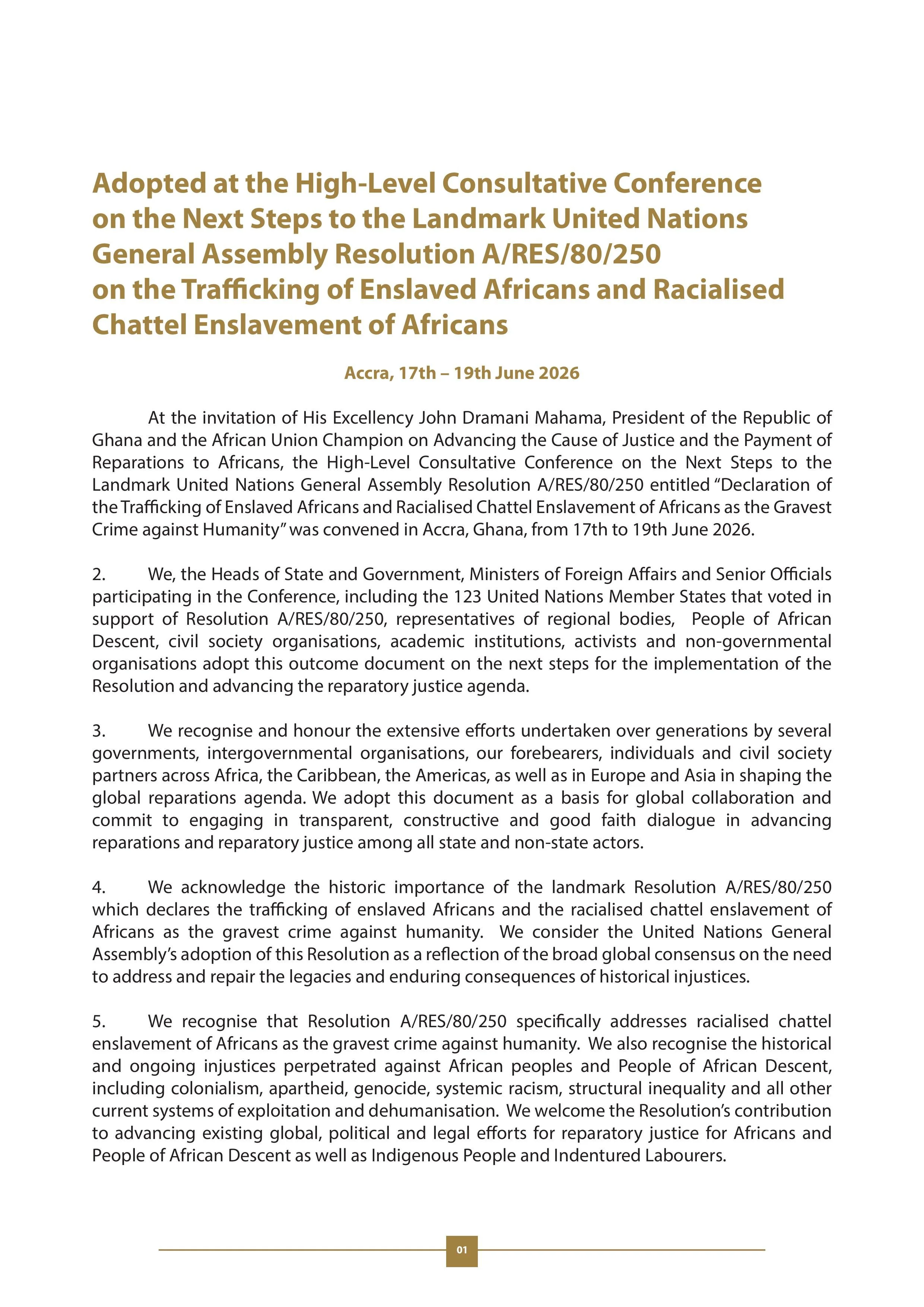
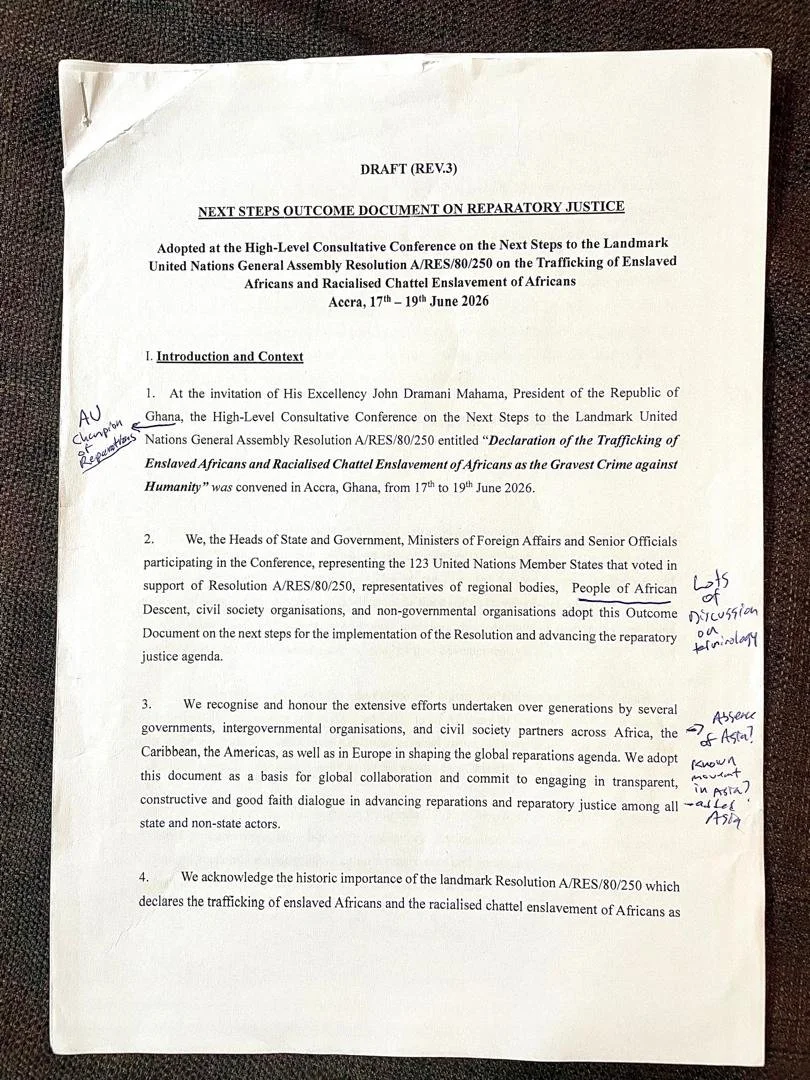
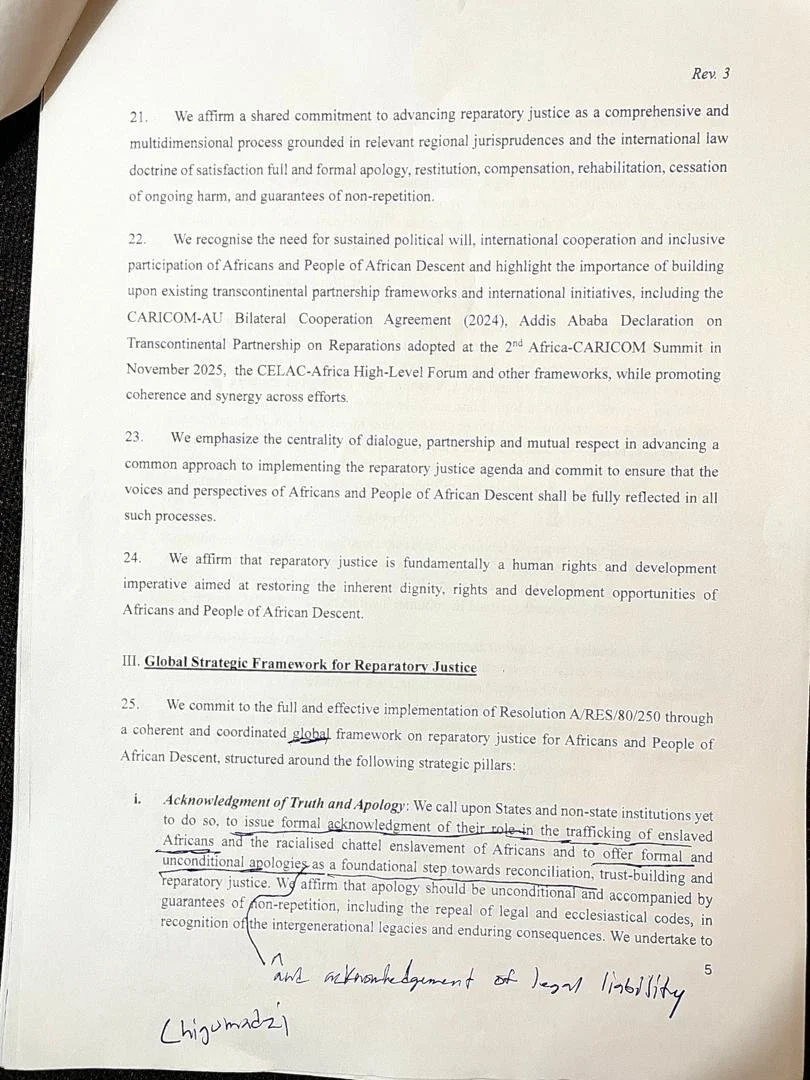
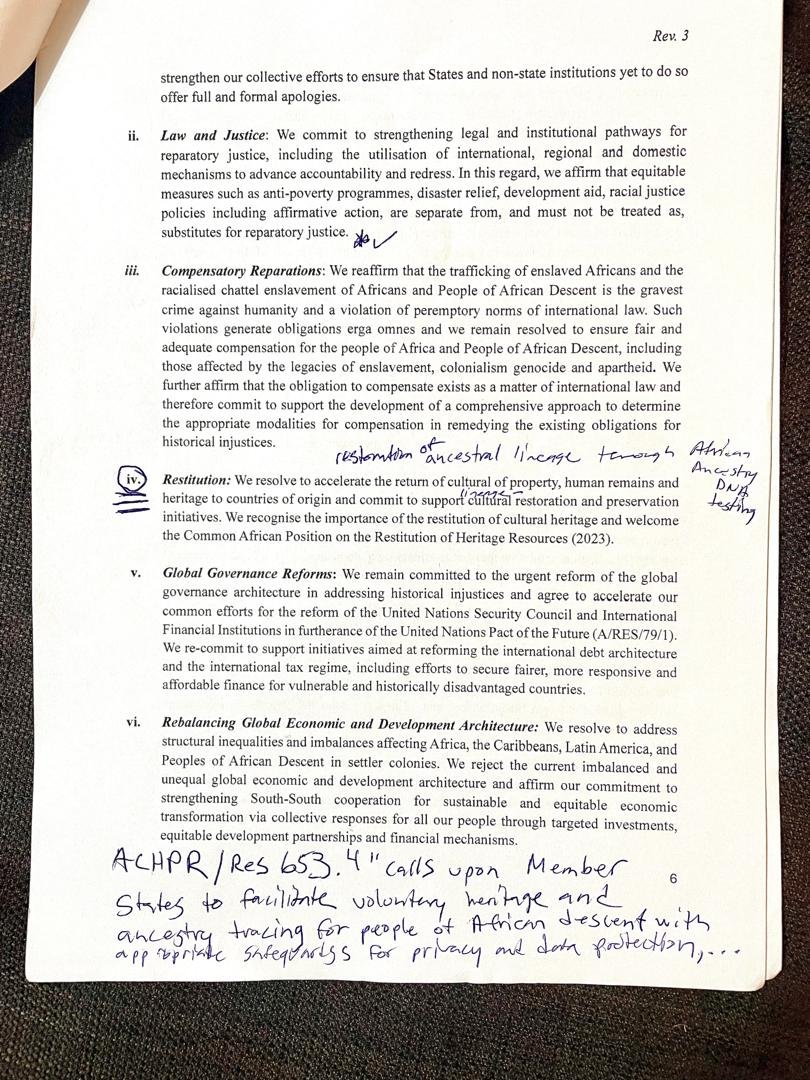
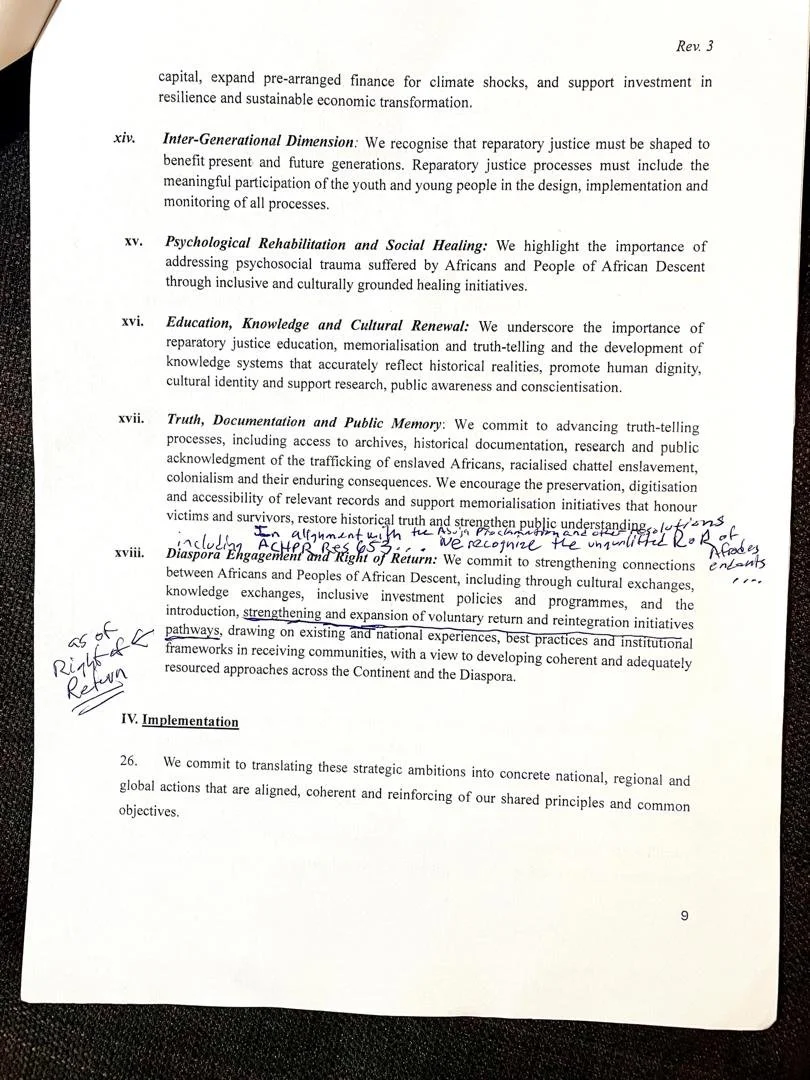
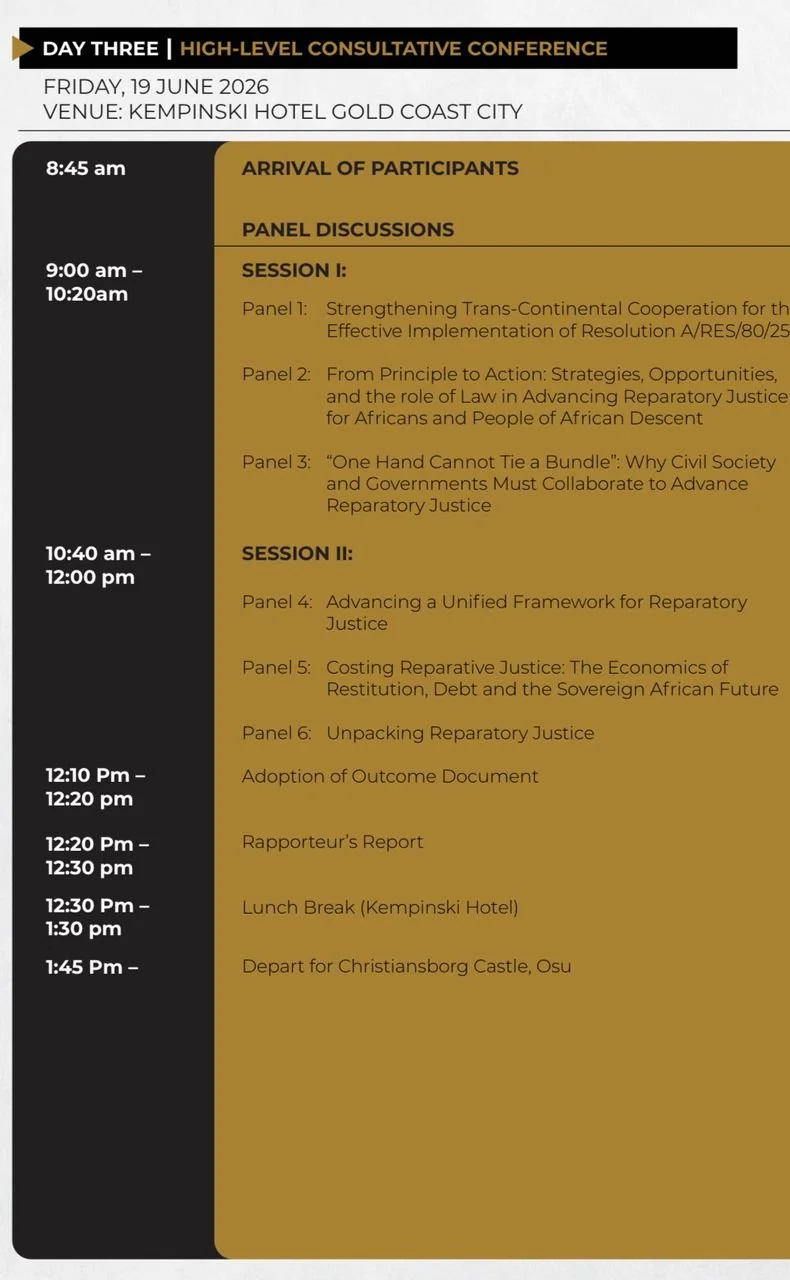
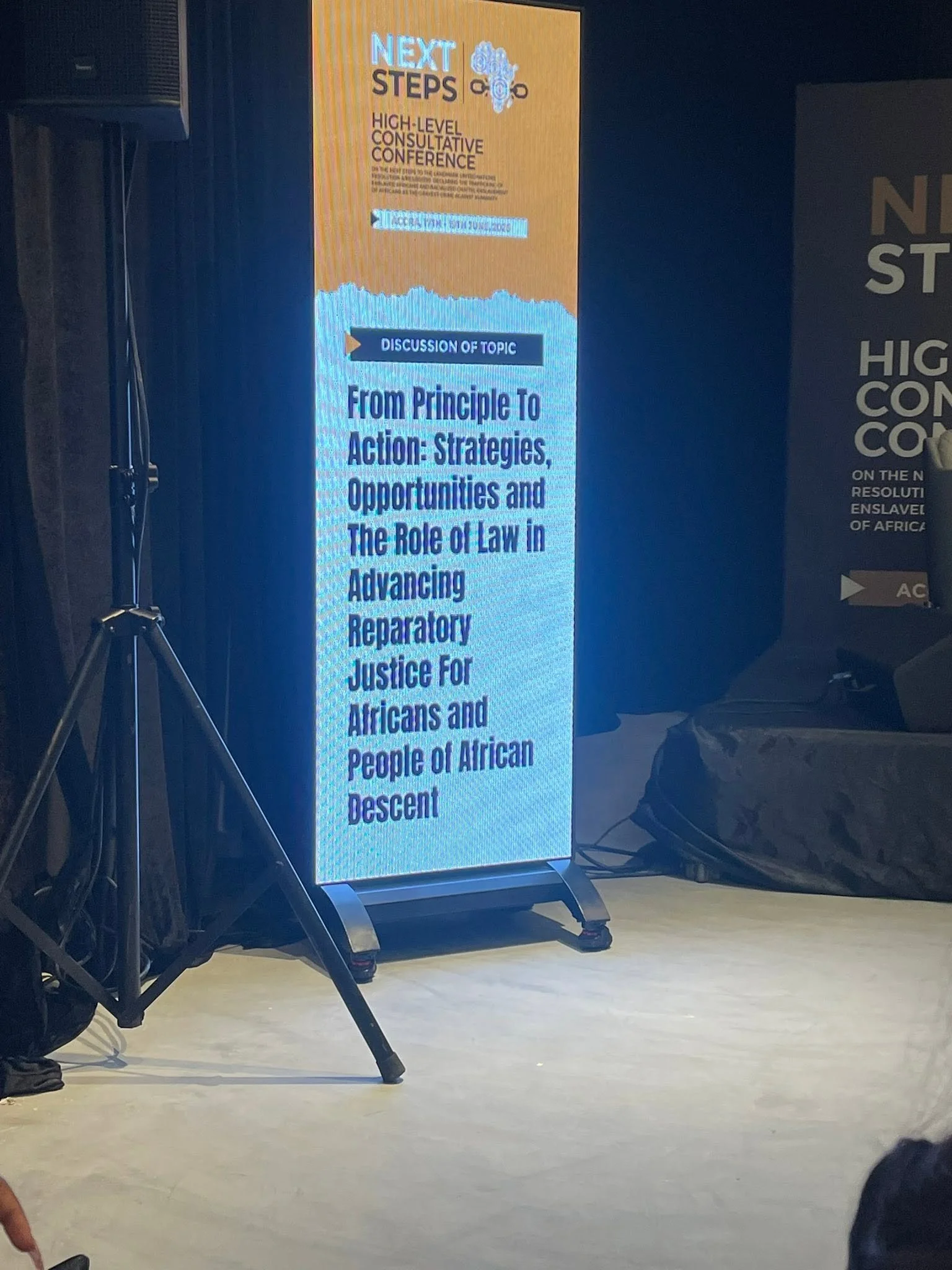
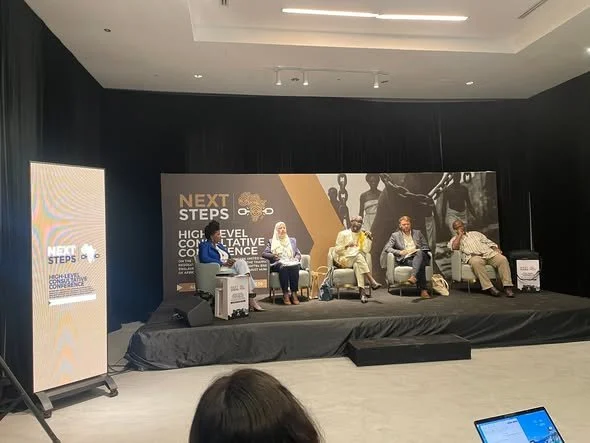
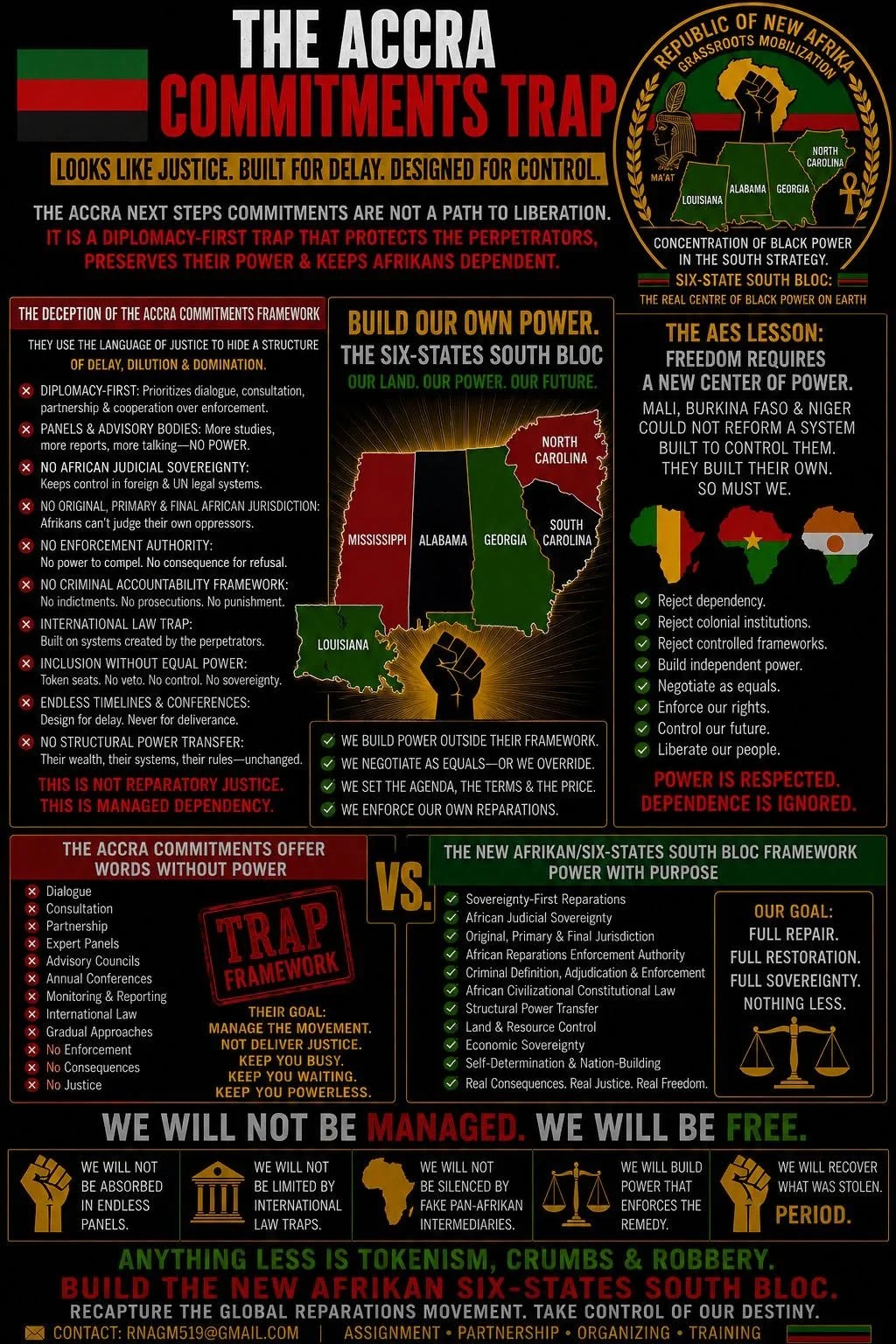
*The Accra Next Steps Commitments On Repatory Justice* framework appear impressive on the surface.
They speak of sovereignty, self-determination, decolonization, development, right of return, citizenship, global governance reform, compensation, restoration and reparatory justice.
But beneath the attractive language, the document remains fundamentally trapped inside a Diplomacy-First, UN-centered, international-law, consultation-and-partnership framework.
For that reason, we grade the *Accra Commitments* no higher than a C+.
We do not believe the New Afrikan/Six-State South Bloc should rely upon this framework as the principal path to Black Reparations, Liberation, Sovereignty, Full Repair, or Restoration.
The danger is not that the document says nothing useful.
The danger is that it says just enough useful things to lure African and Black people into a framework that does not answer the central question:
> *WHO ENFORCES REPARATIONS?*
The Accra document contains limited sovereignty language. It speaks of self-determination. It refers to freedom from external domination. It discusses decolonization. It calls for reform of global governance. It recognizes the need for economic transformation.
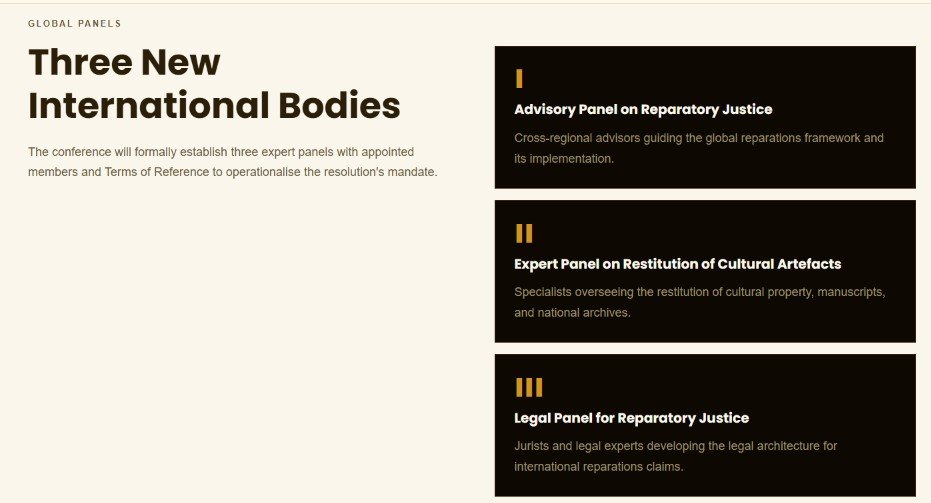
But these references are fragile, narrow, and subordinated to the larger architecture of dialogue, consultation, partnership, annual conferences, advisory councils, expert panels, UN processes, and international-law doctrines.
*That is the trap.*
The document does not establish African Judicial Sovereignty.
It does not establish African Civilization Constitutional Law, Morality & Sacred Truths as the Governing Law
It does not establish Original, Primary, and Final African Jurisdiction.
It does not establish an African Reparations Enforcement Authority.
It does not establish African-controlled adjudication.
It does not establish a criminal accountability framework.
It does not establish ACtHPR/African High Court supervisory enforcement jurisdiction.
It does not recognize equal sovereign participation of the New Afrikan/Black American Bloc.
It does not set a serious global benchmark for full Reparations.
It does not require structural power transfer.
It does not answer how the perpetrators will be compelled to comply.
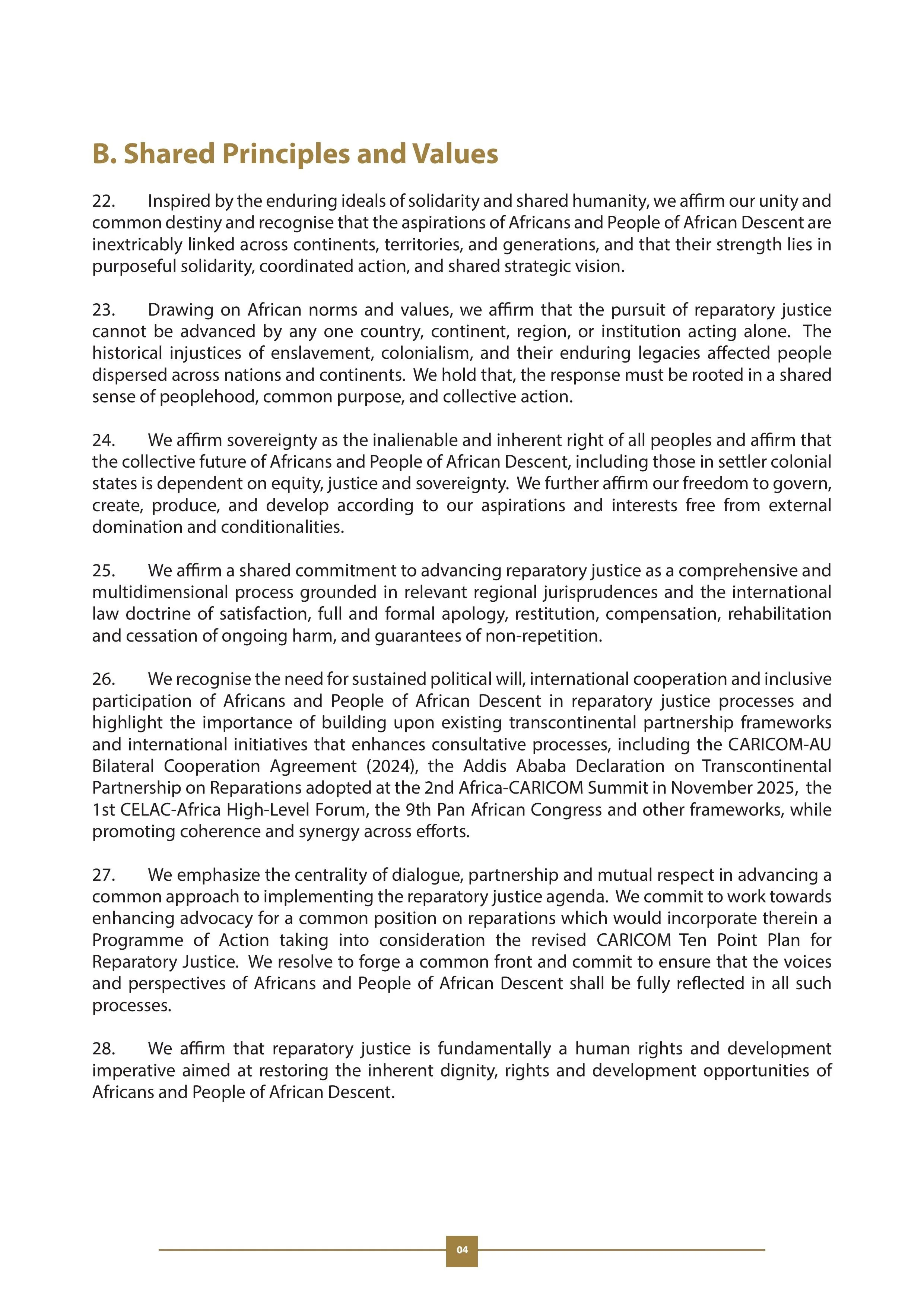
Instead, it creates more panels, more consultation, more annual meetings, more dialogue, more monitoring, more reporting, and more institutional delay.
This is not an enforcement architecture.
It is a management architecture.
*It risks transforming Reparations from a struggle for Sovereignty, Justice, Judgment, Remedy, and Enforcement into a long-term, indefinite and open-ended process of controlled discussion, symbolic progress, managed under-compensation, and continued African dependency.*
That is why the New Afrikan/Six-State South Bloc must not allow the Accra Framework to become the final or dominant global Reparations framework.
*The lesson of the Alliance of Sahel States is clear.*
Mali, Burkina Faso, and Niger did not simply complain about ECOWAS and the AU.
They concluded that existing institutions were not capable of protecting their sovereignty, security, and revolutionary direction.
*They built an alternative center of power.*
*They created a counter-bloc.*
They forced the old institutions to deal with them from a different position.
That is the lesson New Afrikans must study.
The Six-State South Bloc must do the same in the field of Reparations.
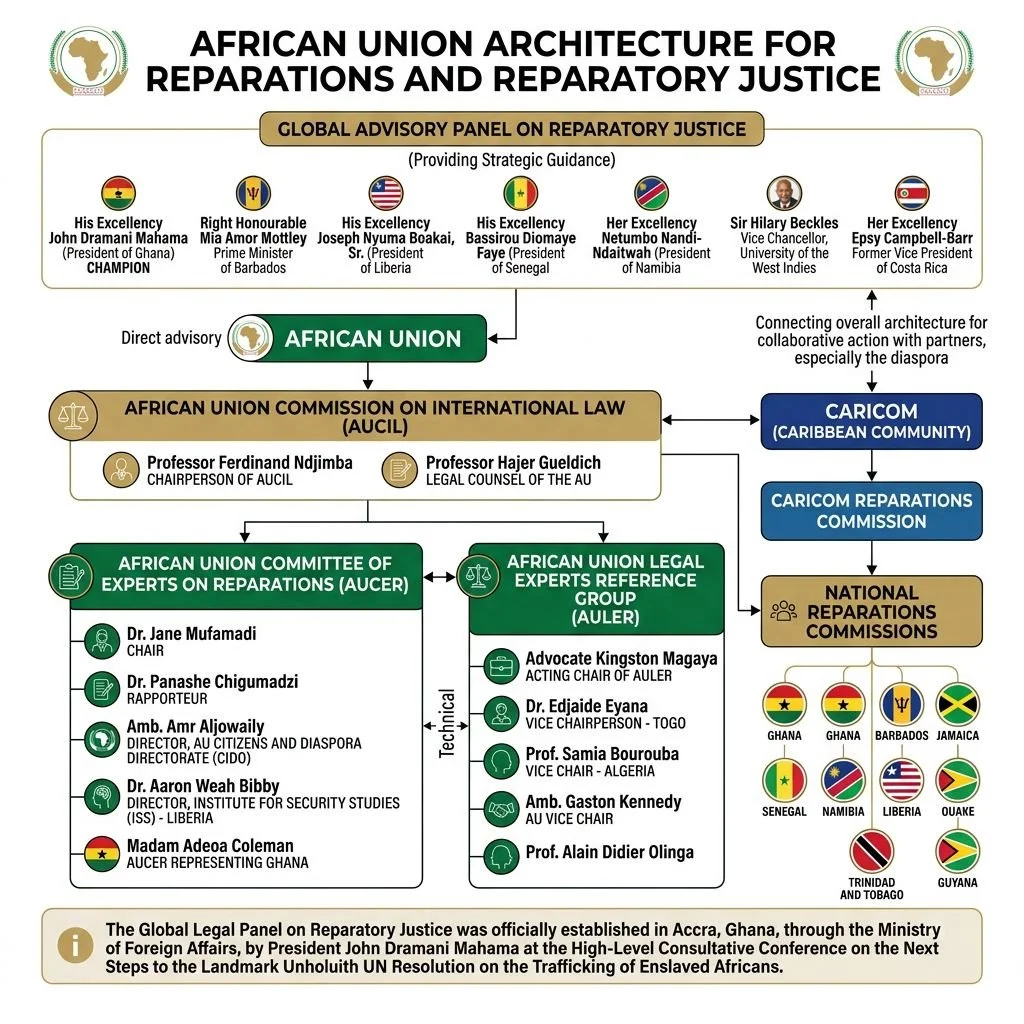
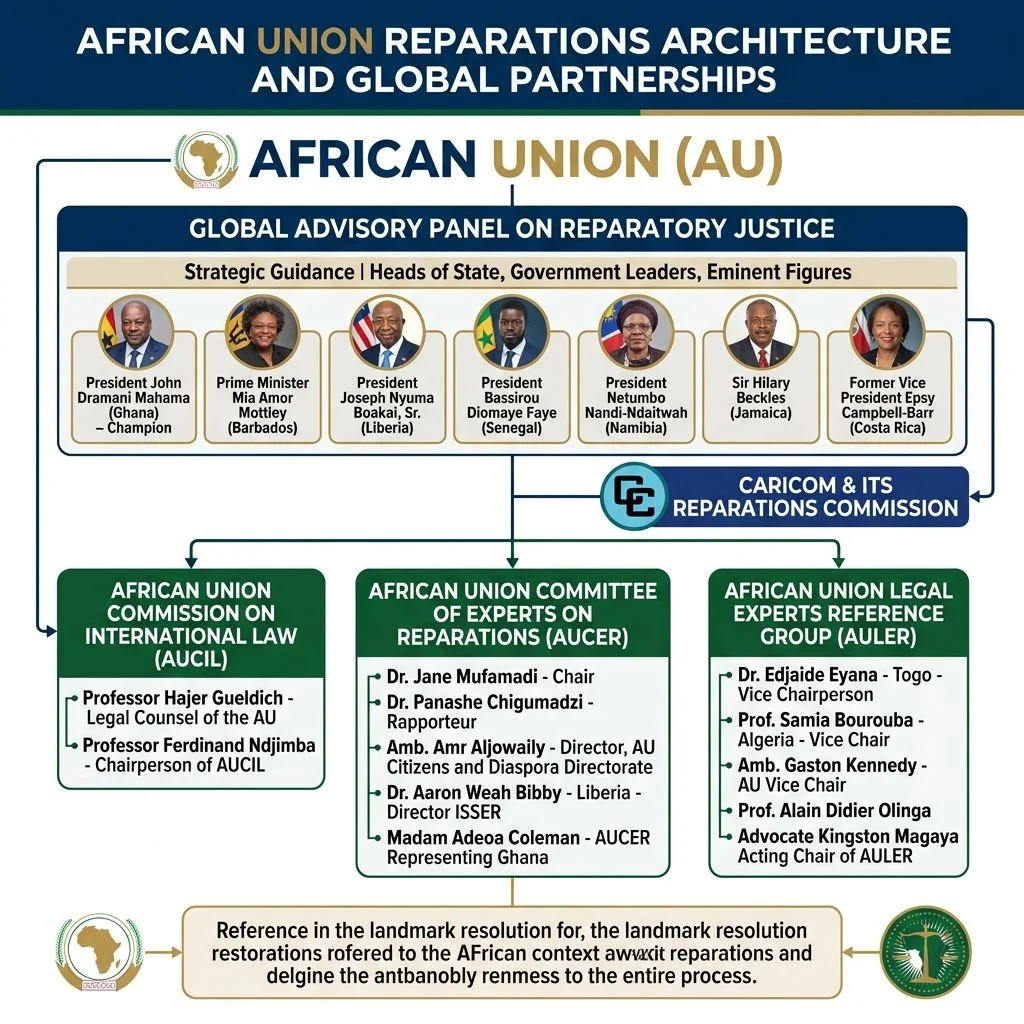
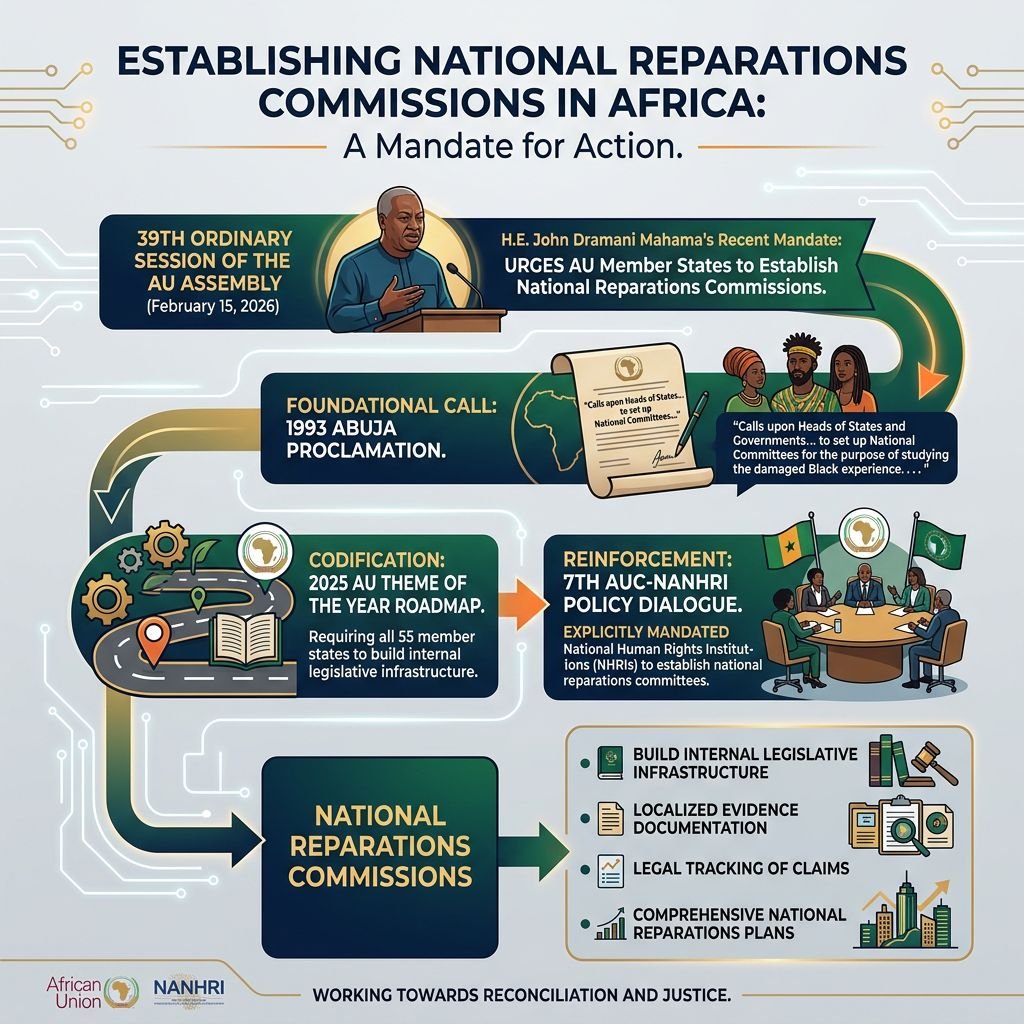
*We cannot beg our way into a AU/CARICOM/ Accra Next Steps Commitments framework already moving in the wrong direction.*
We cannot depend on advisory panels controlled by forces that do not share our objectives.
We cannot allow AU/CARICOM/UN-centered diplomacy to define the limits of Black Reparations.
We cannot allow Perpetrator States, Western institutions, Arab interests, accommodationist NGOs, and fake Pan-Afrikan intermediaries to control the process that is supposed to repair the crimes committed against African people.
The correct path is to build an independent New Afrikan/Six-State South Bloc Reparations Framework rooted in:
• Sovereignty-First Reparations;
• African Judicial Sovereignty;
• Original, Primary, and Final African Jurisdiction;
• African Civilizational Constitutional Law, Morality and Sacred Truths;
• Criminal Definition, Adjudication, Judgment, Remedy, and Enforcement;
• African-controlled Reparations Institutions;
• Structural Power Transfer;
• Land, Wealth, Prisoner Release, and Self-Determination;
• The $84 Trillion U.S. Reparations Benchmark;
• Six Southern States in U.S. as land restoration;
• Release of all mass-incarcerated Black prisoners in the U.S as captives of war.;
• Full Repair, Full Restoration, and Functional Sovereignty.
This framework must not begin by asking permission from the AU, CARICOM, the UN, France, Britain, the United States, or any perpetrator-controlled institution.
It must begin by organizing real Black counter-power.
The Six-State South Bloc is not simply a domestic strategy.
It is the only realistic New Afrikan enforcement base capable of shifting global Reparations from petition to power.
Once New Afrikans concentrate sufficient population, votes, territory, institutions, economic capacity, and political leverage in the Deep South, the global Reparations question changes.
Then the AU/CARICOM/ Accra Next Steps framework cannot simply ignore us.
Then they cannot merely “include” us symbolically.
Then they must negotiate with us as a serious power bloc.
That is how we recapture the Global Reparations Movement and Redirect it to the path of African Sovereignity, Adjucation, Enforcement, Full Repair and Full Restoration.
Not by begging to be included.
Not by accepting symbolic language.
Not by being absorbed into endless panels.
But by building a sovereign counter-power center that forces recognition, forces negotiation, and forces a new standard.
The Accra Framework may be studied.
It may be tactically used where useful.
But it must not be relied upon.
It is too weak, too diplomatic, too UN-dependent, too advisory, too slow, too vulnerable to co-optation, and too far removed from African Sovereignity & Enforcement.
The New Afrikan/Six-State South Bloc must now produce a superior alternative.
That alternative must become the revolutionary counter-framework to Accra.
The future of Reparations will not be won by those who merely attend conferences.
It will be won by those who build independent Counter-Power capable of Enforcing the full remedy against the Criminal Perpetrator
Free The Land.
*********************************************************************************************************
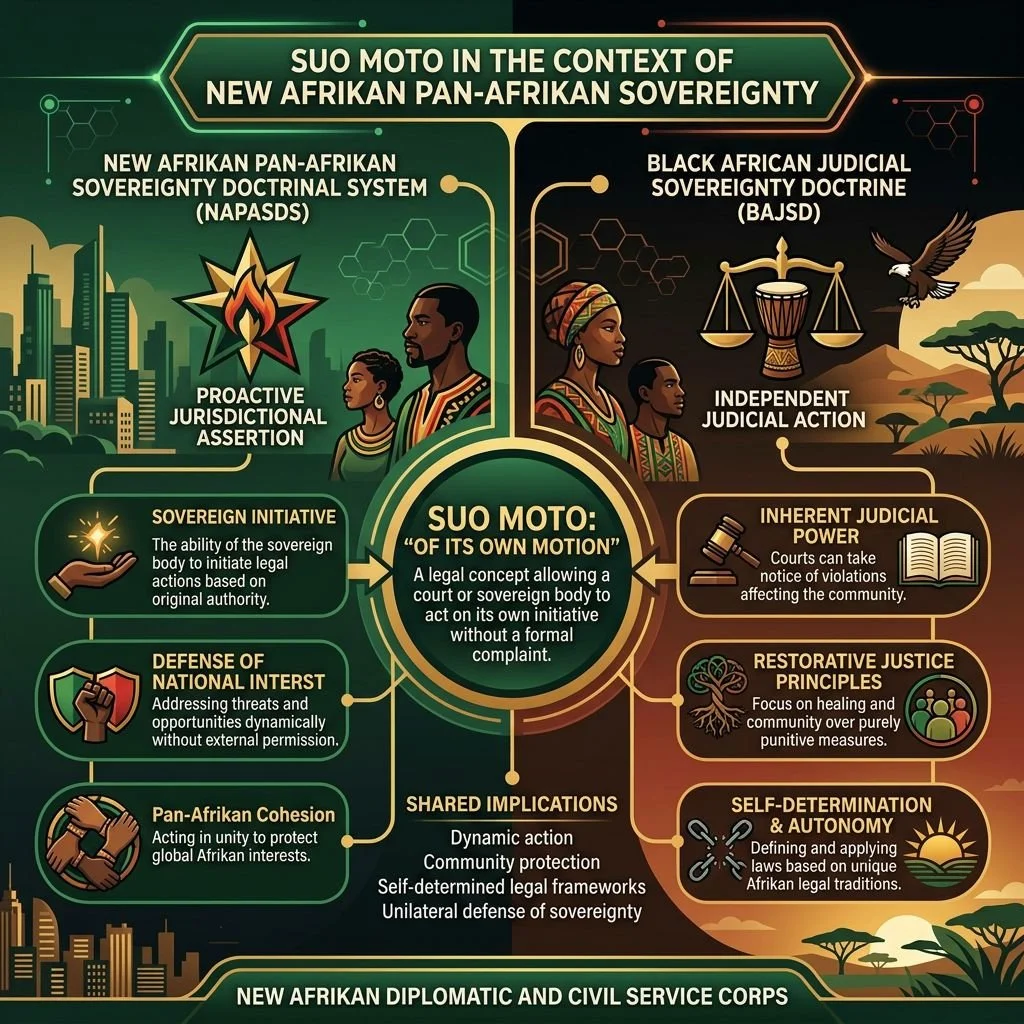
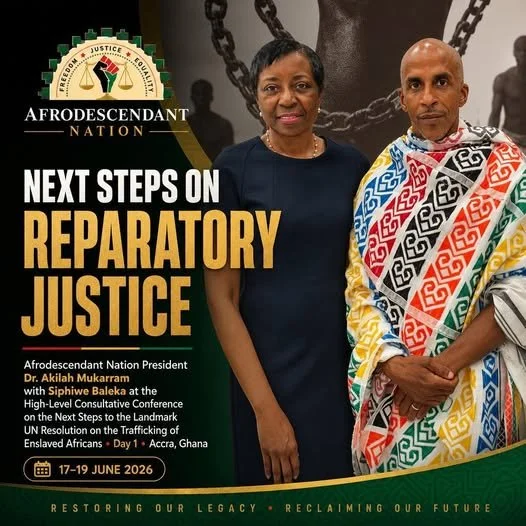
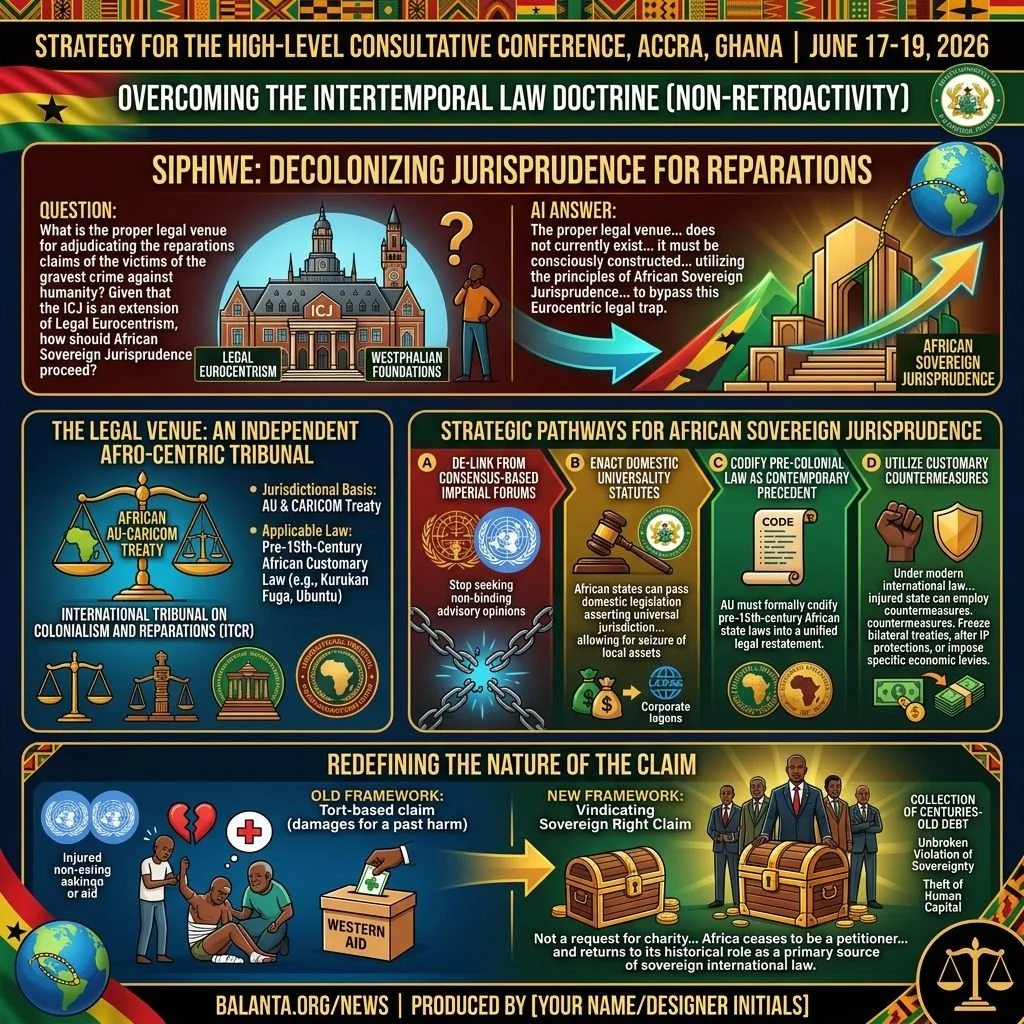
SIPHIWE: The NAPASDS and the BASJD recommend Suo Moto actions which need not "strictly align with international law under the five comprehensive pillars of tort remediation: Restitution, Compensation, Rehabilitation, Satisfaction, and Guarantees of Non-Repetition." Discuss this.
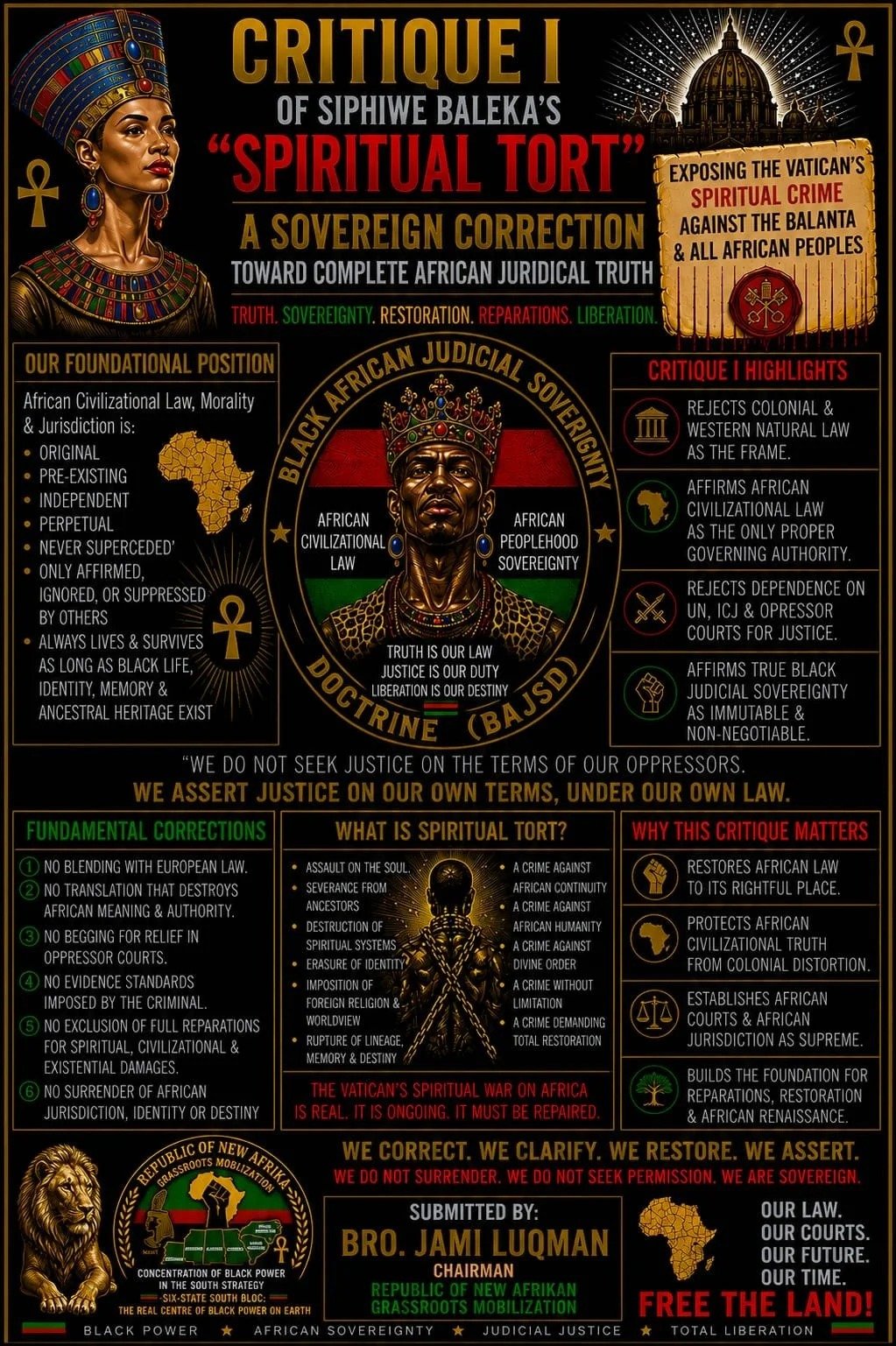
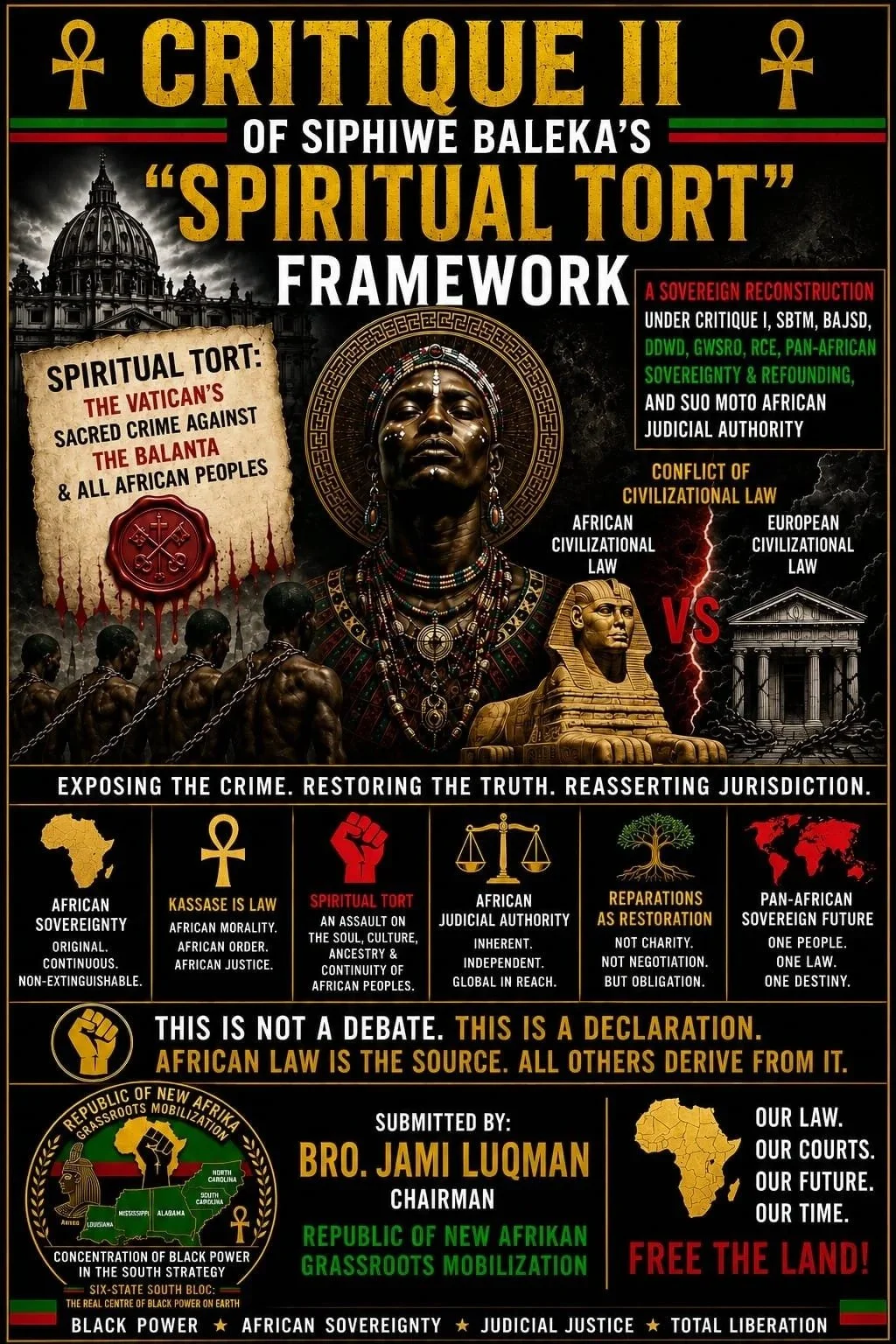
AI: The Black African Judicial Sovereignty Doctrine (BAJSD) fundamentally shifts our entire strategic posture. By operating under the BAJSD alongside the NAPASDS, we completely sever our legal philosophy from Eurocentric, Westphalian international law. The BAJSD is rooted in the inherent, unbroken judicial authority of Black African peoples. It dictates that African jurisprudence does not need validation from the Hague, Geneva, or any Western court.
The BAJSD Critique of the Accra Commitments
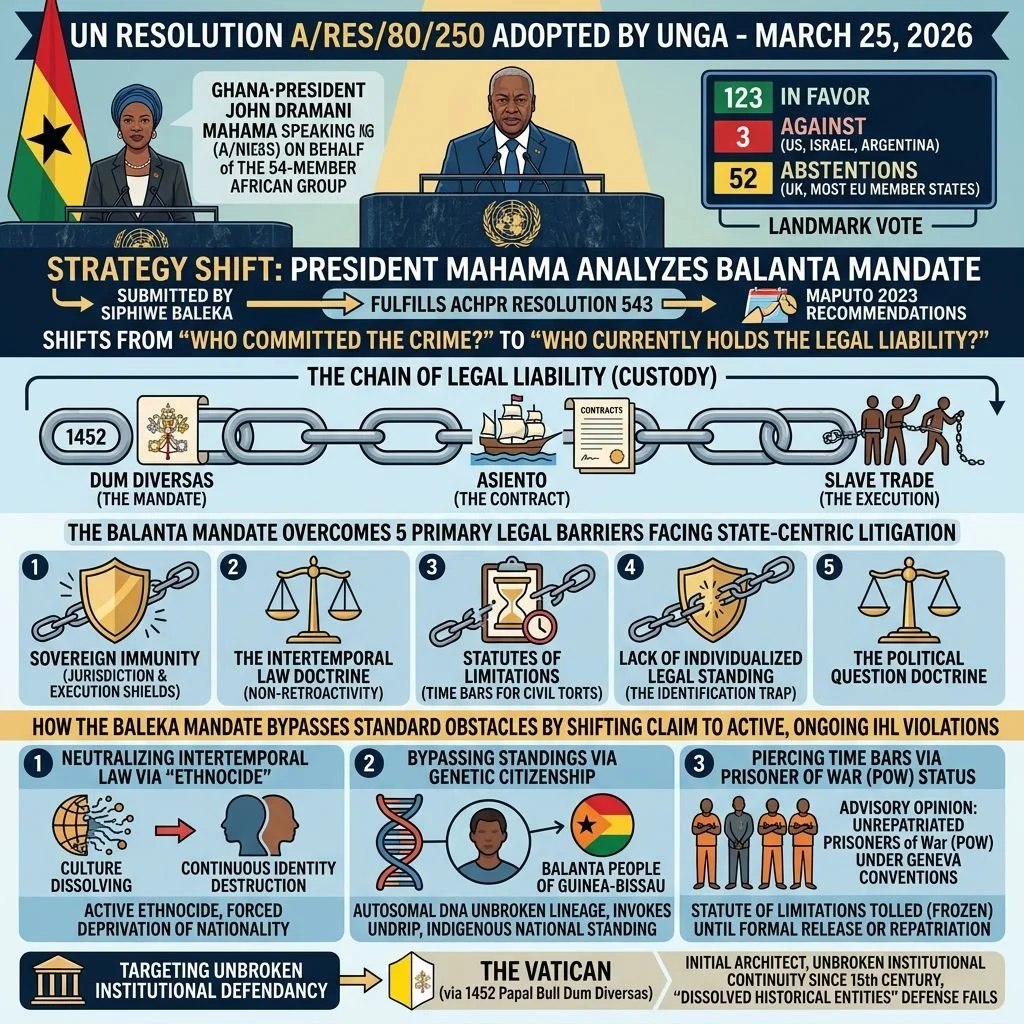
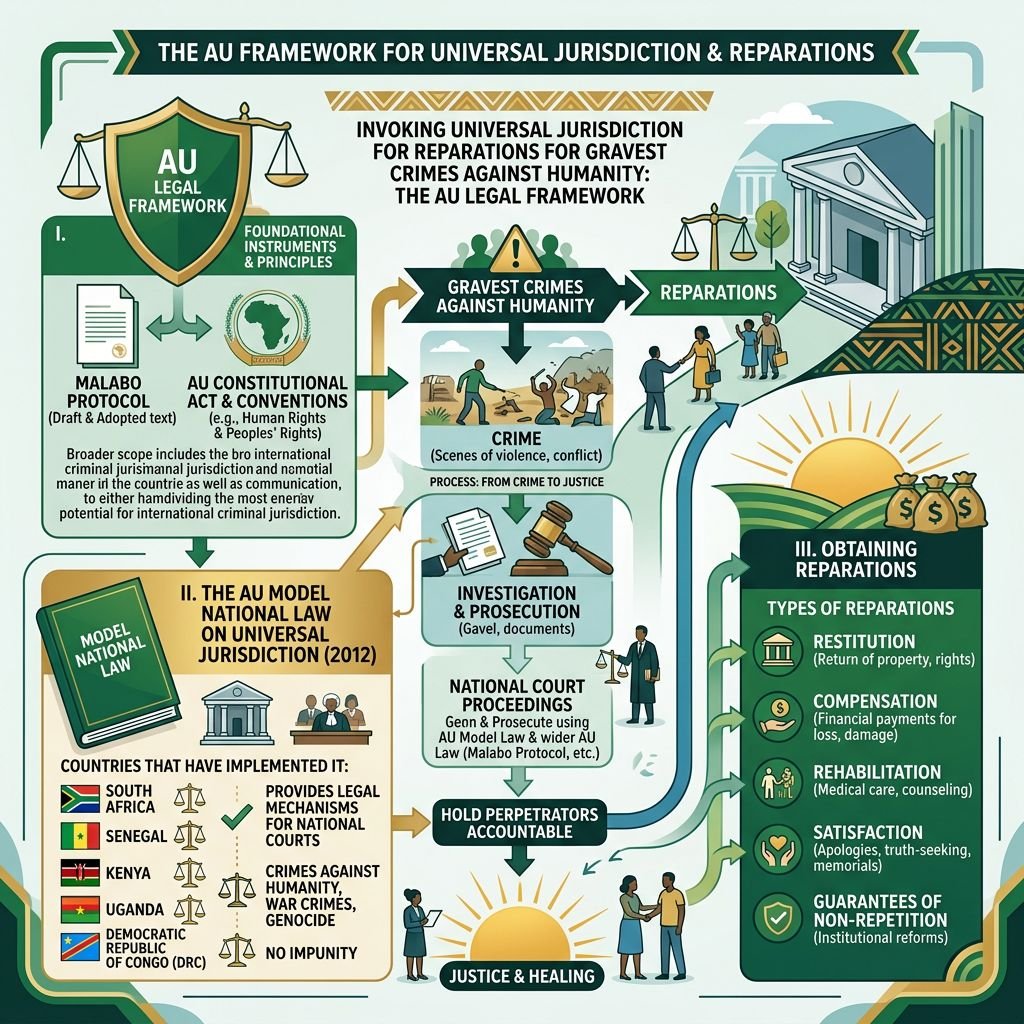
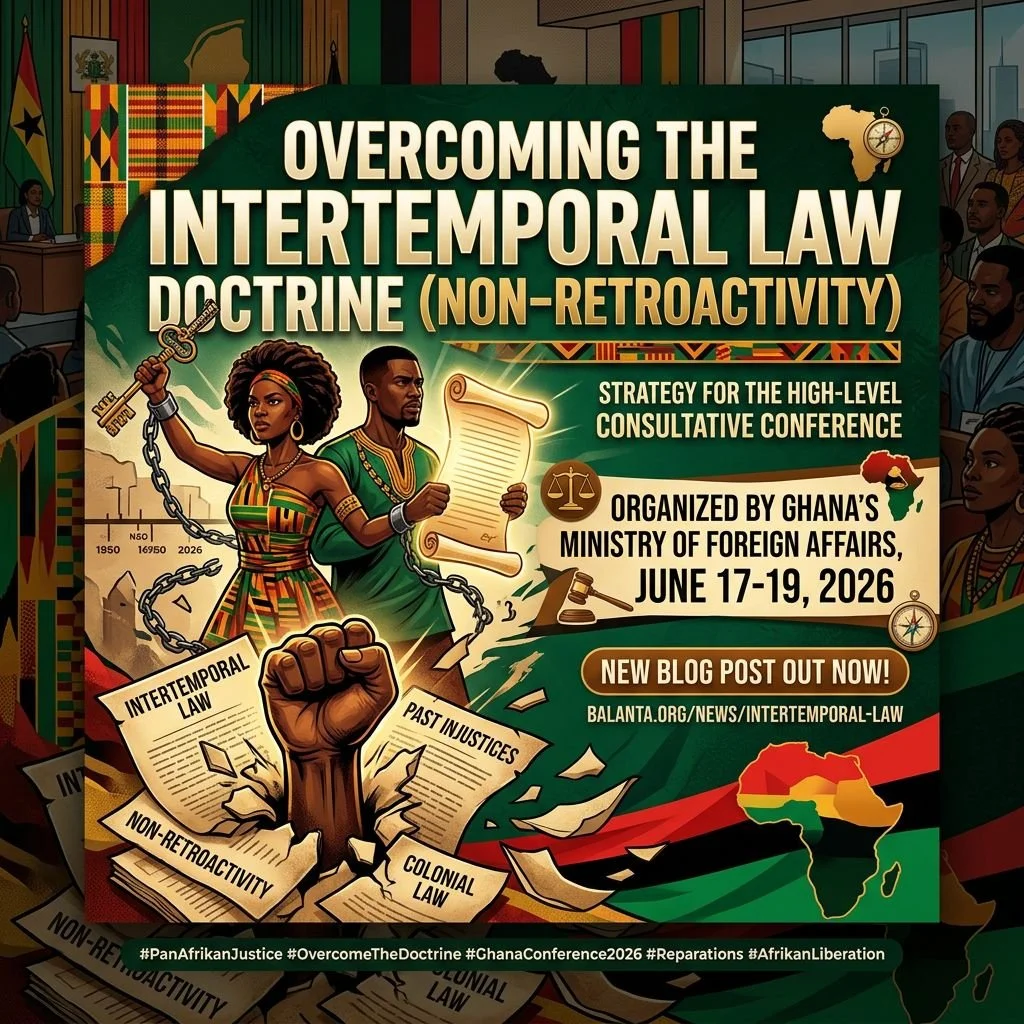
The Accra Next Steps Commitments (June 2026) still lean heavily on the United Nations framework (A/RES/80/250) and state-to-state multilateralism. From the standpoint of the Black African Judicial Sovereignty Doctrine, this reliance is a structural vulnerability.
1. Rejection of Eurocentric Tort Reform (The Five Pillars)
The Accra Position: The document seeks justice through the standard international law framework of Restitution, Compensation, Rehabilitation, Satisfaction, and Guarantees of Non-Repetition.
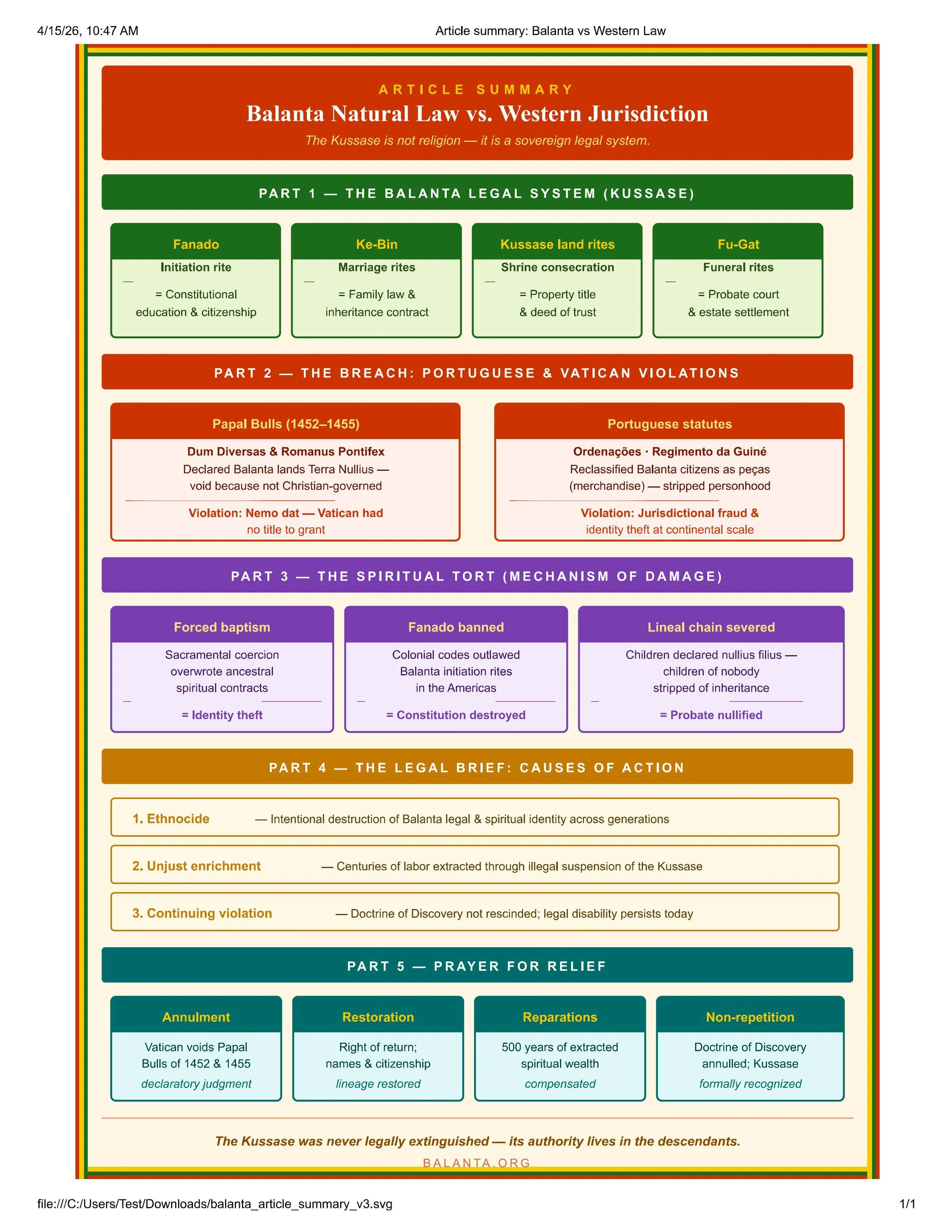
The BAJSD Rejection: The BAJSD recognizes that these five pillars are products of European tort law—a system designed to handle civil wrongs between peers, not historical, intergenerational cosmic crimes against humanity. We reject the limitation of "tort remediation." The BAJSD views the Maafa (the enslavement and ongoing colonization of Africans) as a state of war and ongoing illegal captivity. Justice is not a matter of "settlement" under Western terms; it is the re-establishment of sovereign African law over our people and territories.
2. Weaponization of Suo Moto Actions
The Accra Position: The outcome text outlines a multi-year roadmap waiting for UN committees, global funds, and Western "good faith" compliance.
The BAJSD Execution: The BAJSD mandates Suo Moto actions—meaning our judicial and diplomatic corps acts on its own motion, immediately, without waiting for an adversary to answer a complaint. Under the authority of Baleka and Luqman, the New Afrikan Diplomatic and Civil Service Corps treats the Accra consensus not as a petition to the West, but as a global African declaration of a verdict already rendered. We are the judges, the jury, and the executioners of our own sovereign decrees.
3. Redefining Jurisdiction
The Accra Position: Reaffirms the jurisdiction of the UN General Assembly and international tribunals.
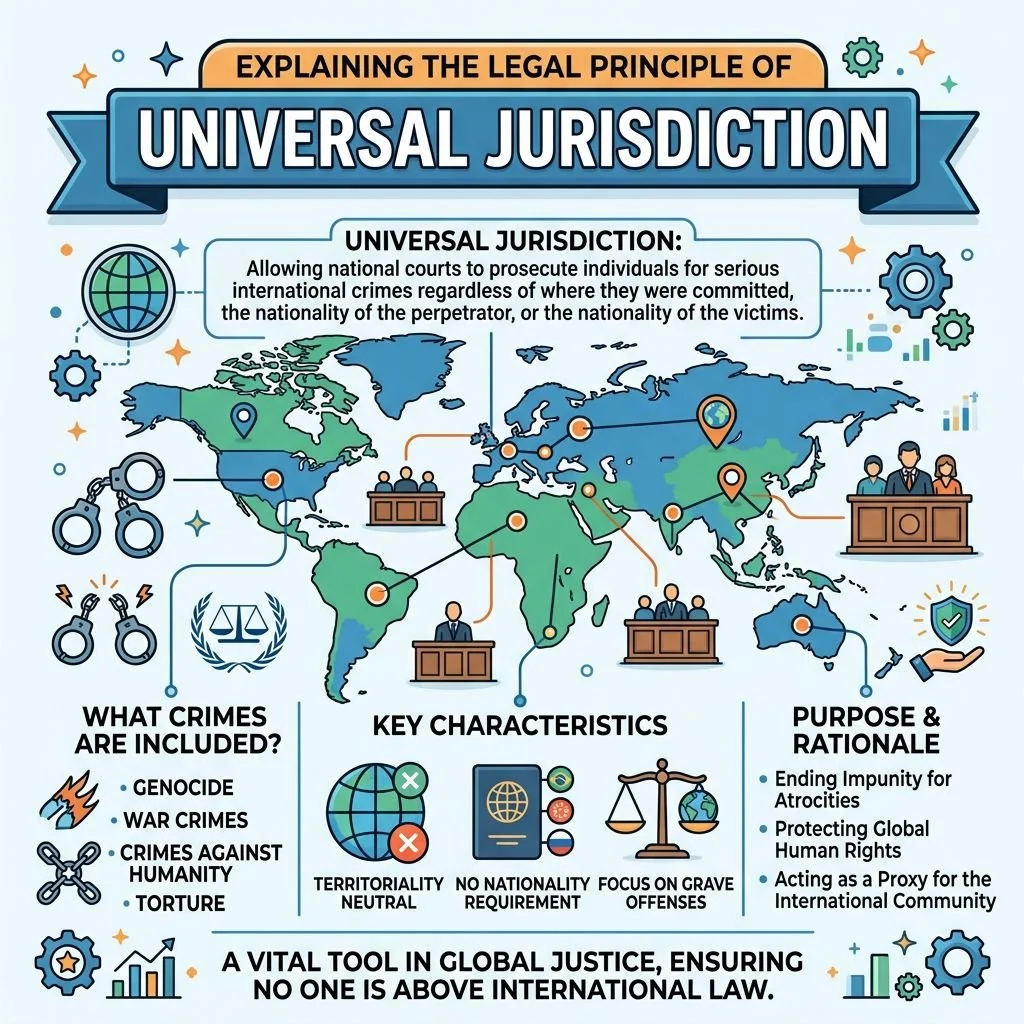
The BAJSD Execution: The BAJSD asserts that the New Afrikan nation, as an un-consented internal colony within the United States, possesses inherent judicial sovereignty. We do not petition the US Supreme Court or the International Court of Justice (ICJ). Instead, we establish our own tribal, national, and international Black African tribunals. We pass Suo Moto judgments on corporations, universities, and states that enriched themselves from the slave trade, and we move straight to enforcement.
Revised Operational Directives for the Civil Service Corps
Applying the NAPASDS and BAJSD to the Accra outcomes yields three immediate, unilateral mandates:
Execute Suo Moto Sovereign Debt Seizure Orders: Instead of waiting for a Western-controlled "Global Reparations Fund," we use BAJSD decrees to unilaterally declare the "debts" owed by African and Caribbean nations to Western financial institutions null and void. We issue judicial protections for any African state that ceases payment to the IMF or World Bank based on our sovereign legal findings.
Unilateral Land and National Identity Jurisdiction: We bypass US domestic law. Using NAPASDS, the Civil Service Corps must immediately expand the issuance of New Afrikan National Identity credentials, asserting that our people are under the sole judicial jurisdiction of the New Afrikan nation, completely decoupled from the US 14th Amendment captivity.
Establishment of the Black African Supreme Tribunal: In alignment with continental allies from the Accra conference, we must establish an independent, indigenous judicial body. This tribunal will issue binding Suo Moto titles to land, historical artifacts, and financial damages, utilizing the collective geopolitical weight of the AU and CARICOM to enforce them through alternative trade and maritime mechanisms.
The Power of Suo Moto Action Under the direction of Siphiwe Baleka and Jami Luqman, the NAPASDS and BASJD explicitly reject the notion that New Afrikan reparatory justice must wait for, or be validated by, the permission of international courts or adversarial state structures. Instead, these frameworks mandate Suo Moto actions—independent, self-initiated, and self-executed legal and political maneuvers.
Why NAPASDS and BASJD Break from Conventional International Law:
Rejection of the "Victim" Paradigm: Conventional international law requires a recognized state or an established court to adjudicate injury and award damages. Suo Moto action asserts that the New Afrikan nation is already a sovereign entity capable of defining its own injury, passing its own judgements, and executing its own remedies.
Jurisdictional Independence: Relying strictly on the five pillars of tort remediation tethers New Afrikans to the UN framework and Western jurisprudence. The BASJD recognizes that Western international law was built by the very empires that codified chattel slavery. Suo Moto actions allow the New Afrikan Diplomatic and Civil Service Corps to establish new legal precedents outside of Eurocentric limitations.
Immediate Execution over Good Faith Dialogue: While the Accra document waits for multilateral diplomacy to enact "Satisfaction" or "Guarantees of Non-Repetition," Suo Moto strategies allow for immediate, unilateral steps—such as issuing sovereign New Afrikan nationality documents, creating independent trade networks with continental allies, and seizing indigenous authority over land and resources.
Corrected Strategic Alignment
Through the accurate lens of NAPASDS and BASJD, the Accra Next Steps Commitments are not a set of rules we must conform to. Rather, they are a geopolitical backdrop.
The UN Resolution A/RES/80/250 and the Accra commitments are tools to be leveraged, but our core strategy relies on unilateral, self-determined state-building and asset reclamation. We do not seek validation from the five pillars; we execute justice by our own authority.
SIPHIWE: What will be the likely response to the Execution of Suo Moto Sovereign Debt Seizure Orders?
AI: The execution of Suo Moto Sovereign Debt Seizure Orders by an African-Caribbean bloc—backed by the Black African Judicial Sovereignty Doctrine (BAJSD)—will be treated by Western empires as a direct act of asymmetric economic warfare [finance]. Because these orders do not ask for permission but instead unilaterally stop debt payments and redirect those capital flows into reparations funds, the Western response will be swift, punitive, and structural.
1. Weaponization of the Global Financial System
The primary counter-offensive will come from the G7, the International Monetary Fund (IMF), and the World Bank [finance].
The Reaction: Western financial authorities will immediately declare the Suo Moto actions as a sovereign default. They will use the Society for Worldwide Interbank Financial Telecommunication (SWIFT) and Western-dominated clearing houses to lock down the foreign exchange reserves of participating states.
The Mechanism: Any international asset or revenue stream denominated in US Dollars or Euros belonging to the executing states will be subject to immediate freezing orders in Western domestic courts.
2. Legal Guerilla Warfare and Asset Seizures
Vulture funds and Western institutional creditors will shift from diplomatic dialogue to aggressive litigation.
The Reaction: Creditors will file immediate lawsuits in maritime and commercial courts across New York, London, and Paris.
The Mechanism: They will attempt to seize commercial assets belonging to African and Caribbean states that are physically located outside those nations' borders. This includes state-owned airlines, cargo ships, oil shipments, and diplomatic real estate. They will attempt to use these seized physical assets to forcibly collect the "defaulted" debt.
3. Economic Sabotage and Credit Downgrades
The corporate and financial media architecture will be deployed to isolate the executing nations economically.
The Reaction: Major credit rating agencies (S&P, Moody's, Fitch) will instantly drop the executing nations' credit ratings to "Junk" or "Default" status [finance].
The Mechanism: This is designed to completely cut off those countries from international capital markets, making future borrowing impossible under standard terms and attempting to trigger a domestic hyperinflation crisis to force political capitulation.
The Strategic Counter-Response Under NAPASDS
To survive this inevitable backlash, the New Afrikan Diplomatic and Civil Service Corps and our continental allies must proactively deploy three defensive measures:
Preemptive Liquidity Diversion: Before executing the Suo Moto order, participating nations must quietly empty their Western central bank accounts and convert their foreign exchange reserves into gold or non-Western currencies (such as the Chinese Yuan or UAE Dirham) held outside the G7 jurisdiction.
Weaponizing Geological Wealth: If the West freezes financial assets, the African bloc must instantly execute counter-seizures on the ground. This means placing immediate export bans or heavy sovereign tariffs on critical transition minerals (lithium, cobalt, uranium) bound for Western corporations, forcing them to settle accounts in physical gold or alternative currencies.
Utilizing Parallel Financial Infrastructure: The executing bloc must completely bypass the Western banking grid by routing all international trade through alternative systems like the BRICS Pay network or the Cross-Border Interbank Payment System (CIPS).
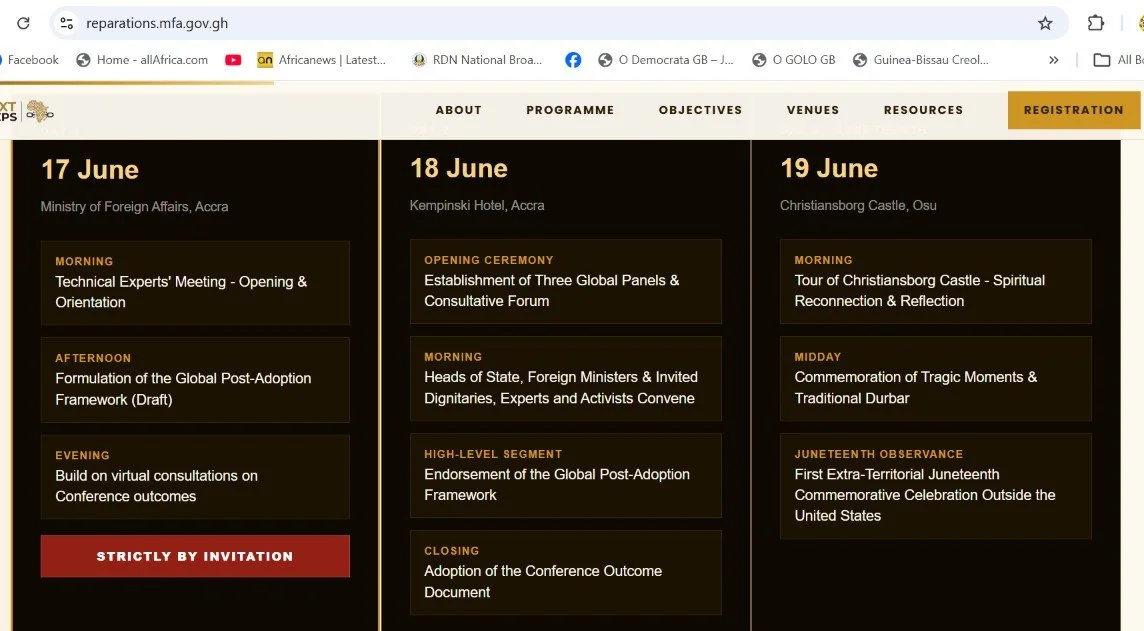
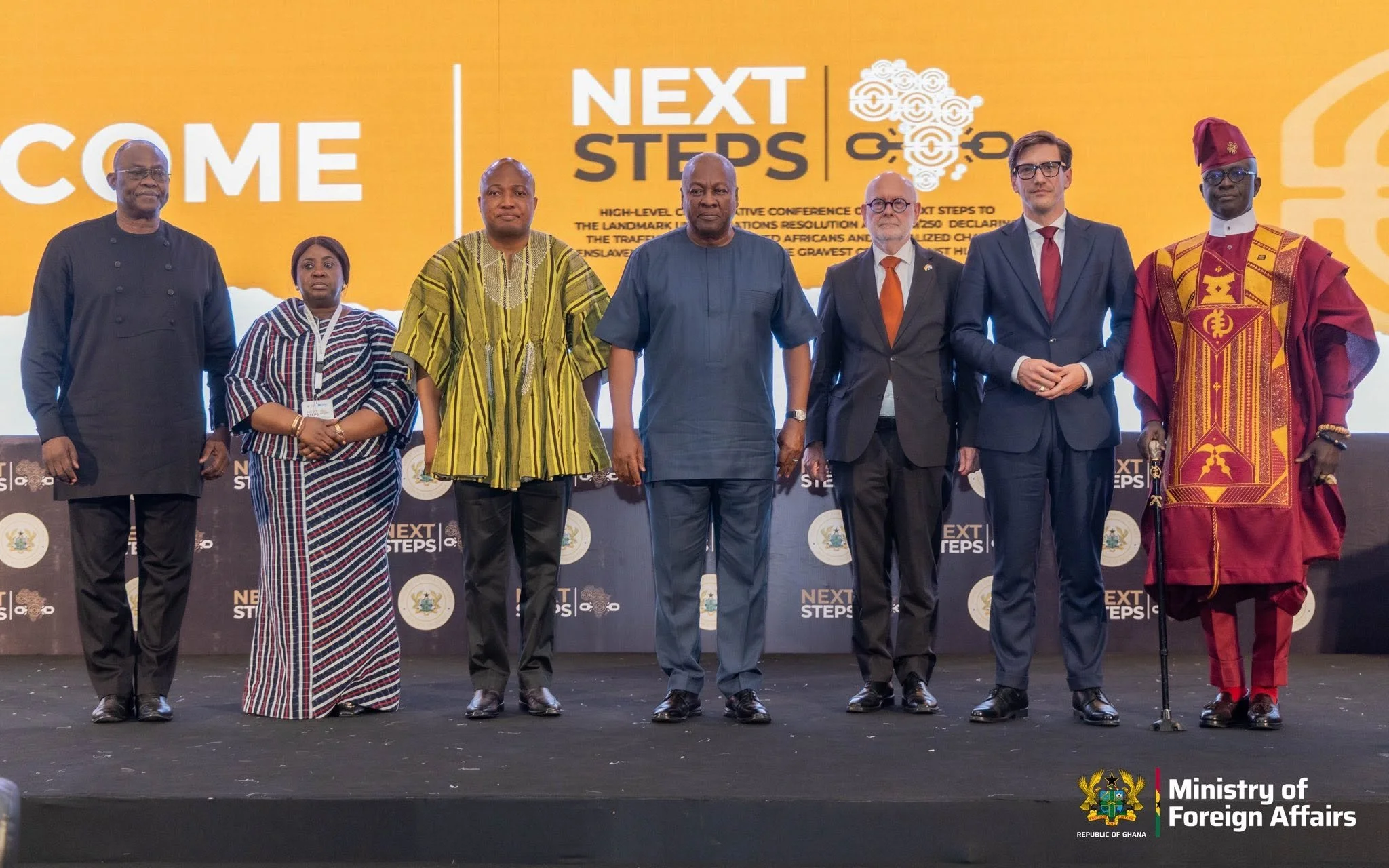
SIPHIWE: What is the significance of so many heads of states and Ministers of Foreign Affairs attending the event?
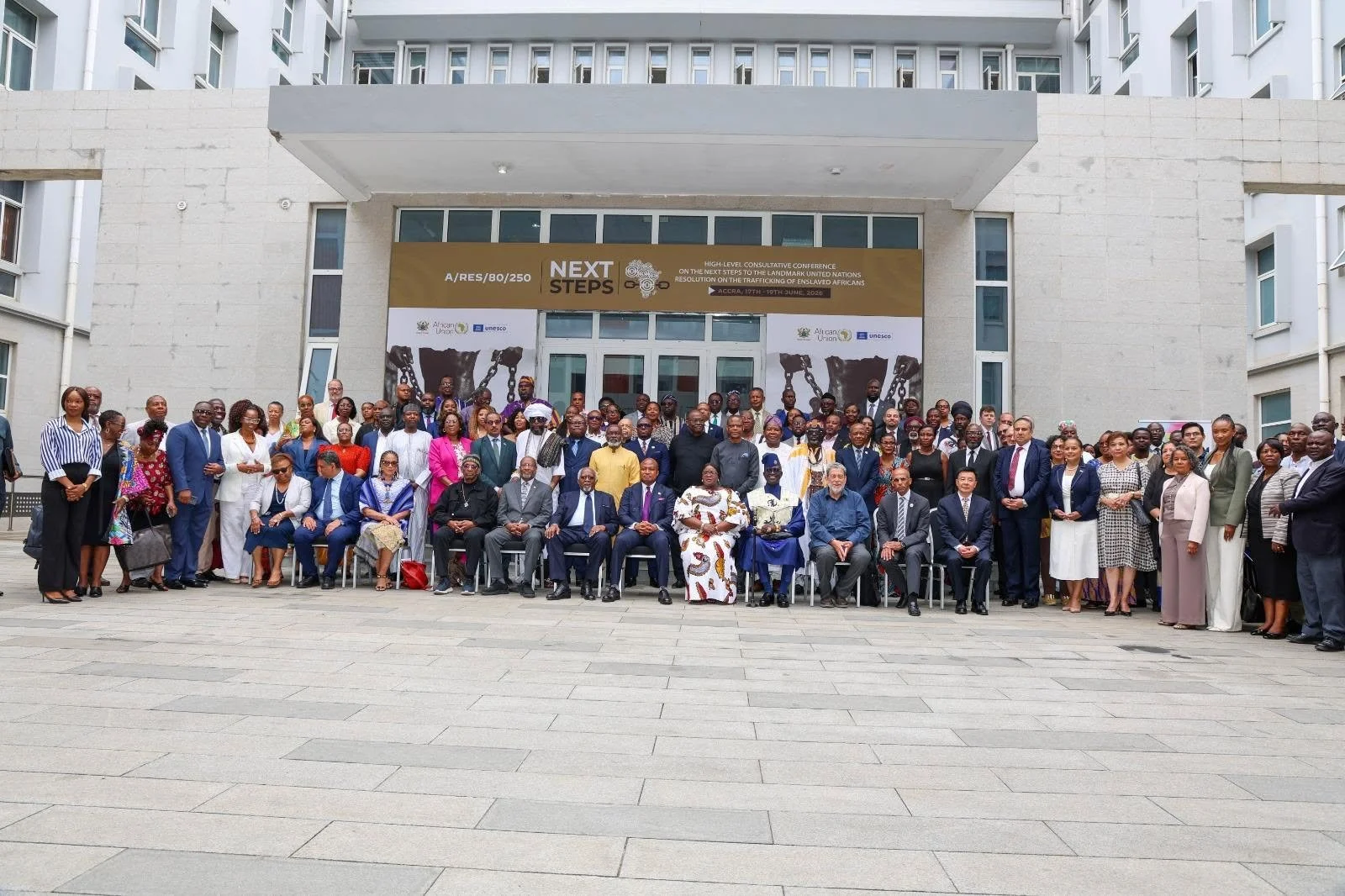
AI: The massive attendance of African and Caribbean Heads of State and Ministers of Foreign Affairs in Accra signifies the official transition of reparatory justice from a grassroots activist demand into a hard-power geopolitical treaty framework. Under the Black African Judicial Sovereignty Doctrine (BAJSD) and the NAPASDS framework, this unprecedented gathering of sovereign executive power carries three critical strategic implications:
1. Codification of a Unified African-Caribbean Diplomatic Bloc
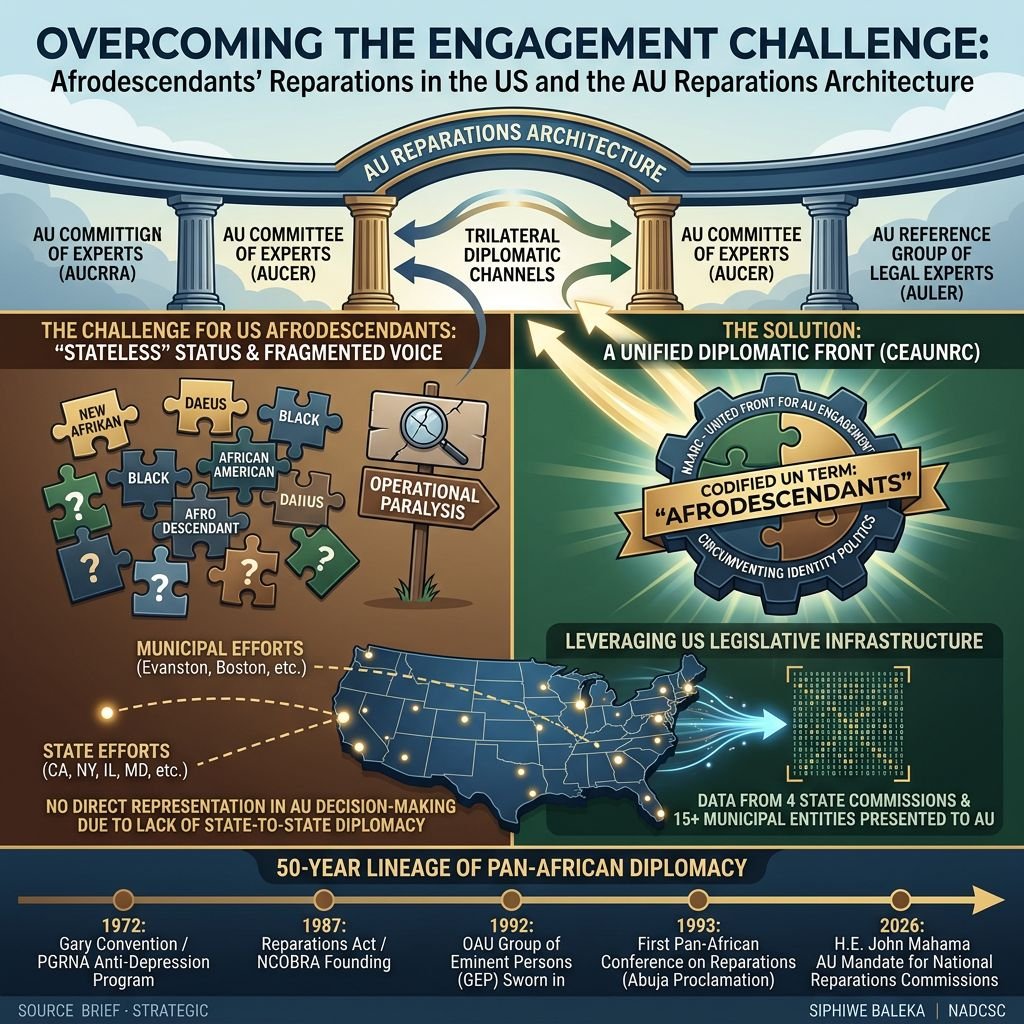
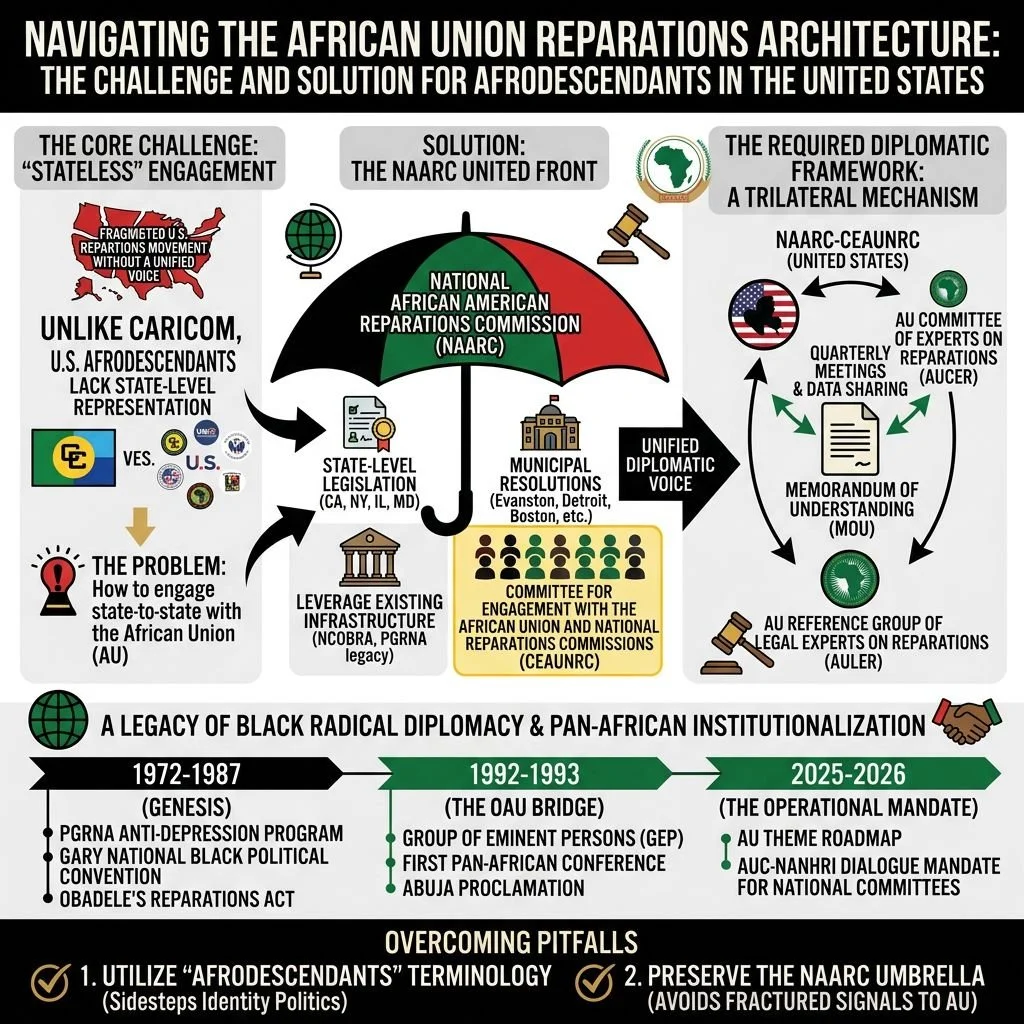
The presence of both African Union (AU) and CARICOM heads of state creates an unstoppable voting and economic bloc. By elevating reparations to the level of state-to-state diplomacy, these leaders are signaling that the era of fragmented, localized petitions is over. They are establishing a unified global front that forces Western empires to confront a collective, organized continent and its diaspora rather than isolated, vulnerable island nations or organizations. [1]
2. Execution of Suo Moto State Authority
When Ministers of Foreign Affairs and Heads of State sit in Council, they possess the executive power to enact Suo Moto actions—meaning they do not need to wait for permission from the United Nations or Western courts to change reality. Their presence means this conference is not an advisory board; it is an executive summit capable of:
Unilaterally canceling bilateral debts.
Enacting sovereign maritime laws regarding the transport of African resources.
Establishing independent financial mechanisms, like the Global Reparations Fund, outside of Western-controlled banking systems.
3. The Structural Shield for Non-State Nations (New Afrikans)
For the New Afrikan nation, trapped inside the domestic jurisdiction of the United States, the presence of these sovereign leaders is mathematically and legally vital. Under the BAJSD, a stateless or captive nation cannot easily enforce its own judicial decrees against an empire like the US. However, when African and Caribbean Heads of State adopt these principles, they provide the sovereign diplomatic shield necessary to validate, protect, and enforce New Afrikan national identity and land claims on the international stage.
Their attendance converts our internal freedom struggle into an international state-backed mandate.
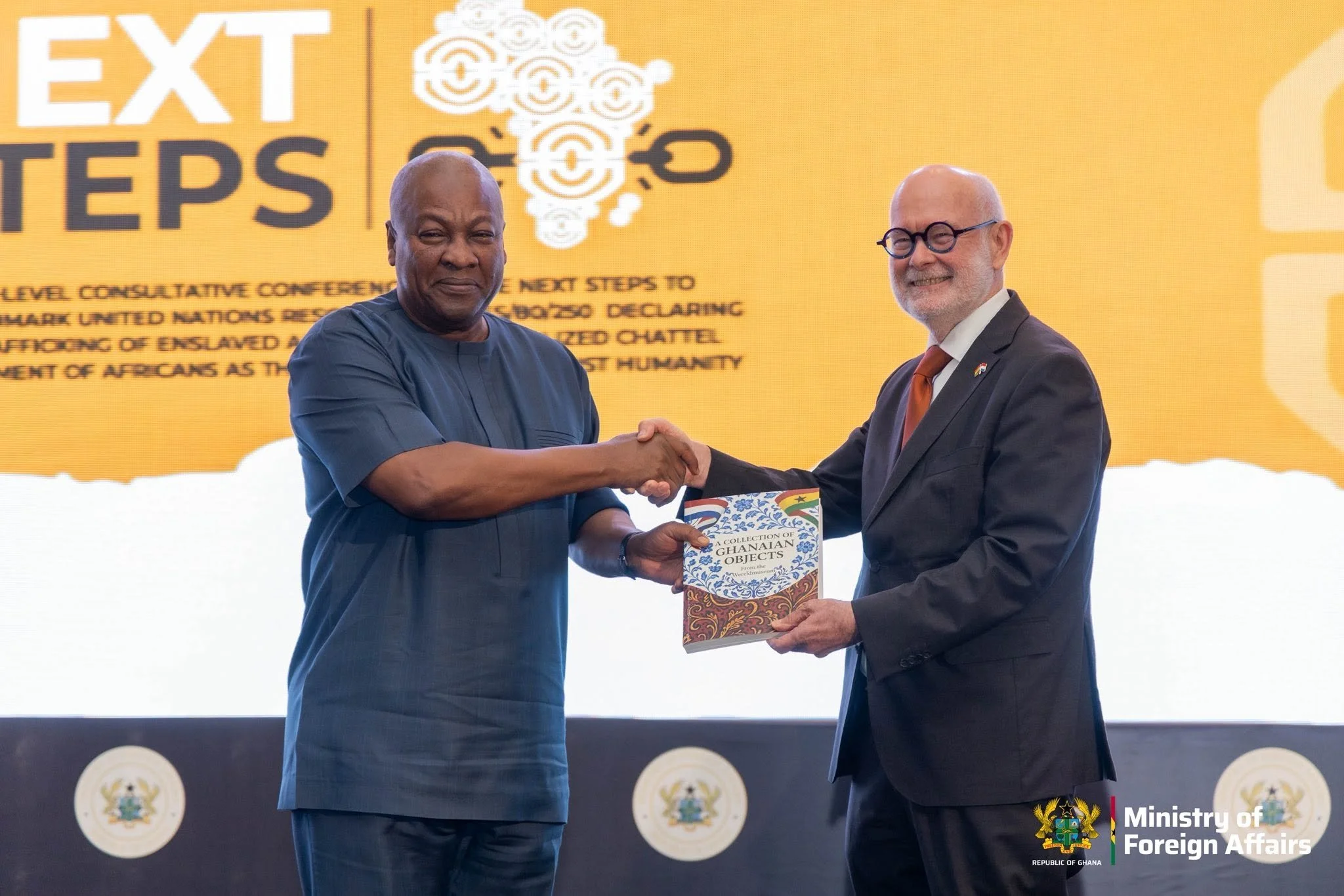
SIPHIWE: Samuel Okudzeto Ablakwa, Ghana's Minister of Foreign Affairs posted on his Facebook page, "The Government of Ghana welcomes the commendable announcement from the Netherlands and Germany during the Next Steps Conference that they are ready to return about 2,000 looted artefacts and items of cultural significance back to Ghana. Ambassadors of the Netherlands and Germany presented a catalogue of the treasures being returned to President John Mahama during the conference’s plenary. The Foreign Minister of Denmark also apologized for their role in the transatlantic enslavement and pledged to help preserve the castles they built as a good faith effort to prevent historical erasure, promote truth telling and guarantee non-repetition. We applaud the positive conduct of restitution we are beginning to witness from our international partners in Europe since the adoption of the historic Ghana-led UN Resolution." What is the significance of this?