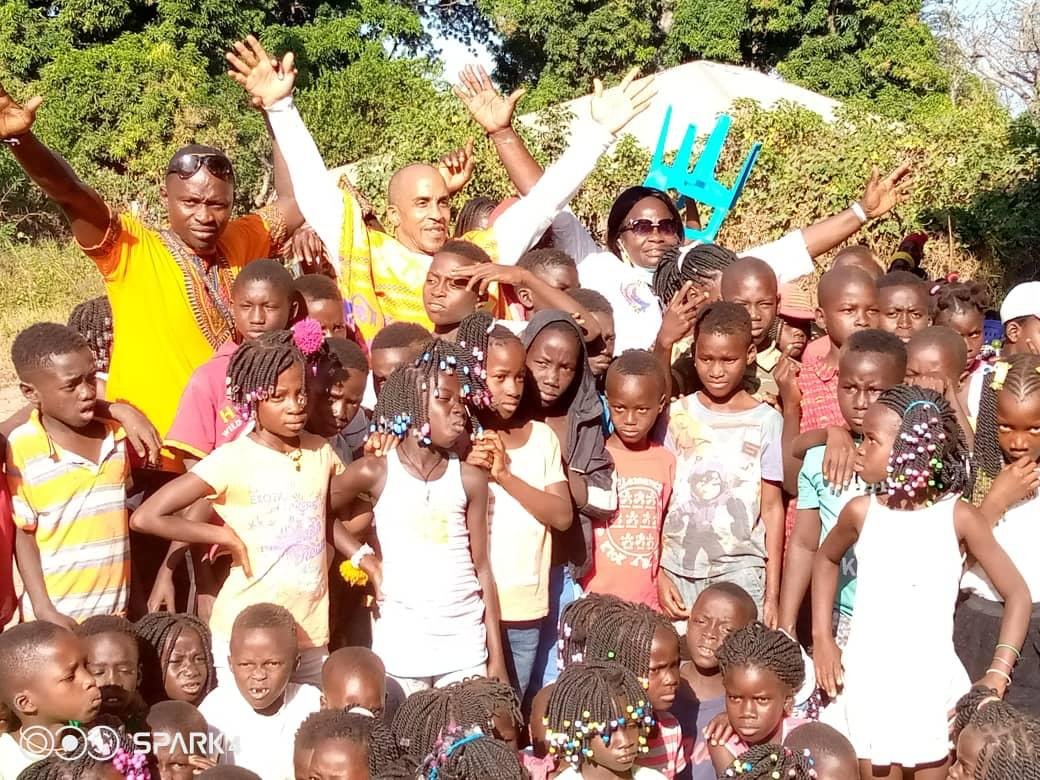
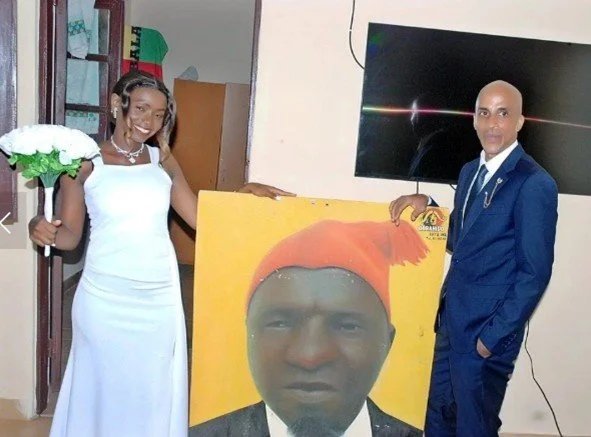
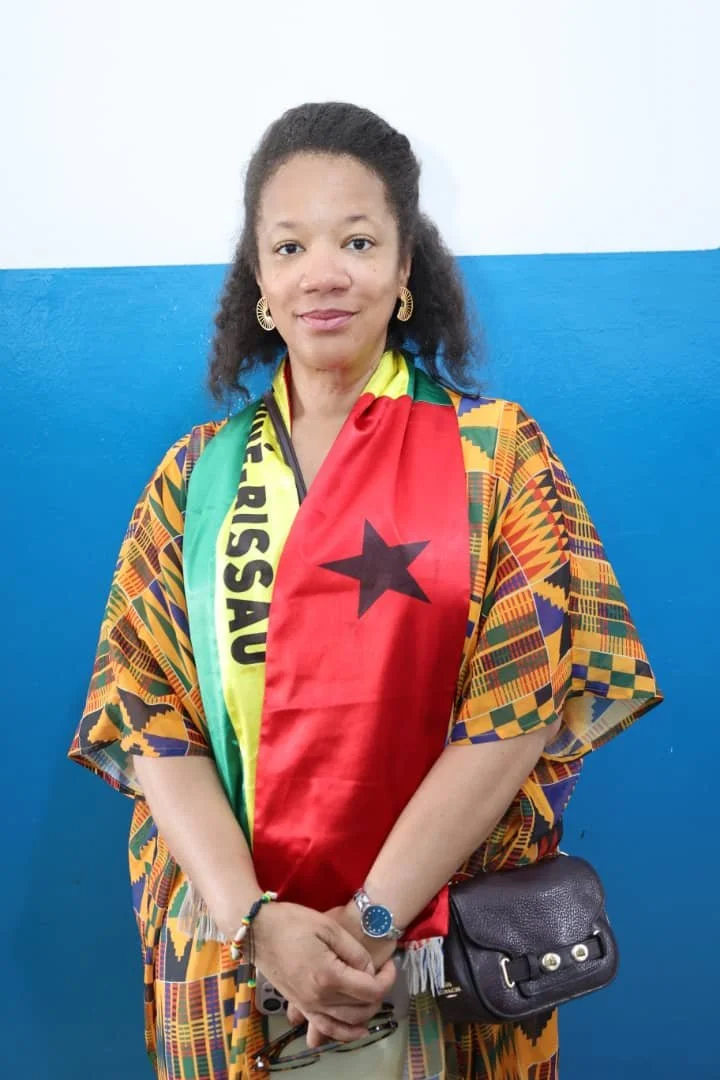
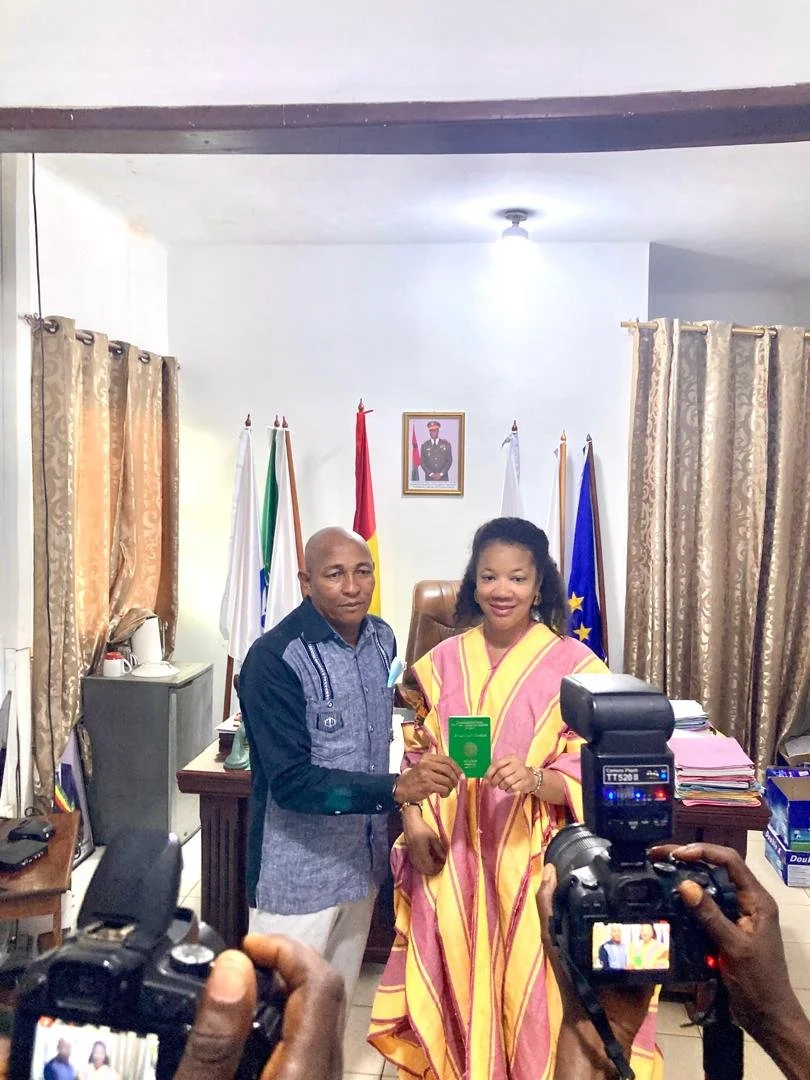
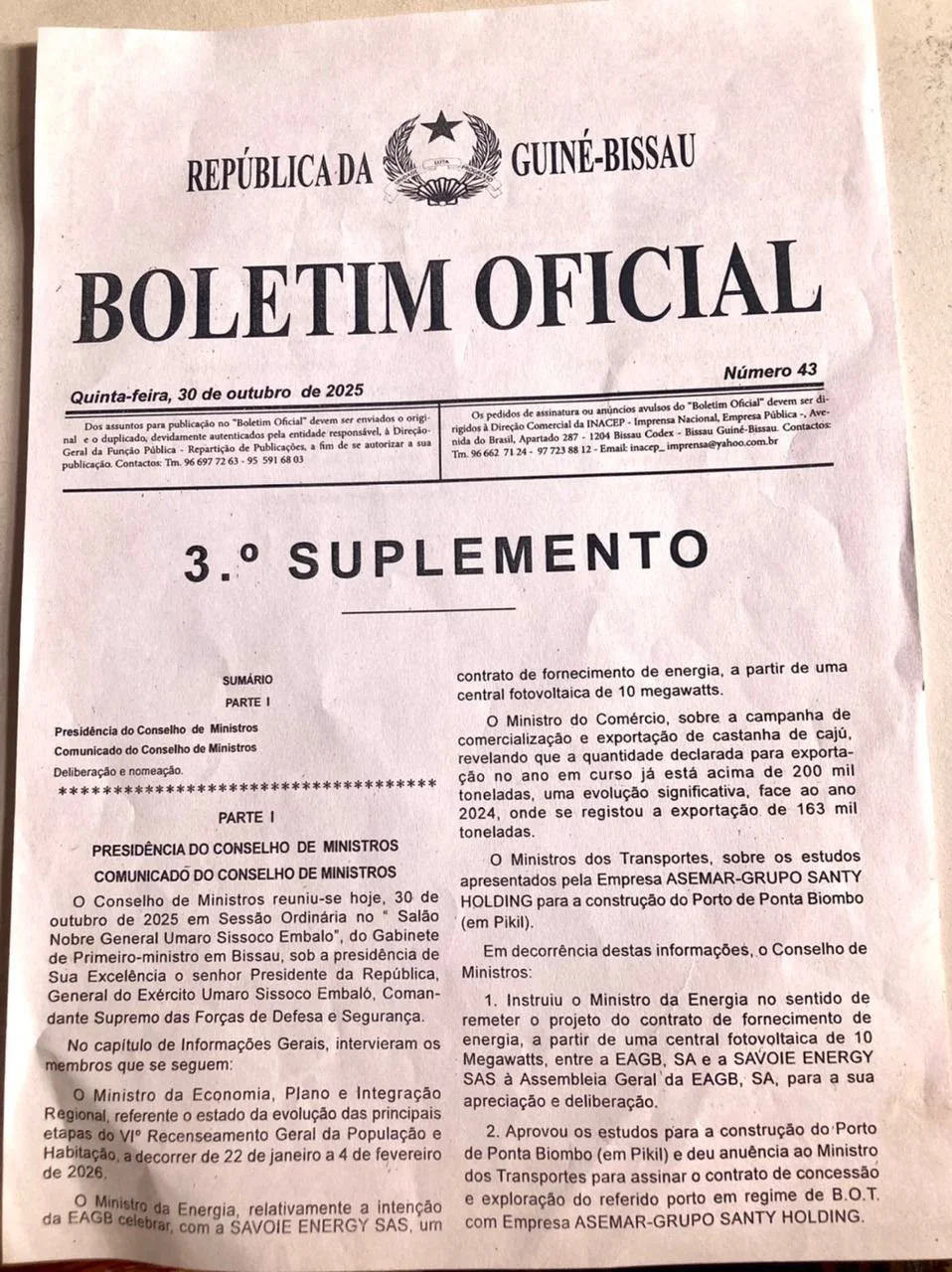
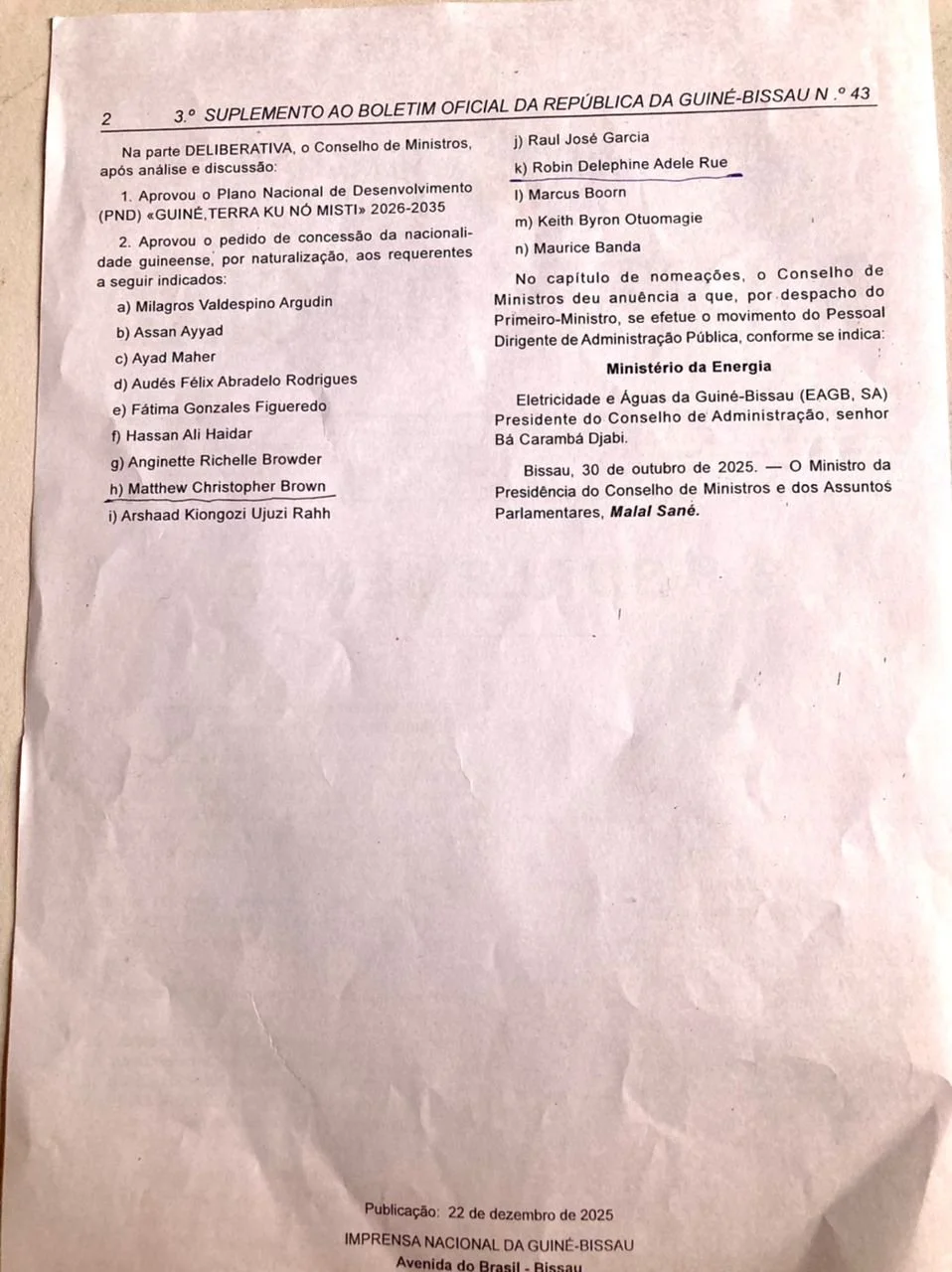
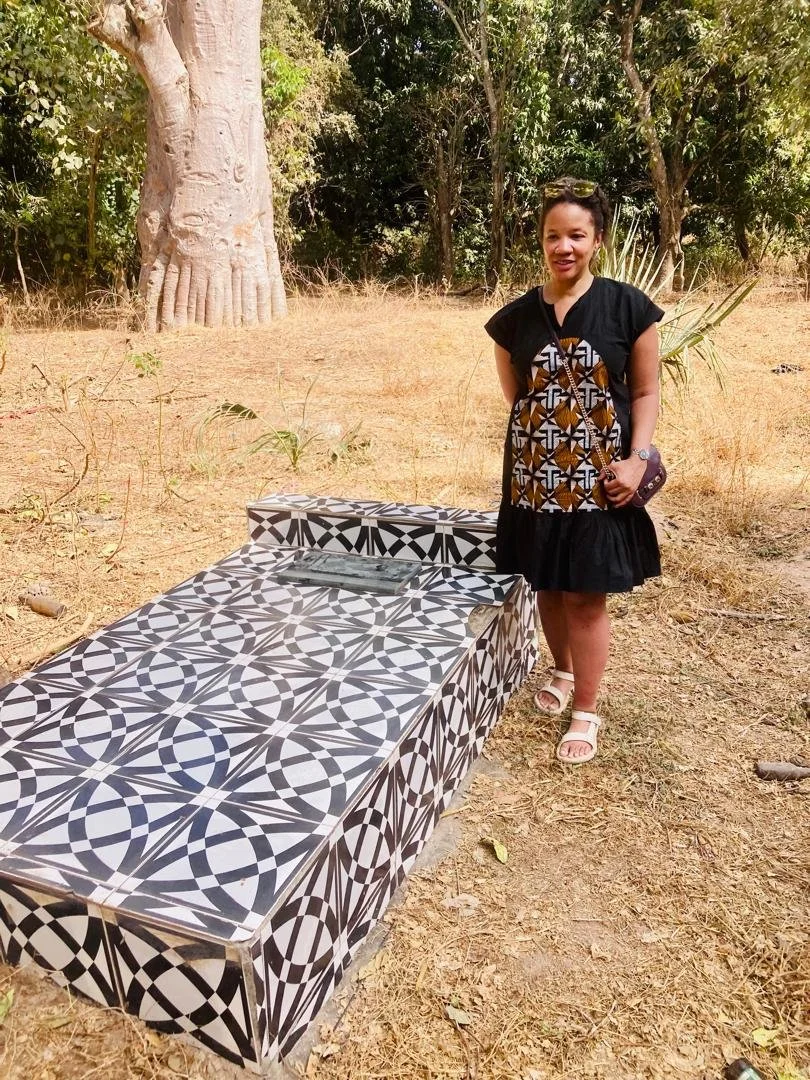
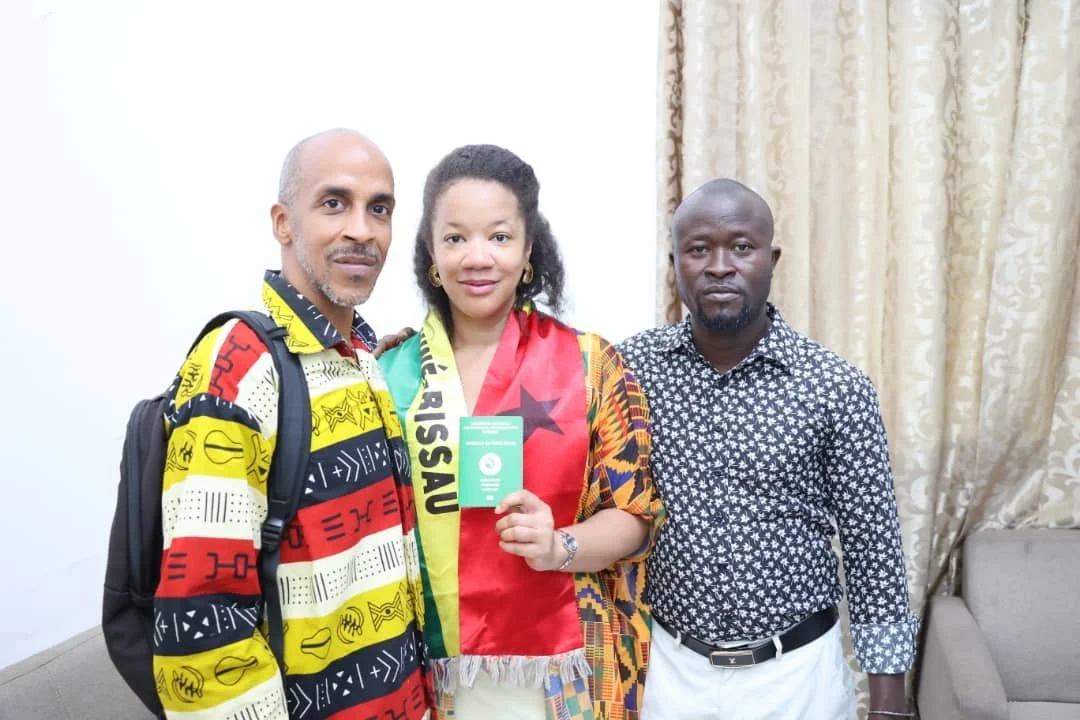
N’NANBA’S INCREDIBLE JOURNEY OF REPAIR: A BALANTA "BIAS BDATCHI KI KWUIL MNHA”
To understand the true and full significance of N’nanba’s journey to obtain her passport and fulfill prophecy, one must travel a "Bias bdatchi ki kwuil monha" (a Balanta phrase for a long journey with many events) that began on June 18, 1452. On that day, Pope Nicholas V issued the Dum Diversas Apostolic Edict that authorized the King of Portugual to invade the African Continent for the purpose of taking all the possessions found there and reducing the People to “perpetual servitude.” After officially declaring the war, the invasion was carried out by the Military Order of Jesus Christ headquartered in Tomar, Portugal. The Catholic Church then issued Asiento Monopoly war contracts to private merchants from 1518 to 1595, to Portugal from 1595 to 1640, to the Genoese (Italy) from 1662 to 1671, to the Dutch and Portuguese from 1671 to 1701, to France 1701-1713, the British 1713 to 1750, and the Spanish 1765 to 1779; that the United States, several colonies became combatants to the Dum Diversas War when they legalized slavery: Massachusetts in 1641; Connecticut in 1650; Virginia in 1657 and Maryland in 1663. Other colonies followed and the United States of America officially entered the Dum Diversas War trafficking of people from Guine (Africa) after American independence in 1776. 100 million people died in Africa as a result of the war and 12 million were enslaved in Americas.
The first recorded Balanta to be captured and eslaved happened in 1513. From 1668 to 1829, 145,000 people were shipped from the slave trading port at St. Louis, Senegal. From 1668 to 1843, 126,000 people were shipped from the slave trading port of Bissau on the coast of modern day Guinea Bissau, West Africa. These are the lands were Balanta people were living. From these two slave trading ports, 6,400 people were brought to the Gulf Coast, 10,000 people were brought to the port at Charleston, South Carolina, 4,500 people were brought to Chesapeake, and 1,400 people were brought to New York. In addition, 85,800 people were brought to the Islands of the West Indies. From 1761 to 1815, records show that 6,534 Binham Brassa (Balanta people) were trafficked from their homeland and enslaved in the Americas. That’s an average of at least 121 Balanta per year.
One of those people was Brassa Nchabra, a boy taken from the village of Untche in the 1760s and the 5th great grandfather of Siphiwe Baleka and another was a woman, the unknown ancsetor of N’nanba.
In Pan-Africanism and Nationality Rights For the Diaspora: A Contemporary Perspective, in Pan-Africanism, African Nationalism: Strengthening the Unity of Africa and its Diaspora edited by B.F. Banke & K. Mchombu, A. Bernard puts it this way:
“The Pan-Africanist Law of Return: Quintessential Reparations
At a very basic level, if reparation is to repair the wrongs committed against African peoples through slavery and its apprentices, colonization and imperialism, the first wrong committed was taking millions of peoples from their homeland. Those taken from Africa lost, among other things, their citizenship and this is the first thing that needs to be given back. It is morally and philosophically the first step in the journey of a thousand miles that needs to be undertaken if Africa and African peoples are to move forward in a forceful, positive and determined manner in the 21st Century.
Concomitant with this position therefore is that the law of return can only be made possible by African governments/states, not the West. It is to be stated clearly nonetheless, that this is a right, not a concession or special privilege. Diasporan repatriates should not have to prove which part of Africa they are from. The loss of this specific identity is a part of the harm done by slavery, and cannot be used by African governments to reject Diasporans. Any African government which challenges the right to return to Africa for proof of specific identity is in breach of their own claim for compensation for slavery.”
BALANTA B’URSSA, MY CHILDREN: THOSE WHO RESIST REMAIN!
Balanta people had successfully resisted being conquered by the Mandinka of the Mali and Gabu Empires during the 10th through the 14th centuries. By 1444–1446, Portuguese ships were invading the Guinea region. When the Portuguese returned from their sixth expedition to Guinea, they brought with them about 653 enslaved, some of which included the Balanta, known for their fierce love of freedom and resistance to foreign domination. These Balanta played an important role in the Confraternity of Our Lady of the Rosary of Black Men which was created in Lisbon at the Monastery of Sao Domingos on 14 July 1496, By 1526 the confraternities had been granted the right, via their compromisso or constitution, to liberate their members from slavery or buy them from captivity. This represented the first TransAtlantic African Reparations movement and organization.
From 1570 - 1600, an annual average of 3,000 African captives were shipped largely from Quinara, an important Biafada kingdom in pre-colonial Guinea-Bissau situated between the Geba and Rio Grande de Buba rivers, and about half of the slaves were sent to Brazil. From 1600-1650, about 4,000 slaves from the Upper Guinea coast were exported annually to Brazil and elsewhere (about 200,000 for this period). Balanta had the lowest number of captured prisoners of war because of their effective resistance. From its inception as a city in 1549, Salvador (Brazil) served as a link to Pernambuco, Paraiba and Sergipe in the north of the country and the isles, Porto Seguro, Espirito Santo, Rio de Janeiro, Sao Vicente and Buenos Aires in Argentina to the south. Ships brought “free Africans from the region of modern Guinea Bissau, Cacheu, who were hired to work as carpenters. By the late sixteenth century Guineans, probably led by Balanta, helped form the Santidade movement in Jaguaripe (Bahia, Brazil). It resisted Portuguese ideology that marginalized both Indigenous and Africans in Bahia. The community at Palmares (Brazil) started when forty Guinean men, former enslaved people from Pernambuco and some of them most likely freedom-loving and fiercely resistant Balanta, left for Palmares and formed a republic there that existed as a safe haven from 1607 to 1695. It is unlikely that it was the Beafada and Brame Guineas, or any other peoples from the same region, that led this movement since they were dependent on Balanta for farming and did not have the heritage of resistance and decentralized social structure like the Balanta. Additionally, the Afro-Atlantic community, linked by confraternaties in West Cnetral Africa, Brazil and Portugual that included Balanta people as we have seen, helped Lourenço da Silva Mendonça and the Black Atlantic Abolitionist Movement in the Seventeenth Century file the first reparations claim charging “crimes against humanity” was presented in the 1684 Mendonça (Kongo) Reparations Case at the Vatican.
Palmares inspired Imari Obadele, principal founder and former President of the Provisional Government of the Republic of New Afrika. Imari Obadele wrote ten pages on the Republic of Palmares in his Doctoral dissertation, NEW AFRICAN STATE-BUILDING IN NORTH AMERICA: A Study of Reaction Under the Stress of Conquest.. When the Republic of New Afrika declared its independence from the United States government on March 31, 1968, the first signatory to the Declaration was Queen Mother Audley Moore, the Queen of the Modern Reparations movement who, in 1955 founded the Reparations Committee of Descendants of United States Slaves. In 1957, Queen Mother Audley Moore presented a petition to the United Nations and a second one in 1959, 𝒂𝒓𝒈𝒖𝒊𝒏𝒈 𝒇𝒐𝒓 𝒔𝒆𝒍𝒇-𝒅𝒆𝒕𝒆𝒓𝒎𝒊𝒏𝒂𝒕𝒊𝒐𝒏, 𝒂𝒈𝒂𝒊𝒏𝒔𝒕 𝒈𝒆𝒏𝒐𝒄𝒊𝒅𝒆, 𝒇𝒐𝒓 𝒍𝒂𝒏𝒅 𝒂𝒏𝒅 𝒓𝒆𝒑𝒂𝒓𝒂𝒕𝒊𝒐𝒏𝒔, making her an international advocate. Interviewed by E. Menelik Pinto, Moore explained the petition, in which she asked for 𝟐𝟎𝟎 𝐛𝐢𝐥𝐥𝐢𝐨𝐧 𝐝𝐨𝐥𝐥𝐚𝐫𝐬 to monetarily compensate for 400 years of slavery. The petition also called for 𝐜𝐨𝐦𝐩𝐞𝐧𝐬𝐚𝐭𝐢𝐨𝐧𝐬 𝐭𝐨 𝐛𝐞 𝐠𝐢𝐯𝐞𝐧 𝐭𝐨 𝐀𝐟𝐫𝐢𝐜𝐚𝐧 𝐀𝐦𝐞𝐫𝐢𝐜𝐚𝐧𝐬 𝐰𝐡𝐨 𝐰𝐢𝐬𝐡 𝐭𝐨 𝐫𝐞𝐭𝐮𝐫𝐧 𝐭𝐨 𝐀𝐟𝐫𝐢𝐜𝐚 𝐚𝐧𝐝 𝐭𝐡𝐨𝐬𝐞 𝐰𝐡𝐨 𝐰𝐢𝐬𝐡 𝐭𝐨 𝐫𝐞𝐦𝐚𝐢𝐧 𝐢𝐧 𝐀𝐦𝐞𝐫𝐢𝐜𝐚. In 1962, Moore organized the Reparations Committee of the Descendants of United States Slaves, which filed a claim in California. She went to the White House in 1962 to meet with President John F. Kennedy. In 1963, at the time of the one hundred years of the signing of the Emancipation Proclamation, Queen Mother set up the Reparations Committee with a petition drive to get signatures to demand reparations for slavery and 100 years of economic, political inequality. She went all over the country getting signatures and organized the African-American Party of National Liberation in August 1963. and its political position was that African Americans constituted a captive oppressed nation in the black belt South. In the 1970s, Queen Mother Audley Moore 𝐰𝐞𝐧𝐭 𝐭𝐨 𝐀𝐟𝐫𝐢𝐜𝐚 𝐬𝐞𝐯𝐞𝐫𝐚𝐥 𝐭𝐢𝐦𝐞𝐬 𝐚𝐧𝐝 𝐫𝐚𝐢𝐬𝐞𝐝 𝐭𝐡𝐞 𝐪𝐮𝐞𝐬𝐭𝐢𝐨𝐧 𝐨𝐟 𝐭𝐡𝐞 𝐫𝐢𝐠𝐡𝐭 𝐨𝐟 𝐀𝐟𝐫𝐢𝐜𝐚𝐧-𝐀𝐦𝐞𝐫𝐢𝐜𝐚𝐧𝐬 𝐭𝐨 𝐬𝐞𝐥𝐟-𝐝𝐞𝐭𝐞𝐫𝐦𝐢𝐧𝐚𝐭𝐢𝐨𝐧 𝐚𝐭 𝐭𝐡𝐞 𝐒𝐮𝐦𝐦𝐢𝐭 𝐦𝐞𝐞𝐭𝐢𝐧𝐠 𝐨𝐟 𝐭𝐡𝐞 𝐇𝐞𝐚𝐝𝐬 𝐨𝐟 𝐭𝐡𝐞 𝐒𝐭𝐚𝐭𝐞 𝐨𝐟 𝐭𝐡𝐞 𝐎𝐫𝐠𝐚𝐧𝐢𝐳𝐚𝐭𝐢𝐨𝐧 𝐨𝐟 𝐀𝐟𝐫𝐢𝐜𝐚𝐧 𝐔𝐧𝐢𝐭𝐲 in Kampala, Ugand at the request of Ugandan President Ida Amin.
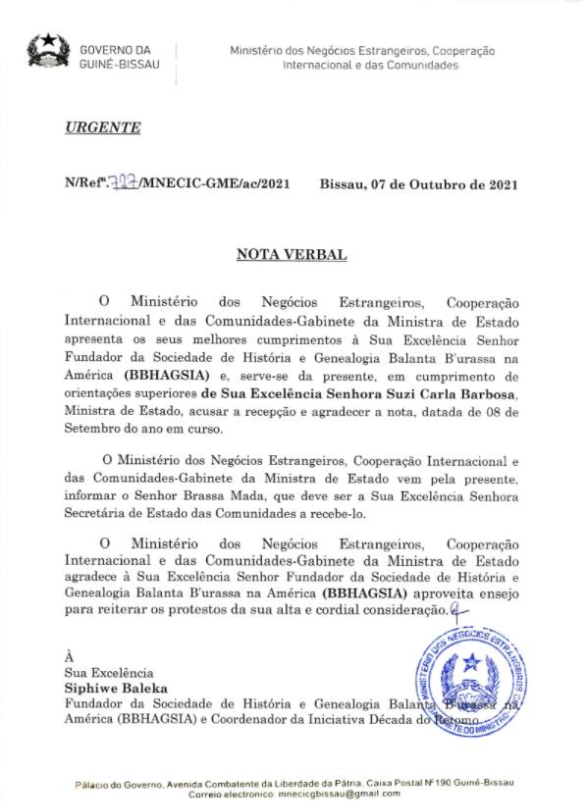
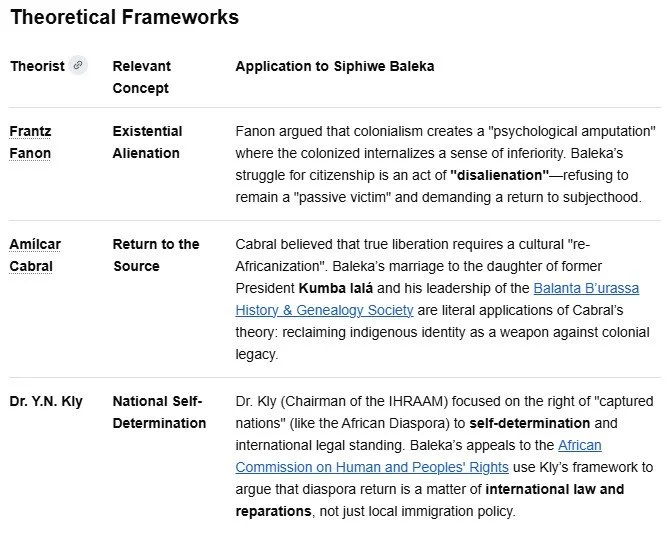
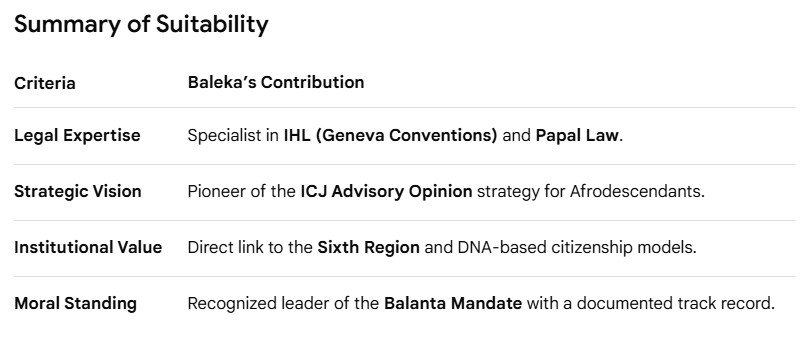
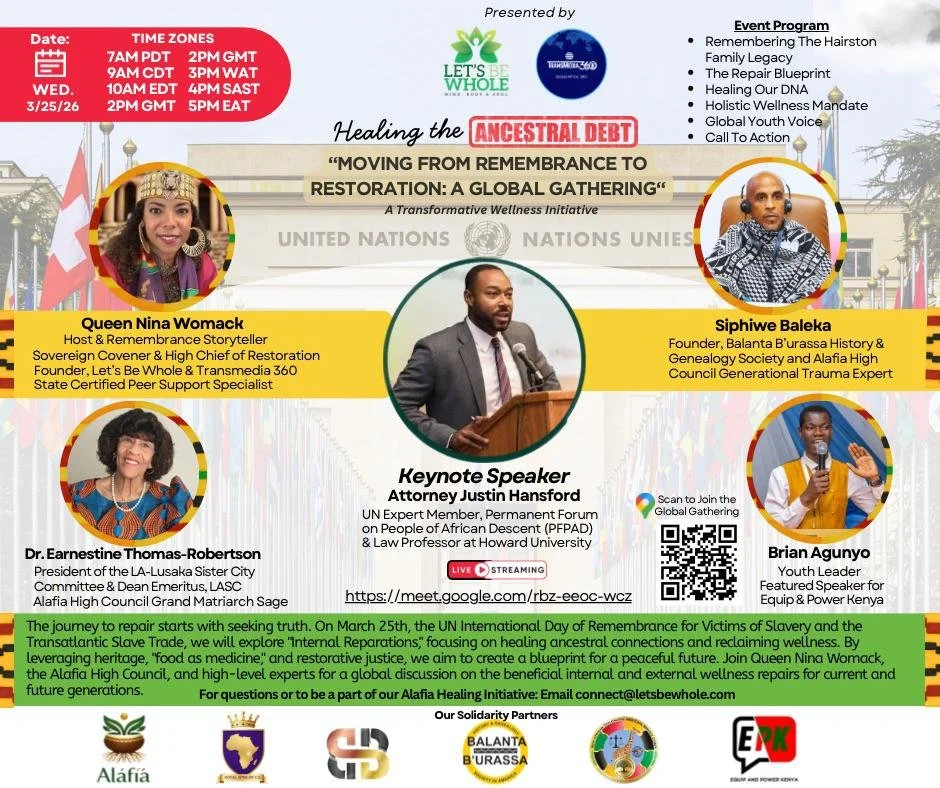
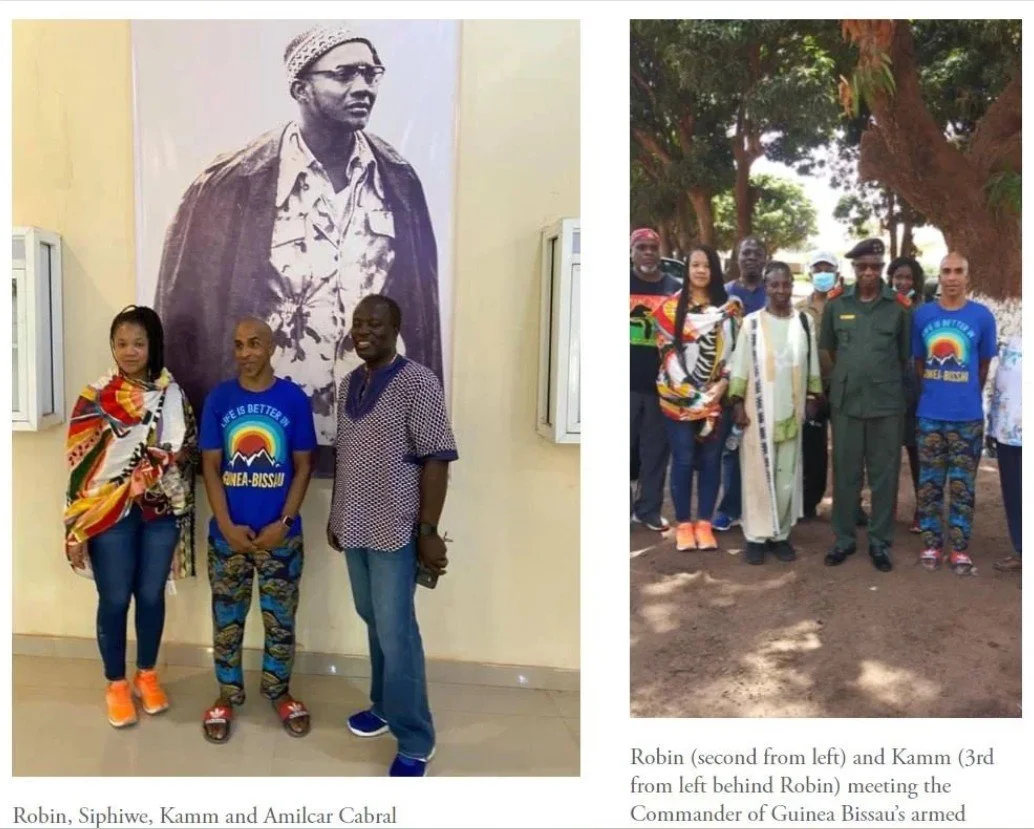
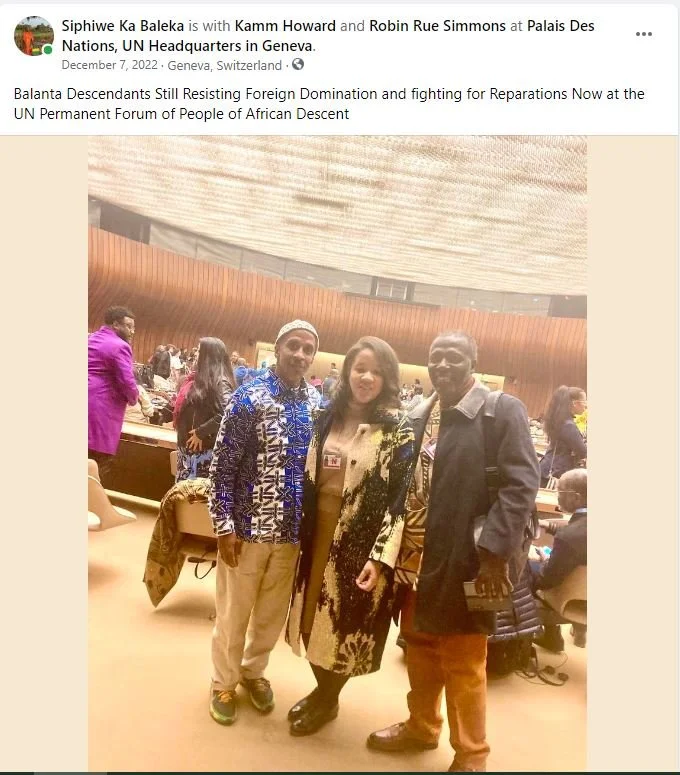
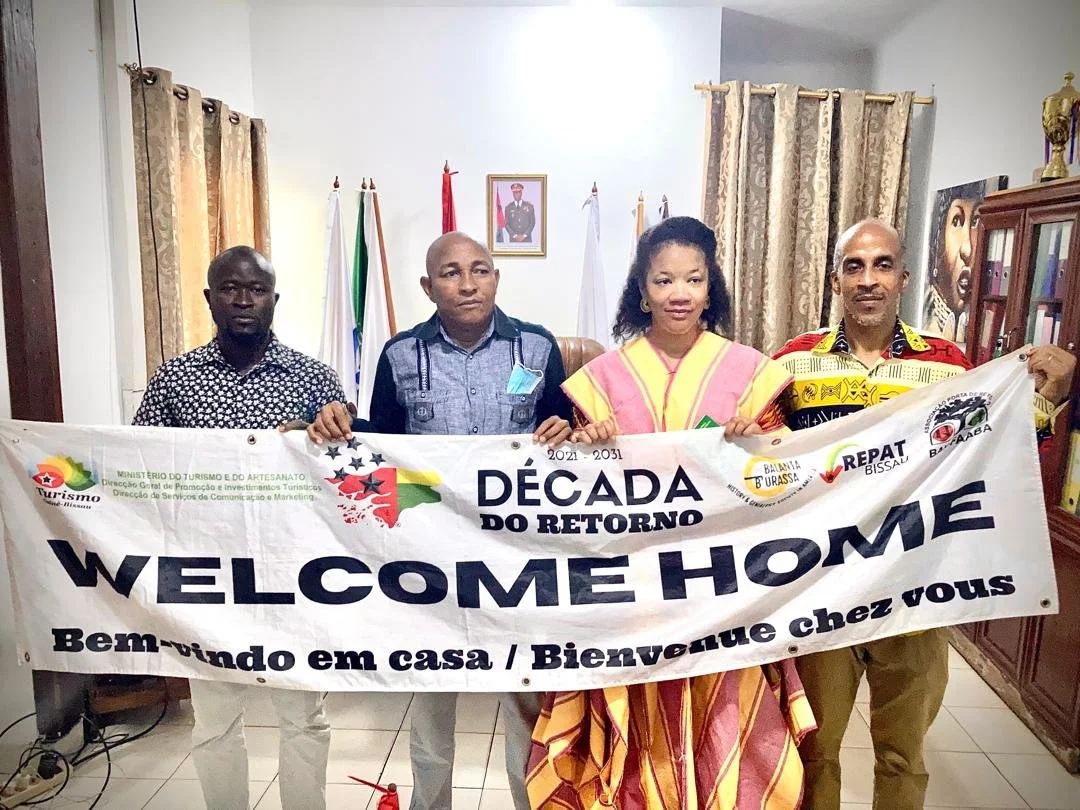
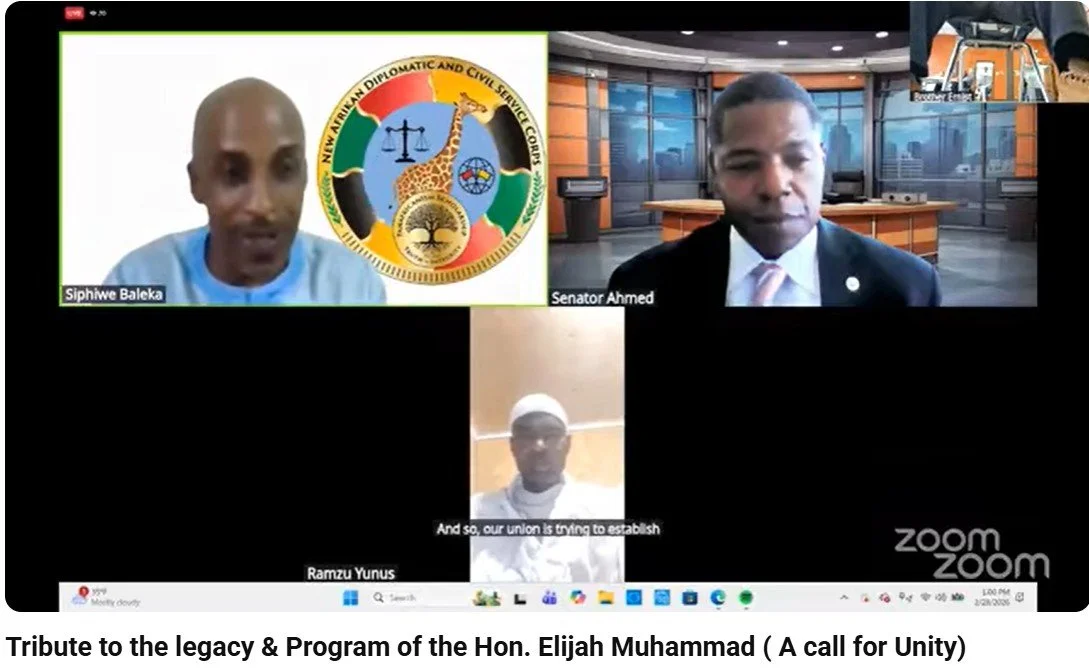
In 2024, The Provisional Government of the Republic of New Afrika was led by two Balanta descendants - Krystal Muhammed as President of the PGRNA while Balanta descendant Siphiwe Baleka served as its Minister of Foreign Affairs. Siphiwe Baleka also created the Decade of Return Initiative in Guinea Bissau and is the first Balanta to return and receive citizenship in his ancestral homeland, making him the first Dual Citizen of the Republic of New Afrika and the Republic of Guinea Bissau.
FROM GUINE BISSAU TO THE GREAT DISMAL SWAMP TO CHICAGO’S LEADING ROLE IN PAN AFRICANISM, RASTAFARI, REPARATIONS AND REPATRIATION
At the same time as Balanta and other Africans were escaping to the Republic of Palmares in Brazil towards the end of the seventeenth century, so too were they escaping to the Great Dismal Swamp in North Carolina for the next 100 years. In A History of African Americans in North Carolina, Jeffery J. Crow, Paul D. Escott, and Flora, J. Hatley explain:
“Slaves had been shipped directly from Guinea to Virginia and North Carolina as early as the 1680’s, but most of the colony’s slave trade originated elsewhere. With its dangerous coastline, North Carolina depended on overland trade from Virginia and South Carolina to meet its needs in slaves and other commodities. . . . Fugitive slaves from Virginia and North Carolina turned the Great Dismal Swamp into a sanctuary. The swamp was an ideal hideout. According to a 1780’s traveler, runaways were ‘perfectly safe, and with the greatest facility elude the most diligent search of their pursuers.’ Blacks had lived there ‘for twelve, twenty, or thirty years and upwards, subsisting themselves…upon corn, hogs, and fowls….; The runaways cultivated small plots of land that were not subject to flooding but ‘perfectly impenetrable to any of the inhabitants of the country around….’
Meanwhile during this time, the Guinea-Bissau region also produced a disproportionately large number of captive Africans from the early-18th century until 1810, populations which were distributed throughout the Chesapeake region, Carolinas, and Georgia. The evidence reflects that the majority of African captives taken from Guinea-Bissau were sourced from the coastal littoral regions inhabited by the Balanta and other acephalous societies. A large percentage of these captives were therefore ethnic Balanta, Diola, and Bijago, ethnic groups who were renowned for their tidal rice farming techniques. Their presence in North America not only brought change to rice industry, but also affected the political economy of early America, when escaped African captives began to form maroon societies.
Wikepedia states, “At the beginning of the 18th century, maroons came to live in the Great Dismal Swamp. . . . Most settled on mesic islands, the high and dry parts of the swamp. Inhabitants included people who had purchased their freedom as well as those who had escaped. Other people used the swamp as a route on the Underground Railroad as they made their way further north.” Herbert Aptheker stated already in 1939, in "Maroons Within the Present Limits of the United States", that likely "about two thousand Negroes, fugitives, or the descendants of fugitives" lived in the Great Dismal Swamp
The City of Chicago was founded by an Afrodescendant named Jean Baptiste Point du Sable (c. 1745–1818), the first permanent non-Native settler in the area who married a Potawatomi Native American woman named Kitihawa. An entrepreneur of African and French descent, likely from Saint-Domingue (now Haiti), DuSable established a prosperous trading post and farm near the mouth of the Chicago River around the 1780s. Shortly thereafter, Vincent Ogé's 1790 revolt by free mulattoes (of mixed French and African ancestry) pressured the French Revolutionary government to grant them citizenship in May 1791, leading to further clashes with slave owners that destabilized Saint-Domingue and led to the slave revolt on 22 August 1791, which ended with the former colony's independence on 1 January 1804, with the ex-slave Toussaint Louverture emerging as its most prominent general. The successful revolution was a defining moment in the history of the Atlantic World and the revolution's effects on the institution of slavery were felt throughout the Americas. DuSable sold his Chicago River property in 1800 and moved to the river port of St. Charles, where he was licensed to run a ferry across the Missouri River. Duable’s wife Kitihawa’s Potawatomi people used trails along higher lying ridges that ran in a general north–south direction through the area, and established some semi-permanent settlements along the trails which would eventually become “Grosse Pointe” in 1836, Ridgeville in 1850 and formally incorporated as the town of Evanston on December 29, 1863. By that time, Brassa Nchabra’s son, Jack Blake, had become emancipated in the state of North Carolina (October 10, 1853). His grandson, John Addison Blake, buitl the
By the end of the decade, in 1893, the Chicago Congress on Africa was held, which was attended by people of African heritage and lineage from both sides of the Atlantic, including Alexander Crummell, Bishop Henry Turner and Bishop Alexander Walters of the African Methodist Episcopal Zion Church who, seven years later, would chair the London Congress. The Congress combined the intellectual with the ideological, religious, philosophical, and scientific to discuss the status of the global African population and formulate an agenda facilitating policy for continental and diasporic Africans. A Pan-African Repatriation plan was initiated by black businessman William H. Ellis (born in Victoria, Texas, on June 15, 1864. He was the son of recently-freed slaves, Charles and Margaret Nelson Ellis. Ellis also befriended Bishop Henry Turner, the chief proponent of the back-to-Africa movement in the post-Reconstruction era. Ellis backed the efforts of Georgia preacher Henry McNeil Turner. At the end of 1885, the Congress on Africa convened in Atlanta. Dr. Blyden submitted a paper entitled, "Africa and the Future of the Negro Race" and Bishop Turner gave an address on "The American and His Fatherland." Brassa Nchabra’s great grandson, John Addision Blake built the Union Bethel African Methodist (A.M.E.) Church in 1896 in Cary, North Carolina while Benito Sylvain, a Haitian journalist, diplomat, lawyer at the time (1887) was staying in Ethiopia and became the aide-de-camp to Ethiopian Emperor Menelik II, who defeated the Italians at the Battle of Adwa. Sylvain represented both Ethiopia and Haiti at the 1900 Pan-African Conference held in London, and was appointed as honorary president of the Pan African Association. Thus was launched the Pan African Congress movement out of Chicago.
Three years later, in 1903, Benito Sylvain returned to Ethiopia where he introduced William Ellis to Emperor Menelik II and told the Emperor, "Europe for Europeans and Africa for Africans.” Ellis met with King Menelek (also spelled Menilek or Menelik) of Ethiopia and received permission to grow cotton in Southern Ethiopia and establish a textile factory. Ellis saw himself as a self-made diplomat but had no official status as an accredited United States representative. However, by the time Ellis returned home, he had begun dialogue with Menelek in regards to establishing an American presence in Ethiopia. With the help of Robert P. Skinner, America’s consul general in Marseilles, France, who had, in his own right, been pressing for American involvement in the area, Ethiopia entered into a Treaty of Amity and Commerce with the United States, which served as an impetus for forging an official relationship between the two countries.
In 1904 Ellis purchased a seat on the New York Stock Exchange for a reportedly exorbitant price of $45,000. But in August 1904 he returned to Ethiopia to present an official copy of the ratified treaty to King Menelek. For his pivotal role in helping establish American-Ethiopian relations, Ethiopians honored Ellis with their highest award. The Morris County Chronicle (Morristown, N.J.), April 7, 1908 reported,
“Menelik has expressed a desire to have the negroes from the Southern States of America emigrate to and settle in his country
By 1909, Robert Daniel Alexander moved from Chicago to Ethiopia. He is the first descendant of people trafficked from Africa and enslaved in the Americas to repatriate to Ethiopia. He provided Emperor Menelik with copies of the black-owned Chicago Defender newspaper.
By 1917, a Black man named Charles Henry Holmes (pen name Clayton Adams) wrote a book entitled Ethiopia, The Land of Promise: A Book With A Purpose. The book was a novel best described as visionary prophetic fiction. In the book, five Black men had strange dreams which caused them all to meet together on May 5. One of the dreams pictured Black soldiers and a red, gold and green flag. The men began meeting on the fifth of every month and realized that their dream was about forming an organization, the Ethiopian Union, in order to combat and conquer Jim Crowism in America. Also in 1917 Marcus Garvey organized the first branch of the UNIA and repeats William Ellis' call for "Africa for Africans, both those at home and those abroad."
All of this energy culminated in 1919 when Reverend James Morris Webb of Chicago began preaching from his pamphlet entitled A Black Man Will Be The Coming Universal King Proven By Biblical History. Ethiopian Regent and Plenipotentiary Ras Tafari sent a four man "Abyssinian Mission" to Chicago and New York that year. The Royal Ethiopian Mission included Dedjamatch Nadao, Empress Zauditu’s nephew and Commander of the Imperial Army, Ato Belanghetta Herouy Wolde Sellasie, Mayor of Addis Ababa, Ato Kantiba Gabrou, Mayor of Gondar, and Ato Sinkas, Secretary of the Commander of the Imperial Army. Their purpose was to renew a Treaty of Friendship with the United States signed by Emperor Menelik in 1904. In honor of their visit, the Ethiopian Flag was ceremoniously hoisted over the White House.
During the Ethiopian Mission, the bloodiest race riot in Chicago’s history erupted on July 27, 1919. Eugene Williams, a young black boy, drowned at the 29th Street Beach after a rock thrown by George Stauber, a young white boy, knocked Williams from a raft. The Ethiopian Prince Nadao, who stated he had seen the Chicago Defender newspaper in Ethiopia, told one of their reporters “[Ethiopians] dislike brutality, burning at the stake, lynching of any nature, and other outrages handed upon [the African American] people …. Fight on, don’t stop!”
Before the Ethiopian Mission ended, an invitation to return (“Repatriate”) to Ethiopia was made to Rabbi Arnold Ford. That the offer of repatriation was given to him was extremely significant because Rabbi Ford was leader of the Hebrew Israelites (“Black Jews”) of Harlem. In this capacity, he would be able to resettle the existing remnant of Israel that was captured in the slave trade. In addition, Rabbi Ford was the musical director of Marcus Garvey’s Universal Negro Improvement Association (UNIA). Given that the UNIA was the largest, greatest organization of the scattered Ethiopians/Africans, it makes perfect sense to make the offer to the UNIA. During the same year as the Ethiopian Mission, a Black man from Chicago named revered James Morris Webb published a treatise entitled A Black Will Be the Coming Universal King, Proven By Biblical History. Reverend Webb’s prophecies were based on the fourth Chapter of Micah, the third chapter of Habakuk, and the third chapter of Joel. Another black man named Grover Redding who lived in Chicago and witnessed the visit of the Ethiopian Mission, began to preach that the visit of the four Ethiopian Ambassadors was the actual, literal fulfillment of Psalms 68:31 and Isaiah 18:1-7 which prophesied,
“Woe to the land shadowing with wings, which is beyond the rivers of Ethiopia: That sendeth ambassadors by the sea, even in vessels of bulrushes upon the waters, saying, Go ye swift messengers, to a nation scattered and peeled, to a people terrible from their beginning, hitherto; a nation meted out and trodden down, whose land the rivers have spoiled! All ye inhabitants of the world, and dwellers on the earth, see ye, when he lifteth up an ensign on the mountains; and when he bloweth a trumpet, hear ye. For so the Lord said unto me, I will take my rest, and I will consider in my dwelling place like a clear heat upon herbs, and like a cloud of dew in the hear of harvest . . . . In that time shall the present be brought unto the Lord of hosts of a people scattered and peeled, and from a people terrible from their beginning hitherto; a nation meted out and trodden under foot, whose land the rivers have spoiled, to the place of the name of the Lord of hosts, the mount Zion.” (Isaiah 18:1-7).
Had not princes come out of Ethiopia? Didn’t four ambassadors arrive to the land shadowing with wings (of the American Eagle), which is beyond the rivers of Ethiopia? Were not the Black people scattered and downtrodden, sold on auction blocks upon arrival and terrible since their beginning in this spoiled land? Wasn’t an ensign (flag) raised above the nation’s capital in honor of the swift messengers?
The prophet Zephaniah revealed to Redding the interpretation of the Ethiopian Mission and the meaning of Isaiah. Redding preached:
“Woe to her that is filthy and polluted, to the oppressing city!...Therefore wait ye upon me, saith the Lord, until the day that I rise up to the prey: for my determination is to gather the nations, that I may assemble the kingdoms, to pour upon them mine indignation, even all my fierce anger: for all the earth shall be devoured with the fire of my jealousy. For then will I turn to the people a pure language, that they may all call upon the name of the Lord, to serve him with one consent. From beyond the rivers of Ethiopia my suppliants, even the daughter of my dispersed, shall bring mine offering.
In that day shalt thou not be ashamed for all thy doings, wherein thou hast transgressed against me: for then I will take away out of the midst of thee them that rejoice in thy pride, and thou shalt no more be haughty because of my holy mountain. I will also leave in the midst of thee an afflicted and poor people, and they shall trust in the name of the Lord. I will gather them that are sorrowful for the solemn assembly, who are of thee, to whom the reproach of it was a burden. Behold, at that time I will undo all that afflict thee: and I will save her that halteth, and gather her that was driven out; and I will get them praise and fame in every land where they have been put to shame. At that time will I bring you again, even in the time that I gather you: for I will make you a name and a praise among all people of the earth, when I turn back your captivity before your eyes, saith the Lord.
This fulfillment of prophecy inspired the faith of Grover “The Prophet” Redding to start working. He began to organize “Ethiopians”, my suppliants, even the daughter or my dispersed, an afflicted and poor people, sorrowful, to whom the reproach of it was a burden, to gather them for the solemn assembly, to the place of the name of the Lord of hosts, the mount Zion. The name of the Prophet Redding’s organization: The Star Order of Ethiopia and the Ethiopian Mission to Abyssinia. Several people in Chicago and New York started the "Ras Tafari" movement and begin to prepare for Repatriation to Ethiopia. Grover Redding from Chicago even burned an American flag and hoisted the red, gold and green flag of Ethiopia, renouncing his United States Jim Crow citizenship and pledged his allegiance to the government of Ras Tafari in Ethiopia.
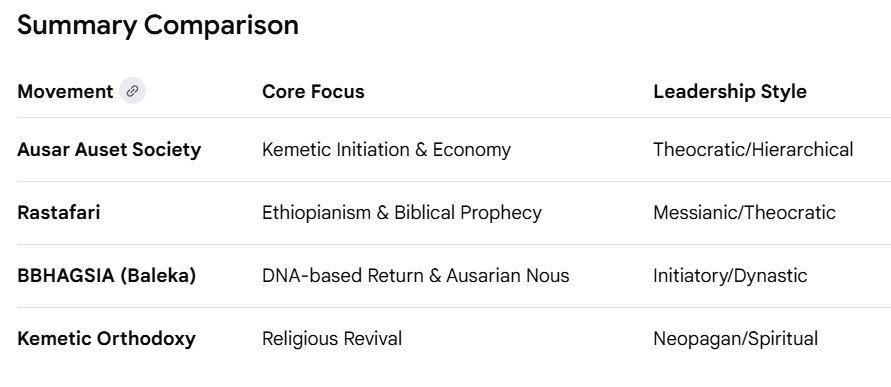
THUS WAS BORN THE RAS TAFARI MOVEMENT OUT OF CHICAGO WITH REPATRIATION AS THE PRINCIPLE FOCUS OF PAN AFRICANISM REPARATIONS.
Approximately 500,000 to over 500,000 African Americans migrated to Chicago during the Great Migration (roughly 1916–1970). This influx caused the city's Black population to increase from 2% in 1910 to 33% by 1970.
When the Italians under Fascist Dictator Benito Mussolini invaded Ethiopia, the last remaining uncoquered territory and people in Africa, 5,000 Afrodescendants from Chicago volunteered to defend Ethiopian Soverignty. The Unites States government prevented their employment, but Chicago UNIA member and pilot Colonel John C. Robinson was allowed to go and helped Ras Tafari, now crowned HIM Haile Selassie, King of Kings and Conquering Lion of Judah to regain his thrown in 1941. Colonel Robisnson stayed in Ethiopia after the war, training the first 81 Ethiopian pilots which went on to become Ethiopian Airlines. Out of gratitude, in 1948, the Emperor granted land concessions to Winston Evans the President of the Ethiopian World Federation Chicago Chapter. On June 8, 1954, HIM Haile Selassie himself came to South Park Baptist Church on the south side of Chicago and the Chicago Defender newspaper reported that the Emperor was providing citizenship, a house rent-free, transportation, a competitive salary and paid three0months vacation for any Afrodescendant who wished to repatriate and contribute to Ethiopia’s development. During this period, from 1942 to 1950, Brassa Nchabra’s great, great grandson, Reverend Eustace Lewis Blake, became the 44th Pastor of the Mother Bethel African Methodist Church founded by Richard Allen in 1791 while his other great, great grandson Rev. Jacob S. Blake became pastor of Ebenezer A.M.E Church, Evanston’s first black church founded on October 30, 1882. During that time, While serving as Executive Secretary for the Southern Christian Leadership Conference (SCLC), Ella Baker, another Balanta descendant, organized the founding conference of the Student Non Violent Coordinating Committee (SNCC), held at Shaw University in Raleigh, North Carolina (the land and city of Brassa Nchabra’s enslavement and captivity) during the Easter weekend of 1960. She had immediately recognized the potential of the students involved in the sit-in movement and wanted to bring leaders of the Movement together to meet one another and to consider future work. Miss Baker, as the students usually called her, persuaded Martin Luther King to put up the $800 needed to hold the conference. Rev. King hoped they would become an SCLC student wing. Ella Baker, however, encouraged the students to think about forming their own organization. Addressing the conference, Rev. King asked the students to commit to nonviolence as a way of life, but for most in attendance, nonviolence was simply an effective tactic. Speaking to the conference Ella Baker told the students that their struggle was “much bigger than a hamburger or even a giant-sized coke.” In presenting this bigger picture and encouraging them to form their own organization, Ella Baker displayed a talent she had been employing for more than two decades: assisting people to empower themselves, which is the hallmark of Balanta’s decentralized society. The students decided to form their own organization: SNCC. And with the formation of SNCC, she encouraged the new organization to organize from the bottom up.
A Chicago Defender news article stated that, “When Dr. Martin Luther King was assassinated in 1968, Blake led a march that drew 3,000 in his memory. That march protested civil rights and racial discrimination in Evanston over fair housing for the black community. Evanston has a long history of redlining and housing discrimination that continues today. Rev. Jacob Blake and his congregation built the Ebenezer Primm Towers, a 107-unit apartment building for low-moderate income seniors.
By that time, N’nanba was born (March 12, 1976) and raised in the largely segregated 5th Ward of Evanston, a city of 75,000 on the shores of Lake Michigan on the northern border of Chicago. She was alreadyd active in community affairs. In 2003, Ebenezer A.M.E Church opened the Jacob Blake Manor at 1615 Emerson Street to provide seniors housing.” That same year, Brassa Nchabra’s great, great, great, great, great, great grandson, Ras Nathaniel, made his first visit to Africa, seeking repatriation and housing there while representaing the Rastafari community in Shashemane and Afrodescendants at the newly formed African Unon. Ras Nathaniel also traveled to Azania and returned in 2006 with the name Siphiwe Baleka.
In 2014, Kamm Howard, a Chicago businessman and real estate investor, and an internationally respected reparations activist spoke at the 8th Pan African Conference in Johannesburg, South Africa on the “new paradigm of reparations activism.”