

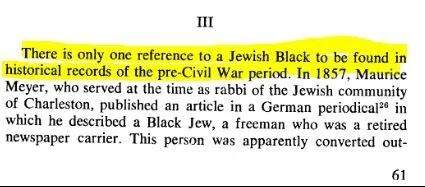


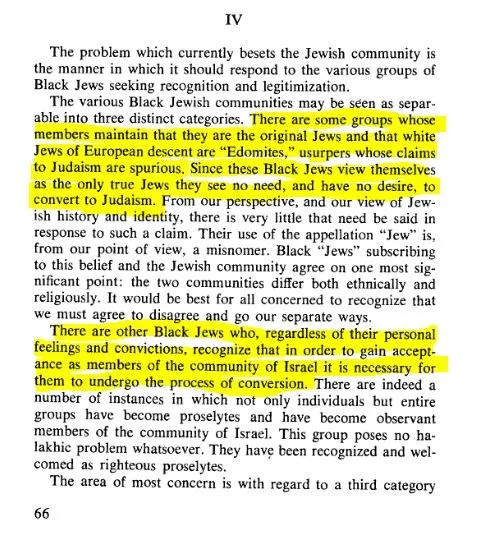
BLACK JEWS: A HALAKHIC PERSPECTIVE J. David Bleich
WHAT FOLLOWS IS A DISCUSSION OF THE ACTUAL HISTORICAL DOCUMENTATION OF THE HEBREW AND ISRAELITE ORIGIN
1. The existence of Balanta ancient ancestors and their genetic record has already been documented, and in particular, those people of the haplogroup E-V38 which originated in the Horn of Africa about 42,300 years before the present. See: Reviewing the Sudanic/TaNihisi Origins of the Balanta.
2. The spiritual principles of Balanta ancient ancestors from that time up until establishment of the first dynasty in Kemet, and 1,500 years before any mention of “Hebrews” and “Jews” and “Israelite” has also been documented. See: 26 Principles of the Great Belief of the Balanta Ancient Ancestors.
Excerpts from Balanta B’urassa, My Sons: Those Who Resist Remain Volume II

From Cheik Anta Diop: The African Origin of Civilization

Cheik Anta Diop, Civilization or Barbarism

Mesopotamia
According to Wikipedia, “the Halaf culture is a prehistoric period which lasted between about 6100 BC and 5100 BC. Halaf culture ended by 5000 BC after entering the so-called Halaf-Ubaid Transitional period. Spreading from Eridu, the Ubaid culture extended from the Middle of the Tigris and Euphrates to the shores of the Persian Gulf, and then spread down past Bahrain to the copper deposits at Oman. The archaeological record shows that Arabian Bifacial/Ubaid period came to an abrupt end in eastern Arabia and the Oman peninsula at 3800 BC, just after the phase of lake lowering and onset of dune reactivation. At this time, increased aridity led to an end in semi-desert nomadism, and there is no evidence of human presence in the area for approximately 1,000 years, the so-called "Dark Millennium".

Sumer, Akkad and Elam


Wikipedia also states that “the term Sumerian is the common name given to the ancient non-Semitic-speaking inhabitants of Mesopotamia by the East Semitic-speaking Akkadians. The Sumerians referred to themselves as ùĝ saĝ gíg ga (cuneiform: ), phonetically /uŋ saŋ ɡi ɡa/, or sang-ngiga, literally meaning "the black-headed people", and to their land as ki-en-gi(-r)(cuneiform: ) ('place' + 'lords' + 'noble'), meaning "place of the noble lords". The Akkadians also called the Sumerians "black-headed people", or tsalmat-qaqqadi, in the Semitic Akkadian language. The Ubaidians, though never mentioned by the Sumerians themselves, are assumed by modern-day scholars to have been the first civilizing force in Sumer. They drained the marshes for agriculture, developed trade, and established industries, including weaving, leatherwork, metalwork, masonry, and pottery.
Sumerian civilization took form in the Uruk period (4th millennium BC), continuing into the Jemdet Nasr and Early Dynastic periods.
The earliest positively proven historical attestation of any Semitic people comes from 30th century BC Mesopotamia, with the East Semitic-speaking peoples of the Kish civilization, entering the region originally dominated by the people of Sumer (who spoke a language isolate).

Approaching Chaos: Could an Ancient Archetype Save C21st Civilization? By Lucy Wyatt
African historian J.A. Rogers states in “100 Amazing Facts About the Negro With Complete Proof”:
“Elam, a mighty Negro civilization of Persia, flourished about 2900 B.C. and is perhaps older than Egypt or Ethiopia. One of its later Negro kings, Kudur Nakunta, conquered Chaldea and Babylon and brought back to his capital Susa, rich treasures among which was the famous statue of the goddess Nana. Later it became the capital of Cyrus the Great and Darius.”
During the 3rd millennium BC, a close cultural symbiosis developed between the Sumerians, who spoke a language isolate, and Akkadians, which gave rise to widespread bilingualism . . . . Sumer was conquered by the Semitic-speaking kings of the Akkadian Empire around 2270 BC (short chronology), but Sumerian continued as a sacred language. Native Sumerian rule re-emerged for about a century in the Third Dynasty of Ur at approximately 2100–2000 BC. . . . The Sumerian city of Eridu, on the coast of the Persian Gulf, is considered to have been one of the oldest cities, where three separate cultures may have fused:
that of peasant Ubaidians farmers, living in mud-brick huts and practicing irrigation;
that of mobile nomadic Semitic pastoralists living in black tents and following herds of sheep and goats;
and that of fisher folk, living in reed huts in the marshlands, who may have been the ancestors of the Sumerians.

Following an Elamite invasion and sack of Ur during the rule of Ibbi-Sin (c. 1940 BC), Sumer came under Amorites rule (taken to introduce the Middle Bronze Age). The independent Amorite states of the 20th to 18th centuries are summarized as the "Dynasty of Isin" in the Sumerian king list, ending with the rise of Babylonia under Hammurabi c. 1700 BC. The Sumerians were eventually absorbed into the Akkadian (Assyro-Babylonian) population.”

According to the Great Senegale Scientist Cheik Anta Diop,
“The Ancients remained silent about the alleged Mesopotamian culture prior to the Chaldeans. They considered the latter a caste of Egyptian astronomer-priests, that is to say, Negroes. According to the Egyptians, Diodorus reports, the Chaldeans were ‘a colony of their priests that Belus had transported on the Euphrates and organized on the model of the mother-caste, and this colony continues to cultivate the knowledge of the stars, knowledge that it brought from the homeland.’ So it is that ‘Chaldean’ formed the root of the Greek word for astrologer. The Tower of Babel, a step pyramid similar to the tower of Saqqara, also known as ‘Birs-Nimroud’ and ‘Temple of Baal,’ was probably the astronomical observatory of the Chaldeans.
This fits in, for Nimrod, son of Kush, grandson of Ham, the Biblical ancestor of the Blacks, is the symbol of worldly power: ‘He was a mighty hunter before the Lord. Hence the saying, ‘Like Nimrod, a mighty hunter before the Lord.’ The beginning of his kingdom was Babylon, Arach and Akkad, all of them in the land of Sennar. From that region Assur went forth.’ . . .
NOTE: Not true. According to List of Ethiopian Kings by H.I.H. Tafari Makonnen, June 19, 1922, published in: “In The Country of The Blue Nile” by C.F. Rey, F.R.G.S., Commander of the Order of the Star of Ethiopia, Negro University Press, New York -
Nimroud is NOT the grandson of Ham. Nimroud is, in fact, the 12th Sovereign in the line of King Ori, reiging in 3776 BC and before the Biblical Flood. Kam (Ham) and Kout (Kush) appear about 1,000 years later…. Now who is going to know Ethiopian history better than the 334th King of Ethiopia in the line of the Original King Ori?


Google AI Overview (2026, February 24) says,
“The Book of Ezekiel (written by a priest in Babylonian exile around 597 B.C.) describes Israel's origin as a history of undeserved grace, portraying the nation as an abandoned infant rescued by God in Egypt. Despite early salvation, Ezekiel frames Israel’s history as one of persistent rebellion and idolatry, resulting in divine judgment, exile, and the symbolic "death" of the nation.”
EZEKIEL 16:3
“And say, Thus saith the Lord God unto Jerusalem; Thy birth and thy nativity is of the land of Canaan; thy father was an Amorite, and thy mother an Hittite.”
Amorites and Hurrians
The introduction of “bronze” in the Early Bronze Age (3000-2000 B.C.) brought about a cultural revolution marked by the development of metallurgy, and a decline in pottery. By the Middle Bronze Age (2000-1550 B.C.), Amorites who were originally nomads from the dessert regions to the east, and southern Anatolia (modern Turkey), had penetrated Canaan and were inhabiting the hilly areas around the cities. From these hills, they launched raids and harassment attacks against the cities.
In addition to the Amorites, other invaders included the Hurrians (the Horites of the Old Testament), also came to Canaan from the north. The Late Bronze Age (1550–1200 B.C.) was marked by incursions of new Amorite marauders, these were Amorites displaced by the fall of the Hammurabian dynasty in Babylon. As it were, over time, the nomadic Amorites were joined by Amorites who had previously been in Mesopotamia. So that by now, the total of these Amorites had become the dominant element of the population in Canaan.
Many of these Amorites, such as the Biblical Abraham, continued on to Egypt.
Genesis 11:27-32
Now these are the generations of Terah: Terah begat Abram, Nahor, and Haran; and Haran begat Lot. And Haran died before his father Terah in the land of his nativity, in Ur of the Chaldees (Sumer). And Abram and Nahor took them wives: the name of Abram's wife was Sarai; and the name of Nahor's wife, Milcah, the daughter of Haran, the father of Milcah, and the father of Iscah. But Sarai was barren; she had no child. And Terah took Abram his son, and Lot the son of Haran his son's son, and Sarai his daughter in law, his son Abram's wife; and they went forth with them from Ur of the Chaldees, to go into the land of Canaan; and they came unto Haran (Anatolian city), and dwelt there. And the days of Terah were two hundred and five years: and Terah died in Haran. Genesis 12:9-10 And Abram journeyed, going on still toward the south. And there was a famine in the land: and Abram went down into Egypt to sojourn there; for the famine was grievous in the land.

According to Diop, “After many ups and downs, the Canaanites and the white tribes, symbolized by Abraham and his descendants (Isaac’s lineage), blended to become the Jewish people of today:
So Hemor and his son Sichem went to the gate of their city and spoke to their fellow citizens. ‘These men,’ they said, ‘are friendly: let them dwell with us and trade in the land, since there is ample room for them. Let us marry their daughters and give them our daughters to marry.’
Those few lines, which seem to be a ruse, nonetheless reveal the economic imperatives which at that time were to govern relations between white invaders and black Canaanites. Phoenician history is therefore incomprehensible only if we ignore the Biblical data according to which the Phoenicians, in other words, the Canaanites, were originally Negroes, already civilized, with whom nomadic, uncultured white tribes later mixed. . . . . This is how the lasting alliance between Egyptians and Phoenicians can be explained. Even throughout the most troubled periods of great misfortune, Egypt could count on the Phoenicians as one can more or less count on a brother. . . . To be sure, we should not minimize the role of economic relations between Egypt and Phoenicia in explaining the loyalty which seems to have existed. One can also understand that Phoenician religion and beliefs are to some extent mere replicas of Egypt’s. . . . .”
In Egypt these Amorites become known as Habiru or Hapiru (one who sells his services), whether these ‘services’ were as mercenaries or tradesman is unknown. In time, the number of Amorites in northern Egypt was sufficient to overthrow Egyptian rule and establish an independent region of Egypt ruled by Amorites, since known as the Hyksos (foreign kings or Shepherd Kings). The Egyptian historian Manetho, and the traitor Hebrew, Josephus Flavius, both wrote of the Amorite coup as an invasion.
Cheikh Ana Diop explains in The African Origin of Civilization: Myth or Reality:
“In the Bible, when the first white races reached the place, they found a black race there, the Canaanites, descendants of Canaan, brother of Mesraim, the Egyptian, and Kush, the Ethiopian, sons of Ham.
The Lord said to Abram: ‘Leave your country, your kinsfolk and your father’s house, for the land which I will show you . . .” Abram went away as the Lord had commanded him, and Lot went with him. . . . Abram took Sarai his wife, Lot his brother’s son, all the property they had acquired and the persons they had got in Haran and they departed for the land of Canaan. When they came to the land of Canaan, Abram passed through the land to the sacred place at Sichem, near the plain of More. At that time the Canaanites were in the land.’”

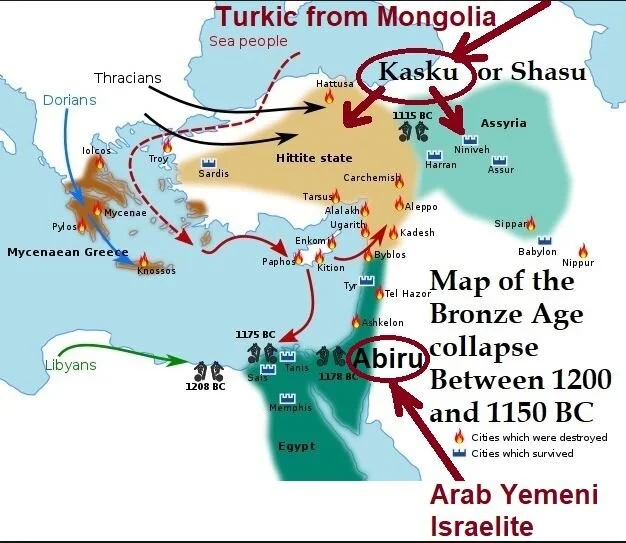
“Shasu and Habiru
Wikipedia states that “The Shasu (from Egyptian š3sw, probably pronounced Shaswe) were Semitic-speaking cattle nomads in the Levant (Canaan) from the late Bronze Age to the Early Iron Age or the Third Intermediate Period of Egypt. They were organized in clans under a tribal chieftain, and were described as brigands active from the Jezreel Valley to Ashkelon and the Sinai.
Some scholars link the Israelites and YHWH with the Shasu.

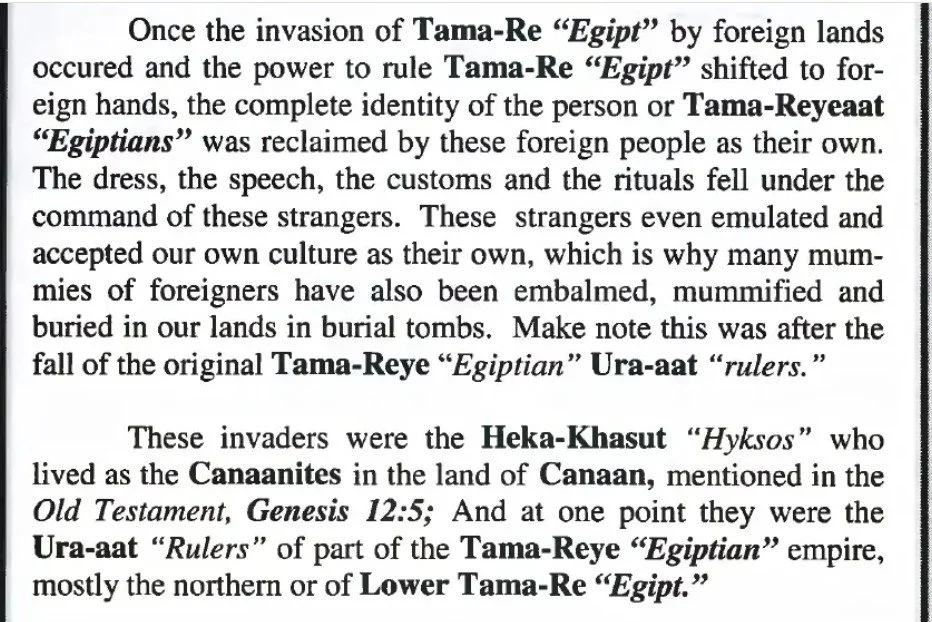
Malachi Z. York, The Original Eigiptians Were Negroid
The earliest known reference to the Shasu occurs in a 15th-century BCE list of peoples in the Transjordan region. The name appears in a list of Egypt's enemies inscribed on column bases at the temple of Soleb built by Amenhotep III. Copied later in the 13th century BCE either by Seti I or by Ramesses II at Amarah-West, the list mentions six groups of Shasu: the Shasu of S'rr, the Shasu of Rbn, the Shasu of Sm't, the Shasu of Wrbr, the Shasu of Yhw, and the Shasu of Pysps. Two Egyptian texts, one dated to the period of Amenhotep III (14th century BCE), the other to the age of Ramesses II (13th century BCE), refer to 'Yahu in the land of the Šosū-nomads' (t3 š3św yhw), in which yhw[3]/Yahu is a toponym. Regarding the name yhw3, Michael Astour observed that the "hieroglyphic rendering corresponds very precisely to the Hebrew tetragrammaton YHWH, or Yahweh, and antedates the hitherto oldest occurrence of that divine name – on the Moabite Stone – by over five hundred years." K. Van Der Toorn concludes: "By the 14th century BC, before the cult of Yahweh had reached Israel, groups of Edomites and Midianites worshipped Yahweh as their god."
Donald B. Redford has argued that the earliest Israelites, semi-nomadic highlanders in central Palestine mentioned on the Merneptah Stele at the end of the 13th century BCE, are to be identified as a Shasu enclave. Since later Biblical tradition portrays Yahweh "coming forth from Seʿir", the Shasu, originally from Moab and northern Edom/Seʿir, went on to form one major element in the amalgam that would constitute the "Israel" which later established the Kingdom of Israel. Per his own analysis of the el-Amarna letters, Anson Rainey concluded that the description of the Shasu best fits that of the early Israelites. If this identification is correct, these Israelites/Shasu would have settled in the uplands in small villages with buildings similar to contemporary Canaanite structures towards the end of the 13th century BCE.
Habiru (sometimes written as Hapiru, and more accurately as ʿApiru) is a term used in 2nd-millennium BCE texts throughout the Fertile Crescent (Canaan) for people variously described as rebels, outlaws, raiders, mercenaries, bowmen, servants, slaves, and laborers. The word Habiru, more properly 'Apiru, occurs in hundreds of 2nd millennium BCE documents covering a 600-year period from the 18th to the 12th centuries BCE and found at sites ranging from Egypt, Canaan and Syria, to Nuzi (near Kirkuk in northern Iraq) and Anatolia (Turkey), frequently used interchangeably with the Sumerian SA.GAZ, a phonetic equivalent to the Akkadian (Mesopotamian) word saggasu ("murderer, destroyer").
Not all Habiru were murderers and robbers: one 'Apiru, Idrimi of Alalakh, was the son of a deposed king, and formed a band of 'Apiru to make himself king of Alalakh. What Idrimi shared with the other 'Apiru was membership of an inferior social class of outlaws, mercenaries, and slaves leading a marginal and sometimes lawless existence on the fringes of settled society. 'Apiru had no common ethnic affiliations and no common language, their personal names being most frequently West Semitic, but many East Semitic, Hurrian or Indo-European.
In the 18th century a north Syrian king named Irkabtum (c. 1740 BC) "made peace with [the warlord] Shemuba and his Habiru."
In the Amarna tablets from 14th century BCE, the petty kings of Canaan describe them sometimes as outlaws, sometimes as mercenaries, sometimes as day-labourers and servants. Usually they are socially marginal, but Rib-Hadda of Byblos calls Abdi-Ashirta of Amurru (modern Lebanon) and his son 'Apiru, with the implication that they have rebelled against their common overlord, the Pharaoh. The biblical word "Hebrew", like Habiru, denotes a social category, not an ethnic group. Since the discovery of the 2nd millennium BCE inscriptions mentioning the Habiru, there have been many theories linking these to the Hebrews of the Bible, but modern scholars see the 'Apiru/Habiru as only one element in an early Israel composed of many different peoples, including nomadic Shasu, the biblical Midianites, Kenites, and Amalekites, displaced peasants and pastoralists.

WHAT ABOUT ETHIOPIAN FALASHA JEWS?
First, tradition holds that the word Ethiopia comes from the Greeks. Wikipedia states:
“Etymology
The Greek name Αἰθιοπία (from Αἰθίοψ, Aithiops, "an Ethiopian") is a compound word, derived from the two Greek words, from αἴθω + ὤψ (aitho "I burn" + ops "face"). According to the Perseus Digital Library, the designation properly translates as Burnt-face in noun form and red-brown in adjectival form.[37] The historian Herodotus used the appellation to denote those parts of Africa South of the Sahara that were then known within the Ecumene (inhabitable world).[38]
However, the Greek formation may be a folk etymology for the Ancient Egyptian term athtiu-abu, which means 'robbers of hearts'.[39]
This Greek name was borrowed into Amharic as ኢትዮጵያ, ʾĪtyōṗṗyā.
In Greco-Roman epigraphs, Aethiopia was a specific toponym for ancient Nubia.[40]
At least as early as c. 850,[41] the name Aethiopia also occurs in many translations of the Old Testament in allusion to Nubia. The ancient Hebrew texts identify Nubia instead as Kush.[42] However, in the New Testament, the Greek term Aithiops does occur, referring to a servant of the Kandake, the queen of Kush.[43]
Following the Hellenic and Biblical traditions, the Monumentum Adulitanum, a third century inscription belonging to the Aksumite Empire, indicates that
Aksum's then ruler governed an area which was flanked to the west by the territory of Ethiopia and Sasu. The Aksumite King Ezana would eventually conquer Nubia the following century, and the Aksumites thereafter appropriated the designation "Ethiopians" for their own kingdom.
In the Ge'ez version of the Ezana inscription, Aἰθιόποι is equated with the unvocalized Ḥbšt and Ḥbśt (Ḥabashat), and denotes for the first time the highland inhabitants of Aksum. This new demonym would subsequently be rendered as 'ḥbs ('Aḥbāsh) in Sabaic and as Ḥabasha in Arabic.[40]
In the 15th-century Ge'ez Book of Aksum, the name is ascribed to a legendary individual called Ityopp'is. He was an extra-Biblical son of Cush, son of Ham, said to have founded the city of Axum.[44]
In English, and generally outside of Ethiopia, the country was once historically known as Abyssinia. This toponym was derived from the Latinized form of the ancient Habash.[45]”

List of Ethiopian Kings by H.I.H. Tafari Makonnen, June 19, 1922, published in: “In The Country of The Blue Nile” by C.F. Rey, F.R.G.S., Commander of the Order of the Star of Ethiopia, Negro University Press, New York

Map of the Nile Valley using indigenous names by Dr. Ben Jochannan, Black Man of the Nile and His Family.

So, understand, there are different people living in this territory which is regularly and simultaneously referred to as Cush, Nubia, Ethiopia, and Abyssinia. Within this territory at various times, you have different “kingdoms” ruled by different peoples. Just like there is no single “African” identity and culture, but rather a vast mix of diverse cultures, there’s no single “Ethiopian” people, either, and the word “Ethiopia” was not first used by the Greeks, who did not enter into Egypt, let alone further south, until the 7th century BC.
How could “Ethiopia” be a Greek word meaning “burnt faces” when “Itiypus” was used as the name of an indigenous ruler one thousand years prior to the arrival of the Greeks???????
Now, when the Semitic people described above, mixed race nomads, wandered into “Ethiopia”, they mixed and converted some of the people to their religion called Judaism. This began with the “Jewish” rule of Egypt 500 years before the Assyrian invasion. The genetic record shows that Falasha’s have DNA originating from “Arabia” and the “Orient” that distinguishes them from the other indigenous people living in the area.

JOURNAL ARTICLE Origins of Falasha Jews Studied by Haplotypes of the Y Chromosome GÉRARD LUCOTTE and PIERRE SMETS Human Biology Vol. 71, No. 6 (December 1999), pp. 989-993 (5 pages)

WHAT HAPPENED AFTER THE 500 YEAR JEWISH RULE IN KEMET

The Greeks ruled Egypt for almost 300 years before the expansion of the Roman Empire into Egypt ended their dominion in 30 B.C. This was our ‘flashback point of departure, but before returning to the Ethiopian churches, the significance of what we have been reviewing as flashbacks should again be emphasized as a great issue. For we have been reviewing the last phase of the processes of Caucasianization in Egypt that were so thoroughgoing that both the Blacks and their history were erased from our memory: the Jewish rule, 500 years; the Assyrian interludes; the Persians, 185 years; the Greeks 274 years; the Romans, 700 years; the Arabs, 1,327 years – the long, long struggle to take from the Blacks whatever they had of human worth, their land and all their wealth therein; their bodies their souls, and their minds, was a process of steady depersonalization, dehumanization.
The Asians and Mulattoes held Northern Abyssinia, with the center of power in the strategic kingdom of Axum. From Axum the Arabs prepared their forces for the destruction of a now weakening Ethiopian empire. The weakness, as usual, came from separatist movements struggling for power. It was the old-time factional fights among leaders who felt they must ‘rule or ruin’ . . . . But it was the situation for which the Axumite Arabs and their colored and Jewish allies were waiting. In 350 A.D., their armies destroyed Meroe, and an epoch in history ended.
Ethiopia was now split into three major states: Nobadae, bordering Egypt at the First Cataract; Makuria, the more powerful kingdom in the middle with its capital at Dongola; and Alwa (Alodia), another strong state south of Makuria or between Makuria and Axum. After the collapse of the central black empire in the fourth century, the Christian churches spread more rapidly through the now independent kingdoms. Even in the division of Ethiopia into smaller states, the process of ethnic transformation was obvious as it pressed southward from Egypt, Greek and Roman presence had been heavy and marked in Nobadae. Since no one now questioned that Nobadae (Nubia) was Ethiopian, the mixed breed could not be called Egyptian as was the previous case of first Cataract. The population in this kingdom bordering Caucasianized Egypt was now predominantly Afro-European and Afro-Asian.
In the fourth century A.D., the areas of black power had been pushed out of Egypt down to where the kingdom of Makuria formed its borders with Nobadae. Here the concentration of Blacks began, just as though a southward movement of the race was a decree of providence. Here, once again, they took their stand; here again, even in the lands which were officially Christian, black battle lines had to be formed again for defense. The Axumite Coloured ‘Solomonids’ and Arabs had retired after the destruction of the black empire. The more immediate danger was still Egypt.
Which Migration of the Balanta?
We have already seen that there were several migrations of people from Ta-Meri and Ta-Nihisi prior to the First Dynasty in Khem, and throughout the next thirty-three dynasties. Our great 20th Century historians – Cheikh Anta Diop, Yosef ben-Jochannan, John Henrik Clarke, Chancellor Williams, and after them, Moustafa Gadalla, have all detailed how the Anu and others always retreated from Ta-Meri and went south into Ta-Nihisi, Kush and beyond, whenever foreigners invaded. We now know that during this time that there were well-established trade routes that led south and west from Ta-Nihisi to Lake Chad and to Kano in Nigeria. With so many migrations, how can we determine when and where our ancestors left?

Another clue is provided by Moustafa Gadalla, who writes in his book Exiled Egyptians,
“During the second half of the first millennium CE, the Central Soudan – that 2,000-mile (3,200 km) area stretching from the Senegal region to Dar-Fur – saw a population explosion and the emergence and consolidation of a number of substantial organized, de-centralized, wealthy states. They were all developed in the Sahel – a region running across Africa, south of the Sahara and north of Lake Chad. The Sahel is a hot, dry savannah that can support human agriculture and settlement. . . .
All sources and evidence agree to the following characteristics of this population explosion:
1. The sudden increase in population in the region resulted from the migration of highly civilized, well-organized, mostly agricultural people.
2. The original sparsely negroid population speak of highly civilized people who settled and governed them peacefully.
3. The newcomers were light-skinned.
4. The newcomers had the technological and financial resources to build irrigation, waterworks, and land reclamation projects, in order to provide the food needed to sustain such large populations.
5. The newcomers had the knowledge and experience of a well-organized society: politically and socially.
6. They were knowledgeable and experienced in city planning and infrastructure, as evident in the numerous settlements that they built.
7. Significant polities started emerging after 500 CE.
8. They had advanced knowledge of metal-working.”
Given that the Balanta were not light skinned, did not support large populations nor develop sophisticated social and political systems, preferring to be leaderless, and did not carry with them Egyptian religious deities but instead carried with them the Great Belief and their traditional spiritual customs, then we can rule out any of the above such migrations.
It is likely that our Balanta ancestors constituted “the original sparsely negroid population” that Gadalla speaks of. Remember, descendants of Baba Amuntu Abansundu were already living in this area as early as 17,000 BC and there was a tremendous amount of genetic diversity which means DIFFERENT BLACK PEOPLE WITHIN AFRICA.


The rest of the Balanta migration story from the Nile Valley to present day Guinea Bissau is documented in Balanta B’urassa, My Sons: Those Who Resist Remain Volumes I and II
Clearly, the Balanta people had nothing to do with Shashu, Habiru, Hebrew or Jewish people.
Consequently, those Balanta that were captured, brought to and enslaved in the Americas during the European Trans Atlantic were not and could not have been descendants of “Hebrews”, “Jews” or “Israelites”.
Although some African Americans may be descended from “Hebrews”, “Jews” or “Israelites” who migrated from the Nile to West Africa, those who make such blanket claims for ALL African Americans do so as a consequence of having their actual ancestry erased from their memory, as a consequence of the terrorism and trauma inflicted on their ancestors who were brought to the Americas and enslaved. THIS IS CALLED ETHNOCIDE.
After two or three generations of not speaking their original ancestors’ language and practicing their original ancestors’ culture, their actual identity was lost. In an effort to reclaim those identities, many African Americans turned to the only source of information available to them - the Bible, and sought to identify with peoples described therein. However, the Bible, as a source of “truth” for revealing African identity was extremely flawed at best, even though it contained some history of African people.
Today, genetic testing and a re-reading of history enables African Americans to both identify their actual ancestors and understand their actual history, without having to make faith-based claims of identity that are just based on that - faith - and not actual truth. We do not have to look to the Bible for answers when we have the actual record written in stone from our ancestors and genetic science as a new tool to establish lineage and for interpretation.


