THE BALANTA FOUNDER OF THE AFRICAN UNION 6TH REGION CAMPAIGN

There has been a lot of appropriate outrage over the dismissal of Dr Arikana Chihombori Quao from her post as the African Union (AU) Permanent Ambassador in the United States. However, most people do not know that it was an American of Balanta origin that was the first to launch the African Union 6th Region Campaign in the United States.

AU credential 1.JPG

After arriving in Addis Ababa, Ethiopia in late December 2002, Ras Nathaniel (born and raised in the suburbs of Chicago) registered with the Federal Democratic Republic of Ethiopia Ministry of Information & Culture Press and Information Department as a journalist for the Rastafari Speaks newspaper.
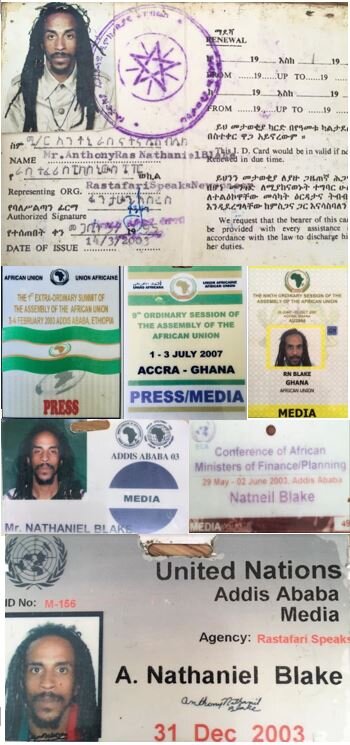
Ras Nathaniel AU Credentials.JPG

With official media credentials, Ras Nathaniel now had access to the Economic Commission for Africa (ECA), the African Union (AU) and the United Nations (UN). On February 3-4, 2003, Ras Nathaniel attended the 1st Extra-Ordinary Summit of the Assembly of the African Union in Addis Ababa and began issuing reports to the African Diaspora via the internet.  He was the only African American journalist in the room when the historic Article 3(q) was adopted that officially “invite(s) and encourage(s) the full participation of Africans in the Diaspora in the building of the African Union in its capacity as an important part of our Continent.” From this decision, the African Diaspora would become designated as the 6th Region of the African Union. Aware that Malcom X had also been an observer at the AU’s predecessor, the Organization of African Unity (OAU), Ras Nathaniel now felt an awesome responsibility to the African Diaspora, and particularly to the Rastafari community, to keep them informed of all things related to the African Union. At the final press briefing of the First Extraordinary Summit of the Assembly of the African Union, Ras Nathaniel asked South African President and AU Chairperson Thabo Mbeki to “comment on the kinds of proposals that were discussed in the brainstorming session concerning the inclusion of the African Diaspora in the African Union”. After meeting with the Rastafari community in Shashemane, Ras Nathaniel was mandated to draft the African Diaspora and Recommendations for the African Union letter. On February 25, 2003 it was delivered to President Thabo Mbeki and IRIE began conducting a Repatriation Census in the African Diaspora, a task that was originally given to Malcom X at the OAU. According to Malcolm X,

“One of the things I saw the OAAU doing from the very start was collecting the names of all the people of African descent who have professional skills, no matter where they are. Then we could have a central register that we could share with independent countries in Africa and elsewhere. Do you know, I started collecting names, and then I gave the list to someone who I thought was a trusted friend, but both this so-called friend and the list disappeared. So, I’ve got to start all over again.” (Jan Carew, Ghosts In Our Blood, p. 61)

“The 22,000,000 so-called Negroes should be separated completely from America and should be permitted to go back home to our African homeland which is a long-range program; so the short-range program is that we must eat while we’re still here, we must have a place to sleep, we have clothes to wear, we must have better jobs, we must have better education; so that although our long-range political philosophy is to migrate back to our African homeland, our short-range program must involve that which is necessary to enable us to live a better life while we are still here.” (Interview with Malcolm X, by A.B. Spellman, Monthly Review, Vol. 16, no.1 May 1964).

Thus, Malcolm X, along with John Henrik Clarke, wrote the following into the Organization of Afro- American Unity (OAAU) Basic Unity Program


i. Restoration: “In order to free ourselves from the oppression of our enslavers then, it is absolutely necessary for the Afro-American to restore communication with Africa . . . .

ii. Reorientation: “ . . . We can learn much about Africa by reading informative books . . . “

iii. Education: “ . . . The Organization of Afro-American Unity will devise original educational methods and procedures which will liberate the minds of our children . . . We will . . . encourage qualified Afro-Americans to write and publish the textbooks needed to liberate our minds . . . . educating them  [our children] at home.”

iv. Economic Security: “ . . . After the Emancipation Proclamation . . . it was realized that the Afro-American constituted the largest homogeneous ethnic group with a common origin and common group experience in the United States and, if allowed to exercise economic or political freedom, would in a short period of time own this country. WE MUST ESTABLISH A TECHNICIAN BANK. WE MUST DO THIS SO THAT THE NEWLY INDEPENDENT NATIONS OF AFRICA CAN TURN TO US WHO ARE THEIR BROTHERS FOR THE TECHNICIANSTHEY WILL NEED NOW AND IN THE FUTURE.


From that moment on Ras Nathaniel focused his efforts on conducting the Repatriation Census and became the unelected, grassroots representative of the African Diaspora, devoting himself to the fulfilment of the five-year plan for Ethiopian Millennium Repatriation.

On December 23, 2005, Ras Nathaniel and IRIE signed a Memorandum of Understanding with the Western Hemisphere African Diaspora Network (WHADN) creating the AU 6th Region Education Campaign. On April 18, 2003, the African Union in conjunction with the Foundation for Democracy in Africa (FDA) and members of WHADN, announced plans for establishing technical definitions of the Diaspora and the process of effectively integrating the Diaspora into the organs and programs of the African Union, notably the Economic, Social and Cultural Council (ECOSOC). Members of WHADN and the AU delegation agreed that participants should become actively involved in this process by forwarding proposals thru the WHADN Secretariat to the AU Commission for consideration and taking ownership of the outcomes of adopted projects. It was stressed that WHADN is a network in which Diaspora organizations could freely mobilize and coordinate their interaction with the African Union on an equal basis, WHADN to serve as the “functional interface mechanism with the AU.” Among the first groups to submit a proposal to WHADN for consideration by the AU Commission was The Issembly for Rastafari Iniversal Education (IRIE). Recognizing that WHADN was “a functional interface mechanism with the AU” and “the first step of membership” in the AU 6th Region Diaspora Initiative mandated to coordinate events in 2006 to popularize the AU, Ras Nathaniel, seeking funding and more immediate and effective means towards Repatriation to Africa, sought to utilize this new mechanism to present to the African Union the Rastafari Repatriation Census Proposal for the Start of the Ethiopian Millennium (September 11,2007).

According to the proposal, “Based on results already obtained in three Repatriation Census Workshops, IRIE estimates that there is a minimum of 100 cities or locations with 100 people with various skill sets, representing a minimum of $300,000 per city plus equipment. That translates into Brain Gain of 10,000 persons and US $30 million in financial resources plus equipment available for repatriation. . . . By conducting a Repatriation Census, the African Union will immediately benefit from having a central skills technician resource database from which they could fill skills shortages in various sectors of the African Continent’s economy. . . . This proposal seeks to combine the mandate for African Union Educational Workshops with the mandate to develop a Central Diaspora Skills Resource Bank with the existing Repatriation Census Workshops being conducted by the Issembly for Rastafari Iniversal Education.” The proposal was approved and thus was born the African Union 6th Region 2006 Education Campaign with Ras Nathaniel as its Director.

Immediately after signing the MOU, from January 4 to 10, 2006, Ras Nathaniel traveled to Jamaica to strategize with the Rastafari community on that island. A plan was eventually approved to host a Rastafari Global Unity Conference in South Africa (Azania). On November 8th, Ras Nathaniel arrived in Azania and a group of Rastafari Elders gave him the name, “Siphiwe Baleka”.  On November 9, Ras Nathaniel, along with Ras Tekla Haymanot, Sister Yaa Ashantewaa, and Ras Gareth Prince, appeared on South African Broadcasting Company (SABC) TV Africa Live program to explain the Rastafari position.

Immediately after returning from Azania, Ras Nathaniel traveled to Honduras in November for the Central American Black Organization (CABO) 12th Assembly in La Ceiba Honduras as a member of the Pan African Organizing Committee (PAOC). In Honduras, Ras Nathaniel was a roommate of elder Dr. Pauulu Kamarakafego, CEO of the Pan-African Movement to the United Nations. Dr. Kamarakafego has served as a counselor, consultant, official and friend to Kwame Nkrumah, Julius Nyere, CLR James, Walter Rodney and various African liberation movements. Dr. Kamarakafego was responsible for organizing the 6th Pan African Congress in Tanzania in 1969. With Dr. David Horne of the PAOC, Ras Nathaniel made a presentation on the AU 6th Region Diaspora Initiative and the process for electing the twenty representatives to the AU’s Economic, Social and Cultural Council (ECOSOCC).

On January 6, 2007, at the request of the Pan African Community Coalition (PACC) and the Pan Afrikan Organizing Committee (PAOC), Ras Nathaniel was invited to the New York Town Hall Meeting to discuss and supervise the election of New York’s Diaspora Representatives to the African Union (AU). After his presentation, the town hall discussed the formation of the Community Council of Elders (CCE) that conducted the election on January 27th. 

March 31, 2007 Election Results for the African Union 6th Region for New York State http://nkwanta.tripod.com/id10.html?fbclid=IwAR1iDPhno6E_rauS7yslYJ1ihaNiwPL8PM9_bjXxxMUEVlMqDW2CLUqCIlY

March 31, 2007 Election Results for the African Union 6th Region for New York State http://nkwanta.tripod.com/id10.html?fbclid=IwAR1iDPhno6E_rauS7yslYJ1ihaNiwPL8PM9_bjXxxMUEVlMqDW2CLUqCIlY

ECOSOC email 2.JPG

With African Diaspora elections underway and spreading throughout the Diaspora, Ras Nathaniel then attended the African Union Grand Debate in Ghana in July as Coordinator for IRIE and Director of the AU 6th Region Campaign. At this event, there were many other representatives and observers from the African Diaspora. Ras Nathaniel’s main focus was on the AU 6th Region Diaspora Initiative, the elections for its representatives to ECOSOC, and the issue of citizenship for members of the 6th Region.

Ras Nathaniel was a vocal supporter of a continental passport and setting up passport bureaus in African airports that could efficiently issue a Pan African passport to AU 6th Region members upon arrival anywhere on the continent. 

AU credential 2.JPG
Pan African Passport.JPG

Finally, Ras Nathaniel, working with his friend, Ras Ikael Tafari, who was the Commissioner of Pan African Affairs for the Government of Barbados, helped to set the agenda for the Africa Diaspora Global Conference facilitated by the Republic of South Africa on behalf of the African Union, and jointly organized by the AU, CARICOM and the Government of Barbados, August 27-28, 2007. The context of the event was the Bicentennial Global Dialogue on “Slave Trade, Reconciliation and Social Justice.” Ras Nathaniel submitted his last-ditch proposal for $10 million funding from the governments in attendance, including Venezuela, Brazil and China, for the Ethiopian Millennium Repatriation and an emergency airlift of everyone that had completed Repatriation Census forms in a fashion similar to Operation Solomon, which, on Africa Day, May 25, 1991, airlifted 10,000 Ethiopian Falasha Jews to Israel, an effort kept secret by the military and organized by the American Association of Ethiopian Jews. To Ras Nathaniel, Rastafarians had every right to be repatriated to their spiritual mecca, Ethiopia.

Global Dialogue.JPG

The proposal was rejected, September 11, 2007 came and went, and with his Five-Year Plan now ending in failure, Ras Nathaniel disappeared. Fortunately, his effort, activities and documents have been documented and preserved in the 1,500-page, five volume set, Come Out of Her My People! 21st Century Black Prophetic Faith and Pan African Diplomacy.

On May 12, 2008, Ras Nathaniel legally changed his name to Siphiwe Baleka in order to honor his ancestors.

Today, Siphiwe has continued his educational ministry and focus on the OAAU Basic Unity point iii. Education: to “devise original educational methods and procedures which will liberate the minds of our children . . . to write and publish the textbooks needed to liberate our minds . . . . educating them  [our children] at home.” After receiving genetic testing results through African Ancestry on September 28, 2010, Siphiwe learned that his paternal DNA is a 100% match with the Balanta and his maternal DNA is a 99.2% match with Yoruba. For the past 9 years, Siphiwe began to study his paternal Balanta history, but struggled since Balanta has, from their origin, intentionally remained a stateless society without kings, chiefs, or leaders. As a result, most of their history has not been written down or studied. After collecting all the scattered references to the Balanta people in various European travel diaries, and re-reading African history through the eyes of the Balanta worldview, Siphiwe completed the first Balanta world history textbook, in three volumes, entitled Balanta B’Urassa, My Sons: Those Who Resist Remain. Using haplogroup migration studies and books by Cheik Anta Diop, Yoseph Ben Jochannan, John Henrik Clark, Credo Mutwa, Chancellor Williams and many other great African historians, scientists and intellects, Siphiwe was able to trace his and Balanta ancestral history from their earliest migrations down the Nile, to Wadi Kubbaniya from 42,000 BC to 18,500 BC, their further migration from modern day Sudan down the Nile into Nubia, Upper and Lower Kemet, and their migration across the continent from the Nile Valley across to their current homeland in Guinea Bissau. Using this history, Siphiwe then re-interprets world history from the viewpoint of Balanta at its center. Now, Siphiwe is working with other leaders in the genetic ancestry movement to develop a New Pan African Movement in the Diaspora that is based on the new knowledge of ancestry that had been denied the descendants of people captured, kidnapped and enslaved during the trans-Atlantic trade in African peoples. At the forefront of this movement is the House of Ancestry on which Siphiwe is a board member.


Siphiwe Baleka is an example of what one person with a Pan African education and Pan African vision can achieve. Whether it is his personal life, his business life, his athletic career, his publishing and media career, or his career as an artist ( he has sold many paintings), Siphiwe Baleka has internalized and manifested both excellence and the desire to uplift “his” people by any means necessary.

For the complete story of the untold history of this Balanta’s efforts at the African Union, purchase the five volumes of Come Out of Her, My People! 21st Century Black Prophetic Faith and Pan African Diplomacy

Come Out Of Her Volume 1 Cover.JPG

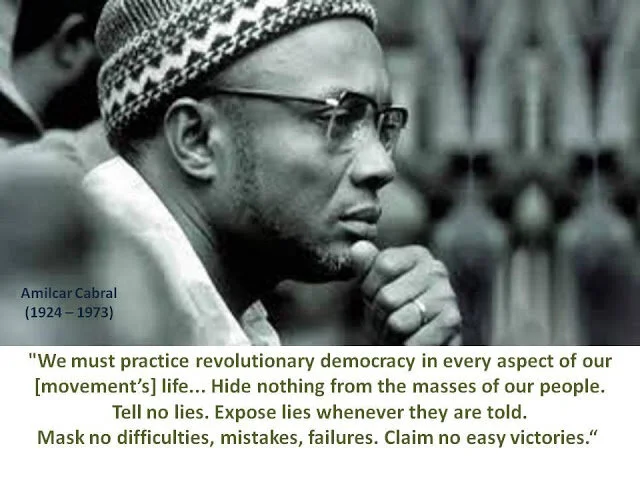
Amilcar Cabral Describes Balanta People

Amilcar Cabral.jpg

“In fact in the tragic history of revolutionary Africa, so many of whose leaders have left only a faint memory, three great figures stand out indisputably: Kwame Nkrumah, the visionary; Patrice Lumumba, the martyr; Amilcar Cabral, the unifier. As a unifier and mobilizer, he was both a theoretician and a man of action indefatigably in pursuit of reality, by revealing the deep roots, fundamental causes, so often blurred in the tumult of revolutionary action. For Guineans and Cape Verddians, he is the founder of the nation and the guide . . . .”

- Mario de Andrade, Biographical notes, Unity and Struggle: Speeches and Writings of Amilcar Cabral

“These long and difficult campaign for anti-colonial and post-colonial liberation and development in the African empire of the Portuguese - in Angola, Cape Verde, Guinea-Bissau, Mozambique, Sao Tome - produced a number of outstanding revolutionary thinkers who proved able to live their thought in their practice, and who, in doing that, have displayed a rare and often decisive talent for explanation in writing and the spoken word. Among these thinkers, and even at the head of them, was Amilcar Cabral, the author of the writing in this book. Murdered by the agents of Portuguese Fascism in 1973, his work lives after him and is there for inspection. A supreme educator in the widest sense of the word, Cabral can be recognized even now as being among the great figures of our time. We need not wait for history’s judgement to tell us that.. . . . Suffice it to say that he was loved as well as followed, and he was both because he was large hearted, entirely committed, devoted to his people’s progress. . . . He raised an army, led and taught it how to fight, gave it detailed orders, supervised its every major action; but he did all this, by the habit of his practice, through a process of collective political discussion. . . . Cabral gave his life for the liberation that he served, and he had to give it long before his time and when he was still in the full zest and vigour of his work..”

- Basil Davidson, Introduction, Unity and Struggle: Speeches and Writings of Amilcar Cabral

Fanando depicted on money.JPG

AMILCAR CABRAL DESCRIBES BINHAM B’URASSA (BALANTA PEOPLE)

Excerpt from Part 1 The Weapon of Theory, Party Principles and Political Practice

“The Balanta have what is called a horizontal society, meaning that they do not have classes one above the other. The Balanta do not have great chiefs; it was the Portuguese who made chiefs for them. Each family, each compound is autonomous and if there is any difficulty, it is a council of elders which settles it. There is no State, no authority which rules everybody. If there has been in our times, you are young; it was imposed by the Portuguese. There are Mandinga imposed as chiefs of the Balanta, or former African policemen turned into chiefs. The Balanta cannot resist, and they accept, but they are only play-acting towards the chief. Each one rules in his own house and there is understanding among them. They join together to work in the fields, etc.. and there is not much talk. And it can even happen in the Balanta group that there are two family compounds close to each other and they do not get on with each other because of a land dispute or some other quarrel from the past. They do not want anything to do with each other. But these are ancient customs whose origin one would need to explain, if we had time. Old stories, of blood, of marriage, of beliefs, etc. Balanta society is like this: the more land you work, the richer you are, but the wealth is not to be hoarded, it is to be spent, for one individual cannot be much more than another. That is the principle of Balanta society, as of other societies in our land. Whereas the Fula and Manjaco have chiefs, but they were not imposed by the Portuguese; it is part of the evolution of their history. Obviously we must tell you that in Guine the Fula and Mandinga at least are folk who came from abroad. The majority of Fula and Mandinga in our land were original inhabitants who became Fula and Mandinga. It is good to know this well so as to understand certain aspects. Because if we compare the life style of Fula in our land with that of the true Fula in other regions of Africa, there is a slight difference; even in the Futa-Djalon there is a difference. In our land many became Fula; former Mandinga became Fula. Even the Mandigna, who came and conquered as far as the Mansoa region ‘Mandingized’ persons and changed them into Mandinga. The Balanta refused and many people say that the very word ‘balanta’ means those who refuse. The Balanta is someone who is not convinced, who denies. But they did not refuse so much, because we find the Balanta-Mane, the Mansoaner. There were always some who accepted, and who were gradually growing in number, as they accepted becoming Moslems.

Balanta boat.jpg

Balanta, Pepel, Mancanha, etc., were all folk from the interior of Africa whom the Mandinga drove towards the sea. The Sussu of the Republic of Guinea, for example, come from Futa-Djalon, from where the Mandinga and the Fula drove them, The Mandinga drove them and later came the Fula who in turn drove the Mandinga. As we have said, the Fula society, for example, or the Manjaco society are societies which have classes from the bottom to the top. With the Balanta it is not like that: anyone who holds his head very high is not respected any more, already wants to become a white man, etc. For example, if someone has grown a great deal of rice, he must hold a great feast, to use it up. Whereas the Fula and Manjaco have other rules, with some higher then others. This means that the Manjaco and Fula have what are called vertical societies. At the top there is the chief, then follow the religious leaders, the important religious figures, who with the chiefs form a class. Then come others of various professions (cobblers, blacksmiths, goldsmiths) who, in any society, do not have equal rights with those at the top. By tradition, anyone who was a goldsmith was even ashamed of it - all the more if he were a ‘griot’ (minstrel). So we have a series of professions in a hierarchy, in a ladder, one below the other. The blacksmith is not the same as the cobbler, the cobbler is not the same as the goldsmith, etc.; each one has his distinct profession. Then come the great mass of folk who till the ground. They till to eat and live, they till the ground for the chiegs, according to custom. This is Fula and Manjaco society, with all the theories this implies such as that a given chief is linked to God. Among the Manjaco, for example, if someone is a tiller, he cannot till the ground without the chief’s order, for the chief carries the word of God to him. Everyone is free to believe what he wishes. But why is the whole cycle created? So that those who are on top can maintain the certainty that those who are below will not rise up against them. But in our land it has sometimes occurred, among the Fula, for example, that those who were below rose up and struggled against those at the top. There have sometimes been major peasants’ revolts. We have, for example, the case of Mussa Molo who overthrew the king and took his place. But as soon as he had taken the place, he adopted the same ancient law, because that was what suited him. Everything remained the same, because like that he was well off. And he soon forgot his origin. That, unhappily, is what many folk want.

Amilcar Cabral 3.jpg

In this bush society, a great number of Balanta adhered to the struggle, and this is not by accident, nor is it because Balanta are better than others. It is because of their type of society, a horizontal (level) society, but of free men, who want to be free, who do not have oppression at the top, except the oppression of the Portuguese. The Balanta is his own man and the Portuguese is over him, because he knows that the chief there, Mamadu, is in no way his chief, but is a creature of the Portuguese. So he is the more interested in putting an end to this so as to remain totally free. And that is also why, when some Party element makes a mistake with the Balanta, they do not like it and become angered quickly, more quickly than any other group.

Fanando intiate.JPG

Among the Fula and Manjaco it is not like this. The broad mass who suffer in fact are at the bottom, tillers of the soil (peasants). But there are many folk between them and the Portuguese. They are used to suffering, to suffering at the hands of their own folk, from the behaviour of their own folk. Someone who tills the soil has to work for all the chiefs, who are numerous, and for the district officers. So we have found the following: once they had really understood, a large proportion of the peasants adhered to the struggle, except one or other group with whom we had not worked well. . . .

In the societies with a horizontal structure, like the Balanta society, for example,the distribution of cultural levels is more or less uniform, variations being linked solely to individual characteristics and to age groups. In the societies with a vertical structure, like that of the Fula for example, there are important variations from the top to the bottom of the social pyramid. This shows once more the close connexion between the cultural factor and the economic factor, and also explains the difference in the overall or sectoral behavior of these two ethnic groups towards the liberation movement.“

Excerpt from Agricultural Census of Guine (1953)

“The Balanta tribe (30.07%), Fula (28.61%), Mandinga (15.69%) and Manjaco (12.62%) have the largest share of cultivated area, making up 86.99% of the overall total. . . . In other words: there are in Guine about twenty-five different tribes (1950 Population Census), of whom only a quarter have almost the whole of the cultivated area, with four peoples particularly prominent (Balanta, Fula, Mandinga and Manjaco). . . .

The largest cultivated areas correspond generally to the largest multiple cropped areas. The Fula people who have the largest area under crops do not, however, cultivate the largest true area (the Balanta people do this), as the former practise intenesive multiple-cropping (31, 811 hectares). . . .

Taking into consideration only the main crops (rice, cereals and groundnuts), it is seen that the Balanta people provide about half the area for floodplain rice (47.16%) the Manjaco people (14.30 %), Fula (12.27%) and Mandinga (10.53%) follow. . . .

The Balanta people supply 61.01% of the total production of floodplain rice. They are followed by the Manjaco people (12.06%), Fula (7.06%), Mandinga (6.9%) and Pepel (5.01%). . . . The highest average yields are those attained by the Balanta people, Pepel and Manjaco.

The Fula people supply nearly half the groundnuts production (43.61%), followed by the Mandinga people (22.71%), Balanta (17.92%), Manjaco (7.58%), Mancanha (3.80%) and Balanta-Mane (1.24%). . . .

For floodplain rice the highest averages (1800 kilograms) are found in the catio region and are attained by the Balanta people. . . .

In relation to trees bearing fruit, the Mandinga people (27.40%), Fula (20.74%), Balanta (16.88%) and Manjaco (12.11%) show the highest number of bushes. . . .

The Balanta people have the highest number of mangoes (fruit bearing, 33.26%; not bearing, 37.65%) . . . .

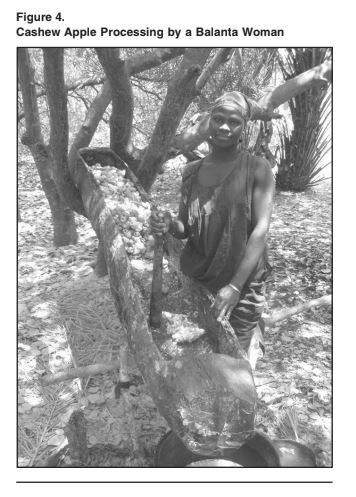
The Balanta and Mancanha peoples have the highest number of cashews.”

Balanta Cashew processing2.JPG
Balanta Cashew processing.JPG

Some of the videos below are in Portuguese. Click “CC” and change the settings to “Auto-translate - English” to get English Subtitles. Click here for more on Amilcar Cabral and the Revolutionary War.

AN ANSWER TO THOSE WHO CLAIM THAT AFRICAN AMERICANS ARE HEBREW OR “LOST JEWS”

Black Hebrew Israelite.JPG
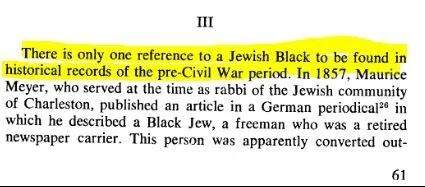
Black jews 1.JPG
Black jews 2.JPG
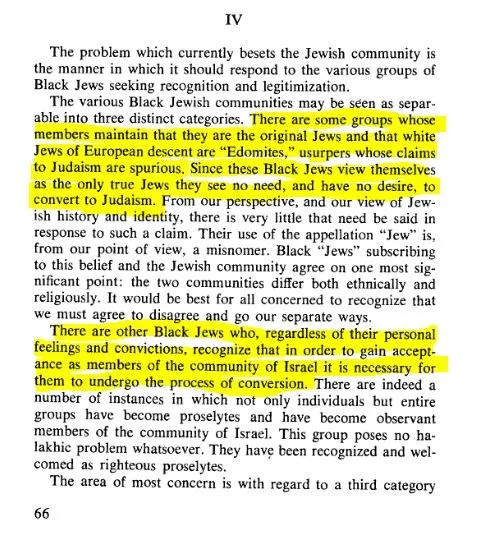
black jews 3.JPG
black jews 4.JPG
black jews 5.JPG

WHAT FOLLOWS IS A DISCUSSION OF THE ACTUAL HISTORICAL DOCUMENTATION OF THE HEBREW AND ISRAELITE ORIGIN

1.       The existence of Balanta ancient ancestors and their genetic record has already been documented, and in particular, those people of the haplogroup E-V38 which originated in the Horn of Africa about 42,300 years before the present. See: Reviewing the Sudanic/TaNihisi Origins of the Balanta.

2.       The spiritual principles of Balanta ancient ancestors from that time up until establishment of the first dynasty in Kemet, and 1,500 years before any mention of “Hebrews” and “Jews” and “Israelite” has also been documented. See: 26 Principles of the Great Belief of the Balanta Ancient Ancestors.

Excerpts from Balanta B’urassa, My Sons: Those Who Resist Remain Volume II

From Cheik Anta Diop: The African Origin of Civilization

From Cheik Anta Diop: The African Origin of Civilization

Cheik Anta Diop, Civilization or Barbarism

Cheik Anta Diop, Civilization or Barbarism

Migration of Anatomically Modern Humans.JPG

Mesopotamia

According to Wikipedia, “the Halaf culture is a prehistoric period which lasted between about 6100 BC and 5100 BC. Halaf culture ended by 5000 BC after entering the so-called Halaf-Ubaid Transitional period. Spreading from Eridu, the Ubaid culture extended from the Middle of the Tigris and Euphrates to the shores of the Persian Gulf, and then spread down past Bahrain to the copper deposits at Oman. The archaeological record shows that Arabian Bifacial/Ubaid period came to an abrupt end in eastern Arabia and the Oman peninsula at 3800 BC, just after the phase of lake lowering and onset of dune reactivation. At this time, increased aridity led to an end in semi-desert nomadism, and there is no evidence of human presence in the area for approximately 1,000 years, the so-called "Dark Millennium".

Prehistoric Mesopatamian cultures.JPG

Sumer, Akkad and Elam

Sumer Akad and Elam.JPG
Semitic Akkadians.PNG

Wikipedia also states that “the term Sumerian is the common name given to the ancient non-Semitic-speaking inhabitants of Mesopotamia by the East Semitic-speaking Akkadians. The Sumerians referred to themselves as ùĝ saĝ gíg ga (cuneiform: ), phonetically /uŋ saŋ ɡi ɡa/, or sang-ngigaliterally meaning "the black-headed people", and to their land as ki-en-gi(-r)(cuneiform: ) ('place' + 'lords' + 'noble'), meaning "place of the noble lords". The Akkadians also called the Sumerians "black-headed people", or tsalmat-qaqqadi, in the Semitic Akkadian language. The Ubaidians, though never mentioned by the Sumerians themselves, are assumed by modern-day scholars to have been the first civilizing force in Sumer. They drained the marshes for agriculture, developed trade, and established industries, including weaving, leatherwork, metalwork, masonry, and pottery.

Sumerian civilization took form in the Uruk period (4th millennium BC), continuing into the Jemdet Nasr and Early Dynastic periods.

The earliest positively proven historical attestation of any Semitic people comes from 30th century BC Mesopotamia, with the East Semitic-speaking peoples of the Kish civilization, entering the region originally dominated by the people of Sumer (who spoke a language isolate).

Approaching Chaos: Could an Ancient Archetype Save C21st Civilization? By Lucy Wyatt

Approaching Chaos: Could an Ancient Archetype Save C21st Civilization? By Lucy Wyatt

African historian J.A. Rogers states in “100 Amazing Facts About the Negro With Complete Proof”:

“Elam, a mighty Negro civilization of Persia, flourished about 2900 B.C. and is perhaps older than Egypt or Ethiopia. One of its later Negro kings, Kudur Nakunta, conquered Chaldea and Babylon and brought back to his capital Susa, rich treasures among which was the famous statue of the goddess Nana. Later it became the capital of Cyrus the Great and Darius.”

During the 3rd millennium BC, a close cultural symbiosis developed between the Sumerians, who spoke a language isolate, and Akkadians, which gave rise to widespread bilingualism . . . . Sumer was conquered by the Semitic-speaking kings of the Akkadian Empire around 2270 BC (short chronology), but Sumerian continued as a sacred language. Native Sumerian rule re-emerged for about a century in the Third Dynasty of Ur at approximately 2100–2000 BC. . . . The Sumerian city of Eridu, on the coast of the Persian Gulf, is considered to have been one of the oldest cities, where three separate cultures may have fused:

that of peasant Ubaidians farmers, living in mud-brick huts and practicing irrigation;

that of mobile nomadic Semitic pastoralists living in black tents and following herds of sheep and goats;

and that of fisher folk, living in reed huts in the marshlands, who may have been the ancestors of the Sumerians.

Elam.JPG

Following an Elamite invasion and sack of Ur during the rule of Ibbi-Sin (c. 1940 BC), Sumer came under Amorites rule (taken to introduce the Middle Bronze Age). The independent Amorite states of the 20th to 18th centuries are summarized as the "Dynasty of Isin" in the Sumerian king list, ending with the rise of Babylonia under Hammurabi c. 1700 BC. The Sumerians were eventually absorbed into the Akkadian (Assyro-Babylonian) population.”

mesopotamia.JPG

According to the Great Senegale Scientist Cheik Anta Diop,

“The Ancients remained silent about the alleged Mesopotamian culture prior to the Chaldeans. They considered the latter a caste of Egyptian astronomer-priests, that is to say, Negroes. According to the Egyptians, Diodorus reports, the Chaldeans were ‘a colony of their priests that Belus had transported on the Euphrates and organized on the model of the mother-caste, and this colony continues to cultivate the knowledge of the stars, knowledge that it brought from the homeland.’ So it is that ‘Chaldean’ formed the root of the Greek word for astrologer. The Tower of Babel, a step pyramid similar to the tower of Saqqara, also known as ‘Birs-Nimroud’ and ‘Temple of Baal,’ was probably the astronomical observatory of the Chaldeans.

This fits in, for Nimrod, son of Kush, grandson of Ham, the Biblical ancestor of the Blacks, is the symbol of worldly power: ‘He was a mighty hunter before the Lord. Hence the saying, ‘Like Nimrod, a mighty hunter before the Lord.’ The beginning of his kingdom was Babylon, Arach and Akkad, all of them in the land of Sennar. From that region Assur went forth.’ . . .

NOTE: Not true. According to List of Ethiopian Kings by H.I.H. Tafari Makonnen,  June 19, 1922, published in: “In The Country of The Blue Nile” by C.F. Rey, F.R.G.S., Commander of the Order of the Star of Ethiopia, Negro University Press, New York -

Nimroud is NOT the grandson of Ham. Nimroud is, in fact, the 12th Sovereign in the line of King Ori, reiging in 3776 BC and before the Biblical Flood. Kam (Ham) and Kout (Kush) appear about 1,000 years later…. Now who is going to know Ethiopian history better than the 334th King of Ethiopia in the line of the Original King Ori?

Ethiopian Kings list 1 Nimrod.JPG
Ethiopian Kings list 2.JPG

Amorites and Hurrians

The introduction of “bronze” in the Early Bronze Age (3000-2000 B.C.) brought about a cultural revolution marked by the development of metallurgy, and a decline in pottery. By the Middle Bronze Age (2000-1550 B.C.), Amorites who were originally nomads from the dessert regions to the east, and southern Anatolia (modern Turkey), had penetrated Canaan and were inhabiting the hilly areas around the cities. From these hills, they launched raids and harassment attacks against the cities.

In addition to the Amorites, other invaders included the Hurrians (the Horites of the Old Testament), also came to Canaan from the north. The Late Bronze Age (1550–1200 B.C.) was marked by incursions of new Amorite marauders, these were Amorites displaced by the fall of the Hammurabian dynasty in Babylon. As it were, over time, the nomadic Amorites were joined by Amorites who had previously been in Mesopotamia. So that by now, the total of these Amorites had become the dominant element of the population in Canaan.

Many of these Amorites, such as the Biblical Abraham, continued on to Egypt.

Genesis 11:27-32

Now these are the generations of Terah: Terah begat Abram, Nahor, and Haran; and Haran begat Lot. And Haran died before his father Terah in the land of his nativity, in Ur of the Chaldees (Sumer). And Abram and Nahor took them wives: the name of Abram's wife was Sarai; and the name of Nahor's wife, Milcah, the daughter of Haran, the father of Milcah, and the father of Iscah. But Sarai was barren; she had no child. And Terah took Abram his son, and Lot the son of Haran his son's son, and Sarai his daughter in law, his son Abram's wife; and they went forth with them from Ur of the Chaldees, to go into the land of Canaan; and they came unto Haran (Anatolian city), and dwelt there. And the days of Terah were two hundred and five years: and Terah died in Haran. Genesis 12:9-10 And Abram journeyed, going on still toward the south. And there was a famine in the land: and Abram went down into Egypt to sojourn there; for the famine was grievous in the land.

Hurrians.JPG

According to Diop, “After many ups and downs, the Canaanites and the white tribes, symbolized by Abraham and his descendants (Isaac’s lineage), blended to become the Jewish people of today:

So Hemor and his son Sichem went to the gate of their city and spoke to their fellow citizens. ‘These men,’ they said, ‘are friendly: let them dwell with us and trade in the land, since there is ample room for them. Let us marry their daughters and give them our daughters to marry.’

Those few lines, which seem to be a ruse, nonetheless reveal the economic imperatives which at that time were to govern relations between white invaders and black Canaanites. Phoenician history is therefore incomprehensible only if we ignore the Biblical data according to which the Phoenicians, in other words, the Canaanites, were originally Negroes, already civilized, with whom nomadic, uncultured white tribes later mixed. . . . . This is how the lasting alliance between Egyptians and Phoenicians can be explained. Even throughout the most troubled periods of great misfortune, Egypt could count on the Phoenicians as one can more or less count on a brother. . . . To be sure, we should not minimize the role of economic relations between Egypt and Phoenicia in explaining the loyalty which seems to have existed. One can also understand that Phoenician religion and beliefs are to some extent mere replicas of Egypt’s. . . . .”

In Egypt these Amorites become known as Habiru or Hapiru (one who sells his services), whether these ‘services’ were as mercenaries or tradesman is unknown. In time, the number of Amorites in northern Egypt was sufficient to overthrow Egyptian rule and establish an independent region of Egypt ruled by Amorites, since known as the Hyksos (foreign kings or Shepherd Kings). The Egyptian historian Manetho, and the traitor Hebrew, Josephus Flavius, both wrote of the Amorite coup as an invasion.

Cheikh Ana Diop explains in The African Origin of Civilization: Myth or Reality:

“In the Bible, when the first white races reached the place, they found a black race there, the Canaanites, descendants of Canaan, brother of Mesraim, the Egyptian, and Kush, the Ethiopian, sons of Ham.

The Lord said to Abram: ‘Leave your country, your kinsfolk and your father’s house, for the land which I will show you . . .” Abram went away as the Lord had commanded him, and Lot went with him. . . . Abram took Sarai his wife, Lot his brother’s son, all the property they had acquired and the persons they had got in Haran and they departed for the land of Canaan. When they came to the land of Canaan, Abram passed through the land to the sacred place at Sichem, near the plain of More. At that time the Canaanites were in the land.’”

Abraham migration1.JPG.png

“Shasu and Habiru

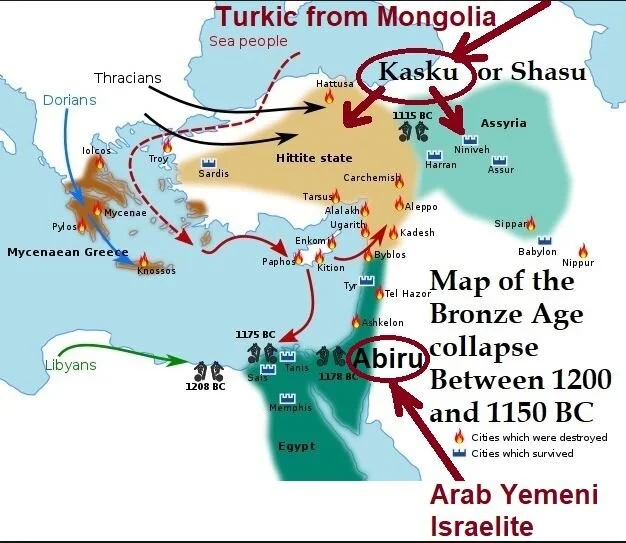
Wikipedia states that “The Shasu (from Egyptian š3sw, probably pronounced Shaswe) were Semitic-speaking cattle nomads in the Levant (Canaan) from the late Bronze Age to the Early Iron Age or the Third Intermediate Period of Egypt. They were organized in clans under a tribal chieftain, and were described as brigands active from the Jezreel Valley to Ashkelon and the Sinai.

Some scholars link the Israelites and YHWH with the Shasu.

Hyksos are Shasu.JPG

The earliest known reference to the Shasu occurs in a 15th-century BCE list of peoples in the Transjordan region. The name appears in a list of Egypt's enemies inscribed on column bases at the temple of Soleb built by Amenhotep III. Copied later in the 13th century BCE either by Seti I or by Ramesses II at Amarah-West, the list mentions six groups of Shasu: the Shasu of S'rr, the Shasu of Rbn, the Shasu of Sm't, the Shasu of Wrbr, the Shasu of Yhw, and the Shasu of Pysps. Two Egyptian texts, one dated to the period of Amenhotep III (14th century BCE), the other to the age of Ramesses II (13th century BCE), refer to 'Yahu in the land of the Šosū-nomads' (t3 š3św yhw), in which yhw[3]/Yahu is a toponym. Regarding the name yhw3, Michael Astour observed that the "hieroglyphic rendering corresponds very precisely to the Hebrew tetragrammaton YHWH, or Yahweh, and antedates the hitherto oldest occurrence of that divine name – on the Moabite Stone – by over five hundred years." K. Van Der Toorn concludes: "By the 14th century BC, before the cult of Yahweh had reached Israel, groups of Edomites and Midianites worshipped Yahweh as their god."

Donald B. Redford has argued that the earliest Israelites, semi-nomadic highlanders in central Palestine mentioned on the Merneptah Stele at the end of the 13th century BCE, are to be identified as a Shasu enclave. Since later Biblical tradition portrays Yahweh "coming forth from Seʿir", the Shasu, originally from Moab and northern Edom/Seʿir, went on to form one major element in the amalgam that would constitute the "Israel" which later established the Kingdom of Israel. Per his own analysis of the el-Amarna lettersAnson Rainey concluded that the description of the Shasu best fits that of the early Israelites. If this identification is correct, these Israelites/Shasu would have settled in the uplands in small villages with buildings similar to contemporary Canaanite structures towards the end of the 13th century BCE.

Habiru (sometimes written as Hapiru, and more accurately as ʿApiru) is a term used in 2nd-millennium BCE texts throughout the Fertile Crescent (Canaan) for people variously described as rebels, outlaws, raiders, mercenaries, bowmen, servants, slaves, and laborers. The word Habiru, more properly 'Apiru, occurs in hundreds of 2nd millennium BCE documents covering a 600-year period from the 18th to the 12th centuries BCE and found at sites ranging from Egypt, Canaan and Syria, to Nuzi (near Kirkuk in northern Iraq) and Anatolia (Turkey), frequently used interchangeably with the Sumerian SA.GAZ, a phonetic equivalent to the Akkadian (Mesopotamian) word saggasu ("murderer, destroyer").

Not all Habiru were murderers and robbers: one 'Apiru, Idrimi of Alalakh, was the son of a deposed king, and formed a band of 'Apiru to make himself king of AlalakhWhat Idrimi shared with the other 'Apiru was membership of an inferior social class of outlaws, mercenaries, and slaves leading a marginal and sometimes lawless existence on the fringes of settled society. 'Apiru had no common ethnic affiliations and no common language, their personal names being most frequently West Semitic, but many East SemiticHurrian or Indo-European.

In the 18th century a north Syrian king named Irkabtum (c. 1740 BC) "made peace with [the warlord] Shemuba and his Habiru."

 In the Amarna tablets from 14th century BCE, the petty kings of Canaan describe them sometimes as outlaws, sometimes as mercenaries, sometimes as day-labourers and servants. Usually they are socially marginal, but Rib-Hadda of Byblos calls Abdi-Ashirta of Amurru (modern Lebanon) and his son 'Apiru, with the implication that they have rebelled against their common overlord, the Pharaoh. The biblical word "Hebrew", like Habiru, denotes a social category, not an ethnic group. Since the discovery of the 2nd millennium BCE inscriptions mentioning the Habiru, there have been many theories linking these to the Hebrews of the Bible, but modern scholars see the 'Apiru/Habiru as only one element in an early Israel composed of many different peoples, including nomadic Shasu, the biblical MidianitesKenites, and Amalekites, displaced peasants and pastoralists.

Habiru activity.JPG
Shasu and Abiru.JPG

WHAT ABOUT ETHIOPIAN FALASHA JEWS?

First, tradition holds that the word Ethiopia comes from the Greeks. Wikipedia states:

“Etymology

The Greek name Αἰθιοπία (from Αἰθίοψ, Aithiops, "an Ethiopian") is a compound word, derived from the two Greek words, from αἴθω + ὤψ (aitho "I burn" + ops "face"). According to the Perseus Digital Library, the designation properly translates as Burnt-face in noun form and red-brown in adjectival form.[37] The historian Herodotus used the appellation to denote those parts of Africa South of the Sahara that were then known within the Ecumene (inhabitable world).[38] 

However, the Greek formation may be a folk etymology for the Ancient Egyptian term athtiu-abu, which means 'robbers of hearts'.[39] 

This Greek name was borrowed into Amharic as ኢትዮጵያ, ʾĪtyōṗṗyā.

In Greco-Roman epigraphs, Aethiopia was a specific toponym for ancient Nubia.[40] 

At least as early as c. 850,[41] the name Aethiopia also occurs in many translations of the Old Testament in allusion to Nubia. The ancient Hebrew texts identify Nubia instead as Kush.[42] However, in the New Testament, the Greek term Aithiops does occur, referring to a servant of the Kandake, the queen of Kush.[43]

Following the Hellenic and Biblical traditions, the Monumentum Adulitanum, a third century inscription belonging to the Aksumite Empire, indicates that

Aksum's then ruler governed an area which was flanked to the west by the territory of Ethiopia and Sasu. The Aksumite King Ezana would eventually conquer Nubia the following century, and the Aksumites thereafter appropriated the designation "Ethiopians" for their own kingdom.

In the Ge'ez version of the Ezana inscription, Aἰθιόποι is equated with the unvocalized Ḥbšt and Ḥbśt (Ḥabashat), and denotes for the first time the highland inhabitants of Aksum. This new demonym would subsequently be rendered as 'ḥbs ('Aḥbāsh) in Sabaic and as Ḥabasha in Arabic.[40]

In the 15th-century Ge'ez Book of Aksum, the name is ascribed to a legendary individual called Ityopp'is. He was an extra-Biblical son of Cush, son of Ham, said to have founded the city of Axum.[44]

In English, and generally outside of Ethiopia, the country was once historically known as Abyssinia. This toponym was derived from the Latinized form of the ancient Habash.[45]

List of Ethiopian Kings by H.I.H. Tafari Makonnen, June 19, 1922, published in: “In The Country of The Blue Nile” by C.F. Rey, F.R.G.S., Commander of the Order of the Star of Ethiopia, Negro University Press, New York

List of Ethiopian Kings by H.I.H. Tafari Makonnen, June 19, 1922, published in: “In The Country of The Blue Nile” by C.F. Rey, F.R.G.S., Commander of the Order of the Star of Ethiopia, Negro University Press, New York

Map of the Nile Valley using indigenous names by Dr. Ben Jochannan, Black Man of the Nile and His Family.

Map of the Nile Valley using indigenous names by Dr. Ben Jochannan, Black Man of the Nile and His Family.

Aksum.JPG

So, understand, there are different people living in this territory which is regularly and simultaneously referred to as Cush, Nubia, Ethiopia, and Abyssinia. Within this territory at various times, you have different “kingdoms” ruled by different peoples. Just like there is no single “African” identity and culture, but rather a vast mix of diverse cultures, there’s no single “Ethiopian” people, either, and the word “Ethiopia” was not first used by the Greeks, who did not enter into Egypt, let alone further south, until the 7th century BC.

How could “Ethiopia” be a Greek word meaning “burnt faces” when “Itiypus” was used as the name of an indigenous ruler one thousand years prior to the arrival of the Greeks???????

Now, when the Semitic people described above, mixed race nomads, wandered into “Ethiopia”, they mixed and converted some of the people to their religion called Judaism. This began with the “Jewish” rule of Egypt 500 years before the Assyrian invasion. The genetic record shows that Falasha’s have DNA originating from “Arabia” and the “Orient” that distinguishes them from the other indigenous people living in the area.

JOURNAL ARTICLE Origins of Falasha Jews Studied by Haplotypes of the Y Chromosome GÉRARD LUCOTTE and PIERRE SMETS Human Biology Vol. 71, No. 6 (December 1999), pp. 989-993 (5 pages)

JOURNAL ARTICLE Origins of Falasha Jews Studied by Haplotypes of the Y Chromosome GÉRARD LUCOTTE and PIERRE SMETS Human Biology Vol. 71, No. 6 (December 1999), pp. 989-993 (5 pages)

Falasha Jews 1.JPG

WHAT HAPPENED AFTER THE 500 YEAR JEWISH RULE IN KEMET

Makuria and Alwa.JPG

The Greeks ruled Egypt for almost 300 years before the expansion of the Roman Empire into Egypt ended their dominion in 30 B.C. This was our ‘flashback point of departure, but before returning to the Ethiopian churches, the significance of what we have been reviewing as flashbacks should again be emphasized as a great issue. For we have been reviewing the last phase of the processes of Caucasianization in Egypt that were so thoroughgoing that both the Blacks and their history were erased from our memory: the Jewish rule, 500 years; the Assyrian interludes; the Persians, 185 years; the Greeks 274 years; the Romans, 700 years; the Arabs, 1,327 years – the long, long struggle to take from the Blacks whatever they had of human worth, their land and all their wealth therein; their bodies their souls, and their minds, was a process of steady depersonalization, dehumanization.

The Asians and Mulattoes held Northern Abyssinia, with the center of power in the strategic kingdom of Axum. From Axum the Arabs prepared their forces for the destruction of a now weakening Ethiopian empire. The weakness, as usual, came from separatist movements struggling for power. It was the old-time factional fights among leaders who felt they must ‘rule or ruin’ . . . . But it was the situation for which the Axumite Arabs and their colored and Jewish allies were waiting. In 350 A.D., their armies destroyed Meroe, and an epoch in history ended.

Ethiopia was now split into three major states: Nobadae, bordering Egypt at the First Cataract; Makuria, the more powerful kingdom in the middle with its capital at Dongola; and Alwa (Alodia), another strong state south of Makuria or between Makuria and Axum. After the collapse of the central black empire in the fourth century, the Christian churches spread more rapidly through the now independent kingdoms. Even in the division of Ethiopia into smaller states, the process of ethnic transformation was obvious as it pressed southward from Egypt, Greek and Roman presence had been heavy and marked in Nobadae. Since no one now questioned that Nobadae (Nubia) was Ethiopian, the mixed breed could not be called Egyptian as was the previous case of first Cataract. The population in this kingdom bordering Caucasianized Egypt was now predominantly Afro-European and Afro-Asian.

In the fourth century A.D., the areas of black power had been pushed out of Egypt down to where the kingdom of Makuria formed its borders with Nobadae. Here the concentration of Blacks began, just as though a southward movement of the race was a decree of providence. Here, once again, they took their stand; here again, even in the lands which were officially Christian, black battle lines had to be formed again for defense. The Axumite Coloured ‘Solomonids’ and Arabs had retired after the destruction of the black empire. The more immediate danger was still Egypt.

Which Migration of the Balanta?


We have already seen that there were several migrations of people from Ta-Meri and Ta-Nihisi prior to the First Dynasty in Khem, and throughout the next thirty-three dynasties. Our great 20th Century historians – Cheikh Anta Diop, Yosef ben-Jochannan, John Henrik Clarke, Chancellor Williams, and after them, Moustafa Gadalla, have all detailed how the Anu and others always retreated from Ta-Meri and went south into Ta-Nihisi, Kush and beyond, whenever foreigners invaded. We now know that during this time that there were well-established trade routes that led south and west from Ta-Nihisi to Lake Chad and to Kano in Nigeria. With so many migrations, how can we determine when and where our ancestors left?

Gadalla 1 Ancient Trade Routes.JPG

Another clue is provided by Moustafa Gadalla, who writes in his book Exiled Egyptians,

“During the second half of the first millennium CE, the Central Soudan – that 2,000-mile (3,200 km) area stretching from the Senegal region to Dar-Fur – saw a population explosion and the emergence and consolidation of a number of substantial organized, de-centralized, wealthy states. They were all developed in the Sahel – a region running across Africa, south of the Sahara and north of Lake Chad. The Sahel is a hot, dry savannah that can support human agriculture and settlement. . . .

All sources and evidence agree to the following characteristics of this population explosion:

1.       The sudden increase in population in the region resulted from the migration of highly civilized, well-organized, mostly agricultural people.

2.       The original sparsely negroid population speak of highly civilized people who settled and governed them peacefully.

3.       The newcomers were light-skinned.

4.       The newcomers had the technological and financial resources to build irrigation, waterworks, and land reclamation projects, in order to provide the food needed to sustain such large populations.

5.       The newcomers had the knowledge and experience of a well-organized society: politically and socially.

6.       They were knowledgeable and experienced in city planning and infrastructure, as evident in the numerous settlements that they built.

7.       Significant polities started emerging after 500 CE.

8.       They had advanced knowledge of metal-working.”

Given that the Balanta were not light skinned, did not support large populations nor develop sophisticated social and political systems, preferring to be leaderless, and did not carry with them Egyptian religious deities but instead carried with them the Great Belief and their traditional spiritual customs, then we can rule out any of the above such migrations.

It is likely that our Balanta ancestors constituted “the original sparsely negroid population” that Gadalla speaks of. Remember, descendants of Baba Amuntu Abansundu were already living in this area as early as 17,000 BC and there was a tremendous amount of genetic diversity which means DIFFERENT BLACK PEOPLE WITHIN AFRICA.

Desmond Clark Map 20k BC.JPG
genetic variation in africa.jpg

The rest of the Balanta migration story from the Nile Valley to present day Guinea Bissau is documented in Balanta B’urassa, My Sons: Those Who Resist Remain Volumes I and II

Clearly, the Balanta people had nothing to do with Shashu, Habiru, Hebrew or Jewish people.

Consequently, those Balanta that were captured, brought to and enslaved in the Americas during the European Trans Atlantic were not and could not have been descendants of “Hebrews”, “Jews” or “Israelites”.

Although some African Americans may be descended from “Hebrews”, “Jews” or “Israelites” who migrated from the Nile to West Africa, those who make such blanket claims for ALL African Americans do so as a consequence of having their actual ancestry erased from their memory, as a consequence of the terrorism and trauma inflicted on their ancestors who were brought to the Americas and enslaved. THIS IS CALLED ETHNOCIDE.

After two or three generations of not speaking their original ancestors’ language and practicing their original ancestors’ culture, their actual identity was lost. In an effort to reclaim those identities, many African Americans turned to the only source of information available to them - the Bible, and sought to identify with peoples described therein. However, the Bible, as a source of “truth” for revealing African identity was extremely flawed at best, even though it contained some history of African people.

Today, genetic testing and a re-reading of history enables African Americans to both identify their actual ancestors and understand their actual history, without having to make faith-based claims of identity that are just based on that - faith - and not actual truth. We do not have to look to the Bible for answers when we have the actual record written in stone from our ancestors and genetic science as a new tool to establish lineage and for interpretation.

Hebrew nonsense.JPG
Nat Turner Award.JPG

26 Principles of the Great Belief of the Balanta Ancient Ancestors

According to the DNA marker E3a*-M2 (also called E1b1a) found in the Mandinka and Balanta people, our Balanta ancestors shared a common origin with all Bantu people at the end of the Pleistocene around 9,500 BC.

Tassili n Ajjer 8.JPG

Excerpt from the book Bantu Philosophy by Placide Tempels as quoted in Balanta B’urassa, My Sons: Those Who Resist Remain Volume I

1.       “It is today generally admitted that, among Bantu peoples, it is the oldest of all who have maintained the most pure form of the concept of the Supreme Being, Creator, and Disposer of the Universe. The faith of Bantu people in the Supreme Being lies at the root of all the religious conceptions current among them: animism, dynamism, fetishism and magic.”


2.       “Bantu behavior is centered in a single value: vital force. The Bantu say, in respect of a number of strange practices in which we see neither rhyme nor reason, that their purpose is to acquire life, strength or vital force, to live strongly, that they are to make life stronger, or to assure that force shall remain perpetually in one’s posterity.”


3.       “Force, the potent life, vital energy are the object of prayers and invocations to God, to the spirits and to the dead, as well as of all that is usually called magic, sorcery or magical remedies. The Bantu will tell you that they go to a diviner to learn the words of life, so that he can teach them the way of making life stronger.”


4.       “The spirits of the first ancestors, highly exalted in the superhuman world, possess extraordinary force inasmuch as they are the founders of the human race and propagators of the divine inheritance of vital human strength. The other dead are esteemed only to the extent to which they increase and perpetuate their vital force in their progeny.”


5.       “In the minds of Bantu, all beings in the universe possess vital force of their own: human, animal, vegetable, or inanimate. Each being has been endowed by God with a certain force, capable of strengthening the vital energy of the strongest being of all creation: man.”


6.       “Supreme happiness, the only kind of blessing, is, to the Bantu, to possess the greatest vital force: the worst misfortune and, in very truth, the only misfortune, is, he thinks, the diminution of this power.”


7.       “Every illness, wound or disappointment, all suffering, depression or fatigue, every injustice and every failure: all these are held to be, and are spoken of by the Bantu, as a diminution of vital force.”


8.       “Illness and death do not have their source in our own vital power, but result from some external agent who weakens us through his greater force. It is only by fortifying our vital energy, through the use of magical recipes, that we acquire resistance to malevolent external forces.”


9.       “Those who think that, according to the Bantu, one being can entirely annihilate another, to the point that he ceases to exist, conceive a false idea. Doubtless one force that is greater than another can paralyze it, diminish it, or even cause its operation totally to cease, but for all that the force does not cease to exist. Existence which comes from God cannot be taken from a creature by any created force.”


10.   “This concept of separate beings, of substance (to use the Scholastic term again) which find themselves side by side, entirely independent one of another, is foreign to Bantu thought. Bantu hold that created beings preserve a bond one with another, an intimate ontological relationship, comparable with the causal tie which binds creature and Creator. For the Bantu there is interaction of being with being, that is to say, of force with force. Transcending the mechanical, chemical and psychological interactions, they see a relationship of forces which we should call ontological.”


11.   “One force will reinforce or weaken another. This causality is in no way supernatural in the sense of going beyond the proper attributes of created nature. It is, on the contrary, a metaphysical causal action which flows out of the very nature of a created being. General knowledge of these activities belongs to the realm of natural knowledge and constitutes philosophy properly so called. The observation of the action of these forces in their specific and concrete applications would constitute Bantu natural science.”


12.   “In what Europeans call ‘primitive’ magic there is, to Bantu eyes, no operation of supernatural, indeterminate forces, but simply the interaction between natural forces, as they were created by God and as they were put by him at the disposal of men.”


13.   “Above all force is God, Spirit and Creator, the mwine bukomo bwandi. It is he who has force, power, in himself. He gives existence, power of survival and of increase, to other forces. In relation to other forces, he is “He who increases force”. After him come the first fathers of men, founders of the different clans. These archipatriarchs were the first to whom God communicated his vital force, with the power of exercising their influences on all posterity. They constitute the most important chain binding men to God. They occupy so exalted a rank in Bantu thought that they are not regarded merely as ordinary dead. They are no longer named among the manes: and by the Baluba they are called bavidye, spiritualized beings, beings belonging to a higher hierarchy, participating to a certain degree in the divine Force.”


14.   “After these first parents come the dead of the tribe, following their order of primogeniture. They form a chain, through the links of which the forces of the elders exercise their vitalizing influence on the living generation. Those living on earth rank, in fact, after the dead. The living belong in turn to a hierarchy, not simply following legal status, but as ordered by their own being in accordance with primogeniture and their vital rank: that is to say, according to their vital power.”


15.   “But man is not suspended in thin air. He lives on his land, where he finds himself to be the sovereign vital force, ruling the land and all that lives on it: man, animal or plant. The eldest of a group or of a clan is, for Bantu, by Divine law the sustaining link of life, binding ancestors and their descendants. It is he who ‘reinforces’ the life of his people and of all inferior forces, animal, vegetable and inorganic, that exist, grow, or live on the foundation which he provides for the welfare of his people. The true chief, then, following the original conception and political set up of clan peoples, is the father, the master, the king; he is the source of all zestful living; he is as God himself. This explains what the Bantu mean when they protest against the nomination of a chief, by government intervention, who is not able, by reason of his vital rank or vital force, to be the link binding dead and living. ‘Such a one cannot be chief. It is impossible. Nothing would grow in our soil; our women would bear no children and everything would be struck sterile.’”


16.   “The quality of ‘mfumu’ (chief) is added to the commonality of an individual neither by external nomination, nor by singling him out. He becomes and is ’mfumu’ by endowment therewith; he is a new higher vital force capable of strengthening and maintaining everything which falls ontologically within his cure. A man does not become chief of the clan and patriarch by natural succession through the deaths of other elders who had precedence and because he has become the oldest surviving member of the clan, but because primogeniture inherently supposes an inner secretion of vital power, raising the ‘muntu’ of the elder to the rank of intermediary and channel of forces between the clan ancestors on the one hand and posterity with all its clan patrimony on the other hand. It never takes one long to observe the transformation on becoming chief of a man whom one has formerly known as an ordinary member of the community. The qualitative change is made evident by an awakening of his being, by an immanent inspiration or even, sometimes, by a kind of ‘possession’. The ‘muntu’, in fact, becomes aware of, and is informed by, his whole conception of the world around, through all his modes of knowledge, that he is now a true ‘muntu’, endowed with a new power which did not belong to his former human status. He is no longer what he was. He has been changed in his very quality of being.”


17.   “Can one, then, be surprised that each accession of essential life is indicated by the gift of a new name? Such is required to indicate that the ‘muntu’ has been renewed and strengthened.”


18.   “The name expresses the individual character of the being. The name is not a simple external courtesy, it is the very reality of the individual. . . . The ‘muntu’ may have several names. Among the Baluba, there are generally three kinds of names – the inner name, the life name, or the name of the being. This name is never lost. A second name is the one given on the occasion of an accession of force, such as the name at circumcision, the name of the chief, or the name received by a sorcerer on initiation, investiture, or on the occasion when a man becomes possessed by a spirit. Finally, there are names that one chooses oneself, a name which serves only to indicate the person, without having any profound relationship to the person or to his individuality. . . . Such are the ‘majina a kizungu’. European names, as, for example . . . Is it not fitting, indeed, that the ‘muntu wa bazunga’ (the White’s man) who is putting himself under the living, dominating influence of white people, should have also an European name?”


19.   “In the mind of the Bantu, the dead also live; but theirs is a diminished life, with reduced vital energy. This seems to be the conception of the Bantu when they speak of the dead in general, superficially and in regard to the external things of life. When they consider the inner reality of being, they admit that deceased ancestors have not lost their superior reinforcing influence; and that the dead in general have acquired a greater knowledge of life and of vital or natural force. Such deeper knowledge as they have in fact been able to learn concerning vital and natural forces they use only to strengthen the life of man on earth.  The same is true of their superior force by reason of primogeniture, which can be employed only to reinforce their living posterity. The dead forbear who can no longer maintain active relationships with those on earth is ‘completely dead’, as Africans say. They mean that this individual vital force, already diminished by decease, has reached a zero diminution of energy, which becomes completely static through lack of faculty to employ its vital influence on behalf of the living. This is held to be the worst of disasters for the dead themselves. The spirits of the dead (”manes’) seek to enter into contact with the living and to continue living function upon earth.


20.   “Inferior forces, on the other hand (animal, plant, mineral) exist only, and by the will of God, to increase the vital force of men while they are on earth. Higher and lower forces, therefore, are thought of by the Bantu in relation to living human forces.


21.   Another law says that the living being exercises a vital influence on everything that is subordinated to him and on all that belongs to him. . . . The fact that a thing has belonged to anyone, that it has been in strict relationship with a person, leads the Bantu to conclude that this thing shares the vital influence of its owner. It is what ethnologists like to call ‘contagious magic, sympathetic magic”; but it is neither contact nor ‘sympathy’ that are the active elements, but solely the vital force of the owner, which acts, as one knows, because it persists in the being of the thing possessed or used by him.”


22.   The ‘kilumu’ or ‘nganga’, that is to say the man who possesses a clearer than usual vision of natural forces and their interaction, the man who has the power of selecting these forces and of directing them towards a determinist usage in particular cases, becomes what he is only because he has been ‘seized’ by the living influence of a deceased ancestor or of a spirit, or even because he has been ‘initiated’ by another ‘kilumbu’ or ‘nganga’. The general principles of Bantu ontology carry the corollary that every man can be influenced by a wiser one.”


23.   “Study and the personal search for knowledge does not give wisdom. One can learn to read, to write, to count: to manage a motor car, or learn a trade: but all that has nothing in common with ‘wisdom’. It gives no ontological knowledge of the nature of beings. There are many talents and clever skills that remain far short of wisdom. That is how the Bantu speak of their traditional wisdom.”


24.   “Bantu conscience: The moral conscience of Bantu, their consciousness of being good or bad, of acting rightly or wrongly, likewise conforms to their philosophical views, to their wisdom. The idea of a universal moral order, of the ordering of forces, of a vital hierarchy, is very clear to all Bantu. They are aware that, by divine decree, this order of forces, this mechanism of interaction among beings, ought to be respected. They know that the action of forces follows immanent laws, that these rules are not to be played with, that the influences of forces cannot be employed arbitrarily. They distinguish use from abuse. They have a notion of what we may call immanent justice, which they would translate to mean that to violate nature incurs her vengeance and that misfortune springs from her. They know that he who does not respect the laws of nature becomes ‘wa malwa’, as the Baluba would express it; that is to say, he is a man whose inmost being is pregnant with misfortune and whose vital power is vitiated as a result, while his influence on others is therefore equally injurious. This ethical conscience of theirs is at once philosophical, moral and juridical.


25.   “The notion of duty: The individual knows what his moral and legal obligations are and that they are to be honored on pain of losing his vital force. He knows that to carry out his duty will enhance the quality of his being. As a member of the clan, the ‘muntu’ knows that by living in accordance with his vital rank in the clan, he can and should contribute to the maintenance and increase of the clan by the normal exercise of his favorable vital influence. He knows his clan duties He knows, too, his duties towards other clans. However hostile in practice intertribal relations may be, Bantu know and say that it is forbidden to kill an outsider without a reason. Outsiders, in fact, are equally God’s people and their vital force has a right to be respected. The diminution and destruction of an outsider’s life involves  disturbance of the ontological order and will be visited upon him who disturbs it.”


26.   “The ‘muntus’ obligations increase in accordance with his vital rank. The elder, the Chief, the King know very well that their doings do not involve their own personal vital force only. They and their subjects fully realize that their deeds will have repercussions upon the whole community subject to them. From that proceeds the scrupulous care that can be observed among all primitive peoples to protect the Chief, the strengthener of life, against every injury to his vital force, by means of a bundle of vetoes and prohibitions. These are designed to maintain intact his ontological power, his vital force, the source of the inviolability of all his subjects.”

Reviewing the Sudanic/TaNihisi Origins of the Balanta

Penguin Atlas of African History: New Edition, Colin McEvedy p.15

Penguin Atlas of African History: New Edition, Colin McEvedy p.15

1.       According to Wikipedia, The Nilotic peoples are peoples indigenous to the Nile Valley…. The Nilotes constitute the majority of the population in South Sudan, an area that is believed to be their original point of dispersal. After the Bantu peoples, they constitute the second-most numerous group of peoples inhabiting the African Great Lakes region around the Eastern Great Rift.[2] They make up a notable part of the population of southwestern Ethiopia as well. A Proto-Nilotic unity, separate from an earlier undifferentiated Eastern Sudanic unity, is assumed to have emerged by the 3rd millennium BC. The development of the Proto-Nilotes as a group may have been connected with their domestication of livestock. The Eastern Sudanic unity must have been considerably earlier still, perhaps around the 5th millennium BC (while the proposed Nilo-Saharan unity would date to the Upper Paleolithic about 15,000 years ago). The original locus of the early Nilotic speakers was presumably east of the Nile in what is now South Sudan. The Proto-Nilotes of the 3rd millennium BC were pastoralists, while their neighbors, the Proto-Central Sudanic peoples, were mostly agriculturalists.[10]]


2.       Haplogroup E1b1a is a direct basal branch of Y-chromosome haplogroup E-V38, which originated in the Horn of Africa about 42,300 years before present. (Fifth Migration to Sudan (Haplogroup E – Balanta Ancestors; purple on map page 57)


3.       Around 9000 YBP, when the Sahara went through a period of maximum humidity (Aumassip et al. 1988), several Neolithic cultures flourished in the area, bringing together people of sub‐Saharan and North African origin (Dutour et al. 1988).


4.       Although the founder L0a1 haplotype is shared in an east-to-west corridor, an intriguing increased frequency of L0a1 in the Balanta might parallel A1-M31 and A3b2-M13 Y chromosomes in representing East African traces. The emerging lineages are exclusive of Guineans, indicating a rapid spread and local expansion after arrival. These may therefore reflect the arrival of their ancestors in the Holocene, about seven thousand years ago.


5.       Haplogroup E in general is believed to have originated in Northeast Africa,[11] and was later introduced to West Africa from where it spread around 5,000 years ago to Central, Southern and Southeastern Africa with the Bantu expansion.[12][13]


6.       Nevertheless the most important finding is that Balanta, Papel and Felupe-Djola are the only people in Guinea-Bissau to show “pure” East African inheritance (L0a, L3e, L3f1 and L3h mtDNAs, combined with A1, A3b2, E3* and E3b* Y chromosomes), further supporting their East African origin. . . . While some studies suggest linguistic affinities between Balanta and the Sudanese family, their spread related to that of Cushitic migrants (Quintino 1964), others hypothesize on their common origin with Bantu, near the Nile in the Late Pleistocene (Stuhlmann 1910).


7.       A link of Balanta and Sudanese-speakers is traceable in A3b2-M13 and E3* Y chromosomes (Rosa et al. 2007), found to be frequent among Sudanese and Ethiopians (Underhill et al. 2000, Semino et al. 2002).


8.       Even if there are no firm archaeological indications that early Holocene sorghum or millets were being domesticated, the spread of the Sudanic people at that time may be an example of farming/language dispersal (Ehret 1997, Ehret 2003). This dispersal could have extended to all the Sahara, including West Sahara, with later introgressions to the Niger-Congo speakers (Bellwood 2005). Under such model, and together with the genetic evidence, the Balanta’s Sudanese origin gains relevance. A common origin with the Bantu, one of most notable people in the sub-Saharan agricultural context, may suggest that different peoples jointly learnt agricultural techniques, and thus be a support for the expansion observed in the paternal pool of the Balanta.”


9.       Interestingly, only the Balanta, a group claiming Sudanese origin, showed an increased frequency of this clade (11%). Haplogroup L0a has a Paleolithic time depth in East African populations (33,000 year old, Salas et al. 2002).


10.    M1 in the Balanta‐Djola group, suggests a correlation between the genetic and linguistic affiliation of Guinean populations. The presence of M1 in Balanta populations supports the earlier suggestion of their Sudanese origin.


11.    The origin of the Balantas is uncertain. Some see language affinities with the Sudanese from whom they could have separated 2000 years ago with the first spread of Kushites migrations (Quintino, 1964). According to Stuhlmann (1910), the group derives from a Bantu branch, which separated in the Pleistocene near the Nile, following Kamite invasions.”

My sons, there is thus solid evidence that our Bantu ancestors are descendants from the Nilotic Sudanese who lived in what was called Ta-Nihisi. As we will see, from as early as 5,000 BCE up until 300 BCE, our ancestors started migrating westward from this area. I cannot prove from which one of the groups in Ta-Nihisi, whether Lower, Upper or Southern Nubia, our ancestors belonged, and from which exodus they left. However, genetic testing in the future may allow us to determine this.